Simerg is an independent initiative dedicated to Ismaili Muslims, the Aga Khan — their Hereditary Imam — and the Ismaili Imamat, and Islam in general through literary readings, photo essays and artistic expressions
“I should like to assure you, my Islamic friends, that under the American Constitution, under American tradition, and in American hearts, this center, this place of worship, is just as welcome as could be a similar edifice of any other religion” — President Eisenhower, June 28, 1957, Islamic Center, Washington D.C.
In an on-line story dated February 3, 2016, TIME magazine informed its readers that President Barrack Obama would be visiting the Islamic Society Mosque in Baltimore, Maryland, thus setting a milestone for his presidency. The reporter, Sarah Begley, reminded readers that the President was far from being the first American President to do so.
Story continues after photo
Islamic Center, Washington, D.C. Conceived in 1944, the site for the mosque was purchased in 1946, and the cornerstone was laid on January 11, 1949. The mosque was designed by Italian architect Mario Rossi and completed in 1954.Photo: Carol M. Highsmith Archive collection / US Library of Congress.
The honour, she said, belonged to President Dwight D. Eisenhower, who served as the 34th President of the United States from 1953 to 1961. He opened the Islamic Center of Washington in the city’s Embassy Row district on June 28, 1957. First lady Mamie Eisenhower accompanied him to the dedication ceremony.
In his speech, President Eisenhower emphasized the importance of religious freedom in the USA, and highlighted the “Muslim genius” that has cultivated some of history’s most important inventions, discoveries, art, literature and thought now considered indispensable to modern civilization.
President Dwight D. Eisenhower’s Remarks at the Opening of the Islamic Center in Washington D.C. on June 28, 1957
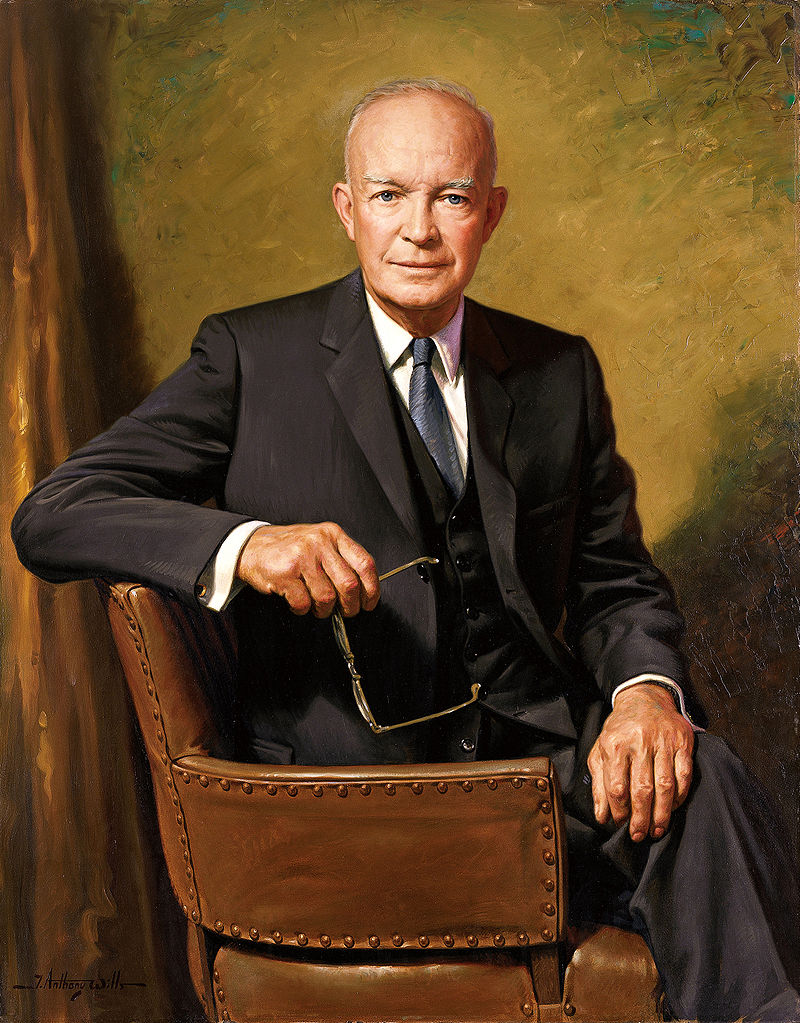
34th US President Dwight D. Eisenhower. White House portrait painted by James Anthony Wills.
By DWIGHT D. EISENHOWER (see profile, below)
[For a photo of the President delivering the speech, please click Politicio — ed.]
Mr. Ambassador, Dr. Bisar, Governors of the Islamic Center, and distinguished guests:
It is a privilege to take part in this ceremony of dedication. Meeting with you now, in front of one of the newest and most beautiful buildings in Washington, it is fitting that we rededicate ourselves to the peaceful progress of all men under one God.
And I should like to assure you, my Islamic friends, that under the American Constitution, under American tradition, and in American hearts, this center, this place of worship, is just as welcome as could be a similar edifice of any other religion. Indeed, America would fight with her whole strength for your right to have here your own church and worship according to your own conscience. This concept is indeed a part of America, and without that concept we would be something else than what we are.
The countries which have sponsored and built this Islamic Center have for centuries contributed to the building of civilization. With their traditions of learning and rich culture, the countries of Islam have added much to the advancement of mankind. Inspired by a sense of brotherhood, common to our innermost beliefs, we can here together reaffirm our determination to secure the foundation of a just and lasting peace.
Our country has long enjoyed a strong bond of friendship with the Islamic nations and, like all healthy relationships, this relationship must be mutually beneficial.
Civilization owes to the Islamic world some of its most important tools and achievements. From fundamental discoveries in medicine to the highest planes of astronomy, the Muslim genius has added much to the culture of all peoples. That genius has been a wellspring of science, commerce and the arts, and has provided for all of us many lessons in courage and in hospitality.
This fruitful relationship between peoples, going far back into history, becomes more important each year. Today, thousands of Americans, both private individuals and governmental officials, live and work — and grow in understanding — among the peoples of Islam.
At the same time, in our country, many from the Muslim lands — students, businessmen and representatives of states — are enjoying the benefits of experience among the people of this country. From these many personal contacts, here and abroad, I firmly believe that there will be a broader understanding and a deeper respect for the worth of all men; and a stronger resolution to work together for the good of mankind.
As I stand beneath these graceful arches, surrounded on every side by friends from far and near, I am convinced that our common goals are both right and promising. Faithful to the demands of justice and of brotherhood, each working according to the lights of his own conscience, our world must advance along the paths of peace.
Thank you very much.
Date posted: April 28, 2020.
Before departing this website please take a moment to review Simerg’s Table of Contents for links to hundreds of thought provoking pieces on a vast array of subjects including faith and culture, history and philosophy, and arts and letters to name a few.
____________________
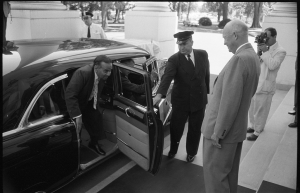
Pakistan Prime Minister Huseyn Suhrawardy being received at the White House by President Dwight Eisenhower in 1957. Photo: Thomas J. O’Halloran / US Library of Congress.
Dwight D. Eisenhower (1890-1969) served as the thirty-fourth president of the United States, governing from 1953 to 1961, after a military career culminating in his role as Supreme Commander of Allied Forces in Europe during World War II. Eisenhower’s presidency was largely occupied by foreign affairs, most notably the Korean War, the expansion of U.S. involvement in the Middle East after the Suez Crisis, and the general deepening of the Cold War. Even domestically, many of Eisenhower’s achievements were shaped by national security, including the construction of the interstate highway system. Eisenhower joined the Presbyterian Church as an adult and played a role in the addition of “In God We Trust” on American currency. Eisenhower famously stated that “our government has no sense unless it is founded in a deeply felt religious faith, and I don’t care what it is.”
We welcome feedback/letters from our readers. Please use the feedback box which appears below. If you don’t see the box please click Leave a comment. Your comment may be edited for length and brevity, and is subject to moderation. We are unable to acknowledge unpublished letters.
Noteworthy book: “This Day in Presidential History,” by Paul Brandus. For each of the 365 days of the year, Brandus offers fascinating facts, historical anecdotes, and pithy quotations from and about all the presidents of the United States, from George Washington to Donald Trump.
The following message in English and all the translations that follow are reproduced from the The Ismaili, the official website of the community. After reading the message, please scroll to the bottom of this post to read our supplication to Mawlana Hazar Imam — it follows the Urdu translation.
Message from Mawlana Hazar Imam, His Highness the Aga Khan, on Covid-19 (English)
My beloved spiritual children,
My Jamat is aware that the Covid-19 virus has created a global crisis that is also affecting the Jamat worldwide. As Imam-of-the-Time, I have recommended the Jamati and AKDN institutions and agencies to closely monitor the impact of this pandemic, and to extend support and assistance to the Jamat and the communities in which they live.
The Covid-19 virus is highly contagious, and every day we are witnessing the damage it is inflicting on human lives and societies. In facing this threat, it is very important that all members of my Jamat should take personal responsibility for exercising all possible steps to protect their own good health, safety and wellbeing, and that of their family.
Among the most critical of the measures recommended by all government and health agencies are the maintenance of the best standards of personal hygiene, and practising the notion of physical distancing. While not easy, physical distancing is essential.
It is my wish that my murids, and all those among whom they live, should follow these as well as all other guidelines and recommendations that the government and health authorities issue.
It is my hope and prayer that, in due course, work on producing vaccines and other forms of medicine will yield positive results, and that we will see a gradual return to normal life in all societies.
As we focus now on overcoming the present challenges, the Jamat and all my institutions should plan to build for the future from a position of strength and wisdom.
I send my most affectionate paternal, maternal loving blessings for the good health, safety, and well-being of all my murids, with best loving blessings for mushkil-asan.
My Jamat worldwide is constantly in my thoughts and in my prayers.
Yours affectionately,
Aga Khan
___________________
Message from Mawlana Hazar Imam, His Highness the Aga Khan, on Covid-19 (French)
Mes Chers Enfants Spirituels,
Mon Jamat est conscient du fait que le virus Covid-19 a déclenché une crise globale qui affecte également le Jamat à travers le monde. En tant qu’Imam-du-Temps, j’ai recommandé aux institutions et agences Jamati et de l’AKDN de suivre de près l’impact de cette pandémie, et d’offrir aide et assistance au Jamat et aux communautés dans lesquelles ils vivent.
Le virus du Covid-19 est hautement contagieux, et chaque jour nous sommes témoins des dégâts qu’il cause sur les vies humaines et les sociétés. Face à cette menace, il est très important que tous les membres de mon Jamat s’engagent personnellement à prendre toutes les mesures possibles pour protéger leur propre santé, sécurité et bien-être, ainsi que ceux de leur famille.
Parmi les plus importantes des mesures recommandées par tous les gouvernements et agences de santé figurent le maintien des meilleurs standards d’hygiène personnelle, et le respect de la notion de distanciation sociale. Bien qu’elle ne soit pas facile, la distanciation sociale est essentielle.
C’est mon souhait que mes murids, et tous ceux parmi lesquels ils vivent, suivent ces mesures ainsi que toutes les autres directives et recommandations que le gouvernement et les autorités sanitaires émettent.
C’est mon espoir et ma prière que, en temps voulu, le travail mené pour produire des vaccins et d’autres formes de remèdes va produire des résultats positifs, et que nous verrons un retour graduel à la vie normale dans toutes les sociétés.
Alors que nous nous concentrons en ce moment à surmonter les défis actuels, le Jamat et toutes mes institutions devraient se préparer à construire pour l’avenir à partir d’une base solide et avec sagesse.
J’envoie mes plus affectueuses tendres bénédictions paternelles et maternelles pour la bonne santé, la sécurité, et le bien-être de tous mes murids, avec mes meilleures tendres bénédictions pour mushkil-asan.
Mon Jamat à travers le monde est constamment dans mes pensées et dans mes prières.
Affectueusement,
Aga Khan
___________________
Message from Mawlana Hazar Imam, His Highness the Aga Khan, on Covid-19 (Portuguese)
Meus amados filhos espirituais,
O meu Jamat está ciente de que o vírus Covid-19 criou uma crise global que está também a afetar o Jamat em todo o mundo. Como Imam do Tempo, recomendei às instituições e agências Jamati e da AKDN que monitorizassem de perto o impacto desta pandemia e prestassem apoio e assistência ao Jamat e às comunidades onde estes vivem.
O vírus Covid-19 é altamente contagioso e todos os dias assistimos aos danos que este está a infligir tanto nas vidas humanas como nas sociedades. Ao enfrentar esta ameaça, é muito importante que todos os membros do meu Jamat assumam a responsabilidade pessoal de colocar em prática todas as medidas possíveis para proteger a sua própria saúde, segurança e bem-estar, bem como as da sua família.
Entre as medidas mais críticas recomendadas por todas as agências governamentais e de saúde estão a manutenção dos melhores padrões de higiene pessoal e a prática da noção de distanciamento físico. Embora não seja fácil, o distanciamento físico é essencial.
É meu desejo que os meus murids, e todos aqueles entre os quais vivem, sigam estas e todas as outras orientações e recomendações que o governo e as autoridades de saúde emitem.
É minha esperança e oração que, a seu tempo, o trabalho na produção de vacinas e outras formas de medicina produzam resultados positivos e que se assista a um regresso gradual à vida normal em todas as sociedades.
Enquanto centramos as nossas atenções em ultrapassar os desafios atuais, o Jamat e todas as minhas instituições devem planear a construção para o futuro a partir de uma posição de força e sabedoria.
Envio as minha melhores bênçãos paternais e maternais para boa saúde, segurança e bem-estar de todos os meus murids, com as minhas melhores bênçãos para mushkil-asan.
O meu Jamat em todo o mundo está constantemente nos meus pensamentos e nas minhas orações.
Afetuosamente
Aga Khan
___________________
Message from Mawlana Hazar Imam, His Highness the Aga Khan, on Covid-19 (Farsi)
Message from Mawlana Hazar Imam (Farsi)
___________________
Message from Mawlana Hazar Imam, His Highness the Aga Khan, on Covid-19 (Dari)
Message from Mawlana Hazar Imam (Dari)
___________________
Message from Mawlana Hazar Imam, His Highness the Aga Khan, on Covid-19 (Arabic)
Message from Mawlana Hazar Imam (Arabic)
___________________
Message from Mawlana Hazar Imam, His Highness the Aga Khan, on Covid-19 (Gujarati)
Message from Mawlana Hazar Imam (Gujarati)
___________________
Message from Mawlana Hazar Imam, His Highness the Aga Khan, on Covid-19 (Russian)
Message from Mawlana Hazar Imam (Russian)
_______________________
Message from Mawlana Hazar Imam, His Highness the Aga Khan, on Covid-19 (Tajik)
Message from Mawlana Hazar Imam (Tajik)
___________________
Message from Mawlana Hazar Imam, His Highness the Aga Khan, on Covid-19 (Urdu)
Message from Mawlana Hazar Imam (Urdu)
___________________
Shukrana and Supplication to Mawlana Hazar Imam, His Highness the Aga Khan, for Guidance on Covid-19
We submit our humble gratitude to our beloved Mawlana Hazar Imam for his guidance on Covid-19 as well as his blessings to the world wide Jamat for mushkil-asan (protection from difficulty).
We submit the following supplications from verses 1 and 5 of Pir Hasan Kabirdin’s Ginan Sahebe Farman Lakhi Mokalea:
O brother! Listen, My Lord Ali has written and sent a Farman. The beloved Lord has remembered this servant today with kindness in his heart
O my Lord Ali! Listen! Remove all my sorrows and troubles. O Lord Ali, the great king! O Lord of infinity! Fulfill all my wishes.
Date posted: April 24, 2020.
_______________
Before departing this website please take a moment to review Simerg’s Table of Contents for links to hundreds of thought provoking pieces on a vast array of subjects including faith and culture, history and philosophy, and arts and letters to name a few.
We welcome feedback/letters from our readers. Please use the feedback box which appears below. If you don’t see the box please click Leave a comment. Your comment may be edited for length and brevity, and is subject to moderation. We are unable to acknowledge unpublished letters.
Author Zahir Dhalla’s Preamble: Khojas, and Indians in general, were not known for keeping personal journals. Thus, there is a dearth of records documenting our history. However, the practice of keeping family photo albums was quite widespread. Photos can fill in some of those blanks, provided someone can tell the stories behind them. This would be a valuable series, people digging into their memorabilia and writing the stories behind them. Below then, is my attempt to do so, hoping it can also serve as one of the templates that others may want to use or adapt as preferred.
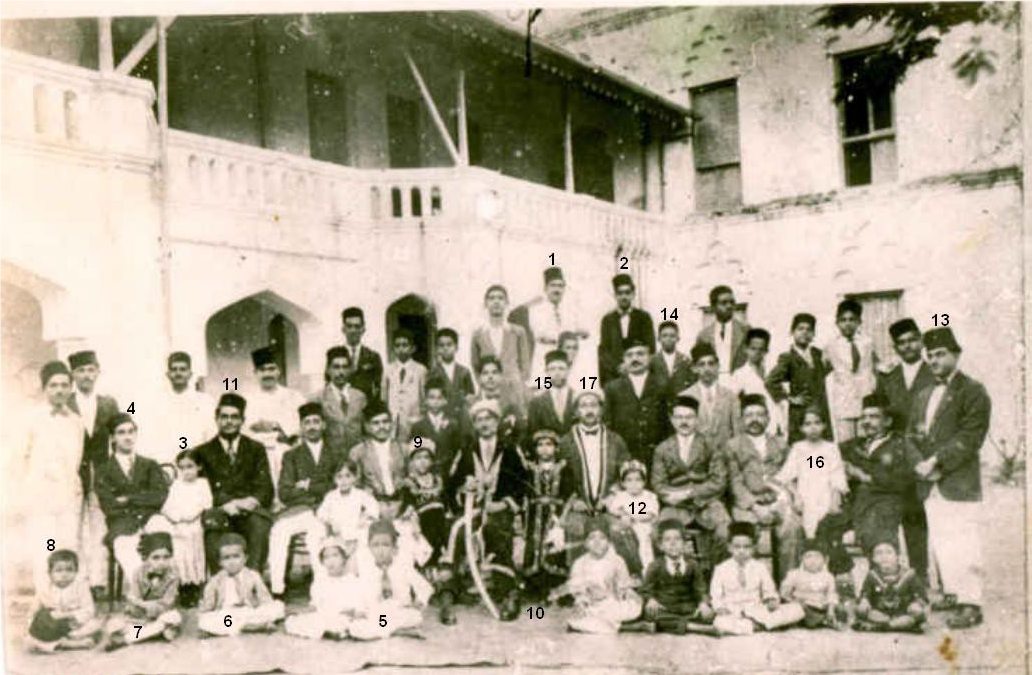
Photo 1: Huseinali Harji (with sword) wedding photo. In the Ismaili Club’s courtyard, Zanzibar, early 1920s. It used to be the British Club where Dr. David Livingstone stayed in the late 1860s. Photo: Safder Alladina, Zerabai’s {10 in photo} youngest son. Captioning: Marhum Kassamali Tejpar, Roshan’s {3} husband. Please click on photo for enlargement.
By ZAHIR K. DHALLA
Gulamhusein Harji Sumar Walji Jendhani* was a pawn broker in the Soko Mahogo neighbourhood of Zanzibar’s Stone Town. Gulamhusein had a large brood, as was common at the time, of 9 sons and 3 daughters, by three wives, the eldest son, Ali {17 in top photo}, being my paternal grandmother Sakarbai’s {16} father. This wedding photo is of Gulamhusein Harji’s third son Huseinali’s marriage to Rukiya.
A guide to individuals in the annotated wedding photo. Dilgir {4} composed the Ismaili anthem.
These are their stories:
All elders and a few toddlers are wearing hats, while youngsters are bare headed, the groom and his eldest brother Ali {17} are wearing ceremonial turbans. By the 1950s, hats were no longer in vogue!
Of the Gulamhusein’s nine sons, Haji (see photo 4, below) and Noorali “Mamma” are not in the above wedding photo. “Mamma” chacha is possibly in the photo, just unidentified.
The Harjis spent, all told, a couple of decades or so in Tanga, Tanganyika (now Tanzania) where at one time they ran a grocery-wines-spirits store called Planters Store. All then left Tanga: Ali {17} going to Mombasa; Haji to Lushoto (see photo 4 below); Hussein {13} to Dar es Salaam; Saleh {2} taking over the grocery business under the name Korogwe Stores, with a branch store in Korogwe, a small town west of Tanga — he also ran a petrol station in Tanga; and Huseinali (the groom) running a chai, toast, maandazi, etc. restaurant called “Karaketa” at the Korogwe railway station, which his widow Rukiya ran after his death.
Story continues after photo
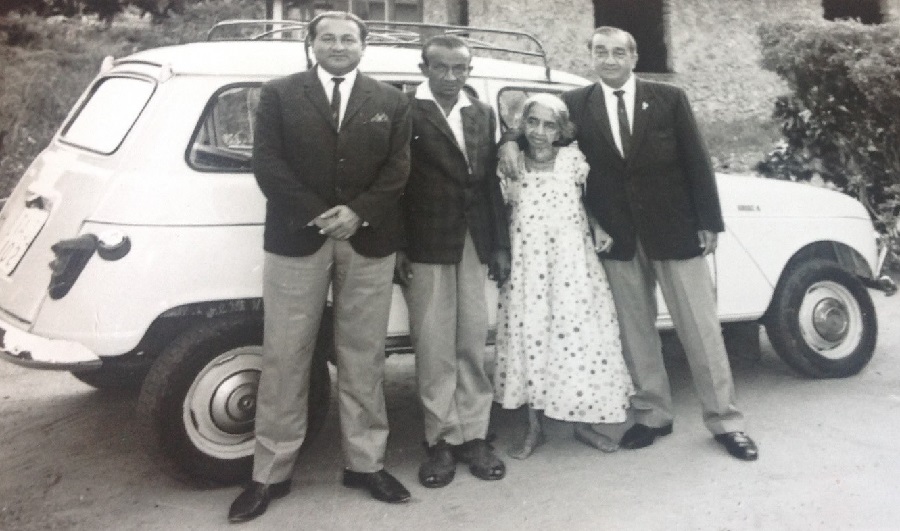
Photo 2: Khatibai and her three sons, right to left, Mohamedali {7 in top photo}, Kasu {6} and Abdulmalek {8}, Tanga, early 1950s.
KASU {6}: Younger half-brother of my paternal grandmother Sakarbai Ali Harji {16}, his is a touching story.
His mother Khatibai (nee Jiwan Lalji, Itmadi, of Zanzibar), a most beautiful lady, became demented (during WWII) and was hospitalized in Nairobi. Her three sons, Mohamedali {7}, Kasu {6} and Abdulmalek {8} (in decreasing order of age; see photo 2, above) conferred and decided that they would buy a native bride in Tanga for Kasu, who would settle there as a fishmonger. His bride, Chausiku, was a fine lady, devotedly looking after Khatibai. Khatibai, despite her condition, could always remember faces. Whenever we visited her, she would smile at each one of us, lighting up the whole room! When both Kasu and Khatibai passed away, Mohamedali sent support money to Chausiku. Before he passed away, he instructed son Zul (a fine guitar player in Nairobi, now in Tri-Cities, British Columbia, Canada) to continue support payments, which he did until one day he received a letter from Chausiku’s family, informing him that she had passed away, so not to send support money any more!
ABDULMALEK {8}: Youngest half-brother of my paternal grandmother Sakarbai Ali Harji {16}, he was the youngest of Khatibai’s sons. There was a comical vignette he told me: In 1940, he and three friends decided to enlist in the army (WW II). Mother Khatibai was against it, while father Ali {17} was okay with the idea. They headed for Nairobi for interviews, and along the way one of them dropped out! In Nairobi, someone questioned them as to what they thought they were doing: Didn’t they know they would get only black tea and burnt roti?
Part of their enlistment interview was an examination of their education:
Q. 7 + 5? A. 11. Wrong.
Q. 14 + 9? A. 22. Wrong.
They all came up short and were told, “All you Mombasa guys are hopeless” and were given tickets to return home. Actually, Abdulmalek’s whole class in Mombasa had failed Cambridge, except for one solitary student! Abdulmalek returned to working at his old job at Fatehali Dhala Grocers for 60 shillings a month, filling candy jars, opening and displaying crates of fruit from South Africa. Once he was in the middle of enjoying a nice peach from South Africa, when in walked Count Fatehali who remarked, “It is good that you are tasting and approving these fruits because only then will customers buy them!”
ALI {17}: Father of my paternal grandmother Sakarbai Ali Harji {16}, he was the eldest of the 9 brothers, born in Zanzibar in c1890. In the late 1920s, he worked at a cotton ginnery in Entebbe, Uganda, alongside my paternal grandfather, Gulamhusein, Ali’s son-in-law to be. His last job was as a detective with the CID (Criminal Investigation Department) in Mombasa. He was engaged by the head of the department, an Abdallah Mzee. But soon Ali crashed his motor bike, badly hurting his leg. He retired! Before he died, he told youngest son Abdulmalek {8} that he would be reborn as his son. Sure enough, within a year of his death, a son was born, Gulamali, named by Mawlana Sultan Mahomed Shah Aga Khan III. Gulamali would go on to play up his grandfather role to maximum advantage –- yes, he was untouchable!
Story continues after photo
Photo 3:Gulamhusein Harji Sumar residence in Zanzibar.
GULIBAY {9}: Lady Gulibai, first cousin of my paternal grandmother Sakarbai Ali Harji {16}, was very well known in Nairobi. She married Ramzanbha of the K. B. Jamal family, owners of Tropicana bistro on Hardinge Street (now Kimathi Street), as well as of Keby’s restaurant further north of Tropicana.
SAKARBAI {16}: My paternal grandmother was very independent, not wanting to be a burden on anybody, even in death, for she had a small briefcase under her bed, which she showed everyone over time, containing everything necessary for a funeral and its rites: a shroud, cotton wool, holy water tablets (made from the earth at the well of Zam Zam), rose water, etc plus enough money for the prayer plate! Her independence also showed in how she addressed my paternal grandfather, her husband: she called him Dhalla, something unheard of in those days when a wife never called her husband by name, resorting to something oblique like “Are you listening?” or simply “Listen then”.
ZERABAI {10}: Born in Zanzibar, she moved to Tanga when she was 12/13 years old. She lived in Tanga the rest of the time until moving to Vancouver. She married Shariffbha Aladin Giga Patni. The Aladin clan adapted this name to a Muslim one: Alladina. This was around the time of the Indo-Pak hostilities after the partition. The Patni refers to people of the town of Patan in Gujarat, India, it having been built on the banks of the mythical river Saraswati.
Zerabai too, like her grandpa Gulamhusein Harji, had a large family of 5 sons and 3 daughters. She herself was of a large family; she was the eldest of a brood of 4 brothers and 6 sisters. When her mother, Khati Gulamhusein Bhaloo Kurji, died while most of her children were still growing up, her uncles Saleh {2} and Haji stepped up and adopted all the young ones, each picking up 4 children! Zerabai herself was married off to Shariffbha when she was in her early teens.
BADRU {5}: He was the younger brother of my paternal grandmother Sakarbai Ali Harji {16}. He and his family lived in two places, in Tanga first, where most of his children were born, then in Mombasa.
Story continues after photo
Photo 4: Chacha Haji with adopted children Sherbanu, Gavar and Dolat, Lushoto, Tanganyika (now Tanzania), c1930s.
Any still around? To my knowledge, none of the identified people above are alive today, although Gulibai’s {9} younger sisters, Dolat (in photo 4 above), and Lily are alive and live in Vancouver and Toronto respectively. The Harji clan today is huge, of several hundred!
Date posted: April 23, 2020. Last updated: May 1, 2020 (added 1905 historical photo in author’s footnote, see below).
_____________________
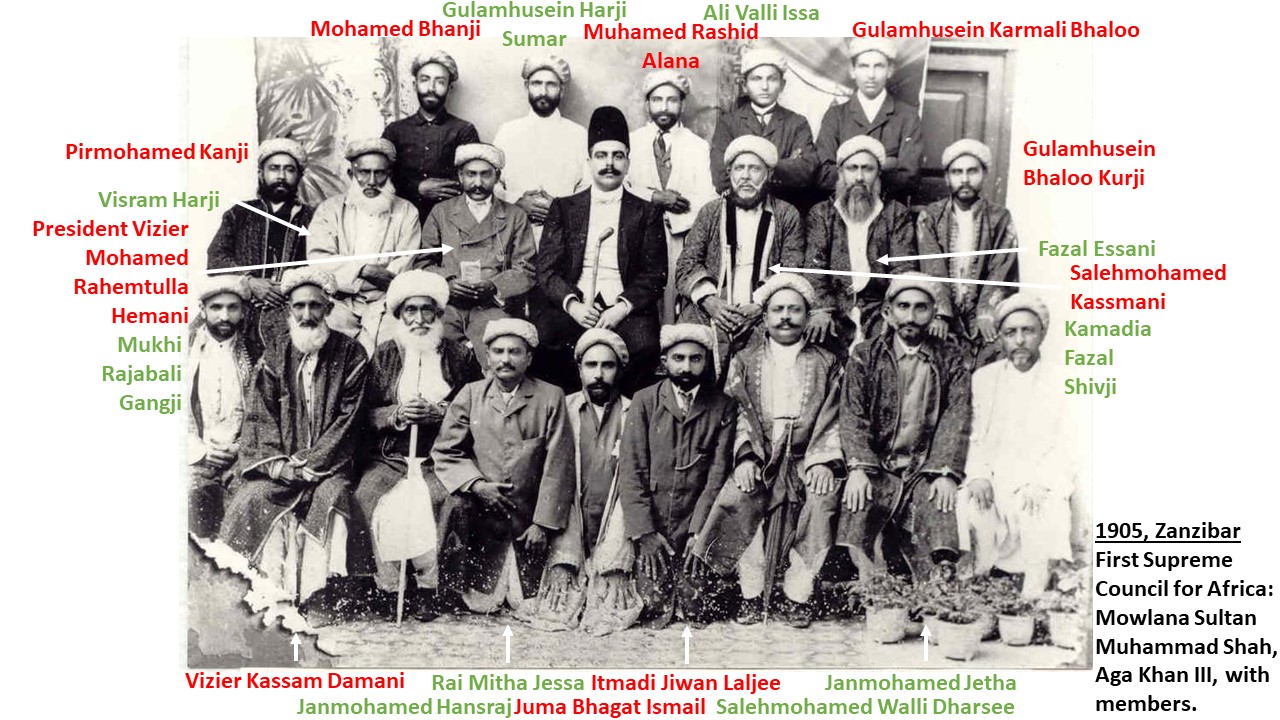
* Author’s footnote: Gulamhusein Harji Sumar (father of the groom, with the sword in the wedding photo) was a member of the first Supreme Council for Africa, 1905, Zanzibar. Itmadi Jiwan Lalji (father of Khatibai, photo 2) was a member too. Please see Noorali Harji’s historical family photos with Mawlana Hazar Imam.
Gulamhusein Bhaloo Kurji (maternal grandfather of Zerabai, number 10 in the wedding photo) ditto.
All the above three are also in the classic photo of Imam Mawlana Sultan Mahomed Shah Aga Khan III with the Supreme Council; see photo 5 below.
Photo 5: Zanzibar 1905 — Aga Khan III, 48th Ismaili Imam, with Ismaili leaders. BACK ROW (left to right): Mohamed Bhanji, Gulamhussein Harji Sumar, Mohamed Rashid Alana, Ali Valli Issa, Gulamhussein Karmali Bhaloo; CENTRE ROW (left to right): Peermohamed Kanji, Visram Harji, President Varas Mohamed Remtulla Hemani, MAWLANA SULTAN MAHOMED SHAH, HIS HIGHNESS THE AGA KHAN, Varas Salehmohamed Kasmani, Fazal Issani, Gulamhussein Bhaloo Kurji; FRONT ROW (left to right): Mukhi Rajabali Gangji, Varas Kassam Damani, Varas Janmohamed Hansraj, Rai Mitha Jessa, Juma Bhagat Ismail, Itmadi Jivan Lalji, Salehmohamed Valli Dharsi, Janmohamed Jetha, Kamadia Fazal Shivji. Photo Credit: Nashir Abdulla Collection, Ottawa, Canada. Please click on photo for an annotated version.
_________
Zahir K. Dhalla is a retired GIS (Geographic Information Systems) and IT (Information Technology) freelance consultant in Toronto, Canada. He is a graduate of the University of Nairobi, Kenya (mapping science) and the University of Toronto, Canada (computer science). In addition to his non-fiction writings (see list below) he has also written many private biographies as family keepsakes. He is also the editor of Ismailis of Tanga.
Zahir Dhalla’s books available from Amazon:
My F-word Plan: How I Routinely Maintain Low Weight & Good Health
Poetry: The Magic of Few Words (Definition and Some Poetry on East Africa)
Nine Ginans of Nine Ismaili Pirs: A Brief History of Khoja Ismailis
Learn Good Swahili Step by Step: A Complete Language Textbook in 3 volumes:
A Complete Grammar
Swahili-English Dictionary (5,750 words)
English-Swahili Dictionary (5,750 words)
The Willowdale Jamat Khana Story
Writing [Auto] Biographies: Demonstrated by author’s early autobiography
From Kibwezi to Kensington: Sherbanu K. Dhalla’s Memories of East Africa
My Tanga Days: 1950s & 60s
Learn Urdu: اُردو: Read, Write, Speak, includes 4,000-word Tri-directional Dictionary
Naked Eye Astronomy: How to Read the Heavens
Two Short Stories: I. Happy Phoebe, II. Troglodytes
Khojo Aawyo! The Khoja has Come! A Story of Migrations
Before departing this website please take a moment to review Simerg’s Table of Contents for links to hundreds of thought provoking pieces on a vast array of subjects including faith and culture, history and philosophy, and arts and letters to name a few.
We welcome feedback/letters from our readers. Please use the feedback box which appears below. If you don’t see the box please click Leave a comment. Your comment may be edited for length and brevity, and is subject to moderation. We are unable to acknowledge unpublished letters.
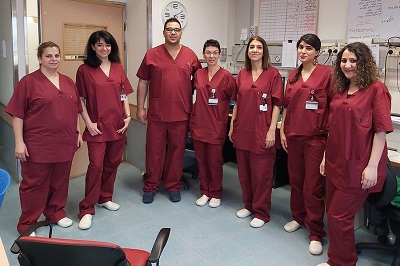
The Christian Science Monitor has been one of my favourite newspapers since I first discovered it in Dar es Salaam, Tanzania, in the late 1960’s. While the paper continues to publish under its 1908 founding title, the Monitor is a world class newspaper containing outstanding reporting and insights from around the world and includes sections on science, culture and books, as well as daily podcasts. We give you a link to the paper’s recent piece concerning the role of Arab medical professionals in Israel. The Monitor notes that Arabs make up 17% of the country’s doctors, 24% of the nurses, and 48% of the pharmacists. Without the contribution of Arab medical staff, the system would fail. ….READ MORE
Before departing this website please take a moment to review Simerg’s Table of Contents for links to hundreds of thought provoking pieces on a vast array of subjects including faith and culture, history and philosophy, and arts and letters to name a few.
On Tuesday April 14, 2020, Missionary Amirali Gillani’s shrouded body rested inside a grey coloured coffin in the funeral hall of the Scarborough Jamatkhana. He had passed away from cancer on April 8 at the age of 75.
Only the missionary’s peaceful face was in view. The rest of his body which was covered in the white shroud, was under the coffin cover. The coffin did not rest on the floor. It had been placed on a strong roll away frame. Volunteers recited the Salwat in unison continuously, and gave comfort to the small size of mourners, a limit imposed by the Bereavement Authority of Ontario.
There were a total of 16 mourners in attendance for the funeral’s two separate viewing opportunities and the funeral rites. One viewing, including the funeral rites, was for immediate family members, and the second viewing was for other family members and friends. In both the viewings the mourners sat in groups of 4 in two rows in front of the body, keeping the required physical distance. At a normal funeral, there would have been several hundred in attendance. A dilsoji — a condolence gathering a day or two ahead of the funeral — would have attracted a large Ismaili crowd from across Toronto.
Missionary Gillani’s funeral became the first funeral to be made available for online viewing via a dedicated Youtube channel. The viewing was offered, following a trial period, to very close family members who could not physically be at the funeral due to provincial restrictions limiting gatherings to 5 or 10.
Wearing a face mask and gloves on their hands, each of the persons who had come to missionary Gillani’s funeral presented himself or herself beside the coffin, a meter or two away. In solitude, the mourner would spend between 60 to 80 seconds in contemplation, before giving way to the next person. Other Jamati funerals taking place during the Covid-19 pandemic have similar rules and restrictions in place.
Once the viewing and giving of last respects had ended, and the funeral rites were completed, the Muslim funeral procession prayer La Ilaha Illallah Muhammadur Rasulullah commenced. In a normal funeral, men line up in the large foyer of the Jamatkhana to touch or momentarily hold the coffin on their shoulders, uttering prayers for the soul of the deceased before it is transferred to a hearse. However, here there was no one in the foyer of the Jamatkhana. It was empty. The body was wheeled by the Mukhi, volunteers and male mourners into the hearse parked outside, for its 22 km journey to its final resting place — the picturesque Elgin Mills Cemetery.
A view of Elgin Mills Cemetery. Photo: Mount Plesant Group
At the gate of the cemetery, a guard verified each arriving guest against the list of names that he had been given by the Ismaili funeral committee. He guided the arriving mourners to Section 16 of the cemetery. At the site, there were only a few scattered cars, no more than eight. The hearse carrying the body then arrived. This time, instead of wheeling the coffin, as the ground gradient and conditions presented challenges, the volunteers carefully carried it to the grave. Mourners followed and gathered around the coffin, keeping a safe physical distance between one another. The Mukhisaheb of Scarborough Jamatkhana and a family member then each took a heap of soil in a spade, and spread it across the coffin. The Surah Ikhlas was recited (Ch. 112; Translation: “In the name of God, the Gracious, the Merciful. Say: He is God, the One. God, the Absolute. He begets not, nor was He begotten. And there is nothing comparable to Him”).
Normally the crowd would wait to see the body lowered into the grave, while continuing to recite Salwats and other prayers. Two volunteers would then descend into the grave to ensure its proper placement, stability and also conduct some last rites.
Physical distancing prevented that from occurring and the mourners returned to their cars. Using the same soil that had been been dug up to create the 6 foot deep grave, a tractor arrived to fill it. Once the on-site staff had completed their task of filling the grave and removing wooden planks and other objects around it, we were each handed incense sticks as we walked back to the burial site. Water was then poured on top of the freshly replaced soil by a family member and the Mukhisaheb of Scarborough Jamatkhana. We then honoured and paid respect to the missionary by placing the lit incense sticks we had been given over the top of the missionary’s final resting place.
All ten of us stepped back about 40 metres, and a Fateha for the deceased was then recited. We were standing in rows and kept our safe 2 metre distance from one another. During the recitation of the Fateha, my attention was suddenly drawn to two doves that landed 25 metres to my left. Their sounds in the midst of the Fateha being recited were beautiful and joyous to hear. Only Allah understands the language of birds, animals and insects, as well as everything that has life on this earth. A second Fateha was then recited for all of the deceased members of the Jamat. By then, the birds had flown away.
Mukhisaheb then gave everyone special blessings for attending the burial, and also prayed for the soul of the deceased. As much as we would have loved to, we left the site without shaking hands of the family and embracing them. We consoled them by placing our hands on our hearts, befitting the Islamic ethics of gratitude, humility and affection.
It was a different kind of a funeral to attend. However the dignity of the entire funeral ceremony was preserved. The Jamat has to thank the burial committee for the professionalism with which they are carrying out this extraordinary and noble service to bring comfort and peace to the mourning families and their friends, amid the Covid-19 pandemic. Their communication in every respect was outstanding, and emails and telephone calls received prompt attention.
As I headed back home, I thought of the two birds that had landed nearby as the Fateha for Missionary Gillani was being recited. They conveyed to me a profound message: Missionary Amirali Gillani had been ushered into the abode of peace.
Date posted: April 15, 2020. Last updated: April 15, 2020 (10 AM ET: additional material added; factual corrections; typos).
____________________________
We received several tributes to Amirali Gillani when we first announced his death. They may be read by clicking HERE. Further tributes as well as your reactions with regard to recent passings during the Covid-19 pandemic, and how you and your family members dealt with the situation amid the challenges you faced, may be submitted by completing the feedback form below. If the form does not show, please click Leave a comment. Your comment may be edited for length and brevity, and is subject to moderation. We are unable to acknowledge unpublished letters.
Before departing this website please take a moment to review Simerg’s Table of Contents for links to hundreds of thought provoking pieces on a vast array of subjects including faith and culture, history and philosophy, and arts and letters to name a few.
Many of our readers who have visited the website of the Aga Khan University (AKU) over the past 2 weeks, may have read about (1) the crucial support AKU needs at this time during the COVID-19 pandemic; (2) Dr. Faisal Mahmoud at the AKU who treated Pakistan’s first COVID-19 patient; and (3) the AKU’s launching of a mobile app that helps to self-screen for Covid-19. You can follow these and other informative stories of how the AKU is dealing with the COVID-19 crisis by clicking HERE. I have been wondering whether the AKU, like other institutions around the world including several in Canada, is racing to find a vaccine for COVID-19. It’s very possible that there is already an initiative underway, but I have yet to read about it.
I would like to start by briefly mentioning the incredible steps that our beloved 48th Imam, Mawlana Sultan Mahomed Shah, His Highness the Aga Khan III, took in response to the bubonic plague that affected India in 1897. (See full article HERE or an abbreviated version HERE)
The twenty-year-old Imam aided Professor Haffkinez’s research for the development of a vaccine by putting freely at the scientist’s disposal one of his “biggest houses, a vast, rambling palace in Bombay.” The scientist remained there for about two years until the Government of India, convinced of the success of his methods, took over the whole research project and put it on a proper, adequate and official footing.
Imam Sultan Mahomed Shah writes in his Memoirs that “the impact of the plague among my own people was alarming. It was in my power to set an example. I had myself publicly inoculated, and I took care to see that the news of what I had done was spread as far as possible and as quickly as possible….The immunity, of which my continued health and my activities were obvious evidence, impressed itself on their consciousness and conquered their fear.”
At that time, the Imam did not have Jamati institutions at his disposal to support such an initiative. At the turn of the 19th century, the Ismaili Jamat was economically weak, and educationally even worse off. Very few members of the Jamat could boast a knowledge of the three R’s.
Then, over a period of some 50 years, the 48th Imam transformed the community from rags to riches, an act that is probably unparalleled in history. The Imam was the architect of the modern miracle that we continue to witness today under the benevolent guidance of Mawlana Hazar Imam Shah Karim al Hussaini, His Highness the Aga Khan.
Mawlana Hazar Imam, His Highness the Aga Khan, in the Aga Khan University regalia. Photo: The Aga Khan Development Network.
Today, the Jamat is eminently placed on the world stage with its fantastic infrastructure. It has become socially well-organised, professionally competitive, and commercially adventurous. More importantly, the Jamat’s youth is conscious of its strength and ready for any new challenge. We have become a dynamic, intrepid community capable of bearing further loads under the guidance of Mawlana Hazar Imam. He has created exceptional institutions for the well being and progress of the Jamat and humanity at large.
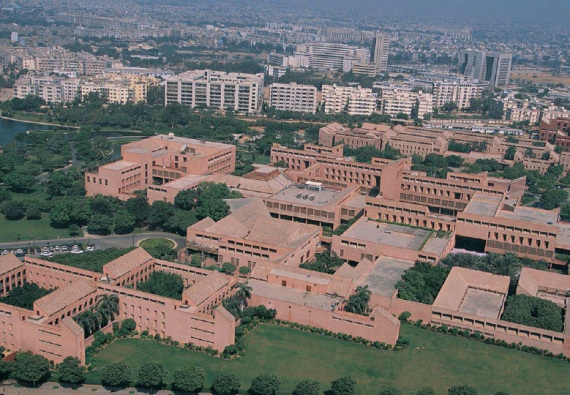
During his Imamat, the establishment of the Aga Khan University in Karachi is probably one of the most significant and monumental projects undertaken in Ismaili history. Its creation and development has led to satellite hospitals and universities in East Africa, and a major mountain university in Central Asia. Over the last 4 decades, the AKU has achieved an international presence and recognition in the world of learning with major educational institutions as its partners — a vision that was first enshrined in the logo of the university.
According to the AKU website, the University’s research endeavours extend across diverse subjects: health sciences, education, culture and society. “At the core of our mission,” the website states, “is the desire to spearhead change for generations to come.” It further adds that the AKU faculty, scientists, educationists and students are engaged in impacting people, communities and societies for a better tomorrow. It gives an example of the Centre for Regenerative Medicine and Stem Cell Research which houses international researchers conducting state of the art research and teaching in basic and translational stem cell science.
Today, we are in the midst of a worldwide crisis – the COVID-19 pandemic. We have already witnessed its social, cultural, and economical impact on billions of people around the world. We don’t want it to remain with us and plague us for years to come, and a vaccine that will address the virus is the only solution we have for our future well-being. In the USA, the cost of a complete COVID-19 treatment for people who are hospitalized is around US $39,000.
The circular form of the Aga Khan University Seal, with its different levels of imagery contained in concentric circles, has its visual roots in the rosettes of early Islamic periods. The circle symbolises the world and reflects the international presence of the University. At the centre of the Seal is a star, or sun. Light is a universal symbol for the enlightenment that education provides.The light emanating from the star is also symbolic of Nur (Divine light).
The development of a vaccine may require millions of dollars, and efforts at developing one may not guarantee that it will be one that is selected for massive immunization. Today, researchers at the AKU, as well as others around the world, have access to the genomic sequence of SARS-CoV-2, the coronavirus that causes COVID-19. Additionally, lab-grown copies of the virus are available to researchers thanks to the efforts made to isolate and culture the virus from two patients by the University of Toronto and McMaster University.
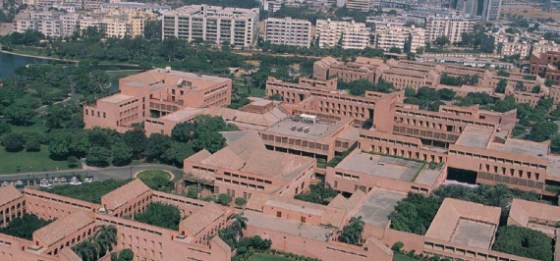
An aerial view of the Aga Khan University in Karachi, Pakistan. The University was chartered as Pakistan’s first private international university in 1983. Photo: Aga Khan Development Network.
If they have not already done so, it is important that the AKU join the collaborative efforts that are being spearheaded by the World Health Organization (WHO), where scientists, physicians, funders and manufacturers from around the world are coming together to help expedite the formulation of a vaccine against COVID-19. In its declaration of April 13, to which several renowned institutions are signatories, the WHO states that “we believe these efforts will help reduce inefficiencies and duplication of effort, and we will work tenaciously to increase the likelihood that one or more safe and effective vaccines will soon be made available to all”.
While a vaccine will take time to develop, it will likely be instrumental in controlling this worldwide pandemic. We hope that the Aga Khan University will dedicate some of its research facility and scientists to the development of a vaccine against COVID-19. The AKU’s contribution may literally change the lives of hundreds of millions of people around the world, just as Imam Sultan Mahomed Shah’s foresight was responsible for saving countless lives.
Date posted: April 14, 2020.
Before departing this website please take a moment to review Simerg’s Table of Contents for links to hundreds of thought provoking pieces on a vast array of subjects including faith and culture, history and philosophy, and arts and letters to name a few.
________________________
Simerg’s Merchant
Malik Merchant is the founding publisher/editor of Simerg (2009), Barakah (2017) and Simergphotos (2012). A former IT consultant, he now dedicates his time to small family projects and other passionate endeavours such as the publication of this website. He is the eldest son of the Late Alwaez Jehangir Merchant (1928-2018) and Alwaeza Maleksultan Merchant, who served Jamati institutions for several decades.
We welcome feedback/letters from our readers. Please use the feedback box which appears below. If you don’t see the box please click Leave a comment. Your comment may be edited for length and brevity, and is subject to moderation. We are unable to acknowledge unpublished letters.
Inna lillahi wa inna ilayhi raji’un “Surely we belong to God and to Him we return” — Holy Qur’an, 2:156
“Life is a great and noble calling, not a mean and grovelling thing to be shuffled through as best as we can but a lofty and exalted destiny.” — Mawlana Sultan Mahomed Shah, His Highness the Aga Khan III (1877-1957), 48th Imam of the Shia Imami Ismaili Muslims.
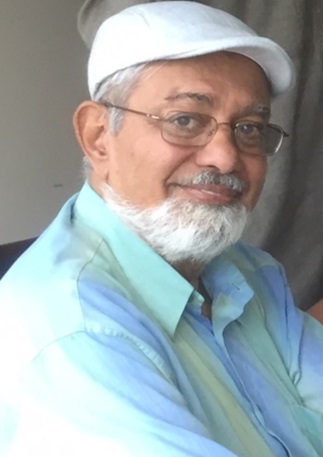
Missionary Amirali Gillani (July 15, 1944 – April 8, 2020). Photo: Family Collection
It is with deep sadness that I inform readers of the passing away of Missionary Amirali Gillani on Wednesday, April 8, 2020 at Toronto’s North York Hospital after a brave and long battle with cancer. He was 75. I learnt of his death from a family member earlier this morning through a text message.
Born in Arusha, Tanzania, he served Jamati institutions in both professional and honorary capacities for several decades, contributing his wisdom until the very last moments of his life. He travelled widely, and finally made his home in Toronto, Canada. Missionary Saheb is survived by four children and five grandchildren.
On April 1, 2020, exactly a week ago, he texted me from the hospital: “Ya Ali Madad. Hope you are well. I am in North York Hospital and my health has deteriorated. With affection, Missionary.” I wanted to visit him but the current state of restrictions in place prevented me from going to the hospital. I responded with a prayer for his strength and courage, and with the hope that I would see him out of the hospital soon. He replied: “Ya Ali Madad. Deeply touched by your prayers. I need His compassion to accept His Will with ease and pleasure. Ya Moula. Affectionately Missionary.” They were profound words.
An articulate missionary with a superb command of the English language, Amirali Gillani was always far ahead of his time in his vision of providing religious education to the Jamat. His ideas more than 50 years ago — and I am referring to the late 1960’s — of utilizing multi media and other technological trends of the day, including the power of TV as well as audio visual concepts, were highly impressive. My late dad, Jehangir Merchant, admired him for his brilliant mind as well as incredible foresight and ingenuity. Alas, we were simply not prepared or ready, even to think about his ideas!
As a close family friend, he would visit my parents whenever institutional duties or personal projects brought him to Dar es Salaam. His contemporaries with whom he graduated in the Waezin program in Pakistan in the 1960’s were Alwaez Nizar Chunara and Alwaez Amirally Mawji, and they would often accompany him.
My most recent — and unforgettable — memory of him was when I spent a couple of hours at his humble apartment in Toronto. A very large portrait of Mawlana Hazar Imam adorned one of the walls, and he had told me a few days earlier before I went to his home, that I would feel the Imam’s presence in his apartment. That I certainly did, not only because of the portrait but also by Missionary Saheb’s overpowering faith, love and affection for Mawlana Hazar Imam. This pulled him through some of the most difficult times in the past few years.
This is a sad moment for the family, especially coming at a time when many of us want to pay our personal respects and be at his funeral, and simply can’t because of the restrictions that are in place due to the novel coronavirus. We convey our deepest heartfelt condolences to members of Missionary Gillani’s family for strength and courage to face his great loss. Our prayers are with them at this time of bereavement.
We pray that Missionary Amirali Gillani rest in eternal peace. Amen.
Date posted: April 8, 2020.
____________________
We invite you to submit your condolences, memories and tributes to Amirali Gillani by completing the feedback form below or by clicking on Leave a comment.
Simerg invites Ismaili families to submit obituaries and tributes for deceased members of their families. For guidelines, please click Passings.
Before departing this website please take a moment to review Simerg’s Table of Contents for links to hundreds of thought provoking pieces on a vast array of subjects including faith and culture, history and philosophy, and arts and letters to name a few.
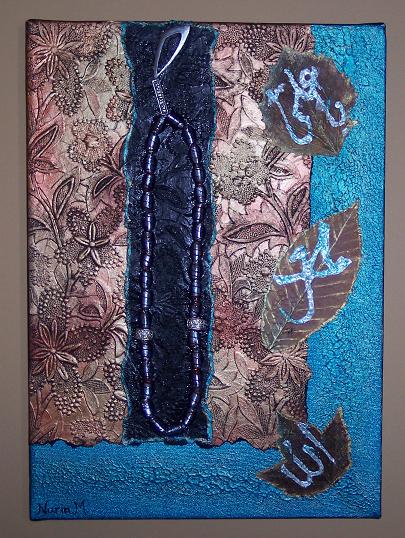
‘The Nature of Prayer’ is a 14″ x 10″ mixed media acrylic painting on canvas. Secured on the canvas with gesso, a strong glue, are a handmade tasbih (prayer beads), and 3 dried leaves bearing the Arabic inscriptions reading from bottom to top, Allah, Muhammad and Ali. The whole piece represents keeping the memory of Allah, and making sure that every day there is in our minds the presence of our faith in our hearts and souls which in itself is a prayer, hence the title of the painting ‘The Nature of Prayer’. This work was Nurin Merchant’s contribution for Colours of Love, an art and culture initiative by the Ismaili Council for Canada in 2008 during the Golden Jubilee Celebrations of Mawlana Hazar Imam, His Highness the Aga Khan.
By DR. V. A. LALANI with additional material by MALIK MERCHANT
In response to a recent piece on the impact of Jamatkhana closures, we were pleased to receive a very inspiring recommendation from Omar Kassam of Vancouver who suggested that we slowly recite the Surah Al-Fatihah while we spend 20 seconds thoroughly washing our hands – the #1 health guideline during the current COVID-19 pandemic. Such is the nature of prayer –- that we can seek out small moments of 1 second, 5 seconds or 20 seconds to the remembrance of God, to exalt Him, and to seek His help. The Surah is regarded as one of greatest Surahs in the Holy Qur’an, along with Surah Al-Ikhlas. The wisdom and prayers contained in this small seven verse Surah are absolutely remarkable.
There are many other opportune moments that we have throughout the day, and Mawlana Hazar Imam has often recommended to us to carry the tasbih with us –- in our pockets or handbags –- and seek out moments of happiness by calling on the name of Allah, Hazrat Ali, Prophet Muhammad or the names of the Imams. He has also asked us to invoke these names during any difficulty we are facing.
What is tasbih and what are its origins in Islam?
The Arabic word tasbih means to exalt God, praise God or to pray to God. It is supererogatory prayer, that is, an act which is considered to be good and beyond the call of duty, and not something that is strictly required.
The word tasbih is also given to the beads strung together in the form of a circle which are used in the process of praying.
The tasbih consists of a string of beads that is looped into a circle. The two ends are passed through a larger, decorative bead where they are tied or woven into a knot. This is the starting point of a tasbih.
Almost all the religions in the world today possess some form of this object which differ a little in size, number and arrangement of beads. Calling it by different names (for example, rosary, in Christianity), they make use of it for the purpose of reciting the name of the deity in whom they believe.
Although tasbih is a constant companion and an object of daily use by the believers, its origin, development and purpose has remained so obscure to most of us that I shall discuss some of the details of this small, but important object.
“Verily in the remembrance of Allah do hearts find rest!” — Holy Qur’an, 13:28
It is said that the first tasbih (supererogatory prayer) was given by the Prophet Muhammad (S.A.S.) to his beloved daughter Hazrat Bibi Fatima (A.S.), the wife of Hazrat Mawla Murtaza Ali (A.S.). This comprise of the praises of Allah, namely, Allahu Akbar (Allah is Great), Subhan Allah (Glory be to Allah) and Al-Hamdu-lillah (All praise is due to Allah). Each of these was to be recited thirty-three times in succession. This is known as Tasbih-e Bibi Fatima.
In the absence of any circular object like the present day tasbih, it is said that Bibi Fatima used to recite these praises taking help of thirty-three stones of dates or thirty-three pebbles.
Later on, as it was found to be very inconvenient to keep loose stones or pebbles, or have to collect them when needed, it was probably decided to string together thirty-three stones of dates or some such object to make a rosary giving it a circular appearance. At a later period, at the point where the knot was tied, a more decorative, larger bead was added, forming what we recognize as the tasbih today. Tasbih prayer beads are made of various materials, including different stones, sterling silver, wood, etc.
The larger bead at the tasbih’s crown is called imam which means ‘a leader’ and it is so called because all recitations start at this point. Imam leads and all the other small beads follow.
In the ordinary Islamic tasbih, the number of beads varies widely from 99 to 102. The 99 bead tasbih may have 2 extra small beads as dividers, after each group of 33 beads. The 102 bead tasbih used in some tariqahs is divided in parts of 12, 22, 34, 22 and 12. Then, of course, we have the commonly used smaller tasbih with 33 beads that is considered in conformity with our Holy Prophet Muhammad’s original conception of tasbih.
As in the 99 bead tasbih, the 33 bead also carries 2 extra beads after each 11 beads, as dividers. The extra small beads act as an informer when the required number of recitations are completed. These are called mui’zin in Arabic which means ‘an informer’ (like the informer who calls Muslims to prayer). In the Indian sub-continent, these two beads are called banga, bangi or bango which all mean ‘a caller’ or ‘an informer’.
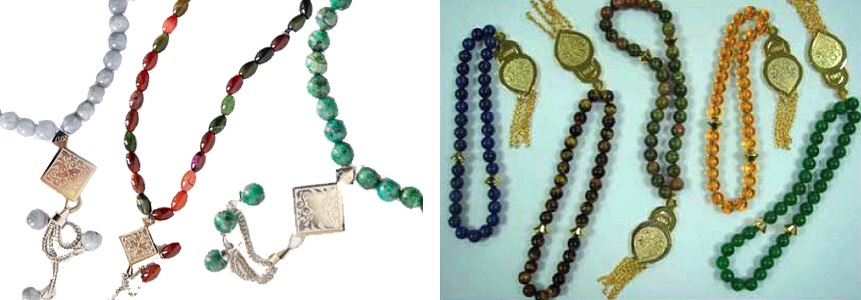
A selection of tasbihs produced during the Diamond Jubilee (left) and Golden Jubilee celebrations of Mawlana Hazar Imam. Photo: The Ismaili.
Among the numerous memorabilia objects that were produced for Mawlana Hazar Imam’s Golden and Diamond Jubilee celebrations in 2007 and 2017, the tasbih was the most sought after item. The Diamond Jubilee tasbihs came with a finely-detailed floral pattern interwoven with intricate and diverging leaves inspired by a Fatimid wood carving. The 33 bead Golden Jubilee tasbihs came in twenty-three varieties of semi-precious stone with the top stem adapted from a 16th century alam (emblem or standard).
“O believers, remember God oft and give Him glory at the dawn and in the evening” — Holy Qur’an, 33:41-42
The last and most important point about tasbih is its purpose. The purpose of tasbih is quite evident and that is to remember Allah.
Over the past 35 years, Mawlana Hazar Imam has sought to encourage us to keep the remembrance of our faith as an integral part of our daily life, and to seek from this remembrance spiritual happiness on an ongoing basis. His most recent reference regarding using the tasbih for calling out the name of Allah, the name of Prophet Muhammad, or Hazrat Ali was in a Farman Mubarak that he made in India in 2018 (see page 144, para. 3, in Diamond Jubilee Farman Mubarak book)
While we all face and feel the effects of the worldwide COVID-19 pandemic with the rest of humanity, let us all recall the message that Mawlana Hazar Imam conveyed to us at the commencement of the Diamond Jubilee year, when he said that the faith of our forefathers would help us to face life’s challenges in times of crisis and rapid changes (see page 12, para. 2, in Diamond Jubilee Farman Mubarak book).
“Sitting, sleeping, going about, take the Lord’s name, take the Lord’s name” — Ginan, Pir Hasan Kabirdin
An illustrious piece of advice regarding our faith comes from none other than our illustrious forefather Pir Hasan Kabirdin, composer of hundreds of Ginans that have illuminated millions of Ismailis over the past seven centuries. In the second verse of Dur Desh Thee Aayo Vannjaaro, he says: “Sitting, sleeping, going about, take the Lord’s name, take the Lord’s name.” (Translation, Aziz Esmail, in his Scent of Sandalwood)
Ginan Dur Desh…sung by Late Shamshu Bandali Haji. Credit: Ginan Central
Carrying the tasbih with us will act as reminder for us to contemplate on the names of Allah, the Prophet and the Imams during any moment in our lifetime. That is the nature of prayer.
Date posted: April 6, 2020.
Before departing this website please take a moment to review Simerg’s Table of Contents for links to hundreds of thought provoking pieces on a vast array of subjects including faith and culture, history and philosophy, and arts and letters to name a few.
______________
This piece contains material from the March 1986 issue of Al-Misbah magazine published by the Ismaili Tariqah and Religious Education Board for the United Kingdom (ITREB). The magazine, like all other religious magazines published by ITREB in numerous countries around the world, ceased publication in the early 1990’s.
Share this article with others via the share option below.
We welcome feedback/letters from our readers. Please use the feedback box which appears below. If you don’t see the box please click LEAVE A COMMENT. Your comment may be edited for length and brevity, and is subject to moderation. We are unable to acknowledge unpublished letters.
Naad E Ali, Original Song at Youtube, Munir Gillani Official
[Note: The lyrics in the song in both Arabic and English are slightly different from the transliteration and translation published below – Ed.]
Nade Ali, Nade Ali, Nade Ali Nade Aliyyan mazhar al-ajaib Tajidahu awnan lakafin-nawaib Kullu hammin wa ghammin sayanj-i Ali Bi wilayatika, Ya Ali! Ya Ali! Ya Ali!
Translation
Call Ali call Ali call Ali, the manifestation of marvels He will be your helper in difficulty Every anxiety and sorrow will end Through your friendship. O Ali, O Ali, O Ali.
Before departing this website please take a moment to review Simerg’s Table of Contents for links to hundreds of thought provoking pieces on a vast array of subjects including faith and culture, history and philosophy, and arts and letters to name a few.
Date posted: April 6, 2020.
_____________________
We welcome your feedback. Please complete the form below or click on LEAVE A COMMENT if the form is not displayed. Comments are published at the discretion of the editor, and may be subject to moderation.
[NOTE FROM WRITER: I wish to clarify at the outset that I am not suggesting that we should be establishing Satadas in our own homes while the Jamatkhanas are closed. COVID-19 has impacted the religious and spiritual lives of hundreds of millions of people around the world, who cannot attend their beautiful and inspiring houses of worship and prayers. Ismailis are also affected due to Jamatkhana closures. However, we can perform our obligatory prayers in our homes individually and with family members who are not in isolation.In this post, we suggest (1) extra prayers we may offer for our comfort, courage and happiness, (2) References to Farmans and Mawlana Hazar Imam’s Talikas that we can read, and (3) Ginans we can listen to from outstanding resources that we have at our disposal such as Ginan Central at the University of Saskatchewan. NOTE: According to the Ismaili calendar the Satada would have begun in Jamatkhanas on April 3. However what is suggested in the post is applicable for all times, and not limited to the prayers performed only during Satadas.Hopefully the Satada that we must all unfortunately miss due to Covid-19 will be established when Jamatkhanas are re-opened after the pandemic is over.]
Thousands of Ismaili families across Canada are receiving phone calls from their respective Jamatkhana leadership including Mukhi/Mukhiani and Kamadia/Kamadiani inquiring about our well-being at this time of the Covid-19 pandemic. Their concern has deeply touched our hearts, and we sincerely thank them for the time they are taking to speak to us, and to patiently listen to our experiences, needs and challenges. They are playing their leadership roles, as representatives of Mawlana Hazar Imam, with an immense amount of affection and love, which we can feel in their voices.
In an inspiring prayer filled phone call yesterday from the Ottawa Jamatkhana Kamadiani, I was informed that according to the 2020 religious festivals calendar, the weeklong Jamati Satada (communal congregational special prayers for 7 continuous days) in Canada would have commenced from Friday, April 3.
Jamati Satada are held twice a year across many parts of the Ismaili world (there are also individual Satadas which, in serious personal cases, can be held at any time of the year at the request of individuals seeking special prayers for members of their families).
During the seven days of Jamati Satada, tens of thousands of Ismailis, young and old alike, gather in Jamatkhanas around the world for special prayers and heartful supplications for protection from difficulties (or Mushkil Asan). The special prayers are not exclusively for Ismailis. They include supplications for the world at large. In addition to 2 Jamati Satadas in a year, special Jamati Satadas can be instituted in exceptional or extraordinary circumstances, such as major natural or man-made calamities.
With the Satada in Canada earmarked to start on Friday, April 3, we have provided for our readers an outline of prayers that may be offered in our homes or individual spaces. The summary reflects the Satada practice that would be normally conducted in the Jamatkhanas, with minor differences. One point to note is that different countries may have their own starting dates for the Satada. The important thing to remember, however, is that it is a continuous 7-day observation.
SUGGESTED PRAYERS FOR “PROTECTION FROM DIFFICULTIES”
The Toronto Ismaili Centre with its magnificent Jamatkhana prayer hall dome. Ismailis await its opening once the city of Toronto has declared victory over Covid-19, and allows large gatherings to take place. Photo: Malik Merchant/Simerg.
1. Recite the two evening Du’a. Remember that in the Du’a, we recite Surah Al-Fatihah (opening of 1st part of Du’a) and Surah Al-Ikhlas (opening of 6th part), both of which are considered to be among the greatest Surahs in the Holy Qur’an. In our beautiful Du’a, we also utter phrases that call for Allah’s mercy and support as well as help and strength from the Imam of the Time, Mawlana Shah Karim al Hussaini Aga Khan.
2. Recite the Satada Tasbih of Ya Ali to Rahem Kar, Ya Ali to Fazal Kar, meaning “O Ali be Merciful, O Lord [Ali] be gracious.”
3. Recite or play recordings of pertinent Ginans and Qasidas of supplication; one such Ginan sung by the Late Shamshudin Bandali Haji, with a link to its English transliteration and translation, is provided below.
5. Also, read Farmans from the recently printed Farman Mubarak books authorized by Mawlana Hazar Imam.
6. After 2nd Du’a, partake in Ab-e-Shifa (water of healing) if you have it with you.
Also, during the Coronavirus crisis, and also at other times when times are good:
7. Ask and motivate children and youth to learn and memorize the meaning of the Du’a. Seriously, consider this as one of the most important building block of our faith, and treat it as one of the most important missions that you have. When Mawlana Hazar Imam blessed my late dad Jehangir Merchant with a few precious minutes of his time in Lourenço Marques (now Maputo), one of the first questions he put to him was whether children were being taught the meaning of the Du’a.
8. Make faith part of our daily life. Even if it be for a moment or a few seconds, say Ya Allah, Ya Muhammad or Ya Ali, or call on the names of our Imams, keeping in mind that all hereditary Imams from Hazrat Ali are bearers of the same Noor.
9. Recite the Salwat Allahumm-a Sall-i ‘Ala Muhammad-in Wa Al-i Muhammad, meaning “O, Allah shower thy choicest blessings upon Muhammad and the progeny of Muhammad.” This tasbih is recited on Chandraat.
10. Recite the tasbih of Bibi Fatimah. They are Allahu Akhbar meaning God is Great, Subhanallah meaning Glory be to God, and Alhamdulillah meaning All praise is due to Allah. According to Islamic tradition, the Prophet Muhammad (S.A.S.) had recommended the tasbih to his beloved daughter Bibi Fatimah (A.S.), and hence its name. It is recited on Chandraat, along with the Salwaat.
11. Seek forgiveness by reciting Astaghafirullahi Rabbi Wa Atubu Ilayhi meaning “Verily, I seek the forgiveness of Allah, who is my Lord and Sustainer, and I turn to Him in repentance.” It is recited when prayers are offered for deceased souls.
12. If you are really fearful of what is going on around you, say the Nade Ali a few times for hope, courage and strength.
Nade Ali, Nade Ali, Nade Ali Nade Aliyyan mazhar al-ajaib Tajidahu awnan lakafin-nawaib Kullu hammin wa ghammin sayanj-i Ali Bi wilayatika, Ya Ali! Ya Ali! Ya Ali!
MEANING
Call Ali call Ali call Ali, the manifestation of marvels He will be your helper in difficulty Every anxiety and sorrow will end Through your friendship. O Ali, O Ali, O Ali.
Recitation of Ginan by (Late) Alwaez Shamshu Bandali Haji
Please click Ismaili Heritage for an English transliteration with translation.
Date posted: April 2, 2020. Last updated: April 4, 2020 (editorial note, at top).
______________________
Simerg’s Malik Merchant
Malik Merchant is the founding publisher/editor of Simerg (2009), Barakah (2017) and Simergphotos (2012). A former IT consultant, he now dedicates his time to small family projects and other passionate endeavours such as the publication of this website. He is the eldest son of the Late Alwaez Jehangir Merchant and Alwaeza Maleksultan Merchant, who served Jamati institutions for several decades.
We welcome your feedback. Please complete the form below or click on Leave a comment if the form is not displayed. Comments are published at the discretion of the editor. and may be subject to moderation.













 Simerg - Insights from Around the World