
Abstract: In this expanded version of his original article, which was published in the February 2025 issue of the Institute of Ismaili Studies Alumni Newsletter, Professor Karim writes about the subtle dynamics between the Imam-of-the-Time and those in his service, an insight he gained from his personal interactions with Mawlana Shah Karim Shah, who appointed him to the leadership of the Institute of Ismaili Studies. The article not only describes the contemporary dynamics but also emphasizes the enduring historical significance of truth, faith, piety, and proper management in Ismaili administration, instilling a sense of tradition and continuity.
To be asked by Mawlana Shah Karim (1936-2025) to lead the Institute of Ismaili Studies (IIS) was an exceptional honour. The London-based IIS is unique among the large number of institutions that His Late Highness Aga Khan IV and 49th Nizari Ismaili Imam established in his Imamat of 67 years (July 11, 1957, to February 4, 2025). Its management demands a nuanced understanding of the academic and communal spheres which intersect within it. The Imam’s invitation to me in 2009 felt like the culmination of a long relationship with the Institute, where I had been a student, a research collaborator and a senior visiting scholar over the previous two and a half decades. I stepped down from my position as Director of Carleton University’s renowned School of Journalism and Communication and headed for London.
Story continues below
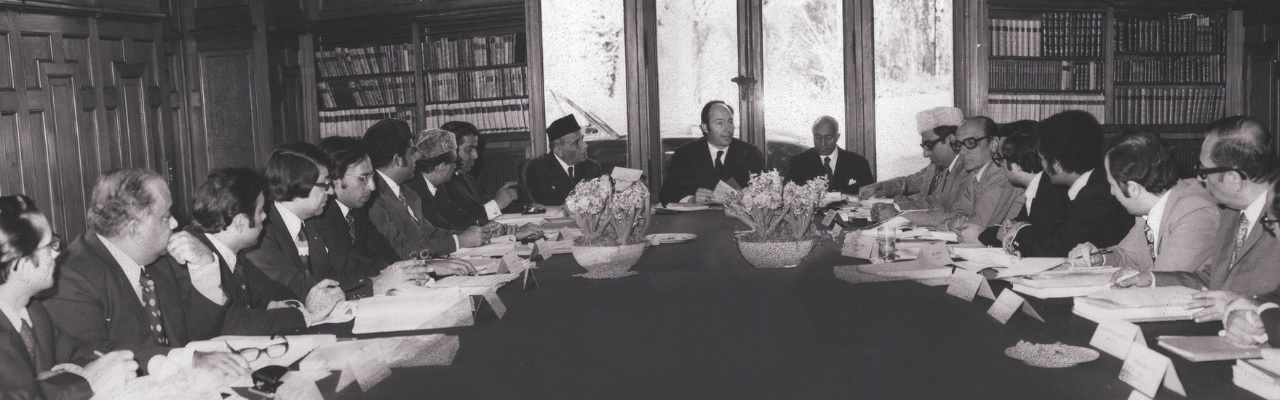
Before joining the IIS as Co-Director, it had been my privilege to give seva (service) to jamati (community) institutions in Kenya, USA, UK and Canada. I had also conducted research for Aga Khan Foundation Canada and been a correspondent for Compass News Features, a media agency which Mawlana Shah Karim founded in Luxembourg. The Aga Khan University (AKU) had asked me in 2007 to serve on an international “Thinking Group,” comprising prominent professors and senior journalists who were tasked with exploring the possibility of establishing a Graduate School of Media and Communications. Several months into the deliberations, Aga Khan IV, the university’s founding chancellor, informed us that he would meet with us in Washington, DC. We were assembled in a room when His Highness walked in, wearing a sling on his right arm because of a skiing accident a few weeks prior. He went around the table, smiling and graciously greeting each person. Having led the highly successful Nation media organization in East Africa since the late 1950s, he spoke about the media business and journalism education. With Kenya’s post-election violence fresh in his mind, the Imam shared insights about how the corruption of journalists and media owners contributed to social instability. The distinguished group was impressed with the breadth and depth of his knowledge and left with a deepened scope of considerations. Some seven graduate AKU schools had been planned but only the Graduate School of Media and Communications in Nairobi proceeded to establishment. I was thankful that Mawlana Shah Karim gave me the opportunity to contribute to my country of birth in this manner.
It was September 2009 when I arrived in London from Ottawa, Canada, to assume the IIS’s co-directorship. A few weeks later, Mawlana Shah Karim invited the Aga Khan Development Network’s Higher Education Forum, of which I was a member, to a dinner meeting at his secretariat in Aiglemont, France. The Forum also included the senior leadership of Aga Khan Foundation, Aga Khan University, the University of Central Asia, Aga Khan Academies, and Aga Khan Education Services. According to the arrangements that the Imam had determined, Azim Nanji, the preceding IIS director, was to be seated on Mawlana Shah Karim’s left-hand side and I on his right. This was a remarkable honour for Azim Nanji, me and the IIS. The Imam entered the room, greeting us warmly. Attendees took their seats but, feeling daunted, I hesitated. Mawlana Shah Karim kindly gestured for me to sit next to him. The participants presented project updates about which the Imam asked probing questions. He was gracious about shortcomings and made suggestions on dealing with challenges. After the meeting came to a close, Mawlana Shah Karim looked at me and told me not to hesitate to contact him should the need arise. I felt humbled and immensely grateful.
“I was convinced that it was vital for individuals tasked with responsibilities to be entirely transparent with Mawlana Shah Karim even if it produced discomfort for oneself and others in the room. Therefore, I became resolute in speaking up — at the risk of being marginalized — when I saw things to be amiss. Mawlana Shah Karim’s positive responses to my carefully considered interventions were very encouraging.” — Karim H Karim
It was my good fortune to have a number of interactions with the 49th Imam. He upheld very high standards and asked the same of others. Mawlana Shah Karim expected accurate information and frankness, especially when goals had not been met. Having thoroughly read the papers submitted in advance of meetings he inquired into specifics and gave discerning guidance. From time to time, as the discussion was flowing in a particular direction, I would ask myself whether it was appropriate for me to offer contrary observations and critical thoughts on vital points. It turned out that Mawlana Shah Karim appreciated such interventions, which I sought to conduct in a thoughtful and respectful manner. He was also kind in tolerating my errors, gently directing me towards correcting them. This helped me understand more clearly the subtle dynamics of interaction between the Imam and those in his service.
Around a thousand years ago, da‘i Ahmed al-Naysaburi’s writings reminded Fatimid administrators that the Imam-of-the-Time depends on them for the ethical governance of his community, failing which “chaos will reign.” He was extremely concerned that influential officials had become preoccupied with their own power and privilege rather prioritizing knowledge of the faith (ilm), piety (taqwa) and proper administration (siyasa), the fundamental principles by which the Imamat’s institutions should abide. The more meetings I attended with Mawlana Shah Karim the more it became apparent that he was not always receiving the complete picture, especially when conflicts of interests were involved or when things had not turned out according to expectations. Qadi al-Nu‘man, who was a close confidant of several Fatimid Imams, advised those who interacted with the Imam: “Let us speak the truth and hide nothing from the Imams.” I was convinced that it was vital for individuals tasked with responsibilities to be entirely transparent with Mawlana Shah Karim even if it produced discomfort for oneself and others in the room. Therefore, I became resolute in speaking up — at the risk of being marginalized — when I saw things to be amiss. Mawlana Shah Karim’s positive responses to my carefully considered interventions were very encouraging.
However, adverse organizational currents began to generate a disabling environment for me. I strived to deal with the changing situation, but it became increasingly problematic to carry out my duties. Being under intense stress, I was compelled to review my position and consider the possibility of moving back to Canada. This presented an extremely difficult situation: it was my Imam who had personally selected me for the leadership role in his vital institution, and I felt deeply distressed that I would be letting him down. After several long weeks of agonizing, I wrote to him seeking guidance. Mawlana Shah Karim’s personal assistant contacted me to arrange a telephone call. I waited anxiously in my office as the time arrived. The phone rang, and the assistant informed me that the Imam was on the line.
Mawlana Shah Karim greeted me affectionately and he mentioned a current international issue which we discussed briefly. Turning to the matter at hand, he said that he understood the organizationally problematic nature of the situation and appreciated the difficulty of the circumstances for me. The Imam told me that it was my decision to stay or to leave and that he would be fine with whatever I decided. Mawlana Shah Karim assured me that “there are many ways to serve.” These words, expressed with paternal care, lifted an enormous weight from my shoulders. Following considerable further reflection, I wrote to the Imam of my decision to return to Canada. Upon settling back in Ottawa, I continued to provide service to Imamat institutions like the Central Asian and Aga Khan universities and was immensely pleased with Mawlana Shah Karim’s continued positive responses to my recommendations.
Story continues below
Mawlana Shah Karim’s words from the phone call shaped the direction of my subsequent service to the Imamat and the community. While at the IIS, I had published a chapter on Ismailis in Canada in a book that my fellow Co-Director Farhad Daftary edited. This was the beginning of a series of writings on the contemporary community, which I am analyzing from the basis of my research and institutional service. The insights gained from these sources have strengthened my conviction about the vital importance of upholding intellectual rigour and professional ethics in studying the community, its organizations and its leadership. I draw from my academic training as well as my religious commitment to truth in this endeavour. It is of great significance to me that the original and authentic name of the Imamat’s movement is “Da‘wat al-Haqq” — Invitation to Truth — which has involved critical self-reflection on the part of the community’s intellectuals in their endeavour to uphold its integrity.
At the grand Diamond Jubilee Darbar in Lisbon in July 2018, Mawlana Shah Karim asked his murids (committed aspirants) to be da‘is (summoners to truth). As mentioned above, Ismaili da‘is like al-Nu‘man and al-Naysaburi provided corrective guidance to officers of the Fatimid state who lapsed ethically from time to time. Administrators are under pressure to deliver on commitments and tend on occasion to adopt means that diverge, often unknowingly, from the tradition’s ethical precepts. It is vital that there be an intellectual counterpoint in the contemporary community that discusses ethical adherence with the institutional structure just as al-Nu‘man, al-Naysaburi and other da‘is did in their time. Upon discussing this matter with a former president of the Aga Khan Ismaili Council for Canada, I learned that Mawlana Shah Karim advised community leaders to engage in productive discourse with the independent voices of sincere murids.
My writings and oral discourses, which seek to offer respectful and carefully considered communal self-critique, elicit considerable discussion and feedback. A conference paper that I delivered in 2022 at the IIS on the challenges of ethical propriety in Ismaili institutions generated intense debate, with scholars and students variously agreeing and disagreeing with me. I am heartened that many scholars cite my writings on contemporary Ismaili topics in their academic publications. However, I consider the platforms of independent and autonomous Ismaili communal media like Simerg to be the most viable venues for sharing analysis and engaging in discussion with the community and its leadership.
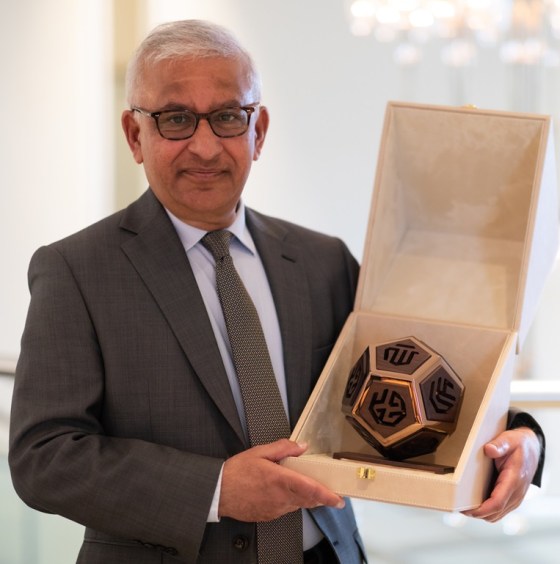
Mawlana Shah Karim’s advice that “there are many ways to serve” has constantly inspired and motivated me to pursue a path that may be occasionally contentious but constantly and sincerely strives to respond to the da‘wa’s call to truth. It was extremely humbling and encouraging that in 2024 the IIS endowed me with an award for “exceptional service, leadership, positive impact and professional excellence.”
Date posted: September 29, 2025.
________________

About the author: Karim H. Karim is a Chancellor’s Professor at Carleton University in Canada. He has served as Co-Director of the Institute of Ismaili Studies and as Director of Carleton University’s Centre for the Study of Islam and its School of Journalism and Communication. Professor Karim is a prize-winning, interdisciplinary scholar whose publications have received worldwide acclaim. The Ismaili Imamat, the Government of Canada, the Institute of Ismaili Studies and civil society organizations have granted him honours.
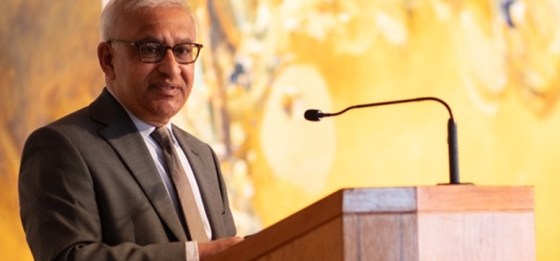
Featured photo at the top of the post: Professor Karim H Karim delivering his remarks on March 23, 2024, at the Ismaili Centre in London upon being presented with the Inaugural Alumni Recognition from the Institute of Ismaili Studies. Photograph: Institute of Ismaili Studies via Karim H. Karim.
If you have feedback on this piece, please click LEAVE A COMMENT. Also, don’t miss the opportunity to explore the diverse and extensive range of articles by clicking on TABLE OF CONTENTS. We also invite you to visit our sister websites, Barakah and Simergphotos. You can stay updated by following the editor, Malik Merchant, @Facebook, @X and @LinkedIn.
~~~~~~~~
Articles contributed by Karim H Karim on Simerg and its sister websites:
- Barakah: The Imamat on striving for leadership
- Simerg: “Let the Truth Infuse Your Words:” A Reflection by Professor Karim H. Karim as the Institute of Ismaili Studies Presents Him the Inaugural Alumni Recognition Award
- Simerg: A Discovery of Deep Truth at Kilimanjaro’s Summit: Recalling a Fifty-Year-Old Outward Bound Adventure
- Barakah: Speaking to Post-Secular Society: The Aga Khan’s Public Discourse
- Simerg: The Ismaili Imamat and Spiritual Meaning: Communicating the Zahir and the Batin
- Simerg: The Da‘i and His Invitation to the Truth
- Simerg: Reflections on the Design of the Ismaili Center Houston
- Simerg: Nazil Kara (1957-2018): An Ordinary and Extraordinary Satpanthi Woman
- Simerg: The Melodious Life and Legacy of Shamshu Jamal (1936 – 2019)








 Simerg - Insights from Around the World