Simerg’s Special Series on Books by Ismaili Authors: “Faith and Ethics: The Vision of the Ismaili Imamat” by M. Ali Lakhani of Vancouver – a Must Read in Preparation for Mawlana Hazar Imam His Highness the Aga Khan’s 64th Imamat Day on July 11, 2021

by MALIK MERCHANT
Publisher/Editor SimergBarakah and Simergphotos

Simerg’s series entitled “Books by Ismaili Authors” continues with Canadian writer M. Ali Lakhani’s book “Faith and Ethics: The Vision of the Ismaili Imamat”. We follow the same Q/A format as our recent presentations of books written by Nizar Sultan, Nargis Fazal, Nazlin Rahemtulla, Azmina Suleman, Alnasir Rajan, Shafeen Ali, Mansoor Ladha, Zeni Shariff and Shamas Nanji. We invite Ismaili authors around the world to participate in this series, regardless of when their books were published. See details of the series HERE and submit your responses to Simerg’s editor, Malik, at Simerg@aol.com.

****************

Simerg: What is behind the naming of the title of the book? 

M. Ali Lakhani: The book is the first major survey of the ideas of His Highness Prince Karim Aga Khan, based on his public statements over the last six decades. It illustrates how the ethos of the Ismaili Imamat is derived from the principle of tawhid, what the Imam calls an “all-encompassing unity” which is the essence of the faith of Islam. Ethics is the way of translating faith into action, of bringing our faith into the world; which is why the Imam defines ethics as the bridge between faith (din) and the world (duniya). The title of my book reflects this principal theme.

Simerg: Why would you want me or my family members to read the book, and what will we all learn from it?

Lakhani: The book will, it is hoped, explain the key messages of the Ismaili Imam to both Ismailis and to non-Ismaili audiences. It addresses the themes of, for example, tradition and modernity, the modernist ethos, Islam and the West, cosmopolitanism and pluralism, and harmonizing identity and belonging through culture.

Simerg: What inspired you to write the book?

Lakhani: I was invited by the Institute of Ismaili Studies (IIS) to write the book in order to expand on the ideas of my essay, published in volume 34 of my journal, Sacred Web titled ‘Living the Ethics of One’s Faith: The Aga Khan’s Integral Vision’. (Read article)

I have also spoken about these ideas at the Royal Asiatic Society (for the Temenos Academy) and have written about them for the Doha International Centre in an article titled ‘Integral Pluralism as the Basis for Harmony: The Approach of His Highness The Aga Khan’ (Read article).

Article continues below

____________________

M. Ali Lakhani’s “Faith and Ethics: The Vision of the Ismaili Imamat” examines how the ideas and actions of the 49th Ismaili Imam, Prince Karim Aga Khan, provide an Islamic response to the challenges that face Muslims in the modern era.
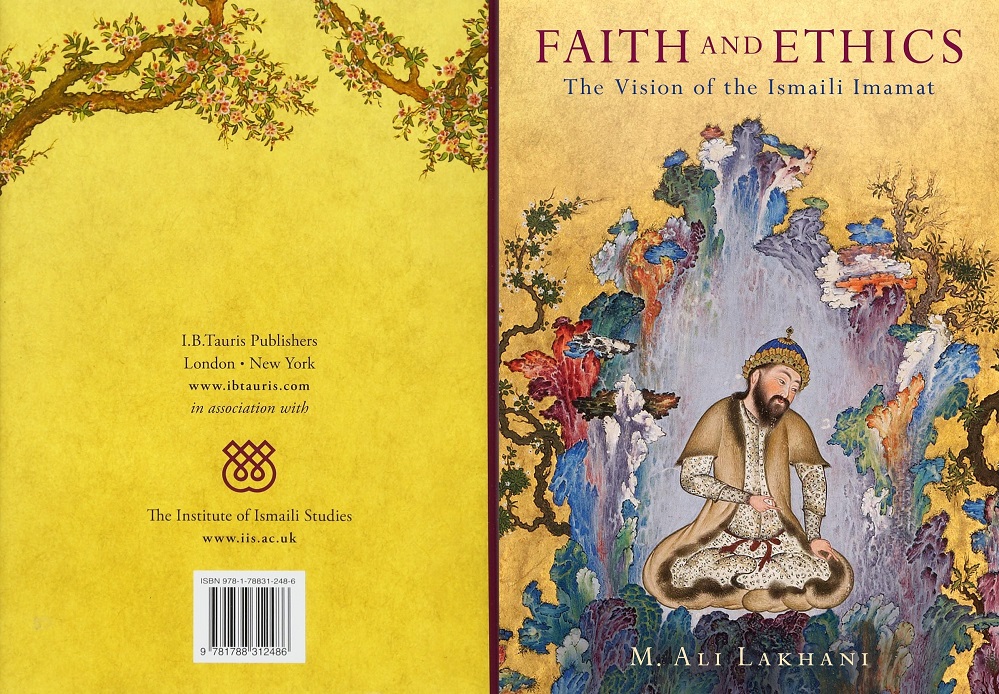
Jacket of M. Ali Lakhani's "FAITH AND ETHICS: The Vision of the Ismaili Imamat," 272 pp, I.B. Tauris and the Institute of Ismaili Studies; December 2017, Illustrated edition, Feb. 28 2018, Ismaili authors series Simerg
Jacket of M. Ali Lakhani’s “FAITH AND ETHICS: The Vision of the Ismaili Imamat,” 272 pp, I.B. Tauris and the Institute of Ismaili Studies; December 2017, Illustrated edition, Feb. 28 2018.

____________________

Simerg: How can I purchase the book and what are its available formats?

Lakhani: The book was published by the IIS and IB Tauris in 2017, and is available in hardcover format from Amazon Canada, and as a Kobo Ebook at Chapters-Indigo. Both the Kindle and hardcover editions are also available at Amazon.com, and Barnes and Nobles has the book available in hardback as well as a NOOK book. Prices vary from store to store.

[The book may be eligible for delivery within Canada in your area by July 7, 2021; please click Amazon Canada, free delivery is available with Amazon prime membership; the other option is to purchase it as an ebook, as noted above — Ed.]

Simerg: How did you find a publisher for the book?

Lakhani: The book was commissioned by the publisher, the IIS. I accepted the commission on condition that it would be my independent work of scholarship, free of any influence regarding its content by the IIS. 

Simerg: Did you hire an editor, an illustrator or did you do all the work by yourself?

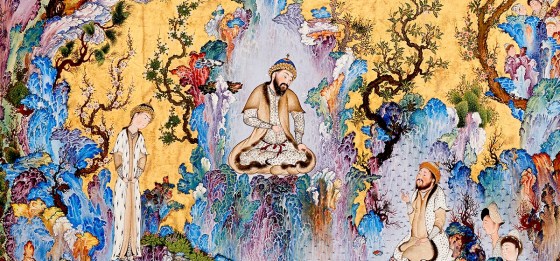
Lakhani: I handpicked the illustrations, including the splendid cover illustration, whose marvelous original is housed at the Aga Khan Museum in Toronto, and which depicts the ethical human being, a major theme of the book (as I explain in the text).

Article continues below

Praise for Ali Lakhani’s Book

Lakhani’s lengthy discussion of the Aga Khan’s cosmopolitan approach to modern conflict simultaneously has the wider application of demonstrating to outsiders that Islam in the orthodox, Quranic sense is a religion of unity and justice, not of persecution and oppression…. Islam as presented in the Quran and by the Muslim sages is anything but pitiless and fanatical; it is joyful, intellectually rigorous and compassionate….The Aga Khan’s ethical teachings as presented in this book are especially applicable to the challenges presented by religious pluralism and to encouraging dialogue between religious perspectives, and to calm down reactions to polemics between religious people and secularists, but less so for conflict resolution that requires shared epistemological and ontological principles…. Lakhani’s book is valuable for the insight it offers into Islam’s rich pluralistic and tolerant tradition.” — Andrew Frisardi, American writer whose essays and reviews have appeared in numerous U.S. magazines and journals, including the Atlantic Monthly, Hudson Review, the New Republic and the New Yorker (Read full review)

__________________

Simerg: Which was your first book and how many have you written?

Lakhani: This was my third published book of a total of four books by me. It was an honor to have this book published by the IIS on the occasion of the Imam’s Diamond Jubilee.

My other three publications are:

The Sacred Foundations of Justice in Islam contains my First Prize essay on Imam Ali from the 2001 Imam Ali International Conference. That essay and Dr. Reza Shah Kazemi’s Second Prize essay were hailed by Dr. Seyyed Hossein Nasr to be among the best writings in English on Imam Ali.

The Timeless Relevance of Traditional Wisdom contains many of my writings on metaphysics, religion, philosophy, tradition and modernity, gathered from my biannual book-form journal, Sacred Web: A Journal of Tradition and Modernity (www.sacredweb.com).

When the Rose Blooms (The Matheson Trust, London, 2021), my latest book, is a collection of spiritual aphorisms which I wrote more than three decades ago. The book includes beautiful illustrations which were designed by Nigel Jackson.

Synopsis of the Book
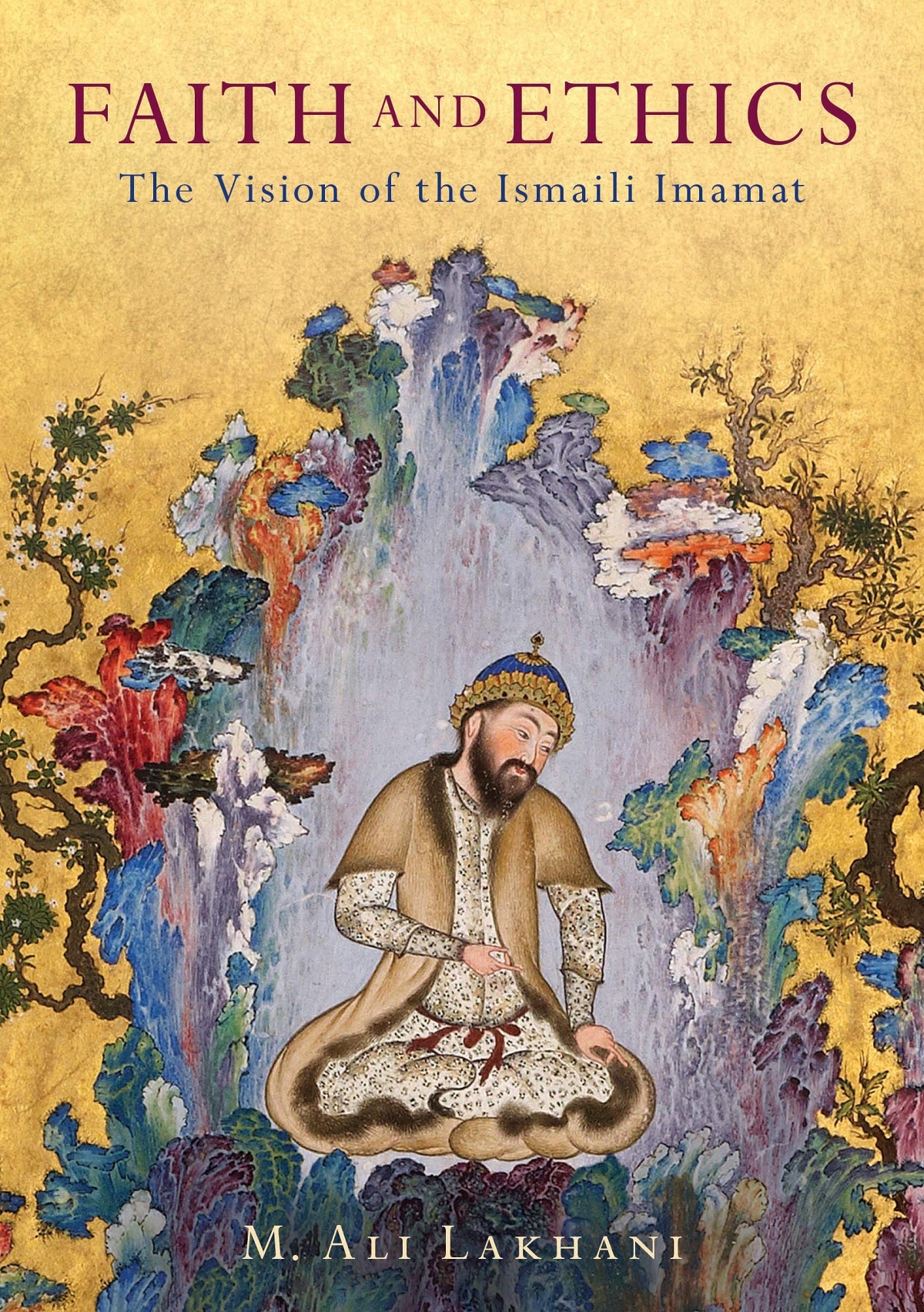
Cover of the book 'Faith and Ethics: The Vision of the Ismaili Imamat' by M. Ali Lakhani, featuring intricate illustrations and vibrant colors.

Shi`i Ismaili Muslims are unique in following a living, hereditary Imam (spiritual leader), whom they believe to be directly descended from the Prophet Muhammad. The Imam’s duty has been to guide his community with Islamic principles that apply to the needs of the time.

In this insightful book, M. Ali Lakhani examines how the ideas and actions of the current Ismaili Imam, and fourth Aga Khan, Prince Karim al-Hussaini, provide an Islamic response to the challenges that face Muslims in the modern era. Prince Karim’s programmes, implemented mainly through the broad institutional framework of the Aga Khan Development Network, are aimed at improving the quality of human life among the disadvantaged, regardless of their religion or ethnicity. Addressing global issues ranging from healthcare and education to culture and civil society, the Aga Khan’s initiatives are founded on core Islamic principles and values. This book is the first to provide an extensive survey of the Aga Khan’s aspirations, showing how the values of integrity and dignity are at the forefront of his work, with the traditional Muslim concepts of cosmopolitanism and social justice guiding his response to the stark challenges of the modern age.

At a time when criticisms and misrepresentation surrounding Islam abound, Faith and Ethics explores the religion’s universal principles and values, which the author believes can make a positive impact both among Muslims and non-Muslims. The book will be of special interest to scholars researching Islam, Muslim faith and ethics and the Ismailis, and to general readers wanting a deeper understanding of Islam.

Date posted: July 4, 2021.

_______________________

M. Ali Lakhani editor sacred web ismaili author  of Faith and Ethics: The Vision of the Ismaili Imamat, Simerg series on Ismaili authors
M. Ali Lakhani

M. Ali Lakhani, QC, graduated from Cambridge University and has been practising as a barrister in Vancouver for the last forty years. Interested in applying metaphysics to modern world issues, in 1998 he founded Sacred Web: A Journal of Tradition and Modernity, a leading journal in the field that has published articles by the Prince of Wales, the Dalai Lama, Karen Armstrong, Huston Smith, Seyyed Hossein Nasr and William C. Chittick, among others.

_____________________

Calling all Ismaili Authors

We encourage Ismaili writers to introduce their books in a similar format as has been done in the post above. Please also see the series launch article and submit your responses to Malik at Simerg@aol.com. All submissions will be acknowledged. If a writer has published multiple books, each book will be highlighted in a separate article, and not combined with other books into one post. All writers should include a brief profile with a portrait photo.

The Ismaili Authors’ Series so far (in chronological sequence, oldest article first):

  1. “Justice Bertha Wilson Pushes the Boundaries of Humanity” by Shamas Nanji (series start, February 10, 2021)
  2. “Little One, You Are The Universe” by Zeni Shariff (February 25, 2021)
  3. “Memoirs of a Muhindi” by Mansoor Ladha (March 6, 2021)
  4. “To Be One With God: Seven Journeys to the Meaning of Life” by Shafeen Ali (March 25, 2021)
  5. “Invisible Birthmarks” by Alnasir Rajan (April 13, 2021)
  6. “IN THE NAME OF JUSTICE – Portrait of a ‘Cowboy’ Judge” by Azmina Suleman (April 28, 2021)
  7. “RSVP Rice and Stew Very Plenty” by Nazlin Rahemtulla (May 28, 2021)
  8. “Coughdrops” by Nargis Fazal (June 12, 2021)
  9. “The Roots and the Trees” by Nizar Sultan (June 25, 2021)
  10. “Faith and Ethics: The Vision of the Ismaili Imamat” by M. Ali Lakhani (July 4, 2021)

_______________________

We welcome feedback from our readers. Please complete the LEAVE A REPLY form below or click Leave a comment. Your letter may be edited for length and brevity, and is subject to moderation.

Before departing this website please take a moment to review Simerg’s Table of Contents for links to hundreds of thought provoking pieces on a vast array of subjects including faith and culture, history and philosophy, and arts and letters to name a few. Also visit Simerg’s sister websites Barakah, dedicated to His Highness the Aga Khan, and Simergphotos.
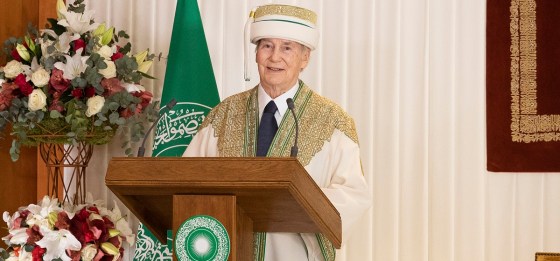
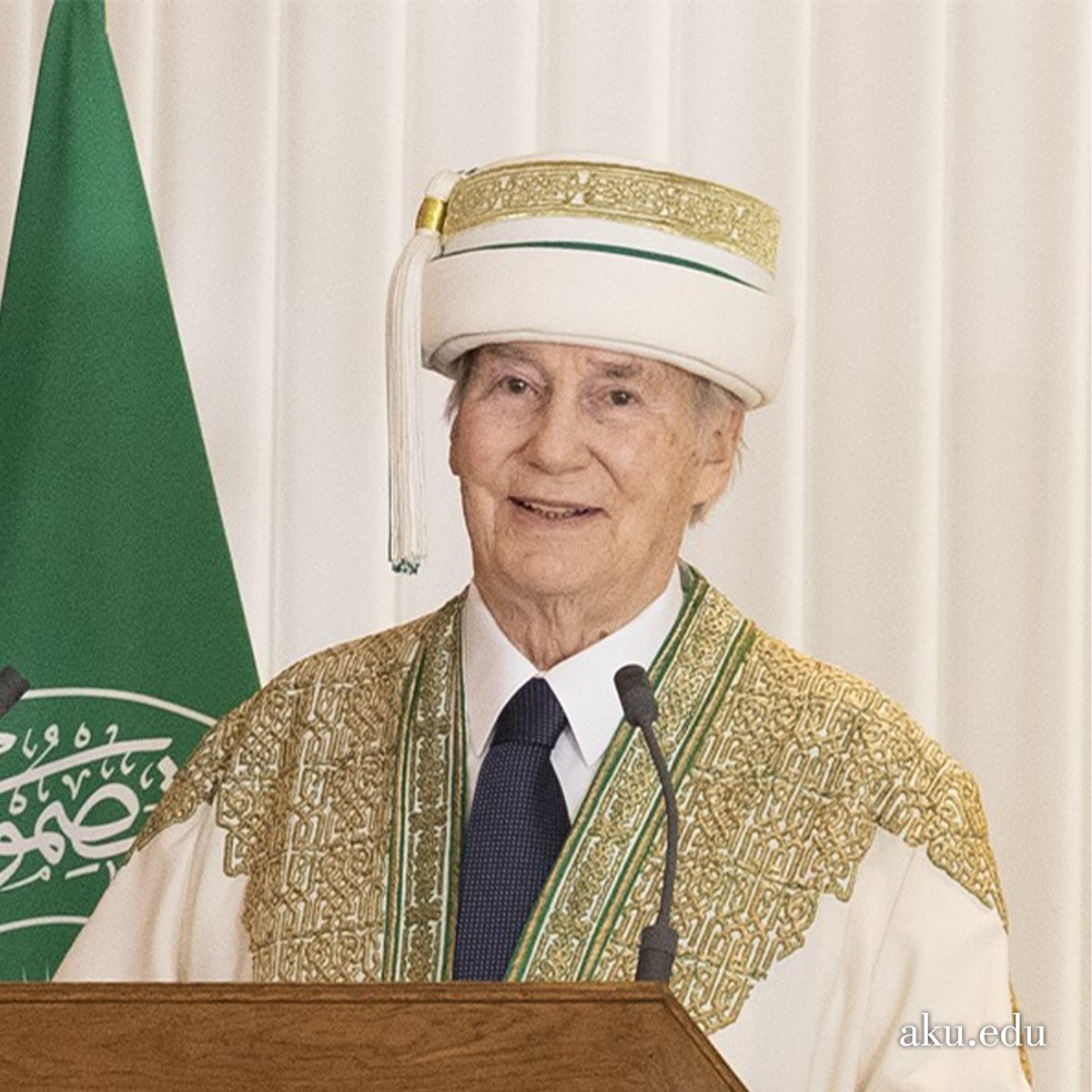
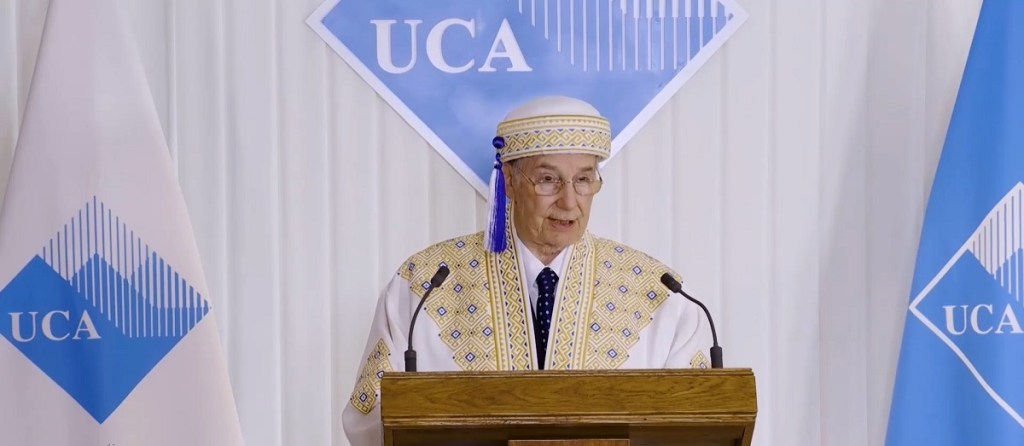
Barakah Presents Thematic Excerpts from Mawlana Hazar Imam’s University of Central Asia Convocation Speech Made on June 19, 2021

“I urge the faculty and students to give utmost attention to enhance the current learning and create new knowledge through research, which is the most important factor for improving the quality of life of those who live in these mountain ranges” — Mawlana Hazar Imam, His Highness the Aga Khan, June 19, 2021….. For more, please click Barakah or on photo below.

A note to all our readers around the world: Simerg’s sister website Barakah is dedicated to Mawlana Hazar Imam, members of his family and the Ismaili Imamat. Please visit this wonderful textual and visual initiative, which is informative, engaging and appealing.

Please click on photo for thematic excerpts of virtual speech delivered by Mawlana Hazar Imam, His Highness the Aga Khan, on June 19, 2021

Date posted: June 19, 2021.

___________________

Barakah Presents Photos of His Highness the Aga Khan from the Bernard Gotfryd Collection at the US Library of Congress

Simerg’s sister website Barakah, which is dedicated to Mawlana Hazar Imam His Highness the Aga Khan, members of his family and the Ismaili Imamat, presents a small but impressive suite of photos of Mawlana Hazar Imam and members of his family by acclaimed photojournalist Bernard Gotfryd (d. 2016). Please click Photos of Mawlana Hazar Imam by Gotfryd or on image below.

Aga Khan Bernard Gotfryd LOC
Mawlana Hazar Imam, His Highness the Aga Khan. Photo: Bernard Gotfryd / Library of Congress. Please click on image for Barakah’s post with more photos.

Over the coming weeks, readers will be seeing many more collections of historic photos of Mawlana Hazar Imam and his family that have been submitted to us for publication. We thank families around the world for their excellent response to our request to seek out their khajanas (treasures) from their old albums and archives. Please continue to search your archives and write to Malik Merchant at Simerg@aol.com to discuss your collection. All letters will be responded to within 24 hours.

Again, to view our latest post please click Aga Khan Photos by Bernard Gotfryd, and share the link with your family and friends around the world.

Date posted: May 30, 2021

___________________

7 Key Themes from Mawlana Hazar Imam’s Aga Khan University Convocation Address

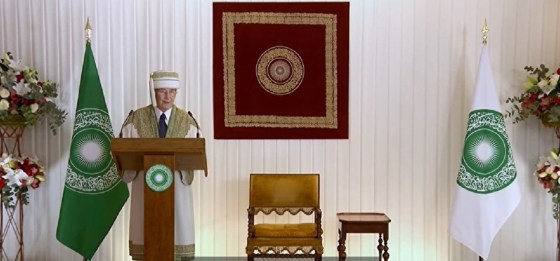
Simerg’s sister website Barakah is dedicated to Mawlana Hazar Imam, His Highness the Aga Khan, members of his family and the Ismaili Imamat. Barakah has broken down Mawlana Hazar Imam’s Aga Khan University Convocation address which was delivered virtually on May 22, 2021 to a world wide audience into 7 themes. The Barakah post includes pertinent photos and carries appropriate subtitles to make it highly readable. To read the excerpts please click on Address by His Highness the Aga Khan or the photo below.

Mawlana Hazar Imam, His Highness the Aga Khan, Barakah, a website dedicated to the Aga Khan
Mawlana Hazar Imam, His Highness the Aga Khan, addressing the 2020 Aga Khan University Convocation. Please click photo for thematic excerpts of his speech. Photo: Facebook / AKU

Date posted: May 22, 2021.

___________________________

Mawlana Hazar Imam, His Highness the Aga Khan, and Melinda Gates Address First Ever Global Aga Khan University Convocation

(NOTE: For a more detailed report, with photos, of this morning’s Global Convocation event, please click Barakah, a website dedicated to Mawlana Hazar Imam, members of his family and the Ismaili Imamat – Ed.)

For the first time ever, the Aga Khan University this morning, Saturday May 22, 2021 brought together all the graduating classes in Kenya, Pakistan, Uganda, Tanzania and the United Kingdom in a single Global Convocation that is being held throughout the day. The Global Convocation began at approximately 8:45AM (Toronto time), and included speeches by the outgoing president of the Aga Khan University, Firoz Rasul, Melinda French Gates, Co-Chair and Trustee of the Bill & Melinda Gates Foundation, and Mawlana Hazar Imam, His Highness the Aga Khan.

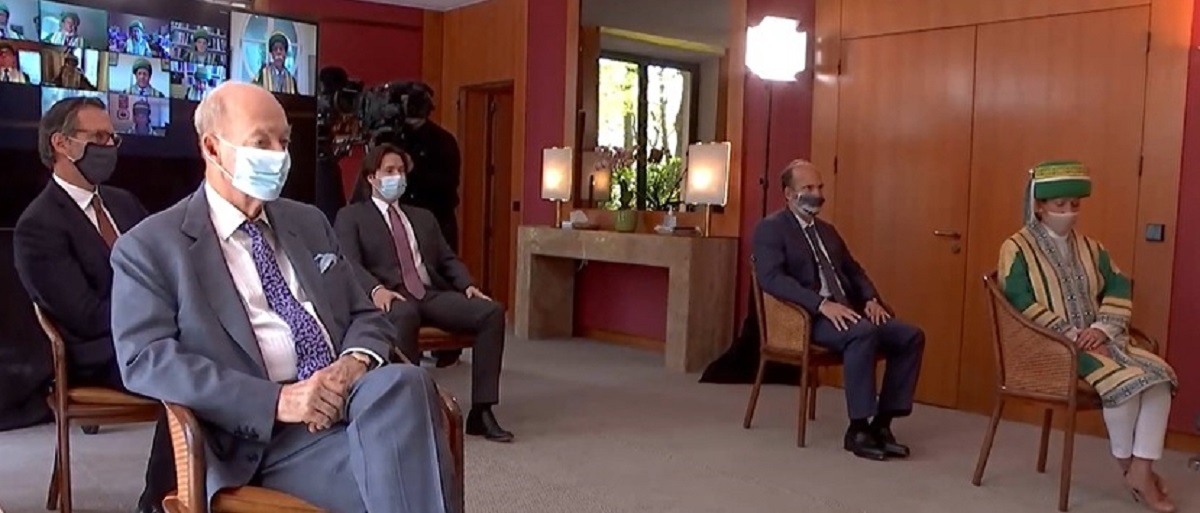
Clockwise from left: Prince Amyn Muhammad, Prince Rahim, Prince Ali Muhammad, Prince Hussain, and Princess Zahra. Photo: Clip from Ismaili TV.

The approximately 70 minute program was transmitted via The Ismaili TV and The AKU Website. Present in the room where Mawlana Hazar Imam was speaking from were members of his family — Prince Amyn Muhammad, Princess Zahra, Prince Rahim, Prince Hussain and Prince Ali Muhammad.

A comprehensive report of the global convocation with excerpts from the speeches that were made will be presented on Simerg and Barakah when the transcripts become available. In the meantime, we have a report with a few photos in Barakah, a website that is dedicated to Mawlana Hazar Imam and members of his family as well as the Ismaili Imamat. Please click HERE

Date posted: May 21, 2021.
Last updated: May 22, 2021.

Featured photo at top of this post: Mawlana Hazar Imam delivering his remarks on May 22, 2021 at the Aga Khan University’s Global Convocation. Photo: Clip from Ismaili TV.

__________________

Story and Photos: Mansoor Ladha’s Memorable Moments with Mawlana Hazar Imam, His Highness the Aga Khan

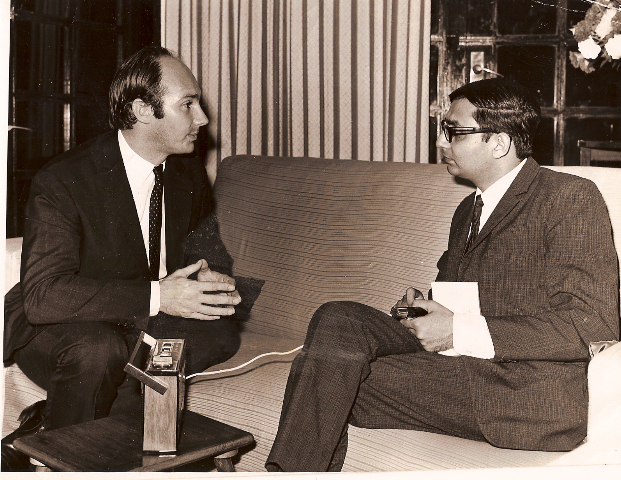
Calgary based Mansoor Ladha, a veteran award winning Ismaili journalist and author of two acclaimed books, was a features editor with the Tanzanian English daily, The Standard (renamed later to Daily News), and interviewed Mawlana Hazar Imam, His Highness the Aga Khan, in 1970. Later, after he migrated to Canada, Mansoor became the Administrative Committee Chairman of the Ismaili community in Edmonton, and received Mawlana Hazar Imam during his first visit to Canada in 1978. Please read Mansoor’s story about his wonderful opportunities on Simerg’s sister web site Barakah which is dedicated to Mawlana Hazar Imam, members of his family and the Ismaili Imamat. Please click HERE or on image below to read the full post.

Mansoor Ladha with His Highness the Aga Khan
1970: Mansoor Ladha interviewing His Highness the Aga Khan for Tanzania’s daily, The Standard (now Daily News). Photo: Adarsh Nayar/The Standard/Mansoor Ladha Collection. Please click on image for story and photos.

Date posted: May 8, 2021.

_________________

Before departing this website please take a moment to review Simerg’s Table of Contents for links to hundreds of thought provoking pieces on a vast array of subjects including faith and culture, history and philosophy, and arts and letters to name a few. Also visit Simerg’s sister websites Barakah, dedicated to His Highness the Aga Khan, and Simergphotos.
Mawlana Hazar Imam in His Navroz Talika Emphasizes Covid-19 Vaccination, Prays that the New Year will Herald a New Beginning and Gives Blessings for Fulfilment of All Our Wishes

The following Talika Mubarak from Mawlana Hazar Imam in English is reproduced from The Ismaili, the official website of the Ismaili community. Official translations in French, Portuguese, Farsi, Arabic, Urdu, Gujarati, Tajik, and Russian can be read at our sister website Barakah. The Talika is followed by recitations of Ginans Sahebe Farman Lakhi Mokalea and Navrozna din Sohaamna.

Mawlana Hazar Imam His Highness the Aga Khan’s Talika Mubarak to Ismailis

18th March 2021

My dear spiritual children,

On the occasion of Navroz, the 21st of March 2021, I send my most affectionate paternal maternal loving blessings to all my beloved spiritual children of my worldwide Jamat.

My family joins me in wishing you all Navroz Mubarak. 

I send my most affectionate loving blessings to all the spiritual children who have submitted services and sent messages of congratulations and good wishes on this occasion.

With the success in producing effective vaccines and other forms of treatment, human societies around the world are looking with a sense of hope and optimism to emerging from the current Covid-19 pandemic.

At this time, I recommend that all my murids should accept to be vaccinated in accordance with the directives of their respective health authorities as soon as the vaccines are offered — as indeed I have done already. It is also my wish that my Jamat should avoid any complacency, and that every murid should continue exercising personal responsibility to ensure protection from the virus.  

In particular, my Jamat should not give credence to any misinformation regarding the vaccination process, and comparisons between the different officially sanctioned vaccines that are now available.

I have requested the AKDN health care facilities to extend maximum support and assistance to the government authorities in the effective roll-out of the vaccination programme. 

In these troubled times, it is my prayer that Navroz will herald a new beginning, with greater resilience, strength and unity in my Jamat to overcome all forms of difficulty. While the Jamatkhanas will continue to be re-opened as the situation improves, I wish my Jamat to keep in mind the importance I attach to our historic tradition of personal, private prayer.

I send my most affectionate loving blessings for mushkil-asan, and for my Jamat’s wellbeing, good health, safety and security. I also give my best loving blessings for barakah in your spiritual and material lives, and for the fulfilment of all your wishes.

You are all particularly in my heart, in my thoughts, and in my prayers at this time.

Yours affectionately,

Aga Khan

__________________________

Shukrana and Supplication

We submit our humble gratitude to our beloved Mawlana Hazar Imam for his Talika Mubarak to the world wide Jamat on the occasion of Navroz, March 21, 2021, and submit the following supplications from verse 1 of Pir Hasan Kabirdin’s Ginan Sahebe Farman Lakhi Mokalea:

“O brother! Listen, My Lord Ali has written and sent a Farman. The beloved Lord has remembered this servant today with kindness in his heart”

__________________________

Ginan Recitation

Ginan Sahebe Farman Lakhi Mokalea sung Shamshu Bandali Haji. Credit: Ginan Recitals (usask.ca)

__________________________

Navroz Ginan Recitation and Link to Explanation

Ginan Navrozna din Sohaamna sung by Mumtaz Bhulji. Credit: Ginan Recitals (usask.ca)

Read Ginan article HERE.

__________________________

Navroz Mubarak

A colorful graphic celebrating Nawruz Mubarak, featuring traditional symbols and a poetic blessing in English, including elements related to purity and abundance.
Conceived and created by Toronto artist Karim Ismail, this calligraphy represents the greeting Navroz Mubarak in Eastern Kufi. Image: © Karim Ismail.

Date posted: March 21, 2021.

_____________________

Before departing this website please take a moment to review Simerg’s Table of Contents for links to hundreds of thought provoking pieces on a vast array of subjects including faith and culture, history and philosophy, and arts and letters to name a few. Also visit Simerg’s sister websites Barakah, dedicated to His Highness the Aga Khan, and Simergphotos.

Institute of Ismaili Studies: Historical Aspirations, Contemporary Possibilities

By KARIM  H. KARIM
(The author is Director of Carleton University’s Centre for the Study of Islam and former Co-Director of the Institute of Ismaili Studies)

“… we find ourselves in the moment of transit, where space and time cross to produce complex figures of difference and identity, past and present, inside and outside, inclusion and exclusion.” Professor Homi K. Bhabha, former Master Jurist, Aga Khan Award for Architecture

Abstract: A former Co-Director of the IIS considers this key Ismaili institution’s way forward, following its Board of Governors’ recent reconstitution. Although substantial changes have been made, certain features regarding the diversity of office holders remain. The IIS’s past performance is briefly examined in the article, with respect to academic metrics as well as Ismaili history and values. There have been several achievements in the last four decades, but also some unexpected outcomes. The author discusses the importance of ethics and clarity in chains of authority. IIS’s reconstituted governance structure has the opportunity to put it on a path to globally-recognized excellence and long-lasting impact.

A New Phase

Recent appointments to the governance structures of the Institute of Ismaili Studies (IIS) present an opportunity to consider its way forwards. The substantial reconstitution of the Board of Governors appears to initiate a new phase for this key Imamat institution, which occupies a unique place in-between Jamati and Aga Khan Development Network (AKDN) organizations. This is a time of particular significance as the Governors are tasked with guiding the IIS towards its 50th anniversary in 2027.

1975 Ismailia Association Conference Aga Khan Establish Institute of Ismaili Studies, Simerg
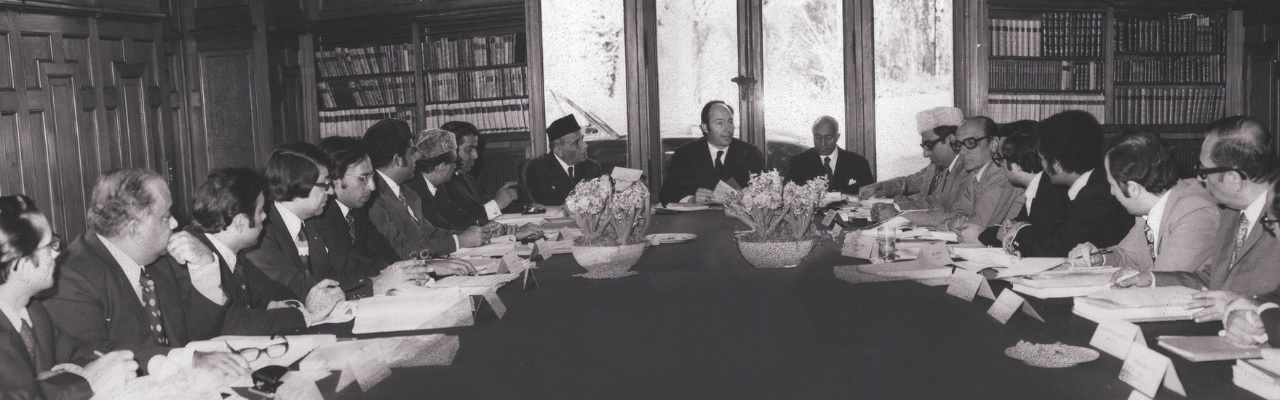
Mawlana Hazar Imam met with leaders of the Ismailia Association and Ismaili scholars in April 1975 in Paris. A decision was taken at the world conference to establish the Institute of Ismaili Studies. Photo: Ilm magazine, October 1975.

The concept of the Institute was formally discussed in 1975 in the historic Paris Conference of the Ismaili Associations, at which Mawlana Hazar Imam presided. He announced the IIS’s establishment in a Talika to the international Jamat on December 13, 1977. The institution began with a very small staff occupying one floor of a London building. Growing and traversing the city for four decades, the IIS settled into its purpose-built home at the Aga Khan Centre in 2018. It currently has research, teaching and support staff of over a hundred and has seen some 650 graduate students pass through its doors. Scores of publications and several sets of curricular materials have been produced. Alumni work around the world in a variety of professions and have particularly enriched the knowledge base of the worldwide Ismaili Tariqah and Religious Education Boards (ITREBs).

Unintended Consequences

The Institute, which has a very distinct institutional character, operates in an organizationally and intellectually liminal space. Governors have played an unusual hands-on role in the operation of this academic organization. Although the IIS’s educational endeavours are limited to the community, it positions itself in the public sphere. Unlike similar scholarly bodies, it does not identify as a theological seminary or a divinity school. It is a post-graduate institution whose students receive degrees from various universities, including the University of London’s School of Oriental and African Studies.

IIS publishes materials on Ismaili, Shia, Quranic and Central Asian studies authored by its own researchers and external scholars. Islamic Publications Limited (IPL), an affiliate, produces them with the imprimaturs of presses such as I.B. Tauris and Oxford University Press. Whereas substantial work has been carried out in examining Arabic and Persian documents, the study of Indic manuscripts (bearing content such as Ginans) has been miniscule in the last four decades. Research is also conducted on the transnational Ismaili community’s living traditions, but it is not published for the most part. The Institute prioritizes a rationalistic and civilization-centred approach over faith perspectives in its course instruction and religious education curricula for the global Jamat.

These characteristics, viewed as appropriate for the IIS’s particular mandate, have, however, raised an air of ambivalence that has apparently produced unintended consequences. A number of students in the Graduate Programme in Islamic Studies and Humanities (GPISH), who arrive at the Institute of Ismaili Studies expecting a faith-friendly academic approach undergo cognitive dissonance (Magout, 2020, chapter 6). Most alumni do not list the Institute on their CVs or LinkedIn profiles; faculty members have been leaving for university positions as soon as they secure them; and one of the two Co-Directors’ posts has remained unfilled for almost a decade. Furthermore, donors who have contributed substantially to the endowment are perplexed by the asymmetry in Ismaili areas of research.

Aspirations for Excellence

At its founding, the IIS was compared to learned institutions like the Dar al-Ilm and Al-Azhar University, which were established a thousand years ago under the aegis of Fatimid Imam-Caliphs. Al-Azhar survived the fall of the Fatimids and flourishes today as a prominent centre of Muslim learning. Can one expect that the IIS will also function for hundreds of years? Perhaps the more pertinent question is whether it will make a lasting impact. What will the role of the governance structure be in helping it achieve this?

Although the Institute is a globally-recognized hub of Ismaili Studies, it has some ways to travel before being acknowledged as a centre of scholarly excellence. It recently made a selection of books available electronically, but many important IIS contributions remain absent in cyberspace and from most bookstores as well as university and public libraries. It is also unfortunate that only a handful of its more than 120 books have done well in academic citation indices.

One could argue that standard scholarly metrics are inappropriate for an institution whose aspirations are drawn from millennial-long history. Is it more apt then to measure the Institute’s performance in terms of the Ismaili past? Of the many luminaries in previous eras, the most well-known outside the community are the Ikhwan al-Safa (circa 10th century), Nasir-i Khusraw (d. 1088) and Nasir al-Din Tusi (d. 1274). Satpanthi Pirs conducted ingenious syntheses of Indic and Islamic traditions that stand as major human achievements of pluralist engagement. These intellectuals are exemplars of excellence whose contributions have been of universal significance. They maintained a rigorous independence of thought within parameters of the Ismaili movement and its intellectual universe. Given the aspirations for the IIS, should we expect it to provide the conditions for nurturing scholars of similar calibre in our time?

Contemporary Values as Metrics

Contrarily, one can contend that it is not right to apply historical standards to 21st century contexts. Perhaps the benchmarks for success are to be drawn from the community’s current emphases on ethics, meritocracy, and pluralism. This topic is addressed here only with reference to IIS’s Boards.

IIS Institute of Ismaili Studies London Board of Governor Members
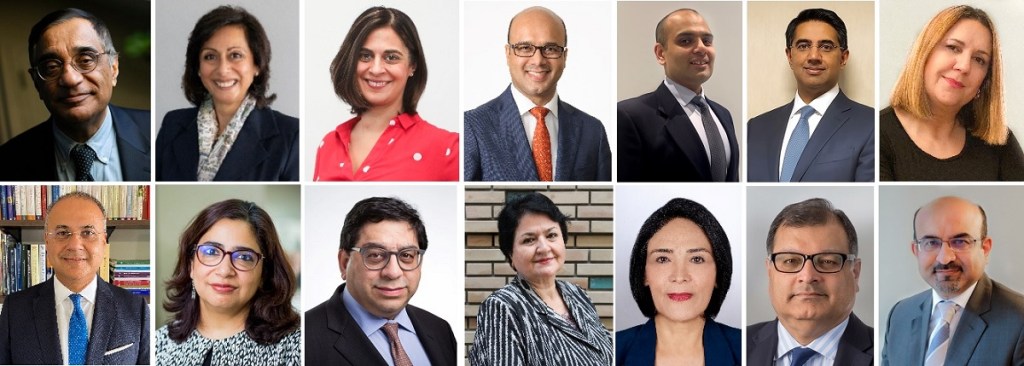
New Board of Governors of the Institute of Ismaili Studies, appointed by Mawlana Hazar Imam effective December 13, 2020. Top row (from left): Professor Ali Asani, Dr Nadia Eboo Jamal, Mrs Karina Govindji, Dr Arif Jamal, Mr Rahim Karim, Mr Alykhan Kassam, and Professor Nacim Pak-Shiraz. Bottom row (from left): Mr Amyn Kassim-Lakha, Professor Tashmin Khamis, Mr Naguib Kheraj, Dr Sharofat Mamadambarova, Dr Shogufa Mir Maleky, Mr Habib Motani, and Professor Farid F. Panjwani. Collage by Barakah from IIS profile photos

The new Governors are drawn from commercial and academic sectors, and they include some IIS alumni. Mawlana Hazar Imam continues as Chairman. Membership of the current Board of Governors (BoG), which began its term on December 13, 2020, is remarkably different from earlier ones in size, gender, age, ethnicity, geographic scope, and outlook. Although the IIS has been an international institution since inception, preceding Boards consisted almost entirely of middle aged men of British residence, with the balance tilting towards commercial worldviews. The incoming BoG’s average age has dropped considerably in comparison to the preceding one. There are now six women and eight men, and half of the Governors are currently located outside the UK. Eight newcomers are academics, most of whom have taught at universities. Several individuals have had experience in Jamati institutions, including ITREB, which is a major partner of the IIS. It is also noteworthy one Governor has professional expertise in diversity and inclusion.

There has been some non-Ismaili presence previously; however, this BoG’s members are all Ismaili. When Professor Mohammed Arkoun passed away in 2010, the remaining six Governors were all South Asian men of East African provenance. Whereas the new BoG is enriched by the presence of other ethnicities, all three members of the Board of Trustees (BoT), the IIS’s primary governing body and of which the BoG is a sub-committee, are UK residents of South Asian background, as are all four Board members of Islamic Publications Limited. Full time academics are absent from the BoT and IPL. The former does, however, have a female Trustee. There is much more pluralist inclusion than in earlier manifestations of the institution’s governance structures, but they have considerable room for improvement.

IIS Board Institute of Ismaili Studies
The IIS Board of Governors (1995-2020). From left to right: Mr Naguib Kheraj (who remains on the new board appointed on December 13, 2020), Dr Mohamed Keshavjee, Dr Shafik Sachedina, Dr Aziz Esmail, Mr Zauhar Meghji and Professor Afzal Ahmed. Missing in the photo is the Late Professor Mohammed Arkoun who was also a member on the Board. He passed away on September 14, 2010 at the age of 82. Photo: The IIS

A truly unique characteristic of the previous BoG was not identity but longevity. Its more than 25-year term was one of the lengthiest in the world. Whereas this provided continuity and familiarity with the work at hand, shorter tenures usually mitigate detrimental tendencies in such organizations. Stretches that are longer than seven years seem inadvisable.

The presence of new university-linked Governors should help to assert academic norms in matters such as standardized merit-based pay scales rather than particular arrangements for some employees; remuneration for performance adjudicated according to published benchmarks instead of bonuses based on ambiguous criteria; and discontinuation of consulting contracts with Governors. Notably, the current separation of Board members from IIS’s remunerated staff makes the organizational chart look less like the M.C. Escher lithograph “Relativity”.

Ethics, Ambiguity, and Credibility

Ismaili history has seen the development of ethical codes in the works of Qadi Nu’man (d. 974), dai Ahmad al-Naysaburi (d. circa 11th century), Pir Sadardin (d. circa 14th century), and Imam Mustansirbillah II (d. 1475). Writing at a time of deep corruption in the Fatimid state, al-Naysaburi warned that “chaos will reign” with the failure of integrity among the Imam’s leaders (Klemm and Walker, 2011, p. 75). The IIS developed an AKDN “ethical framework” two decades ago; however, this theoretical document does not provide guidance for actual deontological practice. There remains ambiguity about the pragmatics of ethics in contemporary Ismaili institutions. Narratives on this subject have sometimes drifted towards trivialization; for example, one Jamati periodical’s feature on an “Ethic of the Month” seemed to reduce long-term values to fleeting tastes (The Ismaili Bulletin, Issue 54, March 2018). Given the importance that the community gives to the subject of ethics, serious issues like conflicts of interest, cronyism, nepotism, harassment, and bullying, which unfortunately appear over time in most human organizations, will need to be dealt with effectively and coherently. These issues must be an integral part of a 21st century code of conduct that provides clear guidance for everyone involved with the work of Jamati as well as AKDN institutions.

Systemic deficiencies in institutional procedures have unpredictable outcomes and can be factors for reputational loss. Incoming academic Governors will know that ambiguous chains of authority in scholarly institutions lead to the unchecked promotion of pet projects with dubious merit. A book published in 2018 by the Institute (but not initiated by its Department of Academic Research and Publications) was reviewed in a recent issue of the journal Arabica. The reviewer, who is the Director of the University of Lausanne’s Institute of the History and Anthropology of Religions, assessed it to be “a book of propaganda … without method and completely devoid of critical analysis” (Halawi, 2020, 315). Such unfortunate situations can be avoided by instituting an academic editorial board that oversees IIS’s scholarly publications to replace largely ambiguous practices of vetting manuscripts for “sensitivities.” (Such an editorial board already exists for the Quranic Studies Series.) The new Governors will also be aware of the importance of ensuring that the institution’s faculty, students and academic visitors have ready access to library materials that reflect a plurality of views, including those that are considered to be “sensitive.” Such efforts will assist in enhancing the IIS’s scholarly credibility in academic circles.

Transparency and Demarcations of Authority

Despite the noblest of intentions, the tendency in human organizations is for power to accumulate in a few persons. Whereas the doubling of the number of Governors to 14 offers advantages, it may also produce the conditions for the emergence of a hierarchy and the marginalization of some individuals. A horizontal relationship and equitable sharing of information in the globally-constituted BoG is important. Fair and optimal participation by Governors can be ensured by upholding transparency. Transparency and disclosure will not only strengthen the corporate governance framework but also provide Mawlana Hazar Imam with all the pertinent information.  

It is expected that Hazar Imam will meet with the Governors and Directors once a year, with respective Board committees working on specific policy issues in the interim. The transnational BoG has the challenge of working efficiently across continents. Given these circumstances, safeguarding the greatest possible diversity in every committee will help ensure the pluralist expression of views. This should help to mitigate the influence of cliques and undue bias for or against specific issues and employees.

A key consideration facing the new Governors is the extent of the BoG’s involvement in operational matters. Healthy, well-functioning institutions are characterized by clear demarcations of authority and function, with Boards having confidence in duly-appointed Directors to take charge of administration. Clear protocols regarding Governors’ communications with employees, which rarely occur in universities, ensure that administrative authority is not undermined. Scholarly conventions should also determine the leadership of various organizational committees (academic, curricular, and community relations as well as finance and human resources).

 A Potential Turning Point

The strong presence of university-based academics in the Institute’s new BoG signals that scholarly priorities will be paramount in the years to come. This Board’s tenure has the potential for being a turning point. It has the opportunity to put the IIS on the path to globally-recognized excellence by moving closer to academic norms of organization and outlook. Professor Mohammed Arkoun used to speak of intellectual modernity in contemporary Muslim contexts. Such a disposition requires not only scholarly rigour but the confidence to conduct critical introspection. There are important discussions to be had about the adoption of greater academic freedom, critical inquiry, and the broaching of “sensitive” topics as well as about effective ways to engage with the transnational Jamat, with which the Institute has an integral relationship. Governors will constantly have to account for the dual contexts of community and public scholarship. This calls for skillful and conscientious navigation between the shores of the parochial and the universal. The likes of the Ikhwan al-Safa, Nasir-i Khusraw, Nasir al-Din Tusi and Pir Sadardin have shown us that this is eminently possible.

Date posted: January 10, 2021.
Last updated: May 31, 2025 (reformatting, typos).

____________________

Reproduction of material posted on this website without the expressed written permission of the publisher is prohibited. For permission to reproduce in whole or part, please write to mmerchant@simerg.com.

We welcome feedback from our readers. Please complete the LEAVE A REPLY form below or click Leave a Comment. Your letter may be edited for length and brevity, and is subject to moderation.

A person speaking into a microphone while wearing glasses and a suit, with a blurred audience in the background.
Karim H. Karim

About the author: Professor Karim H. Karim is the Director of Carleton University’s Centre for the Study of Islam, where he has held the International Ismaili Studies Conference. He previously served as Co-Director of the Institute of Ismaili Studies (IIS) and Director of Carleton’s School of Journalism & Communication. Dr. Karim has had visiting scholarly appointments at Harvard University, Aga Khan University/Simon Fraser University, and the IIS. He has also been an advisor for AKU and the Central Asian University and has been a member of the AKDN’s Higher Education Forum. Additionally, he has served in Kenyan, American, and Canadian Jamati institutions (Education, Ismaili Association, and Ismaili Tariqah and Religious Education Board, ITREB). Professor Karim is an award-winning author whose globally-cited writings include publications on Ismaili communities, institutions, and leadership. He has delivered distinguished lectures at venues around the world and has been honoured by the Government of Canada for promoting co-operation among faith communities. He studied at Aga Khan schools in East Africa and at the IIS, and holds degrees from Columbia and McGill universities in Islamic and Communication Studies.

Simerg – 2020 in Pictures and Words: Blessings from His Highness the Aga Khan; Photos from Private Collections; and Tributes to Deceased

Prepared by MALIK MERCHANT
(Publisher-Editor SimergBarakah, and Simergphotos)

His Highness the Aga Khan, Mawlana Hazar Imam, Talikas 2020, Simerg and Barakh
Mawlana Hazar Imam, His Highness the Aga Khan, 49th Imam of the Shia Imami Ismaili Muslims, pictured at the Diamond Jubilee Darbar in Kenya. Photo: The Ismaili

TALIKAS AND BLESSINGS FROM MAWLANA HAZAR IMAM

March 2020

Please click: Mawlana Hazar Imam sends Talika on the occasion of Navroz with special blessings for mushkil asan, and prayers for the Jamat’s health and well-being

Please click: Mawlana Hazar Imam, His Highness the Aga Khan, showers his paternal and maternal blessings on his spiritual children around the world in light of the present crisis 

April 2020

Please click: Mawlana Hazar Imam, His Highness the Aga Khan, sends message to his spiritual children around the world on Covid-19, with blessings for their protection from difficulty; multiple translations including Farsi, Dari, Arabic, Urdu, Gujarati and Russian

May 2020

Please click: Mawlana Hazar Imam’s loving and inspiring Talika on the occasion of Eid ul-Fitr shows his concern for his spiritual children in all facets of their lives 

July 2020

Please click: Mawlana Hazar Imam, His Highness the Aga Khan, sends Talika Mubarak to Ismailis around the world on the occasion of his 63rd Imamat Day

November 2020

Please click: Mawlana Hazar Imam, His Highness the Aga Khan, in his message on November 2, 2020, tells his spiritual children “there is no room for complacency” over the risks posed by the coronavirus “for sometime to come” and send his blessings for mushkil-asan

December 2020

Please click: In Talika Mubarak on the occasion of his 84th birthday, Mawlana Hazar Imam asks us to draw comfort from the practice of our faith, appreciates the excellent work of volunteers, and conveys his paternal maternal blessings to the world wide Jamat

___________________

PASSINGS

The following tributes/obituaries appeared in Simerg in 2020. Some of the deceased may have died before 2020.

Passings Simerg 2020 Year in Review
Top row (left to right): Mahebub Rupani, Nazeer Ladhani, Amirali Gillani, Salima Arthurs, Sultan Methanwalla, Goulzare Foui, Amirali Nagji; bottom row (left to right): Alnoor Ramji, Shamshu Jamal, Zubeda Jamal, Sultanali Mohamed, Razia Jamal, James Wolfensohn and Madatali Jamal. Image collage: Malik Merchant / Simerg.

Please click: Mahebub Mohamed Juma Rupani

Please click: Nazeer Ladhani

Please click: Shamshu Jamal

Please click: Missionary Amirali Gillani

Please click: Alnoor Ramji, Goulzare Foui, Amirali S. Nagji, Sultan Piroj Maknojiya Methanwala, Salima Wanda Arthurs

Please click: Madatali Merali Jamal, Razia Jamal, Zubeda Ebrahim Jamal

Please click: James D. Wolfensohn

Please click: Alwaez Sultanali Mohamed

A distinguished man wearing a ceremonial yellow and green headdress, adorned with intricate patterns, seated and engaged in conversation.

Please also click: Benjamin Mkapa (d. July 2020. As Tanzania’s President from 1995-2005, the late Benjamin Mkapa strongly supported the work of the Ismaili Imamat in his country as well as abroad. The support that he gave is clearly illustrated in a special piece about him in Barakah, a blog dedicated to Mawlana Hazar Imam, His Highness the Aga Khan)

___________________

HISTORICAL PHOTOS OF MAWLANA HAZAR IMAM AND HIS FAMILY, IMAMAT PROJECTS AND OTHER EVENTS

2020 Year Simerg photos Aga Khan and Projects
Please click on image for 2020 stories and accompanying photos

Please click: Top photo selections from our 2020 stories: Mawlana Hazar Imam and his family, Covid-19 impact, Aga Khan projects, the four seasons, and other events

Date posted: December 27, 2020.
Last updated: December 28, 2020.

__________________

We welcome feedback from our readers. Please complete the LEAVE A REPLY form below or, if you don’t see the box, please click Leave a comment. Your letter may be edited for length and brevity, and is subject to moderation.

As WHO Targets 100 Million Smokers to Quit the Habit, Let Us Be Mindful of Mawlana Hazar Imam’s Advice on Smoking and Other Social Habits that Can Weaken the Community

“I say to you today, and particularly the younger generation, use your energy, use your imagination, use your strength, but do not waste it. Do not waste it in drinking, in smoking cigarettes, in eating, in smoking drugs or whatever it may be. This is not for our Jamat…. stay a healthy Jamat and face the problems without wasting your energy and time and money on these other habits. Remember this is a matter of importance, because these habits can weaken the Jamat.” — Mawlana Hazar Imam, His Highness the Aga Khan, Dar es Salaam, November 11, 1970*; also read Good principles articulated by the Aga Khan

The following piece as well as the photo featured at the top of this post is reproduced from a recent edition of the Voice of America. In the photo, bystanders look a replica of human skeleton smoking cigarette during an awareness rally on occasion of the “World No-Tobacco Day,” in Chennai, India, May 31, 2019.

By VOA News
Tuesday, December 8, 2020

The World Health Organization is calling on governments around the world to ensure their citizens have resources and tools to help them give up tobacco smoking as it launches a yearlong campaign aimed at helping 100 million people quit.

The campaign, Commit to Quit, is focusing on 22 countries including the United States, and it officially got under way Tuesday ahead of World No Tobacco Day 2021, in May.

A WHO statement said the Commit to Quit campaign is aimed at creating “healthier environments that are conducive” for people who want to give up smoking.

The WHO hopes to capitalize on users who have decided to quit since the novel coronavirus pandemic began by creating communities of peer quitters, according to the statement.

Earlier this year, the WHO warned that tobacco users are at high risk of dying from COVID-19.

About 780 million tobacco users say they want to quit, but just 30% have access to resources that can help them do so.

Director of Health Promotion Dr. Ruediger Krech said global health authorities must take full advantage of the millions of people who want to quit. He urged governments to “invest in services to help them be successful,” and “divest from the tobacco industry and their interests.”

Illustration of a man in a suit walking with a cigarette for a head, with the text 'Smoking Pollutes You and Everything Else' on top.
Credit: Wellcome Collection, UK. The image is not part of the VOA article.

The WHO is employing digital tools such as the Quit Challenge on Whatsapp to provide social support. Also, the WHO’s 24/7 digital health worker to help people quit tobacco is available in English and soon will add five other languages.

The campaign is encouraging initiatives such as “strong tobacco cessation policies; increasing access to cessation services and raising awareness of tobacco industry tactics.” 

Tobacco is a major risk factor for noncommunicable diseases such as cardiovascular disease, cancer, respiratory disease and diabetes. Moreover, people living with these conditions are more vulnerable to severe COVID-19.

“Smoking kills 8 million people a year, but if users need more motivation to kick the habit, the pandemic provides the right incentive,” WHO Director-General Dr. Tedros Adhanom Ghebreyesus noted.

RELATED:

(1) VOA: Tobacco Causes One in Five Deaths from Heart Disease
(2) VOA: Stop Marketing Deadly Nicotine Products to Children
(3) Simerg: Aga Khan on good health and good judgement

Date posted: December 14, 2020.

____________________

* References: Farman quote(s) from archives and notes of Late Alwaez Jehangir Merchant (1928-2018) on social habits.

Before departing this website please take a moment to review Simerg’s Table of Contents for links to hundreds of thought provoking pieces on a vast array of subjects including faith and culture, history and philosophy, and arts and letters to name a few.

We welcome feedback from our readers. Please complete the LEAVE A REPLY form below or, if you don’t see the box, please click Leave a comment. Your letter may be edited for length and brevity, and is subject to moderation.