Ismailis of Eastern Canada and their upcoming holy encounter with their beloved 49th Imam, His Highness the Aga Khan: The importance of Salawat

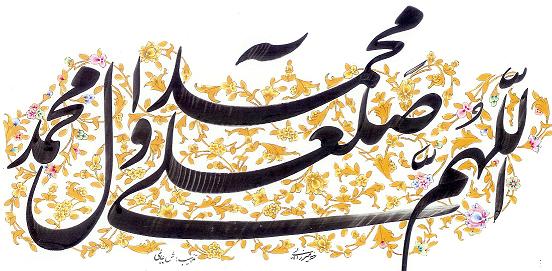
Salawat Calligraphy
Salawat written in Nast’aliq calligraphy. Credit: Wikishia.

Allahumm-a Sall-i ‘Ala Muhammad-in Wa Al-i Muhammad

By SHIRAZ PRADHAN

(The author would like readers to note that this short piece was prepared from Khayal Aly’s excellent and elaborate essay on the Salawat titled “Realities of the Salawat.” We are also pleased to include with this piece a musical rendering of the Salawat composed by Fez Meghani, and sung by numerous Ismaili artists. The full composition is about 14 minutes long, and we are including only the first 5:31 minutes — Ed.)

Whenever Mawlana Hazar Imam graces us with didar, his arrival and his presence are greeted with the soul-soothing hum of the recitation of the Salawaat:

“Allahumm-a Sall-i ‘Ala Muhammad-in Wa Al-i Muhammad,” meaning “O, Allah shower thy choicest blessings upon Muhammad and the progeny of Muhammad.”

This has been our tradition for centuries. The question arises: Why do we seek blessings upon the Prophet and his progeny?

When the verse of the Holy Qur’an (33:56)  “Lo! Allah and His angels shower blessings upon (salloona ‘ala) the Prophet. O you who believe! Ask blessings upon him (salloo ‘alayhi) and salute him with a worthy salutation,” was revealed some of the companions of the Prophet asked him about it: “O Messenger of God, we know already how to greet you; but how should we invoke blessings upon you?”

The Prophet replied:

“You should say, ‘O God, bless Muhammad and his progeny (aal), even as you blessed Abraham and his progeny [O God], you are truly praiseworthy, great in glory’.” [1]

Further reinforcement of this invocation of blessing upon the Prophet and his progeny comes in the verse “Say: I ask you no reward (arjan) except love of the ‘near of kin (al-qurba)’. ” — 42:23

The key concept that emerges here is that of reward (arjan).

To understand this, we have to look at the fact that the Prophet was sent as a mercy to mankind  as attested in the verse:

“And we have sent you not, except as mercy to the world.” — 21:107

What then is the reason for asking the ummah to seek blessing upon the Prophet and his progeny? And what is the reason for the expectation of a reward?

In reality the reward that the Prophet is asking, namely the love for the Prophet and his progeny, is not for his own benefit, but rather, for the benefit of the ummah (Muslim community) itself. And here in lies the elegance and efficacy of the Salawat that we recite. Imam Al-Baqir explains this by citing a verse in which Allah tells the Prophet:

“Say, whatever I ask you with regard to my reward, it is [actually] for you. I rely for my reward on no one except God and He is witness to everything.” — 34:47

Several Ginans sing about the joys and delights when the Imam graces his murids with his physical didar. In one of these ginans we come across this concept of “reward”. A verse in Pir Sadardin’s Ginan Aji Sham kun avanta jo kahe reads:

Sami ke gale me haar hai, heera manek jaddi ya,
Jis re bhave tan ku dete hai,
Saheb hai dil daariya…

Translation:

The beloved has a necklace of diamonds and pearls,
He showers these on who so ever he chooses
The beloved’s generosity knows no bounds.

In the joyful assemblage of Imam’s holy presence and didar, not only does the Imam shower the “reward” of jewels of blessings upon the murids, but the recitation of the Salawat opens the gate of mercy and every recitation of the Salawat multiplies these blessings many many many fold. A tradition from Shia sources refers to the blessings of reciting Salawat as follows:

“Whoever sends ten salawats upon Muhammad and his family, God and His angels will send him a hundred salutations, and whoever sends a hundred salawats upon Muhammad and his family, God and His angels will send him a thousand.

The promise of reward goes even further. When a murid places his hands under the hand of the appointed spiritual authority of the time, Imam-e-Zaman, in an act of allegiance (bay‘at), “he indeed pledge his allegiance to Allah” (innama yubayi‘auna’lla). And thus, fulfilment of this bay’at merits nothing less than a great reward as promised by the verse 48:10 of the Qur’an that whosoever fulfils his bay’at with Allah shall merit a greater reward (arjan azim).

The first act of fulfilment of the bay’at is the declaration of the love for the Prophet and his progeny which is affirmed by the recitation of the Salawat. And its continuous recitation is a demonstration of this love between the murid and the Imam and the continuous shower of the jewels that Ginan Aji Sham kun avaanta jo kahe alludes to.

Date posted: November 11, 2017.
Last updated: July 15, 2023 (reformatting.)

_____________

Reference:

[1]. Fatimid-Isma‘ili book of law, Da‘a’im al-Islam (Pillars of Islam) by Qadi Nu’man.

Shiraz Pradhan
Shiraz Pradhan

Shiraz Pradhan, in parallel with his work as an international engineering consultant, has contributed for several years to furthering religious education among the Ismaili community in the UK, Canada, USA and Japan. He is the author of several articles published on this website and was a regular contributor to UK’s flagship Ismaili magazine, Ilm. Currently he is concluding the script of a full-length play of the 10th Century trial of the Sufi Saint Mansur al-Hallaj in Baghdad based on historical facts.

We welcome your feedback. Please click Leave a comment.

Important Notes on Baitul Khayal, Bol, the Soul and Imam’s Status as Ismailis around the world continue to receive Hazar Imam’s Didar and Blessings

“The esoteric (batini) vision, realized through pious works and the constant remembrance of God during the nightly vigil, as well as the exoteric (zaheri) vision, and beholding the gateway of God’s mercy, becomes the ultimate purpose of human life….Piety should be for the purpose of recognizing and beholding God, which is achieved through the recognition and vision of the Imam of one’s time.” — Imam Mustansir-Billah, 32nd Ismaili Imam

1. Ism’ul Azam and Baitul Khayal

By SHIRAZ PRADHAN

In the Memoirs of Aga Khan, our beloved 48th Imam Mawlana Sultan Mahomed Shah outlines the distinction between two human experiences as categorized by the Muslim philosopher Ibn-Rushd (Averroes):

“On the one hand, our experience of nature as we recognize it through our senses…and on the other hand, our immediate and imminent experience of something more real, less dependent on thought or on the processes of the mind, but directly given to us, which I believe to be religious experience.”

The craving for this direct experience is innate in all of us. Depth psychology which recognizes this craving in a totally different form states that human psyche has great capacity and an insatiable desire for love. The quest for this love molds human actions. In some it takes the form of material pursuits, in others it takes the form of religious and mystical pursuits. And in some souls’ this quest for divine love finds satisfaction in devotion and love for another human being.

Further in his Memoirs, the Imam expounds on this very theme and says:

 “We live, move and have our being in God…when we realize this, we are already preparing ourselves for the gift of the power of direct (mystical) experience…some men are born with such natural spiritual capacities and possibilities of development that they have direct experience of that great love, that all-embracing, all-consuming love which direct contact with reality gives to human soul.”

A question naturally arises in the mind: What about people who are not so gifted and not born with the natural capacity of development for spiritual experience?

Allah is mindful of this innate human desire for love and direct vision. Allah grants a gift and a means for this direct experience to all: “And to Allah belong the best names, so call on Him by them.” — Holy Qur’an, 7:180

The invocation of best names (Ism’ul-Azam) referred to in the above Sura are the most beautiful names of Allah, invocation of which provides the path to his mercy and direct experience. The Qur’an also enjoins constant remembrance of Allah:

“O you have faith, remember Allah with frequent remembrance and glorify him morning and evening.” — 33:41-42.

Bol is a Gujarati word for Ism’ul-Azam. In Ismailism, the path to direct experience of the divine reality of Allah through the Noor (Light) of Imamat becomes a very personal and private affair. Each murid has his personal connection with the Imam. The personal spiritual bond of bayah (allegiance) between the Imam and the murid is the cornerstone of this bond.

Every murid has a desire for this vision of Noor. This desire is weak in some and strong in others. The real quest for the vision of the Noor begins when a murid fights the buffeting currents and vicissitudes of daily life and begins to hear the call of the divine and the desire for vision of Noor possesses his heart. The thirst for love that philosophers had talked about becomes a reality. The most enchanting verses of a Ginan of Pir Sadardin which describe the agony of a love-thirsty soul resonate in his heart:

Sajan per hun sada balihari
Ke jine Sajan mohe nipat bhisari
Ab ko je me Sajan pau
Haide under Sej bichau
Milu usinku Noor sangath
Phir nav jalu duje ka haath.

TRANSLATION

(Sajan=Beloved)
I am forever ready to sacrifice my life for the Beloved,
That beloved who has so forgotten and forsaken me
If perchance I attain to the Beloved
I will spread a silk carpet in my heart
And meet him in a shower of Noor
Never again to thirst for aught.

When a soul become thus love-stricken, the path to enlightenment become visible to him and he seeks the Imam’s guidance. The Imam in his benevolence and love for the murid grants him a personal key to the spiritual universe and the possibility to ascend to that peak from whence he has potential of vision of Noor of Imamat and the quenching of that insatiable thirst for love. The key to this spiritual universe is Bol.

The remembrance (dhikr) of this Bol at prescribed time when the world rests is the essence of Baitul Khayal. “The honor and greatness of a believer lies in his praying at night,” said Imam Ja’far as-Sadiq. A number of verses in the Holy Qur’an attest to the importance of the night worship. Allah says, “and part of the night; bow down before Him and magnify Him through the long night. — 76:26 (tr. Arberry). This verse of the Holy Qur’an tells us to remember Allah at such a time when others are asleep.

The Holy Qur’an tells us:

“You have indeed in the Apostle of God a beautiful pattern of conduct.” –33:21.

Thus, as an example to be followed, the Prophet’s escape to Mount Hira for extended hours of contemplation as well as his experiences during the night journey, miraj, are indicative of the rise of the soul from the plane of material existence to the proximity of God. The night journey  emphatically proclaimed that if God has placed man on this earth, He has also set up a ladder for man to climb up to Him. Baitul Khayal accords us this opportunity.

Thus, the practice of Baitul Khyal sits at the crest of spiritual practice of Ismailism and is also referred to as Motu Kam (Big Work). As the prescribed practice becomes a routine, the spiritual universe begins to unfold and the bond between the Imam and murid becomes stronger, and the link that binds the murid to the Imam becomes shorter and shorter. It is a process of divine alchemy which is sung in the Ginan Jire vala, dhan re ghadi:

Paras perse to Loha raang pelte
To jagmag jyote jagaye.

TRANSLATION

That which was base metal
Transforms to gold and begins to shine
by divine alchemy

The experience of this transformation and the uplifment of the soul through the constant meditative practice of the Ism’ul-Azam is articulated in some of the verses of the Ginan Brahm Prakash composed by Pir Shamsh: 

“True Word” (or Ism’ul-Azam, Bol) is my Guide,
to which the world gives no recognition….1

Do meditate on the Word,
and recite Pirshah as often as possible…..2

And upon utterance of the Word,
the light of love shall be kindled,

and in the heart, great “Faith” will be generated….5

Where the Love flows so incessantly,
the devotee drinks of it and
becomes love-intoxicated….9

How shall I extol (for you) this divine ecstasy!
Its status is so great, that it defies all speech….11

No amount of literature read or listened to,
Could help to attain this experience of happiness….12

The skies in the West glow
and one witnesses a unique and
unparalled show (of “Light” – “Noor”)

_____________

2. The Imam’s True Status

Imam to be perceived with true heart cropped

Image credit: roseannapiter.com.

(Adapted from an ode by 33rd Ismaili Imam ‘Abd al Salam)

The talisman that can open the treasure trove of spiritual meaning of the Holy Qur’an is the Imam. The true essence of the Imam cannot be recognized with earthly, fleshly eyes, for these can only see his physical form, perishing like all else with the passage of time.

His true face is to be perceived with the eyes of the heart. He has thousands of physical habitations, but his true home is traceless; he has had a thousand names, but all of them refer to one reality.

Today he is known as ‘Abd al-Salam, but tomorrow the physical body will be gone and the name will change, yet the essence will remain in the next Imam of the lineage.

Those who look at the Imam as they squint will consider him like any other human being, but as soon as the eyes of the heart perceive correctly, his true status is discovered. In form the Imams change, but in meaning and substance they are changeless. Human language cannot attain to the majesty of the Imams. The Imam is the most precious ingredient in the supreme elixir (miraculous substance) of eternal life-red sulphur. He is not simply a pearl, but the ocean that gives birth to pearls. The existence of the Imam, who leads humankind to a recognition of God, is the very pinnacle of creation. — Adapted from Ismaili in the Middle Ages by Shafique Virani.

3. The Importance of the Soul

By AL-MU’AYYAD AL-SHIRAZI

“Look at the trouble your parents have taken from the days of your childhood in the growth of your bodies and in the improvement of your physical life on earth. But for the interest they took in you, you would not have been what you are. Your souls are thousand times more important than your bodies. The Imams are your spiritual parents. Avail yourselves of a few days of life which are at your disposal here and look after your spiritual elevation under the care of your spiritual parents. “Once you miss this opportunity, you will repent forever. You will not be given a second chance to set things right.”

Date posted: November 9, 2017.

_________________

Note: This piece also appears on simerg’s special project http://www.barakah.com which is dedicated to His Highness the Aga Khan.

Shiraz Pradhan PortraitShiraz Pradhan, in parallel with his work as an international engineering consultant, has contributed for several years to furthering religious education among the Ismaili community in the UK, Canada, USA and Japan. He is the author of several articles published on this website and was a regular contributor to UK’s flagship Ismaili magazine, Ilm. Currently he is concluding the script of a full-length play of the 10th Century trial of the Sufi Saint Mansur al-Hallaj in Baghdad based on historical facts.

New Story on BBC Travel: The Discovery of Fatimid Gold Coins in Israel

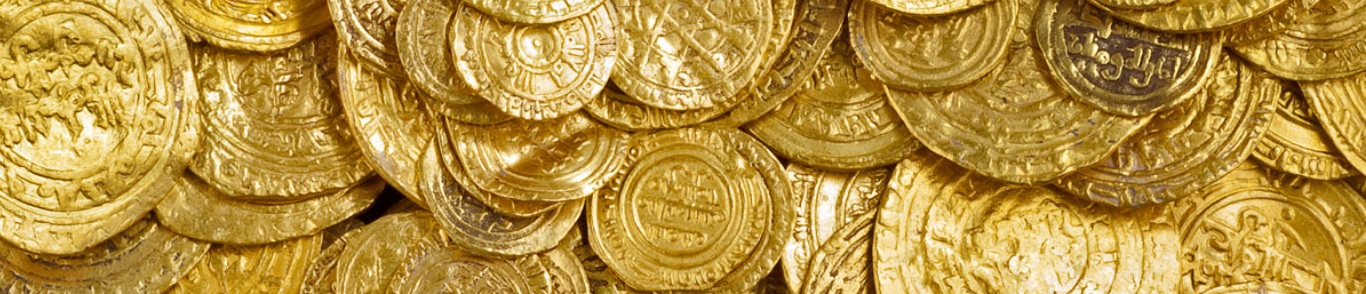
Here are links to 2 amazing stories about the discovery off the coast of Israel of 2580  dinars minted during the reigns of Fatimid Ismaili Imams Al-Hakim and Al-Zahir. The BBC story has just been posted on the BBC travel website. A link to an earlier story appears after the BBC link.

1. From the BBC: The city with a hoard of Fatimid gold

On an overcast morning in February 2015, Zvika Fayer was scuba diving off the ancient Israeli port town of Caesarea when he saw a glimmer on the sand. Fayer reasoned that the gleam must have been a discarded sweet wrapper….But as he swept the sand away and picked the item up, he saw that he was wrong. This wasn’t a piece of foil; it was a real gold coin with Arabic script on both sides. The dates minted on them show that they were manufactured during the reigns of Caliphs al-Hakim (996–1021AD) and his son al-Zahir (1021–1036AD) when Caesarea was part of the Islamic Fatimid Dynasty.

PLEASE CLICK: The Israeli city with a hoard of gold

Please click on image for story in BBC travel.

2. Earlier story: Fatimid Gold from the sea

In February 2015, divers off the coast of Caesarea spotted by chance a group of gold coins lying on the seabed. They immediately alerted marine archaeologists of the Israel Antiquities Authority (IAA), who conducted a salvage excavation at the site and recovered more than 2,580 Fatimid coins of pure (24 karat) gold weighing a total of 7.5 kg.

Please click on the image to view an on-line exhibit of the discovery.

Please click on the image to view an on-line exhibit of the discovery.

The coins date from the mid-9th to the early 11th century CE. They were minted by the Fatimid caliphs of Egypt, and include dinars minted in al-Qayrawan, on the Tunisian coast, by Imam al-Mahdi (AH 297–322 = 910–934 CE), the founder of the Fatimid caliphate as well as a much larger collection belonging to the Fatimid caliphs Imam Al-Hakim (AH 386–411 = 996–1021 CE) and his successor Imam Al-Zahir (AH 411–427 = 1021–1036 CE).

Following the discovery, an exhibition was held from June to December 2015 at the Samuel and Saidye Bronfman Archaeology Wing of The Israel Museum in Jerusalem. Some very interesting data and information about the Fatimid coins was also posted on the Museum’s website, which includes topics such as the inscription on the coins, the coin’s purchasing power, the script, and the purity of the coins. We invite our readers to visit the website by clicking on http://www.imj.org.il/exhibitions/2015/caesarea/ or on the image shown above.

Date posted: November 9, 2017.

________________

Ismailis of Eastern Canada and their upcoming holy encounter with their beloved 49th Imam, His Highness the Aga Khan: #2 – Go, run to the ‘Manifest Light’ and ‘Ship of Salvation’ with joy and hope

This is the second article in a special series that we hope will contribute to making the forthcoming mulaqat with Mawlana Shah Karim al-Hussaini Hazar Imam more meaningful and purposeful. If you missed any of the previous post(s), here are the links:

  1. Ismailis of Eastern Canada and their upcoming holy encounter with their beloved 49th Imam, His Highness the Aga Khan: #1 – FORGIVENESS

Aga Khan Eastern Canada Upcoming Visit

Eastern Canada shown in green on map (left) consists of the provinces of New Brunswick, Newfoundland and Labrador, Nova Scotia, Ontario, Prince Edward Island, and Quebec. The total population is 23,946,177 (2016), and approximately 40-45,000 Ismailis live in these provinces, with the largest concentration in Ontario and Quebec. Credits: Map (left) yy Connormah – Wikipedia, CC BY 1.0, https://commons.wikimedia.org/w/index.php?curid=19857457, and (right) Department of Natural Resources.

1. By Shaykh Khudr, contemporary of 40th Ismaili Imam, Mawlana Nizar

The people of the House of Prophethood
are the Manifestations of Light;

They are that which exists forever
and in what has already elapsed;

They are the ships of salvation for those
who come running to them with hope;

They are the rain abundant in moisture
and their grace is the best of springs;

The essence of their souls is knowledge
from a world beyond the intellects;

Indeed, it is their invitation which rescues
souls from the pit of destruction.

~~~~~~~

2. By Muayyad Al-Shirazi, Fatimid period

“I was taken near the place where from I saw the bright Light of the Prophethood. My eyes were dazzled by the Light. I shed tears of joy and felt as if I was looking at the face of the Prophet of Allah and of the Commander of the Faithful, Hazrat Ali. I prostrated myself before the one who is the fittest person to bow to. I wanted to say something, but I was awe-struck.

“I tried to speak but my tongue refused to move. People asked me to say what I wished to say. I could say nothing. The Imam said, ‘Leave him. Let his fear and awe subside’. After this, I rose. I took the holy hand of the Imam [Mustansir-billah], placed it on my eyes and on my chest and then kissed it. I left the place with immense joy.”

~~~~~~~

3. By Fidai Khurasani

He is always present
a witness with his followers;

but who has seen his beauty
except the blessed?

He who is the cupbearer of
the fount of paradise

is aware altogether of
the hearts of his followers

He is the Imam of the time
the guide and comforter

the protector of his followers
whether young or old

Like the sun in the sky
he is manifest in the world

but the blind bat cannot see
his luminous face

~~~~~~~

4. By Imam Mustansir-Billah, 32nd Ismaili Imam

“All believers are urged to come into the presence of the Imam and to see him with their own eyes. Thus, the esoteric (batini) vision, realized through pious works and the constant remembrance of God during the nightly vigil, as well as the exoteric (zaheri) vision, achieved by travelling to the Imam’s residence and beholding the gateway of God’s mercy, becomes the ultimate purpose of human life.

“Piety should be for the purpose of recognizing and beholding God, which is achieved through the recognition and vision of the Imam of one’s time.”

Date posted: November 6, 2017.

______________

Related: Ismailis of Eastern Canada and their upcoming holy encounter with their beloved 49th Imam, His Highness the Aga Khan: #1 – Forgiveness

We welcome your feedback. Please click on Leave a comment.

Ismailis of Eastern Canada and their upcoming holy encounter with their beloved 49th Imam, His Highness the Aga Khan: #1 – Forgiveness

LETTER FROM PUBLISHER

Eastern Canada Maps

Eastern Canada shown in green on map on left consists of the provinces of New Brunswick, Newfoundland and Labrador, Nova Scotia, Ontario, Prince Edward Island, and Quebec. The total population is 23,946,177 (2016), and approximately 40-45,000 Ismailis live in these provinces.  Map (left) Connormah – Wikipedia, CC BY 1.0, https://commons.wikimedia.org/w/index.php?curid=19857457, and (right)  Natural Resources, Canada.

Lets us make the visit of Mawlana Hazar Imam a fantastic and happy one for us and our families, particularly our parents and children


By ABDULMALIK J. MERCHANT

His Highness the Aga Khan, or Mawlana Hazar Imam as he is affectionately and respectfully addressed by his Ismaili Muslim community, will be meeting with tens of thousands of his followers living in Eastern Canada — an area stretching from Windsor in Ontario to Montreal in Quebec to Halifax and beyond in the Maritime Provinces — for religious gatherings in Toronto and Montreal from November 17 – 21, 2017.

The Ismailis use the term didar (lit. to have a glimpse of the Imam of the Time) for these intimate religious mulaqats (meetings or encounters). The didar with the Imam can be on an individual basis, in small or large settings or in ceremonial gatherings that are referred to as darbars. Most recently, His Highness visited the Ismailis in Uganda and Tanzania and graced them with darbars as part of his Diamond Jubilee celebrations.

Ismailis throughout their rich and eventful 1400 year history, from the time of the first Imam, Hazrat Ali, have sought to articulate their experiences of the didar  of their Imams through oral expressions of ginans, qasidas, poetry and songs as well wonderful narratives. These varied expressions have become sources of inspiration for Ismailis leading up to the moment of the didar.

Today, we commence the publication of a series consisting of short articles that we hope will contribute to making the mulaqat with Mawlana Shah Karim more meaningful and purposeful. Our material will center on the concept of Imamat as articulated in Ismaili and related Shia literature and we will also include stories and accounts of didars well as supplications from the oral traditions and other pertinent material.

We begin the series with what we feel is an important ethic that will help us benefit during Mawlana Hazar Imam’s coming holy visit: FORGIVENESS.

Let bygones be bygones: “If people have harmed you, forget and forgive…”


Mawlana Hazar Imam pictured at the Olympia Hall, London, during his weeklong visit to the United Kingdom Jamat in September 1979. Photo: Jehangir Merchant Collection.

The spirit of forgiveness is an ethic that Mawlana Hazar Imam, His Highness the Aga Khan, has articulated many times since his Imamat. In 1969, he said in Mumbai:

“As the world gets smaller, it is fundamental that people should work together and not against each other, and try to be a little bit more generous than you have been in the past. If people have made mistakes, forgive them their mistakes. If people have harmed you, forget and forgive. Do not hold grudges. Do not turn around and say, ‘he hurt me yesterday, so I will hurt him today’. This is not the spirit of Islam, and it is not as I understand that our faith should be practiced, and this is fundamental.”

The act of apologizing when one thinks that one was not at fault, and the act of exercising forgiveness when one feels that they have been wronged, are probably the most difficult to struggle with.

However, each one of us has to realize that when there are conflicts, especially within a family, the burden of disunity is the greatest on parents because their love for all their children is absolute. Now consider that in the context of Hazar Imam, who addresses all Ismailis as his spiritual children!

According to a popular tradition, when the Prophet Muhammad asked Angel Gabriel what was meant by the Qur’anic verse (7:199),

“Keep to forgiveness (O Muhammad), and enjoin kindness, and turn away from the ignorant”

the Angel replied:

“It is God’s command to forgive those who have wronged you, to give to those who have deprived you, and to tie relations with those who severe theirs with you.”

Another tradition of the Prophet says:

“Show mercy and you shall be shown mercy. Forgive others and you shall be forgiven by God.”

When Mawlana Hazar Imam received the Adrienne Clarkson prize for Global Citizenship he shortlisted a good measure of forgiveness, along with an  abundant capacity for compromise, a little sense of patience and humility, as strengths for an aspiring global citizen. Accomplishing these would mean hard work, he said, “but no work would be more important.”

In a piece “Why Forgive” Fatima Ariadne in her blog Decoding Eden says that “forgiveness is about giving yourself permission to let go of the past….and giving that inner space in your heart for something more positive. We forgive because we deserve peace.”

Through our kind gesture of forgiving, we are also raising the consciousness of  this fundamental Islamic ethic in the hearts and minds of  the persons we are seeking to forgive. Speaking in Moscow in 1995 during his first physical presence among his community in Central Asia, Mawlana Hazar Imam said that “forgiving those who may have made a mistake or harmed you, will give them respect for your behaviour, and it will encourage them to follow your behaviour.”

Of course, Mawlana Hazar Imam was addressing an audience that had passed through a period of civil strife in Tajikistan. However, this principle is as fundamentally important in our daily attitudes to our families and friends.

Louis B. Smedes, professor emiritus of ethics and theology at Fuller Seminary in Pasadens, California and author of book Forgive and Forget wrote that, “Forgiving does not erase the bitter past. A healed memory is not a deleted memory. Instead, forgiving what we cannot forget creates a new way to remember. We change the memory of our past into a hope for our future.” He further noted that “You will know that forgiveness has begun when you recall those who hurt you and feel the power to wish them well.”

The Qur’anic ayat quoted earlier “tie relations with those who severe theirs with you” imposes upon us  a moral obligation to forgive.

So as we approach the important day of the holy encounter with Hazar Imam it would be most appropriate for us to reach out to our friends and family members with whom we are seriously at odds and say, “Let unpleasant things that have happened in the past be forgotten.”

That act of courage would be in the truest and finest tradition of our faith. With that kind spirit in our heart, we will truly lavish in the love, grace, and blessing of Mawlana Hazar Imam when he is with us in a few days. Forgiveness will lead to greater unity within families and the jamat.

It is within the framework of united families and Jamats that Mawlana Hazar Imam wishes us to attain spiritual as well as worldly success and happiness.

Date posted: November 4, 2017.

________________

We welcome your feedback. Please click on Leave a comment.

His Highness the Aga Khan: What we are now reading @Barakah.com

Please click on photos or Barakah

Aga Khan receives Lifetime Achievement Award from Asia Society.

~~~~~

140 years: From birth of Aga Khan III to Diamond Jubilee of Aga Khan IV.

~~~~~

Aga Khan 1979 Asia Society Speech: “Building City of God and Man”

~~~~~~

AGA KHAN’S FORTHCOMING VISIT TO EASTERN CANADA

GOD’S KINGDOM: AGA KHAN ON PATRIOTISM

AGA KHAN’S VIEW OF THE WORLD

A LONG ASSOCIATION: AGA KHAN AND JOHNSTON

AGA KHAN IN EAST AFRICA: 5 DAYS TO REMEMBER

1946 JUBILEE: ISMAILI WOMEN OF TIME REMINISCE

A PEARL FOR MONARCH OF FAITH AND PRACTICALITY

Date posted: November 2, 2017.
__________

Mawlana Hazar Imam, His Highness the Aga Khan, to Bless Ismailis in Eastern Canada with Didar in November 2017

2017 Aga Khan Tanzania Darbar zr1_web_4823

His Highness the Aga Khan, Mawlana Hazar Imam, at the Dar es Salaam Darbar in October 2017. He will grace the Eastern Canadian Ismailis with his didar in November 2017.

Ismailis gasp in delight and shed tears of joy at announcement of Mawlana Hazar Imam’s visit to Canada in November 2017

By Malik Merchant, Editor

(Note: We will have regular updates leading upto the visit; here are the latest updates for this blog):


Ismailis in Eastern Canada will, inshallah, be graced with the holy visit of their beloved 49th Imam, His Highness the Aga Khan, during the month of November 2017. The announcement of the visit by the Ismaili Leadership International Forum (LIF) came as a big surprise, and thousands who were present in Jamatkhanas across Canada on Friday, October 27,  gasped with delight when the news of the visit was read out. At the Ismaili Centre in Toronto, the Jamat was informed about the visit  by the Chairman of the LIF, Mahmoud Eboo, who is also the representative of the Aga Khan Development Network (AKDN) in Canada.

The exact dates and details of the visit were not announced on Friday. However, an update on Saturday October 28th, stated that Mawlana Hazar Imam’s mulaqats with the Eastern Canada Jamat, which will include religious work, will take place in Toronto for the Ontario region and in Montreal for the Quebec and Maritime Provinces.  Although located in Ontario, the Jamat in Ottawa, Canada’s capital, will join hands with the Jamats of the Quebec and Maritime Provinces in Montreal.

This will be the third visit by the Aga Khan to his followers during his Diamond Jubilee year that commenced on July 11, 2017, when he completed 60 years of his reign. Earlier in October, he made official visits to Uganda and Tanzania at the invitation of the two governments. During the five day tour that began on October 8th, Mawlana Hazar Imam graced the Ismailis with momentous Darbars (lit. a court or audience chamber where kings had formal or informal meetings) in Kampala and Dar es Salaam.

On this most auspicious and joyous news of Mawlana Hazar Imam’s forthcoming visit to Canada, we convey our heartiest felicitations to Ismailis in Canada and around the world and offer a humble supplication with the following words taken from a Ginan by Pir Hasan Kabirdin (14th century).

Transliteration

Eji, Aash Karine Ya Ali* hun tere dar ubhi,
Kar jodine em mangu Ya Shah;
Dejo didar tusi mahavar datar Shah,
Hama tere charane lagu.

Translation

With hope O Ali I stand at Thy door,
With palms joined I sincerely beg of Thee;
Bless me with Thy Holy Didar, O Great Lord and Benefactor!
At Thy Feet I fall to prostrate.

*Ismaili doctrine emphasizes the principle of the Unity of Imamat under the superficial diversity exhibited by each Imam of the Time. It is in this sense that the Ismailis believe that Imam is the same irrespective of his own age or the time he lives in. Thus, the name of the first Imam, Hazrat Ali, is commonly invoked for each Imam of the Time.

The proverbial valour and exemplary statesmanship of Imam Mawla Murtaza Ali, the encyclopaedic erudition of Imam Ja’far as-Sadiq, the extraordinary intellectual brilliance of Imam al-Hakim bi Amrillah, the administrative ability of Imam Mustansir Billah (during the first half of his Khilafat), the political acumen of Imam Sultan Mahomed Shah, Aga Khan III (he defied geography and created history), the organizing genius of the present Imam, Mawlana Shah Karim al-Husayni, are only some of the more spectacular characteristics exhibited by the Imam of the Time in accordance with the exigencies of the situations facing him.

Date posted: October 27, 2017.
Last updated: October 29, 2017.

Related updated post: Ottawa Celebrates Mawlana Hazar Imam’s Forthcoming Visit to Canada, @Barakah.com

_____________

We invite our readers to download Simerg’s special PDF publication Imamat and Didar Series.

We welcome your feedback. Please click LEAVE A COMMENT

Building God’s Kingdom: The Aga Khan, Imam of the Atomic Age, on Patriotism and Community by Andrew Kosorok

PLEASE CLICK: “Muslims are charged with building God’s Kingdom on earth (one of the many implications of the term “vice-regent” used so often in the Qur’an to describe the role of human beings), as are Christians. This refers not to the forced institution of a theocracy, but to the active spreading of Divine ideals through our own individual actions….I profoundly appreciate the Aga Khan’s comments regarding our roles and responsibility in the never-ending process of building a better future — for ourselves, our families, our physical world, and our future spiritual well-being: “By the way you conduct your daily lives, by the compassion you show to your fellow men and women, and above all by your faith in God” (Aga Khan, 11 March 1958, Mumbai, India).” — READ MORE BY ANDREW KOSOROK

“The closer you come, the more you will see him.” A digital portrait of His Highness the Aga Khan by Akber Kanji. The portrait is composed of several hundred thumbnails representing a cross-section of events during the Aga Khan’s Imamat. Please click on image for Andrew Kosorok’s essay. Image: Akber Kanji. Copyright.

_______________

Reflections on the Aga Khan by an Esteemed African Mwalimu

A PEARL FOR A MONARCH OF FAITH AND PRACTICALITY: We may read the daily paper, watch a TV programme, resort to a banking, insurance or other financial service, attend school or receive medical care. Hardly are we aware that most of these times we are benefiting from an Aga Khan enterprise. Even more importantly, few of us in East Africa, especially in the urban areas, ever go through the day without interacting with “subjects” of the Aga Khan, at work, at school or at play. This already hints at the sovereignty, the virtual ‘Head-of-State’ status, of the Aga Khan. But the story is even more intricate and fascinating, as I found out when I started looking around a little. CLICK TO READ PROFESSOR AUSTIN BUKENYA’S COMPLETE ARTICLE

Please click on photo to read Mwalimu Bukenya’s essay on the Aga Khan.

Date posted: October 18, 2017.

_________________________