
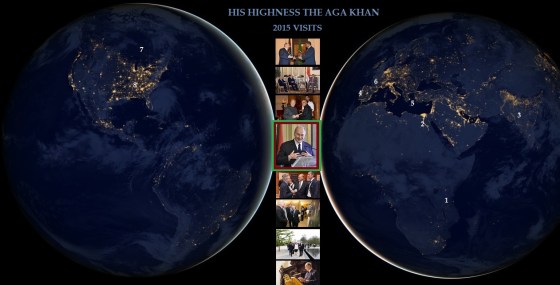
 Please click on image for His Highness the Aga Khan 2015 Visits to UK and the USA
Category Archives: Aga Khan Trust for Culture
A Marvellous Collection of Photos of His Highness the Aga Khan’s Visits to Canada, India and Greece
Editor’s note: In Part II of a special series on the 49th Ismaili Imam’s visits to numerous countries that he undertook during 2015, we cover India (April), Canada (May) and Greece (September). Please click A Marvellous Collection of Photos of His Highness the Aga Khan’s Visits to Canada, India and Greece.

Please click on photo for complete story and more pictures. Photo: Ontario Liberal Part. Copyright. Published with permission.
Aleppo and Its Majestic Citadel: Chilling Reports from the Current Civil War, and 14th Century Narratives by Ibn Batutta
I. THE HARSH REALITIES OF ALEPPO TODAY
(A). Syria’s Most War-Torn City by Newsweek Magazine
(Note: Newsweek’s story, accessible by clicking on the first image shown below, contain graphic images and may disturb some readers. Discretion is advised).
“Longer even than the journey from Damascus to Aleppo is the time it takes to get from one end of Aleppo to the other. Moving from the east to the western side of the city once took only a short bus ride. Now it involves navigating a labyrinth of side roads and as many as 20 checkpoints; an endurance test that can last between 10 and 16 hours” — James Harkin for Newsweek, August 19, 2015. Please click on Newsweek – Syria’s War Torn City or click on image below for Harkin’s full report.

A sergeant in Lewa Salaheddin, a Kurdish battalion of the Free Syrian Army, sits in front of a block of destroyed buildings in Aleppo, Syria on December 6, 2012. It’s more than three years since the fight for Aleppo began. By late 2012, parts of the city were already in ruins. Patrick Tombola/laif/Redux
_______________
(B). A Resident’s Account of Aleppo’s Humanitarian Crisis and the Fear for its Historic Citadel
Editor’s note: The following excerpts are from the website of the Centre for Research and Globalization based in Montreal. For a full account published on July 25, 2015, please click on Global Research – Aleppo’s Humanitarian Crisis.
“Aleppo city has shrunk to a fifth of its original site. I walk everyday in the city. I see children and girls without limbs because of a mortar over here or shrapnel over there that hit them randomly and caused them a terrible wounds and horrific memories that will never leave them. The girl who lost one leg is standing on her good leg and selling bread, while the little boy who lost one arm is selling chewing gum. Those are the “injured” people who come in the news, just numbers in one line of a report, after each attack from the terrorists. “Injured” doesn’t mean scratched or having a bleeding finger; it means someone lost his eyes or her limbs.”
continued…
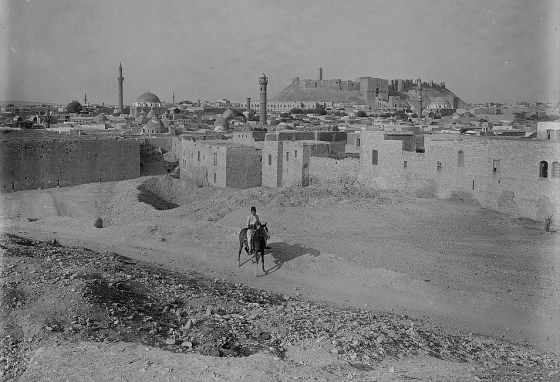
Aleppo and its castle from South West. Photo taken in 1898, and created/published
between 1898 and 1946. Photo: USA Library of Congress Collection, Washington, D.C.
“The last symbol left of Aleppo, is the most famous one: the Citadel. I can see part of it from our balcony, but I can see it more clearly from the roof of the building….It has been badly injured, but it’s still there, dominating the city skyline. It’s where they found the Storm God’s Temple a few years ago. It withstood many invaders, including the Mongols and Crusaders. It has been damaged severely several times through history, but it has been rebuilt over and over again, as an immortal symbol to the inhabitants of one of the oldest living cities in history. I just pray I don’t live to witness its total destruction as I have seen happen to many of the surrounding buildings.”
________________
II. IBN BATUTTA’S 14TH CENTURY DESCRIPTION OF ALEPPO AND ITS CITADEL

The Citadel of Aleppo is a large medieval fortified palace in the centre of the old city of Aleppo, northern Syria. It is considered to be one of the oldest and largest castles in the world. Usage of the Citadel hill dates back at least to the middle of the 3rd millennium BC. Subsequently occupied by many civilizations including the Greeks, Byzantines, Ayyubids and Mamluks, the majority of the construction as it stands today is thought to originate from the Ayyubid period. An extensive conservation work has taken place in the 2000s by the Aga Khan Trust for Culture in collaboration with Aleppo Archeological Society. Dominating the city, the Citadel is part of the Ancient City of Aleppo, a UNESCO World Heritage Site since 1986. The Citadel has received significant damage in the ongoing Syrian Civil War. Photo and caption: Wikipedia.
An Introduction to Ibn Batutta
“No intelligent man,” wrote Ibn Djuzayy, the scribe to whom Ibn Batutta (also Batutah etc) dictated his memoirs, “can fail to see that this sheikh is the traveller of the age.” But Ibn Batutah (1304-1368 or 1377) was not only the greatest Arab traveller of the Middle Ages, he was one of the greatest travellers of all time. At the age of twenty-one, he set out from his birthplace, Tangiers (Morocco), and started his travels by undertaking the pilgrimage to Mecca. This was the start of thirty years of wandering during which he would travel almost 120,000 kilometres that would take him halfway round the world as far as China. His account of his travels (the Rihla), in addition to its literary value, gives a panoramic picture of the 14th-century world.
If there are historical inaccuracies in Ibn Battuta’s writings, they are largely attributable to the pronounced taste for the bizarre which was characteristic of the age, and to the loss of his notebooks during a pirate attack in the Indian Ocean.
But errors or exaggerations do not detract from the value of Ibn Battuta’s narrative which is written in a direct, straightforward style punctuated by observations which are not without humour. His entertaining story has been translated, wholly or in part, into some 15 languages and ranks among the masterpieces of Arabic literature.
Ibn Batutta on Aleppo and Its Citadel
From Sermin we proceeded to Haleb (Aleppo), a large city and splendid metropolis. This is how Abulhossein the son of Jobeir described it:
“This city is of enormous worth and its fame will last forever. Kings have often sought to possess it and men have been impressed by its importance. What a number of battles it has provoked, and what a quantity of shining words have been unsheathed for it! Its fortress is renowned for its power and its height is clearly to be seen. No one dared attack it because of its strength, or if they did they did not conquer it.
“The sides are of freestone and its proportions are full of symmetry. It has outlasted the days and the years and has seen nobles and beggars carried to their last resting-places. Where are the Hamdanite princes and their poets now? They are no more, and only the buildings remain. Oh wonderful city! It endures, but its owners have passed on. They have perished but its hour has not come. It was sought for after them and taken without great difficulty. It was coveted and won at the smallest cost.
Such is this city of Aleppo. How many of its kings has it not changed into a past tense (expression borrowed from grammar) and how many vicissitudes has it not defied because of its position! Its name was made in the feminine gender, it was adorned with the finery of a chaste virgin, it succumbed to the victor as others have done. It shone like a young bride after the sword (seif) of its dynasty, Ibn Hamdan (a reference to Prince Seif eddaoulah).
Alas! its youth will pass, it will be no longer desired, only a short while and it will be destroyed.”
continued….

Aleppo from castle. Photo taken in 1898, created/published between 1898 and 1946. Credit: Library of Congress Prints and Photographs Division, Washington, D.C.
The fortress of Aleppo is called Ash shahba (the grey one). Within it there are two wells from which water gushes, and there is no fear of thirst there. The castle is surrounded by two walls, there is a great moat from which water rises, and its wall has many towers standing close together. This fortress encloses marvellous chambers pierced with windows. All the towers are occupied and in this fortified castle food is not impaired by the passage of time.
There is a sanctuary which is visited by many people, and it is said that Abraham prayed there to God. This fortress resembles the one called Rahbet (square of) Malik Ibn Thaouk, near the Euphrates, between Syria and Iraq. When the Tartar tyrant Kazan marched against the city of Aleppo, he besieged this fortress for many days. Then, frustrated in his desire to take it, he withdrew. Ibn Jozay says: Alkhalidy, the poet of Seif eddaoulah, writes as follows about this fortress:
“With its high belfry and invincible flanks, it is a vast, grim place which rises up against him who would take it.
“The atmosphere spreads a layer of cloud over this place and adorns the castle with a necklace of brilliant stars.
“When lightning flashes in the night this fortress appears through its interstices, shining like the constellation of the Virgo through the openings in the clouds.
“How many armies has this castle not destroyed and how many conquerors has it not put to flight!”
The same poet also speaks of the castle in the following admirable verses:
“It is a citadel whose base embraces the springs of water, and its summit is higher than Orion’s Belt.
“It knows no rain, because for it the clouds are a ground, whose sides are trodden by its cattle.
“When the cloud has given water in abundance, he who lives in the fortress uses all the water in his tanks before its summits are moistened.
“Its belvedere would be counted amongst the stars of the heavens if it passed through their orbits.
“The cunning of this fortress has repulsed the tricks of its enemies and the evils it caused were greater than theirs.”
Here is what Jemal eddin Ali, the son of Abulmansur, has to say about this castle:
“Because of its enormous height and the point which its summit attains, this castle nearly stops the celestial sphere that turns around the earth.
“Its inhabitants have gone to the Milky Way as to a watering place and their horses have nibbled the stars as though grazing on flowering plants.
“The vicissitudes of time turn from it in fear, and for this castle there is no change.”
Date posted: August 22, 2015.
____________________
Editor’s note: The above introduction to Ibn Batutta and his narratives on Aleppo and its Citadel have been adapted from the January 1986 issue of The Unesco Courier which was dedicated to Treasures of World Literature. Please visit http://www.unesco.org/new/en/unesco-courier/.
We welcome your feedback. Please click on Leave a comment.
___________________
FORTHCOMING PHOTO AND LITERARY PIECES ON SIMERGPHOTOS AND SIMERG
- “Prayer Halls of Badakhshan Through the Lens of Muslim Harji,” to be published week of August 24th, 2015 on Simerg’s photo blog, http://www.simergphotos.com
- “Naklanki Geeta – Quantum Mechanics in Ginans” by Shiraz Pradhan, to be published week of September 7th, 2015 on this website, http://www.simerg.com.
@Simergphotos: The Silk Road Through the Lens of Muslim Harji and the Smithsonian Folklife Festival
Simergphotos presents An Anthology of the Silk Road Through the Lens of Muslim Harji and Smithsonian’s Folklife Festival with magnificent photos taken by Harji during his recent visits to the iconic Silk Road cities of Samarkand and Bokhara in Uzbekistan. Then the post steps back in time and brings you wonderful memories from the Smithsonian Institution’s Annual Folklife Festival held in Washington D.C. in 2002, which was entirely dedicated to one single subject: The Silk Road. The post contains photos from the opening day, which was attended by His Highness the Aga Khan, as well as an excellent thematic anthology covering many aspects of the exciting Silk Road!…More at Simergphotos.

Please click on image for Silk Roads Photo Essay.
PLEASE CLICK: An Anthology of the Silk Road Through the Lens of Muslim Harji and Smithsonian’s Folklife Festival

Mawlana Hazar Imam at the Silk Roads Festival in Washington D.C. IN 2002. Please click for more photos.
@Simergphotos: The Aga Khan Park and Its Inauguration – Exclusive Photos
Please click: The Beautiful Aga Khan Park with Exclusive Photos of the Inauguration Ceremony
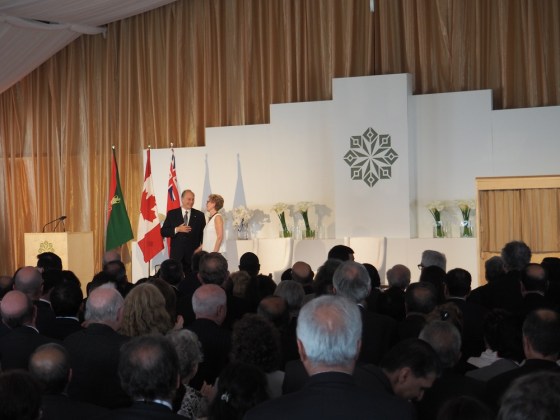
Please click for exclusive photos of the opening of the Aga Khan Park. Photo: Simerg/Malik Merchant.
The Aga Khan Park: Tranquil, Contemplative Space, and a Place to be Enjoyed by All to be Inaugurated on Monday, May 25, 2015
PHOTOS CAPTURE THE 5 YEAR EVOLUTION OF THE SITE
April 2010: Preparation
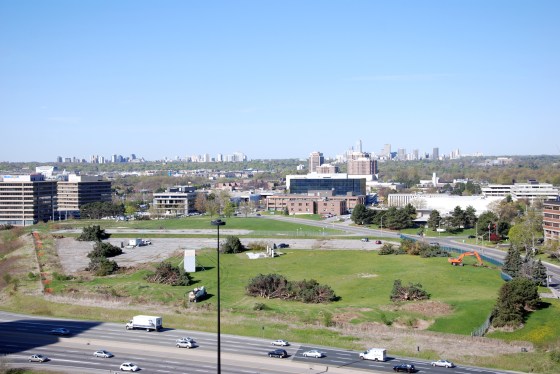
A photo from April 2010 of the site of the Aga Khan Museum, the Ismaili Centre and their Park as the trees were being removed to make room for the construction. “No need to worry…the trees will be replaced,” wrote Jim Bowie for a photo essay for Simerg. Photo: Jim Bowie. Copyright.
It was officially announced in Jamatkhanas across Canada yesterday, May 17th, that the opening of the Aga Khan Park will, Inshallah, take place in the presence of Mawlana Hazar Imam, His Highness the Aga Khan, on Monday May 25th, 2015. The announcement also noted that arrangements are underway to webcast the event live as well as telecast the opening ceremonies at Jamatkhanas across the country.
This follows the opening last September of two architectural gems, the Aga Khan Museum and the Ismaili Centre and Jamatkhana, which adjoin the Park.
September 2011: Construction

September 14, 2011. The return of the trees, while the construction of the Aga Khan Museum (foreground) and the Ismaili Centre proceeds speedily Photo: Jim Bowie. Copyright.
The presence of Mawlana Hazar Imam once again in this country will be a source of immense grace and barakah, and the jamats across Canada truly offer their humble shukrana to their beloved Imam.
The Aga Khan Park is the newest addition to other civic green spaces established or restored by Mawlana Hazar Imam, such as the Al-Azhar Park in Cairo, Forodhani Park in Zanzibar, Khorog City Park, Babur’s Gardens in Kabul, and the parks currently under development in Burnaby and Edmonton.
September 2014: Ismaili Centre and Aga Khan Museum Opening
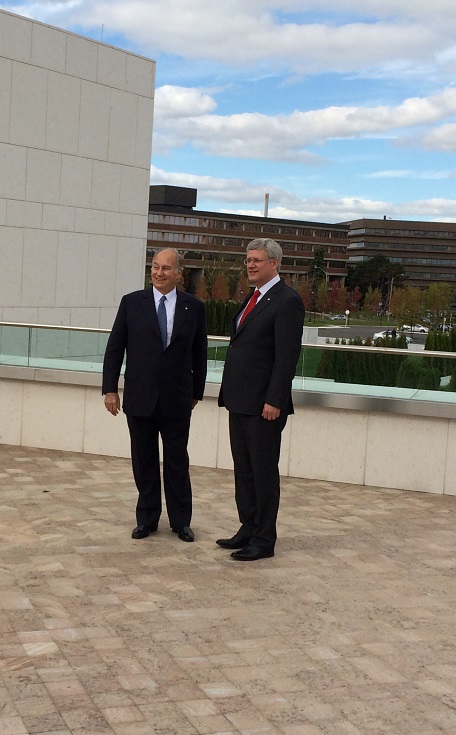
Mawlana Hazar Imam, His Highness the Aga Khan, and Prime Minister Stephen Harpur at the opening ceremony of the Ismaili Centre on September 12, 2014. Photo: Malik Merchant/Simerg.
Mawlana Hazar Imam explains the significance of the garden in Islamic cultures and its establishment in Canada in the following remarks made at the Presentation of the Gold Medal by the Royal Architectural Institute of Canada in Ottawa in November 2013:
“… our faith constantly reminds us to observe and be thankful for the beauty of the world and the universe around us, and our responsibility and obligation, as good stewards of God’s creation, to leave the world in a better condition than we found it. The garden is, in this context, a particularly important space in Islamic cultures… Bringing such beautiful spaces to Canada is one of our intended contributions to the Canadian landscape. An example is the new park in Toronto which will surround the Aga Khan Museum and the Ismaili Centre as well as new projects in Edmonton and Burnaby …”
The park’s architect, Vladimir Djurovic, describes its inspiring vision in the following manner in an interview in 2010:
“Our vision for the project is one that captures the essence of the Islamic garden and translates it into an expression that reflects its context and contemporary age. Embracing the five senses as the means to reach the soul, every space and garden are imbued with the delicate sensations that we seem to have lost in this fast-paced era.”
The Aga Khan Park is intended to be a space of tranquility and contemplation, and a place of beauty and reflection for the Jamat and the larger society. It is also designed to host educational programmes and outdoor gatherings, such as concerts and weddings. It will be an inviting space for diverse members of the larger community to meet, for families to gather and children to play.
It will be a place where people can take a walk, enjoy and immerse themselves in the beauty and majesty of Allah’s creation and perhaps also reflect upon the nature and significance of the two spectacular buildings that the park surrounds.
December 2014: Three Views of the Park
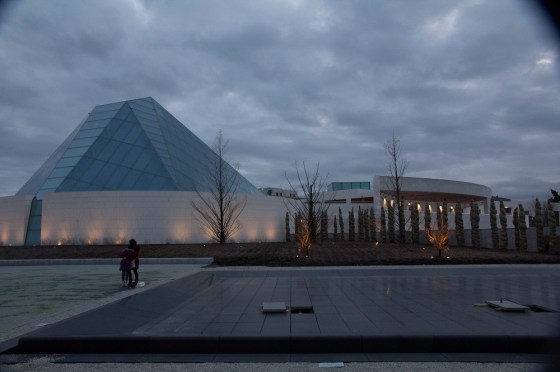
The Aga Khan Park photographed in December 2014, with the Ismaili Centre in the background. Photo: Rian Dewji, Toronto. Copyright.
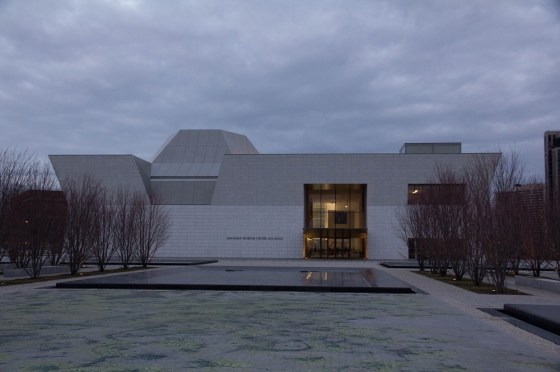
The Aga Khan Park photographed in December 2014, with the Aga Khan Museum in the background. Photo: Rian Dewji, Toronto. Copyright.
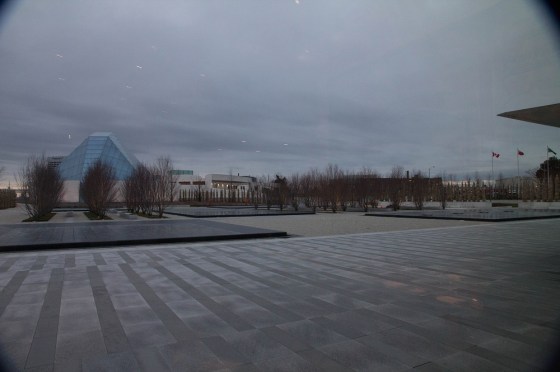
A panoramic view taken from the Aga Khan Museum, with the Ismaili Centre in the background. Photo: Rian Dewji, Toronto. Copyright.
The Aga Khan Park is one of several significant Imamat institutions and projects established in Canada, including the Global Centre for Pluralism, the Ismaili Centres in Burnaby and Toronto, the Aga Khan Museum and the Delegation of the Ismaili Imamat. Inshallah, through their respective functions and architectural idioms, these institutions will continue to express the aspirations, identity and values of our faith, such as respect for pluralism, the notion of a common humanity, search for knowledge and beauty, and balance between din (the sacred) and duniya (the material world).
In place of negative representations of our faith and the “clash of ignorance”, these “gifts” benevolently provided to us by Imam-e-Zaman will foster an increased and enlightened understanding of the faith of Islam, as well as stimulate dialogue and fraternity between different cultures and communities, which is so urgently needed today in a world filled with turmoil, intolerance and extremism.
Date posted: Tuesday, May 19, 2015.
_________________
Photo Essay by Muslim Harji: New Delhi’s Humayun Tomb and other Islamic Cultural Gems Through a Canadian Lens
New Delhi’s Spectacular Islamic Heritage Through a Canadian Lens

Please click for photo essay
Aga Khan Museum’s “The Garden of Ideas” – A Fine Example of Collaboration and Partnership Between Artists, the Museum and Corporate Sponsors
“The Garden of Ideas” is a collection of fascinating, inspiring and vibrant works of art by a team of six Pakistani artists in the gallery spaces inside the Aga Khan Museum as well as outside in the Park. The exhibition received a major boost when three international corporate sponsors stepped in with a generous donation. The three sponsors, Aljomaih Group, Trimark Capital and Asharys are from Saudi Arabia, the United Arab Emirates and Pakistan respectively. Future sponsorships, along these lines, would immeasurably add to the hosting of other fine temporary exhibitions by outstanding local and international artists, and be a boon to the artistic community writes Malik Merchant of Simerg….Read more at Collaboration and Partnership Between Artists, the Aga Khan Museum and Corporate Sponsors

“Garden of Ideas” exhibition in the upper gallery of the Aga Khan Museum. Photo: Malik Merchant/Simerg. Please click for article.
….AND FOR ONCE, ENTER THE AGA KHAN MUSEUM FROM THE INDOOR PARKING LEVEL AND BE WELCOMED BY ENCHANTING ART WORK
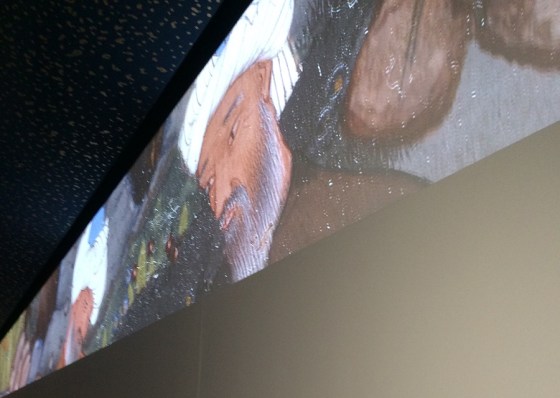
This magnificent panoramic display of ever changing images welcomes visitors to the Aga Khan Museum as they enter its doors from the indoor parking garage. The parking level also provides excellent resting facilities for Museum guests. Photo: Malik Merchant/Simerg.
Photos: Aga Khan Museum Opening Day
PLEASE CLICK: September 18, 2014 Opening Day of the Majestic New Aga Khan Museum
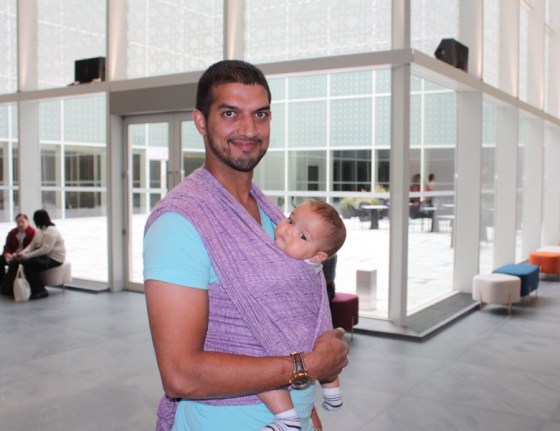
Please click for more photos of the opening day at the Aga Khan Museum
Simerg Photo Contest Commemorates Opening of Magnificent New Aga Khan Museum
Aga Khan Museum, the Ismaili Centre and their Park Perfect Breeding Ground for superb photo taking and winning great prizes including free membership
By Malik Merchant, Editor
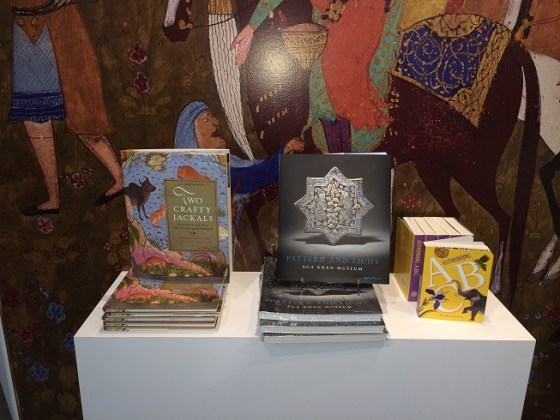
The Aga Khan Museum catalogue and special children’s books at the museum gift shop. Photo: Shellina Karmali.
Thursday, September 18, 2014, marked the public opening of the new Aga Khan Museum located on Wynford Drive in Toronto. Simerg marks the opening with a special photo contest in which a maximum of 25 prizes including youth and family memberships will to be given away to the top entries selected by a panel of three independent professional photographers, all from Ontario. The contest is open to all residents of Canada.
His Highness the Aga Khan and Prime Minister Stephen Harpur at the opening ceremony of the Ismaili Centre on September 12, 2014. Photo: Malik Merchant/Simerg.
The Aga Khan Museum and the Ismaili Centre were officially on Friday, September 12, in the presence of His Highness the Aga Khan and Prime Minister Stephen Harper, members of the 49th Ismaili Imam’s family and invited guests.
A maximum of 10 annual memberships each for the YOUTH and OPEN categories for the top photos selected by a team of three professional photographers will be given to the winning entries. The submission deadline will be December 31, 2014. The winning photos will be announced on this website and simergphotos.com on or around in late January, 2015. In addition to the annual memberships, the judges will pick up 5 photos deserving merit awards. The merit winners will each receive a $50.00 gift voucher, entitling them to make purchases from the Aga Khan Museum Gift Shop.
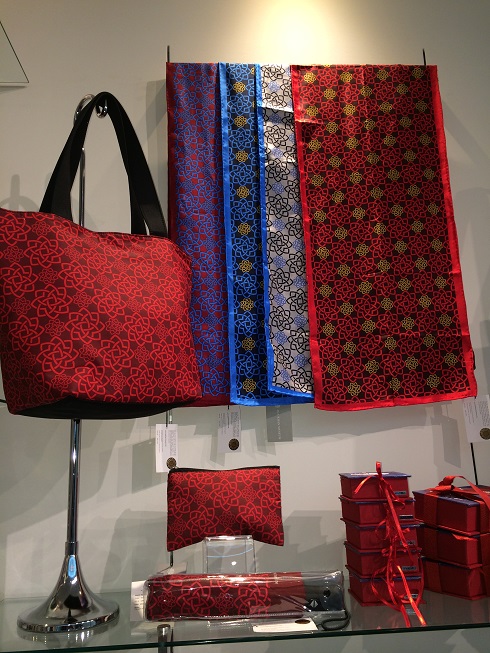
A selection of items at the Aga Khan Museum Gift Shop. Photo: Shellina Karmali
There will be two categories. The Youth Category will be open to anyone 19 and under. A maximum of 10 annual youth memberships to the Museum will be given to the winning entries.
The Open Category is for those over the age of 19. It will be for all amateur photographers and photography enthusiasts who like to shoot photographs, either using a camera or their smart hand-held devices and phones! For this category, each photo has to be accompanied by a 75 to 100 word narrative to encapsulate the photographer’s experience of the Aga Khan Museum, the Ismaili Centre or their Park. Only spaces where photos are allowed to be taken will be accepted for the contest.
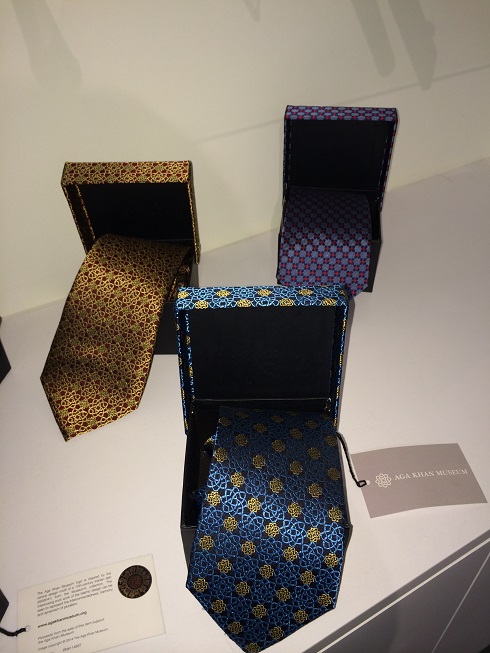
A selection of ties at the Aga Khan Museum Gift Shop. Photo: Shellina Karmali
The opening few weeks of the museum will be the perfect breeding ground for passionate picture taking and writing a brief narrative, and if you are selected as a winner in the Open Category you will be one of 10 to receive an annual family membership.
Here are some ideas for taking and submitting photos: artistic and architecture beauty and grandeur of the projects, interior spaces including art work (where permitted) , landscape, nature (as in the park), as well as spontaneous moments involving people!
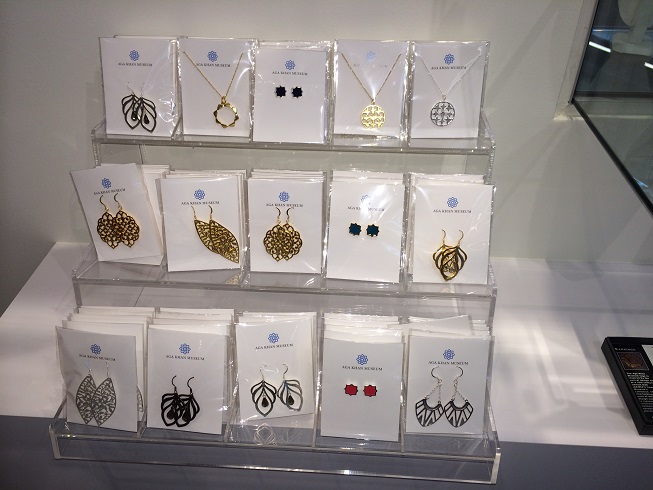
Jewellery at the Aga Khan Museum Gift Shop. Photo: Malik Merchant/Simerg.
The prizes are as a result of gracious donations by numerous individuals and families in Canada and abroad. Simerg is deeply grateful to the sponsors of the prizes.
Each individual may submit up to 3 photos for consideration for the contest, all in high resolution. They should be mailed to simerg@aol.com, and accompanied by the photographer’s full name and address as well as telephone number(s) where they may be contacted.
Every photograph received (maximum 3 per individual) will be published on a special gallery page on this website. The judges will select the winners from the photos published in the photo gallery. The judges decision will be final.
We are thrilled to host this contest and look forward to a fantastic response from the public.
Post updated: October 1, 2014.
 Simerg - Insights from Around the World