A Brief Introduction to the Spiritual and Temporal Dimensions of the Ismaili Imamat, and its Precious Work Under the Leadership of His Highness the Aga Khan

Compiled and presented by Abdulmalik J. Merchant
Publisher-Editor, www.simerg.com
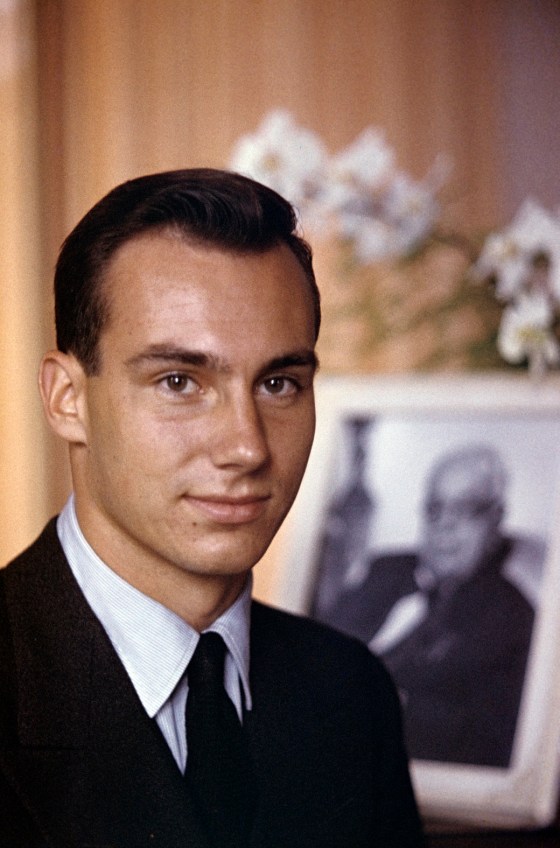
A portrait of Mawlana Hazar Imam, His Highness Prince Karim Aga Khan, with a framed portrait of Mawlana Sultan Mahomed Shah in the background. Photo by Philippe Le Tellier/Paris Match via Getty Images. Copyright.

An early portrait of Mawlana Hazar Imam, His Highness Prince Karim Aga Khan, with a framed photo of his grandfather, the 48th Ismaili Imam, Mawlana Sultan Mahomed Shah (1877-1957) in the background. Photo by Philippe Le Tellier/Paris Match via Getty Images. Copyright.

His Highness the Aga Khan is the direct descendant of the Prophet Muhammad (s.a.s) and also the current 49th Imam of a religious office, the Imamat, that he has inherited and which has its origins in the earliest history of Islam. He will be addressing both the Houses of the Canadian Parliament on Thursday, February 27, 2014 at the invitation of the Prime Minister, Stephen Harper. As a precursor to this week’s historical event, the aim of this piece is  to introduce readers to the  Imamat and to highlight its vision and precious work under the leadership of His Highness. This is done with the assistance of short excerpts from articles as well as speeches and interviews given by the Ismaili Imam.

(Please also see His Highness the Aga Khan to Become 5th Muslim Since 1939 to Address Joint Session of Canadian Parliament on February 27, 2014: The ABC’s of the Event Including Past Distinguished Speakers)

________________

BACKGROUND

By Azim Nanji

Islam

The last in the line of the Abrahamic family of revealed traditions, Islam emerged in the early decades of the seventh century. Its message, addressed in perpetuity, calls upon people to seek in their daily life, in the very diversity of humankind, signs that point to the Creator and Sustainer of all creation. Revealed to Prophet Muhammad in Arabia, Islam’s influence spread rapidly, bringing into its fold, within just over a century of its birth, the inhabitants of the lands stretching from the central regions of Asia to the Iberian Peninsula in Europe.

Leadership

During his lifetime, Prophet Muhammad was both the recipient and the expounder of Divine revelation. His death marked the conclusion of the line of prophecy, and the beginning of the critical debate on the question of the rightful leadership to continue his mission for the future generations. In essence, the position of the group that eventually coalesced into the majority, the Sunni branch, which comprises several different juridical schools, was that the Prophet had not nominated a successor, as the revelation contained in the Qur’an was sufficient guidance for the community.

The Party of Ali

The Shi‘at ‘Ali or the ‘party’ of ‘Ali, already in existence during the lifetime of Prophet Muhammad, maintained that while the revelation ceased at his death, the need for spiritual and moral guidance of the community, through an ongoing interpretation of the Islamic message, continued. For them, the legacy of Prophet Muhammad could only be entrusted to a member of his own family, in whom the Prophet had invested his authority through designation. That person was ‘Ali, the Prophet’s cousin, and the husband of his daughter and only surviving child, Fatima. ‘Ali was also the Prophet’s first supporter who devoutly championed the cause of Islam.

The Ismailis

In common with all major Shi‘a groups, the Ismailis believe that the Imamate is a divinely sanctioned and guided institution, through whose agency Muslims are enabled to contextualize the practice of their faith and to understand fully the exoteric and esoteric dimensions of the Qur’an. The Imamate exists to complement prophethood and to ensure that the divine purpose is fulfilled on earth at all times and in all places. — Background Excerpts, Azim Nanji [1]

~~~~~~~~

THE ISMAILI DOCTRINE OF IMAMAT

“In accordance with Shia doctrine, tradition, and interpretation of history, the Holy Prophet (s.a.s.) designated and appointed his cousin and son-in-law Hazrat Mawlana Ali Amiru-l-Mu’minin (a.s), to be the first Imam to continue the Ta’wīl and Ta‘līm of Allah’s final message and to guide the murids, and proclaimed that the Imamat should continue by heredity through Hazrat Mawlana Ali (a.s) and his daughter Hazrat Bibi Fatimat-az-Zahra, Khātun-i-Jannat (a.s).” — Ismaili Constitution [2]

SUCCESSION OF IMAMAT

“Succession of Imamat is by way of Nass [designation], it being the absolute prerogative of the Imam of the time to appoint his successor from amongst any of his male descendants whether they be sons or remoter issue.” — Ismaili Constitution [2]

THE PUBLIC INSTALLATION VS THE INSTANCE OF BECOMING THE IMAM

“Well the ceremony [of enthronement] is a public installation of the Imam. The Ismailis pay homage to the Imam and that is when you are recognised by the world at large as the Imam. I will probably wear the robes that my grandfather wore during his last jubilee and I will receive a sword which is the sword of justice of the Imamat. I will be given these robes and the sword by the leading members of the community and they will present an address at the same time.

“Officially as soon as one Imam passes away, his successor takes on from the very minute that the Imam has passed away.” — Aga Khan [3]

THE NATURE OF IMAMAT

“As Imam of the Ismaili sect, I am in a position to adapt the teachings of the Qur’an to the modern condition. On the question of modernity the issue is essentially whether one is affecting the fundamental moral fabric of society or whether one is affecting the fundamentals of religious practice. As long as these two aspects are safeguarded the rest can be subject to adjustment.” — Aga Khan [4]

“In Islam, imams whether they are Shia or Sunni, they have a duty to serve people. That is the nature of Imamat and, therefore, in countries where the Ismaili Imamat can bring support and help, it is our duty to do so and we’re very happy to do so in Central Asia, like we are doing so in the Indian sub-continent, we’re doing so in East Africa, in West Africa. So it’s part of the mandate of any Imam. But it’s a big mistake to think that you can do development only for Muslim communities. Many countries have mixed communities and therefore you have to do development for all the people within a given area whether they are Muslim or Christian or Jewish or Hindu or Sikh. You have what I would call a civil responsibility.” — Aga Khan [5]

THE ALLEGIANCE TO THE IMAM OF THE TIME

“The authority of the Imam in the Ismaili Tariqah is testified by Bay‘ah [allegiance] by the murid [follower] to the Imam which is the act of acceptance by the murid of the permanent spiritual bond between the Imam and the murid. This allegiance unites all Ismaili Muslims worldwide in their loyalty, devotion and obedience to the Imam within the Islamic concept of universal brotherhood. It is distinct from the allegiance of the individual murid to his land of abode.” — Ismaili Constitution [2]

THE GOVERNANCE OF THE IMAM OVER HIS COMMUNITY

“Historically and in accordance with Ismaili tradition, the Imam of the time is concerned with spiritual advancement as well as improvement of the quality of life of his murids. The Imam’s ta‘lim lights the murid’s path to spiritual enlightenment and vision. In temporal matters, the Imam guides the murids, and motivates them to develop their potential….By virtue of his office and in accordance with the faith and belief of the Ismaili Muslims, the Imam enjoys full authority of governance over and in respect of all religious and Jamati matters of the Ismaili Muslims.” — Ismaili Constitution [2]

THE LIVING IMAM –
MAWLANA HAZAR IMAM, HIS HIGHNESS THE AGA KHAN

“Mawlana Hazar Imam Shah Karim al Hussaini, His Highness Prince Aga Khan, in direct lineal descent from the Holy Prophet (s.a.s.) through Hazrat Mawlana Ali (a.s.) and Hazrat Bibi Fatima (a.s), is the Forty-Ninth Imam of the Ismaili Muslims.” — Ismaili Constitution [2]

“Well the Shia history has followed the same sort of historical developments all hereditary offices have followed, where there have been differences of opinion on who was the legitimate successor to the predecessor, whether it was a secular or religious office. In the case of the Shia Muslims, the Shia branch of Islam split and one branch of the Shia Muslims accepted the concept of the Imam in hiding, the invisible Imam, because the twelfth Imam disappeared as a very young child, and our branch of Shia Islam, in that particular generation of the family, accepted the legitimacy of the eldest son, Ismail, as being the appointed Imam to succeed and that is why they are known as Ismailis. And that branch of the family has continued today hereditarily and that is why there is a living Imam for the Ismaili Muslims.” — Aga Khan [6]

COLLABORATION WITH OTHER COMMUNITIES

“It is the desire and Hidāyat of Mawlana Hazar Imam that the constitutions presently applicable to the Ismaili Muslims in different countries be superseded and that the Ismaili Muslims worldwide be given this constitution in order better to secure their peace and unity, religious and social welfare, to foster fruitful collaboration between different peoples, to optimise the use of resources, and to enable the Ismaili Muslims to make a valid and meaningful contribution to the improvement of the quality of life of the Ummah and the societies in which they live.” — Ismaili Constitution [2]

“If I had to take stock of my life, my feeling would be that I have structured the Ismaili Imamat, for which I was given responsibility nearly 50 years ago, in such a way as to provide it with the institutional means to work for the good of Ismaili communities and the countries in which we are involved.” — Aga Khan [7]

THE ISMAILI COMMUNITY – 50 YEARS AGO AND NOW

“I was still a student at Harvard when I inherited the responsibilities of the Ismaili Imamat from my grandfather, Sir Sultan Mahomed Shah. It seemed inconceivable then that there would ever be substantial communities in the West. The Ismailis were too deeply rooted in their ancestral homes, indeed frozen there by the Cold War in Asia, the Middle East and Africa. But dislocations in the wake of decolonisation, and more recently the collapse of the Soviet Union and the prolonged difficulties in Afghanistan, have caused a number of Ismailis to seek new lands and homes. These migratory movements over the last half-century have resulted in a substantial Ismaili presence in Russia, in Western Europe, the United Kingdom and Portugal, and particularly in the United States and Canada. In these settings Ismailis have found themselves rejoicing with new opportunities, but also confronted by new challenges. Bolstered by a long tradition of self-reliance, and a strong system of community organisations, Ismailis have established themselves quickly as productive members of society in their new homelands.” — Aga Khan [8]

MATERIAL COMFORT AND BALANCE BETWEEN MATTER AND SPIRIT

“In Islam there is nothing wrong in the search for comfort, but the accumulation of wealth for the specific purpose of accumulating wealth or personal power is something which Islam does not like to see. If you are fortunate enough to go past what you personally need then share what you have.” — Aga Khan [9]

“I have been involved in the field of development for nearly four decades. This engagement has been grounded in my responsibilities as Imam of the Shia Ismaili Community, and Islam’s message of the fundamental unity of “din and dunia”, of spirit and of life. Throughout its long history, the Ismaili Imamat has emphasised the importance of activities that reflect the social conscience of Islam, that contribute to the well-being of Allah’s greatest creation — mankind, and the responsibility which Islam places on the fortunate and the strong to assist those less fortunate.” — Aga Khan [10]

A more recent portrait of Prince Karim Aga Khan, taken on June 22, 2012 in Chantilly, France. Photo by Philippe Petit/Paris Match via Getty Images.

A more recent portrait of Prince Karim Aga Khan, taken on June 22, 2012 in Chantilly, France. Photo by Philippe Petit/Paris Match via Getty Images.

THE NOTION OF QUALITY OF LIFE

“The quality of life is determined by a number of different factors that are, in my view, not limited to the World Bank indicators on longevity, or health, or the economic welfare of an individual, or a community. To the Imamat, the meaning of “quality of life” extends to the entire ethical and social context in which people live, and not only to their material well-being, measured generation after generation. Consequently, the Imamat’s is a holistic vision of development, as is prescribed by the faith of Islam. It is about investing in people, in their pluralism, in their intellectual pursuit, and search for new and useful knowledge, just as much as in material resources. But it is also about investing with a social conscience inspired by the ethics of Islam. It is work that benefits all, regardless of gender, ethnicity, religion, nationality or background.” — Aga Khan [11]

ON-GOING CHALLENGES

“A new president comes to power. What does he do? He contacts me immediately and tells me ‘Come back and help me rebuild my country.’ So, if you want, time changes situations, makes them different. Thus the institution that I represent, the Imamat, has to adapt according to the needs. It has to go beyond, it should anticipate situations. It has to be in a position to say that such and such area of the world is at great social, economic, political risk, whatever. Other areas are stable. These are areas where people live in acceptable conditions.” — Aga Khan [12]

MERITOCRATIC LEADERSHIP

“There was a time, earlier in my Imamat, when mediocrity was considered tolerable here because it was “good enough for Africa”. I remember my apprehension at the time, my concern that among all the goals that were set for Africa in those days, the achievement of normal world-class standards was not seen as realistic. But in the rapidly globalising world of the 21st century, the progress of every country and continent will depend on its ability to meet universal standards. To settle for less is an increasingly dangerous decision.” — Aga Khan [13]

“Education has been important to my family for a long time. My forefathers founded al-Azhar University in Cairo some 1,000 years ago, at the time of the Fatimid Caliphate in Egypt. Discovery of knowledge was seen by those founders as an embodiment of religious faith, and faith as reinforced by knowledge of workings of the Creator’s physical world. The form of universities has changed over those 1,000 years, but that reciprocity between faith and knowledge remains a source of strength.” — Aga Khan [14]

“The conviction that home-grown intellectual leadership of exceptional calibre is the best driver of a society’s destiny, underpins the Ismaili Imamat’s endeavour to create catalytic centres of educational excellence.” — Aga Khan [15]

THE UNITY OF MANKIND – A GIFT OF GOD

“I would turn to those words from my grandfather which were quoted in two earlier Peterson Lectures. He included them in a speech he gave as President of the League of Nations in Geneva some 70 years ago. They come originally from the Persian poet, Sadi, who wrote:

‘The children of Adam, created of the self-same clay, are members of one body. When one member suffers, all members suffer, likewise. O Thou, who art indifferent to the suffering of the fellow, thou art unworthy to be called a man’.

“You will readily understand why such words seem appropriate for a Peterson Lecture. They speak to the fundamental value of a universal human bond — a gift of the Creator — which both requires and validates our efforts to educate for global citizenship. I would also like to quote an infinitely more powerful statement about the unity of mankind, because it comes directly from the Holy Qur’an, and which I would ask you to think about. The Holy Qur’an addresses itself not only to Muslims, but to the entirety of the human race, when it says:

‘O mankind! Be careful of your duty to your Lord Who created you from one single soul and from it created its mate and from them twain hath spread abroad a multitude of men and women’.

“These words reflect a deeply spiritual insight — a Divine imperative if you will — which, in my view, should under gird our educational commitments. It is because we see humankind, despite our differences, as children of God and born from one soul, that we insist on reaching beyond traditional boundaries as we deliberate, communicate, and educate internationally.” — Aga Khan [16]

HOMOGENIZATION VS DIVERSITY

“Why would homogenization be such a danger? Because diversity and variety constitute one of the most beautiful gifts of the Creator, and because a deep commitment to our own particularity is part of what it means to be human. Yes, we need to establish connecting bonds across cultures, but each culture must also honour a special sense of self. The downside of globalisation is the threat it can present to cultural identities.

“But there is also a second great challenge which is intensifying in our world. In some ways it is the exact opposite of the globalising impulse. I refer to a growing tendency toward fragmentation and confrontation among peoples. In a time of mounting insecurity, cultural pride can turn, too often, into an endeavour to normatise one’s culture. The quest for identity can then become an exclusionary process — so that we define ourselves less by what we are for and more by whom we are against. When this happens, diversity turns quickly from a source of beauty to a cause of discord.I believe that the coexistence of these two surging impulses — what one might call a new globalism on one hand and a new tribalism on the other — will be a central challenge for educational leaders in the years ahead. And this will be particularly true in the developing world with its kaleidoscope of different identities.As you may know, the developing world has been at the centre of my thinking and my work throughout my lifetime. And I inherited a tradition of educational commitment from my grandfather. It was a century ago that he began to build a network of some 300 schools in the developing world, the Aga Khan Education Services.” — Aga Khan [16]

TOWARDS A PEACEFUL WORLD: A MESSAGE TO MUSLIMS AND NON-MUSLIMS

“What some describe as a clash of civilisations in our modern world is, in my view, a clash of ignorances. This is why education about religious and cultural heritage is so critically important — and why we will continue to invest in these institutions. We deeply believe that scholarship, publication and instruction — of high quality and generous breadth — can provide important pathways toward a more pluralistic and peaceful world.” — Aga Khan [17]

“From the seventh century to the thirteenth century, the Muslim civilisations dominated world culture, accepting, adopting, using and preserving all preceding study of mathematics, philosophy, medicine and astronomy, among other areas of learning. The Islamic field of thought and knowledge included and added to much of the information on which all civilisations are founded. And yet this fact is seldom acknowledged today, be it in the West or in the Muslim world, and this amnesia has left a six hundred year gap in the history of human thought….” — Aga Khan [18]

“As I look to the future of the Ismaili community worldwide, living in many parts of Central Asia, and in more than 25 different countries, and as I look to the future of Tajikistan, with its variegated population, and as I look at the Ummah, I conclude that every and all those peoples, if they wish to achieve a better life for themselves in the generations ahead, must absolutely achieve peace within their societies, and because we are Muslim, conflict must be replaced by a peace which is predicated on the ethics of our faith. We must not kill to resolve our differences, whatever they may be. They must be resolved, as I have said, within the ethic of our faith through dialogue, through compassion, through tolerance, through generosity and forgiveness. These are the pillars on which to build a strong society in modern times — not through weapons.” — Aga Khan [19]

RELIGIOUS EXPRESSION – THE HIJAB

(a) Individual Expressions…

“My own sense is that if an individual wishes to associate publicly with a faith, that’s the right of that individual to do that, whether he’s a Christian or a Jew or a Muslim. That is, to me, something which is important.” — Aga Khan [20]

(b) vs. Compulsion

“To go from there to an imposed process by forces in society, to me is unacceptable. It’s got to be the choice of the individual who wishes to associate with his faith or her faith. I have great respect for any individual who wants in the right way to be associated with his own faith. I accept that totally and I would never challenge it.” — Aga Khan [20]

ENVIRONMENT – MAN’S RESPONSIBILITY

“There is an often quoted ayat [of the Qur’an] which says that you should leave the world in a better environment than you found it. You have a responsibility of legacy of God’s creation of the world, to improve that legacy from generation to generation. So there’s an ethical premise to it.” — Aga Khan [21]

“Islam does not deal in dichotomies but in all-encompassing unity. Spirit and body are one, man and nature are one. What is more, man is answerable to God for what man has created. Since all that we see and do resonates on the faith, the aesthetics of the environments we build and the quality of the interactions that take place within them reverberate on our spiritual lives. As the leader of a Muslim community, and particularly one that now resides in twenty-five countries on four continents, the physical representation of Islamic values is particularly important to me. It should reflect who we are in terms of our beliefs, our cultural heritage and our relation to the needs and contexts in which we live in today’s world.” — Aga Khan [22]

A MESSAGE TO HIS FOLLOWERS

“In a world where quality of life is increasingly measured in material terms there is risk that the essential value system of Islam will be eroded, or even threatened with disappearance. Political situations with a theological overlay are also causing disaffection or antagonism between communities of the same faith, and even more so amongst different faiths. Where we can build bridges with other tariqahs around a common Muslim cosmopolitan ethos, we should make this endeavour.” — Aga Khan [23]

ENCOUNTERS

“Encounters. When two people meet. Or two particles. Or two cultures. In that crucial moment of interaction the results of an encounter are determined. In the simplest of encounters — say, with two billiard balls — the outcome is a predictable result of position, velocity and mass. But the encounters that interest me most are not so simple. In the encounters of people and cultures, much depends on the path that each has taken to that point. These are not stochastic processes. The subjects have histories. The encounter has complexity and rich dimensionality. The result of an encounter between two people or between two cultures is shaped by the assumptions of each, by their respective goals and — perhaps most directly relevant to a university — by the repertoire of responses that each has learned. Encounters therefore have aspects of both the general and the specific. What makes our current time distinctive are the new combinations of people and cultures that are participating in these encounters.” — Aga Khan [24]

THE ROLE OF THE NEW GENERATION

“As the young men and women from this Aga Khan Academy, and over time from its sister schools, grow and assume leadership in their societies, it is my hope that it will be members of this new generation who, driven by their own wide knowledge and inspiration, will change their societies; that they will gradually replace many of the external forces that appear, and sometimes seek, to control our destinies. These young men and women, I am sure, will become leaders in the governments and the institutions of civil society in their own countries, in international organisations and in all those institutions, academic, economic and artistic that create positive change in our world.” — Aga Khan [25]

THE ISMAILI IMAMAT’S OPERATIONAL STRUCTURE
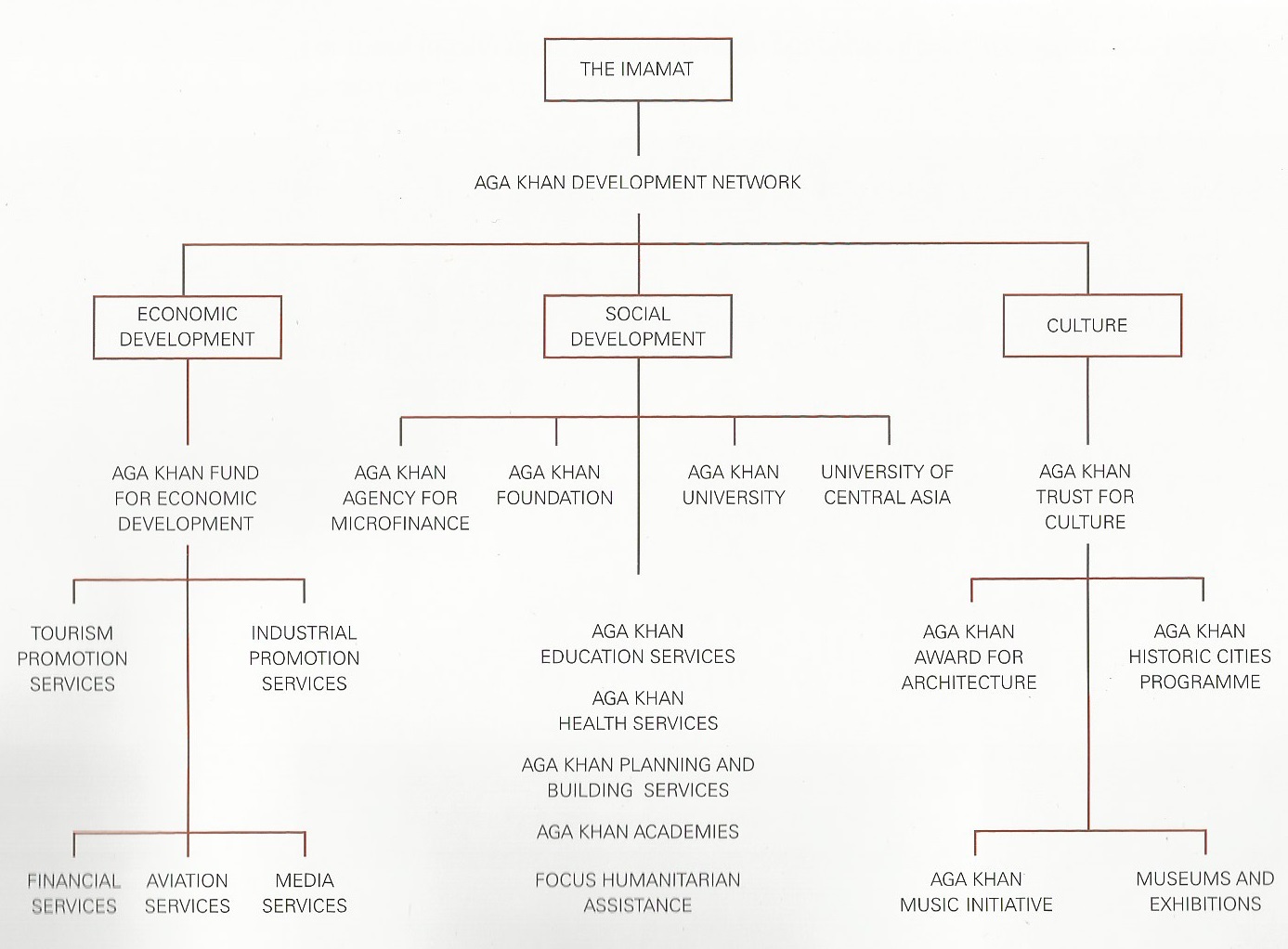
Please click on image for enlargement. Credit: Aga Khan Development Network, www.akdn.org

Please click on image for enlargement. Credit: Aga Khan Development Network, http://www.akdn.org

“In Islamic thought and practice, the world of the spirit and the world of daily life are inseparably intertwined. This is why, over a half century, my role as a spiritual leader has also required me to act in a host of social, economic and cultural endeavours, in order to secure and enhance the well-being of the Ismailis and the communities amongst which they live….The approach we take in the Aga Khan Development Network is non-denominational and holistic. It encompasses both the for-profit and not-for-profit sectors. We seek to catalyse the creation of necessary basic infrastructure, together with the provision of good quality education and healthcare. We are concerned with ensuring access to appropriate credit for the poor at the same time as we are working to sustain the arts and culture.” — Aga Khan [26]

Date posted: Sunday, February, 24, 2014.
Last updated: February, 24, 2014, 18:15 EST (footnote corrections)

This piece is subject to frequent updates (ed.)

___________________

Want to give a feedback? Click on Leave a comment or the comment link at top left of this page, or send an email to simerg@aol.com.

Excluding the background material taken from Dr. Azim Nanji’s articles and clauses from the Preamble of the Ismaili Constitution, the numerous excerpts of His Highness the Aga Khan are taken from the following sources available at Nanowisdoms, an excellent website dedicated to speeches, interviews and writings of Ismaili Imams:

  1. The Imamat in Ismailism and What is Shia Islam? by Dr. Azim Nanji, Lifelong Learning Articles at the Institute of Ismaili Studies
  2. The Preamble Of “The Constitution of the Shia Imami Ismaili Muslims”
  3. Interview with an unidentified media outlet 9 days prior to the first Takht Nashini (Enthronement) Ceremony in Dar es Salaam, Interview in Tanzania or London, 19 October 1957, Nanowisdoms
  4. India Today Interview, Aroon Purie (India), February 1989, Nanowisdoms
  5. Press Remarks published at nanowisdoms with an unidentified media outlet, Central Asia, Nanowisdoms
  6. CBC Interview, Man Alive with Roy Bonisteel, Canada, 8 October 1986, Nanowisdoms
  7. Paris Match interview, 3 February 2005, Nanowisdoms
  8. Ismaili Centre Opening Ceremony, Houston, Texas, USA, 23 June 2002, Nanowisdoms, www.akdn.org
  9. Life Magazine Interview, Margot Dougherty and Richard B. Stolley, ‘In Him, East and
    West Meet’, Nanowisdoms
  10. Address to the Annual Meeting of The European Bank for Reconstruction and Development, Tashkent, Uzbekistan, 5 May 2003, Nanowisdoms
  11. Al Watan Interview, Waddah Abed Rabbo, Damascus, Syria, 27 August, 2008, Nanowisdoms
  12. Lebanese Broadcasting Corporation International Interview, Aleppo, Syria and Lebanon, Nanowisdoms
  13. Banquet Hosted in Honour of the President of Uganda, Kampala, Uganda, 22 August 2007, www.akdn.org and Nanowisdoms
  14. Massachusetts Institute of Technology Commencement Ceremony, Cambridge, USA, 27 May 1994, Nanowisdoms
  15. Aga Khan Academy, Maputo, Foundation Stone Ceremony, Mozambique, 25 June
    2004, www.akdn.org and Nanowisdoms
  16. ‘The Peterson Lecture’ at the Annual Meeting of the International Baccalaureate, Atlanta, Georgia, USA, 18 April 2008, www.akdn.org and Nanowisdoms
  17. Imamat dinner for senior members of the Government, diplomats … etc. London, United Kingdom, July 3, 2008, www.akdn.org and Nanowisdoms
  18. Brown University Commencement Ceremony, Providence, Rhode Island, USA, 26 May 1996, www.akdn.org and Nanowisdoms
  19. Public Address, Rushan, Badakhshan, Tajikistan, 27 May 1995, Nanowisdoms
  20. Irish Times Interview, Alison Healy, ‘Jubilee for an imam among equals’, Maynooth, Ireland, Nanowisdoms
  21. Interview featured in PBS/E2 Series, ‘A Garden in Cairo’, USA, 2 September 2008, Nanowisdoms
  22. Ismaili Centre Opening Ceremony, Houston, Texas, USA, 23 June 2002, www.akdn.org and Nanowisdoms
  23. Golden Jubilee Inaugural Ceremony, Aiglemont, France, 11 July 2007, Nanowisdoms
  24. Massachusetts Institute of Technology Commencement Ceremony, Cambridge, USA, 27 May 1994, Nanowisdoms
  25. Aga Khan Academy, Kilindini, Opening Ceremony, Mombasa, Kenya, 20 December 2003 www.akdn.org and Nanowisdoms
  26. Imamat dinner for senior members of the Government, diplomats … etc. London, United Kingdom, July 3, 2008, www.akdn.org and Nanowisdoms

Note that several speeches made by the Aga Khan can also be read by clicking on www.akdn.org.

We welcome feedback/letters from our readers on the essay. Please use the Comments  LEAVE A REPLY box which appears below. Your feedback may be edited for length and brevity, and is subject to moderation. We are unable to acknowledge unpublished letters.

Please visit the Simerg Home page for links to articles posted most recently. For links to articles posted on this Web site since its launch in March 2009, please click Table of Contents. Sign-up for blog subscription at top right of this page.
His Highness the Aga Khan to Become First Faith Leader to Address Joint Session of Canadian Parliament on February 27, 2014: The ABC’s of the Event Including Past Distinguished Speakers

Material compiled and presented by Abdulmalik J. Merchant
(Publisher-Editor, www.simerg.com)

“Our Government is honoured to once again welcome His Highness the Aga Khan to Canada. Our country has a warm and lasting friendship with His Highness, who was granted honorary Canadian citizenship for his leadership as a champion of international development, pluralism and tolerance around the world.” – Prime Minister Stephen Harper

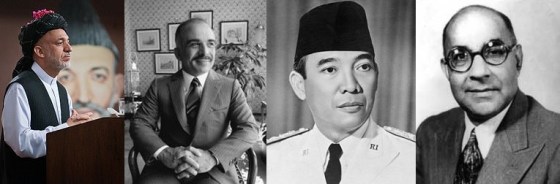
2006 - Hamid Karzai, 1989 - His Majesty King Hussein Ibn Talal, 1956 - His Excellency Dr. Sukarno, 1950 - Hon. Liaquat Ali Khan. Photos: Wikipedia.

Muslims leaders who have addressed the Canadian Parliament (l to r): 2006 – Hamid Karzai, 1989 – His Majesty King Hussein Ibn Talal, 1956 – His Excellency Dr. Sukarno, 1950 – Hon. Liaquat Ali Khan. Photos: Wikipedia.

ADDRESSES BY DISTINGUISHED VISITORS

A Joint Address to Parliament is a speech made by a distinguished visitor, usually a foreign head of state or head of government, to Members of the Senate and the House of Commons. Fifty-two heads of state and five non-heads of state have addressed the Joint Sessions of the Senate and House of Commons of Canada since 1939.

When His Highness the Aga Khan delivers his address on Thursday, February 27, 2014, he will become the first faith leader in 75 years and fifth among Muslims to address the Joint Sessions, since His Majesty King George VI (1895-1952) of the United Kingdom delivered the first ever address on May 19, 1939.

Photo of the Centre Block and Library of the Parliament of Canada from the Gatineau side, overlooking the Ottawa River. Photo: Wikipedia.

Photo of the Centre Block and Library of the Parliament of Canada from the Gatineau side, overlooking the Ottawa River. Photo: Wikipedia.

These extra-parliamentary events usually take place in the House of Commons Chamber and the regular proceedings of the House are suspended for the occasion. The assembly does not constitute a sitting of the House and the Mace (a large, heavy and richly ornamented staff which is the symbol of authority of the Speaker) is not present at its usual location on the Clerk’s Table.

The proceedings are jointly presided over by the Speakers of the Senate and of the House.

 Sample of Hansard from The House of Commons, 1895. Shows sample of several members speaking as described in the text. The Canadian Hansard is not strictly verbatim, and is guided by the principle of avoiding "repetitions, redundancies and obvious errors." Photo: Wikipedia.


Sample of the Canadian Hansard from The House of Commons, 1895. Shows sample of several members speaking as described in the text. The Canadian Hansard is not strictly verbatim, and is guided by the principle of avoiding “repetitions, redundancies and obvious errors.” Photo: Wikipedia.

The House usually decides to broadcast the event (see link below) and to append the text of the address to Hansard, the daily printed record of the debates of parliament. The Hansard was adopted by Canada in 1880 and quickly gained a record for its excellent quality.

WELCOMING CEREMONY AND THE SIGNING OF THE VISITORS’ BOOK

Distinguished visitors are met in the Rotunda of the Centre Block by the Prime Minister, the Speakers of both Houses and other dignitaries where they sign the Senate and House of Commons visitors’ books.

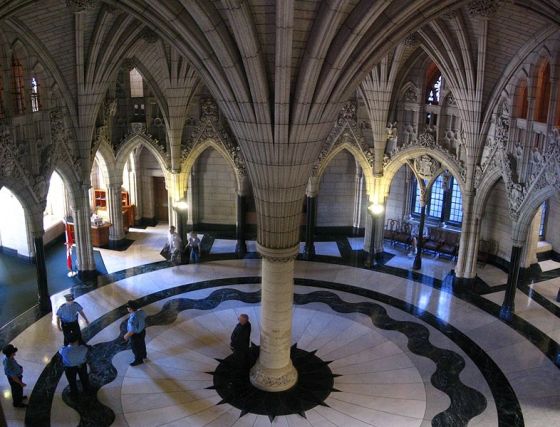
The Rotunda, also called the Confederation Hall, is the formal entrance to Centre Block. Its grandeur immediately reveals the significance of the building and the institutions it houses. It welcomes visitors with an elaborate representation of Canada's political landscape. With carved and sculpted symbols of every province and territory, it also welcomes every Canadian home. Photo: Wikipedia.

The Rotunda, also called the Confederation Hall, is the formal entrance to Centre Block. Its grandeur immediately reveals the significance of the building and the institutions it houses. It welcomes visitors with an elaborate representation of Canada’s political landscape. With carved and sculpted symbols of every province and territory, it also welcomes every Canadian home. Photo: Wikipedia.

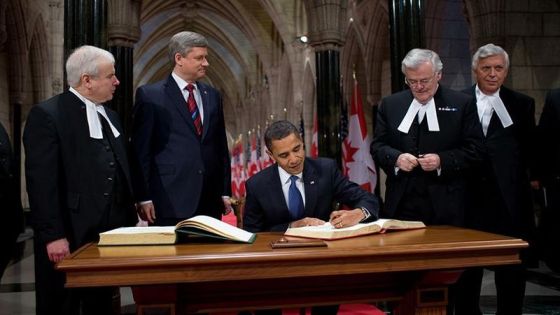
President Barack Obama signs the guest book in Parliament Hill during his visit to Ottawa shortly after becoming the US President. Prime Minister Stephen Harper is standing to President Obama's right. Photo: Whitehouse.

US President Barack Obama signs the distinguished Visitors’ Book of the Canadian Senate and House of Commons during his visit to Ottawa shortly after taking office. Prime Minister Stephen Harper is standing to President Obama’s right. Photo credit: The Whitehouse.

At the appointed time, the official party enters the House of Commons Chamber. After being introduced by the Speaker of the House, the Prime Minister provides an official welcome and invites the visitor to address the assembly.

WHO ATTENDS AND WHERE DO THEY SIT?

When a Joint Address takes place, the House of Commons becomes a grand hall, accommodating both Members of the House and the Senate, and the various guests invited for the occasion.

The seating arrangements in the House are not what they would be for a regular sitting. The Speaker of the House takes the Speaker’s Chair, with the Speaker of the Senate seated in a chair to his or her right. The Clerk’s Table is cleared of its usual material and a lectern placed at its head.

House of Commons Chamber.

House of Commons Chamber.

The Prime Minister and the distinguished visitor are seated along the side of the Table to the Speaker’s right; the Clerk of the Senate and the Clerk of the House of Commons are seated along the other side of the Table.

Senators and Justices of the Supreme Court are seated on the floor of the House in front of the Table. Members of the official delegation and other dignitaries are seated along the back wall of the Chamber. Members of the House of Commons take their usual seats.

All seats in the galleries overlooking the House of Commons are assigned to invited guests. Gallery privileges are suspended and access to the galleries is strictly controlled for this occasion.

DEPARTURE CEREMONY

At the conclusion of the address, the Speakers of the Senate and of the House make remarks. At this point, the official party exits the Chamber and proceeds to the House of Commons Speaker’s Chambers.

LIST OF DISTINGUISHED VISITORS 

Heads of States and of Governments who have addressed Joint Sessions of the Senate and House of Commons of Canada

  1. 2011.09.22, Rt. Hon. David Cameron, P.M. of the U.K. of Great Britain and Northern Ireland
  2. 2010.05.27, His Excellency Felipe Calderón Hinojosa, President of the United Mexican States
  3. 2008.05.26, Victor Yushchenko, President of Ukraine
  4. 2006.09.22, Hamid Karzai, Afghanistan President
  5. 2006.05.18, Hon. John Howard, P.M. of Australia
  6. 2004.10.25, His Excellency Vicente Fox, President of the United Mexican States
  7. 2001.02.22, Rt. Hon. Tony Blair, P.M. of the U.K. of Great Britain and Northern Ireland
  8. 1999.04.29, Václav Havel, President of the Czech Republic
  9. 1998.09.24, Nelson Mandela, President of the Republic of South Africa
  10. 1996.06.11, His Excellency Ernesto Zedillo, President of Mexico
  11. 1995.02.23, Bill Clinton, U.S. President
  12. 1992.06.19, His Excellency Boris Yeltsin, President of the Federation of Russia
  13. 1991.04.08, His Excellency Carlos Salinas de Gortari, President of Mexico

    Her Majesty the Queen has addressed the Canadian Parliament on three occasions. His Highness the Aga Khan received the title "His Highness" from Britain's Queen Elizabeth II on July 26th 1957. Here he is pictured with  Her Majesty the Queen and His Royal Highness Prince Philip when the Queeen hosted a dinner hosted to mark the Ismaili Imam's Golden Jubilee and to acknowledge the close relationship he and his family have had over generations with the British Monarchy and the UK.  Photo Credit: Akdn.org

    Her Majesty the Queen has addressed the Canadian Parliament on three occasions.
    His Highness the Aga Khan received the title “His Highness” from Britain’s Queen Elizabeth II on July 26th 1957. Here he is pictured with Her Majesty the Queen and His Royal Highness Prince Philip when the Queeen hosted a dinner hosted to mark the Ismaili Imam’s Golden Jubilee and to acknowledge the close relationship he and his family have had over generations with the British Monarchy and the UK. Photo Credit: Akdn.org

  14. 1989.10.11, His Majesty King Hussein Ibn Talal, King of the Hashemite Kingdom of Jordan
  15. 1989.06.27, Chaim Herzog, President of the State of Israel
  16. 1988.06.22, Rt. Hon. Margaret Thatcher, P.M. of the U.K. of Great Britain and Northern Ireland
  17. 1988.06.16, Dr. Helmut Kohl, Chancellor of the Federal Republic of Germany
  18. 1988.05.10, Her Majesty Queen Beatrix, Queen of the Netherlands
  19. 1987.05.25, His Excellency François Mitterrand, President of the French Republic
  20. 1987.04.06, Ronald Wilson Reagan, U.S. President
  21. 1986.01.13, His Excellency Yasuhiro Nakasone, P.M. of Japan
  22. 1984.05.08, His Excellency Miguel de la Madrid, President of Mexico
  23. 1984.01.17, His Excellency Zhao Ziyang, Premier of the State Council of the People’s Republic of China
  24. 1983.09.26, Rt. Hon. Margaret Thatcher, P.M. of Great Britain
  25. 1981.03.11, Ronald Wilson Reagan, U.S. President
  26. 1980.05.26, His Excellency Jose Lopez Portillo, President of Mexico

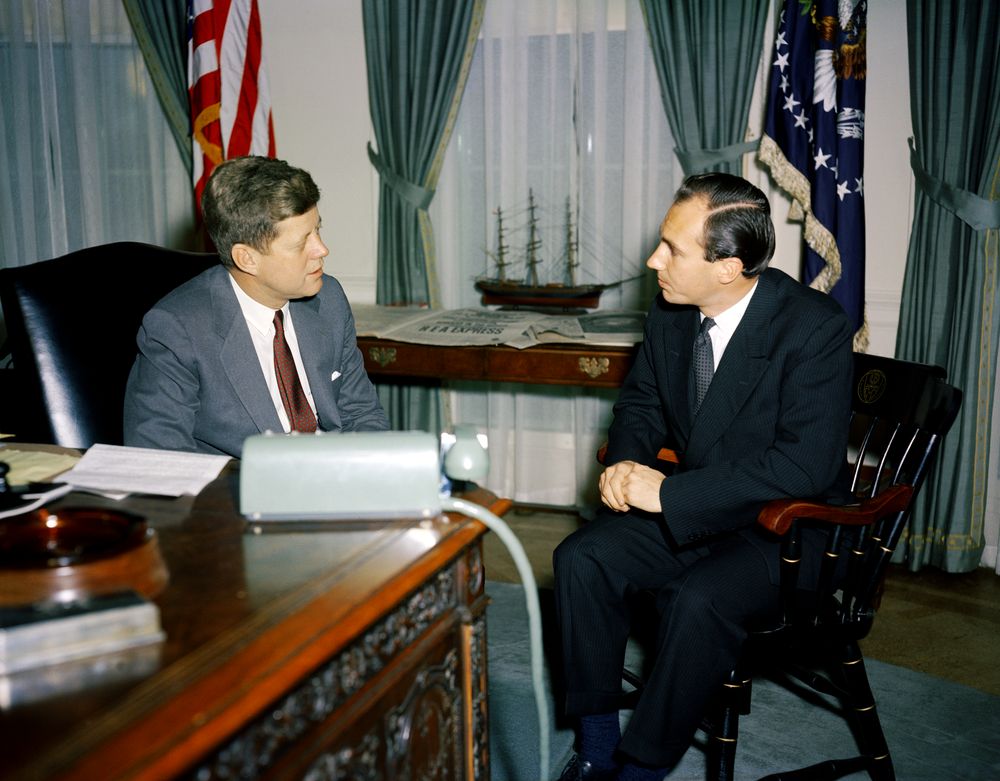
    President John F. Kennedy addressed the Canadian Parliament in 1961. Here he is seen meeting with His Highness the Aga Khan, Prince Karim al-Husseini, at the Oval Office, White House, on March 14, 1961. The Ismaili Imam had first met the President in France some six years earlier. Photo: Robert L. Knudsen (Robert LeRoy), 1929-1989.

    President John F. Kennedy addressed the Canadian Parliament in 1961. Here he is seen meeting with His Highness the Aga Khan, Prince Karim al-Husseini, at the Oval Office, White House, on March 14, 1961. The Ismaili Imam had first met the President in France some six years earlier. Photo: Robert L. Knudsen (Robert LeRoy), 1929-1989.

  27. 1980.05.05, His Excellency Masayoshi Ohira, P.M. of Japan
  28. 1977.10.18, Her Majesty the Queen (Speech from the throne)
  29. 1973.06.19, Madam Indira Gandhi, P.M. of India
  30. 1973.03.30, Luis Echeverria, Constitutional President of United Mexican States
  31. 1972.04.14, Richard M. Nixon, U.S. President
  32. 1967.07.01, Her Majesty the Queen
  33. 1961.05.17, John F. Kennedy, U.S. President (link to video of President Kennedy’s speech follows this article)

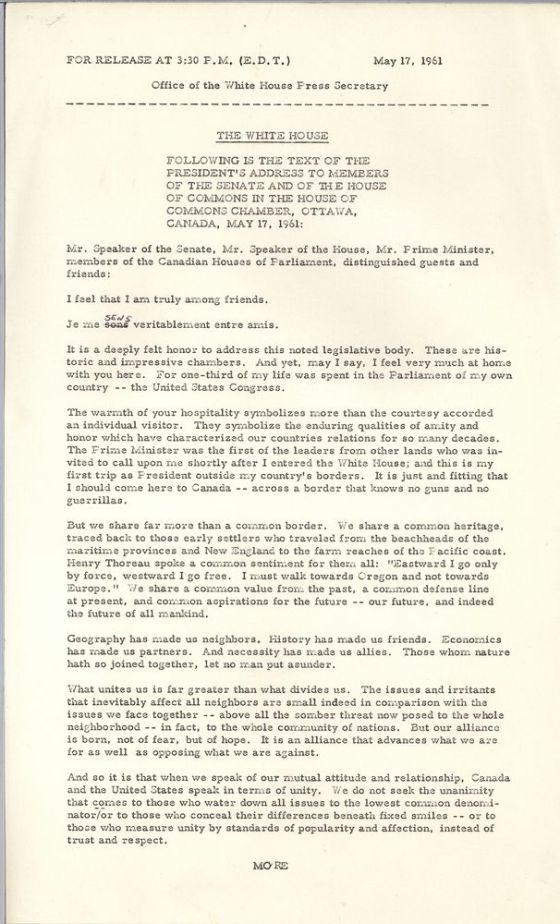
    An image of the original text of address by President John F. Kennedy to Canadian Parliament, Ottawa, 17 May 1961. Credit: John F. Kennedy Presidential Library and Museum

    An image of the original text of address by President John F. Kennedy to Canadian Parliament, Ottawa, 17 May 1961. Credit: John F. Kennedy Presidential Library and Museum

  34. 1958.07.21, Hon. Dr. Kwame Nkrumah, P.M. of Ghana
  35. 1958.07.09, Dwight D. Eisenhower, U.S. President
  36. 1958.06.13, Rt. Hon. Harold Macmillan, P.M. of the United Kingdom
  37. 1958.06.02, Professor Theodor Heuss, President of Federal Republic of Germany
  38. 1957.10.14, Her Majesty the Queen (Speech from the throne)
  39. 1957.03.04, His Excellency Guy Mollet, Premier of France

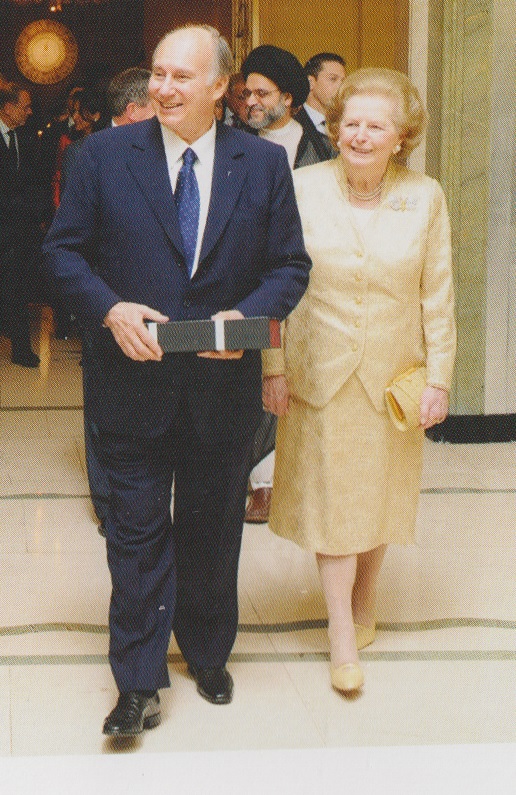
    His Highness the Aga Khan, 49th Ismaili Imam and direct descendant of the Prophet Muhammad, with Baroness Margaret Thatcher at the banquet hosted by His Highness in London on July 3, 2008 during his Golden Jubilee Celebrations. Baroness Thatcher addressed the Canadian Parliament in1988 as Prime Minister of Great Britian. Photo: Mawlana Hazar Imam Shah Karim Al Hussaini Aga Khan, Golden Jubilee Souvenir, published by Islamic Publications Limited. 2012. Copyright.

    His Highness the Aga Khan, 49th Ismaili Imam and direct descendant of the Prophet Muhammad, with Baroness Margaret Thatcher at the banquet hosted by His Highness in London on July 3, 2008 during his Golden Jubilee Celebrations. Baroness Thatcher addressed the Canadian Parliament in 1988 as Prime Minister of Great Britain. Photo: Mawlana Hazar Imam Shah Karim Al Hussaini Aga Khan, Golden Jubilee Souvenir, published by Islamic Publications Limited. 2012. Copyright.

  40. 1956.06.05, His Excellency Dr. Sukarno, Indonesian President
  41. 1956.03.05, His Excellency Giovanni Gronchi, Italian President
  42. 1956.02.06, Rt. Hon. Sir Anthony Eden, P.M. of Great Britain
  43. 1953.11.14, Dwight D. Eisenhower, U.S. President
  44. 1951.04.05, Vincent Auriol, French Republic President
  45. 1950.05.31, Hon. Liaquat Ali Khan, P.M. of Pakistan
  46. 1949.10.24, Pandit Jawaharlal Nehru, P.M. of India
  47. 1947.06.11, Harry S. Truman, U.S. President
  48. 1945.11.19, Rt. Hon. Clement R. Attlee, P.M. of Great Britain
  49. 1944.06.01, Rt. Hon. John C. Curtin, P.M. of Australia
  50. 1943.06.03, Eduard Benes, Czechoslovakian President
  51. 1941.12.30, Rt. Hon. Winston S. Churchill, P.M. of Great Britain
  52. 1939.05.19, His Majesty the King

Non-Heads of State who have addressed Joint Sessions of the Senate and House of Commons of Canada

Canada's Prime Minister, Stephen Harper, invites the Ismaili Imam, His Highness the Aga Khan to speak to the joint session of the Canadian Parliament on February 27, 2014.  Here they are pictured in the Prime Minister's Office at the Parliament Building in Ottawa during one of Aga Khan's  visits to the country. Photo credit: Akdn.org

Canada’s Prime Minister, Stephen Harper, has invited the 49th Ismaili Imam, His Highness the Aga Khan, to speak to the joint session of the Canadian Parliament on February 27, 2014. Here they are pictured in the Prime Minister’s Office at the Parliament Building in Ottawa during one of Aga Khan’s visits to the country. Photo credit: Akdn.org

  1. 2014.02.27, (forthcoming) His Highness the Aga Khan, 49th Imam of the Shia Imami Ismaili Muslims and the direct descendant of the Prophet Muhammad
  2. 2004.03.09, His Excellency Kofi Annan, Secretary General of the United Nations Organization
  3. 1990.06.18, Mr. Nelson Mandela Deputy President of the African National Congress  (note – at this time Nelson Mandela was not yet head of South Africa, which was still under apartheid rule)
  4. 1985.03.07, His Excellency Javier Perez de Cuellar, Secretary General of the United Nations Organization
  5. 1964.05.26, His Excellency U Thant, Secretary General of the United Nations Organization
  6. 1943.06.16, Madame Chiang Kai-Shek, Wife of Leader of Republic of China

Date posted: Monday, February 17, 2014.
Last updated: Thursday, February 20, 2014, 8:00 AM EST.

_______________

1. Compiled from the following sources:

Prime Minister Harper to Welcome His Highness the Aga Khan
Parliament of Canada – Addresses by Heads of State
Parliament of Canada – Addresses by Foreign Dignitaries
Parliament of Canada – Compendium
Hansard in Canada
Wikipedia 

2. Link to live broadcast on Thursday, February 27, 2014
(11:00 AM – 11:45 AM EST, U.K. 16:00 – 16:45)
Address to Canadian Parliament by His Highness the Aga Khan

3. For video of Kennedy’s speech click JFK Library Archives.

What one Ottawa architect enjoys most about the Delegation of the Ismaili Imamat Building

A Canvas for Light

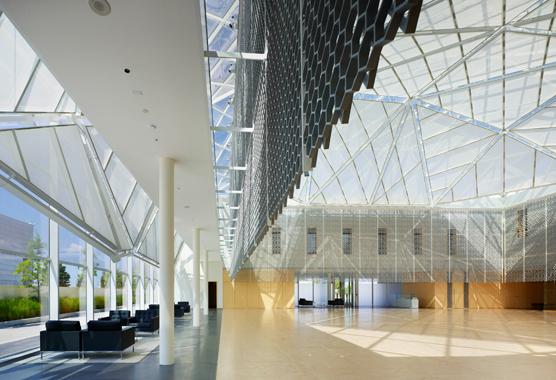
 “When the sun moves across the sky, the shadows dance along the building’s surfaces.”  Photo: Maki and Associates/Moriyama and Teshima Architects.

“When the sun moves across the sky, the shadows dance along the building’s surfaces.” Photo: Maki and Associates/Moriyama and Teshima Architects.

By Kristopher Benes 

As an architect I often get asked to name my favourite Ottawa building! Being a fan of minimalism I was often hard pressed to find anything non-residential that came immediately to my mind –- until that is, when the Ismaili Imamat Delegation building was completed in 2008.

Modern architecture often draws criticism for being too stark, extreme in its simplicity. However, it is its ability to highlight the world around us that I find to be so beautiful in modernism.

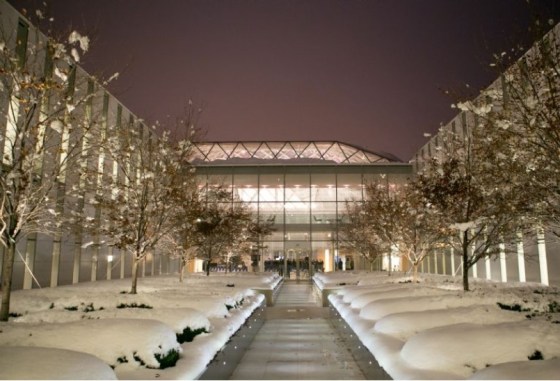
The clarity with which the play of shadows for instance may fall upon a crystal white surface allows architecture to behave as an ever-changing canvas, a reflector if one prefers, of what is going on all around. When the sun moves across the sky, the shadows dance along the building’s surfaces and when the sky takes on a different shade, the building glows in a completely different light.

"When the sky takes on a different shade, the building glows in a completely different light." Photo: © AKDN/Mo Govindji.

“When the sky takes on a different shade, the building glows in a completely different light.” Photo: © AKDN/Mo Govindji.

Light can be a wonderful paint brush for those blank walls; it does not need any more complexity than that. And obviously, Fumihiko Maki, the building’s design architect, understands light better than I ever could hope to (after all he has won a Pritzker Prize for his contributions and has enjoyed a career spanning some 50 years).

I think it is this understanding of light and an ability to shape it so beautifully which speaks to me most about the Ismaili Imamat Delegation Building.

Date posted: Tuesday, February 11, 2014.

Copyright: Kristopher Benes/Simerg.

_______________

Kristopher Benes is a multi-disciplinary Ottawa based architect and principal of Open Plan Architects Inc.

7 Key Themes from the Chancellor’s Speech, With Glimpses of the 2013 Aga Khan University Convocation

PLEASE CLICK: Glimpses from the 2013 Aga Khan University Convocation, with a Summary of Seven Key Themes in His Highness the Aga Khan’s Address

Please click for "Glimpses"

Please click for “Glimpses”

In Photos: The Magnificent Aga Khan University, its Symbolic Logo and the Elegant Jamiapoash Worn by His Highness the Aga Khan for the University’s Convocation

THE AGA KHAN UNIVERSITY

An aerial view of the Aga Khan University in Karachi, Pakistan. The University was chartered as Pakistan's first private international university in 1983 during the reign of President Zia ul-Haq. Photo: Aga Khan Development Network.

An aerial view of the Aga Khan University in Karachi, Pakistan. The University was chartered as Pakistan’s first private international university in 1983 during the reign of President Zia ul-Haq. Photo: Aga Khan Development Network.

When the Charter of the University was first granted in 1983, His Highness the Aga Khan concluded his speech on the occasion with the words, “In everything we do we must look to the future, seeking always to think creatively, to innovate and to improve.”

In 2003, on the 20th anniversary of the University’s founding His Highness the Aga Khan said in his convocation address, “My great hope and prayer is that, in time to come, Aga Khan University will be only one of hundreds of universities in the Muslim world that are on the frontiers of scientific and humanistic knowledge, radiating intelligence and confidence, research and graduates, into flourishing economies and progressive legal and political systems.”

The Aga Khan University World. Photo: Aga Khan Development Network.

The Aga Khan University World. Photo: Aga Khan Development Network.

During his 2006 convocation, the 49th Ismaili Imam, spoke about the Knowledge Society, and urged the Muslim Ummah to “become full and even leading participants in the Knowledge Society of the 21st century. That will mean embracing the values of collaboration and coordination, openness and partnership, choice and diversity – which will under-gird the Knowledge Society, learning constantly to review and revise and renew what we think we know, learning how to go on learning. The spirit of the Knowledge Society is the spirit of Pluralism – a readiness to accept the Other, indeed to learn from him, to see difference as an opportunity rather than a threat.

“Such a spirit must be rooted, I believe, in a sense of humility before the Divine, realising that none of us have all the answers, and respecting the broad variety of God’s creation and the diversity of the Human Family.”

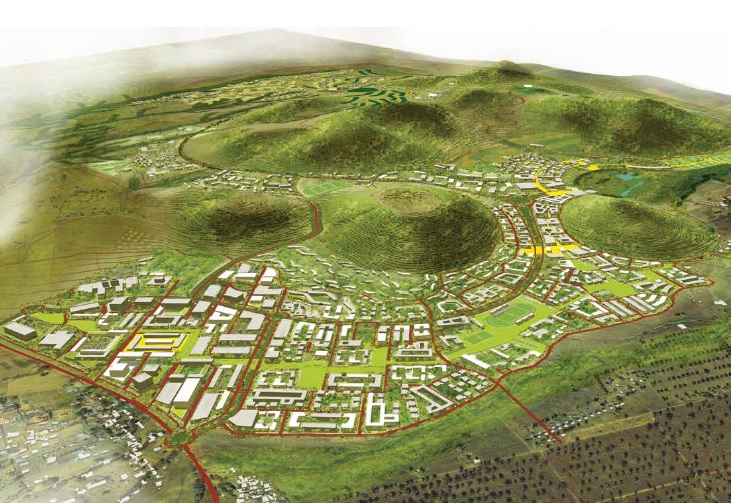
A depiction of the Aga Khan University's future campus in Tanzania. The Arusha campus will not only be comparable to Karachi’s campus in size and scope, but it will also be the University’s first permanent campus serving students from all across the East African community. Photo: Aga Khan Development Network.

A depiction of the Aga Khan University’s future campus in Tanzania. The Arusha campus will not only be comparable to Karachi’s campus in size and scope, but it will also be the University’s first permanent campus serving students from all across the East African community. Photo: Aga Khan Development Network.

~~~~~~~

 THE SEAL OF THE AGA KHAN UNIVERSITY

The Seal of the Aga Khan University

The Seal of the Aga Khan University

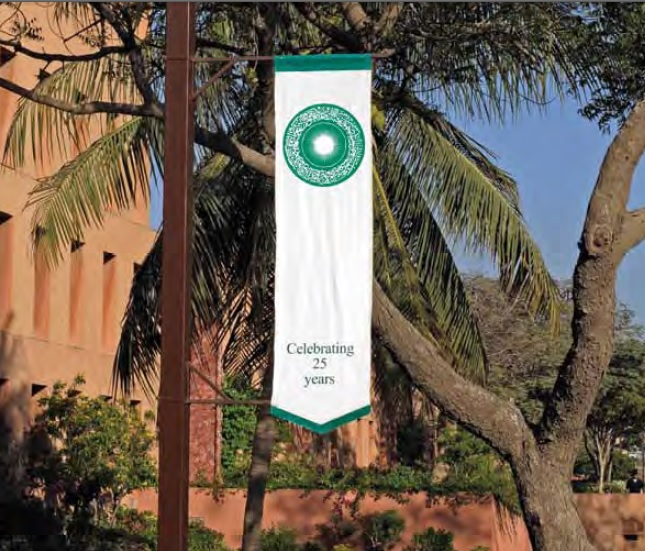
The Seal of Aga Khan University is a visual representation of the principles which underlie the founding of the University. The circular form of the Seal, with its different levels of imagery contained in concentric circles, has its visual roots in the rosettes of early Islamic periods. The circle also symbolises the world and reflects the international presence of the University. 

At the centre of the Seal is a star, or sun. Light is a universal symbol for the enlightenment that education provides.The light emanating from the star is also symbolic of Nur (Divine light).

The Aga Khan University Seal on a banner flying to commemorate the 25th Anniversary of the University in 2008. Photo: Aga Khan Development Network.

The Aga Khan University Seal on a banner flying on the occasion of the 25th Anniversary of the University in 2008. Photo: Aga Khan Development Network.

The star incorporates 49 points to commemorate the University’s founding by His Highness Prince Karim Aga Khan, the forty-ninth Imam of the Ismaili Muslims.

The outer ring circumscribes a Quranic Ayat rendered in classic thuluth script and reads as follows: 

“And hold fast, All together, by the rope
Which God (stretches out for you),
And be not divided among yourselves,
And remember with gratitude
God’s favour on you:
For ye were enemies
And He joined your hearts
In love, so that by His grace
Ye became brethren” — Sura 3, Ayat 103

THE CHANCELLOR’S ELEGANT  JAMIAPOASH

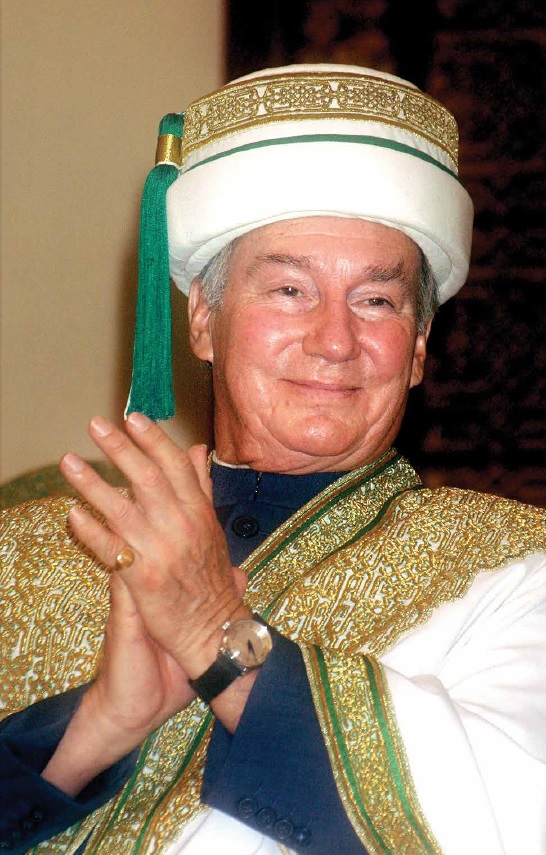
His Highness the Aga Khan in the Jamiapoash which comprises comprises a Khila’at, or  “robe of honour” and a Sirpoash meaning  “headwear” in Persian. Photo: Aga Khan Development Network.

A close up of His Highness the Aga Khan in the Jamiapoash which comprises a Khila’at, or “robe of honour” and a Sirpoash meaning “headwear”. Photo: Aga Khan Development Network.

The academic regalia of the Aga Khan University (AKU) worn during convocation, such as the one that is expected to take place on Thursday, December 19, 2013, is called Jamiapoash.

Jamia is from the Arabic meaning ‘institution of higher learning’ and poash is from Persian meaning ‘apparel.’ The Jamiapoash comprises a Khila’at, meaning “robe of honour” in Arabic and a Sirpoash, meaning “headwear” in Persian, with a tassel on the right.

Aga Khan IV Portrait Chancellor Robe 1989

The Khila’at for the Chancellor, His Highness the Aga Khan, who built the University, is distinguished by its very elaborate and intricate gold embroidery on the upper part of the robe both back and front, but is also unique for its white colour.

White and gold were the colours of the coat of arms of the Fatimids of Egypt, who founded al-Azhar University in Cairo, one of the oldest institutions of higher learning. The foundation ceremony of the Aga Khan University was performed one thousand years after the founding of the al-Azhar University in 970 by His Highness the Aga Khan’s ancestor, Caliph-Imam Mawlana al-Muizz, during Fatimid rule.

Another magical photo of the 49th Ismaili Imam, the direct descendant of the Prophet Muhammad (s.a.s) in the Aga Khan University regalia during a convocation ceremony. Photo: The Aga Khan Development Network.

Another magical photo of the 49th Ismaili Imam, the direct descendant of the Prophet Muhammad (s.a.s) in the Aga Khan University regalia during a convocation ceremony. Photo: The Aga Khan Development Network.

The Sirpoash for the Chancellor is white in colour and richly gold-embroidered with a 5.5 cm band and a 2 cm secondary green band with a green and white tassel.

Date posted: Wednesday, December 18, 2013.

____________

IMPORTANT NOTE TO OUR READERS: We urge ALL our readers to view and download the excellent Aga Khan Development  Network publications by clicking on AKDN Publications.  The publications are outstanding, and will illustrate the vastness of the work of the Ismaili Imamat in all areas of human endeavour. They are also very well explained and illustrated, and will prove useful for educational projects and presentations.

Pir Sadr al-Din’s Ginan “Eji Dhan Dhan Aajano” with Meaning, and Other Readings for the 77th Salgirah of the 49th Ismaili Imam, His Highness the Aga Khan

Spread in various countries around the world, the Shia Imami Ismailis have their own innumerable ways for celebrating important religious occasions according to their various cultural, social and religious traditions and backgrounds. One very important occasion in the annual calendar of the Ismailis is the Salgirah, or the birthday of their spiritual leader (Imam). His Highness the Aga Khan is their present Imam, and Ismailis around the world will be marking his 77th Salgirah on December 13, 2013. The following readings will enhance the readers’ understanding about the occasion as well as the special relationship that binds the Imam of the Time with his spiritual children.

Mawlana Hazar Imam’s Salgirah and the Depth of His Love for the Jamat

The term Salgirah is of Persian origin. Sal means anniversary and girah means knot and hence Salgirah literally means ‘an anniversary knot added on to a string kept for the purpose’. This article approaches the subject of Mawlana Hazar Imam’s birthday in terms of the Imam’s love for his murids and the love and devotion of the murids for their Imam.

In Metaphoric Ginan “Eji Dhan Dhan Aajano” Pir Sadr al-Din Asks Mu’mins to Act Righteously and Gain Spiritual Recognition of Imam-e-Zaman

The Ginan has attained a very special status because it is primarily recited during the festivities marking the Salgirah of the Imam. The appropriateness of reciting Eji Dhan Dhan Aajano during the Salgirah will become apparent as we try to understand the ginan and its underlying spiritual teachings.

The Preamble Of “The Constitution of the Shia Imami Ismaili Muslims”

The new Ismaili Constitution was ordained, signed and sealed by His Highness the Aga Khan on December 13th, 1986, his 50th birthday. His Highness did this with the belief that the Constitution would provide a strong institutional and organizational framework for his Ismaili community to contribute meaningfully to the societies among whom they live.

His Highness the Aga Khan and the Ismailis

.

.

On the occasion of His Highness the Aga Khan’s 75th birthday on December 13, 2011, Simerg published a three-part photo essay tribute to the 49th Ismaili Imam. For those who may have missed, the series has been consolidated into a captivating one piece photo essay, which can be read at Simerg’s companion photo blog, Simergphotos, by clicking on the above link.

Date posted: December 7, 2013

___________________

A Note to Readers: Please scroll down or click Home page for other recent posts and click What’s New for links to all articles published on this blog since March 2009. Subscribe to this Website via the box near the top right of this page.
His Highness the Aga Khan Receives RAIC’s 2013 Gold Medal for his Significant Contribution to Canadian Architecture

Please click: Royal Architectural Institute Awards Gold Medal to 49th Ismaili Imam, His Highness the Aga Khan, for his contribution to Canadian architecture

Please click on image for a report of the RAIC Gold award ceremony on November 27, 2013 in Ottawa, Canada.

Please click on image for a report of the RAIC Gold award ceremony on November 27, 2013 in Ottawa, Canada.

360° Panorama Photos of His Highness the Aga Khan’s Delegation Building

Introduced by Malik Merchant
Publisher-Editor, Simerg and Simergphotos

Born in Woking, United Kingdom, Martin Bloomfield is a designer photographer and an expert in 3D animation. He has travelled the world over, and now lives with his family in Dar-es-Salaam, Tanzania. Before leaving for Africa in 2012, Bloomfield spent some time in Ottawa where he took a series of powerful and stunning panoramic and 360° views of the Delegation of the Ismaili Imamat Building.

His set of five panoramic photos of the Delegation Building along with their incredible 360° views are featured at 360cities and we are pleased to offer the links below, with permission from Steve Hercher.

A couple of notes: Once you are taken to 360Cities from below, you may then do the following (4 or 5 being the highlight):

(1) Click on HIDE CONTROLS to view a clear picture;
(2) Click on FULL SCREEN MODE to see your entire screen filled with the photo (ESC to get out);
(3) When all CONTROLS are displayed, use the magnifying feature (+ or -) for close-ups; and MOST IMPORTANT
(4) Use your mouse (or finger as applicable for the device) to rotate the photo in any direction by using the compass above the magnifying option. This outstanding and superb feature will provide you with an enriching experience of the building and its architecture. You may also use the magnifying option in conjunction with the 360° rotating compass ball for yet another perspective OR
(5) As an alternative to (4) you may Left click on your mouse and drag it in the direction you want to move.

The 360Cities website has stunning photographs from all around the world taken by Bloomfield and many others like him. Also during your visit to 360Cities please learn more about panoramic picture-taking by clicking on their informative links such as How to and so on.

An Enthralling Visit to the Ismaili Imamat’s
Delegation Building in Ottawa

(Please click on images for panoramas)
MBloomfield Delegation 01

The Delegation of the Ismaili Imamat – Exterior 1

MBloomfield Delegation 02

The Delegation of the Ismaili Imamat – Exterior 2

MBloomfield Delegation 03

The Delegation of the Ismaili Imamat – Exterior 3

MBloomfield Delegation 04

The Delegation of the Ismaili Imamat – Interior 1

MBloomfield Delegation 05

The Delegation of the Ismaili Imamat – Interior 2

Date posted: Tuesday, November 26, 2013.

Also click on our most recent post Photo Essay: Celebrating Sussex Drive, His Highness the Aga Khan and, Five Years on, the Crystalline Delegation of the Ismaili Imamat Building

Note: This piece is repeated at www.simergphotos.com

__________

We welcome feedback/letters from our readers. Please use the LEAVE A REPLY box which appears below or send your letter to simerg@aol.com. Your feedback may be edited for length and brevity, and is subject to moderation. We are unable to acknowledge unpublished letters

Photo Essay: Celebrating Sussex Drive, His Highness the Aga Khan and the Delegation of the Ismaili Imamat Building

Sussex Drive with some other connecting streets in Canada’s National Capital Region, makes up what is known as the Confederation Boulevard or the “ceremonial and discovery route”.  Some of Canada’s most important institutions and landmarks including the residences of the Governor General and the Prime Minister are on Sussex Drive.

Please click: A Celebration of Sussex Drive, His Highness the Aga Khan and, Five Years on, the Crystalline Delegation of the Ismaili Imamat Building

Please click on image to read photo essay

Please click on image to read photo essay

The newest addition is the Delegation of the Ismaili Imamat Building which was opened by Prime Minister Stephen Harper on December 6, 2008 in the presence of the 49th Ismaili Imam, His Highness the Aga Khan. The photo essay provides a comprehensive overview of Sussex Drive. You will find out exactly where the Delegation Building is located and how it impacts the architectural landscape of Ottawa with its magnificent glass dome.

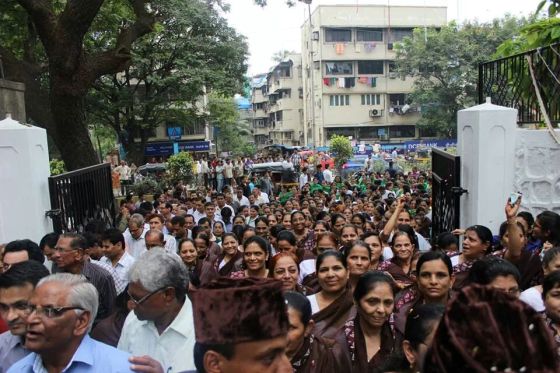
An Account of His Highness the Aga Khan’s Recent Visit to India: For Ismaili Followers and Volunteers, “An Experience of Being Lifted Away to Another World” by Toral Pradhan

“The car door was left open waiting for him to sit in, but Hazar Imam was instead moving around the compound as if unwilling to leave the premises…..This is a sight that is difficult to erase from the mind” — Toral Pradhan

PLEASE CLICK: His Highness the Aga Khan’s Visit to India: For His Ismaili Followers and Volunteers, “A Dream Come True” and “An Experience of Being Lifted Away to Another World”

Please click on image for article by Toral Pradhan.

Please click on image for article by Toral Pradhan.