An Arabic-script ambigram, where ‘Muhammad’ upside down is read as ‘Ali’ and vice versa.

Ghadir Khumm and the Designation of Hazrat Ali as the Successor of Prophet Muhammad

We have two short pieces on the festival of Eid-e Ghadir, which is commemorated on the 18th of the Islamic month Dhul Hijja (in 2021 falling on or around Tuesday July 27). The first piece, along with the ambigram at the top, is reproduced from The Ismaili, the official website of the Ismaili Muslim community. The ambigram, which is in the Arabic script, can be read as ‘Muhammad’ and, upside down, as ‘Ali’. The second piece, At the Ghadir Khumm Campsite, by British writer Barnaby Rogerson first appeared in Simerg’s acclaimed series I Wish I’d Been that can be downloaded as a PDF file. We have also embedded excerpts from the Ismaili Constitution as well as an Ismaili Ginan that are pertinent to the occasion.

Eid-e Ghadir Mubarak

Eid-e Ghadir calligraphy by Karim Ismaili
Outer border: The famous tradition of Prophet Muhammad at Ghadir Khumm — Mun Kuntu Mawlahu, Fa Aliyyun Mawlahu (He whose Mawla I am, Ali is his Mawla); Centre: The name Muhammad (in middle), and the name Ali repeated seven times in Eastern Kufi calligraphy. Calligraphy and design: © Karim Ismail, Toronto, Canada.

This week, Shia Muslims across the world observe Eid-e Ghadir, marking the anniversary of an important event in Muslim history. According to Shia belief, tradition, and interpretation of history, this occasion commemorates the pivotal gathering at Ghadir Khumm, when Prophet Muhammad (peace be upon him and his family) — based on a divine command from Allah — designated Hazrat Ali as his successor and the first in the continuing line of hereditary Imams.

In historical sources, it is recorded that on the way back to Medina after performing a pilgrimage to Mecca, the Prophet received a revelation — Surah al-Ma’ida (sura 5 ayat 67) — that we recite in our daily prayers:

“O Messenger, deliver [to the people] what has been revealed to you from your Lord, and if you do not do so, then you will not have delivered His message …”

Numerous reliable hadith sources — both Shia and Sunni — record this event, which took place in the year 632 CE. Upon receiving this revelation, the Holy Prophet stopped at an oasis known as Ghadir Khumm, and addressed a large gathering of Muslims who had accompanied him. It is said that The Prophet proclaimed: “Man kuntu mawlahu fa aliyyun mawlahu” meaning: “He whose Mawla I am, Ali is his Mawla.” The Prophet then prayed: “O Allah, be a friend of whoever is his friend and extend your support to those who support him.”

Article continues below

Ismaili Constitution Imamat Aga Khan, Simerg
Mawlana Hazar Imam, His Highness the Aga Khan, is seen signing a new constitution for the worldwide Ismaili community on his 50th birthday, December 13, 1986. The preamble excerpts produced in this post are from this constitution.

In accordance with Shia doctrine, tradition, and interpretation of history, the Holy Prophet (s.a.s.) designated and appointed his cousin and son-in-law Hazrat Mawlana Ali Amiru-l-Mu’minin (a.s), to be the first Imam to continue the Ta’wīl and Ta‘līm of Allah’s final message and to guide the murids, and proclaimed that the Imamat should continue by heredity through Hazrat Mawlana Ali (a.s) and his daughter Hazrat Bibi Fatimat-az-Zahra, Khātun-i-Jannat (a.s).Preamble, Ismaili Constitution

According to Shia belief, by declaring Hazrat Ali as Mawla after him, the Prophet transferred his own spiritual authority bestowed upon him by Allah to Hazrat Ali, making him — and all the Imams that follow — the Amirul Mu’minin, or Master of the Believers.

On instruction from Prophet Muhammad, Hazrat Ali received baiyat (the oath of allegiance), from the Muslims assembled there. According to Shia traditions and sources, following the proclamation, the final verse of the Qur’an was revealed to the Prophet:

“On this day, I have perfected for you your religion, completed my favours upon you, and have chosen for you Islam as your religion.”

This marks the end of the period of nabuwwa, or Prophethood, and the historical beginning of the Institution of Imamat. Eid-e Ghadir is an anniversary of special significance to all Shia Muslims, as it is also associated with the well-attested tradition in which the Prophet is said to have proclaimed:

“I am leaving among you two matters of great weight (al-thaqalayn), the Book of Allah and my kindred (itrati), the People of my House (Ahl al-Bayt), and these two shall never be separated until they return to me at the Pool [of Kawthar in Paradise on the Day of Judgement]…”

Mawlana Hazar Imam Shah Karim al Hussaini, His Highness Prince Aga Khan, in direct lineal descent from the Holy Prophet (s.a.s.) through Hazrat Mawlana Ali (a.s.) and Hazrat Bibi Fatima (a.s), is the Forty-Ninth Imam of the Ismaili Muslims.Preamble, Ismaili Constitution

The Shia Ismaili tradition bears witness to the continuity of the authority vested at Ghadir Khumm. Today, this leadership and authority is vested in Mawlana Hazar Imam. The rope of Imamat has continued over 1,400 years, from Hazrat Ali, to the present 49th hereditary Imam and direct descendant of Prophet Muhammad through Hazrat Ali and Hazrat Bibi Fatima al-Zahra, Khatun-i Jannat.

In commemorating Eid-e Ghadir, the Jamat celebrates the seminal event of Ghadir Khumm, reaffirming our allegiance to the Imam-of-the-Time as the direct lineal successor and inheritor of the authority of Hazrat Ali.

Eid Mubarak!

______________

Ginan: Imam Must Be Present on Earth

Purush shan matra pag dharani na dharante,
Sansaar, chandra, suraj na dhrashtante,
Kuchh na dhrashtante,
Bhom kar, megh, dharti na aakaash bhave 

Translation:

If the Imam did not have his feet on this earth for even a moment,
then the world, moon, sun would vanish
and nothing would exist,
neither the heaven nor the earth.

_______________

Objects Commemorating the Idd-e Ghadir

Images of some stamps and coins issued by the Islamic Republic of Iran between 1990 and 2010 commemorating the Idd-e-Ghadir. The inscriptions inlude the Shahada, Qur'anic ayats and the declaration made by Prophet Muhammad at Ghadir Khumm, "Mun Koontu Mawla, Fa Hada, Aliyun Mawla" meaning "He of whom I am the Mawla Ali is also the Mawla." Simerg
Images of some stamps and coins issued by the Islamic Republic of Iran between 1990 and 2010 commemorating the Idd-e-Ghadir. The inscriptions inlude the Shahada, Qur’anic ayats and the declaration made by Prophet Muhammad at Ghadir Khumm, “Mun Koontu Mawla, Fa Hada, Aliyun Mawla” meaning “He of whom I am the Mawla Ali is also the Mawla.”

_______________

At the Ghadir Khumm Campsite

By BARNABY ROGERSON
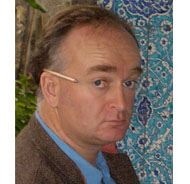
Portrait of Barnaby Rogerson, a British writer, against a patterned background.
Barnaby Rogerson

What an offer! To travel back in time and return as a true witness to the history that I have so often thought and dreamed about. Perhaps I could travel in the habit of a Christian envoy from some Celtic island monastery off the west coast of the British Isles, sent east to seek advice from the wise holy man of whom we had heard, far off in Arabia. For in my homeland the light of civilization seems on the point of extinction, as Barbarian invaders appear like devils from out of the German sea.

I would arrive in the oasis of Medina at a time of peace, when all of Arabia was sending delegations to seek peace and instruction. Here, in my imagination, I would be befriended by Ali and taken back to his home, where I would witness how this battle-scarred warrior was also content in his role as a young father, playing with his boys Hussein and Hassan on the reed mats in his humble hut amongst the palm groves.

Then, in a flurry of energy, I receive a last-minute invitation to join the Prophet’s Last Pilgrimage to the holy shrine at Mecca. Although I am not permitted to approach the shrine itself and am left at a campsite just outside the pilgrimage city, I make certain to record the events as told by the eyewitnesses I travelled with.

On the journey back, I bear witness to the exact succession of events at the Ghadir Khumm campsite: the blessings, the sermon and the ritual actions of the Prophet ordaining Ali as his successor. These I faithfully record in the pages of my journal, before hurriedly departing and returning to my homeland. There, the account of my travels is neatly copied out onto vellum and placed in the monastery library. Years later, the monastery is sacked by raiders coming out of the sea, who in their fury destroyed even the walls of this holy place. But this was fortunate in a way, for the domed roof of the library collapsed preserving all the books, which lie there still…

Date posted: July 26, 2021.

___________________

Before departing this website please take a moment to review Simerg’s Table of Contents for links to hundreds of thought provoking pieces on a vast array of subjects including faith and culture, history and philosophy, and arts and letters to name a few. Also visit Simerg’s sister websites Barakah, dedicated to His Highness the Aga Khan, and Simergphotos.

A Unique Imamat Day Card and a Pictorial Presentation of Years 61-64 of the Aga Khan’s Imamat, a Divine Institution that is Rooted in a Proclamation Made by the Holy Prophet Muhammad (S.A.S) 1389 Years Ago

Introduced by MALIK MERCHANT
(Publisher-Editor, BarakahSimerg and Simergphotos)

Shia Ismaili Muslims all over the world will commemorate the 64th Imamat Day anniversary of Mawlana Hazar Imam, His Highness the Aga Khan, on Sunday July 11, 2021.

From the day our beloved Prophet Muhammad (S.A.S.) passed away on June 8, 632, and Hazrat Ali (A.S.) became the first Imam on the Divine Commandment that the Prophet had received at Ghadir Khumm, there have been forty-nine Ismaili Imams in continuous Hereditary Succession, spanning a period of 1389 years in Islamic history.

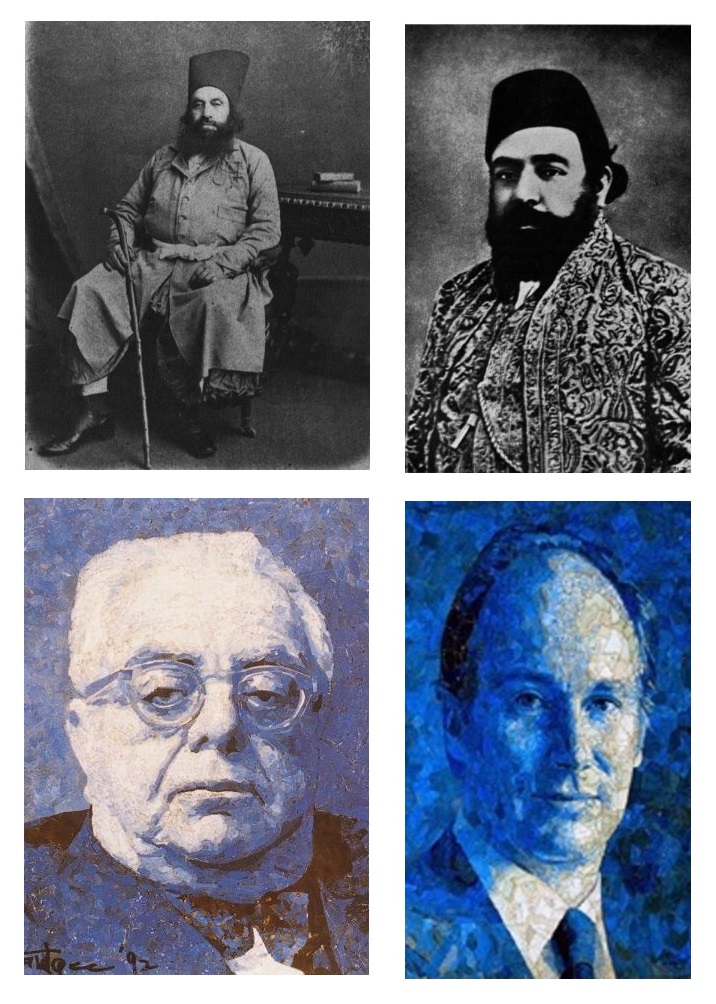
Upper row: Imam Shah Hassanali Shah (Aga Khan I) and Imam Shah Ali Shah (Aga Khan II). Lower row: Imam Sultan Mahomed Shah (Aga Khan III) and Mawlana Shah Karim Al Hussaini (Aga Khan IV). Total reign of the four Imams 203 years from 1817 to current year (2021). Longest reign Aga Khan III, 71 years; followed by Aga Khan I and Aga Khan IV, each 64 years.

Mawlana Hazar Imam and his immediate three predecessors have reigned the Jamat for a total of 203 years or 14.6 % of the entire span as follows:

1. Mawlana Shah Karim Al Hussaini Hazar Imam (His Highness the Aga Khan IV, Imam from 1957 – Current, 64 years, he became the 49th Imam at the age of 20); 
2. Imam Sultan Mahomed Shah (His Highness the Aga Khan III, Imam from 1885 – 1957, Imam for 71 years, he became the 48th Imam at the age of 7 years);
3. Imam Shah Ali Shah (Aga Khan II, 1881 – 1885, Imam for 4 years, he became the 47th Imam at the age of 51 years); and
4. Imam Shah Hassanali Shah (Aga Khan I, 1817 – 1881, Imam for 64 years, he became the 46th Imam at the age of 13 years).

This 203 year period of the reign of 4 successive Ismaili Imams accounts for more time than does the entire Fatimid period, reigned by 8 Imams from Imam Mehdi (11th Imam, North Africa) to Imam Mustansir bi Allah (18th Imam, Cairo)!

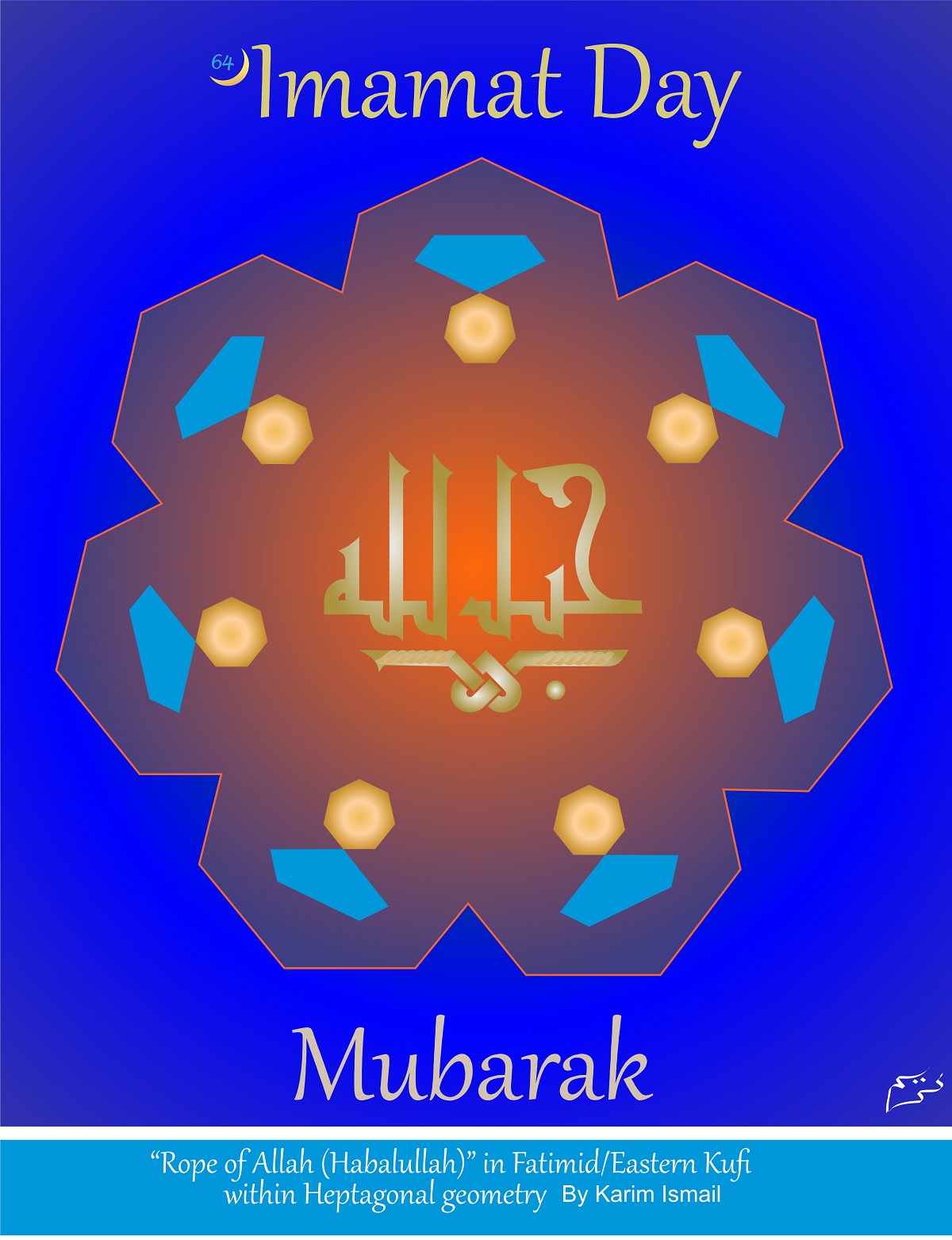
On that historical and interesting statistical fact, we convey to Ismaili Jamats around the world as well as friends and supporters of the community Imamat Day Mubarak through a beautifully designed card by Toronto’s Karim Ismail.

The design carries a rich and significant meaning for all Shia Ismaili Muslims as explained in Ismail’s brief note below. We sincerely thank him for sharing this very special and extraordinary work with us and our readers around the world.

We would be remiss if we did not mention the impact the coronavirus pandemic has had on humanity at large. Many of us have lost four beloved friends and family members to Covid-19 or other illnesses and causes, and social distancing, travelling and restrictive gathering rules have prevented us from fully participating in funerals. We pray that the souls of the deceased may rest in eternal peace and that their family members may find strength and courage to overcome the grief over the loss.

On this 64th Imamat Day of Mawlana Hazar Imam, we also pray for the fulfillment of our readers’ wishes and that everyone’s lives are filled with barakah (happiness) and success. We particularly wish families with young children and youth success in their studies.

2021 Imamat Day Card

Click on image for enlargement

Imamat Day Card by Karim Ismail Simerg and Barakah His Highness the Aga Khan Mawlana Hazar Imam Prince Karim

Explanatory Note of the 2021 Imamat Day Card

By KARIM ISMAIL

In Shi’i tradition, “The Rope of Allah” (Qur’an 3:103) refers to the “Ahl al Bayt” — the Imams from the House of the Prophet Muhammad (S.A.S).

This important tradition appears in the card within heptagonal geometry (seven-sided polygon) about which the (Late) Karl Schlamminger, creator of extraordinary designs and distinctive calligraphies for the Ismaili Centres in London, Lisbon and Toronto, observed as follows in an essay for Arts & The Islamic World (volume 3, number 3, page 25-26):

“The floor of the outer entrance hall [of the Ismaili Centre London] has an open ended pattern in heptagonal form which rises at the focus of the room to create a fountain: such a pattern in such space is of course a completely classical Islamic response — but I have never heard of a heptagonal pattern anywhere in Islamic architecture.

“The number seven symbolizes for Ismailis the values of its essential philosophy — but has never been used in an architectural context. Here the sevenness of the design is no superficial effigy or naturalistic picture of an idea, but — as always in Islam — is expressed in geometry (literally: measurement of the earth).”

__________________

Photo Essay: Years 61-64 of the Aga Khan’s Imamat

We now invite readers to visit Simerg’s sister website Barakah for a very special four-part pictorial series on years 61 to 64 of Mawlana Hazar Imam’s Imamat.

Date posted: July 10, 2021.

_____________________

Before departing this website please take a moment to review Simerg’s Table of Contents for links to hundreds of thought provoking pieces on a vast array of subjects including faith and culture, history and philosophy, and arts and letters to name a few. Also visit Simerg’s sister websites Barakah, dedicated to His Highness the Aga Khan, and Simergphotos.
Karim Ismail Calligraphy, Ismaili artist simerg and barakah
Karim Ismail

Originally from Uganda, Karim Ismail lived in England before settling in Canada. By profession, he is a Pharmacist (retired). It was in England, in 1986, that he came across the artwork of a German Muslim, Karl Schlamminger (1935-2017), at the Ismaili Centre London. Karl’s artwork on calligraphy and geometrics, had a profound effect on Karim. He is frequently seen conducting calligraphy workshops for children at Toronto’s Aga Khan Museum, which is currently closed due to Covid-19. Karim was also active on the literature counter at the Ismaili Centre Toronto, before the closure of Jamatkhanas due to Covid-19.

May 4, 2021, the 23rd Night of Ramadhan: Laylat al-Qadr Program for Jamats in North America

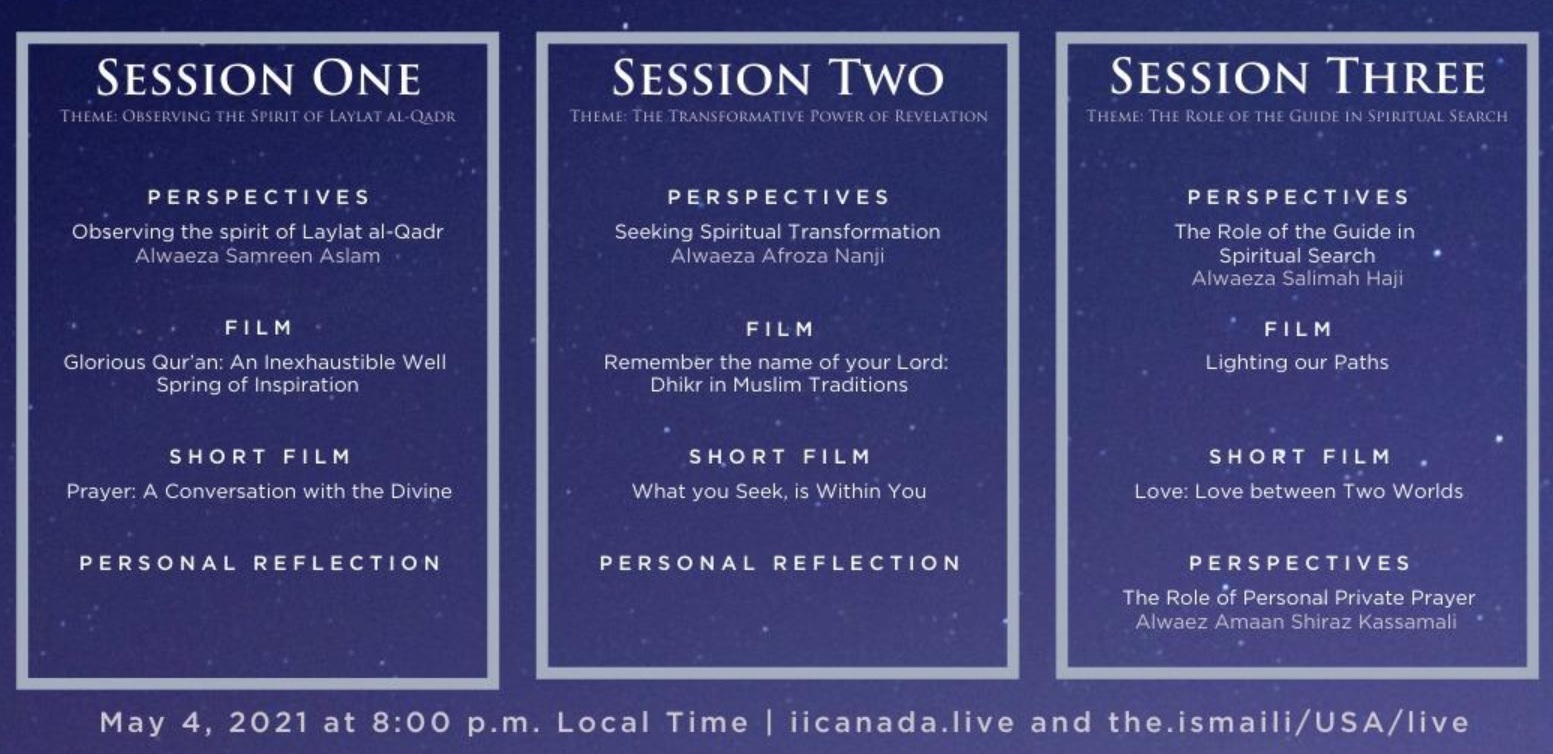
Ismaili Muslims observe Laylat al-Qadr on the 23rd night of Ramadhan, which falls on Tuesday, May 4, in 2021. Jamati members across North America are cordially invited to participate in a special Laylat al-Qadr program that will be held in three sessions as highlighted in the poster below (click on image for enlargement).

Please also click HERE for the institutional events page, and click on Laylat al-Qadr to read Simerg’s piece on the Night of the First Revelation of the Holy Qur’an.

Laylat al-Qadr programming poster for 2021, May 4, 23rd of Ramadhan
Please click on image for enlargement

Date posted: May 4, 2021.

__________________________

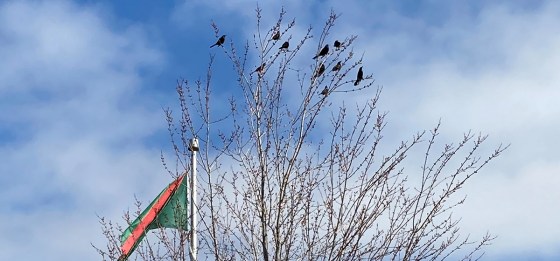
Aga Khan Park Ismaili Flag Birds

Video: The Beautiful Sounds of Birds at the Aga Khan Park and a Quick 360° Tour of Aga Khan Museum and the Ismaili Jamatkhana in Toronto

No creature is there crawling on the earth, no bird flying with its wings, but they are nations like unto yourselves. We have neglected nothing in the Book; then to their Lord they shall be mustered. — Holy Quran, 6:38 (Translation by A.J. Arberry)

The birds, you will recall [in Attar’s great poem, the Conference of the Birds] in huge quantities went in search of the Simurgh, the ideal and perfect king. After many tribulations, thirty of them do reach the end of the journey and come to the gate of the Supreme Majesty. The Chamberlain tests them and then opens the door and they sit on the masnad, the seat of the Majesty and Glory — His Highness the Aga Khan, Lahore, Pakistan October 23, 1980 (read speech)

The sounds of birds chirping at Aga Khan Park thrills and brings joy to Malik Merchant, and he takes the following short video which also takes you around the front section of the Aga Khan Park with views of the Ismaili Jamatkhana and the Aga Khan Museum. After watching the video presentation, please visit Simergphotos for great photo essays.

Note: See correction notes at bottom of this page.

A short presentation of the lovely sounds of birds at the Aga Khan Park with a quick 360° tour of the surrounding projects of His Highness the Aga Khan. Video: © Malik Merchant/Simergphotos.

Corrections:

(1) At the end of the video, I have referred to the Ismaili Jamatkhana dome as the dome of the Ismaili Centre. The Headquarters Ismaili Jamatkhana is an extension of the Ismaili Centre Toronto but also part of it. The Jamatkhana is a unique building in its own right. My commentary should have therefore referred to the dome as that of the Ismaili Jamatkhana, as it did in the earlier part of the video.

(2). The Green and Red flag used by Ismailis for decades was once upon a time referred to as “MY FLAG.” This is no longer in usage, officially at least. I have however mistakenly referred to it as the “Flag of the Ismaili Imamat” in the video report as well as in many other articles and photos on this and other sister websites. The flag without the monogram or crest (taj) of the Ismaili Imamat should simply be referred to as “The Ismaili Flag” as mentioned in the Ismaili Constitution. The flag inscribed with the monogram is only used during Mawlana Hazar Imam’s visits, at official signing agreements where he is present, on his planes, and at the Delegation of the Ismaili Imamat Building in Ottawa. The Ismaili Flag on Wynford Drive does not include the crest but is replaced with a flag bearing the crest whenever Mawlana Hazar Imam visits the site; it is then referred to as the Ismaili Imamat Flag.

Date posted: March 31, 2021.

_______________________

We welcome feedback from our readers. Please complete the LEAVE A REPLY form below or click Leave a comment. Your letter may be edited for length and brevity, and is subject to moderation.

Before departing this website please take a moment to review Simerg’s Table of Contents for links to hundreds of thought provoking pieces on a vast array of subjects including faith and culture, history and philosophy, and arts and letters to name a few. Also visit Simerg’s sister websites Barakah, dedicated to His Highness the Aga Khan, and Simergphotos.
His Highness the Aga Khan, Imam Sultan Mahomed Shah: Download Our Book and Listen to an Audio

November 2, 2020 marks the 143rd birth anniversary of Mawlana Sultan Mahomed Shah, the 48th hereditary Imam of Shia Imami Ismaili Muslims. We invite you to download our marvellous publication “The Imam of the Socio-Economic Revolution” which is bundled with plenty of inspiring and informative stories, articles and unique points of view. Please click HERE to download the book, and listen to the following presentation of a small piece from the book.

Audio Reading: The Face of Imamat

A short reading on Imam Sultan Mahomed Shah, His Highness the Aga Khan

For the full version of this post, including a transcript of the audio, please click on Barakah.

Date posted: November 2, 2020.

_________________________

Before departing this website please take a moment to review Simerg’s Table of Contents for links to hundreds of thought provoking pieces on a vast array of subjects including faith and culture, history and philosophy, and arts and letters to name a few.

We welcome feedback from our readers. Please complete the LEAVE A REPLY form below or, if you don’t see the box, please click Leave a comment. Your letter may be edited for length and brevity, and is subject to moderation.

Traditions of the Prophet Muhammad on the Pumpkin, as the Aga Khan Museum Uses it to Decorate its Courtyard

By MALIK MERCHANT
Editor/Publisher SimergBarakah and Simergphotos

The Aga Khan Museum is one of the few museums in Toronto that has been able to implement Covid-19 protocols and make the museum safe for its visitors. The visiting times were revised this past week, and it is now open from Thursdays through Sundays from 10 a.m. until 5:30 p.m.

In recent weeks, Simerg and its sister websites have produced a superb collection of photos of the Museum, the Ismaili Centre and the Aga Khan Park, which divides the two magnificent buildings. Readers have been uplifted to see the photos of the 3 magnificent projects, built by Mawlana Hazar Imam, His Highness the Aga Khan, under the full moon, crescent moon, as well as at the peak of the autumn foliage season.

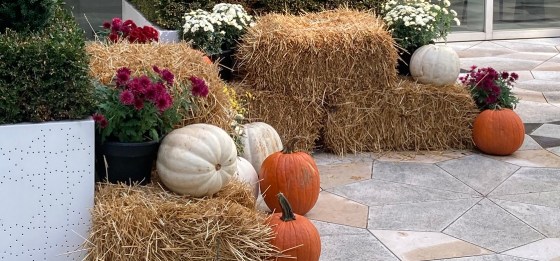
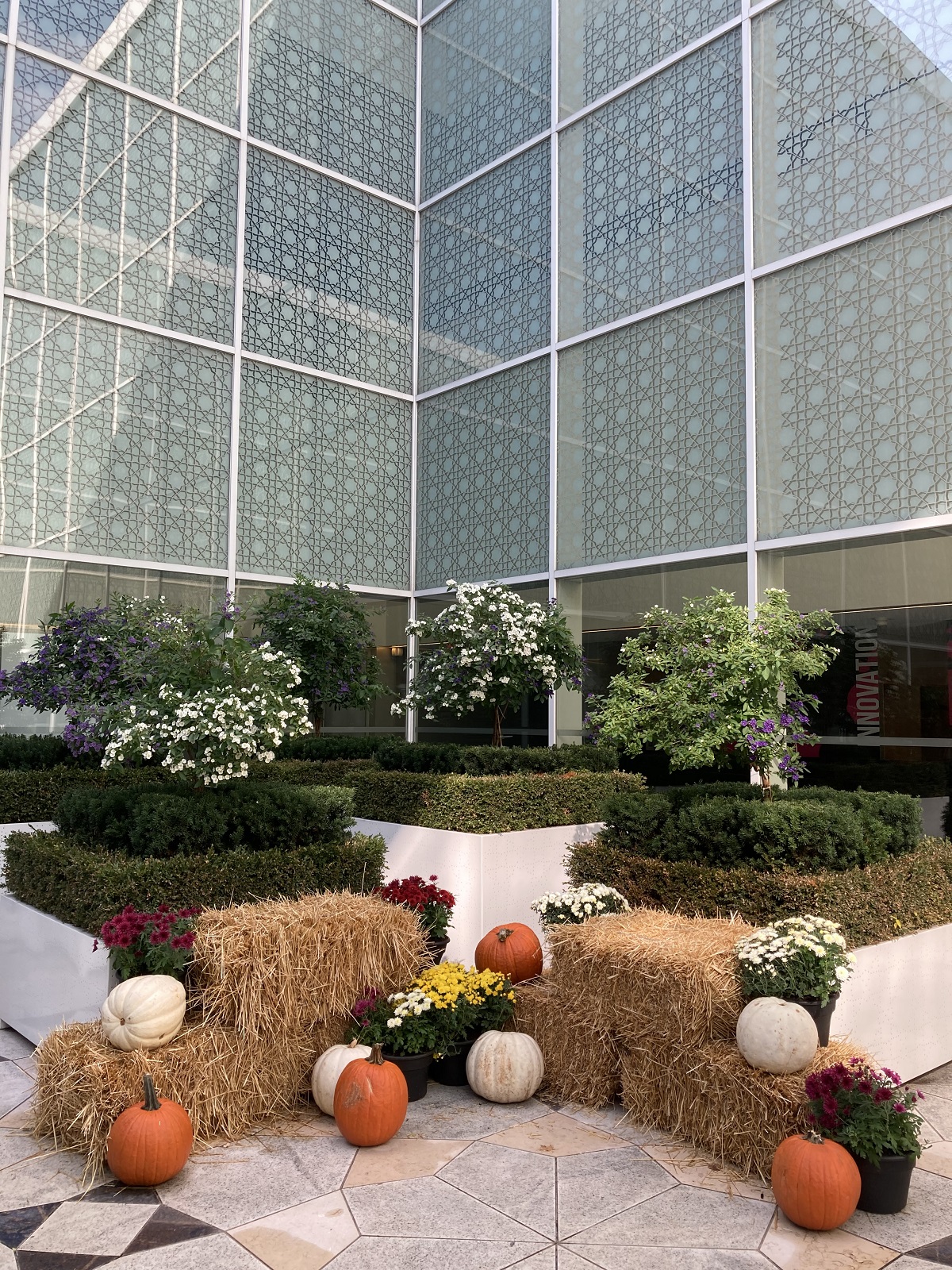
Aga Khan Museum Courtyard Pumpkin Decoration Simerg Malik Merchant
Aga Khan Museum Toronto Courtyard decorated with pumpkins. Photo: Malik Merchant / Simerg.

On a fine day, there is no better place in the museum than to be sitting in its open air courtyard, while enjoying a delicious cup of latte.

October 23, 2020 was one such day. It actually felt like summer, with blue skies and very warm temperatures. The magnificent courtyard was a perfect place for my morning coffee as well as a late breakfast — an egg salad croissant, slightly grilled. I was thrilled to enter the courtyard, and noticed pumpkin decorations in one corner of the courtyard. Of course, pumpkins are to be seen everywhere at this time of the year. It is one of the most popular desserts served during Thanksgiving holidays in Canada (October 12, 2020) and the USA (November 26, 2020), and I wondered how the food was viewed in Islam. My little bit of research led me to numerous traditions of the Prophet Muhammad (S.A.S.) on the pumpkin, and I am delighted to post adaptations of some that I read.

“I saw the Prophet being served with soup and containing gourd (pumpkin or squash) and cured meat, and I saw him picking and eating the pieces of gourd.” — Bukhari Volume 7, Book 65, Number 348.

It is related that a sailor once invited Prophet Muhammad to eat some food that he had prepared. Anas bin Malik who accompanied the Prophet, noted that the Prophet was served barley bread and a soup with pumpkin in it. The Prophet keenly ate the pumpkin around the dish, and from that day Anas made it his favourite food. Traditions also note that whenever a a dish of bread, meat and broth was presented to the Prophet and it contained pumpkin, the Prophet would pick up the pumpkin because he really liked it, and made the heart strong. Other Muslim traditions note that the pumpkin increases brain function and brain strength.

Ibn Ridwan, in a medical treatise written during the Fatimid period, recommended the pumpkin as a diet for healthy living along with several other fruits and vegetables such as celery, carrots, lentils and cucumbers.

Interestingly, there is also a general consensus among scholars about the Arabic word yaqteen that is mentioned in the Holy Qur’an. They say that it refers to the pumpkin — a food that nourished and helped heal Prophet Yunus (A.S.), after he was cast into the wilderness while he was sick (see Qur’an, 37:144-146, at Corpus Quran English Translation).

The website healthline mentions that pumpkin is rich in vitamins, minerals and antioxidants, and is incredibly healthy. Moreover its low calorie content makes it a weight-loss-friendly food. It goes on to add that “its nutrients and antioxidants may boost your immune system, protect your eyesight, lower your risk of certain cancers and promote heart and skin health.”

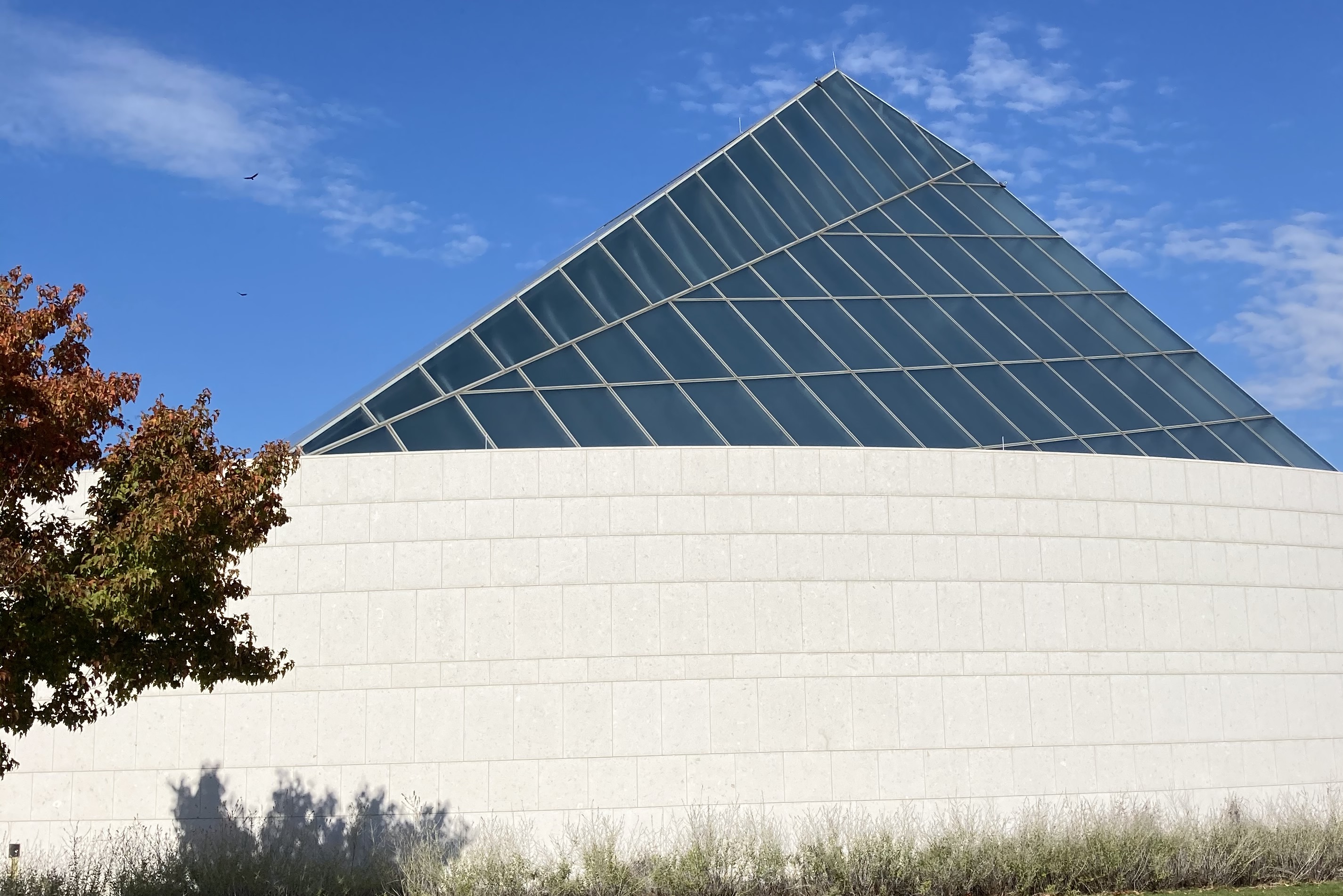
After about an hour at the museum’s courtyard, I could not return home without walking around the Aga Khan Park. As I looked up in the blue sky above the Ismaili Jamatkhana dome, I saw two birds beautifully gliding at the dome’s left. I was left wondering: Were they turkey vultures, eagles or hawks? Alas, I wasn’t carrying a powerful lens to get a better and sharper close-up.

Please click on photo for enlargement

Headquarters Jamatkhana Toronto at the Ismaili Centre, with birds overhead.
Two birds seen gliding at left of the dome of the Toronto Headquarters Ismaili Jamatkhana, part of the Ismaili Centre. Click on image for enlargement. Photo: Malik Merchant / Simerg.

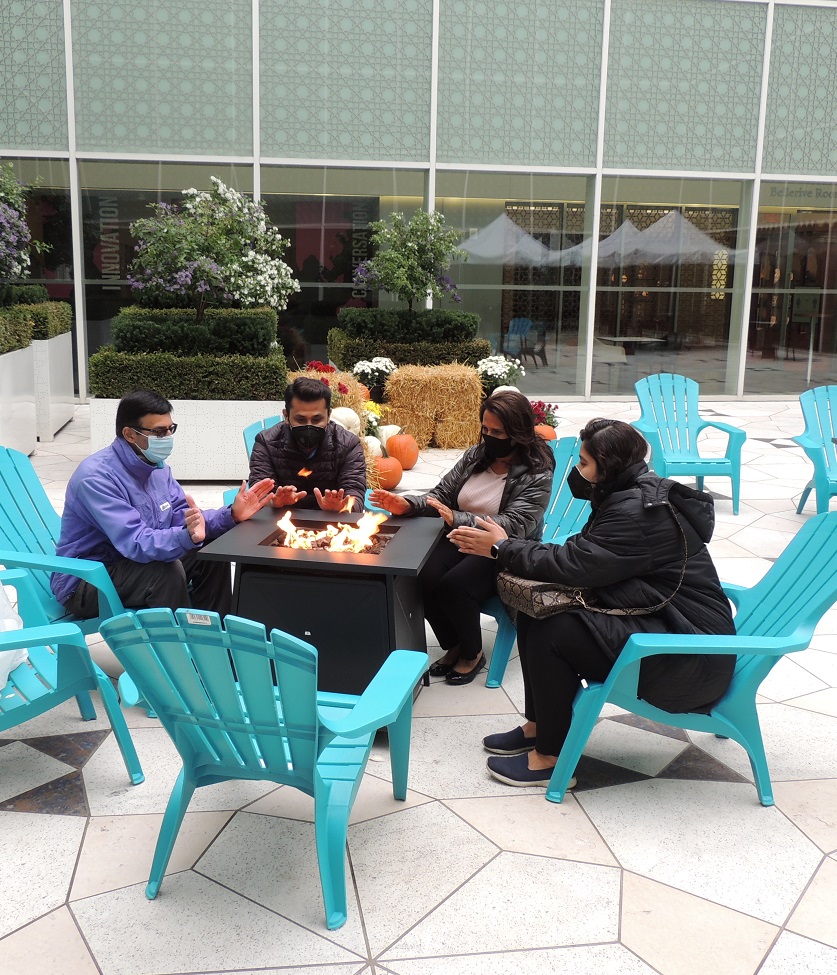
Returning to the museum’s courtyard on Sunday October 25, offered a much different kind of experience, as the temperature had dropped from Friday’s 22°C to only 8°C. But the museum had that in mind too! Blue lounge blue chairs had been placed in the courtyard, with portable fireplaces where visitors mingled with their family members over light refreshments.

Aga Khan Museum Courtyard
Visitors keep warm at a portable fireplace at the Aga Khan Museum’s courtyard as temperatures take a dip on Sunday, October 25. 2020. Photo: Malik Merchant / Simerg.

The overall experience at the three Aga Khan projects during recent weeks has been overwhelming.

As we all seek good health, I dedicate this post to the humble pumpkin which supports heart and eye health, and boosts immunity, among other benefits.

And, without the pumpkin’s presence in the museum’s courtyard, it may have never occurred to me to search out the traditions of the Prophet Muhammad (S.A.S.) that have showed that he really liked the pumpkin. For 2020, Muslims around the world will celebrate his birth anniversary — the Milad un Nabi — between October 28-30. It is an appropriate time to learn more about his inspiring life and leadership as well as his faith in God whom he served as the last messenger for 23 long and devoted years, bringing to Muslims the blessing of the Holy Qur’an.

Date posted: October 24, 2020.
Last updated: October 25, 2020 (new photo/information added)

_____________________

Before departing this website please take a moment to review Simerg’s Table of Contents for links to hundreds of thought provoking pieces on a vast array of subjects including faith and culture, history and philosophy, and arts and letters to name a few.

We welcome feedback from our readers. Please complete the LEAVE A REPLY form below or, if you don’t see the box, please click Leave a comment. Your letter may be edited for length and brevity, and is subject to moderation.

His Highness the Aga Khan and Jehangir Merchant in Lourenco Marques, Mozambique

Ismaili doctrines of faith: Short lessons from the writings of Alwaez Jehangir Merchant: (1) Tawhid or Unity of God

Introduced by Malik Merchant
(Publisher-Editor,  Simerg, Barakah, and Simergphotos)

Alwaez Rai Jehangir Merchant (1928-2018) — picture above with Mawlana Hazar Imam, His Highness the Aga Khan — is fondly remembered everyday single day by his beloved wife of 66 years, Alwaeza Raisaheba Maleksultan Jehangir Merchant, and all her family members.

He passed away 2 years ago on May 27, 2018 at approximately 1:15 AM. We pray that his soul may rest in eternal peace. Amen.

Jehangir  and Maleksultan Merchant
Jehangir and Maleksultan in front of a large
portrait photo of Mawlana Hazar Imam.

My dad was a prolific writer. In England, he edited the flagship Ismaili religious magazine, Ilm, for several years while he served with my mother with the Ismaili Tariqah and Religious Education Board (ITREB). His articles related to the faith, history, principles and doctrines of the Ismaili faith, along with insightful interpretations of Qur’anic verses, as well as moving narratives of Mawlana Hazar Imam’s Mubarak visits to different parts of the world, richly contributed to the Jamats’ understanding of the faith. The closure of Ismaili religious magazines in the very early 1990’s created a significant void in the dissemination of religious material that was deemed to be “official.” I am referring here to insightful articles in monthly or quarterly magazines published by ITREBs around the world, and not to literary and scholarly books, which the Institute of Ismaili Studies has done a fantastic job of publishing over the past 30 years.

From the time this website, Simerg.com, was launched in 2009, Alwaez Merchant was able to devote time to editing and adapting his Ilm pieces for publication on this website for the benefit of readers on the World Wide Web. Links to those pieces are provided at the end of this article. Ill-health prevailed, and he was no longer able to fully complete the remainder of his Ilm pieces for publication on Simerg.

Ilm Ismaili religious magazine edited by Jehangir Merchant
Ilm magazine – one of Alwaez Jehangir’s magnificent contributions to the Ismaili literary scene. Jehangir edited and wrote extensively for the journal.

Now, I am going to take his unpublished essays from Ilm — many of which were quite lengthy — and share them as short pieces of learning over the coming weeks and months. We begin the Jehangir Merchant series, if I may call it that, with the Concept of Tawhid, which forms the first component in his essay entitled “Fundamental Aspects of Ismaili Doctrine.” It appeared in Ilm, Volume 7, Number 1 & 2, July-November 1981, pp. 2-12.

Tawhid

By (LATE) JEHANGIR A MERCHANT

Jehangir and Maleksultan Merchant, Ismaili missionaries
Jehangir and Maleksultan Merchant served the Imam of the Time and Ismaili institutions for more than 60 years.

In all Shi‘a tariqahs of Islam, Tawhid (belief in the Unity of God), Nubuwwah (Prophethood), Imamah (the Institution of the Divine Guide) and Qiyamah (Day of Judgement), are considered as the doctrines of the faith. My brief explanation of each of these 4 doctrines of faith for publication on Simerg are based on a much broader discussion that I provided on these subjects in my original article published in Ilm magazine, which also included a detailed historical background on the subject of Imamat.

The belief in the Unity of God (Tawhid) is the cornerstone of faith (Iman) for all Muslims.

It is articulated in the pronouncement: La ilaha ill-Allah: “There is no god but Allah.”

This doctrine of Unity of God is beautifully summarised in Sura Tauhid, popularly known as Suratul Ikhlas (112:1-4), which says: “Say, He Allah is One; Allah is Absolute, Independent. He did not beget nor He was begotten and there is none like unto Him.”

We know, however, that the Holy Qur’an, ascribes a number of attributes to Allah. God is spoken of as ar-Rahim (The Merciful), al-Wadud (The Loving), al-Sami (The Hearing), al-Barir (The Seeing) etc. The Qur’an also talks about Wajahullah (the Face of God), Yadullah (the Hand of God), and so on.

While there are numerous references which attribute human qualities to God in the Holy Qur’an, the scripture states in very plain words that Allah is above all material conceptions.

For example, the Qur’an says: “Vision comprehends Him not and He comprehends all vision.” (6:104) and “Nothing is like a likeness of Him.” (42:11)

The Unity of God (Tawhid) implies that God is One in His Dhat (essence) and One in His Sifat (attributes).

The concept of Tawhid appears in the works of many Ismaili dais (missionaries) and philosophers. Their works on the subject place an emphasis against anthropomorphising God, that is, giving human attributes to God.

article continues after image

Fatimid coin Imam al-Zahir
The inscription in the inner margin of this Fatimid coin minted during the reign of Imam al-Zahir reads: la ilah illa / allah wahdahu / la sharik lahu; “no god but God, unique, He has no associate.” Photo: David Museum, Copenhagen.

God is declared in their works as One, Absolutely Transcendent, Omnipotent, Omnipresent, Omniscient, Incomprehensible and a Quality-less Being. A Ginanic verse makes this clear:

La thi un dhat kahave, tanki baat kahi nav jai; Dubki le le gotha khave, Pir Paighambar tai na pavey

Translation:

The Dhat [essence] is from nothingness and nothing can be said about it. Pirs and Prophets delve deep in this knowledge but in vain.

The concept that God has no qualities difficult to grasp, because the human mind cannot comprehend a total lack of qualities, a concept which it has not experienced before. We cannot imagine a man, if we can for the moment call such a being a man, who has no colour, no shape, no size, no special existence, who is neither alive nor dead.

Hence, the notion that God is quality-less becomes unintelligible and the Qur’an, therefore, attributes a number of qualities to God. If we consider the qualities applied to God and examine them carefully we find that the grounds for all of these attributes lie in our own experience of this material world.

Pir Shiahbu’d-din Shah writes in his work Risala dar Haqiqati Din (True Meaning of Religion):

“…people speaking about God (Haqq) attribute to Him any such (perfections) as they can imagine. For instance, regarding blindness as a defect, they say about God that He sees everything. They regard ignorance as a defect, and thus say that God is All-Knowing. Thus, whatever they find in themselves as a vice and defect they attribute to God a perfection opposite to that. Most probably, even animals create their own God free from their own defects, ascribing to Him (the opposite) perfections. Imam Muhammad Baqir says that the tiny ant probably imagines his god as having two stings, because it regards the possession of only one sting as a defect.”

So, when the Qur’an attributes qualities to God, it is to help convey to man the idea of God and not that these terms express the true nature of God, or that they are perfect indicators to His Being.

Ismaili doctrine upholds the belief in a single transcendent Being, whose nature is beyond the comprehension of the human mind and who is inexplicable. This is because our definitions are based on our experiences of the material world, and these definitions cannot be applied to this Being.

Pir Shihabu’d-din Shah, again in his previously cited book, says:

“All that is beyond thy imagination, Is merely the limit of thy fantasy, not God. Wisdom can attain a knowledge of His Substance Only in the case if a piece of straw can sink to the bottom of the sea. And Imam Ja’far-as-Sadiq said: “What God is, Man cannot think: and what Man thinks God is not. Yet man lives by God, and God is nearer to him than himself.”

Thus, in the Doctrine of Tawhid, lsmailism completely avoids any form of anthropomorphism and remains purely monotheistic.

We will continue our next discussion on another Shia doctrine of faith, namely, Nubuwwah or Prophethood which will then be followed by Qiyama (the Day of Judgement) and Imamah (the hereditary leadership in Islam).

Date posted: May 27, 2020.

Before departing this website please take a moment to review Simerg’s Table of Contents for links to hundreds of thought provoking pieces on a vast array of subjects including faith and culture, history and philosophy, and arts and letters to name a few.

_______________________________

The following are links to Alwaez Jehangir Merchant’s articles that have been published on this website:

  1. Ghadir-Khumm and the Two Weighty Matters (a Simerg original, I Wish I’d Been There Series)
  2. An Esoteric Interpretation of the Mi’raj (adapted from Ilm magazine)
  3. The Establishment of the Fatimid Caliphate (adapted from Ilm magazine)
  4. The Parable of Moses and Khidr in the Holy Qur’an (adapted from Ilm magazine)
  5. Jehangir Merchant’s Thank You Letter to Da’i Al-Mu’ayyad al-Shirazi (a Simerg original, Thank You Series)
  6. Text and Explanation of “Eji Shah Islamshah Amne Maliya” (adapted from Ilm magazine)
  7. The Story of Noah’s Ark in the Holy Qur’an (adapted from Ilm magazine)
  8. A Translation and Brief Commentary of Pir Sadardin’s Ginan “Jem Jem Jugatsu Preet Kareva” (adapted from Ilm magazine)
  9. The Frontispiece of the Ismaili Jamatkhana in Mashhad, Iran (adapted from Ilm magazine)
  10. “One Jamat” (proposal, with Malik Merchant)
  11. The 1979 London Didar: The Experience (adapted from Ilm magazine)
  12. Imams Muhammad al-Baqir and Ja’far as-Sadiq on Love for the Imam (with Alnoor Bhatia, adapted from Ilm magazine)

Also see:

We welcome feedback/letters from our readers. Please use the feedback box which appears below. If you don’t see the box please click please click Leave a comment. Your comment may be edited for length and brevity, and is subject to moderation. We are unable to acknowledge unpublished letters.

Must Participate: Links to live streams to Laylat al-Qadr programs organized by ITREBs of UK, France, Portugal, Canada and USA

Introduced by MALIK MERCHANT
(Publisher-Editor, Simerg, Barakah, and Simergphotos)

Jamats around the world must participate in this unique venture undertaken by Ismaili Institutions for this most extraordinary night commemorating the revelation of the Holy Qur’an

There is a very impressive array of programming organized for the night of Laylat al-Qadr by the Ismaili Tariqah and Religious Education Boards in the UK, Canada and the USA. Each jurisdiction has its own set of presentations and Simerg urges everyone — wherever they be — to avail themselves of outstanding recitations, sermons, interviews and stories as well as participate in quiet reflective moments that have been designated at specific times. A lot of effort has been put into this programming catered to every member of the Jamat, young and old alike.

Since this is an on-line presentation, viewers will be able to toggle to watch specific programs offered outside their own regions. Please click on the following images or links to see what the ITREBs in North America, the UK and Europe are offering on this truly auspicious and holy night of Laylat al-Qadr. The program can also be seen — for all jurisdictions — on a staggered basis on the website Ismaili TV, where time-zones are common, for example Canada and USA.

UNITED KINGDOM AND JURISDICTION, PORTUGAL AND FRANCE

Laylat al-Qadr UK Simerg
Please click on image for link to Laylat al-Qadr UK., France and Portugal

______________________

CANADA

Laylat al-Qadr Canada Simerg
Please click on image for link to Laylat al-Qadr Canada

______________________

USA

Laylat al-Qadr USA Simerg
Please click on image for link to Laylat al-Qadr USA

Date posted: May 15, 2020.

__________________________

Before departing this website please take a moment to review Simerg’s Table of Contents for links to hundreds of thought provoking pieces on a vast array of subjects including faith and culture, history and philosophy, and arts and letters to name a few.

Devotion Through Dhikr

By ROXANA JAFFER

Heart in a pulsating mode; in rhythm with the breath
Mind reaching its zenith; as thoughts meet their death

Gratefulness taking over; Conveying lightness to the body
Entire body in smiles; Perhaps the spiritual light in embody

All because of the Dhikr, the constant chanting
His attributes in tempo, energy in sync; all else negating

Dhikr:
What an effect on the waves of the Gamma and the Theta
Both leave defeated, allowing the take-over by the wave of
relaxing Alpha

Dhikr:
Bringing an awareness of His elements; so many …..Ninety-nine
An inner need arises; to ascribe, to impute these traits divine

Dhikr:
My heart is in a pulsating mode, in sync with the mind
Now there is total unity; as mind, body and soul are totally entwined.

Date posted: May 13, 2020.

Before departing this website please take a moment to review Simerg’s Table of Contents for links to hundreds of thought provoking pieces on a vast array of subjects including faith and culture, history and philosophy, and arts and letters to name a few.

______________________

Editor’s note: We welcome Roxana Jaffer as our new contributor. Dhikr, penned by her in March 2020, is the first of her several poems we will be publishing in the coming weeks.

Roxana Jaffer, Simerg

A Kenyan born girl, brought up in the UK and now residing in UAE, Roxana Jaffer has many awards to her name including “Global Inspirational Leadership Award”, “Best Best Woman in Hospitality UAE Award”, and “The Most Influential Women Leader  Award 2019”. She was also recognized as one of the “Indian Super 100 Women Achievers in the Middle East & Africa”. She partners with UN World food program, and her endeavours have managed to feed over 460,000 hungry children in the world. She is instrumental in Holiday Inn Dubai attaining the coveted  CSR Arabia award, four years running out of 13 Arab countries.

An Accountant by profession she has an MBA from University of Liverpool in Leadership and is a scholar of the Harvard Business School for Executive Education.

Roxana epitomises the best in human endeavour -– fun, laughter, hard work, creativity, caring for others, leading with a social conscience and above all, striving to make the world a better place and is the founder of the NGO -– ‘abc: an Advent for Building human Capital’ (see www.myabcfoundation.org) which accords English to the unemployed in Hunza and Delhi, resulting in a 70% impact as youth get growth.

Her creativity is taking a different turn as she expresses spirituality through poetry she pens.

______________________

We welcome feedback/letters from our readers. Please use the feedback box which appears below. If you don’t see the box please click Leave a comment. Your comment may be edited for length and brevity, and is subject to moderation. We are unable to acknowledge unpublished letters.

The Funeral of Missionary Amirali Gillani in the Midst of Covid-19 Restrictions

Inna lillahi wa inna ilayhi raji’un
“Surely we belong to God and to Him we return” — Holy Qur’an, 2:156

Ismaili Missionary Amirali Gillani Simerg tribute
Missionary Amirali Gillani passed away on April 8, 2020, and was buried in Toronto on April 14. Photo: Family Collection.

A Safe and Dignified Funeral

By MALIK MERCHANT
(Publisher-Editor, Simerg, Barakah, and Simergphotos)

On Tuesday April 14, 2020, Missionary Amirali Gillani’s shrouded body rested inside a grey coloured coffin in the funeral hall of the Scarborough Jamatkhana. He had passed away from cancer on April 8 at the age of 75.

Only the missionary’s peaceful face was in view. The rest of his body which was covered in the white shroud, was under the coffin cover. The coffin did not rest on the floor. It had been placed on a strong roll away frame. Volunteers recited the Salwat in unison continuously, and gave comfort to the small size of mourners, a limit imposed by the Bereavement Authority of Ontario.

There were a total of 16 mourners in attendance for the funeral’s two separate viewing opportunities and the funeral rites. One viewing, including the funeral rites, was for immediate family members, and the second viewing was for other family members and friends. In both the viewings the mourners sat in groups of 4 in two rows in front of the body, keeping the required physical distance. At a normal funeral, there would have been several hundred in attendance. A dilsoji — a condolence gathering a day or two ahead of the funeral — would have attracted a large Ismaili crowd from across Toronto.

Missionary Gillani’s funeral became the first funeral to be made available for online viewing via a dedicated Youtube channel. The viewing was offered, following a trial period, to very close family members who could not physically be at the funeral due to provincial restrictions limiting gatherings to 5 or 10.

Wearing a face mask and gloves on their hands, each of the persons who had come to missionary Gillani’s funeral presented himself or herself beside the coffin, a meter or two away. In solitude, the mourner would spend between 60 to 80 seconds in contemplation, before giving way to the next person. Other Jamati funerals taking place during the Covid-19 pandemic have similar rules and restrictions in place.

Once the viewing and giving of last respects had ended, and the funeral rites were completed, the Muslim funeral procession prayer La Ilaha Illallah Muhammadur Rasulullah commenced. In a normal funeral, men line up in the large foyer of the Jamatkhana to touch or momentarily hold the coffin on their shoulders, uttering prayers for the soul of the deceased before it is transferred to a hearse. However, here there was no one in the foyer of the Jamatkhana. It was empty. The body was wheeled by the Mukhi, volunteers and male mourners into the hearse parked outside, for its 22 km journey to its final resting place — the picturesque Elgin Mills Cemetery.

A view of Elgin Mills Cemetery. Photo: Mount Plesant Group

At the gate of the cemetery, a guard verified each arriving guest against the list of names that he had been given by the Ismaili funeral committee. He guided the arriving mourners to Section 16 of the cemetery. At the site, there were only a few scattered cars, no more than eight. The hearse carrying the body then arrived. This time, instead of wheeling the coffin, as the ground gradient and conditions presented challenges, the volunteers carefully carried it to the grave. Mourners followed and gathered around the coffin, keeping a safe physical distance between one another. The Mukhisaheb of Scarborough Jamatkhana and a family member then each took a heap of soil in a spade, and spread it across the coffin. The Surah Ikhlas was recited (Ch. 112; Translation: “In the name of God, the Gracious, the Merciful. Say: He is God, the One. God, the Absolute. He begets not, nor was He begotten. And there is nothing comparable to Him”).

Normally the crowd would wait to see the body lowered into the grave, while continuing to recite Salwats and other prayers. Two volunteers would then descend into the grave to ensure its proper placement, stability and also conduct some last rites.

Physical distancing prevented that from occurring and the mourners returned to their cars. Using the same soil that had been been dug up to create the 6 foot deep grave, a tractor arrived to fill it. Once the on-site staff had completed their task of filling the grave and removing wooden planks and other objects around it, we were each handed incense sticks as we walked back to the burial site. Water was then poured on top of the freshly replaced soil by a family member and the Mukhisaheb of Scarborough Jamatkhana. We then honoured and paid respect to the missionary by placing the lit incense sticks we had been given over the top of the missionary’s final resting place.

All ten of us stepped back about 40 metres, and a Fateha for the deceased was then recited. We were standing in rows and kept our safe 2 metre distance from one another. During the recitation of the Fateha, my attention was suddenly drawn to two doves that landed 25 metres to my left. Their sounds in the midst of the Fateha being recited were beautiful and joyous to hear. Only Allah understands the language of birds, animals and insects, as well as everything that has life on this earth. A second Fateha was then recited for all of the deceased members of the Jamat. By then, the birds had flown away.

Mukhisaheb then gave everyone special blessings for attending the burial, and also prayed for the soul of the deceased. As much as we would have loved to, we left the site without shaking hands of the family and embracing them. We consoled them by placing our hands on our hearts, befitting the Islamic ethics of gratitude, humility and affection.

It was a different kind of a funeral to attend. However the dignity of the entire funeral ceremony was preserved. The Jamat has to thank the burial committee for the professionalism with which they are carrying out this extraordinary and noble service to bring comfort and peace to the mourning families and their friends, amid the Covid-19 pandemic. Their communication in every respect was outstanding, and emails and telephone calls received prompt attention.

As I headed back home, I thought of the two birds that had landed nearby as the Fateha for Missionary Gillani was being recited. They conveyed to me a profound message: Missionary Amirali Gillani had been ushered into the abode of peace.

Date posted: April 15, 2020.
Last updated: April 15, 2020 (10 AM ET: additional material added; factual corrections; typos).

____________________________

We received several tributes to Amirali Gillani when we first announced his death. They may be read by clicking HERE. Further tributes as well as your reactions with regard to recent passings during the Covid-19 pandemic, and how you and your family members dealt with the situation amid the challenges you faced, may be submitted by completing the feedback form below. If the form does not show, please click Leave a comment. Your comment may be edited for length and brevity, and is subject to moderation. We are unable to acknowledge unpublished letters.

Before departing this website please take a moment to review Simerg’s Table of Contents for links to hundreds of thought provoking pieces on a vast array of subjects including faith and culture, history and philosophy, and arts and letters to name a few.