An Arabic-script ambigram, where ‘Muhammad’ upside down is read as ‘Ali’ and vice versa.

Ghadir Khumm and the Designation of Hazrat Ali as the Successor of Prophet Muhammad

We have two short pieces on the festival of Eid-e Ghadir, which is commemorated on the 18th of the Islamic month Dhul Hijja (in 2021 falling on or around Tuesday July 27). The first piece, along with the ambigram at the top, is reproduced from The Ismaili, the official website of the Ismaili Muslim community. The ambigram, which is in the Arabic script, can be read as ‘Muhammad’ and, upside down, as ‘Ali’. The second piece, At the Ghadir Khumm Campsite, by British writer Barnaby Rogerson first appeared in Simerg’s acclaimed series I Wish I’d Been that can be downloaded as a PDF file. We have also embedded excerpts from the Ismaili Constitution as well as an Ismaili Ginan that are pertinent to the occasion.

Eid-e Ghadir Mubarak

Eid-e Ghadir calligraphy by Karim Ismaili
Outer border: The famous tradition of Prophet Muhammad at Ghadir Khumm — Mun Kuntu Mawlahu, Fa Aliyyun Mawlahu (He whose Mawla I am, Ali is his Mawla); Centre: The name Muhammad (in middle), and the name Ali repeated seven times in Eastern Kufi calligraphy. Calligraphy and design: © Karim Ismail, Toronto, Canada.

This week, Shia Muslims across the world observe Eid-e Ghadir, marking the anniversary of an important event in Muslim history. According to Shia belief, tradition, and interpretation of history, this occasion commemorates the pivotal gathering at Ghadir Khumm, when Prophet Muhammad (peace be upon him and his family) — based on a divine command from Allah — designated Hazrat Ali as his successor and the first in the continuing line of hereditary Imams.

In historical sources, it is recorded that on the way back to Medina after performing a pilgrimage to Mecca, the Prophet received a revelation — Surah al-Ma’ida (sura 5 ayat 67) — that we recite in our daily prayers:

“O Messenger, deliver [to the people] what has been revealed to you from your Lord, and if you do not do so, then you will not have delivered His message …”

Numerous reliable hadith sources — both Shia and Sunni — record this event, which took place in the year 632 CE. Upon receiving this revelation, the Holy Prophet stopped at an oasis known as Ghadir Khumm, and addressed a large gathering of Muslims who had accompanied him. It is said that The Prophet proclaimed: “Man kuntu mawlahu fa aliyyun mawlahu” meaning: “He whose Mawla I am, Ali is his Mawla.” The Prophet then prayed: “O Allah, be a friend of whoever is his friend and extend your support to those who support him.”

Article continues below

Ismaili Constitution Imamat Aga Khan, Simerg
Mawlana Hazar Imam, His Highness the Aga Khan, is seen signing a new constitution for the worldwide Ismaili community on his 50th birthday, December 13, 1986. The preamble excerpts produced in this post are from this constitution.

In accordance with Shia doctrine, tradition, and interpretation of history, the Holy Prophet (s.a.s.) designated and appointed his cousin and son-in-law Hazrat Mawlana Ali Amiru-l-Mu’minin (a.s), to be the first Imam to continue the Ta’wīl and Ta‘līm of Allah’s final message and to guide the murids, and proclaimed that the Imamat should continue by heredity through Hazrat Mawlana Ali (a.s) and his daughter Hazrat Bibi Fatimat-az-Zahra, Khātun-i-Jannat (a.s).Preamble, Ismaili Constitution

According to Shia belief, by declaring Hazrat Ali as Mawla after him, the Prophet transferred his own spiritual authority bestowed upon him by Allah to Hazrat Ali, making him — and all the Imams that follow — the Amirul Mu’minin, or Master of the Believers.

On instruction from Prophet Muhammad, Hazrat Ali received baiyat (the oath of allegiance), from the Muslims assembled there. According to Shia traditions and sources, following the proclamation, the final verse of the Qur’an was revealed to the Prophet:

“On this day, I have perfected for you your religion, completed my favours upon you, and have chosen for you Islam as your religion.”

This marks the end of the period of nabuwwa, or Prophethood, and the historical beginning of the Institution of Imamat. Eid-e Ghadir is an anniversary of special significance to all Shia Muslims, as it is also associated with the well-attested tradition in which the Prophet is said to have proclaimed:

“I am leaving among you two matters of great weight (al-thaqalayn), the Book of Allah and my kindred (itrati), the People of my House (Ahl al-Bayt), and these two shall never be separated until they return to me at the Pool [of Kawthar in Paradise on the Day of Judgement]…”

Mawlana Hazar Imam Shah Karim al Hussaini, His Highness Prince Aga Khan, in direct lineal descent from the Holy Prophet (s.a.s.) through Hazrat Mawlana Ali (a.s.) and Hazrat Bibi Fatima (a.s), is the Forty-Ninth Imam of the Ismaili Muslims.Preamble, Ismaili Constitution

The Shia Ismaili tradition bears witness to the continuity of the authority vested at Ghadir Khumm. Today, this leadership and authority is vested in Mawlana Hazar Imam. The rope of Imamat has continued over 1,400 years, from Hazrat Ali, to the present 49th hereditary Imam and direct descendant of Prophet Muhammad through Hazrat Ali and Hazrat Bibi Fatima al-Zahra, Khatun-i Jannat.

In commemorating Eid-e Ghadir, the Jamat celebrates the seminal event of Ghadir Khumm, reaffirming our allegiance to the Imam-of-the-Time as the direct lineal successor and inheritor of the authority of Hazrat Ali.

Eid Mubarak!

______________

Ginan: Imam Must Be Present on Earth

Purush shan matra pag dharani na dharante,
Sansaar, chandra, suraj na dhrashtante,
Kuchh na dhrashtante,
Bhom kar, megh, dharti na aakaash bhave 

Translation:

If the Imam did not have his feet on this earth for even a moment,
then the world, moon, sun would vanish
and nothing would exist,
neither the heaven nor the earth.

_______________

Objects Commemorating the Idd-e Ghadir

Images of some stamps and coins issued by the Islamic Republic of Iran between 1990 and 2010 commemorating the Idd-e-Ghadir. The inscriptions inlude the Shahada, Qur'anic ayats and the declaration made by Prophet Muhammad at Ghadir Khumm, "Mun Koontu Mawla, Fa Hada, Aliyun Mawla" meaning "He of whom I am the Mawla Ali is also the Mawla." Simerg
Images of some stamps and coins issued by the Islamic Republic of Iran between 1990 and 2010 commemorating the Idd-e-Ghadir. The inscriptions inlude the Shahada, Qur’anic ayats and the declaration made by Prophet Muhammad at Ghadir Khumm, “Mun Koontu Mawla, Fa Hada, Aliyun Mawla” meaning “He of whom I am the Mawla Ali is also the Mawla.”

_______________

At the Ghadir Khumm Campsite

By BARNABY ROGERSON

Portrait of Barnaby Rogerson, a British writer, against a patterned background.
Barnaby Rogerson

What an offer! To travel back in time and return as a true witness to the history that I have so often thought and dreamed about. Perhaps I could travel in the habit of a Christian envoy from some Celtic island monastery off the west coast of the British Isles, sent east to seek advice from the wise holy man of whom we had heard, far off in Arabia. For in my homeland the light of civilization seems on the point of extinction, as Barbarian invaders appear like devils from out of the German sea.

I would arrive in the oasis of Medina at a time of peace, when all of Arabia was sending delegations to seek peace and instruction. Here, in my imagination, I would be befriended by Ali and taken back to his home, where I would witness how this battle-scarred warrior was also content in his role as a young father, playing with his boys Hussein and Hassan on the reed mats in his humble hut amongst the palm groves.

Then, in a flurry of energy, I receive a last-minute invitation to join the Prophet’s Last Pilgrimage to the holy shrine at Mecca. Although I am not permitted to approach the shrine itself and am left at a campsite just outside the pilgrimage city, I make certain to record the events as told by the eyewitnesses I travelled with.

On the journey back, I bear witness to the exact succession of events at the Ghadir Khumm campsite: the blessings, the sermon and the ritual actions of the Prophet ordaining Ali as his successor. These I faithfully record in the pages of my journal, before hurriedly departing and returning to my homeland. There, the account of my travels is neatly copied out onto vellum and placed in the monastery library. Years later, the monastery is sacked by raiders coming out of the sea, who in their fury destroyed even the walls of this holy place. But this was fortunate in a way, for the domed roof of the library collapsed preserving all the books, which lie there still…

Date posted: July 26, 2021.

___________________

Before departing this website please take a moment to review Simerg’s Table of Contents for links to hundreds of thought provoking pieces on a vast array of subjects including faith and culture, history and philosophy, and arts and letters to name a few. Also visit Simerg’s sister websites Barakah, dedicated to His Highness the Aga Khan, and Simergphotos.
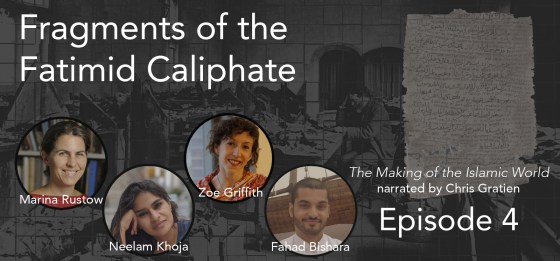
Podcast: The Making of the Islamic World – Fragments of the Fatimid Caliphate Narrated by Chris Gratien

“For brief period of history, the Fatimid Caliphate based in Egypt presided over arguably the most powerful empire in the Mediterranean. Yet because the legacy of this Ismaili dynasty was erased or downplayed by its Sunni rivals and successors, the Fatimids are often misunderstood. As we show in this installment of “The Making of the Islamic World,” the Fatimid period and the sources that survive from it can in fact be critical to learning more about how pre-modern Islamic polities functioned, demonstrating that the Fatimids had a much more sophisticated state apparatus than some have assumed.” — Excerpt from article on the website Ottoman History Podcast

Fragments of the Fatimid Caliphate is episode 3 in a series of presentations on the Islamic world by Ottoman History Podcast, which has grown to be one of the largest digital resources for academic discussion concerning the Ottoman Empire and the modern Middle East. The recorded interviews and lectures, while still largely academic in tone, provide scholarly conversation accessible to a wider public audience.

In the broadcast, narrator Chris Gratien interviews Marina Rustow, a social historian of the medieval Middle East at Princeton University. Marina has worked extensively on the documents of the Cairo Genizah, and her published works include Heresy and the Politics of Community: The Jews of the Fatimid Caliphate (2008) and The Lost Archive: Traces of a Caliphate in a Medieval Synagogue (2020).

Date posted: July 23, 2021.

_____________________

Before departing this website please take a moment to review Simerg’s Table of Contents for links to hundreds of thought provoking pieces on a vast array of subjects including faith and culture, history and philosophy, and arts and letters to name a few. Also visit Simerg’s sister websites Barakah, dedicated to His Highness the Aga Khan, and Simergphotos.

Passings: Dr. Vali Jamal (d. July 11, 2021)

A Personal Reflection by MALIK MERCHANT
(Publisher-Editor, BarakahSimerg and Simergphotos)

Vali Jamal
Dr. Vali Jamal

I have learnt with deep sadness that Dr. Vali Jamal, a noted economist at the United Nations from the 1970’s to 1990’s, an author and a valuable contributor to Simerg’s acclaimed series on Ismaili Jamatkhanas and Thanking Ismaili Historical Figures, passed away in Kampala, Uganda, on July 11, 2021, at the age of 80.

In 2011, when we published his pieces on 5 Palace Gate, the iconic address in London’s South Kensington that was the centre of Ismaili culture and spiritual life in the UK, and the Kampala Darkhana Jamatkhana, Vali was in the midst of completing a book on Ugandan Asians that was scheduled to be published later that year. Vali was deeply devoted to the book, and very passionate about the subject of the history of Asians and their rich contributions to Uganda. He kept on expanding the book in the ensuing years with the result that the book reached a page count of almost 3000, containing thousands of images.

A version of the cover page of Vali Jamal’s painstaking work on the Ugandan Asians

He jokingly remarked it was a fist breaker because of its size and weight. The dream of launching the book in Uganda and elsewhere was never realized during his lifetime.

I sincerely hope that the book is ultimately published for the amount of authentic and important visual and textual information that Vali painstakingly gathered over the years from primary and first hand sources as well as from individual Asian families he connected with and wrote to him.

Vali Jamal and friends outside Uganda House, London, summer 1962. Clockwise from standing: Amin Chatur, Mansur Lalani, Vali Jamal, Zuli Rajan, Nurdin Juma Jutha and Sikander (aka Pyaralli) Ismail. Photo: Vali Jamal.

Vali, a devoted murid of Mawlana Hazar Imam, His Highness the Aga Khan, never failed to appreciate and recognize the contribution of the Ismaili Imam’s uncle, Prince Sadruddin Aga Khan, in the resettlement of the Ugandan refugees, and wrote a touching tribute piece to the Prince in Simerg’s Thanking Ismaili Historical Figures. In his email exchanges he would often also quote how Mawlana Hazar Imam was personally involved in the resettlement of thousands of Ugandan Asians in Canada through the Government of Canada and Canada’s Prime Minister at the time, the Late Pierre Trudeau, father of the present Prime Minister Justin Trudeau about whom he sent us a special piece when he was elected as the Prime Minister for the first time in 2015.

Dr. Vali Jamal was a Senior Economist at the International Labour Organization of the United Nations from 1976 to 2001. He completed his BA at Cambridge University and PhD at Stanford University, California. He then began working on his book and participated in discussions on the Ugandan Asians through email exchanges as well in the social media.

Images that Simerg created linking them to Vali Jamal’s 3 pieces for the website. See links below.

We would like to remember and recollect Dr. Vali Jamal through the wonderful pieces he contributed to this website. Please read the following pieces:

We pray that Dr. Vali Jamal’s soul may rest in eternal peace. We convey our sincere condolences to all his family members, friends and supporters around the world. We welcome tributes and messages of condolences to Dr. Jamal in our feedback form below.

Date posted: July 12, 2021.

____________________

We invite our readers to submit their condolences, memories and tributes to Dr. Vali Jamal. To pen your reflection please complete the feedback form below or click on Leave a comment.

Links to article(s) by Vali Jamal on external websites:

Kibedi: Story of a man who was misunderstood

Links to his other pieces will be added as received.

____________________

Before departing this website please take a moment to review Simerg’s Table of Contents for links to hundreds of thought provoking pieces on a vast array of subjects including faith and culture, history and philosophy, and arts and letters to name a few. Also visit Simerg’s sister websites Barakah, dedicated to His Highness the Aga Khan, and Simergphotos.

A Unique Imamat Day Card and a Pictorial Presentation of Years 61-64 of the Aga Khan’s Imamat, a Divine Institution that is Rooted in a Proclamation Made by the Holy Prophet Muhammad (S.A.S) 1389 Years Ago

Introduced by MALIK MERCHANT
(Publisher-Editor, BarakahSimerg and Simergphotos)

Shia Ismaili Muslims all over the world will commemorate the 64th Imamat Day anniversary of Mawlana Hazar Imam, His Highness the Aga Khan, on Sunday July 11, 2021.

From the day our beloved Prophet Muhammad (S.A.S.) passed away on June 8, 632, and Hazrat Ali (A.S.) became the first Imam on the Divine Commandment that the Prophet had received at Ghadir Khumm, there have been forty-nine Ismaili Imams in continuous Hereditary Succession, spanning a period of 1389 years in Islamic history.

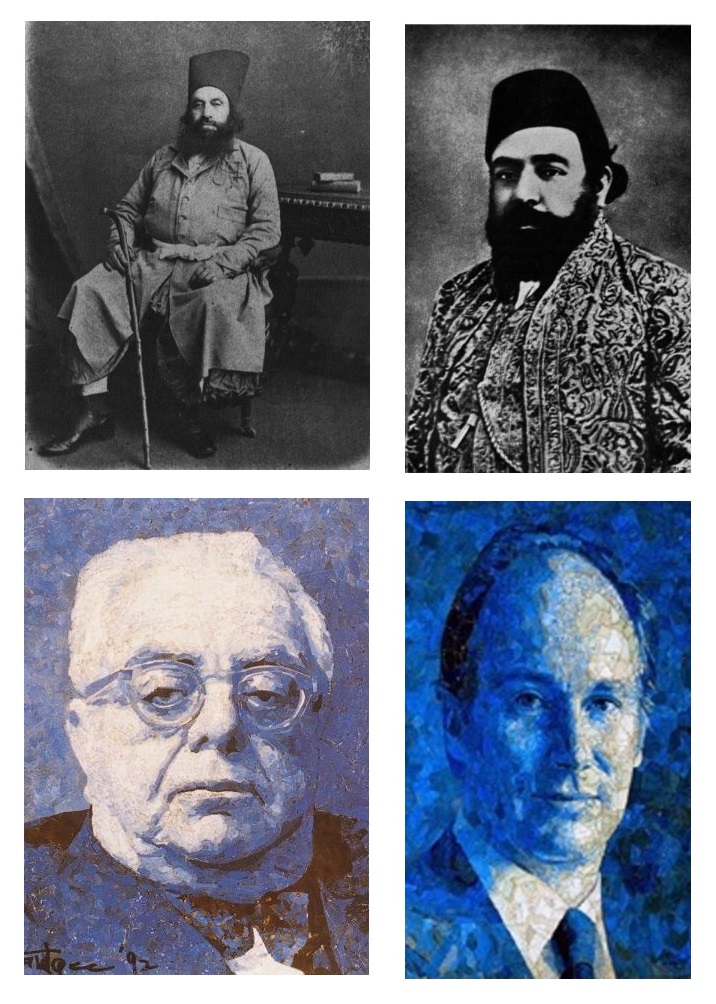
Upper row: Imam Shah Hassanali Shah (Aga Khan I) and Imam Shah Ali Shah (Aga Khan II). Lower row: Imam Sultan Mahomed Shah (Aga Khan III) and Mawlana Shah Karim Al Hussaini (Aga Khan IV). Total reign of the four Imams 203 years from 1817 to current year (2021). Longest reign Aga Khan III, 71 years; followed by Aga Khan I and Aga Khan IV, each 64 years.

Mawlana Hazar Imam and his immediate three predecessors have reigned the Jamat for a total of 203 years or 14.6 % of the entire span as follows:

1. Mawlana Shah Karim Al Hussaini Hazar Imam (His Highness the Aga Khan IV, Imam from 1957 – Current, 64 years, he became the 49th Imam at the age of 20); 
2. Imam Sultan Mahomed Shah (His Highness the Aga Khan III, Imam from 1885 – 1957, Imam for 71 years, he became the 48th Imam at the age of 7 years);
3. Imam Shah Ali Shah (Aga Khan II, 1881 – 1885, Imam for 4 years, he became the 47th Imam at the age of 51 years); and
4. Imam Shah Hassanali Shah (Aga Khan I, 1817 – 1881, Imam for 64 years, he became the 46th Imam at the age of 13 years).

This 203 year period of the reign of 4 successive Ismaili Imams accounts for more time than does the entire Fatimid period, reigned by 8 Imams from Imam Mehdi (11th Imam, North Africa) to Imam Mustansir bi Allah (18th Imam, Cairo)!

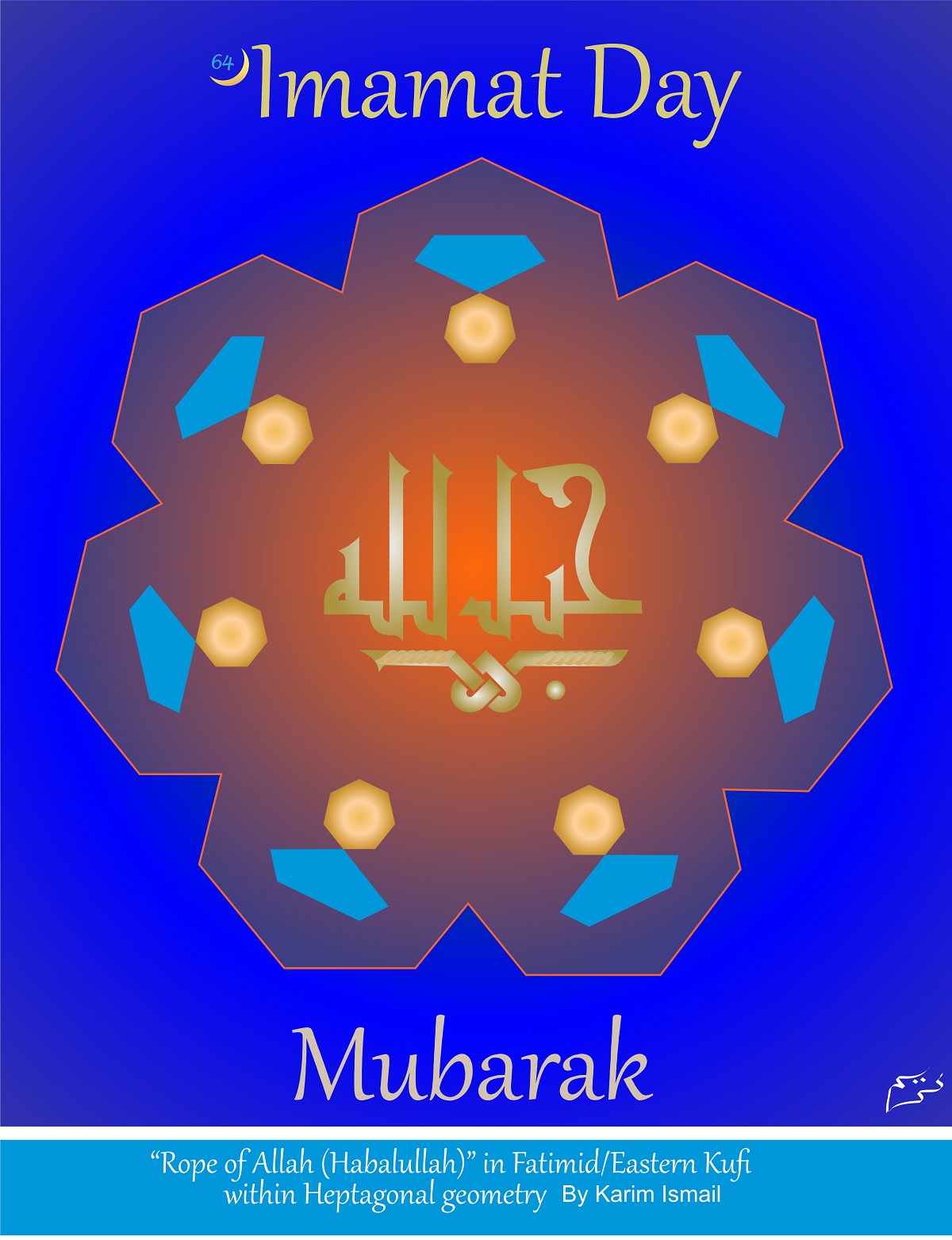
On that historical and interesting statistical fact, we convey to Ismaili Jamats around the world as well as friends and supporters of the community Imamat Day Mubarak through a beautifully designed card by Toronto’s Karim Ismail.

The design carries a rich and significant meaning for all Shia Ismaili Muslims as explained in Ismail’s brief note below. We sincerely thank him for sharing this very special and extraordinary work with us and our readers around the world.

We would be remiss if we did not mention the impact the coronavirus pandemic has had on humanity at large. Many of us have lost four beloved friends and family members to Covid-19 or other illnesses and causes, and social distancing, travelling and restrictive gathering rules have prevented us from fully participating in funerals. We pray that the souls of the deceased may rest in eternal peace and that their family members may find strength and courage to overcome the grief over the loss.

On this 64th Imamat Day of Mawlana Hazar Imam, we also pray for the fulfillment of our readers’ wishes and that everyone’s lives are filled with barakah (happiness) and success. We particularly wish families with young children and youth success in their studies.

2021 Imamat Day Card

Click on image for enlargement

Imamat Day Card by Karim Ismail Simerg and Barakah His Highness the Aga Khan Mawlana Hazar Imam Prince Karim

Explanatory Note of the 2021 Imamat Day Card

By KARIM ISMAIL

In Shi’i tradition, “The Rope of Allah” (Qur’an 3:103) refers to the “Ahl al Bayt” — the Imams from the House of the Prophet Muhammad (S.A.S).

This important tradition appears in the card within heptagonal geometry (seven-sided polygon) about which the (Late) Karl Schlamminger, creator of extraordinary designs and distinctive calligraphies for the Ismaili Centres in London, Lisbon and Toronto, observed as follows in an essay for Arts & The Islamic World (volume 3, number 3, page 25-26):

“The floor of the outer entrance hall [of the Ismaili Centre London] has an open ended pattern in heptagonal form which rises at the focus of the room to create a fountain: such a pattern in such space is of course a completely classical Islamic response — but I have never heard of a heptagonal pattern anywhere in Islamic architecture.

“The number seven symbolizes for Ismailis the values of its essential philosophy — but has never been used in an architectural context. Here the sevenness of the design is no superficial effigy or naturalistic picture of an idea, but — as always in Islam — is expressed in geometry (literally: measurement of the earth).”

__________________

Photo Essay: Years 61-64 of the Aga Khan’s Imamat

We now invite readers to visit Simerg’s sister website Barakah for a very special four-part pictorial series on years 61 to 64 of Mawlana Hazar Imam’s Imamat.

Date posted: July 10, 2021.

_____________________

Before departing this website please take a moment to review Simerg’s Table of Contents for links to hundreds of thought provoking pieces on a vast array of subjects including faith and culture, history and philosophy, and arts and letters to name a few. Also visit Simerg’s sister websites Barakah, dedicated to His Highness the Aga Khan, and Simergphotos.

Karim Ismail Calligraphy, Ismaili artist simerg and barakah
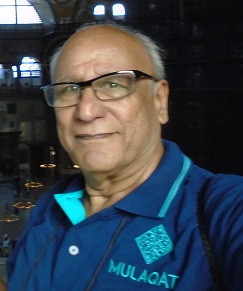
Karim Ismail

Originally from Uganda, Karim Ismail lived in England before settling in Canada. By profession, he is a Pharmacist (retired). It was in England, in 1986, that he came across the artwork of a German Muslim, Karl Schlamminger (1935-2017), at the Ismaili Centre London. Karl’s artwork on calligraphy and geometrics, had a profound effect on Karim. He is frequently seen conducting calligraphy workshops for children at Toronto’s Aga Khan Museum, which is currently closed due to Covid-19. Karim was also active on the literature counter at the Ismaili Centre Toronto, before the closure of Jamatkhanas due to Covid-19.

His Highness the Aga Khan: The Revered Ismaili Imam Who Continues the Progressive Heritage of Classical Islam by Michael Hamilton Morgan

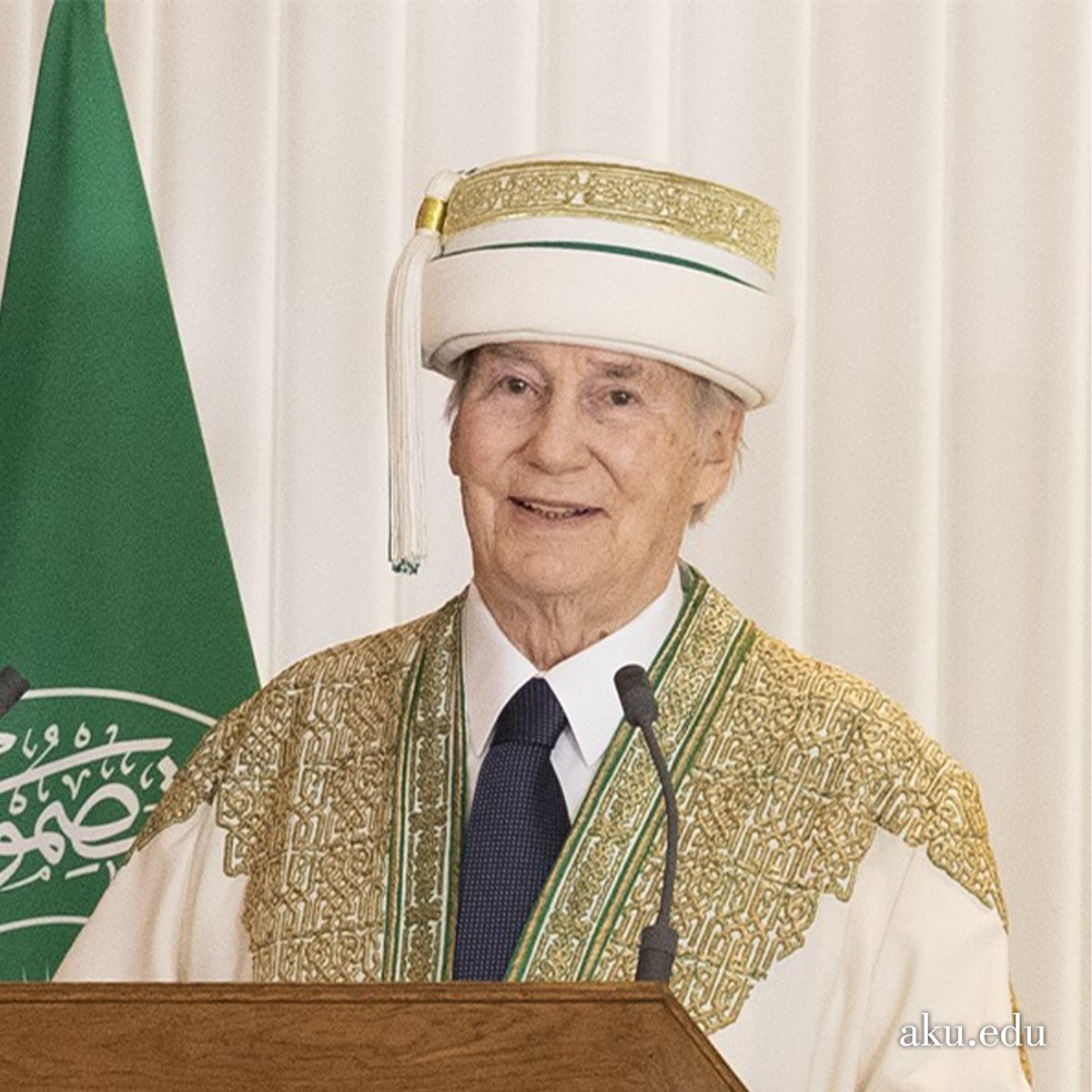
Mawlana Hazar Imam, His Highness the Aga Khan, Barakah, a website dedicated to the Aga Khan
His Highness the Aga Khan addressing the 2020 Aga Khan University Convocation. His 64th Imamat Day will be celebrated on July 11, 2021. He became the 49th Imam of the Ismaili Muslims at the age of 20 when he was still a student at Harvard University. Please click on photo for article by acclaimed American writer Michael Hamilton Morgan.

“Believe it or not — hard work in the areas of education, scientific research, medicine, public works, charity, economic development and entrepreneurship — are the behavioral pillars of historical Muslim culture that made Muslim culture the single most progressive force in the world from about 650 to 1500 of the current era…..This ancient Muslim religious devotion to science, ideas, openness and empirical evidence has indeed been obscured in the mainstream….in the Muslim world, incomplete popular understanding of the faith of Islam has weakened understanding of the importance of logic and reason to the Islamic tradition.

“In this vast tapestry of the interaction of Muslims with each other, and with other cultures and faiths, there is one tradition that unfailingly continues the progressive heritage of classical Islam — profoundly intellectual, open, tolerant, pacific — and in particular one leader who has made it especially attuned to the many difficulties of the world today. That would be Ismailism and its revered Imam, the current Aga Khan IV”….. READ FULL ARTICLE.

Michael Morgan is an international speaker and author of Lost History: the Enduring Legacy of Muslim Scientists, Thinkers and Artists (National Geographic/Random House) which has reached thousands of readers around the world, and has been translated into several languages. Morgan received Egypt’s Presidential award for the Arts & Sciences in 2008. His insightful article on the Aga Khan is a must read!

Date posted: July 7, 2021.

_________________________

Before departing this website please take a moment to review Simerg’s Table of Contents for links to hundreds of thought provoking pieces on a vast array of subjects including faith and culture, history and philosophy, and arts and letters to name a few. Also visit Simerg’s sister websites Barakah, dedicated to His Highness the Aga Khan, and Simergphotos.

Raising an Awareness of the Mandate, Mission and Accomplishments of Mawlana Hazar Imam, His Highness the Aga Khan

As Ismaili Muslims prepare to commemorate the 64th Imamat Day anniversary of their 49th Imam on July 11, 2021, we bring you these fine piece by Ismaili and non-Ismaili authors that provide a rich account of the work of His Highness the Aga Khan in different areas of human endeavour. The first piece by Shiraz Nasser is a narrative that provides an Ismaili perspective of the facets that he sees where Mawlana Hazar Imam has touched the lives of Ismailis and non-Ismailis alike. It is a great introductory piece by which to recall the Imam’s accomplishments, and to begin studying the life of the Imam in more depth. To read each piece, click on the image or its hyperlinked caption. You will be taken to Barakah, a website dedicated to His Highness the Aga Khan, members of his family and the Ismaili Imamat.

1. ARTICLE BY SHIRAZ NASSER

~~~~~

2. ARTICLE BY AUSTIN BUKENYA

~~~~~

3. EXCERPTS FROM THE AGA KHAN’S SPEECHES

~~~~~

4. ARTICLE BY MOHAMMED ARKOUN

~~~~~

5. TRIBUTE BY LÉOPOLD SÉDAR SENGHOR

Date posted: July 6, 2021.

_______________________

Before departing this website please take a moment to review Simerg’s Table of Contents for links to hundreds of thought provoking pieces on a vast array of subjects including faith and culture, history and philosophy, and arts and letters to name a few. Also visit Simerg’s sister websites Barakah, dedicated to His Highness the Aga Khan, and Simergphotos.

The Ismaili Muslim Greeting Ya Ali Madad, Mawla Ali Madad: A Dialogue with Two Inspiring and Beautiful Songs by Ismaili Children and Artists from the Pamirs

By (Late) Malek J. Merchant
Adapted and edited by Malik and Nurin Merchant

This religious dialogue on Ya Ali Madad is adapted and edited from the original piece by Mrs. Merchant (1931-2021). It was presented by her students at their respective religious education centres and Jamatkhanas in London, England, and also appeared in the 1977 Navroz issue of UK ITREB’S prestigious Ilm magazine. An adapted version of the original piece was later published on this websiste HERE. The piece below was revised recently by her son Malik and granddaughter Nurin who both edit and publish this website, Simerg, and its sister websites Barakah and Simergphotos

Following the dialogue, we present two beautiful Ya Ali Madad songs. The first one by Ismaili children was presented on The.Ismaili website in October 2020, and the second one is a song that was popularized by a team of Ismaili artists from Tajikistan’s Pamir regions when they performed to full houses in cities across Canada in 1999/2000. The Ya Ali Madad song brought the Jamat to their feet, and continues to remain popular in the Ismaili world – Ed.

Dialogue: Ya Ali Madad…. Mawla Ali Madad

AyazHi, Naguib. How’re you?

NaguibYa Ali Madad Ayaz; I’m fine thank you.

Ayaz: You greeted me somewhat differently!

Naguib: Yes, Ayaz, I said Ya Ali Madad, our traditional Ismaili greeting! Just as ‘Hello’, ‘Good morning’, ‘Good afternoon’ and others are greetings in the English culture, Ya Ali Madad is a greeting in our Ismaili tradition and culture. I have been using that to greet all my friends and family members.

Ayaz: That’s interesting — I am glad you greeted me as such.

Naguib: Actually, there is also a Muslim greeting in Arabic, which goes ‘As-salaam-alaykum’. The reply to that is ‘Wa-alaykum-salaam’.

Ayaz:  I guess all that has a special meaning as well?

Naguib: Yes. As-salaam-alaykum means ‘May peace be upon you!’ The reply to this is Wa-alaykum-salaam, which means ‘And may peace be upon you, too’.

Ayaz: That’s really great! Tell me, what does Ya Ali Madad mean?

Naguib: Ya Ali Madad is a phrase very rich in meaning. Firstly, Ali is one of the Names of Allah. It means ‘The Exalted’ or ‘The Most High.’

Ali, of course, is also the name of our first Imam. Thus, from an Ismaili context, Ya Ali Madad means ‘May Mawla Ali, our Hazar Imam, help you’.

I should just like to add that Mawlana Hazar Imam, like his grandfather and our 48th Imam, Mawlana Sultan Mahomed Shah, and all Hereditary Imams going back to the first Imam Hazrat Ali, are the Bearers of the Same Light or Noor of Imamat. So, when we say Ya Ali Madad we are seeking help from the Imam of the Time.

Ayaz: I certainly have to read up and become familiar with the concept of Imamat. What is the reply to Ya Ali Madad?

Nuguib: It’s Mawla Ali Madad, which means ‘May Mawla Ali, our Hazar Imam, help you, too’.

Ayaz: I think that’s a very beautiful greeting!

Naguib: It sure is, because Ya Ali Madad, unlike greetings like hi, good morning, etc. is not merely a polite and courteous way to acknowledge another Ismaili’s presence. It is a Tasbih and a prayer.

It’s a Tasbih because we remember Allah and we also remember Hazar Imam. At the same time, it is also a prayer seeking the help of Mawlana Hazar Imam. I remember instances when Hazar Imam has often asked us to call on the name of Allah, the Prophet, Hazrat Ali or even the names of the Imams at any moment during the day as a form prayer. That moment can be as little as a second.

Ayaz: It’s amazing and almost embarrassing to admit hat I’ve never used this beautiful traditional greeting before.

Naguib: But haven’t your parents ever greeted you with Ya Ali Madad?

Ayaz: No. All mum says is, ‘Bye, take care’ when I go out and ‘Hello’ when I come in. When I go to bed, it’s ‘Goodnight’ with a kiss. Come to think of it, mum never says Ya Ali Madad to her friends either. It’s always ‘Hi Jenny’ and ‘Hi Sakar’.

Naguib: It’s very sad to hear that we ignore our traditions. Don’t you think it would be nice to say Ya Ali Madad before leaving for school, then again on returning from school, and finally when going to bed? And parents could reply with Mawla Ali Madad, along with ‘Sleep well’ or ‘Take care of yourself’.

Ayaz: Yes it would, because then we know that Hazar Imam’s help and protection is always available to us. I now can relate to Mawlana Hazar Imam’s blessings during the past year when we have been living through this Covid-19 pandemic. He has conveyed to each one of us his most affectionate loving blessings for protection from difficulties, for our well being, good health, safety and security. And he has also constantly reminded us that he is always with us.

Mum and dad will be really surprised tonight when I say Ya Ali Madad instead of ‘Goodnight’.

Naguib: I bet they’ll be amazed! It is always very inspiring when I hear the exchange of Ya Ali Madad and Mawla Ali Madad greetings between members of the Jamat and especially the youth. They do so with so much affection for each other, and with immense faith in Mawlana Hazar Imam.

Also, Ayaz, you might hear people simply say Ya Ali, and miss out on the final word Madad. Unfortunately, this has become very common. Of course, it is always good to remember our Mawla, but when we are greeting it is good to greet with the full phrase Ya Ali Madad which has a specific meaning.

Ayaz: As a matter of interest, are there greetings similar to Ya Ali Madad among other traditions and cultures?

Naguib: You will be interested to know in Iran the greeting Daste Ali Beh Hamrat is often exchanged, meaning “Ali’s blessing be with you.”

Ayaz: I’m glad I met you today and you said Ya Ali Madad. I wouldn’t have learnt all this if you’d just wished me ‘Hi’. I also thank you for your observation that the greeting should be said in full as Ya Ali Madad and not simply Ya Ali.

Naguib: Well, I’m glad you see the beauty and importance of our tradition.

Ayaz: Thank you very much for being so patient and explaining all this to me.

Naguib: Not a problem at all – I’m glad I could be of help.

Ayaz: I’m glad too that I’ve learnt something about our traditions today. Well, I guess I’d better go now.  Thank you Naguib, and Ya Ali Madad – ‘May our Hazar Imam help you’, is that right?

Naguib: Yes, that’s right. Mawla Ali Madad, Ayaz.

______________________

Two Ya Ali Madad Songs to Enjoy

1. Ya Ali Madad by Ismaili Children

Ya Ali Madad song by Ismaili children.

______________________

2. Audio: The Iconic Ya Ali Madad – Mawla Ali Madad Song by the Ismaili Ensemble from the Pamirs

Ismaili artist with song Ya Ali Madad, Moscow performance, simerg Insights from around the world
The unforgettable Ismaili singer who enchanted and brought the Ismaili Jamats to their feet with his iconic song Ya Ali Madad during a visit by Ismaili artists from Gorno-Badakhshan to Canada in1999/2000. Photo: The singer performing at the 80th birthday celebration of Mawlana Hazar Imam in Moscow, Russia, in December 2016.

The following rendition of the Ya Ali Madad song is from the DVD “Expressions from the Pamirs” produced in 2000 following a highly successful tour of Ismailis artists from Tajikistan who performed in major centres across Canada in 1999/2000. The Canadian Jamat was introduced for the first time to the Ismaili culture of their brothers and sisters in Badakhshan through a 2 hour stage performance of dance, drama, music and songs, along with an informative exhibition containing cultural artefacts related to the Jamats of Central Asia. The editor of this website, Malik Merchant, acted as a guide at the exhibition that was hosted in Vancouver in the latter half of 1999.

Ya Ali Madad, Mawla Ali Madad. Credit: Expressions of the Pamirs, 2000.

Date posted: July 1, 2021.

______________

Mrs Merchant Aga Khan Diamond Jubilee Simerg
Mrs. Malek Merchant (1931-2021)

Alwaeza Malek J. Merchant (1931-2021), popularly known as Mrs. Merchant, rendered services to the Jamat, its institutions and the Imam-of-the Time for several decades as a missionary and religious education teacher in Africa, Pakistan, Canada and the UK. She passed away on January 21, 2021 at the age of 89. This piece has been adapted and re-written from her original dialogue on Ya Ali Madad by her son, Malik, and granddaughter Nurin. Alwaeza contributed a great piece for Simerg’s highly acclaimed series I Wish I’d Been There (downloadable as a PDF file). Her article may be independently read by clicking on Varas Ismail Gangji: The Turning Point.

Sign-up for blog subscription at top right of this page. Share this article via the share option below.

We welcome feedback from our readers. Please complete the LEAVE A REPLY form below or click Leave a comment. Your letter may be edited for length and brevity, and is subject to moderation.

Before departing this website please take a moment to review Simerg’s Table of Contents for links to hundreds of thought provoking pieces on a vast array of subjects including faith and culture, history and philosophy, and arts and letters to name a few. Also visit Simerg’s sister websites Barakah, dedicated to His Highness the Aga Khan, and Simergphotos.
Two Great Readings from Ismaili History: Mu’aayad Shirazi and Ghaddir-Khumm by (Late) Jehangir A. Merchant

Introduced by MALIK MERCHANT
(Publisher-Editor, BarakahSimerg and Simergphotos)

An older couple standing outdoors near a lake surrounded by trees in vibrant autumn colors.
Alwaez Jehangir and Alwaeza Maleksultan Merchant pictured at Gatineau Park during their visit to Ottawa in 2007.

Thursday May 27, 2021, will be the 3rd anniversary of the passing of Jehangir Merchant (December 13, 1928 – May 27, 2018), father of Malik (publisher and editor of this website), Fahar and his wife Nina, Alnoor and his fiance Shellina; grandchildren Naim and Nurin; and sister Banu. Our mother and grandmother, Maleksultan (popularly known as Mrs. Merchant), who was our dad’s partner of 66 years, was then still alive; she passed earlier this year on January 21, 2021. This website was launched twelve years ago in the spring of 2009 with their encouragement, guidance and support. The first piece published in Simerg was entitled The Mystery of the Missing Mount Nasir Khushraw.

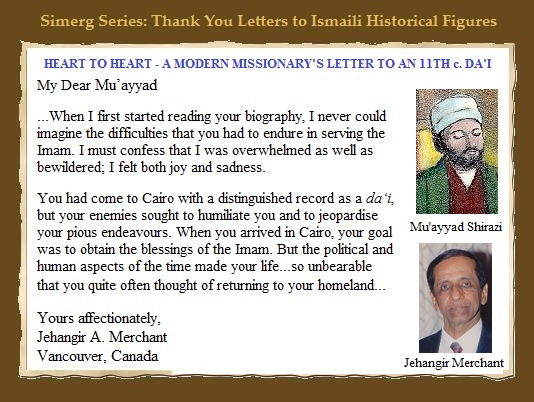
Among several articles by my dad that were published on Simerg, two original contributions that absolutely stand out and are a must read are (1) a letter of gratitude to his greatest hero in Ismaili history, the Fatimid missionary Muayyad din Shirazi and; (2) Ghadir Khumm and the Two Weighty Matters for the acclaimed series I Wish I’d Been There. Please read the two pieces by clicking on the hyperlinks I have provided in the preceding sentence or on the two images shown below.

An image featuring a letter titled 'Heart to Heart - A Modern Missionary's Letter to an 11th c. DAI', accompanied by portraits of Mu'ayyad Shirazi and Jehangir Merchant, reflecting a personal tribute.
Please click on image to read Jehangir A. Merchant’s thank you letter to Fatimid missionary Al-Mu’ayyad al-Shirazi

*******

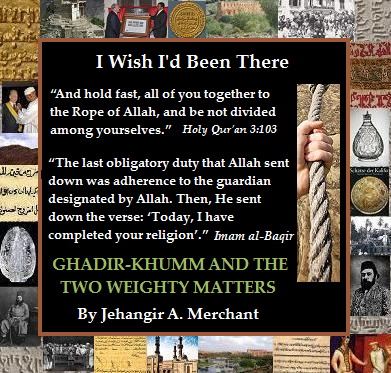
An image featuring the title 'I Wish I'd Been There' alongside a quote from the Holy Qur'an and a statement from Imam al-Baqir. The background includes various historical images and symbols related to the Ismaili community, with the subtitle 'GHADIR-KHUMM AND THE TWO WEIGHTY MATTERS' by Jehangir A. Merchant.
Please click on image to read Jehangir A. Merchant’s “Ghadir-Khumm and the Two Weighty Matters”

We fondly remember our parents and grandparents, and pray for the eternal peace of their souls. Ameen.

Date posted: May 26, 2021.

__________________

Meaning of Irfan, as Prince Irfan Aga Khan turns 6 years old; and Nurin Merchant’s 4,500 km drive in the Covid-19 pandemic year takes her through beautiful Canadian landscapes and the Terry Fox Memorial

Click image for Prince Irfan

As Prince Irfan Aga Khan celebrates his 6th birthday on April 11, 2021, we adapt a previously published piece that also explains the meaning of his name and the name of his younger brother Prince Sinan Aga Khan…..MORE

___________________________

Canadian Prairies, Aga Khan depiction at Winnipeg Museum, and Terry Fox Memorial. Please click on image for photos and story.

Nurin Merchant braves a 4,500 km road trip from Vancouver to Ottawa in the year of the Covid-19 pandemic. At the 3,300 km, mark she and her mom reach the iconic memorial to Canadian cancer hero Terry Fox, overlooking Lake Superior. As ever, she is ready with her camera and comes up with a diverse collection of photos of the memorial and some beautiful Canadian landscape. She is also reminded of Mawlana Hazar Imam His Highness the Aga Khan’s quote on life and includes it in her piece with a unique depiction of Hazar Imam at a Canadian Museum….MORE

Date posted: April 11, 2021.

__________________

The world woke up to books during the pandemic and book sales even went up, but ITREB did not empower the Jamat to read by offering curbside pick up and online ordering of important books

This matter has been on my mind for 12 months, and this piece was prepared some 3 months ago. I have now decided to post it after patiently waiting for Jamati institutions, and specifically ITREB, to provide an absolutely essential service to the Jamat — availability of Farman books, important objects (eg. tasbihs) as well as Dua recordings with meanings, and copies of the Qur’an.

By MALIK MERCHANT
Publisher/Editor  SimergphotosBarakah and Simerg

ITREB Curbside pickup
If booksellers and communities can arrange for curbside pickup, the best volunteers in the world can offer this service to the Jamat. Image — imaginary but all is doable — Malik Merchant/Simerg.

Millions of Americans and Canadians turn to Public Broadcasting Service (PBS) Newshour every evening for solid and reliable reporting, insightful analysis as well as highly informative interviews that are conducted by the network’s team of outstanding reporters. PBS and its member stations across the USA lay claim to being “America’s largest classroom, the nation’s largest stage for the arts and a trusted window to the world.”

For some time now the Newshour program, which is anchored by Judy Woodruff, has been running special regular episodes under the banner “CANVAS, PBS’s Newshour art hub.” In a broadcast in late December, PBS reporter Amna Nawaz turned her attention to two American booksellers for their look at the year in books and the public response to books during the Covid-19 year of isolation and pain (read article).

Janet Webster Jones of Source Booksellers in Detroit told Nawaz, “We have been so busy…. that we can hardly answer the phone. We have had a very busy, busy season. We have been frantically doing our fulfillment orders, as well as greeting people by twos and threes as they come to the store.” Ann Patchett co-owner of Parnassus Books in Nashville added, “People have stepped up to help us out, ordering books online, ordering curbside. We have been running books out to people’s car. And now we’re letting a few people into the store at a time. We take everybody’s temperature. Everybody wears masks, hand sanitizer. And people have been really kind and compliant and supportive. It’s been a very heartwarming Christmastime.”

Thus, as we abide by social distancing guidelines to stay home, books suddenly have become more vital than ever! It is interesting to note that all across North America many religious organizations as well as bookstores have facilitated curbside pick-ups or ramped up their online platforms to service members of their communities (read article).

Shortly after the first shutdown of Jamatkhanas in mid-March (2020), following provincial or federal restrictions recommendations, I had proposed to the national leadership of ITREB (Ismaili Tariqah and Religious Education Board) to facilitate curbside pickup of a selection of books and objects that are close to the heart of Jamat. I had personally offered my assistance to volunteer curbside pickup at the Ismaili Centre in Toronto. Remember, that after more than 40 years of waiting, the Jamat was finally presented with a 2-volume set of Farman books sometime in the middle of January 2020. By the time of Jamatkhana closures in mid March (2020), thousands had already acquired their copies of the Farman books. Yet there were an equal number who never acquired the set. Those who missed the opportunity during the 6-8 week between January and March would have hardly thought that the Jamatkhanas would remain closed for such a lengthy period, or that they would open with limited capacity. I was told that an online order processing system was being seriously considered to fulfill an important and vital need for the Jamat. It hasn’t materialized. I quote, “Do not let time pass….once it has passed it has gone forever.” (Mawlana Hazar Imam, India, 1973).

In addition to the Farman books, Jamati members would want Tasbihs, Mawlana Hazar Imam’s photographs, Du’a and Ginan books and audios, copies of the Holy Qur’an as well as a few other texts from the Institute of Ismaili Studies that are within the grasp of the Jamat’s understanding (Eagle’s Nest?). The pandemic would have provided the opportunity for the Jamat of all ages to begin to become more literary oriented at home. Also, parents would have been able to spend some time teaching their children to recite Du’a properly, and to request them to learn the meaning of the Du’a (“How many amongst you can tell me what the word qul is?” — Mawlana Hazar Imam, Atlanta March 17, 2018. One hand went up!). Memorization by phrases would be excellent, for starters.

Sign indicating a parking space reserved for curbside pickup at Indigo bookstore, with instructions to call the store upon arrival.
Indigo (Chapters-Indigo), the largest bookseller chain in Canada, offering curbside pick-up and even in-store purchase when provinces were not in total shutdown.

Yes, the curbside pickup would have required devotion of time by Jamati members and volunteers of a few hours every week, say at parking lots of selected Jamatkhanas across Canada or in large spaces within the Jamatkhana premises. But where there is a will there is a way, just as our institutions and volunteers around the world organized food and water distributions for their respective communities, Ismailis and non-Ismailis alike, during the pandemic. Their efforts were highly appreciated in the communities they served.

The sad part is that once Jamatkhanas re-opened in Canada last summer with limited capacity, the literature counters continued to remain closed. Social distancing could have been instituted at Jamatkhana literature counters or at appropriate larger areas (such as social halls) during this window that was available. Curbside pick-up should have been facilitated for those unable to attend Jamatkhanas. The summertime window closed! Autumn once saw Jamatkhana closures due to the rise in Covid-19 cases.

Then, last month we saw the re-opening of some Jamatkhanas in Ontario, which are now once again closed down, as of the week of April 5th due to lockdown measures. So when windows of opportunities are available, however brief, we have to take advantage of them. And friends can purchase for their family members who might not attend Jamatkhanas for sometime.

In addition, an online shop should be strongly considered where authenticated Jamati members, who are in the Jamati data base, may be able to order books and then do curbside collections at selected hours. This is not rocket science, just as registration for Jamatkhana attendance is not. If other communities and institutions can take appropriate measures to serve their constituents with energy and some creativity, there is no reason why we can’t equal their enthusiasm, with the best volunteers in the world we have.

Can we be prepared for such eventualities, as well as opportunities that come our way, and not let time pass without being aware that once it has passed, it has gone forever?

Date posted: April 9, 2021.

_____________________

We welcome feedback from our readers. Please complete the LEAVE A REPLY form below or click Leave a comment. Your letter may be edited for length and brevity, and is subject to moderation.

Before departing this website please take a moment to review Simerg’s Table of Contents for links to hundreds of thought provoking pieces on a vast array of subjects including faith and culture, history and philosophy, and arts and letters to name a few. Also visit Simerg’s sister websites Barakah, dedicated to His Highness the Aga Khan, and Simergphotos.