Simerg is an independent initiative dedicated to Ismaili Muslims, the Aga Khan — their Hereditary Imam — and the Ismaili Imamat, and Islam in general through literary readings, photo essays and artistic expressions
Category Archives: Literary Readings from Ismaili History
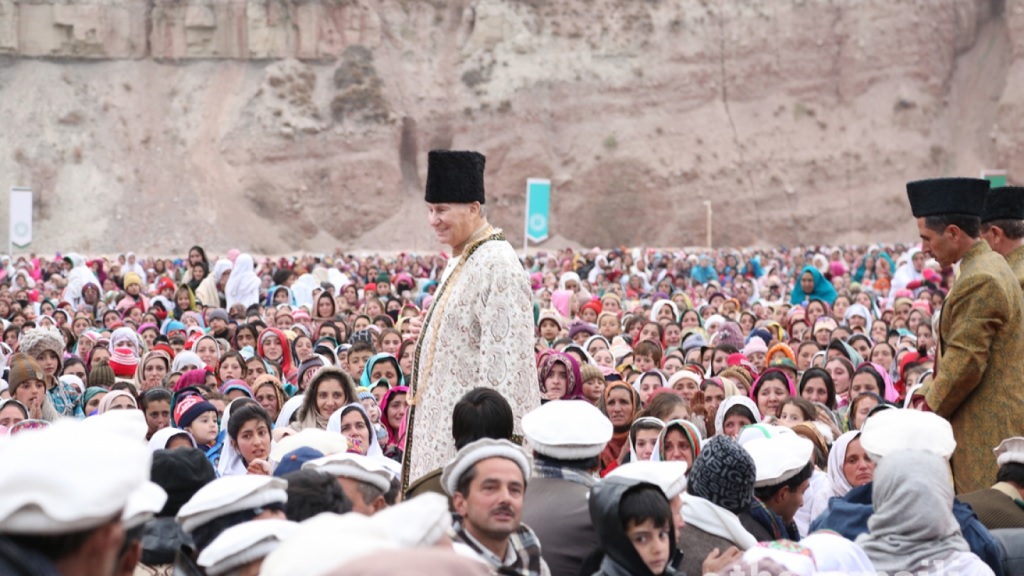
Mawlana Hazar Imam in Booni Chitral during his Diamond Jubilee visit to Pakistan in December 2017. Photo: The Ismaili/ Karim Sadruddin.
By SHIRAZ PRADHAN
As the world struggles to cope with the novel coronavirus pandemic, it is natural to become anxious. We live in extraordinary times. The closure of Jamatkhanas in almost all countries accentuates our anxiety. I do not intend this article to be doom and gloom. To the contrary, I want to portray hope from our faith.
The emergence of this new virus and its global impact has demonstrated the intricate ways in which humanity is interconnected and how it has brought entire humanity to its knees and shown us the vulnerability of the ‘House of Cards’ that is our civilization. There is no ‘foreign virus’ as some have chosen to describe it. This virus is brutally merciless and does not recognize race, colour, gender, religion or national boundaries.
There is already a disruption of social care and communal services as the pandemic progresses in Europe, North America and elsewhere. This will transfer the burden of care of the aged, less able and vulnerable to younger, and healthier family members who may ride through the illness with minor discomfort. The projected time periods are likely to be several months.
Bearing in mind all these factors, how should we react to the pandemic? Ours is an intellectual tradition. Allah possesses the power of miracles, but we do not relay on Allah’s miracle alone.
At this very moment, there are laboratories around the world racing against time to come up with a vaccine against the virus. Indeed, one was tested on a few patients a few days ago. May be the virus is temperature sensitive and as we, in temperate zones transition to spring and rising temperatures, it may abate the virus. May be the ‘herd immunization’ strategy that is talked about will work and lessen the impact of the new virus. As ordinary citizens, we sometimes feel helpless. Under such circumstances, after following all the advice we are given to protect ourselves and our beloved ones, the next tendency in people in troubled times is prayers.
Psychologists have long known this fact. It gives people tremendous hope and alleviates stress in face of adversity. Prayers work, and in this I am reminded of a Farman Mawlana Hazar Imam had made in the 1960’s when he said that those who prayed in difficult times knew how prayers had helped them during their difficulties. At the same time, he reminded us that we should not only pray when times are bad but also when times are good.
Our Ginans can also give us help during these difficult times. Several Ginans have powerful verses of supplication and pleading for Allah’s mercy and compassion and help. These verses are not parochial but are pleadings for Allah’s compassion and mercy for the entire humanity. In the context of the pandemic, this fact comes out clear. It is our hope that this ‘One Humanity’ idea endures beyond the pandemic.
Some of the verses I present are well-known, but I include them for completeness. First is a verse that extols the virtue of congregational prayers. It is from Pir Hasan Kabir’s Anant Akhado, verse 115.
Aashaaji til dharam ne hasti paap sohi gat utaare ji Gat naa vachan te Nar ji maane te maahaadan maanhe nahi puchhaaye.
Translation:
O Lord, our good deeds are minuscule, our sins monumental. These are forgiven in congregational prayers The Lord listens to congregational prayers and spares the questioning on the Day of Judgement.
The physical separateness due to the closure of our Jamatkhanas does not preclude us from offering prayers for humanity in our hearts and/or with our families.
In Pir Hasan Kabir’s Ananta Akhado, verse 32, Pir says that in Lord’s Assembly, He grants you whatever you wish.
Aashaji jiya jem mango, tiya tem verse, Satgur gher anand ji
Translation:
Whatever you ask for in His assembly, He grants. There is joy and no one returns disappointed from His assembly.
In verse 127, the scope of the pleading and supplication expands and encompass the entire humanity.
Aashaji, Sansar serve Shrusti tamari, ane serve mankha jiv ji Daya kari teme amne taaro, Sami serve jiv tamara ji
Translation:
O Lord, the entire creation is Yours, as are the souls, With compassion, save us, O Lord, we all are Your souls.
In Pir Hasan Kabir’s Venti Eji Aash Tamari Shree Ho, which is full of supplications and pleadings, the opening verse portrays the congregation, standing with hands folded, asking for Lord’s compassion:
Eji, Aash tamari Shree Ho Kayam Sami, Saheb Chinta kee je, Ya Shah Sab Gatie Shah ke khde re umayo Shah Raj Rikhisar Ghar Dejo
Translation:
O Lord, we are hopeful of and dependent on your compassion; O Lord, we beseech you, spare your thought for us; the entire congregation is standing in submission; O Lord, bestow prosperity and happiness upon us…
Next is a beautiful venti of sincere submission and heart rendering plea for help by Pir Hasan Kabir in Hum Dil Khalak ya Ali tu(n)hij:
Hum dil Khalak ya Ali tu(n)hij vase, Ya Mawla tu(n)hij vase, avar na dhuja koi, jive pi(n)dhe jo tun(n)hij dhani; Ya Mawla tu(n)hij dhani. Jia(n) kari(n) tiya hoi Maher karo mora saai ya Ali hum tere aadhar Tere aadhar ya Mawla tu(n)hij daatar Maher karo mora saai ya Ali hum tere aadhan
Translation:
Only you reside in my heart O Ali, O Mawla only you, Non-other I think of You, who are master of my soul and body O Mawla, truly you are the Master Your wish and command prevail Show mercy O Lord Ali you are my support, I am dependent in You; O Mawla you are the provider (of all my needs) Show mercy O Lord, Ali you are my only support
The next powerful verse that we often recite to seek divine help is from Seyyad Imam Shah’s Ame Saaheb Saathe, Verse 6
Eji Tuj vinaa koi avar na dise, Saami amne chhe tamaaro aadhaar-ji; Tuj vinaa ame eklaa Saami, Saami tame thaajo rakhvaarr-ji
Translation:
O Lord, You alone we see, O Lord, we rely upon You Without You we are all alone Please be our protector (In these troubled times)
In addition to the Ginans, our daily Arabic Du’a has powerful pleas for help. In part two we recite:
“O Allah, O our Lord from You is my help, upon You is my reliance. You alone we worship and You alone we seek for help. O Aly help me with your kindness.”
In part three of our Du’a, we recite:
“Seek at times of difficulty, the help of your Lord, the present living Imam, Shah Karim al Hussaini.”
In part 4 of our Du’a, we recite:
“O Allah: Forgive us our sins, give us our daily bread and have mercy upon us….”
In part five of our Du’a, we recite:
“Ya Shah Karim, O Mawla, from you is my strength…”
As we go through this difficult time we should take comfort from these Ginanic verses and our Holy Du’a as well the Farmans of Mawlana Hazar Imam that have been published recently. Repeatedly, he assures his murids of his constant presence with them. For example, in his Diamond Jubilee Farman made in Booni, Chitral, Pakistan, he lovingly tells us that he is always with his Jamat, every day, every minute, every second (Diamond Jubilee Farman book, page 57, also pages 51, 62). As such, we should seek to keep his enduring blessings for mushkil-asan (protection from difficulties) alive in our hearts all the time.
I pray that these trying times pass and that Allah in His compassion listens to our plea for help for humanity. His compassion and mercy know no bound.
Date posted: March 18, 2020.
Before departing this website please take a moment to review Simerg’s Table of Contents for links to hundreds of thought provoking pieces on a vast array of subjects including faith and culture, history and philosophy, and arts and letters to name a few.
_____________________
Shiraz Pradhan
Shiraz Pradhan, in parallel with his work as an international engineering consultant, has contributed for several years to furthering religious education among the Ismaili community in the UK, Canada, USA and Japan. He is the author of several articles published on this website and was a regular contributor to UK’s flagship Ismaili magazine, Ilm. Currently he is concluding the script of a full-length play of the 10th Century trial of the Sufi Saint Mansur al-Hallaj in Baghdad based on historical facts.
The author wishes to thank Platinum Rahemtulla for references to Ginanic verses and their translations that are quoted in the article.
____________________
We welcome your feedback. If you don’t see the feedback form below please click on Leave a comment.
When you have not missed a day in Jamatkhana attendance over the past several years, how do you cope with sudden and unforeseen closures of your favourite Jamatkhana? We live in difficult circumstances. Covid-19 — the disease caused by the novel coronavirus — has infected tens of thousands around the world and has been declared a pandemic, causing anxiety and worry. I left a pharmacy on Friday March 13 with a customer expressing, “it feels like death can approach anyone of us, and I just feel at the moment that I might die.” When I next visited a supermarket at around noon time, people were filling their shopping carts to the brim with supplies for their families. Ismaili institutions in Canada on the same day announced the closure of Jamatkhanas in several provinces around the country to protect the elderly and everyone who is vulnerable due to compromised immune systems. A similar decision was made by the USA Aga Khan Council for cities across many states on Saturday, March 14. Of course, these are also containment measures to prevent the spread of Covid-19. These measures have also been necessary as a result of bans that have been imposed by state or provincial or even Federal authorities on large gatherings.
In 1979, I was left with a difficult situation of being the only Ismaili in Salt Lake City, Utah, for several months, until a family arrived just before I left the following summer. The nearest Jamatkhanas were in Denver, Las Vegas and Phoenix, hundreds of miles away. I disciplined myself to pray regularly and the happiness and strength I achieved was comparable to my earlier praying days at 5 Palace Gate in London, England. In London, I had become a regular only in 1976, and before that attended Jamatkhanas only on Fridays at Central Hall when I was a student at the Polytechnic of North London. In Salt Lake City, I set aside a corner in my room for the purpose of praying. It was a tiny 12-15 sq ft space beside my bed. The night table contained my rosary (tasbih), with the drawers containing Farman and Ginan books along with a copy of the Holy Qur’an as well as some literary magazines and books. I performed my prayers in an identical fashion to what takes place in Jamatkhana — reciting the Du’a, Farmans and Ginans loudly as well as standing up for the tasbih. My heart and soul enjoyed the spiritual nourishment that I experienced even from praying alone. Chandraat (New Moon day or first day of the Islamic month) was a joyful day for me as I saw the new moon above the Wasatch Mountains that surround the Mormon capital. On my drive home in my roommate’s car, I looked forward to the special Chandraat prayers that I would recite.
A few years ago in Ottawa, I met and interviewed the eldest member of the Ismaily family, who was probably the first Ismaili to settle in Canada in the early 1950’s. He had met our beloved 48th Imam Mawlana Sultan Mahomed Shah, His Highness the Aga Khan III (1877-1957), just before his lone settlement in a new country. He told me the late Imam asked him to set aside a small portion of his room and conduct his prayers in that space just as he would in a Jamatkhana. The Imam also asked him to keep away from bad and evil social habits, and to work hard. Mr. Ismaily abided, and said that the practice that he adopted of praying regularly in a designated space gave him immense strength, comfort and spiritual happiness.
So here are my recommendations to families where Jamatkhanas have been temporarily closed — and we don’t yet know for how long! Try as a family to pray together. Visit your parents or grandparents at their home, if you are not staying with them, and say to them that you would like to join them for prayers. When visiting them, if you are healthy, take precautions such as hand washing and other important recommended hygienic steps like the ones posted by the Government of Singapore.
Remember they have all of a sudden been deprived of the most valuable moments in their lives — being in Jamatkhanas. Tell them you will recite the Du’a out loud. Keep in mind that many elderly people rely on listening to the prayers recited by another person. Many do not have the capacity to recite the Du’a. Play or recite a ginan or qasida, and join together in tasbihs to help ease our difficulties that we are facing at the present time. Say Ya Allah, Ya Muhammad or Ya Ali. Recite Salwats. Recite the tasbihs of Allahu Akhbar (God is Great), Subhanallah (Glory be to God) and Alhamdulillah (All praise is due to Allah) suggested by the Prophet Muhammad (S.A.S) to his beloved daughter Bibi Fatimah (A.S.). Say the tasbih of Ya Ali Tu Rahem Kar (O Ali be Merciful) Ya Mawla Tu Fazal Kar (O Lord [Ali] be gracious) that we recite during Jamati Satada (7 consecutive days of special prayers for the easing of difficulties). Remember, Mawlana Hazar Imam is our strength, so say Ya Shah Karim Ya Mawlana anta Quwati from the 5th part (O Shah Karim, You are my strength/support).
This is a perfect time to come together at home as families, with no live sporting distractions to take occupy our times! It is an opportunity to be together, to help each other out, to motivate each other, to connect more with our parents and children and to build family unity. It is also an opportunity to develop a balanced life, for those who are immersed with worldly issues, and engage more with our faith. Mawlana Hazar Imam’s blessings are with us constantly, and it is an opportune time to read his Farmans from the two-set Farman books that has just been published under his directive. Read them aloud to your children, siblings, parents and grandparents when you are around them.
These are my humble suggestions to ease through the anxious times that we face which is unprecedented in recent history.
May we continue to fulfill our spiritual responsibilities well during this difficult and anxious time in our lives to avail ourselves of Mawlana Hazar Imam’s constant blessings for our well-being, strength and mushkil asan (protection from difficulty).
Date posted: March 13, 2020. Last updated: March 21, 2020.
Before departing this website please take a moment to review Simerg’s Table of Contents for links to hundreds of thought provoking pieces on a vast array of subjects including faith and culture, history and philosophy, and arts and letters to name a few.
_________________
We welcome your feedback. If you don’t see the feedback form below please click on Leave a comment
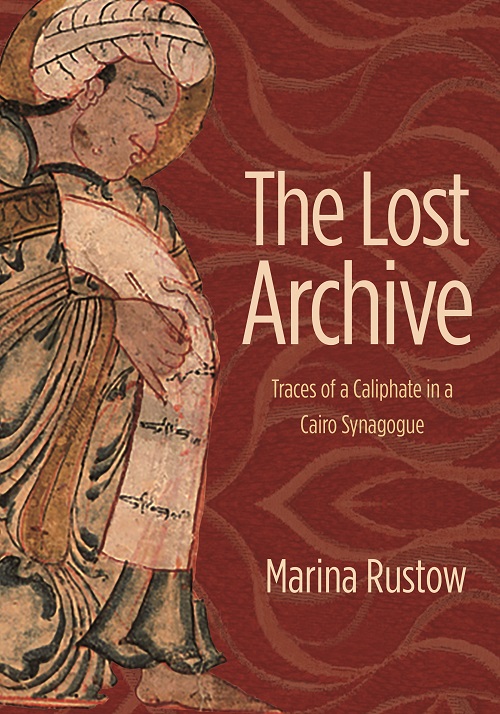
The Lost Archive by Marina Rustow, published on January 14, 2020 by the Princeton University Press; Pages: 624; Size: 7 x 10 in. Illus: 83 color + 17 b/w illus. 4 maps. 4c throughout. To purchase hardcover, Kindle or Kobo versions see links at bottom of this page.
Grabbing our attention now is a splendid new book on the Fatimids that looks at the caliphate’s robust culture of documentation. In an editorial review of the book, Konrad Hirschler of the Freie Universität Berlin describes Marina Rustow’s work “as a veritable magnum opus that will remain a point of reference for decades to come.” He also notes that “there are few books like this one that take the reader on such a long-distance journey across centuries and writing systems.”
The Lost Archive: Traces of a Caliphate in a Cairo Synagogue is Marina Rustow’s second work on the Fatimids. Her first one was entitled Heresy and the Politics of Community: The Jews of the Fatimid Caliphate. Sheis the Khedouri A. Zilkha Professor of Jewish Civilization in the Near East and professor of Near Eastern studies and history at Princeton University. She is director of the Princeton Geniza Lab and a MacArthur fellow. Her latest work is also praised by Geoffrey Khan, University of Cambridge, who states that “with great historiographical skill, Rustow brings new insights into the history of the medieval Middle East through a holistic analysis of the surviving state documents of the Fatimid dynasty. This is a splendid book.”
Marina Rustow has made very interesting and informative presentations of her research and work at the American Philosophical Society and the University of New Mexico. Links to both the videos are provided at the end of this piece.
The lost archive of the Fatimid caliphate survived in an unexpected place: the storage room, or geniza, of a synagogue in Cairo, recycled as scrap paper and deposited there by medieval Jews. In the book Marina Rustow tells the story of this extraordinary find, inviting readers to reconsider the longstanding but mistaken consensus that before 1500 the dynasties of the Islamic Middle East produced few documents, and preserved even fewer.
Beginning with government documents before the Fatimids and paper’s westward spread across Asia, Rustow reveals a millennial tradition of state record keeping whose very continuities suggest the strength of Middle Eastern institutions, not their weakness. Tracing the complex routes by which Arabic documents made their way from Fatimid palace officials to Jewish scribes, the book provides a rare window onto a robust culture of documentation and archiving not only comparable to that of medieval Europe, but, in many cases, surpassing it. Above all, Rustow argues that the problem of archives in the medieval Middle East lies not with the region’s administrative culture, but with our failure to understand preindustrial documentary ecology.
Illustrated with stunning examples from the Cairo Geniza, this compelling book advances our understanding of documents as physical artifacts, showing how the records of the Fatimid caliphate, once recovered, deciphered, and studied, can help change our thinking about the medieval Islamicate world and about premodern polities more broadly.
The hard copy or electronic Kindle version of “The Lost Archive” may be purchased at the following websites: Princeton Amazon & Amazon Canada Indigo
Date posted: March 8, 2020.
__________________
American Philosophical Society presentation by Marina Rustow (34 minutes)
~~~~~~~~~~~~
University of New Mexico presentation by Marina Rustow (1 hour 35 minutes)
Please click on photo to read Ben Eltham’s excellent piece in The Guardian
Abida Parveen to perform February 29, 2020 at Melbourne’s Hamer Hall
There are few artists who are spoken about with the same rapturous fervour as Abida Parveen. Perhaps only her spiritual brother, the late Nusrat Fateh Ali Khan, has inspired the same level of devotion among fans.
Parveen has been described by The Guardian newspaper as “the greatest female Sufi singer in history” and by the BBC as “one of the most remarkable voices on the planet.” In his new piece for the Guardian, Ben Eltham writes, “The devotional singer is known to move audiences to a higher plane. Meeting her in Melbourne time went ‘all bendy and loose’.” Please click here to read The Guardian’s excellent piece.
Have you attended a performance by Abida Parveen? What are your impressions? Were you awed by her performance? We welcome your feedback. Please click Leave a comment.
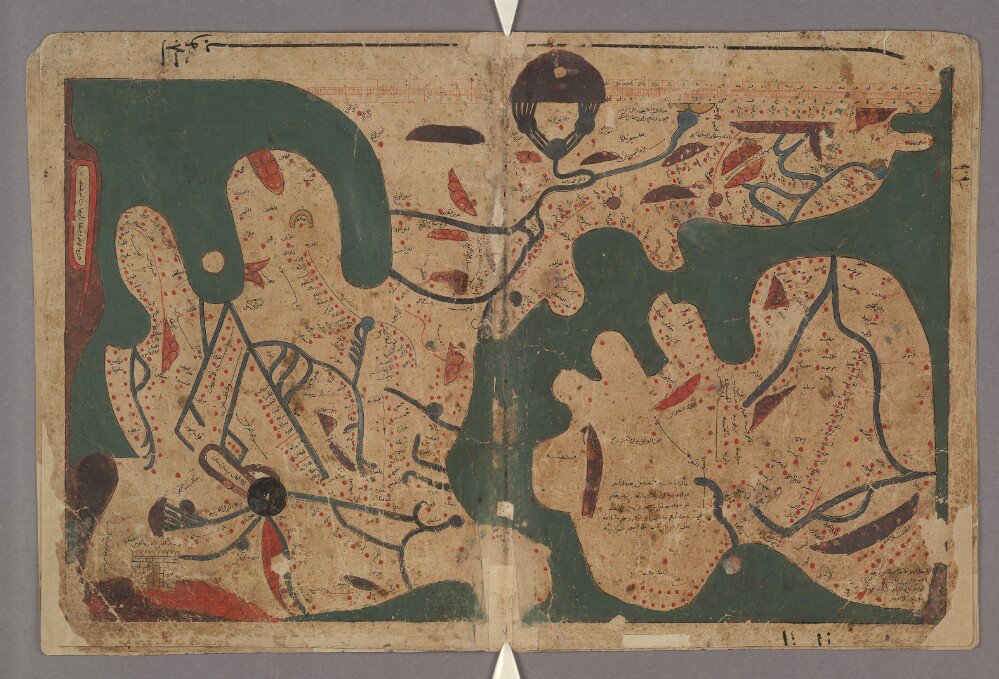
There are 17 maps in the Fatimid manuscript Book of Curiosities, 14 of which are completely unique to this manuscript. Perhaps the most remarkable is this rectangular map of the world. This the only such map to be dated before the renaissance that we know to have survived.
“The Book of Curiosities is one of the greatest achievements of medieval map-making; it is also a remarkable part of the story of Islamic civilization….It is a profoundly Fatimid treatise. Like a tirāz armband, it wears its allegiance to the Fatimid caliphs on its sleeve. This is apparent from the opening dedication, from the blessings heaped on the Fatimid imams” — Emilie Savage-Smith and Yossef Rapoport, authors of Lost Maps of the Caliphs.
About a millennium ago, in Fatimid Cairo, an unknown author completed a large and richly illustrated book. In the course of thirty-five chapters, this book guided the reader on a journey from the outermost cosmos and planets to Earth and its lands, islands, features, and inhabitants. This treatise, known as The Book of Curiosities, was unknown to modern scholars until a remarkable manuscript copy surfaced in 2000. Christie’s auction house in London, who had put up the manuscript for sale, wanted to know more about it and invited Professor Emilie Savage-Smith of Oxford University to examine the manuscript. As it turned out the manuscript was one of the most important discoveries in the history of cartography in recent decades, and was eventually acquired by Oxford University’s Bodleian Library. With Yossef Rapoport, then a young research assistant, Professor Savage-Smith, set out to critically study the manuscript and together they co-authored “Lost Maps of the Caliphs,” with the aim of providing the first general overview of The Book of Curiosities and the unique insight it offers into medieval Islamic thought.
“As tales of scholarly finds go, this is up there with the best….Lost Maps of the Caliphs is a testament both to the scholarship of its authors and to the spirit of inquiry fostered by the Fatimids.” — The Daily Telegraph, London.
The article that follows below was originally published on Jadaliyya on April 8, 2019. We are deeply indebted to Bodleian Library Publishing, publishers of the UK edition of “Lost Maps of the Caliphs,” as well as The University of Chicago Press for facilitating the publication of the complete interview as well as an excerpt from the book on Simerg.
“Lost Maps of the Caliphs” has been acclaimed world wide in numerous reviews. In addition to the very brief excerpt that has been quoted here from London’s Daily Telegraph, the following quote from Imago Mundi goes on to validate the book’s outstanding content: “We are fortunate indeed that Rapoport and Savage-Smith have undertaken fifteen years of meticulous, collaborative research on the Book of Curiosities. The culmination, Lost Maps of the Caliphs, is an exceptional tribute to an exceptional object of study.”
~~~~~~~~
Interview with Yossef Rapoport and Emilie Savage-Smith, authors of Lost Maps of the Caliphs
Jadaliyya (J): What made you write this book?
Yossef Rapoport and Emilie Savage-Smith(YR and ESS): This book started with a discovery. In September 2000, a specialist in Islamic manuscripts at Christie’s auction house in London called Emilie—who specializes in the history of Islamic science—and asked her if she could come into London from Oxford and look at a puzzling Arabic manuscript that was up for sale a couple of weeks later. It was entitled Kitāb Gharāʾib al-funūn wa-mulaḥ al-ʿuyūn, which loosely translates as “The Book of Curiosities of the Sciences and Marvels for the Eye.” Christie’s didn’t know what to make of it, and wanted to seek Emilie’s advice about its importance.
Emilie was shown a rather scruffy manuscript, bound in ill-fitting covers, with a bird-dropping visible on the cover. But inside the covers was a medieval Arabic treatise on the skies and the Earth, accompanied by a series of strange images and maps unparalleled in any other medieval work. Above all, it had a map of the world with a scale of degrees of longitude at the top, in what seemed to be the earliest surviving example of mathematical plotting on any world map known to us.
The manuscript turned out to be one of the most important discoveries in the history of cartography in recent decades. With the support of Oxford colleagues, Emilie began a campaign to ensure the work would be available to the public rather then be kept by private collector. In June of 2002, it was acquired by the Bodleian Library at the University of Oxford, with the help of the National Lottery Fund. Yossi then joined as (then) a young research assistant. We first established that the treatise was written in the first half of the eleventh century, in Cairo, the newly-founded capital of the Fatimid Shi’a Empire. We then spent the following decade carefully preparing a critical edition and annotated translation of the maps and text, published by Brill in 2014.
Our critical edition made the treatise and its maps available for scholars, but it did not explain what they mean or why they are so important. We strongly felt that merely translating the text and presenting the images—beautiful and striking as they are—was not enough. The treatise had to be understood as a whole, because the maps of the sky and of the Earth, of the Indian Ocean and of the Nile, of Sicily, of Mahdia, and of southern Anatolia, all made sense only when read together in the context of the society and culture in which they were produced. Lost Maps of the Caliphs tells the story of this exceptional manuscript—how it was discovered and why it is so significant.
J: What particular topics, issues, and literatures does the book address?
YR and ESS: Because the treatise is so wide-ranging, we use it to reconsider the development of astronomy, astrology, geography, and cartography in the first four centuries of Islam. In the Lost Maps we outline the medieval Islamic understanding of the structure of the cosmos and celestial phenomena. The amalgamation of Hellenistic, Coptic, Hindu and other star lore was all channeled towards an astrological mind-set. The Earth together with the Heavens formed the universe of eleventh-century Cairo. To a medieval person, whose night skies were not blanked-out by city lights and pollution, the contents of the night sky—the ‘Raised-Up Roof’ as our author, following the Qur’an, called it—revealed the workings of the universe and, if properly understood, heralded events on Earth.
Our book is also a contribution to the history of global communication networks at the turn of the previous millennium. We use the geographical materials of the Book of Curiosities to depict the Fatimid Empire as a global maritime power, with tentacles of military and religious authority in the Eastern Mediterranean, the Indus Valley, and along the East African coast. The extent of Fatimid knowledge of Byzantine coasts demonstrates close ties between the Muslim and Christian empires. The material on East Asia sheds new light on Sino-Indian trade routes and is very surprising for a treatise written in Egypt. The treatise’s familiarity with the East African coasts contributes to recent debates on the Islamization of the Swahili coast.
Perhaps most importantly, we use the Book of Curiosities to re-consider the history of early Islamic map-making. The world map of the Book of Curiosities is a result of the dialogue of the Islamic world with Hellenistic, Late Antique geography. The extensive maritime material in the Book of Curiosities sheds new light on navigation in the Mediterranean and the Indian Ocean before the introduction of the compass in the thirteenth century, and presents an Islamic angle on debates concerning the origins of the European portolan chart.
J: How does this book connect to and/or depart from your previous work?
YR and ESS: Emilie has been working on Islamic scientific manuscripts for several decades, and published books on Islamic celestial globes, medieval Islamic magic and divination, and a catalogue of the medical manuscripts in the Bodleian Library. She also co-authored the volume on Medieval Islamic Medicine that won the 2008 Book Prize in Middle Eastern Studies of the British-Kuwait Friendship Society. It was Emilie’s vast experience with Islamic scientific manuscripts that enabled her to appreciate how special this treatise was. In Lost Maps of the Caliphs, Emilie also wrote the chapters that deal with astronomy and astrology, as well as providing a very personal chapter about her campaign to make this gem available for the public.
Yossi came to this project with training in the history of Arabic-speaking medieval Islamic societies, shortly after competing a PhD on the history of marriage and divorce in late medieval Egypt. But, like so many, he was always fascinated with maps, and the deciphering of the maps of the Book of Curiosities was as close as one gets to deciphering a fairy-tale treasure map. Through this project, he became an expert on Islamic maps, navigation, medieval trade routes between India and China, and Hellenistic collections of strange animals.
J: Who do you hope will read this book, and what sort of impact would you like it to have?
YR and ESS: We hope that this book will be widely read as a window onto medieval Islamic views of the world, a perspective on Islamic science that is missing from current debates about the legacies of Islamic civilization. The Book of Curiosities is one of the greatest achievements of medieval map-making; it is also a remarkable part of the story of Islamic civilization. Too often, the achievements of Islamic science are divorced from the culture that produced them and are only brought to light as a trophy in a sterile competition with West. Islamic maps in particular get almost no attention in surveys of Islamic history, and even when they are shown they are rarely explained. Because we tend to view Islamic civilization through the prism of religion and faith, we find no use for these abstract diagrams that tell us nothing about God.
What could be more foundational to any culture than the manner in which it conceived of the sky and the Earth? We hope to show that the discovery of the Book of Curiosities is also a timely rediscovery of those aspects of Islamic history which are too often neglected in academic and non-academic visions of Islam. It is a rediscovery of the sea as an integral part of a civilization that supposedly originated in the desert, of an outward looking scientific enquiry that was built on the foundation of the classical Greek legacy, and of the power of the image in a culture that is too often reduced to texts.
J: What other projects are you working on now?
YR and ESS: It is about time to put the Book of Curiosities behind—it is nearly twenty years since we started working on it. Emilie came back to the history of Islamic medicine and is now completing a mutli-volume translation of a thirteenth-century Syrian biographical dictionary of doctors, to be published by Brill, with selections in the Oxford World Classics series published by Oxford University Press.
Yossi has been working over the past few years on the history of the medieval Islamic countryside. He recently published a monograph, Rural Economy and Tribal Society in Islamic Egypt, whichis a detailed micro-study of the economy and society of the villages of the Egyptian province of the Fayyum as described in a unique thirteenth-century tax register. This book, too, has a lot of maps, mostly modern GIS ones but also a copy of one that was originally made in the tenth century.
~~~~~~~~
Excerpt from Lost Maps of the Caliphs by Yossef Rapoport and Emilie Savage-Smith
Who, then, was the author of the Book of Curiosities? His apparent access to naval military records suggests a direct connection to the Fatimid state. His personal acquaintance with an Ismaʿili missionary who had been to Nubia, and his unique information on itineraries in the world of the Indian Ocean, all suggest he was close to the Ismaʿili missionary network. The map of Palermo with its suburbs, the diagram of Tinnīs, and in particular the map of Mahdia, which is drawn from the perspective of someone looking at the city from a vantage point just outside of its walls, suggest that he had visited these port cities in person. In some ways, he is a successor to the geographer Ibn Ḥawqal and a predecessor of the poet Nāser-e Khosraw—both Ismaʿili missionaries, travelers and keen observers of human societies. Unlike them, however, his interest in trade is minimal, and he is more likely to have been a military man than a merchant. Nor was he a scholar of the caliber of his Egyptian contemporaries, the physician Ibn Riḍwān or Ibn Haytham, the founder of the science of optics. His grasp of mathematical concepts appears to have been quite poor, and he generally avoided technical discussions.
Rather than a scholar our author was, primarily, a mapmaker. It is the maps that make the Book of Curiosities such a distinct work of medieval scholarship and such an appealing manuscript for modern audiences. The author has unprecedented confidence in the ability of maps and diagrams to convey information. Unlike any other geographical treatise before this, the maps are stand-alone artifacts, unsupported by any accompanying text. This is true for some of the maps of the sky, but especially for the rectangular map of the world, the maps of the three great seas, and the maps of the rivers. Even when the maps are related to a text, such as those of the islands of Sicily and Cyprus, or the city of Mahdia, the information they contain goes well beyond that of the preceding prose sections. We do not have the original treatise, only a later copy, so we do not know how lavish it might have been when first penned. But the second part of the title literally translates as “that which is pleasant to the eyes” (mulaḥ al-ʿuyūn), indicating that this treatise was about the images as much as it was about the text.
article continues after image
A photo of the UK edition of Lost Maps of the Caliphs by Yossef Rapoport and Emilie Savage-Smith, published by Bodleian Library, University of Oxford. Please click on image to see book details.
Maps are at the center of this Book of Curiosities, and this anonymous mapmaker offers us his reflections on the craft of cartography. His chapter on mapmaking techniques introduces the maps of seas and islands, the most original maps in the treatise. He opens with a formulation of the purpose of his maps: “Although it is impossible for created beings to know the extent of God’s creation, the knowledgeable and qualified among them are entrusted with witnessing or imparting a small part of it.” The maps that will follow will convey knowledge, albeit imperfect, of God’s creation. He then continues to explain why his maps are intentionally “not accurate representations” of reality: the contours of coastlines change over time, the mapmaking instruments are not fine enough to reproduce reality on a small scale, and labels need to be legible. Here is a mapmaker explaining his choices and reflecting on the purposes and functionality of his maps. The results of his labor are unique medieval versions of “graphic representations that facilitate spatial understanding,” to use the definition of “map” by the leading modern historian of cartography. There is no parallel for this passage in any other medieval treatise known to us.
The Book of Curiosities is a profoundly Fatimid treatise. Like a tirāz armband, it wears its allegiance to the Fatimid caliphs on its sleeve. This is apparent from the opening dedication, from the blessings heaped on the Fatimid imams, and from the curses flung at the rebels who sought to overthrow them. The treatise also reflects some immediate political ambitions of the Fatimid state, especially in the Mediterranean. It depicts visually and in text the defenses of the strategic Fatimid holdings in Tinnīs, Mahdia, and Sicily. There are historical references to the early Islamic conquests of Cyprus, Crete, and Bari, with the inference that they may be ripe targets for Fatimid re-conquest. The mapping of anchorages, ports, and bays deep in Byzantine territory, some of them as far north as the Dardanelles, also reflect a military context. It is likely that much of the material here was actually drawn from the records of the Fatimid navy. And beyond the immediate political objectives, the maritime focus of the Book of Curiosities is also distinctly Fatimid. The unusual categories for organizing the geographical material, from seas to islands, and then to lakes and rivers, reflect the unique maritime orientation of the Fatimids, who, alone among the great medieval Muslim empires, preferred networks of ports, rivers, and islands over horses and land routes.
The treatise can be viewed as part of a westward shift in the geographical tradition and in the center of gravity in the Islamic world in general. Most ninth-century works, such as those by Ibn Khurradādhbih and the Relation of China and India, focused on Asia and the Indian Ocean. By the middle of tenth century, however, the gaze shifts to the Mediterranean, North and Sub-Saharan Africa. Al-Masʿūdī spent much of his later life in Egypt and Syria, and Ibn Ḥawqal provided an unprecedented account of the Maghreb. The eleventh-century Book of Curiosities focuses on the eastern Mediterranean. Later works of the Andalusian author Abū ʿUbayd al-Bakrī (d. 1094) and, of course, the Sicilian based al-Idrīsī (fl. 1154) have their focal point even farther to the west. The heavy reliance of the Book of Curiosities on the work of Ibn Ḥawqal is also suggestive, because the latter was, most likely, also a missionary. The focus on islands in the Book of Curiosities may have had special resonance against the backdrop of the Ismaʿili nomenclature of regional “islands.”
The Ismaʿili context of the Book of Curiosities invites comparisons with the influential Epistles of the Brethren of Piety, an encyclopedic corpus of science and Neoplatonic philosophy, composed in Iraq sometime before the middle of the tenth century. The Epistles are not cited in the Book of Curiosities, nor is there evidence for their circulation in Fatimid Egypt, despite their affinity with Ismaʿili teachings. Yet the Epistles seem to approach the subject matter of the sky and the Earth in a similar manner. Following the Greek astronomer and geographer Ptolemy, geography is seen in the Epistles as an appendix to the study of the stars. But the Epistles also have a higher purpose: the reader is invoked to contemplate the design of the creator, “to ponder wonders (ʿajāʾib) of his creation and reflect on the curiosities (gharāʾib) of what he fashioned.” This desire to observe God’s work explains some of the interest in marvels and wonders exhibited by the Book of Curiosities, as its title suggests.
Like the Epistlesof the Brethren of Piety, the Book of Curiosities draws heavily and without compunction on the heritage of Greek science. Ptolemy, Hippocrates, and Galen provide our author with much of the material on the general structure of the heavens and the Earth, and on the way the former influence the latter. Muslim scholars like al-Masʿūdī correct and add information, especially when one zooms in on the Earth’s size and layout, but the general framework inherited from the Greeks is not questioned. And while God is omnipresent, the Qur’an is cited sparingly, only to invite reflection on creation or to buttress moral points about God’s punishment meted out to the unbelievers. There is only one Tradition from the Prophet in the entire treatise, on the intrinsic purity of water. Such reliance on a Hellenistic heritage was not uncommon in eleventh-century Cairo. Mubashshir ibn Fātik, a wealthy and influential scholar, left us a remarkable collection of ethical sayings from the Greek sages, with special focus on the Late Antique and legendary Hermes.
The author of the Book of Curiosities does not limit himself to Greek authorities, but is also acquainted with Persian, Indian, and Coptic knowledge. He cites an account of the birth of astrology in India, and Persian authorities on the ominous bābānīyah stars. He is also keen to show command of multiple languages. For example, the names of each planet are given in Persian, Classical Greek, “Indian,” and Byzantine Greek; the names of each day of the week are given in Persian, Byzantine Greek, “Indian,” Hebrew, and Coptic. The use of Coptic is of special significance. There is here a deep influence of Egyptian Coptic traditions, an influence which has been overlooked in modern scholarship on Islamic science. Coptic lore was already reworked by al-Masʿūdī, and the Coptic calendar seems to have been used very early when predicting the risings of the lunar mansions. There is even more Coptic material in the Book of Curiosities, including accounts of the moray eel and the foundation of Tinnīs. Most importantly, the explanations related by Copts regarding the flooding of the Nile—that the Nile floods are a result of the summer melting of the snow on equatorial mountains—are as close to the present understanding of the Nile system as was ever achieved by medieval Islamic scholarship.
Date posted: January 26, 2020. Last updated: February 3, 2020.
Before departing this website please take a moment to review Simerg’s Table of Contents for links to hundreds of thought provoking pieces on a vast array of subjects including faith and culture, history and philosophy, and arts and letters to name a few.
“Today my Farman is ‘Work and Many Words’. Communicate, enjoy life, be happy…” — Mawlana Hazar Imam, His Highness the Aga Khan, Calgary, May 10, 2018.
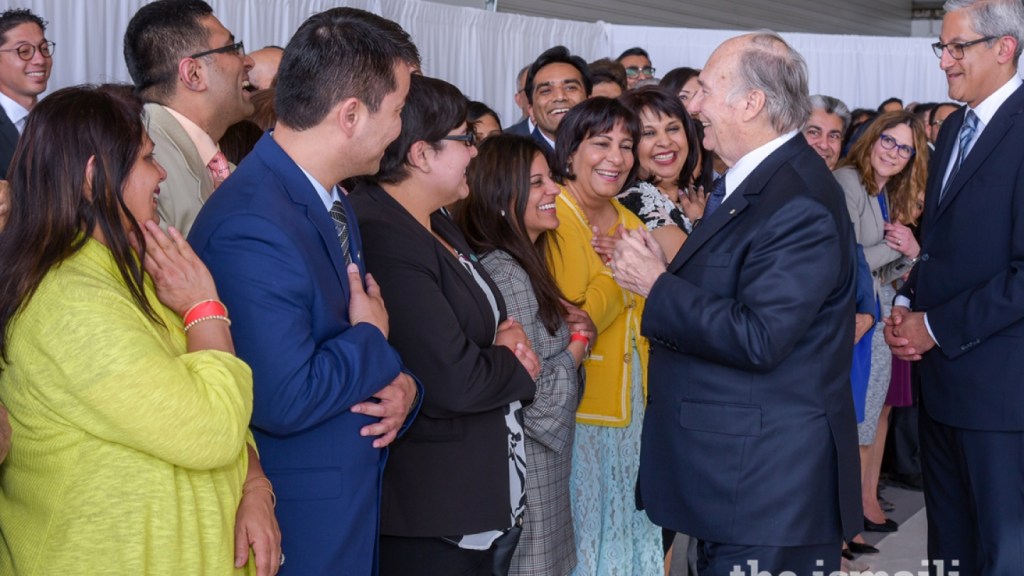
Mawlana Hazar Imam, His Highness the Aga Khan, meets representatives of the Jamat on his arrival in Calgary, Alberta, for his Diamond Jubilee visit in May 2018.
The Ismaili community is a dynamic community with the Imam-of-the-Time guiding his followers according to the time. The essence of the faith remains the same but the form may change over time in cognizance of differences in traditions, cultural, social or other factors. Similarly, there could be changes over time in the manner in which voluntary services may be rendered. Paraphrasing the 48th Imam’s Farman, Mawlana Sultan Mahomed Shah had once said that we should follow the Farmans of the Imam-of-the-Time, noting that as the world changes, even his Farmans would change as time progressed.
The volunteer’s badge with the motto “Work No Words” is based on Imam Sultan Mahomed Shah’s message, “Today I will give you a small motto and that is ‘Work No Words’.” The motto needs to be revised to reflect Mawlana Shah Karim’s Diamond Jubilee Farman in Calgary “Work and Many Words.”
One of the best known motto given by the late Imam in the 20th century to the volunteers of the Ismaili community was “Work No Words.” It is inscribed on every badge that an Ismaili volunteer wears today. It is also something that many honorary workers serving in institutions in various capacities constantly bear in mind.
What do these words actually mean for any volunteer, badged or otherwise?
I think the motto carries several meanings. Perhaps it is an expression of humility — that one does the work without seeking recognition.
It can be perceived to mean that you serve without question and not react to any attitude that may be shown to you while you are doing your work.
Other volunteers may have their own personal interpretations of the motto during the performance of their duties, and apply it during their service.
Remarkably, that motto was mentioned in the Farman Mawlana Hazar Imam made in Canada during the Diamond Jubilee. At the second Calgary mulaqat, on May 10th, 2018, while mentioning and praising the work of the volunteers, he made a reference to his grandfather’s motto “Work No Words” and declared that “Today my Farman is, ‘Work and Many Words’. Communicate, enjoy life, be happy….”
Eighteen months have since passed but still there seems to be no discussion on this matter. The old motto “Work No Words” appears everywhere in the celebration of the 100th anniversary of the volunteers including a new video “All Work, No Words” that has just been released at The Ismaili website. There is absolutely no reference to the most recent Farman and the new motto. For example, I was quite surprised that the President of the National Council for Tanzania, Amin Lakhani, speaking as recently as July 19, 2019, used the motto that Mawlana Sultan Mohamed Shah gave in one of his speeches, but did not make any reference to the new motto given by Mawlana Hazar Imam. When I raised the issue with a long serving Jamati member, the volunteer became very defensive saying that he would like to see the old motto remain on his badge.
I beg to differ, I believe that we now have to adopt to a new paradigm based on the most recent Farman, “Work, and Many Words.”
How then is this to be interpreted?
Firstly, the volunteers badged and non-badged should not feel fearful to speak up and express their views on matters that concern them on services that they are performing and how they can become more effective, rather than simply taking orders as subordinates. The superiors in the volunteer leadership and heads of various institutions should make their teams more engaged in decision making and seek out creative thoughts, ideas as well as best practices. Quite so often when suggestions are made to institutional heads about new approaches, one is often made to feel that they already knew about the idea that has been brought up. A case in point was when a suggestion was made to make Jamati members more engaged in meetings that the Aga Khan Council and national institutional boards hold on a quarterly basis. The reply was, “We are thinking about it.” For how long?
Many serving in institutions who speak out are left marginalized for speaking out boldly, even when they have done so sincerely and from the heart. This should no longer be the norm. I have personally experienced such treatment.
The old motto “Work No Words” on the badge that volunteers have been wearing for some 70 years is in need of a change. Mawlana Hazar Imam’s Diamond Jubilee “Work and Many Words. Communicate…” should resonate with everyone. We should communicate openly and sincerely and the office bearers should listen respectfully. One area that should require particular attention is legitimate concerns of volunteers in doing their work.
There is one other aspect where the motto “Work, and Many Words” may be applied very effectively. Volunteers of the Jamat participate in many outreach programs outside the community. We have each been considered by the Imam to be his Da’is — a very important term in Ismaili history where only a select few were known as Da’is. Now, remarkably, Mawlana Hazar Imam has told everyone that he or she is a Da’i! The Diamond Jubilee Farmans made at various locations attest to this role we have been asked to play. I think another way of looking at the Farman “Work and Many Words. Communicate…” is in the context of the volunteer who as a Da’i would be a great communicator to others about the ideals, principles and ethos of the Ismaili community. The following Farman made by Mawlana Hazar Imam in 2002 in Dar es Salaam, Tanzania, gives us a clear direction on the role the volunteers as well as the youth and professionals in the Jamat can play:
“…It is important, I think, today, that my Jamat worldwide, not just here in Tanzania, my Jamat worldwide, should reaffirm the traditions that we have, the rectitude and correctitude of our interpretation of Islam, of the role, within Shia Islam, of the intellect, of the human intellect, so that the young, the less young, the old, all of you, wherever you are, are ambassadors of Islam — the Islam that we believe in, that we practice, and that guides us in our lives. So I say to you today, whether you are in Tanzania or whether you are in any other part of the world, stand up, do not run away. Speak openly and frankly about what is our interpretation of Islam.”
Interestingly, in his Diamond Jubilee Farman in Atlanta, USA, Mawlana Hazar Imam asked the Jamat if they knew the meaning of the word Qul (from Sura Ikhlas, which is recited by Ismailis in their Du’a multiple times everyday). One person out of thousands raised a hand! Was that a hint from the Imam to us to seek to understand our faith better? To be effective communicators, requires that we have good knowledge of the faith, its ideals and the work of the Imamat, including for example the AKDN agencies.
So my notion of the work of the volunteers — and indeed each one of us — is to work, and with “many words” express kindness to others, convey good ideas and best practices and pass on the ethos of Islamic and Ismaili principles to everyone we come across.
What should the new badge say? Totally opposite of “Work No Words.” Indeed, the badge should now say “Work and Many Words.” However those “many words” should be spoken with humility, sincerity and thoughtfulness.
I welcome your feedback. Please click LEAVE A COMMENT or send your comment in an email to Simerg@aol.com. You may remain anonymous. Your email address will never be shared.
Before departing this website please take a moment to review Simerg’s Table of Contents for links to hundreds of thought provoking pieces on a vast array of subjects including faith and culture, history and philosophy, and arts and letters to name a few.
Malik Merchant is founding publisher/editor of 3 websites, Barakah (2017), Simerg (2009), and Simergphotos (2012). They are works of passion influenced by his parents involvement with literary pursuits and community publications, as well as his childhood dream of becoming a journalist. However, he spent almost 4 decades working as an IT consultant in both the public and private sectors in the UK, USA and Canada. He has volunteered in the Ismaili community as a teacher and librarian and was co-editor with his late father, Jehangir Merchant, of the flagship UK Ismaili publication Ilm. He has also held numerous institutional and Jamati portfolios, including being the Member for Religious Education and Chairman of the Ottawa Tariqah Committee. He is currently based in Ottawa and Toronto. He welcomes your feedback on this piece by completing LEAVE A REPLY or by sending him an email at Simerg@aol.com.
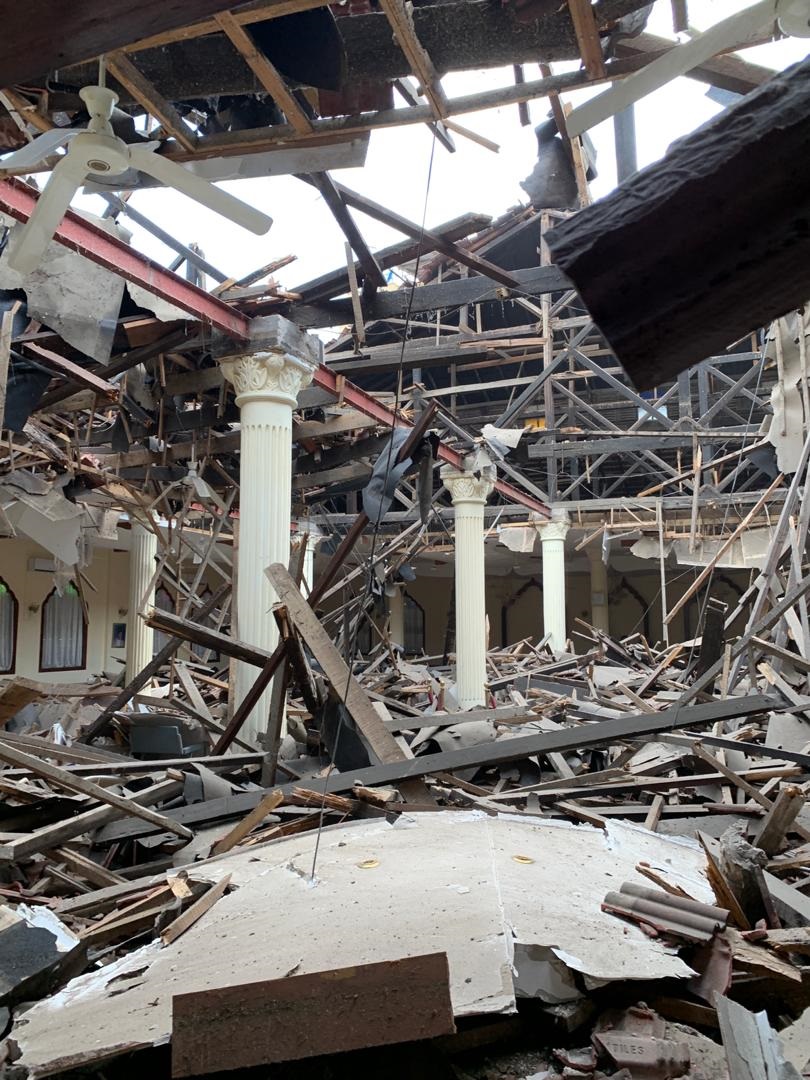
Dar es Salaam’s Darkhana Jamatkhana pictured on September 3, 2019 following the partial collapse of the roof.
Editor’s Note:An earlier version of this post implied that repairs to the roof of the Dar es Salaam Darkhana Jamatkhana were well underway and that the Jamatkhana may open later this year. Actually, the green segment of the roof shown in the photo at the bottom of this post is a temporary cover over the section that collapsed (see photo above), to prevent water and other debris from getting into the interior of the Jamatkhana building. We apologize for our oversight on the repairs that have taken place so far which led to some confusion. We sincerely hope that the Jamatkhana will be only opened after all the interior and exterior repairs have been fully completed so that the Jamat may feel fully comfortable and safe in a new setting. We urge the Tanzanian leadership to provide regular updates on the state of the repairs. The Darkhana in Dar es Salaam was a beloved Jamatkhana to thousands of Ismailis around the world, and the status of repairs that are being carried out is of interest to everyone.Our original story, below, has been revised accordingly.
The interior of the Darkhana Jamatkhana in Dar es Salaam following the collapse of the roof in September 2019.
In September, 2019, we showed some horrific photos of the collapsed roof at Dar es Salaam’s Ismaili Darkhana Jamatkhana (see photos, above). Luckily, there was no congregational prayer underway at the time the incident took place; three individuals who were present at the site were treated for minor injuries. We are pleased to report that repairs are now underway and our source in Tanzania has sent us the photo shown below showing the green cover that has been temporarily installed to prevent water from getting into the interior of the building. Of course, much work remains to be done, as there was significant damage to the interior of the Jamatkhana when the roof fell.
Work is underway to complete repairs to the Darkhana Jamatkhana in Dar es Salaam. This photo was taken on November 11, 2019.
The Dar es Salaam Darkhana was built in 1930 and is considered one of several heritage buildings of architectural interest. It is not exactly known when the Jamatkhana repairs will be fully completed for regular congregational prayers. We once again submit our humble shukhrana that the incident in September took place without loss of lives or serious injuries.
Date posted: November 12, 2019.
______________
We welcome feedback from our readers; please click Leave a comment. Before leaving this website please see our complete Table of Contents for links to more than a 1000 superb pieces published since this website was launched in 2009. Please also visit Simerg’s sister websites, http://www.barakah.com (dedicated to Mawlana Hazar Imam, His Highness the Aga Khan) and http://www.simergphotos.com.
…Whereas Eid al-Adha, or the Festival of the Sacrifice, is an Islamic holiday which honors Abraham’s symbolic sacrifice of his son to God, as referenced in the Quran, Old Testament, and New Testament…Whereas Islam is one of the world’s major religions, sharing the belief in one God and one humanity….
For 2019, Muslims will perform the annual pilgrimage to the Kaaba starting August 9. This will culminate with the celebration of the Eid al-Adha on August 11. We would like to wish all our readers a joyous Eid, with prayers that the holy occasion will foster greater unity and understanding among all Muslims and that Muslim communities everywhere, keeping in mind that Muslims practice a universal faith, will seek to end conflicts, strive for peace and assist in the progress and development of humankind wherever they live.
The United States Capitol, often called the Capitol Building, is the home of the United States Congress with the House of Representatives in the south wing (right in photo) and the Senate in the north wing. Photo: US Library of Congress.
Many of our readers in North America and around the world may not be aware that in 2010, as Muslims celebrated Eid al-Adha from November 16 until November 20, the House of Representatives of the US Congress passed the following resolution recognizing the cultural and religious significance of Eid al-Adha.
____________
111TH CONGRESS 2D SESSION
H. RES. 1719
IN THE HOUSE OF REPRESENTATIVES
NOVEMBER 16, 2010
Mr. HONDA (for himself, Mr. CARSON of Indiana, and Mr. ELLISON) submitted the following resolution; which was referred to the Committee on Oversight and Government Reform
RESOLUTION
Recognizing the cultural and religious significance of Eid al-Adha and wishing Muslim-Americans and Muslims around the world a prosperous holiday.
Whereas Eid al-Adha, or the Festival of the Sacrifice, is an Islamic holiday which honors Abraham’s symbolic sacrifice of his son to God, as referenced in the Quran, Old Testament, and New Testament;
Whereas Abraham is a respected figure in Christianity, Judaism, and Islam;
Whereas for more than 14 centuries, Eid al-Adha has been observed;
Whereas Eid al-Adha is a holiday of great importance to millions of Muslim-Americans and approximately 1,500,000,000 Muslims around the world;
Whereas during Eid al-Adha, Muslim-Americans recognize the importance of sacrifice, freedom, and justice;
Whereas Eid al-Adha is celebrated around the world with prayers, charity and social events;
Whereas many communities across the United States hold day-long festivals in observance of Eid al-Adha;
Whereas Islam is one of the world’s major religions, sharing the belief in one God and one humanity;
Whereas Muslim-Americans have made significant contributions to the flourishing of the United States, including as ambassadors to foreign nations, award winning scientists, doctors, and engineers, and athletes;
Whereas Muslim-Americans have contributed to the defense of the United States with an estimated 10,000 Muslim-Americans serving in the United States Armed Forces;
and
Whereas Muslim-Americans contribute to the success and pluralism of the United States: Now, therefore, be it
Resolved, That the House of Representatives—
(1) recognizes the cultural and religious significance of Eid al-Adha;
(2) expresses its appreciation and respect for the contributions of Muslim-Americans to the United States; and
(3) wishes Muslim-Americans and Muslims around the world who observe Eid al-Adha a prosperous holiday.
Date posted: August 6, 2019.
_________________
We welcome feedback from our readers. Please submit your comment below or clickLeave a comment
“The ethics of a Da’i are unimpeachable and he practices what he preaches. The Da’i constantly pursues a better comprehension of universal truth by engaging with knowledgeable people, sharing knowledge with them and also learning from them. In our time, this would mean engaging with contemporary scientific, cultural, and religious understandings produced around the world.”
By KARIM H. KARIM
Many people have heard the position of Da‘i but are unfamiliar with its unique character. Historically, a Da‘i was a member of the Da‘wa, which was a pivotal institution of the Imamat. The word Da‘wa has sometimes been translated as a preaching mission and Da‘i as missionary. However, the precise meaning of Da‘wa is a call or an invitation, and therefore a Da‘i is someone who issues a call or invitation.
What was the nature of the Da‘i’sinvitation? The answer is to be found in the full name of the institution to which he belonged: Da‘wat al-Haqq (Invitation to the Truth). The Holy Qur’an says that “His [God’s] is the Da‘wa of the Truth” (13:14). Da‘is referred to their disciples as People of the Truth (Ahl al-Haqq or Al-Muhiqqin). (It was only in the early 20th century, after the Aga Khan Case of 1866, that the name Ismaili came to be formally adopted in reference to the Imam’s followers.) Da‘is (Pirs and Sayyids) in India, used Indian terminology to call the community Satpanth (Path of Truth).
The Concept of Truth
Truth is the core of the faith and appears repeatedly in its discourses. Imam Mustansir bi’llah II’s book Pandiyat-i Javanmardi declares that “The (real) believer is one who always, permanently, thinks of the Truth, and always intends to act righteously.” One of God’s names is Al-Haqq (the Truth). The third part of the Ismaili Du‘a affirms:
La illaha illallahul malikul haqqul mubin (There is no deity except God, the Sovereign, the Truth, the Manifest)
La illaha illallahul malikul haqqul yaqin (There is no deity except God, the Sovereign, the Truth, the Certainty)
Tasbihs in Gujarati ask for “haqiqat-i samaj” (understanding of truth). When delivering sermons, Khoja preachers in the 20th century called their congregations “haqiqat-i momino” (believers of truth) and “haqiqati-dindaro” (followers of the religion of truth). Imam Mustansir bi’llah II and Imam Sultan Mahomed Shah referred to the progression of the believer from shari‘a (“law”) to tariqa (path) to haqiqa (truth) and to ma‘rifa (wisdom; gnosis), as does Bhamar Ghufaa Upar Dekhantaa, a ginan attributed to Sayyid Nur Muhammad Shah.
The truth to which a Da‘i issues his invitation is embedded in the knowledge that the Imam imparts to his followers through a particular mode of instruction (ta‘lim). A hadith (saying) of the Prophet declared: “I am the city of knowledge and Ali is its gateway; so let whoever wants knowledge enter through its gate.”
Hazrat Ali and his designated successors in the lineage of Imamat provide unique access to knowledge about truth. Imams conduct interpretations (ta’wil) of the inner meaning of the Qur’an which they impart to their adherents through ta‘lim. Only the rightfully appointed Imams have this unique ability: “None knoweth its [the Qur’an’s] esoteric interpretationsave Allah and those who are of sound instruction” (Holy Qur’an, 3:7); Shia Muslims believe that the phrase “those who are of sound instruction” refers to the lineage of Imamat.
The concept of truth here is not limited to the practice of truth-telling and being honest, which are important in themselves, but to the deeper truth that is the inner reality of existence. This reality lies behind the illusion that constantly misleads the mind. Imam Sultan Mahomed Shah wrote in his Memoirs that Islam’s “basic principle can only be defined as mono-realism.” The enlightened soul experiences the reality of fundamental truth on which rest all other aspects of faith (such as prayer, devotion, values, and ethics). It is to such ultimate and unique spiritual enlightenment (ma‘rifa, gnosis) that the Da ‘wa offers its invitation. The identity of a Da‘i is integrally related to the essence of eternal truth. He seeks to live the truth. Nasir-i Khusraw, Hujja of Khurasan, referred to the members of the Da‘wa as “Scholars of the Religion of Truth” (ulama-yi din-i haqq). This is a position of profound depth and significance that requires understanding of the process of spiritual advancement as well as knowledge of the material world.
The Da‘wa in History
The pre-Fatimid Da‘wa emerged in the first Period of Concealment (Dawr al-Satr) that began during Imam Ismail’s time. This was a period of great danger because the Abbasid Caliphate was determined to destroy the Imamat and its followers. Therefore, the Imams in this time were in hiding and their identities and locations were known only to their closest followers. Imam Muhammad al-Mahdi brought the Dawr al-Satr to a close when he established the Fatimid state in North Africa.
It was the Da‘wa that had laid the groundwork for the Imam’s rule. Da‘is functioned largely in secret due to widespread persecution. Their institution, which operated transregionally, had a hierarchical structural model. At the head was the Chief Da‘i (Da‘i al-Du‘at), who was in close touch with the Imam. Under him operated a number of Hujjas (Proofs), the leaders of the Da‘wa in specific regions. Each Hujja supervised several Da‘is, who in turn had assistants called Ma’dhuns. Ordinary members of the community whom Da‘is taught were Mustajibs. Whereas this was an ideal model of the organization, the actual operations were more fluid especially in places where Da‘is worked in relative isolation.
The da‘wa produced a unique body of writings, some of which are described below. Da‘i Ja‘far bin Mansur al-Yaman’s Book of the Master and the Disciple (Kitab al-‘Alim wa’l-Ghulam) addresses the search for truth and the meaning of life in a series of religious dialogues between a Da‘i and his disciple. This sophisticated composition creatively uses form and language to express a complex narrative. It is a rare and valuable artifact that provides insight into the Da‘wa’s erudition and refined pedagogy.
Hamid al-Din al-Kirmani, the Hujja in Iraq, was a noted philosopher. His major work, Rahat al-‘Aql (Repose of the Intellect), presents contemporary science, philosophy, and theology in an integral manner. Its objective was to enable the believer to attain a paradisiacal state through reason. Kirmani’s book imaginatively maps out a journey in which the soul escapes the troubling state of the physical world and attains freedom in the City of God by gaining a comprehensive sense of God, angelic beings, and the realm of minerals, plants and animals.
Nasir-i Khusraw, who was Hujja of Khurasan, is acknowledged as the founder of Ismaili communities in the mountainous regions of the Pamirs in Tajikistan and Afghanistan and the Hindu Kush in Pakistan as well as Xinjiang in China. He was a foremost exponent of philosophical poetry and his poems are an essential part of Persian-speaking countries’ educational curriculum today. Khusraw’s poetry is also sung at religious gatherings in the Badakshan Jamat and its diasporic locations. Among his philosophical treatises is The Book of Two Wisdoms Reconciled (Kitab-i Jami’ al-Hikmatayn), which endeavours to bridge Aristotelian and haqa’iq philosophies.
The Satpanth branch of the Da‘wa in India produced a unique literary tradition of around one thousand ginans, many of which hold profound insight and wisdom. Like the Sufis in the subcontinent who used the region’s cultural heritage to preach their beliefs, Ismaili Pirs, notably Shams, Sadruddin, and Hasan Kabirdin, also drew from Indic mythology and symbolism to teach the message of universal truth. Major compositions like Brahm Prakash and Bhuj Nirinjan guide adherents in their spiritual journeys. The ginan tradition, which is attributed to a number of Pirs and Sayyids, speaks of sat (truth) in various South Asian languages including Gujarati, Khari Boli (proto Hindi-Urdu), Punjabi, Sindhi and Siraiki/Multani. South Asian Khoja Jamats and their diaspora find inspiration in the hymns, which are sung every day at religious gatherings.
The Da‘wa’s Pluralist Search for Truth
The quest for truth is a consistent theme that runs through the centuries-long history of Da‘wat al-Haqq and Satpanth. Da‘is drew on knowledge from a variety of Muslim and non-Muslim sources in a pluralist pursuit of universal truth. According to Imam Sultan Mahomed Shah, studying other religions is integral to spiritual search because God’s revelation has appeared among different peoples through history.
“All Islamic schools of thought accept it as a fundamental principle that, for centuries, for thousands of years before the advent of Mohammed, there arose from time to time messengers, illumined by Divine grace, for and amongst those races of the earth which had sufficiently advanced intellectually to comprehend such a message. Thus Abraham, Moses, Jesus, and all the Prophets of Israel are universally accepted by Islam. Muslims indeed know no limitation merely to the Prophets of Israel; they are ready to admit that there were similar Divinely-inspired messengers in other countries – Gautama Buddha, Shri Krishna, and Shri Ram in India, Socrates in Greece, the wise men of China, and many other sages and saints among peoples and civilizations of which we have now lost trace.“
This pluralist attitude was present in the earliest Ismaili writings such as the encyclopedia of Ikhwan al-Safa (Brethren of Purity), whose sources included Islamic, Greek, Babylonian, Hindu, Buddhist, Zoroastrian, Manichean, Jewish, and Christian knowledge. Da‘is Al-Nasafi and Al-Sijistani adapted Neoplatonist thought to indicate the cosmological place of the Imam. As the Da‘wa moved into South Asia, Pirs and Sayyids drew from Indic mythology and cosmology for a similar purpose.
Such pluralist approaches to knowledge were not uncommon in the history of Islam. Prophet Muhammad is said to have told his followers in Arabia to seek knowledge even as far as China. The receptivity of Muslims to other cultures in the Hellenic intellectual environment of Egypt, Syria, Iraq and Iran provided for their own religion’s intellectual flowering. They came upon renowned academies like those of Jondishapur, where Persian, Greek, Indian, and Roman scholars trained in medicine, philosophy, theology, and science. A major translation movement rendered numerous manuscripts written in various languages into Arabic. Muslims scholars drew on the knowledge, philosophical reasoning and analytical tools produced by other civilizations for developing Islamic philosophy (falsafa), theology (kalam), and law (fiqh). Even the modes of Islamic preaching borrowed from indigenous practices; for example, Sufi teachers adopted the bhakti mode of devotion in India.
Whereas it was commonplace for Muslim intellectuals to learn from neighbouring civilizations, Ismaili thinkers embraced the most openly pluralist Islamic approach to other cultural and religious sources. They had a cosmopolitan outlook in studying others’ material and spiritual sciences in a sustained search for universal truth. Da‘is examined the ancient world’s wisdom including that of Greeks, Babylonians, and Sabaeans as well as writings of contemporaries such as Jews, Christians, Zoroastrians, Hindus, and Buddhists.
The Da‘wat al-Haqq’s cosmopolitan outlook in studying others’ material and spiritual sciences in a sustained search for universal truth enabled them to see spiritual value in their symbols and practices. Al-Sijistani interpreted the Christian cross’s four points as representing the roots of truth. Badakshan Jamats observe Chirag-i Rawshan (Luminous Lamp), a funerary rite that has Islamic features along with characteristics of pre-Zoroastrian Iranian religions. Oral tradition attributes the establishment of this ritual to Nasir-i Khusraw. The Zoroastrian spring festival of Navroz, which is commemorated by Shia and Sunni Muslims in Persianate regions, has been embraced by all Ismailis as a major celebration of spiritual renewal. Farsi-speaking Jamats have been drawn to some of the poems of the great Sunni mystics Attar and Rumi, which are recited in religious gatherings. The Garbi category of ginan compositions bear a Hindu communal dance’s rhythm. Da ‘is were generally less concerned about exoteric differences between religious perspectives than in pursuing the greater spiritual truth.
Conclusion
Whereas Da‘is have consistently been engaged in a search for truth, this endeavor has been fraught with physical, intellectual, as well as personal spiritual dangers. These hazards led some members of the Da‘wa to turn away from the Imamat’s guidance. For example, Da‘i Abu Abdullah al-Shii, who prepared the ground for Imam Al-Mahdi to establish the Fatimid state, later conspired against him. In the time of Imam Al-Hakim, a number of Da‘is broke from the Fatimid Da‘wa to establish what came to be known as the Druze movement. Another major division took place in the Da‘wa upon the death of Imam Al-Mustansir I, when most of the Da‘is in Cairo followed Al-Musta‘li and those in the east, like Hassan-i Sabbah and Rashid al-Din Sinan, adhered to Imam Nizar. Later in India, a grandson of Pir Hasan Kabirdin, Nar Muhammad, founded a break-way religious group called the Imamshahis.
The Da‘i Ahmad bin Ibrahim al-Naysaburi wrote a treatise on the comportment expected of the members of the Da‘wa. It laid out in some detail the qualifications and behavior that a Da‘i should have. Al-Naysaburi stated that the Da‘wa is built on knowledge, piety, and good governance. A Da’i maintains a noble character and upholds the truth to which he invites believers. His ethics are unimpeachable and he practices what he preaches. He constantly pursues a better comprehension of universal truth by engaging with knowledgeable people, sharing knowledge with them and also learning from them. In our time, this would mean engaging with contemporary scientific, cultural, and religious understandings produced around the world.
Life may appear more complex than in previous periods but the struggle to remain faithful to eternal truth, which has been a constant religious quest since the dawn of time, remains relevant to this day. This endeavour was represented in previous centuries by the institution of Da‘wat al-Haqq, Invitation to the Truth. As in the past, a Da‘i’s life today would be difficult as it would involve dealing with intricate material, intellectual and spiritual challenges. The person who responds to the Call to the Truth accepts the undertaking of a demanding but ultimately rewarding enterprise. He/she can be seriously misled in this journey by others and even by the illusions of his/her own mind.
Adherence to Din al-Haqq demands a keen dedication to the Imamat and to the Truth. Followers of the Imam believe that he is the unique source of the knowledge that leads to comprehension of the Truth. However, history has shown that even the Imamat’s highly placed officials like the intelligent and heroic Da‘i Abu Abdullah al-Shii have wavered from such a conviction. Living the faith of Al-Haqq clearly requires an absolutely unrelenting commitment to and love for the Truth. Those who sincerely seek to maintain such personal steadfastness humbly ask in daily prayers for “haqiqat-i samaj” (understanding of truth) and “iman-ji salamati” (security of faith).
Date posted: July 7, 2019.
_____________________
Karim H. Karim
About the author: Professor Karim H. Karim is the Director of the Carleton Study for the Study of Islam. He has previously been Co-Director of the Institute of Ismaili Studies and Director of Carleton University’s School of Journalism and Communication. Dr. Karim has also been a Visiting Scholar at Harvard University. He is an award-winning author who has published extensively. Professor Karim has also delivered distinguished lectures at venues in North America, Europe and Asia. In 2017, he organized the international conference on Mapping a Pluralist Space in Ismaili Studies, which was the largest ever gathering of scholars working in this field. A forthcoming publication of his is titled “Ismailis: A Pluralist Search for Universal Truth.”
___________________
We welcome feedback from our readers. Please click LEAVE A COMMENT










 Simerg - Insights from Around the World