Simerg is an independent initiative dedicated to Ismaili Muslims, the Aga Khan — their Hereditary Imam — and the Ismaili Imamat, and Islam in general through literary readings, photo essays and artistic expressions
Category Archives: Literary Readings from Ismaili History
God chose Adam and Noah and the House of Abraham and the House of Imran above all beings, the seed of one another; God hears, and knows — Qur’an, 3:33-34, translation by A. J. Arberry, see Corpus Quran for multiple translations.
Today the Ismailis are the only Shia community who, throughout history, have been led by a living, hereditary Imam in direct descent from the Prophet — His Highness the Aga Khan, Parliament of Canada, Ottawa, February 27, 2014.
On Wednesday June 28, 2023, corresponding to the 10th day of the Islamic month of ‘DhuI-Hijjah, Muslims around the world celebrated the Festival of Sacrifice or Eid al-Adha at the completion of the annual pilgrimage to Mecca.
Little is it known in the broader context and understanding of Islamic history, that on the 18th day of ‘DhuI-Hijjah, a week following his final pilgrimage, the Prophet Muhammad (may peace be upon him and his family) — based on a divine command from Allah — designated Hazrat Ali as his successor and the first in the continuing line of Hereditary Imams. This event took place in 632 CE and is observed by all Shia Muslims, including the Ismailis, as Eid-e Ghadir, because the event itself took place at a place called Ghadir Khumm, a valley between Mecca and Medina.
The majority of the Muslims, the Sunnis, do not accept the Shia version of this historic event and do not associate it with Ali’s succession to Muhammad. Thus, the world’s lack of knowledge about a pivotal historic moment in Islam.
For the Shia Ismaili Muslims, who will be commemorating this historic day on or around July 5, 2023, this event is of added significance as they are led by a living Hereditary Imam, His Highness the Aga Khan, whom they lovingly and respectfully address as Mawlana Hazar Imam (Our Lord the Present/Living Imam).
The Aga Khan in a rare interview with France’s journal, Politique International, has comprehensively described the general Shia understanding of Imamat, the Sunni belief as well as his own status as follows:
“The religious leadership of the Ismaili Imam goes back to the origins of Shia Islam when the Prophet Muhammad appointed his son-in-law, Ali, to continue his teachings within the Muslim community. The leadership is hereditary, handed down by Ali’s descendants, and the Ismailis are the only Shia Muslims to have a living Imam, namely myself. The other Shia — the Twelvers — revere a “hidden” Imam who will return on the Day of Judgment to take part in the final judgment.
“It is the presence of the living Imam that makes our Imamat unique.
“The Sunni are completely different in that they do not accept the idea of continuity of religious leadership by members of the Prophet’s family.”
“The Ismaili Imamat is a supra-national entity, representing the succession of Imams since the time of the Prophet. But let me clarify something more about the history of that role, in both the Sunni and Shia interpretations of the Muslim faith. The Sunni position is that the Prophet nominated no successor, and that spiritual-moral authority belongs to those who are learned in matters of religious law. As a result, there are many Sunni imams in a given time and place. But others believed that the Prophet had designated his cousin and son-in-law, Ali, as his successor. From that early division, a host of further distinctions grew up — but the question of rightful leadership remains central. In time, the Shia were also sub-divided over this question, so that today the Ismailis are the only Shia community who, throughout history, have been led by a living, hereditary Imam in direct descent from the Prophet.”
In historical sources, it is recorded that on the way back to Medina after performing a pilgrimage to Mecca, the Prophet received a revelation that Ismaili Muslims recite in their daily prayers:
“O Messenger, deliver that which has been sent down to thee from thy Lord; for if thou dost not, thou wilt not have delivered His Message. God will protect thee from men. God guides not the people of the unbelievers” — Qur’an, 5:67, translation by A.J. Arberry, see Corpus Quran.
Article continues after quote
“We search for a union with the family of the Chosen (Prophet Muhammad). We search for the truth of son after son. We are totally obedient to his offspring, one of the other. There is no other thing we can add to this but itself. We endeavour in our faith so that we do not turn out to be faithless.” — Ismaili poet Nizar Quhistani in reference to the Qura’nic verses mentioned at top of post
Upon receiving this revelation, the Holy Prophet stopped at an oasis known as Ghadir Khumm, and addressed a large gathering of Muslims who had accompanied him.
In History in Quotations M. J. Cohen and John Major write:
“Muhammad said: ‘He of whom I am the Mawla, Ali is his Mawla. O God, be the friend of him who is his friend and be the enemy of his enemy.’
“This became the proof text for the Shia claim that Ali, the Prophet’s cousin and son-in-law, was the Prophet’s rightful successor after the Prophet’s death in 632. The meaning of Mawla here probably implies the role of patron, lord or protector.”
In an entry for the Encyclopaedia of Islam, 2nd edition, (EI2), under the title Ghadir Khumm, L. Veccia Vaglieri writes:
“Ghadir Khumm is famous in the history of Islam because of a sentence (or some sentences) in favour of ‘Ali which the Prophet uttered there during a discourse….Taking ‘Ali by the hand. he asked of his faithful followers whether he, Muhammad, was not closer to the Believers than they were to themselves; the crowd cried out: “It is so, O Apostle of God!”, he then declared. “He of whom I am the mawla, of him ‘Ali is also the mawla (man kuntu nawlahu fa-‘Ali mawlahu)
Article continues below
Images of some stamps and coins issued by the Islamic Republic of Iran between 1990 and 2010 commemorating the Idd-e-Ghadir. The inscriptions inlude the Shahada, Qur’anic ayats and the declaration made by Prophet Muhammad at Ghadir Khumm, “Mun Koontu Mawla, Fa Hada, Aliyun Mawla” meaning “He of whom I am the Mawla Ali is also the Mawla.”
“Most of those sources which form the basis of our knowledge of the life of the Prophet pass in silence over Muhammad’s stop at Ghadir Khumm….Consequently, the western biographers of Muhammad, whose work is based on these [Sunni] sources, make no reference to what happened at Ghadir Khumm. It is however certain that Muhammad did speak in this place and utter the famous sentence…the hadiths are so numerous and so well attested by the different isnads that it does not seem possible to reject them.” (Note: special access is required to read articles in EI2. Vaglieri’s piece was reproduced in full in the UK Ismaili Association’s publication Ilm, December 1976, pages 28-30, with the permission of E.J. Brill, publishers of EI2.)
The Prophet, about 90 days before his death, was transferring his own spiritual authority bestowed upon him by Allah to Hazrat Ali, making him — and all the Imams that follow — the Amirul Mu’minin, or Master of the Believers.
On instruction from Prophet Muhammad, Hazrat Ali received baiyat (the oath of allegiance), from the Muslims assembled there, including Umar b. al-Khattab, Islam’s second Caliph, as stated in Vaglieri’s piece in EI2.
According to Shia traditions and sources, following the proclamation, the final verse of the Qur’an was revealed to the Prophet:
“Today I have perfected your religion for you, and I have completed My blessing upon you, and I have approved Islam for your religion” — Qur’an 5:5/3, translation by A. J. Arberry, see Corpus Qur’an.
This marked the end of the period of Nabuwwa, or Prophethood, and the historical beginning of the Institution of Imamat.
Eid-e Ghadir is an anniversary of special significance to all Shia Muslims, as it is also associated with the well-attested tradition in which the Prophet is said to have proclaimed:
“I am leaving among you two matters of great weight (al-thaqalayn), the Book of Allah and my kindred (itrati), the People of my House (Ahl al-Bayt), and these two shall never be separated until they return to me at the Pool [of Kawthar in Paradise on the Day of Judgement]…”
The Shia Ismaili tradition bears witness to the continuity of the authority vested at Ghadir Khumm. Today, this leadership and authority is vested in Mawlana Hazar Imam, His Highness the Aga Khan. The rope of Imamat has continued over 1,400 years, from Hazrat Ali, to the present 49th hereditary Imam and direct descendant of Prophet Muhammad through Hazrat Ali and Hazrat Bibi Fatima al-Zahra, Khatun-i Jannat.
In commemorating Eid-e Ghadir, the Ismaili Muslims celebrates the seminal event of Ghadir Khumm, reaffirming their allegiance to the Imam-of-the-Time as the direct lineal successor and inheritor of the authority of Hazrat Ali.
Date posted: July 4, 2023.
__________________
A selection of further readings on Ghadir Khumm and related topics in Simerg and its sister websites:
Featured image at top of post: An Arabic-script ambigram, where ‘Muhammad’ upside down is read as ‘Ali’ and vice versa.
A special note about the Encyclopaedia of Islam, Second Edition (EI2): Finished in 2005, the EI2 is a massive resource spanning five decades of scholarship. It sets out the present state of our knowledge of the Islamic World. It is a unique and invaluable reference tool, an essential key to understanding the world of Islam, and the authoritative source not only for the religion, but also for the believers and the countries in which they live.
At Calgary’s Ismaili Headquarters Jamatkhana this morning, May 14th, 2023, attending members gathered in the social hall after prayers to celebrate a birthday with a cake. Spread across the “chai” and “mandazi” table were beautiful fresh rose stems. All mothers received a rose each, followed by inspiring prayers as well as tributes to mothers around the world from the Mukhi and Kamadiasahebs (leaders of the congregation.) It was absolutely refreshing to see beautiful smiles on the faces of all the mothers of all ages that early in the morning. But it was MOTHER’S DAY!
Sea Lions by Prince Hussain Aga Khan at The Living Sea – Fragile Beauty exhibition, Calgary, May 11-21, 2023. Photograph: Malik Merchant/Simerg.
Hours earlier, before leaving home, I had sent individual Mother’s Day wishes to special friends I have known for many years. In response, one of them sweetly replied with fond prayers for my health and added the 4 letters HUGS!
At this, my thought immediately turned to a photograph taken by Prince Hussain Aga Khan in August 2018 in La Paz, Mexico. A small print as well as a much larger print of the photo appears at his Living Sea exhibition in Calgary that opened to large crowds on Thursday, May 11 — the stunning photographic exhibition continues at Glenbow at the Edison until May 21, and the entrance is free. The photograph is entitled “Moving Mummy Hug” and it is of a sea lion swimming with its baby, hugging it momentarily. The absolutely amazing photograph has touched the hearts of everyone who has seen it and one visitor said to me in a short interview for my first day’sreport: “Prince Hussain captures moments with these animals that shows that they have this almost human characteristic — this love, this energy that really helps people relate to them and really feel for them…. He almost photographs them as if they are members of his own family…. It’s really a neat feeling that you have when you look at these, and I think of my own children and I think of these animals with their own calves, and its just unbelievable.”
“Moving Mummy Hug,” captured by Prince Hussain Aga Khan in La Paz, Mexico, August 2018. Exhibited at The Living Sea – Fragile Beauty, Calgary, May 11-21, 2023. Exhibit photograph: Malik Merchant/Simerg.
So, I say to everyone visiting today and for the remainder of the duration of the exhibition, view this photograph and others from close, from a distance and from different angles. Prince Hussain notes in the photograph’s caption, “There were about 8 sea lions in that location, all moving at different speeds and in different directions. But this duo seemed organized and even purposeful. The hug lasted seconds or less. It was completely unexpected.”
Happy Mother’s Day to all mothers around the world and to all specials friends who are mothers!
How many titles does the Institute of Ismaili Studies (IIS) have under its banner since its founding in December 1977? Its first publication was in 1983 — Henry Corbin’s Cyclical Time and Ismaili Gnosis. The answer: 208! As many countries around the world observe UNESCO’S World Book Day on April 23, we present a link that provides a brief overview of the IIS’s 200+ titles. Please click IIS Publications or on the image below. There are filters of how you want the books to be listed, such as newest to oldest, by category and there is also a search function. For a detailed description of the book, click on the book title or its corresponding front cover image shown on the summary page. Some books may be out of print. The literature counters in Jamatkhanas in Canada and other parts of the world have many titles in stock. Pick up a book on World Book Day and make reading part of your daily habit.
Please click on image for list of books published by the IIS since its founding in December 1977.
Featured photo at top of post: Mawlana Hazar Imam, His Highness the Aga Khan, in conversation King Charles (then HRH The Prince of Wales), Lord Ahmad, Mayor Sadiq Khan, and Head Librarian of the Aga Khan Library Dr. Walid Ghali; June 26, 2018, opening day of the Aga Khan Centre. Photograph: The Ismaili/Shyrose Bhanji.
“We have indeed sent it (the Qur’an) down in the Night of Power! And what will make you understand what the Night of Power is? The Night of Power is better than a thousand months. The angels and the Spirit (Ruh) descend therein with the permission of their Lord, to regulate all things. It is peace until the rising of the dawn” — Qur’an, 97:1-5 (Surah al-Qadr)
The Qur’an affirms in the final two verses of this very short Surah of Qadr — The Night of Power — that angels and luminous spirits descend to earth on the blessed night, expressing the Grace and Mercy of Allah.
What symbolic dimension and esoteric meaning should we give to this night of the angels in the blessed Islamic month of Ramadan?
Of course, during this crucial night, as Shia Imami Ismaili Mulsims, under the spiritual authority of the Imam-of-the-Time, we will devote our time in congregation as well as individually to spiritual exercises that will especially help us to enter into communion with our soul and succeed in opening our heart to the vision of God.
The recitation of verses and surahs of the Qur’an, Ginans and Qasidas, special Tasbihs (invocations), the Hadiths (the traditions of the Prophet), the Farmans (guidance) of Mawlana Hazar Imam, as well as the remembrance of Allah, the Prophet Muhammad, Hazrat Ali and his (Hereditary) successors, as we commemorate this special event, will support our spiritual search.
On this Holy Night it is necessary to be in tune, by reason and with our hearts, with the angels and the luminous entities sent in mission as providential messengers.
Musicians know this phenomenon well. Here are two absolutely identical tuning forks: you touch one of them, it vibrates, and the other, which has not been touched, also vibrates. We say that there is a resonance.
Well, a similar phenomenon occurs with the human beings: if each one of us manages to tune our physical and psychic being to the most subtle vibrations of the universe, we can reach the celestial powers to make an exchange with them and thus receive help and comfort.
We also know that there is no true listening without the fundamental attitude of humility!
During this night of the angels, we can even touch certain currents of forces to make them come to us. As soon as we know this law (of tuning), we understand how important it is to surpass ourselves — to surpass ourselves to touch the most subtle chords of our being and to make them vibrate, because there will be forces that will respond by making us benefit from their knowledge.
Through Ibadat (worship), special Zikr prayers and Bandgi (meditation and contemplation), we can communicate and be heard! We have to make the sincere effort to enter the sacred silence of interiority and to understand the importance of the spiritual quest by going down to the bottom of our soul.
This Night of the Angels remains precious for introspection, awareness, offers moments of purification, forgiveness, enlightenment, contemplation, submission, renewing our act of allegiance to the Spiritual Authority of the Imam-of-the-Time.
Laylat al-Qadr is a night of the angels where Allah in His Great Mercy and Glory has concentrated His Blessings and entrusted the angels and the invisible light entities to make the night the centre of His Favours.
Laylat al-Qadr is a night that is conducive to our spiritual maturity because these hours of worship, allow us to see the treasures of knowledge and recognition.
We conclude by offering our prayers and sincere fraternal thoughts for a complete, serene and satisfying night of Laylat al-Qadr.
Date posted: April 12, 2023. Last updated: March 22, 2025.
Featured image shown at top of post: In his Khamsa, Shab-i Qadr (the Night of Power), the renowned Persian poet Amir Khusraw Dihlavi (d. 1325 CE) tells the story of a saint who made a failed attempt to stay awake until the Laylat al-Qadr. This image is taken from a folio in the Aga Khan Museum collection in Toronto, Canada.
_________________
Born and raised in Madagascar, Mohez Nato went to France in the late 1960’s to pursue his university education. Political tensions in Madagascar prevented him from returning to his home country, where he had planned to teach and carry out research on medicinal plants. Instead, he remained in France and completed his PhD, following which he worked as a teacher-researcher in Plant Biotechnology at the University of Paris Sud XI from 1971 to 2011.
Now, in his retirement, Mohez does voluntary work giving courses in French-speaking Universities in countries like Burkina Faso, Lebanon, Benin, Algeria and Tunisia. He is also the president of a Humanitarian Association which has been active in Madagascar since 1993. Within the Ismaili community, Mohez was Secretary General of the Ismailia Association for France (with President Mohamad Peera) which organized Mawlana Hazar Imam His Highness the Aga Khan’s visit to Paris in 1980. Thereafter, he devoted time for the opening of a Jamatkhana in Antony in southern suburb of Paris, where he also held the position of Kamadia from 1981 to 1983. After the Golden Jubilee celebrations in 2007-08, Mohez was bestowed with the title of Alijah by Mawlana Hazar Imam. Mohez is married to Farida, with whom he has two daughters, Farahna and Rahima. We invite you to read his earlier piece Ode à l’Imam du Temps Présent / Ode to the Imam of the Present Time published in Barakah.
Editor’s note: Rachael Kohn, a broadcaster, author, and speaker on religion and spirituality, conducted an interview with Alice Hunsberger on her former Australian program, “The Ark”, on the occasion of the millennium birth anniversary of Nasir Khusraw. A shorter version of the interview was prepared and presented by Mashal Ali (acting as Rachael) and Nurin Merchant (acting as Alice) at a literary night event hosted in Ottawa to celebrate the Golden Jubilee of His Highness the Aga Khan. Their presentation is produced below with the kind consent of Ms. Kohn. It is followed by a brief History Pod video presentation on Nasir Khusraw and his travelogue Safarnama.
~~~~~~
Hello, this is “The Ark”, and I am Rachael Kohn.
A thousand years ago a Persian poet defied the conventions of the day. His name was Nasir Khusraw, an Ismaili Muslim, a branch of Shi’a Islam.
Instead of lavishing praise on the sultan or his horse, he praised learning and spiritual purity. For example he beautifully wrote:
The world is a deep ocean Its water is time. Your body is like a shell, Your soul the pearl. If you wish to have the value of a pearl, Raise up the pearl of your soul with learning.
Rachael Kohn: Unlike Rumi or Omar Khayyam, Nasir Khusraw isn’t well-known in the West. Yet! But New Yorker Alice Hunsberger may change that, with her book on his life and work. She was particularly interested in how different Khusraw’s poetry was at the time.
Alice, when one thinks about the period, the Persian poet that comes to mind is Omar Khayyam who was almost a contemporary of Khusraw, I guess he was about a generation later. Now he is much more well known in the West; how would you compare Omar Khayyam and Khusraw?
Alice Hunsberger:Yes, Omar Khayyam is best known because of the wonderful and inspired translation a century and a half ago by Edward Fitzgerald, and one of the tricks to becoming well-known, is finding a good translator.
Right now for example, Omar Khayyam is best known as a poet to the West but in the East he was primarily known as a brilliant mathematician and astronomer. Nasir Khusraw on the other hand is one of the best, highest ranking poets in the Persian speaking world.
Nasir Khusraw really is not a love poet, so you will not find mystical expressions of love. What he calls for is the use of intellect in religion in one’s life; and in contrast to Omar Khayyam, who was, we could say, cynical toward religious people.
Rachael Kohn: Well, Khusraw himself was something of a religious seeker. He seems to have even read about other religions as well as philosophy. What faction or what tradition of Islam did he align himself with?
Alice Hunsberger: He was very well educated and did look at lots of different religions. At some point in his life, he had a spiritual awakening, and in one place he tells it as a dream, and in another its a more journey-like kind of story.
He finally found the truth and the peace in faith that he was seeking in the Ismaili faith, that is a branch of the Shi’ites. He believes that what God sent down is the external, and that the internal meaning is what needs to be brought out and that needs an Imam, an interpreter.
ARTICLE CONTINUES BELOW
A statue of the famous Ismaili philosopher, poet and missionary Nasir Khusraw in Badakhshan.
Rachael Kohn: Well, Nasir Khushraw, I think was referred to as ‘the real wisdom of the East’; how did he earn that accolade?
Alice Hunsberger: Well I would think that would refer to this inner wisdom which beyond the scientific knowledge, beyond external religious practices, there’s an inner truth that underlies the teachings. This is what he was preaching. So we have to get to the inner truth.
Rachael Kohn: What sort of personality or character comes through in his writing?
Alice Hunsberger: When you read his works you feel right away, ‘Here’s a strong person, a strong, definite individual’. You feel him in many emotions; he opens up some of his poems with sadness, other ones he begins with beautiful springtime visions of trees and flowers so that you see a person in all his complexity.
Rachael Kohn: Is there a strong ethical sense that comes through in his poetry? Is he a critic, a sharp observer of the religious life around?
Alice Hunsberger:Absolutely. As a member, as a leading intellectual of the Ismaili faith, he came under the criticism and enmity of the other schools of the Sunnis and others, so he used his pen very forcefully to defend the faith and to defend his actions.
Rachael Kohn: Alice, are Nasir Khusraw’s poems used today as an inspiration for progressive thought in Islam?
Alice Hunsberger: I think so. I haven’t been back to Iran for a while but they’re having conferences about him now and, even though he is from another branch of Shi’ism, they certainly respect his ethics and his strong personality.
Rachael Kohn: Well Nasir Khusraw ended his days rather sadly, exiled. Why was he exiled?
Alice Hunsberger: After his journey which he undertook as a result of the spiritual awakening, he stayed in Cairo because it was a very powerful Ismaili seat; for about 200 years there was an Ismaili caliph in Cairo, and so he studied there. He left to become a preacher back in his homeland of Khurasan and converted many people.
His success brought enmity and danger to his life, so he fled into a region of Badakhshan where he lived out his life under the protection of a local prince and he wrote much of his sad poetry of his exile from there. Here is a short verse of one of these poems:
But it doesn’t matter where we are, Sometimes we’re in bad places; But no-one values a ruby less for coming out of dirty soil And no-one criticises roses for coming out of manure. So we all are like a ruby and like a rose. We need to blossom and shine wherever we are.
Rachael Kohn: Wise words a thousand years ago and today. That was Alice Hunsberger speaking about the poetry of Nasir Khusraw, who’s been the subject of celebrations by Ismaili communities around the world.
_____________
YouTube Video
Date posted: March 5, 2023. Last updated: March 25, 2023.
___________
Before departing this website, please take a moment to review Simerg’s Table of Contents for links to hundreds of thought-provoking pieces on a vast array of subjects including faith and culture, history and philosophy, and arts and letters to name a few. Also visit Simerg’s sister websites Barakah, dedicated to His Highness the Aga Khan, and Simergphotos. The editor may be reached via email at mmerchant@simerg.com.
[An extended version of this post can be read on Simerg’s sister blog Barakah which was launched in 2017 as an honour and dedication to the 49th Hereditary Ismaili Imam, Mawlana Shah Karim al Husssaini, His Highness the Aga Khan, on the auspicious and historic occasion of his 60th Imamat anniversary or the Diamond Jubilee — Ed.]
When the 48th Ismaili Imam, Mawlana Sultan Mahomed Shah, His Highness the Aga Khan, passed away on July 11, 1957 at the age of 79, he chose his 20 year old grandson, Shah Karim al Hussaini, then a student at Harvard University, to succeed him as the 49th Hereditary Imam of the community.
The late Aga Khan who was born on November 2, 1877, succeeded to the throne of Imamat on August 17, 1885, when he was only 7 years old. His Imamat of 71 years is the longest in the 1400 span of Ismaili history that goes back to the origins of Shia Islam when the Prophet Muhammad — may peace be upon him and his family — appointed his son-in-law, Ali, to continue his teachings within the Muslim community. The current 49th Imam said in an interview, that the Ismailis are the only Shia Muslims to have a living Imam, namely himself.
At the death of the 48th Imam in 1957, Her Majesty Queen Elizabeth II (d. September 2022), sent the following message to the new Aga Khan through her Private Secretary:
“His Highness will be remembered by all for the wise guidance and selfless leadership which he has freely given during his many happy and eventful years. His energetic and devoted work for the League of Nations in a life dedicated to the service of his followers and to the welfare of mankind will long be remembered. In the arduous responsibility which you will be called on to bear as leader of your people, Her Majesty extends to you her sincere greetings and prayers that you may long fulfil your role as counsellor to the Ismaili community who owe you their allegiance.”
Aga Khan III had long expressed the wish that his burial should be in Aswan, Egypt. His wife, the Begum Om Habibeh Aga Khan, undertook the monumental task of coordinating the construction of the mausoleum near the villa. The mausoleum was completed in about 18 months. In the meanwhile, the body of the late Imam was temporarily buried in the compounds of the Villa. The final burial then took place on February 19, 1959.
We present a selection of photographs of the mausoleum as well as other images from the historical day (for more details and photos see the post in Barakah.)
The successor of Aga Khan III, Mawlana Sha Karim al Hussaini, His Highness the Aga Khan, left, his uncle Prince Sadruddin Aga Khan, right, and his younger brotehr Prince Amyn Aga Khan at the back, carrying the shrouded body of the 48th Ismaili Imam, Mawlana Sultan Mahomed Shah, from its temporary resting place to the mausoleum. Photograph: Jehangir Merchant collection.
Mourners watch as the body of the 48th Ismaili Imam, Mawlana Sultan Mahomed Shah, His Highness the Aga Khan, is carried into the mausoleum, February 19, 1959. Photograph: Jehangir Merchant collection.
Mawlana Hazar Imam, His Highness the Aga Khan, pictured on October 19, 1957 at his 1st Takhtnashini or ceremonial installation, held in Dar es Salaam, Tanganyika (now Tanzania). He became the 49th Imam of the Shia Imami Ismaili Muslims,on July 11, 1957 at the age of 20. Photograph: Ilm Magazine, July 1977.
“Today, I am speaking to you in a city and in a country which have a particular meaning to my family and myself. On 2nd November, 1877 my beloved grandfather was born here in Karachi. Through 72 years of Imamat, he guided his spiritual children to happiness and prosperity” — Karachi, August 4, 1957.
“Many many memories come to our minds as we think of him. He achieved in his life, for our community that which could only have been accomplished normally in a period of many generations. The tributes that the world has paid him bear honest testimony to his great life and work” — Takhtnashini, ceremonial installation, Karachi, Pakistan, January 23, 1958.
Date posted: February 21, 2023.
Featured image at top of post: The mausoleum of Mawlana Sultan Mahomed Shah, His Highness the Aga Khan, overlooking his villa and the Nile. Photograph: Motani Family collection, Ottawa, Canada.
_________________
For an extended version of this post please click HERE.
Before departing this website, please take a moment to review Simerg’s Table of Contents for links to hundreds of thought-provoking pieces on a vast array of subjects including faith and culture, history and philosophy, and arts and letters to name a few. Also visit Simerg’s sister websites Barakah, dedicated to His Highness the Aga Khan, and Simergphotos.
[The month of Rajab, 7th in the Islamic calendar, marks two important anniversaries — the birth of Hazrat Ali on the 13th of Rajab (which was observed on February 3, 2023, please read articles by Dr. Farouk Topan and Professor James Morris) and the Mi’raj of the Prophet Muhammad (may peace be upon him and his family) on the 27th of Rajab which will be observed on Friday, February 17. The introductory article in English and French published by Ismaili institutions in France was shared with us by Paris based Mohez Nato, and we present it with minor changes. We follow the introduction with an insightful and reflective article by Alwaez Jehangir Merchant (d. May 27, 2018) that was first published in the mid 1980’s in UK’s flagship Ismaili religious magazine, Ilm. The Prophetic tradition “I have a time with God” was the inspiration behind Alwaez’s piece. NOTE: A short description of the image shown at top of this page is given at the end of the article – Ed.]
Introduction to the Mi’raj
Six images from a total 408 from an unidentified Persian treatise on the Miʻrāj and several other topics from the Hadith (traditions) of the Prophet Muhammad. Image: US Lobrary of Congress. For more details please click https://www.loc.gov/item/2016397783/
Ismaili Muslims in Canada and many parts of the world will celebrate on Friday 17th February, the blessed night of Shab-i-Miʿrāj commemorating the night when Prophet Muhammad (peace of Allah be upon him and his family) ascended to the heavens.
Miʿrāj is an Arabic word which literally means a ‘ladder’ and refers to an experience in the life of Prophet Muhammad (may peace be upon him) which took place during the night. Thus, sometimes it is referred to as the ‘night journey’ of the Prophet. The first verse of Surah al-Isra in the Holy Qur’an says:
“Glory be to Him Who took His servant by night from the Masjid al-Haram to the Masjid al-Aqsa whose surroundings We have blessed, so that We might show him of Our signs: He is the All-hearing, the All-seeing.”
In esoteric traditions, Miʿrāj is considered the highest point of spiritual perfection an individual can attain through religion and the practice of faith. Believers long to experience a Miʿrāj, just as the Prophet experienced it. By viewing Miʿrāj symbolically as a ladder, believers are encouraged to engage in regular spiritual seeking through God’s love, prayers, piety, and discipline.
In the Ismaili Tariqah, the practice of tasbīḥ, dhikr and Bait ul-khayal, encourages believers to engage in personal spiritual search for enlightenment under the guidance of the living Imam whose guidance and blessings can lead to self-awareness, spiritual elevation and communion with God.
____________
French
Nous célébrerons ce vendredi 17 février la nuit bénie de Shab-i-Miʿrāj commémorant « le voyage nocturne » de notre bien-aimé Prophète Muhammad (que la paix d’Allah soit sur lui et sur sa famille).
Miʿrāj signifie littéralement « échelle » en arabe. Miʿrāj consacre une expérience spirituelle marquante dans la vie du Prophète Muhammad (que la paix d’Allah soit sur lui et sur sa famille) ayant eu lieu au cours de la nuit. Miʿrāj est ainsi parfois appelé le « voyage de nuit » du Prophète. Dans le premier verset de la sourate al-Isra, Allah dit:
«Gloire à Lui qui a fait voyager de nuit Son serviteur de la Mosquée Sacrée (Masjid al-Haram) à la Mosquée Très-Eloignée (Masjid al-Aqsa) dont nous avons béni les alentours, et ceci afin que Nous puissions lui montrer certains de Nos signes : Il est Celui qui entend et qui voit parfaitement.»
Dans les traditions ésotériques, Miʿrāj est considéré comme le sommet de la perfection spirituelle qu’un individu peut atteindre à travers la religion et la pratique de la foi. Les croyants aspirent à vivre un Miʿrāj, tout comme le Prophète l’a vécu. En considérant Miʿrāj symboliquement comme une échelle, les croyants sont encouragés à s’engager dans une recherche spirituelle régulière à travers l’amour de Dieu, les prières, la piété et la discipline.
Dans la Tariqah Ismailie, la pratique du tasbīḥ, du dhikr et du Bait ul-khayal, encourage les croyants à s’engager dans une quête spirituelle personnelle pour l’illumination sous la direction de l’Imam du Temps dont les directives et les bénédictions peuvent nous aider à l’élévation spirituelle, à l’éveil et à l’union avec Dieu.
_________________________
li ma’a Allah waqt – I have a time with God
Fragment from page 7 of the Bustan of Sadi. The last two lines of poetry on this page extol the Prophet’s miraculous ascension to the heavens (mi’raj): One night he sat (on his flying steed Buraq) and passed through the heavens. / In majesty and grandeur, he exceeded the angels. / So impulsive, he urged (his steed) into the plain of closeness (to God) / While Gabriel remained behind him at the Lote Tree (of the Limit). Image: Wikipedia.
BY LATE JEHANGIR A. MERCHANT
While Muslim artists created marvellous miniatures depicting the Prophet’s mi’raj (ascension) between arrays of fanciful clouds in gold and radiant colours with delightful angels serving him, Muslim poets in their admiration of the event soared high into their imaginative world and portrayed the Prophet in all his glory, flying through the seven heavens to the Mysterious Beyond in the Holy Presence of his God. Over time, a considerable amount of literature grew around the mi’raj of the Prophet. The following is one such expression which can be found among esoteric circles in Islam:
God sent out Gabriel:
“My Muhammad shall come!” He said. “Take Buraq, draw it before him, My Muhammad shall mount!” He said.
“He shall go to the city of Medina, In front of him angels shall fly. The door of paradise shall open, My Muhammad shall enter,” He said.
“My Muhammad shall come, shall come, He shall see and look at My Throne; He shall pluck the roses of Paradise, My Muhammad shall smell them,” He said…’ [1]
The original theme of Prophet Muhammad’s (s.a.s.) mi’raj upon which the wealth of mi’raj literature has grown, including the above excerpts, is referred to very briefly in the opening verse of chapter 17 of the Holy Qur’an entitled al-Isra (The Nocturnal Journey). [2] It says:
“Glory be to Him Who carried His servant by night from the Sacred Place of Worship (al-masjid al-haram) to the Far Distant Place of Worship (al-masjid al-aqsa) [3] whose precincts We have blessed, that We might show him Our signs. Lo! He alone is the Hearer, the Seer.”
The theme is further expanded in the first eighteen verses of Chapter 53, al-Najm (The Star):
“By the star when it sets, your compatriot errs not, nor is he deceived; nor does he speak of (his own) desire. It is nothing save an inspiration that is inspired, which One of Mighty Powers has taught him, endued with Wisdom. And he grew clear to view when he was on the uppermost horizon. Then he drew near and came closer till he was at the distance of two bows-length or even closer.
“And He revealed unto His servant that which He revealed. His heart lied not (in seeing) what he saw.
“Do you then dispute with him concerning what he saw? And indeed, he had seen Him yet another time, near the Lote Tree (Sidrat al-muntaha) [4] of the utmost boundary, near which is the Garden of Repose (jannat al-ma’wa). When the Lote Tree was shrouded (in mystery), his sight swerved not, nor did it wander. Verily he saw the greatest of the signs of his Lord.”
While the Hoy Qur’an doesn’t speak of the event any more than what we have quoted, the version of the event in the books of Hadith is more detailed. However, the mysterious words and phrases mentioned in the quoted Qur’anic verses such as the Sacred Place of Worship (al-masjid al-haram), the Far Distant Place of Worship (al-masjid al-aqsa) , the Lote Tree of the utmost boundary (sidrat al-muntaha), the Garden of Repose (jannat al-ma ‘wa) go unexplained, as do the references in the literary expressions and the Hadith to the mount of the Prophet (Buraq), the ladder (al-mi’raj) and so on. In this short essay, I wish to offer my interpretation about these terms.
There have been exoteric and esoteric interpretations of mi’raj among Muslims. According to the esoteric interpretation, the mi’raj was a spiritual journey; it was a fitting example of a mystical experience, a breaking through into the unseen world, and a symbol of the rise of the soul from the bonds of the material world to the heights of mystical knowledge through the temple of the heart as noted in the following verses:
“On the path of God Two places of worship mark the stages. The material temple, And the temple of the heart, Make your best endeavour To worship at the temple of the heart”. [5]
The Ismaili missionary Pir Shams, in speaking of the heart, says:
…dil manhe deval pujiye Ane dil manhe dev dwar; Dil manhe sanhiya aap vasey, Dil manhe apey didar-re.
Translation:
In the heart worship your Lord, In the heart is the Lord’s abode; In the heart the Lord dwells, In the heart His Face unveils.
The fulfillment of ritual polishing and worshiping in this inner sanctuary of the heart is symbolized by the Prophet’s retirement from his prayers. The journey begins in the heart, the Sacred Place of Worship (al-masjid al-haram). Love is represented by the celestial steed (Buraq) that carries the Prophet to a place in heaven (at-masjid al-aqsa, the Far Distant Place of Worship) where the angels sing praises of Allah.
The Love that we speak of here is divine, and it reminds the soul of its eternal home and leads it to the overwhelming vision of the Divine Light. Rumi says:
Love entered the mosque and said: “o master and guide, Tear the shackles of existence — why are you still in the fetters of the prayer rug? Let your heart not tremble because of the blow of my sword; Put down your head if you want to travel from knowing to seeing!” [6]
Buraq, the heavenly mount of the Prophet, is the symbol of Love. It has strong wings which carry the lover toward the roof of the Beloved:
That is Love, to fly heavenward, To tear a hundred veils in every moment….[7]
The Prophet enters the temple in heaven (al-masjid, al-aqsa) and sees the assembly of Angels and Prophets and receives the salute of welcome from each of them in turn. Then he is brought three vessels containing wine, honey and milk. He drinks the milk, upon which Gabriel said to him, “O Muhammad! You have been rightly guided.” The contents of the three vessels respectively represent the three states — the state of ‘intoxication’ as in the case of the mystics, the state of ‘annihilation’ (fana) as experienced by Moses who fell senseless to the ground while God revealed Himself at the mountain [8] and the state of ‘prophetic sobriety’ as shown by the Prophet who returns from the Divine Presence without fainting.
Now begins the ascension by means of a ladder (al-ma‘arij) of sublime beauty, to the seventh heaven and into the presence of God.
“I turned my face and looked upward; I found a ladder (al-ma‘arij) with alternate rungs of silver and gold” – Prophet Muhammad. [9]
The aspiring soul climbs the ladder that leads to the roof of the Beloved and instantly finds itself in a sate of awe and bewilderment as it recognises that:
“He (Allah) is the Lord of the Ways of Ascent (Dhu ‘l-ma‘arij) by which the Angels and the Spirits ascend unto Him in a day whereof the measure is fifty thousand years.” (Holy Qur’an, 70:3-4)
While ascent (al-ma’arij) in its simple meaning gives a clue to the upward direction of the Prophet’s journey, it proclaims very emphatically that if God has placed man on this earth, He has also set up a ladder for man to climb up to Him. No wonder Allah calls Himself the Lord of the Ways of Ascent (Dhu ’l-ma‘arij).
The rungs of ladder of silver and gold are spiritual stations which are interconnected, yet individually they are distinct and different from each other. Like each step of a ladder, each spiritual station is a rallying point in which the experience of the previous station finds its completion, but where at the same time there is a new level of development and a new departure. It would be wrong to assume each station as an entirely separate experience. There is interpenetration and, what is more, progress is an interrupted climb, it is oscillatory, swinging between the higher and lower spiritual stations:
“(He knows) all that comes down from heaven and all that ascends to it.” (Holy Qur’an, 57:4)
The Prophet and Angel Gabriel arrive at the ‘Lote Tree of the utmost boundary’ (sidrat al-muntaha) at which point Gabriel declares his inability to continue the journey. Rumi explains this as the weakness of the discursive reason which, though useful as a guide on the initial steps of the Path, becomes useless once the seeker has reached the Chamber of Union:
“Reason speaks, like Gabriel: O Ahmad, If I advance one step, He will burn me.” (Mathnavi, 1:1066)
Ibn al-Arabi, the great Muslim mystic and philosopher attributes ascension to the contemplation and love for the Divine, rather than reason. In his Futuhat (ii: 356-375), he makes a believer and a philosopher journey together, but the philosopher stops at the seventh whilst the believer journeys on to feast in the Divine Presence of His Creator.
Beyond the ‘Lote Tree of the utmost boundary’ the Prophet journeys alone. It is the precinct of God Himself. The Prophet experiences the Divine Presence as a column of infinite veils of Light, denied to Gabriel who says:
“Between me and Him (God) are 70,000 veils of Light.”
But soon, for the Prophet, the Supreme Mystery was to unfold Itself. A drama is enacted. The Prophet asks that the eye of the heart be opened in him, and like Moses, he supplicates: “…My Lord! reveal Yourself to me, that I may look upon You.”
He is not to be denied the Vision. A Voice summons him:
“O soul at peace! Return unto your Lord, well-pleased, and pleasing in His Sight…” (Holy Qur’an, 89:27),
and the Prophet enters the Garden of Repose (jannat al-ma’wa). But the Voice summons again: “Come yet nearer.”
He does not see, nor does he apprehend. There is Silence, all-engulfing Silence. There is nothing for him to do, but to draw near and go closer till he is at a distance of two bows-length or even closer. Again the Voice speaks: “Ask,” and the Prophet prays again: “My Lord! reveal Yourself to me, that I may look upon You.”
And He, The Lord of Majesty and Reverence, reveals Himself unto His servant, that which He wishes to reveal. The Prophet’s eyes do not swerve and nor do they wander. He sees the greatest of the signs of his Lord — His Vision.
When the Prophet returns from this spiritual journey of the ‘Far Distant Place of Worship’ and the ‘Proximity of God’, the bed on which he had laid was still warm. This explains the secret of the “Eternal Now in God.” In this connection the Prophet has said:
“I have a time with God” (li ma’a Allah waqt).
In spiritual life, serial time no longer exists. The moment a soul breaks through created time and reaches the ‘Eternal Now in God’, everything created is annihilated in its experience. The serial time is torn. Finally, the Prophet says: “And He revealed to me secrets that I am not allowed to communicate to you.”
His yearning for the ‘exalted station’ becomes intense, and as often as he feels this longing he turns to Bilal and says: “O Bilal, comfort us by the call to prayer.” Thus to the Prophet every time of prayer is an ascension (mi’raj) and a new nearness to God.
The mystical interpretation of the mi’raj is all the more revealing, since:
“…The Prophet, although created as the most perfect being, still remains a servant…The opening words of Sura 17 – ‘praised be He Who travelled with His servant at night’ – indicate that even in the moment of rapture the Prophet is still called abduhu, ‘His Servant.’ That implies that ‘servant’ is the highest possible name for a human being who, however, is able to speak to God without being extinguished.” [10]
The Prophet’s journey beyond the ‘Lote Tree of the utmost boundary’, all by himself, is an affirmation of the exalted destiny of man:
“Although Adam had not got wings, yet he has reached a place that was not destined even for angels.” [11]
And as by the verse “You have indeed in the Apostle of God a beautiful pattern of conduct,” (Holy Qur’an, 33:21), Prophet Muhammad (s.a.s.) is made an example to be followed; his mi’raj, to the believers, is indicative of the rise of the soul from the plane of material existence to the proximity of God.
“You have been in the station of dust, you have made a hidden journey: When you have reached the state of Adam, be careful lest you establish yourself there; You continue the journey, and you travel up to heaven, And you move bit by bit so that God may give you freedom.” [12]
Date originally posted: June 13, 2012. Last updated: February 16, 2023.
_______________
Featured image at top of page: The images featured at the top of this page belong to a 16th-century manuscript containing an early copy of the mystical work by Najm Al-Dīn Muhammad ibn Ahmad Al-Ghayṭī (died 1573) entitled Kitāb al-ibtihāj bil-kalām ‘alà al-Isrā’ wal-Mi’rāj (The book of delight at the discussion of the night journey and ascension of the Prophet Muhammad.) The author of the work was a religious scholar who lived in Cairo. This manuscript copy, made before the original author’s death, is especially significant for its age, having been created in AH 979 (AD 1571). For a full description of the manuscript and to view all 76 images please click LOC Item 2021667187
[1]. Yunus Emre, Divan, p575, CCLIV quoted in Poetry in Honour of the Prophet by Annemarie Schimmel in As Through a Veil Mystical Poetry in Islam, p.1 83, Columbia University Press, New York, 1982.
[2]. The chapter gets its title ‘al-isra’ from the first verse itself Subhanal lazi asra hi abdihi lailan, “Glory be to Him Who carried His servant by night…”.
[3].al-masjid al-haram in its exoteric interpretation is the Holy Ka’ba at Makkah and al-masjid al-aqsa is the Mosque of Jerusalem which was the Qibla of the Muslims until about 16 months after Hijra when Ka’ba was established as the Qibla. While commanding the highest respect of all Muslims, they are also given an esoteric interpretation by many Muslims.
[4]. In ancient times, Arabs often planted a tree to mark the end of a road. The cosmic tree or lote tree which is also called the “tree of the extreme limit” marks the end of the universe. The Prophet described the lote tree as a large tree not resembling any of the trees of paradise. The tree has an infinite number of branches, and every branch has an infinite number of leaves and an angel sits on each leaf. Springs of water, milk, wine and honey flow from the trunk. See The Islamic World edited by John Esposito and Abdulhussein Sachedina, p.117, Oxford University Press.
[5].The Persian Mystics, Wisdom of the East Series, p.35.
[6]. Mawlana Rumi, Diwan-i Kabir, quoted in As Through a Veil Mystical Poetry in Islam by Annemarie Schimmel, p.129,130, Columbia University Press, New York 1982.
[7].ibid, p.130.
[8]. “And when Moses came at the appointed time and his Lord had spoken to him, he said: ‘My Lord! reveal Yourself to me, that I may look upon You’. He said: ‘You will not see Me, but look upon the mountain; if it remains firm in its place, then only will you see Me.’ And when his Lord revealed His Glory to the mountain, He crushed it to fine dust. Moses fell down senseless, and when he came to himself he said: ‘Glory be to You! I turn unto You in repentance. I am the first of the believers.” (Holy Qur’an, 7:143)
[9]. Henry Corbin, Avicenna and the Visionary Recital, p. 1 74, Spring Publications, Texas.
[10].Mystical Dimensions, p.220.
[11]. Khwaja Mir Dard, Urdu Diwan, ed. Khalil ur-Rahman Da’udi, Lahore, 1962 quoted in Mystical Dimensions.
[12]. Mawlana Rumi, Diwan-i Kabir, v.2837, quoted in The Triumphal Sun by Annemarie Schimmel, East-West Publications, The Hague, 1978.
___________
This piece by Jehangir Merchant is a revision of the original piece which first appeared in the March 1985 issue of Ilm (Volume 9, Number 2) published by the Shia Imami Ismaili Tariqah and Religious Education Board for the United Kingdom. Alwaez Jehangir edited and contributed several articles for the flagship Ismaili magazine during his long tenure with the UK institution. His other articles on this website include:
Before departing this website, please take a moment to review Simerg’s Table of Contents for links to hundreds of thought-provoking pieces on a vast array of subjects including faith and culture, history and philosophy, and arts and letters to name a few. Also visit Simerg’s sister websites Barakah, dedicated to His Highness the Aga Khan, and Simergphotos. The editor may be reached via email at mmerchant@simerg.com.
Over the years, Simerg and its sister websites have published numerous enlightening and reflective pieces on Hazrat Ali (peace be upon him), the first Imam of Shia Muslims, whose birth anniversary falls on the 13th day of the Islamic month of Rajab. The Islamic calendar follows the lunar cycle and this translates to February 3, 2023 in the Gregorian calendar. We are pleased to provide the following links to a selection of timeless pieces on the Imam:
REVIEW SIMERG’S TABLE OF CONTENTS AND VISIT ITS SISTER WEBSITES
Before departing this website, please take a moment to review Simerg’s Table of Contents for links to hundreds of thought-provoking pieces on a vast array of subjects including faith and culture, history and philosophy, and arts and letters to name a few. Also visit Simerg’s sister websites Barakah, dedicated to His Highness the Aga Khan, and Simergphotos.
Editor’s note: Like all Shia Muslims across the world, the Shia Imami Ismailis will be observing with deep reverence the birth anniversary of Hazrat Ali on the 13th of Rajab, corresponding to February 3, 2023, in Canada and many other parts of the world. The Ismailis are led by His Highness the Aga Khan who is the 49th Hereditary Imam in the succession of Imams from Ali, who was appointed by Prophet Muhammad — may peace be upon him and his family — to continue his teachings within the Muslim community. Today, the Ismailis are the only Shia Muslims to have a living Imam, namely the Aga Khan, and hence the Ismailis refer to him as Hazar Imam (the Imam-of-the-Time or the Present/Living Imam.). The Kalam-i Mawla article by Dr Farouk Topan first appeared in printed form in Vol 13, Number 1, July 1990, of Ilm, the flagship Ismaili religious periodical published by the Ismaili Tariqah and Religious Education Board for the UK — or ITREB — between 1975 and 1992. This second reproduction of the article on SIMERG has an improved format for ease of reading. Readers should take note that the images shown in this post are not part of the original article published in Ilm magazine.
By FAROUK M. TOPAN
Introduction
The relationship between man and God forms the focus of most religious literature. Of paramount importance to the relationship is the conduct, behaviour and action of man during his sojourn on earth. What he says and does is deemed to affect that relationship: good deeds strengthen it, bad deeds impair it. It is thus considered crucial that man be made aware of what he may and may not do, that he be made to understand the limitations of his actions beyond which he may not transgress without placing in jeopardy the health of that relationship. Such awareness is made explicit not only in scriptures and holy texts but also in books, epistles, treatises and poems composed by men of faith and learning. The Kalam-i Mawla falls under the latter category.
The Kalam-i Mawla (hence referred to as Kalam) is a poem of 327 verses, composed in Hindi, whose content draws inspiration from the sayings, speeches and sermons of Mawlana Ali (may peace be upon him.) The actual composer of the verse is not known. Unlike the practice followed in some compositions, — for example, in the Ginans — where the composer mentions his name within the body of the text, the composer of Kalam has refrained from doing so. His action may have been dictated by modesty, or even piety, in not wishing his personal attribution to impinge upon the considered authorship of the first Imam. Thus the authoritative status of the verses, as expressing the Kalami (speech/sayings) of the Lord, Mawla, has been preserved.
The predominant message conveyed in Kalam is ethical. One could say that the text is a manual of ethics for a believer, stating the virtues to be cultivated and the vices to be shunned. The ethical emphasis is brought into an even sharper focus in the printed editions of Kalam-i Mawla. A comparison, for instance, between the earlier manuscript of the Kalam dated 1801, and the latest printed version published in Karachi in 1984 by Ismailia Association for Pakistan shows a re-arrangement of the verses in the latter to reflect an ethical direction of the message.
The Karachi edition, which is itself the latest in a long chain of printed versions dating from 1873, divides the text into 23 chapters, each with its own title. The first chapter is on truth, the second on brotherhood, the third on the virtues of good manners or discipline, the fourth on generosity, the fifth on miserliness, the sixth on greed and so on. Among the subjects included are the way of the heart (ch.7); the beauty and marvel of knowledge (ch.10); the path of injustice (ch.11) and of justice (ch.12); prayers (ch.14) patience and gratitude (ch.16); jealousy (ch.22) and courage (ch.23).
The Kalam-i Mawla, however, does not confine itself simply to conveying the ethical message. If it did, it would have been incomplete in a fundamental way for ethical injunctions derive their meaning from the assumptions and pre-suppositions of belief. To state what man ought to do and not do, without placing these imperatives within the parameters of belief would be to deprive them of their rationale and justification. They would lack conviction. The composer of the Kalam has avoided such a pitfall and has created a vibrant text by focusing, not on one, but on three interlinked dimensions, each supporting the others. These dimensions are (1) the Doctrinal (2) the Esoteric and (3) the Ethical.
~~~~~~~
The Doctrinal and Esoteric Dimensions in the Kalam-i Mawla
The first dimension may be termed doctrinal; its expression is interspersed throughout the poem as the basis for man’s action. Two examples may suffice for our purpose here. The opening verse of Kalam-i Mawla sets out a theological hierarchy. The first remembrance (Zikr), it says, is of Allah; the second profession (kalma) is of Muhammad and the third is of the Mawla who narrates “his kalam, a treasure of jewels revealed to us.” Thus God, the Prophet and the Imam are mentioned from the beginning. In verse 5 the concepts of Tawhid, Nabuwwa and Imamah are expressed explicitly: “Know that Allah, the Sustainer is One; that Muhammad is the Prophet of Allah; after the Prophet (comes) the Lord of the Imamat, Murtaza Ali; believe in him with truth.”
The second dimension in Kalam-i Mawla is the esoteric. One finds verses of deep mystical meaning in the poem which encourage the reader to aspire to a higher spiritual reality. The emphasis is again on action: through prayer, bandagi and acquisition of knowledge. Prayers undertaken at (or after) midnight are given a special mention (verse 168) as they bring ‘light’ to the very being of a person, a light reflected on one’s face; then, on the Day of Judgement, one will be counted among those whose faces are white (of. Qur’an 3:105-106). A believer who is regular in his prayers and bandagi will be graced with the vision of his Lord (verse 170). If such a mu’min is a true beloved of the Lord, then he too will be granted the spiritual bliss of the mi’raj experienced by the Prophet (verses 170/171).
But a believer who wishes to attain such spiritual bliss must first have a guide, a murshid, to open the gates of esoteric knowledge for him. Even a tiny and minute amount of such knowledge — “mere dot (nukta) of marifah” as it is stated in verse 101 — is enough, if given by the murshid himself, to lead a mu’min back to his origin, to the essence of Truth (haqq). Only then will he be able to transcend the state of duality (“The duality of You and me” and merge into a state of Unity and become One with Him who is the First and the Last, the Manifest and the Hidden, He who will continue to exist when all else perishes (verse 327).
~~~~~~~
The Ethical Dimensions in the Kalam-i Mawla: Theme of Charity and Generosity
The third, and predominant, dimension in Kalam-i Mawla is the ethical one, which is expressed in the poem in a number of ways. The most common way is by injunctions stated in the name of Mawlana Ali (a.s) whose status is sometimes further explained through the use of particular titles such as:
Shah-e Awliya (verses 2 & 182) — the Lord of the friends (of God)
Sahib-e Zulfiqar (verse 15) — Master of (the sword) Dhulfiqar
Wali Maqbul (verse 34) — the accepted friend (of God)
Sahib-e Israr (verse 98) — Master of the (spiritual) mysteries or secrets
Kawsar-e Saqi (verses 102 & 107) — the pourer (of water) at the Pond of Kawthar (in Paradise)
Shah-e Dul Dul Sawar (verses 113 & 130) — the rider of (the horse) Dul Dul; etc.
Such titles are almost always given in the last or penultimate line of the verse as a forceful culmination to the advice given in the previous lines; they are thus introduced by phrases such as “and so has spoken….” or “So commands….”
The (ethical) injunctions themselves vary in content and even in the style in which they are expressed. In terms of content, almost every major aspect of a Muslim’s way of life has been covered. The headings of some of the chapters cited in the previous reading, give an indication of the variety of the themes: the sub-themes are even more pervasive.
Let us take chapter four as an example and consider its contents which deal with the theme of charity and generosity (sakhawat). While each of its seventeen verses is pertinent to that theme, its exposition relates to different aspects of the subject.
Man is placed — as indeed he must — at the centre of the injunctions. But around him are constructed premises or arguments to help him see the benefits of being generous, benefits to be gained both in this world and the next, benefits both material and spiritual. Thus, generosity expressed also as acts of charity and philanthropy, is made a cornerstone of the relationship not only between man and God but also between man and man. The two are interlinked, the one expressed in terms of the other, as we shall see below.
In so doing, the verses (18 to 34) also address themselves to fundamental questions of the theme: what is charity; to whom should one be charitable; in what way; and, perhaps most important, why.
The arguments setting out the rationale for the act of charity or generosity — the ‘why’ — may be summarised as follows:
Since God has given wealth to a person through His bounty, His barakah, one should not hide or gourd that wealth but spend from it ‘in the way of God’; for, vast amounts of wealth which are either concealed from others or spent entirely on oneself eventually turn to dust and do not benefit other human beings. If, on the other hand, one gives generously in charity or is philanthropic in action, one is rewarded both in this world and the next. The act of giving is compared to ‘the philosopher’s stone’ (paras): just as the latter turns to gold what is rubbed against it, so does the generous character of a person bring him the good things of life.
People come to respect and love such a person and accord him a high position in this world and offer prayers for his well-being. And God — as the Razzaq, the Provider — grants him prosperity in wealth, family, household and rank in society. A philanthropist is the beloved (habib) of God who will grant him a rank close to Himself in the abode of the Hereafter and whose name will not perish in this world.
How should one give? A short answer from the verses is that charity ought to be given with a smile, with a feeling of happiness. The aim is to make the recipient happy. It is stated repeatedly in these verses that a donor must not make the recipient feel obligated to the giver nor should he hurt his feelings in any way. If these injunctions are violated, his charity will be considered “lost”, that is nullified in the eyes of God. Such a way of giving requires a disciplined heart, a heart that is under control from pride and arrogance. Feelings of kindness in the heart of the donor are gradually accompanied by respect and love for the recipients.
And who are the recipients? Although the verses do not give details of their identity, two broad categories are mentioned: the orphans and the weak who should be approached ‘by the strong’ with a view to aiding them in whatever ails them.
The onus of taking the initiative is placed on the strong. It is interesting to note that charity is conceived, not only in terms of the giving of material wealth to those who are poor, but also in helping to redress the wrongs committed against the weak, to bring justice to those whose rights have been infringed.
Verse 28 states pithily: “The weapon of the weak is to grieve, and to shout out laments to all” but, it goes on to ask: if the grieving do not possess the wealth or the strength to defend themselves, and they continue to be oppressed with suffering and pain, what can be done about it? The implication is clear: the weak need those with a sense of fair play to stand up for them. That too, would be an act of charity.
Article continues below
________________________________
A page from a Kalam-i Mawla manuscript in the collection of the Institute of Ismaili Studies, London.
~~~~~~~~~~~
~~~~~~~~~~~
Shi`ite Prayer Manual – One of the most revered religious and holy figures of Islam is ‘Alī ibn Abī Ṭālib (ca. 601–661), whose honorary name, Amīr al-Mu‘minīn, translates into Persian as the “prince of the believers.” Written works by ‘Alī ibn Abī Ṭālib and sayings attributed to him are sacred to the Shi`ite faithful, particularly among Persian-speakers. This hand-written prayer manual displays the words of ‘Alī ibn Abī Ṭālib in the original Arabic in the Naskh calligraphic style and in a smaller-font Persian translation in red in the Nasta‘liq calligraphic style by Abū al-Qāsim Shīrāzī. Credit: Library of Congress.
________________________________
The Stylistic Features Employed in the Kalam-i Mawla
We said earlier that the ethical injunctions in the Kalam-i Mawla are presented in varied styles. Three such stylistic features may be mentioned as illustrations. The first is definitional. A subject, or a moral premise, is defined in a way that includes the type of action one ought to pursue. The following are some examples:
Chapter 1, Verse 3 (1:3) — “He is a true friend who truly keeps his promise”
2:9 — “He is your brother who remains with you during times of hardship”
and, conversely,
2:10 — “He is not a brother to you who brings shame on you, though you belong to the same (father’s) progeny”
4:22 — “The best of wealth is that which is spent in the Name and way of the Lord”
The second feature employs the conditional as a literary device in the construction of a moral premise along the lines “if this…..then this ……” or “if this..then do this ……”. Some examples on different topics are given below.
The first depicts a person who listens more to his ‘heart’, here meaning his baser instincts, than to what has been taught to him. Note, incidentally, the use of the word ‘heart’ in these examples and the variations of meaning given to it, from a place of lower instincts to a noble residence of the Lord in the human body:
7:5 — “If you are blind to knowledge and your heart becomes your guide (then) your conduct will be dictated by its desires and you will be driven into a deep well.”
Thinking about death is the subject of the second example:
17:238: “If you want advice for your heart think of death — remembrance of death is splendid advice: remember that you will die and make the grave your home and none of your friends will accompany you”
On the protection generated by a person’s attitude towards his friends and towards God:
8:248 —“The evil deeds of your enemies will not reach you if you are sincere and good to your friends: the wicked world, with its calamities, will avoid you if you let Allah, the One, reside in your heart.”
The third stylistic feature employed in the Kalam is a common literary tool of using particular images to convey certain meanings and messages. The images themselves may be ordinary ones drawn from nature and daily human activities, or else special ones located in the poet’s culture. The examples given below, as indeed those cited above, represent but a small portion of the spectrum available in the Kalam-i Mawla.
We may take the ‘ordinary’ examples first where the poet uses stone, grass, trees, river, boat, gold, silver, silk and dust to convey his ideas. (The translation given here, as elsewhere in this article, is not a literal one):
3:15 — “Good conduct adorns a person as gold and silver adorn a woman…”
3:16 — “Gold remains in this world but right conduct (adab) enable you to meet your lord…”
4:22 — “Wealth (misspent in this world) turns to dust…” (cf. 6:40)
5:36: “The wealth of a miser is like a stone…”
5:47 — “When the boat of the heart comes upon a storm, change direction, and lead it to the shore”
8:16 — “Be as soft as silk…”
8:67 — “Have a tender heart, as tender as a fistful of green grass; be not arrogant and stiff as a tree upright in a forest;
tree is toppled in a storm, but grass bends and sways happily with the wind.”
7:234 — “The waters of a river do not turn back; neither does one’s age…”
Examples of ‘cultural’ images need an explanation. The first is drawn from 4:32 where we are advised to partake of our food with others. The way the meal is served forms the theme for the poet’s injunction in this verse, for he sees people sitting around a single large plate or vessel and eating together from it, as was — and in parts still is — the custom in the East. The custom, we are told, has two benefits. People eating together are blessed with the bounty of God, barakah and, secondly, the food itself can be made to be sufficient for an additional person; for example, four people could eat with satisfaction the food meant for three.
Other examples may be drawn from one verse: 12:129. The verse begins with advice on eating ‘lawful’ food, lawful not only in the sense of halal (in the spirit of the verses of the Qur’an 2:172 and 2:173) but also in relation to one’s income and earning. A free translation of the verse, 12:129, may be rendered as follows:
“Be cautious, brother, and make your meals lawful for the light of the heart comes through lawful eating
Darkness enters the heart and faith when forbidden wealth is consumed;
The heart is the lamp in the temple of the body: where there is darkness, there is loss of faith
None is conscious of the activities perpetrated in a village enveloped in darkness: five thieves together could rob it completely.”
A translation is generally but a poor substitute for the original. That would certainly be the case in the rendition of 12:129 given above, particularly as, on its own, it does not reflect the tight metrical borders and the rhyme scheme within which the poet functions in the original language. And yet — however defective the transfer of the linguistic medium — the poet’s skill of combining different idioms is self-evident.
Three sets of ideas are employed: the notions of right and wrong, of light and darkness, and of the gradual loss of faith. The paradigms drawn from the notions are arranged symmetrically: indulgence in that which is prohibited leads to darkness in the heart which, in turn, leads to a loss of faith (Iman): conversely, deeds undertaken within the boundaries of what is permitted lead to enlightenment in the heart and security of faith.
The paradigms are expressed in the cultural images familiar to the audience of the poet. The body as a temple is one example. Just as a lamp (diwo) is an important ingredient in the temple, investing it with a symbolic (and functional) light, so does the heart perform that function symbolically in the body. But the lamp is not safe. It is threatened by the actions of the person himself: the more he flouts the ethical injunctions taught to him, the dimmer becomes the light in his heart.
This vulnerability is expressed in the metaphor of the body as a village where darkness enables five thieves to combine in a stealthy incursion to steal its valuables, the most worthy of which is faith (Iman).The five ‘thieves’ are mentioned elsewhere — that is in the Ginans — as personifying five vices, panj bhu: of lust (kam); anger (krodh); greed (labh); temptation or single minded attachment to the material aspects of the world (moh) and pride (madh).
~~~~~~~~~~~
Conclusion
The ethical dimension in the Kalam-i Mawla is expressed at three interlinked levels. The first level situates the ethics of the faith within the doctrines and beliefs of Shi’a Islam. These form the foundation upon which the ethics are based, an embodiment of the ‘charter’ that provides the rationale for the ethical development of a Shi’a Muslim. And, perhaps more important, the beliefs and doctrines also reveal — indeed, proclaim — the sanctions that await the transgression of the enunciated ethical injunctions and the reward for their observance.
The second level involves the pronouncement of the moral injunctions themselves. In a work of prose, the pronouncement could perhaps be made at length, with explanatory notes and cross-references to weightier texts, including the Qur’an itself. In poetry, however, an exposition of the theme is governed by such literary constraints as the rhyming scheme and control of the required number of metres per line. The poet has thus to be economical with his choice of words which in turn, ‘forces’ him to make a selection of the themes of priority. What we thus have in the Kalam-i Mawla is the poet’s own choice of what he considers to be important injunctions to be conveyed to a Muslim.
The third level is the literary. We have referred above to the constraint — and challenge — imposed on the poet by the prosodic tradition and convention prevalent in his culture. The poet functions within the prosodic framework to convey his message and ideas. But the framework, at best, is no more than a skeleton in need of flesh and blood to give it form and meaning. And the poet provides this drawing on the idioms of his culture, society and everyday expressions of daily living. The choice of vocabulary, images and metaphors combined with the poet’s own skill of wielding them into verses meant to be read and intoned make the Kalam-i Mawla a truly enjoyable poem to be read for pleasure, instruction and inspiration.
The presentation given in these readings, in relation to the ethical injunctions in the poem, represents but a tiny sample of a vast corpus.
~~~~~~~~~~~~
A note of acknowledgement by Dr. Farouk M. Topan:
I am grateful to Mr Akbar Rupani of the ITREB for India, to Mr Hoosain Khan Mohamed, formerly of Karachi, and to a gentleman who wishes to remain anonymous, for their kindness in checking the translation of the Kalam-i Mawla that I had undertaken a few years ago. Their help, given with unstinted generosity, was most encouraging; but may I also state that it does not associate them in any way with any errors of translation that may arise out of my choice of meaning. I am also grateful to Izzat Muneyb (d. May 20, 2017) for her comments on an earlier draft of this article.
Date posted: February 2, 2023.
Featured image at top of post: Panel presented to Mawlana Hazar Imam, His Highness the Aga Khan, by the Canadian Ismaili Muslim community on the auspicious occasions of his Golden Jubilee visit to Canada in 2008. Please see a brief note about the panel HERE. The panel contains an inscription of Hadith Qudsi, whose translation is shown in the featured image.
____________________________
Dr. Farouk M. Topan is pictured at left being awarded an Honorary Fellowship in recognition of his contribution to the University of London’s School of Oriental and African Studies (SOAS). We recommend our readers to read Dr. Topan’s recent interview with the Ismaili in which he reflects on his life in teaching, academia, and service to the Jamat. We also invite readers to read Simerg’s brief feature piece on Dr Topan, following UNESCO’s designation of July 7 as Kiswahili Day. Dr. Topan contributed significantly to the study of Kiswahili language and its literature.
REVIEW SIMERG’S TABLE OF CONTENTS AND VISIT ITS SISTER WEBSITES
Before departing this website, please take a moment to review Simerg’s Table of Contents for links to hundreds of thought-provoking pieces on a vast array of subjects including faith and culture, history and philosophy, and arts and letters to name a few. Also visit Simerg’s sister websites Barakah, dedicated to His Highness the Aga Khan, and Simergphotos. The editor may be reached via email at mmerchant@simerg.com.
In both the beautiful songs presented below, there are prayers, supplications and references to Ali, the first Shia Imam whose birth anniversary will be observed with reverence on the 13th of Rajab (on or around February 3, 2023).
However, in Ismaili theology, the Imams descended from Imam Ali are the bearers of the same Light (Noor) of Imamat. Thus, an Ismaili living during the period of any Imam, when uttering the name of Ali, has in his heart and mind the presence of the Imam-of-the-Time. Currently, the holder of the Divine Authority of the Imamat is Shah Karim al Hussaini, His Highness the Aga Khan, or Mawlana Hazar Imam (Our Lord, the Present Imam). He is the 49th Hereditary Imam of the Ismailis and the Ismailis are the only Shia community to have a Living Imam.
The lyrics in the first video song entitled “Ameen — A Global Prayer of Hope” are in multiple languages including the sign language, and the expressions by musicians and singers, young and old alike, show the love that each participant in the video has for his or her Imam. Listeners will feel totally immersed as they watch and listen to the song. Please watch the entire video (10:32 minutes), because the different components carry their own special messages. We then present another song “Cry Aloud to Ali.”
~~~~~~~
Song: A Global Prayer of Hope
(excerpts from lyric)
…. We are never alone Never have been Never will be Ameen …..
…. Khudawanda tu Sultane Karimi …. (Lord: You are the King of Generosity)
…. I look to you, I pray to you for hope, I love you ….
…. Ya Ali tu Rahem Kar, Ya Mawla tu Fazal Kar …. (O Ali, shower us with your mercy, O Mawla, shower us with your grace)
Ya Ale Nabi, Aulad-e-Nabi, Ya Mushkil Kusha, Ya Hazar Imam (O Progeny of the Prophet, O the Progeny of Ali, O reliever of difficulties, O Hazar Imam)
Ameen
________________
Ali’s love for his spiritual children is constant, and we are in his prayers and heart every moment. This has been articulated by Mawlana Shah Karim throughout his Imamat and I quote from a message that Malik Talib, the Chairman of the Ismaili Leaders International Forum (LIF), was asked to convey to the Jamat. Hazar Imam said:
“Please convey my best paternal and my best maternal loving blessings to my worldwide Jamat, and tell them that I think of them every minute of the day, each day, and I pray for Mushkil Asan and for their peace and happiness.”
“My spiritual children should always remain mindful that it is the principles of our faith that will bring peace and solace in these times of uncertainty. I am with my Jamat at all times, and each of you, individually, is always in my heart, in my thoughts and in my prayers. I send my most affectionate paternal, maternal loving blessings to all my Jamat – for happiness, good health, confidence and security in your lives ahead, and for mushkil-asan.”
________________
Song: Naad e Ali
[Note: The lyrics in the song in both Arabic and English are slightly different from the transliteration and translation published below – Ed.]
Nade Ali, Nade Ali, Nade Ali Nade Aliyyan mazhar al-ajaib Tajidahu awnan lakafin-nawaib Kullu hammin wa ghammin sayanj-i Ali Bi wilayatika, Ya Ali! Ya Ali! Ya Ali!
Translation
Call Ali call Ali call Ali, the manifestation of marvels He will be your helper in difficulty Every anxiety and sorrow will end Through your friendship. O Ali, O Ali, O Ali.
Date posted: February 1, 2023.
_______________
REVIEW SIMERG’S TABLE OF CONTENTS AND VISIT ITS SISTER WEBSITES
Before departing this website, please take a moment to review Simerg’s Table of Contents for links to hundreds of thought-provoking pieces on a vast array of subjects including faith and culture, history and philosophy, and arts and letters to name a few. Also visit Simerg’s sister websites Barakah, dedicated to His Highness the Aga Khan, and Simergphotos. The editor may be reached via email at mmerchant@simerg.com.


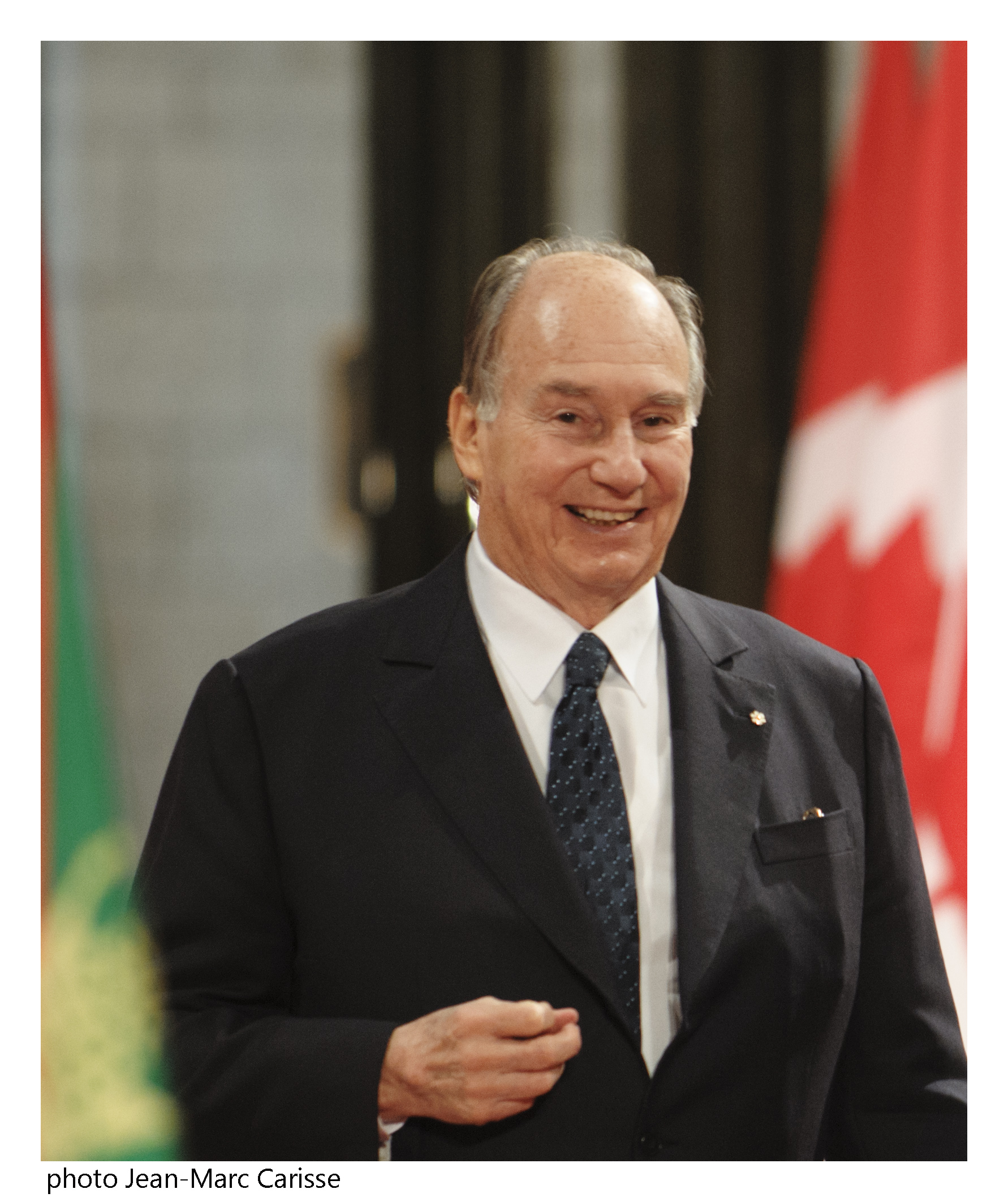




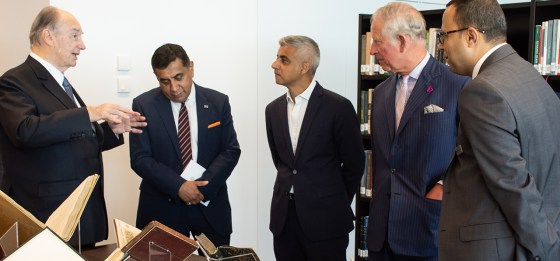
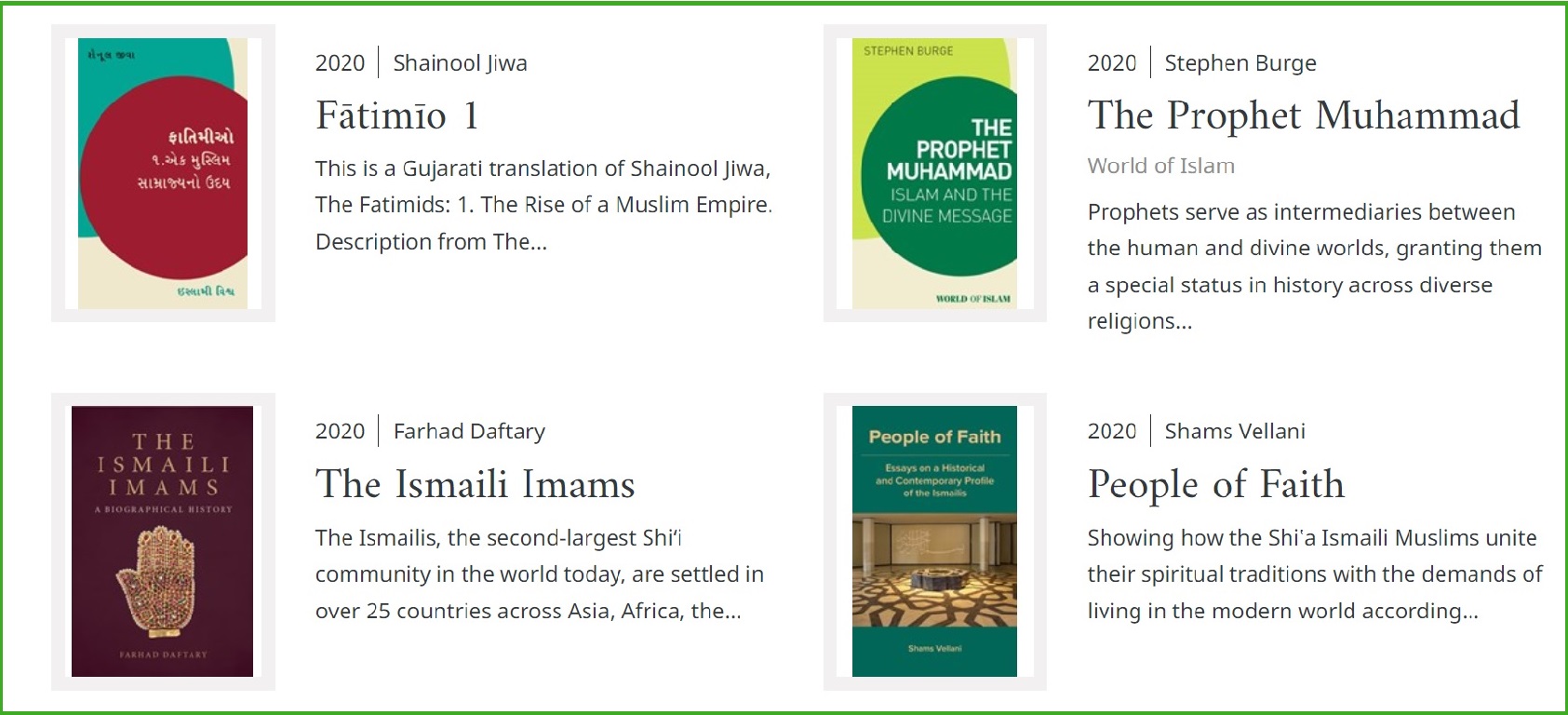
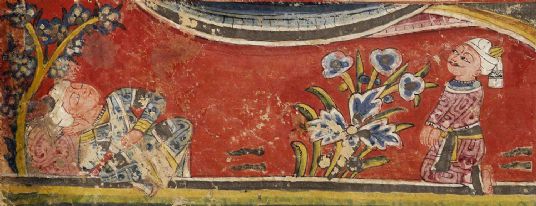

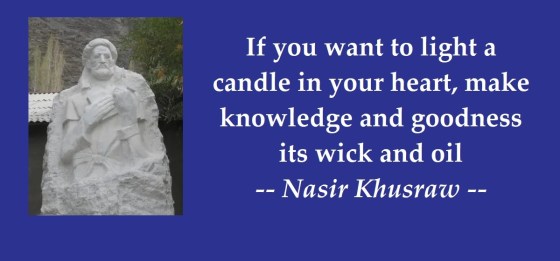
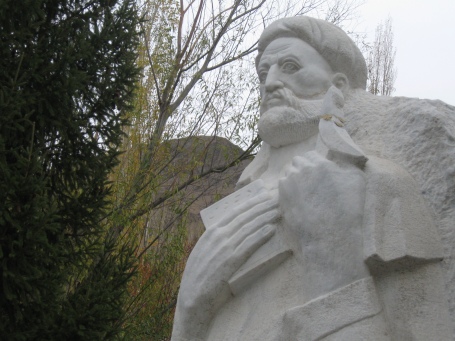


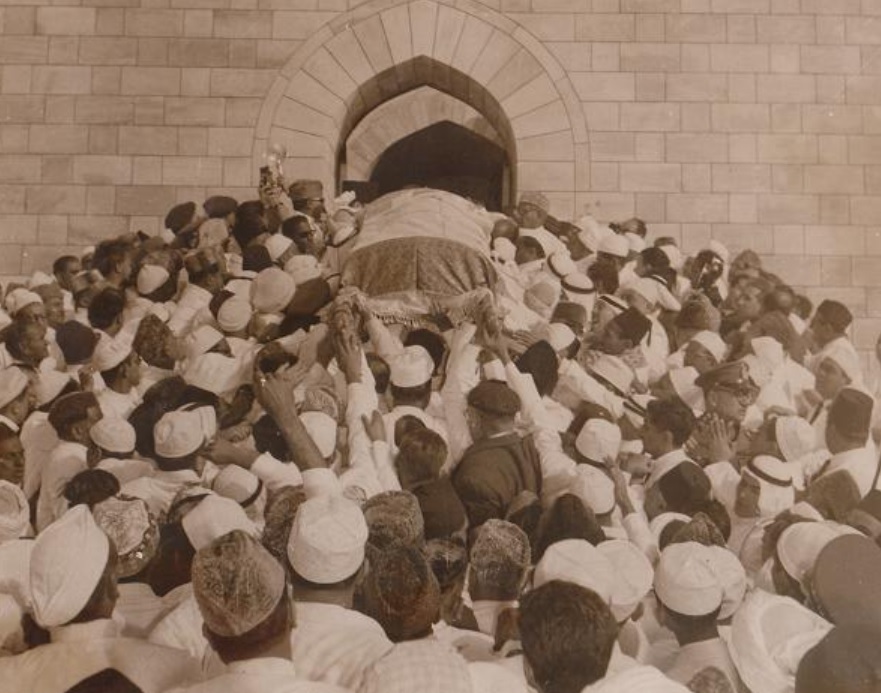
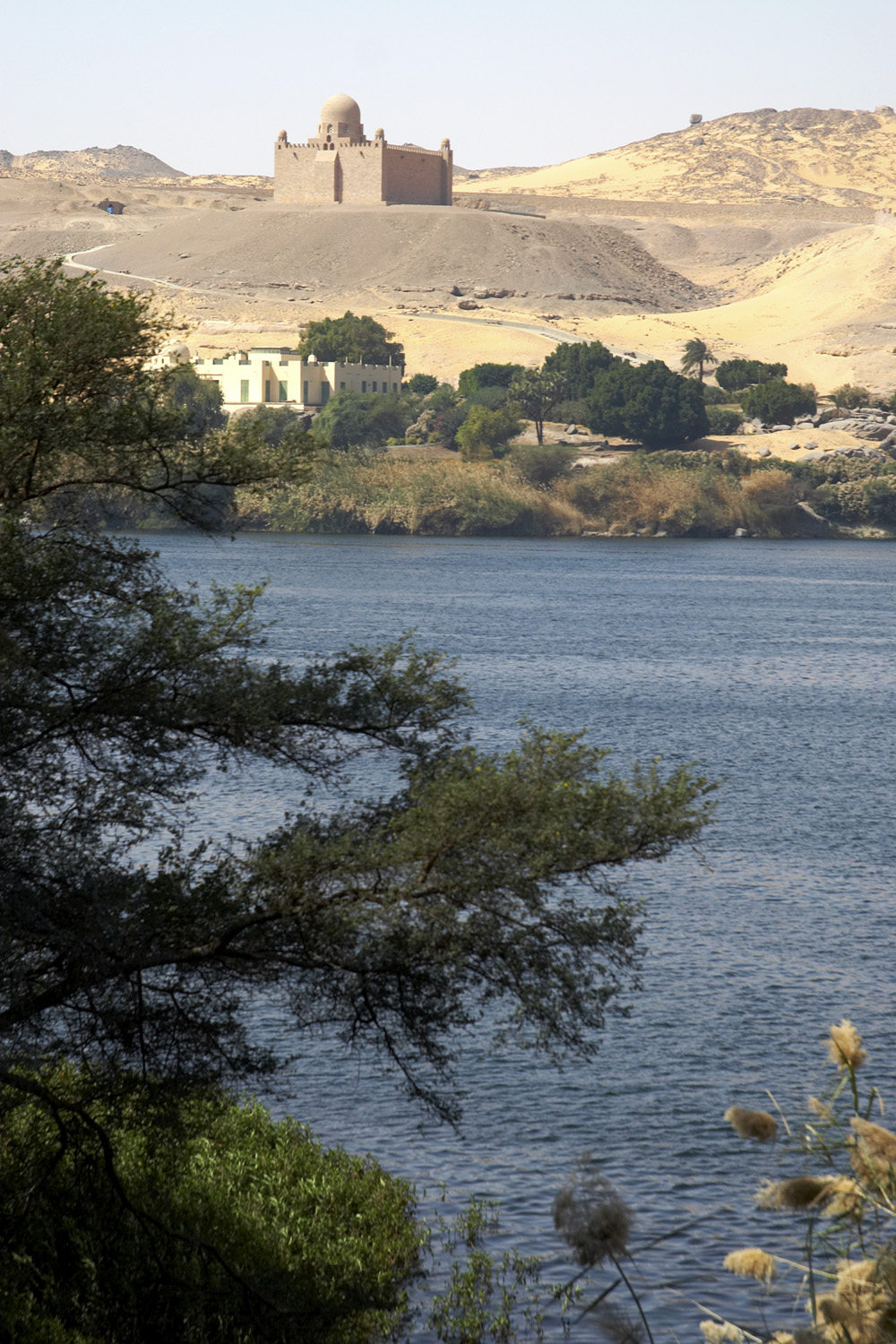
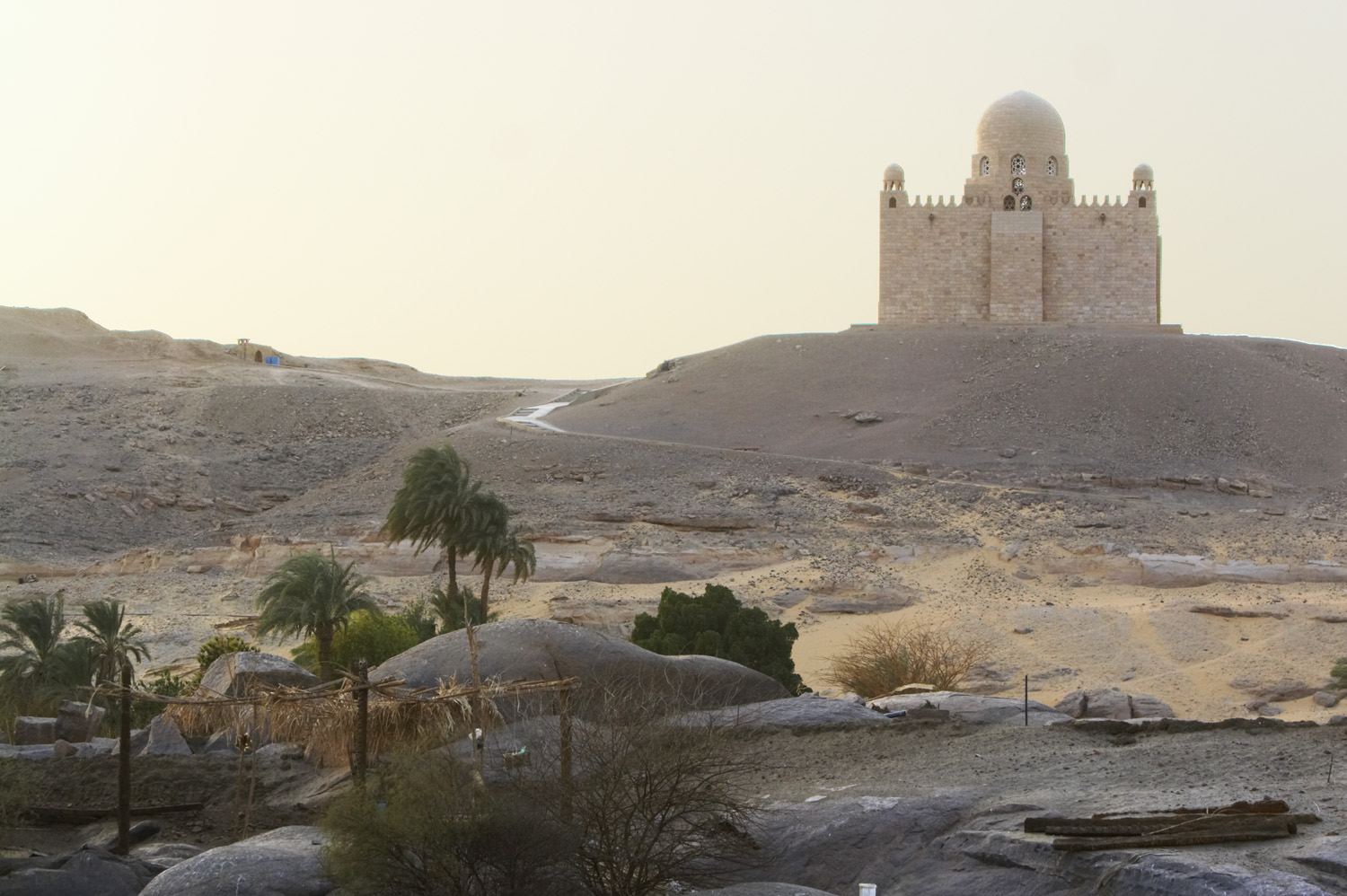

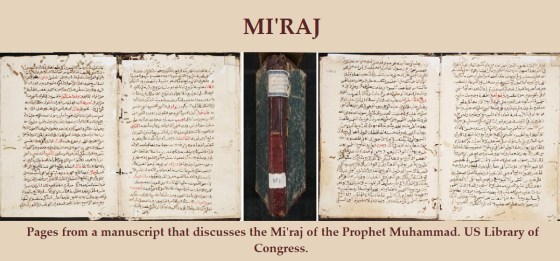
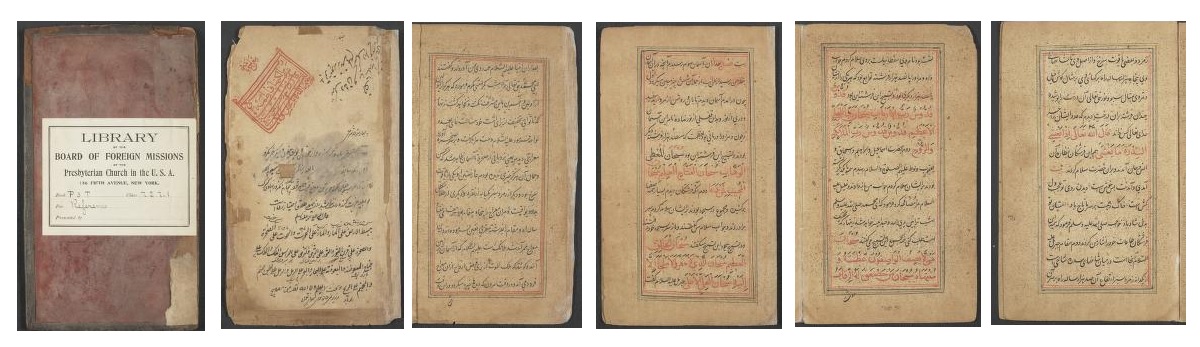

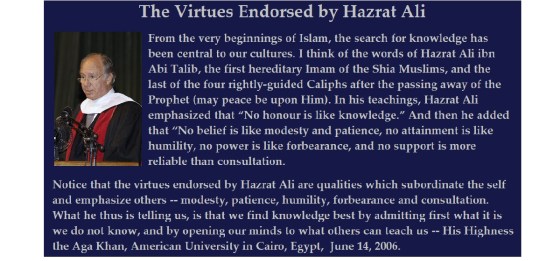
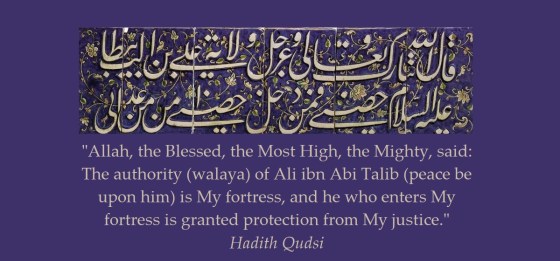
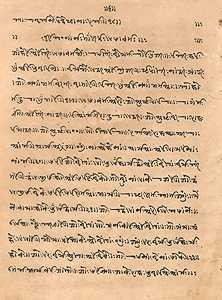
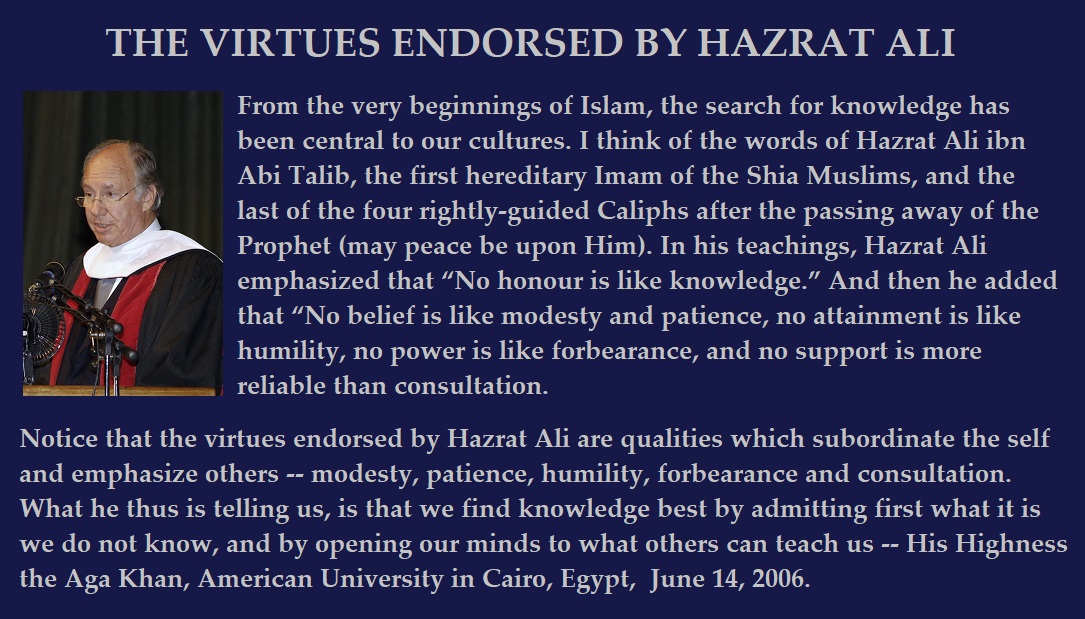
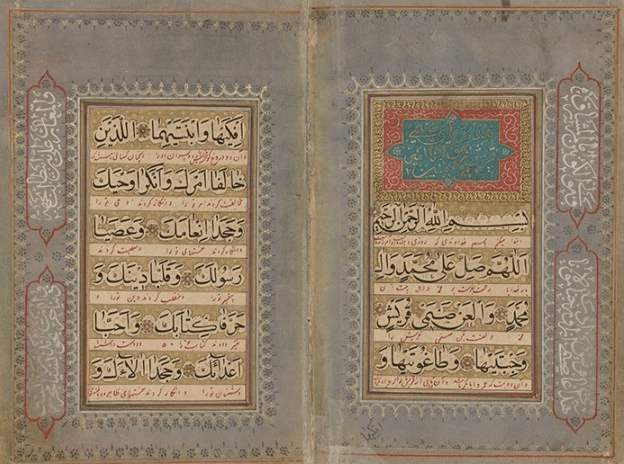

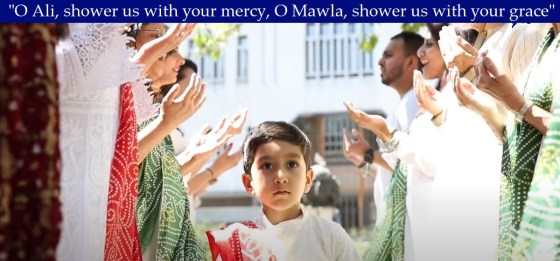
 Simerg - Insights from Around the World