Passings: Izzat Muneyb remembered through her poetic reflections on Prophet Muhammad, the Prophet’s Mosque in Madinah and the London Ismaili Centre

Izzat Muneyb (d. May 20, 2017)

By Abdulmalik Merchant

(NOTE: You may submit a condolence by clicking the COMMENTS box shown above left, beside the title — thank you, ed.).

It is with great sadness that we announce the passing of Izzat Muneyb on May 20th, 2017 in London, England, at the age of 75. Izzat was buried at the Ismaili cemetery at Brookwood in Surrey immediately following a funeral ceremony held at the West London Jamatkhana on Saturday, May 27th at 10:45 a.m.

We convey our heartfelt condolences to Izzat’s surviving sisters Zarin and Gulzar and their families, as well as all who knew her in the U.K. and many other parts of the world. We pray for the eternal peace and rest of Izzat’s soul.

Izzat Muneyb was raised in Mombasa, Kenya, and then pursued her further studies in the UK where she obtained an Honours degree in English from Birmingham University, a Post-Graduate Certificate in Education from Kings College, London and a Masters in Curriculum Studies from London University, England. She had a varied career, working in the fields of education, health, commerce and public order. She served on various Ismaili community institutions, including the Shia Imami Ismaili Tariqah Board, Mombasa, His Highness the Aga Khan Provincial Tribunal and His Highness Aga Khan Education Board in Nairobi. As an Education Board member, she originated the concept of, and edited, the Commemorative Issue 1977-78, to celebrate sixty years of Ismaili education in Kenya. From 1983–1994, she worked at the Institute of Ismaili Studies in London as a Member of the Education Unit and contributed to the Ta’lim Curriculum which is used throughout the Ismaili world to impart religious education  Over the last few years, she focused on her own creative writing in London.

Izzat contributed numerous pieces for this website, and we are pleased to re-publish her thoughtful reflections on the Prophet Muhammad (s.a.s.), the Prophet’s mosque in Madinah and the first purpose built Ismaili Centre and Jamatkhana in the Western World that is located in London.

WE  WELCOME READERS’ TRIBUTES IN MEMORY OF IZZAT MUNEYB

We invite your tributes and messages of condolences in memory of Izzat Muneyb. You may do that by clicking on LEAVE A COMMENT (that is also shown at left of the title of this post, at top). Should you run into issues while submitting your comment, then please send it via email to simerg@aol.com, Subject: Izzat Muneyb.

~~~~~~~~

1. In Praise of Prophet Muhammad
(May Peace Be Upon Him)

BY IZZAT MUNEYB

Author’s note: This song introduces us to some of the titles by which Prophet Muhammad came to be known. They are: ‘Ahmad’, ‘Mustafa’, ‘Rahmatan li’l-‘aalameen and ‘King of law laak’. The words ‘law laak’ in Arabic mean, “Were it not for…” There is a Hadith of Prophet Muhammad, where Allah speaking to His prophet, says, “Were it not for you, I would not have created the universe – law laaka lamaa khalaqtu’l-aflaaka.” [1]

N.B: The lines marked * are sung twice.

Muhammad, Muhammad,
How shall we praise you, Muhammad?*

Shall we call you Ahmad?*
He who is praised in heaven
Shall be praised here on earth.

Muhammad, Muhammad,
How shall we praise you, Muhammad?*

Shall we call you Mustafa?*
The Chosen of God on earth,
You have brought us the Qur’an.

Muhammad, Muhammad,
How shall we praise you, Muhammad?*

Shall we call you Rahmatan li’l-‘aalameen?*
God sent you as a Mercy
To the whole of creation.

Muhammad, Muhammad,
How shall we praise you, Muhammad?*

Shall we call you the ‘King of law laak’?*
Even God says He created
The universe for you.

Muhammad, Muhammad,
How shall we praise you, Muhammad?*

© Copyright: Izzat Muneyb.

____________

Notes:

[1] Source: Sukheel Sharif, The Jawziyyah Institute, 2006

~~~~~~~~~~~

2. Building the Prophet’s Mosque — Masjeedun Nabee — in Madinah

An Islamic miniature from Siyer-i Nebi (16th century, Turkey), depicting Bilal giving the call to prayer. Photo: Wikipedia.

BY IZZAT MUNEYB

Author’s Note: This ballad tells the story of how the first mosque in Islam, the Prophet’s Mosque in Madinah, Masjeedun-Nabee, was built and how the first Muslims were called to prayer, with Bilal, a black Muslim, reciting the first adhaan. [1] The Prophet (Peace be upon Him) let his she-camel, Qaswaa’, who was “under the command of God”, choose the site. This allowed him to not have to accept land from, and thus show partiality to, any of the influential clans in Madinah.

N.B: The first line of each verse is sung twice. The ballad should ideally be sung to the accompaniment of a guitar.

Qaswaa’ the camel has chosen the ground,
Dig here, O Muslims and level the ground.        Qaswaa’.…….1

Muhammad has said, “O, here will I stay,
Here build my mosque and here shall I die”.         ..…….………2

Cut down the trees and make the pillars,
Lay down the bricks and cement with mortar.      ……………….3

The Muhaajiroon [2] and the Ansaar [3]
Work with a will in the spirit of Islam.                   ……………….4

Aly then asks how to ‘complete’ the mosque,
“How shall we call the believers to prayer?”          ..…………….5

The Muslims think hard, “O shall we use bells [4]
If not a Jewish horn, then a trumpet perhaps.”     ………………6

Then, humble and meek, Abdallah did speak,
“I dreamt, Ya Rasool, a human voice, I pray.”       ..…………….7

Muhammad then said: “O my faithful Bilal,
It is you who must say the very first Adhaan.”      ..………….…8

And so did Bilal God’s praises sing
And his powerful voice in Madinah did ring.          ..……………9

Here endeth my tale of Masjeedun-Nabee,
It still stands today in Madinah city.                       …………….10

© Copyright: Izzat Muneyb
____________
[1] Adhaan is the Muslim call to prayer. Bilal climbed up a palm tree, to recite the first adhaan, because he wanted his voice to carry far and wide. Minarets appeared around eighty years after the Prophet’s death, to call the faithful to prayer.
[2] Muhaajiroon– The Emigrants, Muslims who made the hijrah or migrated from Makkah to Madinah, because of the persecution of the Makkan Quraysh. The Prophet finally made the hijrah during September 622 A.C., after all the Muslims, except Imam Ali, had left Makkah.
[3] Ansaar – The Helpers, Madinan Muslims, who helped the Makkan Muslims settle in Madinah.
[4] Ringing church bells is a Christian practice – the Muslim call to prayer had to be unique to Islam.

~~~~~~~~~~~

3. At the Ismaili Centre

Ismaili centre bismillah Entrance

The Entrance Hall of the London Ismaili Centre.

BY IZZAT MUNEYB

As soon as I enter the Ismaili Centre,
What do I see in Arabic calligraphy?

Bismi’llaahir-Rahmaanir-Raheem
Is what I see. ”In the name of Allah
Most Kind, Most Merciful.”

In the name of Allah I begin all things,
In the name of Allah I conceive all thoughts;
In the name of Allah I complete all deeds.

As soon as I enter the Ismaili Centre,
What do I see in shining marble
And white plaster?

I see a star-shaped fountain, pouring out water.

The fountain is so clear,
And the water so pure…

We too must be pure in body and soul
And polish the mirror of our hearts!

Why is the fountain seven-sided?
What does it mean?

Seven is the number of perfection
And seven times seven gives us
Our forty-ninth Imam.

The guidance of the Imam of the time –
And his portrait in mosaic, crafted from lapis,
Glowing with gentle radiance reminds us –
Helps us to grow closer to Allah.

But, have you seen the grey interlace design
Around the fountain?

Yes, it is a flower of beauty.

Al-kathratu fi’l wahdati,
Wa’l wahdatu fi’l kathrati
Is what it means.

The One has originated
The multiplicity of creation;
Now, from that multiplicity we move
Towards the Unity of the One.

And as I climb the stairs of the Ismaili Centre,
What do I see hanging from the ceiling?

I see lamps luminous and gleaming,
Full of light and full of meaning.

By the light of the lamp
We read the Qur’an.
With the light of the Lamp
We begin to know.
The light of the Lamp
Leads us to the Light of God

As I climb to the next level,
What do I see?

I see a painting, vibrant,
Swirling in colour.

It tells of the Verse of Light,
The Aayat’un Noor,
It hints at the mystery of
Noorun ‘alaa Noor.

As I enter the prayer hall
What do I see on the qiblah wall
In dark columns tall?

Carved in wood and written in space,
The panels say, Allah, Muhammad and Ali,
Allah, Muhammad and Ali.

These Beautiful Names invite me
To take my place with the Jamat,
They become my rosary.

As I sit down, as I close my eyes,
What do I do? What do I say?

I remember Allah.
I say,“Ya Muhammad”, “Ya Ali”,
I say, Salawaatu’llaahi alayhumaa
Salawaatu’llaahi alayhumaa.

The Grace of God fills the hall,
The Light of God bathes us all.

Cleansed in thought and spirit,
I feel the presence of God
And am filled with His peace.

© Copyright: Izzat Muneyb.

Date posted: May 27, 2017.
Last updated: May 30, 2017 (formatting and new comments).

_______________

Editorial Note: The poem was first published in July 1987 in Ilm, Volume 11, No. 2, p. 39-41. It was originally written for the younger members of the Jamat, to be recited either by an individual, or as a choric or part poem. Readers might find the movement of the poem interesting. As the individual climbs higher through the various levels of the London Ismaili Centre to the Jamatkhana hall, so also the poem marks an inner journey from a physical to a devotional and then to a spiritual plane of being.

_______________

Your tribute to Izzat Muneyb

We invite your tributes and messages of condolences in memory of Izzat Muneyb whose funeral took place on Saturday, May 27, 2017 in London, England. Readers may do so by clicking on LEAVE A COMMENT. If you encounter problems in submitting your comment, then please send it to simerg@aol.com, Subject Izzat Muneyb.


John Nuraney (1937 – 2016)

We are very sad to report that Mr. John Nuraney passed away on November 21, 2016 at the age of 79. We convey our deepest condolences to his family. The BC Premier, Christy Clark, said in a statement that Mr. Nuraney was a mentor and a friend, and the Ismaili community has lost one of its most respected leaders. Please click here for more.

John Nuraney (October 31, 1937 - November 21, 2016) by the Centennial Flame at the Lawn of the Parliament Building in Ottawa. Photo: Facebook page.

John Nuraney (October 31, 1937 – November 21, 2016) by the Centennial Flame at the Lawn of the Parliament Building in Ottawa. Photo: Facebook page. Please click on photo for his interview with Simerg.

Date posted: November 25, 2016.

__________________

Passings: Noorunisa Maherali (1929 – 2015) – A Remarkable Ismaili Woman of Faith, Talent and Courage

“…When she was still in her early to mid-twenties,  she was involved in a remarkable rescue operation involving her best friend’s two children who had been forcibly abducted from Singapore to Karachi. Risking her own life, she made her way to Karachi, located the boys and delivered them safely to their uncle’s home…” — 1950’s

“…As is so often the case the Imam of the Time, at an appropriate time, found an opportunity to recognize her entire family during a special audience…” — 1982-83, Silver Jubilee

PLEASE CLICK: Noorunisa Maherali (1929 – 2015)

The late Noorunisa Maherali (1929-2015)

The late Noorunisa Maherali (1929-2015)

Simerg encourages readers to submit tributes or death notices for deceased members of their families. For submission details, please click Obituaries and Tributes.

Date posted: April 8, 2016.

____________

Passings: Salim-el-azhar Ebrahim

“Throw my ashes
where you will
but lest you err
know this
I want children’s laughter
in my dead ears”
 (Salim Ebrahim, from Epigrams I)

Salim-el-azhar Ebrahim

Salim e-a Ebrahim

It is with deep sadness that we announce the recent passing in Pakistan of Mr. Salim-el-azhar Ebrahim, an epigrammatist, poet, essayist and a friend to Simerg. A prolific and fearless writer, he was the author of Reason! The Measure of Thought, a collection of 500 original epigrams as well as The Hourglass and the Pen – the Measures of Thought, a short booklet of original epigrams and poems, which is now out of print.

Excellence is a never ending journey to understand one’s own hazy and even
fearsome areas of the mind: needs, wants, desires, greed, jealousy, anger,
revenge, power, status, pride, arrogance, intolerance, rigidity, tyranny, violence
and battering, cruelty, sadism and masochism, lying, cheating, hypocrisy – and
the rectifying of those parts of the mind in both thought and action —
Salim e-a Ebrahim from Dialog…, see link below.

We pray that Mr. Salim Ebrahim’s soul may rest in eternal peace. We also convey our heartfelt condolences to all his family members and friends around the world.

We honour Mr. Ebrahim by providing links to numerous pieces that he contributed to this website. His comments and contributions in the formative months of this website encouraged us to create a special category for poetry.

Date posted: January 10, 2016.

___________

We invite your tributes and reactions to this sad loss. Please click Leave a comment.

If you wish to contribute an obituary or pay a tribute in the loving memory of deceased member(s) in your family who passed away recently or in the past, please visit Passings.

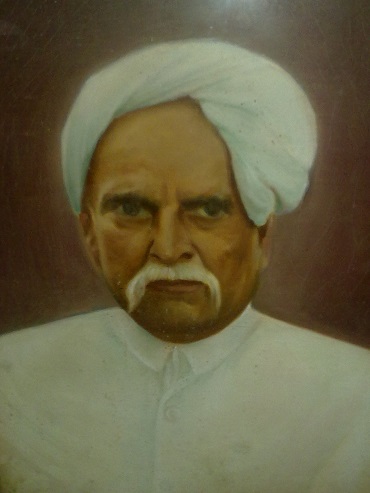
Nazarali Rahim Makani (1883 – 1951), Professional Craftsman, Designed Spinning Wheel for Mahatma Gandhi

“Nazarali Bapa was in the iron trade. He was a tool-maker and had the expertise that was required in this profession. Due to this, his oldest son Gulam Husein Nazarali Makani (my grandfather) received a tender after the British left India to install hand water pumps in all the neighbouring cities of Bombay…Widowed at a very early age with five children, three sons and two daughters, Nazarali Bapa never re-married. He remained single and committed himself to his five children.” — Khurshid Makani

PLEASE CLICK: Remembering Nazarali Bapa: An Iron Craftsman Who Made a Spinning Wheel for Mahatma Gandhi

Legendary Nazarali Rahim Makani (1883 – 1951). Photo: Khurshid Makani Collection.

Legendary Nazarali Rahim Makani (1883 – 1951). Photo: Khurshid Makani Collection.

__________

Simerg encourages readers to submit tributes or death notices for deceased members of their families. For submission details, please click Obituaries and Tributes: Simerg Invites Ismaili Readers from Around the World to Honour and Celebrate Lives of Family Members Who Have Returned to Their Original Abode

Remembering Alijah Zulfikarali Khoja

By Abdulmalik Merchant

Alijah Zul Khoja: Lifetime Educator

Alijah Zul Khoja: Lifetime Educator and Leader

It is with deep sadness that we announce the passing of an outstanding educator and leader of the Ismaili Muslim community, (Alijah) Zulfikarali M.A. Velji Khoja, in Ottawa, Canada, on Friday, September 4th, 2015. His funeral and burial ceremonies will take place in Ottawa on Wednesday, September 9.

Born in Pretoria, South Africa, Mr. Khoja was a skilled trainer, facilitator, educational consultant and mediator. His experience and training was diverse: with a post-graduate degree in Radio Chemistry from Carleton University, Ottawa, and professional designations from the Universities of Birmingham, Queens, Ottawa, Windsor and the London School of Economics, he travelled worldwide on many consulting assignments as a Mediator. These included: The Canadian Human Rights Commission, Better Business Bureau, Ottawa-Carleton Dispute Resolution Centre,and the Ottawa-Carleton District School Board.

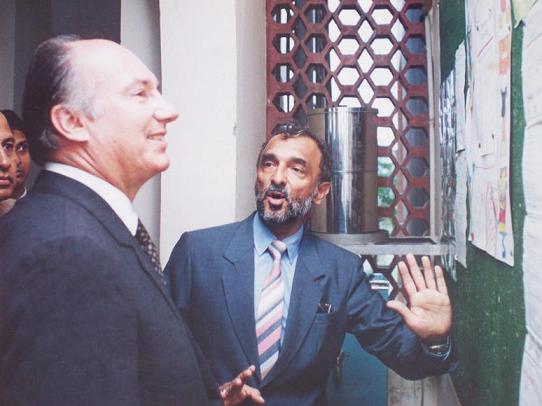
This visit to the Aga Khan School in Dhaka took place during Mawlana Hazar Imam's four day stay in Bangladesh in 1993. During the school visit Hazar Imam was accompanied by a Government Minister, The President of the Council, school board members. In this photo, Zul Khoja, the principal of the school from 1992-1994 is seen showing a curricular activity implemented to introduce creative and critical thinking among the students. Mawlana Hazar Imam took immense pride in this activity, known as the Mind Benders Club, and turned to his guests to explain the accomplishments in his school. Zul notes that when Mawlana Hazar Imam introduced him o the guests, it was done with a

This visit to the Aga Khan School in Dhaka took place during Mawlana Hazar Imam’s four day stay in Bangladesh in 1993. During the school visit Hazar Imam was accompanied by a Government Minister, The President of the Council, school board members. In this photo, Zul Khoja, the principal of the school from 1992-1994 is seen showing a curricular activity implemented to introduce creative and critical thinking among the students. Mawlana Hazar Imam took immense pride in this activity, known as the Mind Benders Club, and turned to his guests to explain the accomplishments in his school. Zul noted that when Mawlana Hazar Imam introduced him to the guests, it was done with a “full bio!” Mr. Khoja said that when he escorted the party into the school, it took the Imam less than 30 seconds to fully understand what was being accomplished in the school. One of the areas that the late Zul Khoja specialised in was the education of bright and gifted children. Please click on photo for Zul’s piece, Ismaili Penmanship. Photo: Zul Khoja Collection.

As an administrator, educator and trainer, Zul worked at the Ottawa-Carleton District School Board. He was also headmaster, educator and trainer (Professional Development) to The Aga Khan Development Network, both in Bangladesh and Kenya. Zul’s voluntary service with the Ismaili Community and its institutions included several countries (South Africa, Kenya, Bangladesh and Canada). The services in Canada included training Management Auditors and conducting Management Audits. He also served as a Baitul Ilm teacher and held leadership positions with both the Ismaili Tariqah and Religious Education Board and the Aga Khan Council since his settlement in Ottawa in the 1970’s. Most recently he  served as the Convener for Donor Services for the Aga Khan Foundation committee in Ottawa, where he resided with his wife, Khairunissa. He also leaves behind two children, a son, Sherali, and a daughter, Rozmin.

We pray that Allah may rest Alijah Zul Khoja’s soul in eternal peace, and that He may bless his entire family with courage and fortitude at this difficult time.

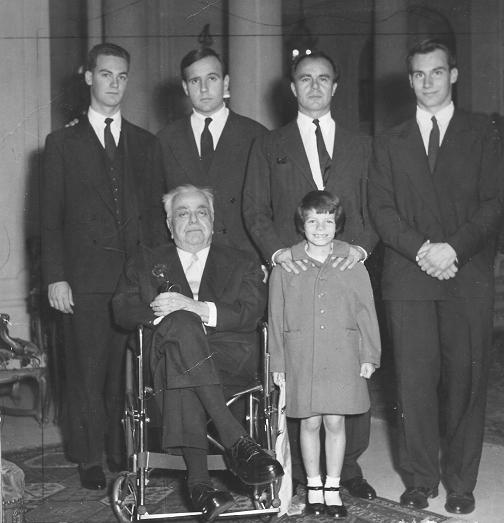
The late 48th Ismaili Imam, His Highness the Aga Khan, seated on a wheelchair with members of his family with his successor, the present Imam, Prince Karim Aga Khan, standing at extreme right. Others in the photo (l to r), grandson Prince Amyn Muhammad, and the late Imams two sons, the late Prince Sadruddin and Prince Aly Khan, who is seen holding his daughter Princes Yasmin Aga Khan Photo: Zul Khoja Collection, Ottawa.

The late 48th Ismaili Imam, His Highness the Aga Khan, seated on a wheelchair with members of his family with his successor, the present Imam, Prince Karim Aga Khan, standing at extreme right. Others in the photo (l to r), grandson Prince Amyn Muhammad, and the late Imams two sons, the late Prince Sadruddin and Prince Aly Khan, who is seen holding his daughter Princes Yasmin Aga Khan. This rare photo was provided to Simerg by Alijah Zul Khoja.

__________

Mr. Khoja had contributed to this blog in numerous ways including writing a memorable piece  Ismaili Penmanship in 1906 for this website’s special series, I Wish I’d Been There.

Date posted (from Halifax, Nova Scotia): September 8, 2015.

Hope, and not Despondency, in the Wake of Misfortune and Tragedy

LETTER FROM PUBLISHER
Yellow Tulips - Hope amidst Tragedy
“Despair not of the Spirit of Allah. Lo! None despaireth of the Spirit of Allah save disbelieving folk.” (Holy Qur’an, Chapter 12, Verse 87).

The recent tragedy in Karachi, where dozens of innocent Ismailis were the subject of wanton violence is extremely disquieting. Besides questioning the humanity of our fellow citizens, it may serve to bring to the fore the insecurities of a people who have been subject to religious persecution in the past and are today, without exception, minorities in every single land they live in. As the Ismailis of Karachi (and of Pakistan in general) reflect on the aftermath of this terrible tragedy, perhaps it would natural for them to give in to despondency. This, however, should be cautioned against, for the following reasons.

Today, Ismaili Jamats globally unite in prayers and solidarity with their brethren of Karachi sending a strong message that their brethren are not just a forgotten minority in a big state, but an indivisible part of a strong global brotherhood. Equally, and no less significant, is the Imam’s global work and name, which has resulted in condemnation across the globe by world leaders, and which will ensure that this tragedy will not end up as just another footnote in an unending series of attacks on religious minorities in Pakistan. As K. N. Pandita says in a recent article:

 “But given the international influence and reach of Prince Aga Khan and the great humanitarian works that his Foundation is doing in many parts of the world including Karachi, the massacre is bound to cause ripples in Pakistan politics. This is the reason why the Prime Minister of Pakistan and the Army chief both lost no time in flying into Karachi to take stock of things”. [1]

There is reason to hope that from this tragedy, and from the blood of innocents, a reaffirmation of the rights of religious minorities in Pakistan will result, Inshallah.

Date posted: May 18, 2015.

_______________

[1]  http://www.dailyexcelsior.com/tragedy-descends-on-ismailis/

In Memoriam: Mohammed Ibrahim Ali (1925 – 2014) by Enoo

PLEASE CLICK: In Memoriam: Mohammed Ibrahim Ali

 A SON’S TRIBUTE TO A LOVING FATHER

Renowned Ismaili musician and composer, Enoo, pictured with his beloved dad in 2005 before the Vancouver  mulaqat with Mawlana Hazar Imam. Photo: Enoo archives.

Renowned Ismaili musician and composer, Enoo, pictured with his beloved dad in Vancouver in 2005 before the mulaqat with Mawlana Hazar Imam. Photo: Enoo archives.

IMPORTANT NOTE: Simerg invites obituaries/in memoriam pieces honouring deceased family members. Please see submission guidelines and examples by clicking Obituaries and Tributes.

2014 Simerg Collection: Passings, Achievements and Historical Reminiscences

PLEASE CLICK: Ameer Kassam Janmohamed (1931-2014) or photo for tribute.

Ameer Kassam Janmohamed (1931-2014), lived his life to the fullest. Please click on photo for tribute.~~~~~~~

PLEASE CLICK: “Conversations on Three Continents”

Please click on image for book excerpt.~~~~~

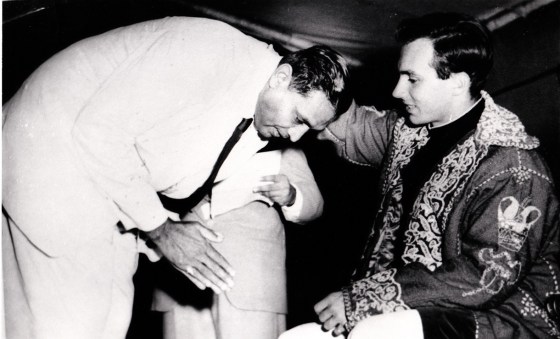
PLEASE CLICK: Rediscovering a Lost Piece of Ismaili History — First Steps in the Migration of Tanzanian Ismailis to Canada

Mawlana Hazar Imam, His Highness the Aga Khan, blessing Vazier Rajabali Meghji Visram during his visit to Dar-es-Salaam, Tanzania (then Tanganyika) in October 1957. Photo: Sadru Meghji Collection, Toronto.  Please click on photo for article.

~~~~~~

PLEASE CLICK: To the Memory of Roshan Thomas and Zeenab Kassam

The deaths of Roshan and Zeenab in Kabul at the hand of terrorists have touched the hearts of thousands around the world.

PLEASE CLICK: Roshan Thomas – Acting in the Path of God By Jalal Jaffer

~~~~~~

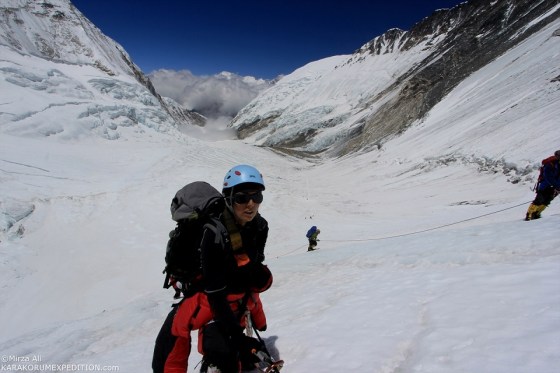
PLEASE CLICK: Simerg’s Exclusive Interview with Mirza Ali and his Sister Samina Baig Who Became the First Ismaili and Pakistani Woman to Reach the Summit of Mt. Everest

Samina Baig climbing Mt. Everest. Photo: Mirza Ali. Copyright.~~~~~~

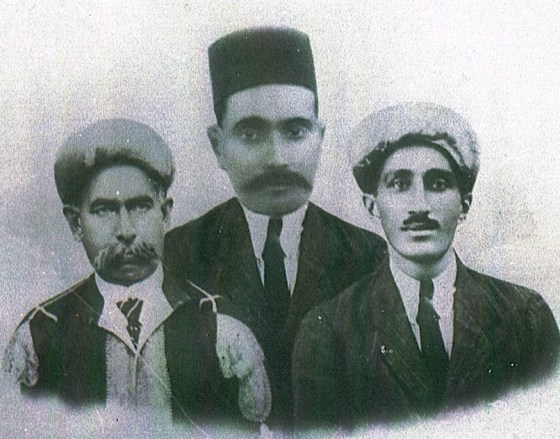
PLEASE CLICK: A True Account of How Three Ismaili “Shaheeds” Lost Their Lives in a Tragic Accident in 1925 Near Kilosa, Tanganyika

Portraits of the three Shahids, Karmali Dahya, Lalji Ladha and Missionary Khudabaksh Talib (right), who died when their lorry slid into a ditch near Kilosa in 1925. The photo was displayed in the lobbies of jamatkhanas around East Africa at the instruction of the 48th Ismaili Imam, Mawlana Sultan Mahomed Shah, His Highness the Aga Khan (1877-1957). Photo: Anverali Talib Family Collection, Montreal, PQ, Canada. ~~~~~~

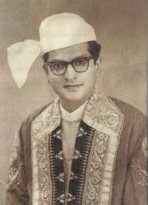
PLEASE CLICK: Remembering Rai Hussein Khanmohammed of Burma

Rai Hussein Khanmohamed (1932 - 2013)

Date posted: December 31, 2014.

~~~~~~~

Shaheeds Khudabaksh Talib, Karmali Dahya and Lalji Ladha: An Account of their 1925 Tragic Accident in Tanganyika by Sadru Meghji

“This account of a Jamati tragedy that occurred almost ninety years ago, in 1925,  is based on an authentic Gujarati narrative that was prepared by an officer  of the Aga Khan Council in Dar-es-Salaam, just four days after the accident that took the lives of three Ismailis, namely Khudabaksh Talib, Karmali Dahya and Lalji Ladha, who were bestowed with the title of Shaheeds….” — Sadru Meghji

Please click: A True Account of How Three Ismaili “Shaheeds” Lost Their Lives in a Tragic Accident in 1925 Near Kilosa, Tanganyika

Portraits of the three Shahids, Karmali Dahya, Lalji Ladha and Missionary Khudabaksh Talib (right), who died when their lorry slid into a ditch near Kilosa in 1925. The photo was displayed in the lobbies of jamatkhanas around East Africa at the instruction of the 48th Ismaili Imam, Mawlana Sultan Mahomed Shah, His Highness the Aga Khan (1877-1957). Photo: Anverali Talib Family Collection, Montreal, PQ, Canada.

Portraits of the three Shaheeds, Karmali Dahya, Lalji Ladha and Missionary Khudabaksh Talib (right), who died when their lorry slid into a ditch near Kilosa in 1925. The photo was displayed in the lobbies of jamatkhanas around East Africa at the instruction of the 48th Ismaili Imam, Mawlana Sultan Mahomed Shah, His Highness the Aga Khan (1877-1957). Photo: Anverali Talib Family Collection, Montreal, PQ, Canada.