Aga Khan Park

Let Storms Beware

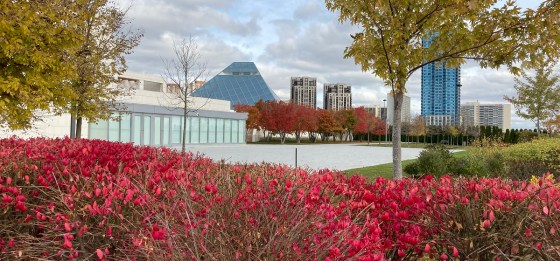
Karim H. Karim’s beautiful poem is followed by a brief note from the editor as well as some pictures that he set off to take at Toronto’s Aga Khan Park, shortly after he had been inspired by the poem.

 By KARIM H. KARIM

(Dedicated to all who are sad)

Sweetest are the songs
That we sing in sorrows;
Tears swell in our eyes
Even when joy overflows.

Naïve folk fear the thorns
Where flowers do flourish,
Fresh with hues of hope.

Dawn’s light is nearest
When sadness is darkest,
Sings the black night
In stars’ silent twinkle.

Embrace the aching pain,
Learn to laugh a little
And to comfort others.

Let storms beware
That we are lighting
The lamps of love.

Date posted: October 20, 2020.
Last updated: October 22, 2020.

__________________

(Based on Shankardas Shailendra’s (1923-1966) “Hain Sabse Madhur Wo Geet,” which evokes Percy Shelley’s (1792-1822) line “Our sweetest songs are those that tell of the saddest thought.”)
Karim H. Karim Carleton University
Karim H. Karim

About the author: Karim H. Karim is the Director of the Carleton Centre for the Study of Islam and a Professor at Carleton University’s School of Journalism and Communication.

__________________________

Editor’s note: I was truly feeling sad earlier today (October 20), thinking about my daughter and my mother whom I haven’t visited for several months due to Covid-19. I was lonely, and also worried about my health in these uncertain times! My friend Karim H. Karim who is nearly 450 kms from me must have sensed that. I was waiting for another article from him altogether, not a piece dedicated for those who are sad. In my reply to his humble submission, I told him I would review it in a few days time! However, I decided to read it straight away, and his piece truly cheered me up. And in that moment of becoming a lot less sad, I gained some energy and headed to my favourite place! Yes, the Aga Khan Park, with two incredible buildings, the Ismaili Centre and the Aga Khan Museum around it — gracious gifts from Mawlana Hazar Imam, His Highness the Aga Khan.

Admittedly, I haven’t been to the Park for a number of weeks, passing by it only in my car. The photographs that I took during my visit to the Park, represent my joyous moments, that I owe to Karim’s beautiful rendition. As I walked to the park, I was reminded of Mawlana Hazar Imam’s quote where he says that if one has faith, one may be worried, one may at times feel sad but one will never be unhappy. How true! Enjoy the photos, which were inspired by the poem.

Note: The following photos — and more — can be viewed in larger format at Simerg’s special photo blog. Please click Bidding Farewell to Vibrant Autumn Colours at Aga Khan Park. If you haven’t visited the blog please click Simergphotos for an outstanding collection of photo essays!
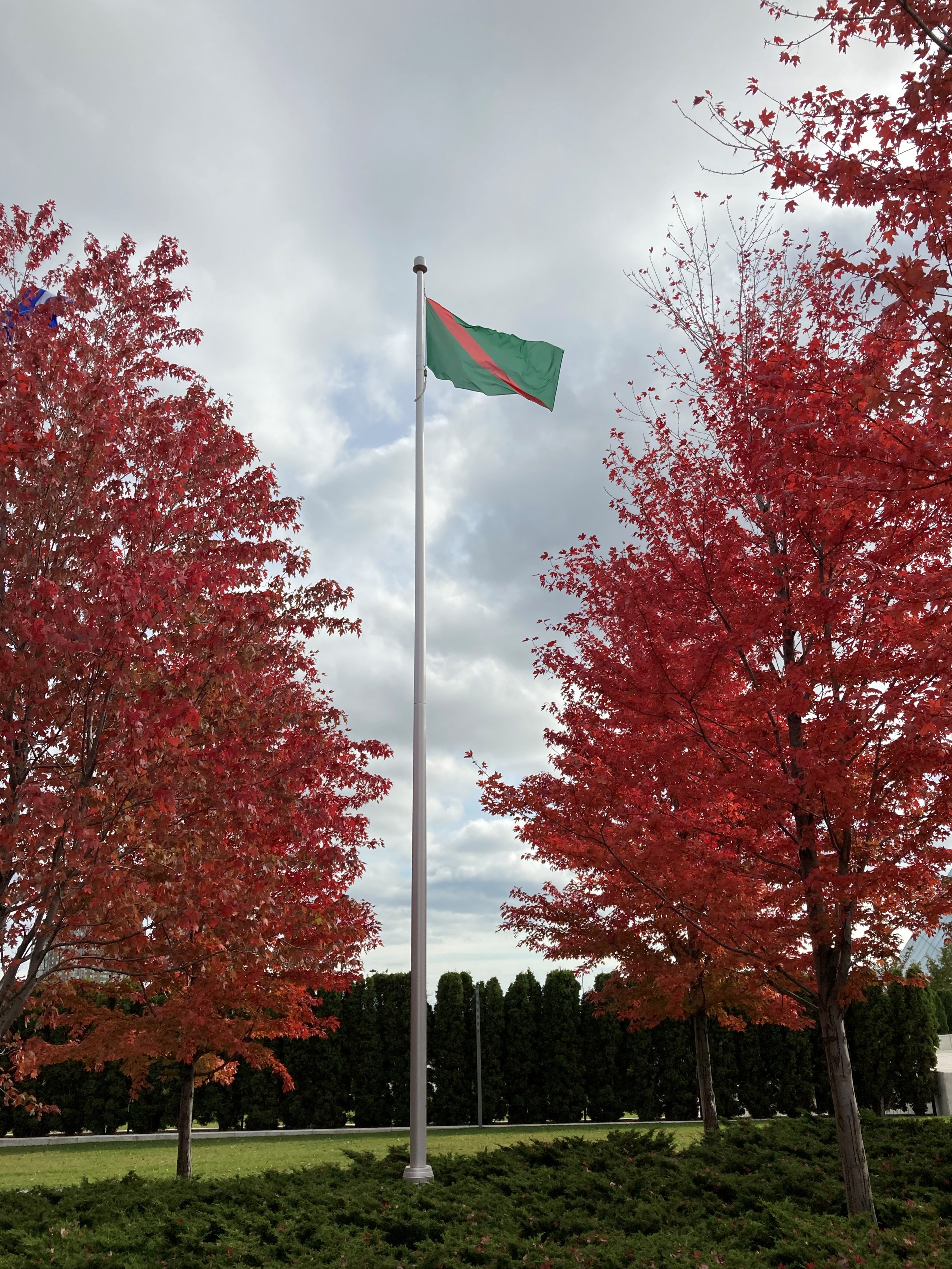
The Flag of the Ismaili Imamat
The flag of the Ismaili Imamat by maple trees at the peak of autumn colours. Photo: © Malik Merchant / Simerg.
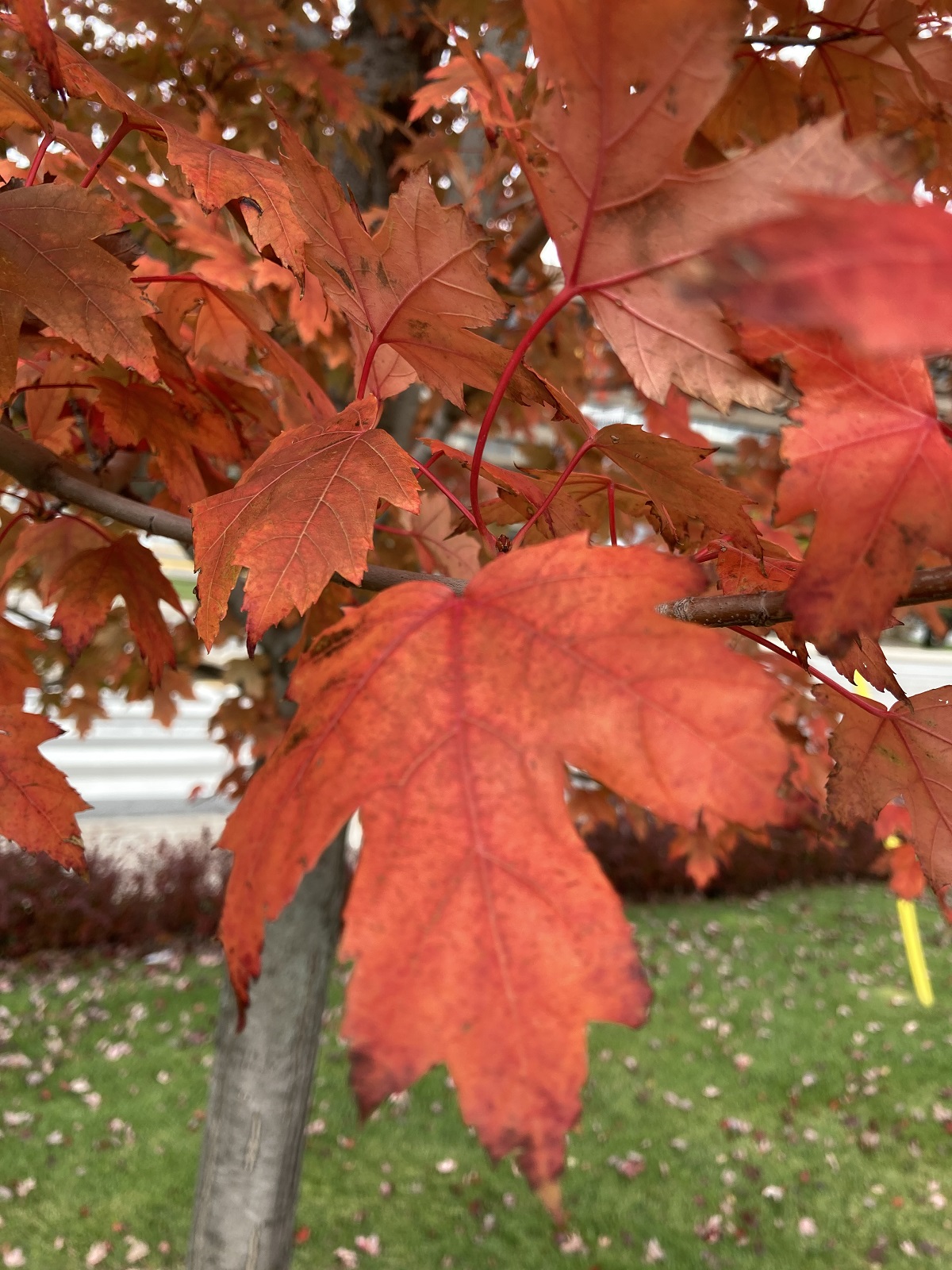
Close-up of vibrant orange autumn leaves on a tree, with a blurred background of grass and other foliage.
A close up of autumn colours on a maple tree at the Aga Khan Park. Photo: © Malik Merchant / Simerg.
Aga Khan Museum and Aga Khan Park
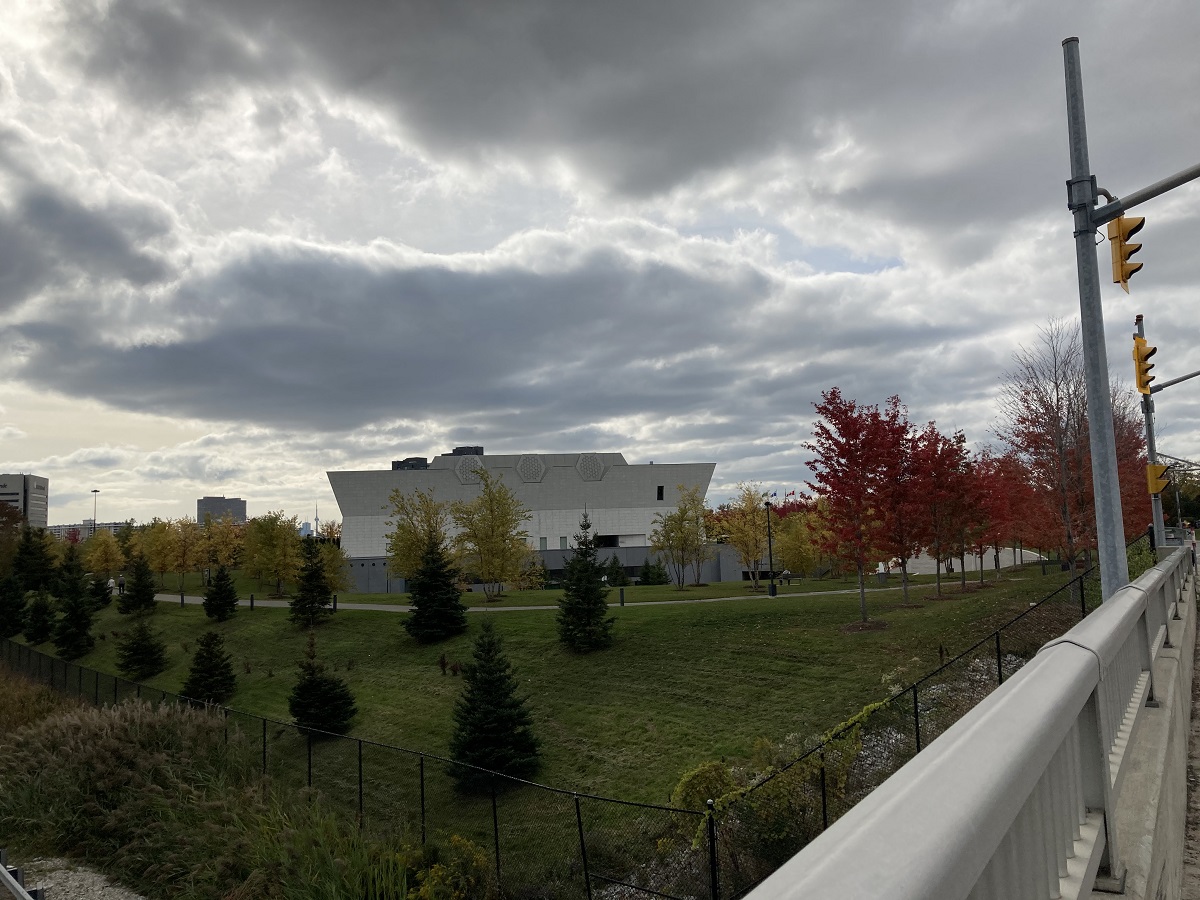
The Aga Khan Museum building as seen from the edge of the Aga Khan Park at the Wynford Drive bridge over the Don Valley Parkway. Photo: © Malik Merchant / Simerg.
Big Heech Aga Khan Museum
The famous Big Heech sculpture by the north end of the Aga Khan Museum, with maple trees in the background exhibiting their fall colours. Photo: © Malik Merchant / Simerg.
Aga Khan Park
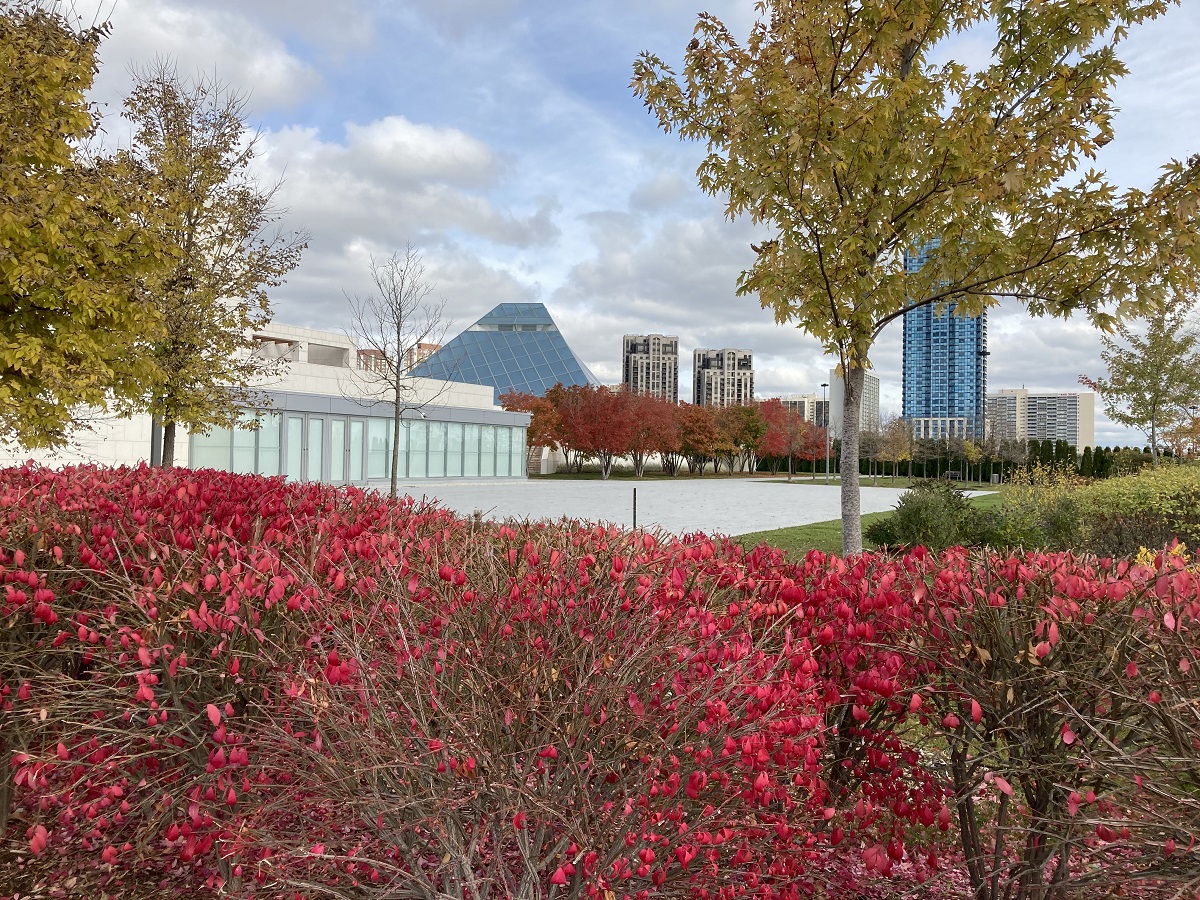
A gorgeous view of the dome of the Ismaili Jamatkhana, with rich autumn colours at the Aga Khan Park adding to the beauty of entire area. Photo: © Malik Merchant / Simerg.
Aga Khan Park Autumn Foliage Malik Merchant
Beautiful trees with rich autumn colours at the Aga Khan Park. To the left and not shown is the dome of the Ismaili Centre. See previous photo. Photo: © Malik Merchant / Simerg
Ismaili Jamatkhana Dome and Aga Khan Park
A close up of the Ismaili Jamatkhana dome with a maple tree rich in autumn colours in the foreground. Photo: © Malik Merchant / Simerg.
Evergreen Brick Works
A view of CN Tower from the Evergreen Brick Works located in the Don River Valley on 550 Bayview Avenue, Toronto, a 10 minute drive from the Aga Khan Park. Photo: © Malik Merchant / Simerg.
Red maples Aga Khan Park
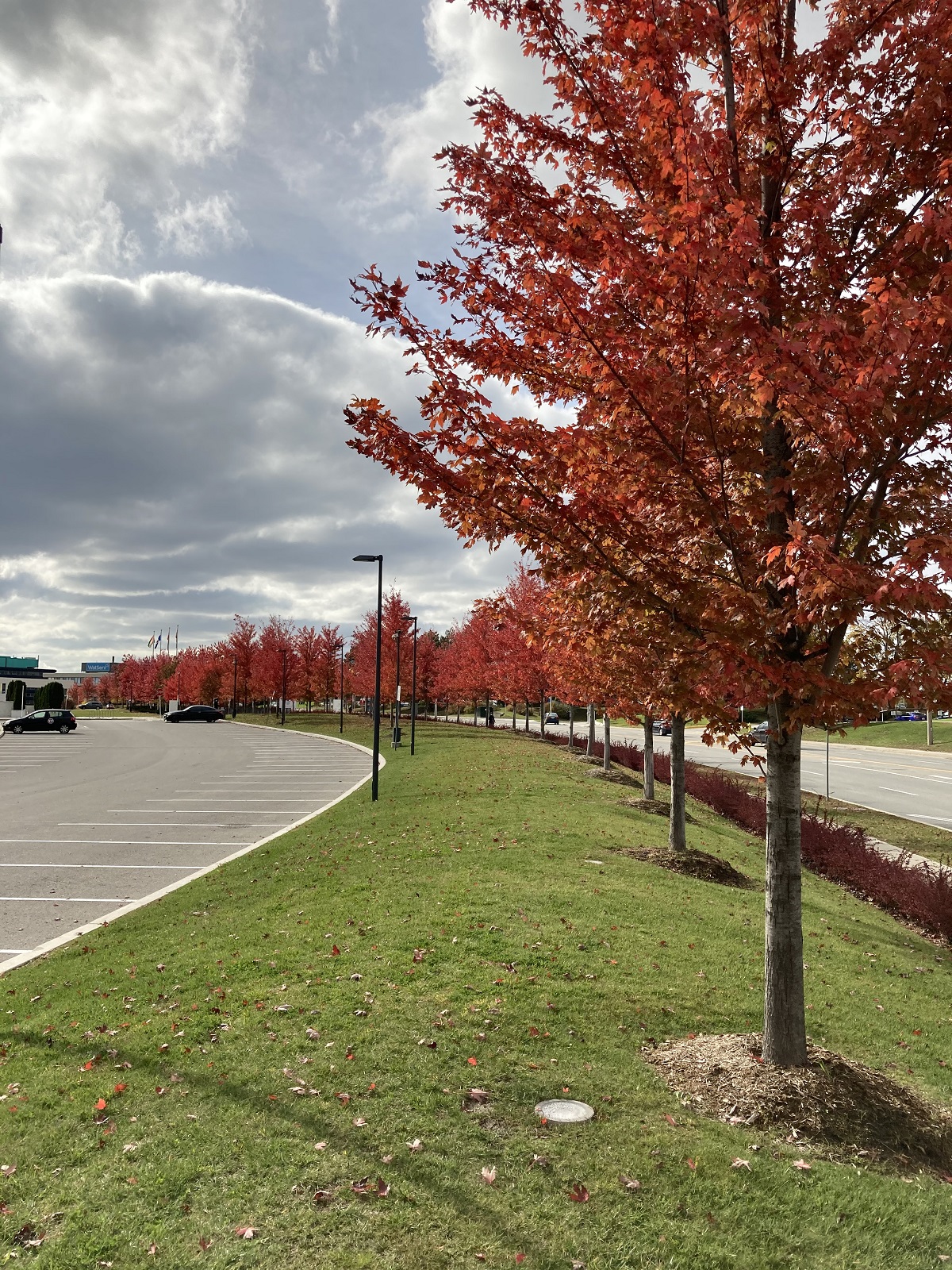
A beautiful view of red maple trees lined up at the edge of the Aga Khan Park along Wynford Drive, from the Aga Khan Museum (near end) to the Ismaili Centre. Photo: © Malik Merchant / Simerg
Red Maples Aga Khan Park
Red maples reach the peak of their fall colours at the Aga Khan Park, with a view of the Ismaili Jamatkhana dome at left. Photo: © Malik Merchant / Simerg.
Aga Khan Park, Flags of Canada and the Ismaili Imamat
From left to right, flags of the Ismaili Imamat, the City of Toronto, the Province of Ontario and Canada, with its famous Maple Leaf. Photo: © Malik Merchant / Simerg.

Date posted: October 20, 2020.
Last updated: October 21, 2020 (new link).

______________________

We welcome feedback from our readers. Please complete the LEAVE A REPLY form below or, if you don’t see the box, please click Leave a comment. Your letter may be edited for length and brevity, and is subject to moderation.

Before departing this website please take a moment to review Simerg’s Table of Contents for links to hundreds of thought provoking pieces on a vast array of subjects including faith and culture, history and philosophy, and arts and letters to name a few.

A Comprehensive Guide by Two University of Virginia Medicine Professors on What Doctors Know Works for All Stages of the Covid-19 Illness

This article was updated on October 5, 2020 with the new details of President Trump’s COVID-19 treatments. It is republished from The Conversation under a Creative Commons license. You may read the original article by clicking HERE. Note: The featured image shown at top of this post and the first image shown below are reproduced from the website of USA’s Centre for Disease Control — they are not part of the original article in The Conversation.

BY WILLIAM PETRI, Professor of Medicine, University of Virginia and JEFFREY M. STUREK, Assistant Professor of Medicine University of Virginia

With 74-year-old President Trump and 50-year-old first lady Melania Trump testing positive for the coronavirus, what are the best proven treatments for them and other patients?

We are both physicianscientists at the University of Virginia. We care for COVID-19 patients and conduct research to find better ways to diagnose and treat COVID-19.

Transmission electron microscopic image of an isolate from the first U.S. case of COVID-19, formerly known as 2019-nCoV. The spherical viral particles, colorized blue, contain cross-section through the viral genome, seen as black dots. Image Credit: Centre for Disease Control and Prevention, USA (cdc.gov.).

Here we are sharing what physicians have learned over the past eight months treating various stages of this disease. Early in the year, there were few known treatments for people who showed severe COVID-19 symptoms apart from sustaining them on ventilators. Now, several months later, there are a handful of treatments, including drugs, that give doctors far better tools to heal patients, particularly very ill ones.

Who is at greatest risk for severe COVID-19?

Men are one-and-a-half times more likely to die, and an 80-year-old has a twentyfold greater risk of death than a 50-year-old. In addition to age and male gender, obesity; diabetes; recent cancer diagnosis; chronic heart, lung and liver disease; stroke; and dementia all are associated with an increased risk of dying from COVID-19. Based on these criteria, the president falls into a higher-risk category based on male gender and age.

Is treatment different depending upon how sick one is?

The approach to therapy differs depending on the stage of the illness.

It is therefore important to not only diagnose COVID-19 but to define whether the infection is asymptomatic or pre-symptomatic. Also, how sick a person is – whether it’s a mild, moderate, severe or critical case – changes how a patient is treated.

What treatment is there for asymptomatic or pre-symptomatic infection?

Asymptomatic or pre-symptomatic infection is defined as having a positive diagnostic test for COVID-19 (a PCR or antigen detection test) without symptoms of infection.

There is currently no known effective treatment for this stage. Someone with asymptomatic or pre-symptomatic infection should isolate themself at home for 10 days so as not to expose others.

What are the symptoms of mild disease, and what treatments work?

Symptoms of mild COVID-19 infection can include fever, cough, loss of taste or smell, muscle aches, headache, nausea, vomiting, diarrhea, congestion and runny nose.

Someone with mild COVID-19 does not have shortness of breath, chest pain or evidence of pneumonia during a chest X-ray. The exception to this is children with mild disease who may still have an abnormal X-ray.

There are no treatments that have been demonstrated to benefit those with mild disease. However, such patients should be well versed on the symptoms of moderate illness, so that they and others recognize if they progress to moderate illness. This is important because progression to more severe disease can be rapid – typically five to 10 days after initial symptoms.

Moderate illness

Moderate illness is defined as shortness of breath, chest pain, or on a chest X-ray, evidence of pneumonia but without hypoxia (low blood oxygen levels).

There currently is no known effective therapy for moderate illness.

Severe illness

Severe illness is identified by a rapid breathing rate (greater than 30 breaths per minute) or low oxygen levels in the blood, which is called hypoxia. Also, evidence of pneumonia affecting more than half of the lungs, as diagnosed on a chest X-ray, is a sign of a severe case.

Controlled clinical trials have demonstrated that the antiviral drug remdesivir hastens recovery for patients with severe but not critical illness.

In addition the anti-inflammatory steroid medicine dexamethasone (a prednisone-like drug) decreases mortality.

Critical illness

Critical illness occurs when the patient becomes so sick that vital organs begin to fail and they require medicines or other therapies to support these vital functions.

If failure of the lungs is severe enough, physicians may put the patient on a mechanical ventilator or high quantities of oxygen. There is no evidence that remdesivir treatment is beneficial during this critical phase. Dexamethasone is still recommended for treatment because it has been shown to decrease mortality.

What therapies don’t work or are still being tested?

Some treatments that have been shown to be ineffective include chloroquine and hydroxychloroquine.

Other potential treatments are still in the middle of clinical trials to test whether they are effective. These include human convalescent plasma, which contains antibodies that should bind to the virus and prevent it from entering cells.

There are also drugs to modulate the immune response, such as interferons and inhibitors of IL-6, which in some cases may prevent a harmful overreaction of the immune system, commonly referred to as cytokine storm.

A nurse collects convalescent plasma from a recovered COVID-19 patient to help the healing process of other COVID-19 patients in Indonesia. Budiono,/ Sijori images/Barcroft Media via Getty Images

Newer treatments, including one President Trump has been given

Right now there is no approved treatment for outpatients with asymptomatic or mild to moderate COVID-19. But this appears to be changing, with Eli Lilly’s and Regeneron’s release of clinical trial data on the use of laboratory-manufactured antibodies against the spike glycoprotein of the new coronavirus.

In this approach, as with convalescent plasma, the antibodies work by binding to the virus and blocking it from entering cells and multiplying. This could be particularly effective early on in infection before illness becomes severe.

In an early preview of data from an ongoing phase three clinical trial, subjects with COVID-19 who received an injection of a cocktail of monoclonal antibodies against the SARS-CoV-2 spike glycoprotein had symptoms that lasted only seven days rather than 13. The amount of virus remaining in the nasopharynx – the upper part of the throat behind the nose – was also reduced.

An update from the president’s physician on the afternoon of Oct. 2 indicated that, as a precautionary measure, the president received an infusion of Regeneron’s antibody cocktail. This treatment is not widely available, and can be given only under what is called compassionate use.

On the same day, the president reportedly also received supplemental oxygen and a first dose of the antiviral drug Remdesivir. Research shows this antiviral can decrease the length of COVID-19 patients’ hospital stays, but only when given prior to the patient needing mechanical ventilation.

On Saturday, Oct. 3, the president received a second dose of Remdesivir and a first dose of the steroid dexamethasone. Dexamethasone is an anti-inflammatory medicine in the same class as prednisone. It decreases mortality in patients with COVID-19 that is severe enough to require supplemental oxygen, but may actually worsen disease in those who are not as severely ill.

All of this suggests that the president is receiving state-of-the-art therapies.

Other External Link(s)

Please read:

1. BBC: Covid and Trump: The president’s healthcare v the average American’s
2. New York Times: President Trump Says He’s ‘Better’ From Covid-19. Doctors Aren’t So Sure
3. New York Times: How Much Would Trump’s Coronavirus Treatment Cost Most Americans?

Date posted: October 6, 2020.
Last updated: October 7, 2020 (new external links).

____________________

Before departing this website please take a moment to review Simerg’s Table of Contents for links to hundreds of thought provoking pieces on a vast array of subjects including faith and culture, history and philosophy, and arts and letters to name a few.

_____________________

We welcome feedback from our readers. Please complete the LEAVE A REPLY form below. Your letter may be edited for length and brevity, and is subject to moderation.

Jamatkhana Ismaili Centre Toronto and Aga Khan Park, Simerg, Photo Malik Merchant

A Poem Inspired by the Reopening of Jamatkhanas

As We Reopen

By Parin Verjee

Approaching the doors of the Jamatkhana
Heads bowed in all humility
Lower your gaze
Pause a moment
Softly say a heartfelt prayer
Shukhrana, Al Hamdu’lillah
The blessed day has arrived
Quieten your thoughts
Touch your heart
Hand on your heart
Smile with your eyes
Greet gently
Gracious to one and all
Carry your mehmani in your heart
Let Allah’s light guide you
To His threshold
Let divine grace
Touch your praying hands
Embrace the silence
Be at peace
The sacred space
Awaits your soulful zikr

Date posted: August 16, 2020.

_______________________

About the author: Parin’s love of books, music, theatre, and travel sometimes leads her to writing about her experiences, and the reopening of Jamatkhanas inspired her to pen a few lines here. Originally from Kenya, she studied at Makerere University, Kampala, and at the University of Dijon, France, and lived in Oxford, England, before moving to Canada. She has been in Doha, Qatar, for the last 12 years and living in the Middle East has enhanced her appreciation of Islamic art and culture. She is presently back in Calgary.

We welcome feedback from our readers. Please complete the LEAVE A REPLY form below or click on Leave a comment. Your letter may be edited for length and brevity, and is subject to moderation.

____________________

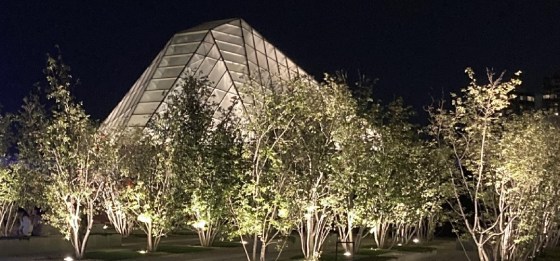
The featured photo shown at the top of this post was taken on the night of Friday August 14, 2020, when the Headquarters Jamatkhana dome at the Ismaili Centre Toronto was lit up for the first time since mid-March when Jamatkhanas across Canada closed down due to the Covid-19 pandemic. The spectacular lit up dome is visible from the busy Don Valley Parkway, and is much admired by pedestrians and drivers alike as they drive through the Parkway or walk along Eglinton Avenue and Wynford Drive. The photo and the beautiful poem penned by Parin Verjee celebrate the opening of the Headquarters Jamatkahana on Monday August 17, as well as other Jamatkhanas that have opened in recent days or will be opening in the coming days.

___________________

Before departing this website please take a moment to review Simerg’s Table of Contents for links to hundreds of thought provoking pieces on a vast array of subjects including faith and culture, history and philosophy, and arts and letters to name a few.
Ismaili Jamatkhanas in Canada and Around the World Begin to Reopen with Covid-19 Precautions in Place

By MALIK MERCHANT
Publisher/editor BarakahSimerg and Simergphotos

Here are quick links to:

(1) Registration and News about Jamatkhana Openings in Canada;
(2) Subscription to Canadian Ismaili Institution Newsletters, eg. Al-Akhbar; and
(3) Instructions for downloading Apps for Global and Country Wide Official Ismaili Institution News, TV programming etc.

The Ismaili Canada’s iicanada.org portal proudly announces, “Jamatkhana Reopening Welcome Back,” and goes on to state, “As Jamatkhana capacity is limited due to COVID-19 regulations, and to enable contact tracing in the event of a potential infection event, all individuals will need to register online to gain access to Jamatkhana. Pre-registration allows Jamati members to indicate their preferred dates and times of Jamatkhana attendance (including Jamatkhanas not yet open), and be allocated a confirmed spot ahead of time.”

The Ismaili Centre Jamatkhana, known as Toronto’s Headquarters Jamatkhana, shown above as a featured photo, opens on August 17.

Speaking to a close friend in Ottawa, I am told that yesterday’s (Tuesday, August 12, 2020) opening of the Jamatkhana filled it up to the maximum persons permitted in the prayer hall. It felt like a commemorative occasion with the announcement of appointments of new Majlis Mukhi and Kamadia Sahebs as well as Mukhiani and Kamadiani Sahebas. From Vancouver, I get a video from a friend who attends his local Jamatkhana after more than 150 days, since the Jamatkhana closures in mid-March, and he watches the sky with the moon illuminated at 42%. His face glows, and as he reaches his Jamatkhana his heart is filled with joy.

Narratives circulate on the social media and Whatsapp about 1st day experiences in the Jamatkhana after a long long lay-over, especially from Portugal, where Jamatkhanas first opened a few weeks ago.

A comprehensive list of Jamatkhana opening days, registration details etc. for Canada is available at iicanada.org.

Canada Jamatkhana Reopenings Simerg
The.Ismaili image on Jamatkhana reopenings in Canada

For openings and latest announcements of Jamatkhana openings in some other parts of the world please click FRANCE and PORTUGAL. A few USA Jamatkhanas in small centres were scheduled to open several days ago but the openings have been delayed due to a surge of coronavirus infections in numerous states.

Regrettably, the country portals available through the.ismaili community website are not updated with the status of Jamatkhana openings — except for Canada and France, and local Jamati members in various countries are often informed through their respective Jamati institutions newsletters or Apps. For example in Canada the link iicanada provides a list of Jamati newsletters that you may subscribe to. Of particular importance on the list would be the weekly Al-Akhbar for different regions, BC, Alberta, Ontario etc.

It is advisable that readers download their respective country wide institutional Jamati Apps available in their regions or subscribe to the weekly newsletters for the latest information. However, not everyone is familiar about downloading and using apps, and users accessing the internet via notebooks and desktops are put at a disadvantage.

It is important that there is some consistency about how information for different countries is available through the different portal Ismaili websites for non App users. I was personally confused, and would be happy to stand corrected if others don’t find that to be the case.

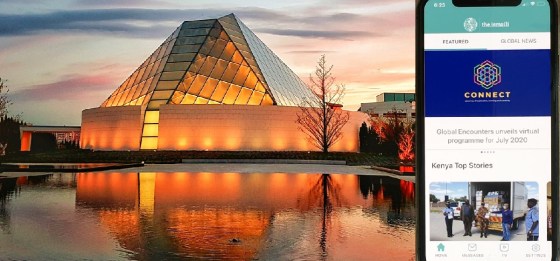
For everyone totally comfortable about downloading and using Apps, as we live in an App driven world, I would request readers to visit the official Ismaili community page where instructions are provided for downloading the.Ismaili app onto your hand held device. The Ismaili states that “with the app, which is available to download for free from the Apple App Store and Google Play Store, users can stay up-to-date on global and national news, receive official messages from Jamati institutions, and watch The Ismaili TV live.”

Among other things, the App will “allow you to receive notifications, including breaking news and official messages from Jamati Institutions.” It will also allow you to see news from other countries around the world by toggling to as many countries as the readers wishes to. Again, please visit the page the.Ismaili app.

Date posted: August 13, 2020.

Before departing this website please take a moment to review Simerg’s Table of Contents for links to hundreds of thought provoking pieces on a vast array of subjects including faith and culture, history and philosophy, and arts and letters to name a few.
____________________________________

If you wish to leave a comment, please complete the LEAVE A REPLY form below or click on Leave a comment. Your letter may be edited for length and brevity, and is subject to moderation.

Tributes to Ismailis who have passed away during the Covid-19 pandemic: Issue no. 2 of a multipart series

Share memories of members of your family who you have lost during the Coronavirus pandemic, either due to Covid-19 or any other cause. Please write to Malik Merchant at Simerg@aol.com; you must include your full name and contact information. Please read earlier tributes in Issue # 1.

___________

Inna lillahi wa inna ilayhi raji’un
“Surely we belong to God and to Him we return” — Holy Qur’an, 2:156

Huzurmukhi Madatali Merali Jamal
(Canada)

Madatali Jamal, age 89 (d. .April 2020)

Submitted by Shahida Mamdani-Sunderji, daughter of Madatali Jamal

Huzurmukhi Madatali Merali Jamal (April 30, 1930 – April 13, 2020), husband of Dilshad Jamal for 66 years, father of Shahida Mamdani-Sunderji and Amin Jamal, father-in-law of Begum Jamal, and grandfather of Shelina, Shairoz, Rahim and Aminmohamed, passed away in Ottawa during the spring of 2020, just over two weeks short of his 90th birthday. He was surrounded by his family in volunteers uniform at his funeral.

For the past several years, Mr. Jamal had dedicated his service to the Ottawa Jamat, at both the old and new Jamatkhana locations on Carling Avenue and Conroy Road, respectively. For years he lovingly tendered the Jamatkhana garden on 991 Carling Avenue. In the evenings, Mr. Jamal would present himself regularly as a volunteer at both the Jamatkhanas. His record of Jamatkhana attendance and services as volunteer was impeccable. He was accompanied and supported in his service and Jamatkhana attendance by his loving wife of 66 years, Dislshad. He served the Ottawa Jamat enthusiastically until the very last months of his life, when dementia took over.

Born and raised in Kakumiro, Uganda, he and his family settled in Scotland in October 1972 following the expulsion of Asians from Uganda, decreed by dictator Idi Amin. Huzurmukhi Jamal held positions of Mukhisaheb and Kamdiasaheb during his years in Uganda and Scotland. In 1985, he migrated with his family to Ottawa.

His dedication to the house of Imamat inspired his children to serve in numerous positions in the Jamat. His son Amin and wife Begum served as the Kamadia and Kamadiani of Ottawa Jamat for 4 years, which included the Golden Jubilee period of Mawlana Hazar Imam’s Imamat from July 11, 2007 until December 13, 2008. This service of his children filled Mr. Jamal with immense joy and happiness.

He was very fond of Ginanic literature, and instilled the wonderful tradition in his children. His daughter Shahida recites Ginans in Ottawa Jamatkhana regularly. Ambitious for his family, Mr. Jamal always asked them to take on life’s challenges and meet them with courage, hard work and wisdom.

He is deeply missed by all his family members in Canada and around the world, as well as his friends and the entire Ottawa Jamat.

We pray that his soul may rest in eternal peace. Ameen.

_____________________________

Huzur Mukhiani Razia Jamal
(United Kingdom)

Razia Jamal, Stoke on Trent, Tribute Simerg
Razia Jamal, age 73 (d. May 3, 2020)

Submitted by Navrose Chappell, daughter of Razia Jamal

Razia Jamal, born in Kampala, Uganda, in 1947, passed away peacefully in hospital on Sunday, May 3, 2020 with her three children by her side, her family including her much loved grandchildren, brothers and sisters holding her hand virtually, whilst her favourite Zikr tasbih played in the room.

Before she passed away, she spoke with all of her family, received Chanta (sprinkling of water on face), and the Stoke-on-Trent Mukhisaheb bestowed Dua upon her and the family via a conference call.

Razia served Stoke-on-Trent Jamati Institutions for over 40 years.  She held the position of Jamati Kamadia Saheba for six years and supported her late husband Huzur Mukhisaheb Shiraz Jamal as he undertook the role of Jamati Mukhisaheb.

She was a dedicated volunteer who also undertook the role of Vice Captain and Captain at Stoke-on-Trent Jamatkhana during her service. Razia was an integral part of the Team in securing a permanent building for Stoke-on-Trent Jamatkhana which was founded in 2000.

As the Central Property Management (CPM) Lead for Stoke-on-Trent Jamatkhana for 14 years, Razia was also the first female CPM Lead in Europe.

Since her passing, the family have received many touching tributes conveying how much of an inspiration she was regarding her voluntary work, remarking on her wonderful services, writing how she was a real example of how voluntary service (seva) should be conducted, describing her as a legend, and commenting on her immense dedication to Stoke-on-Trent Jamatkhana.

Razia was a strong, classy, beautiful, thoughtful and humble lady, who loved her children, grandchildren and family immensely. 

She will be fondly remembered by all of her family, friends, Stoke-on-Trent Jamati members, and all the other Ismaili brothers and sisters who she has worked with during her lifetime of seva.   

Razia will be deeply missed every day, and we pray for her soul to rest in eternal peace. Ameen. 

_____________________________

Alijah Saheba Zubeda Ebrahim Jamal (Canada)

Zubeda Ebrahim Jamal, d. age 83.

Submitted by Shariffa Keshavjee, friend and colleague of Zubeda Jamal

Alijah Saheba Zubeda Ebrahim Jamal’s funeral took place at Burnaby Lake Jamatkhana, in Burnaby, British Columbia, on August 6, 2020. Originally from Kisumu Kenya, she settled in Vancouver, and attended the Darkhana Jamatkhana.

Zubeda and I became friends as she encouraged me to take an active role in the Guiding Movement. In 1959, when I was in Kisumu, Zubeda was a Commissioner of the Girl Guides. I led the Brownies from the Siriguru Singh Saba School. We took the Brownies and Girl Guides camping.

I am grateful to Zubeda for her encouragement because it led me to serve as a girl guide to date.  I remain a Trustee with the Kenya Girl Guides Association and an Honorary Associate with the World Association.

Rest in peace dear Zubeda. Ameen.

Date posted: August 12, 2020.

We welcome tributes from our readers to individuals portrayed in this piece. Please use the feedback box which appears below. If you don’t see the box please click Leave a comment. Please also see our earlier tributes by clicking  Issue # 1.

_____________________

To submit a tribute to your family member who has passed away due to Covid-19 or any other cause, please read TRIBUTES and write to Malik Merchant at Simerg@aol.com; please include your full name and contact information.

Before departing this website please take a moment to review Simerg’s Table of Contents for links to hundreds of thought provoking pieces on a vast array of subjects including faith and culture, history and philosophy, and arts and letters to name a few.

Editor’s Choice: A Cemetery for All Faiths, and a Single Cause of Death – A Must Read Piece in the New York Times

None of Iraq’s existing graveyards wanted the bodies of COVID-19 patients. So Shiite leaders created a burial ground outside Najaf for them that is also open to Sunnis and Christians. The Iraqis call it the “Corona cemetery.” It already has more than 3200 graves since the cemetery ground was broken 4 months ago. This is a must read piece! Please click New York Times: ‘Our Role Is to Reduce Their Grief’ – A Cemetery for All Faiths.

Date posted: July 20, 2020.

_________________

Muslims pray around the Kaba, Library of Congress, reproduced in Simerg

Islam’s anti-racist message from the 7th century still resonates today

By ASMA AFSARUDDIN
Indiana University

One day, in Mecca, the Prophet Muhammad dropped a bombshell on his followers: He told them that all people are created equal.

“All humans are descended from Adam and Eve,” said Muhammad in his last known public speech. “There is no superiority of an Arab over a non-Arab, or of a non-Arab over an Arab, and no superiority of a white person over a black person or of a black person over a white person, except on the basis of personal piety and righteousness.”

In this sermon, known as the Farewell Address, Muhammad outlined the basic religious and ethical ideals of Islam, the religion he began preaching in the early seventh century. Racial equality was one of them. Muhammad’s words jolted a society divided by notions of tribal and ethnic superiority.

Today, with racial tension and violence roiling contemporary America, his message is seen to create a special moral and ethical mandate for American Muslims to support the country’s anti-racism protest movement.

Apart from monotheism – worshipping just one God – belief in the equality of all human beings in the eyes of God set early Muslims apart from many of their fellow Arabs in Mecca.

Chapter 49, verse 13 of Islam’s sacred scripture, the Quran, declares: “O humankind! We have made you…into nations and tribes, so that you may get to know one another. The noblest of you in God’s sight is the one who is most righteous.”

Muslims pray around the Kaba, Library of Congress, reproduced in Simerg
Muslims of all backgrounds praying around the Kaʻbah during Hajj, the annual pilgrimage to Mecca, in a photo taken between 1885-1889. Photo: Al Sayyid Abd al-Ghaffār, Physician of Mecca / US Library of Congress

This verse challenged many of the values of pre-Islamic Arab society, where inequalities based on tribal membership, kinship and wealth were a fact of life. Kinship or lineal descent – “nasab” in Arabic – was the primary determinant of an individual’s social status. Members of larger, more prominent tribes like the aristocratic Quraysh were powerful. Those from less wealthy tribes like the Khazraj had lower standing.

The Quran said personal piety and deeds were the basis for merit, not tribal affiliation – an alien and potentially destabilizing message in a society built on nasab.

As is often the case with revolutionary movements, early Islam encountered fierce opposition from many elites.

The Quraysh, for example, who controlled trade in Mecca – a business from which they profited greatly – had no intention of giving up the comfortable lifestyles they’d built on the backs of others, especially their slaves brought over from Africa.

The Prophet’s message of egalitarianism tended to attract the “undesirables” – people from the margins of society. Early Muslims included young men from less influential tribes escaping that stigma and slaves who were promised emancipation by embracing Islam.

Women, declared to be the equal of men by the Quran, also found Muhammad’s message appealing. However, the potential of gender equality in Islam would become compromised by the rise of patriarchal societies.

By Muhammad’s death, in 632, Islam had brought about a fundamental transformation of Arab society, though it never fully erased the region’s old reverence for kinship.

Early Islam also attracted non-Arabs, outsiders with little standing in traditional Arab society. These included Salman the Persian, who traveled to the Arabian peninsula seeking religious truth, Suhayb the Greek, a trader, and an enslaved Ethiopian named Bilal.

All three would rise to prominence in Islam during Muhammad’s lifetime. Bilal’s much-improved fortunes, in particular, illustrate how the egalitarianism preached by Islam changed Arab society.

An enslaved servant of a Meccan aristocrat named Umayya, Bilal was persecuted by his owner for embracing the new faith. Umayya would place a rock on Bilal’s chest, trying to choke the air out of his body so that he would abandon Islam.

Moved by Bilal’s suffering, Muhammad’s friend and confidant Abu Bakr, who would go on to rule the Muslim community after the Prophet’s death, set him free.

Bilal Prayer Call
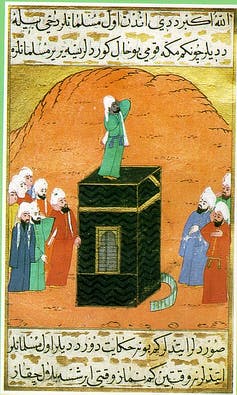
Bilal, center, found freedom in Islam. Wikimedia Commons

Bilal was exceptionally close to Muhammad, too. In 622, the Prophet appointed him the first person to give the public call to prayer in recognition of his powerful, pleasing voice and personal piety. Bilal would later marry an Arab woman from a respectable tribe – unthinkable for an enslaved African in the pre-Islamic period.

For many modern Muslims, Bilal is the symbol of Islam’s egalitarian message, which in its ideal application recognizes no difference among humans on the basis of ethnicity or race but rather is more concerned with personal integrity. One of the United States’ leading Black Muslim newspaper, published between 1975 and 1981, was called The Bilalian News.

More recently Yasir Qadhi, dean of the Islamic Seminary of America, in Texas, invoked Islam’s egalitarian roots. In a June 5 public address, he said American Muslims, a population familiar with discrimination, “must fight racism, whether it is by education or by other means.”

Many Muslims in the U.S. are taking action, supporting the Black Lives Matter movement and protesting police brutality and systemic racism. Their actions reflect the revolutionary – and still unrealized – egalitarian message that Prophet Muhammad set down over 1,400 years ago as a cornerstone of the Muslim faith.The Conversation

Date posted: July 16, 2020.

[Editor’s Note: I first read the above piece in the religion section of the Salt Lake Tribune, which republished it from The Conversation under a Creative Commons Licence. We do likewise, and invite our readers to read the original piece by clicking HERE; it includes several more hyperlinks within the body of the article that some readers may find useful for further study. Image(s) in Simerg’s piece may vary from those posted in The Conversation and the Tribune .]

Before departing this website please take a moment to review Simerg’s Table of Contents for links to hundreds of thought provoking pieces on a vast array of subjects including faith and culture, history and philosophy, and arts and letters to name a few.

_______________________-

Asma Afsaruddin is Professor of Islamic Studies and former Chairperson, Department of Middle Eastern Languages and Cultures, Indiana University.

This article is republished from The Conversation under a Creative Commons license. To read original article in The Conversation, please click HERE.

_________________

The editor highly recommends the following recent pieces published in Simerg:

1. His Highness the Aga Khan on partnership between races as a condition of peace and prosperity; and
2. Ismaili Youth Perspectives on Black Lives Matter and Social Justice Issues.

Jamatkhana

Ismaili Centre Toronto Prayer Hall Simerg

By NAVYN NARAN

They entered the Jamatkhana prayer hall,
Sat on the patterned carpet or the seniors on chairs
Closed their eyes.
So some chatted to acquaintances
Ya Ali Madad “ki ayon?”
“Did you hear? Did you go…? Shukr
Mawla…”
Mukhi-Kamadiasaheban enter, we start.
Every day, 365.

A pandemic, unprecedented.
A change.
The place of prayer remained.
And was attended, at set time and others,
“All day, all night, every day, every night”
Outdoors and in, on screen and off,
They looked toward the esoteric qibla,
breathed the esoteric Qur’an.

The Jamatkhana holds a special place
and cannot be replaced
The place of prayer remains within
The soul is not erased.
“There are those I see with my eyes”….
Yes, there is that we see with our eyes,
And then, there is that we may feel in the heart.

Will the space of gathering open?
A sanctuary for so many,
A familiar space of belonging,
Connection, hope and light.
When will it open?
No one can speculate.
For it is, when the Imam decides.

“Remember, remember, remember,
And never forget
“Take your tasbirh, take your tasbirh”
Like your breath, in and out.
Only you can decide.
The exoteric and the esoteric

The Jamatkhana is a physical space
A sanctuary, a place of peace.

Date posted: June 22, 2020.

Before departing this website please take a moment to review Simerg’s Table of Contents for links to hundreds of thought provoking pieces on a vast array of subjects including faith and culture, history and philosophy, and arts and letters to name a few.

___________________

About the author: A regular contributor to this website, Dr. Navyn Naran was born in Dar es Salaam, Tanzania, to Anaar (1936-2017) and Badrudin Naran (1930-1979). She is currently in Toronto working in pediatrics and volunteering at the Aga Khan Museum.

____________________

We welcome feedback/letters from our readers. Please use the feedback box which appears below. If you don’t see the box please click Leave a comment . Your comment may be edited for length and brevity, and is subject to moderation. We are unable to acknowledge unpublished letters.

Ismaili Youth Perspectives on Black Lives Matter and Social Justice Issues

By ALYNA NOREEN DADA
(Special contribution to Simerg)

Pluralism

We hear this word constantly and are reminded of the ethics of pluralism in Mawlana Hazar Imam’s, His Highness the Aga Khan, Farmans and speeches how we can integrate this in our everyday lives. What does pluralism mean and how can we, as Ismaili Muslims, understand our role in the Black Lives Matter movement and apply the tenets of our faith to make a meaningful contribution to improving the quality of life for our African-American community?

article continues after photo

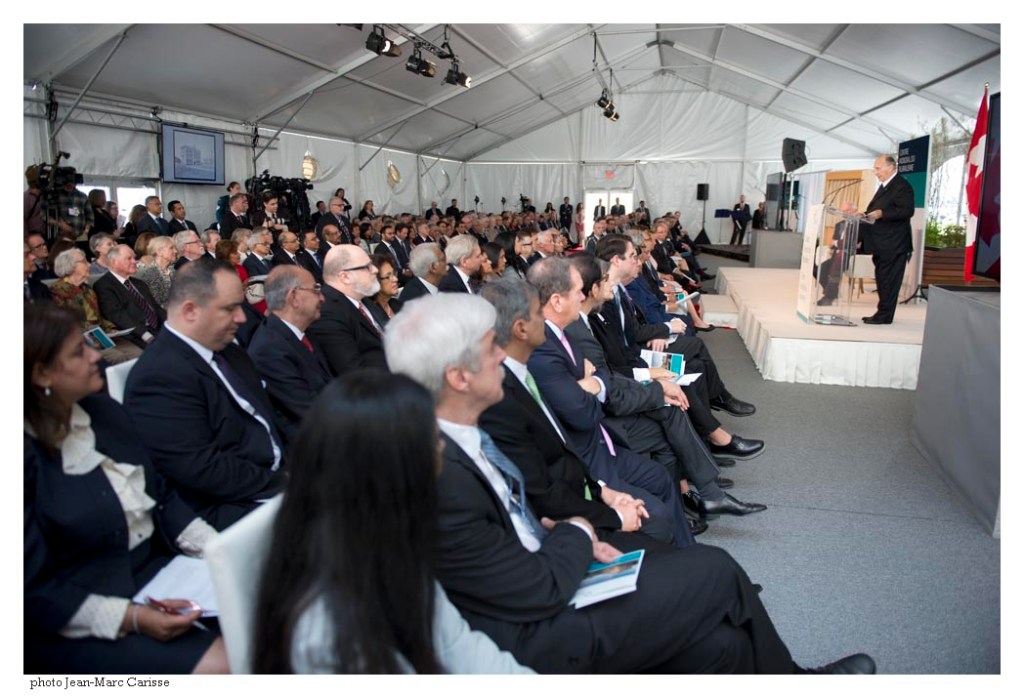
Aga Khan address Global Centre for Pluralism Jean-Marc Carisse Barakah and Simerg
Guests listen as His Highness the Aga Khan delivers his remarks on May 16, 2017 at the inauguration of the international headquarters of the Global Centre for Pluralism. Photo: ©Jean-Marc Carisse.

His Highness stated in his speech on May 16, 2017 at the opening ceremony of the new headquarters of the Global Centre for Pluralism in Ottawa, “Pluralism does not mean the elimination of difference, but the embrace of difference. Genuine pluralism understands that diversity does not weaken a society, it strengthens it. In an ever-shrinking, ever more diverse world, a genuine sense of pluralism is the indispensable foundation for human peace and progress.” [Bold emphasis added here, and in remainder of article]

We are grateful to be a part of a religious ummah which prides on serving others and the societies in which we live and also allows us to build upon our moral compass by leveraging our intelligence, experience and humility with guidance from the Imam. In order to create a pluralistic society, our duty as Ismailis must be to support the movement and black-led organizations, particularly when we see African-Americans like George Floyd, Breonna Taylor, Ahmaud Arbery and many others murdered unjustly when fighting for their own human rights.

However, this begs the question, why is anti-blackness so prevalent in the South Asian including our own Ismaili Khoja community and why do older generations continue to question the purpose of Black protests and police brutality that we see on a plethora of news channels every second of every day?

article continues after photo

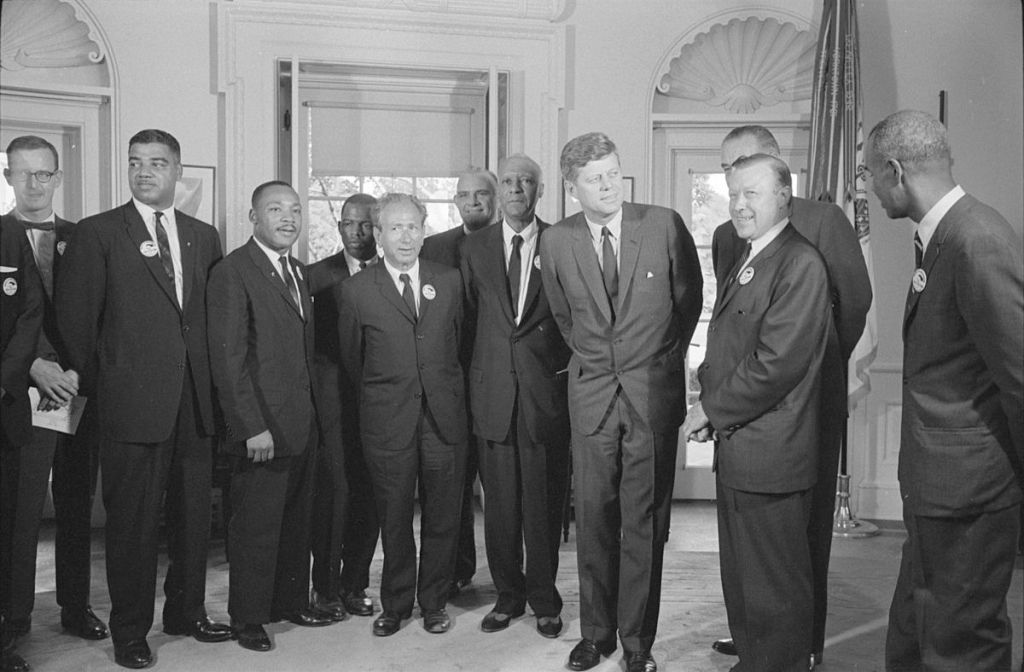
President Kennedy with Civil Rights Leaders after March on Washington on August 28, 2963. Simerg,Library of Congress
Civil rights leaders, including Dr. Martin Luther King (3rd from left), meet with President John F. Kennedy in the oval office of the White House after the March on Washington, D.C. on August 28, 1963. Photo: Warren K. Leffler, U.S. News & World Report Magazine Photograph Collection /
US Library of Congress.

This is a turning point in history that should serve as an awakening: our presence in the United States is as a result of work of Black activists who often sacrificed their lives to achieve equal rights.  During the Civil Rights Movement in the 1960s, African Americans led by the notable Dr. Martin Luther King used protests and civil disobedience to help abolish some of the most racist laws in the US not only for themselves, but for all communities of color like South Asians. Ultimately, this led to the US government implementing the Immigration and Nationality Act of 1965, which eliminated the racist quotas and allowed South Asian communities to emigrate to the US. We should be indebted to the civil rights movement and black activists who eliminated major barriers that allowed us as a community to settle and thrive in various parts of the United States and beyond.

I believe that the youth in our community have an obligation to educate our first-generation immigrants on their microaggressions and inherent biases pertaining to Black people.

article continues after images

~~~~~~~~~~~~~~~~~

____________________

Fortunately, many Ismaili youth activists from all over the world have come together to vocalize racial injustices, particularly in light of recent killings of Black men and women due to police brutality in the United States.

They have been doing a wonderful job mobilizing resources (that I will discuss in greater detail later in this article). The goal of these coalesced resources is to target larger audiences initially at a local level, ultimately expanding this to a national platform to highlight this systemic issue.

South Asian/East African youth who are typically first or second younger generation Americans can begin to have these conversations, starting with their families and escalating it to a wide scale audience. Citing guidance from Mawlana Hazar Imam is paramount as this will quickly resonate with the older members of our community. Given that we’re a group of multicultural individuals with distinctive backgrounds should serve as a great example of strength in diversity and solidarity. Islamic principles of inclusion, peace and generosity should be used as our guiding principles when engaging various constituents of the Ismaili Jamat.

(Please note, these activists’ groups are not associated with the official Jamati institutions. They are Ismailis who have a passion for social justice issues and grassroots organization and want to create a forum for discussion to help implement change within our community)

Ismaili Activists 

An Instagram Account was created to underscore social justice issues that exist in USA and bridge the gap with what Ismailis should be addressing within our community. The purpose of this social media platform is to provide an open forum to for members to have honest discussions about topics that are seldom talked about within Ismailis due to either lack of knowledge, awareness or inability to vocalize these issues. Please click on Ismaili Activists Instagram Platform.

Ismaili activists Instagram Simerg
Please click for Ismaili Activists on Instagram

________________________

Ismailis for Black Lives Matter

A group of Ismaili youths from USA & Canada created a GoFundMe campaign, Ismailis for Black Lives Matter, an independent fundraiser set up with the purpose of involving the Ismaili Community in the discussion around racial injustices pertaining to African Americans.

This initiative symbolizes ally hood to the Black Lives Matter Movement and helps to educate members of the Jamat as well as mobilize the financial resources of the Ismaili community in accordance with the faith’s core principles. The campaign raised over $20,000 and was supported by platforms like Twitter and Ismaili Mail.

Please click on Ismailis for Black Lives Matter GoFund Me Website (all proceeds will go directly to Black Lives Matter Movement).

The team also created a library with talking points and helpful resources to further education on the Black Lives Matter Movement.

________________________

Ismailis for Change

This Slack group is focused on taking action based off an open letter addressed to the Jamat written by Alia Jeraj, a Minnesotan Ismaili. The Slack work group, created by Zahir Surmawala, is comprised of Ismailis from a variety of professional backgrounds including: product managers, tech entrepreneurs, attorneys, diversity and inclusion educators, healthcare professionals, artists, interfaith preachers etc. These individuals have all been brought together with one common goal of educating the Jamat on social justice issues to build solidarity for the African-American Community. Please click Open Letter Resource Guide.

________________________

Additional Resources Created by Ismaili Youth

1. Combating Implicit Racial Biases in the Education System

2. How to talk to your Ismaili Family About Black Lives Matter

3. The Model Minority Myth

4. Defunding the Police

I, along with my Ismaili brothers and sisters, hope you find these resources helpful and we continue to make the voices of our Black community heard.  

Date posted: June 18, 2020.

__________________________

We welcome feedback/letters from our readers. Please use the feedback box which appears below. If you don’t see the box please click please click Leave a comment. Your comment may be edited for length and brevity, and is subject to moderation. We are unable to acknowledge unpublished letters.

Alyna Noreen Dada portrait for Simerg

Alyna Noreen Dada is a healthcare professional working for a national physician organization that transforms the healthcare delivery experience for providers and consumers.

Originally from the New Jersey area, she is a graduate of The George Washington University in Washington, DC with a degree in public policy and public health and has been living in the District for a decade.

Alyna’s family hails from Kenya and South Africa by way of the UK and settled in the United States in the early 1980’s.

Living in DC for the last few years has certainly piqued Alyna’s interest in social justice and policy issues, particularly around racial injustice and the Black Lives Matter Movement. After all, she lives blocks away from the White House!

_____________

Before departing this website please take a moment to review Simerg’s Table of Contents for links to hundreds of thought provoking pieces on a vast array of subjects including faith and culture, history and philosophy, and arts and letters to name a few.

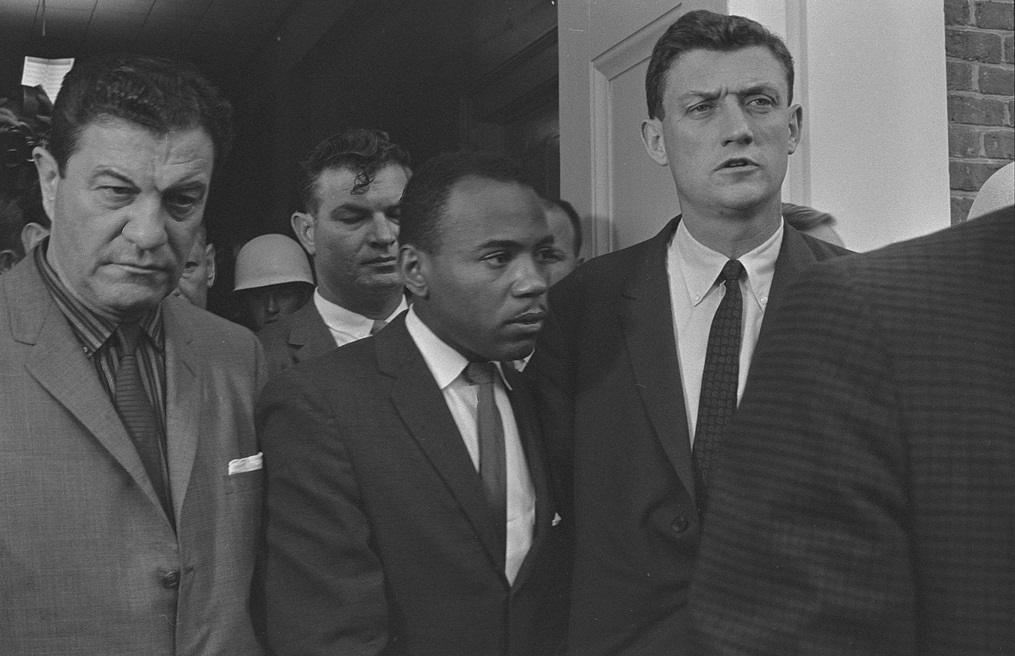
Photograph shows James Meredith walking on the campus of the University of Mississippi, accompanied by U.S. marshals. LOC photo reproduced in Simerg

A lesson in Black history in a classroom in Jinja, Uganda: The case of Mississippi’s African-American James Meredith

Editor’s note: The following special piece for Simerg by UK’s Shiraz Pradhan is the second in Simerg’s series of articles on the subject of race, inequality, cultural diversity and pluralism. The first article in the series was President Kennedy’s address on June 13, 1963 to the Americans on the subject of Civil Rights. Shiraz’s piece has been adapted from a chapter in his latest novel “Michelangelo in Jinja” and contains illustrations that do not form part of his novel. Following the article, we have a video of a fascinating talk delivered at the US Library of Congress by Henry T. Gallagher that details the events, including the riot, that took place during the admission of the first black American student, James Meredith, to the University of Mississippi. Mr. Gallagher was among the 20,000 troops that were dispatched by President Kennedy to restore law and order in Mississippi during the riot. He was also personally responsible for looking after the safety of Mr. Meredith.

Stranglehold on Neck of Black People

A frontispiece illustration in "The Child's Anti-Slavery Book…, New York, [1860], showing an African-American slave father leaving his family as he is sold away from his family. Photo: US Library of Congress. Reproduced in Simerg.
A frontispiece illustration in “The Child’s Anti-Slavery Book…, New York, [1860], showing an African-American slave father leaving his family as he is sold away from his family. Photo: US Library of Congress.

By SHIRAZ PRADHAN

When James Meredith was being admitted to the segregated University of Mississippi as its first African-American student, the Uganda Argus carried a cryptic headline “Segregation Defeated”. This simple headline, in the months and years that followed, would change the history of Uganda and rest of Africa.

This event caused great joy in our part of the world and fueled the Ugandan ambition for independence. But in the next several weeks the story turned ugly as many white people of Mississippi and other southern states of the USA reacted violently to black encroachment on the white domain of university education and other civil privileges, forcing President John F. Kennedy to send troops in order to restore law and order.

Yes, it was that stark – blatant denial of black rights! The Meredith saga acted as a catalyst for the re-emergence of the Civil Rights Movement in the US originally started by Martin Luther King in 1954.

Photograph shows James Meredith walking on the campus of the University of Mississippi, accompanied by U.S. marshals. LOC photo reproduced in Simerg
Photograph shows James Meredith walking on the campus of the University of Mississippi, accompanied by U.S. marshals. Photo: Marion S. Trikosko / US Library of Congress via U.S. News & World Report Magazine Photograph Collection.

Mr Batra, our history teacher. seized on the Meredith story to shift his focus from Western and Eastern philosophies to philosophy of action and human rights. He said that philosophy, search for God and reaching nirvana were only words if they did not improve human condition. “As important as God is,” he said, “concern for human condition is no less. We have a duty to our fellow beings. God would wish for that. Today, I will talk about people whose philosophies were based on actions to improve the conditions of their people. More importantly, I will speak about the struggles of black people of America.”

Our teacher electrified the class. Jinja Secondary School in those days was called Indian Secondary School. William Wilberforce and Joseph Bufumbiro where the first native Ugandans who had joined our class. We had become aware of black aspirations. Africa in the 1960s was a smoldering tinder, ready to burst into flames at the slightest wind. The apartheid in South Africa was a stranglehold on the neck of Black People of South Africa. The Sharpeville massacre of innocent blacks in South Africa was fresh in our minds. Ian Smith of South Rhodesia (Zimbabwe) was ready to crush the hopes of black people for an equitable independence with one-man-one-vote and was conniving with the British to declare a minority White Unilateral Declaration of Independence (UDI), which he did in 1965.

The Mau Mau Insurgency for independence that lasted from 1952-1960 in our neighboring Kenya and the subsequent killings of the innocent Kikuyu people by the British was a pink-elephant in the room that no one wanted to mention.

Rolling a chalk-stick in his hand, Mr. Batra sensed our mood and continued. “We will shift our attention to that part of American history that was saddening. In the 1900s, the freed African-American slaves, still called by the derogatory term ‘negroes’, were struggling to gain equality.

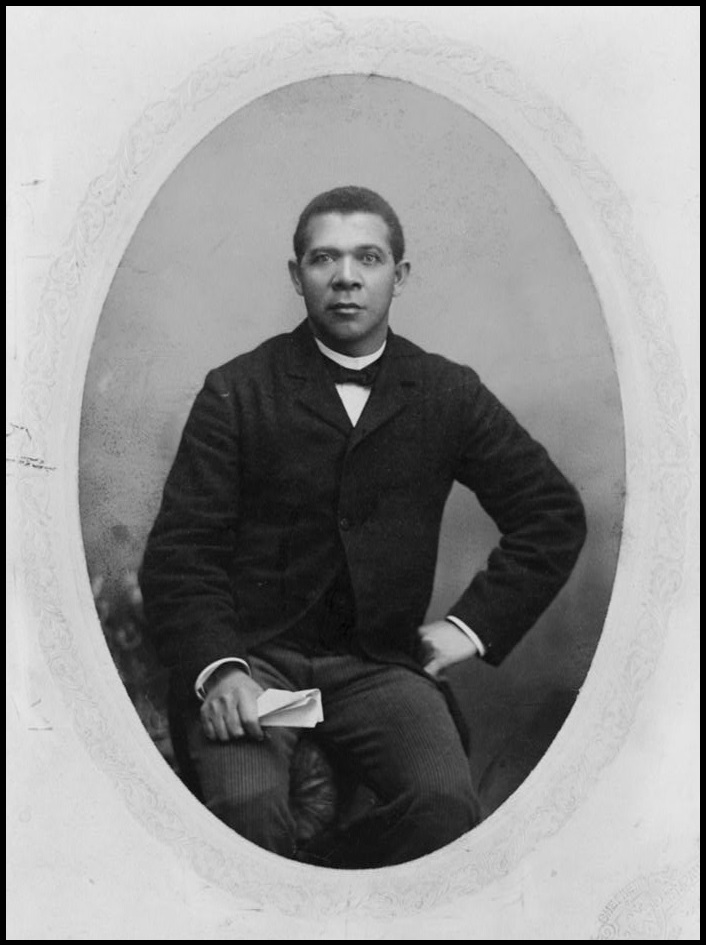
Booker T Washington, Library of Congress Photo, reproduced in Simerg
Booker T. Washington, three-quarter length portrait, seated, facing front; created / published between 1880 and 1890. Photograph possibly by Harry Shepherd. Photo: Booker T. Washington Collection, US Library of Congress.

Booker T. Washington was the first freed slave who had gained high prominence in politics in Washington, DC in the early 1900s. He was an advocate for building African-American economic strength, which he argued would give them the desired freedoms and equality. At this date, although freed, the African-American had no voting rights and no protection under the law. The lynching of black people for petty crimes or in some cases no crimes had accelerated. The whites made sure that black enterprises failed.

Booker T. Washington revolted against this white tyranny and sought to protect the senseless lynching of black people. The constitution drawn-up by the founding fathers of US recognized equal rights but in reality the rights of the black people were ignored. With no legal avenues at his disposal Booker T. Washington agreed to the only compromise solution to protect the rights of black people and save them from murder and lynching. This solution came to be known as the Atlanta Convention.

Agreed in 1905, this illegal convention was never written down. In it, the white establishment demanded that black people forego voting rights, agree only to basic education with no right to university education and no equality in law. The last dehumanizing demand of white people was for a forced segregation of black people in return for limited safety in law and basic freedom.

A poster in the collection of US Library of Congress condemning the South African apartheid policies, reproduced in Simerg
A poster designed and created in 1976 by Wilfred Owen Brigade condemning the South African apartheid regime, and showing support of the international boycott. Photo: US Library of Congress.

The white people of South Africa learned apartheid from this page of US history. Although not fully satisfactory, the Atlanta Convention stopped the senseless lynching and persecution of the black people. This was the singular achievement of Booker T. Washington.

As an afterthought, Mr Batra added, “The importance of James Meredith story that you read in Uganda Argus is that it has taken fifty years for one black student to challenge the unwritten, unlawful Atlanta Convention. The reaction of the white people of the south US demonstrates that white attitude towards the black people has not changed since the abolition of slavery.”

In his characteristic fashion, Mr Batra had not finished jarring our senses with impactful and unjust events from history. He had saved the most powerful of these for the last. He concluded his lesson by saying, “You will study the life of Abraham Lincoln in your literature class next year. He was the 35th president of the US. He abolished slavery in the US and restored human dignity. You would think that this would be a joyful achievement for the US and for Mr Lincoln. Unfortunately, he was silenced like Mahatma Gandhi by an assassin’s bullet soon after proclamation of the abolition of slavery.”

Caption in this illustration by Udo J. Keppler reads: "President Roosevelt: Lincoln emancipated you, the people gave you citizenship and I'll protect your rights."
Caption in this illustration by Udo J. Keppler reads: “President Roosevelt: Lincoln emancipated you, the people gave you citizenship and I’ll protect your rights.” The illustration shows President Theodore Roosevelt, standing with right hand on the left shoulder of an African American man, standing to the left, and his left hand on a paper labeled “15th Amendment”; behind them is a statue labeled “Lincoln – With Malice Toward None With Charity Toward all” showing Abraham Lincoln standing at the top with freed African American slaves. Section 1 of the 15th Amendment of the American Constitution reads, “The right of citizens of the United States to vote shall not be denied or abridged by the United States or by any State on account of race, color, or previous condition of servitude.” Section 2 then goes on to declare, “The Congress shall have the power to enforce this article by appropriate legislation.” Photo: US Library of Congress.

I asked. “Sir, why does every great life end in a tragedy?” Mr Batra thought for a while, before he answered: “Historically the human was a hunter-gatherer. His survival depended on defending his territory and maintaining superiority over others by dehumanizing and enslaving the enemy. The ancient humans hunted in bands. Anyone not belonging to the band was an enemy. This is the human instinct. In this sense a band can be any group with common interest and common characteristics such as race, color or religion. Anyone that challenges this convention is an enemy who needs to be dealt with.”

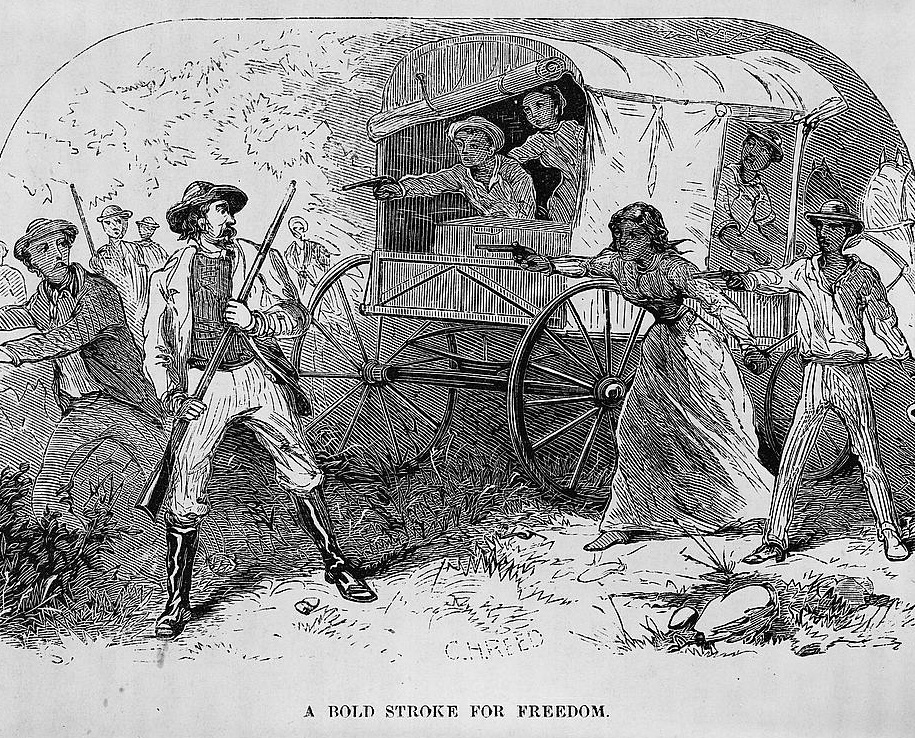
African-Americans with wagon pointing guns at slave-catchers, Library of Congress photo reproduced in Simerg
An illustration entitled ‘A bold stroke for freedom in “William Still, The Underground Railroad” 1872, p. 125, depicting African-Americans with wagon pointing guns at slave-catchers. Photo: US Library of Congress.

In the coming years the situation in Africa became grim as the apartheid grip on South Africa became stronger, Southern Rhodesia sunk in to a quagmire and Algeria began a war for independence from its French master. It was this one lesson with Mr Batra that gave us the motivation to pick up banners to end tyranny in Africa and to fight for justice for Nelson Mandela when the illegal South African regime tried him for treason.

Watch an important webcast presented by the US Library of Congress

SUMMARY: In September 1962, James Meredith became the first African American admitted to the University of Mississippi. A milestone in the civil rights movement, his admission triggered a riot spurred by a mob of 3,000 whites from across the South and all-but-officially stoked by the state’s segregationist authorities. The escalating conflict prompted President John F. Kennedy to send in 20,000 regular Army troops, in addition to federalized Mississippi National Guard soldiers, to restore law and order. “James Meredith and the Ole Miss Riot” is the memoir of one of the participants, a young Army second lieutenant named Henry T. Gallagher, born and raised in Minnesota.

VIDEO: James Meredith & the Ole Miss Riot

Date posted: June 12, 2020.

Before departing this website please take a moment to review Simerg’s Table of Contents for links to hundreds of thought provoking pieces on a vast array of subjects including faith and culture, history and philosophy, and arts and letters to name a few.
______________________

About the author: Shiraz Pradhan is a professional engineer, writer and philosopher. He grew up in Uganda and attended universities in Kenya and Pennsylvania, USA, and graduated with advanced degrees in Mechanical Engineering and Mechanics. As part of his involvement in several mega-project across the world, he has lived and worked in several countries in North and South America, Asia-Pacific, the Middle East and Europe. This has given him a globalist world-view which flavours his writings. His first novel Dancing with Shadows was published in 2015. Michelangelo in Jinja is his second book. Summing his writing, Pacific Book Review said: “Pradhan’s work is the first one I’m aware that is actively Globalist.” Shiraz has a keen interest in Judaeo-Christian History, Islamic Studies, Sufism and philosophies of the Vedas and Upanishads. With his interest and familiarity with several languages and dialects, Shiraz has specialized in the study of ancient and medieval devotional traditions of South Asia including the Nizari Ismail Ginans. He has published several essays and articles on these subjects, many of which have been published on this website. He is currently completing a book titles Amarapuri, the Abode of Eternity for publication in late 2020.  He is the Chairman of the Association of the Study of Ginans which specializes in the preservation, study and research of the ancient Ginans. Shiraz currently lives in the UK with his family.