Simerg is an independent initiative dedicated to Ismaili Muslims, the Aga Khan — their Hereditary Imam — and the Ismaili Imamat, and Islam in general through literary readings, photo essays and artistic expressions
“Navroz, with the awakening of nature, is also a good opportunity to revitalize in us these landmarks — the fundamentals of the ethics of our faith, gratitude, humility, wisdom, compassion, tolerance, service, solidarity, and a frontierless brotherhood…. our reflections and resolutions should be focused on the meaning we want to give to our family life, which must remain more than ever united”
By MOHEZ NATO
Alhamdulillah and Shukran Mawla
First of all, let us give thanks to Allah for His Mercy and for blessing the Shia Imami Ismaili Muslims with guidance under the divine authority of the Imam-of-the-Time. We lovingly express our gratitude to our revered Mawlana Hazar Imam for his constant blessings and prayers for all his murids around the world for good health and happiness, spiritual progress, worldly success, strength of faith, unity, barakah and mushkil-ahsan. It is indeed gratifying that we are able share this happy day of Navroz (also Nawroz, Nowruz) with our family members, with those of the Jamat and with those who are cherished to us.
Navroz 2023 has a very special character for the Ismaili Jamats around the world. It is now almost 5 years since the memorable Diamond Jubilee, when more than 50,000 Ismailis gathered in Lisbon for a momentous Darbar and where we witnessed the installation of the Headquarters of the Imamat — the Divan — in Portugal. The precious Farmans that were delivered by Mawlana Hazar Imam during the Lisbon Darbar remain in our hearts, and we are glad that they accessible in printed format along with other Farmans that Mawlana Hazar Imam has made in the last two decades.
A Time of Renewal
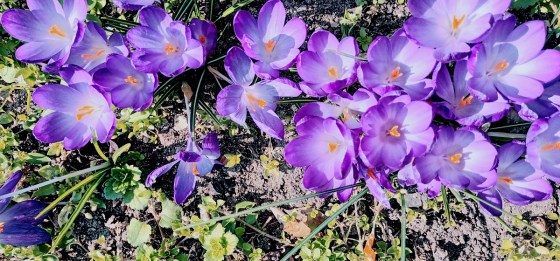
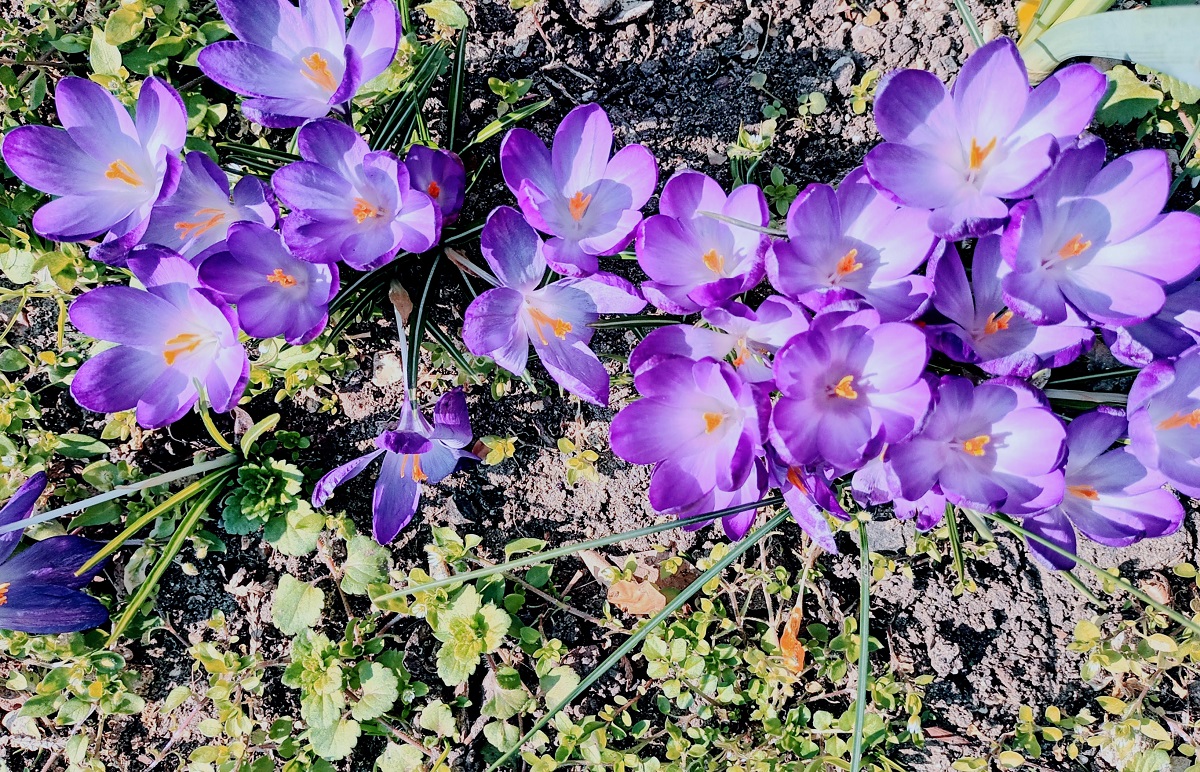
Crocus sativus or saffron crocus in the author’s garden at his home in Paris. Photograph: Mohez Nato.
Navroz, with the awakening of nature, is also a good opportunity to revitalize ourselves in these landmarks: the fundamentals of the ethics of our faith of gratitude, humility, wisdom, compassion, tolerance, service, solidarity, and a frontierless brotherhood.
The current time is going through health crises, climatic, ecological, geopolitical and economic turbulence. And in this troubled world, so stressful and anxious, our reflections and resolutions should be focused on the meaning we want to give to our family life, which must remain more than ever united. We must also more than ever before express our Ismaili identity and our brotherhood without frontiers as a “One Jamat” in solidarity.
We have to reflect on the meaning and direction of our professional achievements, on how to remain faithful to our loyal commitments in the national civil society.
A clear vision of these goals will result in progress in our spiritual quest and in remaining true murids of Mawlana Haza Imam. We seriously have to reflect on his Farmans and aspirations for the Jamat.
With the faith of conviction and with Mawlana Hazar Imam guidance to us on the path of Siratal-Mustaqim, we will overcome our fears and face our difficulties.
Awareness
Navroz is also the occasion of an awareness, the adoption of firm resolutions for a high ideal, for the spiritual quest and the choice of a serene life, made of brotherhood, love and generosity.
And this awareness necessarily leads to a commitment for one’s family, for one’s community, for one’s country, and for those most in need, and must lead to greater service to fellow human beings, by putting aside our personal interests.
Mawlana Hazar Imam, in his speech at Columbia University on May 15, 2006, specifically called “for a concern for personal responsibilities in order to pursue common goals such as passion for justice, pursuit of equity, respect for tolerance, and dedication to human dignity.”
We must not compromise on the fundamentals of our ethics, and never forget to feel at all times grateful to Allah’s Mercy and place ourselves at all times under His Blessing and Protection.
Islam is an art of living! And part of this art and Islam’s ethic is to balance our material and spiritual lives. This fundamental balance must be explained to the younger generation and the youth of the Jamat. In our daily lives, in our social and professional relationships, we must be meritocratic, irreproachable and considered above all as values or models of example. And in religious matters, we must strive to add a spiritual dimension through constant prayers and remembrance of Allah.
Hectic Life
Our life, since the turn of the 21st century, seems to be marked by a great rush. We often feel as if we are running after our existence, with the feeling that it is slipping away from us more and more. And yet, in spite of the hectic pace, we must commit ourselves to taking care of our interiority. This raises the question of how to combine the ethics of our faith with our personal, professional and social life.
We need to manage our time in order to devote moments to our interior life, reinforced by a moral ethic, and thus give an increasingly richer meaning to all the moments of our life.
It is therefore inwardly, in our soul and in our spirit, that we must seek the meaning of our life, our commitment to a harmonious and fulfilled life so that the cause of our joy, of our fulfillment remains within us. Our sincere and humble endeavours in our spiritual quest through meditative silence will give us the presence of a Light, which escapes any explanation, but which is something subtle, a reality rich in spiritual happiness.
The day we decide to look for the essential in ourselves, we will be on the way to freedom, serenity, plenitude. We only need to silence the discordant voices of our egoistic instincts, of our proud passions, of our jealous thoughts and our dark, chaotic feelings.
The silence of Ibadat and Bandagi (early morning meditation) will have the power to project us in another time, in another space, where the divine knowledge inscribed in us from all eternity, will reveal itself little by little to our conscience. And we will feel fulfilled, filled with divine light. With sustained and selffless efforts, this quest for light will lead to living a faith of conviction.
The challenge is to unify our all aspects of our lives, which will give us an opportunity to live a time that is not accelerated. Let us not let ourselves be “devoured by time”. We have to let our mind wander to marvel at the beauty of creation, to be inward looking and take hold of the questions, “What is the meaning of our life?” and “How can we have a successful life?”
Prayers and Hopes for Navroz
Let’s take the courageous decision to cultivate our spiritual life and our interiority in a consumer society that invites scattering and produces an imbalance in our existence.
On this blessed day of Navroz, let us raise our prayers together:
– O Mawla Ali, O Hazar Imam, make us confident and serene murids living a solid faith of convictions;
– O Hazar Imam, please pour on the darkness of our intelligence some rays of your Noor, that will illuminate us, give us the key and the inspiration to face and solve all the options of the din and the duniya!
Navroz Mubarak!
Date posted: March 20, 2023.
_____________________
Born and raised in Madagascar, Mohez Nato went to France in the late 1960’s to pursue his university education. Political tensions in Madagascar prevented him from returning to his home country, where he had planned to teach and carry out research on medicinal plants. Instead, he remained in France and completed his PhD, following which he worked as a teacher-researcher in Plant Biotechnology at the University of Paris Sud XI from 1971 to 2011.
Now, in his retirement, Mohez does voluntary work giving courses in French-speaking Universities in countries like Burkina Faso, Lebanon, Benin, Algeria and Tunisia. He is also the president of a Humanitarian Association which has been active in Madagascar since 1993. Within the Ismaili community, Mohez was Secretary General of the Ismailia Association for France (with President Mohamad Peera) which organized Mawlana Hazar Imam His Highness the Aga Khan’s visit to Paris in 1980. Thereafter, he devoted time for the opening of a Jamatkhana in Antony in southern suburb of Paris, where he also held the position of Kamadia from 1981 to 1983. After the Golden Jubilee celebrations in 2007-08, Mohez was bestowed with the title of Alijah by Mawlana Hazar Imam. Mohez is married to Farida, with whom he has two daughters, Farahna and Rahima. We invite you to read his earlier piece Ode à l’Imam du Temps Présent / Ode to the Imam of the Present Time published in Barakah.
“I think we all recognize that nothing in our world is more necessary than the spirit of Navroz. When we see all the conflicts, the plights of migrants and refugees, when we see the rise of xenophobia and racism in so many parts of the world, it is clear that we all need the spirit of Navroz” — António Guterres, UN Secretary General, quote from film.
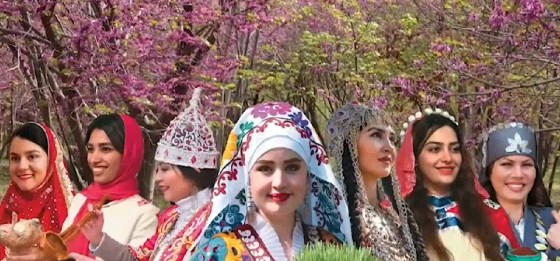
Simerg is pleased to present a special YouTube feature on Navroz entitled “The Spirit of Nowruz: Marking the Start of Spring” that was organized by the US Library of Congress (LOC). The entire LOC program with discussions and a Q&A session is almost 1 hour and 13 minutes long. The informative 45 minute film by award-winning documentary and educational film producer and director Farzin Rezaeian commences at the 15th minute mark of the program with remarks by UNSG António Guterres. The film provides viewers with an excellent overview of the history of Navroz and how the festival is celebrated today across different countries, cultures, traditions and faiths. Every aspect of Navroz is covered in this fine — and at times heart-warming — film that will raise our spirits as we commence the New Year on March 21, 2023, followed by the holy month of Ramadhan two days later, on March 23.
Film commences at around the 15th minute mark. NOTE: The YouTube presentation takes a few moments before it begins.
Date posted: March 18, 2023.
_____________
Before departing this website, please take a moment to review Simerg’s Table of Contents for links to hundreds of thought-provoking pieces on a vast array of subjects including faith and culture, history and philosophy, and arts and letters to name a few. Also visit Simerg’s sister websites Barakah, dedicated to His Highness the Aga Khan, and Simergphotos. The editor may be reached via email at mmerchant@simerg.com.
PRELUDE:Thirty years ago, Mbeya Town, situated in the Southern Highland region of Tanzania lost Raibanu Sikina Kanji Lalji. She and her husband Rai Kanji Lalji were one of the pioneers of Mbeya. She was a dedicated person not only to her Lalji Bharmal family by marriage but to all communities of the town. Being her grand nephew, I am humbled to write about her so that she is not forgotten and thus will belong to the pages of history of the Indian contribution in the development of East African countries.
It is a misconception that the people of Indian origin in East Africa are descendants of the labourers who built Kenya-Uganda railway. Almost 32,000 workers from Kutch and Punjab were involved in laying a railway line from Mombasa to Kampala. Between 1896 and 1901, 2,493 workers died and 6,454 became invalid while laying the tracks. After the completions, only about 7,000 workers chose to stay back; the rest of them returned to India.
History indicates that there were trade links between Kutch, Gujarat and African coast for centuries. Modern day migration of Indians (or Asians as they were called in East Africa) to East Africa started in early and middle part 19th century. It was estimated that the number of Indians living in Zanzibar in 1859 was around 2,000.
Before, during and after the completion of laying of railway tracks in East African countries, Indian traders, mostly in the beginning from Kutch and then Kathiawar, had migrated to establish trading posts, called “dukas” along the railway routes. There were however others who were brave enough to venture out and establish trading posts in unexplored and dangerous regions of these countries. This was to provide the needs of indigenous populations and also of German and British administrators, living in the towns where they had established administration centers called “Bomas”. One such part was Southern Highland region of German East Africa (Tanganyika) and one such family was of my great grandfather Lalji Bharmal Rana’s children and grandchildren.
Initially, the Indian settlers in East African countries were male Indians. These men came alone without their spouses, as either they felt that the move to East Africa would be temporary and short lived or would send for their wives later on, when financial means permitted. The other group was young single men.
Women, following their migration to East Africa, either to join their husbands or after becoming brides of young single men who had gone back to get married, have played a very major and important role in the success of Indian settlement in Africa in general and East Africa in particular. They not only minded their homes and looked after the children but they were pillars of support for Indian men. They helped their husbands in the “dukas”, looked after the extended family and also helped other women in the community they were living in.
Mbeya and Tukuyu regions of the Southern Highland Province of Tanganyika was blessed with arrival in the early part of 1923 — after her marriage to Wadabapa Kanji Lalji Bharmal — of a lady, who would play a major role not only in the settlement of Lalji Bharmal family and Indian community of various backgrounds and religion but also the betterment of the general population of Mbeya.
Her name was Sikinabai Kanji Lalji — our Wadima, The Grandma of Mbeya.
Wadima Raibanu Sikina Kanji Lalji. Photograph: Dr. Mohamed Manji collection.
Wadima Sikina was the daughter of Hirji Rajpar Kalyan from Nagalpur, Kutch. She was a sister of five brothers who all migrated to Tanganyika. The oldest brother, Jaffer, settled in Zanzibar and the rest, Mollo, Merali, Bandali and Suleman settled in Tukuyu. Wadabapa Kanji Lalji was the second son of Lalji Bharmal and being single, immigrated first in early second decade of 20th century. His older brother, Manji, was a family man and a breadwinner for the Lalji Bharmal family, farming on their small piece of land called “Kundhi Wadi”. Thus he was not able to go first to Tanganyika. Wadabapa Kanji Lalji after succeeding in his business, returned to Kutch in 1922 to get married.
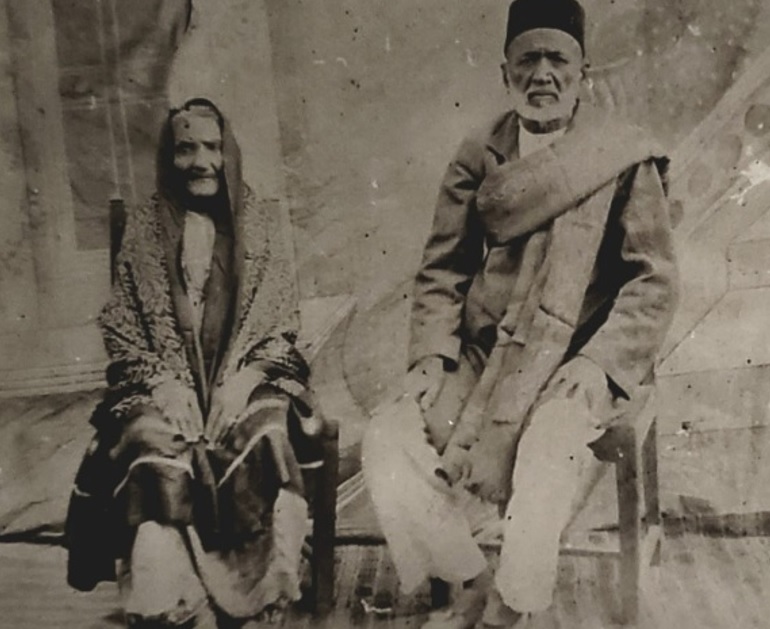
Wadima’s parents, Mr & Mrs Hirji Rajpar Kalyan. Photograph: Dr. Mohamed Manji collection.
The 48th Ismaili Imam, Mawlana Sir Sultan Mahomed Shah, His Highness the Aga Khan lll, had instructed the Kutch Kathiawar Ismaili Jamats to go to East Africa for economical betterment. So this newly married couple was given a big task to take some of Wadabapa’s brothers and nephews with them on their trip back to East Africa to settle them and help them to earn their living there. At a young age of seventeen and as a newly married bride, she took this responsibility with her husband and became the “mother” of the family.
The new home of Wadima, as Mrs Sikinabai Kanji Lalji, will be addressed from now on, was in New-Langenburg (presently known as Tukuyu), a small hillside town in the Southern Highland region of Tanganyika (now known as Tanzania).This was the place the German administration, before 1st World War, had established a center called “Boma”. Mr Kanji Lalji had moved to this place from a close by village of Masoko where he had initially settled in 1911.
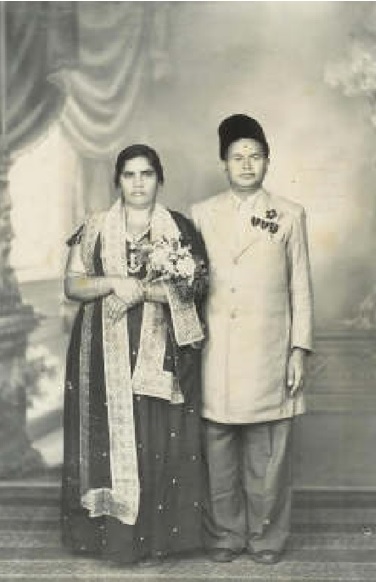
Mr & Mrs Kanji Lalji. Photograph: Dr. Mohamed Manji collection.
In those days, these small villages in East Africa did not have any hotels or restaurants. There were only few Indian families of different backgrounds, i.e. Hindus, Sunni Muslims and Khoja Muslims (mostly Ismailis).They thus had no choice but to look after each other in all ways of life. Any new arrival or visitor would just have to go to any “duka” of an Indian person and he and his family would be taken care of. They would be fed, housed and also would get help so to open their own “dukas” or find them employment, regardless of religious background. This was an old Sindhi, Kutchi and Khatiawadi tradition for generations, practised in India and outside India.
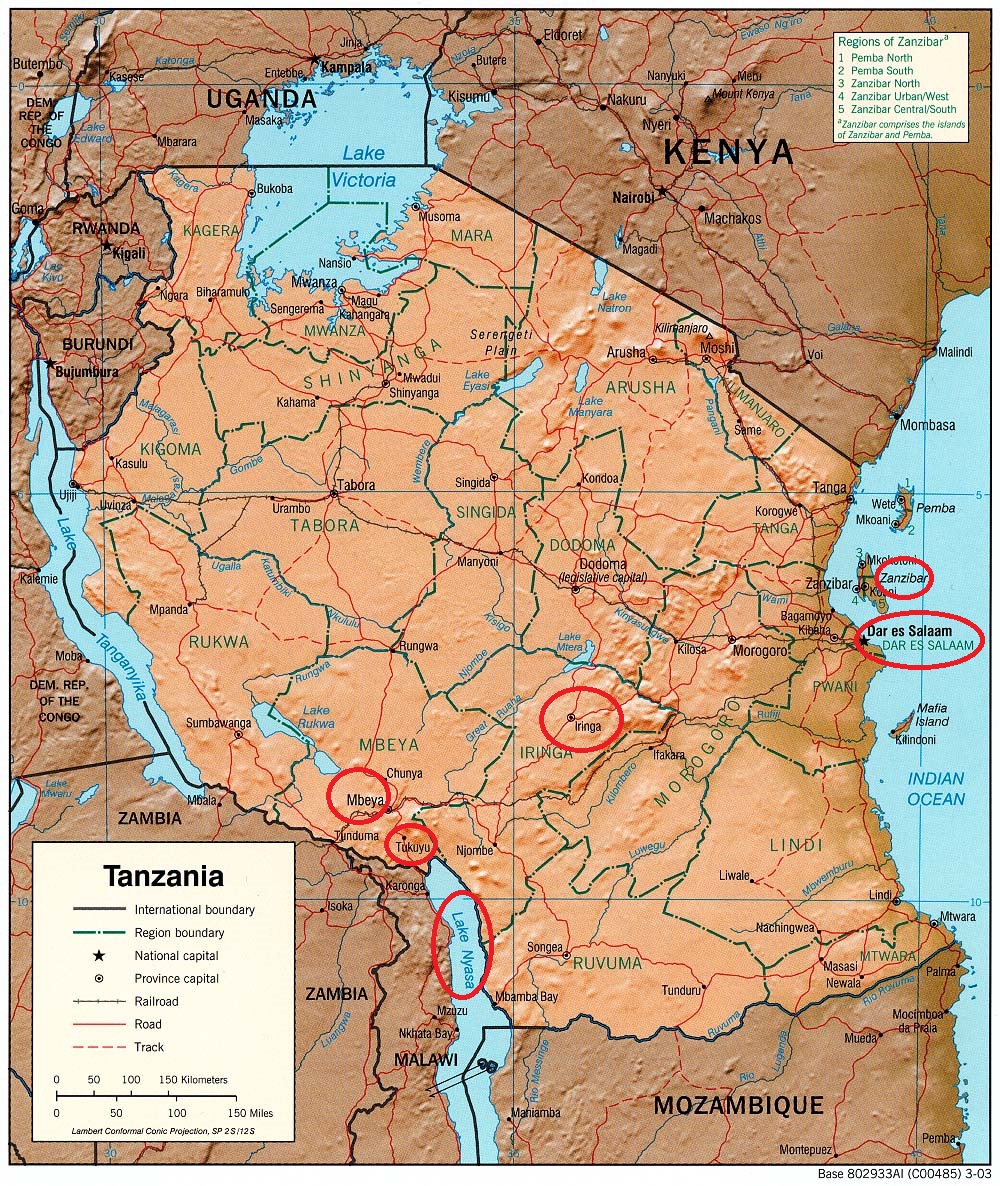
Click on map for enlargement
Shaded relief map of Tanzania. Perry-Castañeda Library Map Collection, University of Texas. This is an annotated version prepared by Simerg and locations mentioned in the article have been circled in red.
As very few of the Indian man-folk had wives, Wadimaa played major role in this aspect in Tukuyu, during that time. One such example was an arrival of a Sunni Muslim family of Haji Yusufmia in Tukuyu in late 1920’s or early 1930’s; they had arrived in Tukuyu after crossing Lake Nyassa (Malawi) in a small canoe from Nyasaland. They were on their way to Mbeya region to settle. They stayed with them and Haji Yusufmia made Wadimaa his blood sister. From then on that relationship between these two families continues to exist until the present day and has remained strong among their children and grandchildren. Haji Yusufmia became a prosperous businessman in Mbeya and a respected Muslim community leader in the Southern Highland region. He and his family were officially invited to attend the Diamond Jubilee celebration of Mawlana Sultan Mahomed Shah Aga Khan in 1946 in Dar es Salaam.
Wadima Sikinabai and Wadabapa Kanji Lalji were matriarch of the Lalji Bharmal family in the settlement of Wadabapa’s older brother Manji’s sons and daughters, his younger brothers Hussein and Karim Lalji. They helped them settle, marry and establish themselves in Tanganyika and some of them became quite successful economically.
In spite of being young, Wadima had an inborn mature quality and accepted a major role in the social aspect of the communities. She learned Swahili language and also local tribal language of Nyakyusa. As there were no doctors or official midwives, women helped each other during deliveries. She was one of the main women involved as a “midwife”. She was self-taught by observing and also from a midwifery medical book for women; she told me that she bought this book in Mumbai for 3 rupees during her first return visit to Kutch after her marriage. She also told me (being an MD myself) during our fireplace talks in her later years, while visiting Vancouver, that she still wanted to learn more. She wanted to know about new procedures involved during deliveries in the present modern day.
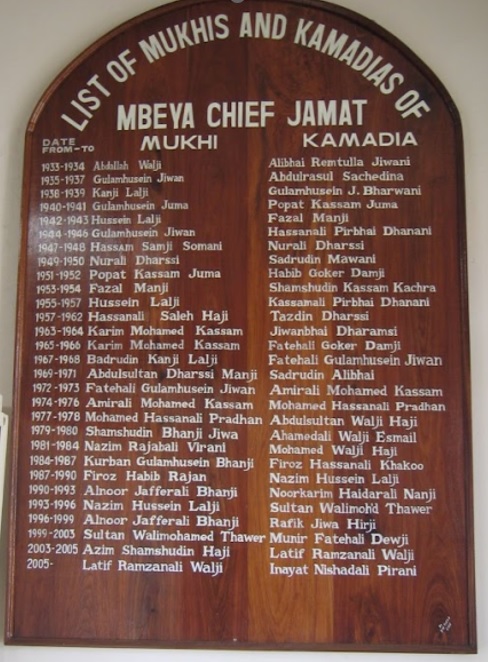
In 1935, Wadima and her family relocated to Mbeya. They became one of the pioneers of Mbeya. She continued her involvement in Mbeya community in the same way, and in some respect in more involved way. She was the main lady player in establishment of the Ismaili community of Mbeya. She, with her husband served as Mukhiani and Mukhi of Mbeya Ismaili Jamat in 1938. Their names are embedded on the plaque shown below. She also was instrumental in the establishment of other Ismaili majalis gatherings in Mbeya. In early 1950’s, as per Mawlana Sultan Mahomed Shah’s instructions, she was one of the first ladies in Mbeya, to adopt the simple western dress and gave up her Indian attire of “pacheri” and saris. She also was instrumental in getting other reluctant Ismaili ladies to do the same.
List of Mukhis and Kamadias of Mbeya Jamat Photograph: Dr. Mohamed Manji collection.
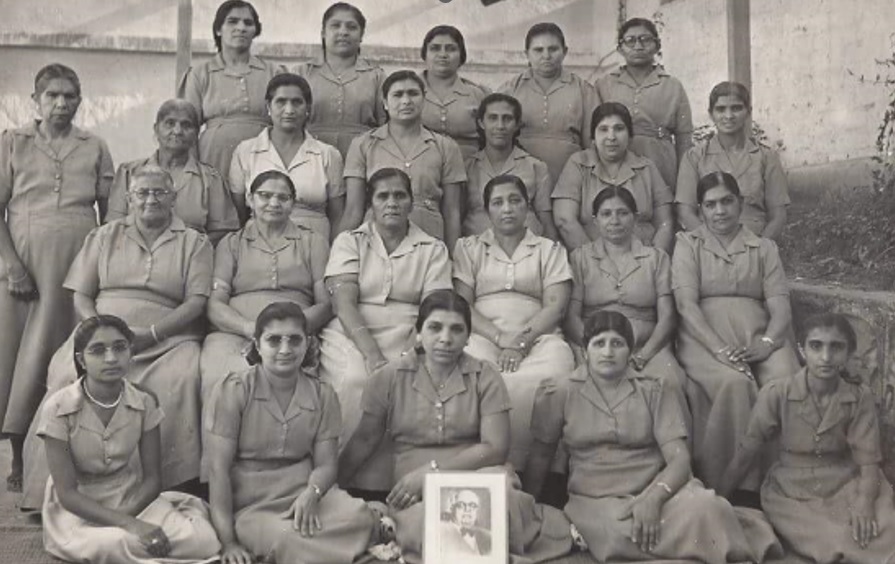
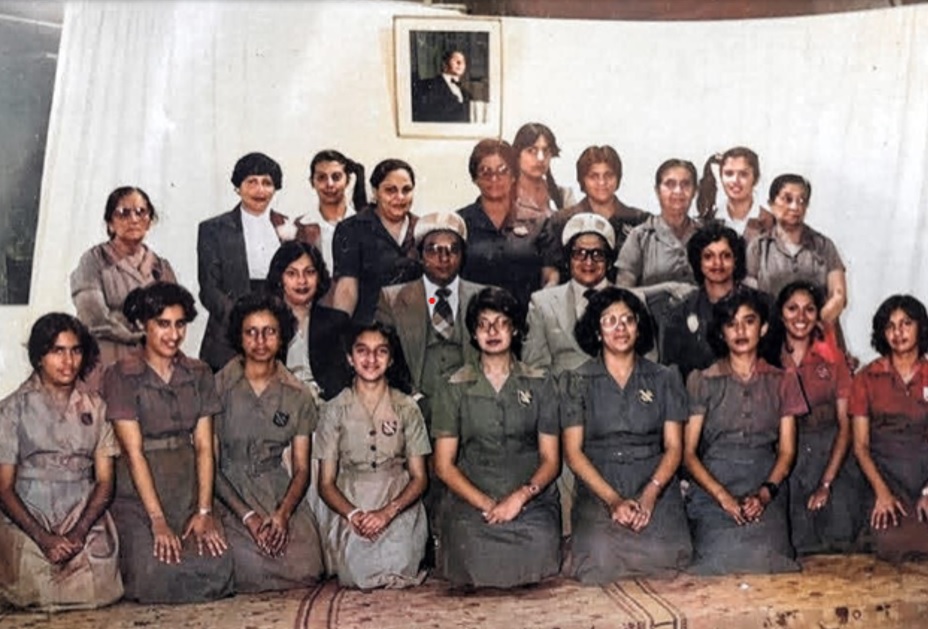
Wadima established the Ismaili Ladies Voluntary corps in Mbeya. The following pictures show her involvement over the decades. She also participated in preparing food during Ismaili functions as part of “Jaman” committee. In spite of her age, she also participated in one of the early Vancouver Partnership Walk during her visit to Vancouver, BC.
Mbeya Aga Khan Women’s Voluntary Corp early 1950s. Photograph: Dr Mohamed Manji collection.
Mbeya Aga Khan Women’s Voluntary Corp late 1950s. Photograph: Dr Mohamed Manji collection.
Mbeya Aga Khan Women’s Voluntary Corp late 1980s. Photograph: Dr Mohamed Manji collection.
Over the years, she earned the respect of all communities of Mbeya, whether they were of native African population or of Indian and European background and came to be known as WADIMA (Grandma). She had a persona of being confidant and in expressing authority. Families would get her involved in settlement of family, marital and financial issues of the community. After Tanganyika’s independence on December 9, 1961, local native political leader would come and greet her as she had known them since they were young. At any Indian wedding, she would be consulted and invited. I remember that my father did consult and inform her about weddings in our family.
In the late 1940’s and early 1950’s, members of the Lalji family in Mbeya would visit Wadima’s place once or twice a week after Jamatkhana, for chit-chat. I was very young and my young cousins and young uncles would gather around a “sigree” (charcoal heating utensil), as Mbeya at an altitude of 1,758 metres (5,500 ft) was quite a cold place. The rooms were lit by lanterns; in that period there was no electricity in Mbeya. We would listen to the elders talking about local news, news from Kutch and other family news. Wadima was a very good storyteller. The young ones would sit with her and she would tell to us about our ancestry, about Kutch and their early hard days they went through when she came to Tanganyika and other interesting stories. This was kind of passing on to all of us, our history and informing us, who we were and where we came from.
Her legacy is being remembered and talked about, up to now, by all Lalji Bharmal youngsters, who were sitting around the “sigree” in those early days and also the new Lalji Bharmal generations in the latter days. When we get together here in Canada and talk about Mbeya, we remember her by saying to each other that “Wadima was saying so”.
Wadima during one of her visit to Vancouver in early 1990’s fell sick. Her wish always was to be buried in the African soil. She returned to Mbeya, Tanzania, her “home”. She passed away in Mbeya, surrounded by family, at the age of 88 years, on February 8th, 1994, and she is buried in Mbeya, Tanzania — the place she was a part of in building.
As I reflect on her magnificent life, I pray for the peace of her soul as well as the souls of all the departed members of my family.
Acknowledgements: I would like to first acknowledge my late Wadima Raibanu Sikina Kanji Lalji herself. She over the years provided me her history, which enabled me to pen down the above write up. I would also like to acknowledge my father’s first cousin and Wadimaa’s son Mr Badrudin Kanji Lalji, his daughter Al-Shamsh (Shamshi) Ladha and Wadimaa’s blood bother’s son Haji Satarmia Haji Yusufmia for providing information for this write up.
Date posted: March 16, 2023. Last updated: March 18, 2023 (names, typo corrections.)
_______________
Dr. Mohamed Fazal Manji
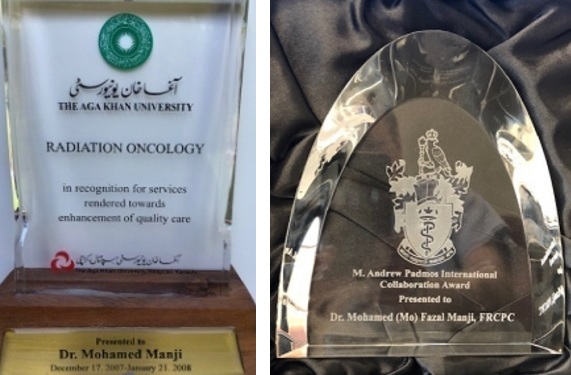
Dr Mohamed Fazal Manji, a cancer special and recipient of the 2022 Royal College of Canada M. Andrew Padmos International Collaboration Award, is originally from Mbeya, Tanzania. He is a Consultant Radiation Oncologist at BC Cancer Agency of British Columbia, Canada, and Clinical Associate Professor, University of British Columbia.He graduated in medicine from Makerere University, Kampala, Uganda and immigrated to Canada in 1972. Dr. Manji specialised in radiation cancer treatments at Princess Margaret Hospital (Cancer Center as it is called now) in Toronto. He obtained the Canadian Fellowship (FRCPC) and American Board Specialist Certification (DABRT) in Radiation Oncology. He also undertook special courses in Nuclear Medicine and Endocrinology at Harvard Medical School, Boston USA. He became the first Canadian trained Ismaili Radiation Oncologist in Canada and probably in North America.
A plaque from Aga Khan University in appreciation of Dr. Manji’s services and at right Dr. Manji received the 2022 Royal College of Canada M. Andrew Padmos International Collaboration Award
He has been working at BC Cancer agency since 1977. He spent time abroad, working in Riyadh, Saudi Arabia, to help modernize the Radiation Department at King Faisal Specialist Hospital & Research Center. He spent 12 years at this tertiary hospital for cancer and other diseases. He was also involved in the planning and development of Radiation Oncology Departments at the Aga Khan University Hospitals in Karachi and Nairobi and spent some time working at both places. He has contributed to many peer review publications, abstracts, book chapters and also lecture presentations nationally and internationally. He is the son of Rai Fazal Manji of Mbeya Tanzania, who served as a member of Aga Khan Supreme Council of Tanganyika in 1950’s and Raibanu Rehmat Fazal Manji, daughter of Alijah Mohamed Hamir who, in early 1930’s, built an iconic Jamatkhana in Iringa, Tanzania, and donated it to Imam Sultan Mahomed Shah unconditionally. Dr Manji served as first Member for Health on the first Aga Khan Ismaili Regional Council of Ontario and Quebec in 1973. He has previously contributed an informative piece on Prince Amyn Aga Khan’s visit to Toronto in 1973 on Simerg’s sister website Barakah.
_____________
Before departing this website, please take a moment to review Simerg’s Table of Contents for links to hundreds of thought-provoking pieces on a vast array of subjects including faith and culture, history and philosophy, and arts and letters to name a few. Also visit Simerg’s sister websites Barakah, dedicated to His Highness the Aga Khan, and Simergphotos. The editor may be reached via email at mmerchant@simerg.com.
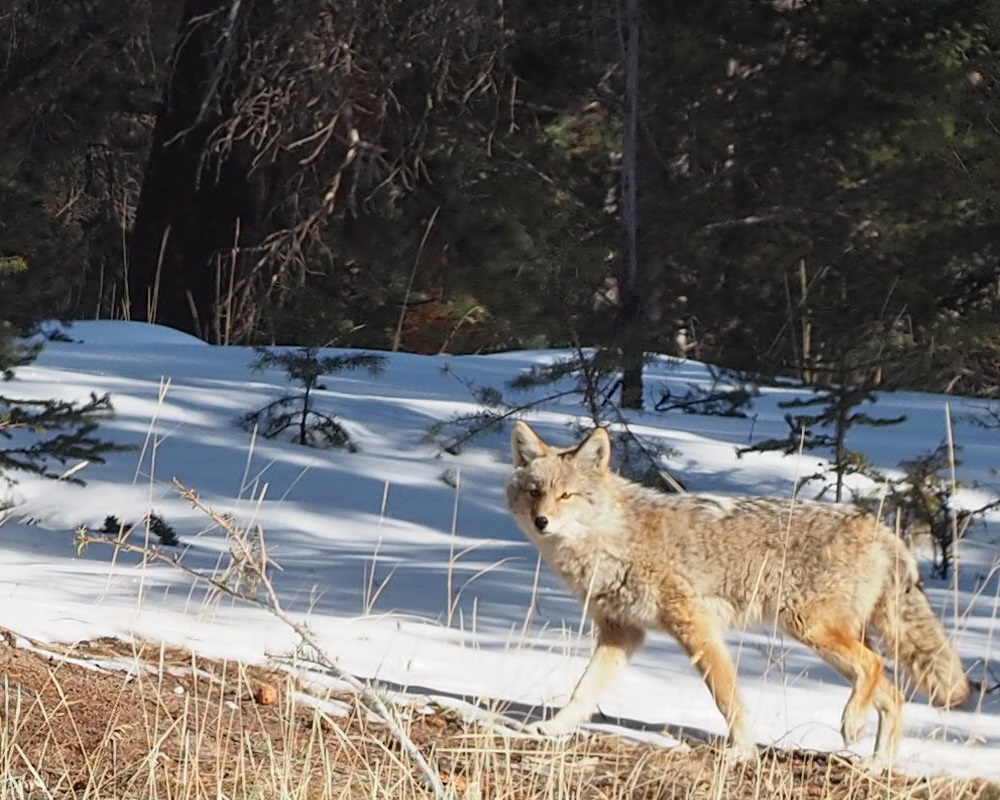
If you are in Alberta, and are waiting for warmer weather to see Banff National Park’s emerald coloured lakes, green forests and wildlife, make no mistake that the Park offers extraordinary scenery in winter. Its snow covered mountains and frozen lakes will baffle your eyes and, with the exception of bears who will be in hibernation for a few more weeks, you will also encounter an amazing variety of wildlife. Malik Merchant’s short excursion to Banff and Lake Louise offered him a rare opportunity to witness how Albertans, Canadians and people from all over the world come to Banff to enjoy its extraordinary mountains, ski resorts, sulphur springs, canyons and trails….as well as coffee shops, restaurants and art galleries! Please click HERE or on the photo below for Merchant’s story and photographs on Simergphotos.
A coyote off Banff’s Tunnel Mountain Road. Please click on image for story and more photos.
Featured photos at top of post: A CP freight train passes through Morant’s curve on the Bow Valley Parkway (Hwy 1A), 6 kms from Lake Louise. The lookout point is a very popular spot for visitors as it offers a stunning view of trains coming around the bend, with the Bow River flowing along the side and mountains in the background. It is a dream spot for train lovers! The frequency of the trains is unreliable, though.
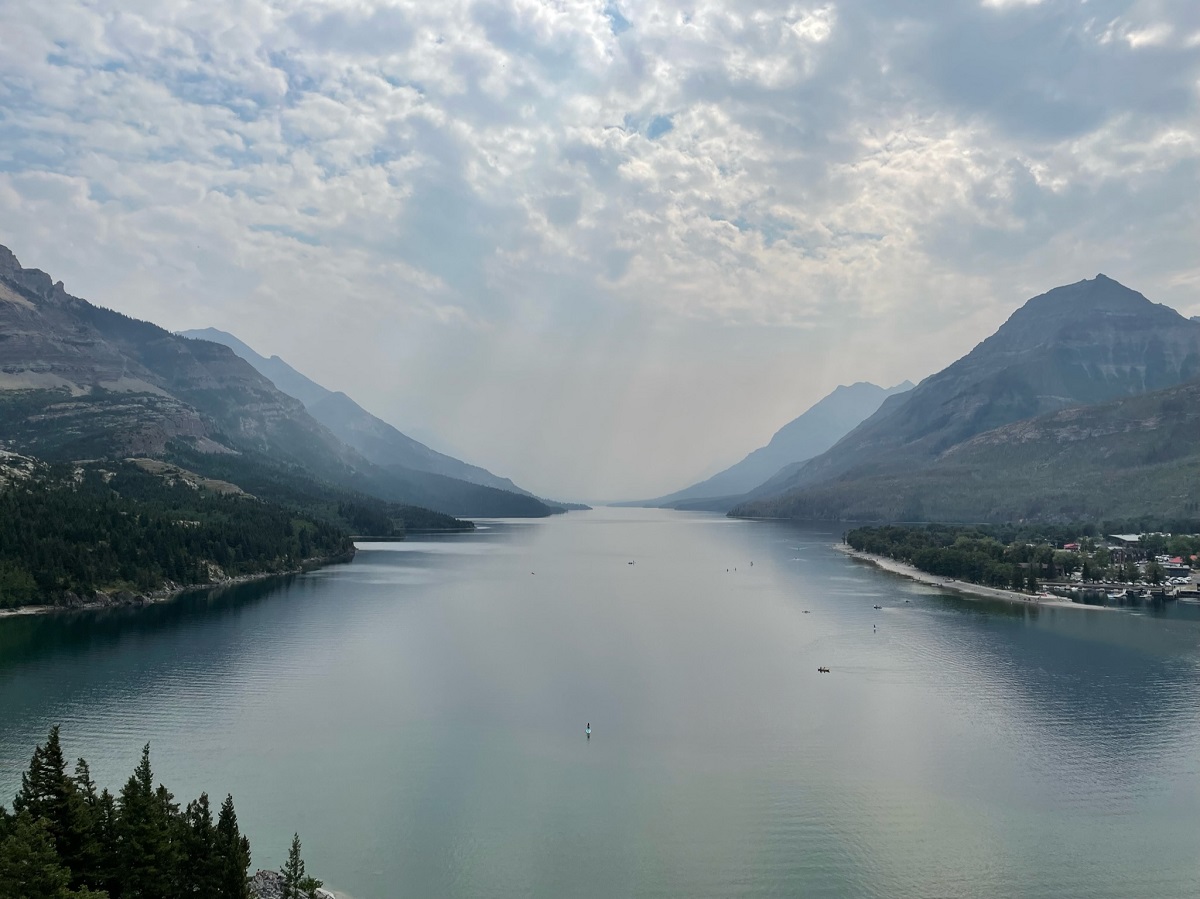
Nurin Merchant pens down a photo essay to reflect on her summer visit to Alberta in 2022. With spring soon approaching and summer to follow, Nurin strongly recommends that Albertans and visitors to the province should consider visiting Waterton Lakes National Park and the Kananaskis country to experience their extraordinary natural beauty, the stunning Rocky Mountains and superb wildlife. Please click PHOTO ESSAY or on the photograph below to view a small collection of photographs from more than 1,200 that she took with her dad over a period of 6 days in Alberta.
Waterton Lake. Please click on image for photo essay.
Featured photo at top of post: Forget Me Not Pond, Kananaskis Country.
Date posted: February 26, 2023.
________________
Before departing this website, please take a moment to review Simerg’s Table of Contents for links to hundreds of thought-provoking pieces on a vast array of subjects including faith and culture, history and philosophy, and arts and letters to name a few. Also visit Simerg’s sister websites Barakah, dedicated to His Highness the Aga Khan, and Simergphotos. The editor may be reached via email at mmerchant@simerg.com.
Oslo, Norway, based Forum 18 has published a very detailed and comprehensive account on the situation in Tajikistan’s Gorno-Badakhshan Autonomous Province (GBAO), as it relates to the faith, culture and practices of the Shia Ismaili Muslims living in the area.
Warnings, fines follow regime ban on prayer meetings in homes;
Regime bans Aga Khan portraits in homes;
Regime bans studies at Ismaili Institute in London;
Ismaili-based Ethics and Knowledge course banned from schools; and
Ban on voluntary Ethics and Knowledge classes, books seized
The above measures contradict Article 18 of the Universal Declaration of Human Rights after which Forum 18 was apparently named. The Article states:
“Everyone has the right to freedom of thought, conscience and religion; this right includes freedom to change his religion or belief, and freedom, either alone or in community with others and in public or private, to manifest his religion or belief in teaching, practice, worship and observance.”
ARTICLE CONTINUES BELOW
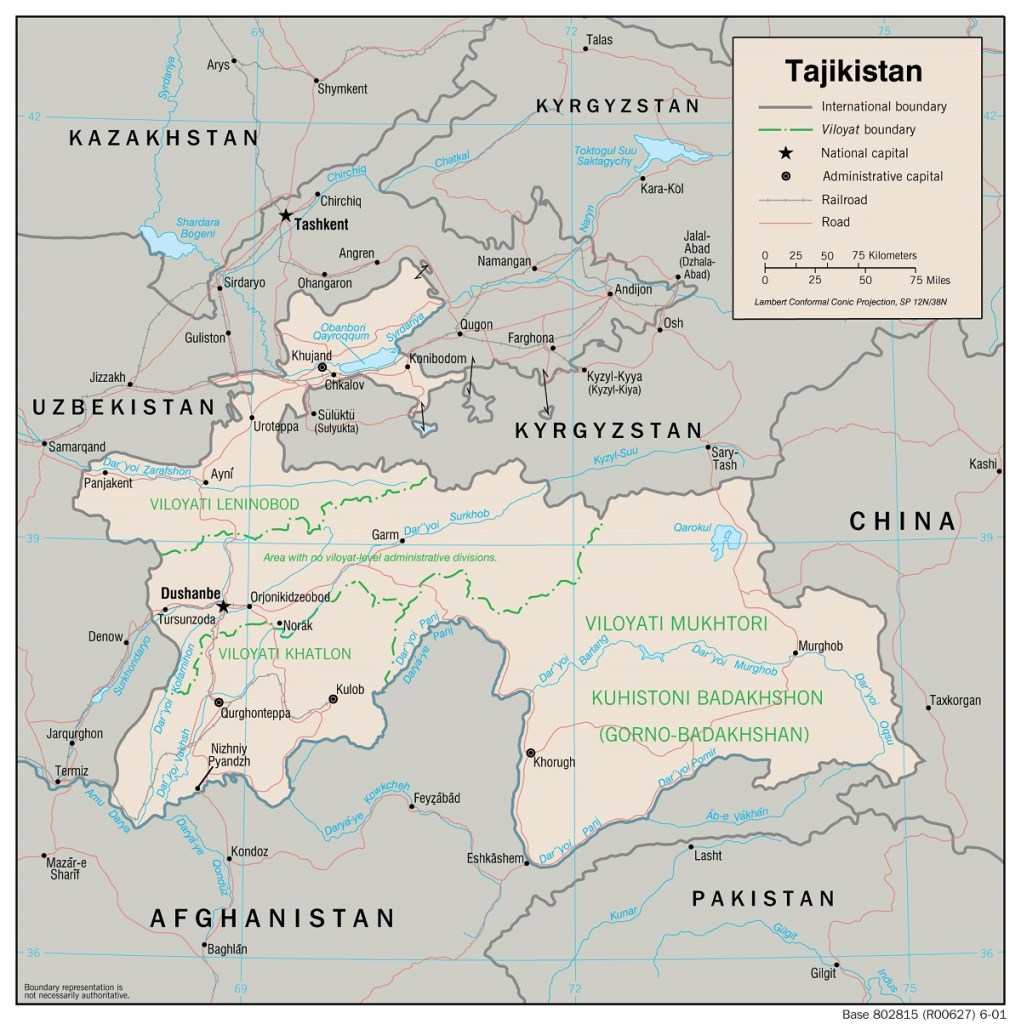
Map of Tajikistan, showing the autonomous Gorno-Badakhshan province and surrounding countries. Credit: Perry-Castañeda Library Map Collection, University of Texas.
The Forum 18 piece does however mention that the Ismaili Centres in Dushanbe and Khorog remain open for prayers. This piece of news is welcome.
Simerg is unable to independently verify the concerns that the Forum 18 article has raised. However, on its About page, Forum 18 states that it “provides truthful, original, detailed, and accurate monitoring and analysis of violations of freedom of thought, conscience and belief in Central Asia, Russia, the South Caucasus, and Belarus.”
Simerg therefore feels it necessary and appropriate to provide a direct link to Felix Corley’s piece in Forum 18. The editor has also noted that the link to Corley’s piece is being widely distributed over the internet via WhatsApp and email messages. Corley’s article in Forum 18 has since been reproduced in Eurasiareview on Wednesday, February 22, 2023.
Simerg welcomes official statements from appropriate authorities, institutions and individuals in GBAO clarifying the concerns raised in the Forum 18 report by submitting their official feedback HERE or sending it to mmerchant@simerg.com with their complete contact information.
Date posted: February 23, 2023. Last updated: February 26, 2023 (link added to download PDF version of report.)
_________________________
FEEDBACK AND CHECK OUR TOC
Simerg welcomes your feedback. Please click on Leave a Comment. Your letter may be edited for length and brevity, and is subject to moderation.
Before departing this website, please take a moment to review Simerg’s Table of Contents for links to hundreds of thought-provoking pieces on a vast array of subjects including faith and culture, history and philosophy, and arts and letters to name a few. Also visit Simerg’s sister websites Barakah, dedicated to His Highness the Aga Khan, and Simergphotos. The editor may be reached via email at mmerchant@simerg.com.
[An extended version of this post can be read on Simerg’s sister blog Barakah which was launched in 2017 as an honour and dedication to the 49th Hereditary Ismaili Imam, Mawlana Shah Karim al Husssaini, His Highness the Aga Khan, on the auspicious and historic occasion of his 60th Imamat anniversary or the Diamond Jubilee — Ed.]
When the 48th Ismaili Imam, Mawlana Sultan Mahomed Shah, His Highness the Aga Khan, passed away on July 11, 1957 at the age of 79, he chose his 20 year old grandson, Shah Karim al Hussaini, then a student at Harvard University, to succeed him as the 49th Hereditary Imam of the community.
The late Aga Khan who was born on November 2, 1877, succeeded to the throne of Imamat on August 17, 1885, when he was only 7 years old. His Imamat of 71 years is the longest in the 1400 span of Ismaili history that goes back to the origins of Shia Islam when the Prophet Muhammad — may peace be upon him and his family — appointed his son-in-law, Ali, to continue his teachings within the Muslim community. The current 49th Imam said in an interview, that the Ismailis are the only Shia Muslims to have a living Imam, namely himself.
At the death of the 48th Imam in 1957, Her Majesty Queen Elizabeth II (d. September 2022), sent the following message to the new Aga Khan through her Private Secretary:
“His Highness will be remembered by all for the wise guidance and selfless leadership which he has freely given during his many happy and eventful years. His energetic and devoted work for the League of Nations in a life dedicated to the service of his followers and to the welfare of mankind will long be remembered. In the arduous responsibility which you will be called on to bear as leader of your people, Her Majesty extends to you her sincere greetings and prayers that you may long fulfil your role as counsellor to the Ismaili community who owe you their allegiance.”
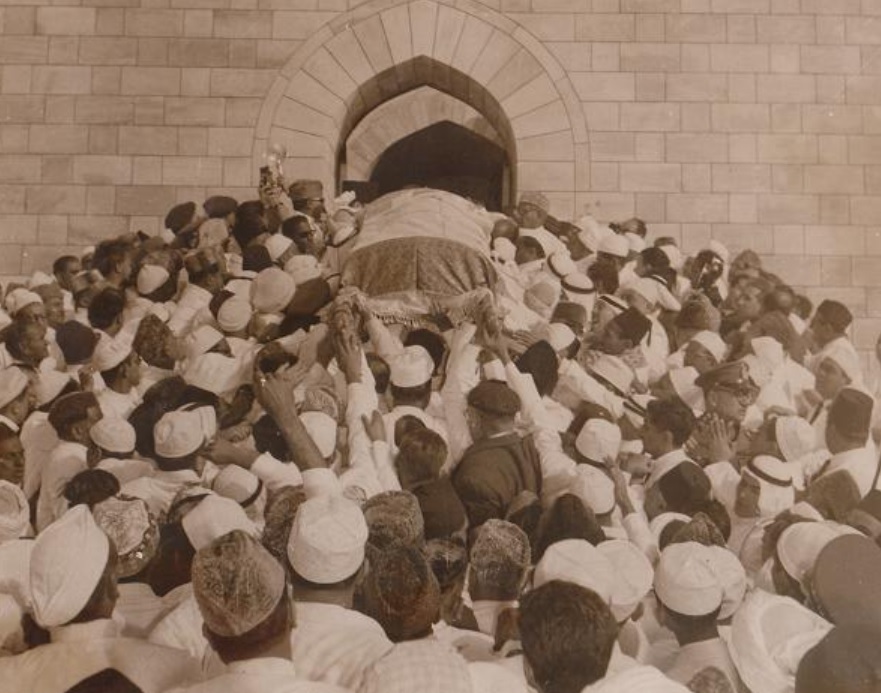
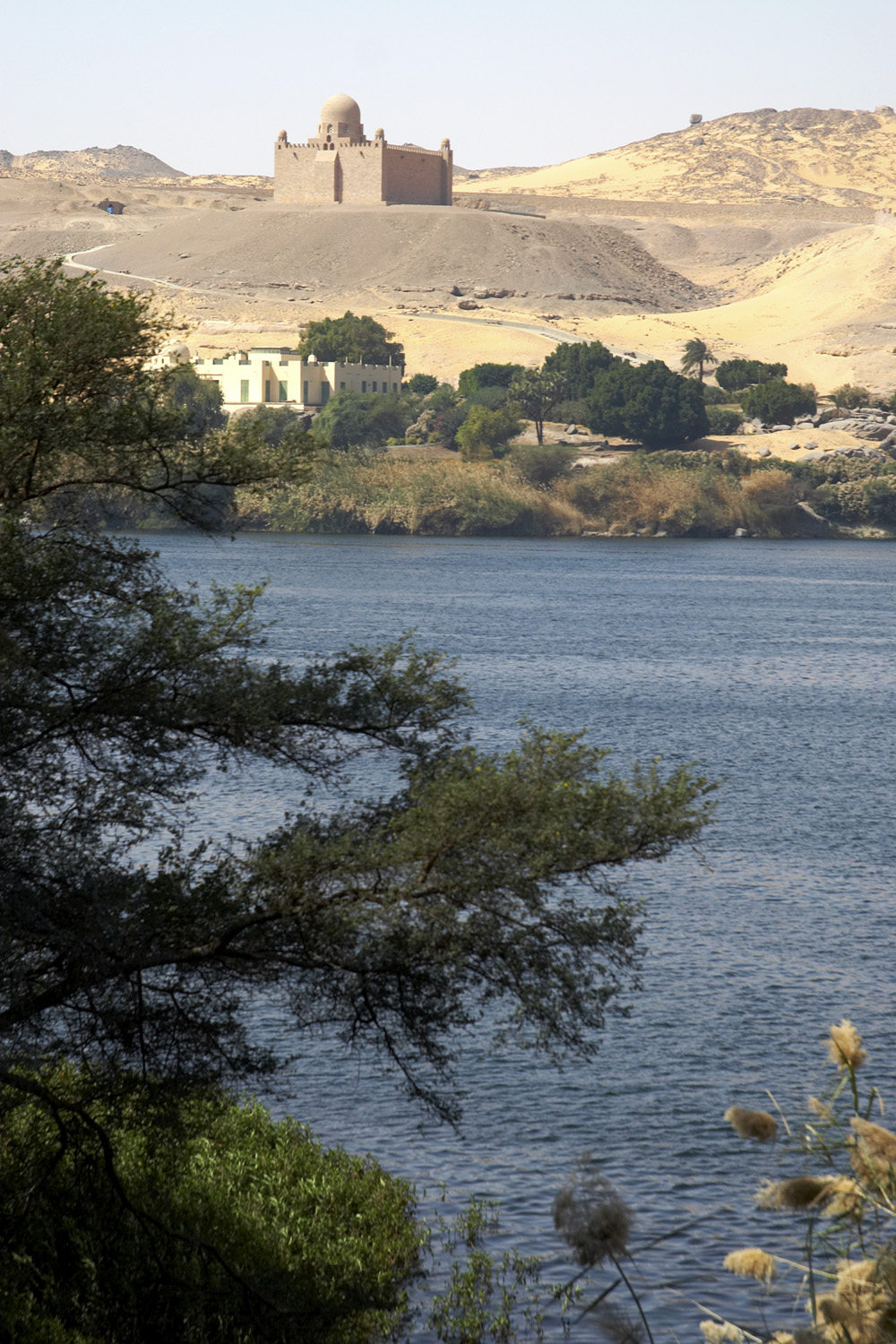
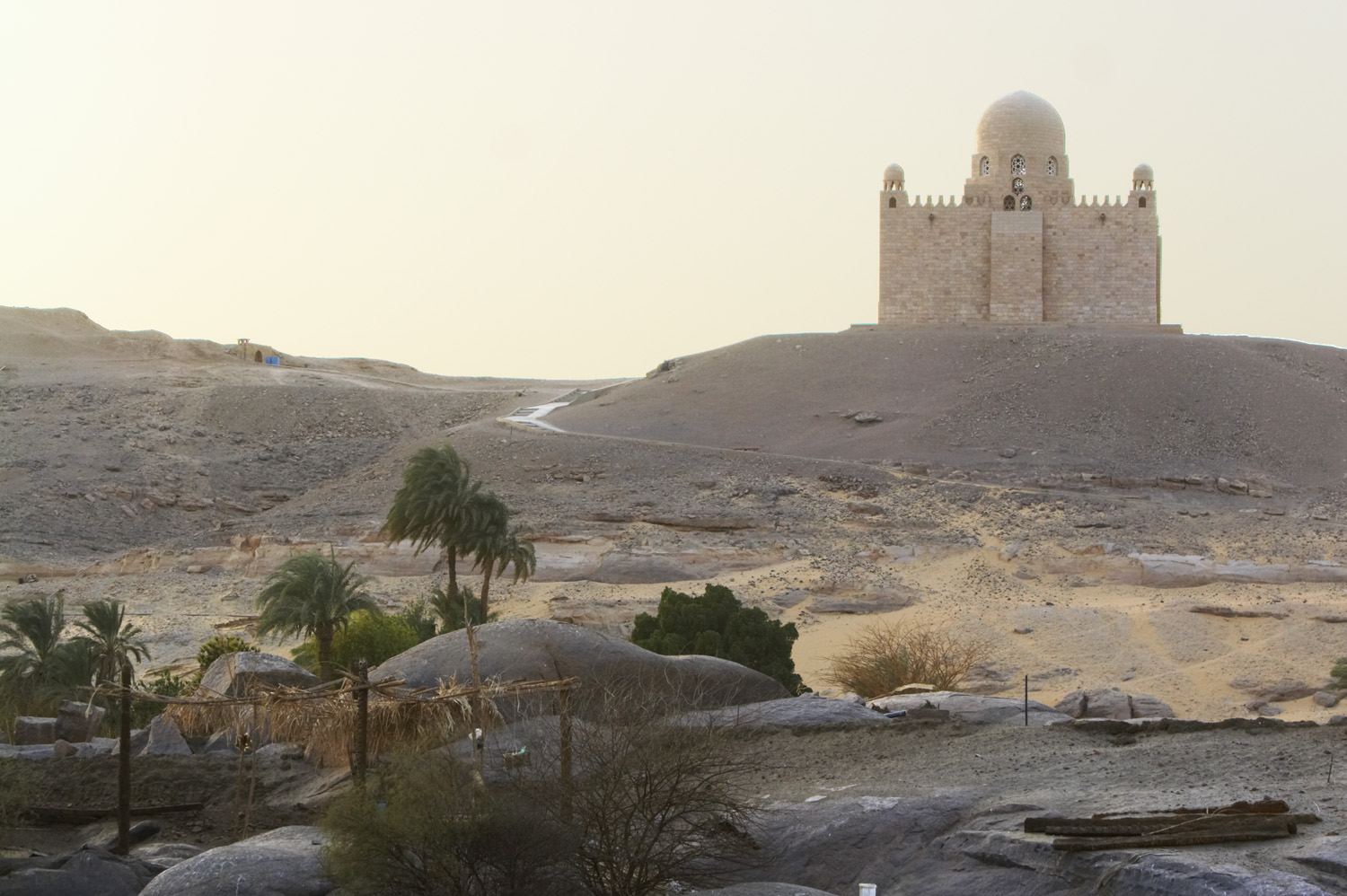
Aga Khan III had long expressed the wish that his burial should be in Aswan, Egypt. His wife, the Begum Om Habibeh Aga Khan, undertook the monumental task of coordinating the construction of the mausoleum near the villa. The mausoleum was completed in about 18 months. In the meanwhile, the body of the late Imam was temporarily buried in the compounds of the Villa. The final burial then took place on February 19, 1959.
We present a selection of photographs of the mausoleum as well as other images from the historical day (for more details and photos see the post in Barakah.)
The successor of Aga Khan III, Mawlana Sha Karim al Hussaini, His Highness the Aga Khan, left, his uncle Prince Sadruddin Aga Khan, right, and his younger brotehr Prince Amyn Aga Khan at the back, carrying the shrouded body of the 48th Ismaili Imam, Mawlana Sultan Mahomed Shah, from its temporary resting place to the mausoleum. Photograph: Jehangir Merchant collection.
Mourners watch as the body of the 48th Ismaili Imam, Mawlana Sultan Mahomed Shah, His Highness the Aga Khan, is carried into the mausoleum, February 19, 1959. Photograph: Jehangir Merchant collection.
Mawlana Hazar Imam, His Highness the Aga Khan, pictured on October 19, 1957 at his 1st Takhtnashini or ceremonial installation, held in Dar es Salaam, Tanganyika (now Tanzania). He became the 49th Imam of the Shia Imami Ismaili Muslims,on July 11, 1957 at the age of 20. Photograph: Ilm Magazine, July 1977.
“Today, I am speaking to you in a city and in a country which have a particular meaning to my family and myself. On 2nd November, 1877 my beloved grandfather was born here in Karachi. Through 72 years of Imamat, he guided his spiritual children to happiness and prosperity” — Karachi, August 4, 1957.
“Many many memories come to our minds as we think of him. He achieved in his life, for our community that which could only have been accomplished normally in a period of many generations. The tributes that the world has paid him bear honest testimony to his great life and work” — Takhtnashini, ceremonial installation, Karachi, Pakistan, January 23, 1958.
Date posted: February 21, 2023.
Featured image at top of post: The mausoleum of Mawlana Sultan Mahomed Shah, His Highness the Aga Khan, overlooking his villa and the Nile. Photograph: Motani Family collection, Ottawa, Canada.
_________________
For an extended version of this post please click HERE.
Before departing this website, please take a moment to review Simerg’s Table of Contents for links to hundreds of thought-provoking pieces on a vast array of subjects including faith and culture, history and philosophy, and arts and letters to name a few. Also visit Simerg’s sister websites Barakah, dedicated to His Highness the Aga Khan, and Simergphotos.
Prepared and compiled by MALIK MERCHANT from AKDN, Reuters, BBC and the website of the President of Tajikistan
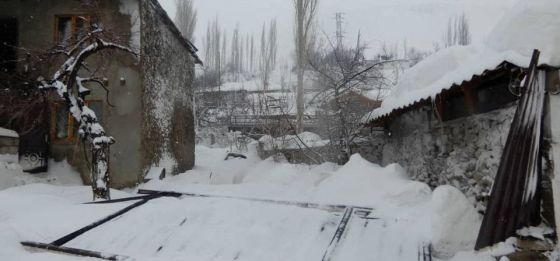
Featured image at top of post: A view shows the area affected by an avalanche in Gorno-Badakhshan region, Tajikistan, February 15, 2023. Photograph: Committee of Emergency Situations and Civil Defense of Tajikistan/Handout via REUTERS.
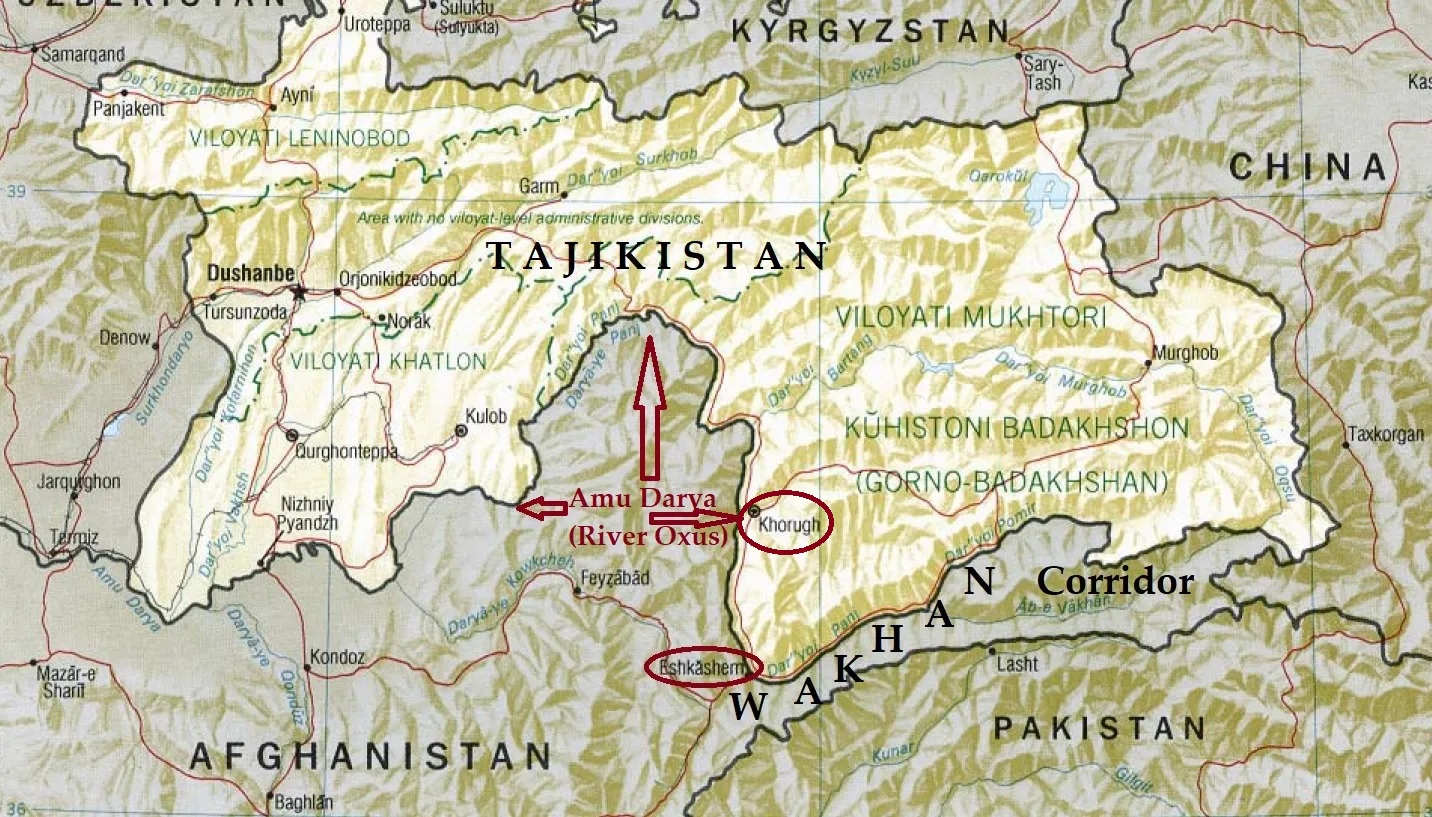
The Aga Khan Agency for Habitat (AKAH), an agency within the Aga Khan Development Network (AKDN), reports that more than 50 avalanches have hit the Badakhshan regions of Tajikistan and Afghanistan in recent days causing multiple casualties and damage to around 20 buildings and houses in the provincial capital Khorog (or Khorugh — town is circled in map below.)
Map of Tajikistan with surrounding countries from the Perry-Castañeda Library Map Collection, University of Texas. Note: Towns circled mentioned in story; map has been annotated for story. Click on image for enlargement.
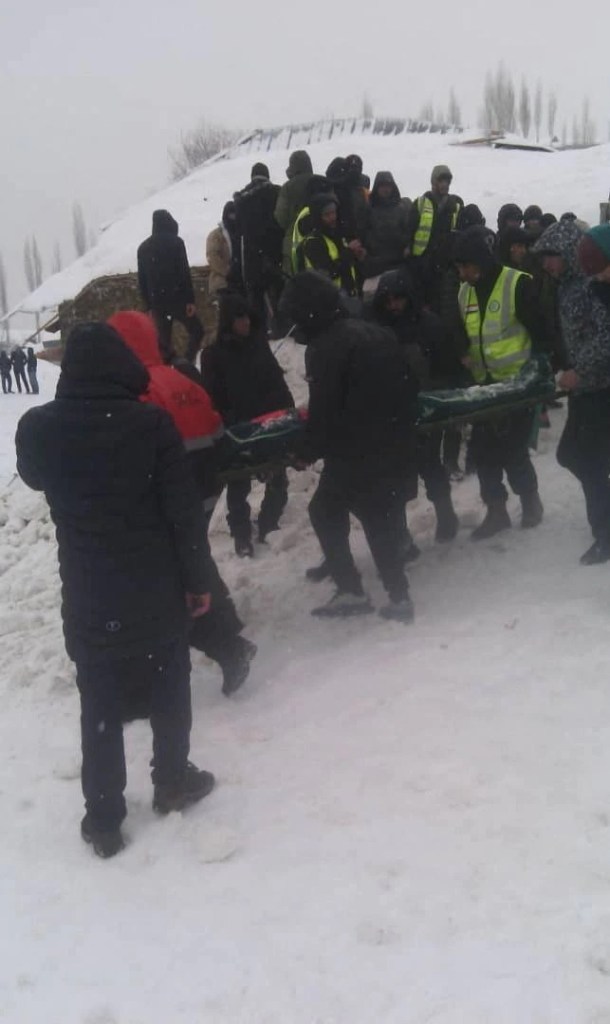
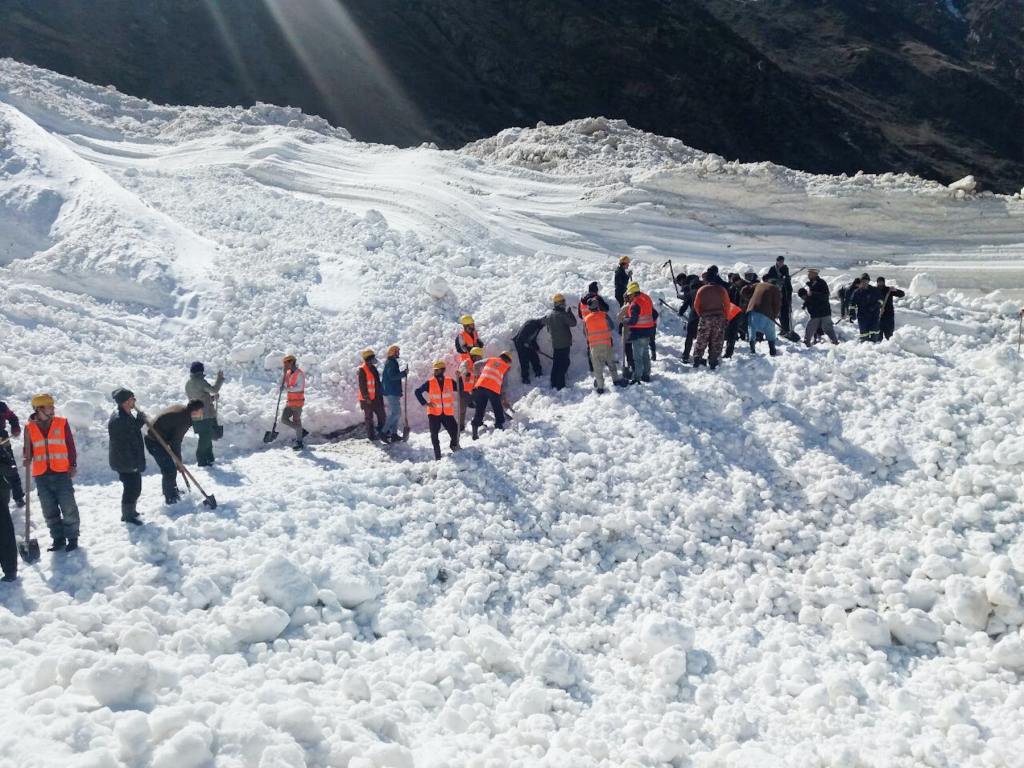
According to the latest report by Reuters, the death toll stands at 20. Khorog is home to some 30,000 people. Its population is predominantly Ismaili Muslims and the town hosts the Tajikistan campus of the University of Central Asia. The mayor of provincial capital Khorog, Rizo Nazarzoda, urged its residents to stay at home as heavy snow and rain fell. Reuters states that videos from the area showed one-storey buildings covered up to their roofs with snow and ice blocks, with rescue teams digging through the snow in search of bodies.
The following is a summary of the avalanche as reported in BBC news on February 17, 2023:
Khorog worst hit with 13 people killed;
2 female students missing in the Ishkoshim area [or Eshkashem, town is circled in map above];
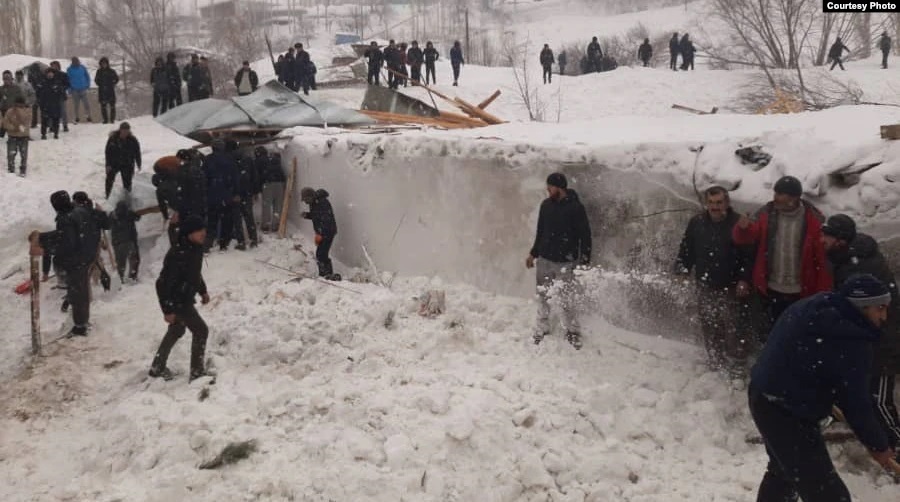
Child pulled from a collapsed house and crowds nearby are seen digging through the deep snow in the hope of finding more survivors.
A view shows the area affected by an avalanche in Gorno-Badakhshan region, Tajikistan, February 15, 2023. Committee of Emergency Situations and Civil Defense of Tajikistan/Handout via REUTERS.
A view of an area in Khorog where an avalanche has destroyed several buildings as well as claimed lives. Photograph: Courtesy Photo.
People take part in a rescue operation following an avalanche slide in Gorno-Badakhshan region, Tajikistan, February 15, 2023. Photograph: Committee of Emergency Situations and Civil Defense of Tajikistan/Handout via REUTERS
In response to the avalanches, the President of the Republic of Tajikistan, Emomali Rahmon, called the chairman of the Gorno-Badakhshan Autonomous Province, Alisher Khudoberdi Mirzonabot, and gave specific instructions for the prompt elimination of the consequences of the natural disaster and the provision of material assistance to affected families. In its brief, the President’s office states that more than a metre of snow fell in the region in the recent 3 days, which caused an avalanche to descend in Khorog.
The President has also received numerous messages of condolences including the following from his counterpart in the neghbouring Kyrgyz Republic, President Sadyr Japarov:
“It is with deep sorrow that I received the news of the death of people as a result of an avalanche in the city of Khorog, Gorno-Badakhshan Autonomous Province of the Republic of Tajikistan, which occurred on February 15, 2023. On behalf of the entire people of Kyrgyzstan and on my own behalf, I express my condolences to the families and relatives of the victims and share their grief. I ask the Almighty for a speedy recovery of the injured.”
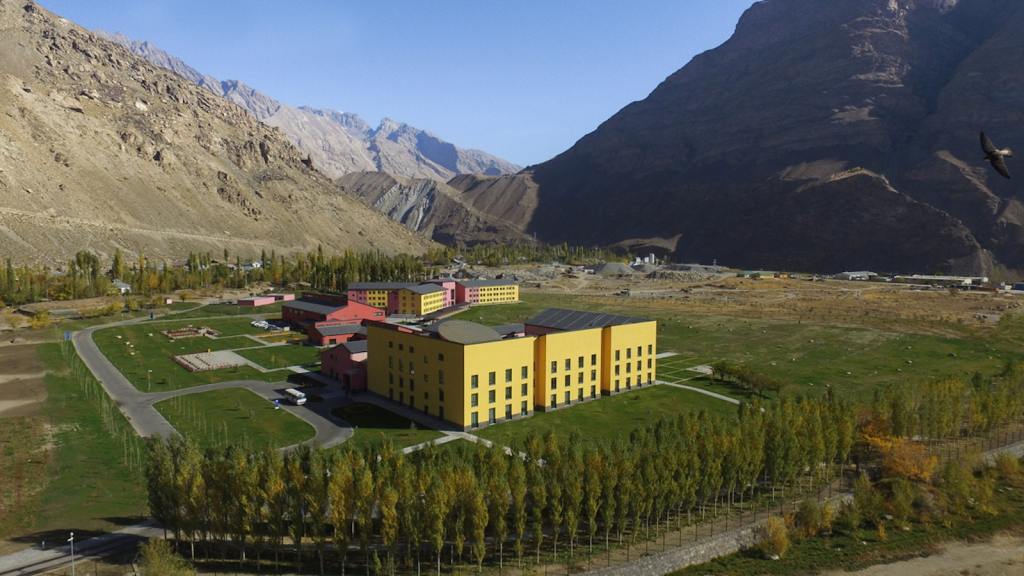
A view of the campus of the University of Central Asia in Khorog. Photograph: AKDN.
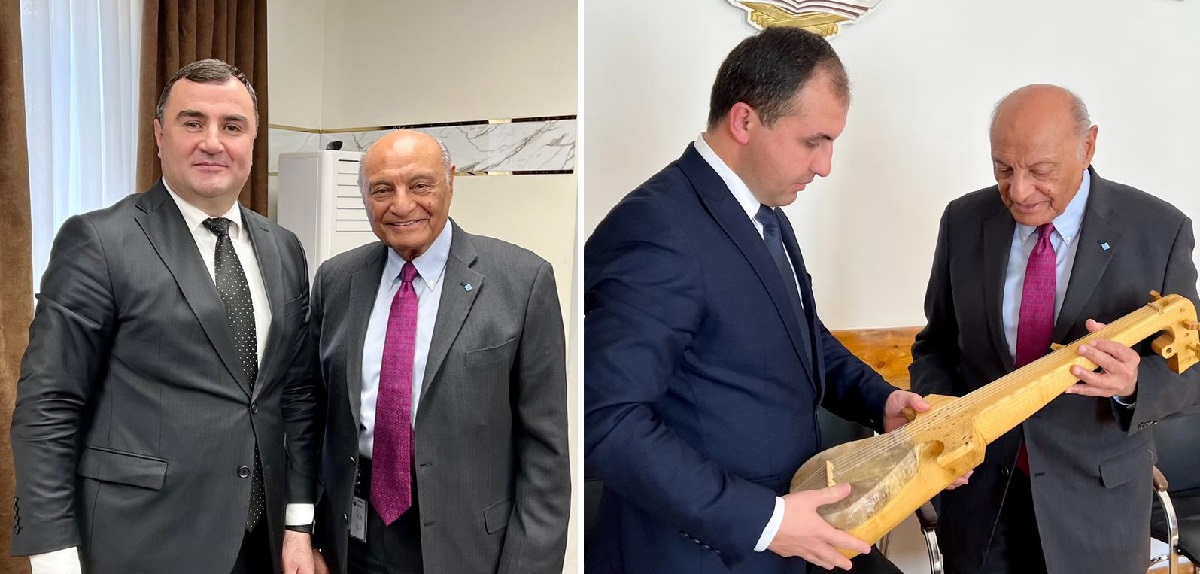
Left to righ: Dr. Shamsh Kassim-Lakha, Chairman of University of Central Asia’s Board of Trustees pictured with the Governor of Gorno-Badakshan Autonomous Oblast (GBAO) of the Republic of Tajikistan, Mr. Alisher Khudoberdi Mirzonabot, and the Mayor of Khorog Mr. Rizo Nazarzoda on February 7, 2023, in Khorog. The Mayor is seen presenting Dr. Kassim-Lakha with a Rubab, a traditional Tajik musical instrument. The meeting took place before the avalanches descended in Khorog on February 14, from very heavy snowfalls in the region. Dr. Kassim-Lakha thanked the Governor, the Mayor of Khorog and the Government of Tajikistan for their support extended to UCA, and discussed with him the on-going and planned joint initiatives aiming to enhance the quality of education for the peoples of Tajikistan. Photograph: University of Central Asia.
Community Emergency Response volunteers trained by the Aga Khan Agency for Habitat (AKAH) have been mobilised, at the request of the Government of Tajikistan, after over 50 avalanches have hit the region. In this picture AKAH volunteers clear a road blocked by an avalanche in Badakhshan in 2021. Photograph: AKAH.
AKAH has mobilised quickly to respond to the urgent request from the Government of Tajikistan, deploying trained teams to conduct search and rescue operations. With heavy snowfall continuing, AKAH is helping relocate people from at risk areas and providing temporary shelter for those displaced. AKDN is also providing fuel to district authorities to support local ambulance services and is clearing roads blocked by the avalanches.
AKDN’s Pamir Energy is working to repair damage to power lines and resume energy services in affected towns as soon as possible.
Date posted: February 16, 2023. Last updated: February 17, 2023 (added message of condolence from the Kyrgyz Republic, BBC story and map of region.)
Before departing this website, please take a moment to review Simerg’s Table of Contents for links to hundreds of thought-provoking pieces on a vast array of subjects including faith and culture, history and philosophy, and arts and letters to name a few. Also visit Simerg’s sister websites Barakah, dedicated to His Highness the Aga Khan, and Simergphotos. The editor may be reached via email at mmerchant@simerg.com.
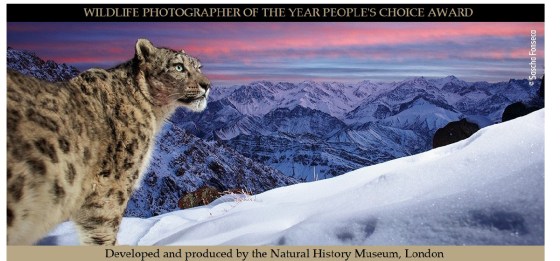
“I’m incredibly proud to be the winner of this year’s People’s Choice Award and I thank all the supporters around the world for making this happen. Photography can connect people to wildlife and encourage them to appreciate the beauty of the unseen natural world. I believe that a greater understanding of wildlife leads to deeper caring which hopefully results in active support and greater public interest for conservation” — Sascha Fonseca, Germany….Click READ MORE or on photo below
Top: Winner, Snow Leopard by Sascha Fonseca. Photographer of the Year People’s Choice Award, developed and produced by the Natural History Museum, London. Other wildlife images in collage are Highly Commended Finalists. Please click on image for full story and photographs. All photographs Copyright of the respective photographer.
Before departing this website, please take a moment to review Simerg’s Table of Contents for links to hundreds of thought-provoking pieces on a vast array of subjects including faith and culture, history and philosophy, and arts and letters to name a few. Also visit Simerg’s sister websites Barakah, dedicated to His Highness the Aga Khan, and Simergphotos. The editor may be reached via email at mmerchant@simerg.com.
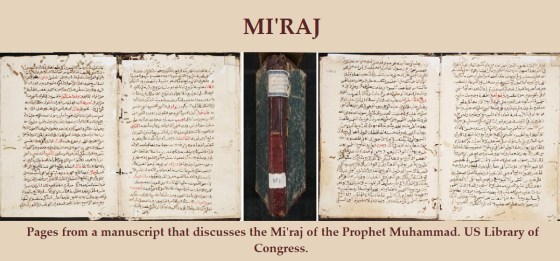
[The month of Rajab, 7th in the Islamic calendar, marks two important anniversaries — the birth of Hazrat Ali on the 13th of Rajab (which was observed on February 3, 2023, please read articles by Dr. Farouk Topan and Professor James Morris) and the Mi’raj of the Prophet Muhammad (may peace be upon him and his family) on the 27th of Rajab which will be observed on Friday, February 17. The introductory article in English and French published by Ismaili institutions in France was shared with us by Paris based Mohez Nato, and we present it with minor changes. We follow the introduction with an insightful and reflective article by Alwaez Jehangir Merchant (d. May 27, 2018) that was first published in the mid 1980’s in UK’s flagship Ismaili religious magazine, Ilm. The Prophetic tradition “I have a time with God” was the inspiration behind Alwaez’s piece. NOTE: A short description of the image shown at top of this page is given at the end of the article – Ed.]
Introduction to the Mi’raj
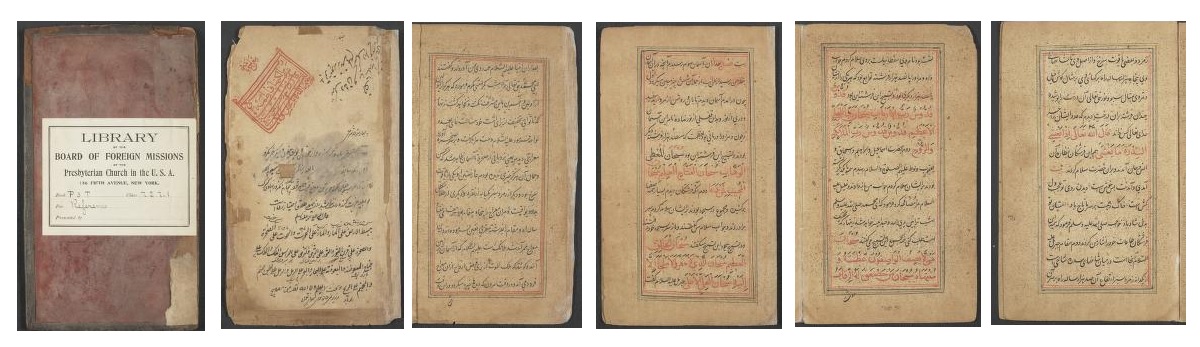
Six images from a total 408 from an unidentified Persian treatise on the Miʻrāj and several other topics from the Hadith (traditions) of the Prophet Muhammad. Image: US Lobrary of Congress. For more details please click https://www.loc.gov/item/2016397783/
Ismaili Muslims in Canada and many parts of the world will celebrate on Friday 17th February, the blessed night of Shab-i-Miʿrāj commemorating the night when Prophet Muhammad (peace of Allah be upon him and his family) ascended to the heavens.
Miʿrāj is an Arabic word which literally means a ‘ladder’ and refers to an experience in the life of Prophet Muhammad (may peace be upon him) which took place during the night. Thus, sometimes it is referred to as the ‘night journey’ of the Prophet. The first verse of Surah al-Isra in the Holy Qur’an says:
“Glory be to Him Who took His servant by night from the Masjid al-Haram to the Masjid al-Aqsa whose surroundings We have blessed, so that We might show him of Our signs: He is the All-hearing, the All-seeing.”
In esoteric traditions, Miʿrāj is considered the highest point of spiritual perfection an individual can attain through religion and the practice of faith. Believers long to experience a Miʿrāj, just as the Prophet experienced it. By viewing Miʿrāj symbolically as a ladder, believers are encouraged to engage in regular spiritual seeking through God’s love, prayers, piety, and discipline.
In the Ismaili Tariqah, the practice of tasbīḥ, dhikr and Bait ul-khayal, encourages believers to engage in personal spiritual search for enlightenment under the guidance of the living Imam whose guidance and blessings can lead to self-awareness, spiritual elevation and communion with God.
____________
French
Nous célébrerons ce vendredi 17 février la nuit bénie de Shab-i-Miʿrāj commémorant « le voyage nocturne » de notre bien-aimé Prophète Muhammad (que la paix d’Allah soit sur lui et sur sa famille).
Miʿrāj signifie littéralement « échelle » en arabe. Miʿrāj consacre une expérience spirituelle marquante dans la vie du Prophète Muhammad (que la paix d’Allah soit sur lui et sur sa famille) ayant eu lieu au cours de la nuit. Miʿrāj est ainsi parfois appelé le « voyage de nuit » du Prophète. Dans le premier verset de la sourate al-Isra, Allah dit:
«Gloire à Lui qui a fait voyager de nuit Son serviteur de la Mosquée Sacrée (Masjid al-Haram) à la Mosquée Très-Eloignée (Masjid al-Aqsa) dont nous avons béni les alentours, et ceci afin que Nous puissions lui montrer certains de Nos signes : Il est Celui qui entend et qui voit parfaitement.»
Dans les traditions ésotériques, Miʿrāj est considéré comme le sommet de la perfection spirituelle qu’un individu peut atteindre à travers la religion et la pratique de la foi. Les croyants aspirent à vivre un Miʿrāj, tout comme le Prophète l’a vécu. En considérant Miʿrāj symboliquement comme une échelle, les croyants sont encouragés à s’engager dans une recherche spirituelle régulière à travers l’amour de Dieu, les prières, la piété et la discipline.
Dans la Tariqah Ismailie, la pratique du tasbīḥ, du dhikr et du Bait ul-khayal, encourage les croyants à s’engager dans une quête spirituelle personnelle pour l’illumination sous la direction de l’Imam du Temps dont les directives et les bénédictions peuvent nous aider à l’élévation spirituelle, à l’éveil et à l’union avec Dieu.
_________________________
li ma’a Allah waqt – I have a time with God
Fragment from page 7 of the Bustan of Sadi. The last two lines of poetry on this page extol the Prophet’s miraculous ascension to the heavens (mi’raj): One night he sat (on his flying steed Buraq) and passed through the heavens. / In majesty and grandeur, he exceeded the angels. / So impulsive, he urged (his steed) into the plain of closeness (to God) / While Gabriel remained behind him at the Lote Tree (of the Limit). Image: Wikipedia.
BY LATE JEHANGIR A. MERCHANT
While Muslim artists created marvellous miniatures depicting the Prophet’s mi’raj (ascension) between arrays of fanciful clouds in gold and radiant colours with delightful angels serving him, Muslim poets in their admiration of the event soared high into their imaginative world and portrayed the Prophet in all his glory, flying through the seven heavens to the Mysterious Beyond in the Holy Presence of his God. Over time, a considerable amount of literature grew around the mi’raj of the Prophet. The following is one such expression which can be found among esoteric circles in Islam:
God sent out Gabriel:
“My Muhammad shall come!” He said. “Take Buraq, draw it before him, My Muhammad shall mount!” He said.
“He shall go to the city of Medina, In front of him angels shall fly. The door of paradise shall open, My Muhammad shall enter,” He said.
“My Muhammad shall come, shall come, He shall see and look at My Throne; He shall pluck the roses of Paradise, My Muhammad shall smell them,” He said…’ [1]
The original theme of Prophet Muhammad’s (s.a.s.) mi’raj upon which the wealth of mi’raj literature has grown, including the above excerpts, is referred to very briefly in the opening verse of chapter 17 of the Holy Qur’an entitled al-Isra (The Nocturnal Journey). [2] It says:
“Glory be to Him Who carried His servant by night from the Sacred Place of Worship (al-masjid al-haram) to the Far Distant Place of Worship (al-masjid al-aqsa) [3] whose precincts We have blessed, that We might show him Our signs. Lo! He alone is the Hearer, the Seer.”
The theme is further expanded in the first eighteen verses of Chapter 53, al-Najm (The Star):
“By the star when it sets, your compatriot errs not, nor is he deceived; nor does he speak of (his own) desire. It is nothing save an inspiration that is inspired, which One of Mighty Powers has taught him, endued with Wisdom. And he grew clear to view when he was on the uppermost horizon. Then he drew near and came closer till he was at the distance of two bows-length or even closer.
“And He revealed unto His servant that which He revealed. His heart lied not (in seeing) what he saw.
“Do you then dispute with him concerning what he saw? And indeed, he had seen Him yet another time, near the Lote Tree (Sidrat al-muntaha) [4] of the utmost boundary, near which is the Garden of Repose (jannat al-ma’wa). When the Lote Tree was shrouded (in mystery), his sight swerved not, nor did it wander. Verily he saw the greatest of the signs of his Lord.”
While the Hoy Qur’an doesn’t speak of the event any more than what we have quoted, the version of the event in the books of Hadith is more detailed. However, the mysterious words and phrases mentioned in the quoted Qur’anic verses such as the Sacred Place of Worship (al-masjid al-haram), the Far Distant Place of Worship (al-masjid al-aqsa) , the Lote Tree of the utmost boundary (sidrat al-muntaha), the Garden of Repose (jannat al-ma ‘wa) go unexplained, as do the references in the literary expressions and the Hadith to the mount of the Prophet (Buraq), the ladder (al-mi’raj) and so on. In this short essay, I wish to offer my interpretation about these terms.
There have been exoteric and esoteric interpretations of mi’raj among Muslims. According to the esoteric interpretation, the mi’raj was a spiritual journey; it was a fitting example of a mystical experience, a breaking through into the unseen world, and a symbol of the rise of the soul from the bonds of the material world to the heights of mystical knowledge through the temple of the heart as noted in the following verses:
“On the path of God Two places of worship mark the stages. The material temple, And the temple of the heart, Make your best endeavour To worship at the temple of the heart”. [5]
The Ismaili missionary Pir Shams, in speaking of the heart, says:
…dil manhe deval pujiye Ane dil manhe dev dwar; Dil manhe sanhiya aap vasey, Dil manhe apey didar-re.
Translation:
In the heart worship your Lord, In the heart is the Lord’s abode; In the heart the Lord dwells, In the heart His Face unveils.
The fulfillment of ritual polishing and worshiping in this inner sanctuary of the heart is symbolized by the Prophet’s retirement from his prayers. The journey begins in the heart, the Sacred Place of Worship (al-masjid al-haram). Love is represented by the celestial steed (Buraq) that carries the Prophet to a place in heaven (at-masjid al-aqsa, the Far Distant Place of Worship) where the angels sing praises of Allah.
The Love that we speak of here is divine, and it reminds the soul of its eternal home and leads it to the overwhelming vision of the Divine Light. Rumi says:
Love entered the mosque and said: “o master and guide, Tear the shackles of existence — why are you still in the fetters of the prayer rug? Let your heart not tremble because of the blow of my sword; Put down your head if you want to travel from knowing to seeing!” [6]
Buraq, the heavenly mount of the Prophet, is the symbol of Love. It has strong wings which carry the lover toward the roof of the Beloved:
That is Love, to fly heavenward, To tear a hundred veils in every moment….[7]
The Prophet enters the temple in heaven (al-masjid, al-aqsa) and sees the assembly of Angels and Prophets and receives the salute of welcome from each of them in turn. Then he is brought three vessels containing wine, honey and milk. He drinks the milk, upon which Gabriel said to him, “O Muhammad! You have been rightly guided.” The contents of the three vessels respectively represent the three states — the state of ‘intoxication’ as in the case of the mystics, the state of ‘annihilation’ (fana) as experienced by Moses who fell senseless to the ground while God revealed Himself at the mountain [8] and the state of ‘prophetic sobriety’ as shown by the Prophet who returns from the Divine Presence without fainting.
Now begins the ascension by means of a ladder (al-ma‘arij) of sublime beauty, to the seventh heaven and into the presence of God.
“I turned my face and looked upward; I found a ladder (al-ma‘arij) with alternate rungs of silver and gold” – Prophet Muhammad. [9]
The aspiring soul climbs the ladder that leads to the roof of the Beloved and instantly finds itself in a sate of awe and bewilderment as it recognises that:
“He (Allah) is the Lord of the Ways of Ascent (Dhu ‘l-ma‘arij) by which the Angels and the Spirits ascend unto Him in a day whereof the measure is fifty thousand years.” (Holy Qur’an, 70:3-4)
While ascent (al-ma’arij) in its simple meaning gives a clue to the upward direction of the Prophet’s journey, it proclaims very emphatically that if God has placed man on this earth, He has also set up a ladder for man to climb up to Him. No wonder Allah calls Himself the Lord of the Ways of Ascent (Dhu ’l-ma‘arij).
The rungs of ladder of silver and gold are spiritual stations which are interconnected, yet individually they are distinct and different from each other. Like each step of a ladder, each spiritual station is a rallying point in which the experience of the previous station finds its completion, but where at the same time there is a new level of development and a new departure. It would be wrong to assume each station as an entirely separate experience. There is interpenetration and, what is more, progress is an interrupted climb, it is oscillatory, swinging between the higher and lower spiritual stations:
“(He knows) all that comes down from heaven and all that ascends to it.” (Holy Qur’an, 57:4)
The Prophet and Angel Gabriel arrive at the ‘Lote Tree of the utmost boundary’ (sidrat al-muntaha) at which point Gabriel declares his inability to continue the journey. Rumi explains this as the weakness of the discursive reason which, though useful as a guide on the initial steps of the Path, becomes useless once the seeker has reached the Chamber of Union:
“Reason speaks, like Gabriel: O Ahmad, If I advance one step, He will burn me.” (Mathnavi, 1:1066)
Ibn al-Arabi, the great Muslim mystic and philosopher attributes ascension to the contemplation and love for the Divine, rather than reason. In his Futuhat (ii: 356-375), he makes a believer and a philosopher journey together, but the philosopher stops at the seventh whilst the believer journeys on to feast in the Divine Presence of His Creator.
Beyond the ‘Lote Tree of the utmost boundary’ the Prophet journeys alone. It is the precinct of God Himself. The Prophet experiences the Divine Presence as a column of infinite veils of Light, denied to Gabriel who says:
“Between me and Him (God) are 70,000 veils of Light.”
But soon, for the Prophet, the Supreme Mystery was to unfold Itself. A drama is enacted. The Prophet asks that the eye of the heart be opened in him, and like Moses, he supplicates: “…My Lord! reveal Yourself to me, that I may look upon You.”
He is not to be denied the Vision. A Voice summons him:
“O soul at peace! Return unto your Lord, well-pleased, and pleasing in His Sight…” (Holy Qur’an, 89:27),
and the Prophet enters the Garden of Repose (jannat al-ma’wa). But the Voice summons again: “Come yet nearer.”
He does not see, nor does he apprehend. There is Silence, all-engulfing Silence. There is nothing for him to do, but to draw near and go closer till he is at a distance of two bows-length or even closer. Again the Voice speaks: “Ask,” and the Prophet prays again: “My Lord! reveal Yourself to me, that I may look upon You.”
And He, The Lord of Majesty and Reverence, reveals Himself unto His servant, that which He wishes to reveal. The Prophet’s eyes do not swerve and nor do they wander. He sees the greatest of the signs of his Lord — His Vision.
When the Prophet returns from this spiritual journey of the ‘Far Distant Place of Worship’ and the ‘Proximity of God’, the bed on which he had laid was still warm. This explains the secret of the “Eternal Now in God.” In this connection the Prophet has said:
“I have a time with God” (li ma’a Allah waqt).
In spiritual life, serial time no longer exists. The moment a soul breaks through created time and reaches the ‘Eternal Now in God’, everything created is annihilated in its experience. The serial time is torn. Finally, the Prophet says: “And He revealed to me secrets that I am not allowed to communicate to you.”
His yearning for the ‘exalted station’ becomes intense, and as often as he feels this longing he turns to Bilal and says: “O Bilal, comfort us by the call to prayer.” Thus to the Prophet every time of prayer is an ascension (mi’raj) and a new nearness to God.
The mystical interpretation of the mi’raj is all the more revealing, since:
“…The Prophet, although created as the most perfect being, still remains a servant…The opening words of Sura 17 – ‘praised be He Who travelled with His servant at night’ – indicate that even in the moment of rapture the Prophet is still called abduhu, ‘His Servant.’ That implies that ‘servant’ is the highest possible name for a human being who, however, is able to speak to God without being extinguished.” [10]
The Prophet’s journey beyond the ‘Lote Tree of the utmost boundary’, all by himself, is an affirmation of the exalted destiny of man:
“Although Adam had not got wings, yet he has reached a place that was not destined even for angels.” [11]
And as by the verse “You have indeed in the Apostle of God a beautiful pattern of conduct,” (Holy Qur’an, 33:21), Prophet Muhammad (s.a.s.) is made an example to be followed; his mi’raj, to the believers, is indicative of the rise of the soul from the plane of material existence to the proximity of God.
“You have been in the station of dust, you have made a hidden journey: When you have reached the state of Adam, be careful lest you establish yourself there; You continue the journey, and you travel up to heaven, And you move bit by bit so that God may give you freedom.” [12]
Date originally posted: June 13, 2012. Last updated: February 16, 2023.
_______________
Featured image at top of page: The images featured at the top of this page belong to a 16th-century manuscript containing an early copy of the mystical work by Najm Al-Dīn Muhammad ibn Ahmad Al-Ghayṭī (died 1573) entitled Kitāb al-ibtihāj bil-kalām ‘alà al-Isrā’ wal-Mi’rāj (The book of delight at the discussion of the night journey and ascension of the Prophet Muhammad.) The author of the work was a religious scholar who lived in Cairo. This manuscript copy, made before the original author’s death, is especially significant for its age, having been created in AH 979 (AD 1571). For a full description of the manuscript and to view all 76 images please click LOC Item 2021667187
[1]. Yunus Emre, Divan, p575, CCLIV quoted in Poetry in Honour of the Prophet by Annemarie Schimmel in As Through a Veil Mystical Poetry in Islam, p.1 83, Columbia University Press, New York, 1982.
[2]. The chapter gets its title ‘al-isra’ from the first verse itself Subhanal lazi asra hi abdihi lailan, “Glory be to Him Who carried His servant by night…”.
[3].al-masjid al-haram in its exoteric interpretation is the Holy Ka’ba at Makkah and al-masjid al-aqsa is the Mosque of Jerusalem which was the Qibla of the Muslims until about 16 months after Hijra when Ka’ba was established as the Qibla. While commanding the highest respect of all Muslims, they are also given an esoteric interpretation by many Muslims.
[4]. In ancient times, Arabs often planted a tree to mark the end of a road. The cosmic tree or lote tree which is also called the “tree of the extreme limit” marks the end of the universe. The Prophet described the lote tree as a large tree not resembling any of the trees of paradise. The tree has an infinite number of branches, and every branch has an infinite number of leaves and an angel sits on each leaf. Springs of water, milk, wine and honey flow from the trunk. See The Islamic World edited by John Esposito and Abdulhussein Sachedina, p.117, Oxford University Press.
[5].The Persian Mystics, Wisdom of the East Series, p.35.
[6]. Mawlana Rumi, Diwan-i Kabir, quoted in As Through a Veil Mystical Poetry in Islam by Annemarie Schimmel, p.129,130, Columbia University Press, New York 1982.
[7].ibid, p.130.
[8]. “And when Moses came at the appointed time and his Lord had spoken to him, he said: ‘My Lord! reveal Yourself to me, that I may look upon You’. He said: ‘You will not see Me, but look upon the mountain; if it remains firm in its place, then only will you see Me.’ And when his Lord revealed His Glory to the mountain, He crushed it to fine dust. Moses fell down senseless, and when he came to himself he said: ‘Glory be to You! I turn unto You in repentance. I am the first of the believers.” (Holy Qur’an, 7:143)
[9]. Henry Corbin, Avicenna and the Visionary Recital, p. 1 74, Spring Publications, Texas.
[10].Mystical Dimensions, p.220.
[11]. Khwaja Mir Dard, Urdu Diwan, ed. Khalil ur-Rahman Da’udi, Lahore, 1962 quoted in Mystical Dimensions.
[12]. Mawlana Rumi, Diwan-i Kabir, v.2837, quoted in The Triumphal Sun by Annemarie Schimmel, East-West Publications, The Hague, 1978.
___________
This piece by Jehangir Merchant is a revision of the original piece which first appeared in the March 1985 issue of Ilm (Volume 9, Number 2) published by the Shia Imami Ismaili Tariqah and Religious Education Board for the United Kingdom. Alwaez Jehangir edited and contributed several articles for the flagship Ismaili magazine during his long tenure with the UK institution. His other articles on this website include:
Before departing this website, please take a moment to review Simerg’s Table of Contents for links to hundreds of thought-provoking pieces on a vast array of subjects including faith and culture, history and philosophy, and arts and letters to name a few. Also visit Simerg’s sister websites Barakah, dedicated to His Highness the Aga Khan, and Simergphotos. The editor may be reached via email at mmerchant@simerg.com.















 Simerg - Insights from Around the World