A Gift….September 12, 2014

EXCITEMENT IN THE AIR

by Navyn Naran
zr6_8015-crop

There is excitement, magic in the air.
the Imam has arrived,
the buildings are washed and rewashed with rain,
the winds have combed out snarls and veils
Gray, opaque clouds, as if cotton wool
had been soaked in water
and strewn over the ceiling here.
ahh, cloudbreak.

In the horizon, a peek of baby blue,
tinged with light cream;
the clouds moving elsewhere.
Leaves green, having just been cleansed
by buckets of water overnight,
freshly manicured, ready to welcome
Him to Wynford Drive.
It’s as of the whole area has
returned from a morning jaunt,
refreshed and nicely sore,
rejuvenated for this day!

Prince Karim (left) posing for a birthday photo with his uncle, Prince Sadruddin, and his younger brother Prince Amyn

Which Day?
This day, the 12th of September 2014,
Prince Amyn Mohamed Aga Khan’s Birthday
He was born within a year of the Imam,
adoring the brother he followed as a child.
Whatever Karim does, this ginger colored head
and Trustworthy, Loyal Heart, wanted to do
an adoring brother, he could only be
as Ali to Muhammad, attached:
The elders remember him; a playful, sweet child,
a flair, a flamboyance, detailed care.

As specialized cardiac cells continuously fire ,
beat by beat, and in rhythm,
Prince Amyn, a shadow-like of the Form,
as the gardener of the Master’s land
in His highest esteem.
No laurels; much humor and style.
and it is on this very day, a historic gift to the globe .
77 Wynford Drive on this 77th Birthday.
photo 2

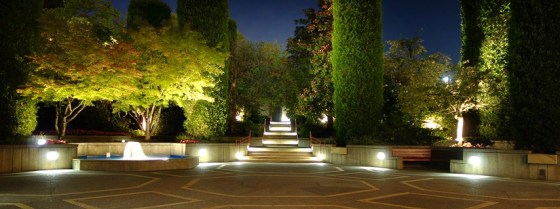
The Aga Khan Museum. The Ismaili Centre. The Park.
In the present, a present,
and presence of leaders, donors, volunteers
and a very Special Eye.
Who’d have thought it in Uganda in 1970?
Who’d have thought it in Canada in 2000?
this is not a facade to name or number,
it is to be understood.
For some perhaps piece by piece.
For others, a space for contemplation.
For opening the eyes.

I remember the barren, grey dirt being overturned,
the harsh, cold winters, icy,
unthawing, unrelenting,
when yellow hatted men worked tirelessly,
from below ground up.
Pieces of structure in an architect’s mind,
in the Architect’s Mind, comes alive.
Work. Many hours and stressors,
much negotiated and coordinated.
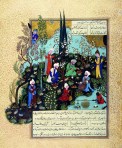
Shah Nameh s

One would never know.
Simple lines, soft color and a
sense of cleanliness and peace.
Magnificent.
Day or night. Lights enter and open,
leave everything behind.
Enter. Come. Ayez…

Come reflect, details of the shahnameh,
the kufic script in a Blue Qur’an,
the magic of art and calligraphy.
Rest a while, be seated. Read.
in the hush of the quiet,
only footsteps of men and women,
children and elders, absorbing.
Perhaps it is only history. Past.
If the skills and beauty compose a piece,
this civilisation is to be included,
to be modeled, continued.
Pluralistic.

It is a day of celebration. Come, Enter, Ayez…

Copyright: Navyn Naran/Simerg

~~~~~~~

“A FABULOUS, GLORIOUS GIFT BY HIS HIGHNESS”

By Malik Merchant
Editor, Simerg
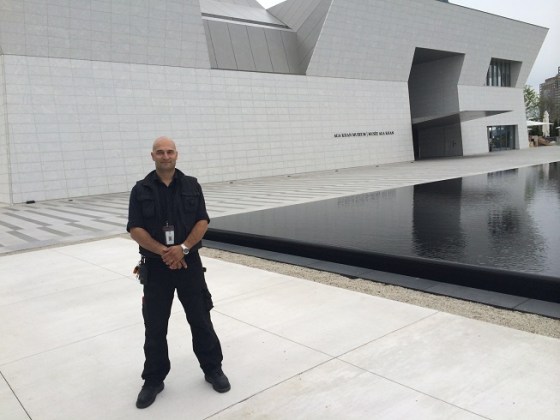
Alex Sarris. Photo" Malik Merchant/Simerg.

Alex Sarris. Photo: Malik Merchant/Simerg.

Alex Sarris, the facility operator at the site of the Aga Khan Museum, the Ismaili Centre and their Park was a few feet away from me. He was discussing with one of his colleagues a hitch that had occurred and which could possibly take a few hours to resolve. I was tantalized by the breathtaking Museum and the Centre that I had earlier walked through as a member of the media invited for the pre-opening review. The view of the two buildings on either side of the Park was stunning. The architectural contrast and splendour could only  be truly appreciated when looking at them from the Park. The calm water of the pond in front of me soothed me. I listened to Alex as I took my final bites of a deliciously chunky roast beef sandwich that had been served to the media earlier at the museum as part of a light lunch. I had wrapped it and tucked it in my computer bag. I was hungry enough again after walking through the museum galleries and the Ismaili Centre! Food! Yes, the ultimate delight when deliciously served!
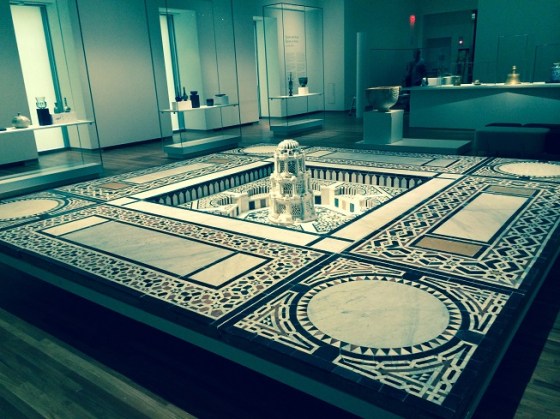
Part of main exhibition hall, Aga Khan Museum. Photo: Malik Merchant/Simerg

Part of main exhibition hall, Aga Khan Museum. Photo: Malik Merchant/Simerg

I thought about the challenges Alex and his team faced during the years they had worked  at the site, under some harsh winter weather! How might have these workers coped, I wondered, like many hundreds and thousands of workers who work on outdoor construction projects. But here was a frustrating delay less than 48  hours before its opening by His Highness the Aga Khan. There was also so much work being done both outside and inside the buildings, I would have thought the opening day was  still several weeks away. Alex soon left  his colleague brimming with confidence and with a cheerful face. I called him aside, and asked him to describe what he saw around him and how he felt. He looked at the two buildings and the park and said, “Fabulous, glorious, a gift by His Highness the Aga Khan befitting a united society cooperating and working together to advance the ideals of pluralism.”
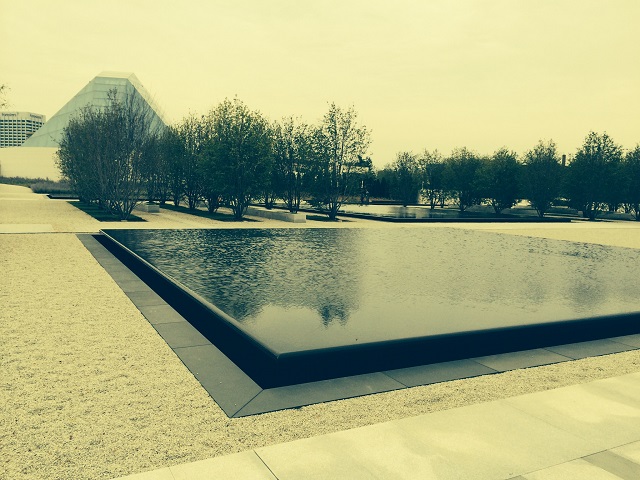
The Park and the Ismaili Centre. Photo:  Malik Merchant/Simerg.

The Park and the Ismaili Centre. Photo: Malik Merchant/Simerg.

“And what about the final few hours to finish the job?” I asked him. He replied, “Two days of diligent working will bring the site up to the highest standards established by His Highness.”  He had greeted me earlier with “Ya Ali Madad” and departed with “Mubaraki to all Ismailis and to all Canadians on this unique occasion.” In all these years, I have not learnt more than 2 or 3 French or Spanish words but I knew Alex had learnt quite a few new words from the on site ‘Ismaili dictionary’ when he had used, in reference to the hitch, the word “mushkil-asaan,” an Arabic phrase used in Ismaili prayers meaning resolution of difficulty. He was seeking a resolution to his immediate problem as well any other outstanding issues that they all faced collectively as a team.

I was grateful for his openness and humility, and was touched and inspired by his cheerful and positive outlook. I bid this wonderfully articulate person good bye, as he graciously permitted me to take his photo with my mobile! 

Date posted: Friday, September 12, 2014.

_________________________

Morning at the Park, Jamatkhana and the Museum by Navyn Naran

The Ismaili Centre and the Aga Khan Museum will be officially opened later this week in the presence of His Highness the Aga Khan, the 49th Imam of the Ismaili Muslims. A series of poems celebrating the many aspects of the two majestic buildings as well as their Park, which is to be opened in 2015, will be published throughout the week. We begin with Navyn Naran’s contemplative piece, Morning at the New Park, Jamatkhana and Museum.

Astrolabe. Credit: Aga Khan Museum Collection

Astrolabe. Credit: Aga Khan Museum Collection

Photo Essay: Stunning New Day and Night Photographs of the First Ismaili Centre in North America by Mohib Ebrahim

The Ismaili Centre and the Aga Khan Museum Opening Ceremonies Set for September 12, 2014

“The Jamati Institutions of Canada are delighted to confirm that the Opening Ceremonies of the Ismaili Centre Toronto and the Aga Khan Museum will take place in the presence of Mawlana Hazar Imam on Friday, September 12, 2014. It is anticipated that the Opening Ceremony for the Ismaili Centre will take place in the afternoon on September 12, followed immediately by an Opening Ceremony at the Aga Khan Museum. To mark this historic occasion, we invite Jamati members to view a live showing of the opening ceremony at the Ottawa Headquarters Jamatkhana and the Kingston Jamatkhana.” Courtesy: Al-Akhbar Newsletter, Special Ottawa Edition, Friday, September 5, 2014. [Note: Jamats around the country will gather at their respective jamatkhanas or specially hired halls to watch the opening ceremony – ed.]

As Canadians from all backgrounds, cultures and faiths await the official opening in Toronto of the Ismaili Centre and the Aga Khan Museum (the Park will open in 2015) conceived by His Highness the Aga Khan, the 49th Imam of the Ismaili Muslims and the direct descendant of the Prophet Muhammad (s.a.s), Mohib Ebrahim of Vancouver presents an array of stunning breathtaking photographs that he took during a recent  memorable visit to the first Ismaili Centre and Jamatkhana in North America built in Burnaby, British Columbia, in 1985. Please click Photo Essay: Stunning and Beautiful Day and Night Time Photography of North America’s First Ismaili Centre.

Burnaby Ismaili Centre, by Mohib Ebrahim, © 2014. Please click on image for photo essay.

Burnaby Ismaili Centre, by Mohib Ebrahim, © 2014. Please click on image for photo essay.

A Tribute to Mawlana Hazar Imam for Creating “Centres” of Soul at Wynford Drive in Toronto

On October 10, 2010, Bashir Fazal Ladha of the United Kingdom, during his visit to Toronto, went to Wynford Drive to see how the construction work of the Ismaili Centre, the Aga Khan Museum and their Park was coming along. He writes: “It was a thrilling moment and I was full of excitement when I saw the progress, and in a moment of inspiration I composed a poem which I have decided to share with readers of Simerg.” The opening of the museum to the public on September 18, 2014 was announced recently and we take the privilege to repost this beautiful and inspiring poem for all our readers.

Writing the History of Tomorrow

Please click to enlarge

A photo of the site captured on October 10, 2010 by Jim Bowie - the day Bashir Ladha visited the area and was thus inspired to write the poem. Photo: Jim Bowie

A photo of the site captured on October 10, 2010 – the day Bashir Ladha visited the area and was thus inspired to write the poem. Photo: Jim Bowie. Copyright.

BY BASHIR LADHA

A look down deep in the bowls of the earth
“A foundation being laid, a foundation of a building?” I ask
Not only, it is a foundation of a history to unfold…..

I bow my head in submission to
The Lord of  Time and Age
Yes the Lord of Time and Age
For indeed you are beyond time and space

The planets rotate in their orbits
Glorifying your majestic presence
In those momentous moments,
time and history are created

Not the history as in past,
but the unfolding of tomorrow

Lord you create  a new history brick by brick
As the form takes place…
The Majesty of your
awe-inspiring Light is Manifested

Stage by stage, the inner world is recreated
The plaster of your mercy,
the warmth of your love

All adorn the formless and
the formed building you built

You call these “centres”
Indeed these are “centres” of soul
where your name is mentioned

The light shines forth from its windows
Inviting the convenienced  and the stray
Inviting both to a new history of tomorrow
and recreating the event of
alastu*
Inviting to the life of paradise

Museum where the past will be enlivened
Prayer hall where the soul will be enriched
Park where the future will be contemplated
All this, a gift to humanity

Then why, Ya Mawla why do I neglect
Why do I remain unheeded
remaining a slave to my ego?

Teach me O Lord to submit,
to worship as if I see you

And if I do not see you,
to know that you see all

Wynford Drive, Toronto, Ontario, Canada
I walk with you to a future
A history of tomorrow
Blessed by the Lord of Time and Age

I walk in hope and faith
for a better world ahead
.

* The day of the Primordial Covenant or the Day of Alastu is when God addressed the people and said, “Am I not your Lord?”  (alastu bi Rabbikum). It was the day when hearts were given spiritual nourishment.

© Simerg.com

________________

About the writer: Bashir Ladha has served Ismaili Institutions for the past forty years as an Alwaez, teacher and writer. He has been with the Ismaili Tariqah and Religious Education Board for the United Kingdom since 1983.

Photographer, Sarfraz Sadaruddin, Releases Two Unique 1957 Portraits of His Highness the Aga Khan Under a Creative Commons License — A First!


Editor’s note: Among the photos we recently published of His Highness the Aga Khan’s visit to the Aga Khan Primary School, Nairobi (see link at bottom of this page), was a unique, previously unpublished portrait of the Aga Khan. We are pleased to inform readers that the photographer of that portrait, Sarfraz Sadaruddin of Vancouver, Canada, has approached us and generously provided us not only with permission to publish his photograph, but also a sister portrait taken at the same time (both of which are reproduced below). He has also provided special permission, under a Creative Commons License, for others to use these portraits, subject to the conditions and restrictions laid out below.

Ismaili readers of this website will be particularly happy to see these two unique portraits of their beloved 49th Imam as they prepare to celebrate Eid al-Fitr. Simerg takes this opportunity to offer congratulations to all Ismailis as well as the entire Muslim world on the most auspicious occasion of Eid al-Fitr marking the end of Ramadhan, and wishes everyone barakah (happiness) and success in all walks of life. We pray for peace and unity amongst Muslims everywhere to please Almighty God, and thus gain more from Allah’s continuous and endless wonderful blessings to mankind.

 THE PORTRAITS OF HIS HIGHNESS THE AGA KHAN BY SARFRAZ SADARUDDIN

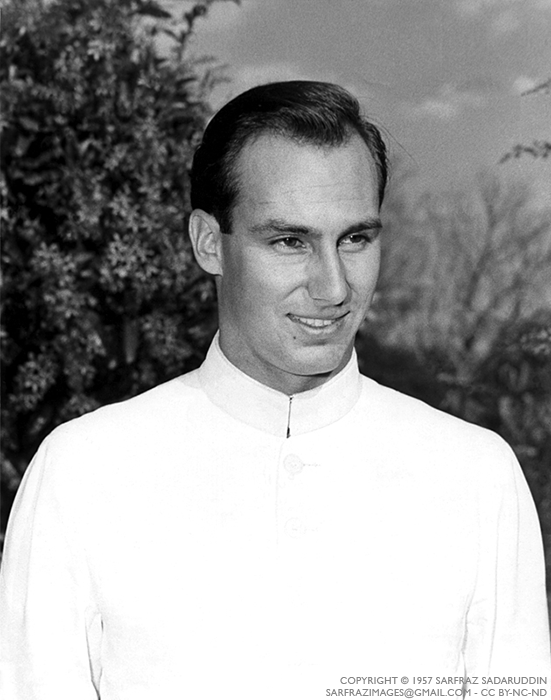
1957-copyright-sarfraz-sadaruddin-mhi-looking-his-right-FINAL-CC

By Mohib Ebrahim

During His Highness the Aga Khan’s 1957 visit to East Africa — his first after becoming Imam of the Shia Imami Ismaili Muslims, the Aga Khan hosted a private function at his residence for many dignitaries — including the late Tom Mboya — and Ismaili community leaders. Sarfraz Sadaruddin, then 19, was one of the photographers covering the event and, never one to be shy, requested the Aga Khan if he could take some portraits of him. The Aga Khan graciously agreed, asking Sarfraz to proceed to the rear garden where he could take the pictures he needed while the Aga Khan was engaged with his guests there and this was when and where these two portraits were taken.

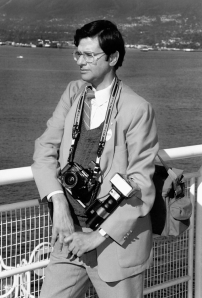
Sarfraz Sadaruddin during Expo 1986.

Sarfraz Sadaruddin during Expo 1986.

Sarfraz Sadaruddin, son of the late Rai A.M. Sadaruddin (see Voices: Sir Sultan Muhammad Shah, Aga Khan III – Eloquent Persian Quatrain by 48th Ismaili Imam Graces a 1923 Invitation For Talk About Imamat), was born in Nairobi, Kenya where he developed a passion for photography in his mid-teens and apprenticed with Kodak Limited for five years before moving to Hamburg, Germany, in 1960 where, on scholarship, he attended Agfa’s training college. Later, he moved to London to continue his photography studies at Ealing Technical College and then worked as a professional, freelance photographer, in the U.K. and continent, for newspapers, advertising firms and Royalty. In 1980, he moved to Vancouver, Canada, where he now resides and continues covering events.

1957-copyright-sarfraz-sadaruddin-mhi-looking-his-left-FINAL-CC

In Kenya, since the Aga Khan’s coronation in 1957 until he left in the 1960s, Sarfraz was a key, official photographer at the Aga Khan’s functions in Nairobi. He covered the 49th Ismaili Imam’s Nairobi Enthronement (Takhtnashini) Ceremony, the opening ceremony of the Platinum Jubilee Hospital, now the Aga Khan University Hospital, and the entire Kenya leg of the 1959 visit including opening ceremony of the Aga Khan High School. He was also invited to cover the Aga Khan’s visit to the Aga Khan Primary School and many other private events the Aga Khan attended or hosted.

In London, Sarfraz was invited to cover the Foundation Stone ceremony of the Ismaili Centre as well as the Aga Khan’s community visits and functions.

Sarfraz Sadaruddin taking pictures during His Highness the Aga Khan's Vancouver Silver Jubilee visit in 1983.

Sarfraz Sadaruddin taking pictures during His Highness the Aga Khan’s Vancouver Silver Jubilee visit in 1983.

In Vancouver, Sarfraz continued to cover the Ismaili Imam’s visits, including extensive coverage of the opening ceremony of the Ismaili Centre, Burnaby, which took place in the presence of then Prime Minister, Brian Mulroney, then British Columbia Premier, Bill Bennett, and His Highness the Aga Khan.

Also in Vancouver, outside of the community, Sarfraz was an official press photographer for many visits of Royalty as well as the World Expo, 1986. Key Expo events he covered include the opening by His Royal Highness Prince of Wales and the late Princess Diana and twenty “National Days.” He was complimented by the then Lieutenant Governor of BC, The Hon. Robert G. Rogers, for his outstanding work.

Simerg welcomes feedback on this post. Please click on Comment.

_________________

LIMITED PERMISSION TO REUSE THE PORTRAITS 

In order that the Jamat may enjoy and use these two portraits, Sarfraz is releasing them under under the Creative Commons Attribution-NonCommercial-NoDerivatives 4.0 International License (CC BY-NC-ND) — the first time, to my knowledge, photographs of Mawlana Hazar Imam, have been so generously shared for the Jamat to enjoy without fear of copyright infringement. Please note the images are still copyright and not in the public domain, but the license does allow them to be re-used non-commercially, without modification and with credit as embedded in the images and set out as below, including the web-link:

His Highness the Aga Khan portrait, Kenya, 1957 by Sarfraz Sadaruddin, © 1957 is licensed under a Creative Commons Attribution-NonCommercial-NoDerivatives 4.0 International License (CC BY-NC-ND).

Sarfraz kindly requests that all those who have copied and republished his photograph from the original posting on Simerg and its sister photoblog Simergphotos, to please add the above credit and replace their images with the one published here.

Date posted: Saturday, July 26, 2014.

Copyright: Mohib Ebrahim. 2014.

 ____________

About the Author: Mohib Ebrahim is Sarfraz’s nephew, grandson of the late Rai A.M. Sadaruddin and founder of the NanoWisdoms Archive (http://www.nanowisdoms.org), a unique website dedicated solely to the Ismaili Imamat’s speeches, interviews and writings launched in 2011 upon receiving special permission from Aiglemont to publish the Aga Khan’s speeches. With over 500 readings and thousands of quotes it is the most comprehensive, public collection of Imamat knowledge available today.

Some of Mohib’s other articles on this website:

1. His Highness the Aga Khan and Canada: A Profound Affinity – But Why Canada?
2. Topan, Paroo and Visram – The Three Kings Without Crowns

_____________

Link to photos taken at the Aga Khan Primary School:

My Late Mother, Jean Kirk, and Her Special Collection of Rare Photos of His Highness the Aga Khan’s Visits to the Aga Khan Primary School in Nairobi by Allison Wallace

OTTAWA: The New Jamatkhana is 1 Year Old; An Ottawa Architect’s Favourite Building; and Iconic Sussex Drive

1. THE OTTAWA JAMATKHANA

Hundreds of Ismailis come by the busloads and personal automobiles to visit Ottawa during the summer months – for many the primary destinations are the Delegation of the Ismaili Imamat Building and the beautiful new Ottawa Jamatkhana which opened exactly a year ago, on July 19, 2013. The visitors marvel at the Ottawa Jamatkhana’s spacious facilities for spiritual practices as well as the space it offers for social interaction and cultural programmes, including religious education classes.

As the Ottawa Jamat marks its first anniversary in the new Jamatkhana we repost on this page a link to Farouk Noormohamed’s statement and photos of the lovely building.

Speaking of Ottawa, local architect Kristopher Benes names his favourite building in the city, and we provide a link to a piece about Ottawa’s iconic Sussex Drive which is home to the Delegation Building.

Check out all the readings below and enjoy your summer in Ottawa, Canada’s Capital!

Please click: Exclusive: Architect’s Statement and Photos of the Fabulous New Ottawa Jamatkhana

IMG_1854~~~~~~~~~~~~~~~~~

2. MY FAVOURITE OTTAWA BUILDING

By Kristopher Benes

As an architect I often get asked to name my favourite Ottawa building! Being a fan of minimalism I was often hard pressed to find anything non-residential that came immediately to my mind –- until that is, when the Ismaili Imamat Delegation building was completed in 2008.

Modern architecture often draws criticism for being too stark, extreme in its simplicity. However, it is its ability to highlight the world around us that I find to be so beautiful in modernism.

The Delegation of the Ismaili Imamat Building.

The Delegation of the Ismaili Imamat Building.

The clarity with which the play of shadows for instance may fall upon a crystal white surface allows architecture to behave as an ever-changing canvas, a reflector if one prefers, of what is going on all around. When the sun moves across the sky, the shadows dance along the building’s surfaces and when the sky takes on a different shade, the building glows in a completely different light.

Light can be a wonderful paint brush for those blank walls; it does not need any more complexity than that. And obviously, Fumihiko Maki, the building’s design architect, understands light better than I ever could hope to (after all he has won a Pritzker Prize for his contributions and has enjoyed a career spanning some 50 years).

I think it is this understanding of light and an ability to shape it so beautifully which speaks to me most about the Ismaili Imamat Delegation Building.

~~~~~~~~~~~

3. ICONIC SUSSEX DRIVE

Please click: Photo Essay: Celebrating Sussex Drive, His Highness the Aga Khan and, Five Years on, the Crystalline Delegation of the Ismaili Imamat Building

Sussex Drive is denoted by the yellow line. Going East, you start at Rideau Street (blue line) where the 700 Sussex Condominium building is located. Between Rideau Street and #35 on the map, you pass the Connaught Building  (550 Sussex) and the US Embassy (490 Sussex). The National Gallery of Art (380 Sussex) and the Basilica (385 Sussex) as well as Reconciliation Monument are located at or around #35. Then just a hundred metres east of #35 are located the Global Centre for Pluralism (330 Sussex), the Royal Canadian Mint (320 Sussex) and the Embassy of Kuwait (333 Sussex). The Saudi Embassy (201 Sussex) and the Delegation of the Ismaili Imamat Building (199 Sussex) are at #36, with the Lester Pearson Building (125 Sussex) and the John G. Diefenbacker or the Old City Hall (111 Sussex) approximately 100-200 metres further east. At #37 you reach Rideau Falls Park (50 Sussex) and the French Embassy (42 Sussex).  Finally, Sussex Drive winds down (or starts if you are travelling South!) at #38, the residences of the Prime Minister (24 Sussex) and the Governor General (1 Sussex) as well as the High Commission of South Africa (15 Sussex). One of the pictures of the Delegation Building shown below was taken from Jacques-Cartier Park in Gatineau, which is denoted by #30 on the map. Map credit: The National Capital Commission (with minor edits by Simergphotos to represent Sussex Drive more clearly).

Sussex Drive is denoted by the yellow line. Going East, you start at Rideau Street (blue line) where the 700 Sussex Condominium building is located. Between Rideau Street and #35 on the map, you pass the Connaught Building (550 Sussex) and the US Embassy (490 Sussex). The National Gallery of Art (380 Sussex) and the Basilica (385 Sussex) as well as Reconciliation Monument are located at or around #35. Then just a hundred metres east of #35 are located the Global Centre for Pluralism (330 Sussex), the Royal Canadian Mint (320 Sussex) and the Embassy of Kuwait (333 Sussex). The Saudi Embassy (201 Sussex) and the Delegation of the Ismaili Imamat Building (199 Sussex) are at #36, with the Lester Pearson Building (125 Sussex) and the John G. Diefenbacker or the Old City Hall (111 Sussex) approximately 100-200 metres further east. At #37 you reach Rideau Falls Park (50 Sussex) and the French Embassy (42 Sussex). Finally, Sussex Drive winds down (or starts if you are travelling South!) at #38, the residences of the Prime Minister (24 Sussex) and the Governor General (1 Sussex) as well as the High Commission of South Africa (15 Sussex). Map credit: The National Capital Commission (with minor edits by Simergphotos to represent Sussex Drive more clearly).

Date posted: Saturday, July 19, 2014.

_________________

The Imamat: By His Highness the Aga Khan, the Ismaili Constitution, Azim Nanji and Abbas Hamdani

“…The Ismaili Imamat is a supra-national entity, representing the succession of Imams since the time of the Prophet…”His Highness the Aga Khan, February 2014

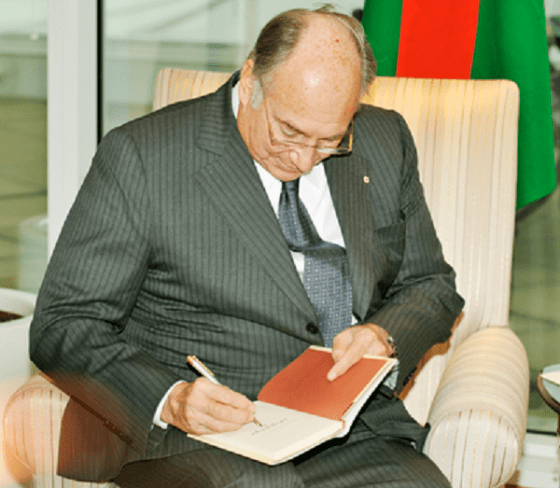
His Highness Aga Khan signing his book "Where Hope Takes Root" for the Premier of British Columbia during his 2008 visit to the province to celebrate his Golden Jubilee. Ismailis will be celebrating his 57th Imamat Day on July 11, 2014. Please click on image for Imamat article. Photo: With permission of The Vancouver Sun. Copyright.

His Highness Aga Khan signing his book “Where Hope Takes Root” for the Premier of British Columbia during his 2008 visit to the province to celebrate his Golden Jubilee. Ismailis will be celebrating his 57th Imamat Day on July 11, 2014. Please click on image for Imamat article. Photo: With permission of The Vancouver Sun. Copyright.

Please click: On the Imamat and Ismailis: By His Highness the Aga Khan, the Ismaili Constitution, Azim Nanji and Abbas Hamdani

On Canada Day, Reflections of Canada Through Images and Quotes of His Highness the Aga Khan

OTTAWA’S EMERGING SKYLINE

Please click on images for enlargement

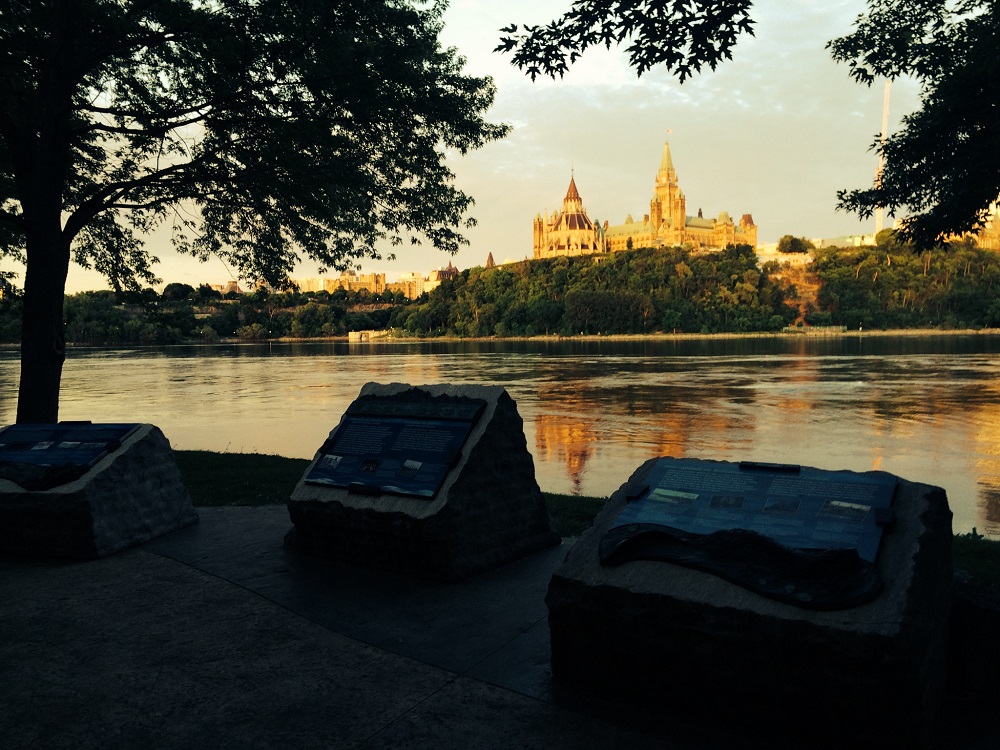
A scene of Ottawa's emerging skyline inscribed on a stone plaque as seen from Gatineau, Quebec, across the Ottawa River. The  inscription reads as follows: "Canada has grown and evolved and so have the country's institutions. In 1867, the new Parliament Buildings welcomed the country's first government. When Canada became independent from Britain in 1931, new federal institutions were built to support the country's "coming of age." In 1967, Canadians celebrated the country's centennial year and their shared English and French heritage. The government embraced this ideal, and in the 1970's extended the federal public service into Quebec - a first step toward the creation of a bilingual and culturally representative capital region." Buildings represented on the plaque (l to r) 1 - National Gallery of Canada; 2 - Embassy of the United States of America; 3 - Canad Revenue Agency; 4 - The Parliemanrt Buildings, 5- Confederation Building; 6 - Department of Justice; 7 - Supreme Court of Canada, and 8 - National Library and Archives Canada. Photo: Malik Merchant. Copyright. June 2014.

A scene of Ottawa’s emerging skyline inscribed on a stone plaque as seen from Gatineau, Quebec, across the Ottawa River, metres from the Canadian Museum of Civilization. The inscription reads as follows: “Canada has grown and evolved and so have the country’s institutions. In 1867, the new Parliament Buildings welcomed the country’s first government. When Canada became independent from Britain in 1931, new federal institutions were built to support the country’s “coming of age.” In 1967, Canadians celebrated the country’s centennial year and their shared English and French heritage. The government embraced this ideal, and in the 1970’s extended the federal public service into Quebec – a first step toward the creation of a bilingual and culturally representative capital region.” Buildings represented on the plaque (l to r) 1 – National Gallery of Canada; 2 – Embassy of the United States of America; 3 – Canada Revenue Agency; 4 – The Parliament Buildings, 5 – Confederation Building; 6 – Department of Justice; 7 – Supreme Court of Canada, and 8 – National Library and Archives Canada. Photo: Malik Merchant. Copyright. June 2014.

_______________

His Highness the Aga Khan on Canada

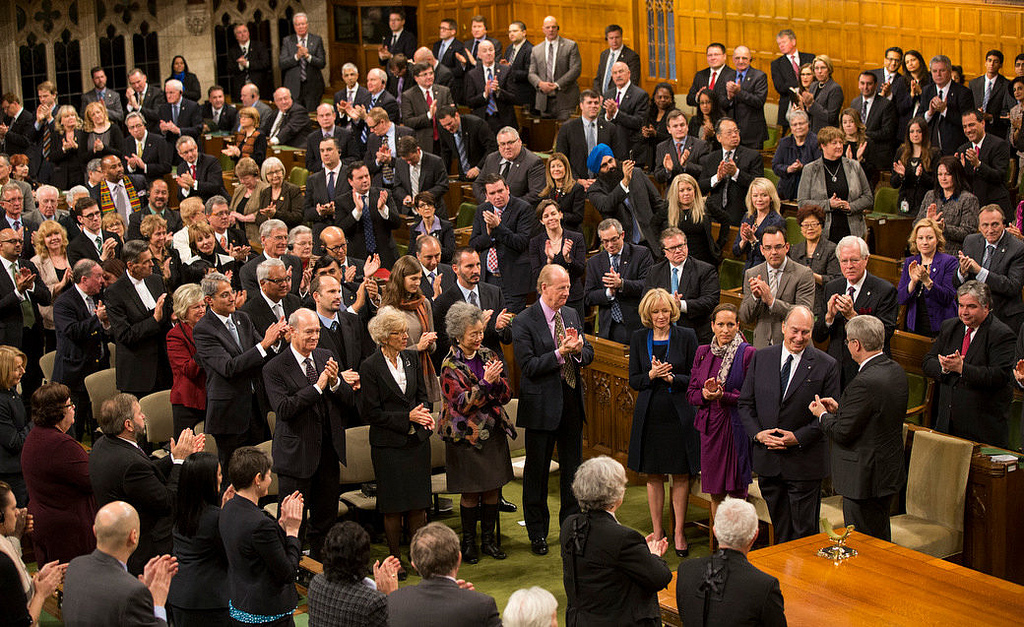
His Highness the Aga Khan is applauded by the Prime Minister, Members of the House, as well as other distinguished visitors as he arrives  in the House of Commons on Thursday, February 27, 2014 to deliver a rare address - the first by a faith leader in 75 years. The Ottawa Citizen published a similar photo on its front page of Friday February 28, giving it the title "In Divine Company." Alongside the Ismaili Imam are his daughter Princess Zahra and the Prime Minister's wife, Laureen Harper. Others in the photo, in rows adjacent to Mrs. Harper (l to r) -- 1st row: The Aga Khan's younger brother, Prince Amyn Muhammad Aga Khan, Chief Justice of the Supreme Court of Canada, The Right Honourable Beverly McLachlin, Former Governor General of Canada, The Right Honourable Adrienne Clarkson, and renowned Canadian author, intellectual and philosopher,  John Ralston Saul; 2nd row (l to r). President Malik Talib of the Aga Khan Ismaili Councli for Canada, Prince Hussain Aga Khan, Princess Salwa Aga Khan and her husband Prince Rahim Aga Khan - with both the Princes in the photo being the Aga Khan's children. Photo credit: The Office of the Prime Minister of Canada.

His Highness the Aga Khan is applauded by the Prime Minister, Members of the House, as well as other distinguished visitors as he arrives in the House of Commons on Thursday, February 27, 2014 to deliver a rare address – the first by a faith leader in 75 years. The Ottawa Citizen published a similar photo on its front page of Friday February 28, giving it the title “In Divine Company.” Alongside the Ismaili Imam are his daughter Princess Zahra and the Prime Minister’s wife, Laureen Harper. Others in the photo, in rows adjacent to Mrs. Harper (l to r) — 1st row: The Aga Khan’s younger brother, Prince Amyn Muhammad Aga Khan, Chief Justice of the Supreme Court of Canada, The Right Honourable Beverly McLachlin, Former Governor General of Canada, The Right Honourable Adrienne Clarkson, and renowned Canadian author, intellectual and philosopher, John Ralston Saul; 2nd row (l to r). President Malik Talib of the Aga Khan Ismaili Council for Canada, Prince Hussain Aga Khan, Princess Salwa Aga Khan and her husband Prince Rahim Aga Khan – with both the Princes in the photo being the Aga Khan’s children. Photo credit: The Office of the Prime Minister of Canada.

A VISION FOR THE OTTAWA RIVERFRONT?…. ISMAILI COMMUNITY AND CANADA

“In just three years, Canada will mark its 150th anniversary, and the whole world will be ready to celebrate with you. Sharing Canada’s robust pluralistic history, is a core mission of our Global Centre, and 2017 will be a major opportunity for doing so, operating from its headquarters in the former War Museum on Sussex Drive. Perhaps 2017 and the celebrations can be a catalyst with our neighbours to improve the entire riverfront area around that building.

“Our partnership in Canada has been immensely strengthened, of course, by the presence for more than four decades of a significant Ismaili community. Like most historic global communities the Ismaili peoples have a variegated history, but surely our experience in Canada has been a particularly positive chapter.

“I happily recall the establishment of the Delegation of the Ismaili Imamat here in 2008 and the Prime Minister’s description that day of our collaborative efforts to make Canada “the headquarters of the global effort to foster peace, prosperity, and equality through  pluralism. [1]

Parliament Buildings from the spot where the top image was taken. Photo: Malik Merchant. Copyright.

Parliament Buildings from the spot where the top image was taken. Photo: Malik Merchant. Copyright.

A statue of French explorer Samuel de Champlain at Nepean Point in Ottawa. The explorer is  seen holding his famous astrolabe upsidedown. Nepean Point is a hill in Ottawa, Ontario, Canada, overlooking the Ottawa River, Parliament, the Canadian Museum of Civilization, and other features of downtown Ottawa and Gatineau. It is located between the National Gallery of Canada and Alexandra Bridge. The sculpture was made by Hamilton MacCarthy in 1915. Photo: Malik Merchant, Copyright.

A statue of French explorer Samuel de Champlain at Nepean Point in Ottawa. The explorer is seen holding his famous astrolabe upsidedown. Nepean Point is a hill in Ottawa, Ontario, Canada, overlooking the Ottawa River, Parliament, the Canadian Museum of Civilization, and other features of downtown Ottawa and Gatineau. It is located between the National Gallery of Canada and Alexandra Bridge. The sculpture was made by Hamilton MacCarthy in 1915. Photo: Malik Merchant, Copyright.

The rock crystal shaped dome of the Delegation of the Ismaili Imamat  shown just above the top deck of a boat on the Ottawa River, beneath Ottawa's Royal Alexandra Bridge. Photo: Malik Merchant. Copyright. June 2014.

The rock crystal shaped dome of the Delegation of the Ismaili Imamat shown just above the top deck of a boat on the Ottawa River, beneath Ottawa’s Royal Alexandra Bridge. Photo: Malik Merchant. Copyright. June 2014.

CANADA – A HAVEN OF PEACE

“Canada is an international power who takes her responsibilities seriously and whose policies have never in her history been tainted by the cruder forms of colonialism, racialism or isolationism. [2]

“Successful experience with democracy, civil society and pluralism are the national genius of Canada of which much of the developing world is in dire need. [3]

“Canada remains for the rest of the world an enviable haven. A haven of peace, and of immense natural beauty and wealth. The wealth I speak of, is not merely its natural resources but the peoples of Canada, steeped in your tradition of tolerance, generosity and compassion in alleviating human suffering and respect for diversity of thought and culture.” [4]

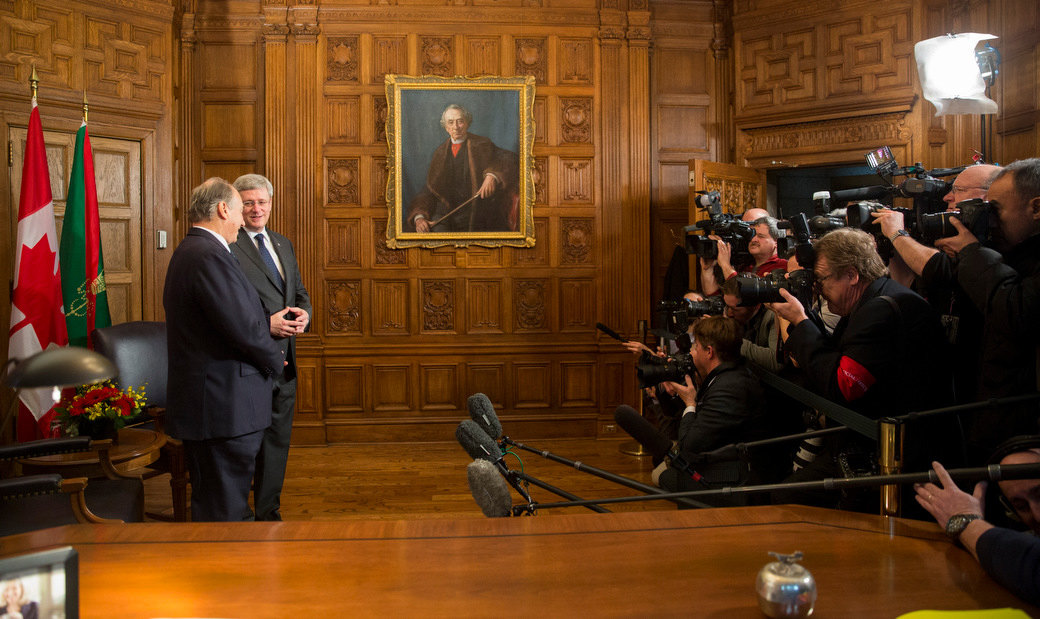
His Highness the Aga Khan and the Right Honourable Stephen Harper, the Prime Minister of Canada, face eager cameras at the Canadian Parliament Building on Thursday, 27 February, 2014. An oil on canvas painting of The Right Honourable Sir John Alexander Macdonald, Prime Minister (1867-1873; 1878-1891) adorns a wall as part of the House of Commons Heritage Collection, while the Ismaili Imamat and Canadian Flags form a backdrop in this historical photo. Photo credit: The Office of the Prime Minister of Canada.

His Highness the Aga Khan and the Right Honourable Stephen Harper, the Prime Minister of Canada, face eager cameras at the Canadian Parliament Building on Thursday, 27 February, 2014. An oil on canvas painting of The Right Honourable Sir John Alexander Macdonald, Prime Minister (1867-1873; 1878-1891) adorns a wall as part of the House of Commons Heritage Collection, while the Ismaili Imamat and Canadian Flags form a backdrop in this historical photo. Photo credit: The Office of the Prime Minister of Canada.

CANADA – MOST SUCCESSFUL PLURALIST SOCIETY ON EARTH

“Canada is a country that has invested in making this potential liability [of pluralism] become an asset, and I think that Canada has been perhaps too humble in its own appreciation of this global asset. It’s a global asset, and few countries, if any have been as successful as Canada has. [5]

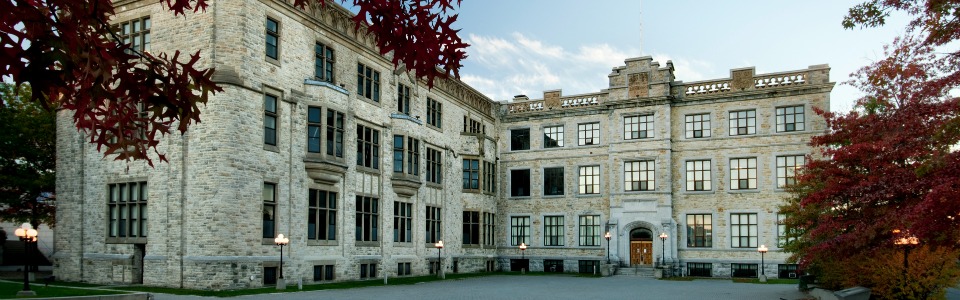
The Old Canadian War Museum will become the future site of the Global Centre for Pluralism, once renovations  are completed inside the building. The Centre is governed by an international Board of Directors chaired by His Highness the Aga Khan. The Global Centre for Pluralism was inspired by the example of Canada’s inclusive approach to citizenship, and works to advance respect for diversity worldwide, believing that openness and understanding toward the cultures, social structures, values and faiths of other peoples are essential to the survival of an interdependent world.

The Old Canadian War Museum will become the future site of the Global Centre for Pluralism, once renovations are completed inside the building. The Centre is governed by an international Board of Directors chaired by His Highness the Aga Khan. The Global Centre for Pluralism was inspired by the example of Canada’s inclusive approach to citizenship, and works to advance respect for diversity worldwide, believing that openness and understanding toward the cultures, social structures, values and faiths of other peoples are essential to the survival of an interdependent world.

“Canada is today the most successful pluralist society on the face of our world. Without any doubt in my mind. You have created the perfect pluralist society where minorities, generally speaking, are welcome, they feel comfortable, they assimilate the Canadian psyche, they are allowed to move forward within civil society in an equitable manner, their children are educated. So Canada has succeeded in putting together a form of pluralist society which has been remarkably successful. I’m not the one who’s making a judgement.” [6]

Date posted: July 1, 2014.

_______________

[1] House of Commons, Thursday, February 27, 2014.
[2] Diplomatic Banquet (Toronto, Canada), 19 November 1978.
[3] The Delegation of the Ismaili Imamat Foundation Stone Ceremony (Ottawa, Canada), 6 June 2005.
[4] Diplomatic Corps Banquet (Toronto, Canada), 19 August 1992.
[5] CBC Interview, One-on-One with Peter Mansbridge (Ottawa, Canada), 28 October 2006. Click One on One: Peter Mansbridge Interview with His Highness the Aga Khan
[6] Globe and Mail Interview (3rd), John Stackhouse and Patrick Martin (Toronto, Canada), 30 January 2002

Please also click His Highness the Aga Khan and Canada: A Profound Affinity – But Why Canada?

Openness to Diversity and Pluralism in Human Hearts and Minds Necessary for Humanity’s Progress and Social Convergence, Says His Highness the Aga Khan, 49th Ismaili Imam, at North-South Award Ceremony

The following are thematic excerpts from remarks made by His Highness the Aga Khan at the North-South Prize Ceremony, Senate Hall, Parliament, Lisbon, on June 12, 2014.

Bismillah-ir-Rahman-ir-Rahim

THE CEREMONY’S SIGNIFICANCE

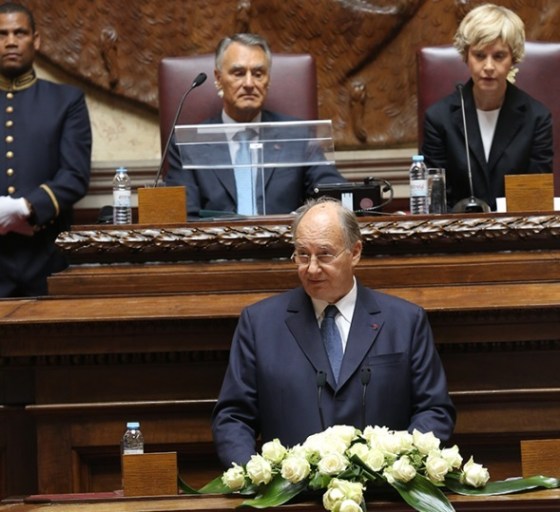
 His Excellency Aníbal Cavaco Silva, the President of the Republic of Portugal presents His Highness the Aga Khan with the 2013 North-South Prize. - Photo: AKDN/ José Manuel Boavida Caria


His Excellency Aníbal Cavaco Silva, the President of the Republic of Portugal presents His Highness the Aga Khan with the 2013 North-South Prize. – Photo: AKDN/ José Manuel Boavida Caria

This award, first of all, has special significance because of who shares it – Madame Suzanne Jabbour. Her dedication to those who are tortured is an example that inspires us all. I know she will agree when I mention the list of those – from both South and North – who have received this award since 1995. It is a moving experience to have one’s work recognized alongside theirs.

…this prize has particular meaning because of those who organize it – the men and women of the North-South Centre of the Council of Europe, who contribute so much to advancing democratic citizenship in our world. The Aga Khan Development Network has been proud to join with the Centre in distinguished projects such as the annual Lisbon Forum held at the Ismaili Centre.

The significance of this award is also enhanced for me by the fact that it has been presented by the President of Portugal, in the presence of so many eminent leaders, and in this splendid Parliamentary setting.

THE IMAMAT, AKDN, PORTUGAL AND THE NORTH-SOUTH PRIZE

The Ismaili Imamat and the Aga Khan Development Network have had a long, close relationship with Portugal, built on shared values. Over many centuries, Portugal has welcomed and integrated people of diverse cultures. It was here on the Iberian Peninsula that Al-Andulus flourished for so long as a model of effective pluralism, a home for Christian and Jewish peoples that was also part of an Islamic empire….

The North-South prize affirms principles which have long been animated and sustained by the work of the Aga Khan Development Network. Our Network seeks in many ways to improve the quality of human life, in health, education, in cultural and economic development. But our core conviction is that human progress depends on human cooperation, even across difficult lines of division.

 A PLEA FOR RICHER DIALOGUE, DEEPER EDUCATION AND RECOGNITION OF THE BLESSINGS OF PLURALISM

His Highness the Aga Khan addresses the North-South Prize Ceremony in the Senate Hall of the Portuguese Parliament as His Excellency Aníbal Cavaco Silva, the President of the Republic of Portugal and President of the Assembly of the Republic, Maria Assunção Esteves look on. - Photo: AKDN/ José Manuel Boavida Caria

His Highness the Aga Khan addresses the North-South Prize Ceremony in the Senate Hall of the Portuguese Parliament as His Excellency Aníbal Cavaco Silva, the President of the Republic of Portugal and President of the Assembly of the Republic, Maria Assunção Esteves look on. – Photo: AKDN/ José Manuel Boavida Caria

As I observe the world, I am struck by the insufficiency of well-informed debate, of richer dialogue, of deeper education in our quest to avoid human conflict. That insufficiency often plagues relations between the North and the South– and increasingly between the North and the Islamic world. Some have called this a clash of civilizations—I think it is, essentially, a clash of ignorances. What it means, in any case, is that institutions such as the North-South Centre have never been more important.

A related problem is the failure of so many to recognize that pluralism is not only a growing fact of life but also a blessing for their communities—an opportunity to be welcomed rather than a threat to be feared.

Since ancient times, great cultures have thrived because of their openness to diversity, and not because of their exclusivity.

ANTONIO GUTERRES AT GLOBAL CENTRE FOR PLURALISM

It was to address this issue that the Government of Canada and I created a new Global Centre for Pluralism in Ottawa in 2006.

Recently the Global Centre held its Third Annual Pluralism Lecture….our guest lecturer was Antonio Guterres, United Nations High Commissioner for Refugees since 2005….His recent Lecture described, eloquently, the unprecedented scale and severity of the world’s refugee crises. He addressed, passionately, the moral challenge this crisis presents, the tragic impulse of some to exploit it, and the critical importance of standing together on behalf of human tolerance. I commend his words to you; they resonate powerfully with the purposes of the North-South Centre.

We inhabit an overcrowded and interconnected planet and yet we share a common destiny. A weakness or pain in one corner can rapidly transmit itself across the globe. The pervasive rejection of pluralism in all its forms plays a significant role in breeding destructive conflicts.

An example is the current situation in the Middle-East, where conflict is having a profound destabilising impact — in the region but also well beyond — including here in Europe.

TRADITIONAL VALUES AND THE GIFT OF PLURALISM

Instability is infectious, but so is hope. And that it is why it is so important for us to carry the torch of hope as we seek to share the gift of pluralism.

Pluralistic values have been articulated since ancient times. Profound expressions about our common humanity are embedded in the world’s great religious traditions, including my own. But now it is for us to re-articulate those traditions. As we do so, our support for one another can be a source of renewed and growing strength.

WHAT CAN SAVE US?

It is ironic that a sense of intensified conflict comes at a time of unprecedented breakthroughs in communication technology. At the very time that we talk more and more about global convergence, we also seem to experience more and more social divergence. The lesson it seems to me is that technologies alone will not save us– the critical variable will always be and will always lie in the disposition of human hearts and minds.

I am grateful for the opportunity to share with all of you in this experience – and in the great purposes to which it calls us.

__________

For complete speech and photo gallery please visit the following websites:

http://www.akdn.org
http://www.theismaili.org

For links to numerous other pieces on the Award Ceremony please click on http://www.ismailimail.wordpress.com.

For a comprehensive coverage of the speeches of His Highness the Aga Khan, please click on http://www.nanowisdoms.org.

The Holy Qur’an: An Anecdote from His Highness the Aga Khan’s Visit to an Ismaili Religious Night School

In this piece Kamaluddin Mohammed, a prominent and highly respected Ismaili scholar and missionary explains the importance of studying the Holy Qur’an, and gives an anecdote from a religious night school visit made by the current 49th Imam of the Ismailis, His Highness the Aga Khan, during his visit to India in 1967.

PLEASE CLICK:  Ismaili Children’s Understanding of the Holy Qur’an Gives Immense Happiness to Mawlana Hazar Imam

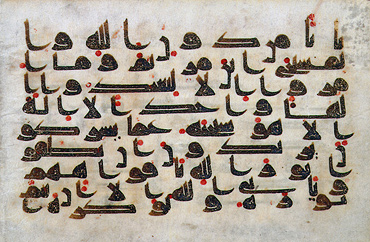
Calligraphy writing has been a preeminent Islamic art since the seventh century when the Qur'an was revealed to Prophet Muhammad and recorded in the Arabic language. Controlled, angular lettering called Kufic script was commonly employed in the writing of early Qurans. This folio from the Qur'an, is Sura 9, "Repentance" (al-Tauba), verses 31-32, Near East or North Africa, ca. 900. Photo:  Doris Duke Foundation for Islamic Art. Please click on image for article.

Calligraphy writing has been a preeminent Islamic art since the seventh century when the Qur’an was revealed to Prophet Muhammad and recorded in the Arabic language. Controlled, angular lettering called Kufic script was commonly employed in the writing of early Qurans. This folio from the Qur’an, is Sura 9, “Repentance” (al-Tauba), verses 31-32, Near East or North Africa, ca. 900. Photo: Doris Duke Foundation for Islamic Art. Please click on image for article.