The Story of an Ismaili Farmer Who Has Served the Mahuva Jamat All His Life by Salman Bheriyani

“The jamatbhai…was blind and for ‘wudu’ he used to draw water from a nearby well.  Gulamhusen made sure that he was there to help the jamatbhai in the daily ritual. Through acts such as this, Gulamhusen began to serve the jamat of the town”….Read More

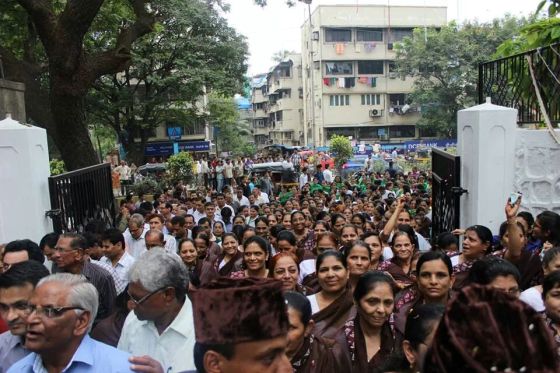
Long serving Ismaili, 77 year old farmer Gulamhusen Alibhai Jamani of Mahuva, India, with a  medal that was presented him during Volunteer Day. Please click on image for story.

Long serving Ismaili, 77-year-old farmer Gulamhusen Alibhai Jamani of Mahuva, India, with a medal that was presented to him to recognise volunteers. Please click on image for story.

Simerg’s Volunteer Series (previous stories):

We invite contributions for the series. Please click STORIES OF ISMAILI VOLUNTEERS.

His Highness the Aga Khan III: Historic First Landings in East Africa in 1899 and the USA in 1906

The Old Boma where His Highness the Aga Khan was received with great honours by the Chief of the District, Surgeon-Major Gaertner, and all the Europeans, among them the author of the article. Please click on image to read both the East Africa and USA accounts.

The Old Boma where His Highness the Aga Khan was received with great honours by the Chief of the District, Surgeon-Major Gaertner, and all the Europeans, among them the author of the article. Please click on image to read accounts of both the East Africa and USA visits.

“….The enthusiasm and veneration for His Highness at his arrival [in Bagamoyo] as well as during his whole stay was tremendous and will linger in the memories of all who, like me, had the honour to be present” — Otto Mahnke…Read More

~~~~~

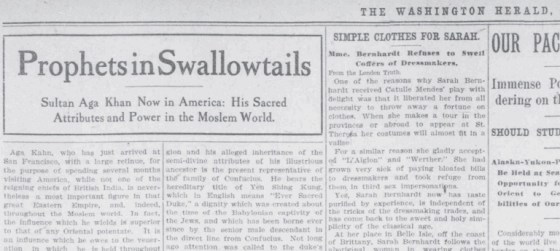
Clip of page from the Washington Herald dated January 27, 1907 containing article on His Highness the Aga Khan. Please click on image to read accounts of both USA and East Africa visits.

Clip of page from the Washington Herald dated January 27, 1907 containing article on His Highness the Aga Khan. Please click on image to read accounts of both USA and East Africa visits.

“The Pope and the Dalai Lama of Tibet are great spiritual chiefs, but in them the principle of inheritance is absent” — The Washington Herald, 1907…Read More

Unique Moments from the Extraordinary Life of His Highness the Aga Khan III – the Beloved 48th Imam of the Shia Imami Ismaili Muslims

“On 2nd November, 1877 my beloved grandfather was born here in Karachi. Through 72 years of Imamat, he guided his spiritual children to happiness and prosperity….Many many memories come to our minds as we think of him. He achieved in his life, for our community that which could only have been accomplished normally in a period of many generations. The tributes that the world has paid him bear honest testimony to his great life and work” — His Highness Prince Karim Aga Khan, 49th Ismaili Imam
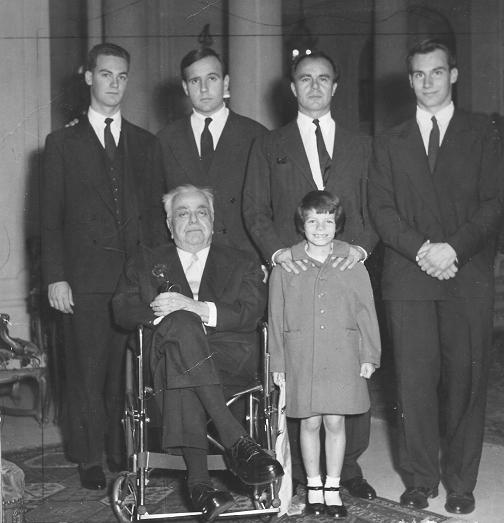
The late 48th Ismaili Imam, His Highness the Aga Khan, seated on a wheelchair with members of his family with his successor, the present Imam, Prince Karim Aga Khan, standing at extreme right. Others in the photo (l to r), grandson Prince Amyn Muhammad ,and the late Imams two sons, the late Prince Sadruddin and Prince Aly Khan, who is seen holding his daughter Princes Yasmin Aga Khan Photo: Zul Khoja Collection, Ottawa.

The 48th Ismaili Imam, His Highness the Aga Khan (1877 – 1957), seated on a wheelchair with members of his family with his successor, the present Imam, Prince Karim Aga Khan, standing at extreme right. Others in the photo (l to r), grandson Prince Amyn Muhammad , and the 48th Imam’s  two sons, the late Prince Sadruddin and Prince Aly Khan who is seen holding his daughter Princes Yasmin Aga Khan. Photo: Zul Khoja Collection, Ottawa.

November 2, 2014 marks the 137th birth anniversary of the 48th Ismaili Imam, Sir Sultan Mahomed Shah, His Highness the Aga Khan III. Born in Karachi in 1877, he assumed the reign of Imamat at the age of seven, and ruled the Ismailis  for 72 years, becoming the community’s longest-serving Imam. He passed away on July 11, 1957, and willed that the mantle of Imamat should pass to his grandson, the present 49th Imam, His Highness Prince Karim Aga Khan IV.

We are pleased to provide our readers with links to diverse articles, stories and photo essays related to the beloved 48th Imam, who has been described in one of the pieces as the Imam of the Socio-Economic Revolution. Please click on the following selections:

BIOGRAPHY, DECORATIONS, IMAM’S WRITINGS AND TRIBUTES

His Highness the Aga Khan III,  48th Imam of Shia Imami Ismailis, in full regalia. Photo: Jehangir Merchant Collection.

His Highness the Aga Khan III, 48th Imam of Shia Imami Ismailis, in full regalia. Photo: Jehangir Merchant Collection.

1. Imam Sultan Muhammad Shah – An Astonishing and Extraordinary Personality

2. Literary Reading: Sir Sultan Muhammad Shah, Aga Khan III – Successor and a Son Reflect on Accomplishments of the 48th Ismaili Imam

3. Titles, Decorations and Honours Conferred on 48th Ismaili Imam; 72 Year Reign Spanned Six British Monarchs and Seventeen PM’s

4. Literary Reading: Sir Sultan Muhammad Shah, Aga Khan III – The Road to Happiness and The Concept of Life

5. “Work No Words” by His Highness the Aga Khan, and Other Rare Ismaili Historical Quotes on Service

6. His Highness the Aga Khan’s “Never-To-Be-Forgotten” Message to Ismaili Youth – “Keep Clean Soul in a Clean Body”

7. Literary Reading: Sir Sultan Muhammad Shah, Aga Khan III – Long Reign Ends

8. Literary Reading: Sir Sultan Muhammad Shah, Aga Khan III: The Face of Imamat 

9. The Memoirs of Aga Khan – World Enough and Time: A Translator’s Voice

ANECDOTES
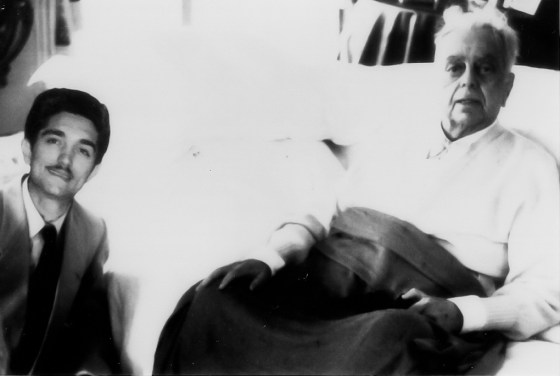
The late Sir Sultan Mahomed Shah Aga Khan III pictured with Badrudin Adatia. Recalls Adatia: "I wanted to take picture of him with us and I asked his permission. The room was dim, however, and I didn’t have a flash on my camera. Although he was very sick and could not even walk, he told me he would head toward the window where there would be better light. Imagine! I clasped my hands with respect and said, “No Khudavind. I will take the picture just as we are.” Photo: Badrudin Adatia collection.

The late Sir Sultan Mahomed Shah Aga Khan III pictured with Badrudin Adatia. Recalls Adatia: “I wanted to take picture of him with us and I asked his permission. The room was dim, however, and I didn’t have a flash on my camera. Although he was very sick and could not even walk, he told me he would head toward the window where there would be better light. Imagine! I clasped my hands with respect and said, “No Khudavind. I will take the picture just as we are.” Photo: Badrudin Adatia collection.

10. I Wish I’d Been There: A Unique Moment in the Life of the Punjab Jamat

11. Yakimour 1954: A Golden Moment for an Aspiring Student – An Audience with the 48th Ismaili Imam, Aga Khan

12. “Mawla Fulfilled My Wish”

13. On Meeting the Noorani Family – My Voyage to Europe

14. An Ismaili Youth’s Rare Moment With Imam Sultan Mahomed Shah

EXTRA ORDINARY VISITS AND THE JUBILEES
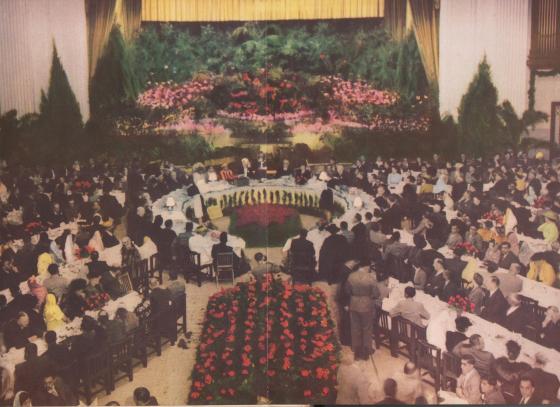
His Highness the Aga Khan at a reception by the Ismaili community in South Africa.

His Highness the Aga Khan at a reception by the Ismaili community in South Africa.

15. Lakhpaty’s Intriguing Poster for 48th Ismaili Imam’s Diamond Jubilee Shows Artistic Ingenuity

16. Imam’s Message in South Africa Addressed Artificial Barriers, Unity, Education for All, and Damaging Social Habits

17. Photo Essay: The Historical Jubilees of His Highness the Aga Khan (1877-1957), the Imam of the Socio-Economic Revolution

18. World Renowned Photographer Sarite Sanders Portrays Mysterious Radiance of a Fatimid Tomb and the Elegance of the Aga Khan Mausoleum

19. When His Highness the Aga Khan III First Visited East Africa and the USA

DEDICATION TO ISLAM AND THE MUSLIM WORLD
A group comprising doctors, health and public officials gathered on a street in Bombay about to begin the day's work, during an outbreak of plague. Photo Credit: Wellcome Library, London. Wellcome Images. Copyright.

A group comprising doctors, health and public officials gathered on a street in Bombay about to begin the day’s work, during an outbreak of plague. Photo Credit: Wellcome Library, London. Copyright.

20. His Highness the Aga Khan and the Bubonic Plague of 1897: How the Ismaili Imam’s Courage and Leadership Saved Countless Lives

21. Hazrat Imam Sultan Muhammad Shah, Aga Khan III – A “Mendicant” Who Transformed a Dream into Reality and Stirred the Soul of a Bitter Critic

22. Sir Sultan Muhammad Shah, Aga Khan III – A Muslim’s Analysis of Lessons that Can be Learnt from the 48th Ismaili Imam

Date post updated: Saturday, November 1, 2014.

An Account of His Highness the Aga Khan’s Recent Visit to India: For Ismaili Followers and Volunteers, “An Experience of Being Lifted Away to Another World” by Toral Pradhan

“The car door was left open waiting for him to sit in, but Hazar Imam was instead moving around the compound as if unwilling to leave the premises…..This is a sight that is difficult to erase from the mind” — Toral Pradhan

PLEASE CLICK: His Highness the Aga Khan’s Visit to India: For His Ismaili Followers and Volunteers, “A Dream Come True” and “An Experience of Being Lifted Away to Another World”

Please click on image for article by Toral Pradhan.

Please click on image for article by Toral Pradhan.

Id-e-Ghadir – The Designation of Hazrat Ali (a.s.) as Commander of the Faithful

Excerpt adapted from Ilm magazine, December, 1989*

The twelve months of the Muslim calendar and major Muslim festivals. Image by Simerg.

The twelve months of the Muslim calendar and major Muslim festivals. Image by Simerg.

‘Id-e-Ghadir is celebrated by the Shi ‘ite communities to mark the event that took place at Ghadir Khumm (Valley of the Pond) on the 18th Dhul-Hijjah. This event commemorates the designation (appointment by way of nass) of Hazrat All as the ‘Amir-ul-Mu’minin (commander of the faithful) and Imamul-Muslimin’ (the Imam of the community of believers) at Ghadir-i Khumm when the Prophet (s.a.s.) was returning from his Last Pilgrimage (hajjatul-wida) in the year 632 AC. On this occasion, the Prophet publicly proclaimed Ali to be his successor [1] in guiding the community after the end of the institution of Nubuwwah. According to the Shi’a doctrine, tradition and interpretation of history, the designation of Hazrat Ali marked the beginning of the institution of Imamah. The designated Imam was to continue the ta’wil (interpretation) and talim (teaching) of Allah’s Final Message, i.e. the Holy Qur’an.

This stamp, issued by Iran in 1990, includes the Shahada, Qur'anic ayats and the declaration made by Prophet Muhammad at Ghadir-e Khumm "Mun Koontu Mawla, Fa Hada, Aliyun Mawla" (He of whom I am the Mawla, Ali is also the Mawla). Image not exact stamp size.

This stamp, issued by Iran in 1990, includes the Shahada, Qur’anic ayats and the declaration made by Prophet Muhammad at Ghadir-e Khumm “Mun Koontu Mawla, Fa Hada, Aliyun Mawla” (He of whom I am the Mawla, Ali is also the Mawla). Image not exact stamp size.

Accordingly, throughout the course of the history, the Shi’a have commemorated this occasion as a mark of recognition and acceptance of Allah’s mercy to mankind by bestowing continued guidance. Each Imam, since the time of Hazrat Ali has designated his successor. The Imam in his time has continued to guide his followers according to the prevailing conditions. His function has always been to look after the welfare of the community both in spiritual and worldly (material) matters. His guidance to his followers is that they should lead their lives in such a way so as to practice their Faith with a sense of balance and harmony, ensuring that there is no conflict between the two aspects of an individual’s life. The practice of the Faith thus becomes the way of life.

Presently, the Shi’a Imami Ismaili Muslims celebrate the day of accession of their present Imam to the office of Imamah as Yaum-e Imamat or Imamat Day. This occasion is celebrated as a mark of gratitude to Allah in having bestowed His mercy and bounty in guiding them through the office of the Imam on Sirat al-Mustaqim (the Straight Path).

Date posted: October 22, 2013

Please also click: Ghadir-Khumm – “I Wish I’d Been There” and Other Writings

_____________________

Notes

[1] Vagglieri, Ghadir Khumm, The Encyclopedia of Islam, Vol II, E.J. Brill, 1965, pp. 993-994

* For link to complete article, please click Muslim Festivals and Religious Observances.

A Description of the Hajj by the Ismaili Missionary Naser-e Khosraw – from “One Thousand Roads to Mecca” by Michael Wolfe

AN INSTALLMENT FROM SIMERG’S MUST READ SERIES ABOUT NASER-E KHOSRAW’S MEMORABLE JOURNEY TO FATIMID EGYPT

A statue of the famous Ismaili dai Nasir Khusraw in Badakhshan.

“….The tallest mountain near Mecca is Abu Qubays, which is round like a dome, so that if you shoot an arrow from the foot of the mountain it reaches its top.…Having come into the city, you enter the Haram Mosque, approach the Ka’ba, and circumambulate….. always keeping the Ka‘ba to your left [shoulder]. Then you go to the corner containing the Black Stone, kiss it, and pass on….”

Please click: Naser-e Khosraw’s Pilgrimages to Mecca
(Links to all series articles provided below)

A bird’s-eye view of the Ka’ba crowded with pilgrims. The photo is from the archives of the US Library of Congress and was created by American Colony (Jerusalem), Photo Dept., in 1910. Please click for article by Naser-e Khosraw.

________________
Complete series by Michael Wolfe:

Part I – Introduction and Naser-e Khosraw Commences the Journey
Part II – Naser-e Khosraw in Fatimid Cairo
Part III – Naser-e Khosraw’s Pilgrimages to Mecca
Part IV – Naser-e Khosraw’s Dangerous Homeward Journey

A History of the Ismaili Community in Daman from the Portuguese Period to the Present by Toral Pradhan

A FASCINATING JOURNEY INTO THE PAST

Do we have written accounts or histories of Ismaili settlements and jamatkhanas in little East African towns such as Manyoni, Eldoret, Jinja, or Lushoto? How about remoter areas in Central Asia, the Middle East and the Indian sub-continent or for that matter even bigger cities such as Toronto (Canada), Christchurch (New Zealand), Denver (USA), Regina (Canada) and Stoke-on-Trent (UK)?

Please click on image(s) or on A Brief History of the Khoja Ismaili Community in Daman, India, from the Portuguese Period to the Present

A ‘Badge of Honour’ presented to the Ismaili Scout Band in Daman in the 1940's.

A ‘Badge of Honour’ presented to the Ismaili Scout Band in Daman in the 1940s.

For the forthcoming 40th anniversary of the inauguration of the new Ismaili jamatkhana in Daman, a tiny Portuguese enclave for 400 years until it was absorbed into India on December 19, 1961, the town’s resident writer Toral Pradhan made a determined effort to find out more about the two-hundred year history of the Ismaili Jamat living there. Her piece, augmented with images and material from archives, will hopefully stimulate other writers as well as youth to research about the origins of the Ismaili community in small towns they live in or where their parents or forefathers once had their homes.

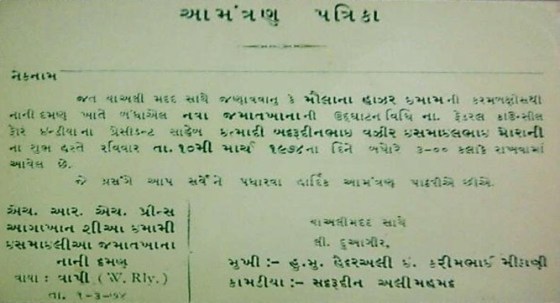
A Gujarati invitation card for the inauguration of the new Jamatkhana in Daman. Please click for article.

A Gujarati invitation card for the inauguration of the new Jamatkhana in Daman. Please click for article.

PLEASE CLICK: A Brief History of the Khoja Ismaili Community in Daman, India, from the Portuguese Period to the Present

“Happy Days in Hasanabad” – Mawlana Hazar Imam in India

As part of Simerg’s special series on Jamatkhanas, we published a piece under the title Happy Days in Hasanabad (please click to read the historic piece). We mention this because the Jamats in Western India have just witnessed and experienced the happiest days of their lives in the historic Hasanabad complex in the intimate company of their beloved 49th Imam, Mawlana Shah Karim al-Hussaini, His Highness the Aga Khan, whose magnificent 11-day visit to India concluded on September 28, 2013.

In the coming days we hope to be able to present accounts and narratives from members of the Indian Jamat on various aspects of the visit, including the immensely happy days that they spent with their Imam in Hasanabad.

In the meantime, we invite our readers to view the official video of the banquet ceremony that was hosted in Mawlana Hazar Imam’s honour by the Indian Jamati institutions. The happiness of our beloved Imam is indeed evident as he attentively listens to two live musical pieces “Bismilllah” and “La Fatah Ila Ali La Saif Ila Zulfiqar” (there is no hero except Ali, and no sword except Zulfiqar) that were presented during the banquet. In Shia Ismaili theology, all Imams are generally referred to as Ali (the first Shia Imam) because each Imam is the bearer of the same Noor (light) in the continuum that is Imamat – a Divine Institution that was ordained by Prophet Muhammad (s.a.s) at Ghadir-Khumm with the proclamation “Man kuntu mawlahu fa Ali mawlahu” (He of whom I am the Mawla, Ali is also the Mawla).

To watch the video, please click on the following image or The Ismaili – Banquet Video.

Please click to watch video.

Please click to watch video.

Date posted: Sunday, September 29, 2013.

Stories of Ismaili Volunteers: Badrudin Kurwa’s Courageous Journey to Chitral for His Nazrana (Gift) of Time and Knowledge to Mawlana Hazar Imam

This is a fascinating story of faith and courage by an eye-surgeon who decided to travel to Chitral, Pakistan, and give the precious gift of an eyesight to individuals who thought they would never see again. Simerg invites individuals to come forward and share their stories as part of its 4th anniversary series dedicated to Ismaili volunteers, badged as well as non-badged.

PLEASE CLICK: An Ismaili Eye Surgeon’s Courageous Journey to Chitral

Badrudin Kurwa, right, performing a cataract surgery in Chitral, Pakistan. Please click on image to read article.

Badrudin Kurwa, right, performing a cataract surgery in Chitral, Pakistan. Please click on image to read article. Photo: Badrudin Kurwa Collection.

__________

Post of patients following cataract surgery by Dr. Badrudin Kurwa in Chitral, Pakistan. Please click for article.

Post op patients following cataract surgery by Dr. Badrudin Kurwa in Chitral, Pakistan. Please click on image for article. Photo: Badrudin Kurwa Collection.

To contribute to series, please click STORIES OF ISMAILI VOLUNTEERS

______________

Tragedy in Nairobi Brings Grief to Kenyans and People All Around the World: Pictures and Stories from the Denver Post, Al-Jazeera and the Washington Post

A girl is helped by police officers inside the mall. Please click on next image, see below, for a slide show at the Denver Post website. Links are also provided to the websites of Al-Jazeera and the Washington Post.

A girl is helped by police officers inside the Westgate Mall in Nairobi where 59 people are reported killed during Saturday’s terrorist attack. Please click on next image, see below, for a slide show at the Denver Post website. Viewer discretion is advised as some of the images are disturbing. Links are also provided to the websites of Al-Jazeera and the Washington Post.

Editor’s note: Please also click on the Comments link at top left of this post.  They include updates about the dead victims and the injured.

Kenya’s grief is our grief. The unimaginable and unthinkable has happened in Nairobi, where dozens of people, including Canadians, are dead or injured in a brutal attack against civilians in a mall. The victims included children. The latest reports indicate that at least 59 people were killed and 175 injured in Saturday’s incident.

We feel as if humanity has been taken in its entirety. The preceding statement has its basis in the Holy Qur’an, which speaks about the sanctity of life (see quote by His Highness the Aga Khan on the Simerg banner at top of this page).  Lost lives and injuries are even more difficult to bear and accept when they involve children, as in this incident that has wounded the entire world.

At this time, our prayers and thoughts are for the people of Kenya, and especially for the families who are grieving from this senseless and unjustifiable act. We pray for the souls of the deceased, and wish all the injured quick and complete recovery. We ask the Kenyan people to be courageous and vigilant in the wake of these despicable and cowardly acts.

In a written statement released on Saturday evening, Canada’s Prime Minister Stephen Harper said:

“Canada condemns in the strongest possible terms this cowardly, hateful act  that apparently targeted innocent civilians who were simply out shopping. Terrorist attacks like this seek to undermine the very values and way of  life that Canadians cherish….The hearts and prayers of all Canadians go out to the families and friends of  all those affected by this senseless tragedy, and we extend our deepest  condolences to those suffering the loss of Annemarie Desloges, one of our  diplomats who has died in the attack.”

The tragedy is receiving extensive coverage from around the word, and we warn readers that some of the more than 50 images posted at The Denver Post (see link below or click on image) and other websites are quite disturbing and shocking. Readers may express their grief and convey their condolences by clicking on the comments icon at the top left of this page.

IMAGES AT THE DENVER POST

An injured person is brought to the Aga Khan Hospital in Nairobi after an attack at a mall in the Kenyan capital. Please click for a slide show and photos at the Denver Post.

An injured person is brought to the Aga Khan Hospital in Nairobi after an attack at a mall in the Kenyan capital. Please click for a slide show and photos at the Denver Post.

Other external website links:

1. Al-Jazeera – Killing Spree in Nairobi
2.
The Washington Post – Attack in Shopping Mall in Nairobi