A First-Hand Account of the Migration of Tanzanian Ismailis to Canada by Sadru Meghji

 “FOR MY TANZANIAN JAMAT, DIVERSIFICATION, YES, YES, YES; EXODUS, NO, NO, NO” — His Highness the Aga Khan, Kenya, 1972.

Sadru Meghji originally of Kilosa, Tanzania, tells the story of his 1971 visit to the Canadian High Commission in Dar-es-Salaam and how he became involved in assisting the migration of Tanzanian Ismailis to Canada. Meghji says that this form of assistance has been part of his family tradition from the time of his grandfather in 1899. Sadru’s father, Vazier Rajabali Meghji Visram, also continued similar service to the Ismaili community and, in the photo below, is seen receiving a ring and blessings from His Highness the Aga Khan during the 49th Ismaili Imam’s takhtnashini (enthronement) visit to Dar-es-Salaam in 1957.  Please click on the following link or photo for Sadru Meghji’s informative “lost history” piece.

PLEASE CLICK: Rediscovering a Lost Piece of Ismaili History — First Steps in the Migration of Tanzanian Ismailis to Canada
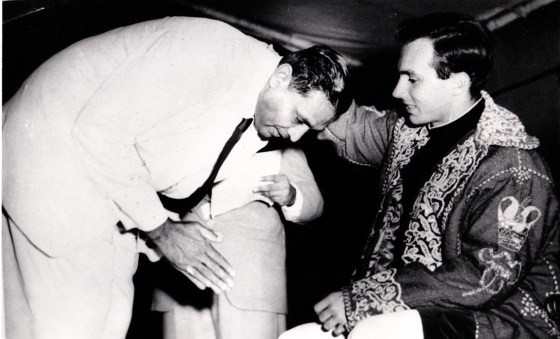
Mawlana Hazar Imam, His Highness the Aga Khan, blessing Vazier Rajabali Meghji Visram during his visit to Dar-es-Salaam, Tanzania (then Tanganiika) in October 1957. Phooto: Sadru Meghji Collection, Toronto.  Please click on photo for article.

Mawlana Hazar Imam, His Highness the Aga Khan, blessing Vazier Rajabali Meghji Visram during his visit to Dar-es-Salaam, Tanzania (then Tanganyika) in October 1957. Photo: Sadru Meghji Collection, Toronto. Please click on photo for article.
What one Ottawa architect enjoys most about the Delegation of the Ismaili Imamat Building

A Canvas for Light

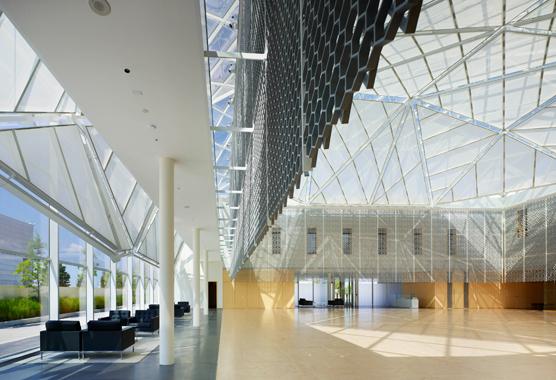
 “When the sun moves across the sky, the shadows dance along the building’s surfaces.”  Photo: Maki and Associates/Moriyama and Teshima Architects.

“When the sun moves across the sky, the shadows dance along the building’s surfaces.” Photo: Maki and Associates/Moriyama and Teshima Architects.

By Kristopher Benes 

As an architect I often get asked to name my favourite Ottawa building! Being a fan of minimalism I was often hard pressed to find anything non-residential that came immediately to my mind –- until that is, when the Ismaili Imamat Delegation building was completed in 2008.

Modern architecture often draws criticism for being too stark, extreme in its simplicity. However, it is its ability to highlight the world around us that I find to be so beautiful in modernism.

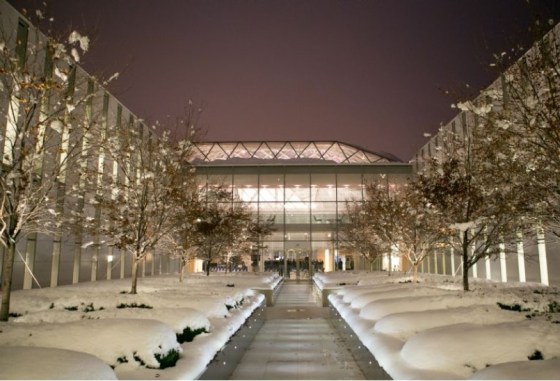
The clarity with which the play of shadows for instance may fall upon a crystal white surface allows architecture to behave as an ever-changing canvas, a reflector if one prefers, of what is going on all around. When the sun moves across the sky, the shadows dance along the building’s surfaces and when the sky takes on a different shade, the building glows in a completely different light.

"When the sky takes on a different shade, the building glows in a completely different light." Photo: © AKDN/Mo Govindji.

“When the sky takes on a different shade, the building glows in a completely different light.” Photo: © AKDN/Mo Govindji.

Light can be a wonderful paint brush for those blank walls; it does not need any more complexity than that. And obviously, Fumihiko Maki, the building’s design architect, understands light better than I ever could hope to (after all he has won a Pritzker Prize for his contributions and has enjoyed a career spanning some 50 years).

I think it is this understanding of light and an ability to shape it so beautifully which speaks to me most about the Ismaili Imamat Delegation Building.

Date posted: Tuesday, February 11, 2014.

Copyright: Kristopher Benes/Simerg.

_______________

Kristopher Benes is a multi-disciplinary Ottawa based architect and principal of Open Plan Architects Inc.

Islam’s 99 Names of God: Andrew Kosorok, A Christian Artist from Utah, Seeks to Explore Them Through Glass Sculptures

“I learned that when Mohamed was asked how a person could get into Heaven he told them they needed to learn the Names of God; when pressed on how many there were Mohamed responded that there were 99. This really resonated with me; I began to study the Names and respond to them through glass sculpture, and the 99 Names Project was born…” — Andrew Kosorok, Utah

PLEASE CLICK: A Christian Artist’s Epic and Noble Journey of Uniting Faiths Continues As He Completes the First 25 Sculptures Depicting Islam’s 99 Names of God

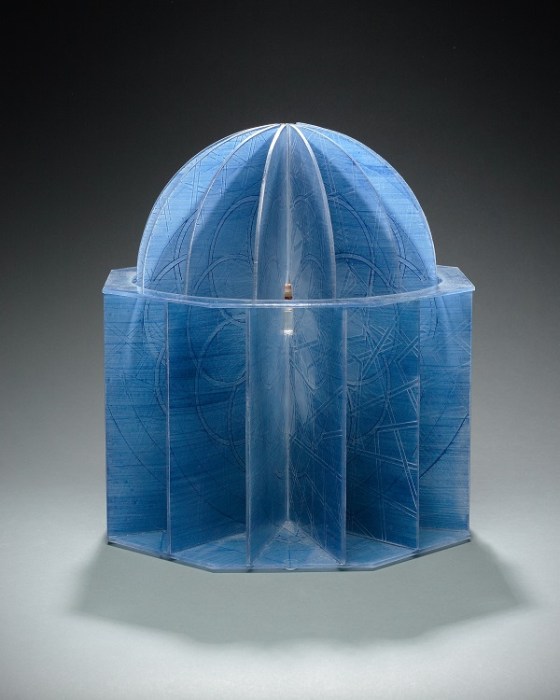
Wellspring of Peace (As-Salam). Photo: Andrew Kosorok. Copyright.

Wellspring of Peace (As-Salam). Photo: Andrew Kosorok. Copyright.

Special Series — Ismaili Oral Testimonies from the Mountains of Northern Pakistan: (I) A Mountaineer’s Adventures

“…In the Diamir Face, Nanga Parbat is one of the most difficult and technical mountain to climb. Where there is 100 metres of negative incline climbing, and in that wall there are stairs in four places and one has to hang on those places….You cannot rest freely on the climbing route of Nanga Parbat, if you walk for eight hours then you have to stay on the rope for eight hours for having rest. It is not like G-2 and Broad Peak where you can rest, you can sit and then continue your climbing. But in Nanga Parbat you have to stay bent on the rope continuously for eight hours with no possibility of sitting down…”

PLEASE CLICK: Mountain Voices —  Ismaili Testimonies of Life in the Remote Mountains of Pakistan: (I) A Mountaineer’s Adventure

The road to school is full of potential dangers for Shimshal children. Photo: Pam Henson. Copyright.

The road to school is full of potential dangers for Shimshal children. Photo: Pam Henson. Copyright.

Ameer Kassam Janmohamed (1931-2014): Leader, Humanitarian and Man of Letters Passes Away in London, UK

REMEMBERING AN ISMAILI MAN OF LETTERS

Born in Kisumu, Kenya, to Rabhiabai and Kassam Janmohamed on June 6, 1931, Ameer Kassam Janmohamed was kind and generous and true to the responsibilities he had to his family and friends, his faith and the noble causes he undertook in public life from his youthful days. His long time service to the Rotarians was particularly significant.

Please click on Ameer Kassam Janmohamed (1931-2014) or photo for tribute.

Ameer Kassam Janmohamed (1931-2014), lived his life to the fullest. Please click on photo for tribute.

Ameer Kassam Janmohamed (1931-2014), lived his life to the fullest. Please click on photo for tribute.

________________

Ismaili Authors: Excerpt from M. H. Velshi’s “Conversation on Three Continents”

Toronto based Ismaili author, M..H. Velshi whose book excerpt can be read by clicking on the image or link below

Toronto based Ismaili author, M..H. Velshi whose book excerpt can be read by clicking on the image or link below

The year is 1936, and the setting for a serious dialogue between a brother and his sister is Mumbai’s famous Chawpati on Marine Drive – with the continent of Africa in the distant horizon, thousands of miles away….

“To Africa,” she said. 

She looked at his startled face and continued, “That’s your future. So many of my friends have gone and bought shops or farms, or found work on the railways…You know for many years our Imam, Mowlana Sultan Mohammed Shah, has been issuing firmans to us Ismailis to migrate to Africa. Now the Ismailis have built large jamatkhanas in Africa where people can pray and meet freely every day. You won’t be alone. When I heard one of his firmans…I knew it was a message meant for you. It’s your way out.”

PLEASE CLICK: “Conversations on Three Continents”

Please click on image for book excerpt.

Please click on image for book excerpt.

To acquire a Kindle version ($9.11) or a paperback copy ($11.66) at Amazon please click on Conversations on Three Continents.


His Highness the Aga Khan’s “Never-To-Be-Forgotten” Message to Ismaili Youth – “Keep Clean Soul in a Clean Body”

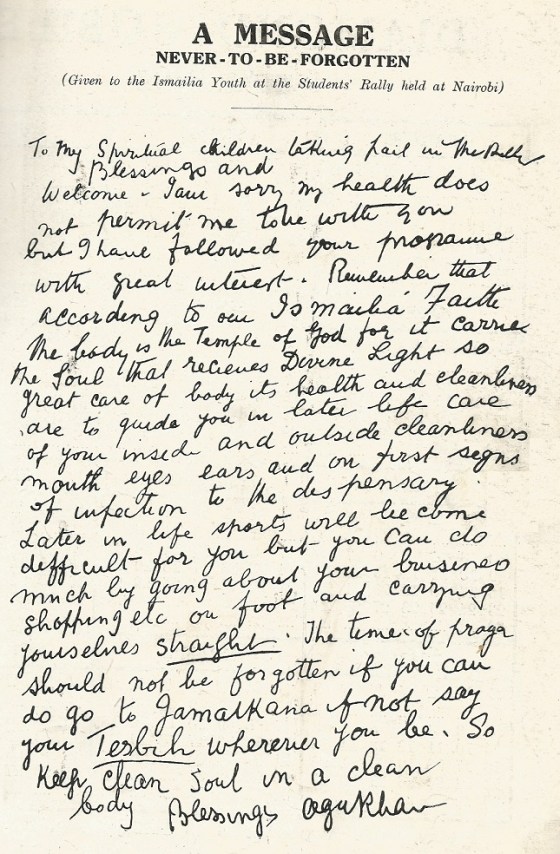
The following image is a copy of the original message sent to Ismaili youth by the 48th Ismaili Imam, His Highness the Aga Khan (1877 – 1957) on the occasion of the Students’ Rally held in Nairobi, and  appeared in the Diamond Jubilee Souvenir, 1946. Another version of the image along with the cover page of the souvenir issue can be viewed by clicking on Historical Images: The 48th Ismaili Imam’s “Never-to-be-Forgotten” Message to Ismaili Youth or on the following image.

The above image of the message sent to Ismaili Youth appears in the Diamond Jubilee Souvenir Yearbook published in Dar-es-Salaam on August 10th 1946. Pleas click on image to view a larger version of the image with a transcript and the cover page of the special issue.

The above image of the message sent to Ismaili Youth appears in the Diamond Jubilee Souvenir Yearbook published in Dar-es-Salaam on August 10th 1946. Please click on image to view a larger version of the image as well as the cover page of the special issue.

UNEDITED TRANSCRIPT

“To My Spiritual children taking part in The Rally 

Blessings and Welcome – I am sorry my health does not permit me to be with you but I have followed your programme with great interest. Remember that according to our Ismailia Faith the body is the Temple of God for it carries the soul that receives Divine Light so great care of body its health and cleanliness are to guide you in later life care of your inside and outside cleanliness – mouth, eyes, ears and on first signs of infection to the dispensary. Later in life sports will become difficult for you but you can do much by going about your business, shopping etc on foot and carrying yourselves straight. The times of prayer should not be forgotten if you can do go to Jamatkana, if not say your Tesbih wherever you be. So keep clean soul in a clean body Blessings Aga Khan”

Date posted: Sunday, January 19, 2014.

The Parable of the Lion (and the Sheep) in the Ismaili Ginan “Kesri Sinha Sarup Bhulayo”, Composed by Pir Shams

Following his highly acclaimed piece Ismaili Spirituality in Pir Shams Shabzwari’s Ginan “Ek Shabada Suno Mere Bhai”, writer Shiraz Pradhan continues his exploration of the spiritual dimensions of Ismailism with yet another ginan composed by Pir Shams, namely “Kesri Sinha”.

Please click: An Explanation of the Ismaili Ginan
“Kesri Sinha Sarup Bhulayo”

Please click on image for article. Photo: Istockphoto.com. Copyright.

Please click on image for article. Photo: Istockphoto.com. Copyright.

Through the parable in the ginan about a lion cub who grows up in a flock of sheep and starts to behave like a sheep, the Pir seeks to encourage us to correct our own errors and recognize our true nature. Pradhan’s essay cross references other writings and ginans with a similar theme, and finally concludes with a translation of  the five verses of “Kesri Sinha” for the benefit of the readers.

Lessons from Ismaili History

LETTER FROM THE PUBLISHER

Abdulmalik Merchant,  Publisher-Editor, Simerg. Click photo for profile.

Abdulmalik Merchant, Publisher-Editor, Simerg. Click photo for profile.

To mark Simerg’s 3rd anniversary, a special series “Thanking Ismaili Historical Figures” was launched  because I have felt that learning about outstanding Ismaili figures can help us to make better decisions as members or leaders of the community to which we belong, and instill in us greater sense of responsibility when dealing with community success stories, issues and challenges as well as personal disappointments and setbacks. Fourteen different individuals have contributed to the series so far and their thank you letters to numerous individuals covering 1400 years of history are a must read. Please click on 14 Inspirational Thank You Letters to Remarkable Ismaili Historical Figures and take your time to read each thank you letter over the next few days or weeks. I am sure you will be enlightened by these letters to Prince Amyn, Prince Sadruddin, Pir Sabzali, Ismaili philosophers and other historical figures.

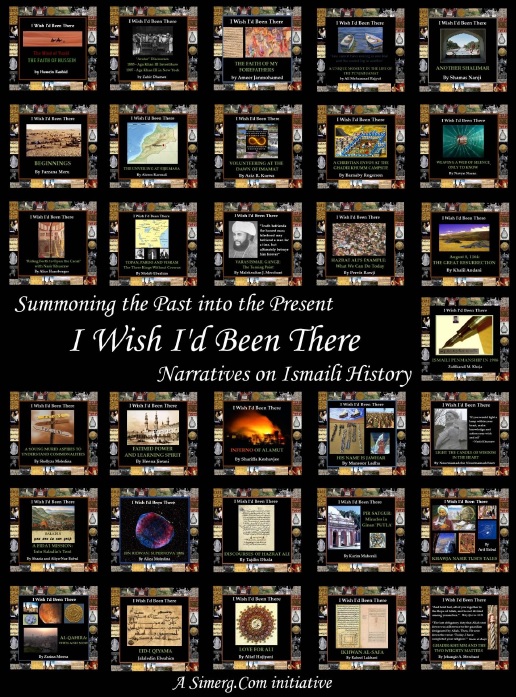
Please click on image to download series "I Wish I'd Been There"

Please click on image to download series “I Wish I’d Been There”

In the same vein as “Thanking Ismaili Historical Figures”, Simerg had earlier presented a series called “I Wish I’d Been There” in which 31 writers from different backgrounds took an incident in Ismaili History and briefly described why they would have liked to have been a witness to an iconic moment of their choice.

From the historical period of Prophet Muhammad, Hazrat Ali and Imam Hussein to Imam Mahdi’s unveiling at Sijilmasa in today’s Morocco to the burning of the library in Alamut as well as the more recent history covering the periods of Tharia Topan and Ismail Gangji, this rich series deserves to be read. The 121 page PDF publication can be quickly downloaded by clicking on I Wish I’d Been There Series – PDF or the series articles can be  individually accessed by clicking on I Wish I’d Been There.

Both the series are engaging, informative as well as inspiring, and we are sure readers will wish to share them with their family members and friends.

Date posted: Sunday, January 12, 2014.

Ismailis in China: 48th Imam’s Historical Messages and Quotes, 3 Jamatkhanas, Cemeteries, Maps, Culture and Heritage by Ghulam Panjwani

Following the recent publication of an exclusive piece Ismailis in China – A Travelogue with a Special Photo Collection by Ghulam Panjwani, we are happy to add more photos and images to the original collection, and publish it as a special photo essay at Simerg’s companion photo blog. Please click on the following link or image:

Photo Essay: Ismailis in China

Hand carved and painted ceilings, pillars and walls inside Xingjiang's Poskam jamatkhana. Please click on image for more photos.

Hand carved and painted ceilings, pillars and walls inside Xingjiang’s Poskam jamatkhana. Please click on image for more photos.