PLEASE CLICK: Photos of Aga Khan Park, Ismaili Centre, Aga Khan Museum and Cherry Blossoms at Japanese Canadian Cultural Centre

Date posted: May 8, 2020.
_____________________

PLEASE CLICK: Photos of Aga Khan Park, Ismaili Centre, Aga Khan Museum and Cherry Blossoms at Japanese Canadian Cultural Centre
Date posted: May 8, 2020.
_____________________
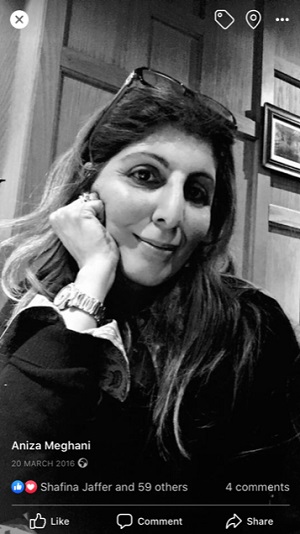
[A TRULY SHOCKING FORWARD: On Monday May 5, 2020, Simerg received numerous WhatsApp and email messages that stated “MHI has donated 250 million Euros towards the vaccine for COVID-19.” That misleading note was based on the wrong reading of a headline in the Portuguese newspaper noticiasaominuto which said, “Imamat Ismaili dá 250 mil euros para o combate à Covid-19, and spread like fire around the world. Without even considering to do a (FREE!) google translate, the person(s) forwarding the note assumed that 250 mil euros in the headline represented 250 million euros! Utilizing Google translate would have informed the first sender(s) of the message that the amount is actually 250 thousand and not 250 million — mil denotes a thousand in Portuguese. Aniza Meghani in the following piece asks us to verify facts properly before rushing to accept and like everything that appears to look good on social media. The same care should be exercised with messaging applications. It becomes the duty of the recipient to conduct preliminary fact checking, through translations if necessary, before forwarding messages to their friends and group members. Once forwarded, the rippling effects are enormous, and almost impossible to reverse in a timely manner! A lot of time of precious time was lost in responding to individuals who sent out that error filled message. — Ed.]
By ANIZA MEGHANI
Social media is the most powerful tool in the world, one that can make you or break you! Gone are the days of hearing genuine news by physically buying the newspaper or researching material by visiting the good old fashion library. No more writing a letter and posting it before you patiently wait for a reply. THE WORLD IS YOUR OYSTER AT A TOUCH OF A BUTTON. That is the most dangerous part of it all. We simply access, copy, paste and distort leaving a trail of one’s data history. Data that others can still access. That is more worrying because if you are not careful, it will come back and haunt you when you least expect it. This is critical for students of today when applying for university places or jobs.
Be warned, in certain places as soon as you enter a building, your mobile will give them your history without you even knowing. Now that’s scary! So today, we have within our community, weblinks that allow us to access our Jamati activity and keep us informed. However, with so much misleading information and sites, let us protect ourselves and safeguard our community. To do so, I thought why not show examples of misleading sites that are harmful and painful.
Almost all Ismailis today, traversing through all age groups, from old to young, from those who are fully conversant in the English language to those who do not understand even basic words of English, everybody is on or wants to be on social media.
As Ismailis we are particularly drawn to those pages or sites which display beautiful photographs of our beloved Imam and members of his family, whom we respectfully refer as the Noorani family. Many of us immediately post a ‘like’ or reply with “Yam” wherever we see a photograph of Hazar Imam or his name.
Many of us even join these groups or sites or pages just because the name of Hazar Imam and his photograph are in the title.
I am writing this article because having just concluded reading the recently released Farman book containing the Jamati work Farmans from 2011-2013, it struck me as a matter of curiosity that Mawlana Hazar Imam, in these Farmans — as well as in the Lisbon Diamond Jubilee Darbar Farman — repeatedly stresses to us, his beloved children, to learn and understand English. My cocooned world is all about English, so it felt strange reading about the imperativeness of learning the global language of English.
It wasn’t until recently that I came across the danger of not knowing English well. Or perhaps even the dangers of not reading properly.
Social media is greatly to blame for this growing culture of posting likes to images and skimming through texts. Not really reading, not really absorbing the context of a post, just hitting the like or follow button on whatever pops up on the screen that catches your fancy, in this case, a photograph of Hazar Imam or his name.
It’s sad really. But something still needs to be done. Hence the purpose of this post.
There is a group, or maybe several groups, on social media that tend to post lovely photos of Mawlana Hazar Imam and the Noorani family. It’s heartening, I am sure, to see the glittering countenances of our Imam and the Noorani family, is it not? So, we click the like button and we follow that page or join that group – however, we are absolutely, intolerably clueless about the actual purpose of it. And then, bam! Out of the blue, the very same page posts a sacrilegious article about Hazar Imam, albeit coupled with a beatific photo of him.
Now, if you are a reader by nature, you would be highly scandalized. But if you’re a skimmer, or if you don’t understand English, or if you don’t bother to read the text and are just mesmerized by Mawla’s resplendent smile (I don’t blame you, but I do), you are treading on dangerous ground because you may inadvertently be joining a group that is anti-Imam, anti-Noorani family and anti-Ismaili.
My advice: whenever you see a photograph or name of Hazar Imam, refrain from putting a like or leaving a YAM reply or joining the group blindly. READ all the posts on that page — present and past — as well as read the website where the social media link takes you. And join or reply or like only if the page is in legitimate praise of Hazar Imam. Do the same for each quote, message and link that you receive, and don’t blindly re-forward a message that has been forwarded to you simply because it has come from a trustworthy or reliable source.
Because, as a murid of Hazar Imam, how can you — how can you approve of anything that mocks him, that belittles him, that spreads falsities and terrible lies about him and our faith? How can you be a part of that?
And do not forget that the administrators of these sites are very clever — they will post three very beautiful articles or photographs in praise of Hazar Imam, but then will slip in an article of hate speech against the Imam, the Noorani family and/or the Ismaili Community. STOP THE ZOMBIE-LIKING BECAUSE IT HELPS SPUR THESE NEFARIOUS PEOPLE ON AND SUCH PAGES AND SITES TO FLOURISH! And please explain this to all of your friends and relatives who are on social media but who do not understand English. You have a duty to do this.
Date posted: May 4, 2020.
Last updated: July 15, 2023 (formatting)
© Aniza Meghani / Simerg.
___________________

Originally from Uganda, Aniza Meghani lives in London, England, and is an entrepreneur of textiles and couture fabrics.
We welcome feedback/letters from our readers. Please use the feedback box which appears below. If you don’t see the box please click Leave a comment. Your comment may be edited for length and brevity, and is subject to moderation. We are unable to acknowledge unpublished letters.
We welcome feedback/letters from our readers. Please use the feedback box which appears below. If you don’t see the box please click Leave a comment. Your comment may be edited for length and brevity, and is subject to moderation. We are unable to acknowledge unpublished letters.
Before departing this website please take a moment to review Simerg’s Table of Contents for links to hundreds of thought provoking pieces on a vast array of subjects including faith and culture, history and philosophy, and arts and letters to name a few.

Ubiquitous Harry’s! You are everywhere today with your flashy bright yellow handle — on BBC, CBC, CTV, The Guardian, CNN, NY Times, the Salt Lake Tribune, the Christian Science Monitor and so on — even more now than when I first discovered you! Here is my story of intimacy with you!
By MALIK MERCHANT
(Publisher-Editor, Simerg, Barakah, and Simergphotos)
How much more marketing promotion can you take of the razor that wants you to try it out and win your hearts to experience a real shaving experience; a shaving experience? Is there something like that? Yes, a real culinary experience, a real holiday experience – I’ve heard of those. But a real shaving experience is a term that I was not familiar with or cared about until Harry’s came into my life.
I was lured to the experience when the Harry’s starter kit was being offered for free (plus a nominal shipping cost, all amounts specified in this post are in $ CAD).
I must admit, however, that I took on the offer when I ran into an issue for the first time ever with the 5 bladed Gillette Fusion razor. Another factor may have been for the fact that my favourite football team, London’s Tottenham Hotspur, has Harry Kane playing for it! Does he use it, I wonder? I note, though, that he has been sporting a beard for some time now. But what an incredible promotion he would do to a brand with his own namesake, if he were to start using it! What a special idea to the owners of Harry’s, with hopefully a commission to me, just for the suggestion! Hey, Harry’s contact Kane!

Over the past 40 years since moving to Canada, I have always turned to Gillette’s new razors whenever they were introduced. I have been faithful to Gillette’s 5 bladed Fusion razor for more than 12 years — it was introduced in 2006. My previous ones were the company’s Sensor and Mach III.
For the first time ever, one day, as I was shaving with a new Fusion cartridge, the blue strip wear indicator came off. I wrote to Gillette explaining my concern, and sent them a photo of the Fusion blade with a receipt from the store. They sent me a replacement coupon worth $30.00! No questions asked! I continued using the damaged Fusion blade, as I didn’t feel that the peeled out blue strip had any impact on the blade’s shaving performance.
While I was still waiting for the Gillette coupon to arrive, I was drawn to Harry’s widespread promotion of its free trial kit. I ordered it, paying only the nominal shipping charge. Today, by the way, Harry’s charges $13.00 for the same kit, but with free shipping (all prices, as I noted earlier, in CAD $).
Like many other such free incentives, I submitted my payment details so that, unless I sent a cancellation note ahead of the next scheduled shipment, orders would be automatically sent to me based on my shaving habits that I had mentioned when completing my trial kit order.
The kit arrived, and I decided to set aside my coupon acquired Fusion cartridges in favour of the Harry’s — I had opted for a razor with an olive green handle (orange, and blue handles are also available at the same price; the razor with the chrome handle has a premium of $14), a shave gel bottle, and a cover to hold the blade cartridge.
Now, I have always admired German engineering, whatever form it takes, especially cars and stainless steel products. My cousin, who has been a career esthetician, has always relied on German products for all her esthetic needs, and she told me German products were the best and most reliable! I vividly remember my late dad telling me how his own father, or my grand father, ordered all the steel and metal parts from Germany for his leather manufacturing business in Bombay.
I wondered how Harry’s would fare against a company that has dominated the shaving market for decades, with a heavy emphasis and investment on its R & D. I had read many years ago, even before the introduction of Fusion, that some of Gillette’s products are researched for 5-7 years before they enter the market. Moreover, I had been using Gillette or Wilkinson products since my teen years in Dar es Salaam, Tanzania, when my dad first let me use his razor.

Of course, when the trial kit arrived, I was concerned that my long-term use of Gillette would bias me against Harry’s. I promised that I would not let that influence me in any way when making a judgement about Harry’s.
True to Harry’s word, I liked the razor! Harry’s claimed, at least at that time, that anyone trying it would be re-ignited with a real shaving experience. Ignited, I wondered? Had I ever actually enjoyed shaving? Was it like eating a gourmet meal at the finest of restaurants?
Yes, with Harry’s! There was something peculiar about the shave. Ultimately though, my priority over the experience of shaving, was the blade’s endurance and my comfort with it. I felt nervous reaching to shave around the lower or upper lip areas. With Fusion, that fear of cutting myself was not there; with Harry’s, it was – not that it did cut me. I just felt that with Harry’s, I needed to be a little careful, probably because I was not accustomed to it or felt the 5 blade German made cartridge might be too sharp for the more sensitive areas of my face.
Now how long would this first blade last? Harry’s didn’t come with a wear bar, like the blue one on Fusion, so I didn’t exactly know when I would be nearing the end of the blade’s lifecycle. In the case of Fusion, I would note that the effectiveness of the blade would recede with the thinning of the blue wear indicator. However, I always maximized the use of Fusion and continued its usage until the blue wear bar almost completely disappeared. At least Fusion gave some indication about when it might be time to replace it with another blade, and that was certainly not the case with Harry’s. Each Fusion blade, in all honesty, lasted me between 6-8 weeks, even with daily use! I have used both the Fusion manual and power assisted razors.
After about 4-5 weeks of daily shaves with Harry’s, I did not feel the blade needed replacement. My feeling of discomfort that it would cut me when shaving near the lip area remained. So, at the 6th week, I decided to stop using Harry’s and switched back to Fusion – the one that I had acquired with the coupon!
This time, the blue wear strip was just fine. But then, immediately, I really felt I was missing that Harry’s feeling of shaving — that enjoyable sound of the blades as the razor rolled down my cheeks.
I was at the time pre-occupied with lots of matters and I forgot to inform Harry’s to cancel future standing orders. I then received two more Harry’s cartridges while I was still on my first blade of Fusion. Due to my nomadic living style, I decided to let Harry’s’ know I did not want to receive any more blades; as it was the 2 cartridges from Harry’s and the 4 Fusion blades would last me at least 8-10 months in total.
A few months passed before the Fusion was done with. I was tempted to buy another 4-pack cartridge that was on sale. I resisted, vowing to use the Harry’s blades instead.
As I set off on a 5000 km drive to Ontario, Harry’s and I became intimate. We got along very well. Yes, shaving was enjoyable. That sense of a friction of your hair being lifted was a kind of an experience, and it felt good!
This second opportunity made me realize and appreciate the quality of Harry’s great product. I loved it. I began to use the Harry’s razor in the same carefree manner as I was using Fusion. I did not have any cuts. Harry’s, I realized, lasted me 6-8 weeks. The shaving remained consistently good. I did not have a blue strip to distract me. My Harry’s gel though ran out, and I acquired two Fusion cans at a great price! Both the gels are good, and I really haven’t done a comparison to determine which is better. The Fusion metal can used to leave a rusty circular mark on the counter from the base of the can and, over time, the wrapper around the can would begin losing colour. The current Fusion cans are definitely better. I had no such problems with Harry’s.
In terms of cost, I didn’t really see a great deal of difference between the Fusion cartridge and Harry’s, provided I acquired Fusion blades when they were on sale at special prices. Often, there are fantastic deals.
For me, having to reconsider a product by fluke, in the case of Harry’s, was a blessing in disguise. I was absolutely thrilled with the Harry’s razor and the accompanying shaving gel. The only thing that let me down me was the blade’s cover. The Fusion’s razor comes with a convenient snap-on base rest, when it is not in use, whereas Harry’s provides a small lblade container with 2 pieces that often completely separate from each other; they need to be clipped together once the blade cartridge has been inserted into its location — I found this to be a little bit frustrating.
As for Fusion, it is indeed a great product and Gillette has served me very well throughout the 40 years that I have been using it. During the last 3 years, I have switched between Fusion and Harry’s without any specific preferences for either of them. At the moment, I am back on Fusion as I have been living the life of a nomad and do not wish Harry’s sent to me at a location where I might not be — it would be too much to ask my mum to mail it from Vancouver to Ontario. I do miss Harry’s though — because it introduced me to a nice shaving experience that I hadn’t ever thought about.
Finally, may I provide a tip to Harry’s. I think women would also love your razor, if you build the right one for them; and I think your name is appealing enough! Tottenham’s women fans (or fans of whichever team Harry Kane decides to join at perhaps a fee of £100-150 million ) might just go crazy over it. Men, as you say somewhere, may be messy about shaving, but women have an unmatched elegance and style!
To the two handsome founding lads of Harry’s I say this: Remain humble, and you will do well for a long time. You have a fantastic product and while I do not have Harry’s at the moment, it is something that I will always hold dear to my heart! I am already tempted to once again go for your trial kit — with the vibrant orange handle! Whether I permanently become a Harry’s user still remains to be seen; I think I am now in the process of settling down at one place!
Date posted: April 29, 2020.
Last updated: April 30, 2020 (clarity).
Before departing this website please take a moment to review Simerg’s Table of Contents for links to hundreds of thought provoking pieces on a vast array of subjects including faith and culture, history and philosophy, and arts and letters to name a few.
_______________________

Malik Merchant is the founding publisher/editor of Simerg (2009), Barakah (2017) and Simergphotos (2012). A former IT consultant, he now dedicates his time to small family projects and other passionate endeavours such as the publication of this website. He is the eldest son of the Late Alwaez Jehangir Merchant (1928-2018) and Alwaeza Maleksultan Merchant, who both served Ismaili Jamati institutions together for several decades in professional and honorary capacities. His daughter, Nurin Merchant, is a veterinarian.
We welcome feedback/letters from our readers. Please use the feedback box which appears below. If you don’t see the box please click Leave a comment. Your comment may be edited for length and brevity, and is subject to moderation. We are unable to acknowledge unpublished letters.

“I should like to assure you, my Islamic friends, that under the American Constitution, under American tradition, and in American hearts, this center, this place of worship, is just as welcome as could be a similar edifice of any other religion” — President Eisenhower, June 28, 1957, Islamic Center, Washington D.C.
In an on-line story dated February 3, 2016, TIME magazine informed its readers that President Barrack Obama would be visiting the Islamic Society Mosque in Baltimore, Maryland, thus setting a milestone for his presidency. The reporter, Sarah Begley, reminded readers that the President was far from being the first American President to do so.
Story continues after photo

The honour, she said, belonged to President Dwight D. Eisenhower, who served as the 34th President of the United States from 1953 to 1961. He opened the Islamic Center of Washington in the city’s Embassy Row district on June 28, 1957. First lady Mamie Eisenhower accompanied him to the dedication ceremony.
In his speech, President Eisenhower emphasized the importance of religious freedom in the USA, and highlighted the “Muslim genius” that has cultivated some of history’s most important inventions, discoveries, art, literature and thought now considered indispensable to modern civilization.
President Dwight D. Eisenhower’s Remarks at the Opening of the Islamic Center in Washington D.C. on June 28, 1957
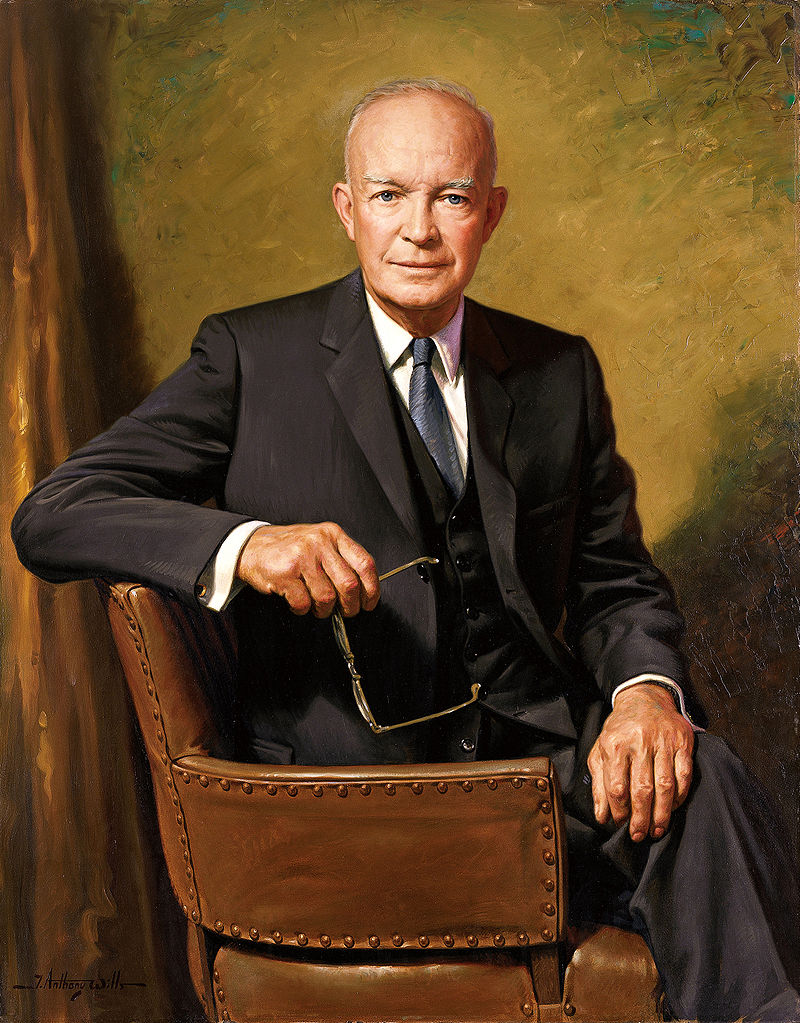
By DWIGHT D. EISENHOWER
(see profile, below)
[For a photo of the President delivering the speech, please click Politicio — ed.]
Mr. Ambassador, Dr. Bisar, Governors of the Islamic Center, and distinguished guests:
It is a privilege to take part in this ceremony of dedication. Meeting with you now, in front of one of the newest and most beautiful buildings in Washington, it is fitting that we rededicate ourselves to the peaceful progress of all men under one God.
And I should like to assure you, my Islamic friends, that under the American Constitution, under American tradition, and in American hearts, this center, this place of worship, is just as welcome as could be a similar edifice of any other religion. Indeed, America would fight with her whole strength for your right to have here your own church and worship according to your own conscience. This concept is indeed a part of America, and without that concept we would be something else than what we are.
The countries which have sponsored and built this Islamic Center have for centuries contributed to the building of civilization. With their traditions of learning and rich culture, the countries of Islam have added much to the advancement of mankind. Inspired by a sense of brotherhood, common to our innermost beliefs, we can here together reaffirm our determination to secure the foundation of a just and lasting peace.
Our country has long enjoyed a strong bond of friendship with the Islamic nations and, like all healthy relationships, this relationship must be mutually beneficial.
Civilization owes to the Islamic world some of its most important tools and achievements. From fundamental discoveries in medicine to the highest planes of astronomy, the Muslim genius has added much to the culture of all peoples. That genius has been a wellspring of science, commerce and the arts, and has provided for all of us many lessons in courage and in hospitality.
This fruitful relationship between peoples, going far back into history, becomes more important each year. Today, thousands of Americans, both private individuals and governmental officials, live and work — and grow in understanding — among the peoples of Islam.
At the same time, in our country, many from the Muslim lands — students, businessmen and representatives of states — are enjoying the benefits of experience among the people of this country. From these many personal contacts, here and abroad, I firmly believe that there will be a broader understanding and a deeper respect for the worth of all men; and a stronger resolution to work together for the good of mankind.
As I stand beneath these graceful arches, surrounded on every side by friends from far and near, I am convinced that our common goals are both right and promising. Faithful to the demands of justice and of brotherhood, each working according to the lights of his own conscience, our world must advance along the paths of peace.
Thank you very much.
Date posted: April 28, 2020.
Before departing this website please take a moment to review Simerg’s Table of Contents for links to hundreds of thought provoking pieces on a vast array of subjects including faith and culture, history and philosophy, and arts and letters to name a few.
____________________
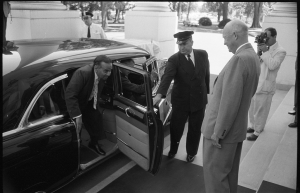
Dwight D. Eisenhower (1890-1969) served as the thirty-fourth president of the United States, governing from 1953 to 1961, after a military career culminating in his role as Supreme Commander of Allied Forces in Europe during World War II. Eisenhower’s presidency was largely occupied by foreign affairs, most notably the Korean War, the expansion of U.S. involvement in the Middle East after the Suez Crisis, and the general deepening of the Cold War. Even domestically, many of Eisenhower’s achievements were shaped by national security, including the construction of the interstate highway system. Eisenhower joined the Presbyterian Church as an adult and played a role in the addition of “In God We Trust” on American currency. Eisenhower famously stated that “our government has no sense unless it is founded in a deeply felt religious faith, and I don’t care what it is.”
________________________
Please like Simerg’s joint Facebook page with Barakah and follow us at http://twitter.com/simerg.
We welcome feedback/letters from our readers. Please use the feedback box which appears below. If you don’t see the box please click Leave a comment. Your comment may be edited for length and brevity, and is subject to moderation. We are unable to acknowledge unpublished letters.
Noteworthy book: “This Day in Presidential History,” by Paul Brandus. For each of the 365 days of the year, Brandus offers fascinating facts, historical anecdotes, and pithy quotations from and about all the presidents of the United States, from George Washington to Donald Trump.
Author Zahir Dhalla’s Preamble: Khojas, and Indians in general, were not known for keeping personal journals. Thus, there is a dearth of records documenting our history. However, the practice of keeping family photo albums was quite widespread. Photos can fill in some of those blanks, provided someone can tell the stories behind them. This would be a valuable series, people digging into their memorabilia and writing the stories behind them. Below then, is my attempt to do so, hoping it can also serve as one of the templates that others may want to use or adapt as preferred.
By ZAHIR K. DHALLA
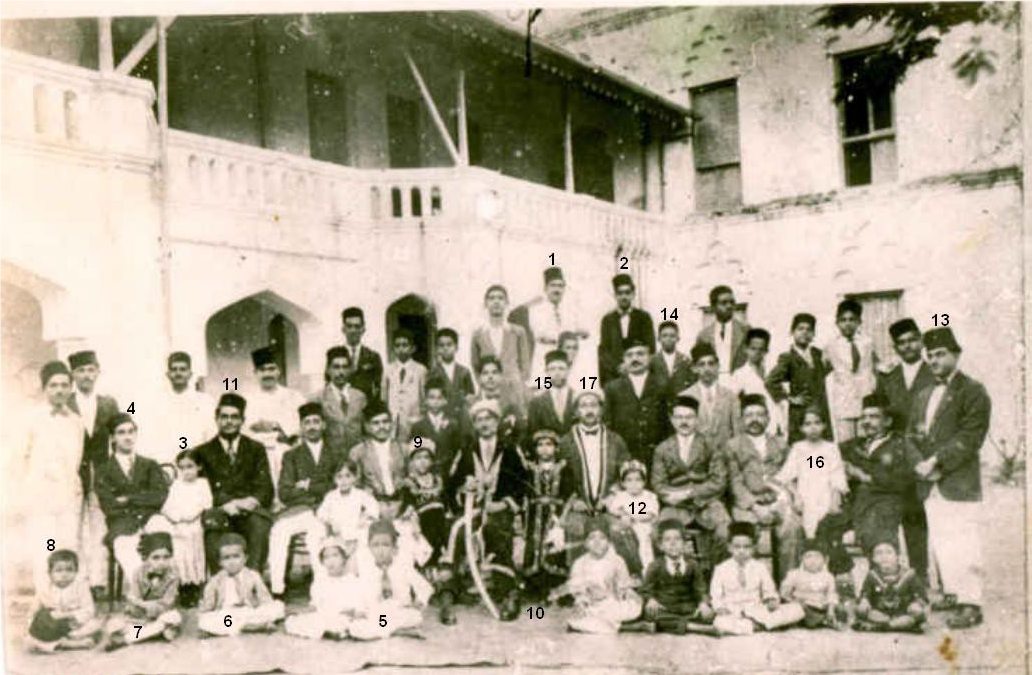
Gulamhusein Harji Sumar Walji Jendhani* was a pawn broker in the Soko Mahogo neighbourhood of Zanzibar’s Stone Town. Gulamhusein had a large brood, as was common at the time, of 9 sons and 3 daughters, by three wives, the eldest son, Ali {17 in top photo}, being my paternal grandmother Sakarbai’s {16} father. This wedding photo is of Gulamhusein Harji’s third son Huseinali’s marriage to Rukiya.
| {1} Hassanali (Hasina) | {2} Saleh | {3} Roshan Abdulhusein Alidina Saleh (Mrs Kassamali Tejpar) |
| {4} Hamdu Wali Dilgir | {5} Badru Ali Harji | {6} Kasu Ali Harji |
| {7} Mohamedali Ali Harji | {8} Abdulmalek Ali Harji | {9} Gulibai Hassina Harji |
| {10} Zerabai Hassina Harji | {11} A G Abdulhusein | {12} Sherbanu Hassina Harji |
| {13} Hussein “Tumbo” Harji | {14} Kanu | {15} Rahim Husein Dilgir |
| {16} Sakarbai Ali Harji | {17} Ali Harji |
These are their stories:
All elders and a few toddlers are wearing hats, while youngsters are bare headed, the groom and his eldest brother Ali {17} are wearing ceremonial turbans. By the 1950s, hats were no longer in vogue!
Of the Gulamhusein’s nine sons, Haji (see photo 4, below) and Noorali “Mamma” are not in the above wedding photo. “Mamma” chacha is possibly in the photo, just unidentified.
The Harjis spent, all told, a couple of decades or so in Tanga, Tanganyika (now Tanzania) where at one time they ran a grocery-wines-spirits store called Planters Store. All then left Tanga: Ali {17} going to Mombasa; Haji to Lushoto (see photo 4 below); Hussein {13} to Dar es Salaam; Saleh {2} taking over the grocery business under the name Korogwe Stores, with a branch store in Korogwe, a small town west of Tanga — he also ran a petrol station in Tanga; and Huseinali (the groom) running a chai, toast, maandazi, etc. restaurant called “Karaketa” at the Korogwe railway station, which his widow Rukiya ran after his death.
Story continues after photo
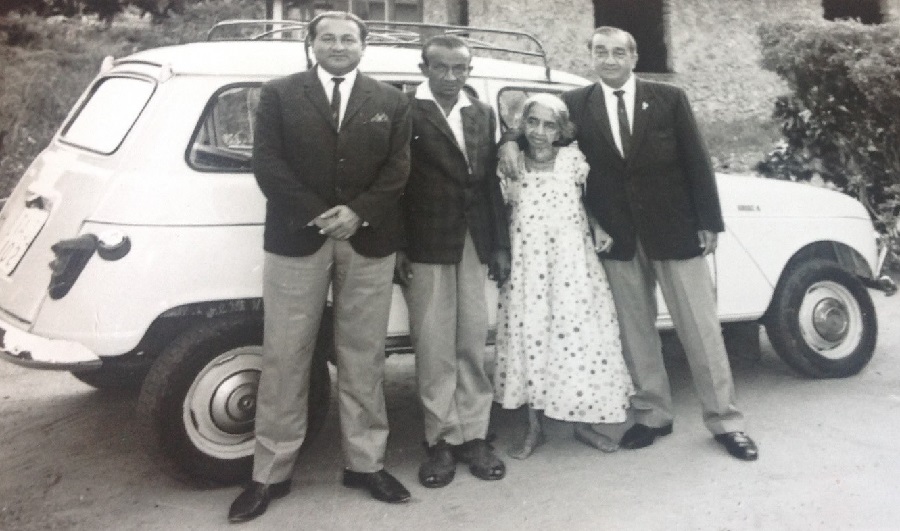
KASU {6}: Younger half-brother of my paternal grandmother Sakarbai Ali Harji {16}, his is a touching story.
His mother Khatibai (nee Jiwan Lalji, Itmadi, of Zanzibar), a most beautiful lady, became demented (during WWII) and was hospitalized in Nairobi. Her three sons, Mohamedali {7}, Kasu {6} and Abdulmalek {8} (in decreasing order of age; see photo 2, above) conferred and decided that they would buy a native bride in Tanga for Kasu, who would settle there as a fishmonger. His bride, Chausiku, was a fine lady, devotedly looking after Khatibai. Khatibai, despite her condition, could always remember faces. Whenever we visited her, she would smile at each one of us, lighting up the whole room! When both Kasu and Khatibai passed away, Mohamedali sent support money to Chausiku. Before he passed away, he instructed son Zul (a fine guitar player in Nairobi, now in Tri-Cities, British Columbia, Canada) to continue support payments, which he did until one day he received a letter from Chausiku’s family, informing him that she had passed away, so not to send support money any more!
ABDULMALEK {8}: Youngest half-brother of my paternal grandmother Sakarbai Ali Harji {16}, he was the youngest of Khatibai’s sons. There was a comical vignette he told me: In 1940, he and three friends decided to enlist in the army (WW II). Mother Khatibai was against it, while father Ali {17} was okay with the idea. They headed for Nairobi for interviews, and along the way one of them dropped out! In Nairobi, someone questioned them as to what they thought they were doing: Didn’t they know they would get only black tea and burnt roti?
Part of their enlistment interview was an examination of their education:
Q. 7 + 5? A. 11. Wrong.
Q. 14 + 9? A. 22. Wrong.
They all came up short and were told, “All you Mombasa guys are hopeless” and were given tickets to return home. Actually, Abdulmalek’s whole class in Mombasa had failed Cambridge, except for one solitary student! Abdulmalek returned to working at his old job at Fatehali Dhala Grocers for 60 shillings a month, filling candy jars, opening and displaying crates of fruit from South Africa. Once he was in the middle of enjoying a nice peach from South Africa, when in walked Count Fatehali who remarked, “It is good that you are tasting and approving these fruits because only then will customers buy them!”
ALI {17}: Father of my paternal grandmother Sakarbai Ali Harji {16}, he was the eldest of the 9 brothers, born in Zanzibar in c1890. In the late 1920s, he worked at a cotton ginnery in Entebbe, Uganda, alongside my paternal grandfather, Gulamhusein, Ali’s son-in-law to be. His last job was as a detective with the CID (Criminal Investigation Department) in Mombasa. He was engaged by the head of the department, an Abdallah Mzee. But soon Ali crashed his motor bike, badly hurting his leg. He retired! Before he died, he told youngest son Abdulmalek {8} that he would be reborn as his son. Sure enough, within a year of his death, a son was born, Gulamali, named by Mawlana Sultan Mahomed Shah Aga Khan III. Gulamali would go on to play up his grandfather role to maximum advantage –- yes, he was untouchable!
Story continues after photo
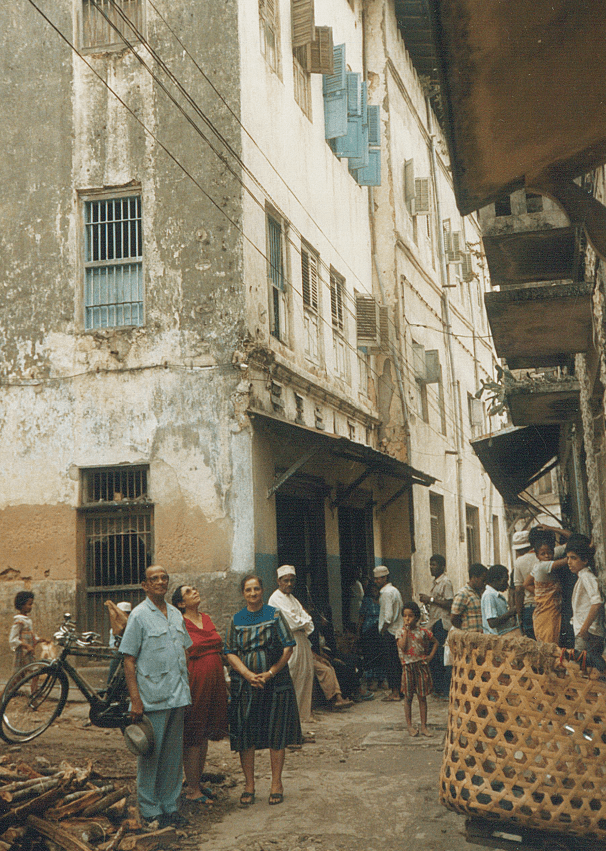
GULIBAY {9}: Lady Gulibai, first cousin of my paternal grandmother Sakarbai Ali Harji {16}, was very well known in Nairobi. She married Ramzanbha of the K. B. Jamal family, owners of Tropicana bistro on Hardinge Street (now Kimathi Street), as well as of Keby’s restaurant further north of Tropicana.
SAKARBAI {16}: My paternal grandmother was very independent, not wanting to be a burden on anybody, even in death, for she had a small briefcase under her bed, which she showed everyone over time, containing everything necessary for a funeral and its rites: a shroud, cotton wool, holy water tablets (made from the earth at the well of Zam Zam), rose water, etc plus enough money for the prayer plate! Her independence also showed in how she addressed my paternal grandfather, her husband: she called him Dhalla, something unheard of in those days when a wife never called her husband by name, resorting to something oblique like “Are you listening?” or simply “Listen then”.
ZERABAI {10}: Born in Zanzibar, she moved to Tanga when she was 12/13 years old. She lived in Tanga the rest of the time until moving to Vancouver. She married Shariffbha Aladin Giga Patni. The Aladin clan adapted this name to a Muslim one: Alladina. This was around the time of the Indo-Pak hostilities after the partition. The Patni refers to people of the town of Patan in Gujarat, India, it having been built on the banks of the mythical river Saraswati.
Zerabai too, like her grandpa Gulamhusein Harji, had a large family of 5 sons and 3 daughters. She herself was of a large family; she was the eldest of a brood of 4 brothers and 6 sisters. When her mother, Khati Gulamhusein Bhaloo Kurji, died while most of her children were still growing up, her uncles Saleh {2} and Haji stepped up and adopted all the young ones, each picking up 4 children! Zerabai herself was married off to Shariffbha when she was in her early teens.
BADRU {5}: He was the younger brother of my paternal grandmother Sakarbai Ali Harji {16}. He and his family lived in two places, in Tanga first, where most of his children were born, then in Mombasa.
Story continues after photo

Any still around? To my knowledge, none of the identified people above are alive today, although Gulibai’s {9} younger sisters, Dolat (in photo 4 above), and Lily are alive and live in Vancouver and Toronto respectively. The Harji clan today is huge, of several hundred!
Readers may be interested in viewing a collection of Noorali Harji’s historical family photos with Mawlana Hazar Imam, and learn more about Gulamhusein Harji Sumar.
Date posted: April 23, 2020.
Last updated: May 1, 2020 (added 1905 historical photo in author’s footnote, see below).
_____________________
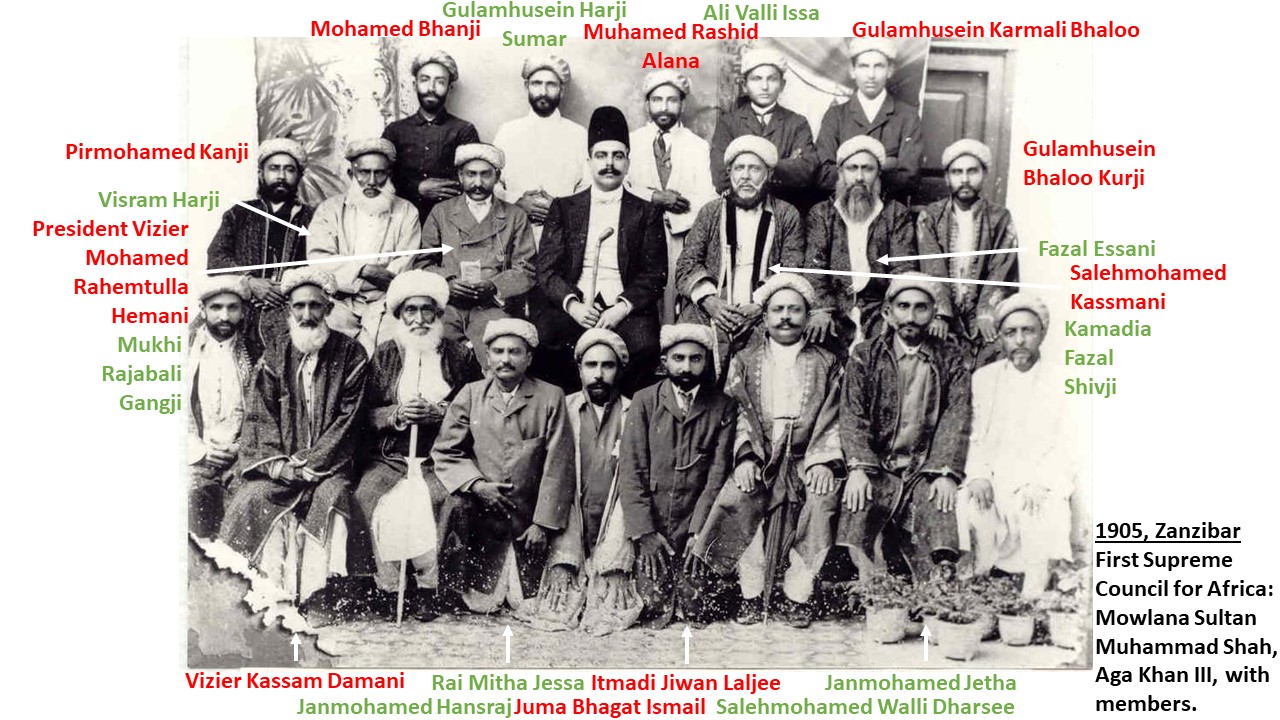
* Author’s footnote: Gulamhusein Harji Sumar (father of the groom, with the sword in the wedding photo) was a member of the first Supreme Council for Africa, 1905, Zanzibar. Itmadi Jiwan Lalji (father of Khatibai, photo 2) was a member too. Please see Noorali Harji’s historical family photos with Mawlana Hazar Imam.
Gulamhusein Bhaloo Kurji (maternal grandfather of Zerabai, number 10 in the wedding photo) ditto.
All the above three are also in the classic photo of Imam Mawlana Sultan Mahomed Shah Aga Khan III with the Supreme Council; see photo 5 below.
_________

Zahir K. Dhalla is a retired GIS (Geographic Information Systems) and IT (Information Technology) freelance consultant in Toronto, Canada. He is a graduate of the University of Nairobi, Kenya (mapping science) and the University of Toronto, Canada (computer science). In addition to his non-fiction writings (see list below) he has also written many private biographies as family keepsakes. He is also the editor of Ismailis of Tanga.
Zahir Dhalla’s books available from Amazon:
Also, read Zahir’s piece in Simergphotos Bagamoyo Beach Landing, where Aga Khan III was the first Ismaili Imam ever to set foot on East African soil in 1899.
Before departing this website please take a moment to review Simerg’s Table of Contents for links to hundreds of thought provoking pieces on a vast array of subjects including faith and culture, history and philosophy, and arts and letters to name a few.
We welcome feedback/letters from our readers. Please use the feedback box which appears below. If you don’t see the box please click Leave a comment. Your comment may be edited for length and brevity, and is subject to moderation. We are unable to acknowledge unpublished letters.
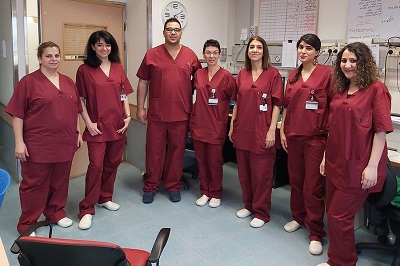
The Christian Science Monitor has been one of my favourite newspapers since I first discovered it in Dar es Salaam, Tanzania, in the late 1960’s. While the paper continues to publish under its 1908 founding title, the Monitor is a world class newspaper containing outstanding reporting and insights from around the world and includes sections on science, culture and books, as well as daily podcasts. We give you a link to the paper’s recent piece concerning the role of Arab medical professionals in Israel. The Monitor notes that Arabs make up 17% of the country’s doctors, 24% of the nurses, and 48% of the pharmacists. Without the contribution of Arab medical staff, the system would fail. ….READ MORE
Date posted: April 18, 2020.
Before departing this website please take a moment to review Simerg’s Table of Contents for links to hundreds of thought provoking pieces on a vast array of subjects including faith and culture, history and philosophy, and arts and letters to name a few.
________________
Inna lillahi wa inna ilayhi raji’un
“Surely we belong to God and to Him we return” — Holy Qur’an, 2:156

By MALIK MERCHANT
(Publisher-Editor, Simerg, Barakah, and Simergphotos)
On Tuesday April 14, 2020, Missionary Amirali Gillani’s shrouded body rested inside a grey coloured coffin in the funeral hall of the Scarborough Jamatkhana. He had passed away from cancer on April 8 at the age of 75.
Only the missionary’s peaceful face was in view. The rest of his body which was covered in the white shroud, was under the coffin cover. The coffin did not rest on the floor. It had been placed on a strong roll away frame. Volunteers recited the Salwat in unison continuously, and gave comfort to the small size of mourners, a limit imposed by the Bereavement Authority of Ontario.
There were a total of 16 mourners in attendance for the funeral’s two separate viewing opportunities and the funeral rites. One viewing, including the funeral rites, was for immediate family members, and the second viewing was for other family members and friends. In both the viewings the mourners sat in groups of 4 in two rows in front of the body, keeping the required physical distance. At a normal funeral, there would have been several hundred in attendance. A dilsoji — a condolence gathering a day or two ahead of the funeral — would have attracted a large Ismaili crowd from across Toronto.
Missionary Gillani’s funeral became the first funeral to be made available for online viewing via a dedicated Youtube channel. The viewing was offered, following a trial period, to very close family members who could not physically be at the funeral due to provincial restrictions limiting gatherings to 5 or 10.
Wearing a face mask and gloves on their hands, each of the persons who had come to missionary Gillani’s funeral presented himself or herself beside the coffin, a meter or two away. In solitude, the mourner would spend between 60 to 80 seconds in contemplation, before giving way to the next person. Other Jamati funerals taking place during the Covid-19 pandemic have similar rules and restrictions in place.
Once the viewing and giving of last respects had ended, and the funeral rites were completed, the Muslim funeral procession prayer La Ilaha Illallah Muhammadur Rasulullah commenced. In a normal funeral, men line up in the large foyer of the Jamatkhana to touch or momentarily hold the coffin on their shoulders, uttering prayers for the soul of the deceased before it is transferred to a hearse. However, here there was no one in the foyer of the Jamatkhana. It was empty. The body was wheeled by the Mukhi, volunteers and male mourners into the hearse parked outside, for its 22 km journey to its final resting place — the picturesque Elgin Mills Cemetery.

At the gate of the cemetery, a guard verified each arriving guest against the list of names that he had been given by the Ismaili funeral committee. He guided the arriving mourners to Section 16 of the cemetery. At the site, there were only a few scattered cars, no more than eight. The hearse carrying the body then arrived. This time, instead of wheeling the coffin, as the ground gradient and conditions presented challenges, the volunteers carefully carried it to the grave. Mourners followed and gathered around the coffin, keeping a safe physical distance between one another. The Mukhisaheb of Scarborough Jamatkhana and a family member then each took a heap of soil in a spade, and spread it across the coffin. The Surah Ikhlas was recited (Ch. 112; Translation: “In the name of God, the Gracious, the Merciful. Say: He is God, the One. God, the Absolute. He begets not, nor was He begotten. And there is nothing comparable to Him”).
Normally the crowd would wait to see the body lowered into the grave, while continuing to recite Salwats and other prayers. Two volunteers would then descend into the grave to ensure its proper placement, stability and also conduct some last rites.
Physical distancing prevented that from occurring and the mourners returned to their cars. Using the same soil that had been been dug up to create the 6 foot deep grave, a tractor arrived to fill it. Once the on-site staff had completed their task of filling the grave and removing wooden planks and other objects around it, we were each handed incense sticks as we walked back to the burial site. Water was then poured on top of the freshly replaced soil by a family member and the Mukhisaheb of Scarborough Jamatkhana. We then honoured and paid respect to the missionary by placing the lit incense sticks we had been given over the top of the missionary’s final resting place.
All ten of us stepped back about 40 metres, and a Fateha for the deceased was then recited. We were standing in rows and kept our safe 2 metre distance from one another. During the recitation of the Fateha, my attention was suddenly drawn to two doves that landed 25 metres to my left. Their sounds in the midst of the Fateha being recited were beautiful and joyous to hear. Only Allah understands the language of birds, animals and insects, as well as everything that has life on this earth. A second Fateha was then recited for all of the deceased members of the Jamat. By then, the birds had flown away.
Mukhisaheb then gave everyone special blessings for attending the burial, and also prayed for the soul of the deceased. As much as we would have loved to, we left the site without shaking hands of the family and embracing them. We consoled them by placing our hands on our hearts, befitting the Islamic ethics of gratitude, humility and affection.
It was a different kind of a funeral to attend. However the dignity of the entire funeral ceremony was preserved. The Jamat has to thank the burial committee for the professionalism with which they are carrying out this extraordinary and noble service to bring comfort and peace to the mourning families and their friends, amid the Covid-19 pandemic. Their communication in every respect was outstanding, and emails and telephone calls received prompt attention.
As I headed back home, I thought of the two birds that had landed nearby as the Fateha for Missionary Gillani was being recited. They conveyed to me a profound message: Missionary Amirali Gillani had been ushered into the abode of peace.
Date posted: April 15, 2020.
Last updated: April 15, 2020 (10 AM ET: additional material added; factual corrections; typos).
____________________________
We received several tributes to Amirali Gillani when we first announced his death. They may be read by clicking HERE. Further tributes as well as your reactions with regard to recent passings during the Covid-19 pandemic, and how you and your family members dealt with the situation amid the challenges you faced, may be submitted by completing the feedback form below. If the form does not show, please click Leave a comment. Your comment may be edited for length and brevity, and is subject to moderation. We are unable to acknowledge unpublished letters.
Before departing this website please take a moment to review Simerg’s Table of Contents for links to hundreds of thought provoking pieces on a vast array of subjects including faith and culture, history and philosophy, and arts and letters to name a few.
Letter from publisher
By MALIK MERCHANT
(Publisher-Editor, Simerg, Barakah, and Simergphotos)
Many of our readers who have visited the website of the Aga Khan University (AKU) over the past 2 weeks, may have read about (1) the crucial support AKU needs at this time during the COVID-19 pandemic; (2) Dr. Faisal Mahmoud at the AKU who treated Pakistan’s first COVID-19 patient; and (3) the AKU’s launching of a mobile app that helps to self-screen for Covid-19. You can follow these and other informative stories of how the AKU is dealing with the COVID-19 crisis by clicking HERE. I have been wondering whether the AKU, like other institutions around the world including several in Canada, is racing to find a vaccine for COVID-19. It’s very possible that there is already an initiative underway, but I have yet to read about it.
I would like to start by briefly mentioning the incredible steps that our beloved 48th Imam, Mawlana Sultan Mahomed Shah, His Highness the Aga Khan III, took in response to the bubonic plague that affected India in 1897. (See full article HERE or an abbreviated version HERE)
The twenty-year-old Imam aided Professor Haffkinez’s research for the development of a vaccine by putting freely at the scientist’s disposal one of his “biggest houses, a vast, rambling palace in Bombay.” The scientist remained there for about two years until the Government of India, convinced of the success of his methods, took over the whole research project and put it on a proper, adequate and official footing.
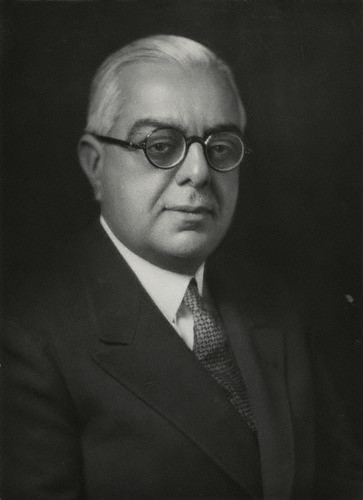
Imam Sultan Mahomed Shah writes in his Memoirs that “the impact of the plague among my own people was alarming. It was in my power to set an example. I had myself publicly inoculated, and I took care to see that the news of what I had done was spread as far as possible and as quickly as possible….The immunity, of which my continued health and my activities were obvious evidence, impressed itself on their consciousness and conquered their fear.”
At that time, the Imam did not have Jamati institutions at his disposal to support such an initiative. At the turn of the 19th century, the Ismaili Jamat was economically weak, and educationally even worse off. Very few members of the Jamat could boast a knowledge of the three R’s.
Then, over a period of some 50 years, the 48th Imam transformed the community from rags to riches, an act that is probably unparalleled in history. The Imam was the architect of the modern miracle that we continue to witness today under the benevolent guidance of Mawlana Hazar Imam Shah Karim al Hussaini, His Highness the Aga Khan.
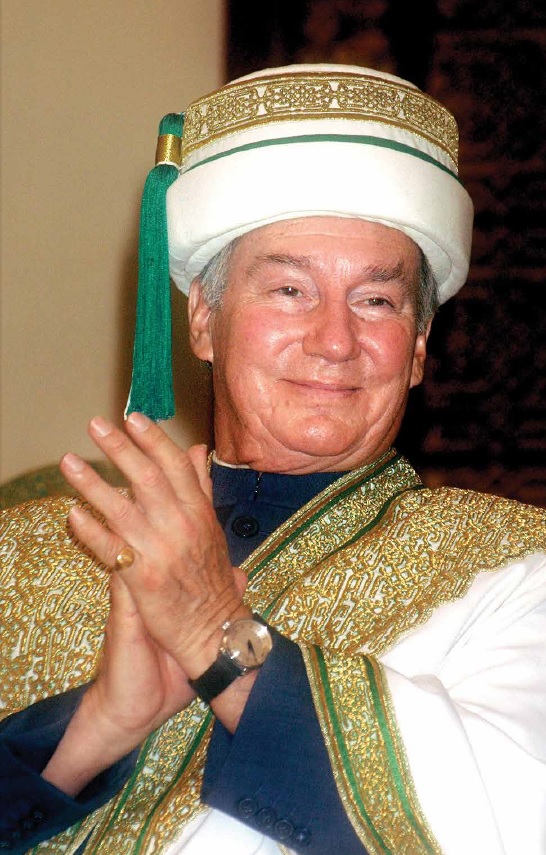
Today, the Jamat is eminently placed on the world stage with its fantastic infrastructure. It has become socially well-organised, professionally competitive, and commercially adventurous. More importantly, the Jamat’s youth is conscious of its strength and ready for any new challenge. We have become a dynamic, intrepid community capable of bearing further loads under the guidance of Mawlana Hazar Imam. He has created exceptional institutions for the well being and progress of the Jamat and humanity at large.
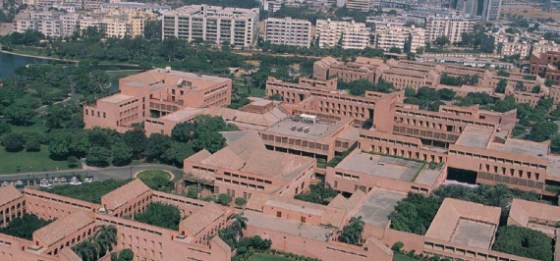
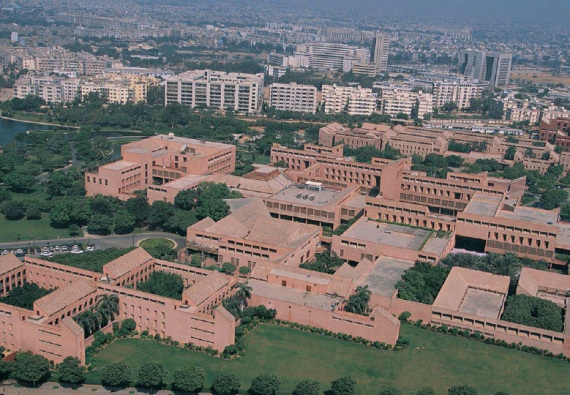
During his Imamat, the establishment of the Aga Khan University in Karachi is probably one of the most significant and monumental projects undertaken in Ismaili history. Its creation and development has led to satellite hospitals and universities in East Africa, and a major mountain university in Central Asia. Over the last 4 decades, the AKU has achieved an international presence and recognition in the world of learning with major educational institutions as its partners — a vision that was first enshrined in the logo of the university.
According to the AKU website, the University’s research endeavours extend across diverse subjects: health sciences, education, culture and society. “At the core of our mission,” the website states, “is the desire to spearhead change for generations to come.” It further adds that the AKU faculty, scientists, educationists and students are engaged in impacting people, communities and societies for a better tomorrow. It gives an example of the Centre for Regenerative Medicine and Stem Cell Research which houses international researchers conducting state of the art research and teaching in basic and translational stem cell science.
Today, we are in the midst of a worldwide crisis – the COVID-19 pandemic. We have already witnessed its social, cultural, and economical impact on billions of people around the world. We don’t want it to remain with us and plague us for years to come, and a vaccine that will address the virus is the only solution we have for our future well-being. In the USA, the cost of a complete COVID-19 treatment for people who are hospitalized is around US $39,000.

The development of a vaccine may require millions of dollars, and efforts at developing one may not guarantee that it will be one that is selected for massive immunization. Today, researchers at the AKU, as well as others around the world, have access to the genomic sequence of SARS-CoV-2, the coronavirus that causes COVID-19. Additionally, lab-grown copies of the virus are available to researchers thanks to the efforts made to isolate and culture the virus from two patients by the University of Toronto and McMaster University.
If they have not already done so, it is important that the AKU join the collaborative efforts that are being spearheaded by the World Health Organization (WHO), where scientists, physicians, funders and manufacturers from around the world are coming together to help expedite the formulation of a vaccine against COVID-19. In its declaration of April 13, to which several renowned institutions are signatories, the WHO states that “we believe these efforts will help reduce inefficiencies and duplication of effort, and we will work tenaciously to increase the likelihood that one or more safe and effective vaccines will soon be made available to all”.
While a vaccine will take time to develop, it will likely be instrumental in controlling this worldwide pandemic. We hope that the Aga Khan University will dedicate some of its research facility and scientists to the development of a vaccine against COVID-19. The AKU’s contribution may literally change the lives of hundreds of millions of people around the world, just as Imam Sultan Mahomed Shah’s foresight was responsible for saving countless lives.
Date posted: April 14, 2020.
Before departing this website please take a moment to review Simerg’s Table of Contents for links to hundreds of thought provoking pieces on a vast array of subjects including faith and culture, history and philosophy, and arts and letters to name a few.
________________________
Malik Merchant is the founding publisher/editor of Simerg (2009), Barakah (2017) and Simergphotos (2012). A former IT consultant, he now dedicates his time to small family projects and other passionate endeavours such as the publication of this website. He is the eldest son of the Late Alwaez Jehangir Merchant (1928-2018) and Alwaeza Maleksultan Merchant, who served Jamati institutions for several decades.
We welcome feedback/letters from our readers. Please use the feedback box which appears below. If you don’t see the box please click Leave a comment. Your comment may be edited for length and brevity, and is subject to moderation. We are unable to acknowledge unpublished letters.
Inna lillahi wa inna ilayhi raji’un
“Surely we belong to God and to Him we return” — Holy Qur’an, 2:156
“Life is a great and noble calling, not a mean and grovelling thing to be shuffled through as best as we can but a lofty and exalted destiny.” — Mawlana Sultan Mahomed Shah, His Highness the Aga Khan III (1877-1957), 48th Imam of the Shia Imami Ismaili Muslims.
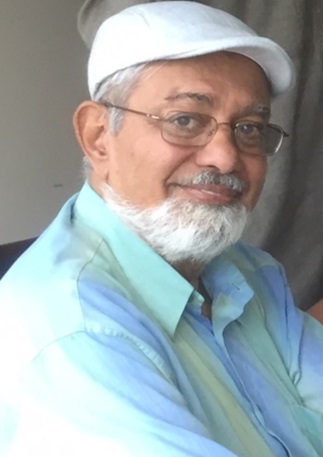
By MALIK MERCHANT
(Publisher-Editor Simerg, Barakah, and Simergphotos)
It is with deep sadness that I inform readers of the passing away of Missionary Amirali Gillani on Wednesday, April 8, 2020 at Toronto’s North York Hospital after a brave and long battle with cancer. He was 75. I learnt of his death from a family member earlier this morning through a text message.
Born in Arusha, Tanzania, he served Jamati institutions in both professional and honorary capacities for several decades, contributing his wisdom until the very last moments of his life. He travelled widely, and finally made his home in Toronto, Canada. Missionary Saheb is survived by four children and five grandchildren.
On April 1, 2020, exactly a week ago, he texted me from the hospital: “Ya Ali Madad. Hope you are well. I am in North York Hospital and my health has deteriorated. With affection, Missionary.” I wanted to visit him but the current state of restrictions in place prevented me from going to the hospital. I responded with a prayer for his strength and courage, and with the hope that I would see him out of the hospital soon. He replied: “Ya Ali Madad. Deeply touched by your prayers. I need His compassion to accept His Will with ease and pleasure. Ya Moula. Affectionately Missionary.” They were profound words.
An articulate missionary with a superb command of the English language, Amirali Gillani was always far ahead of his time in his vision of providing religious education to the Jamat. His ideas more than 50 years ago — and I am referring to the late 1960’s — of utilizing multi media and other technological trends of the day, including the power of TV as well as audio visual concepts, were highly impressive. My late dad, Jehangir Merchant, admired him for his brilliant mind as well as incredible foresight and ingenuity. Alas, we were simply not prepared or ready, even to think about his ideas!
As a close family friend, he would visit my parents whenever institutional duties or personal projects brought him to Dar es Salaam. His contemporaries with whom he graduated in the Waezin program in Pakistan in the 1960’s were Alwaez Nizar Chunara and Alwaez Amirally Mawji, and they would often accompany him.
My most recent — and unforgettable — memory of him was when I spent a couple of hours at his humble apartment in Toronto. A very large portrait of Mawlana Hazar Imam adorned one of the walls, and he had told me a few days earlier before I went to his home, that I would feel the Imam’s presence in his apartment. That I certainly did, not only because of the portrait but also by Missionary Saheb’s overpowering faith, love and affection for Mawlana Hazar Imam. This pulled him through some of the most difficult times in the past few years.
This is a sad moment for the family, especially coming at a time when many of us want to pay our personal respects and be at his funeral, and simply can’t because of the restrictions that are in place due to the novel coronavirus. We convey our deepest heartfelt condolences to members of Missionary Gillani’s family for strength and courage to face his great loss. Our prayers are with them at this time of bereavement.
We pray that Missionary Amirali Gillani rest in eternal peace. Amen.
Date posted: April 8, 2020.
____________________
We invite you to submit your condolences, memories and tributes to Amirali Gillani by completing the feedback form below or by clicking on Leave a comment.
Simerg invites Ismaili families to submit obituaries and tributes for deceased members of their families. For guidelines, please click Passings.
Before departing this website please take a moment to review Simerg’s Table of Contents for links to hundreds of thought provoking pieces on a vast array of subjects including faith and culture, history and philosophy, and arts and letters to name a few.


