The Nur (Light) of Imamat

A portrait of Prince Karim Aga Khan IV during his enthronement in Geneva, Switzerland after his grandfather, His Highness the Aga Khan III, passed away on July 11, 1957. Photo by Philippe Le Tellier/Paris Match via Getty Images.

A portrait of Prince Karim Aga Khan IV during his enthronement in Geneva, Switzerland after his grandfather, His Highness the Aga Khan III, passed away on July 11, 1957. Photo by Philippe Le Tellier/Paris Match via Getty Images.

The doctrine of Imamat has been central in Shia Islam since the designation by the Prophet Muhammad (s.a.s.) of Hazrat Ali (a.s.) as his successor at Ghadir-Khumm. Among the various interpretations in Shia Islam, the Ismaili Muslims believe in the continuity of the Imamat through a living hereditary Imam descended from Hazrat Ali, through the prophet’s daughter Bibi Fatima (a.s). The current Imam of the Ismailis is His Highness the Aga Khan, who completes his 59th Imamat anniversary as the Ismaili community’s 49th Imam on July 11, 2016. To mark this occasion, we are pleased to provide short selections on the Imamat drawn from numerous writings of historians, theologians, philosophers and poets, Ismailis and non-Ismailis alike. But we begin, on this page, with a short piece prepared for younger readers, followed by a link to other pieces that includes the transliteration and translation of the Munajaat which is recited in many parts of the world specifically for the Imamat Day celebration.  

We wish Ismailis around the world Imamat Day Mubarak, and pray that the Imamat of Mawlana Hazar Imam, His Highness the Aga Khan, may continue for several more years beyond the celebration of his Diamond Jubilee on July 11, 2017, which is now exactly 52 weeks away.

The Nur (Light) of Imamat

The sun is extremely important for all life on earth. It gives us light, warmth and energy. The sun however is not the final source of life. It is Allah who gives life to all living things. It is God who has created the sun and the stars and everything that is in the universe.

The Quran teaches that Allah is the Light of the Heavens and the Earth. Allah guides mankind towards Him through His light. While Allah has created the physical light, He has also provided mankind another kind of light.

Allah says in the Quran:

“O Mankind! Truly there has come to you a proof from your Lord, and We have sent down to you a clear Light.” (Chapter 4, Verse 174)

What is this special light that Allah refers to, which guides and makes things clear? For Shia Muslims, this light is the Light of Imamat. The Shias refer to it as the Nur of Imamat. Nur means light. The Nur of Imamat is a spiritual light.

This spiritual light is with the Ahl al-bayt, the Imams from the Prophet Muhammad’s family. This light was with the first Shia Imam, Hazrat Murtaza Ali and, for Shia Imami Ismailis, it is now with their present 49th Imam, Shah Karim al-Husayni, His Highness the Aga Khan IV. The Imam guides his murids (followers) with his Nur.

The Imam’s Nur is not like ordinary light. It is a different light altogether. It is a spiritual light. Physical light, such as sunlight, helps everyone see things in the physical world. The Imam’s Nur guides his murids both in the spiritual and worldly aspects of their lives. Above all, the Imam’s Nur leads his followers towards inner peace and happiness.

Ever since the time of Hazrat Ali, the Ismaili Imams have guided their followers in succession, one after another. There have been forty-nine Imams up to the present time, but the Nur of Imamat is one, and it remains the same.

The Nur of Imamat is always there to guide through the physical presence of the Imam. The Imam holds his followers hands and leads them through both difficult and good times. He gives them guidance about how they should live in a particular time and place.

Just as the water of a river continues to flow, the line of Imamat never stops. That is, the Nur of Imamat is there to stay eternally.

One of the goals of the murid of the Imam should be to strive to come closer to the spiritual light of the Imam. This, one can do by fulfilling one’s material and spiritual responsibilities to the best of one’s ability. Praying regularly, living by the ethics of Islam, following the Imam’s guidance and thinking about Allah constantly can bring us closer and closer to the Nur of Imamat.

Source: Article adapted from multiple literary sources including the Ta’lim curriculum published by Islamic Publications, London.

____________

PLEASE CLICK: The Munajaat and Imamat As Depicted Through the Ages in Ismaili and non-Ismaili Writings

IMAMS ARE SHIPS OF SALVATION

Feluccas on the Nile in Aswan. The ship occupies a unique position in the Islamic tradition. The Qur’an counts it among the ayat (miracles) of God and devotes twenty-eight verses enumerating its benefits to mankind. For Shaykh Khudr, a contemporary of the Ismaili Imam Nizar, Imams are the Ships of Salvation. Please click on image for numerous selections on Imamat.

Date posted: July 10, 2016.

_________________

Intezaar, 11th July 2016 Leading to 11th July 2017: The Guiding Light of Mawlana Hazar Imam, His Highness the Aga Khan

Diamonds Faceted Jubilee_s

BY SHARIFFA KESHAVJEE

This Imamat Day
O Mawla

Is a promise for a thirsty heart
Innumerable will be the facets of the Diamond Jubilee
As we in anticipation await humble of heart
Make us worthy of this blessing
O Mawla a prayer rises from my heart

At the feet of Shah Sultan Mahomed Shah
An innocent babe in naive anticipation
Your guiding light has lit the path
Path eased with access to health education
Let knowledge lead us to sat bhudhi
O Mawla a prayer emanates from my heart

Your protective shade sent light
Throughly the windows of our schools
Your wisdom in wise words led every step
Your vision sent us succour with words of hope
Your guiding hand gave hope after Uganda
A prayer of gratitude leaves my heart

Still you guide us through the bridge of River Panj
Through Syria to the Hindu Kush
From East To the West in every direction
Your helping hand O Mawla opens our heart
This four day life journey is so ephemeral
It is enriched by the Light of
Your Ever-present Noor- e-Ali

Oh Mawla we look towards thee
With empathetic hearts our face turns
To the Alfa and Omega of our life
Your ishara with vision and ‘aql
Enables door upon door to open up for us
To guide us into that which is the qalb
To beckon a prayer from our heart

O Mawla make us worthy of the trust you place
In our actions which often trip
In our words which wisdom oft lack
Keep us balanced in din and dunya
We pray from our heart

O Mawla our hands are raised
All ready to receive the pearls
Of wisdom, vision , love and ever caring hand
We are in intezaar of your
Diamond Faceted Jubilee
A prayer of gratitude leaves my heart

As we await let our zikr lead to fikr
Cleanse our hearts so it may sing
The praise of all human and sentient beings
Our life will be the lighter for
The aid you have given in years before
We beseech in prayer from
Our heart

Let our intellect understand unity
That we are all from One Soul
Let us internalise this oneness
So that our heart is prepared
In joyful presence to celebrate the Jubillee
A prayer from each heart

Lead us to fana through forgiveness to transcend
So we stand worthy of the many faceted diamond
In word and in deed in intention and action
O Mawla all this so we can raise
Our hands with a prayer from the heart

Our heads are held up high for you are our pride
As we are yours to fly your flag
Up high in all direction proud the world over
O Alfa O Omega the Ever-present
O Mawla we beseech that this
Diamond Faceted Jubillee
Be a diamond of Almas
Is our prayer rendered from the heart

Date posted: July 9, 2016.

_____________

Diamond Photo: Smithsonian National Museum of Natural History.

Glossary of terms used in the poem:

  • Almas – Muslim baby name, also means diamond.
  • Alpha and Omega – the beginning and the end, the first and the last.
  • din and dunya – sacred and profane, religion and world.
  • fana – annihilation of the self.
  • fikr -contemplation, deep thought and reflection.
  • Imamat Day – the day an Ismaili Imam succeeds as his community’s spiritual leader by the designation (nass) of his predecessor.
  • ishara – sign, gesture.
  • Mawla – Master. Here the reference is to the current 49th Imam, Mawlana Shah Karim al-Hussaini, His Highness the Aga Khan, whose 60 years of reign will be celebrated on July 11, 2017.
  • Noor-e-Ali – Light of Ali (or the Light of Imamat).
  • qalb – heart
  • sat budh – pure knowledge or understanding of true essence or true nature of things.
  • Shah Sultan Mahomed Shah (d. 1957) – the 48th Imam of the Nizari Ismailis.
  • zikr – remembrance of Allah, form of special devotion.

Photographs and Letters of Mawlana Hazar Imam, His Highness the Aga Khan, from the Archives of the Late Mr. Frank Pattrick of the Daily Nation

PLEASE CLICK: Letters and Photographs of His Highness the Aga Khan from the Family Archives of the Late Mr. Frank Pattrick

His Highness the Aga Khan, Mawlana Hazar Imam, with Mr  Frank PattrickPlease click on image for letters, photo and story.

Date posted: Sunday, July 3, 2016.

__________________

Young Ismaili Girls and Boys Inspire Hundreds at Soccer Camp in Burnaby as They Welcome the Ismaili Jubilee Games Lantern, the Fanous, in a Spirit of Friendship and Unity

PLEASE CLICK: The Ismaili Jubilee Games’ Lantern is Welcomed to the Ismaili Centre and the Children’s Soccer Camp in Burnaby

Please click on photo for story and more photos.

Please click on photo for story and more photos.

Date posted: Monday, June 20, 2016.

________________

A Beautiful Ceremony at the Ismaili Centre in Burnaby: Welcoming the Ismaili Jubilee Games Lantern

PLEASE CLICK: The Ismaili Jubilee Games’ Lantern Roadshow Comes to the Ismaili Centre in Burnaby

Please click on image for story and photos

Please click on image for story and photos. Photo: Simerg Collection. Copyright.

Date posted: June 19, 2016.

________________

The Month of Ramadhan: A New Leaf Everyday for a Better World

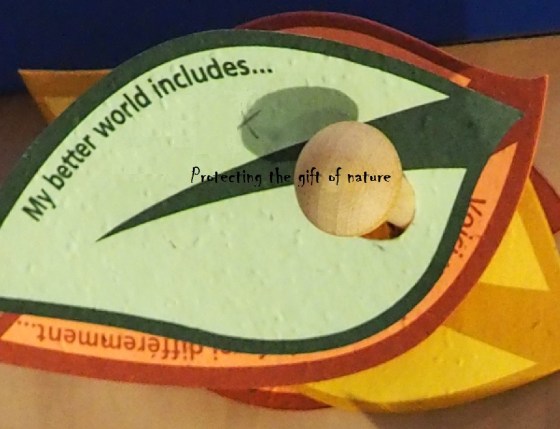
Note from the editor: “A New Leaf Everyday” is a compilation by Simerg of verses from the Holy Qur’an, the traditions of the Prophet Muhammad (may peace be upon him) and excerpts from speeches and farmans of Ismaili Imams (or their family members) that are pertinent to the message on a different leaf which has been presented (almost) everyday on this page since the start of the month of Ramadhan on June 6, 2016.  The photos of the leaves were either taken by us during our visits to the Aga Khan Foundation’s Together-Ensemble mobile exhibition, which is currently on a cross-Canada tour, or sent to us by the exhibition’s tour manager, François Grenier, to whom we express our deep gratitude. The leaf messages were penned down by visitors to the exhibition.

(IX): CHARITY
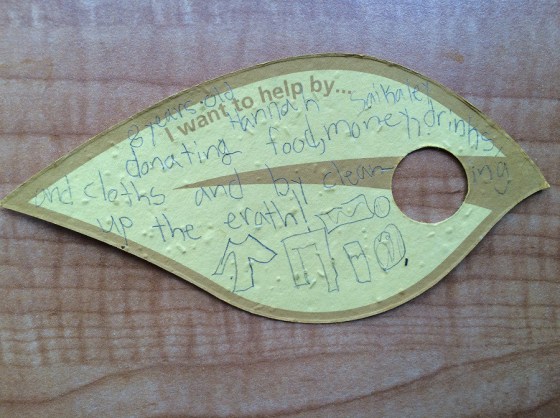
Together-Ensemble8 year old Hannah Saikaley’s wants to help by “Donating food, money, drinks and clothes and by cleaning the earth.”

“And perform the prayer, and pay the alms; whatever good you shall forward to your souls’ account, you shall find it with God; assuredly God sees the things you do.” — Holy Qur’an, 2:110, Sura Al-Baqarah (The Cow), Translation by A.J. Arberry.

“Those who believe and do deeds of righteousness, and perform the prayer, and pay the alms — their wage awaits them with their Lord, and no fear shall be on them, neither shall they sorrow.” — Holy Qur’an, 2:277, Sura Al-Baqarah (The Cow), Translation by A.J. Arberry.

“If you publish your freewill offerings, it is excellent; but if you conceal them, and give them to the poor, that is better for you, and will acquit you of your evil deeds; God is aware of the things you do.” — Holy Qur’an, 2:271, Sura Al-Baqarah (The Cow), Translation by A.J. Arberry.

“Charity obliterates sins just as water extinguishes fire…Save yourself from the (Hell) Fire even with half a date (to be given in charity); and if you do not find a half date, then with a good pleasant word.” — Traditions of the Holy Prophet Muhammad (s.a.s.), 570 CE – 632 CE

“Do not feel ashamed if the amount of charity is small…Charity and alms are the best remedy for ailments and calamities…If you want to pray to Allah for better means of subsistence, then first give something in charity” — Hazrat Ali (a.s.), 599 CE -661 CE, 1st Shia Imam.

Date posted: June 17, 2016.

Recommended: Please visit Qur’anic Corpus for several parallel translations of the Holy Qur’an in English, verse by verse.

_______________

(VIII). BE NICE

“A kind word with forgiveness is better than almsgiving followed by injury. Allah is Absolute, Clement.” — Holy Qur’an, 2:263, Sura Al-Baqarah (The Cow), Translation by M. Pickthall.

“The servants of the All-merciful are those who walk in the earth modestly and who, when the ignorant address them, say, ‘Peace'” — Holy Qur’an, 25:63, Sura al-Furqan (The Criterion), Translation by A.J. Arberry.

“When a (courteous) greeting is offered you, meet it with a greeting still more courteous, or (at least) of equal courtesy. Allah takes careful account of all things.” — Holy Qur’an, 4:86, Sura An-Nisa (The Women), Translation by Yusuf Ali.
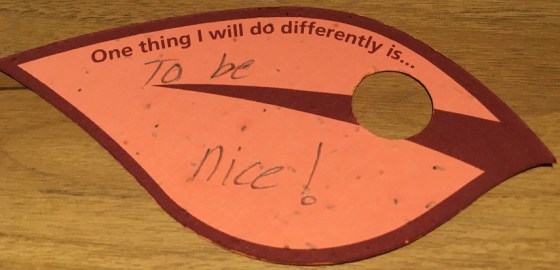
Ramadhan - A New Leaf Everyday - VIII To be nice

“The believer does not defame, abuse, disparage, nor vilify…The strong person is not he who has physical strength but the person is strong if he can control his anger.” — Traditions of the Holy Prophet Muhammad (s.a.s.), 570 CE – 632 CE

“You should not speak ill of other religions or ridicule anybody” — His Highness the Aga Khan III, (1877-1957), 48th Ismaili Imam, Precious Pearls, #66, Page 47, Ismailia Association for Pakistan.

“Keep to forgiveness (O Muhammad), and enjoin kindness, and turn away from the ignorant.” — Holy Qur’an, 7:199, Sura Al-A’raf (The Heights), Translation by M. Pickthall.

“The best deed of a great man is to forgive and forget…Courtesy costs nothing, but buys everything.” — Hazrat Ali (a.s.), 599 CE -661 CE, 1st Shia Imam.

“You should be united. Our religion preaches that we should let bygones be bygones. Even if one harms you, you should forgive him.” — His Highness the Aga Khan III, Precious Pearls, #85, Page 57, Ismailia Association for Pakistan.

“I would also like you also to remember that you should at all times live within the spirit of Islam. This means that you are brothers and sisters and that whenever any one of you has difficulties, troubles or needs help or wants guidance, you should always help each other.” — His Highness the Aga Khan, 49th Ismaili Imam, Gujranwalla, Pakistan, November 26, 1964, Farman Mubarak, Ismailia Association Pakistan, Part II, Pg. 22.

“You must be humble, as it is one of the greatest [forms of] worship.” — Hazrat Ali (a.s.).

Date posted: June 15, 2016.

___________________

(VII). HELPING PEOPLE AROUND THE WORLD
Ramadhan - A New Leaf Everyday - VII Serving Around the World

Reflection(s) from Aga Khan Foundation’s mobile exhibition Together-Ensemble which is currently on a cross-country Canada tour.

“I have been impressed by recent studies showing the activity of voluntary institutions and not-for-profit organisations in Canada to be among the highest in the world. This Canadian spirit resonates with a cherished principle in Shia Ismaili culture — the importance of contributing one’s individual energies on a voluntary basis to improving the lives of others.

“This is not a matter of philanthropy, but rather of self-fulfillment — ‘enlightened self-fulfillment’.

“During my Golden Jubilee — and this is important — six years ago Ismailis from around the world volunteered their gifts, not only of wealth, but most notably of time and knowledge, in support of our work. We established a Time and Knowledge framework, a structured process for engaging an immense pool of expertise involving tens of thousands of volunteers. Many of them traveled to developing countries as part of this outpouring of service — one third of those were Canadians. Their impact has been enormous in helping us to achieve best practice standards in our institutions and programmes, making us we hope an even better partner for Canada!” — His Highness the Aga Khan, 49th Ismaili Imam, Ottawa, Canada, February 27, 2014.

~~~~~

“In the Shia Ismaili Muslim tradition, voluntary service to others is viewed as an integral and positive part of daily life, and never as a burdensome obligation or an elective activity. Service is a means for each individual to actualise Islam’s ethics of inclusiveness, of compassion, of sharing, of the respect for life, and of personal responsibility for sustaining a healthy physical, social, and cultural environment.

“Generosity is fundamental to this concept of volunteerism: generosity of material resources, of time, of thought and of knowledge. The importance of the donation of time and financial resources is widely recognised. The other two elements are not. Thought helps others to help themselves. Knowledge enables the educated to provide technical information to the less educated on how to meet their own needs better and serve others.” — Princess Zahra Aga Khan, Edmonton, Canada, August 25, 1998.

Date posted: June 13, 2016.

____________

(VI). HOW TO MAKE THE WORLD A BETTER PLACE
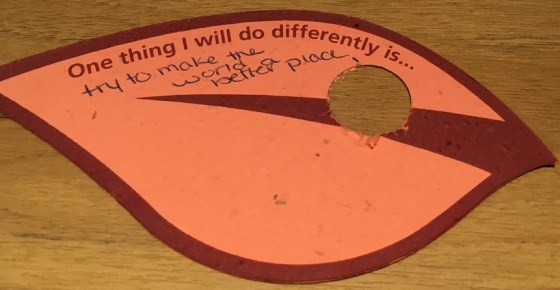
Ramadhan - A New Leaf Everyday - VI Make World A Better Place

Reflection(s) from Aga Khan Foundation’s mobile exhibition Together-Ensemble which is currently on a cross-country Canada tour.

“If our animosities are born out of fear, then confident generosity is born out of hope. One of the central lessons I have learned after a half century of working in the developing world is that the replacement of fear by hope is probably the single most powerful trampoline of progress.” — His Highness the Aga Khan, 49th Ismaili Imam, Germany, May 20, 2006.

“The effective world of the future will be one of pluralism, a world that understands, appreciates and builds on diversity. The rejection of pluralism plays a significant role in breeding destructive conflicts, from which no continent has been spared in recent decades. But pluralist societies are not accidents of history. They are a product of enlightened education and continuous investment by governments and all of civil society in recognising and celebrating the diversity of the world’s peoples.” — His Highness the Aga Khan, Oslo, Norway, April 7, 2005.

Date posted: June 11, 2016.

_______________

(IV) AND (V). POVERTY AND BEING HELPFUL: ISLAM’S CLEAR MESSAGE WITH AN EXAMPLE FROM THE LIFE OF THE PROPHET MUHAMMAD (MAY PEACE BE UPON HIM)
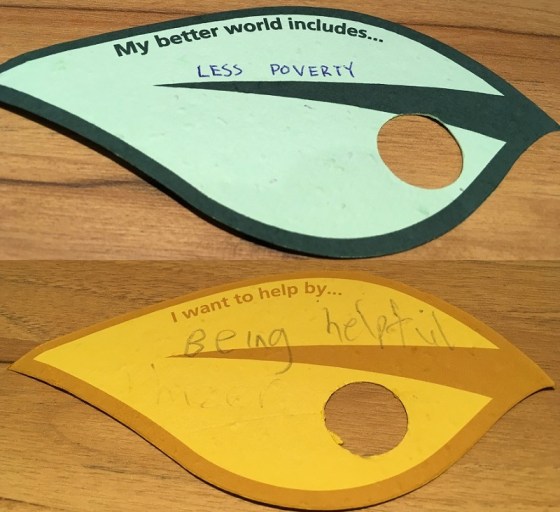
Ramadhan - A New Leaf Everyday - IV Less Poverty and How to Help

Reflection(s) from Aga Khan Foundation’s mobile exhibition Together-Ensemble which is currently on a cross-country Canada tour.

“…A state of poverty is a state of deprivation with respect to health and nutrition, education and security, housing and credit, and all the other conditions which are essential to human well-being.” — His Highness the Aga Khan, 49th Ismaili Imam, Berlin, Germany, November 13, 2007.

“Our duty is to try to free people from poverty. And to me, poverty means being without hope of ever controlling one’s own destiny. This means condemning one’s children and grandchildren to unacceptable living conditions.” — His Highness the Aga Khan, November 27, 2007, Madagascar.

“Islam has a very clear message about the different forms of generosity. There is that with regard to the poor, which takes the form of gifts. But the recipient remains poor. There exists a second form of generosity that contributes to growing the independence of the person. This concept, in which the goal is to make the person the master of their destiny, is the most beneficial in the eyes of Allah” [see example from the life of Prophet Muhmmad, below – ed]. — His Highness the Aga Khan, Interview L’Express, July 4, 2007.

~~~~~~~~~

Firewood

It is related that when an Ansar (Helper) came to Prophet Muhammad and begged from him, he asked him whether he had nothing in his house. When the Ansar said that he had a piece of cloth, which he used for wearing as well as for spreading on the ground, and a wooden bowl from which he drank water, the Prophet told him to bring them to him, and when he did so he took them in his hand and asked, “Who will buy these?” When a man offered a dirham, the Prophet asked twice or thrice. “Who will offer more than a dirham?” and the Prophet gave them to a man who offered two dirhams. He then took the two dirhams and giving them to the Ansari he said, “Buy food with one of them and hand it to your family, and buy an axe with the other and bring it to me.”

When he bought the axe, Prophet Muhammad fixed a handle on it with his own hand and said, “Go gather firewood and sell it, and don’t let me see you for a fortnight.” The man went away and gathered firewood and sold it. When he had earned ten dirhams he came to the Prophet and bought a garment with some of them and food with others.

Date posted: June 9/10, 2016.

_______________

(III). TOGETHER AND PARTNERSHIP
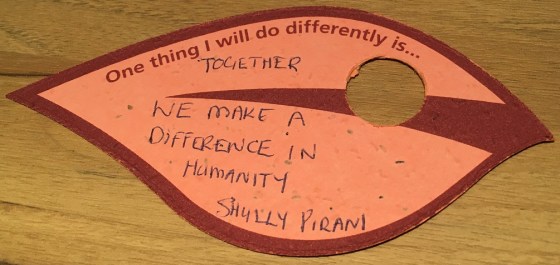
Ramadhan - A New Leaf Everyday - III Together-Unity
Reflection from Aga Khan Foundation’s mobile exhibition Together-Ensemble which is currently on a cross-country Canada tour.

“And obey Allah and His messenger, and dispute not one with another lest ye falter and your strength depart from you; but be steadfast! Lo! Allah is with the steadfast.” — Holy Qur’an, 8:46, Sura Al-Anfal (The Spoils of War), Translation by M. Pickthall.

~~~~~~

“One event which I witnessed was a boxing match between two Ismaili boys – one African, one Asian. I saw a good fight and, at the end, I think each of them thought he had won….At the end of this sporting event, the two boys shook hands and stood together to be photographed. To me this symbolised the partnership between different races which I am convinced is the only condition of peace and prosperity….I most strongly urge the Ismaili community to work hand in hand with all other citizens” — His Highness the Aga Khan, 49th Ismaili Imam, Kampala, Uganda, Ceremonial installation (Takhtnashini), October 25, 1957.

“With humility, tolerance and respect for each other, by honest work and straight dealings, you will earn the true friendship of your fellows…By the way you conduct your daily lives, by the compassion you show to your fellow men and women, and above all by your faith in God – you will ultimately be judged” — His Highness the Aga Khan, Takhtnashini, Mumbai, March 11, 1958.

Date posted: June 8, 2016.

_____________

(II). NATURE AND THE ENVIRONMENT
Ramadhan - A New Leaf Everyday

“It is He who sent down out of heaven water, and thereby We have brought forth the shoot of every plant, and then We have brought forth the green leaf of it, bringing forth from it close-compounded grain, and out of the palm-tree, from the spathe of it, dates thick-lustered, ready to the hand, and gardens of vines, olives, pomegranates, like each to each, and each unlike to each. Look upon their fruits when they fructify and ripen! Surely, in all this are signs for a people who do believe.” — Holy Qur’an, 6:99, Sura An-An’am (The Cattle), Translation by A.J. Arberry.

~~~~~~

“The Qur’an refers very often to nature as a reflection of Allah’s power of creation, and it says, look at the mountains, the rivers, the trees, the flowers, as evidence of Allah’s love for the people whom He has created. Today, I look at the environment and I say to you, I believe Allah is smiling upon you, and may His smile always be upon you.” — His Highness the Aga Khan, 49th Ismaili Imam, speaking in a mountainous setting in Badakhshan in 1995.

“There are many, many interpretations of Islam within the wider Islamic community, but I think one on which there is greatest consensus, is the fact that we are trustees of God’s creation, and we are instructed to seek to leave the world a better place than it was when we came into it. Therefore, the question is: What is a ‘better place’, in physical terms? And that ‘better place’, in physical terms, clearly means trying to bring values into environments, buildings and contexts, which make the quality of life better for future generations than it is today.” — His Highness the Aga Khan in an interview with Robert Ivy, Editor in Chief, Architectural Record, conducted on August 31, 2001, at Aiglemont, France.

~~~~~~

“Islam is fundamentally in its very nature a natural religion. Throughout the Quran God’s signs (Ayats) are referred to as the natural phenomenon, the law and order of the universe, the exactitudes and consequences of the relations between natural phenomenon in cause and effect. Over and over, the stars, sun, moon, earthquakes, fruits of the earth and trees are mentioned as the signs of divine power, divine law and divine order.” – His Highness the Aga Khan III (1877 – 1957), 48th Ismaili Imam.

Date posted: June 7, 2016.

_____________

(I) UNITY OF OUR HUMAN RACE
OLYMPUS DIGITAL CAMERA

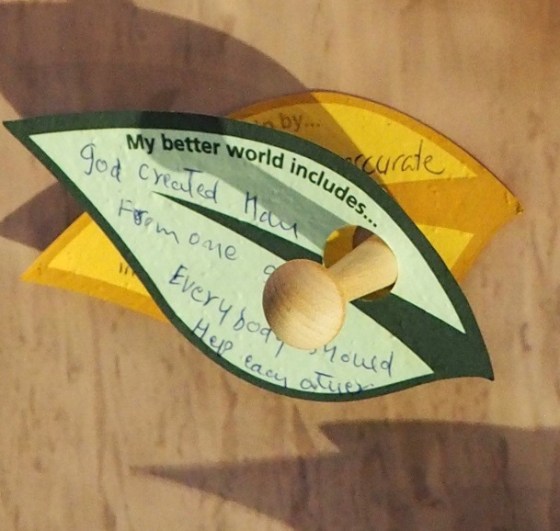
From the mobile exhibition Together-Ensemble currently on a cross-country Canada tour. My better world includes….”God created man from One Soul. Everybody should help each other.”

“Mankind, fear your Lord, who created you of a single soul, and from it created its mate, and from the pair of them scattered abroad many men and women; and fear God by whom you demand one of another, and the wombs; surely God ever watches over you.” — Holy Qur’an, 4:1, Sura an-Nisa  (The Women), Translation by A.J. Arberry.

~~~~

“…As you build your lives, for yourselves and others, you will come to rest upon certain principles. Central to my life has been a verse in the Holy Qur’an which addresses itself to the whole of humanity. It says: “Oh Mankind, fear your Lord, who created you of a single soul, and from it created its mate, and from the pair of them scattered abroad many men and women.

“…I know of no more beautiful expression about the unity of our human race — born indeed from a single soul.” — His Highness the Aga Khan, 49th Ismaili Imam, February 27, 2014, Parliament of Canada.

~~~~

“All men, rich and poor, must aid one another materially and personally. This fraternity is absolute, and it comprises men of all colours and all races: black, white, yellow, tawny; all are the sons of Adam in the flesh and all carry in them spark of the Divine Light. Everyone should strive his best to see that this spark be not extinguished but rather developed to that full Companionship-on-High.” — His Highness the Aga Khan III (1877-1957), 48th Ismaili Imam.

Date posted: June 6, 2016.

_______________

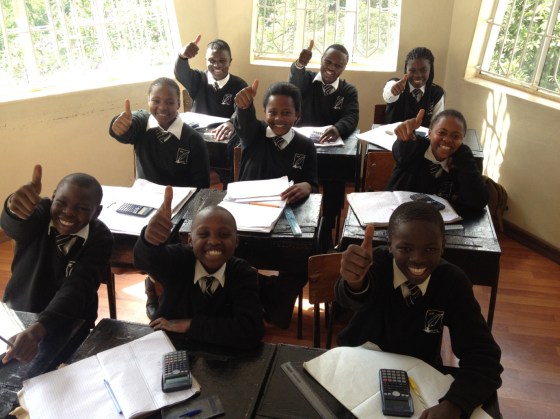
With His Highness the Aga Khan As Role Model, Ismaili Educators Provide Hope for Marginalized Children in Nairobi

“A great school will educate its students not merely to be personally successful but also to use their gifts to build their communities and enhance the common good to levels beyond our dreams.” – His Highness the Aga Khan, Mombasa Aga Khan Academy Inauguration, December 20, 2003.

PLEASE CLICK: A Civil Society Endeavour: Ismaili Educators Helping Educate Marginalised Children in Nairobi

Please click on photo for story

Please click on photo for story

Inspired by His Highness the Aga Khan’s messages on education, a team of dedicated Ismaili educators set out to establish a school in Nairobi for poor children to give them a head start. Their vision is in keeping with the ethic of generosity in Islam, which is explained by Mawlana Hazar Imam as follows:

“Islam has a very clear message about the different forms of generosity. There is that with regard to the poor, which takes the form of gifts. But the recipient remains poor. There exists a second form of generosity that contributes to growing the independence of the person. This concept, in which the goal is to make the person the master of their destiny, is the most beneficial in the eyes of Allah.” — His Highness the Aga Khan, L’Express interview, July 4, 2007.

PLEASE CLICK: A Civil Society Endeavour: Ismaili Educators Helping Educate Marginalised Children in Nairobi

Date posted: June 12, 2016.

__________________

Simerg Special Photo Feature: His Highness the Aga Khan Meets Prime Minister Trudeau at Parliament Hill by Award Winning Photographer Jean-Marc Carisse

Photographs: Jean-Marc Carisse, http://www.carissephoto.com
Text compilation: Abdulmalik Merchant, Editor, Simerg

Please click on photos for enlargement

WITH PRIME MINISTER

His Highness the Aga Khan looks straight at the camera as he greets Prime Minister Justin Trudeau on Tuesday, May 17, 2016, at the Office of the Prime Minister located at the Centre Block of Parliament Hill in Ottawa. Photo: Jean-Marc Carisee. Copyright.

His Highness the Aga Khan looks straight at the camera as he greets Prime Minister Justin Trudeau on Tuesday, May 17, 2016, at the Office of the Prime Minister located at the Centre Block of Parliament Hill in Ottawa. Photo: Jean-Marc Carisee. Copyright.

His Highness the Aga Khan, the 49th hereditary Imam of the Shia Imami Ismaili Muslims, was warmly received by Canada’s Prime Minister Justin Trudeau on Tuesday, May 17, 2016, with the words “It’s always a pleasure to welcome a dear friend to Canada, a dear friend to my family as well.” The Prime Minister added that they would discuss “pluralism, diversity and all the things that Canada can contribute to offering more peace and stability in the world.”

His Highness the Aga Khan and Prime Minister Trudeau are seen engaged in a warm conversation during their meeting at Parliament Hill in Ottawa on Tuesday, May 17, 2016. Photo: Jean-Marc Carisse. Copyright.

His Highness the Aga Khan and Prime Minister Trudeau are seen engaged in a warm conversation during their meeting at Parliament Hill in Ottawa on Tuesday, May 17, 2016. In the background are the flags of the Ismaili Imamat with the gold Imamat crest in the centre, and the iconic Maple Leaf of Canada.  Photo: Jean-Marc Carisse. Copyright.

Award winning photographer Jean-Marc Carisse, who took the pictures shown on this page, noted in his email to Simerg that His Highness the Aga Khan’s greeting with the Prime Minister started at approximately 4:13/4:14 pm ET. At 5:05, His Highness walked in the South corridor of Centre Block and observed the portraits of former Prime Ministers Paul Martin and then Jean Chrétien (see photo, below). At 5:07, he entered his car. According to Mr. Carisse, “the Aga Khan was his usual charming personae and pleasantly smiled throughout his Parliamentary visit.”

Over the next few days, Simerg will be presenting more photos as well as reports relating to His Highness the Aga Khan’s current visit to Canada, which began with his arrival in Ottawa on Monday May 16, 2016. He was accompanied by his younger brother, Prince Amyn Aga Khan. His itinerary for the current visit includes delivering the opening remarks at the Global Centre for Pluralism’s Annual Lecture and being awarded with an honorary degree by the Pontifical Institute of Medieval Studies. Both these events will take place in Toronto this week.

We express our deep gratitude to Jean-Marc Carisse for sharing the wonderful photos with readers of Simerg.

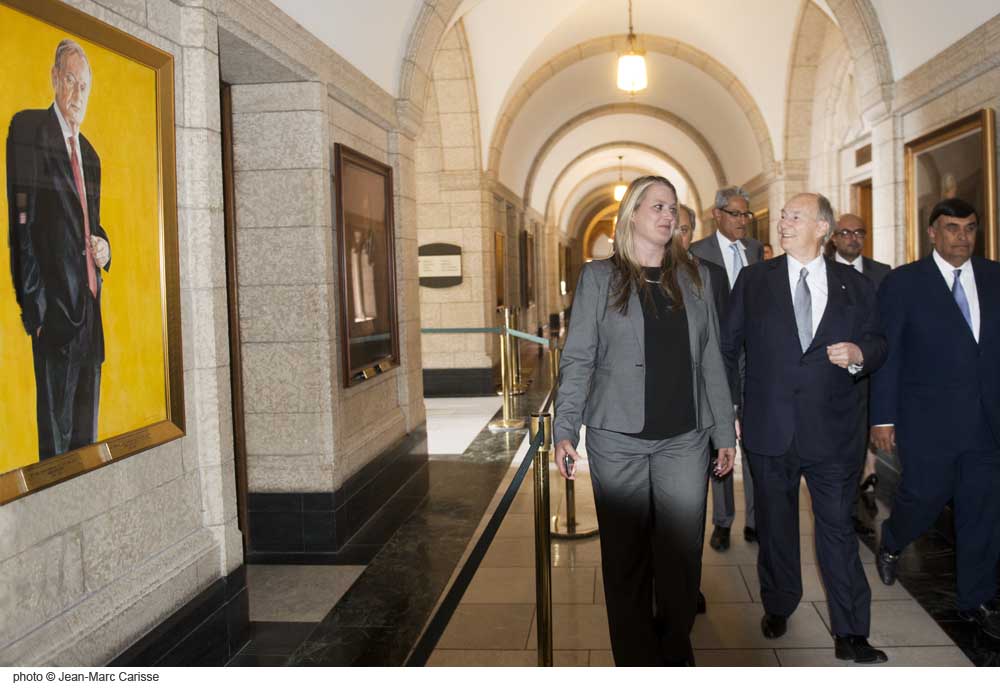
His Highness the Aga Khan glances with interest at an oil painting by Christan Nicholson of former Canadian Prime Minister, Jean Chrétien as he walks past it with leaders of the Ismaili community in the South corridor of Centre Block shortly after his meeting with Prime Minister Justin Trudeau on Tuesday, May 17, 2016. Photo: Jean Marc Carisse. Copyright.

His Highness the Aga Khan glances with interest at an oil painting of former Canadian Prime Minister, Jean Chrétien, shortly after his meeting with Prime Minister Justin Trudeau on Tuesday, May 17, 2016.  Accompanying him are Kate Bourke, the protocol coordinator, and leaders of the Ismaili community. Photo: Jean Marc Carisse. Copyright.

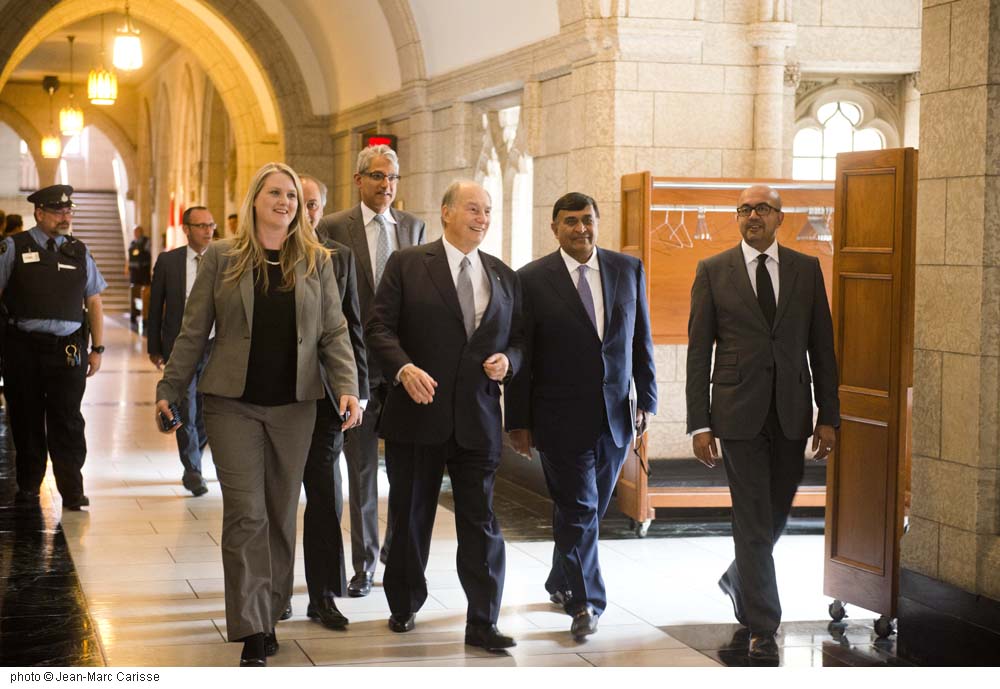
His Highness the Aga Khan walks happily in the corridor of the Parliament Building following his meeting with Prime Minister Justin Trudeau on Tuesday May 17, 2016. He is accompanied, among others, by Ismaili leaders Shafik Sachedina and the President of the Aga Khan Council for Canada, Malik Talib. Photo: Jean-Marc Carisse. Copyright.

His Highness the Aga Khan walks happily in the corridor of the Parliament Building following his meeting with Prime Minister Justin Trudeau on Tuesday May 17, 2016. He is accompanied, among others, by protocol coordinator, Kate Bourke and Ismaili leaders Shafik Sachedina and President Malik Talib of the Aga Khan Council for Canada. Photo: Jean-Marc Carisse. Copyright.

His Highness the Aga Khan has a broad smile as he prepares to leave the Parliament Building after his meeting with Prime Minister Justin Trudeau on Tuesday, May 17, 2016. In the picture with him are Ismaili leaders Shafik Sachedina, based at the Ismaili Imam’s headquarters in Aiglemont, France, President Malik Talib of the Aga Khan Council for Canada, and Mahmoud Eboo, the Aga Khan Development Network's Resident Representative to Canada. Photo: Jean-Marc Carisse. Copyright.

His Highness the Aga Khan has a broad smile as he prepares to leave the Parliament Building after his meeting with Prime Minister Justin Trudeau on Tuesday, May 17, 2016. With him in the picture are protocol coordinator, Kate Bourke (left), Shafik Sachedina (right), based at the Ismaili Imam’s headquarters in Aiglemont, France, President Malik Talib (top left) of the Aga Khan Council for Canada, and Mahmoud Eboo (centre), the Aga Khan Development Network’s Resident Representative to Canada. Photo: Jean-Marc Carisse. Copyright.


His Highness the Aga Khan outside the Parliament Building just before his departure after his meeting with Prime Minister Justin Trudeau on Tuesday, May 17, 2016. Photo: Jean-Marc Carisse. Copyright.

His Highness the Aga Khan outside the Parliament Building just before his departure after his meeting with Prime Minister Justin Trudeau on Tuesday, May 17, 2016. Photo: Jean-Marc Carisse. Copyright.

His Highness the Aga Khan returns a farewell wave to well-wishers, as his car departs Parliament Hill following his meeting with Prime Minister Justin Trudeau on Tuesday, May 17, 2016. Photo: Jean-Marc Carisse. Copyright

His Highness the Aga Khan returns a farewell wave to well-wishers, as his car departs Parliament Hill following his meeting with Prime Minister Justin Trudeau on Tuesday, May 17, 2016. Photo: Jean-Marc Carisse. Copyright

Date posted: May 17, 2016.
Last updated: May 18, 2016 (15:51 EST)

Photos: Copyright Jean-Marc Carisse, http://www.carissephoto.com.

______________

We welcome your feedback. Please click Leave a comment

Related Video of the welcome by Prime Minister Justin Trudeau:

Also see: Exclusive Photos by Jean-Marc Carisse: “Victorious Trudeau”, His Highness the Aga Khan and Liberal MP Yasmin Ratansi

The Text of Resolution by Portugal’s Council of Ministers Authorizing the Sale of Palácio Henrique de Mendonça to the Ismaili Imamat

Lisbon’s Palácio Henrique de Mendonçae is a historical building located in an extremely exclusive neighbourhood, and is part of a panoramic green area of three hectares in the heart of the city. The turn-of-the-century palace combines stunning architecture and traditional Portuguese interiors. It was designed between 1900 and 1902 by Ventura Terra and completed in 1909, when it was awarded the Valmor Prize. The prize is named after the Viscount of Valmor, Fausto Queirós Guedes (1837-1898), who was a protector of the arts. The prize is one of the most prestigious national awards in Portugal for architecture and distinguishes reputable works and projects.

nova_phc_2l

Bird’s eyeview, Palácio Henrique de Mendonça, Lisbon, Portugal. Photo Credit: Lisbonmeeting.org.pt.

~~~~~~~~~

The Official Gazette of Portugal contains all up-to-date enacted laws, decree-laws and ministerial orders. The following is a resolution by Portugal’s Council of Ministers published in the Gazette that authorizes the sale of the palace to the Ismaili Imamat. We hope to provide our readers with an accurate English translation of the Portuguese text in the near future. Readers may wish to utilize Google translate to obtain a free translation in English or other languages.

Resolução do Conselho de Ministros n.º 27/2016 – Diário da República n.º 89/2016, Série I de 2016-05-09. Presidência do Conselho de Ministros

Determina como de excecional interesse público e autoriza a venda do imóvel denominado Palácio Henrique de Mendonça, ou Ventura Terra ao Imamat Ismaili, com vista ao estabelecimento da sua sede em Portugal.

PRESIDÊNCIA DO CONSELHO DE MINISTROS

Resolução do Conselho de Ministros n.º 27/2016

O Palácio Henrique de Mendonça/Casa Ventura Terra, situado na Rua Marquês da Fronteira, em Lisboa, é um edi-fício de características únicas, tendo sido galardoado como Prémio Valmor e Arquitetura e classificado como Imóvel de Interesse Público, em 1982. Neste Palácio, encontra -se instalada parte da Faculdade de Economia da Universidade Nova de Lisboa.

O Imamat Ismaili, que a Fundação Aga Khan tem representado, celebrou, com a República Portuguesa, o «Protocolo de Cooperação entre o Governo da República Portuguesa e o Imamat Ismaili», assinado em Lisboa, em 19 de dezembro de 2005, aprovado pelo Decreto n.º 11/2006, de 15 de março.

Adicionalmente, foi celebrado o «Protocolo de Cooperação Internacional entre o Ministério dos Negócios Estrangeiros da República Portuguesa e o Imamat Ismaili», assinado em 11 de julho de 2008.

Em 8 de maio de 2009, foi assinado, em Lisboa, o «Acordo entre a República Portuguesa e o Imamat Ismaili», que foi aprovado pela Resolução da Assembleia da República n.º 109/2010, de 24 de setembro, e ratificado pelo Decreto do Presidente da República n.º 94/2010, de 24 de setembro.

Posteriormente, a 3 de junho de 2015, foi assinado o «Acordo entre a República Portuguesa e o lmamat Ismaili para o Estabelecimento da Sede do Imamat lsmaili em Portugal», aprovado pela Resolução da Assembleia da República n.º 135/2015, de 27 de outubro, e ratificado pelo Decreto do Presidente da República n.º 124/2015, de 27 de outubro.

O artigo 3.º do mesmo Acordo refere que «[a] República Portuguesa assegurará as condições para o estabelecimento da Sede do Imamat Ismaili no seu território assim como para o exercício das suas funções». Já o artigo 16.º do citado Acordo prevê, expressamente, como compromisso do Imamat Ismaili, que este «[…] apoiará ativamente os esforços da República Portuguesa para melhorar a qualidade de vida de todos aqueles que vivem em Portugal, nomeadamente através do desenvolvimento em Portugal de projetos de investigação de nível mundial naquela área e, em termos mais gerais, em matérias de interesse comum da República Portuguesa e do Imamat Ismaili», providenciando este «[…] que as suas Instituições Dependentes de mais elevado nível criem as condições destinadas a atingir os objetivos definidos acima, em cooperação com os ministérios relevantes ou outras entidades do Governo Português».

nova_phc_1

Palace interior. Photo credit: Lisbonmeeting.org.pt

Considerando que a Universidade Nova de Lisboa pretende alienar o Palácio Henrique de Mendonça/Casa Ventura Terra e que o Imamat Ismaili ali pretende instalar a Sede.

Considerando que, no âmbito da «Iniciativa Conhecimento para o Desenvolvimento», o Ministério da Ciência, Tecnologia e Ensino Superior e o Imamat Ismaili se encontram a estabelecer os termos de referência para a celebração de um «Protocolo de Cooperação em Ciênciae Tecnologia».

Considerando, também, que a venda por ajuste direto do imóvel supra descrito ao Imamat Ismaili em Portugal reveste-se de excecional interesse público, que decorre da natureza e das finalidades da parte interessada na aquisição e dos compromissos bilaterais assumidos, podendo o respetivo procedimento de alienação ser autorizado por Resolução do Conselho de Ministros, como resulta da conjugação da alínea l) do n.º 2 e do n.º 3 do artigo 81.º do Decreto -Lei n.º 280/2007, de 7 de agosto.

Considerando, finalmente, que o imóvel se encontra classificado como de interesse público pelo Decreto n.º 28/82, de 26 de fevereiro, pelo que o Estado e o Município de Lisboa gozam do direito de preferência na sua alienação, nos termos do artigo 37.º da Lei n.º 107/2001, de 8 de setembro, e que o Município de Lisboa declarou que não o pretende exercer.

Assim:

Nos termos da alínea l) do n.º 2 e do n.º 3 do artigo 81.º do Decreto-Lei n.º 280/2007, de 7 de agosto, e da alínea g) do artigo 199.º da Constituição, o Conselho de Ministros resolve:

1 — Reconhecer o excecional interesse público da venda, por ajuste direto, ao Imamat Ismaili em Portugal do imóvel denominado Palácio Henrique de Mendonça/Casa Ventura Terra, sito na Rua Marquês da Fronteira, n.ºs 18 a 28, em Lisboa, inscrito na matriz predial urbana sob o artigo 2415, da freguesia de Avenidas Novas (anterior artigo urbano 754 da extinta freguesia de São Sebastião da Pedreira), descrito na Conservatória do Registo Predial de Lisboa sob o n.º 1407 da freguesia de São Sebastião da Pedreira.

2 — Autorizar a venda, mediante ajuste direto, do imóvel identificado no número anterior ao Imamat Ismaili em Portugal, pelo preço de € 12 000 000,00, correspondente ao valor base homologado pela Direção-Geral do Tesouro e Finanças.

3 — Determinar que o produto da alienação reverte, na sua totalidade, para a Universidade Nova de Lisboa, nos termos do disposto no n.º 1 e na alínea a) do n.º 4 do artigo 13.º da Lei n.º 82 -B/2014, de 31 de dezembro, alterada pela Lei n.º 159-E/2015, de 30 de dezembro, e na alínea c) do n.º 9 do artigo 109.º da Lei n.º 62/2007, de 10 de setembro, o qual deve ser integralmente destinado a despesas de investimento no património próprio da Universidade, para reforço das instalações.

4 — Determinar que o Estado não exerce o direito de preferência previsto no artigo 37.º da Lei n.º 107/2001, de 8 de setembro.

Presidência do Conselho de Ministros, 17 de março de 2016. — Pelo Primeiro-Ministro, Maria Manuel de Lemos Leitão Marques, Ministra da Presidência e da Modernização Administrativa.

Date posted: May 12, 2016.
Last updated: May 14, 2016.

________________

To view the original text of the resolution in the official Portuguese Gazette, please click https://dre.pt/application/file/74385362.

Related:

“Seat of the Ismaili Imamat” — Text of the Historic Agreement Between the Ismaili Imamat and the Portuguese Republic


Hazrat Ali (a.s.): “Have a Tender Heart, as Tender as a Fistful of Green Grass”

MAWLANA HAZAR IMAM ON HAZRAT ALI

His Highness the Aga Khan

“This is a time of new freedoms, but it is also one in which new choices must be made wisely. In exercising freedom and making choices, our institutions must be guided, as they have been in the past, by the teachings of the Prophet Muhammad (Peace of Allah be upon him), and the tradition of our tariqah, which is the tradition of Hazrat Ali: A thinking Islam and a spiritual Islam – an Islam that teaches compassion, tolerance and the dignity of man – Allah’s noblest creation.” — His Highness the Aga Khan on the occasion of the 25th anniversary of the Aga Khan Foundation, May 14, 1992.

___________

THE BLESSED

Blessed is one
who is humble regarding himself,
whose livelihood is good,
whose inner thoughts are virtuous,
whose character is good,
who spends the surplus from his wealth
and removes superfluity from his speech,
who keeps his evil away from people — Hazrat Ali

___________

THE KALAM-I MAWLA OF HAZRAT ALI

A page from a manuscript of Kalam-i Mawla. The Institute of Ismaili Studies collection.

Hazrat Ali’s aphorisms and wise counsels got translated into numerous languages across the Muslim world. The Kalame Mawla is a moving poetic rendition of his teachings in Hindustani. The work exhorts the believers to observe virtues such as brotherhood, honesty and generosity. The image shown above is from the manuscript  collection at the Institute of Ismaili Studies and written in a beautiful Khojki hand in Bombay. It was copied in 1908 samvat/1851 by Khoja Alahrakhea Koriji.

~~~~~~~

Titles of Hazrat Ali in Kalam-i Mawla

  1. Shah-e Awliya (verses 2 & 182) – the Lord of the friends (of God)
  2. Sahib-e Zulfiqar (verse 15) – Master of (the sword) Dhulfiqar
  3. Wali Maqbul (verse 34) – the accepted friend (of God)
  4. Sahib-e Israr (verse 98) – Master of the (spiritual) mysteries or secrets
  5. Kawsar-e Saqi (verses 102 & 107) – the pourer (of water) at the Pond of Kawthar (in Paradise)
  6. Shah-e Dul Dul Sawar (verses 113 & 130) – the rider of (the horse) Dul Dul; etc.

~~~~~~~

Thoughtful Teachings of Hazrat Ali from Kalam-i Mawla

Have a tender heart,
as tender as a fistful of green grass;
be not arrogant and stiff as a tree
upright in a forest;

A tree is toppled in a storm,
but grass bends and sways happily with the wind. — 8:67

When the boat of the heart comes upon a storm,
change direction, and lead it to the shore — 6:47

Gold remains in this world but right conduct (adab) enable you to meet your lord — 3:16

Be as soft as silk — 8:16

The best of wealth is that which is spent in the Name and way of the Lord — 4:22

The waters of a river do not turn back; neither does one’s age — 7:234

___________

INVOCATION
Nade Ali

Photo: The Trustees of the British Museum. Copyright.

Nadi Ali, Nadi Ali, Nadi Ali
Nadi Aliyyan mazhar al-ajaib
Tajidahu aunan lakafin-nawaib
Kullu hammin wa ghammin
sayanj-i Ali Bi wilayatika
Ya Ali, Ya Ali, Ya Ali

Call Ali, Call Ali, Call Ali
Call Ali who is the manifestation of marvels;
You will find him your helper in calamities.
Every anxiety and grief will come to an end
Through your friendship,
O Ali, O Ali, O Ali.

Date posted: April 19, 2016.

________________