Eid ul-Fitr Should Provide Spark of Hope For the Less Privileged, and Foster Brotherhood, Forgiveness and Generosity in the Muslim Umma

“The poor are not mere inanimate, unmotivated, units of deprivation. They are living, thinking people like the rest of us.”
Mawlana Hazar Imam, His Highness the Aga Khan, 49th Ismaili Imam 

EID MUBARAK

Historical photo: Muslims offering the Eid ul Fitr prayers at  the Sheikhantaur Mosque in Tashkent. Photo created/ published between 1865 and 1872. Credit: The US Library of Congress.

Historical photo: Muslims offering the Eid ul Fitr prayers at the Sheikhantaur Mosque in Tashkent. Photo created/published between 1865 and 1872. Credit: The US Library of Congress.

The festival of Eid, also known as Bairam or Eid Ramadan is one of the most joyous days in the Islamic calendar. It is an occasion for celebration and rejoicing for Allah’s Bounty upon mankind for His revelation of the Holy Qur’an during the month of Ramadan. It is also a time for individuals to express their gratitude to Allah for having given them the strength, courage and resilience to complete the fast, and thus fulfilling the duty enjoined upon them by Allah.

On this joyous occasion, we convey our heartiest felicitations and Eid Mubarak to all our readers as well as Muslims around the world, with the fervent hope and prayer that peace and harmony should prevail over many areas of the Muslim world afflicted by horrible conflicts, which are resulting in the loss of lives and contributing to unbearable hardships and struggles. The Islamic ethic of forgiveness, generosity, and peaceful co-existence and unity through dialogue are keys by which conflicts can be resolved, whereby every Muslim can aspire for a life of material and spiritual well-being and happiness.

The excerpts produced in this post from the Holy Qur’an and the hadith as well as from the farmans, writings and speeches of Hazrat Ali (a.s.) and Mawlana Hazar Imam (His Highness the Aga Khan) are foundation blocks for building harmonious societies around the world. The acts of charity and generosity mentioned in the quotes will facilitate those who are underprivileged to manage their own destinies, thereby leading them to a life of dignity, befitting Allah’s greatest creation.

PROFOUND TEACHINGS OF ISLAM

(Selections from the Holy Qur’an, the hadith and teachings of Shia Ismaili Imams)

Conceptual image for the holy month of Ramadan and Eid al Fitr. Photo: Istockphoto

Conceptual image for the holy month of Ramadan and Eid ul Fitr. Photo: Istockphoto. Copyright.

“It is not righteousness that you turn your faces towards the East and the West, but righteous is the one who believes in Allah and the Last Day, and the angels and the Books and the prophets, and gives away wealth out of love for Him to the near of kin and the orphans and the needy and the wayfarer and to those who ask and set slaves free.” — Holy Qur’an, 2:177

“And whatever good you may spend on others is for your own good, provided that you spend only out of a longing for God’s countenance.” — Holy Qur’an, 2:272

“You will not enter paradise till you believe, and you will not believe till you love one another. Let me guide you to something by doing which you will love one another: Salute and sundry among you.”  — Tradition of the Prophet Muhammad (s.a.s.)

“Have a tender heart, as tender as a fistful of green grass; be not arrogant and stiff as a tree upright in a forest. A tree is toppled in a storm, but grass bends and sways happily with the wind.” Hazrat Ali (a.s.), Kalam-e-Mawla, 8:67

“A great river is not made turbid by a stone. A religious man who takes to heart an injury is as yet, but shallow water. If any misfortune befalls you, bear with it, that by forgiving others you may yourself obtain pardon. O my brother! seeing that we are at last to return to earth, let us humble ourselves in ashes before we are changed into dust.” — Hazrat Bibi Fatima (a.s.). [1]

“…As the world gets smaller, it is fundamental that people should work together and not against each other, and try to be a little more generous than you have been in the past. If people have made mistakes, forgive them their mistakes. If people have harmed you, forget and forgive. Do not hold grudges. Do not turn around and say, ‘he hurt me yesterday, so I will hurt him today’. This is not the spirit of Islam…” His Highness the Aga Khan, Farman Mubarak, Mumbai, 1969, Precious Gems.

“Islam is not passive. It does not admit that man’s spiritual needs should be isolated from his material daily activities. A Muslim must play an active role in helping his family and the brotherhood of believers. The object is not to achieve status, wealth and power, but to contribute to society’s overall development. This implies moral responsibility to help the weaker, less fortunate members.” — His Highness the Aga Khan, Toronto, May 14, 1987. [2]

“…when you are studying the Qur’an, when you are studying the history of Imams, when you are studying the history of pre-Islamic Arabia, I would like you to take from this history that which will help you to live within the spirit of Islam. This means to live honestly, to live purely, to know that you are brothers and sisters, to be available at all times when one or the other needs help, to be generous, to be honest. These are the qualities which you can trace throughout Qur’an-e Shariff, throughout the life of the Prophet, throughout the lives of the Imams. And this is something which I would like you to follow, not only in letter but also in spirit, because it is this spirit which cannot be changed, and which I would like my spiritual children to understand fully…” Farman Mubarak, His Highness the Aga Khan, Karachi, November 29, 1964. [3]

“There are those who enter the world in such poverty that they are deprived of both the means and the motivation to improve their lot. Unless these unfortunate ones can be touched with the spark which ignites the spirit of individual enterprise and determination, they will only sink back into renewed apathy, degradation and despair. It is for us, who are more fortunate, to provide that spark.” —  His Highness the Aga Khan, speech, Housing and Development, Mumbai, January 17, 1983.

“The poor are not mere inanimate, unmotivated, units of deprivation. They are living, thinking people like the rest of us.” — His Highness the Aga Khan, Aiglemont, March 16, 1983.

“On the occasion of my Silver Jubilee, I would be deeply happy if the members of my jamat, wherever they are and whatever their age, would reaffirm in a visible and united manner their commitment to the principles of Islam which bind all Muslims together, and which are unique example to all mankind: Belief in Allah, the fulfillment of His message to man, respect and support for His greatest creation, man himself. In this way let us establish even sounder foundations for a good and proper life and let us extend our support to those living in the developing areas of the world.” — His Highness the Aga Khan, 1982. [4]

A new moon at Mackerricher State Park, California, USA. Photo: Istockphoto. Copyright.

A new moon at Mackerricher State Park, California, USA. Photo: Istockphoto. Copyright.

Date posted: Friday, July 17, 2015.

_______________

We welcome your feedback. Please click Leave a comment

References:

[1] Quoted in Ilm, July 1986, page 17.

[2] Ilm, Volume 13, Number 1, July 1990, page 45-46.

[3] Farman Mubarak Pakistan Visit 1964, published by the Ismailia Association for Pakistan, quoted also in Ilm, Volume 13, Number 1, July 1990, page 38.

[4] Talika Mubarak of Mawlana Hazar Imam, Silver Jubilee, July 11, 1982, quoted in Ilm, July 1990, page 55.
Special Series: Ismaili Expressions on the Imamat — (II) The Beatific Vision of the Imam of the Time

INTRODUCED BY ABDULMALIK MERCHANT

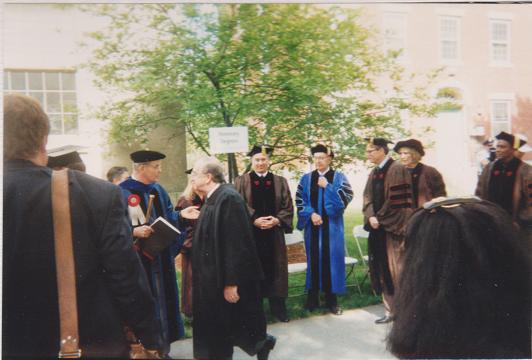
A very happy moment in my life when I visited Brown University in 1996. I snapped this picture of my beloved 49th Imam, His Highness the Aga Khan, and only realized that he was looking straight at my disposable nine dollar camera after I got the film processed in Philadelphia.  Photo by Abdulmalik Merchant

A very happy moment in my life when I travelled to Brown University from Philadelphia in 1996. I snapped this picture of my beloved 49th Imam, His Highness the Aga Khan, and only realized that he was looking straight at my camera after I got the film processed in Philadelphia a couple of days later. Photo by Abdulmalik Merchant

Every Ismaili yearns to see the Imam of the Time. It’s a dream of a lifetime. Throughout history, past and present, Ismailis have travelled far and wide to earn this special moment of grace and barakah (happiness) in their lives. Since the advent of the 20th century, the 48th Imam, Mawlana Sultan Mahomed Shah, and the current 49th Imam, Mawlana Shah Karim (His Highness the Aga Khan), have graciously travelled to lands around the world to give their beloved murids (followers) this blessed opportunity. Scientific and technological advancements have speeded up and shortened the time-gap between visits of Mawlana Hazar Imam with his jamats, though even in these situations, some jamats  such as those living in Central Asia, did not have the opportunity of a meeting with the present Imam and his predecessors for decades and centuries. What sustained their faith, sometimes under extremely difficult and extra ordinary circumstances, was their spiritual bond with the Imam of the Time.  

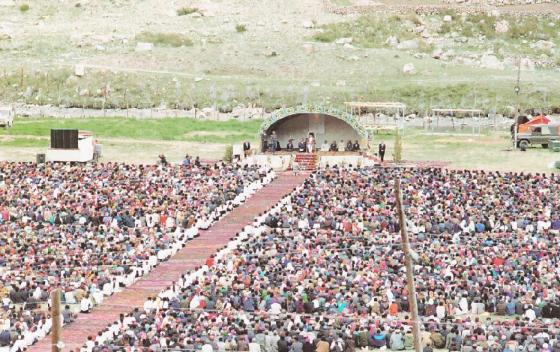
His Highness the Aga Khan pictured amongst his followers in Badakhshan in May 1995.

His Highness the Aga Khan pictured amongst his followers in Badakhshan in May 1995.

A cornerstone of Ismaili doctrines has been the principle of the Unity of Imamat, that is the  Ismaili belief and understanding that each Imam, being the bearer of the Noor (Light) of Imamat, is the same irrespective of his own age or the time he lives in. Thus in Ismaili writings, in addition to the importance of the physical didar (or glimpse) of the Imam, a strong emphasis has been laid on the followers to seek to attain the Beatific Vision of the Imam of the Time through special prayers, in addition to the ritual prayers. This idea is also conveyed in the sixth article of the Preamble of the Constitution of the Ismailis, which states:

“Historically and in accordance with Ismaili tradition, the Imam of the time is concerned with spiritual advancement as well as improvement of the quality of life of his murids. The imam’s ta‘lim lights the murid’s path to spiritual enlightenment and vision…”

The following collection  of writings from Ismaili history articulates the importance of both the  physical as well as the spiritual glimpse of the Imam of the Time. Our next reading in this short four-part series to commemorate Mawlana Hazar Imam’s 58th Imamat Day will consist of excerpts from the writings of Ismaili Imams on the subject of Imamat. This will be followed by contemporary voices on Imamat by members of the jamat.

1. An Inspiring Anecdote: Da’i Al-Mu’ayyad al-Shirazi ‘s Mulaqat  with  the 18th Ismaili Imam (or 8th Fatimid Caliph), Imam al-Mustansir Billah

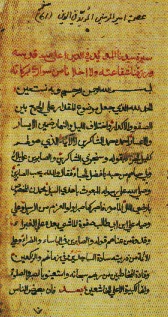
A folio from the manuscript of al-Shirazi's Sirat. Credit: The Institute of Ismaili Studies.

A folio from the manuscript of al-Shirazi’s Sirat. Credit: The Institute of Ismaili Studies.

“I was taken near the place where from I saw the bright Light of the Prophethood.  My eyes were dazzled by the Light. I shed tears of joy and felt as if I was looking at the face of the Prophet of Allah and of the Commander of the Faithful, Hazrat Ali. I prostrated myself before the one who is the fittest person to bow to. I wanted to say something, but I was awe-struck.

“I tried to speak but my tongue refused to move. People asked me to say what I wished to say. I could say nothing. The Imam said, ‘Leave him. Let his fear and awe subside’.

“After this, I rose. I took the holy hand of the Imam, placed it on my eyes and on my chest and then kissed it. I left the place with immense joy.”

The same dai,  in the following entreaty to Imam Mustansir, typifies an Ismaili’s impatience to behold the face of the Imam of one’s time, and the urgency of this beyond any possible worldly consideration. He states: 

“I swear, were you to crown me, and were you to grant me dominion over the world entire and say to me ‘Let our meeting be postponed but an hour’, I would reply: ‘O my Mawla, let us meet instead!  For your delay of but an hour has turned my hair gray’.”

2. A Pilgrim’s Experience

During the reign of the 34th Ismaili Imam Gharib Mirza, a pilgrim tracked his way to Anjudan to see the Imam on behalf of the jamats in Khurasan. The identity of the pilgrim is not very clear due to the poor quality of the manuscript but the ode to the Imam reads as follows:

“Greetings! O Emperor of the Realm of Faith and World; I come from Khurasan to behold your face. All I have is a soul imperfect, sins and transgressions galore.

“Despite such worthless goods, I long for your grace, hoping that through me you may forgive the trespasses of your servants-one and all.

“As you are the sovereign and governor of all creation, this being testified to by the Qur’an itself, your proper name has been made manifest to all the faithful.

“You are Shah Gharib and Mustansir, the inheritor of Shah Salam!”

3. Pir Sadr al-Din on the True Guide, the Beatific Vision of the Imam, and the Alchemy of Transformation from Contact with the Imam

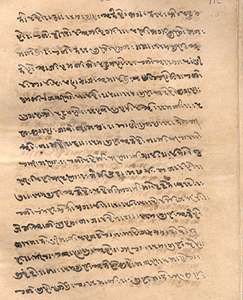
Folio of Pir Sadr al-Din's Saloko Nano at the Institute of Ismaili Studies.

Folio of Pir Sadr al-Din’s Saloko Nano at the Institute of Ismaili Studies.

The following is a translation of Pir Sadr al-Din’s ginanic compositiom “Sakhi māhā pad keri vāt koek jānere.”

“Friend! None but a few know of the exalted station. Indeed, they alone recognize it who have found the true guide.

“Friend! Within the heart, at the confluence of the three spiritual rivers, there is an imperishable light. There – a shimmering effulgence, pearls are showered.

“Friend! I completely lost consciousness of my physical self when my meditation mounted the empyrean, bursting forth.

“Friend! I beheld the place of the lofty throne, I saw the seven islands, the nine continents.

“Friend! The religious scriptures and books cannot fathom this, for there is neither day there, nor night, neither sun, nor shade.

“Friend! My Lord is not such that He can be spoken of. He is to be seen – for He is indescribable, and nameless.

“Friend! How sweet is that Lord, indescribable, nameless. Says Pir Sadr al-Din, truly, with my own eyes, I have seen Him!”

~~~~~~

And the following is a translation of a verse from Sab Ghat Sami Maaro Bharpur Betha on spiritual transformation:

“O Brother, The True Preceptor is like the philosopher’s stone and the followers are like copper.

“When the copper comes in contact with the philosopher’s stone it becomes gold.

“The followers gain spiritual enlightenment from the contact of the Imam. He is the only Glorious, O brother.”

4. Nizar Quhistani on the Imam of the Time As the Source of Salvation, and on the Continuity of Imamat

“Salvation is to be found in the Imam of the Time.

“Ever since I found the Imamate, permanently in human form, I have known no other guide than the living, everlasting Imam.

“For in his command, I have found peace in both the worlds.

“My lover appears in different forms,

“Because for each period there comes a new guidance;

“One after the other, there  follows another Qaim  Imam Ali.

“I have given up everything except that contained in the Qur’anic verse ‘offspring, one of the other’.”

Date posted: July 8, 2015.

_______________

Readings adapted from The Life and Lectures of the Grand Missionary al-Muayyad-fid-Din al-Shirazi and The Ismailis in the Middle Ages: A History of Survival, a Search for Salvation by Shafique N. Virani, Hardcover, May 3, 2007.

Feedback welcome, please click Leave a comment.

Special Series: Ismaili Expressions on the Imamat and Imam of the Time — (I) The Preamble of the Constitution of the Shia Imami Ismaili Muslims

LETTER FROM PUBLISHER

By Abdulmalik Merchant

Canada’s Confederation Day, the American Independence Day, Tanzania’s Saba Saba celebrations and the Imamat Day of His Highness the Aga Khan, all fall in the month of July.

Canada is already preparing for its 150th birthday two years hence when Ismailis around the world will, inshallah, celebrate the Diamond Jubilee of their beloved 49th Imam, whom they respectfully address as Mawlana Hazar Imam.

 A portrait of Mawlana Hazar Imam, His Highness Prince Karim Aga Khan, with a framed portrait of Mawlana Sultan Mahomed Shah in the background. Photo by Philippe Le Tellier/Paris Match via Getty Images. Copyright.

A portrait of Mawlana Hazar Imam, His Highness Prince Karim Aga Khan, with a framed portrait of Mawlana Sultan Mahomed Shah in the background. Photo by Philippe Le Tellier/Paris Match via Getty Images. Copyright.

His Highness the Aga Khan succeeded to the 49th hereditary throne of Imamat at the age of twenty by the will of his grandfather, Mawlana Sultan Mahomed Shah, His Highness the Aga Khan III, who served as the 48th Ismaili Imam for a record 71 years (August 17, 1885 – July 11, 1957).

Over the next week, Simerg will provide an insight into the principles of Imamat through short readings. We begin the series by posting the Preamble of the Ismaili Constitution, which is an introductory succinct statement giving the historical roots of the Ismaili Imamat, the principle of Imamat succession, and the permanency of the spiritual bond that exists between the Imam and his followers.

Another theme that will be explored in the coming few days through the writings of Ismaili Pirs, missionaries and philosophers is the principle of the Unity of Imamat, that is the Ismaili belief and understanding that each Imam, being the bearer of the Noor (Light) of Imamat, is the same irrespective of his own age or the time he lives in.

Finally, another aspect that will become apparent from the readings to follow is that the hereditary institution of Imamat can never become extinct. This is in accordance with the well known Muslim prophetic tradition, hadith thaqalain, which says, “I leave behind me two weighty things: The Book of Allah and my Progeny. If you keep yourselves attached to these two, never, never will you go astray. Both are tied with a long rope and cannot be separated until the Day of Judgement.”

The Preamble of the Constitution of the Shia Imami Ismaili Muslims

Please click on photo for enlargement

December 13, 1986, Geneva: On his 50th birthday, His Highness the Aga Khan is seen ordaining a new constitution for the worldwide Ismaili community.

December 13, 1986, Geneva: On his 50th birthday, His Highness the Aga Khan is seen ordaining a new constitution for the worldwide Ismaili community.

“Mawlana Hazar Imam Shah Karim al Hussaini, His Highness Prince Aga Khan, in direct lineal descent from the Holy Prophet (s.a.s.) through Hazrat Mawlana Ali (a.s.) and Hazrat Bibi Fatima (a.s), is the Forty-Ninth Imam of the Ismaili Muslims.”

BACKGROUND

In 1905, the 48th Ismaili Imam, Sir Sultan Muhammad Shah, His Highness the Aga Khan III, issued a written set of ‘Rules and Regulations’ for the Ismailis of East Africa which effectively served as their communal constitution. This constitution re-affirmed the centrality of the Imam’s authority over the affairs of his community and also articulated the distinctive religious identity of the Ismailis. This document was revised and published several times until 1954, and was made available to Ismailis and non-Ismailis alike. Similar rules were given to the Ismaili community in British India.

During the 1960’s, the 48th Imam’s grandson and successor, Mawlana Shah Karim al-Hussaini Hazar Imam, His Highness the Aga Khan IV, gave Constitutions to his followers in Africa and Pakistan in 1962, and to the Jamat in India in 1967.

A constitution review committee was then formed in the early 1980’s, and after exhaustive review, Mawlana Hazar Imam, in 1986, ordained a new Ismaili Constitution known as “The Constitution of the Shia Imami Ismaili Muslims.”

The Ismaili Constitution became applicable throughout the world, linking all Ismailis to the Imamat. His Highness did this with the belief that the Constitution would provide a strong institutional and organizational framework through which his community would be able to contribute to the harmonious development of the Muslim Ummah and of the societies in which his followers lived. He expressed confidence that the Ismaili Constitution would give a stronger integrated identity to his community, and that in abiding by it in letter and spirit, the Ismailis would achieve greater peace, unity, happiness, security and wellbeing. He futher hoped that the Constitution would become an enabling document for all his murids (followers) for an active role in institution building, for creative application of their abilities, for personal development and for intellectual and spiritual satisfaction.

The new constitution was ordained, signed and sealed by Mawlana Hazar Imam on December 13th, 1986, his fiftieth Salgirah (birthday) and thirtieth year of Imamat. The Constitution was revised by Mawlana Hazar Imam on July 11, 1998, when he completed forty one years of his spiritual leadership.

THE PREAMBLE

(A) The Shia Imami Ismaili Muslims affirm the shahādah lā ilāha illa-llāh, Muhammadur rasulu-llāh, the Tawhid therein and that the Holy Prophet Muhammad (s.a.s.) is the last and final Prophet of Allah. Islam, as revealed in the Holy Quran, is the final message of Allah to mankind, and is universal and eternal. The Holy Prophet (s.a.s.) through the divine revelation from Allah prescribed rules governing spiritual and temporal matters.

(B) In accordance with Shia doctrine, tradition, and interpretation of history, the Holy Prophet (s.a.s.) designated and appointed his cousin and son-in-law Hazrat Mawlana Ali Amiru-l-Mu’minin (a.s), to be the first Imam to continue the Ta’wīl and Ta‘līm of Allah’s final message and to guide the murids, and proclaimed that the Imamat should continue by heredity through Hazrat Mawlana Ali (a.s) and his daughter Hazrat Bibi Fatimat-az-Zahra, Khātun-i-Jannat (a.s).

(C) Succession of Imamat is by way of Nass, it being the absolute prerogative of the Imam of the time to appoint his successor from amongst any of his male descendents whether they be sons or remoter issue.

(D) The authority of the Imam in the Ismaili Tariqah is testified by Bay‘ah by the murid to the Imam which is the act of acceptance by the murid of the permanent spiritual bond between the Imam and the murid. This allegiance unites all Ismaili Muslims worldwide in their loyalty, devotion and obedience to the Imam within the Islamic concept of universal brotherhood. It is distinct from the allegiance of the individual murid to his land of abode.

(E) From the time of the Imamat of Hazrat Mawlana Ali (a.s), the Imams of the Ismaili Muslims have ruled over territories and peoples in various areas of the world at different periods of history and, in accordance with the needs of the time, have given rules of conduct and constitution in conformity with the Islamic concepts of unity, brotherhood, justice, tolerance and goodwill.

(F) Historically and in accordance with Ismaili tradition, the Imam of the time is concerned with spiritual advancement as well as improvement of the quality of life of his murids. The imam’s ta‘lim lights the murid’s path to spiritual enlightenment and vision. In temporal matters, the Imam guides the murids, and motivates them to develop their potential.

(G) Mawlana Hazar Imam Shah Karim al Hussaini, His Highness Prince Aga Khan, in direct lineal descent from the Holy Prophet (s.a.s.) through Hazrat Mawlana Ali (a.s.) and Hazrat Bibi Fatima (a.s), is the Forty-Ninth Imam of the Ismaili Muslims.

(H) By virtue of his office and in accordance with the faith and belief of the Ismaili Muslims, the Imam enjoys full authority of governance over and in respect of all religious and Jamati matters of the Ismaili Muslims.

(I) It is the desire and Hidāyat of Mawlana Hazar Imam that the constitutions presently applicable to the Ismaili Muslims in different countries be superseded and that the Ismaili Muslims worldwide be given this constitution in order better to secure their peace and unity, religious and social welfare, to foster fruitful collaboration between different peoples, to optimise the use of resources, and to enable the Ismaili Muslims to make a valid and meaningful contribution to the improvement of the quality of life of the Ummah and the societies in which they live.

Date posted: Saturday, July 4, 2015.

© Simerg.com

~~~~~~~~~~~

We welcome feedback/letters from our readers. Please click Leave a comment.  Your feedback may be edited for length and brevity, and is subject to moderation. We are unable to acknowledge unpublished letters.

Please Sign-up for blog subscription at top right of this page.

____________

References for this post:

(1) The Ismailis: An Illustrated History by Farhad Daftary and Zulfikar Hirji, published by Azimuth editions in association with The Institute of Ismaili Studies (2008).

(2) Wikipedia article on Imamah, with link to website, http://www.salmanspiritual.com/

(3) http://www.kamalzar.com, website of Alwaez Kamaluddin Muhammad and Alwaeza Zarina Kamaludin.

Reminiscences of Two Great Ismaili Missionaries of the 20th Century – Pir Sabzali and Meghji Missionary

“[Pir Sabzali and Meghji Missionary] drew all their courage and strength from their intense and ardent practice of Ibadat and went out to accomplish their missions with intelligence and knowledge, and with the firm belief that the help of Hazar Imam was always with them.”

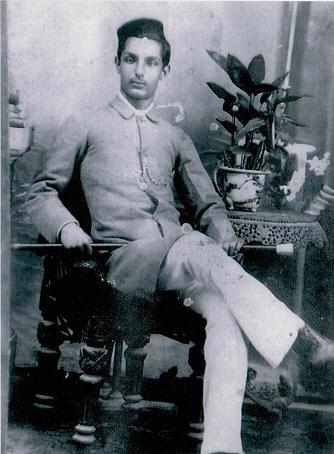
A youthful portrait of the Ismaili missionary, Meghji Maherali (1881 – 1941), of Mombasa, Kenya. Photo Credit: Archives of the family of Meghji Missionary. Copyright.

BY IZAT VELJI

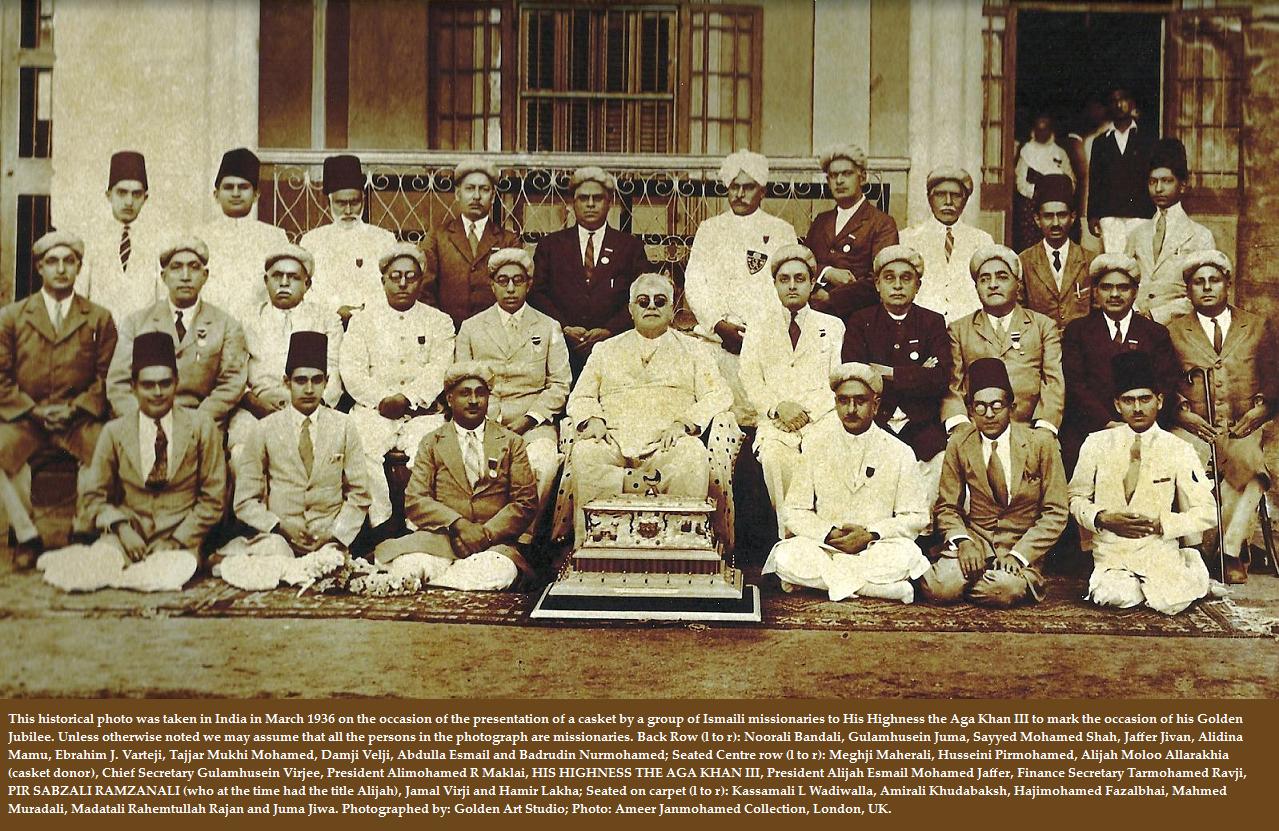
My profound gratitude and thanks [to the late Ameer Janmohamed] for sharing so much about Pir Sabzali – it is indeed a living history. The personal comments and recollections made his Thank You Letter to Pir Sabzali all the more interesting and real. The group picture shown below of Imam Sultan Mahomed Shah with Ismaili missionaries astonished me because there in the photo staring back at me is my nanabapa [maternal grandfather]. I happen to be the proud grand-daughter of Missionary Meghji Maherali, seated at the extreme left in the centre row. In the same row, third from right, is Pir Sabzali.

Every time missionary Pir Sabzali came into Mombasa, he never left without visiting nanabapa. The two had ever so much to share. There was no rivalry, competition or one-upmanship between them. This was very evident from everything that my mother, Noorbanu, shared with us kids.

Mum said that at the dining table, Pir Sabzali and nanabapa shared stories about their travels and advised and helped each other on how to improve each other’s skills in establishing the various jamats they visited. They also discussed ways of improving their waezes [sermons] and participation in discussions so as to become more effective. Apparently, there was a lot of gentleness and warmth as well as mutual respect between them, and they had a soft sense of humour when they recounted personal anecdotes. It seems like they really fed off each other. Pir Sabzali would relay messages of blessings to nanabapa’s family from Mawlana Sultan Mahomed Shah.

Please click to enlarge and read caption. Photo: (Late) Ameer Janmohamed Collection. UK.

Later, they would retire to the front room where nanima would send a tray of chai and ‘goodies’ via my mum, who was then seven or eight years old. She remembered all this with so much pride and joy. My mum passed away in 2000. She said that the two missionaries would sit for hours apparently discussing all matters Ibadat (special worship prayers).

They drew all their courage and strength from their intense and ardent practice of Ibadat and went out to accomplish their missions with intelligence and knowledge, and with the firm belief that the help of Hazar Imam was always with them. With missionary Sabzali’s encouragement and help, nanabapa established a school of waezins in Mombasa, one of his recruits being my father, Noordin Koorjee. Even back then, our missionary leaders practised ‘succession planning’ so that Imam’s work would not come to a standstill after they passed on.

These two ashaqs [devotees] were very sincere in their service to Mawla, and deeply loyal to their Mashuq (the lord of the devotee).

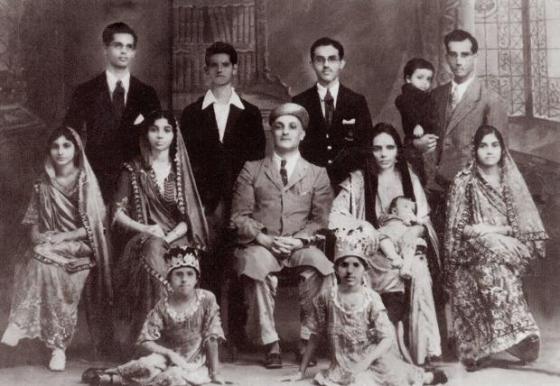
STANDING BACK ROW- l to r: Missionary’s sons Gulamhussein, Fatehali, Sherali, Hussein; 2nd child Mehdi Gulamali is not in picture; SITTING ON CHAIRS – l to r: Daughters Khatija, Fatma, Missionary Meghji Maherali, wife Zainub with Hussein’s 3rd child Shirin, Hussein’s wife, Sikina; SITTING ON FLOOR – l to r: Dolat – Hussein’s 1st child, daughter Noorbanu (mother of Izat Velji, author of this article). Photo Credit: Archives of the family of Meghji Missionary. Copyright.

When Pir Sabzali’s health deteriorated and he was in his last days, Imam Sultan Mahomed Shah sent him a message saying that he still wished to send Sabzali to Africa. Missionary Sabzali died a few days later. This came verbally from my parents, not once but several times. I have no way of authenticating this statement, but if it’s true then only Mawlana Sultan Mahomed Shah and Mawlana Shah Karim, the present Imam, would know the true import and reach of this message to Pir Sabzali.

When nanabapa died, Imam Sultan Mahomed Shah sent a telegram to the Mombasa Council that “Missionary Meghji’s funeral be held with a lot of pomp because of Meghji’s long and wonderful service to the Mombasa jamat.” So, out came the Scouts Band, all spit and polish followed by the cubs and scouts troops followed by the jamat giving kandh to nanabapa all the way from Chief jamat khana to the cemetery. That’s a long distance.

Today, almost eighty years later, I stand head bowed, in sheer admiration for nanabapa and Missionary Sabzali, whose soul was granted Piratan by Imam Sultan Mahomed Shah. Incidents and events like these are simply overwhelming and sometimes difficult to grasp and comprehend. It is their spirit and devotion which keep the Jamat inspired.

Copyright: Izat Velji/Simerg.

_________________

Editor’s note: Izat Velji’s piece originally appeared on this website in response to Ameer Janmohamed’s Thank You Letter to Pir Sabzali and the Ismaili Pirs of the Ginanic Tradition, which was  published as part of this website’s highly acclaimed third anniversary series on thanking Ismaili historical figures.

We welcome your feedback – please click Leave a comment.

About the writer: Izat Velji spent her early childhood years in Kenya and Tanzania. After completing her secondary schooling in Kenya, she pursued a degree in education and teaching at the University of Nairobi. She then settled in Canada where she completed her degree in Medical Lab Sciences. Later, she was recruited into the faculty of the Aga Khan School of Nursing in Karachi where she taught a number of science subjects including Clinical Microbiology and Basic Immunology. During her tenure in Karachi, she was very fortunate to have met His Highness the Aga Khan who visited her lab and class, once with the late Pakistani President Zia ul-Haqq, and on another occasion with his brother Prince Amyn. Encouraged by her husband, Izat also undertook voluntary assignments with the Aga Khan Health Board for Karachi to develop, conduct feasibilities as well as implement Health Education materials for the province of Sindh and the Northern Areas of Pakistan including Hunza and Chitral. The material that she helped prepare continues to be used today by AKDN Agencies such as Focus in their teaching modules. Since returning to Canada, Izat has been very active with the Ismaili community as a volunteer and especially with the Duke of Edinburgh’s program for youth aged 14 to 25. Most recently in 2011, she was acknowledged by the Governor General at the Gold Award Ceremony.

~~~~~~~~~~~~

Triumphal Moments in Ismaili History: Jawhar’s Conquest of Egypt and Imam al-Muizz’s Resplendent Darbar in Cairo

“I WISH I’D BEEN THERE”

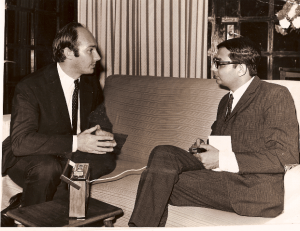
1970: Mansoor Ladha, veteran award winning journalist, writer and author, interviewing His Highness the Aga Khan for Tanzania’s daily, The Standard (now Daily News). Photo: Mansoor Ladha Collection. Copyright.

BY MANSOOR LADHA

As a journalist, a writer and an author, what better time to be than reporting milestones and significant events during the Fatimid Period or the “Golden Age” of Ismailism, when Ismaili Imams ruled over a vast empire and when Ismaili literature, philosophy and law flourished. It was during the Fatimid Period that the Ismaili scholars and authors produced what were to become the classic texts of Ismaili literature dealing with a multitude of exoteric and esoteric subjects. I think I might have made Ismaili fiqh (jurisprudence) my area of specialization, because it had not existed during the pre-Fatimid period. It was codified and became catalogued during the early Fatimid period. It was during the Fatimid period that Ismailis made their important contributions to Islamic theology and philosophy in general and to Shia thought in particular. Modern recovery of Ismaili literature clearly attests to the richness and diversity of the literary and intellectual traditions of the Ismailis.

Egypt became the center of the Fatimid empire that included at its peak North Africa, Sicily, Palestine, Lebanon, Syria, the Red Sea coast of Africa, Yemen and the Hejaz. Egypt flourished as the Fatimids developed an extensive trade and diplomatic network and ties which extended all the way to China. Map: Wikipedia; click to enlarge

But, I think, for me of all the events that I would have reported, there are a number of related incidents that stand out, and which I would have liked to witness in the company of Imam Muizz’s trusted commander, Jawhar al-Siqilli. He was of Sicilian descent.

He had been entrusted by the Imam to conquer Egypt. With a 100,000 men assembled and equipped at a cost of 24 million dinars, he set out for Egypt on February 5th, 969.

Embedded I would be, like the modern journalists in this vast army, alongside my hero! The road to Egypt had been well ascertained, forts had been built through the route at specific places. Jawhar was carrying with him a thousand caskets filled with silver. Camels carried gold ingots in plain sight, cast in the shape of millstones, to impress the crowds and the local peoples through which the army passed. Then four months later, in June of the same year, I would arrive with Jawhar in Egypt, and hardly witness any resistance!

As the first measures after the conquest, I see him issue a proclamation promising financial reforms and an end to injustice. He reached out to Sunnis, Jews and Christians and offered them protection.

Then I had been with him as he crossed the Nile, and on July 6 of the same year, he marched through Fustat, and established himself north of the city in the plain that would become his new capital – a capital that Imam Muizz had expressed a wish would rule the world.

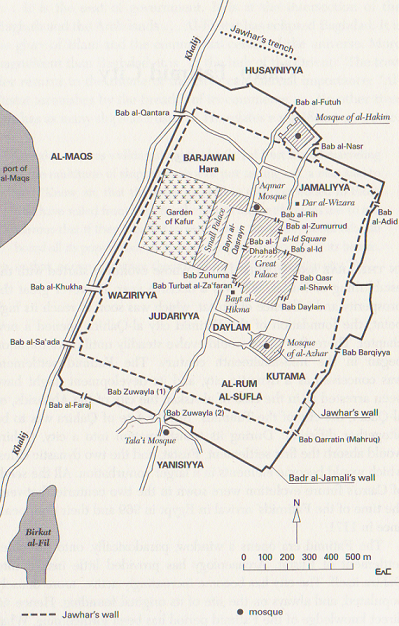
Fatimid Cairo with an outline of Jawhar’s wall shown by dashes (Please click to enlarge)

This site was empty except for a monastery and a castle. On the very night of Jawhar’s arrival in this empty spot, I would have seen the Sicilian mark the perimeter of the city with wooden stakes strung together with belled ropes. A crow would land on the rope and set the bells jingling. The ground breaking work would commence at that spot for what would eventually become known as al-Qahira (“The Triumphant”). I would see the birth of what is now modern Cairo!

But the epochal incident, the Grand Darbar, would come four years later. During this interim time I would see Jawhar establish the new capital, pacify the provinces, institute financial reform, defeat the Qarmats in December 971, and introduce new religious observances in conformity with the Shia Ismaili faith. This would include a call to prayers containing the Shiite invitation to “come to the best prayer.”

Now that all had been done, no further time would be spent. There was nothing left to do but to invite Imam al-Muizz.

In 973, the Imam leaves the Maghreb on his way to Egypt with his sons and relatives with him, along with coffins of his ancestors. One of his stops is Alexandria, where the Imam resolves to dedicate his life in the exercise of good works. He then preaches to them in a manner which draws tears from many who are present.

He departs after spending three days in Alexandria, and on June 6, 973, he reaches a place known as Mina. Jawhar is there to receive him. I see him go forth to meet his master and I witness him drawing near the Imam, dismounting from his horse and kissing the ground before the Imam in a show of loyalty, humility and submission to the Amirul Muminin. This is affection and love for the Imam I see at the highest and deepest level. It is a profound experience and a joy to behold, which I would report.

The Imam would then cross the Nile on the Rawdah bridge, bypass Fustat, and proceed straight to Cairo and take possession of the palace or fort that Jawhar had constructed for the Imam.

It is Ramadhan – year AH 362. The feast marking its end is underway. I’d see Imam Muizz conduct his prayers at the new mosque in Cairo, and then ascend the pulpit to give his sermon, with Jawhar on the steps of the pulpit. I would feel the emotions as the crowds weep and sob at hearing the Imam’s sermon.

Outside, the Imam would then mount his horse surrounded by his four armoured and helmeted sons, while two elephants led the procession. Destination – the fort, and I on my heels to get there for the Darbar!

Then, at the fort, all the citizens eagerly await to pay their allegiance to the new Caliph. Jawhar would be within my sight, and very close to the Imam, to his right.

I would witness the Imam majestically seated on his golden throne as he received all the nobles, Qadis, Vazirs and Ulemas of his city. They would present the Imam with their beautiful gifts as well as a robe made from a rare yarn that is known to grow only in Tunis. The material has a special shine and is gilded with gold and silver. The Imam would then be presented a Turban of a similar material and he would adorn the robe and the Turban. A resplendent Darbar for me to record and report as a journalist!

My friend, Jawhar, would get his turn. I would see him present the Imam, al-Muizz, with the best breed of 150 horses gilded with saddles and bridles of gold and diamonds as well as camels and ponies, saddled with boxes filled with all rare items in Egypt.

Then the Imam Muizz in a remarkable gesture of magnanimity and forgiveness would announce the release of about 1000 of his prisoners and present robes and Khalat to all his nobles and officers.

Would Jawhar be forgotten in the sight of the Imam? No. I would be exuberant to see my beloved Imam’s immense love for someone responsible for conquering Egypt some four years earlier. Jawhar would be honoured as he is presented with a golden Khalat and a turban. Imam Muizz then would tie a sword on Jawhar’s waist and present him with 20 horses with golden saddles, 50 thousand dinars and 200,000 dirhams.

With this Darbar, Egypt and Cairo enter a new era that would last almost two centuries and constitute one of the most brilliant periods in Ismaili history and Islamic Civilization.

Indeed a monumental and epochal event to witness and report! What a story and I Wish I’d Been There with Jawhar.

© Simerg.com

_________________

Front cover of Ladha’s work

About the Writer: Mansoor Ladha is an award-winning journalist based in Calgary, Canada. He has held several senior editorial positions with daily and weekly newspapers in Canada, Kenya and Tanzania, which included the Edmonton Journal, Morinville Mirror, Redwater Tribune, Daily Nation, Kenya, and Daily News, Tanzania. Currently, he freelances for the Calgary Herald, the Vancouver Sun, and the Calgary Senior newspapers and travel magazines. He has also published a book entitled A Portrait in Pluralism: Aga Khan’s Shia Ismaili Muslims and is currently working on memoirs on his life in East Africa and in Canada. Last year, he was one of the several writers, scholars and journalists invited to contribute a chapter in the book called, The Story That Brought Me Here. He has served on several public and voluntary bodies in Canada. His complete profile can be viewed on his Web site www.mansoorladha.ca.

_______________

This piece by Mansoor Ladha is one of 32 succinct pieces on Ismaili history that appeared in this blog’s highly acclaimed first anniversary special series, I Wish I’d Been There.

2. We welcome feedback/letters from our readers. Please click Leave a comment, or email it to simerg@aol.com. Your feedback may be edited for length and brevity, and is subject to moderation. We are unable to acknowledge unpublished letters.

______________

Narrative references:

1. Cairo by Andre Raymond, translated by Willard Wood, published by Harvard University Press, Cambridge, MA, 2000.

Also note: Cairo map shown is from this book

2. Jawhar as-Siqilli by Zawahir Nooraly in book Great Ismaili Heroes, Pakistan. The complete article is also available on-line at:  http://www.amaana.org/heroes/note010.htm

@Simergphotos: Ottawa Doors Open Leads Simerg to Muslim Cultural Centres, the Algerian Embassy and the Delegation of the Ismaili Imamat

PLEASE CLICK: For 2015 Ottawa Doors Open, Simerg Visits 2 Muslim Centres, the Algerian Embassy and the Delegation of the Ismaili Imamat

Visitors pay close attention as they receive an overview of the key features of the Delegation of the Ismaili Imamat during the 2015 Ottawa Doors Open event. Phooto: Simerg/Malik Merchant.

Visitors pay close attention as they receive an overview of the key features of the Delegation of the Ismaili Imamat during the 2015 Ottawa Doors Open event. Photo: Simerg/Malik Merchant.

History in the Making: Establishment of the Seat of the Ismaili Imamat in Portugal

COMPILED BY SIMERG

Please click on photo for enlargement

Mawlana Hazar Imam, His Highness the Aga Khan, 49th hereditary Imam of Shia Ismaili Muslims  directly descended from the Holy Prophet Muhammad (s.a.s.). Photo: AKDN/Anya Campbell. Copyright.

A portrait of Mawlana Hazar Imam, His Highness the Aga Khan, 49th hereditary Imam of Shia Ismaili Muslims. Photo: AKDN/Anya Campbell. Copyright.

In an unprecedented historical event, His Highness Prince Karim Aga Khan, the 49th hereditary Imam of the Shia Imami Ismaili Muslims, and Portugal’s Minister of State and Foreign Affairs, Rui Machete, came together at the historic Necessidades Palace in Lisbon on Wednesday June 3, 2015, to sign a landmark agreement to establish the Seat of the Imamat in Portugal. The Ismaili Imamat is a supra-national entity, representing the succession of Imams since the time of the Prophet Muhammad (s.a.s).

The Agreement marks the first such accord in the Ismaili Imamat’s modern history. It will come into effect once it has been approved by Portugal’s Parliament and ratified by the President of the Portuguese Republic. Present at the signing ceremony was Portugal’s Prime Minister Pedro Passos Coelho and other senior government officials.

Thanking the government for inviting the Ismaili Imamat to establish its permanent seat in Portugal, His Highness the Aga Khan (known to his 15 millions Ismaili followers as Mawlana Hazar Imam), hailed the agreement as a historic milestone in the Imamat’s history and said:

“Today is a unique and important occasion, where for the first time in our history we will have the opportunity to work with a partner with whom we share so many values, so many hopes and so many desires.”

He expressed the hope that the agreement would be approved by the Portuguese Parliament  through the democratic process, and that once it was ratified both the Imamat and Portugal could work together to achieve results that could not be achieved by working alone. His Highness also mentioned his community’s great respect and admiration for Portugal, a country where faith is integrated with civil society, a country where all people are happy, or at least the majority are happy, in a world where happiness is unusual.

The agreement establishing Portugal as the seat of Imamat took place at the Palace of Necessidades. It  is a historical building in the Largo do Rilvas, a public square in Lisbon, Portugal. It serves as headquarters of the Portuguese Foreign Ministry. Palace Photo Photo: Wikipedia.

The agreement establishing Portugal as the seat of Imamat took place at the Palace of Necessidades. It is a historical building in the Largo do Rilvas, a public square in Lisbon, Portugal. It serves as headquarters of the Portuguese Foreign Ministry. Palace Photo: Wikipedia.

The Institution of the Ismaili Imamat goes back 1400 years when, according to Shia Muslim tradition, the Prophet Muhammad (s.a.s.) designated and appointed his cousin and son-in-law Ali Ibn Talib (a.s.) to be the first Imam, and proclaimed that the Imamat should continue by heredity through Imam Ali and his daughter Bibi Fatimat-az-Zahra (a.s).

The Ismailis are the only Shia Muslim community led by a living Imam who is vested with global religious authority and has the responsibility for the community’s spiritual and material well-being.

The succession of Imamat is by way of Nass [designation], it being the absolute prerogative of the current Imam to appoint his successor from amongst any of his male descendants whether they be sons or remoter issue.

The present 49th Imam, Prince Karim, succeeded to the throne of Imamat at the age of twenty on July 11, 1957 upon the demise of his late grandfather, Sir Sultan Mahomed Shah, His Highness the Aga Khan III, who  served the community for 72 years, beginning in 1885 when he was only seven years old.

The historical accord will result in intensified cooperation between Portugal and the Ismaili Imamat in supporting research and the knowledge society and in improving the quality of life of Portugal’s inhabitants.

Responding to the historic signing, the Portuguese Prime Minister Pedro Passos Coelho said at Wednesday’s ceremony:

“The decisive step taken today will enable the deepening of cooperation, until today essential focused on the social area, with the Imamat Ismaili community beginning to support Portuguese institutions dedicated to excellent research on a wide variety of fields of knowledge.

“I am present here today due to it being a historic moment which brings a long and intense relation existing between Portugal and the Ismaili community to a new level, reflecting particularly the importance of the Ismaili community that resides in our country and Portuguese speaking African countries.”

The Prime Minister also pointed out Mawlana Hazar Imam’s role in “promoting a more tolerant world,” and also said that the choice of Portugal as the seat of the Ismaili Imamat was an acknowledgment of the Portuguese community’s ability to promote dialogue and tolerance between peoples, cultures and beliefs.

@Simergphotos: The Aga Khan Park and Its Inauguration – Exclusive Photos

Please click: The Beautiful Aga Khan Park with Exclusive Photos of the Inauguration Ceremony 

Please click for exclusive photos of the opening of the Aga Khan Park. Photo: Simerg/Malik Merchant.

Please click for exclusive photos of the opening of the Aga Khan Park. Photo: Simerg/Malik Merchant.

Exclusive Simerg Photo Essay: His Highness the Aga Khan and Premier Kathleen Wynne Inaugurate the Beautiful Aga Khan Park in Toronto

PATRON AND BUILDER

Please click on photo(s) for enlargement

Mawlana Hazar Imam, His Highness the Aga Khan, 49th hereditary Imam of Shia Ismaili Muslims  directly descended from the Holy Prophet Muhammad (s.a.s.). Photo: AKDN/Anya Campbell. Copyright.

Mawlana Hazar Imam, His Highness the Aga Khan, 49th hereditary Imam of Shia Ismaili Muslims directly descended from the Holy Prophet Muhammad (s.a.s.), is the builder of the Aga Khan Museum, the Ismaili Centre and the newly opened Aga Khan Park that connects the two buildings. Photo: AKDN/Anya Campbell. Copyright.

______________

THE INAUGURATION CEREMONY

The recitation of the Canadian National Anthem at the opening of the Aga Khan Park on May 25, 2015. Photo: Simerg/Malik Merchant/Simerg. Copyright.

The recitation of the Canadian National Anthem at the opening of the Aga Khan Park on May 25, 2015. Photo: Simerg/Malik Merchant. Copyright.

______________

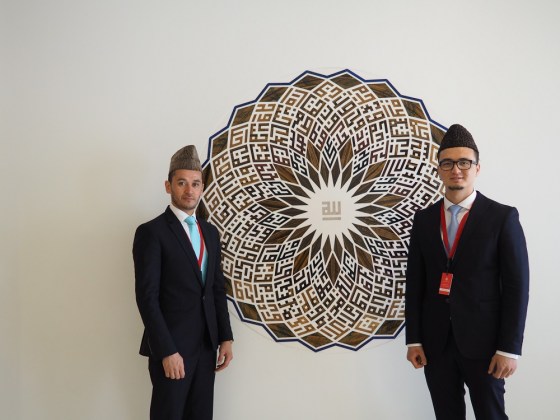
Qur'an reciter Ahsan Afzaly, left, with his back-up colleague, Edrees Amiri, pictured at the Ismaili Centre prior to the opening ceremony. Photo: Simerg/Malik Merchant.

Qur’an reciter Ahsan Afzaly, left, with his back-up colleague, Edrees Amiri, pictured at the Ismaili Centre prior to the opening ceremony of the Aga Khan Park on May 25, 2015. Photo: Simerg/Malik Merchant.

______________

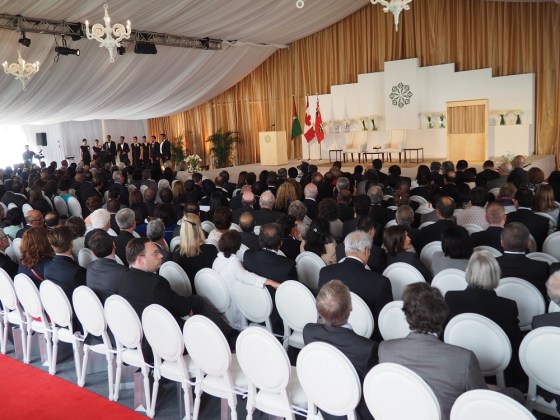
The audience listen to the Ismaili Muslim Choir prior to the arrival of Premier Kathleen Wynne and Mawlana Hazar Imam for the opening ceremony of the Aga Khan Park on May 25, 2015. Photo: Simerg/Malik Merchant

The audience listens to the Ismaili Muslim Choir performing at the far left corner prior to the arrival of Premier Kathleen Wynne and Mawlana Hazar Imam for the opening ceremony of the Aga Khan Park on May 25, 2015. Photo: Simerg/Malik Merchant

______________

Mawlana Hazar Imam, Premier Kathleen Wynne and the reciter of the Holy Qur'an, Ahsan Afzally, look on as a translation of the Qur'anic verses in English and French is underway. Photo: Simerg/Malik Merchant. Copyright.

Mawlana Hazar Imam, Premier Kathleen Wynne and the reciter of the Holy Qur’an, Ahsan Afzally, look on as a translation of the Qur’anic verses in English and French is underway during the opening ceremony of the Aga Khan Park on May 25, 2015. Photo: Simerg/Malik Merchant. Copyright.

______________

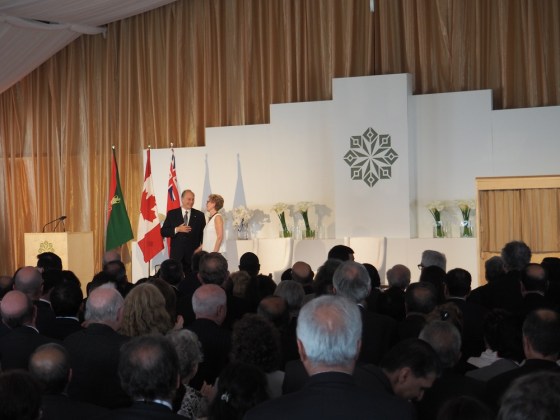
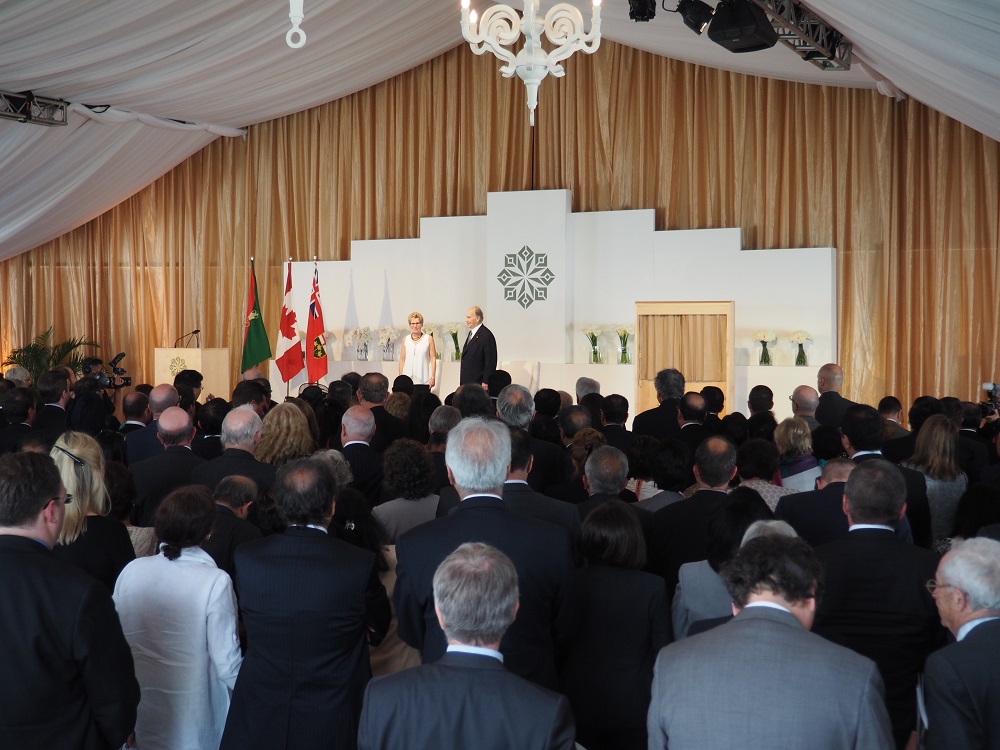
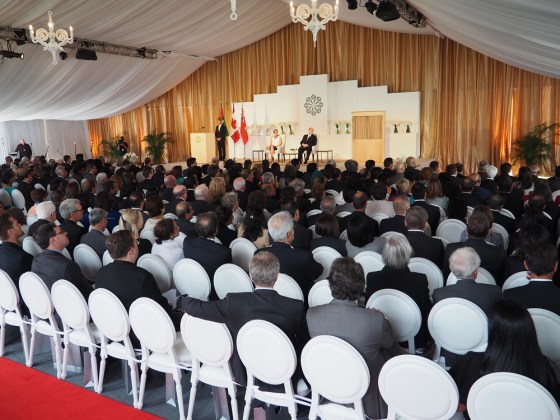
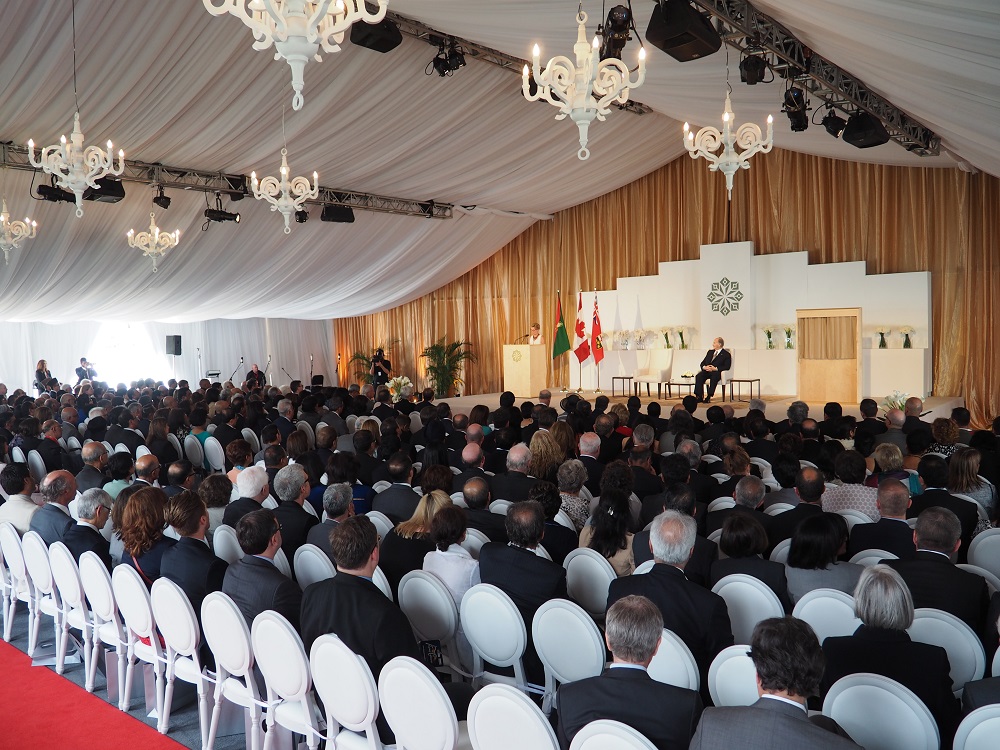
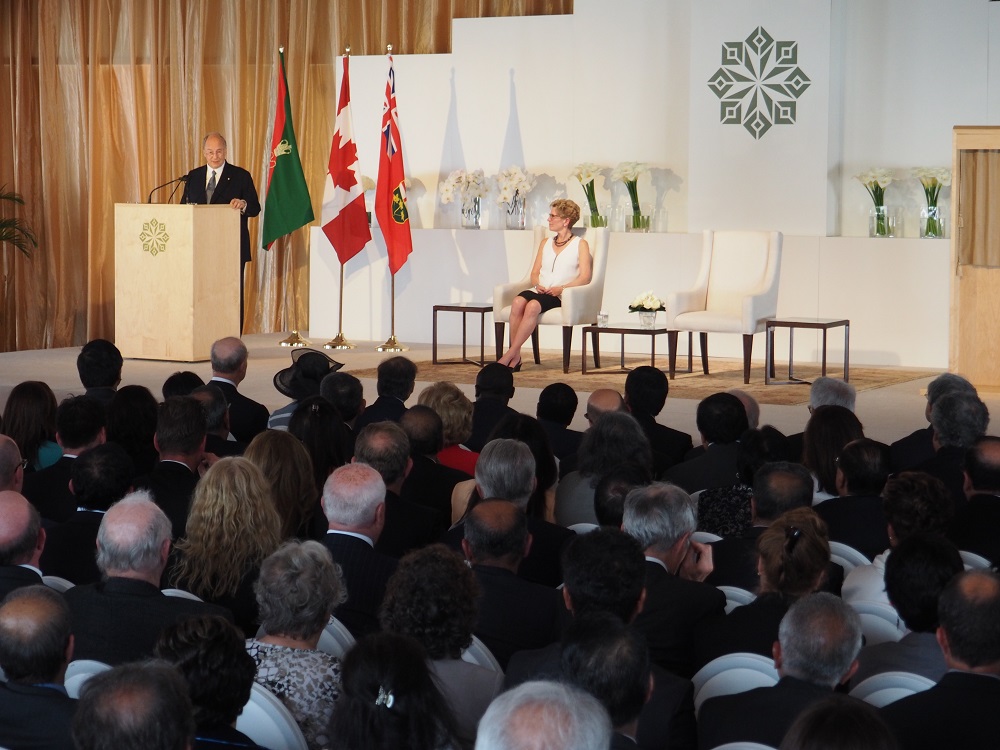
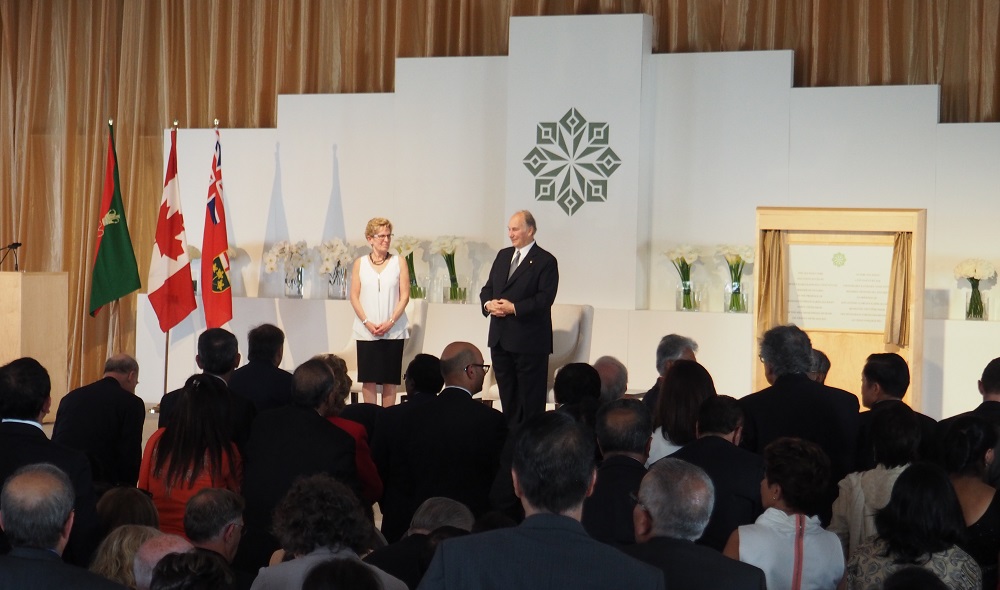
Premier Kathleen Wynne delivering her speech at the opening ceremony of the Aga Khan Park on May 25, 2015. This panoramic view shows the elegance of the event which was held inside a beautifully decorated tent built for the occasion. Photo: Simerg/Malik Merchant. Copyright.

Premier Kathleen Wynne delivering her speech at the opening ceremony of the Aga Khan Park on May 25, 2015. This panoramic view shows the elegance of the event which was held inside a beautiful tent built for the occasion. Photo: Simerg/Malik Merchant. Copyright.

______________

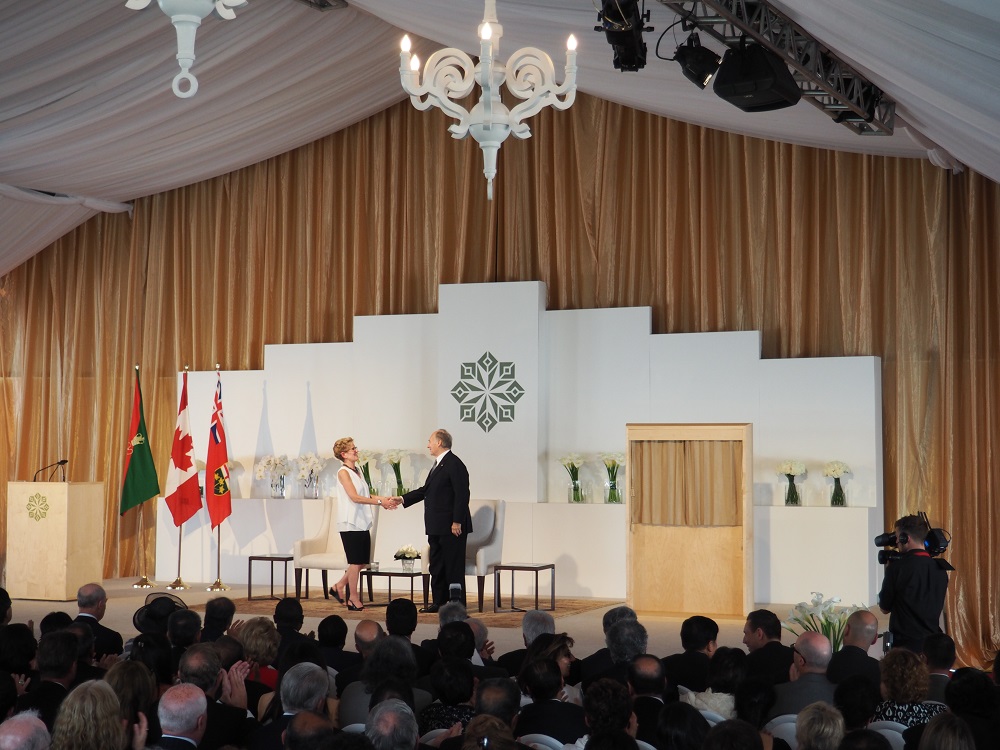
Mawlana Hazar Imam congratulates Premier Kathleen Wynne after the completion of her speech at the opening of the Aga Khan Park on May 25, 2015. Photo: Simerg/Malik Merchant. Copyright.

Mawlana Hazar Imam congratulates Premier Kathleen Wynne after the completion of her speech at the opening of the Aga Khan Park on May 25, 2015. Photo: Simerg/Malik Merchant. Copyright.

______________

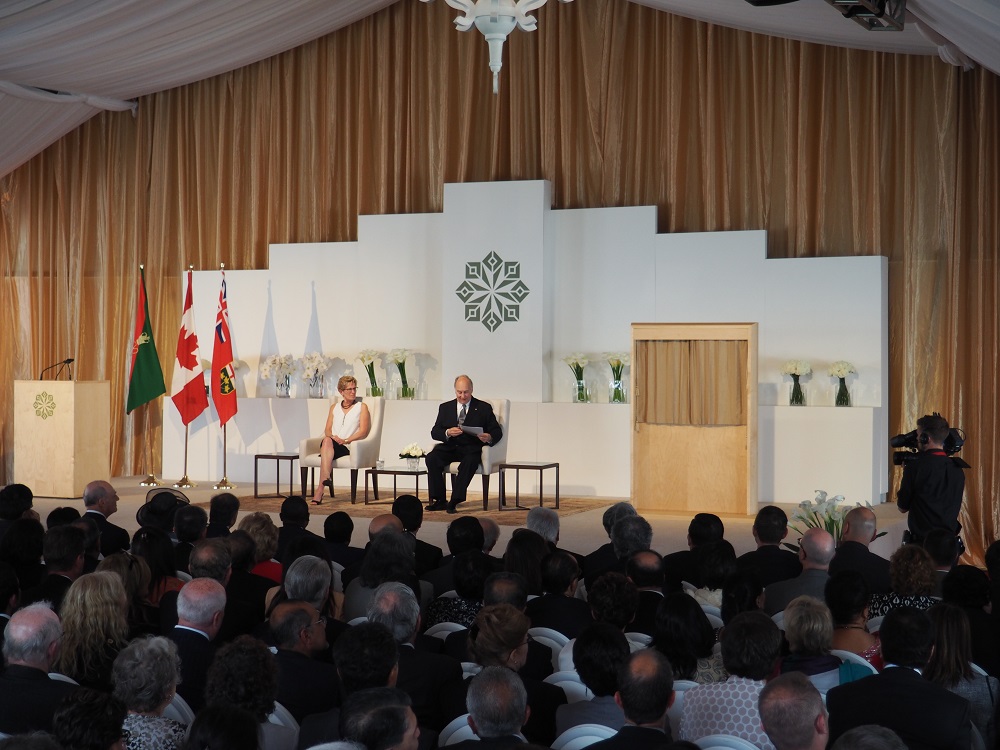
Mawlana Hazar Imam gathers his speech before rising to speak to the audience at the opening of the Aga Khan Park on May 25, 2015. Photo: Simerg/Malik Merchant. Copyright.

Mawlana Hazar Imam gathers his speech before rising to speak to the audience at the opening of the Aga Khan Park on May 25, 2015. Photo: Simerg/Malik Merchant. Copyright.

______________

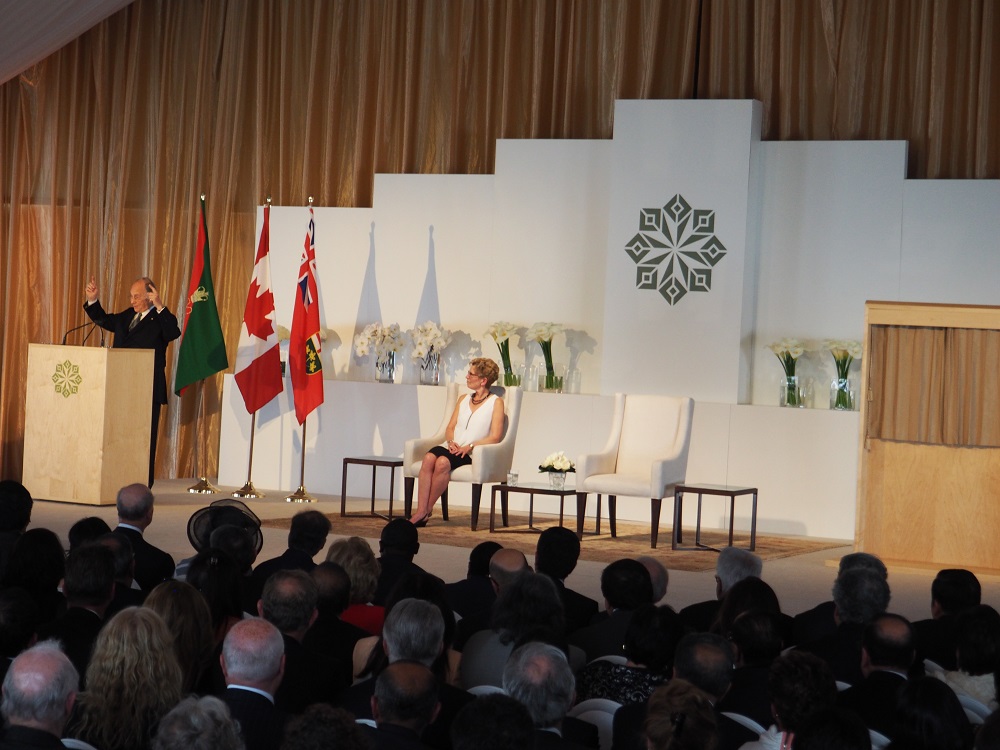
Mawlana Hazar Imam addressing the audience at the opening of the Aga Khan Park on May 25, 2015. Photo: Simerg/Malik Merchant. Copyright.

Mawlana Hazar Imam addressing the audience at the opening of the Aga Khan Park on May 25, 2015. Photo: Simerg/Malik Merchant. Copyright.

______________

Mawlana Hazar Imam in an animated mood as he shares a joke related to the expulsion of his community from Uganda during the reign of Idi Amin. Photo: Simerg/Malik Merchant. Copyright.

Mawlana Hazar Imam in an animated mood as he shares a joke related to the expulsion of his community from Uganda during the reign of Idi Amin. Photo: Simerg/Malik Merchant. Copyright.

______________

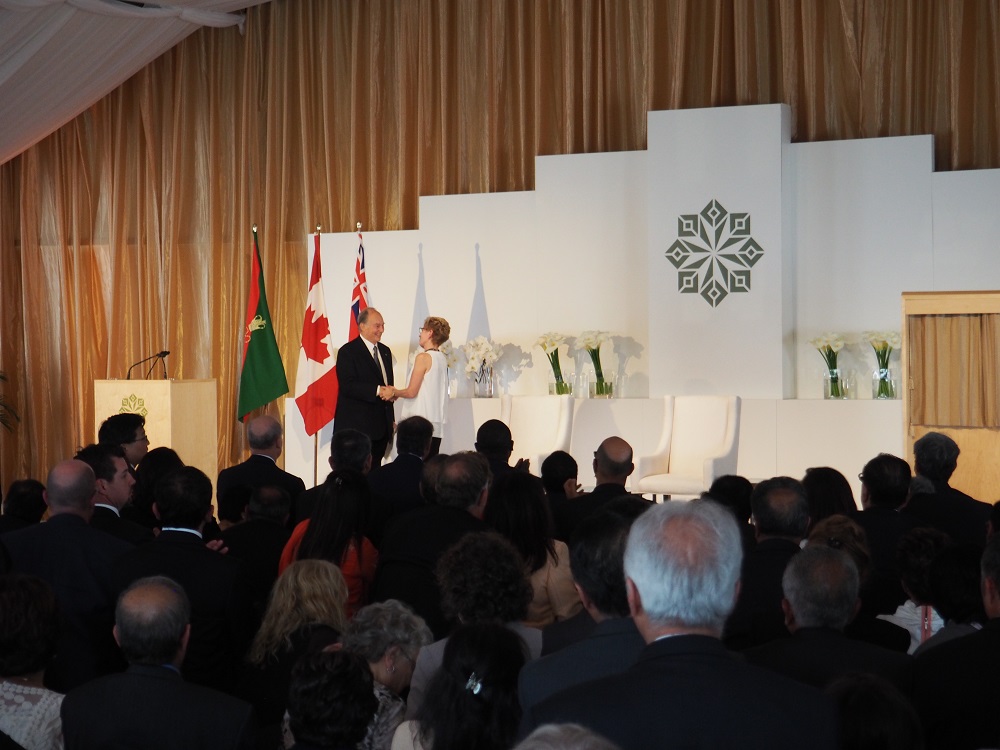
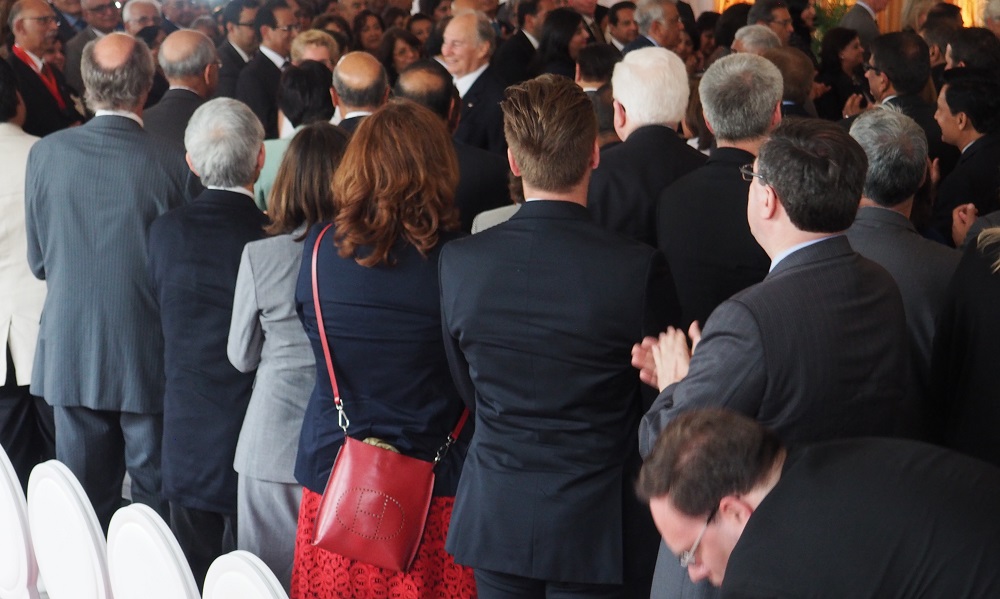
Mwlana Hazar Imam receives a standing ovation as he is congratulated by Premier Kathleen Wynne after the completion of his speech at the opening of the Aga Khan Park on May 25, 2015. Photo: Simerg/Malik Merchant. Copyright.

Mwlana Hazar Imam receives a standing ovation as he is congratulated by Premier Kathleen Wynne after the completion of his speech at the opening of the Aga Khan Park on May 25, 2015. Photo: Simerg/Malik Merchant. Copyright.

______________

Mawlana Hazar Imam graciously accepts the standing ovation he receives after completing his speech at the opening of the Aga Khan Park on May 25, 2015. Photo: Simerg/Malik Merchant. Copyright.

Mawlana Hazar Imam graciously accepts the standing ovation he receives after completing his speech at the opening of the Aga Khan Park on May 25, 2015. Photo: Simerg/Malik Merchant. Copyright.

______________

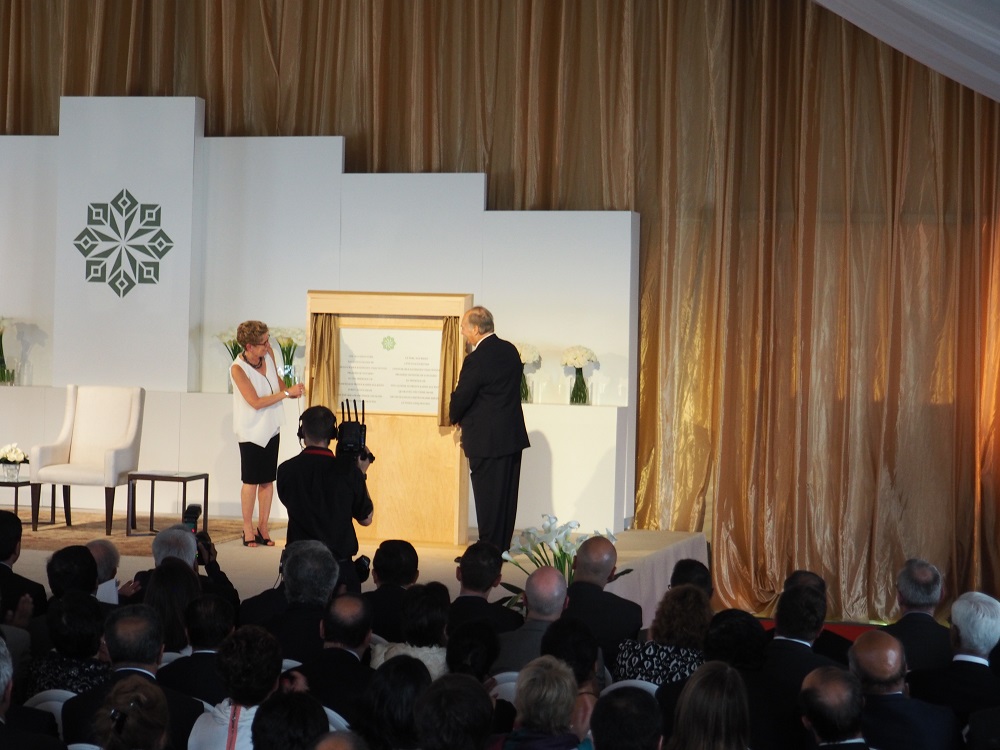
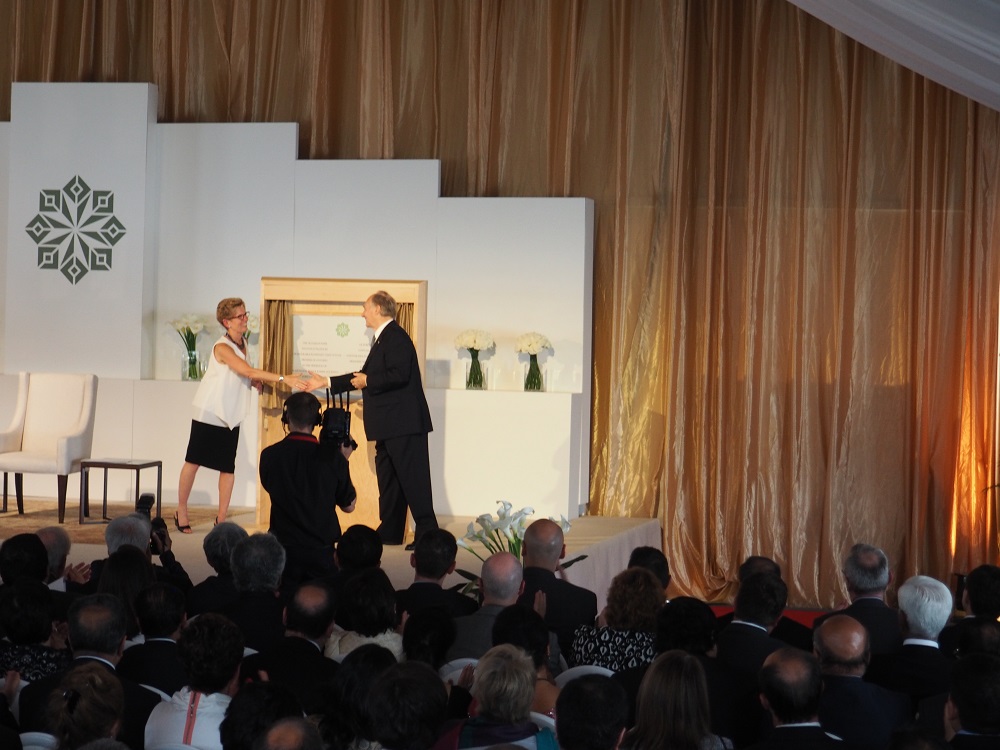
Premier Kathleen Wynne and Mawlana Hazar Imam unveil the plaque to officially open the Aga Khan Park on May 25, 2015. Photo: Simerg/Malik Merchant. Copyright.

Premier Kathleen Wynne and Mawlana Hazar Imam unveil the plaque to officially open the Aga Khan Park on May 25, 2015. Photo: Simerg/Malik Merchant. Copyright.

______________

Premier Kathleen Wynne and Mawlana Hazar Imam shake hands after unveiling the plaque to open the Aga Khan Park on May 25, 2015. Photo: Simerg/Malik Merchant.

Premier Kathleen Wynne and Mawlana Hazar Imam shake hands after unveiling the plaque to open the Aga Khan Park on May 25, 2015. Photo: Simerg/Malik Merchant.

______________

Mawlana Hazar Imam and Premier Kathleen Wynne prepare to depart after unveiling the plaque to open the Aga Khan Park on May 25, 2015. Photo: Simerg/Malik Merchant. Copyright.

Mawlana Hazar Imam and Premier Kathleen Wynne prepare to depart after unveiling the plaque to open the Aga Khan Park on May 25, 2015. Photo: Simerg/Malik Merchant. Copyright.

______________

Mawlana Hazar Imam seen departing the exquisitely prepared tent structure that hosted the inauguration ceremony of the Aga Khan Park on May 25, 2015. Photo: Simerg/Malik Merchant. Copyright.

Mawlana Hazar Imam seen departing the exquisitely prepared tent structure that hosted the inauguration ceremony of the Aga Khan Park on May 25, 2015. Photo: Simerg/Malik Merchant. Copyright.

______________

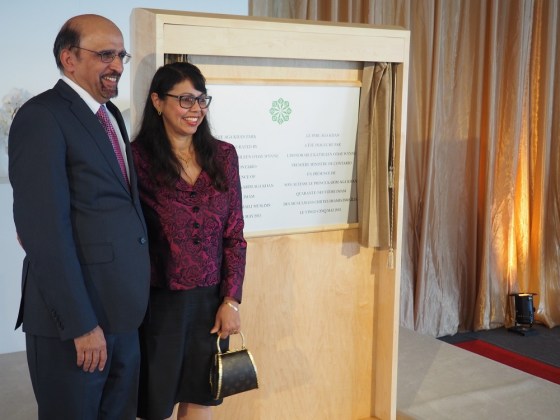
The President of the Aga Khan Council for Australia, Azim Remtulla, was among those who attended the opening ceremony of the Aga Khan Park on May 25, 2015. Photo: Simerg/Malik Merchant. Copyright.

The President of the Aga Khan Council for Australia, Azim Remtulla, was among those who attended the opening ceremony of the Aga Khan Park on May 25, 2015. Photo: Simerg/Malik Merchant. Copyright.

______________

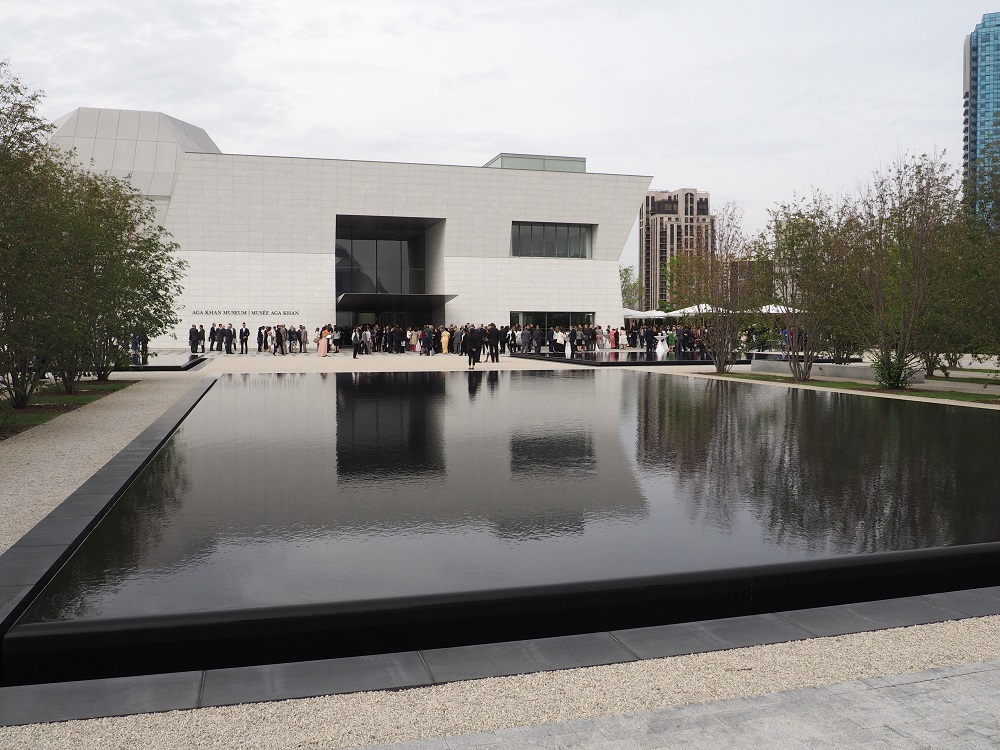
The Aga Khan Museum became the venue for a special reception for guests who attended the opening of the Aga Khan Museum on May 25, 2015. Photo: Simerg/Malik Merchant. Copyright.

The Aga Khan Museum became the venue for a special reception for guests who attended the opening of the Aga Khan Museum on May 25, 2015. Photo: Simerg/Malik Merchant. Copyright.

Date posted: May 27, 2015.

________________

We welcome your feedback. Please click Leave a comment. Subscribe to this website at top right, and receive automatic notifications of great new posts. Subscription is free!

Prophet Muhammad’s Miraj: A Powerful Metaphor for Our Spiritual Journey

Photo: The Trustees of the British Museum. Copyright.

Photo: The Trustees of the British Museum. Copyright. Click on image for article, I Have a Time with God

“While ascent (al-ma’arij) in its simple meaning gives a clue to the upward direction of the Prophet’s journey, it proclaims very emphatically that if God has placed man on this earth, He has also set up a ladder for man to climb up to Him. No wonder Allah calls Himself the Lord of the Ways of Ascent (Dhu ’l-ma‘arij).” — Read more

This is an unusual example of the Prophet Muhammad (s.a.s) pictured in an Islamic manuscript. It comes from a royal miniature made to illustrate a copy of the poems of the celebrated Persian Nizami, and depicts the Prophet’s ascension to heaven on the horse Buraq, guided by the archangel Gabriel, with an escort of angels. According to tradition, the face of the Prophet is blanked out in the miniature.

“In spiritual life, serial time no longer exists. The moment a soul breaks through created time and reaches the ‘Eternal Now in God’, everything created is annihilated in its experience. The serial time is torn. Finally, the Prophet says: ‘And He revealed to me secrets that I am not allowed to communicate to you’” — Read more

The identity of the artist who created the illustration is not known. The calligraphy in this piece was created by Shah Mahmud Nishapuri (d. 1564-5) for Shah Tahmasp (r. 1524-76) — the ruler of Iran who at one point owned the Koh-i-noor diamond, then the world’s largest, and now in the Tower of London.

“His yearning for the ‘exalted station’ becomes intense, and as often as he feels this longing he turns to Bilal and says: “O Bilal, comfort us by the call to prayer.” Thus to the Prophet every time of prayer is an ascension (mi’raj) and a new nearness to God.” — Read more

The story of Prophet Muhammad’s journey has had a profound influence on Islamic thought, and Sufism and other esoteric traditions in Islam particular see it as a powerful metaphor for man’s spiritual journey. Please read The Prophetic Tradition ‘I Have a Time with God’ (li ma’a Allah waqt).

Text for image compiled from the website of the British Museum. Please visit http://www.britishmuseum.org.

Date posted: Sunday, May 10, 2015

______________