Simerg is an independent initiative dedicated to Ismaili Muslims, the Aga Khan — their Hereditary Imam — and the Ismaili Imamat, and Islam in general through literary readings, photo essays and artistic expressions
“Muhammad, who could do nothing to alleviate the suffering of his small embattled community of believers, at last advised some of his followers to leave sacred Mecca and take refuge elsewhere”….Read Barnaby Rogerson’s Piece
The Altar of the Nativity, beneath which is the star marking the spot where tradition says the Virgin Mary gave birth to Jesus. Photo: Copyright Muslim Harji, Montreal, PQ. Please click on image for Barnaby Rogerson’s piece.
________________
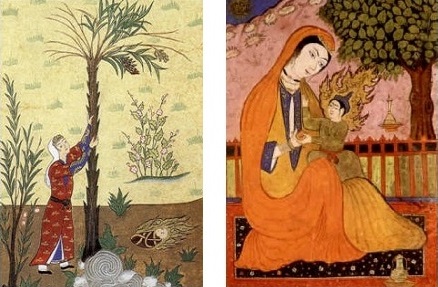
“Christians may be surprised to learn that Muslims believe in the Virgin Birth and Jesus’ miracles”….. Read Michael Wolfe’s Piece
Left: Virgin Mary nurtured by a palm tree in a Turkish miniature, as described in the Qur’an; right: Mary and Jesus in a Persian miniature. Please click on image for Michael Wolfe’s article “Jesus Through a Muslim Lens.” Images: Wikipedia.
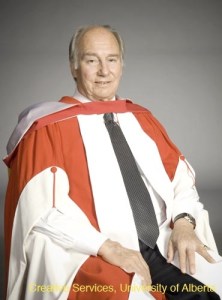
Ismaili Muslims belong to the Shia branch of Islam, the other branch being the Sunnis who form the Muslim majority. His Highness the Aga Khan is the 49th Hereditary spiritual leader or Imam of the Ismailis and is directly descended from the Prophet Muhammad (S.A.S.) through his son-in-law, Ali (A.S.), who was married to the Prophet’s daughter, Fatima (A.S.). Prophet Muhammad and Hazrat Ali were also first cousins — their respective fathers Abd al-Muttalib and Abu Talib were brothers.
According to Shia Muslims, the Prophet had designated Ali to succeed him as the Imam. The Sunnis dispute this, and Muslims have remained divided over this contentious matter for centuries. However, in their book, “History in Quotations”, which reflects five thousand years of World History, the authors M. J. Cohen and John Major write as follows:
“Muhammad said: ‘He of whom I am the Mawla (patron), Ali is his Mawla. O God, be the friend of him who is his friend and be the enemy of his enemy.’
“This became the proof text for the Shia claim that Ali, the Prophet’s cousin and son-in-law, was the Prophet’s rightful successor after the Prophet’s death in 632. The meaning of Mawla here probably implies the role of patron, lord or protector.”
The authors, Cohen and Major, sum up by stating that through the use of the term Mawla, Muhammad was giving Ali the parity with himself in this function.
Over the course of history, the Shia Muslims split into a number of branches over the succession of Imams descended from Ali. The first major split occurred during the 8th century, two centuries after the passing of Prophet Muhammad, following the reign of Imam Ja’far al-Sadiq, when one group considered his son Musa Kazim as the rightful Imam. The other group regarded Imam Ja’far’s elder son, Ismail, as the rightful successor. Musa Kazim’s successors continued until the 12th Imam, who is then said to have gone into hiding. This group of Shia Muslims, awaiting the re-appearance of the hidden 12th Imam to take part in the final judgement, forms the Shia majority in Iran and Iraq. They are known as the Twelver Shias or Ithnashries.
The group that held to Imam Ismail became known as the Ismailis and continue to thrive today under the Hereditary leadership of His Highness the Aga Khan, who is respectfully addressed by his Ismaili Muslim followers as Hazar Imam (the present living Imam). Thus, the Ismailis are the only Shia Muslims to have a living Imam, namely the Aga Khan.
Naheed Nenshi, left, at an event in Ottawa.
Having recently re-established myself as a resident of Alberta after 40 years, and to put the Ismailis and their Hereditary 49th Imam, the Aga Khan, into an Albertan perspective, I should like to mention that Naheed Nenshi, who served as Calgary’s mayor for three terms from 2010 until 2021 is an Ismaili Muslim. Readers are invited to read his piece in the Globe and Mail, Why I’m grateful for the Aga Khan’s extraordinary service to humanity (a subscription or registration may be required to read the article).
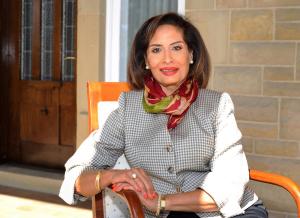
The Honourable Salma Lakhani
It is noteworthy that Her Honour, the Honourable Salma Lakhani, who was installed as the 19th Lieutenant Governor on August 26, 2020, is also an Ismaili Muslim, and her profile can be read on this website by clicking HERE. The piece also has a link to an interview that Canadian Geographic conducted with her.
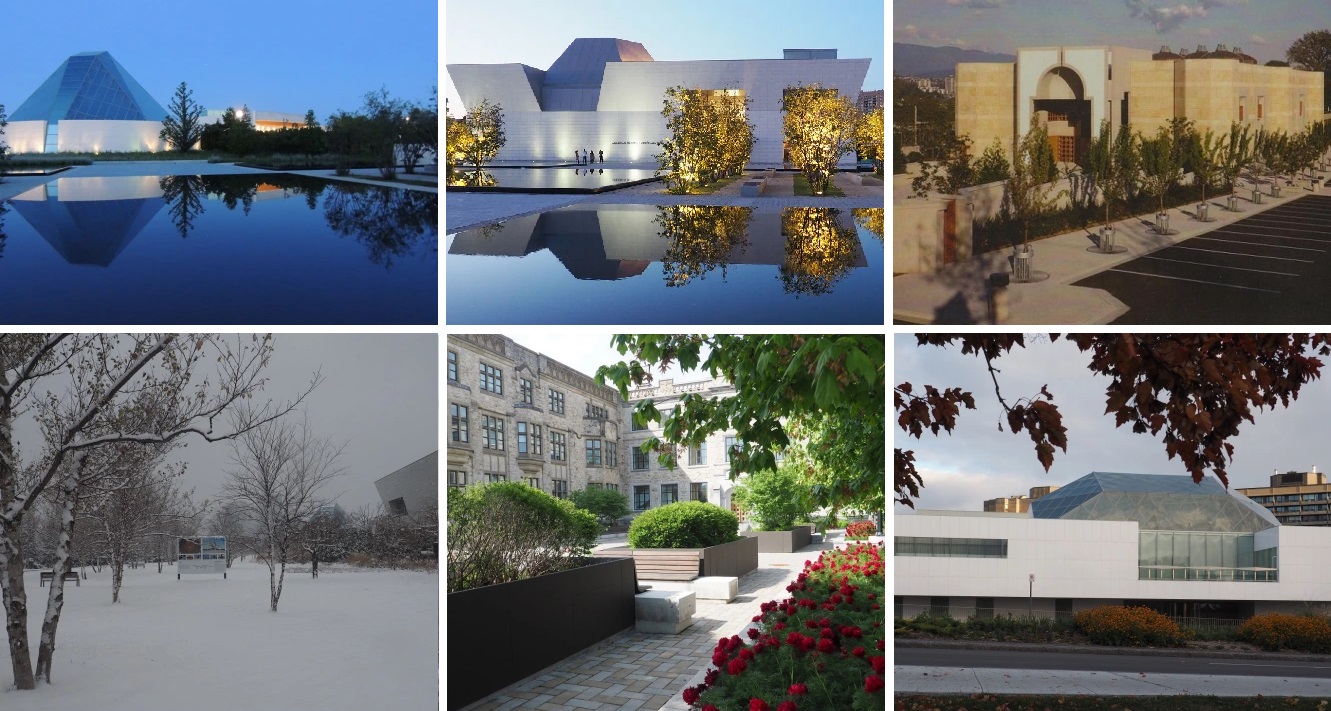
In Edmonton, the spectacular 4.8-hectareAga Khan Garden within the University of Alberta’s Botanic Garden was gifted by the Aga Khan as “a symbol of the continued intellectual, educational and cultural collaboration between the University of Alberta and the Aga Khan Development Network.” The Botanic Garden will open for the 2022 season on May 7th, and is a MUST visit site, according to Hundreds of Google and Tripadvisor reviews. I look forward to publishing a special photo essay in the near future on the Botanic Garden, with a focus on the Aga Khan Garden.
Story continues below
Views of the beautiful Aga Khan Garden in Edmonton. The Garden is scheduled to open for the 2022 season on May 7. Photos: Aga Khan Trust for Culture.
And elsewhere in Canada, His Highness the Aga Khan’s projects include the Global Centre for Pluralism and the Delegation of the Ismaili Imamat Building, both located on Sussex Drive in Ottawa; the Aga Khan Museum, the Aga Khan Park and the Ismaili Centre on Wynford Drive in Toronto; and the Ismaili Centre Vancouver on Canada Way in Burnaby.
Canada is home to more than 100,000 Ismailis, with around 12,000 in Calgary.
Story continues below
Clockwise from top left: Ismaili Centre and Aga Khan Museum, both in Toronto (ponds in foreground in both photos are part of the Aga Khan Park); Ismaili Centre Vancouver, Delegation of the Ismaili Imamat, Ottawa, Global Centre for Pluralism, Ottawa, and Aga Khan Park Toronto. Collage: Simerg.
With these preliminary remarks on the Aga Khan and his Ismaili Muslim followers, I now invite you to read two excellent interviews that France’s Politique International and Canada’s Peter Mansbridge conducted with the Aga Khan. Both the interviews have appeared on this website with the publishers’ permission.
The Aga Khan’s Absorbing Interview with Politique International
Click on image for “Power of Wisdom”
“We are a long way from the democratization of nuclear energy. Maybe I’m naïve but I advocate another approach, which I call “positive proliferation.” The positive proliferation that I would dearly love to see happen is based on a simple principle: yes to energy, no to arms” — To read full interview, click Politique Internationale: The Power of Wisdom
The Aga Khan’s One on One Interview with Peter Mansbridge
Click on image for “One on One”
Peter Mansbridge: What is the quality that you most admire about this country?
The Aga Khan: I think a number of qualities. First of all, it’s a pluralist society that has invested in building pluralism, where communities from all different backgrounds and faiths are happy. It’s a modern country that deals with modern issues, not running away from the tough ones. And a global commitment to values, to Canadian values, which I think are very important. — To read the interview and the story behind the interview, please click Peter Mansbridge: One on One.
Date posted: May 6, 2022. Last updated: May 9, 2022 (caption updates and typos).
_______________________
Before departing this website please take a moment to review Simerg’s Table of Contents for links to hundreds of thought provoking pieces on a vast array of subjects including faith and culture, history and philosophy, and arts and letters to name a few. Also visit Simerg’s sister websites Barakah, dedicated to His Highness the Aga Khan, and Simergphotos.
Having lived in Salt Lake City in 1979-80, I would turn to the award winning Salt Lake Tribune and Deseret News for my daily and weekend news. Deseret News, the longest-running news organization in Utah, is a subsidiary of the Deseret Management Corporation, which is owned by The Church of Jesus Christ of Latter-day Saints (LDS).
I have often turned to the two papers’ on-line editions to catch up with news on Salt Lake City, my favourite city in the world for two main reasons — the inspiration it gave me to truly appreciate nature and also by the way the city and its people, and especially the professional group of people I worked with, instilled in me a good work ethic and self-confidence during my very early years in the IT field. That along with Mawlana Hazar Imam His Highness the Aga Khan’s blessings, have enabled me to cope with life’s ups and downs and everything it has thrown in my way — good as well as challenging — pretty well.
On May 2, while I joyously celebrated Eid ul-Fitr with the Ismaili Muslim community at Calgary’s Westwinds Jamatkhana, I was pleasantly surprised to come across a piece in Deseret News entitled “Breaking the fast: Today is Eid ul-Fitr, an occasion of peace” containing beautiful photos of the Ismaili Centre Dubai. Apparently, Aaron Sherinian, the author of the article along with photographer Jefferey D. Alfred were part of a team from Deseret Management that visited the Ismaili Centre recently. I invite readers to click Ismaili Centre Dubai or on any of the the two photos on this page to view the beautiful photos in the Deseret News.
Please click on photo to read article in Utah’s Deseret News. Photo: Jeffrey D. Allred, Deseret News.
While on the subject of Utah’s newspapers, may I draw the readers’ attention to a piece published on this website on the 48th Ismaili Imam Mawlana Sultan Mahomed Shah’s historic visit to the USA in 1907. The visit was covered in a number of American newspapers including the Salt Lake Tribune. Please click Historical American Newspapers on His Highness the Aga Khan’s ‘Incognito’ Visit to the USA in 1906-1907 to read the article that was compiled from the archives of historic newspapers at the US Library of Congress.
Date posted: May 3, 2022.
________________________
Before departing this website please take a moment to review Simerg’s Table of Contents for links to hundreds of thought provoking pieces on a vast array of subjects including faith and culture, history and philosophy, and arts and letters to name a few. Also visit Simerg’s sister websites Barakah, dedicated to His Highness the Aga Khan, and Simergphotos. Simerg’s editor Malik may be reached at mmerchant@simerg.com
BY KARIMA MAGHRABY (Additional material compiled by Simerg)
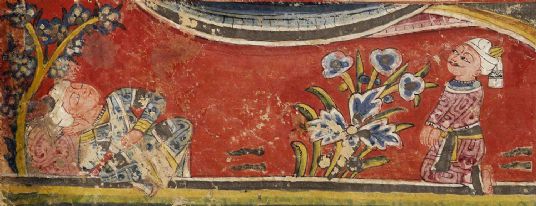
In his Khamsa, Shab-i Qadr (the Night of Power), the renowned Persian poet Amir Khusraw Dihlavi (d. 1325 CE) tells the story of a saint who made a failed attempt to stay awake until the Laylat al-Qadr. This image is taken from a folio in the Aga Khan Museum collection.
Laylat al-Qadr is the auspicious night when the Prophet Muhammad (s.a.s.) first received the revelation of the Holy Qur’an, thereby conferring upon him the mantle of prophethood at the age of forty.
The Shia Ismaili Muslims observe Laylat al-Qadr on the 23rd night of Ramadan, in keeping with traditions received through Hazrat Ali (a.s.) and his wife Hazrat Bibi Fatimah (a.s.), and the Imams of the Fatimid dynasty. It is a night of special prayer, reflection and remembrance of Allah. In 2022, this falls on Saturday, April 23.
When Prophet Muhammad was 40 years old, he received his first divine revelation from Allah through Angel Jibreel. When Angel Jibreel appeared to him, he said:
“Recite: In the Name of thy Lord who created,
created, Man of a blood-clot. Recite: And thy Lord is the Most Generous, who taught by the Pen, taught Man that he knew not” — Holy Qur’an, Al-Alaq, 96:1-5
Part of Al-Alaq (The Clot) – 96th sura of the Holy Qur’an – the first revelation received by Prophet Muhammad
The night of this first revelation is celebrated as Laylat al-Qadr (the Night of Power). The following verses from the Holy Qur’an describe the loftiness of this night and articulate the importance of the final revealed scripture to mankind:
“Lo! We revealed it on the Night of Power. What will convey unto you what the Night of Power is! The Night of Power is better than a thousand months. The angels and the spirit descend therein, by the permission of their Lord, with all decrees. Peace it is until the rising of the dawn.” — 94:5
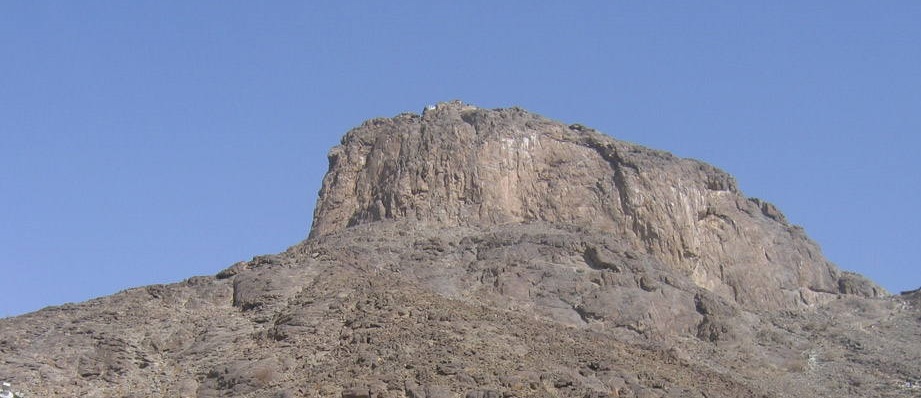
A photo of Cave of Hira in the Mount of Light, near Mecca, where the Prophet would come for his devotions and meditations, and the sacred spot where the Holy Quran began to be revealed. Prophet Muhammad (s.a.s.) had just stepped into the forty-first year of his life, when during the 23rd night in the month of Ramadan the first 5 verses of the Surah Al-Alaq (96) were revealed to him. The small cave is about 3.5 meters long and 2 meters wide. Hira was the Prophet Muhammad’s most adorable place for meditation.
“(This is) a Scripture which We have revealed unto you (Muhammad) that thereby you may bring forth mankind from darkness unto light, by the permission of their Lord, unto the path of the Mighty, the Owner of Praise.” — 14:01
“And celebrate the name of thy Lord morning and evening. And part of the night, prostrate thyself to Him; and glorify Him a long night through. As to these, they love the fleeting life, and put away behind them a Day (that will be) hard.” — 76:25-27
Prophet Muhammad (s.a.s) received his first revelation from Allah through Angel Jibreel (Gabriel) in the Hira cave which is on Jabl al Nur (Mount of Light) shown in this photo. The peak is visible from a great distance. The Prophet used to climb this mountain often even before receiving his fist revelation from Allah.
“We sent it down during a Blessed Night” — 44:3
“Ramadhan is the (month) in which was sent down the Qur’an, as a guide to mankind, also clear (Signs) for guidance and judgment (Between right and wrong)” — 2:185
Hazrat Mawlana Murtaza Ali (a.s.) the successor of Prophet Muhammad (s.a.s) to the throne of Imamat is quoted as having said:
“Do not remember God absent-mindedly, nor forget Him in distraction; rather, remember Him with perfect remembrance (dhikran kamilan), a remembrance in which your heart and tongue are in harmony, and what you conceal conforms with what you reveal.” — quoted in Justice and Remembrance, Introducing the Spirituality of Imam Ali, by Reza Shah Kazemi, p. 162.
Date first posted: July 18, 2014. Last updated: April 23, 2022.
____________
Credits:
1. Wikipedia.org 2. Mecca.net 3. English Translation of the Qur’anic verses by Arthur John Arberry.
LINKS TO A SELECTION OF ADDITIONAL ARTICLES ON THE HOLY QUR’AN
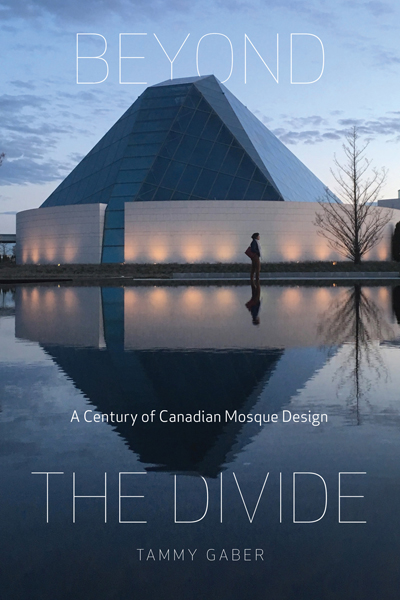
We recently read Professor Tammy Gaber’s new book “Beyond the Divide: A Century of Canadian Mosque Design” and found it to be beautiful and impressive — its design brings together pictures, text, and architectural drawings in a clean and easy-to-read layout. Her analysis covers a lot of ground, quite literally. Simerg presented a few questions to Dr. Gaber about her book, with the focus on women’s presence and participation in mosques. She kindly obliged and we are pleased to present the following interview which was conducted via email.
Simerg:You write that your investigation began two decades ago. Please tell our readers a little about your journey, intellectually in that time and geographically across Canada.
DR. GABER: In my acknowledgements I was hinting at the fact that my research on mosques began with my Bachelor of Architecture thesis (at University of Waterloo completed in 1999) for which I designed a mosque in Canada. It was a struggle to find information on the subject and to approach the design as critically as I had any other building type in my education. I was also hinting at my Masters (Cairo University, 2004) in which I examined qualities of design of ‘Western’ mosques and my PhD (Cairo University 2007) in which I examined the historical roots, development and contemporary impact of women’s spaces in mosques. This specific project, the examination of mosques in Canada began in 2015 with a SSHRC (Social Sciences and Humanities Research Council) funded grant.
Simerg: Beyond your studies at these important institutions in Canada and Egypt, how far and wide have you travelled as designer, educator and author of a truly beautiful book.
DR. GABER: I travelled to 53 cities to see 90 mosques in the space of 2.5 years while I was full-time teaching — so all travel took place during holidays or study weeks and were focused on the examination of mosque spaces. A large number of the mosques I studied were in converted buildings, some of which used to be other places of worship. As an architecture educator I am very interested in excellent architecture and when I could I would visit other buildings I did.
Simerg: The title Beyond the Divide speaks of an existential search for a more equitable presence for women in mosques. Their points of view are central to this endeavor. You use a captivating term room sometimes with a view. As an architect you classify mosques into those with no view, with a partial view, and with a full view. An astonishing 46% of mosques you studied had no view for women and only 15% had a full view, and the colour coding you use in the architectural drawings illustrates the stark divisions with clarity.
DR. GABER: It was important for me to relay the architectural facts about women’s spaces in mosques with data on the proportion, location, materials and recurrent patterns so that the issue would become very clear.
Simerg: You write about the Ka’ba in Mecca as exhibiting equal access. Men and women have prayed there without separation for 14 centuries and continue to do so. And yet, in the Canadian mosques you have studied, the allocation of spaces is tending towards more separation. Indeed, mosques with equal access have become gendered spaces with women allocated about a third only of the built spaces. Often, the spaces are of inferior quality. Edmonton’s Al-Rashid Mosque began as an equitable space. Not any more. Others like the Sudbury mosque have resisted this change to gendered spaces. The Ismaili jamatkhanas are full view and divided equally by default.
Article continues below
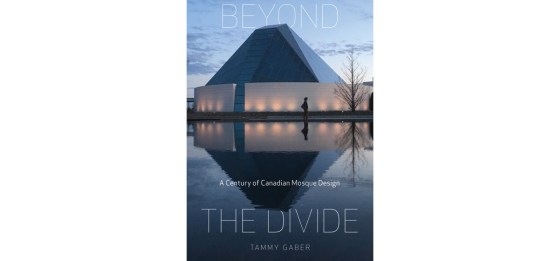
Cover page, Dr. Tammy Gaber’s beautiful new book “Beyond the Divide: A Century of Canadian Mosque Design”, Hardcover, pp. 304 with 306 photos and 135 drawings, colour throughout, February 2022, pub. McGill-Queen’s University Press.
DR. GABER: My apologies, but I am tempted to reiterate all of chapter 7 [of the book] here. It was important for me to relay the architectural facts and that architecture has agency and affects behaviour in both positive and negative ways: spaces that do not welcome women lead to less attendance by women; spaces that welcome women equally not only leads to more attendance but more participation in all aspects of the communities use of the spaces and sustained attendance over generations. Additionally there is a disjunction between women’s ability to use spaces of the mosque and other public spaces like schools or shops — this becomes an accessibility issue.
Simerg:Mimar Sinan from the 16th century is generally spoken of the glowing terms. Yet you uncover this divide in his architecture. His students follow with similar designs. Please explain how this inequity built into stone has become a “tradition” with vocal defenders.
DR. GABER: Mimar Sinan’s mosques borrowed and greatly developed structural forms and ideas inherited from Byzantine architecture (for example Hagia Sophia). It was common in Byzantine architecture to include a designated women’s balcony in the church space. That practice was abandoned in subsequent periods of church architecture but was adopted again, centuries later, by Ottoman mosque architecture including Sinan’s works. The impact of this introduction was very far reaching: during the Ottoman empire hundreds of mosques were constructed across vast geographies placing in stone designated spaces for women that were much smaller in proportions (height and floor area) and made common the cultural adoption that this was the ‘norm’.
Simerg: Apparently, it is new immigrants to Canada from many different countries who are not so accommodating of equitable spaces for women and are pushing for regressive changes. Are the critiques of Zarqa Nawaz and others fostering better counter conversations?
DR. GABER: The spaces for women in the Canadian mosque is an unfolding conversation as users (and mosque governance) modify spaces over time. Additions or subtractions to spaces are a result of these conversations. Zarqa Nawaz’s film, book, and publications have brought attention to this matter which is important. During the exhibition of this research in 2017 at the Noor Cultural Centre many people spoke to me how surprised they were at the range and quality of women’s spaces in mosques. My hope is that by demonstrating the architectural facts of the breadth of mosque spaces in Canada and the impact these spaces have that there can be further conversations.
Simerg: Coast to coast is the term often used when speaking of Canada. However, the third coast, in the extreme north, has two mosques. There is one in Iqaluit (Nunavut) and another in Inuvik (North West Territories) delightfully named Midnight Sun Mosque. Having the North Pole as your neighbour brings its own challenges. Apart from the cold at the extreme latitudes, there are the orientation of the qiblah and fasting in Ramadan. Please could you tell us more.
DR. GABER: I like this phrasing of a ‘third coast’, you are very right! It was incredible to travel to Iqaluit and Inuvik and to meet the communities who created the mosques in each of these northern cities. There are many challenges associated with location and its impact on fasting and prayer — I have outlined in detail in chapter 6 the facts relating to the calculations and the conversations that are influx with respect to adaptation.
Simerg: You write about the disjunction between users and designers. In what areas do you hope your book will contribute to bridging the divide? Can this happen without women in the governance structures of the mosques?
DR. GABER: It is my hope that the survey in my book will demonstrate the inspiring possibilities of architecture to users, governance and architects – and that the agency of each (users, governance and architects) is important and amplified when in dialogue.
Date posted: March 23, 2022.
__________________
Purchasing the Book
Tammy Gaber’s “Beyond the Divide: A Century of Canadian Mosque Design” is available for on-line purchase at the publisher’s website McGill-Queen’s University Press (it has more details about the book including its table of contents) as well as Indigo, Amazon, and Barnes and Nobles among other on-line booksellers.
______________
About Dr. Tammy Gaber
Dr. Tammy Gaber
Dr. Tammy Gaber is Director and an Associate Professor at Laurentian University’s McEwen School of Architecture (MSoA), where she teaches architecture design and theory courses. Dr. Gaber joined MSoA as founding faculty in 2013 and previously taught at University of Waterloo, American University in Cairo and the British University in Egypt. Dr. Gaber completed a SSHRC funded research project which led to her book Beyond the Divide: A Century of Canadian Mosque Design and has published on gender and architecture with a chapter in the forthcoming Global Encyclopedia of Women in Architecture (Bloomsbury press). Dr. Gaber has also published chapters on vernacular and regional architecture in Habitat: Vernacular Architecture for a Changing Planet (Thames and Hudson) and Diversity and Design: Perspectives from the Non-Western World (Fairchild Publishing), and has two chapters in The Religious Architecture of Islam (in 2 volumes; 2021, Brepol Publishing). In 2019 Dr. Gaber won the Women Who Inspire Award from the Canadian Council of Muslim Women and in 2020 she was awarded Laurentian University’s Teaching Excellence Award for a Full-time professor. During her 2020-2021 academic sabbatical Dr. Gaber completed a two-month academic residency in Finland for her research on Alvar Aalto in the fall of 2020 and was an invited scholar at the Centre for Theological Inquiry at Princeton University for the 2020-2021 academic year.
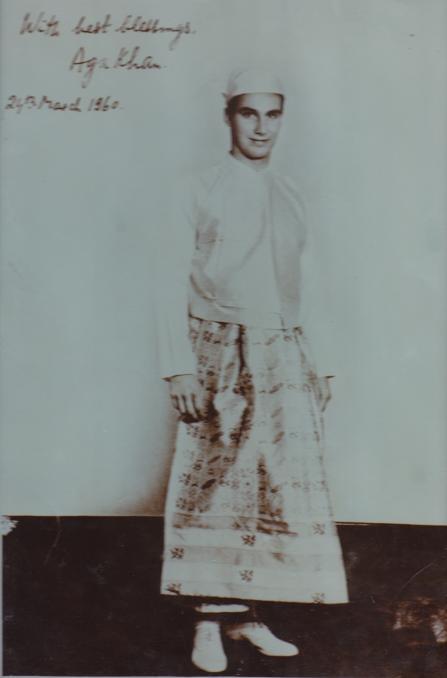
Our sister website Barakah is pleased to launch a new series entitled “Historic days in the life of Mawlana Hazar Imam, His Highness the Aga Khan”. We commence the series with his visit to Burma (now Myanmar) sixty-two years ago when he celebrated the Iranian New Year or Navroz with his community on March 21, 1960. Why does Barakah consider it to be a historic day? To find out, please CLICK HERE or on the image below, and feel free to submit your feedback through Barakah’s comment box.
Mawlana Hazar Imam, His Highness the Aga Khan, the 49th Hereditary Ismaili Imam, pictured in a Burmese traditional dress during his visit to Burma in March 1960. Please click on photo for article.
Date posted: March 20, 2022.
___________________
Before departing this website please take a moment to review Simerg’s Table of Contents for links to hundreds of thought provoking pieces on a vast array of subjects including faith and culture, history and philosophy, and arts and letters to name a few. Also visit Simerg’s sister websites Barakah, dedicated to His Highness the Aga Khan, and Simergphotos.
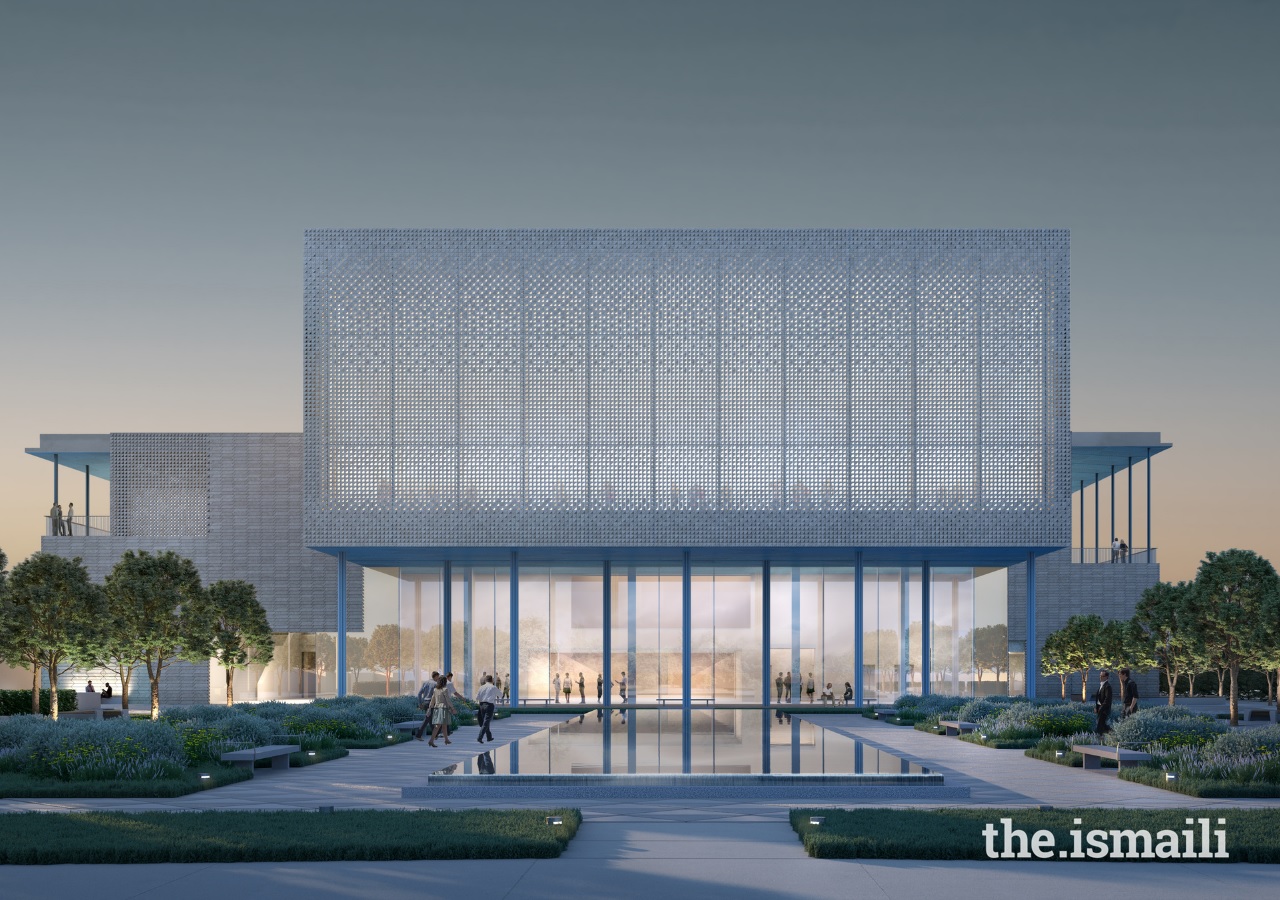
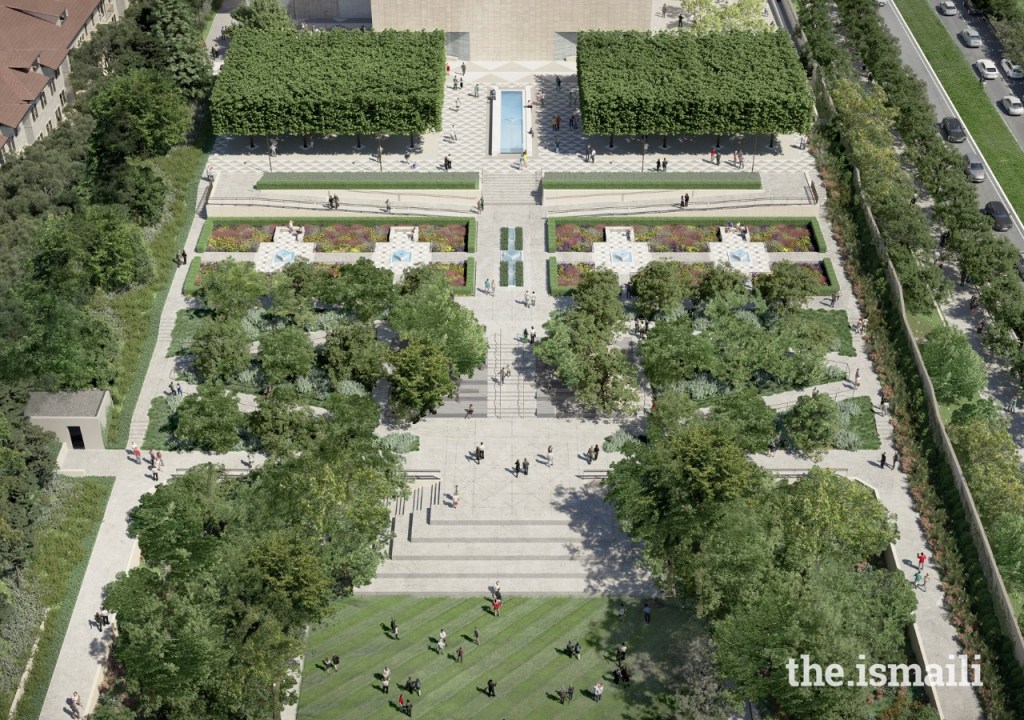
An excellent piece by Molly Glentzer on the Houston Ismaili Center appeared in the Texas Monthly shortly after the lead architect Farshid Moussavi came to the city in November 2021 to unveil her design for the building. Subscribers to Texas Monthly can click on the link provided in this post and read Molly’s piece. If you are not a subscriber, Texas Monthly allows you to read 2 free articles. Many readers might qualify for the two free reads, and may even consider subscribing. Please click Texas Monthly on the Ismaili Centre Houston or on on any of the two images shown below. This is a great piece, with wonderful insights by the architect as well as leaders of the city.
The new Ismaili Center in Houston will feature beautiful spaces, intricate geometry, and highly crafted work In this photo. In this depiction, the forecourt garden with its reflecting pool at the entrance of the building creates a contemplative atmosphere. IMAGE: IMARA HOUSTON INC. / IPL via the Ismaili
Ismaili centers are an invention of the Aga Khan. “They are places that reflect his belief in the power of architecture to improve lives,” Moussavi says. Each holds a jamatkhana, or prayer hall, but also serves as a brick-and-mortar ambassador for expressing the Ismailis’ commitment to uniting diverse people and cultures. Houston’s center will be the most public-focused yet — Excerpt from Texas Monthly
From wherever one enters the site, visitors will be welcomed by garden spaces. The Center’s landscaped gardens will provide a sense of serenity and peace, offering a respite from its urban surroundings. IMAGE: IMARA HOUSTON INC. / IPL via The Ismaili
Date posted: February 22, 2022.
___________________
Before leaving this website please take a moment to visit Simerg’s Table of Contents for links to hundreds of thought provoking pieces on a vast array of subjects including faith and culture, history and philosophy, and arts and letters to name a few. Also, visit Simerg’s sister websites Barakah, dedicated to His Highness the Aga Khan, and Simergphotos that features photos and videos from around the world.
Malik, the founding publisher and editor of the 3 websites, may be reached at his email address, mmerchant@simerg.com.
The David Rumsey Historical Map Collection focuses on 16th through 21st century maps of North and and South America, as well as maps of the World, Asia, Africa, Europe, and Oceania. Atlases, globes, school geographies, maritime charts, and a variety of separate maps including pocket, wall, children’s and manuscript maps are present on the website. The depth and breath of the digital collection is impressive, and is continuously growing. The website notes that the actual physical map collection is housed at the David Rumsey Map Center at the Stanford University Library.
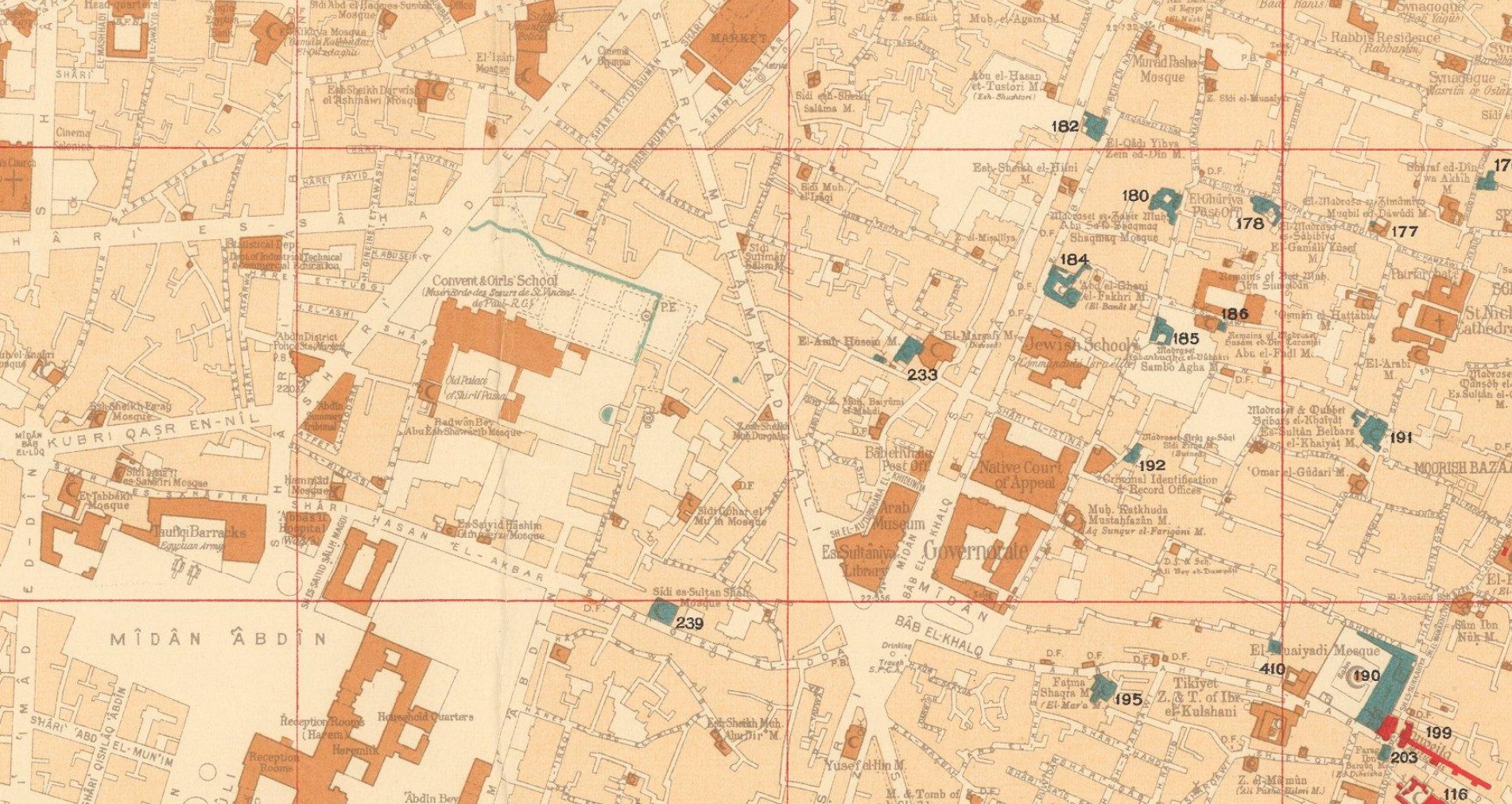
My search on the website using the term “Fatimid” yielded one result. It is a map produced in 1924 by the Survey of Egypt, which was once regarded as “one of the most professional mapping agencies in the World, predicated upon the synergy of the most authoritative topographical and urban mapping combined with the latest archaeological surveys.”
Simerg is pleased to reproduce the map, along with an interesting narrative that accompanies the map on the David Rumsey Map Center website. We also invite readers to click on the link to enrich their viewing experience of the map, download the map (by using the Export Function) as well as to explore other maps that may be of interest to readers or to provide them with further information in their specific area of research.
Cairo During the Islamic Golden Age
Please click on image for enlargement
Map of Cairo showing Islamic monuments, with the ‘Fatimid and Pre-Fatimid Monuments’ (909 – 1171), shaded in Red; the ‘Aiyubid [Ayyubid] Monuments’ (1171 – 1260), shaded in Green; and the ‘Mameluke Monuments’ (1260 – 1517), shaded in Blue. Credit: David Rumsey Map Collection, David Rumsey Map Center, Stanford Libraries. This work is licensed under a Creative Commons License.
Cairo was the greatest centre of culture, learning and commerce during the ‘Islamic Golden age’. Commencing in the early 20th Century professional archaeologists as well as art and architectural historians became interested in scientifically recording Cairo’s sensational Islamic buildings and monuments.
The map employs colours to denote sites built across the city during the eras of the three great Islamic empires that controlled Cairo prior to the arrival of the Ottomans in 1517: the ‘Fatimid and Pre-Fatimid Monuments’ (909 – 1171), shaded in Red; the ‘Aiyubid [Ayyubid] Monuments’ (1171 – 1260), shaded in Green; and the ‘Mameluke Monuments’ (1260 – 1517), shaded in Blue.
These mosques, palaces, madrassas, and fortifications appear amidst the otherwise buff-coloured city which generally consisted of buildings built during the subsequent Ottoman and British Protectorate periods.
The map shows that many of the greatest edifices from the periods of the three great Islamic empires have survived, although only traces of the vast Fatimid Place can be found amongst the foundations of newer buildings. Each of the historical sites is named in Gothic script and features a corresponding numeral which refers to that which appears upon the plaques affixed to each building by the civic authorities. The two insets on the left-hand side showcase sites in areas outside of the city proper. We understand that the first edition the map was issued in 1924, while an Arabic language version was published in 1948. The present revised, official edition was issued in 1950-1 (correction, this copy is the first edition, issued in 1924), while several facsimile (unofficial) versions have been issued since then. The Survey of Egypt followed the initial production of the present issue of the map with a small booklet, Index to Mohammedan monuments appearing on the special 1:5000 scale maps of Cairo (Cairo, 1951), that is not present here, but seems to have been issued with the latter-releases of the map.
Cairo during the ‘Islamic Golden Age’ Cairo was traditionally the largest and most culturally and economically important city in the Islamic world. The Muslim conquest of Byzantine Egypt occurred between 639 and 646 AD. While the Cairo area has been settled for thousands of years, with the key Ancient Egyptian cities of Giza and Memphis located nearby, the city proper was not founded until 969, when it became the principal city, and sometimes capital, of the Fatimid Caliphate, a Shia Muslim empire which controlled much of North Africa, the Levant and Hejaz between 909 and 1171.
Cairo rapidly rose to become a centre of great wealth, at the nexus of global trade routes as well as home to some of the world’s foremost centres of education and the arts. Befitting its importance, great monuments of Islamic architecture were built across the city.
The Al-Azhar Madrassa (no. 97 on the map), which later grew into a university, was founded in 970-2 and today remains the world’s most prestigious institute of Islamic learning. The map notes some Islamic monuments made before 969, as the pre-Cairo rural landscape featured some small mosques, houses and fortifications.
The Fatimids were replaced by the Ayyubid Dynasty (1171 – 1260), a regime of Kurdish origin, founded by the legendary conqueror Saladin, whereupon Cairo remained the prosperous centre of an empire spanning much of the Middle East.
The Mamelukes were an elite class of soldier-bureaucrats descended from former Christian slaves. In 1250, they took over Egypt, the Levant and Hejaz, forming the Mameluke Sultanate, with its capital in Cairo. It was during the early part of their regime that Cairo reached its zenith as the principal centre of the Islamic Golden Age.
The epicentre of a global trading network that spanned from India to Spain, Cairo far surpassed all European cities in wealth and cultural sophistication, and many exquisite works of architecture were built to reflect this glorious state. The Mameluke Sultanate was conquered by the Ottomans in 1517 and Cairo ceased to be an imperial capital. However, while technically subject to the Sublime Porte, Egypt maintained a high degree of autonomy and was the wealthiest and most prosperous part of the Ottoman Empire; Cairo remained a highly important centre.
Fortunately, as the repent map reveals, the survival rate of Cairo’s great works of Islamic architecture from the Fatimid, Ayyubid and Mameluke periods is impressively high, and many sites can be visited today. References: OCLC: 17543226. (Alexander Johnson, 2020).
Date posted: February 22, 2022.
________________________
Before leaving this website please take a moment to visit Simerg’s Table of Contents for links to hundreds of thought provoking pieces on a vast array of subjects including faith and culture, history and philosophy, and arts and letters to name a few. Also, visit Simerg’s sister websites Barakah, dedicated to His Highness the Aga Khan, and Simergphotos that features photos and videos from around the world.
Malik, the founding publisher and editor of the 3 websites, may be reached at his email address, mmerchant@barakah.com.
We are the tree of Prophethood, the place of descent of Divine revelation, the place of frequenting of the angels, and the mainsprings of knowledge. Those who help us and love us await (God’s) mercy…..Hazrat Ali
______________
The Tradition of the Ismaili Tariqah is the Tradition of Hazrat Ali
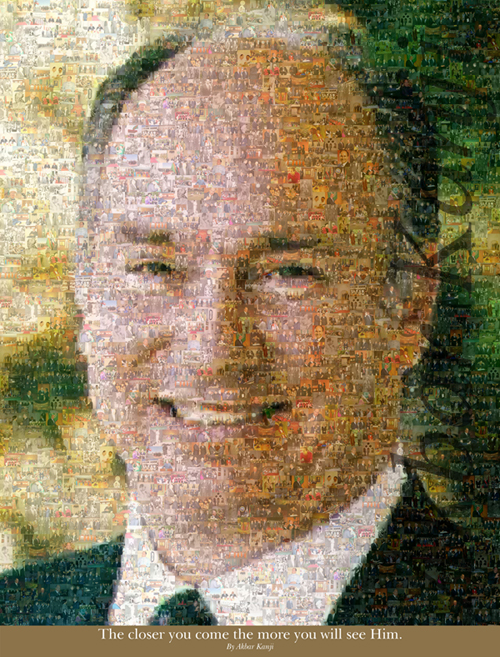
“The closer you come, the more you will see him.” A digital portrait of Mawlana Hazar Imam, His Highness the Aga Khan, direct descendant of the Prophet Muhammad and Hazrat Ali, by Toronto’s Akber Kanji. The portrait is composed of several hundred thumbnails representing a cross-section of events during Mawlana Hazar Imam’s Imamat. Photo: Copyright: Akber Kanji.
“This is a time of new freedoms, but it is also one in which new choices must be made wisely. In exercising freedom and making choices, our institutions must be guided, as they have been in the past, by the teachings of the Prophet Muhammad (Peace of Allah be upon him), and the tradition of our tariqah, which is the tradition of Hazrat Ali: A thinking Islam and a spiritual Islam — an Islam that teaches compassion, tolerance and the dignity of man — Allah’s noblest creation.” — His Highness the Aga Khan, May 14, 1992, Aga Khan Foundation 25th anniversary.
______________
The Ant
By God, were I given all the seven heavens with all they contain in order that I may disobey God by depriving an ant from the husk of a grain of barley, I would not do it…..Hazrat Ali
The Prophet’s Household
To them (the Household of the Prophet) pertain the noblest of human virtues described in the Qur’an, and they are the treasures of the Beneficent Allah. When they speak, they speak the truth, but when they keep quiet, no one can out strip them…..Hazrat Ali
Patience
One who perseveres patiently will not be without success, even if it takes a long time…..Hazrat Ali
The Headstrong
One who is headstrong and opinionated perishes, while one who seeks the advice of others becomes a partner in their understanding…..Hazrat Ali
The Blessed
Blessed is one who is humble regarding himself, whose livelihood is good, whose inner thoughts are virtuous, whose character is good, who spends the surplus from his wealth and removes superfluity from his speech, who keeps his evil away from people…Hazrat Ali
__________________
Recitations of Ginanic Verses by Late Shamshu Bandali Haji
Iconic Ismaili Ginan reciter, the Late Shamshu Bandali Haji of Nairobi and Edmonton.
Simerg is pleased to present a selection of verses from the Ginan Muman Chetamni composed by Syed Imam Shah that relate to the birth of Hazrat Ali (a.s.). The recitations are taken from Ginans Central, a truly exceptional website which curates Ginans for “long-term access and preservation to foster research and learning in the digital era.” The inspiration behind this unique project is Karim Tharani (read ARTICLE). Here are recitations of three verses followed by a link to the page containing many more Ginan recitations by Alwaez Shamshu Bandali Haji as well as other reciters from around the world.
Verse Eji te Murtaza Ali….recited by Shamshu Bandali HajiVerse Eji Mataji Gayata Bait…recited by Shamshu Bandali HajiVerse Eji Tare Salaam Kidha…..recited by Shamshu Bandali Haji
Please click HERE for beautiful recitations by Alwaez Shamshu and other great Ismaili reciters from around the world. Also, please visit Ginans Central Home Page, then scroll down the page and see links to Ginan collections as well as tools and resources.
Date Posted: February 11, 2022.
_______________________
Before leaving this website please take a moment to visit Simerg’s Table of Contents for links to hundreds of thought provoking pieces on a vast array of subjects including faith and culture, history and philosophy, and arts and letters to name a few. Also, visit Simerg’s sister websites Barakah, dedicated to His Highness the Aga Khan, and Simergphotos.
The editor of the 3 websites, Malik, may be reached at mmerchant@barakah.com.
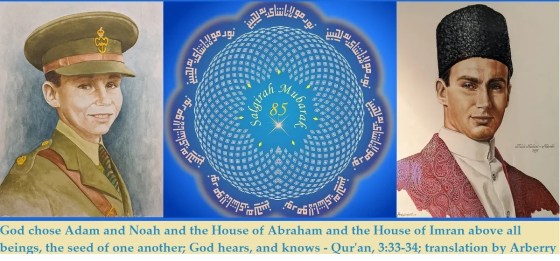
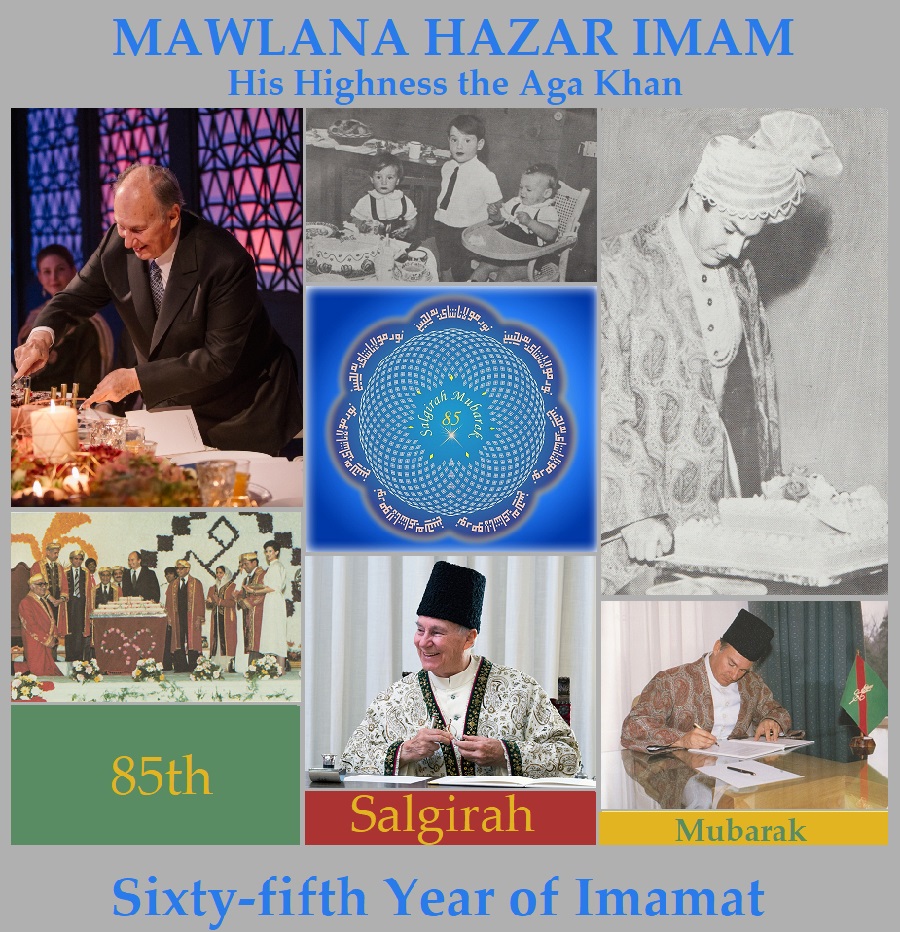
Simerg’s sister website Barakah which is dedicated to Mawlana Hazar Imam, His Highness the Aga Khan, members of his family and the Ismaili Imamat, is pleased to present a profound reading on the subject of Imamat along with a special piece of art by Karim Ismail on the auspicious occasion of Hazar Imam’s 85th Salgirah. The post includes the singing of the Ginan (Hymn) Dhan Dhan Aajno by the (Late) Alwaez Shamshu Bandali Haji, and also has links to its explanation as well as 25 other recitations of the same Ginan by Ismaili singers from around the world. Please click 85th Salgirah Mubarak or on the image below.
Mawlana Hazar Imam, His Highness the Aga Khan, is in his 65th year of Imamat and celebrates his 85th birthday on December 13, 2021. Please click on image for Imamat reading.
Date posted: December 11, 2021.
_________________
Featured image at top of post: In centre, a calligraphy by Toronto’s Karim Ismail and on either side of the art work two paintings of Mawlana Hazar Imam by Vancouver based artist Azeez Khanbhai, who was featured recently in Barakah.
We welcome feedback from our readers. Please complete the LEAVE A REPLY form below or click Leave a comment. Your letter may be edited for length and brevity, and is subject to moderation.













 Simerg - Insights from Around the World