Ismailis on Social Media: You Need to Take Care and STOP Indiscriminate Likes, Follows and Forwards!

Aniza Meghani, Simerg
Social media portrait of Aniza Meghani, author of this post.

[A TRULY SHOCKING FORWARD: On Monday May 5, 2020, Simerg received numerous WhatsApp and email messages that stated “MHI has donated 250 million Euros towards the vaccine for COVID-19.” That misleading note was based on the wrong reading of a headline in the Portuguese newspaper noticiasaominuto  which said, “Imamat Ismaili dá 250 mil euros para o combate à Covid-19, and spread like fire around the world. Without even considering to do a (FREE!) google translate, the person(s) forwarding the note assumed that 250 mil euros in the headline represented 250 million euros! Utilizing Google translate would have informed the first sender(s) of the message that the amount is actually 250 thousand and not 250 million — mil denotes a thousand in Portuguese. Aniza Meghani in the following piece asks us to verify facts properly before rushing to accept and like everything that appears to look good on social media. The same care should be exercised with messaging applications. It becomes the duty of the recipient to conduct preliminary fact checking, through translations if necessary, before forwarding messages to their friends and group members. Once forwarded, the rippling effects are enormous, and almost impossible to reverse in a timely manner! A lot of time of precious time was lost in responding to individuals who sent out that error filled message. — Ed.]

By ANIZA MEGHANI

Social media is the most powerful tool in the world, one that can make you or break you! Gone are the days of hearing genuine news by physically buying the newspaper or researching material by visiting the good old fashion library. No more writing a letter and posting it before you patiently wait for a reply. THE WORLD IS YOUR OYSTER AT A TOUCH OF A BUTTON. That is the most dangerous part of it all. We simply access, copy, paste and distort leaving a trail of one’s data history. Data that others can still access. That is more worrying because if you are not careful, it will come back and haunt you when you least expect it. This is critical for students of today when applying for university places or jobs.

Be warned, in certain places as soon as you enter a building, your mobile will give them your history without you even knowing. Now that’s scary! So today, we have within our community, weblinks that allow us to access our Jamati activity and keep us informed. However, with so much misleading information and sites, let us protect ourselves and safeguard our community. To do so, I thought why not show examples of misleading sites that are harmful and painful.

Almost all Ismailis today, traversing through all age groups, from old to young, from those who are fully conversant in the English language to those who do not understand even basic words of English, everybody is on or wants to be on social media.

As Ismailis we are particularly drawn to those pages or sites which display beautiful photographs of our beloved Imam and members of his family, whom we respectfully refer as the Noorani family. Many of us immediately post a ‘like’ or reply with “Yam” wherever we see a photograph of Hazar Imam or his name.

Many of us even join these groups or sites or pages just because the name of Hazar Imam and his photograph are in the title.

I am writing this article because having just concluded reading the recently released Farman book containing the Jamati work Farmans from 2011-2013, it struck me as a matter of curiosity that Mawlana Hazar Imam, in these Farmans — as well as in the Lisbon Diamond Jubilee Darbar Farman — repeatedly stresses to us, his beloved children, to learn and understand English. My cocooned world is all about English, so it felt strange reading about the imperativeness of learning the global language of English.

It wasn’t until recently that I came across the danger of not knowing English well. Or perhaps even the dangers of not reading properly.

Social media is greatly to blame for this growing culture of posting likes to images and skimming through texts. Not really reading, not really absorbing the context of a post, just hitting the like or follow button on whatever pops up on the screen that catches your fancy, in this case, a photograph of Hazar Imam or his name.

It’s sad really. But something still needs to be done. Hence the purpose of this post.

There is a group, or maybe several groups, on social media that tend to post lovely photos of Mawlana Hazar Imam and the Noorani family. It’s heartening, I am sure, to see the glittering countenances of our Imam and the Noorani family, is it not? So, we click the like button and we follow that page or join that group – however, we are absolutely, intolerably clueless about the actual purpose of it. And then, bam! Out of the blue, the very same page posts a sacrilegious article about Hazar Imam, albeit coupled with a beatific photo of him.

Now, if you are a reader by nature, you would be highly scandalized. But if you’re a skimmer, or if you don’t understand English, or if you don’t bother to read the text and are just mesmerized by Mawla’s resplendent smile (I don’t blame you, but I do), you are treading on dangerous ground because you may inadvertently be joining a group that is anti-Imam, anti-Noorani family and anti-Ismaili.

My advice: whenever you see a photograph or name of Hazar Imam, refrain from putting a like or leaving a YAM reply or joining the group blindly. READ all the posts on that page — present and past — as well as read the website where the social media link takes you. And join or reply or like only if the page is in legitimate praise of Hazar Imam. Do the same for each quote, message and link that you receive, and don’t blindly re-forward a message that has been forwarded to you simply because it has come from a trustworthy or reliable source.

Because, as a murid of Hazar Imam, how can you — how can you approve of anything that mocks him, that belittles him, that spreads falsities and terrible lies about him and our faith? How can you be a part of that?

And do not forget that the administrators of these sites are very clever — they will post three very beautiful articles or photographs in praise of Hazar Imam, but then will slip in an article of hate speech against the Imam, the Noorani family and/or the Ismaili Community. STOP THE ZOMBIE-LIKING BECAUSE IT HELPS SPUR THESE NEFARIOUS PEOPLE ON AND SUCH PAGES AND SITES TO FLOURISH! And please explain this to all of your friends and relatives who are on social media but who do not understand English. You have a duty to do this.

Date posted: May 4, 2020.
Last updated: July 15, 2023 (formatting)

© Aniza Meghani / Simerg.

___________________

Aniza Meghani
Aniza Meghani

Originally from Uganda, Aniza Meghani lives in London, England, and is an entrepreneur of textiles and couture fabrics.

We welcome feedback/letters from our readers. Please use the feedback box which appears below. If you don’t see the box please click Leave a comment. Your comment may be edited for length and brevity, and is subject to moderation. We are unable to acknowledge unpublished letters.

We welcome feedback/letters from our readers. Please use the feedback box which appears below. If you don’t see the box please click Leave a comment. Your comment may be edited for length and brevity, and is subject to moderation. We are unable to acknowledge unpublished letters.

Before departing this website please take a moment to review Simerg’s Table of Contents for links to hundreds of thought provoking pieces on a vast array of subjects including faith and culture, history and philosophy, and arts and letters to name a few.


Harry's Trial Shaving Kit

On the Lighter Side: When Harry’s Became My New Intimate Friend

Ubiquitous Harry’s! You are everywhere today with your flashy bright yellow handle — on BBC, CBC, CTV, The Guardian, CNN, NY Times, the Salt Lake Tribune, the Christian Science Monitor and so on — even more now than when I first discovered you! Here is my story of intimacy with you!

Harry’s, I’m glad for my oversight, and re-trying you

By MALIK MERCHANT
(Publisher-Editor, Simerg, Barakah, and Simergphotos)

How much more marketing promotion can you take of the razor that wants you to try it out and win your hearts to experience a real shaving experience; a shaving experience? Is there something like that? Yes, a real culinary experience, a real holiday experience – I’ve heard of those. But a real shaving experience is a term that I was not familiar with or cared about until Harry’s came into my life.

I was lured to the experience when the Harry’s starter kit was being offered for free (plus a nominal shipping cost, all amounts specified in this post are in $ CAD).

I must admit, however, that I took on the offer when I ran into an issue for the first time ever with the 5 bladed Gillette Fusion razor. Another factor may have been for the fact that my favourite football team, London’s Tottenham Hotspur, has Harry Kane playing for it! Does he use it, I wonder? I note, though, that he has been sporting a beard for some time now. But what an incredible promotion he would do to a brand with his own namesake, if he were to start using it! What a special idea to the owners of Harry’s, with hopefully a commission to me, just for the suggestion! Hey, Harry’s contact Kane!

Harry's - a typical promotion ad running in the on-line media

Over the past 40 years since moving to Canada, I have always turned to Gillette’s new razors whenever they were introduced. I have been faithful to Gillette’s 5 bladed Fusion razor for more than 12 years — it was introduced in 2006. My previous ones were the company’s Sensor and Mach III.

For the first time ever, one day, as I was shaving with a new Fusion cartridge, the blue strip wear indicator came off. I wrote to Gillette explaining my concern, and sent them a photo of the Fusion blade with a receipt from the store. They sent me a replacement coupon worth $30.00! No questions asked! I continued using the damaged Fusion blade, as I didn’t feel that the peeled out blue strip had any impact on the blade’s shaving performance.

While I was still waiting for the Gillette coupon to arrive, I was drawn to Harry’s widespread promotion of its free trial kit. I ordered it, paying only the nominal shipping charge. Today, by the way, Harry’s charges $13.00 for the same kit, but with free shipping (all prices, as I noted earlier, in CAD $).

Like many other such free incentives, I submitted my payment details so that, unless I sent a cancellation note ahead of the next scheduled shipment, orders would be automatically sent to me based on my shaving habits that I had mentioned when completing my trial kit order.

The kit arrived, and I decided to set aside my coupon acquired Fusion cartridges in favour of the Harry’s — I had opted for a razor with an olive green handle (orange, and blue handles are also available at the same price; the razor with the chrome handle has a premium of $14), a shave gel bottle, and a cover to hold the blade cartridge.

Now, I have always admired German engineering, whatever form it takes, especially cars and stainless steel products. My cousin, who has been a career esthetician, has always relied on German products for all her esthetic needs, and she told me German products were the best and most reliable! I vividly remember my late dad telling me how his own father, or my grand father, ordered all the steel and metal parts from Germany for his leather manufacturing business in Bombay.

I wondered how Harry’s would fare against a company that has dominated the shaving market for decades, with a heavy emphasis and investment on its R & D. I had read many years ago, even before the introduction of Fusion, that some of Gillette’s products are researched for 5-7 years before they enter the market. Moreover, I had been using Gillette or Wilkinson products since my teen years in Dar es Salaam, Tanzania, when my dad first let me use his razor.

Harry's Trial Shaving Kit
Harry’s Trial Kit – razor, shaving gel, blade cartridge and cover

Of course, when the trial kit arrived, I was concerned that my long-term use of Gillette would bias me against Harry’s. I promised that I would not let that influence me in any way when making a judgement about Harry’s.

True to Harry’s word, I liked the razor! Harry’s claimed, at least at that time, that anyone trying it would be re-ignited with a real shaving experience. Ignited, I wondered? Had I ever actually enjoyed shaving? Was it like eating a gourmet meal at the finest of restaurants? 

Yes, with Harry’s! There was something peculiar about the shave. Ultimately though, my priority over the experience of shaving, was the blade’s endurance and my comfort with it. I felt nervous reaching to shave around the lower or upper lip areas. With Fusion, that fear of cutting myself was not there; with Harry’s, it was –  not that it did cut me. I just felt that with Harry’s, I needed to be a little careful, probably because I was not accustomed to it or felt the 5 blade German made cartridge might be too sharp for the more sensitive areas of my face.

Now how long would this first blade last? Harry’s didn’t come with a wear bar, like the blue one on Fusion, so I didn’t exactly know when I would be nearing the end of the blade’s lifecycle. In the case of Fusion, I would note that the effectiveness of the blade would recede with the thinning of the blue wear indicator. However, I always maximized the use of Fusion and continued its usage until the blue wear bar almost completely disappeared. At least Fusion gave some indication about when it might be time to replace it with another blade, and that was certainly not the case with Harry’s. Each Fusion blade, in all honesty, lasted me between 6-8 weeks, even with daily use! I have used both the Fusion manual and power assisted razors.

After about 4-5 weeks of daily shaves with Harry’s, I did not feel the blade needed replacement. My feeling of discomfort that it would cut me when shaving near the lip area remained. So, at the 6th week, I decided to stop using Harry’s and switched back to Fusion – the one that I had acquired with the coupon!

This time, the blue wear strip was just fine. But then, immediately, I really felt I was missing that Harry’s feeling of shaving — that enjoyable sound of the blades as the razor rolled down my cheeks.

I was at the time pre-occupied with lots of matters and I forgot to inform Harry’s to cancel future standing orders. I then received two more Harry’s cartridges while I was still on my first blade of Fusion. Due to my nomadic living style, I decided to let Harry’s’ know I did not want to receive any more blades; as it was the 2 cartridges from Harry’s and the 4 Fusion blades would last me at least 8-10 months in total.

A few months passed before the Fusion was done with. I was tempted to buy another 4-pack cartridge that was on sale. I resisted, vowing to use the Harry’s blades instead.

As I set off on a 5000 km drive to Ontario, Harry’s and I became intimate. We got along very well. Yes, shaving was enjoyable. That sense of a friction of your hair being lifted was a kind of an experience, and it felt good!

This second opportunity made me realize and appreciate the quality of Harry’s great product. I loved it. I began to use the Harry’s razor in the same carefree manner as I was using Fusion. I did not have any cuts. Harry’s, I realized, lasted me 6-8 weeks. The shaving remained consistently good. I did not have a blue strip to distract me. My Harry’s gel though ran out, and I acquired two Fusion cans at a great price! Both the gels are good, and I really haven’t done a comparison to determine which is better. The Fusion metal can used to leave a rusty circular mark on the counter from the base of the can and, over time, the wrapper around the can would begin losing colour. The current Fusion cans are definitely better. I had no such problems with Harry’s.

In terms of cost, I didn’t really see a great deal of difference between the Fusion cartridge and Harry’s, provided I acquired Fusion blades when they were on sale at special prices. Often, there are fantastic deals.

For me, having to reconsider a product by fluke, in the case of Harry’s, was a blessing in disguise. I was absolutely thrilled with the Harry’s razor and the accompanying shaving gel. The only thing that let me down me was the blade’s cover. The Fusion’s razor comes with a convenient snap-on base rest, when it is not in use, whereas Harry’s provides a small lblade container with 2 pieces that often completely separate from each other; they need to be clipped together once the blade cartridge has been inserted into its location — I found this to be a little bit frustrating.

As for Fusion, it is indeed a great product and Gillette has served me very well throughout the 40 years that I have been using it. During the last 3 years, I have switched between Fusion and Harry’s without any specific preferences for either of them. At the moment, I am back on Fusion as I have been living the life of a nomad and do not wish Harry’s sent to me at a location where I might not be — it would be too much to ask my mum to mail it from Vancouver to Ontario. I do miss Harry’s though — because it introduced me to a nice shaving experience that I hadn’t ever thought about.

Finally, may I provide a tip to Harry’s. I think women would also love your razor, if you build the right one for them; and I think your name is appealing enough! Tottenham’s women fans (or fans of whichever team Harry Kane decides to join at perhaps a fee of £100-150 million ) might just go crazy over it. Men, as you say somewhere, may be messy about shaving, but women have an unmatched elegance and style!

To the two handsome founding lads of Harry’s I say this: Remain humble, and you will do well for a long time. You have a fantastic product and while I do not have Harry’s at the moment, it is something that I will always hold dear to my heart! I am already tempted to once again go for your trial kit — with the vibrant orange handle! Whether I permanently become a Harry’s user still remains to be seen; I think I am now in the process of settling down at one place!

Date posted: April 29, 2020.
Last updated: April 30, 2020 (clarity).

Before departing this website please take a moment to review Simerg’s Table of Contents for links to hundreds of thought provoking pieces on a vast array of subjects including faith and culture, history and philosophy, and arts and letters to name a few.

_______________________

Simerg’s Merchant

Malik Merchant is the founding publisher/editor of Simerg (2009), Barakah (2017) and Simergphotos (2012). A former IT consultant, he now dedicates his time to small family projects and other passionate endeavours such as the publication of this website. He is the eldest son of the Late Alwaez Jehangir Merchant (1928-2018) and Alwaeza Maleksultan Merchant, who both served Ismaili Jamati institutions together for several decades in professional and honorary capacities. His daughter, Nurin Merchant, is a veterinarian.

We welcome feedback/letters from our readers. Please use the feedback box which appears below. If you don’t see the box please click Leave a comment. Your comment may be edited for length and brevity, and is subject to moderation. We are unable to acknowledge unpublished letters.

Ismaili Diary: A rare 100 year old family photo fills in a few blanks of Ismaili Khoja history in East Africa

Author Zahir Dhalla’s Preamble: Khojas, and Indians in general, were not known for keeping personal journals. Thus, there is a dearth of records documenting our history. However, the practice of keeping family photo albums was quite widespread. Photos can fill in some of those blanks, provided someone can tell the stories behind them. This would be a valuable series, people digging into their memorabilia and writing the stories behind them. Below then, is my attempt to do so, hoping it can also serve as one of the templates that others may want to use or adapt as preferred.

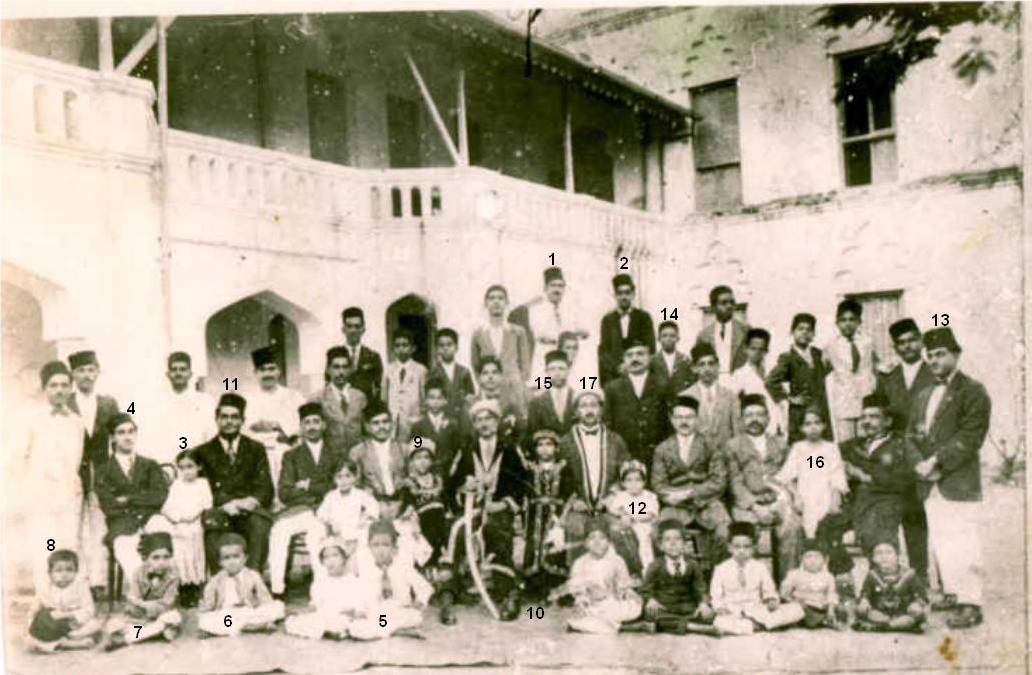
Huseinali Harji (with sword) historical Zanzibar wedding photo
Photo 1: Huseinali Harji (with sword) wedding photo. In the Ismaili Club’s courtyard, Zanzibar, early 1920s. It used to be the British Club where Dr. David Livingstone stayed in the late 1860s. Photo: Safder Alladina, Zerabai’s {10 in photo} youngest son. Captioning: Marhum Kassamali Tejpar, Roshan’s {3} husband. Please click on photo for enlargement.

By ZAHIR K. DHALLA

Gulamhusein Harji Sumar Walji Jendhani* was a pawn broker in the Soko Mahogo neighbourhood of Zanzibar’s Stone Town. Gulamhusein had a large brood, as was common at the time, of 9 sons and 3 daughters, by three wives, the eldest son, Ali {17 in top photo}, being my paternal grandmother Sakarbai’s {16} father. This wedding photo is of Gulamhusein Harji’s third son Huseinali’s marriage to Rukiya.

{1} Hassanali (Hasina){2} Saleh{3} Roshan Abdulhusein Alidina Saleh (Mrs Kassamali Tejpar)
{4} Hamdu Wali Dilgir{5} Badru Ali Harji{6} Kasu Ali Harji
{7} Mohamedali Ali Harji{8} Abdulmalek Ali Harji{9} Gulibai Hassina Harji
{10} Zerabai Hassina Harji{11} A G Abdulhusein{12} Sherbanu Hassina Harji
{13} Hussein “Tumbo” Harji{14} Kanu{15} Rahim Husein Dilgir
{16} Sakarbai Ali Harji{17} Ali Harji 
A guide to individuals in the annotated wedding photo. Dilgir {4} composed the Ismaili anthem.

These are their stories:

All elders and a few toddlers are wearing hats, while youngsters are bare headed, the groom and his eldest brother Ali {17} are wearing ceremonial turbans. By the 1950s, hats were no longer in vogue!

Of the Gulamhusein’s nine sons, Haji (see photo 4, below) and Noorali “Mamma” are not in the above wedding photo. “Mamma” chacha is possibly in the photo, just unidentified.

The Harjis spent, all told, a couple of decades or so in Tanga, Tanganyika (now Tanzania) where at one time they ran a grocery-wines-spirits store called Planters Store. All then left Tanga: Ali {17} going to Mombasa; Haji to Lushoto (see photo 4 below); Hussein {13} to Dar es Salaam; Saleh {2} taking over the grocery business under the name Korogwe Stores, with a branch store in Korogwe, a small town west of Tanga — he also ran a petrol station in Tanga; and Huseinali (the groom) running a chai, toast, maandazi, etc. restaurant called “Karaketa” at the Korogwe railway station, which his widow Rukiya ran after his death.

Story continues after photo

Khoja Ismaili family photo, Tanga, Tanganyika.
Photo 2: Khatibai and her three sons, right to left, Mohamedali {7 in top photo}, Kasu {6} and Abdulmalek {8}, Tanga, early 1950s.

KASU {6}: Younger half-brother of my paternal grandmother Sakarbai Ali Harji {16}, his is a touching story.

His mother Khatibai (nee Jiwan Lalji, Itmadi, of Zanzibar), a most beautiful lady, became demented (during WWII) and was hospitalized in Nairobi. Her three sons, Mohamedali {7}, Kasu {6} and Abdulmalek {8} (in decreasing order of age; see photo 2, above) conferred and decided that they would buy a native bride in Tanga for Kasu, who would settle there as a fishmonger. His bride, Chausiku, was a fine lady, devotedly looking after Khatibai. Khatibai, despite her condition, could always remember faces. Whenever we visited her, she would smile at each one of us, lighting up the whole room! When both Kasu and Khatibai passed away, Mohamedali sent support money to Chausiku. Before he passed away, he instructed son Zul (a fine guitar player in Nairobi, now in Tri-Cities, British Columbia, Canada) to continue support payments, which he did until one day he received a letter from Chausiku’s family, informing him that she had passed away, so not to send support money any more!

ABDULMALEK {8}: Youngest half-brother of my paternal grandmother Sakarbai Ali Harji {16}, he was the youngest of Khatibai’s sons. There was a comical vignette he told me: In 1940, he and three friends decided to enlist in the army (WW II). Mother Khatibai was against it, while father Ali {17} was okay with the idea. They headed for Nairobi for interviews, and along the way one of them dropped out! In Nairobi, someone questioned them as to what they thought they were doing: Didn’t they know they would get only black tea and burnt roti?

Part of their enlistment interview was an examination of their education:

Q. 7 + 5? A. 11. Wrong.

Q. 14 + 9? A. 22. Wrong.

They all came up short and were told, “All you Mombasa guys are hopeless” and were given tickets to return home. Actually, Abdulmalek’s whole class in Mombasa had failed Cambridge, except for one solitary student! Abdulmalek returned to working at his old job at Fatehali Dhala Grocers for 60 shillings a month, filling candy jars, opening and displaying crates of fruit from South Africa. Once he was in the middle of enjoying a nice peach from South Africa, when in walked Count Fatehali who remarked, “It is good that you are tasting and approving these fruits because only then will customers buy them!”

ALI {17}: Father of my paternal grandmother Sakarbai Ali Harji {16}, he was the eldest of the 9 brothers, born in Zanzibar in c1890. In the late 1920s, he worked at a cotton ginnery in Entebbe, Uganda, alongside my paternal grandfather, Gulamhusein, Ali’s son-in-law to be. His last job was as a detective with the CID (Criminal Investigation Department) in Mombasa. He was engaged by the head of the department, an Abdallah Mzee. But soon Ali crashed his motor bike, badly hurting his leg. He retired! Before he died, he told youngest son Abdulmalek {8} that he would be reborn as his son. Sure enough, within a year of his death, a son was born, Gulamali, named by Mawlana Sultan Mahomed Shah Aga Khan III. Gulamali would go on to play up his grandfather role to maximum advantage –- yes, he was untouchable!

Story continues after photo

Gulamhusein Harji Sumar residence in Zanzibar.
Photo 3: Gulamhusein Harji Sumar residence in Zanzibar.

GULIBAY {9}: Lady Gulibai, first cousin of my paternal grandmother Sakarbai Ali Harji {16}, was very well known in Nairobi. She married Ramzanbha of the K. B. Jamal family, owners of Tropicana bistro on Hardinge Street (now Kimathi Street), as well as of Keby’s restaurant further north of Tropicana.

SAKARBAI {16}: My paternal grandmother was very independent, not wanting to be a burden on anybody, even in death, for she had a small briefcase under her bed, which she showed everyone over time, containing everything necessary for a funeral and its rites: a shroud, cotton wool, holy water tablets (made from the earth at the well of Zam Zam), rose water, etc plus enough money for the prayer plate! Her independence also showed in how she addressed my paternal grandfather, her husband: she called him Dhalla, something unheard of in those days when a wife never called her husband by name, resorting to something oblique like “Are you listening?” or simply “Listen then”.

ZERABAI {10}: Born in Zanzibar, she moved to Tanga when she was 12/13 years old. She lived in Tanga the rest of the time until moving to Vancouver. She married Shariffbha Aladin Giga Patni. The Aladin clan adapted this name to a Muslim one: Alladina. This was around the time of the Indo-Pak hostilities after the partition. The Patni refers to people of the town of Patan in Gujarat, India, it having been built on the banks of the mythical river Saraswati.

Zerabai too, like her grandpa Gulamhusein Harji, had a large family of 5 sons and 3 daughters. She herself was of a large family; she was the eldest of a brood of 4 brothers and 6 sisters. When her mother, Khati Gulamhusein Bhaloo Kurji, died while most of her children were still growing up, her uncles Saleh {2} and Haji  stepped up and adopted all the young ones, each picking up 4 children! Zerabai herself was married off to Shariffbha when she was in her early teens.

BADRU {5}: He was the younger brother of my paternal grandmother Sakarbai Ali Harji {16}. He and his family lived in two places, in Tanga first, where most of his children were born, then in Mombasa.

Story continues after photo

A black and white photo featuring a man in a suit standing with three children, two girls on his sides and a boy in front, all posing outdoors.
Photo 4: Chacha Haji with adopted children Sherbanu, Gavar and Dolat, Lushoto, Tanganyika (now Tanzania), c1930s.

Any still around? To my knowledge, none of the identified people above are alive today, although Gulibai’s {9} younger sisters, Dolat (in photo 4 above), and Lily are alive and live in Vancouver and Toronto respectively. The Harji clan today is huge, of several hundred!

Readers may be interested in viewing a collection of Noorali Harji’s historical family photos with Mawlana Hazar Imam, and learn more about Gulamhusein Harji Sumar.

Date posted: April 23, 2020.
Last updated: May 1, 2020 (added 1905 historical photo in author’s footnote, see below).

_____________________

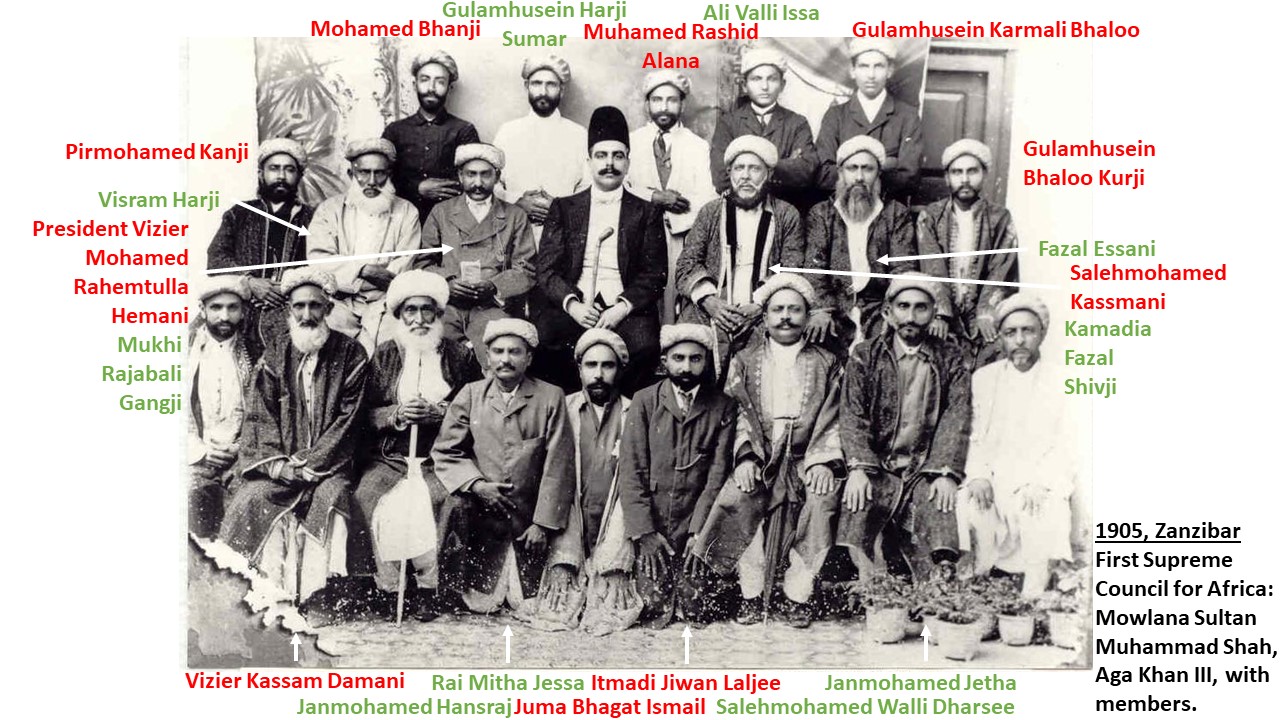
* Author’s footnote: Gulamhusein Harji Sumar (father of the groom, with the sword in the wedding photo) was a member of the first Supreme Council for Africa, 1905, Zanzibar. Itmadi Jiwan Lalji (father of Khatibai, photo 2) was a member too. Please see Noorali Harji’s historical family photos with Mawlana Hazar Imam.

Gulamhusein Bhaloo Kurji (maternal grandfather of Zerabai, number 10 in the wedding photo) ditto.

All the above three are also in the classic photo of Imam Mawlana Sultan Mahomed Shah Aga Khan III with the Supreme Council; see photo 5 below.

Aga Khan III 1905 Zanzibar historical photo with Ismaili leaders
Photo 5: Zanzibar 1905 — Aga Khan III, 48th Ismaili Imam, with Ismaili leaders. BACK ROW (left to right): Mohamed Bhanji, Gulamhussein Harji Sumar, Mohamed Rashid Alana, Ali Valli Issa, Gulamhussein Karmali Bhaloo; CENTRE ROW (left to right): Peermohamed Kanji, Visram Harji, President Varas Mohamed Remtulla Hemani, MAWLANA SULTAN MAHOMED SHAH, HIS HIGHNESS THE AGA KHAN, Varas Salehmohamed Kasmani, Fazal Issani, Gulamhussein Bhaloo Kurji; FRONT ROW (left to right): Mukhi Rajabali Gangji, Varas Kassam Damani, Varas Janmohamed Hansraj, Rai Mitha Jessa, Juma Bhagat Ismail, Itmadi Jivan Lalji, Salehmohamed Valli Dharsi, Janmohamed Jetha, Kamadia Fazal Shivji. Photo Credit: Nashir Abdulla Collection, Ottawa, Canada. Please click on photo for an annotated version.

_________

Author Zahir K. Dhalla, a middle-aged man with glasses and curly hair, wearing a suit and tie, is pictured against a blurred background.

Zahir K. Dhalla is a retired GIS (Geographic Information Systems) and IT (Information Technology) freelance consultant in Toronto, Canada. He is a graduate of the University of Nairobi, Kenya (mapping science) and the University of Toronto, Canada (computer science). In addition to his non-fiction writings (see list below) he has also written many private biographies as family keepsakes. He is also the editor of Ismailis of Tanga.

Zahir Dhalla’s books available from Amazon: 

  1. My F-word Plan: How I Routinely Maintain Low Weight & Good Health
  2. Poetry: The Magic of Few Words (Definition and Some Poetry on East Africa)
  3. Nine Ginans of Nine Ismaili Pirs: A Brief History of Khoja Ismailis
  4. Learn Good Swahili Step by Step: A Complete Language Textbook in 3 volumes:
    • A Complete Grammar
    • Swahili-English Dictionary (5,750 words)
    • English-Swahili Dictionary (5,750 words)
  5. The Willowdale Jamat Khana Story
  6. Writing [Auto] Biographies: Demonstrated by author’s early autobiography
  7. From Kibwezi to Kensington: Sherbanu K. Dhalla’s Memories of East Africa
  8. My Tanga Days: 1950s & 60s
  9. Learn Urdu: اُردو: Read, Write, Speak, includes 4,000-word Tri-directional Dictionary
  10. Naked Eye Astronomy: How to Read the Heavens
  11. Two Short Stories: I. Happy Phoebe, II. Troglodytes
  12. Khojo Aawyo! The Khoja has Come! A Story of Migrations
  13. Editor: http://theismailisoftanga50s60s.blogspot.com/

Also, read Zahir’s piece in Simergphotos Bagamoyo Beach Landing, where Aga Khan III was the first Ismaili Imam ever to set foot on East African soil in 1899.

Before departing this website please take a moment to review Simerg’s Table of Contents for links to hundreds of thought provoking pieces on a vast array of subjects including faith and culture, history and philosophy, and arts and letters to name a few.

We welcome feedback/letters from our readers. Please use the feedback box which appears below. If you don’t see the box please click Leave a comment. Your comment may be edited for length and brevity, and is subject to moderation. We are unable to acknowledge unpublished letters.

Amid several Jamatkhana closures around the world due to Covid-19 let us all pray at home individually or as a family and seek to give hope, happiness and inspiration to vulnerable members of the Jamat

Dome of the Rock, Jerusalem, Simerg and Muslim Harji
A Muslim offering prayers under the “Rock” where Abraham brought his son Ishmael for sacrifice. Photo: Muslim Harji, Montreal, PQ. Copyright.

By MALIK MERCHANT
(Publisher-Editor Simerg, Barakah, and Simergphotos)

When you have not missed a day in Jamatkhana attendance over the past several years, how do you cope with sudden and unforeseen closures of your favourite Jamatkhana? We live in difficult circumstances. Covid-19 — the disease caused by the novel coronavirus — has infected tens of thousands around the world and has been declared a pandemic, causing anxiety and worry. I left a pharmacy on Friday March 13 with a customer expressing, “it feels like death can approach anyone of us, and I just feel at the moment that I might die.” When I next visited a supermarket at around noon time, people were filling their shopping carts to the brim with supplies for their families. Ismaili institutions in Canada on the same day announced the closure of Jamatkhanas in several provinces around the country to protect the elderly and everyone who is vulnerable due to compromised immune systems. A similar decision was made by the USA Aga Khan Council for cities across many states on Saturday, March 14. Of course, these are also containment measures to prevent the spread of Covid-19. These measures have also been necessary as a result of bans that have been imposed by state or provincial or even Federal authorities on large gatherings.

In 1979, I was left with a difficult situation of being the only Ismaili in Salt Lake City, Utah, for several months, until a family arrived just before I left the following summer. The nearest Jamatkhanas were in Denver, Las Vegas and Phoenix, hundreds of miles away. I disciplined myself to pray regularly and the happiness and strength I achieved was comparable to my earlier praying days at 5 Palace Gate in London, England. In London, I had become a regular only in 1976, and before that attended Jamatkhanas only on Fridays at Central Hall when I was a student at the Polytechnic of North London. In Salt Lake City, I set aside a corner in my room for the purpose of praying. It was a tiny 12-15 sq ft space beside my bed. The night table contained my rosary (tasbih), with the drawers containing Farman and Ginan books along with a copy of the Holy Qur’an as well as some literary magazines and books. I performed my prayers in an identical fashion to what takes place in Jamatkhana — reciting the Du’a, Farmans and Ginans loudly as well as standing up for the tasbih. My heart and soul enjoyed the spiritual nourishment that I experienced even from praying alone. Chandraat (New Moon day or first day of the Islamic month) was a joyful day for me as I saw the new moon above the Wasatch Mountains that surround the Mormon capital. On my drive home in my roommate’s car, I looked forward to the special Chandraat prayers that I would recite.

A few years ago in Ottawa, I met and interviewed the eldest member of the Ismaily family, who was probably the first Ismaili to settle in Canada in the early 1950’s. He had met our beloved 48th Imam Mawlana Sultan Mahomed Shah, His Highness the Aga Khan III (1877-1957), just before his lone settlement in a new country. He told me the late Imam asked him to set aside a small portion of his room and conduct his prayers in that space just as he would in a Jamatkhana. The Imam also asked him to keep away from bad and evil social habits, and to work hard. Mr. Ismaily abided, and said that the practice that he adopted of praying regularly in a designated space gave him immense strength, comfort and spiritual happiness.

So here are my recommendations to families where Jamatkhanas have been temporarily closed — and we don’t yet know for how long! Try as a family to pray together. Visit your parents or grandparents at their home, if you are not staying with them, and say to them that you would like to join them for prayers. When visiting them, if you are healthy, take precautions such as hand washing and other important recommended hygienic steps like the ones posted by the Government of Singapore.

Remember they have all of a sudden been deprived of the most valuable moments in their lives — being in Jamatkhanas. Tell them you will recite the Du’a out loud. Keep in mind that many elderly people rely on listening to the prayers recited by another person. Many do not have the capacity to recite the Du’a. Play or recite a ginan or qasida, and join together in tasbihs to help ease our difficulties that we are facing at the present time. Say Ya Allah, Ya Muhammad or Ya Ali. Recite Salwats. Recite the tasbihs of Allahu Akhbar (God is Great), Subhanallah (Glory be to God) and Alhamdulillah (All praise is due to Allah) suggested by the Prophet Muhammad (S.A.S) to his beloved daughter Bibi Fatimah (A.S.). Say the tasbih of Ya Ali Tu Rahem Kar (O Ali be Merciful) Ya Mawla Tu Fazal Kar (O Lord [Ali] be gracious) that we recite during Jamati Satada (7 consecutive days of special prayers for the easing of difficulties). Remember, Mawlana Hazar Imam is our strength, so say Ya Shah Karim Ya Mawlana anta Quwati from the 5th part (O Shah Karim, You are my strength/support).

This is a perfect time to come together at home as families, with no live sporting distractions to take occupy our times! It is an opportunity to be together, to help each other out, to motivate each other, to connect more with our parents and children and to build family unity. It is also an opportunity to develop a balanced life, for those who are immersed with worldly issues, and engage more with our faith. Mawlana Hazar Imam’s blessings are with us constantly, and it is an opportune time to read his Farmans from the two-set Farman books that has just been published under his directive. Read them aloud to your children, siblings, parents and grandparents when you are around them.

These are my humble suggestions to ease through the anxious times that we face which is unprecedented in recent history.

May we continue to fulfill our spiritual responsibilities well during this difficult and anxious time in our lives to avail ourselves of Mawlana Hazar Imam’s constant blessings for our well-being, strength and mushkil asan (protection from difficulty).

Finally, as a subscriber to the National Geographic (NG) magazine, I would recommend this superb link containing educational and informative articles on the Coronavirus from the magazine’s fine writers and photographers. NG is making this information available without a paid subscription.

Date posted: March 13, 2020.
Last updated: March 21, 2020.

Before departing this website please take a moment to review Simerg’s Table of Contents for links to hundreds of thought provoking pieces on a vast array of subjects including faith and culture, history and philosophy, and arts and letters to name a few.
_________________

We welcome your feedback. If you don’t see the feedback form below please click on Leave a comment

The traditional Ismaili Motto “Work No Words” needs a revision to “Work and Many Words” in light of Mawlana Hazar Imam’s Diamond Jubilee Farman

LETTER FROM PUBLISHER

The volunteer's traditional motto given by the late Imam, Mawlana Sultan Mahomed Shah, "Work No Words" needs a revision to "Work and Many Words" in light of Mawlana Hazar Imam's Diamond Jubilee Farman made in Calgary in 2018. Malik Merchant, publisher and editor of Simerg and Barakah, provides his insight on the mottos.
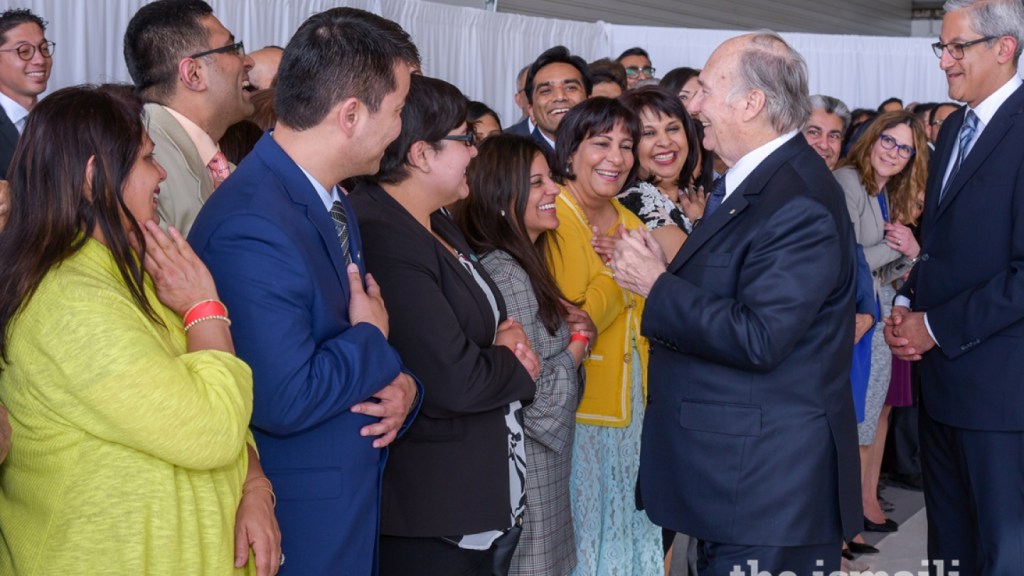
Mawlana Hazar Imam, His Highness the Aga Khan, meets representatives of the Jamat on his arrival in Calgary, Alberta, for his Diamond Jubilee visit in May 2018.

By MALIK MERCHANT
(Publisher-Editor, Barakah, Simerg and Simergphotos)

The Ismaili community is a dynamic community with the Imam-of-the-Time guiding his followers according to the time. The essence of the faith remains the same but the form may change over time in cognizance of differences in traditions, cultural, social or other factors. Similarly, there could be changes over time in the manner in which voluntary services may be rendered. Paraphrasing the 48th Imam’s Farman, Mawlana Sultan Mahomed Shah had once said that we should follow the Farmans of the Imam-of-the-Time, noting that as the world changes, even his Farmans would change as time progressed.

Ismaili Volunteers Bage
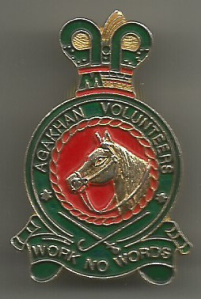
The volunteer’s badge with the motto “Work No Words” is based on Imam Sultan Mahomed Shah’s message, “Today I will give you  a small motto and that is ‘Work No Words’.” The motto needs to be revised to reflect Mawlana Shah Karim’s Diamond Jubilee Farman in Calgary “Work and Many Words.”

One of the best known motto given by the late Imam in the 20th century to the volunteers of the Ismaili community was “Work No Words.” It is inscribed on every badge that an Ismaili volunteer wears today. It is also something that many honorary workers serving in institutions in various capacities constantly bear in mind.

What do these words actually mean for any volunteer, badged or otherwise?

I think the motto carries several meanings. Perhaps it is an expression of humility — that one does the work without seeking recognition.

It can be perceived to mean that you serve without question and not react to any attitude that may be shown to you while you are doing your work. 

Other volunteers may have their own personal interpretations of the motto during the performance of their duties, and apply it during their service.

Remarkably, that motto was mentioned in the Farman Mawlana Hazar Imam made in Canada during the Diamond Jubilee. At the second Calgary mulaqat, on May 10th, 2018, while mentioning and praising the work of the volunteers, he made a reference to his grandfather’s motto “Work No Words” and declared that “Today my Farman is, ‘Work and Many Words’. Communicate, enjoy life, be happy….” 

Eighteen months have since passed but still there seems to be no discussion on this matter. The old motto “Work No Words” appears everywhere in the celebration of the 100th anniversary of the volunteers including a new video “All Work, No Words” that has just been released at The Ismaili website. There is absolutely no reference to the most recent Farman and the new motto. For example, I was quite surprised that the President of the National Council for Tanzania, Amin Lakhani, speaking as recently as July 19, 2019, used the motto that Mawlana Sultan Mohamed Shah gave in one of his speeches, but did not make any reference to the new motto given by Mawlana Hazar Imam. When I raised the issue with a long serving Jamati member, the volunteer became very defensive saying that he would like to see the old motto remain on his badge.

I beg to differ, I believe that we now have to adopt to a new paradigm based on the most recent Farman, “Work, and Many Words.”

How then is this to be interpreted?

Firstly, the volunteers badged and non-badged should not feel fearful to speak up and express their views on matters that concern them on services that they are performing and how they can become more effective, rather than simply taking orders as subordinates. The superiors in the volunteer leadership and heads of various institutions should make their teams more engaged in decision making and seek out creative thoughts, ideas as well as best practices. Quite so often when suggestions are made to institutional heads about new approaches, one is often made to feel that they already knew about the idea that has been brought up. A case in point was when a suggestion was made to make Jamati members more engaged in meetings that the Aga Khan Council and national institutional boards hold on a quarterly basis. The reply was, “We are thinking about it.” For how long?

Many serving in institutions who speak out are left marginalized for speaking out boldly, even when they have done so sincerely and from the heart. This should no longer be the norm. I have personally experienced such treatment.

The old motto “Work No Words” on the badge that volunteers have been wearing for some 70 years is in need of a change. Mawlana Hazar Imam’s Diamond Jubilee “Work and Many Words. Communicate…” should resonate with everyone. We should communicate openly and sincerely and the office bearers should listen respectfully. One area that should require particular attention is legitimate concerns of volunteers in doing their work.

There is one other aspect where the motto “Work, and Many Words” may be applied very effectively. Volunteers of the Jamat participate in many outreach programs outside the community. We have each been considered by the Imam to be his Da’is — a very important term in Ismaili history where only a select few were known as Da’is. Now, remarkably, Mawlana Hazar Imam has told everyone that he or she is a Da’i! The Diamond Jubilee Farmans made at various locations attest to this role we have been asked to play. I think another way of looking at the Farman “Work and Many Words. Communicate…” is in the context of the volunteer who as a Da’i would be a great communicator to others about the ideals, principles and ethos of the Ismaili community. The following Farman made by Mawlana Hazar Imam in 2002 in Dar es Salaam, Tanzania, gives us a clear direction on the role the volunteers as well as the youth and professionals in the Jamat can play:

“…It is important, I think, today, that my Jamat worldwide, not just here in Tanzania, my Jamat worldwide, should reaffirm the traditions that we have, the rectitude and correctitude of our interpretation of Islam, of the role, within Shia Islam, of the intellect, of the human intellect, so that the young, the less young, the old, all of you, wherever you are, are ambassadors of Islam — the Islam that we believe in, that we practice, and that guides us in our lives. So I say to you today, whether you are in Tanzania or whether you are in any other part of the world, stand up, do not run away. Speak openly and frankly about what is our interpretation of Islam.”

Interestingly, in his Diamond Jubilee Farman in Atlanta, USA, Mawlana Hazar Imam asked the Jamat if they knew the meaning of the word Qul (from Sura Ikhlas, which is recited by Ismailis in their Du’a multiple times everyday). One person out of thousands raised a hand! Was that a hint from the Imam to us to seek to understand our faith better? To be effective communicators, requires that we have good knowledge of the faith, its ideals and the work of the Imamat, including for example the AKDN agencies.

So my notion of the work of the volunteers — and indeed each one of us — is to work, and with “many words” express kindness to others, convey good ideas and best practices and pass on the ethos of Islamic and Ismaili principles to everyone we come across.

What should the new badge say? Totally opposite of “Work No Words.” Indeed, the badge should now say “Work and Many Words.” However those “many words” should be spoken with humility, sincerity and thoughtfulness.

I welcome your feedback. Please click LEAVE A COMMENT or send your comment in an email to Simerg@aol.com. You may remain anonymous. Your email address will never be shared.

Before departing this website please take a moment to review Simerg’s Table of Contents for links to hundreds of thought provoking pieces on a vast array of subjects including faith and culture, history and philosophy, and arts and letters to name a few.
Date posted: December 7, 2019.

_____________________

We welcome your feedback. Please click on LEAVE A COMMENT.

Malik Merchant is founding publisher/editor of 3 websites, Barakah (2017), Simerg (2009), and Simergphotos (2012). They are works of passion influenced by his parents involvement with literary pursuits and community publications, as well as his childhood dream of becoming a journalist. However, he spent almost 4 decades working as an IT consultant in both the public and private sectors in the UK, USA and Canada. He has volunteered in the Ismaili community as a teacher and librarian and was co-editor with his late father, Jehangir Merchant, of the flagship UK Ismaili publication Ilm. He has also held numerous institutional and Jamati portfolios, including being the Member for Religious Education and Chairman of the Ottawa Tariqah Committee. He is currently based in Ottawa and Toronto. He welcomes your feedback on this piece by completing LEAVE A REPLY or by sending him an email at Simerg@aol.com.

The Imam is Always Present and Obedience to Him Makes Our Faith Complete

Recognition of the Imam

By FIDAI KHURASANI

He is always present
a witness with his followers;
but who has seen his beauty
except the blessed?

He who is the cupbearer of
the fount of paradise
is aware altogether of
the hearts of his followers

He is the Imam of the Time
the guide and comforter
the protector of his followers
whether young or old

Like the sun in the sky
he is manifest in the world
but the blind bat cannot see
his luminous face

Source: Shimmering Light: An Anthology of Ismaili Poems, ed. Faquir M. Hunzai and Kutub Kassam, pub. I. B. Tauris in association with The Institute of Ismaili Studies, 1997. 

__________________

Making Our Faith Complete

By IMAM MUSTANSIR BI’LLAH 

Pandiyat-i- Jawanmardi or Counsels of Chivalry is a compilation of the guidance of the 32nd Ismaili Imam, Mustansir bi’llah, who lived in the 15th century. The book contains exhortations to the faithful on the necessity of recognising and obeying the Imam of the Time and on how to live a truly ethical life. The circumstances that led to the compilation of the work are intriguing, and are alluded to in many of the manuscripts copies as follows:

When Pir Taj al-Din passed away, a number of people from the Sindhi Ismaili Community went to the Imam. Upon arrival they pleaded: “Our Pir Taj al-Din has passed away. Now we are in need of a Pir.” The Imam then had the Counsels of Chivalry compiled and gave it to them saying: “This is your Pir.  Act according to its dictates.”

In the following piece from one of the chapters, the Imam enumerates on how murids (those who have pledged their allegiance to the Imam) can make their faith complete. Says the Imam:

“O, believers, O, pious ones!

“Now is the time when you should strengthen religion (din), by helping each other, by trying to gain knowledge, by advancing the religious cause, and striving to make your faith complete.

“Gain safety by obeying the Imam of the time, and become completely obedient to his orders.

“Do unhesitatingly what you are told by the blessed word of the Imam, –- then you will attain (real) salvation.

“Follow the Imam of your time strictly, so that he may take you under his protection, helping you, granting you victory and relief.

“And obedience to the Imam, attention to his word, will bring about the healing of spiritual ailments and lead to soundness and clarity of the heart.”

Reading adapted from The Ismailis in the Middle Ages: A History of Survival, a Search for Salvation by Shafique N. Virani, Hardcover – May 3, 2007

Date posted: May 2, 2019.

__________________

Book Review of Mansoor Ladha’s Memoirs of a Muhindi: Fleeing East Africa for the West

By NIZAR MOTANI

________________________________________________________
Memoirs of a Muhindi: Fleeing East Africa for the West
By Mansoor Ladha,
252 pp. University of Regina Press,
CDN$ 23.15 (at Amazon), Kindle Edition CDN$ 11.19
________________________________________________________

Memoirs of a Muhindi by Mansoor Ladha

Memoirs of a Muhindi by Mansoor Ladha

Since the word Diaspora is encountered in many written accounts and conversations, the author has, thankfully, shed light on it.

“In Greek, the word diaspora means “to scatter,” but today we use the term to describe a community of people who live outside their country of origin or ancestry but maintain connections with it. A diaspora includes both emigrants and their descendants. While some people lose their attachment to their ancestral homeland, others maintain a strong connection to a place their ancestors may have left generations ago.”

As most of the Africa-born Asians reside in the West and their numbers are dwindling through natural causes, Ladha has taken upon himself to relate his own personal experiences and historical events about life in colonial and independent East Africa. And he has done a splendid job using his multiple journalistic skills.

I wish I had read and discussed his memoir with my family and friends much earlier.

The first generation in the West will see themselves in Ladha’s story; the diasporic generations born outside East Africa will learn about their parents’ unsustainable situation in East Africa and their dispossession, displacement and resettlement in North America and Western Europe.

Surprisingly, Ladha does not explain – for the benefit of the Western-born generations and other potential readers – “who is a muhindi?” until page 16! Muhindi is a Swahili word to describe a person of Asian descent. Simply put, it refers to a brown-skinned person.

To this reviewer, a Uganda-born third generation muhindi with a doctorate in African history, expelled by the notorious Idi Amin in 1972, Ladha’s memoir is replete with unusual personal experiences and less-known historical events.

An excellent discussion of the three-tier colonial, racially-structured system, which controlled, segregated and shaped race-relations, attitudes, behavior and opportunities in British East Africa, sets the stage for his story of navigating it hurdles. Under this racially segregated system, during and after the colonial period, Ladha takes the readers to places where most muhindis could not or would not go.

He is a self-proclaimed man with pride and principles. So when things turn out according to his expectations, he is happy; when they don’t, he is furious. Through this rather unorthodox muhindi, we get to visit: the palace of the Sultan of Zanzibar for an audience, while still in primary school; the British-controlled newspaper, The Standard, where he was the only Asian reporter and a copy editor; President Nyerere’s State House as the only Asian in the University of Dar-es-Salaam’s student executive committee, which went to protest the terms of the National Service (which he calls national servitude), resulting in their arrest, expulsion from the university, and deportation to their hometowns; the Nation House in Nairobi, Kenya, where he was given an expatriate   white person’s most privileged status employment package as a copy editor; his refuge in a British pub in England to narrowly escape a lynching by a mob of skinheads shouting “Paki go home,” and many more such unpredictable or gratifying occurrences.

His brothers had similar unusual experiences. Shiraz, a Makerere University educated doctor wanted to escape his government employment in Tanzania. So he fled to Uganda, only to find himself assigned to Idi Amin’s home town to take care of his prisoners with a possibility of becoming the brutal murderer’s personal physician. He had to flee again, this time to the United States.

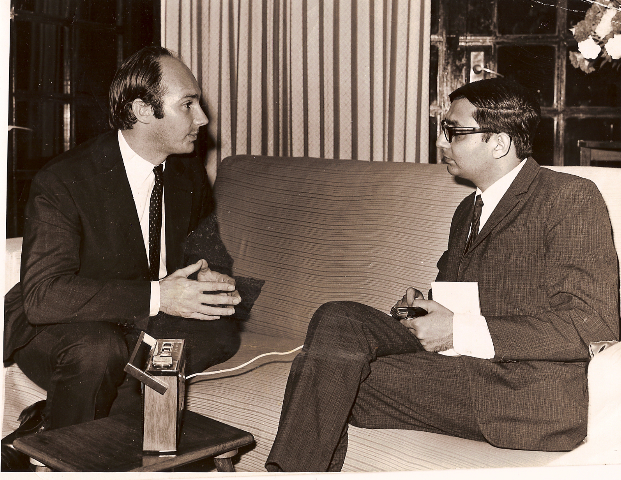
The Aga Khan being interviewed by Mansoor Ladha, one of the few Ismaili journalists who has had the privilege to interview the Aga Khan.

1970: Mansoor Ladha interviewing His Highness the Aga Khan for Tanzania’s daily, The Standard (now Daily News). Photo: Mansoor Ladha Collection. Copyright.

Mehboob (Mebs), the youngest brother, was sponsored by Shiraz and his Catholic wife to study in America. The poor chap ended up in a Catholic school where he had to “confess” his sins every week and attend mass. He left with no verdict on his sinfulness but an abiding love of wine.

Ladha himself left his beloved Tanzania as he could no longer live in the post-independence Tanzania where nationalization had rendered his family financially emasculated and Africanization had closed the doors of employment at the highest echelons for all the muhindis. Such elite positions were reserved for Africans, as they were for Europeans in the colonial period.

He did visit his beloved Tanzania twice as a tourist and also made two journeys to his grandparents’ ancestral homes in Gujarat. Canada became his new, permanent home but the barriers facing non-white immigrants surfaced often. Through determination and even daring, he became the editor and publisher of several weeklies in Alberta. Later he retired after selling his newspaper business, making Calgary his home.

Suffice to say, this interesting and enlightening memoir should be worthy of consideration by diasporic book clubs. Most of the fifteen chapters contain experiences, episodes and opinions likely to generate animated exchanges.

Besides being a valuable addition to one’s own library, it would be a suitable gift for your colleagues and neighbors who often ask the diasporic muhindis: “What is your nationality?” But they actually are curious about your country of origin, why you are not black if you came from Africa, and reasons for being in “their” countries.

Finally, many readers may be inspired by Ladha‘s memoir to tell their own stories in their own memoirs.

Date posted: December 27, 2018.

________________________

To acquire Mansoor Ladha’s book including the Kindle Edition please click https://www.amazon.ca/Memoirs-Muhindi-Fleeing-East-Africa/dp/0889774749.

Nizar Motani on the Aga KhanNizar A. Motani has a doctorate from the University of London (SOAS) in African history, specializing in British colonial rule in East Africa. He has been a college professor at Bowdoin College (Brunswick, ME) and Western Michigan University (Kalamazoo, MI). He was the first Publication Officer at the Institute of Ismaili Studies (London, UK). He now lives in Atlanta, Georgia.

Readers will be also be interested in the following pieces by Dr. Motani that were published on Simerg and Barakah: 

___________________

Additional reviews of Mansoor Ladha’s Memoirs at:

The Life of Jehangir Merchant: Ismaili missionary who rendered long and dedicated services to the Jamat and the Imam-of-the-Time

PLEASE CLICK: “Life of Jehangir” – includes historical photographs of Mawlana Hazar Imam

Please click on image for “Life of Jehangir” in photos.

Date posted: September 11, 2018.

_________________

Ismailis of Eastern Canada are ready for their holy encounter with Mawlana Hazar Imam: At mulaqat, steal a glance of his sacred presence and soak in his light

(Two poems and a beautifully composed new song for mulaqat with Mawlana Shah Karim Hazar Imam, His Highness the Aga Khan)

Didar

Tears of Joy: The Mulaqat at Montreal

A Tribute to the Imagery of Ibn Farid

By KARIM H. KARIM

As I turned to gaze
These orbs turned translucent;
Although sight betrayed me
In concealing your form,
Every atom spoke of your presence.

Whenever I stole a glance,
Your sublime vision
shattered this frail being:
Racking my frame and soothing my soul –
All in a searing instant.

Senseless with the spirit
Of your sacred presence,
I am sans reason
I am sans speech:
I only gaze in a glassy-eyed stupor.

This poem was written by Professor Karim H. Karim of Carleton University following Mawlana Hazar Imam’s first visit to the Canadian Jamat in November 1978. He was at that time majoring in Islamic Studies at Columbia University and had travelled to Montreal from New York for the mulaqat.

The poem is a tribute to the 12th century sufi mystic, Ibn al-Farid, who was famous for his composition of mystical qasidas depicting the torment and joys of the mystic lover. Farid’s imagery consists of hyperbolic treatment of the limbs and organs of the body, of tears that turn into overwhelming floods and the wine of spiritual ecstasy. The Divine Beloved of Ibn al-Farid is portrayed as treating him with disdain, whose mere sight inflicts severe wounds to the mystic; yet he only lives for the moment when the Beloved may deign lo look at him. The piece was originally published in Hikmat magazine.

~~~~~~~~~~~

Le Pluie

Drenched in Light

By NAVYN NARAN

Autour de moi,
Tout autour de moi
Around me, all around me,
In me and through me,
As if I do not exist, but IT does.

La lumière.
Les couleurs
Alit
je suis mouillée, je suis trempée
dans
sa présence

I am soaked, drenched in my tears and in His Light
He Arrives
Allahumm-a Sall-i ‘Ala Muhammad-in Wa Al-i Muhammad
Shah Jo Didar,
Shah Jo didar
Beneficent, and
Merciful
Blessings are showered

All around Him, all around Him
Our longing and salwaats for You. 

In these hearts and in these eyes, Noor
Autour de moi
Around and through
Bathed in light
We sit, we think, we quieten, we search. 

We await.
C’est la Noor, from Time im-memorial

Nous ne sommes pas
We are not.
YOU ARE. 
Allahu, Allahu
Ya Rahim, Ya Karim
Toward  you, is pulled my  heart. 

~~~~~~~~~

Hamaare Mawla Jo Araye…

Our Mawla who is coming

By RASHIDA DAMANI


The news of our beloved Mawla Hazar Imam’s visit for jamati work in Eastern Canada ignited a spark in Rashida Damani of Toronto which expressed itself into this devotional piece to convey our souls’ deep yearning for his Didar and its continuing ecstatic jubilations. The Ismailis of Eatern Canada who will gather in the cities of Toronto and Montreal over a 5 day period are jubilant at this time and every heart is rejoicing and dancing with joy. Our ailing hearts are craving an extension of their lives to witness the didar. The wind is ushering the news of his arrival touching the depths of my heart. All hearts are singing that its prayers will reach him at last and he will bless us with his glance that will enlighten our souls.

Date posted: November 16, 2017.

_______________

Ismaili Heritage and Traditions: Fascinating Insights into Early Recordings of Ginans and Geets

By ALNOOR JEHANGIR MERCHANT

Simerg’s recent post titled Awesome and Rare Collection of Ismaili Ginans with Music at the British Library and a number of related online contributions, especially Aly Sunderji’s sharing of the equally rare and exceptional audio recordings of devotional songs produced in Tanganyika in 1946 commemorating the Diamond Jubilee of Imam Sultan Mahomed Shah, Aga Khan III (link https://www.youtube.com/watch?v=KqxUDlY_pis&index=1&list=PL8-KGtAvEpq5s1nBIplLQA3j1RDptQ5GJ) is an opportune moment to add some further remarks on the recordings of ginans and geets* produced during the first half of the 20th century. It is hoped that these remarks and, more particularly, the recordings themselves, will provide an impetus in documenting and preserving the diversity of the Ismaili community’s musical heritage and traditions.

Original disc labels of four ginan recordings that are part of a digitization project being carried out by the British Library (clockwise from top left): Satgur miliya mune aje composed by Bibi Imam Begum and sung by Rama and Rahim Ali; Ho jire mara hansa composed by Pir Sadardin; Ab teri mohobat lagi composed by Pir Shams; and Marna hai zarur composed by Pir Imam Shah and all sung by Master Juma Kakali. Images: The British Library (collage by Simerg).

It is difficult to give a precise dating as to when the ginans digitised by The British Library as part of their Endangered Archives Programme (EPA) Project were originally recorded. The ‘Young India’ record label which, according to the British Library catalogue, published these recordings was established around 1935 and continued for approximately 20 years; thus, the recordings should be dated to the period 1935-1955. An examination of the images of the disc labels, however, provides additional information that seems to have been overlooked in the cataloguing process.

On three of the ginan recordings, the disc label states ‘Ismailia Record’, along with the following: Manufactured by National Gramophone Record Manufacturing Company, Bombay, India [and] Sole Distributers [sic], The King Record Company, Kalbadevi, Bombay. The ‘Ismailia Record’ ginan recordings are in the voice of Master Jumma Kakali. On the fourth ginan recording, the disc label states ‘Best Ismaili Record’, along with the following: Manufactured for the Bombay Record Company by the National Gramophone Record Company Limited, Bombay.

As all four ginan recordings do not mention ‘Young India’ on the disc label, it may be that ‘Ismailia Record’ and ‘Best Ismaili Record’ were independent record producers. Unfortunately, the disc labels do not contain any information on the date of production of the records. However, according to Hussain Jasani, who has undertaken some research, there is evidence to suggest that these recordings were produced during 1938. According to Jasani, one of the volumes of the community’s magazine, Ismaili, published during that year, refers to these recordings. [Paper presented by Hussain Jasani, “Preserving Community Heritage; The Oldest-known Ginan (Audio) Recordings”, IIS Alumni Association, European Chapter Group, Annual Meeting, London, 29th September 2017].

Are these the earliest recordings, musical or otherwise, of ginans? In her essay titled “Sacred Songs of Khoja Muslims: Sounded and Embodied Liturgy and Devotion”, (published in: Ethnomusicology, 48, 2 [Spring/Summer 2004]: 251-270), Amy Catlin-Jairazbhoy suggests that a number of ginan recordings made by the Dutch ethnomusicologist and pioneer in the study of South Asian music, Arnold Adriaan Bake, are the earliest. She states (p. 256):

“Probably the earliest ginan recordings were made by Arnold Bake in Karachi in 1939. These as yet unpublished field recordings were sung individually by teenaged boys, presumably found at the Karachi jama‘at (community) school.”

Three of Bake’s Karachi recordings dated 11 March 1939, which he catalogued as ‘Khoja devotional song’ have been identified as:

  • Satgur avya kai apne dwar, sung by a 14-year old boy, Karim Ali Muhammad
  • Hamdil khaleq, sung by a 14-year old boy, Rahim Ali Muhammad
  • Haq tu pak tu, sung by Sadulli M. Abdulla.

Jasani’s research suggests that the Bombay recordings, and not the Karachi ones, are the earliest. While the ginan recordings produced (most likely in 1938) as part of the ‘Ismailia Record’ and ‘Best Ismaili Record’ labels or those in the Bake collection (recorded in March 1939) may be among the earliest, it would not be out-of-place to suggest that there could be earlier recordings of ginans, musical or otherwise, which remain to be ‘discovered’.

It is known that sound recordings from South Asia began to be produced at the turn of the 20th century, with the earliest known dating to around 1899. The foremost researcher of early Indian sound recordings is Michael Kinnear. His two books, The Gramophone Company’s First Indian Recordings 1899-1907 (Bombay, 1994) and The Gramophone Company’s Indian Recordings 1908-1910 (London, 2000) document not only the history of the Gramophone Company and its successor companies’ activities in India, as well as the recording expeditions it undertook in the country, but the two volumes also provide complete listings of all known and traceable recordings taken on those expeditions. In one of his other encyclopaedic works titled The 78 RPM Record Labels of India (Apollo Bay, 2016), Kinnear covers all known record labels and histories of the companies from 1899 to the late 1960s. Perhaps, an analysis of the listings contained in Kinnear’s works will lead to the identification of ginan recordings from the first decades of the 20th century. Another important resource could be the various magazines published within the Ismaili community at the time. The Society of Indian Record Collectors may also be an avenue worth exploring. Indeed, it is from the collection of one of the members of the Society of Indian Record Collectors, Suresh Chandvakar, that some of The British Library’s ginan recordings have been digitised.

With respect to the recordings of geets, little research has been carried out. Ali Asani, in the chapter ‘The Git Tradition: A Testimony of Love’ in his work titled Ecstasy and Enlightenment: The Ismaili Devotional Literature of South Asia (London, 2002) writes (p. 71):

“The tradition of composing gits, as we know in its present form, has been associated particularly with Nizari Ismaili communities of South Asian origin….Unfortunately, we know precious little about its development. As is the case with many folk traditions that have been orally transmitted, its historical origins are quite obscure. Moreover, the gits themselves have never been systematically collected and documented.”

In his essay, Asani predominantly refers to geet recordings from the 1980s onwards. And, Amy Catlin Jairazbhoy, states that the Khoja geet emerged “at some uncertain time in the twentieth century” (p. 262). In her essay titled “Songs of Praise: the Git Tradition of the Nizari Ismaili Muslims”, in Gujarati Communities Across the Globe: Memory, Identity and Continuity, ed. by Sharmina Mawani and Anjoom A. Mukaddam (Stoke-on-Trent, 2012), pages 59-78, Sharmina Mawani writes that “few authors have focused on gits…. and the way in which this creative form of expression has flourished from one generation to another” (p. 59). Although her discussion focuses on post-1960 geets, Mawani does refer to a geet by Fateh Ali Ismail Ibrahim titled Aayi Aayi re Sakhi written specifically for the Diamond Jubilee of Imam Sultan Mahomed Shah in 1946, the original lyrics and tune of which “were inspired by the joyous and celebratory nature of the occasion” (pp. 71-72). Indeed, one of the recordings placed online by Aly Sunderji is of this geet (please click https://www.youtube.com/watch?v=E-GnZn4UC7A&index=5&list=PL8-KGtAvEpq5s1nBIplLQA3j1RDptQ5GJ)

The audio recordings shared by Aly Sunderji of devotional songs produced in Tanganyika in 1946 commemorating the Diamond Jubilee of Imam Sultan Mahomed Shah provide us with important information on the geet tradition. And, significantly, in Suresh Chandvakar’s collection, there are a number of recordings that are also most certainly part of this tradition, but which are slightly earlier date-wise.

Original disc labels of geet recordings that are part of a digitization project being carried out by the British Library. Images: The British Library (collage by Simerg).

An examination of the listing of the individual recordings from Chandvakar’s collection identifies five enigmatic entries: Aavo Sultan Raj, Golden Jubilee Part 01, Golden Jubilee Part 02, and two listed as Captain Lakhpati. Further, the disc labels on these recordings provide some fascinating information. The disc label for Aavo Sultan Raj states: Compiled by ‘Best Ismaili Record’; the disc labels for Golden Jubilee and Captain Lakhpati state: Compiled by ‘Captain Lakhpaty’. This, undoubtedly, refers to Abdullah Jaffer Lakhpati, who is considered among the founders of the H. H. the Aga Khan Bombay Volunteer Corps, and who was also a versatile poet and artist. It is known that Lakhpati was appointed as Captain of the Volunteer Corps in February 1936. With this reference date, as well as upon listening to the recordings, it is clear that these geets were most likely composed to commemorate the Golden Jubilee of Imam Sultan Mahomed Shah, Aga Khan III, in 1935-36. To date, therefore, these are the earliest musical recordings of geets.

As to the performers, Ahmed Dilawar and Prabhakar, it has not been possible, as yet, to locate any further information on these individuals. It is likely that the various publications issued by the community, such as Ismaili and Fidai, could shed more light on these specific compositions and the performer(s), as well as on the tradition and history of geets.

One final point: All the disc labels of the ginan and geet recordings identified in this article and that posted previously share a common feature. What may be considered as the ‘Headline’ banner in the top half of the disc label is either an illustration depicting an image of Imam Sultan Mohamed Shah in the centre with the red and green Ismaili standard on either side, or the Imamat Crest in the centre, again with the Ismaili standard on either side. Does this not suggest that the recordings were officially produced for circulation?

All the ginan and geet recordings, (links to the geets are provided hereunder), along with Aly Sunderji’s sharing of the Diamond Jubilee geets, provide a fascinating insight into the historical development of this tradition, and allow us to reflect anew on this musical heritage.

Link to Aavo Sultan Raj

http://sounds.bl.uk/World-and-traditional-music/Young-India-record-label-collection/025M-CEAP190X7X07-008ZV0

Link to Golden Jubilee Part 01

http://sounds.bl.uk/World-and-traditional-music/Young-India-record-label-collection/025M-CEAP190X7X06-001ZV0

Link to Golden Jubilee Part 02

http://sounds.bl.uk/World-and-traditional-music/Young-India-record-label-collection/025M-CEAP190X7X06-002ZV0

Link to Captain Lakhpati

http://sounds.bl.uk/World-and-traditional-music/Young-India-record-label-collection/025M-CEAP190X7X06-003ZV0

Link to Captain Lakhpati

http://sounds.bl.uk/World-and-traditional-music/Young-India-record-label-collection/025M-CEAP190X7X06-004ZV0

Date posted: October 1, 2017.
Last updated: October 5, 2017 (additional source(s) added by the author, Alnoor Merchant, in paragraph referencing Sharmina Mawani’s essay).

_________________

*The term used to describe a devotional ‘folk song’ is git; however, the more commoner spelling form, geet, is used in this article.

About the author: Alnoor Jehangir Merchant is an independent researcher on Ismaili studies, and a specialist advisor on rare books, coins, photographs and objets d’art relating to the worlds of Islam.

We welcome your feedback. To leave a comment please click LEAVE A COMMENT. If you encounter a technical issue, send your comment to Simerg@aol.com, Subject: Ginans and Geets.