Simerg is an independent initiative dedicated to Ismaili Muslims, the Aga Khan — their Hereditary Imam — and the Ismaili Imamat, and Islam in general through literary readings, photo essays and artistic expressions
“Despair not of the Spirit of Allah. Lo! None despaireth of the Spirit of Allah save disbelieving folk.” (Holy Qur’an, Chapter 12, Verse 87).
The recent tragedy in Karachi, where dozens of innocent Ismailis were the subject of wanton violence is extremely disquieting. Besides questioning the humanity of our fellow citizens, it may serve to bring to the fore the insecurities of a people who have been subject to religious persecution in the past and are today, without exception, minorities in every single land they live in. As the Ismailis of Karachi (and of Pakistan in general) reflect on the aftermath of this terrible tragedy, perhaps it would natural for them to give in to despondency. This, however, should be cautioned against, for the following reasons.
Today, Ismaili Jamats globally unite in prayers and solidarity with their brethren of Karachi sending a strong message that their brethren are not just a forgotten minority in a big state, but an indivisible part of a strong global brotherhood. Equally, and no less significant, is the Imam’s global work and name, which has resulted in condemnation across the globe by world leaders, and which will ensure that this tragedy will not end up as just another footnote in an unending series of attacks on religious minorities in Pakistan. As K. N. Pandita says in a recent article:
“But given the international influence and reach of Prince Aga Khan and the great humanitarian works that his Foundation is doing in many parts of the world including Karachi, the massacre is bound to cause ripples in Pakistan politics. This is the reason why the Prime Minister of Pakistan and the Army chief both lost no time in flying into Karachi to take stock of things”. [1]
There is reason to hope that from this tragedy, and from the blood of innocents, a reaffirmation of the rights of religious minorities in Pakistan will result, Inshallah.
Renowned Ismaili musician and composer, Enoo, pictured with his beloved dad in Vancouver in 2005 before the mulaqat with Mawlana Hazar Imam. Photo: Enoo archives.
IMPORTANT NOTE: Simerg invites obituaries/in memoriam pieces honouring deceased family members. Please see submission guidelines and examples by clicking Obituaries and Tributes.
Originally aired on PBS to a word-wide audience exceeding 150 million people
“CANDID, THOUGHTFUL AND VISUALLY STUNNING” – Los Angeles Times
Prophet Muhammad (s.a.s) changed world history in 23 years and continues to shape and inspire the lives of more than 1.4 billion Muslims around the world.
Simerg is pleased to make available for its readers around the world a link to the film, Muhammad: Legacy of a Prophet, that was originally aired on PBS to a world-wide audience exceeding 150 million people. The internet age is a blessing of our time that, through outstanding movies such as this, we are able to learn more about the wonderful and noble qualities of Prophet Muhammad. In his Presidential Address to the Seerat Conference in 1976, His Highness the Aga Khan had asked:
“In the face of this changing world, which was once a universe to us and is now no more than an overcrowded island, confronted with a fundamental challenge to our understanding of time, surrounded by a foreign fleet of cultural and ideological ships which have broken loose, I ask, ‘Do we have a clear, firm and precise understanding of what Muslim Society is to be in times to come?’ And if as I believe, the answer is uncertain, where else can we search then in the Holy Qur’an, and in the example of Allah’s last and final Prophet?”
His Highness continued:
“The Holy Prophet’s life gives us every fundamental guideline that we require to resolve the problem as successfully as our human minds and intellects can visualise. His example of integrity, loyalty, honesty, generosity both of means and of time, his solicitude for the poor, the weak and the sick, his steadfastness in friendship, his humility in success, his magnanimity in victory, his simplicity, his wisdom in conceiving new solutions for problems which could not be solved by traditional methods, without affecting the fundamental concepts of Islam, surely all these are foundations which, correctly understood and sincerely interpreted, must enable us to conceive what should be a truly modern and dynamic Islamic Society in the years ahead.”
Some of these examples from the Prophet’s life come alive through this ground-breaking PBS film, which takes the viewers from the ancient Arabian sites where Prophet Muhammad’s story unfolded to the homes, mosques, and workplaces of some of America’s estimated seven million Muslims. The Los Angeles Times called the film “a candid, thoughtful, flowing, visually stunning film,” while The Catholic News Service commented that the Prophet’s biography offers viewers fresh insights into the spiritual foundations of Islam.
Readers can watch a preview of the film as well as the the full-length movie by clicking on the following image:
Please click for links to full length movie and excerpts
“By the generosity of the Imam of the time, we say that Paradise in truth is the Intellect, and the Gateway of paradise is the Prophet (peace and salutation be upon him) during his time, and his wasi, his rank, and the Imam of the time during his age. The Key to the gateway of paradise is the utterance of the phrase, La ilaha illa Allah, Muhammadan rasul Allah.”
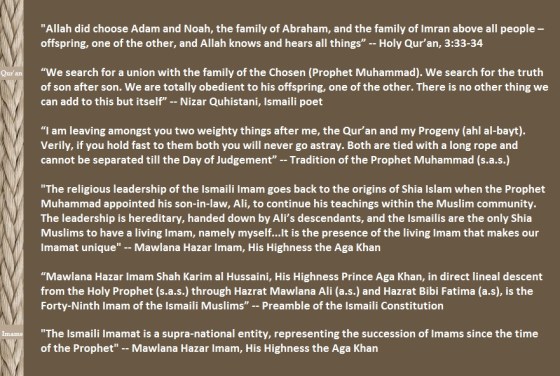
The excerpts shown below from the Holy Qur’an, the tradition of the Prophet Muhammad (s.a.s.) and speeches of Mawlana Hazar Imam, His Highness the Aga Khan, are quite clear about who the term Ahl al-Bayt refers to. However, Farhad Husseinali Patni gives further light on the subject by providing examples and references from early Islamic History, going back to the life of the Prophet and Qur’anic revelation. Please read this important article by clicking on “Ahl al-Bayt” – An Understanding Based on the Holy Qur’an, Hadith and Historical Events or on the image below.
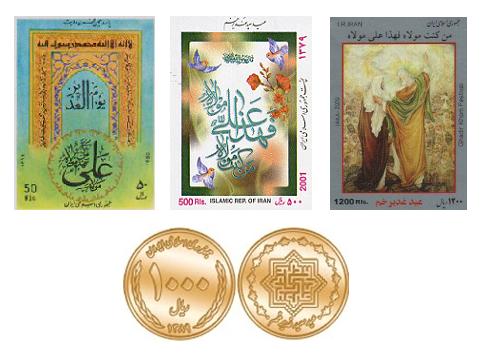
‘Id-e-Ghadir is celebrated by the Shi ‘ite communities to mark the event that took place at Ghadir Khumm (Valley of the Pond) on the 18th Dhul-Hijjah. This event commemorates the designation (appointment by way of nass) of Hazrat All as the ‘Amir-ul-Mu’minin (commander of the faithful) and Imamul-Muslimin’ (the Imam of the community of believers) at Ghadir-i Khumm when the Prophet (s.a.s.) was returning from his Last Pilgrimage (hajjatul-wida) in the year 632 AC. On this occasion, the Prophet publicly proclaimed Ali to be his successor [1] in guiding the community after the end of the institution of Nubuwwah. According to the Shi’a doctrine, tradition and interpretation of history, the designation of Hazrat Ali marked the beginning of the institution of Imamah. The designated Imam was to continue the ta’wil (interpretation) and talim (teaching) of Allah’s Final Message, i.e. the Holy Qur’an.
Images of some stamps and coins issued by the Islamic Republic of Iran between 1990 and 2010 commemorating the Idd-e-Ghadir. The inscriptions inlude the Shahada, Qur’anic ayats and the declaration made by Prophet Muhammad at Ghadir Khumm, “Mun Koontu Mawla, Fa Hada, Aliyun Mawla” meaning “He of whom I am the Mawla Ali is also the Mawla.”
Accordingly, throughout the course of the history, the Shi’a have commemorated this occasion as a mark of recognition and acceptance of Allah’s mercy to mankind by bestowing continued guidance. Each Imam, since the time of Hazrat Ali has designated his successor. The Imam in his time has continued to guide his followers according to the prevailing conditions. His function has always been to look after the welfare of the community both in spiritual and worldly (material) matters. His guidance to his followers is that they should lead their lives in such a way so as to practice their Faith with a sense of balance and harmony, ensuring that there is no conflict between the two aspects of an individual’s life. The practice of the Faith thus becomes the way of life.
Presently, the Shi’a Imami Ismaili Muslims celebrate the day of accession of their present Imam to the office of Imamah as Yaum-e Imamat or Imamat Day. This occasion is celebrated as a mark of gratitude to Allah in having bestowed His mercy and bounty in guiding them through the office of the Imam on Sirat al-Mustaqim (the Straight Path).
II
“Muhammad said: ‘He of whom I am the Mawla, Ali is his Mawla. O God, be the friend of him who is his friend and be the enemy of his enemy.’
“This became the proof text for the Shia claim that Ali, the Prophet’s cousin and son-in-law, was the Prophet’s rightful successor after the Prophet’s death in 632. The meaning of Mawla here probably implies the role of patron, lord or protector.” – History in Quotations by M. J. Cohen and John Major.
III
“…As you know, the Shi’a divided from the Sunni after the death of the Prophet Muhammad. Hazrat Ali, the cousin and son-in-law of the Prophet, was, in Shi’a belief, named by the Prophet to be the Legitimate Authority for the interpretation of the faith. For the Shi’a today, all over the world, he is regarded as the first Imam.” – His Highness the Aga Khan, Tutzing Evangelical Academy, May 20, 2006. [1]
IV
His Highness the Aga Khan seen ordaining a new constitution for the Ismaili community worldwide. Clause (G) of the Preamble states: “Mawlana Hazar Imam Shah Karim al Hussaini, His Highness Prince Aga Khan, in direct lineal descent from the Holy Prophet (s.a.s.) through Hazrat Mawlana Ali (a.s.) and Hazrat Bibi Fatima (a.s), is the Forty-Ninth Imam of the Ismaili Muslims.”
“In accordance with Shia doctrine, tradition, and interpretation of history, the Holy Prophet (s.a.s.) designated and appointed his cousin and son-in-law Hazrat Mawlana Ali Amiru-l-Mu’minin (a.s), to be the first Imam to continue the Ta’wīl and Ta‘līm of Allah’s final message and to guide the murids, and proclaimed that the Imamat should continue by heredity through Hazrat Mawlana Ali (a.s) and his daughter Hazrat Bibi Fatimat-az-Zahra, Khātun-i-Jannat (a.s).” – The Preamble of The Constitution of the Shia Imami Ismaili Muslims. [2]
V
“The Ismaili Imamat is a hereditary institution of Muslim leadership, linked to Prophet Muhammad (peace be upon him and his family) by direct lineal descent through Hazrat Ali, his cousin and son in law. The line of Ismaili Imams has continued uninterrupted by hereditary succession from Hazrat Ali through to the present, 49th Imam, His Highness the Aga Khan.” – The Aga Khan Development Network (AKDN) , Brazil and the Ismaili Imamat sign a Protocol. [3]
VI
“Allah did choose Adam and Noah, the family of Abraham, and the family of Imran above all people – offspring, one of the other, and Allah knows and hears all things.” (Sura 3, Ayats 33-34).
With regard to the above verse, the Ismaili poet Nizar Quhistani explained:
“We search for a union with the family of the Chosen (Prophet Muhammad). We search for the truth of son after son. We are totally obedient to his offspring, one of the other. There is no other thing we can add to this but itself. We endeavour in our faith so that we do not turn out to be faithless.” – Quoted in Ismailis in the Middle Ages by Shafique Virani.
“…This tale belongs to ages past. It goes back to the era of Hazrat Imam Zainul Abideen (a.s.), our third Imam, from whose veins was to ensue the Divine Line of the Imams. He was the Imam who, on the battlefield of Karbala, received the nass of Imamat from his father, Hazrat Imam Hussain (a.s.) with the blessing: “Through you the line of Imamat will continue till the Day of Judgment…”
Jamat and Volunteers Speak from the Heart on this Auspicious and Historical Day
BY MALIK MERCHANT Editor, Simerg and Simergphotos
Happy Ismaili youth pictured at the Park at 10:30 pm after completing their volunteer duties at the Ismaili Centre on the opening day. Photo: Malik Merchant/Simerg.
Happiness, happiness — it was all around me as I walked about with enthusiasm to capture the spirit of the jamat on the historic occasion of the opening of the new Ismaili Centre in Toronto. I heard mubarakis (congratulations) everywhere as joyous Ismailis greeted and hugged each other after hearing a Talika (a written communication) from their beloved 49th Imam, Mawlana Shah Karim al Hussaini Hazar Imam or His Highness the Aga Khan. The President of the Ismaili Council for Canada, Mr. Malik Talib, read the Talika, after which he conveyed the Canadian Jamat’s immense gratitude to the Imam for his benevolence, by gifting the Jamat with a marvellous new Ismaili Centre. The spirit of the occasion was overwhelming and I set out to capture happy moments and excitement with my camera. This, to me, would be inadequate. Photos alone could not do justice – I wanted to hear voices, words that would inspire me and readers of this website. I came across individuals during the course of 2 hours who enlightened me with their humility and wisdom as well as their dedication to the House of Imamat – whether they were volunteers or simply murids of the Imam. They spoke to me from the depths of their hearts. I hope this small post does a little bit of justice to the magnificent event that took place yesterday.
The Ismaili Centre glows and reflects in water on the night of the historic opening day for members of the Ismaili community. Photo: Malik Merchant/Simerg. Copyright.
President Malik Talib and Vice President Moez Rajwani of Ismaili Council for Canada pictured in the Social Hall with a few of the many hundreds of volunteers who served at the Ismaili Centre in Toronto when it opened on Friday, September 19, 2014. The design in the background is based on an Ottoman textile. Photo: Malik Merchant/Simerg. Copyright.
A team of Ismaili volunteers are seen pictured in the Social Hall of the new Ismaili Centre in Toronto which opened for the Ismaili community on Friday, September 19 , 2014. Photo: Malik Merchant/Simerg. Copyright
VOICES FROM THE JAMAT AND THE VOLUNTEERS (I)
~~~~~~~
A senior citizen enjoys a glass of sherbet as he celebrates the opening of the Ismaili Centre in Toronto. Photo: Malik Merchant/Simerg. Copyright.
Mr. Ameeraly Ratansy and his wife, Mrs. Shirin Ratansy, at the Ismaili Centre on the opening day, Friday, September 19, 2014. Photo: Malik Merchant/Simerg. Copyright.
One of several meeting areas on the main floor of the Ismaili Centre in Toronto which opened to members of the Ismaili community on Friday, September 19, 2014. Photo: Malik Merchant/Simerg. Copyright.
Visitors standing in front of a sculptural calligraphy by the German Muslim artist Karl Schlamminger; this calligraphic composition represents Allah, Muhammad and Ali. Schlamminger’s works are also to be found at the Ismaili Centres in London, England, and Lisbon, Portugal. Photo: Malik Merchant/Simerg. Copyright.
VOICES FROM THE JAMAT AND THE VOLUNTEERS (II)
VOICES FROM THE JAMAT AND THE VOLUNTEERS (III)
~~~~~~~
The Ismaili Tariqah and Religious Education Board’s literature counter on the opening night of the Ismaili Centre. Tasbihs were among the most popular items. Photo: Malik Merchant/Simerg. Copyright.
Visitors are seen receiving an explanation of calligraphies representing the names of Prophet Muhammad (s.a.s), Hazrat Ali (a.s.), Hazrat Bibi Fatimah (a.s.), Hazrat Hassan (a.s.) and Imam Hussein (a.s.) located on the main floor of the new Ismaili Centre in Toronto. This calligraphy was designed by Minaz Nanji of Aiglemont. Photo: Malik Merchant/Simerg. Copyright.
A view of the indoor parking garage of the new Ismaili Centre in Toronto. Hundreds of cars can be parked indoors. Photo: Malik Merchant/Simerg. Copyright.
Entrance to the Ismaili Centre from the indoor parking garage. Facing the entrance is a fascinating work of Islamic calligraphy representing the opening of the Holy Qur’an, the Basmallah as seen in the next photo. Photo: Malik Merchant/Simerg. Copyright.
The Basmallah is repeated four times in this iconic piece designed by German Muslim artist Karl Schlamminger. The calligraphy is the first piece that members will see as they enter the building from the indoor parking garage – see previous photo. Above and below are angled photos taken from either side. Photos: Malik Merchant/Simerg. Copyright.
VOICES FROM THE JAMAT AND THE VOLUNTEERS (IV)
Visitors view two calligraphies on the lower level of the Ismaili Centre. They are by German Muslim artist Karl Schlamminger; they depict the Basmallah and the the Qur’anic phrase Nurun ala Nur (Light upon Light). Photo: Malik Merchant/Simerg. Copyright.
VOICES FROM THE JAMAT AND THE VOLUNTEERS (V)
~~~~~~~
Jamati members on the move as they try to see as much of the Ismaili Centre when its doors opened for the first time for members of the Ismaili community. Photo: Malik Merchant/Simerg. Copyright.
Visitors take time to view one of the many wall exhibits displayed at the Ismaili Centre. This montage provides an overview of the construction phases of the Ismaili Centre. Photo: Malik Merchant/Simerg. Copyright.
A unique blend of art work, calligraphy and photos are exhibited along the corridor spaces of the Ismaili Centre. A visitor walks by one such exhibit, giving the Centre the feel of a Gallery in certain areas. Photo: Malik Merchant/Simerg. Copyright.
After spending several hours at the Ismaili Centre visitors rest their tired feet on the seating located in front of the reading lounge. Many had arrived as early as 5 pm to ensure that they had a place to sit inside the Jamatkhana. Photo: Malik Merchant/Simerg. Copyright.
A view of the reading lounge. Photo: Malik Merchant/Simerg. Copyright.
The Social Hall, where the official inauguration ceremony of the Ismaili Centre took place on Friday, September 12, 2014, in the presence of His Highness the Aga Khan and Canadian Prime Minister Stephen Harper, became the central meeting place for yesterday’s opening. Ismailis gathered here and were served sherbet (a sweetened milk drink reserved for happy occasions). Photo: Malik Merchant/Simerg. Copyright.
VOICES FROM THE JAMAT AND THE VOLUNTEERS (VI)
~~~~~~~~~~~~~
The sherbet stand at the Ismaili Centre’s Social Hall at its opening on Friday, September 19, 2014. Photo: Malik Merchant/Simerg. Copyright.
Ismaili volunteers cheerfully raise their glasses to celebrate the Ismaili Centre’s first day for members of the Ismaili community. The volunteers bring smiles to countless members within their own community as well as to other communities through numerous outreach programs. Photo: Malik Merchant/Simerg. Copyright.
VOICES FROM THE JAMAT AND THE VOLUNTEERS (VII)
~~~~~~~~~~
VOICES FROM THE JAMAT AND THE VOLUNTEERS (VIII)
Taking comfort and rest: An elder from the jamat of Afghanistan, now settled in Canada. Photo: Malik Merchant/Simerg. Copyright.
….With her family and friends. Photo: Malik Merchant/Simerg. Copyright.
VOICES FROM THE JAMAT AND THE VOLUNTEERS (IX)
~~~~~~~~~~
Approximately 10 pm. The crowds subside as the Centre prepares to close its doors after an extraordinary day in the life of the Canadian Ismaili community. Photo: Malik Merchant/Simerg. Copyright.
One of the last vehicles to depart the Ismaili Centre following the historic day. Photo: Malik Merchant/Simerg. Copyright.
Members of the jamat pose for a photo at the Park after the conclusion of the evening’s celebration at the Ismaili Centre. Photo: Malik Merchant/Simerg. Copyright.
Alykhan (centre) is pictured in the Park with his dad and mum, Shafiq Dhanji and Rozina Dhanji, after the conclusion of the evening celebrations at the Ismaili Centre. Photo: Malik Merchant/Simerg. Copyright.
LAST WORDS – FROM A VOLUNTEER (AND MAJOR) WHO HAS SERVED THE JAMAT FOR FIFTY YEARS
Date posted: Saturday, September 20, 2014. Last updated: Sunday, September 21, 2014, 13:45 (incorrect photo caption, see below).
Copyright: Simerg. 2014.
___________________
Subscription: Be informed about new post notifications automatically. Subscribe to the blog by simply entering your email at top right of this page, and confirming the subscription notice sent to your email.
Feedback:We welcome feedback/letters from our readers. Please click onComments or send your letter to simerg@aol.com. Your feedback may be edited for length and brevity, and is subject to moderation. We are unable to acknowledge unpublished letters.
Correction:In an earlier version of this post, Shafiq Dhanji, his wife Rozina and their son Alykhan were captioned under a different photo. Their photo was missing altogether. Our apologies to them and other families for any confusion this may have caused.
Faith (Iman) is like a tree, the roots of which go into the heart: its trunk is in reason, and its branches are in the instincts, while imagination is its new shoots and leaves – (senses of) the body. The foundation (asl) of faith is love for the Imam-e-Zaman (the Imam of the Time). And if this foundation, that is, this love, and the roots of faith are strong and in good condition, all other parts of the tree, such as its trunk, its branches and leaves, can be expected to continue to flourish even if they are (accidentally) damaged. If, on the contrary, the roots are not well grounded, or even rotten, the whole tree will soon dry, and then will become good for nothing except to be used as fuel.
Thus love for Mawlana Hazar Imam is everything, being the root of faith. If it is not strong, all the acts of outward piety (a’mal-i zahiri) which are like leaves of the tree, will fade. If you have thousands of leaves, fresh and of good colour, they will dry in a short time, and then a very small fire will be sufficient to burn them completely.
~~~~
2. LOVE FOR HAZAR IMAM
by Imam Ja’far as-Sadiq
It is related from Imam Ja’far as-Sadiq (a.s.) that a group of Shias visited him one day. One in the group addressed the Imam and spoke of a man who was with them.
“O Son of the Messenger of God: this man has love for you.”
On hearing these words, the Imam looked at the person and said:
“The best kind of love is the love for the sake of God and His Messenger. There is no gain in any other kind of love.”
The Imam then continued.
“Once the ansars [helpers] came to Hazrat Muhammad Mustafa (s.a.s.) and said, ‘O Messenger of God! We were on the wrong path and Allah guided us through you. We were destitute and we prospered by your blessings. For this reason, you may ask of anything you desire from our belongings and we shall give it to you.’
“At this, the following verse was revealed by Allah, ‘Say (O Muhammad): No reward do I ask (for my favours) except your love for my kith and kin’.”
Moved to tears, Imam Ja’far as-Sadiq then raised his hands and exclaimed:
“Praise be to God, Who has exalted us above all.”
___________
“Faith” adapted from Risala dar haqiqat-i din by Pir Shihabu’d-Din Shah Al-Husayni, translated as True Meaning of Religion by Wladimir Ivanow. Pir Shihabu’d-Din Shah was the eldest son of the 47th Ismaili Imam, Aga Ali Shah, also known as Aga Khan II. The Pir was only 33 when he died due to a chest related illness, a few months before the demise of his own father, Imam Aga Ali Shah. Mawlana Shah Sultan Mahomed Shah, His Highness the Aga Khan III, then only 8 years old, succeeded to the throne of Imamat as the 48th Imam.
“Love for Imam” excerpted from article by Jehangir Merchant and Alnoor Bhatia published in Ilm, Volume 5, Number 1 (July 1979). The article was based on the Gujarati edition of Qadi al-Numan’s work, Da’aim al-Islam.
“We search for a union with the family of the Chosen (Prophet Muhammad). We search for the truth of son after son. We are totally obedient to his offspring, one of the other. There is no other thing we can add to this but itself. We endeavour in our faith so that we do not turn out to be faithless.” Ismaili poet NIZAR QUHISTANI
~~~~~~~~~
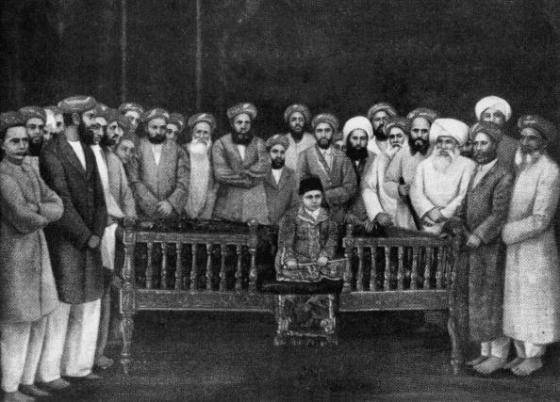
Mawlana Sultan Mahomed Shah, His Highness the Aga Khan III, is pictured above at his enthronement as 48th Imam of the Shia Ismaili Ismaili Muslims in Bombay at the age of seven. His reign lasted for 72 years. In his will, he proclaimed Prince Karim Aga Khan as the 49th Imam with the following words:
“Ever since the time of my first ancestor Ali, the first Imam, that is to say over a period of thirteen hundred years it has always been the tradition of our family that each Imam chooses his successor at his absolute and unfettered discretion from amongst any of his descendants whether they be sons or remoter male issue.
“In view of the fundamentally altered conditions in the world in very recent years due to the great changes which have taken place including the discoveries of atomic science I am convinced that it is in the best interests of the Shia Moslem Ismailian Community that I should be succeeded by a young man who has been brought up and developed during recent years and in the midst of the new age and who brings a new outlook on life to his office as Imam.
“I appoint my grandson Karim, the son of my son Aly Salomone Khan to succeed to the title of Aga Khan and to be the Imam and Pir of all my Shia Ismailian followers.”
~~~~~~~~~
Through the special designation (or the Nass) of the late Imam, Shah Karim al-Hussaini became the 49th hereditary Imam of the Nizari Ismailis at the age of twenty.
Shortly after, the newly enthroned Imam met Ismaili leaders and representatives from around the world, and also made the following statement:
“My grandfather dedicated his life to the Imamat and Islam, both of which came first, and above all other considerations. While I was prepared that one day I might be designated the Aga Khan I did not expect it so soon. I follow a great man in a great responsibility and he could have given me no more appreciated honour than to bequeath me this spiritual leadership. My life, as his, will be dedicated to the service of my followers.”






 A team of Ismaili volunteers are seen pictured in the Social Hall of the new Ismaili Centre in Toronto which opened for the Ismaili community on Friday, September 19 , 2014. Photo: Malik Merchant/Simerg. Copyright
 A senior citizen enjoys a glass of sherbet as he celebrates the opening of the Ismaili Centre in Toronto. Photo: Malik Merchant/Simerg. Copyright.
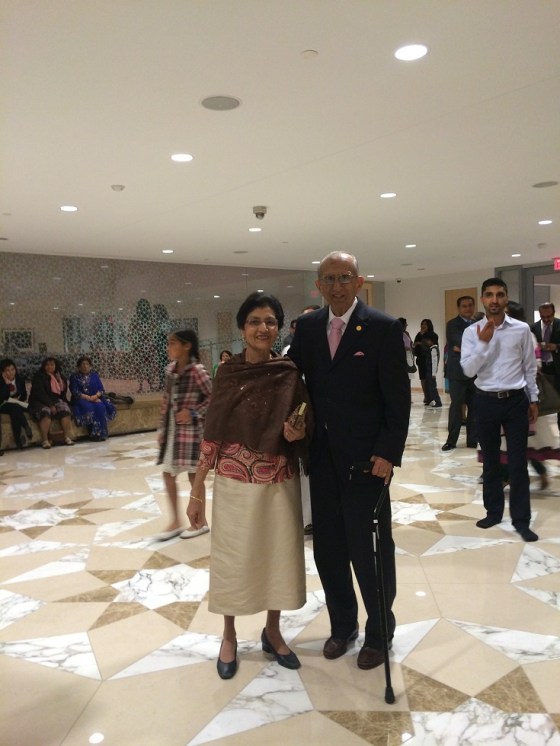 Mr. Ameeraly Ratansy and his wife, Mrs. Shirin Ratansy, at the Ismaili Centre on the opening day, Friday, September 19, 2014. Photo: Malik Merchant/Simerg. Copyright.
 One of several meeting areas on the main floor of the Ismaili Centre in Toronto which opened to members of the Ismaili community on Friday, September 19, 2014. Photo: Malik Merchant/Simerg. Copyright.
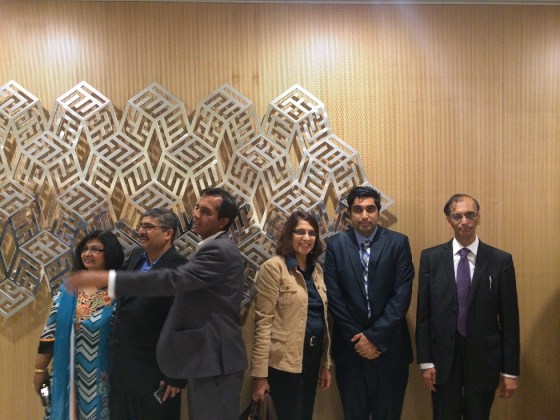 Visitors standing in front of a sculptural calligraphy by the German Muslim artist Karl Schlamminger; this calligraphic composition represents Allah, Muhammad and Ali. Schlamminger’s works are also to be found at the Ismaili Centres in London, England, and Lisbon, Portugal. Photo: Malik Merchant/Simerg. Copyright.
 The Ismaili Tariqah and Religious Education Board’s literature counter on the opening night of the Ismaili Centre. Tasbihs were among the most popular items. Photo: Malik Merchant/Simerg. Copyright.
 A view of the indoor parking garage of the new Ismaili Centre in Toronto. Hundreds of cars can be parked indoors. Photo: Malik Merchant/Simerg. Copyright.
 Entrance to the Ismaili Centre from the indoor parking garage. Facing the entrance is a fascinating work of Islamic calligraphy representing the opening of the Holy Qur’an, the Basmallah as seen in the next photo. Photo: Malik Merchant/Simerg. Copyright.
 The Basmallah is repeated four times in this iconic piece designed by German Muslim artist Karl Schlamminger. The calligraphy is the first piece that members will see as they enter the building from the indoor parking garage – see previous photo. Above and below are angled photos taken from either side. Photos: Malik Merchant/Simerg. Copyright.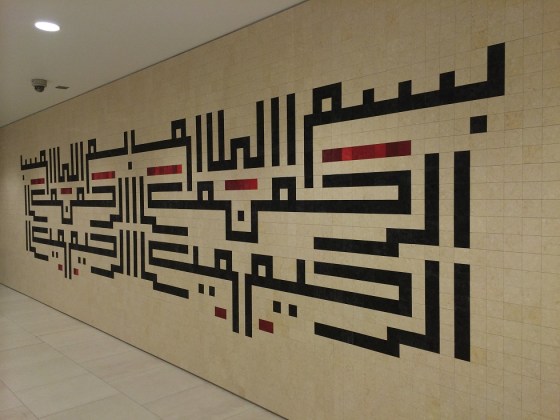

 Jamati members on the move as they try to see as much of the Ismaili Centre when its doors opened for the first time for members of the Ismaili community. Photo: Malik Merchant/Simerg. Copyright.
 Visitors take time to view one of the many wall exhibits displayed at the Ismaili Centre. This montage provides an overview of the construction phases of the Ismaili Centre. Photo: Malik Merchant/Simerg. Copyright.
 A unique blend of art work, calligraphy and photos are exhibited along the corridor spaces of the Ismaili Centre. A visitor walks by one such exhibit, giving the Centre the feel of a Gallery in certain areas. Photo: Malik Merchant/Simerg. Copyright.
 After spending several hours at the Ismaili Centre visitors rest their tired feet on the seating located in front of the reading lounge. Many had arrived as early as 5 pm to ensure that they had a place to sit inside the Jamatkhana. Photo: Malik Merchant/Simerg. Copyright.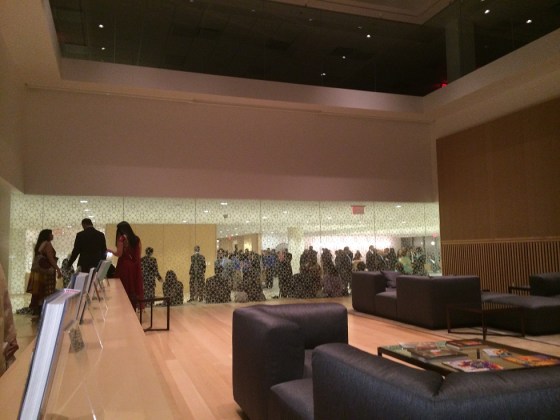


 Ismaili volunteers cheerfully raise their glasses to celebrate the Ismaili Centre’s first day for members of the Ismaili community. The volunteers bring smiles to countless members within their own community as well as to other communities through numerous outreach programs. Photo: Malik Merchant/Simerg. Copyright.
 Taking comfort and rest: An elder from the jamat of Afghanistan, now settled in Canada. Photo: Malik Merchant/Simerg. Copyright.
 ….With her family and friends. Photo: Malik Merchant/Simerg. Copyright.


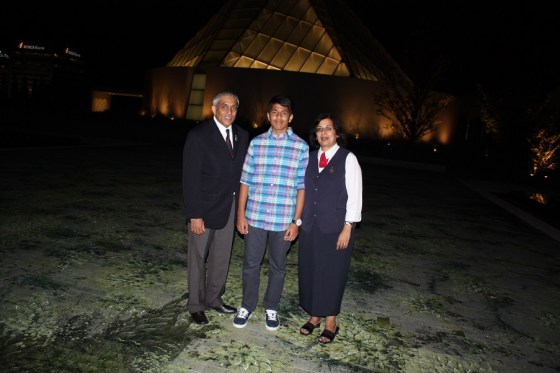 Alykhan (centre) is pictured in the Park with his dad and mum, Shafiq Dhanji and Rozina Dhanji, after the conclusion of the evening celebrations at the Ismaili Centre. Photo: Malik Merchant/Simerg. Copyright.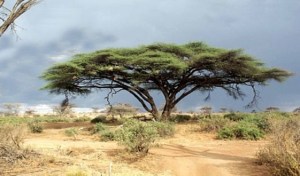



 Simerg - Insights from Around the World