Simerg is an independent initiative dedicated to Ismaili Muslims, the Aga Khan — their Hereditary Imam — and the Ismaili Imamat, and Islam in general through literary readings, photo essays and artistic expressions
Inna lillahi wa inna ilayhi raji’un “Surely we belong to God and to Him we return” — Holy Qur’an, 2:156
“Life is a great and noble calling, not a mean and grovelling thing to be shuffled through as best as we can but a lofty and exalted destiny.” — Mawlana Sultan Mahomed Shah, His Highness the Aga Khan III (1877-1957), 48th Imam of the Shia Imami Ismaili Muslims.
Raisaheba Sakina Allibhoy Mahomed (1927 – 2026) pictured on January 25, 2025, on her 98th birthday. Photograph: Abdulmahomed Alibhoy Mahomed Family Collection, Madrid.
It is with deep sadness that I share the news of the passing of my beloved aunt, Raisaheba Sakina Allibhoy Mahomed (nee Ali Prados), in Madrid, Spain, on Saturday, January 10, 2026, two weeks before her 99th birthday. She is survived by her four children, AbdulSultan, Gulam, Yasmin and Shamsah; grandchildren Jan Rashid, Omar, Yasmin, Nizar, Rebeca Laila, Gabriel Aziz, David Ali and Hana; sister Gulbanu Ali Prados; and brother Khanmahomed Ali Prados. Sakina was the granddaughter of the esteemed Ismaili missionary Jamal Meghji Mukhi and the daughter of Ashad Ali Haji, both of whom reflected her notable lineage. Her funeral will take place on Friday, January 16, at the Imaili Centre in Lisbon, starting at 1:30 PM local time.
Sakina aunty died of old age, yet her ability to communicate with her family members until her last day highlights her enduring resilience, strength and courage. I personally spoke to her just a few weeks ago, when I discussed my visit to Houston for the opening of the Ismaili Center by Mawlana Hazar Imam, His Highness the Aga Khan, on November 6, 2025.
Regular readers of this website may have watched with great interest a YouTube video presented by the Ismaili a few years ago that familiarized our viewers with the history of the Spanish Jamat and its first settlement in Spain in 1914. This narrative is missing when discussing recent Ismaili migrations to Europe in the 20th century. Sakina Aunty, who was 93 when I first posted the film in 2020, introduced the film with great insight, wisdom, and passion, and one quickly realizes her immense faith and love for the Imam-of-the-Time, Mawlana Shah Karim, whose leadership continues to inspire us all. Of course, the news of his passing on February 4, 2025, was received by her with deep sadness, yet she found comfort in Mawlana Shah Rahim Hazar Imam’s pronouncement as the 50th Imam, which touched her deeply. Her wish to travel from Madrid to Lisbon for the recent Didar did not materialize due to mobility issues. Still, she was deeply gratified and touched that her son, Gulam, and daughter, Yasmin, were able to present themselves before Mawlana Hazar Imam on behalf of the Madrid Jamat.
Story continues below
Must Watch YouTube Video on Jamat in Spain
As the YouTube story goes, Sakina Aunty, who was born in Madrid on January 25, 1927, accompanied her father, Ashad Ali Haji, to India in 1947. The trip lasted 3 months, and during this time she met my father Jehangir’s older brother, Abdulmahomed, whom she would marry 3 years later. They would spend the next 10 years in India, mainly in Kolkata (then Calcutta). The couple then lived in London, England, until the mid 1960’s before settling down with their four children — AbdulSultan, Yasmin, Gulammahomed and Shamsah — in Madrid.
While in London, my uncle Abdulmahomed served as Kamadiasaheb and Mukhisaheb of the Jamat at 5 Palace Gate. He and my father, Jehangir, both passed away six months apart, about 8 years ago. Apparently, because they used different surnames, many Jamati members do not know the family link — my uncle used the surname Allibhoy Mahomed, and my father used Merchant. Their father, Allibhoy Mohamed, manufactured leather goods and traded as a leather merchant, and I suspect that’s how I have Merchant as my surname.
Story continues below
Photo taken in Madrid at the wedding of Gulammahomed (missing in photo). From left to right: Maria Jose, AbdulSultan, Yasmin, Jehangir Alibhai Merchant, Shamsah, Abdulmahomed Allibhoy Mahomed, Sakina Allibhoy Mahomed, Gulbanu and Felipe. Photo: Jehangir Merchant Family Collection.
~~~~~~~~
A Diamond Jubilee moment: Sakina Allibhoy Mahomed and Mrs. Merchant with Shamsah, Alnoor, Shellina and Shams (standing at left) at the Diamond Jubilee food court, Lisbon, July 2018. Photograph: Submitted by Feriyal Merchant.
~~~~~~~~
Sakina and her lifelong husband Abdulmahomed watch the Spanish Jamat exhibition hosted at the Ismaili Centre in Lisbon. Photograph: Still from the Ismaili video.
Over the past 50 years, I have had the privilege of meeting Sakina Aunty and my four cousins, as well as their families, several times. My family — my mother, Mrs. Merchant, my brother Alnoor and Shellina, and I — last met Sakina in Lisbon in July 2018, during Mawlana Shah Karim’s Diamond Jubilee visit. Abdulmahomed uncle is buried in Lisbon, and we joined the family at his burial site to pay our respects and pray for his soul, which always reminds me of our enduring family bonds.
Sakina aunty had a photographic memory, enabling her to recount every vital incident from her childhood onwards with precise detail. Once she began telling stories, you would want to keep listening. She accompanied her father and siblings to mulaqats with Mawlana Sultan Mahomed Shah. This blessing of mulaqats continued after Mawlana Shah Karim succeeded to the throne of Imamat in 1957. Incidents from these mulaqats are deeply touching in their own right, reminding us of our shared spiritual journey and connecting listeners to the ongoing legacy of the Imamat of Hazrat Ali. Some of these incidents, as articulated to me, highlight the continuity of the Imamat and the Imams as bearers of the same Noor (Light). Her stories changed how Jamati members felt about their faith.
Her exemplary service under three Imams, Mawlana Sultan Mahomed Shah, Mawlana Shah Karim and Mawlana Shah Rahim Hazar Imam, together with that of her late husband, is a strong pillar and a very important legacy for coming generations. It is impressive to think that of the 111 years of history of the Jamat of Spain, she was there for almost 99 of those years.
Sakina will be remembered by the Jamat in Spain with great affection for her kindness and generosity, which inspired feelings of gratitude and admiration. Her service to the Jamat and the Imam-of-the-Time exemplified her dedication, fostering a sense of respect and appreciation among community members and visitors alike.
Sakina Aunty’s children, who spent years with their beloved mum, will particularly miss her presence, and we pray for their courage and fortitude at this difficult time. We ask our readers to join us in praying for the peace of Raisaheba Sakina’s soul. Ameen.
Date posted: January 11, 2026. Last updated: January 15, 2026 (funeral date and time added).
_____________________
We invite our readers to express condolences and tributes to Rai Saheba Sakina Alibhoy Mahomed. Please click Leave a comment.
My beloved daughter, Farah, sadly passed away on December 17, 2025, at the age of 57. As a creative writer and storyteller, she contributed several pieces to Simerg and its sister website Barakah, one of which elicited a response from Mawlana Hazar Imam, His Highness the Aga Khan, then Prince Rahim.
Farah’s arduous personal journey over the past 27 years was intertwined in 2025 with the profound events of the Ismaili Imamat — the passing of Mawlana Shah Karim and the succession of Mawlana Shah Rahim Hazar Imam — both of which are central to the community’s modern history.
Rashida Tejani with her daughter, Farah, who passed away in Vancouver on December 17, 2025, aged 57. Photograph: Rashia Tejani Collection.
~~~~~~~~
Farah Tejani (d. December 17, 2025) with her younger brother Faizal, 50. Photograph: Rashida Tejani Collection.
For Farah, the most significant shock in her life was the loss of our beloved 49th Imam, Mawlana Shah Karim, on February 4, 2025. I vividly recall breaking the news of his passing over the phone. It tore her heart, and I can’t express the shock she felt or the depth of her grief until the announcement the following day that Prince Rahim was the new Mawlana Hazar Imam of the Ismailis. As the new Imam took over the reins and marked his Takht-nishini a week later, her emotions began to settle, and she penned a tribute to Mawlana Shah Karim while reflecting on the eternal rope of Imamat, whose new holder was Mawlana Hazar Imam.
Mawlana Shah Karim, His Late Highness Aga Khan IV (d. February 4, 2025, aged 88) and his successor Mawlana Hazar Imam, His Highness Prince Rahim Aga Khan.
This tribute — the piece below — was Farah’s last story, shaped by the tragic event of the 49th Imam’s passing and the succession of the 50th Imam. With the piece, she scanned several photos of Mawlana Shah Karim from Gary Otte’s pictorial biography, “Depth of Field: The Aga Khan Beyond the Lens,” and, in two images, she wrote her own touching reflections on the late Imam. I am gratified that the editor of Barakah is publishing this piece by her before 2025 ends. It is a fitting conclusion to her series of articles published on this inspiring platform.
For me, as for any other parent, the death of my beloved daughter has been the most hurtful episode in my life. I ask you to join me in praying for the eternal peace of my daughter, and for my courage and fortitude to bear her loss. I also invite you to read Simerg’s tribute to Farah published on December 19.
~~~~~~~~~
Reflections on Mawlana Shah Karim and Mawlana Hazar Imam
Mawlana Hazar Imam, His Highness the Aga Khan, the 50th Hereditary Imam of the Ismaili Muslims, addressing Ismailis worldwide on his Takht-nishini (ceremonial installation) held at the Diwan of Imamat, the Seat of the Ismaili Imamat, in Lisbon, Portugal, February 11, 2025. Photograph: AKDN.
By FARAH TEJANI
As I begin this piece, I humbly say to my 50th Imam, Mawlana Hazar Imam Shah Rahim al Hussaini: I hold fast to the Rope of Imamat and offer my devotion and allegiance to you.
The moment I learned that my Mawlana Shah Karim, His Late Highness Aga Khan IV, had passed away, my heart was pierced with profound grief and a sense of tragic loss. I remember my mom calling me on the phone and saying with a sense of urgency, “Farah, I have some very tragic news.” I immediately called out the name of one family member after another, to which she would sob and say, “No! Way Worse!”
She did not want to torture me anymore; she just wanted to somehow prepare me. But there was no way to prepare for this. “WHO?!?” I demanded. She blurted out, “Mawla Bapa!” The news struck me with awe, like a thunderclap, shattering the peace of my world. Mawlana Shah Karim’s face of Pure Nurani Light filled the inside of my eyelids. I responded “NNNNOOOOOOOOOOOOOO!!!!!!!!”
Story continues below
Mawlana Shah Karim, His Late Highness Aga Khan IV, at work in the office at his residence, Gstaad, Switzerland, 1963. Photograph: Depth of Field: The Aga Khan Beyond the Lens, ed. by Gary Otte, page 112. Farah Tejani submitted this photo for publication, sharing a personal message to encourage her readers to write, just as Mawlana Shah Karim does in this historic image.
~~~~~~~~
Mawlana Shah Karim His Late Highness Aga Khan IV, in the start area for a giant slalom ski race that prepared him for participation in the 1964 Winter Olympics in Innsbruck, Austria. Photograph: Depth of Field: The Aga Khan Beyond the Lens, ed. by Gary Otte, page 81.
I saw his face again. And then I saw pictures of him from my copy of “Depth of Field: The Aga Khan Beyond the Lens”: The one of him working intently at his desk at his residence. Then, the black-and-white photo of him competing in downhill skiing in preparation for the Olympics, to represent Iran. Then, the iconic one of him greeting to his Jamat, with a big smile and waving lovingly for all His Beloved Spiritual Children to see. Then, focusing on a view from the Great Wall of China. Then giving a mulaqat to his spiritual children in Bartang, Tajikistan, amidst the Pamir mountains under blue skies. Then, standing in front of the entire House of Commons in the Canadian Parliament, humbly, after giving a powerful speech and being met with a unanimous standing ovation. These pictures and moments connect him with us, his community, and his Imamat at different times. There are countless faces of him at so many ages, and there are so many meaningful expressions of hope, discipline, determination, celebration, deep thought, peaceful divinity, and inner joy. So many expressions.
Story continues below
Mawlana Shah Karim, His Late Highness Aga Khan IV, addresses his community and others present during a mulaqat in Bartang, Tajikistan, September 1998. Photograph: Depth of Field: The Aga Khan Beyond the Lens, ed. by Gary Otte, page 112. Farah Tejani submitted this photograph, expressing her grief over Mawlana Shah Karim’s passing, with a prayer and a teary eye, in her own writing.
My heart could not take it. I felt lonely in my studio apartment, and tears filled my eyes as I envisioned him, with his gentle, loving, tender hands that had touched and blessed millions of people all over the world. The world at large was grieving the loss of one of the most significant humanitarians on this globe today, who put the needs of the impoverished, economically downtrodden and educationally unfortunate at the forefront. As the Founder and Chair of the Aga Khan Development Network, the Aga Khan University, the University of Central Asia, Aga Khan Hospitals, and hundreds of Aga Khan Schools, their impact was felt across the globe.
I will never forget my travels to East African Aga Khan Schools in Nairobi, Kisumu, Mombasa and Tanzania in 1992, with 26 other Ismaili youth. We were all armed with a Bachelor’s Degree in one of the areas of service, such as English, Education, Science, Algebra, or any of the other core subjects. I distinctly remember the Aga Khan, my spiritual father, encouraging me to question, take time, offer our service in an area not as fortunate, and study the Aga Khan Schools and Institutions to see what it is all really about. His words of wisdom and encouragement continue to inspire and motivate me to this day. I even went to Mawlana Sultan Mahomed Shah’s burial site in Aswan, and along with 26 others, we were graciously permitted to enter the Mausoleum and see the long-stem red rose that Begum Aga Khan, Om Habiba (Mata Salamat), arranged to have placed daily on her late husband’s coffin.
Story continues below
Mawlana Shah Karim, His Late Highness Aga Khan IV, focuses on a view from on top of the Great Wall of China during a tour that was part of the Aga Khan Award for Architecture International Seminar, October 1981. Photograph: * Depth of Field: The Aga Khan Beyond the Lens, ed. by Gary Otte, page 125.
~~~~~~~~
Mawlana Shah Karim, His Late Highness Aga Khan IV, acknowledging volunteers as he leaves a ceremony at Dar es Salaam’s Darkhana, Tanzania’s main Jamatkhana, July 2011. Photograph: Depth of Field: The Aga Khan Beyond the Lens, ed. by Gary Otte, page 167.
~~~~~~~~
Mawlana Shah Karim, His Late Highness Aga Khan IV, receives a standing ovation during his speech to a joint session of the Canadian House of Commons and the Senate in the Parliament Building in Ottawa, February 27, 2014. Photograph: Depth of Field: The Aga Khan Beyond the Lens, ed. by Gary Otte, pages 100-101, a two-page spread.
I was also fortunate enough to work at the Aga Khan University and the Institute for Educational Development in Karachi, Pakistan, thanks to a cousin who sent me a detailed day-to-day itinerary for the entire month of 1997. I was grateful to have received a few job offers, but my true heart’s desire was to serve in one of the Aga Khan Schools in East Africa, where I was born and had already visited in 1992. Nevertheless, I will never forget the sense of awe, absolute inspiration, and wonder I felt when I first saw the beautiful pink marble university with students going from here to there with so much pride in holding their textbooks and knapsacks. The Aga Khan University was poetically beautiful and architecturally designed, and even had courtyards that were non-discriminatory, with benches where you would see less fortunate people sleeping. With gardeners who would give their time to keep up the meticulous landscaping, I was always thinking about my Mawlana Shah Karim.
February 4th, 2025, will always be a sombre day for everyone around the world. For 67 years, Mawlana Shah Karim devoted his life to health, education, rural development, economic growth, institution-building, and enhancing the quality of life. Due to his spiritual and material guidance, Ismailis are settled in the countries in which we live. At the same time, he has shown deep concern for his Jamats, who are poverty-stricken, and has been asking his institutions, for as long as I can remember, to assist them in overcoming their plight.
The resting place for Mawlana Shah Karim was in Aswan, in the same mausoleum as his grandfather, Shah Sultan Mohammed Shah, Aga Khan III. Mourners and especially his family were grief-stricken but poised and gracious under the circumstances.
We are so blessed and fortunate to have the Rope of Imamat to hold on to for over 1,400 years of unbroken Hereditary Imamat. The auspicious occasion of the Takht-nishini (ceremonial installation) on February 11, when the Oath of Allegiance (Baya’h) was given to the 50th Imam, Mawlana Shah Rahim, took place at the Diwan of the Ismaili Imamat in Lisbon. At this moment, our community stood united, filled with joy and anticipation for our new Present Living Imam’s guidance and love despite the grief of losing our Beloved Shah Karim.
The momentous ceremony moved many to tears of joy and hope, especially the first Farman made by Mawlana Shah Rahim, when he also reflected on his father’s Imamat. The significance and meaning of his poignant, solemn, sensitive, timely, authoritative words were so powerful, endearing and comforting. The Farman was detailed and covered subjects like pluralism, diversity, world peace and order, climate control, taking care of the less fortunate, volunteerism and his solemn vow and commitment to the protection and security of his global Ismaili Jamat. Every youth in the community should seek to read the Farman, as official printed copies are now available.
Ismailis truly are very blessed. The Divine and Sublime beauty of it all is that I feel Shah Karim’s eternal ever-lasting presence in his son, Mawlana Shah Rahim. Shah Karim always promised us that he would never leave us: “Always remember…I am always with you,” he would often tell us, whether he was physically around us. Throughout the Takht-nishini ceremony, I felt his genuine promise come true. I felt this through the same Nur vested in the Rope of Imamat from the time of Hazrat Ali (A.S.) I hear his words echoing in my head. And now they are Mawlana Rahim’s words. He even went on to say, “If you have any worries and concerns, then turn to your Imam.” These are powerful soothing words full of comfort and inspiration.
Story continues below
The students Mukhi and Kamadia from Belgium, and Mukhiani and Kamadiani from Switzerland — who serve as congregational leaders in periodic Jamatkhana student gatherings — welcome Mawlana Hazar Imam, His Highness the Aga Khan, to the youth mulaqat (meeting) in Paris, France, July 12, 2025. Photograph: IPL / Akbar Hakim.
Glory Be to Allah, and All Praise Goes to Allah, the Lord of All Worlds. Mashallah. Ya Hazar Imam, Oh Mawlana Shah Rahim, bless us with your Wisdom, your Experience, your Nurani Deedar, your Holy Blessed Guidance, Spiritually and Materially and your Divine and Physical Protection from any ill fate or disposition. Ameen.
I feel secure in the knowledge that our faith will be practiced and interpreted as it should be by the Nass that Shah Karim conferred to Him as Imam-of-the-Time, and by the Nur that he is carrying with him from the very moment of Shah Karim’s passing.
With no doubt in my mind, heart and soul, I have complete faith in Mawlana Shah Rahim, and I feel so Physically and Divinely protected by our beloved 50th Imam just as I did by his father, Mawlana Shah Karim Aga Khan IV.
Date posted: December 31, 2025.
A version of this post appears on Simerg’s sister website Barakah, which is dedicated to His Highness the Aga Khan.
Sunday, November 2, 2025, marks the 148th anniversary of the birth of Mawlana Sultan Mahomed Shah, His Highness the Aga Khan III, the 48th Imam of the Ismaili Muslims. Born on November 2, 1877, he assumed the role of Imam at the remarkably young age of seven on August 17, 1885, a fact that never fails to inspire awe.
48th Ismaili Imam, Mawlana Sultan Mahomed Shah, His Late Highness Aga Khan III.
His 72-year reign was the longest in Ismaili history. He passed away on July 11, 1957, and appointed his grandson, Mawlana Shah Karim, His Highness the Aga Khan IV, as the 49th Imam.
49th Ismaili Imam, Mawlana Shah Karim Shah, His Late Highness Aga Khan IV.
Born on December 13, 1936, Mawlana Shah Karim reigned for a total of 67 years, until his passing on February 4, 2025, at the age of 88, making him the oldest Imam in Ismaili history. Together, the 48th and 49th Imams served an astonishing total of 139 years.
50th and present Ismaili Imam, Mawlana Shah Rahim Al Hussaini Hazar Imam, His Highness the Aga Khan V.
Mawlana Shah Karim’s successor is his eldest son, Mawlana Shah Rahim Al Hussaini, His Highness the Aga Khan V. Since becoming the 50th Imam earlier this year, he has visited his Ismaili communities in France, Kenya, and Uganda and is scheduled to visit them in the USA and Portugal from November 5-10 and December 1-4, 2025, respectively.
We present stories of the three Imams, which provide a comprehensive and enlightening picture of their lives and guidance to the Ismailis as well as their contributions to the world at large, in all aspects of human endeavour. The stories will ensure that you are well-informed about their legacy.
On the 4th of February 2025, news spread quickly about the passing of Karim al-Hussaini, the fourth Aga Khan and 49th Imam of the Shi’a Ismaili Muslims. For over 67 years, His Highness Prince Karim Aga Khan had occupied the singular office of guide, spiritual leader and interpreter of the Qur’an for millions of Ismailis from around the world living in more than 35 countries. In practical terms, this meant not only looking after the spiritual well-being of his community but also investing in improving their quality and standard of life regardless of where they lived.
Karim Aga Khan was designated as Imam by his grandfather, Sir Sultan Mahomed Shah, upon his passing in 1957 while still an undergraduate at Harvard University. His grandfather, in turn, inherited the more-than-one-thousand-year office of Imamat in successive generations from his lineal ancestor, Ali b. Abi Talib, the first Shi‘a Imam and the cousin and son-in-law of the Prophet Muhammad through his beloved daughter Fatima.
From a world of unravelling empires to a fragile global order of nation-states nearly seven decades later, Karim Aga Khan, the direct lineal descendant of Islam’s final prophet, stewarded his community through times of economic insecurity, political uncertainty and technological change. He saw how the ravages of war, instability and climate change impacted the lives of his community as well as their livelihoods. He witnessed large movements of Ismailis from rural to urban centres over this period, and their migration and displacement from Asia and Africa to Europe and the Americas. He took a keen interest in the settlement of Ismailis in their newfound homes and shepherded them where he could, from states of uncertainty and crisis to stations of hope and opportunity.
Mawlana Shah Karim Shah, His Highness the Aga Khan, walks through his followers during his Diamond Jubilee visit to Garamchashma, Lower Chitral, Pakistan, 2017. Photograph: The Ismaili / Amirali Rimjee
These winds of change and demographic shifts often left Ismailis facing novel challenges, difficult choices and new horizons. Many looked to their Imam for guidance in finding ways to apply the spirit and ethics of Islam to the unfamiliar realities of their lives. And it was often with his keen sense of understanding, concern and dedication that Aga Khan IV was able to anticipate change. And with his prescient wisdom, he prepared his communities throughout the world for what was likely to come. He anchored them in the values and practices of their faith. He reminded them of their role as engaged citizens and their responsibility to each other as members of a human family. He urged them to seek the best education, to utilize it in the service of others and to use the intellect endowed to them by their creator ethically and responsibly.
The Ismaili Imam also took it upon himself to emphasize the mandate of his office to help others in need beyond the Ismaili community. Through the creation of strong institutions and through acts of quiet diplomacy and humanitarian action, Aga Khan IV made a lasting impact on his followers, global leaders of all persuasions, changemakers and the world at large — possibly more than any other spiritual leader of his generation. Through strong civil and governmental partnerships and by creating spaces for dialogue and discourse, the Aga Khan modelled those behaviours in his own work and through his own words so that those he came in contact with left from their exchanges inspired, touched and changed, often making attempts to enact his vision in their own lives. The most far-reaching of these institutions is the Aga Khan Development Network, which continues to operate in more than 30 countries around the world with agencies dedicated to eradicating poverty, uplifting economic activity, providing educational opportunities and increasing tourism, to name just a few.
The unbroken link of the Ismaili Imamat goes back to the time of the Prophet Muhammad and Hazrat Ali. The collage represents the 46th through 49th Ismaili Imams, known by the honorific title of Aga Khan, which was first bestowed on the 46th Ismaili Imam Hassan Ali Shah, top left, in the 19th century. All in all, Aga Khan I, II, III and IV collectively were Imams of the Ismaili community for an impressive 207 years, more than 1/7th of the total period of forty-nine Imams in Ismaili history. Imam Hassan Ali Shah’s successors in the collage are (top right) 47th Imam, Shah Aly Shah, Aga Khan II; (bottom left) 48th Imam Sultan Mahomed Shah, and Imam Shah Karim Shah.
At 88 years old, Aga Khan IV had been the longest-living Ismaili Imam on record. In fact, the tenure of the Aga Khan’s immediate ancestors has been unmatched in history. Shah Karim’s predecessor, Sultan Mahomed Shah, Aga Khan III, had led the Ismailis through an Imamat period lasting nearly 72 years, the longest of any Imam. The first Aga Khan was Imam for 64 years. All in all, Aga Khan I, II, III and IV collectively were Imams of the Ismaili community for 207 years, more than 1/7th of the total period of forty-nine Imams in Ismaili history.
While many Imams have lived through periods of change and transition, none more than Imams Sultan Mahomed Shah and Karim al-Hussaini, Aga Khan III and IV. Their realities have been characterized by a world in constant flux and change. Aga Khan III was born into the world of empires in 1877 and left the same world at a time of their dismantling.
Aga Khan IV, born in 1936, saw the rise of independence struggles and the eventual emergence of nation-states and then observed many of them through periods of fragility, stability and crisis yet again. These crises were the result of both the strengthening and weakening of democratic institutions, changes in power politics such as the start and end of the Cold War, as well as the disproportional actions and rhetoric of individual leaders, many who long overstayed their mandates as heads-of-state.
Through all this, the Imam made the safety, development and success of his murids (adherents) in tens of countries around the world his priority. Despite their various geographies, cultures and political contexts, the Imam navigated the complexities of their worlds to improve their lives, to better their futures and to infuse them with a generational hope. With and through this experience, emerged a capacity, knowledge and ability to also help others — often the most destitute and dejected in society. And not just in countries and regions where Ismailis lived, but in varying contexts and localities around the world where it was most needed.
Like his predecessors, Aga Khan IV’s impact may only be more fully known decades and generations from now with the hindsight and perspective that time and history provides. However, the following is a very humble, and impoverished attempt, to try and document some of the lasting legacy that his Imamat has bequeathed upon the Ismaili community, the Muslim ummah and the world-at-large.
Laying the Foundation
In his first year as 49th Imam of the Ismaili Muslims, which began in the middle of 1957, many of his broader interests which would become part of his life’s work and passions became apparent. Through the events that filled that year from his Takht-nishini ceremonies, to laying the foundation stones of Jamatkhanas, opening mosques, meeting his jamats around the world, and enabling institutions that were concerned with the welfare of his community and the communities in which they lived.
The Ismaili Flag among several other decorative pieces fly across the grounds of the Takht-nishini (ceremonial installation) ceremony of Mawlana Shah Karim Shah, His Highness the Aga Khan, in Dar es Salaam in October 1957. Photograph: The Ismaili.
The late Imam was able to devote the attention and care to these areas without abandoning his final year of education at Harvard. For the next nearly seven decades, his early interests unfolded further and were deepened. To these were added his appreciation for the arts of the Muslim world, with a particular emphasis on architecture and the built environment. Together, many became hallmarks of Karim Aga Khan’s Imamat. The care and concern for his jamat’s material and spiritual well-being centred him. But it did not prevent him from also laying a path forward for others. These included the most marginalized and vulnerable populations in society, whether from amongst the Muslim ummah or elsewhere. For Aga Khan IV was acutely aware that the injection of hope and promise of a better life, through tangible action, would catapult them and their families away from previous generations of poverty. For the Imam, no one should be devoid of dignity, and for those whose dignity had been stripped, he saw it as his mission to restore it, for each person on the earth, each member of the human family, was ennobled as God’s creation.
Princess Salimah and Ismaili leaders look on as Mawlana Shah Karim Shah, His Highness the Aga Khan, lays the foundation for a new Jamatkhana in Methan Village, Sidhpur, India, January 22, 1978. Photograph: Nazarali K. Momin/Akbarali K. Momin collection, Sugar Land, Texas, USA.
In fact, the Imam’s far-sightedness and ability to reach into the future allowed him a vision of a better world: one in which humanity valued its responsibility and understood the importance of interdependence; one where intelligentsia and the common person were more conversant with the contributions and cultures of the ummah, one where an ummah was more aware and confident of its potential; and a stronger, more united and capable jamat (community of Ismaili believers) more readily aware of its history, traditions and diversity.
The following section highlights a number of areas in which Aga Khan IV made significant contributions in his role as Imam of the Ismailis. These include stewardship of the global Ismaili community, the strengthening of social governance instruments and establishment and expanse of Jamatkhanas as important hubs of community amongst the global community. It also includes instituting the Seat of the Ismaili Imamat. A second part will situate the wider work of the Ismaili Imamat through the Aga Khan Development Network, his efforts to dispel stereotypes of Islam and create opportunities to educate wider audiences about Muslim civilization’s contribution and heritage. It will also cover the Imam’s poignant discourses on the value of pluralism and cosmopolitanism.
Jamatkhanas
Under the Imamat of his grandfather, Sutan Mahomed Shah, the role and importance of the Jamatkhana in the lives of Ismaili murids had increased significantly. From modest buildings to architectural heralds of the community’s presence, the Jamatkhana served the religious, educational and administrative needs of the community in varying parts of the world. While the Jamatkhana had a presence in the lives of Ismailis of South Asian ancestry where it originated, other worship spaces and sites for gathering fulfilled those needs for Ismailis of other backgrounds in many parts of the world. While Jamatkhanas were introduced to Ismailis in different parts of the world as contact increased between Sultan Mahomed Shah and his dispersed community, it was during the Imamat of Aga Khan IV that we see a significant increase in the number of Jamatkhanas and in their locations.
Upanga Jamatkhana, Dar es Salaam, Tanzania, was built on the site of the Takht-nishini of Mawlana Shah Karim Shah, His Highness the Aga Khan.
During his Imamat, Aga Khan IV continued to heavily invest in the building of permanent structures that served the needs of his community right across the globe. While some were modest in stature, others were ambitious in their scope and architecture. Regardless of their size, their function remained the same. They were hubs for the community, and as such the Jamatkhana brought Ismailis together, from Iran to America, to pray, to learn and to socialize. There was no doubt that it was the Jamatkhana that integrated and reintegrated the community and continued to define and redefine it.
With increasing migration and displacement, Ismailis, more than ever, established themselves in unfamiliar urban centres and in new countries where communities had not existed in significant numbers before. When it was clear that Ismailis would become integral to the fabric of a neighbourhood, a city or a country, a Jamatkhana took on the twin burdens of being ambassador for Islam as well as its Ismaili community through its architecture and its role in broader civic life.
Hundreds of Jamatkhanas were built during the Imamat of Shah Karim. A number of these took shape in countries like Afghanistan and Tajikistan whose Jamatkhana tradition had been severed or interrupted or where the political situation or lack of contact of community with the Imam had prevented it.
Methan Jamatkhana, India. The foundation — see photograph above — was laid by Mawlana Shah Karim Shah, His Highness the Aga Khan, on January 22, 1978, and the Jamatkhana was opened on April 26th, 1987. Photograph: Nazarali K. Momin collection, Sugar Land, Texas, USA.
As Karim Aga Khan forged stronger and more regular ties with disparate communities during his Imamat, it was the Jamatkhana that kept the community together, anchored their faith and provided a vehicle for communal institutions to share announcements and programmes and to reiterate the community’s longstanding values. The Jamatkhana, in many cases, provided comfort, solace and even shelter during times of war, political change and uncertainty. It could be a community centre, a meeting ground, a place to socialize and be educated in addition to being a place to pray and express one’s faith through the religion’s practices and ceremonies.
Ismaili Centres
Other Jamatkhanas were built in the newly adopted countries of the jamat’s settlement. Such was the story of the first Ismaili Centres opened in London and Burnaby, Canada respectively. The Ismaili Centres envisioned the Jamatkhana as an integral part of a larger architectural jewel, which, in addition to serving the needs of the jamat in its religious, educational and administrative capacities also provided a conduit and site to engage with wider publics — whether government, civil society, the Muslim ummah or people of other faiths.
A sketch of the Ismaili Centre London, located in South Kensington. It was inaugurated by British Prime Minister Margaret Thatcher in the presence of Mawlana Shah Karim Shah, His Highness the Aga Khan, on April 24, 1985.
The architecture of these buildings were envisioned to be distinctive, to invite conversation about Islam and to provide a platform for the Ismaili community to engage with wider society by hosting events, programs and conversations with wider societies. This was in stark contrast to the ways in which many viewed the Jamatkhana as a space of privacy for the jamat to conduct its own rituals and observances. It was in this apparent contradiction — that of the invitation the building provided and a tradition of reticence of the community — in which the re-envisioning of the Jamatkhana, and the Ismaili Centre in particular took shape.
At the time of Aga Khan IV’s death, six Ismaili Centres had been completed in five different countries where the jamat lived and one was near completion in another. The United Kingdom (UK), Portugal and Tajikistan each had one in their nation’s capitals. The United Arab Emirates’ Ismaili Centre was located in its economic heart, Dubai. And the Canadian cities of Vancouver and Toronto had Ismaili Centres, one in the far west of the country and the other in the nation’s most populated city. Houston, the city with the largest Ismaili population in the United States had an Ismaili Centre nearly completed and once opened, would be the largest in terms of area.
Artistic rendering of the Ismaili Center Houston. It will serve as a Jamatkhana for the Ismaili community to come together for prayers, spiritual search, contemplation, and an ambassadorial cultural center. It is near completion and is expected to be opened later in 2025. IMAGE: IMARA HOUSTON INC. / IPL
While the UK had seen a settled Ismaili population for decades before the opening of its Ismaili Centre in 1985, the building gave the community a prominence and impact that they had never had before. Located amongst the hallowed stones of London’s museum district in the heart of the city, was now a Muslim institution of prominence. Less than a decade earlier, a purpose-built mosque of significant size opened in the city’s Regent’s Park, serving the needs of Muslims who lived and worked in the city. While both were built by international architectural firms of note, the Jamatkhana was the first purpose-built institution in London serving the expressed needs of a Shi‘a Muslim community. Its location on a prominent plot meant that it was viewed by passers-by on a daily basis.
Mawlana Shah Karim Shah, His Highness the Aga Khan, welcomed the Prince of Wales — now His Majesty King Charles III, to the Ismaili Centre London on July 12, 2007 to view the Spirit and Life Exhibition showcasing the beauty, diversity and rich legacy of Islamic Art. Many of these artifacts are now on display at the Aga Khan Museum in Toronto.
The timing was conspicuous. Barely six years after the events of the Iranian Revolution and the transfer of power from the country’s then-Shah to Ayatollah Khomeini, the conception of a prominent Shi‘a Muslim space likely alarmed some given the stereotypes and fervour associated with Iran’s religio-political regime. Aga Khan IV saw it as an opportunity to educate the broader public about Islam and its Muslim civilizations, the ummah’s diversity and the Shi‘a faith of his own community not only by way of theological means, but also through Islam’s cultural heritage, its built environment and the values he aspired and championed for his community. The Ismaili Centre London embedded this vision in a very public way and not only in its architecture and mandate. It even included a public gallery in its early years hosting exhibitions focused on the cultures and arts of the Muslim world.
It was the vision of Aga Khan IV, with a generational outlook, that facilitated a double-move. To provide an architectural face of Islam for the West and a permanent structure of beauty that showcased the artistic traditions of Islam was only part of it. The building also announced to his own community its civic and religious value. It effectively instructed them to consider to plant their roots much deeper and wider than they already had. It also gave them a sense of pride and a place of physical beauty by which to express and internalize their faith and values.
The Ismaili Centre TorontoJamatkhana dome at twilight. Photograph: The Ismaili.
~~~~~~~
The Ismaili Jamatkhana prayer hall within the Ismaili Centre Toronto which was inaugurated on September 12, 2014, by Mawlana Shah Karim Shah, His Highness the Aga Khan, and Canadian Prime Minister Stephen Harper. Photograph: The Ismaili.
Likewise Canada also saw the opening of its first Ismaili Centre and purpose-built Jamatkhana in 1985, later that same year. Located in a suburb of Vancouver, the Burnaby Ismaili Centre was not as prominently located as its London sibling. In fact, to allay any fears that the space’s Muslim “identity” and purpose might cause alarm in the neighbourhood, a concession was made to sink the building and surround it with shrubbery so it couldn’t be as easily noticed from the major thoroughfare that passed by it.
Despite the steadfast stereotypes of Islam and Muslims that were still in circulation at the time, the building did go ahead and was ultimately opened by then-Canadian Prime Minister Brian Mulroney, in the same way that Margaret Thatcher opened the London Ismaili Centre in Aga IV’s presence. The profile that these two buildings received validated the Aga Khan’s commitment to the countries in which his communities were living, to his vision of sharing Islam through its heritage and culture — in this case architecture — and to create a space for his own community that they could be proud of for decades and generations.
Jamatkhanas — large and small — continued to be built during the tenure of Aga Khan IV and connected members of each local community. Jamatkhanas also provided a space for the community to gather when they were travelling outside their home communities. It helped to facilitate a comradery, a sense of community and pride as Ismailis from around the world came in closer contact with each other. The importance of the Jamatkhana in the life of the community cannot and should not be underestimated. In addition to their role as the site for the spiritual and religious aspects of the jamat’s expression, their integration into the fabric of every part of the community — from its social and educational dimensions to its interface with members of other communities — has been remarkable.
Social Governance
Continuing the legacy of his grandfather, Aga Khan IV continued to embolden the administrative institutions who were tasked with the responsibility of looking after each jamat. These institutions, known as councils and peopled by appointed volunteers were given the mandate and responsibility to provide the necessary guidance, programs and supports to the Ismaili community. Each council effectively represented a jamat, a localized community, with its own needs and priorities. The council included a range of committees, boards and portfolios that would look after the social, religious, health, and educational needs of the community and oftentimes many others.
In addition to supporting the various Ismaili communities and becoming vehicles to enact, interpret and apply the Imam’s guidance, councils also developed human resource capacity, professionalized volunteers and gave the community an important responsibility — a mandate to look after its own. The giving of one’s time and expertise as a volunteer on the council was ultimately seen as a way to both serve the Imam and to serve the community. Being appointed a member of the council was understood as a privilege rather than a burden; although it came with a significant obligation, and often blessing.
Over time the councils became more complex in their scope and remits. In addition to social governance, they also took on the role of being conduits to communicate and enact the Imam’s wishes for his jamats. And through their reach, they were able to ensure the Imam’s concerns could be addressed and acted upon so that all members of his community regardless of their family background, economic lot or social status could reap the benefits and opportunities made available by the council’s work.
Aga Khan IV in his tenure expanded the councils to include jamats outside South Asia and its diasporic communities. As it became increasingly clear that it was the independent nation-state that would become the primary configuration of the new world order, council structures began to align with the countries that the communities were citizens of, often with councils preserved at regional and local levels, for ease of administration, communication and understanding the diverse needs and realities of Ismailis in different localities. It was from this vision that councils provided the necessary knowledge of the daily ground realities to the Imam while he provided the insight and wisdom to address the jamat’s concerns.
Ismaili council leaders from around the world representing their countries at the inauguration of Mawlana Shah Karim Shah His Highness the Aga Khan’s Diamond Jubilee in Aiglemont, France, July 11, 2017. Photograph: The Ismaili.
As new realities emerged and countries such as Bangladesh and Tajikistan gained independence, they too would eventually adopt administrative institutions like the councils. And as Ismailis migrated to different countries in Europe and to North America and Australia along with different regions in Africa and Asia, councils in their own rights emerged in these regions as well. By the time of Shah Karim’s death, every Ismaili community of size was represented by a Council with the exception of China.
During his Imamat, council leadership of Central Asia, Iran, Syria, the America, the Middle East, South Asia and Africa mingled with each other. This provided umpteen and regular opportunities to learn from each other, and as importantly, to work together and support each other. This was further trampolined through the use of contemporary technologies to meet and interact.
However, it wasn’t enough to simply establish councils, they had to be equipped with skilled volunteers who had the capacity and know-how in a range of knowledge-areas and fields. Collectively, they also had to have a sympathetic understand of the diverse economic, educational, health-related and aspirational needs of their communities. And so the next step was to professionalize the institutions, their structures and mandates so they could survive change as well as encourage excellence in every field of human endeavour and reiterate that the purpose of education was not just self-serving but could benefit others.
This emphasis on education had far-reaching effects on the the Ismaili community leading to the emergence of exceptional leaders, thinkers and influencers in almost every field and industry where the jamat lived. This emphasis facilitated men and women gaining access to knowledge as well as helping Ismailis to extend their education even further — whether formally or informally — past a single degree or diploma. Whether through war or in times of strive, this worldview facilitated a view of education as something whose benefit was for the common good — and whose reach could change families, communities and nations — a vision put in place by Aga Khan IV himself.
Mawlana Shah Karim Shah, His Highness the Aga Khan smiles broadly as he greets students during a visit to the Aga Khan Primary School in Nairobi, Kenya, in 1966. Photograph: Juby Sprake Collection, Vancouver, Canada.
~~~~~~~~~
Always a mentor to his younger spiritual children, Mawlana Shah Karim Shah, His Highness the Aga Khan, keenly watches as a student tackles an art assignment during his visit to the Aga Khan Primary School in the early 1960s. Photograph: Late Mrs. Jean Kirk Family Collection. Credit: Daughter, Allison Wallace, Australia.
While each council worked at its own pace, it was often emboldened with assistance from members of the Ismaili community from different parts of the world. In time, Ismailis served communities outside their own and helped to strengthen the collective jamat across borders. They also volunteered and worked in the portfolios of the Aga Khan Development Network or other institutions of the Ismaili Imamat.
By professionalizing their remits and widening their mandates, in time the councils became important tools to serve the Ismaili communities’ various needs in its diverse contexts. By delivering programmes and providing knowledge and guidance to the jamats in fields as diverse as health, economics, social welfare, religious education, youth issues, seniors’ concerns and technology, values formation, jamats guided by their councils were able to turn their knowledge outwards and provide counsel and programming geared at external audiences. Much of this was due in part with the parallel process of education and professionalization happening within the Ismaili community in the countries in which they lived. As the Council’s constituent membership could draw upon strong volunteer resources, its recipients were the ultimate beneficiaries of those programs.
Mawlana Shah Karim Shah, His Highness the Aga Khan, drew volunteers from all professions and walks of life to implement programs for the Ismaili community. Photograph: The Ismaili.
And as councils began to draw upon best practices and aid each other across borders, the community’s own capacity and ability to serve also improved. The councils drew upon the good will, time and expertise of tens of thousands of volunteers spanning 22 countries or jurisdictions where the jamats were of significant numbers.
In time, where there was need for oversight and consistency, international bodies were formed. These included organizations such as the International Conciliation and Arbitration Board which offered mediation and dispute resolution services and value-based alternatives to costly court battles. It also included the Leaders International Forum, a consultative body made partly of Council Presidents from the various jurisdictions. Global Encounters, the most recent international body is dedicated to youth experiences and includes international events ranging from camps, heritage tours, sports tournaments and art showcases.
A Global Constitution and Framework for Ismaili Muslims
By 1986, the time had come to develop an international framework by which to articulate the purpose and value of the institutions as well as the relationship of the Ismaili Imam and Imamat to the jamat. This framework took the shape of a global constitution which governed Ismailis around the world, spelled out the various institutions at various levels, outlined their commitment to their countries-of-citizenship and residence while at the same time carving a space for their allegiance to the Ismaili Imam-of-the-Time and his successors. Before this period, disparate rules and regulations dealing with everything from personal law to religious matters operated independently in various jamats.
Mawlana Shah Karim Shah, His Highness the Aga Khan, is seen ordaining a new constitution for the worldwide Ismaili Muslim community on the auspicious occasion of his 50th birthday on December 13, 1986.
The scope and reach of the global constitutional instrument should not be underestimated. For the first time, there was a framework — theological, legal, administrative — global in scope, but local in practice that articulated the subjecthood and status of Ismaili Muslims wherever they lived.
The preamble of this constitution, a single page, attempted to give shape to their sentiments, attachments and belief to the Ismaili Imam-of-the-Time as well as the hereditary office of Imamat — the most distinctive feature of the Ismaili community. Over time, the tone and tenor of the preamble became the de facto language by which an Ismaili was and would be defined. In many ways it provided an outward articulation — in legal terms — of an inward commitment and relationship of the Ismaili adherent to his faith as a Shi‘a Muslim and adherence to the Ismaili path within it centred on Allah, the Prophet and the hereditary living Imam.
In doing so, the constitution also provided a legal and administrative framework to the national and regional bodies in which the jamat lived. It situated every Ismaili’s unambiguous status as a citizen of the countries in which they live while revealing their Shi’a Muslim faith outlining their religious and spiritual relationship to their Imam and their religious tenets.
In 1998, an updated version with a number of revisions was promulgated. These revisions primarily reflected the changing nature of the administrative complexity of the institutions of the Ismaili community including the introduction of new council jurisdictions, new programs and institutions.
Mawlana Hazar Imam, His Highness Prince Rahim Aga Khan, signs the Ismaili Constitution in his name at the Diwan of the Ismaili Imamat, the Headquarters of the Imamat in Lisbon on the historic occasion of his Takht-nishini (ceremonial installation), February 11, 2025. Photograph: Akbar Hakim / The Ismaili.
On February 11, 2025, Aga Khan IV’s successor and present Imam of the Ismailis, Shah Rahim al-Hussaini updated the constitutional framework with a further revision reflecting the changing landscape of the world, his community and more recent developments and institutional changes — including situating the most far-reaching of The Diwan or Seat of the Ismaili Imamat.
The Diwan of the Ismaili Imamat
While Geneva was the base of the Aga Khan Development Network, Aga Khan IV spent most of his life headquartered in France where his Secretariat was also located. Following in the footsteps of his grandfather and previous Imam, France seemed to offer the right conditions and was also conducive to a major stable for training and breeding horses, a familial and personal passion of Karim Aga Khan. From 1977 to 2018, Aiglemont or Eagle Mountain, a reference to the post-Fatimid stronghold of Alamut, located just outside Paris in Gouvieux served as the seat. In 2015, a landmark agreement was signed by the Government of Portugal and the Ismaili Imam, for the establishment of a new headquarters for the Imamat and its work.
The agreement formally recognized and gave status to the Ismaili Imamat as a hereditary and long-standing Muslim institution of leadership at whose helm was the Imam-of-the-Time. Previous to the Seat, the Government of Portugal had recognized a Delegation, or representative office of the Imamat and the Aga Khan Development Network (AKDN). A Delegation was also recognized and established in Canada in the same year — 2008.
With its formal recognition as a legal personality, the Ismaili Imamat was now able to engage with countries and other organizations through treaties, agreements and memoranda. It was able to send and receive diplomats and delegates in a similar way to that of the Holy See of the Catholic Church. And as a legal entity, it could now have representatives in the same way the British Monarchy has various royals deputed by its Head, representing the interests of the institution. Previously, many of these agreements were made through the Aga Khan Development Network. On July 11, 2018, this became a further reality with the formal establishment of the Seat of the Ismaili Imamat in Lisbon. Since that time, the Seat has hosted special guests, envoys, and national delegations and has also been able to send representatives elsewhere.
Mawlana Shah Karim Shah, His Highness the Aga Khan, ordains the instrument to designate the Henrique de Mendonça Palace as the Seat of the Ismaili Imamat on July 11, 2018. Mawlana Shah Karim then declared that the Seat be known as the “Diwan of the Ismaili Imamat.” Photograph: The Ismaili/Zahur Ramji.
Through the recognition of this Muslim institution of moral leadership and spiritual authority by a sovereign state and affording it the diplomatic privileges that other sovereign states and international organizations, the Ismaili Imamat can now formalize and entrench its work globally in ways that it hasn’t been able to. While the Seat of the Ismaili Imamat has been previously acknowledged by the Ismaili community over its more than 1425-year history, this is the first time where it is recognized legally in its own right by others — not as a caliphate or through the work of subsidiary organizations such as the AKDN or even via the personal work and efforts of an individual Ismaili Imam.
Academic Studies of Ismailism and Religious Education within the Ismaili Community
During the Aga Khan Case of 1866, the history and lineage of the Ismaili community was presented to the courts using the work, research and writing of European scholars. These works were crucial to the courts’ understanding of the Khojas, as belonging to a larger community-of-believers tracing their allegiance to a lineage of Shi‘a Ismaili Imams. While the research was monumental for its time, it was not without inaccuracies nor devoid of orientalist readings of the Muslim other. The research and its presentation, in keeping with its time, also privileged Arabic and Persian texts, separating it from the lived experiences of communities such as the Khojas. In doing so, it unwittingly both generated and drew upon biases and understandings of Islam and Ismailism — which did not always coincide with the articulation of Shi‘ism and Satpanth — Ismailism’s South Asian expression — in British India.
Mawlana Shah Karim Shah, His Highness the Aga Khan, addresses the new Institute of Ismaili Studies graduates in a joint program with the University of London Institute of Education during his Silver Jubilee visit to the UK in July 1983. Photograph: Ismaili Forum, December 1983.
To address this, a number of research institutions, libraries and committees were set up under the patronage of Sultan Mahomed Shah, the 48th Ismaili Imam. Scholars, both Muslim and non-Muslim, were employed by a number of these institutions including the likes of Wladimir Ivanow, Jawad al-Muscati and others. Their research went on to inform Ismaili understandings of its own heritage and history and set the stage for The Institute of Ismaili Studies (IIS), established in 1977 by Aga Khan IV. Almost half a century later, the IIS has produced two generations of Ismaili Muslim scholars, academics, teachers and other resources through its various diploma and degree programmes. These individuals, have in turn, contributed to the programmes, religious education and efforts of the council and self-understanding and knowledge that Ismailis have of their own intellectual and spiritual traditions in more than two dozen countries around the world. In addition, the largest collection of materials related to Ismaili Studies and related fields, covering all periods of its history, is housed at the IIS’ library in London including a significant collection of manuscripts, objects, photographs, oral histories and other primary materials.
Professor Azim Nanji and Dr Farhad Daftary of the IIS present Mawlana Shah Karim Shah, His Highness the Aga Khan, with a copy of The Ismailis: An Illustrated History on July 4, 2008, during his Golden Jubilee visit to the United Kingdom. Photograph: Gary Otte.
~~~~~~~
Mawlana Shah Karim Shah, His Highness the Aga Khan, viewing the five IIS publications specially commissioned in commemoration of the Golden Jubilee of his accession to the Imamat with Professor Azim Nanji, the former director of the Institute of Ismaili Studies, looking on. Photograph: The Institute of Ismaili Studies.
The IIS has also commissioned and supported hundreds of academic studies of Ismailism, Shi‘a Studies, Qur’anic studies and related fields. Many of these studies have been published as monographs, edited volumes and short studies. In addition, the IIS has sponsored and contributed to hundreds of conferences. Its broader research agenda has given both a voice and weight to Ismaili Studies, and arguably, even established it as a discipline of study. While the first decades of the IIS focused on unearthing the history, literature and doctrines of Ismailism — more recent studies have started to bring to light additional historical periods, the lives of communities from various regions, contemporary issues and Islam’s built environment. The IIS has also supported and continues to expend energy on enlivening the diversity and vibrancy of the rich interpretive communities that make up the Muslim ummah.
Mawlana Shah Karim, His Highness the Aga Khan, views the Talim series curriculum while visiting the Institute of Ismaili Studies as Dr. Aziz Esmail, right, the then-dean of the IIS, looks on. Photograph: The Institute of Ismaili Studies.
Beyond its academic agenda, the IIS has prepared a global curriculum of educational materials for Ismaili children and youth, available in 10 languages, as well as supporting educational materials for adults. This curriculum, intimately guided by Aga Khan IV, standardizes the content for the global Ismaili community and helps to provide a consistent language and articulation of key concepts and ideas. It is founded on a civilizational approach to understanding Islam and provides frameworks beyond the theological to help understand the history, experiences and doctrinal development and its Ismaili expression throughout time and across history
Central to the delivery of the curriculum, at least in its secondary component, was the professional training of a cadre of teachers from around the world who would return to their home countries to teach the curriculum. Drawing upon educational best practices, creative pedagogies and contemporary approaches to learning, these teachers are part of a vision in which content is not only instilled amongst students, but is done so through a philosophy of education that also privileges critical inquiry and thinking skills, core values of the community and an appreciation of its history and diversity.
Mawlana Shah Karim Shah, His Highness the Aga Khan, in conversation with (L. to R.) Lord Ahmad, Mayor Sadiq Khan, HRH The Prince of Wales, and Head Librarian of the Aga Khan Library, Dr. Walid Ghali, during the opening of the Aga Khan Centre; June 26, 2018. Photograph: The Ismaili/Shyrose Bhanji.
The result will likely be generations of Ismaili students — across the world — given access to a sophisticated approach to Islam and Ismailism whose secondary education is of a quality and substance comparable to other religious communities — and even to the secular school system. The fruits of these efforts remain to be seen. What we have seen so far suggests a much more engaged approach to religious life, a posture of critical enquiry and curiosity and a facility to better understand the values and faith of a revealed and practiced Islam and Ismailism throughout the globe.
Date posted: March 3, 2025.
NEXT: In Part 2, Rizwan Mawani will explore some of Aga Khan IV’s contributions beyond his own community through the work of the Aga Khan Development Network, the importance he placed on knowing the foundations and diversity of Islam, engagements with others in the Muslim ummah, and his wider contributions to deepening understandings of pluralism and cosmopolitanism.
____________
About the author: Rizwan Mawani has a background in Anthropology and Religious Studies and is the author of Beyond the Mosque: Diverse Places of Muslim Worship (I. B. Tauris in association with The Institute of Ismaili Studies, 2019). Rizwan has written for a wide variety of audiences, and his work has appeared in academic publications and encyclopedias, as well as in the Wall Street Journal and The Huffington Post. He has also previously contributed a piece to this website titled The Aga Khans, the Ismaili Imamat and the British Crown. Rizwan was previously the Website Content Editor and Research Coordinator in the Department of Constituency Studies at the Institute of Ismaili Studies. His current research focuses on the past two centuries of global Ismaili history, focusing on the Jamatkhana and its development during that period.
_______________________
Simerg welcomes your tributes to Mawlana Shah Karim Shah, His Highness the Aga Khan. Please click LEAVE A COMMENT. If you encounter problems, email the comments to mmerchant@simerg.com. We want to reassure you that we respect your privacy and that your published comment will never reveal your email address.
“THE ISMAILI IMAMAT REPRESENTS THE SUCCESSION OF IMAMS SINCE THE PROPHET MUHAMMAD” — HIS HIGHNESS THE AGA KHAN, 2014
INTRODUCTION TO THE SERIES
Mawlana Hazar Imam Shah Karim al Hussaini, His Highness the Aga Khan (pictured above), in direct lineal descent from the Holy Prophet Muhammad (s.a.s.) through Hazrat Ali (a.s.) and Hazrat Bibi Fatima (a.s), is the 49th Imam of the Ismaili Muslims. From the time of the first Imam Ali, who was designated and appointed as such by the Holy Prophet, the Imams of the Ismaili Muslims have ruled over territories and peoples in various areas of the world at different periods of history in accordance with the Islamic precepts and ethics of unity, brotherhood, justice, tolerance and goodwill. The Ismaili Imam is therefore not only concerned with the material advancement and the improvement of the quality of life of his Ismaili followers, but also that of other Muslim communities and societies at large in which they live.
In accordance with historical and theological works and the teachings of their Imams, the Ismailis believe that each Imam is the bearer of the Light of Imamat (or Nur). This (spiritual) Light is with the Ahl al-bayt (i.e. the Imams from the Prophet Muhammad’s family). This Nur was with the first Shia Imam Ali and, for Shia Ismailis, is now with their present 49th Imam. Every Imam guides his followers during his time through the Nur of Imamat.
The Nur of Imamat is always there to guide through the physical presence of the Imam. The Imam holds his followers hands and leads and protects them in both difficult and good times. He shows them how they should live in a particular time and place. Just as the water of a river continues to flow, the Hereditary line of Imamat from Hazrat Ali never stops. That is, the Imam is always physically present and manifest on this earth. According to Shia tradition, the Imam is the threshold through which God and the creatures communicate. He is thus a cosmic necessity, the key and the center of the universal economy of the sacred: “The earth cannot be devoid of an Imam; without him, it could not last an hour. If there were only two men left in the world, one of them would be the Imam.”
One of the goals of each Ismaili is to strive to come closer to the spiritual light of the Imam. One can do so by fulfilling one’s material and spiritual responsibilities to the best of one’s ability. Praying regularly, living by the ethics of Islam, following the Imam’s guidance strengthens the Ismailis’ spiritual bond with their Imam, and through his Light, brings them closer to Allah.
In the coming days, weeks and months Simerg will endeavour to provide different perspectives on the Imamat and Ismaili contributions to Islamic culture and thought from various literary works on Ismaili philosophy, theology and history.
Beatific Vision of the Imam
The [Imam’s] beatific vision is of two kinds: one a physical meeting with the Imam and the other a spiritual recognition of his essence [Nur], through which God is recognized.
Speaking of the second of these, Pir Sadr al-Din, in his ginan [religious hymn] “Sakhi māhā pad keri vāt koek jānere”, writes:
Friend! None but a few know of the exalted station. Indeed, they alone recognize it who have found the true guide.
Friend! Within the heart, at the confluence of the three spiritual rivers, there is an imperishable light. There – a shimmering effulgence, pearls are showered.
Friend! I completely lost consciousness of my physical self when my meditation mounted the empyrean, bursting forth.
Friend! I beheld the place of the lofty throne, I saw the seven islands, the nine continents.
Friend! The religious scriptures and books cannot fathom this, for there is neither day there, nor night, neither sun, nor shade.
Friend! My Lord is not such that He can be spoken of. He is to be seen – for He is indescribable, and nameless.
Friend! How sweet is that Lord, indescribable, nameless. Says Pir Sadr al-Din, truly, with my own eyes, I have seen Him!
~~~~~~
Dazzled by the Light of Imamat
When Ismaili missionary al-Mu’ayyad-din Shirazi had left Shiraz in Persia for Fatimid Egypt, he was very hopeful that he would get the opportunity to see the Imam-Caliph Mustansir-bi-Allah, but at the same time he had also feared the intrigues of the ministers who did not permit any man of learning to see the Imam personally, unless he complied with their dictates and acknowledged their superiority.
On reaching Egypt he experienced all that he had feared. He was lodged in a small house and his visits to the court were short and limited to prevent him from seeing the Imam.
Disappointed, he finally decided to leave Egypt and wrote as follows to Tastari, one of the most powerful persons in the Fatimid State:
“I have not come to Egypt to seek wealth or gain any position. The promptings of my faith have brought me here. I have come to visit the Imam and not the Vaziers and their officials. Unfortunately, these people stop me from having a look at my Imam and now I am returning disappointed.”
The sudden death of Tastari gave al-Mu’ayyad another opportunity to renew his efforts to get some time to be in the holy presence of the Imam and with some help was finally able to pay respects to the Imam. Describing his experience, he writes:
I was taken near the place where from I saw the bright Light of the Prophethood. My eyes were dazzled by the Light. I shed tears of joy and felt as if I was looking at the face of the Prophet of Allah and of the Commander of the Faithful, Hazrat Ali. I prostrated myself before the one who is the fittest person to bow to. I wanted to say something, but I was awe-struck.
I tried to speak but my tongue refused to move. People asked me to say what I wished to say. I could say nothing. The Imam said, ‘Leave him. Let his fear and awe subside’.
After this, I rose. I took the holy hand of the Imam, placed it on my eyes and on my chest and then kissed it. I left the place with immense joy.
~~~~~~
Imam Mu’izz’s Arrival in Cairo
In 969 CE, Imam al-Mu‘izz, “an excellent planner, an efficient organiser and a statesman amply talented in diplomacy,” with the help of his general Jawhar Siqilli, acquired Egypt peacefully.
During this time the building of the new city of Cairo began and in 970 CE the foundation for the al-Azhar mosque was laid. The Imam himself arrived in Cairo in 973 CE in a very touching ceremony. His sons, brothers and uncles, and other descendants of Imam al-Mahdi, the first Fatimid caliph, made their entrance with him. Imam Mu’izz brought with him the coffins of his ancestors Imams al-Mahdi, al-Qa‘im and al-Mansur.
Stanley Lane-Poole’s description of Imam al-Mu‘izz may aid one to understand his successful reign:
He was a born statesman, able to grasp the conditions of success and to take advantage of every point in his favour. He was also highly educated, and not only wrote Arabic poetry and delighted in its literature, but studied Greek, mastered Berber and Sudani dialects, and is even said to have taught himself Salvonic … His eloquence was such as to move his audience to tears. To prudent statesmanship he added a large generosity, and his love of justice was among his noble qualities.
Cairo’s location between Africa and the Mediterranean ensured that it became a large, thriving commercial centre.
The greatness of the Fatimid Capital is described in the following words by Al-Muqaddassi, a notable medieval Arab geographer who lived in the tenth century.
Know that Baghdad was great in the past, but is now falling in ruins. It is full of troubles, and its glory is gone. I neither approve it nor admire it, and if I praise it, it is a mere convention. Fustat (today, part of old Cairo) is today where Baghdad was in the past, and I do not know of any greater city in all of Islam.
~~~~~~~
Imams are our Spiritual Parents
In the Shia tradition, the teaching of the Imam (also referred to as the Ta’lim of the Imam) lights his follower’s path to spiritual enlightenment and vision.
The spiritual enlightenment or the elevation of the soul gained by following the Imam’s guidance is described in many works by Shia theologians, and is particularly evident in the Ginans, Qasidas and narrative accounts written by Ismaili Pirs and missionaries.
The following excerpt is from a work by the Ismaili missionary, Muayyad-din-Shirazi:
Look at the trouble your parents have taken from the days of your childhood in the growth of your bodies and in the improvement of your physical life on earth. But for the interest they took in you, you would not have been what you are.
Your souls are thousand times more important than your bodies. The Imams are your spiritual parents.
Avail yourselves of a few days of life which are at your disposal here and look after your spiritual elevation under the care of your spiritual parents.
Once you miss this opportunity, you will repent forever. You will not be given a second chance to set things right.
~~~~~
Imam’s Favours Cannot be Counted
From a work by renowned Fatimid scholar and jurist, Qadi Numan.
Let us make a short survey of their favours on us. We were ignorant of everything and were spiritually dead. They brought us back to life and showed us the path of wisdom. We were blind, they gave us the eyes to see for ourselves what is right and what is wrong.
We were groping in the dark, they showed us the light. We had lost the track, they showed us the way to salvation. We were lacking in knowledge, they gave us knowledge. We were falling in hell-fire, they picked us up and put us in the middle of righteous.
In short, they have done us the favours which we cannot count.
They have given us all that is good in this world and the world to come.
Date posted:May 1, 2017.
________________________
The material for this post was compiled and adapted from the following sources:
1970: Mansoor Ladha, veteran award winning journalist, writer and author, interviewing His Highness the Aga Khan for Tanzania’s daily, The Standard (now Daily News). Photo: Mansoor Ladha Collection. Copyright.
BY MANSOOR LADHA
As a journalist, a writer and an author, what better time to be than reporting milestones and significant events during the Fatimid Period or the “Golden Age” of Ismailism, when Ismaili Imams ruled over a vast empire and when Ismaili literature, philosophy and law flourished. It was during the Fatimid Period that the Ismaili scholars and authors produced what were to become the classic texts of Ismaili literature dealing with a multitude of exoteric and esoteric subjects. I think I might have made Ismaili fiqh (jurisprudence) my area of specialization, because it had not existed during the pre-Fatimid period. It was codified and became catalogued during the early Fatimid period. It was during the Fatimid period that Ismailis made their important contributions to Islamic theology and philosophy in general and to Shia thought in particular. Modern recovery of Ismaili literature clearly attests to the richness and diversity of the literary and intellectual traditions of the Ismailis.
Egypt became the center of the Fatimid empire that included at its peak North Africa, Sicily, Palestine, Lebanon, Syria, the Red Sea coast of Africa, Yemen and the Hejaz. Egypt flourished as the Fatimids developed an extensive trade and diplomatic network and ties which extended all the way to China. Map: Wikipedia; click to enlarge
But, I think, for me of all the events that I would have reported, there are a number of related incidents that stand out, and which I would have liked to witness in the company of Imam Muizz’s trusted commander, Jawhar al-Siqilli. He was of Sicilian descent.
He had been entrusted by the Imam to conquer Egypt. With a 100,000 men assembled and equipped at a cost of 24 million dinars, he set out for Egypt on February 5th, 969.
Embedded I would be, like the modern journalists in this vast army, alongside my hero! The road to Egypt had been well ascertained, forts had been built through the route at specific places. Jawhar was carrying with him a thousand caskets filled with silver. Camels carried gold ingots in plain sight, cast in the shape of millstones, to impress the crowds and the local peoples through which the army passed. Then four months later, in June of the same year, I would arrive with Jawhar in Egypt, and hardly witness any resistance!
As the first measures after the conquest, I see him issue a proclamation promising financial reforms and an end to injustice. He reached out to Sunnis, Jews and Christians and offered them protection.
Then I had been with him as he crossed the Nile, and on July 6 of the same year, he marched through Fustat, and established himself north of the city in the plain that would become his new capital – a capital that Imam Muizz had expressed a wish would rule the world.
Fatimid Cairo with an outline of Jawhar’s wall shown by dashes (Please click to enlarge)
This site was empty except for a monastery and a castle. On the very night of Jawhar’s arrival in this empty spot, I would have seen the Sicilian mark the perimeter of the city with wooden stakes strung together with belled ropes. A crow would land on the rope and set the bells jingling. The ground breaking work would commence at that spot for what would eventually become known as al-Qahira (“The Triumphant”). I would see the birth of what is now modern Cairo!
But the epochal incident, the Grand Darbar, would come four years later. During this interim time I would see Jawhar establish the new capital, pacify the provinces, institute financial reform, defeat the Qarmats in December 971, and introduce new religious observances in conformity with the Shia Ismaili faith. This would include a call to prayers containing the Shiite invitation to “come to the best prayer.”
Now that all had been done, no further time would be spent. There was nothing left to do but to invite Imam al-Muizz.
In 973, the Imam leaves the Maghreb on his way to Egypt with his sons and relatives with him, along with coffins of his ancestors. One of his stops is Alexandria, where the Imam resolves to dedicate his life in the exercise of good works. He then preaches to them in a manner which draws tears from many who are present.
He departs after spending three days in Alexandria, and on June 6, 973, he reaches a place known as Mina. Jawhar is there to receive him. I see him go forth to meet his master and I witness him drawing near the Imam, dismounting from his horse and kissing the ground before the Imam in a show of loyalty, humility and submission to the Amirul Muminin. This is affection and love for the Imam I see at the highest and deepest level. It is a profound experience and a joy to behold, which I would report.
The Imam would then cross the Nile on the Rawdah bridge, bypass Fustat, and proceed straight to Cairo and take possession of the palace or fort that Jawhar had constructed for the Imam.
It is Ramadhan – year AH 362. The feast marking its end is underway. I’d see Imam Muizz conduct his prayers at the new mosque in Cairo, and then ascend the pulpit to give his sermon, with Jawhar on the steps of the pulpit. I would feel the emotions as the crowds weep and sob at hearing the Imam’s sermon.
Outside, the Imam would then mount his horse surrounded by his four armoured and helmeted sons, while two elephants led the procession. Destination – the fort, and I on my heels to get there for the Darbar!
Then, at the fort, all the citizens eagerly await to pay their allegiance to the new Caliph. Jawhar would be within my sight, and very close to the Imam, to his right.
I would witness the Imam majestically seated on his golden throne as he received all the nobles, Qadis, Vazirs and Ulemas of his city. They would present the Imam with their beautiful gifts as well as a robe made from a rare yarn that is known to grow only in Tunis. The material has a special shine and is gilded with gold and silver. The Imam would then be presented a Turban of a similar material and he would adorn the robe and the Turban. A resplendent Darbar for me to record and report as a journalist!
My friend, Jawhar, would get his turn. I would see him present the Imam, al-Muizz, with the best breed of 150 horses gilded with saddles and bridles of gold and diamonds as well as camels and ponies, saddled with boxes filled with all rare items in Egypt.
Then the Imam Muizz in a remarkable gesture of magnanimity and forgiveness would announce the release of about 1000 of his prisoners and present robes and Khalat to all his nobles and officers.
Would Jawhar be forgotten in the sight of the Imam? No. I would be exuberant to see my beloved Imam’s immense love for someone responsible for conquering Egypt some four years earlier. Jawhar would be honoured as he is presented with a golden Khalat and a turban. Imam Muizz then would tie a sword on Jawhar’s waist and present him with 20 horses with golden saddles, 50 thousand dinars and 200,000 dirhams.
With this Darbar, Egypt and Cairo enter a new era that would last almost two centuries and constitute one of the most brilliant periods in Ismaili history and Islamic Civilization.
Indeed a monumental and epochal event to witness and report! What a story and I Wish I’d Been There with Jawhar.
About the Writer: Mansoor Ladha is an award-winning journalist based in Calgary, Canada. He has held several senior editorial positions with daily and weekly newspapers in Canada, Kenya and Tanzania, which included the Edmonton Journal, Morinville Mirror, Redwater Tribune, Daily Nation, Kenya, and Daily News, Tanzania. Currently, he freelances for the Calgary Herald, the Vancouver Sun, and the Calgary Senior newspapers and travel magazines. He has also published a book entitled A Portrait in Pluralism: Aga Khan’s Shia Ismaili Muslims and is currently working on memoirs on his life in East Africa and in Canada. Last year, he was one of the several writers, scholars and journalists invited to contribute a chapter in the book called, The Story That Brought Me Here. He has served on several public and voluntary bodies in Canada. His complete profile can be viewed on his Web site www.mansoorladha.ca.
_______________
This piece by Mansoor Ladha is one of 32 succinct pieces on Ismaili history that appeared in this blog’s highly acclaimed first anniversary special series, I Wish I’d Been There.
2. We welcome feedback/letters from our readers. Please click Leave a comment, or email it to simerg@aol.com. Your feedback may be edited for length and brevity, and is subject to moderation. We are unable to acknowledge unpublished letters.
______________
Narrative references:
1. Cairo by Andre Raymond, translated by Willard Wood, published by Harvard University Press, Cambridge, MA, 2000.
Also note: Cairo map shown is from this book
2. Jawhar as-Siqilli by Zawahir Nooraly in book Great Ismaili Heroes, Pakistan. The complete article is also available on-line at: http://www.amaana.org/heroes/note010.htm
“To witness that moment of unveiling when Imam al-Mahdi rode out to meet his followers stands for me above all the other moments of glory, intrigue and devastation throughout Ismaili history….
And those followers at Sijilmasa fell at his feet in the most sincere devotion to their spiritual guide.”
Sijilmasa was a mediaeval trade entrepôt at the Western edge of the Maghreb in what is now Morocco
BY ALEEM KARMALI
Standing out in the heat of the desert, a group of conquering Berber tribesmen waited anxiously for their Imam to emerge from the city of Sijilmasa in North Africa. The year was 909 and they had successfully overthrown the Aghlabid rulers at Raqqada. Now was the moment they had longed for – they had come to retrieve their Imam from Sijilmasa, where he had been under arrest, and install him as their new Caliph. They dreamt and prayed that the world would finally achieve peace and justice under the rule of a divinely-guided descendant of the Prophet.
Until that moment, the Ismaili Imams had been in hiding for four generations, so few people could recognize them. In order to identify him at Sijilmasa, it was agreed that if someone rode out into the desert, the tribesmen would dismount from their horses. If that person did not respond by also dismounting, they would know it was their Imam.
To witness that moment of unveiling when Imam al-Mahdi rode out to meet his followers stands for me above all the other moments of glory, intrigue and devastation throughout Ismaili history. The image of a long-hidden Imam remaining atop his mount when all his awestruck followers dismounted is among the most powerful symbols of the authority of the Shi‘a Imams. In that instant, over a century of hiding and persecution was cast aside, and a new era would begin for the Ismailis. For most, the Imam had long been an idea rather than a living person, but now he was real and right in front of them. He was present and living. And those followers at Sijilmasa fell at his feet in the most sincere devotion to their spiritual guide.
This moment was the culmination of over a century of work by the Imams and the Ismaili da‘wa. In the aftermath of the succession dispute following Imam Ja‘far al-Sadiq’s death in 765, there was disarray amongst the Shi‘a. But that moment in the desert was proof that they had succeeded in carving from that disarray a distinct Ismaili doctrine and identity.
To use an analogy of the theatre, they had prepared and rehearsed for this play for over a hundred years, and this was the moment when the curtains were drawn on opening night. This was the first unveiling of the Ismailis to the world, and the realization of a dream that became the Fatimid Caliphate.
This piece by Aleem Karmaili is one of 32 succinct pieces on Ismaili history that appeared in this blog’s highly acclaimed first anniversary special series, “I Wish I’d Been There.”
About the writer: Mr. Aleem Karmali, a documentary filmmaker and founder of Crescent Productions, completed the Graduate Programme in Islamic Studies and Humanities at the Institute of Ismaili Studies in London and has an MA in Visual Anthropology at Goldsmiths College, University of London. He also has a BA Honours in Communication Studies and Sociology from Wilfrid Laurier University, and has been working in audio and video production since 1997.
Toronto based Ismaili author, M..H. Velshi whose book excerpt can be read by clicking on the image or link below
The year is 1936, and the setting for a serious dialogue between a brother and his sister is Mumbai’s famous Chawpati on Marine Drive – with the continent of Africa in the distant horizon, thousands of miles away….
“To Africa,” she said.
She looked at his startled face and continued, “That’s your future. So many of my friends have gone and bought shops or farms, or found work on the railways…You know for many years our Imam, Mowlana Sultan Mohammed Shah, has been issuing firmans to us Ismailis to migrate to Africa. Now the Ismailis have built large jamatkhanas in Africa where people can pray and meet freely every day. You won’t be alone. When I heard one of his firmans…I knew it was a message meant for you. It’s your way out.”
Abdulmalik Merchant, Publisher-Editor, Simerg. Click photo for profile.
To mark Simerg’s 3rd anniversary, a special series “Thanking Ismaili Historical Figures” was launched because I have felt that learning about outstanding Ismaili figures can help us to make better decisions as members or leaders of the community to which we belong, and instill in us greater sense of responsibility when dealing with community success stories, issues and challenges as well as personal disappointments and setbacks. Fourteen different individuals have contributed to the series so far and their thank you letters to numerous individuals covering 1400 years of history are a must read. Please click on 14 Inspirational Thank You Letters to Remarkable Ismaili Historical Figures and take your time to read each thank you letter over the next few days or weeks. I am sure you will be enlightened by these letters to Prince Amyn, Prince Sadruddin, Pir Sabzali, Ismaili philosophers and other historical figures.
Please click on image to download series “I Wish I’d Been There”
In the same vein as “Thanking Ismaili Historical Figures”, Simerg had earlier presented a series called “I Wish I’d Been There” in which 31 writers from different backgrounds took an incident in Ismaili History and briefly described why they would have liked to have been a witness to an iconic moment of their choice.
From the historical period of Prophet Muhammad, Hazrat Ali and Imam Hussein to Imam Mahdi’s unveiling at Sijilmasa in today’s Morocco to the burning of the library in Alamut as well as the more recent history covering the periods of Tharia Topan and Ismail Gangji, this rich series deserves to be read. The 121 page PDF publication can be quickly downloaded by clicking on I Wish I’d Been There Series – PDF or the series articles can be individually accessed by clicking on I Wish I’d Been There.
Both the series are engaging, informative as well as inspiring, and we are sure readers will wish to share them with their family members and friends.
A very small town by the name of Amir Pir is the setting for a photo essay about the town’s Ismaili connection going back 170 years to the 46th Ismaili, Shah Hasan Ali Shah, Aga Khan I (a.s.). Gulshan Chunara and Salina Hasan respectively provide the text and photos for this intriguing historical piece…Click for Photos
Imam Ali Shah (a.s.), Aga Khan II, residence. Photo: Salina Hasan. Copyright. Please click on image for photo essay.


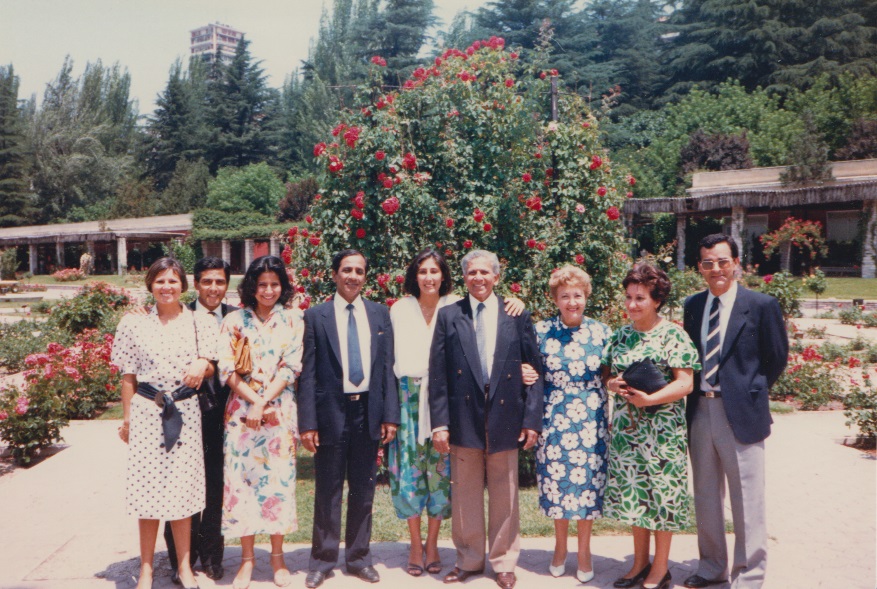
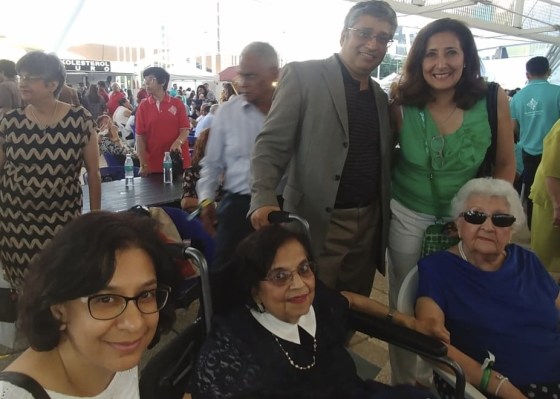
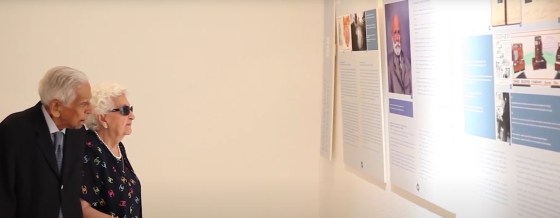


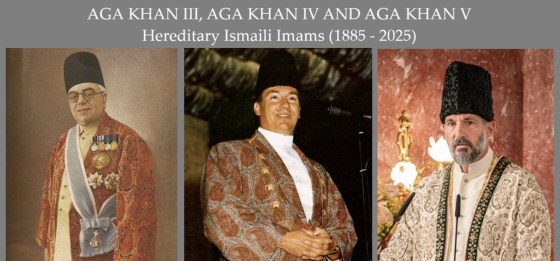


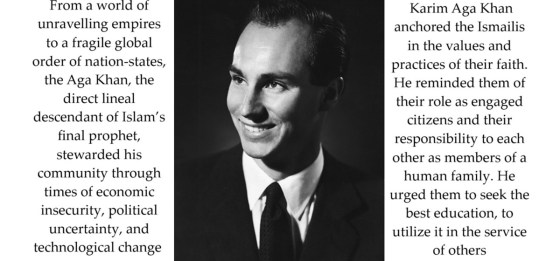

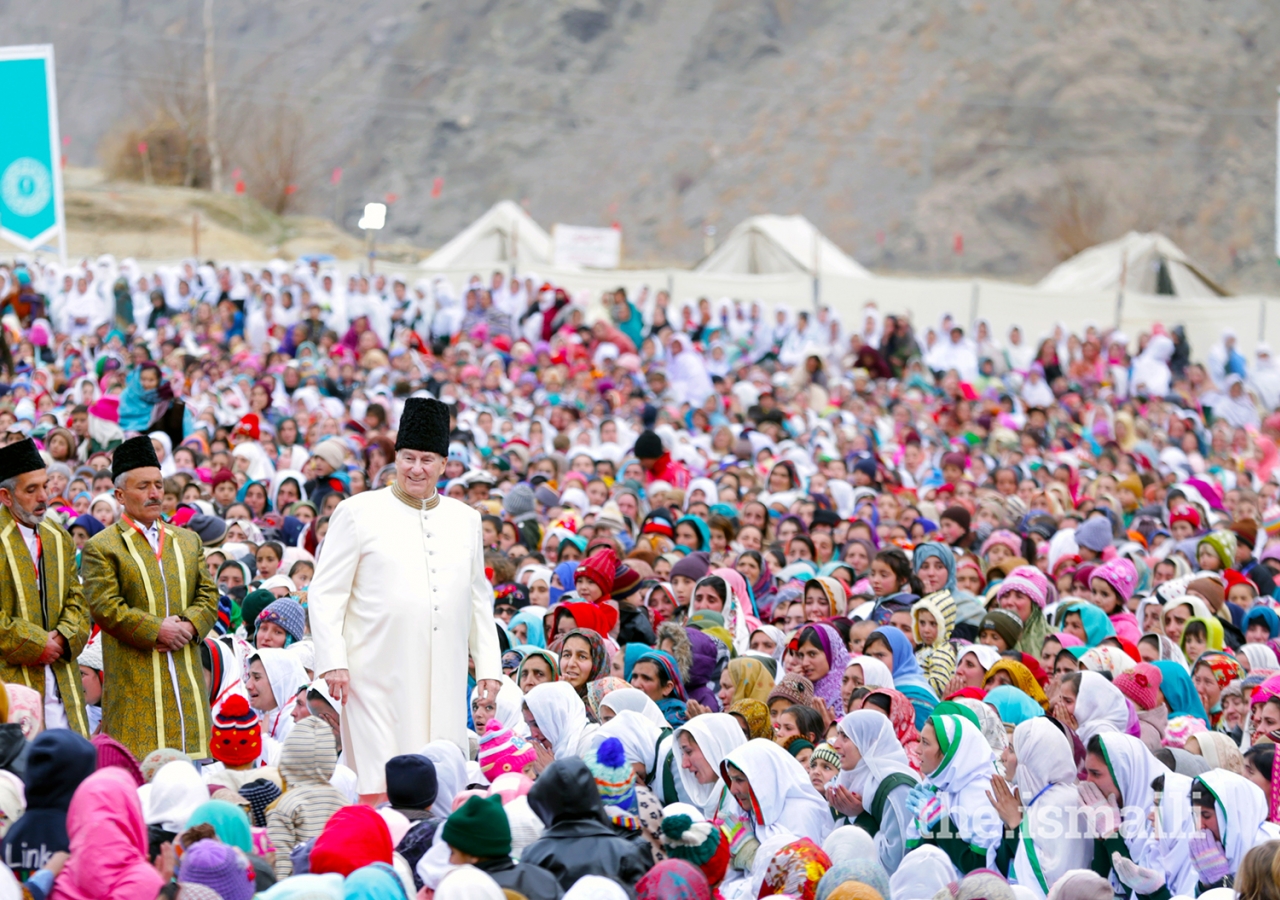




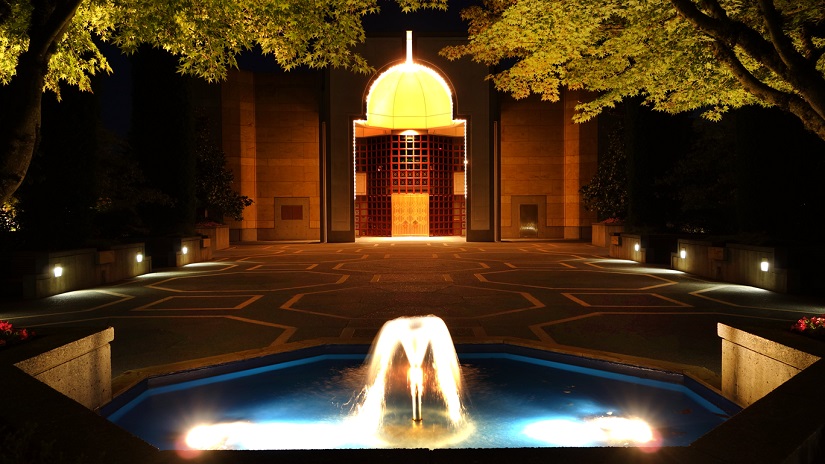




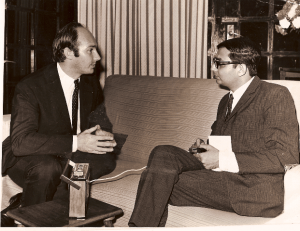

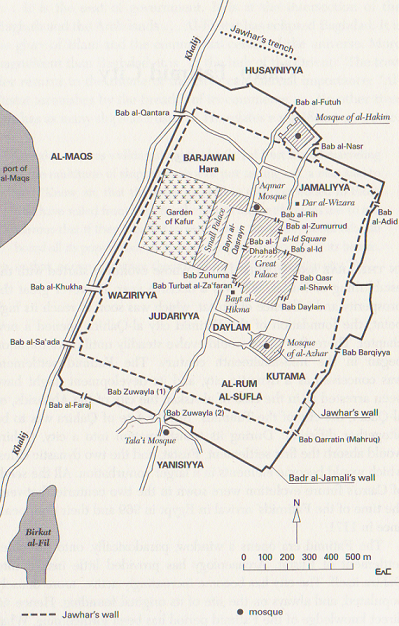

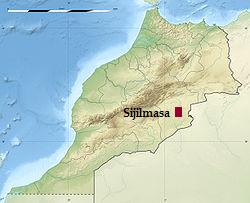

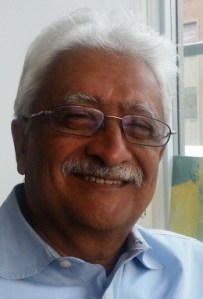

 Simerg - Insights from Around the World
