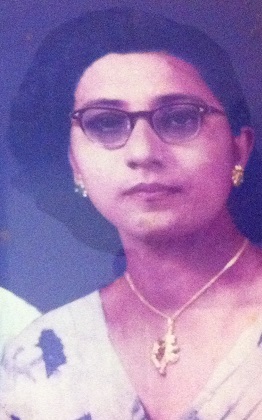
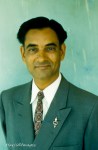
Passings: Noorunisa Maherali (1929 – 2015) – A Remarkable Ismaili Woman of Faith, Talent and Courage

“…When she was still in her early to mid-twenties,  she was involved in a remarkable rescue operation involving her best friend’s two children who had been forcibly abducted from Singapore to Karachi. Risking her own life, she made her way to Karachi, located the boys and delivered them safely to their uncle’s home…” — 1950’s

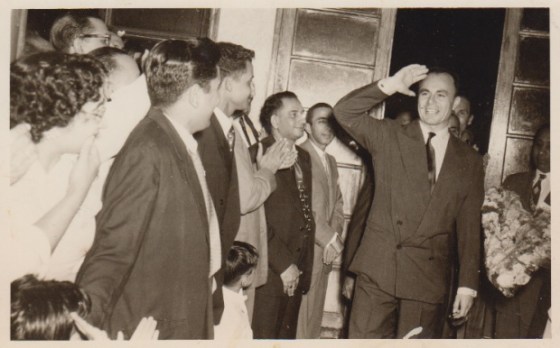
“…As is so often the case the Imam of the Time, at an appropriate time, found an opportunity to recognize her entire family during a special audience…” — 1982-83, Silver Jubilee

PLEASE CLICK: Noorunisa Maherali (1929 – 2015)

The late Noorunisa Maherali (1929-2015)

The late Noorunisa Maherali (1929-2015)

Simerg encourages readers to submit tributes or death notices for deceased members of their families. For submission details, please click Obituaries and Tributes.

Date posted: April 8, 2016.

____________

The Work of the Ismaili Imamat at a Glance, and the Most Famous Logos of the Aga Khan Development Network

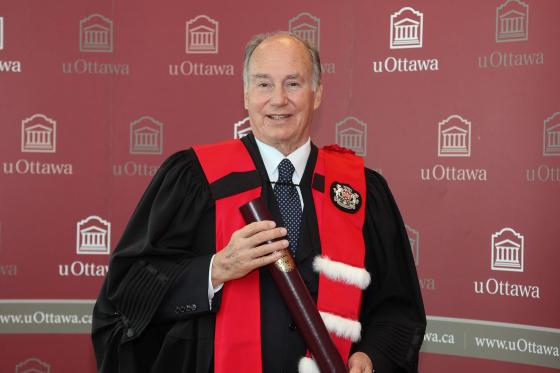
University of Ottawa confers an Honorary Degree on His Highness the Aga Khan

“His Highness has used his own faith background to speak directly to the goodness of all people.” — President Alan Rock, University of Ottawa, January 13, 2012. Photo: University of Ottawa. Copyright.

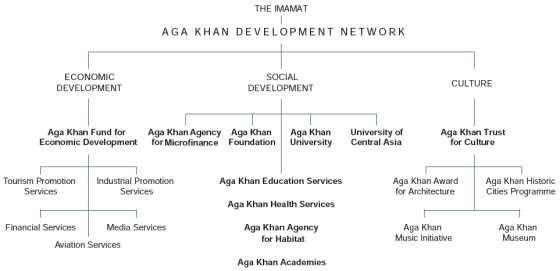
For over 60 years the Aga Khan Development Network (AKDN), under the leadership of His Highness the Aga Khan, the 49th hereditary Imam of the Ismailis in direct lineal descent of the Prophet Muhammad (may peace be upon him), has been building institutions and delivering essential services by creating schools and hospitals, newspapers and electricity generation plants, and social programmes of all kinds. These services have helped improve the lives of hundreds of millions of people of all races and faiths in places as varied as Cairo, Kabul, Delhi and Bamako.

We provide an organizational chart highlighting the breadth of the work of the Ismaili Imamat, and compile a piece about the most identifiable emblems, logos and seals of the AKDN.

Please click on image to enlarge

Work of Ismaili Imamat and AKDN

Credit AKDN*

~~~~~~

FAMOUS LOGOS, SEALS AND EMBLEMS OF AKDN AGENCIES AND INSTITUTIONS

1. Aga Khan University (AKU)

aku-seal

The Seal of Aga Khan University is a visual representation of the principles which underlie the founding of the University. The circular form of the Seal, with its different levels of imagery contained in concentric circles, has its visual roots in the rosettes of early Islamic periods. The circle also symbolises the world and reflects the international presence of the University.

At the centre of the Seal is a star, or sun. Light is a universal symbol for the enlightenment that education provides.The light emanating from the star is also symbolic of Nur (Divine light).

The star incorporates 49 points to commemorate the University’s founding by His Highness Prince Karim Aga Khan. The outer ring circumscribes a Qur’anic ayat rendered in classic thuluth script and reads as follows:

“And hold fast, All together, by the rope
Which God (stretches out for you),
And be not divided among yourselves,
And remember with gratitude
God’s favour on you:
For ye were enemies
And He joined your hearts
In love, so that by His grace
Ye became brethren” — Sura 3, Ayat 103.

2. Aga Khan Foundation (AKF)

akf-logos

In every language there are idioms and proverbs illustrating the importance of the right hand as an instrument of human skill, achievement and caring.

The Aga Khan Foundation logo is based on the right hand, and represents the humanitarian and positive philosophy underlying the Foundation and its activities.

In Islam, the hand has a number of meanings: its shape reflects its comprehensive and positive character, while its constituents represent the five principles of Islam and the five senses of the human body. The stylized fingers represent “Allah” in the Kufic script, and the interlacing beneath the fingers correspond to the anatomy of the hand and also delineates the sign, which in Chinese stands for Wisdom.

The logo of the Aga Khan Foundation was designed by Mr. Zahoor-ul-Akhlaq of Pakistan.

3. Aga Khan Health Services (AKHS)

Aga Khan Health Services

Photo: Isabelle Prondzynski. Copyright.

The emblem of the Aga Khan Health Services shown on the cup and saucer represents health care and compassion. The crescent is an ancient icon which, when used in red, has become the equivalent of the International Red Cross. The three-crescent design in its simple, poetic form creates an internal space symbolising how institutions and programmes using the symbol surround, attend and care for those in need.

4. Aga Khan Award for Architecture (AKAA)

AKAA Logo

The logo of the Aga Khan Award for Architecture was designed by Karl Schlamminger, a German Muslim of the Shia tradition.

The Name of Allah in Kufic script, reflecting Itself and repeating Itself, forms the basis of the logo design.

Date posted: April 7, 2016.

___________________

*For original chart and related material please visit the Aga Khan Development Network link at http://www.akdn.org/publications/2015_akdn_overview.pdf.

The Daily Nation: Fond Memories of Former Reporter Bill Fairbairn

Aga Khan Daily Nation Kenya Visit March 2016

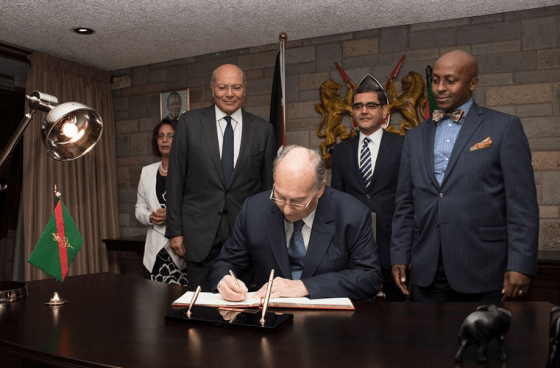
His Highness the Aga Khan, Mawlana Hazar Imam signs the visitor’s book upon his arrival in Nairobi, Kenya on March 16, 2016. Looking on are (l to r) Aga Khan Ismaili Council Vice-President Shamira Dostmohamed, AKDN Resident Representative Aziz Bhaloo, Aga Khan Ismaili Council President Nawaaz Gulam and Kenya’s Chairman of the Defence and Foreign Relations Committee, Hon Ndung’u Gethenj. Photo Aziz Islamshah/The Ismaili.

Editor’s Note: On the 50th anniversary of Kenya’s Daily Nation newspaper in March 2010, Mr. Bill Fairbairn, a former reporter with the paper, dug into his memory and photo archives and contributed a story and photographs for Simerg readers. We are pleased to share this slightly edited version of his lively piece as His Highness the Aga Khan arrives in Kenya (see photo, above) to inaugurate  the Nation Media Group’s new state-of-the-art printing press on Thursday, March 17, 2016.

BY BILL FAIRBAIRN

Special to Simerg. Copyright.

"Daily Nation" Staff

Staff of the “Daily Nation” and “Taifa Leo” in a jovial mood as the Mayor of Mombasa (white cap) visits their Nairobi office in 1964. The Mayor is seen talking to Harry Sambo of Taifa, while Joe Rodrigues of the Nation watches from across. Bill Fairbairn is seen next to the Mayor looking straight ahead. Photo: Bill Fairbairn Archives, Ottawa

My name is Bill Fairbairn and I arrived in Nairobi looking for a newspaper job in 1964. I had worked on the Rhodesia Herald in Salisbury and the Northern News in Ndola, Zambia. Things were dangerous for a reporter working across the border from the war in Katanga. So I left the Copperbelt to tour South Africa, and return home by ship to Scotland.

When I arrived at a Cape Town youth hostel, a fellow hosteller said he had just come down from Nairobi and that white journalists were leaving since Kenya had become independent. He said newspapers were looking for staff. I did an about turn mainly because I was not at all keen on leaving Africa.

I hitchhiked to Durban, took a passenger ship to Dar-es-Salaam and arrived by bus in Nairobi as a stringer/correspondent working for the American magazine Newsweek. The Newsweek bureau had no fulltime openings and the East African Standard’s publisher was in Britain recruiting journalists.

President Jomo Kenyatta addressing a political rally in Kenya.

The late Kenyan President, Mzee Jomo Kenyatta, addressing hundreds of thousands of supporters at a political rally in Kenya at which Mr. Fairbairn was present. The photo appeared in the “Daily Nation” around the 20th of October, 1965. Photo from Bill Fairbairn Archives, Ottawa.

So with my resume I went across to the Daily Nation office and they told me to sit down at the editing desk to show them what I could do.

Michael Curtis and Jack Beverley hired me on a two-year contract on the spot. I was soon enjoying my work on the Nation but disturbed by its biblical slogan The truth will set you free on the front page. To my delight a few months later, the slogan was removed from the newspaper.

Memorable for me was interviewing President Jomo Kenyatta, who had a train reconstructed for his personal needs travelling from Nairobi to Mombasa. Mr Kenyatta told me he disliked flying and enjoyed a big bed aboard the train.

One of the alarming experiences was my attempt to photograph Elsa, the lioness of the movie Born Free, starring Virginia McKenna and Bill Travers. The Open Roads Film Company of London had fenced off the beach at Malindi for film purposes, so I hired an African boatman to row me to the nearby island to which Elsa was supposed to swim. But I had chosen the wrong day for the event. So eventually we rowed to the beach. Who but Bill Travers and the lioness should walk toward me. My camera clicked and the lion’s ears flickered as they passed by. The film director came racing up saying I was trespassing. He ordered me on my way. I told him I was from the Nation and sought a photograph of Elsa swimming in the sea. He said that would not be possible since they wanted that photograph for billboards when the film went to the cinemas.

My photograph of Elsa on the beach appeared in the Daily Nation along with an article saying Elsa had never been more a prisoner. It prompted a letter from the film company inviting news photographers to their camp to take pictures. They did so from inside a cage with the lions outside!

Socially, I was the only white player on the Daily Nation cricket team and a keen visiting snooker player at the Aga Khan Club in Nairobi.

1969.03.20 - The Nation, first issue front page

Seen above is an image of the Number 1 issue of The Nation, dated March 20, 1960. Price 50 cts. Initially the paper started off as a weekend Sunday paper. The daily weekday edition was introduced later in the year on October 3. Image: Mohib Ebrahim Archives, Vancouver

A standing joke that was repeated many times was when the Nation was getting ready to begin publishing. Publisher Michael Curtis was awaiting a key item of machinery for the rotary press. When a plywood box arrived he assumed that was it. He called the staff downstairs to ceremoniously open it. It contained stationary items such as pencils, pens and rulers! However the key gadget did arrive some time later.

I must say that the first two African editors of the Nation were extremely capable. Hilary Ng’weno and James Githi, I believe, were their names. They built for the future.

For my own part I have completed almost 60 years in newspaper work on three continents and written books, including one on Africa, which I sent to His Highness the Aga Khan.

Date posted: March 16, 2016.

_________________

About the writer: Bill Fairbairn, journalist and author, is currently a (volunteer) features editor for Riverviews Park Review, an independent community newspaper in Canada’s capital, Ottawa, where he lives with his wife Janina. His journalism career since 1950 took in stints in Britain, Africa, France and Canada. He has worked for several newspapers including The Sheffield Telegraph, The Sun, The Scotsman and The Vancouver Province and has taught journalism in British Columbia and recently in Ottawa. In his latest book The Printer’s Devil, Fairbairn outlines some of the people and events he encountered across Canada working for newspapers, radio and magazine.

35 Historical and Rare Photos of His Highness the Aga Khan by “Papa Jaan” On One Image

Please click on the following image to zoom on an excellent PDF version of the photo

Please click on image to view PDF file. Copyright Simerg/Abdul M. Ismaily Family Collection.

Please click on image to view PDF file. Copyright Simerg/Abdul M. Ismaily Family Collection.

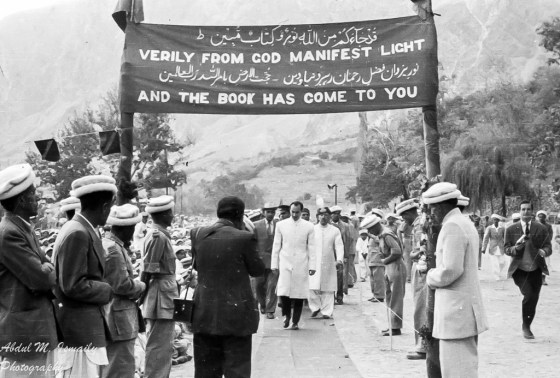
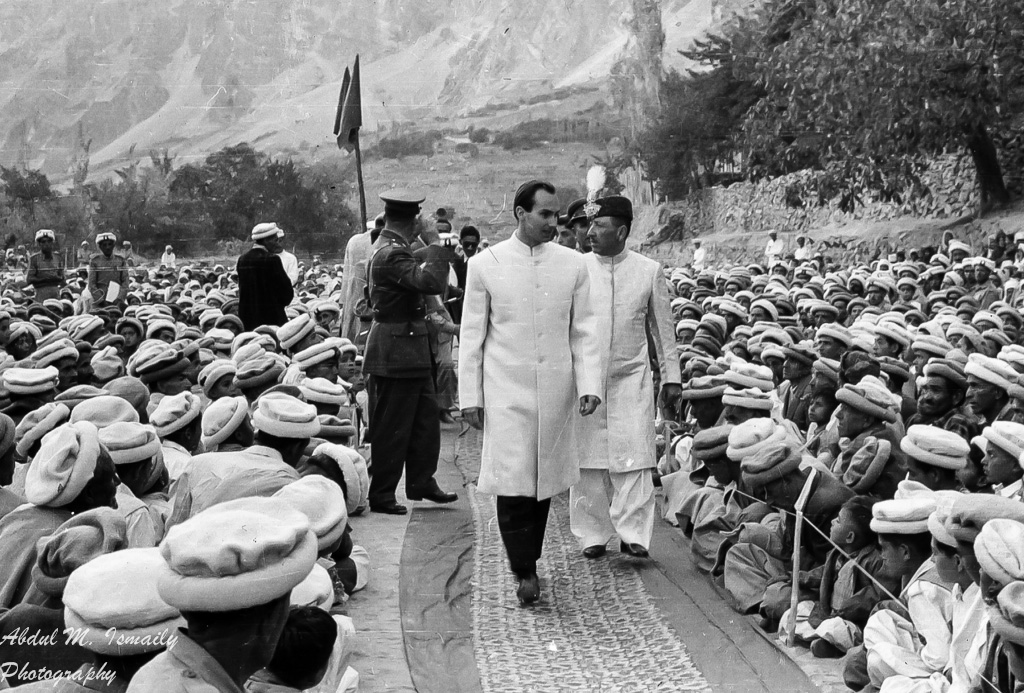
Simerg was thrilled and privileged to recently publish on its sister photoblog never-before-seen photos of Mawlana Hazar Imam, His Highness the Aga Khan, which were captured by Abdul M. Ismaily (1926-1981) during Hazar Imam’s visits to Hunza, Uganda and Pakistan in the early 1960’s. The collection was provided for exclusive publication on Simerg by the family of the late “Papa Jaan,” through Muslim Harji of Montreal.

We pay a small tribute to the memory of “Papa Jaan” for his outstanding photos by presenting a PDF image (click image on top) which contains 35 images from more than fifty that appeared in the Hunza, Uganda and Pakistan pieces. First time visitors to this website as well as readers who may have overlooked one or more photo posts are invited to click on the following links:

Copyright. Simerg.

Date posted: February 23, 2016

________________

We welcome your feedback. Please click Leave a comment

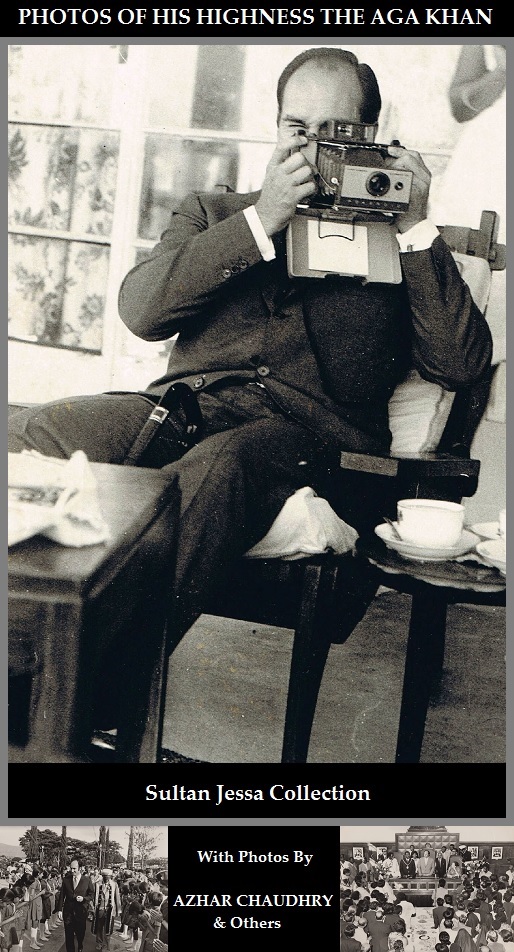
Sultan Jessa Collection: Photos of Mawlana Hazar Imam, His Highness the Aga Khan, by Azhar Chaudhry & Others

PLEASE CLICK: Photos of His Highness the Aga Khan’s Visits to East Africa by Azhar Chaudhry

Please click on image for photos by Azhar Chaudhry & others

Please click on image for photos by Azhar Chaudhry & others

Date posted: February 17, 2017.

__________________

Special Series: Exclusive Photos of His Highness the Aga Khan by “Papa Jaan”

PLEASE CLICK: Exclusive: Photos of Mawlana Hazar Imam’s 1961 Visit to Hunza by the Late Abdul M. Ismaily (“Papa Jaan”)

Photo: Abdul M. Ismaily. Copyright. Please click on image for more photos.

Photo: Abdul M. Ismaily. Copyright. Please click on image for more photos.

Editor’s Note: Over the coming weeks Simergphotos, the sister blog of this literary website, will be publishing historical photos of His Highness the Aga Khan that were captured by the late Abdul Mohamed Ismaily, lovingly known to his family and friends as “Papa Jaan.” A passionate amateur photographer, Mr. Ismaily followed His Highness and his entourage during the Ismaili Imam’s visits to his followers in Hunza, Kampala, and Dar-es-Salaam.

"Papa Jaan"

“Papa Jaan”

Papa Jaan passed away in 1981 at the age of 55, and his photos remained part of his estate. They have been reproduced here with the permission of his family. We commence the series with Mr. Ismaily’s photos of Mawlana Hazar Imam’s visit to Hunza in 1961, which also includes a  rare anecdote by a journalist who accompanied  His Highness to Hunza. Please click Exclusive: Photos of Mawlana Hazar Imam’s 1961 Visit to Hunza by the Late Abdul M. Ismaily (“Papa Jaan”)

~~~~~

NEXT: PHOTOS OF HIS HIGHNESS THE AGA KHAN IN UGANDA

Mawlana Hazar Imam, His Highness the Aga Khan, arriving at Kampala's Entebbe Airport. Photo: Abdul M. Ismaily ("Papa Jaan"). Copyright,

Mawlana Hazar Imam, His Highness the Aga Khan, arriving at Kampala’s Entebbe Airport. Photo: Abdul M. Ismaily (“Papa Jaan”). Copyright,

1957-1958 Photos: His Highness the Aga Khan and Prince Aly Khan in Lourenço Marques + Forthcoming @Simergphotos

PLEASE CLICK: Photos of Visits by Mawlana Hazar Imam and Prince Aly Khan to Mozambique in the late 1950’s

Prince Aly Khan, Lourenco Marques, 1957Please click image for more photos

~~~~~

Forthcoming Photo Essays at Simergphotos

EXCLUSIVE PHOTOS BY PAPA JAN: HUNZA AND UGANDA 
(from Muslim Harji Collection, to be published week of Monday, February 8, 2016)

Please click on photos for enlargement

Papa Jan Photo: His Highness the Aga Khan Hunza VisitHunza. Photo by Papa Jan (late Abdul Mohamed Ismaily). Copyright.

~~~~~

EXCLUSIVE PHOTOS BY AZHAR CHAUDHRY
(from Sultan Jessa Collection, to be published week of Monday, February 15, 2016)

Photo: Azhar Chaudhry. Copyright

Nairobi, Kenya. Photo: Azhar Chaudhry. Copyright.

Date posted: Saturday, February 6, 2016.

______________

We invite readers to submit historical photos in their collection for publication on this web site and its sister blog, http://www.simergphotos.com. Please write to the editor, Abdulmalik Merchant, at simerg@aol.com.


Imam is “A Cosmic Necessity,” and Hazar Imam, His Highness the Aga Khan, is the “Living, Hereditary Imam in Direct Descent from the Prophet”

QUOTES

1. IMAM – A COSMIC NECESSITY

Imam is the Threshold through which God and the creatures communicate; Imam is a Cosmic Necessity and the earth cannot be devoid of an Imam – without an Imam the earth and the universe would crumble; The Imam is the Proof, the Manifestation and the Organ of God and he is the Means by which human beings can attain the knowledge of God — Excerpt from The Divine Guide in Early Shi’ism by Mohamad Ali Amir-Moezzi, pp 125-131, SUNY, 1994.

2. THE ROLE OF MAWLANA HAZAR IMAM

Historically and in accordance with Ismaili tradition, the Imam of the time is concerned with spiritual advancement as well as improvement of the quality of life of his murids. The imam’s ta‘lim lights the murid’s path to spiritual enlightenment and vision. In temporal matters, the Imam guides the murids, and motivates them to develop their potential…..Mawlana Hazar Imam Shah Karim al Hussaini, His Highness Prince Aga Khan, in direct lineal descent from the Holy Prophet (s.a.s.) through Hazrat Mawlana Ali (a.s.) and Hazrat Bibi Fatima (a.s), is the Forty-Ninth Imam of the Ismaili Muslims….Clauses (F) and (G) of the Preamble of the Ismaili Constitution ordained in 1986 [1].

3. HIS HIGHNESS THE AGA KHAN: THE LIVING IMAM

The religious leadership of the Ismaili Imam goes back to the origins of Shia Islam when the Prophet Muhammad appointed his son-in-law, Ali, to continue his teachings within the Muslim community. The leadership is hereditary, handed down by Ali’s descendants, and the Ismailis are the only Shia Muslims to have a living Imam, namely myself. [2] The Ismaili Imamat is a supra-national entity, representing the succession of Imams since the time of the Prophet…today the Ismailis are the only Shia community who, throughout history, have been led by a living, hereditary Imam in direct descent from the Prophet. [3]

~~~~~

READINGS

1. THE NUR (LIGHT) OF IMAMAT

What is this special light that Allah refers to [in Holy Qur’an 4:174], which guides and makes things clear? For Shia Muslims, this light is the Light of Imamat. The Shias refer to it as the Nur of Imamat. Nur means light. The Nur of Imamat is a spiritual light….Click to read more

2. LOVE FOR THE IMAM

“Say (O Muhammad): No reward do I ask (for my favours) except your love for my kith and kin” – Holy Qur’an, 42:23

“He who loves us will be with us on the Day of Judgement” – Imam Ja’far as-Sadiq….Click to read more

3. THE FORMULATION OF THE DOCTRINE OF IMAMAT

Like his father and grandfather before him, Imam Ja’far remained politically quiescent and inactive…..it was in this period of political inactivity – to an extent – that the main religious ideas and doctrinal formation of Imamate concepts really crystallised….Click to read more

4. THE TERM IMAM IN THE HOLY QUR’AN

The term Imam is used seven times in the singular and five times in the plural form in the Holy Qur’an. It is not, however, used in the same sense every time. The different shades of meaning which it indicates therefore needs to be analysed….Click to read more

5. THE DOCTRINE OF IMAMAT DURING THE FATIMID PERIOD

The central doctrine of the Ismaili community has always been the doctrine of Imamat because around it are built all the goals of the community and the roles of the dais, but this doctrine is also not rigid, it has been evolving, particularly in the writings and preachings of the dais….Click to read more

6. IMAMAT IN ISMAILI GINANIC LITERATURE

According to the Ginans the Imam is the source of Guidance for mankind. He shows them the right path, saves the people from ignorance and acts as a Divine Light in the darkness….Click to read more

Date posted: Saturday, January 23, 2013 (this is a slightly updated version of a previous post).

________________

Reference:

[1] The Preamble of “The Constitution of the Shia Imami Ismaili Muslims”

[2] Voices: “The Power of Wisdom” – His Highness the Aga Khan’s Interview with Politique Internationale (English translation)

[3] In a Dynamic and Stirring Address to Members of the Canadian Parliament, His Highness the Aga Khan Shares His Faith Perspectives on the Imamat, Collaboration with Canada, the Muslim World Community (the Ummah), the Nurturing of Civil Society, Early Childhood Education, Voluntary Work, and the Unity of the Human Race

His Highness the Aga Khan and Pope Benedict XVI: A Very Special Photo of Two Faith Leaders Meeting Each Other at the Institut De France in Paris

PREPARED AND COMPILED BY ABDULMALIK MERCHANT
(Publisher-Editor http://www.simerg.com and http://www.simergphotos.com)

As part of his famous Apostolic Journey to France in 2008, Pope Benedict XVI, on September 13, paid a visit to the “Institut De France” in Paris. The Pope, who had been elected as the 265th Pope of the Roman Catholic Church in 2005, was presented with a gold medal by the Institut, and also unveiled a plaque commemorating his visit. During his very brief remarks to the audience, the Pope expressed his gratitude to the Institut “both personally and as the successor of [Simon] Peter.”

His Highness the Aga Khan, Mawlana Hazar Imam, was also in attendance at the Institut de France as the Associate Foreign Member of the Académie des Beaux-Arts (Academy of Fine Arts), one of five learned societies within the Institut which was founded in 1795.

Everyone’s attention in the hall was drawn to Mawlana Hazar Imam and the Pope, with an extraordinary sense of interest and keenness, as the two faith leaders greeted each other with a handshake. Simerg is pleased to present this licensed copyright photo with permission from Getty Images.

Pope Benedict XVI is seen greeting His Highness the Aga Khan on September 13 at the Institut de France in Paris during an official visit to France in 2008. Photo: Copyright. Getty Images. Published on Simerg/Simergphotos with a Licencing arrangement with Getty Images. Fench caption: Vue plongeante du pape BENOIT XVI serrant la main de l'AGA KHAN à son arrivée sous la coupole de l'Institut de France à PARIS entouré de nombreux académiciens et autres personnalités dont Gabriel DE BROGLIE, Hélène CARRERE D'ENCAUSSE, Jean-François JARRIGE, Jean-François BACH, Arnaud D'HAUTERIVES, Michel ALBERT, Christian PONCELET président du Sénat, Jean TULARD, Alain DECAUX, Pierre-Jean REMY, Michel MOHRT, Max GALLO, le cardinal André VINGT-TROIS archevêque de Paris et le cardinal Paul POUPARD. (Photo by Philippe Petit/Paris Match via Getty Images)

Everyone’s attention is drawn to Pope Benedict XVI and His Highness the Aga Khan as they greet each other on September 13, at the Institut de France in Paris during an official visit by the Pope to France in 2008. Photo: Copyright. Getty Images. Published on Simerg/Simergphotos with a Licensing arrangement with Getty Images. Fench caption: Vue plongeante du pape BENOIT XVI serrant la main de l’AGA KHAN à son arrive sous la coupole de l’Institut de France à PARIS entouré de nombreux académiciens et autres personnalités dont Gabriel DE BROGLIE, Hélène CARRERE D’ENCAUSSE, Jean-François JARRIGE, Jean-François BACH, Arnaud D’HAUTERIVES, Michel ALBERT, Christian PONCELET président du Sénat, Jean TULARD, Alain DECAUX, Pierre-Jean REMY, Michel MOHRT, Max GALLO, le cardinal André VINGT-TROIS archevêque de Paris et le cardinal Paul POUPARD. (Photo by Philippe Petit/Paris Match via Getty Images).

In 2013, Pope Benedict dramatically resigned his position as the Head of the Catholic Church due to his deteriorating strength, advanced age and the heavy demands of being Pope, and retired at the Mater Ecclesiae, a small monastery located inside the Vatican State City. His present successor is Pope Francis I, born Jorge Mario Bergoglio.

SOME BRIEF NOTES ON THE PAPACY AND THE IMAMAT, AND SIMON PETER IN THE ROMAN CATHOLIC AND ISMAILI TRADITIONS

The Catholics adhere to the belief that the Pope is a successor of St. Peter. The succession of the pope is determined by a college of cardinals who elect the pope, while the office of the Imam of the Ismailis is a hereditary position. The Ismailis regard their 49th hereditary Imam as the direct descendant of the Prophet Muhammad (s.a.s) through Hazrat Ali (a.s.) and Hazrat Bibi Fatima (a.s.). In a speech made at the Canadian Parliament in 2014, the Aga Khan declared that “the Ismaili Imamat is a supra-national entity, representing the succession of Imams since the time of the Prophet.” And, in an interview with Politique International he said, “The religious leadership of the Ismaili Imam goes back to the origins of Shia Islam when the Prophet Muhammad appointed his son-in-law, Ali, to continue his teachings within the Muslim community. The leadership is hereditary, handed down by Ali’s descendants, and the Ismailis are the only Shia Muslims to have a living Imam, namely myself.”

In the Catholic tradition, the foundation for the office of the Pope is found primarily in Matthew, where Jesus is quoted as telling Simon Peter:

“You are ‘Rock,’ and on this rock I will build My Church and the gates of hell shall not prevail against it. And I will give unto thee the keys of the kingdom of heaven: and whatsoever thou shalt bind on earth shall be bound in heaven: and whatsoever thou shalt loose on earth shall be loosed in heaven.”

This series of successions of the Pope is known as “Apostolic Succession,” with the line of Bishops stretching back to the apostles, who lived during the time of Jesus. Simon Peter is recognized as having been the first Pope. Early Christians reserved the title of “Pope” for St. Peter’s successors.

However, in branches of Shia theology as well as Ismailism, Simon Peter’s role is seen as the direct parallel to that of Hazrat Ali as the first Imam. Ismailis along with some other Shia groups maintain that every major Prophet had a spiritual legatee (Waṣi) or successor called the Asas (foundation) who taught the inner meaning to those who had the capacity to understand it. In this regard, Adam had Seth; Noah had Shem; Moses had Aaron, and Jesus had Simon Peter. A well known sacred tradition of the Prophet Muhammad says that “Ali is to me as Aaron was to Moses,” confirming that Ali held the same level of authority as Aaron did.

Date posted: December 31, 2015.
Last updated: January 1, 2015.

_______________

We welcome your feedback, please click Leave a comment or send it to simerg@aol.com, subject: Aga Khan and Pope.  Your feedback may be edited for length and brevity, and is subject to moderation. We are unable to acknowledge unpublished letters.

The following were used as references for the compilation of this piece:

  1. Apostolic Journey to France: Greeting by the Holy Father during the visit at the Institut de France (September 13, 2008)
  2. The Popes: From St. Peter to Pope Frances by Rupert Matthews,  2014 Edition published by arrangement with Moseley Road Inc.
  3. http://www.catholic-pages.com/pope/peter.asp
  4. Peter in Islam, at Wikipedia.
  5. Comparing the Imamat and the Papacy: Some Short Notes (at Ismailignosis.com).
  6. The Delegation Decoded – An Esoteric Exegesis of the Delegation of the Isma‘ili Imamat, by Khalil Andani.
  7. Concise Encyclopedia of Islam, C. Glasse.
  8. Voices: “The Power of Wisdom” – His Highness the Aga Khan’s Interview with Politique Internationale (English translation)
  9. In a Dynamic and Stirring Address to Members of the Canadian Parliament, His Highness the Aga Khan Shares His Faith Perspectives on the Imamat, Collaboration with Canada, the Muslim World Community (the Ummah), the Nurturing of Civil Society, Early Childhood Education, Voluntary Work, and the Unity of the Human Race

Also see the following important features to learn more about the Aga Khan and the Ismaili Imamat:

in which His Highness the Aga Khan responded to Pope Benedict’s controversial remarks concerning Islam that he had made in 2006; and Special Series: Ismaili Expressions on the Imamat and Imam of the Time — (I) The Preamble of the Constitution of the Shia Imami Ismaili Muslims

A Marvellous Collection of Photos of His Highness the Aga Khan’s Visits to Canada, India and Greece

Editor’s note: In Part II of a special series on the 49th Ismaili Imam’s visits to numerous countries that he undertook during 2015, we cover India (April), Canada (May) and Greece (September). Please click A Marvellous Collection of Photos of His Highness the Aga Khan’s Visits to Canada, India and Greece.

Please click on photo for complete story and more pictures. Photo: Ontario Liberal Part. Copyright. Published with permission.

Please click on photo for complete story and more pictures. Photo: Ontario Liberal Part. Copyright. Published with permission.