Institute of Ismaili Studies: Historical Aspirations, Contemporary Possibilities

By KARIM  H. KARIM
(The author is Director of Carleton University’s Centre for the Study of Islam and former Co-Director of the Institute of Ismaili Studies)

“… we find ourselves in the moment of transit, where space and time cross to produce complex figures of difference and identity, past and present, inside and outside, inclusion and exclusion.” Professor Homi K. Bhabha, former Master Jurist, Aga Khan Award for Architecture

Abstract: A former Co-Director of the IIS considers this key Ismaili institution’s way forward, following its Board of Governors’ recent reconstitution. Although substantial changes have been made, certain features regarding the diversity of office holders remain. The IIS’s past performance is briefly examined in the article, with respect to academic metrics as well as Ismaili history and values. There have been several achievements in the last four decades, but also some unexpected outcomes. The author discusses the importance of ethics and clarity in chains of authority. IIS’s reconstituted governance structure has the opportunity to put it on a path to globally-recognized excellence and long-lasting impact.

A New Phase

Recent appointments to the governance structures of the Institute of Ismaili Studies (IIS) present an opportunity to consider its way forwards. The substantial reconstitution of the Board of Governors appears to initiate a new phase for this key Imamat institution, which occupies a unique place in-between Jamati and Aga Khan Development Network (AKDN) organizations. This is a time of particular significance as the Governors are tasked with guiding the IIS towards its 50th anniversary in 2027.
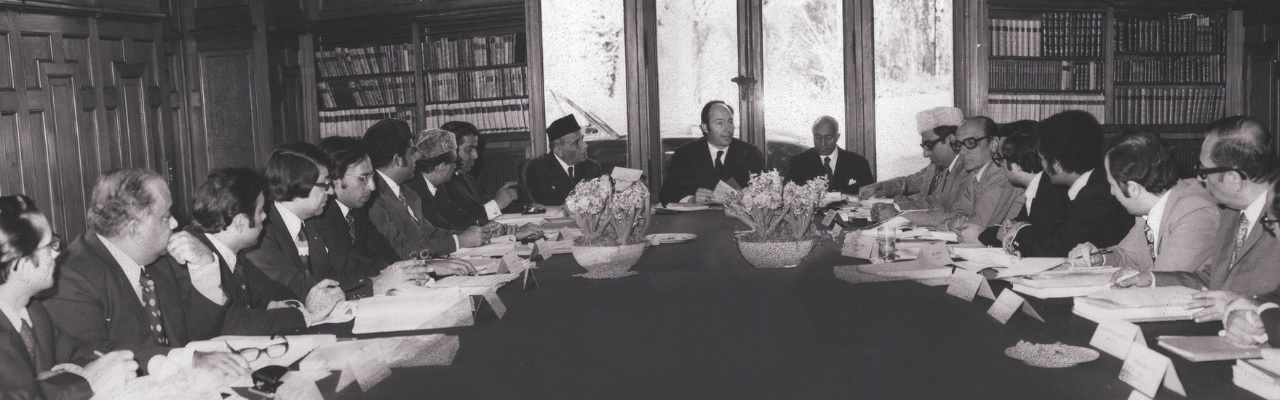
1975 Ismailia Association Conference Aga Khan Establish Institute of Ismaili Studies, Simerg
Mawlana Hazar Imam met with leaders of the Ismailia Association and Ismaili scholars in April 1975 in Paris. A decision was taken at the world conference to establish the Institute of Ismaili Studies. Photo: Ilm magazine, October 1975.

The concept of the Institute was formally discussed in 1975 in the historic Paris Conference of the Ismaili Associations, at which Mawlana Hazar Imam presided. He announced the IIS’s establishment in a Talika to the international Jamat on December 13, 1977. The institution began with a very small staff occupying one floor of a London building. Growing and traversing the city for four decades, the IIS settled into its purpose-built home at the Aga Khan Centre in 2018. It currently has research, teaching and support staff of over a hundred and has seen some 650 graduate students pass through its doors. Scores of publications and several sets of curricular materials have been produced. Alumni work around the world in a variety of professions and have particularly enriched the knowledge base of the worldwide Ismaili Tariqah and Religious Education Boards (ITREBs).

Unintended Consequences

The Institute, which has a very distinct institutional character, operates in an organizationally and intellectually liminal space. Governors have played an unusual hands-on role in the operation of this academic organization. Although the IIS’s educational endeavours are limited to the community, it positions itself in the public sphere. Unlike similar scholarly bodies, it does not identify as a theological seminary or a divinity school. It is a post-graduate institution whose students receive degrees from various universities, including the University of London’s School of Oriental and African Studies.

IIS publishes materials on Ismaili, Shia, Quranic and Central Asian studies authored by its own researchers and external scholars. Islamic Publications Limited (IPL), an affiliate, produces them with the imprimaturs of presses such as I.B. Tauris and Oxford University Press. Whereas substantial work has been carried out in examining Arabic and Persian documents, the study of Indic manuscripts (bearing content such as Ginans) has been miniscule in the last four decades. Research is also conducted on the transnational Ismaili community’s living traditions, but it is not published for the most part. The Institute prioritizes a rationalistic and civilization-centred approach over faith perspectives in its course instruction and religious education curricula for the global Jamat.

These characteristics, viewed as appropriate for the IIS’s particular mandate, have, however, raised an air of ambivalence that has apparently produced unintended consequences. A number of students in the Graduate Programme in Islamic Studies and Humanities (GPISH), who arrive at the Institute of Ismaili Studies expecting a faith-friendly academic approach undergo cognitive dissonance (Magout, 2020, chapter 6). Most alumni do not list the Institute on their CVs or LinkedIn profiles; faculty members have been leaving for university positions as soon as they secure them; and one of the two Co-Directors’ posts has remained unfilled for almost a decade. Furthermore, donors who have contributed substantially to the endowment are perplexed by the asymmetry in Ismaili areas of research.

Aspirations for Excellence

At its founding, the IIS was compared to learned institutions like the Dar al-Ilm and Al-Azhar University, which were established a thousand years ago under the aegis of Fatimid Imam-Caliphs. Al-Azhar survived the fall of the Fatimids and flourishes today as a prominent centre of Muslim learning. Can one expect that the IIS will also function for hundreds of years? Perhaps the more pertinent question is whether it will make a lasting impact. What will the role of the governance structure be in helping it achieve this?

Although the Institute is a globally-recognized hub of Ismaili Studies, it has some ways to travel before being acknowledged as a centre of scholarly excellence. It recently made a selection of books available electronically, but many important IIS contributions remain absent in cyberspace and from most bookstores as well as university and public libraries. It is also unfortunate that only a handful of its more than 120 books have done well in academic citation indices.

One could argue that standard scholarly metrics are inappropriate for an institution whose aspirations are drawn from millennial-long history. Is it more apt then to measure the Institute’s performance in terms of the Ismaili past? Of the many luminaries in previous eras, the most well-known outside the community are the Ikhwan al-Safa (circa 10th century), Nasir-i Khusraw (d. 1088) and Nasir al-Din Tusi (d. 1274). Satpanthi Pirs conducted ingenious syntheses of Indic and Islamic traditions that stand as major human achievements of pluralist engagement. These intellectuals are exemplars of excellence whose contributions have been of universal significance. They maintained a rigorous independence of thought within parameters of the Ismaili movement and its intellectual universe. Given the aspirations for the IIS, should we expect it to provide the conditions for nurturing scholars of similar calibre in our time?

Contemporary Values as Metrics

Contrarily, one can contend that it is not right to apply historical standards to 21st century contexts. Perhaps the benchmarks for success are to be drawn from the community’s current emphases on ethics, meritocracy, and pluralism. This topic is addressed here only with reference to IIS’s Boards.
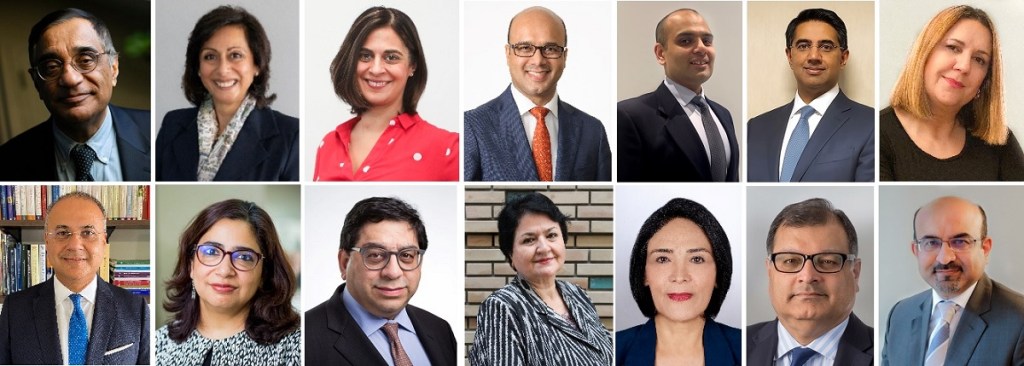
IIS Institute of Ismaili Studies London Board of Governor Members
New Board of Governors of the Institute of Ismaili Studies, appointed by Mawlana Hazar Imam effective December 13, 2020. Top row (from left): Professor Ali Asani, Dr Nadia Eboo Jamal, Mrs Karina Govindji, Dr Arif Jamal, Mr Rahim Karim, Mr Alykhan Kassam, and Professor Nacim Pak-Shiraz. Bottom row (from left): Mr Amyn Kassim-Lakha, Professor Tashmin Khamis, Mr Naguib Kheraj, Dr Sharofat Mamadambarova, Dr Shogufa Mir Maleky, Mr Habib Motani, and Professor Farid F. Panjwani. Collage by Barakah from IIS profile photos

The new Governors are drawn from commercial and academic sectors, and they include some IIS alumni. Mawlana Hazar Imam continues as Chairman. Membership of the current Board of Governors (BoG), which began its term on December 13, 2020, is remarkably different from earlier ones in size, gender, age, ethnicity, geographic scope, and outlook. Although the IIS has been an international institution since inception, preceding Boards consisted almost entirely of middle aged men of British residence, with the balance tilting towards commercial worldviews. The incoming BoG’s average age has dropped considerably in comparison to the preceding one. There are now six women and eight men, and half of the Governors are currently located outside the UK. Eight newcomers are academics, most of whom have taught at universities. Several individuals have had experience in Jamati institutions, including ITREB, which is a major partner of the IIS. It is also noteworthy one Governor has professional expertise in diversity and inclusion.

There has been some non-Ismaili presence previously; however, this BoG’s members are all Ismaili. When Professor Mohammed Arkoun passed away in 2010, the remaining six Governors were all South Asian men of East African provenance. Whereas the new BoG is enriched by the presence of other ethnicities, all three members of the Board of Trustees (BoT), the IIS’s primary governing body and of which the BoG is a sub-committee, are UK residents of South Asian background, as are all four Board members of Islamic Publications Limited. Full time academics are absent from the BoT and IPL. The former does, however, have a female Trustee. There is much more pluralist inclusion than in earlier manifestations of the institution’s governance structures, but they have considerable room for improvement.
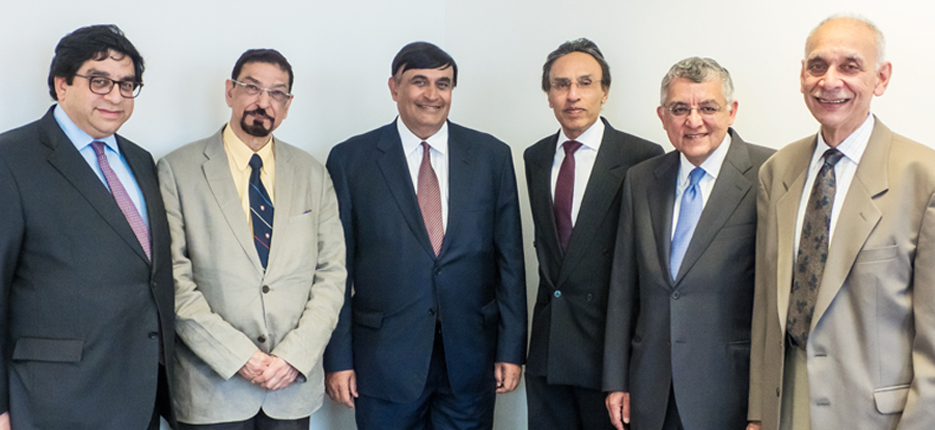
IIS Board Institute of Ismaili Studies
The IIS Board of Governors (1995-2020). From left to right: Mr Naguib Kheraj (who remains on the new board appointed on December 13, 2020), Dr Mohamed Keshavjee, Dr Shafik Sachedina, Dr Aziz Esmail, Mr Zauhar Meghji and Professor Afzal Ahmed. Missing in the photo is the Late Professor Mohammed Arkoun who was also a member on the Board. He passed away on September 14, 2010 at the age of 82. Photo: The IIS

A truly unique characteristic of the previous BoG was not identity but longevity. Its more than 25-year term was one of the lengthiest in the world. Whereas this provided continuity and familiarity with the work at hand, shorter tenures usually mitigate detrimental tendencies in such organizations. Stretches that are longer than seven years seem inadvisable.

The presence of new university-linked Governors should help to assert academic norms in matters such as standardized merit-based pay scales rather than particular arrangements for some employees; remuneration for performance adjudicated according to published benchmarks instead of bonuses based on ambiguous criteria; and discontinuation of consulting contracts with Governors. Notably, the current separation of Board members from IIS’s remunerated staff makes the organizational chart look less like the M.C. Escher lithograph “Relativity”.

Ethics, Ambiguity, and Credibility

Ismaili history has seen the development of ethical codes in the works of Qadi Nu’man (d. 974), dai Ahmad al-Naysaburi (d. circa 11th century), Pir Sadardin (d. circa 14th century), and Imam Mustansirbillah II (d. 1475). Writing at a time of deep corruption in the Fatimid state, al-Naysaburi warned that “chaos will reign” with the failure of integrity among the Imam’s leaders (Klemm and Walker, 2011, p. 75). The IIS developed an AKDN “ethical framework” two decades ago; however, this theoretical document does not provide guidance for actual deontological practice. There remains ambiguity about the pragmatics of ethics in contemporary Ismaili institutions. Narratives on this subject have sometimes drifted towards trivialization; for example, one Jamati periodical’s feature on an “Ethic of the Month” seemed to reduce long-term values to fleeting tastes (The Ismaili Bulletin, Issue 54, March 2018). Given the importance that the community gives to the subject of ethics, serious issues like conflicts of interest, cronyism, nepotism, harassment, and bullying, which unfortunately appear over time in most human organizations, will need to be dealt with effectively and coherently. These issues must be an integral part of a 21st century code of conduct that provides clear guidance for everyone involved with the work of Jamati as well as AKDN institutions.

Systemic deficiencies in institutional procedures have unpredictable outcomes and can be factors for reputational loss. Incoming academic Governors will know that ambiguous chains of authority in scholarly institutions lead to the unchecked promotion of pet projects with dubious merit. A book published in 2018 by the Institute (but not initiated by its Department of Academic Research and Publications) was reviewed in a recent issue of the journal Arabica. The reviewer, who is the Director of the University of Lausanne’s Institute of the History and Anthropology of Religions, assessed it to be “a book of propaganda … without method and completely devoid of critical analysis” (Halawi, 2020, 315). Such unfortunate situations can be avoided by instituting an academic editorial board that oversees IIS’s scholarly publications to replace largely ambiguous practices of vetting manuscripts for “sensitivities.” (Such an editorial board already exists for the Quranic Studies Series.) The new Governors will also be aware of the importance of ensuring that the institution’s faculty, students and academic visitors have ready access to library materials that reflect a plurality of views, including those that are considered to be “sensitive.” Such efforts will assist in enhancing the IIS’s scholarly credibility in academic circles.

Transparency and Demarcations of Authority

Despite the noblest of intentions, the tendency in human organizations is for power to accumulate in a few persons. Whereas the doubling of the number of Governors to 14 offers advantages, it may also produce the conditions for the emergence of a hierarchy and the marginalization of some individuals. A horizontal relationship and equitable sharing of information in the globally-constituted BoG is important. Fair and optimal participation by Governors can be ensured by upholding transparency. Transparency and disclosure will not only strengthen the corporate governance framework but also provide Mawlana Hazar Imam with all the pertinent information.  

It is expected that Hazar Imam will meet with the Governors and Directors once a year, with respective Board committees working on specific policy issues in the interim. The transnational BoG has the challenge of working efficiently across continents. Given these circumstances, safeguarding the greatest possible diversity in every committee will help ensure the pluralist expression of views. This should help to mitigate the influence of cliques and undue bias for or against specific issues and employees.

A key consideration facing the new Governors is the extent of the BoG’s involvement in operational matters. Healthy, well-functioning institutions are characterized by clear demarcations of authority and function, with Boards having confidence in duly-appointed Directors to take charge of administration. Clear protocols regarding Governors’ communications with employees, which rarely occur in universities, ensure that administrative authority is not undermined. Scholarly conventions should also determine the leadership of various organizational committees (academic, curricular, and community relations as well as finance and human resources).

 A Potential Turning Point

The strong presence of university-based academics in the Institute’s new BoG signals that scholarly priorities will be paramount in the years to come. This Board’s tenure has the potential for being a turning point. It has the opportunity to put the IIS on the path to globally-recognized excellence by moving closer to academic norms of organization and outlook. Professor Mohammed Arkoun used to speak of intellectual modernity in contemporary Muslim contexts. Such a disposition requires not only scholarly rigour but the confidence to conduct critical introspection. There are important discussions to be had about the adoption of greater academic freedom, critical inquiry, and the broaching of “sensitive” topics as well as about effective ways to engage with the transnational Jamat, with which the Institute has an integral relationship. Governors will constantly have to account for the dual contexts of community and public scholarship. This calls for skillful and conscientious navigation between the shores of the parochial and the universal. The likes of the Ikhwan al-Safa, Nasir-i Khusraw, Nasir al-Din Tusi and Pir Sadardin have shown us that this is eminently possible.

Date posted: January 10, 2021.
Last updated: May 31, 2025 (reformatting, typos).

____________________

Reproduction of material posted on this website without the expressed written permission of the publisher is prohibited. For permission to reproduce in whole or part, please write to mmerchant@simerg.com.

We welcome feedback from our readers. Please complete the LEAVE A REPLY form below or click Leave a Comment. Your letter may be edited for length and brevity, and is subject to moderation.

A person speaking into a microphone while wearing glasses and a suit, with a blurred audience in the background.
Karim H. Karim

About the author: Professor Karim H. Karim is the Director of Carleton University’s Centre for the Study of Islam, where he has held the International Ismaili Studies Conference. He previously served as Co-Director of the Institute of Ismaili Studies (IIS) and Director of Carleton’s School of Journalism & Communication. Dr. Karim has had visiting scholarly appointments at Harvard University, Aga Khan University/Simon Fraser University, and the IIS. He has also been an advisor for AKU and the Central Asian University and has been a member of the AKDN’s Higher Education Forum. Additionally, he has served in Kenyan, American, and Canadian Jamati institutions (Education, Ismaili Association, and Ismaili Tariqah and Religious Education Board, ITREB). Professor Karim is an award-winning author whose globally-cited writings include publications on Ismaili communities, institutions, and leadership. He has delivered distinguished lectures at venues around the world and has been honoured by the Government of Canada for promoting co-operation among faith communities. He studied at Aga Khan schools in East Africa and at the IIS, and holds degrees from Columbia and McGill universities in Islamic and Communication Studies.
Simerg invites (1) Ismaili artists to provide submissions/updates for revised edition of its compendium; and (2) Ismaili authors to submit synopsis of their books for listing on the website

By MALIK MERCHANT
Publisher-Editor, Simerg, Barakah and Simergphotos

Talented Ismaili Artists

The Golden and Diamond Jubilees of Mawlana Hazar Imam, His Highness the Aga Khan, revealed and showcased the amazing  talent of the artists in the Ismaili community. Hundreds of young children and youth as well as elderly members of the Jamat participated in locally held programs during the Golden Jubilee. Ten years later, the Diamond Jubilee became truly international in scope, and the final celebrations in July 2018 in Lisbon brought together a large gathering of a variety of artists including film makers, singers, dancers as well as fine art and visual artists to perform in front of large crowds and display works of art at an international gallery. Their high quality performances captivated audiences daily throughout the Diamond Jubilee Celebrations.

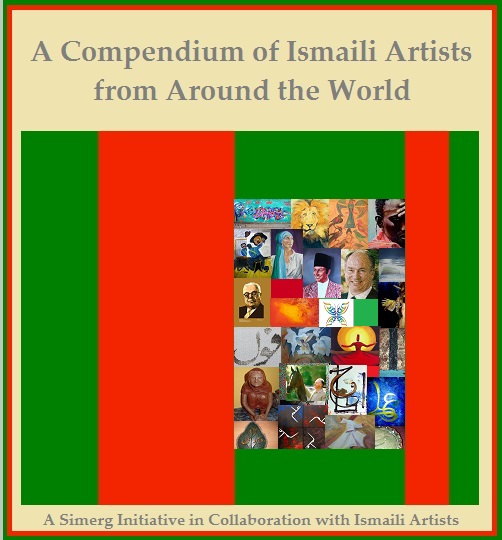
compendium of Ismaili artists simerg
Please click on image to download 2014 edition of compendium. We invite new entries and updates from Ismaili visual artists for the revised edition to be published in 2021.

Some years ago, Simerg produced a highly acclaimed Compendium of Ismaili Artists dedicated to the visual arts. It requires a major and long overdue update! Simerg sincerely hopes that Ismaili visual artists from around the world will go through the compendium and submit their profiles as illustrated in the compendium. Simerg plans to update the compendium and produce a new edition by the autumn of 2022. Please submit your profile and a work of art to Malik Merchant at his email address mmerchant@barakah.com (a common email address for this website, Simerg, as well as its two sister blogs barakah and simergphotos).

The institutional support for the arts has been truly commendable, and we hope that such support will continue.

The Ismaili literary scene had been somewhat dormant for quite some time until the emergence of Moez Vassanji who is one of Canada’s most celebrated writers. He is a prolific writer whose published work include novels, short story collections and non-fiction collections. Moez is a two time Giller Prize winner and has received numerous other awards and recognitions. In February 2005, he was made the Member of the Order of Canada for contribution to arts/writing.

Talented Ismaili Writers

Ismaili authors
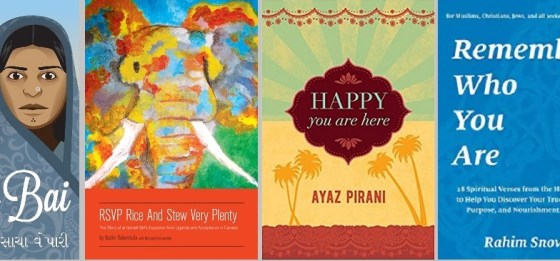
Cover pages of a few of the dozens of books authored by Ismailis.

But what about other fine Ismaili authors who have appeared in the writing scene over the past two decades? They have remained virtually unknown to the community at large. Personally, I would have liked to have seen their works to have been sold through the Jamatkhana literature counters around the world, and for the authors to be given an opportunity to do readings in front of audiences, at least at their local Jamatkhana setting. We hope that when the pandemic is over this suggestion will be taken up by our institutions and that Ismaili authors who feel they have written a book that is worthy of reading because of its overall publication quality and literary merit will be able to present themselves to the Jamat, sell their books and sign them for Jamati members who wish to purchase their works. Many authors market and sell their books via on-line sellers such as Amazon, but institutional support and encouragement is vital for their exposure to a world wide Jamat.

Simerg invites Ismaili writers to come forward and submit a synopsis of their book for publication on this website. In addition, we want each writer to respond to the following questions in no more than 50 words per question:

(1) What is behind the naming of the title of the book? 

(2) Why would you want me or my family members to read the book, and what will we all learn from it? 

(3) What inspired you to write the book? 

(4) How can I purchase the book and what are its available formats (ebook, kindle, hardback, paperback?) 

Response to the following questions are optional:

(5) How did you find a publisher for the book? 

(6) Did you hire an editor, an illustrator or did you do all the work by yourself? 

(7) Which was your first book and how many have you written? 

(8) How long did it take you to write the book – from start to finish and to begin marketing it? 

(9) Tell us something more about your book (and its primary character).

Categories for inclusion in our listing: Novels, short stories, inspirational books, biographies, poetry, jigsaw puzzles as well as all non-fiction on diverse subjects (except religious and literary works published by the Institute of Ismaili Studies).

Languages: We will list books published in English, French, Portuguese, Spanish and Kiswahili, but the synopsis must be submitted in English. Books in other languages will be considered for listing at a later date.

Your response: Authors should submit their responses to the 9 questions accompanied by the book’s synopsis in English and an image of the cover page to the attention of Malik Merchant at mmerchant@simerg.com. If your book has been reviewed or is available for on-line purchase, you may provide link(s) to the book reviews and where the book is available for purchase. If you have a website dedicated to your literary work(s), please provide the address of your website.

Simerg looks forward to a fantastic response from Ismaili artists and writers on these two projects dedicated to them.

Date posted: December 3, 2020.
Last updated: August 20, 2025.

________________________

Before departing this website please take a moment to review Simerg’s Table of Contents for links to hundreds of thought provoking pieces on a vast array of subjects including faith and culture, history and philosophy, and arts and letters to name a few.

We welcome feedback from our readers. Please complete the LEAVE A REPLY form below or, if you don’t see the box, please click Leave a comment. Your letter may be edited for length and brevity, and is subject to moderation.

Malik Merchant Simerg
Simerg’s Malik Merchant at the courtyard of the Aga Khan Museum, Toronto

Malik Merchant is the founding publisher/editor of this website, Simerg (2009) as well as two other blogs Simergphotos (2012) and Barakah (2017). Formerly an IT consultant, he now dedicates his time to family projects and his 3 websites. He is the eldest son of Alwaez Jehangir Merchant (1928-2018) and Alwaeza Maleksultan Merchant (1931-2021) who both served Ismaili Jamati institutions for several decades in Mozambique, Tanzania, Pakistan, the UK and Canada in both professional and honorary capacities as teachers and missionaries. Malik’s daughter, Dr. Nurin Merchant, assists him as an honorary editor of the three websites. She received her veterinary medicine degree with distinction from the Ontario Veterinary College (2019, University of Guelph) and now works as a veterinarian.

Elastic Embrace: A Poem by Farah Tejani

Mystic Moon

By FARAH TEJANI

Mystic Moon,
Cast your spell…
Your shimmering gaze,
And, oh how many faces!
Cleverly captured in reflections,
On the dark, dark blue waves.

Shifting shadows of craters
On your surface,
Leave mere mortals
Spellbound…
With your catalogue
Of explicit expressions
No two alike.

At times you are serene,
Sometimes in sorrow.
When Joy overtakes you,
Your smile crawls across your face
Slowly but surely.

At times you appear horrified…
Really speaking,
I can’t blame you.

Are you keeping your eye on us?
Like we watch over you?
My niece calls you ‘God’s flashlight,’
Just making certain “All is well.”
Sometimes she calls you a fingernail,
Depending on your phase.

All are in wonder
Of your sublime stature,
Your welcomed wisdom.
I offer you my humble respect
By never underestimating your pull
On our strings…

In all honesty
I am in absolute awe of your
Daily devotion to the Sun.
It is a love of Another World.

Date posted: September 5, 2020.

___________________

Farah Tejani graduated with her Bachelor of Arts in English Literature and her Master of Fine Arts in Creative Writing from the University of British Columbia in May of 1997 and earned top Honors for her Thesis on Short Fiction. With the help of her agent Barbara Graham she then went on to publish a collection of short stories published by Trafford, called, “Make Your Own Chai, Mama’s Boy!” — ten short stories dealing with different dilemmas South Asians face. Farah also wrote and co-directed her stage play, “Safeway Samosas,” which won “The Best of Brave New Playwrights Award” in July 1995. Her short story , “Too Hot” won third place in the “Canada-Wide Best Short Fiction Award.” and was read at The Vancouver Writers Festival. Currently, Farah is working on Childrens’ stories and a collection of poetry called, “Elastic Embrace” to be published in 2021.

Farah’s recent pieces in Simerg and affiliated website(s):

(1) The Great Sacrifice;
(2) Behold, the Light of Ali; and
(3) Elastic Embrace: A Collection of Poems by Farah Tejani.

We welcome feedback from our readers. Please complete the LEAVE A REPLY form below or click on Leave a comment. Your letter may be edited for length and brevity, and is subject to moderation

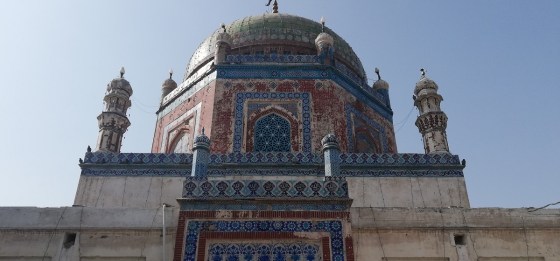
Pir Shams Mausoleum

Exclusive Photo Essay @Simergphotos: The Mausoleum of Pir Shams

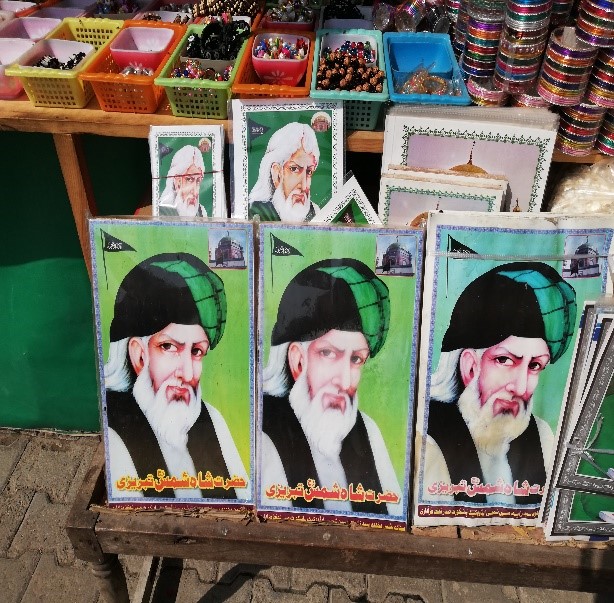
A few years ago, Malik Mirza contributed a great piece on the mausoleums of Pir Sadardin and his son Pir Hasan Kabirdin, who are among the architects of Ismaili Dawa in the Indian sub-continent through the wonderful tradition and teachings of Ginans. Mirza’s wish to visit the mausoleum of Pir Shams, father of Pir Sadardin, was fulfilled recently, and he has contributed a fantastic and informative photo essay on the mausoleum. Click on EXCLUSIVE PHOTO ESSAY: THE MAUSOLEUM OF PIR SHAMS or image below to read the essay.

Depictions of Pir Shams at his mausoleum in Multan ,Pakistan
Depictions of Pir Shams in posters and cards sold at his mausoleum in Multan. Pakistan.

Date posted: August 29, 2020.

________________________

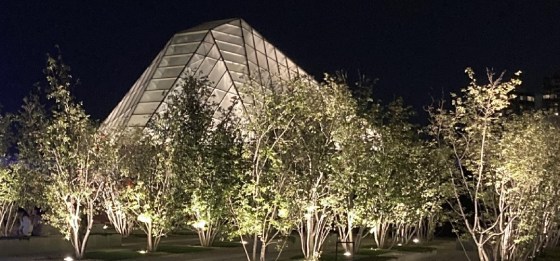
Jamatkhana Ismaili Centre Toronto and Aga Khan Park, Simerg, Photo Malik Merchant

A Poem Inspired by the Reopening of Jamatkhanas

As We Reopen

By Parin Verjee

Approaching the doors of the Jamatkhana
Heads bowed in all humility
Lower your gaze
Pause a moment
Softly say a heartfelt prayer
Shukhrana, Al Hamdu’lillah
The blessed day has arrived
Quieten your thoughts
Touch your heart
Hand on your heart
Smile with your eyes
Greet gently
Gracious to one and all
Carry your mehmani in your heart
Let Allah’s light guide you
To His threshold
Let divine grace
Touch your praying hands
Embrace the silence
Be at peace
The sacred space
Awaits your soulful zikr

Date posted: August 16, 2020.

_______________________

About the author: Parin’s love of books, music, theatre, and travel sometimes leads her to writing about her experiences, and the reopening of Jamatkhanas inspired her to pen a few lines here. Originally from Kenya, she studied at Makerere University, Kampala, and at the University of Dijon, France, and lived in Oxford, England, before moving to Canada. She has been in Doha, Qatar, for the last 12 years and living in the Middle East has enhanced her appreciation of Islamic art and culture. She is presently back in Calgary.

We welcome feedback from our readers. Please complete the LEAVE A REPLY form below or click on Leave a comment. Your letter may be edited for length and brevity, and is subject to moderation.

____________________

The featured photo shown at the top of this post was taken on the night of Friday August 14, 2020, when the Headquarters Jamatkhana dome at the Ismaili Centre Toronto was lit up for the first time since mid-March when Jamatkhanas across Canada closed down due to the Covid-19 pandemic. The spectacular lit up dome is visible from the busy Don Valley Parkway, and is much admired by pedestrians and drivers alike as they drive through the Parkway or walk along Eglinton Avenue and Wynford Drive. The photo and the beautiful poem penned by Parin Verjee celebrate the opening of the Headquarters Jamatkahana on Monday August 17, as well as other Jamatkhanas that have opened in recent days or will be opening in the coming days.

___________________

Before departing this website please take a moment to review Simerg’s Table of Contents for links to hundreds of thought provoking pieces on a vast array of subjects including faith and culture, history and philosophy, and arts and letters to name a few.

Drape Pacchedi Simerg

The Drape, and an Invitation to Singers to Set up a Geet

By S. GIGA PATNEY
Special to Simerg  

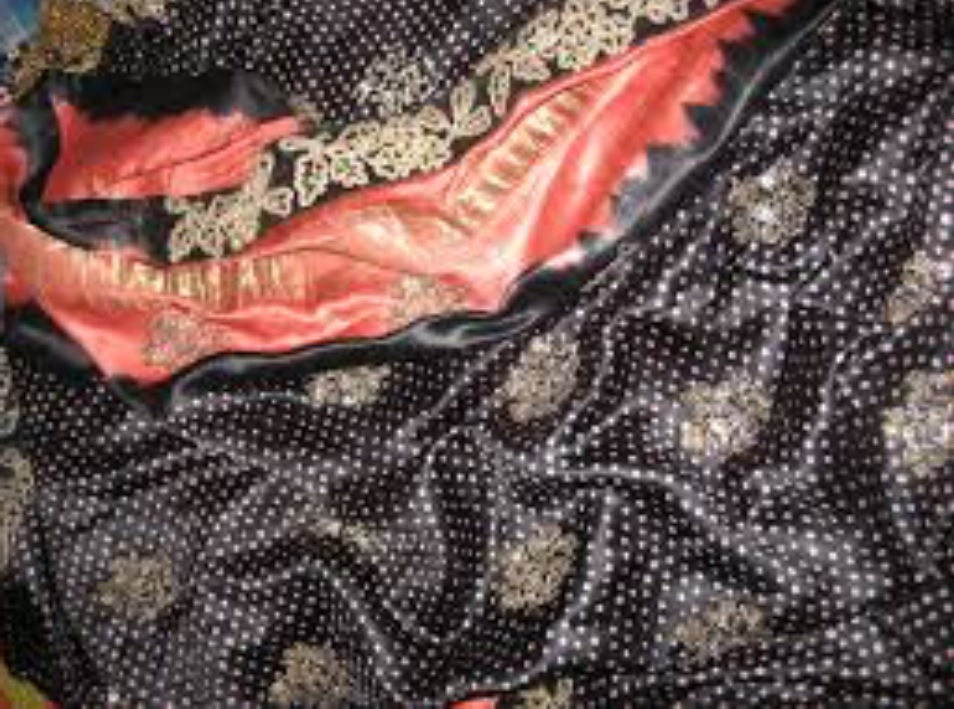
A hundred years ago Katchhi and Kathiawadi Ismaili Khoja Muslims sailed to Africa and Zanzibar to make a living. Today, they have prospered in America, Canada and Europe. They wear western clothes, live in palatial homes and drive expensive cars but in the homes they still speak their rustic dialect and they remember the ‘pacchedi’ (Khoja Muslim head drape) their mothers wore.

The ‘Pacchedi Geet’ in a folk song form, is written in Gujarati, ‘transcreated’ in English, and transliterated in Roman script. The song is composed to remember and celebrate the pioneers who left India a century ago but kept memories of their homeland alive.

My thanks to Sultan Somjee for permission to use the bandhani image, and Zahir Dhalla for transcribing in Gujarati script.

I welcome singers to set up a geet with the lyrics that have been provided below. Recordings or questions regarding the geet may be sent directly to me at safder8@gmail.com or to the editor of Simerg at simerg@aol.com.

Drape Pacchedi Simerg

Drape
(Khoja Pacched̨̨i)

Kohl-grey silk
Studded with white stars
A border of a thousand flowers.
Mother, how many colours under your drape?

Milk, oudh and attar
Strands of jasmine hanging,
Underneath, I sleep in deep slumber.
Mother, these are the colours under your drape.

Ghee, molasses,
Apricots and raisins.
Mother, your bread tastes so sweet.
Mother, what colours under your drape?

Storms, thunder
And lightening!
Frightened, I hide under your drape.
Mother, colours like these under your drape.

Witches, warlocks
Ghosts and giants
Scare me not under the shade of your drape.
Mother, colours like these under your drape.

With tables and chairs
We built boats
And flew sails made out of your drape.
Mother, how many colours under your drape?

Leaving home
We crossed the seas.
We spread Giga Patney’s patola.
Mother, how can I break from the ties of your drape?

Your eyes closed,
Your soul departed.
We draped you in rosy pink.
Mother, colours like these under your drape.

_________________

પછેડી
(Gujarati)

Drape Pacchedi Simerg

સુરમય રેશમ
માથે ધોળા તારા
ચારે કોર હજાર ફૂલ ની પટ્ટી …..૧
માઈં તારી પછેડી ની પાછળ કેટલા રંગ ?

દૂધ ઊધ ને અંતર
માથે ટાંક્યા મોતિયા
છાયેં હું સુવું ઊંડી નીંદરે …..૨
માઈં તારી પછેડી ની પાછળ એવા રંગ!

ઘી ગોળ અને
સૂકો મેવો
મા, મને મીઠી લાગે તારી રોટલી …..૩
માઈં તારી પછેડી ની નીચે કેવા રંગ ?

વાયુ વીજળી
મેધા ઘરજે
હું ડરી સંતાઉ પછેડી ની નીચે …..૪
માઈં તારી પછેડી ની પાછળ એવા રંગ!

ડાકણ દઈંત
ભૂત રાક્ષસ
મને ન ડરાવે પછેડી ના છાયેં …..૫
માઈં તારી પછેડી ની પાછળ તેવા રંગ.

મેજ ખુરસી ના
વાણ બનાવયા
ઊપર ઊડાડીયા પછેડી ના સઢ …..૬
માઈં તારી પછેડી ની નીચે તેવા રંગ.

દેસ છોડી
દરિયા તરીયા
ગીગા પટણી ના પટોળા પાથરીયા …..૭
માઈં તારી પછેડી ની પછળ કેમ છોળું ?

આંખ મીચાણી
જીવ ઊડયાં
ઓઢાળી તને ગુલાબી પછેડી…..૮
માઈં તારી પછેડી ની નીચે એવા રંગ.

_________________

Pached̨i
(Gujarati transliteration)

Drape Pacchedi Simerg

Surmai resham
Mathé d̨̨hod̨a tara
Chąré kor hajjar ful ni putti
Maai tari pacched̨I ni pacchad̨ ketla rung

Dooth, oodh ne antar
Mathé tankya motia
Cchayeñ huñ suwuuñ oondi ninderé
Maai tari pacched̨i ni pacchad ewa rung

Ghee, ghor̨̨
Ané sooko mewo
Ma mané mith̨I lagé tari rotli
Maai tari pached̨i ni niché kewa rung

Wayuñ, wijad̨i
Megha gharajé
Huñ santauñ durri pacched̨I ni niché
Maai tari pached̨i ni niché kewa rung

Dakan̨, dayint
Bhoot, rakshas
Mané na darawé pachced̨I na cchayeñ
Maai tari pacched̨̨i ni pacchad̨ tewa rung

Mej khud̨si na
Waan̨ banawya
Ooper oodad̨̨iya pacched̨̨I na suddh
Maai tari pacched̨i ni niché kewa rung

Des cchod̨̨i
Dariya tariyañ
Giga Patney na patol̨a pathariyañ
Ma tari pacched̨i ni pucchud̨ kem cchod̨uñ?

Aankhyuñ michan̨̨i
Jeev oodiyañ
Odh̨ad̨̨i tunné gulabi pacched̨̨i
Ma tari pacched̨i ni niché ewa rung

Retroflex d̨, n̨ as in fud̨ (fruit) and pan̨i (water)
Nasal ñ as in French ‘pain’ and Portuguese ‘paű’ (bread)
Dental t as in tű (you) and d as in diwas (day)

_________________

Pached̨i
(Kachchhi transliteration)

Drape Pacchedi Simerg

Surmai resham
Muthé d̨̨hod̨a tara
Chąré kor hajjar ful ji putti
Maai toji pacched̨I ji pudthia kitra rung?

Dooth, oodh ne antar
Muthé tungya motia
Cchayeñ niche awuñ suwañ oondi ninder mé
Maai tojii pacched̨i ji pudthia heda rung

Ghee, ghor̨̨
né sooko mewo
Ma muké mith̨i lagé tojii mani
Maai tojii pached̨i ji niché heda rung

Wayuñ, wijad̨i
Megha gharajé
Awuñ dhirji santayañ pacched̨I ji niché
Maai toji pached̨i ji niché heda rung

Dakan̨, dayint
Bhoot, rakshas
Muké na dhirjai pachced̨I ja cchayeñ
Maai tojii pacched̨̨i ji pudthia heda rung

Mej khud̨si ja
Waan̨ banayasi
Ooper oodariasi pacched̨̨I ja suddh
Maai toji pacched̨i ji niché keda rung?

Des cchod̨̨i
Dariyo tariyasi
Giga Patney ja patol̨a pathariyañsi
Maai toii pacched̨i ji pucchud̨ kiñ cchod̨yañ?

Aankhyuñ michan̨̨i
Jeev oodiyañ
Odh̨ad̨̨i toké gulabi pacched̨̨i
Maai toji pacched̨i ji niché heda rung

Retroflex d̨, n̨ as in fud̨ (fruit) and pan̨i (water)
Nasal ñ as in French ‘pain’ and Portuguese ‘paű’ (bread)
Dental t as in tű (you) and d as in diwas (day)

Date posted: August 15, 2020.

Before departing this website please take a moment to review Simerg’s Table of Contents for links to hundreds of thought provoking pieces on a vast array of subjects including faith and culture, history and philosophy, and arts and letters to name a few.

____________________

This piece is also available as a PDF File, and may be downloaded by clicking on The Drape PDF.

S. Giga Patney, Simerg The Drape Pacchedi
S. Giga Patney

S. Giga Patney has taught English as a Foreign Language in Japan, Portugal and England; and English as a Second Language in England and Canada. He won the Teacher Fellowship at the University of London Institute of Education when he was a teacher with the Inner London Education Authority. He was Head of Language Service In Berkshire, UK and Principal Lecturer in the Department of Teaching Studies at The University of North London. He joined the Department of Language Education at the University of British Columbia, Canada to teach on their post-graduate program. He has now retired and lives in the interior of British Columbia where he does his creative writing.

Books by the author:

Literary Fiction:
The Shiv-Shivani Trilogy:
Book 1: Shiva – Lord of Dance – A Novel in Raga Bhairava
Book 2: Shivani’s Story – A Novel in Raga Bhairavi
Book 3: Shivani’s Dance of Destruction – A Novel in Four Movements.

Fact-fiction:
Ties of Bandhana- The Story of Alladin Bapu

Facetiae:
The Alchemist Quartet
Book 1: The Alchemist and the Prince – A Story of the Prince With a Nut in His Navel
Book 2: The Alchemist’s Manuscript – Of the Travels of the Merchant of Yemen & His servant in the Erythrean Sea as Related to the Alchemist of Gozo, the Younger
Book 3: The Alchemist and the Empire of Evil
Book 4 (Forthcoming): The Alchemist and the Indian Boy

_________________________

If you wish to leave a comment, please complete the LEAVE A REPLY form below or click on Leave a comment. Your letter may be edited for length and brevity, and is subject to moderation.

Iringa Jamatkhana, Mohamed Hamir, Ismaili, Simerg

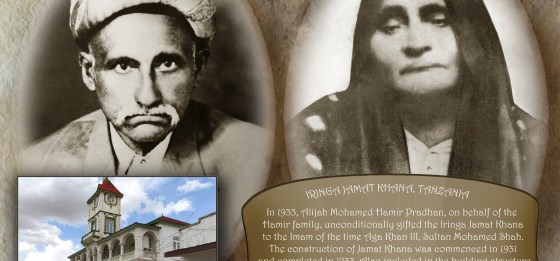
Alijah Mohamed Hamir Pradhan, Inspiration Behind the Ismaili Jamatkhana in Iringa, Tanzania

By MOHAMED HAMIR

[This special piece for Simerg is a revised version of the original article by the author that was published in Khojawiki in July 2020 — Ed.]

In 1933, in the midst of a global recession, a landmark building, a prayer house, arose in the center of a small provincial town in the interior highlands of Africa. The story of this remarkable building had its genesis in Kutch based family patriarch by the name of Hamir Pradhan, my great grandfather.

The Hamir family of Sinogra/ Nagarpur districts of Kutch was remembered as a reasonably prosperous and enterprising family in the latter half of 1800s. Hamir Pradhan had sired eight sons and one daughter. He was also a person of deep faith and community service. He had built and donated a small Jamatkhana in Sinogra. There is evidence that Hamir Pradhan had created a legacy of community service and sacrifice that left deep impression on his children and the community in Kutch. 

During early part of 1900s, six of the Hamir male siblings had joined the large scale migration of peoples from Kutch, Kathiawaar and other parts of Gujarat plagued by large scale famine, to the colonized countries of eastern and southern Africa. One of the young men among these siblings to migrate was Mohamed Hamir Pradhan, my grandfather. He was married to Bachibai, my grandmother. She and their first born daughter Fatma, who was around 3 years at the time, were to join my grandfather in Africa several years later.

Mohamed Hamir Pradhan (1880 - 1943) of Iringa, Tanzania Simerg
Mohamed Hamir Pradhan (1880 – 1943). Photo: Hamir Collection.

My grandfather, Mohamed Hamir (Pradhan) was born in Sinogra, Kutch in 1880. Following his siblings, in 1902, he arrived in Tanganyika (now Tanzania), a German colony at the time. After a short stint in Kilosa with one of his brothers, Haji Hamir, he followed another brother, Satchu Hamir, to Iringa, a quintessential German/British colonial outpost town in the Southern Highlands, where he went to work for him in his retail (duka) shop. He helped his brother expand his business to inland villages, often traveling for weeks with a caravan of porters carrying merchandise. In 1905, three years after his arrival in Tanganyika, he formed his own business.

Benefiting from his trading experience and extensive contacts with both the German and later British colonialist, he was able to capitalize and benefit from the war economy of the First World War (1914-1918). Over the next three decades he became a successful entrepreneur in retail and residential real estate development. Also over the next several years he and my grandmother Bachibai who had joined him from Kutch, expanded the family to include three more daughters and a son. This expanded, and eventually extended family through marriages, was to play a large role in my grandfather’s business successes, and more importantly in helping him achieve his ultimate legacy. Since his son, my father was only 12 or 13 years of age, his daughters played a key role in running his retail business and were deeply involved on his legacy project.

Bachibai Mohamed Hamir Pradhan, Ismaili Iringa simerg photos
Bachibai Mohamed Hamir Pradhan. Photo: Hamir Collection.

The names of my grandfather’s children and their marital families are (chronologically): daughters Fatma Mahamed Ladha, Sikina Bhimji Asser Sachedina, Jena Ramzan Parpia, and Rehmat Fazal Manji; and son and daughter-in law Akbar and Kulsum Mohamed Hamir.

In early 1930’s and in the midst of The Great Global  Economic Depression, our grandfather embarked on a project that would become a matter of pride and an important legacy for our family and the Ismaili community of Iringa. Inspired by his father Hamir Pradhan’s generosity and community service, as well as his own deep faith, he proposed to the community that he wanted to build a Jamatkhana complex and donate it to the Imam for benefit of the Ismaili community in Iringa. My grandfather’s proposal called for a two story Jamatkhana building with a capacity for 600 people, four times the Jamat size at the time. The complex was to include primary school facilities, a social hall, a guest house (dharmshara) and a recreation compound. The building was to be located right in the middle of the main street, which later was named as Jamat Street, a tribute to the Ismaili community of Iringa for the Jamatkhana building that manifested prominently on the street.

With perseverance and after several design changes, he was able to get an agreement on his plan and approval for the project from the appropriate jurisdictional leadership as well as our Imam. The construction was commenced in 1931 and completed in 1933. Due to drastic economic conditions, my grandfather had to resort to borrow money to complete the project. Several prominent families had stepped up to lend him the money. Our family folklore describes his obsession with the project that was of legendary proportion. At times, things got so desperate that he personally and physically toiled on the projects along with our family members to help the project move along to completion.

Iringa KIsmaili Jamatkhana, landmark street scene, Simerg.
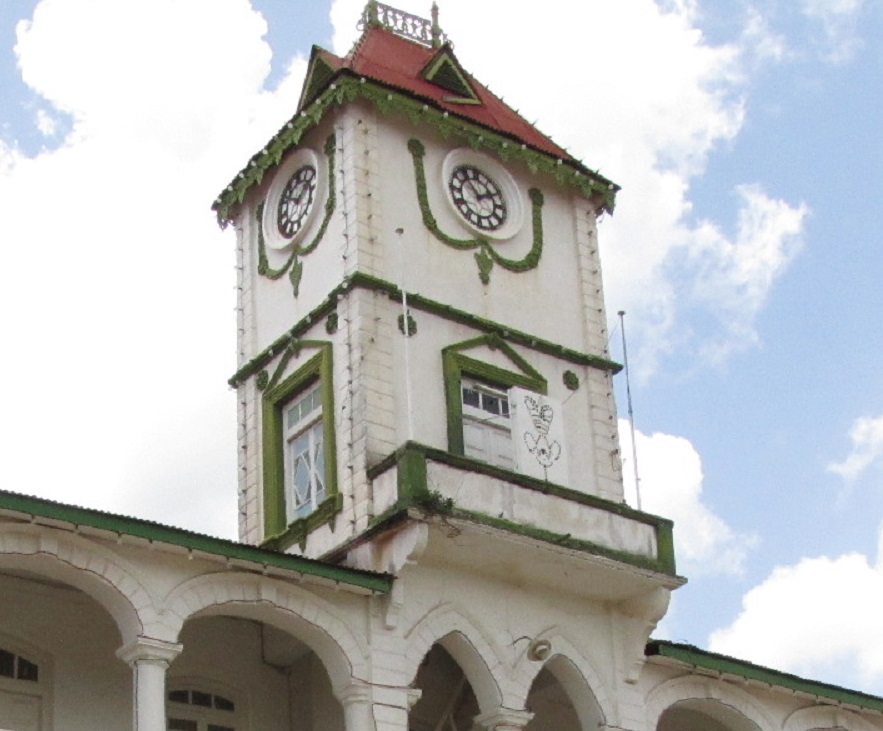
Street scene with Iringa Ismaili Jamatkhana standing out prominently with its high tower and clock. The Jamatkhana was completed in 1933 with the support and initiative taken by Alijah Mohamed Hamir Pradhan. Photo: Courtesy Shafin Haji.

At the time of the completion of the Jamatkhana in 1933, it was reported to be one of the best in Tanganyika, and architecturally one of the most beautiful in the whole of East Africa. Over the next twenty-five years the Ismaili Jamat in Iringa grew five-fold, exceeding the original capacity of 600. The Jamatkhana complex was not only the anchor of the community, but also a major catalyst for the growth of the Ismaili community in Iringa. Later in the 1960s, my father, Alijah Akbar Mohamed Hamir, expanded the capacity of the Jamatkhana to accommodate the growing Khoja Ismaili community in Iringa.

At the Golden Jubilee of Imam Sultan Mahomed Shah in Nairobi 1936, our grandparents were scheduled for special audience with the Hazar Imam in order to formally present the gift of the Iringa Jamatkhana. However due to the last minute illness of my grandmother they were not able to make the long journey to Nairobi. Our Imam accepted their gift in their absence, and conveyed much appreciation and blessings to them and to their family. This was the happiest moment in our grandfather’s life! The Imam also bestowed on him an honorific title of Alijah.

Iringa Ismaili Jamatkhana Tnazania Simerg article
A close up view of Iringa Ismaili Jamatkhana, completed in 1933 with the support and initiative taken by Alijah Mohamed Hamir Pradhan. Photo: Courtesy Shafin Haji.
Aga Khan Ismaili Iringa Jamatkhana close-up of bell clock, Simerg
An enlarged view of the prominent bell clock of the Iringa Jamatkhana. Photo: Courtesy Shafin Haji.

Since its manifestation almost 90 years ago, the Iringa Jamatkhana  continues to stand as symbol of the town’s identity. Located in the heart of the town, the high and prominent clock tower, adoring the architecturally beautiful building, remains the emblem and inspiration to the local and diasporic community of Iringa. Its large bell clock and high visibility reminds people to the calling of the time, and the out-of-town visitors to their bearings.

It is a source of pride for our community and our family to have the Jamatkhana be such an iconic monument of the town. It is also a tribute to my grandfather’s foresight, faith, leadership and perseverance. His generosity and service to the community is a remarkable legacy and an inspiration for our family and for the future generations.

Date posted: August 2, 2020.

We welcome feedback/letters from our readers. Please use the feedback box which appears below. If you don’t see the box please click Leave a comment. Your comment may be edited for length and brevity, and is subject to moderation. We are unable to acknowledge unpublished letters

___________________

Mohamed Hamir

About the author: Mohamed Hamir, originally from Tanzania, has lived in numerous locations throughout USA since 1969. He is a retired financial services executive including a 20 year career with Citibank in the USA. He has an undergraduate degree in science from London University, UK and an MBA in finance from Indiana University. His work experience and extensive travel included both USA domestic and international markets.

Since his retirement in 2001, he has been passionate about causes involving female infanticide and education of marginalized children. He is on the Advisory Board and member of the LEADers Circle of PRATHAM USA, a prominent global educational NGO. He is also the Executive Producer of “Petals in the Dust”, an award winning documentary exposing gender discrimination, girl killing and violence against women in India.

Among his numerous services to the Ismaili community, he has served as both Mukhi and Kamadia of the Jamats in the USA. From 1988 to 1991 he served as a member of the National Council for USA with a portfolio of fund raising for Jamatkhanas. In 1968, when he was a student in London, he co-founded and was the first president of the inaugural Aga Khan Sports Club of U.K. He currently resides with his family in Southern California.

___________________

Before departing this website please take a moment to review Simerg’s Table of Contents for links to hundreds of thought provoking pieces on a vast array of subjects including faith and culture, history and philosophy, and arts and letters to name a few.

Elastic Embrace: A Collection of Poems by Farah Tejani

A Mother’s Plea

By FARAH TEJANI

With one hand on his expanded stomach and another wiping his eyes,
The hot sun shows no mercy, and the despondent mother cries.
She has no fear and curses God, for how could this not shake her,
She vows to make her reasons heard just when she’ll meet her Maker.

“Why must my babe go hungering for basic bread and water,
When across the globe another Mom is feeding milk to her daughter,
In big brick homes with fancy lawns and furniture and floors,
While I hide from the sun in my simple hut with no doors?

Can you hear my wretched painful cries as the tears fall down my face?
Is this why you gave me this gift so that I could not give him even a trace,
Of something warm and substantial to ease the hole within his gut.
Or is this my sad misfortune to be haunted in this agonizing rut?

How do you wish me to appease him, how is he supposed to understand?
Why does his own mother, his loving provider, not soothe him with her hand?”
The mother enraged by the Injustice and Unfairness of it all,
Decides there is nothing left to do but to surrender to the Fall.

She takes a piece of fabric from the only dress that she has in her keeping,
And moistens it with water she has boiled, and cooled down while she was sleeping,
And draws it to her son’s parched lips, with prayers he will not get worse;
And after he has drunk a few spoonfuls, she will pray to release this curse.

The doctors never make trips out to her people, they are miles from anywhere,
“Yet people in better off countries are privileged with the very best Healthcare!”
With trembling hands she tries to soothe her aching hungry child,
But all the while the injustices just make her mind run wild.

“Just give me some hope, just give a sign, that You will promise to provide,
All I want is these words from You and on this I will abide.”
Just then she heard a rumbling of a crowd outside her door,
A truck was parked and handing out rations while the people shouted, “More!”

Her uncle came with powdered milk and she simply could not believe it,
She mixed it with the boiled water and praised how she received it,
She drew it to his hungry mouth and he drank it with sheer delight,
While tearfully she thanked her Maker and praised Him with her might.

“Hear me, I am grateful, but please God promise me this,
You will stand faithfully by my side so that I will not dismiss,
That when in need You are always there, so preserve my faith in You.
Now my child’s hunger is satisfied, I am not so disheartened and blue.”

The mother held her babe to her breast and stroked him sweetly to sleep,
And in his ears she whispered a promise that she vowed that she would keep,
“I leave you In my Maker’s Hands, for He looks after us  all,
And whenever I am weak in faith I will remember upon Him to call.”

(The poem was composed on May 18, 2020).

_________________

The Forest Cries at Night

By FARAH TEJANI

Dance june bug dance,
Upon the dogwood’s dew kissed petal,
Make your movements carefully
On which foot will you settle.

Do you wonder needlessly,
About that dreaded rattle snake,
Or how she strikes fear in all who pass,
With the clatter that she makes?

In the forest you are just a little one,
Amidst the towering trees,
With their sinewy branches,
Blowing secrets in the breeze.

Mocking monkeys hanging by their tails,
Eating ripe and sweet bananas,
They thrive in this lush green forest,
But could not possibly endure the savannahs.

Parrots with feathered wings bright,
Squawk loudly praising the Moon,
Rains quench this great green carpet,
The owls hoot a different tune.

Greet the twitching grasshopper,
Paying heed to their chirping sounds,
Should there be a coming storm,
Every animal knows what might abound.

Hear the forests buried secrets,
Their message to us all,
The riches that lie within her,
ARE THE SACRED TREES THAT WE FALL!

So find shelter friendly squirrels,,
Shine on Madame Firefly,
These are the tears of the forests,
And the animals never lie.

(The poem was composed on May 10, 2020).

____________________

From Behind Heaven’s Curtain

By FARAH TEJANI

Take time and summon thoughts for those whom we cherish,
In doing so we make certain that from our memories they don’t perish.
As for the loved ones who’s souls have remorsefully passed on,
Though it may feel like, they are certainly not gone.

From behind Heaven’s Curtain, they watch us from Above,
When loneliness prevails, they shower us with LOVE.
Blessing our endeavours, every moment, every action,
Our successes, they recount with humble satisfaction.

When we are in distress, they beg God to ALTER,
Our destiny, so that we can endure but not falter.
Their prayers go answered; they are so loved by the LORD
And it is on these sweet prayers that our very lives have soared.

Their hearts burst with joy when we are immersed in happiness,
Months without hardships and countless hours without stress.
In remembering our LOVED ONES precious pictures we keep,
Upon gazing at their faces we cannot help but weep.

We ask God how could He? It was much too soon for them to part,
But we are soon reminded of what we have known from the start,
From the very moment we are born there is one thing for sure,
There is no way to defy the grasp of death’s final lure.

Reminisce and treat precious these moments we have now,
Before destiny takes another life and then it is too late somehow.
Be joyous, take pictures, share loving words, embrace,
Texting’s overrated LOVE IS ONLY REAL FACE TO FACE.

So put down your phone and just travel the distance,
Be prepared for often you will be met with resistance.
Because these days, no one has time left to spare,
Take time to MAKE TIME and let them know that YOU CARE.

Busy lives just get busier and often time gets LOST
And once it is GONE we realize at what PRECIOUS COST.
While we are living make peace and share your heart,
So that should one of us leave this earth, with LOVE SHALL WE PART.

(The poem was composed on May 27, 2020).

Date posted: July 24, 2020.

_____________________

Farah Tejani Simerg Ismaili poet and writer
Farah Tejani

We are delighted to introduce readers of Simerg to our new contributor Farah Tejani, with three of her recently penned poems.

Farah graduated with her Bachelor of Arts in English Literature and her Master of Fine Arts in Creative Writing from the University of British Columbia in May of 1997 and earned top Honors for her Thesis on Short Fiction. With the help of her agent Barbara Graham she then went on to publish a collection of short stories published by Trafford, called, “Make Your Own Chai, Mama’s Boy!” — ten short stories dealing with different dilemmas South Asians face. Farah also wrote and co-directed her stage play, “Safeway Samosas,” which won “The Best of Brave New Playwrights Award” in July 1995. Her short story , “Too Hot” won third place in the “Canada-Wide Best Short Fiction Award.” and was read at The Vancouver Writers Festival. Currently, Farah is working on Childrens’ stories and a collection of poetry called, “Elastic Embrace” to be published in 2021.

__________________

Before departing this website please take a moment to review Simerg’s Table of Contents for links to hundreds of thought provoking pieces on a vast array of subjects including faith and culture, history and philosophy, and arts and letters to name a few.

We welcome feedback/letters from our readers. Please use the feedback box which appears below. If you don’t see the box please click Leave a comment. Your comment may be edited for length and brevity, and is subject to moderation. We are unable to acknowledge unpublished letters

Shariff Alladina, Ismaili Ginana Reciter, Tanga, Tanzania, Simerg

1960s musical renditions by Shariff Alladina of 4 popular Ismaili Ginans including the Chhogaḍio, Bhāī Tīnī Vireṅ Jīuṅ Umeduṅ

By SAFDER ALLADINA

In my recent piece about my paternal grandparents Alladin and Prembai (see The Story of Tanga’s Alladin Bapu Family) I briefly noted that one of their sons Shariff Alladina (1910-1976), who happened to be my father, had a fine singing voice. I provided links to his Ginans that I had loaded into Soundcloud sometime ago (please click Shariff Alladina’s 4 Ginans, titled as Bapaji 1 thru 4 on Soundcloud). Ever since, I have been pressed for more information about my father as well as his interest in music and Ginans.

Story continues after photo

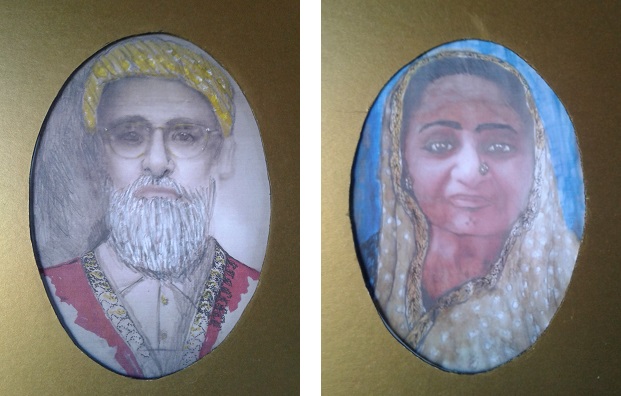
A portrait of a bearded man wearing traditional attire and glasses on the left, and a woman in a sari with a decorative head covering on the right, both framed in oval shapes.
Shariff Alladina’s parents, Alladin and Prembai. Photo: Safder Alladina.

My late father — shown at top of this post — was a business man of Tanga, Tanzania. He came from a musical family. Born in Kathiawar, India, Shariff was brought to Tanganyika in a dhow as a toddler of about two by his parents Alladin and Prembai. In 1930 Shariff married Zera, a Kachhi girl from Zanzibar. It was not very usual for Kathiawari and Kachhi to inter-marry but Saleh Harji, a close friend of Shariff, was able to negotiate the marriage with his niece Zera. She came from well-established families in Zanzibar. Her paternal and maternal grandparents were Mukhi and Kamadia of Zanzibar jamat on multiple times. Zera’s family story is documented in Zahir Dhalla’s piece A rare 100 year old family photo fills in a few blanks of Ismaili Khoja history in East Africa.

Story continues after photo

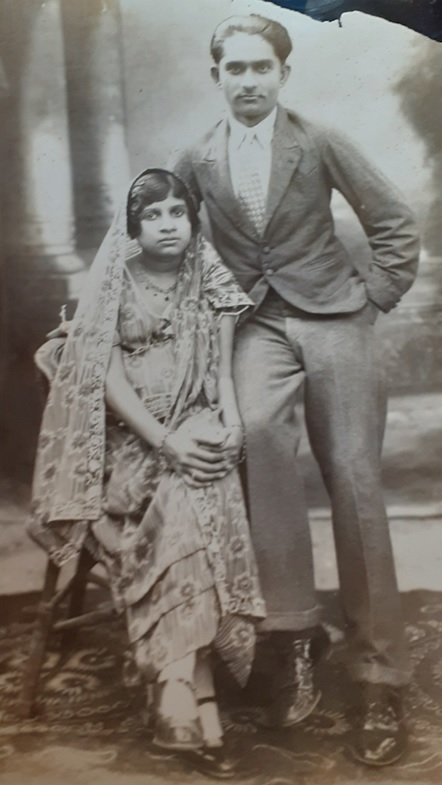
Shariff and Zera Alladina Patney, Tanga Ginan Reciter Ismaili Simerg
Shariff and Zera Alladina Patney, 1930. Photo: Safder Alladina Collection.

There were many singers and musicians in the family. My father taught me to sing Jeere waala Paat madaviney chok puravo (a Ginan which is often recited on days when Ab-e-Shifa is partaken) when I was about 10 years old. Mukhi Habib Kassam, who sang the Ginans early in the evening, was so pleased with my singing that he gave me one shilling!

Every Sunday morning, there was a gathering in my house where musicians and music lovers would gather to listen to the singers and instrumentalists. Ustad Ismail Ragi was a local music master who attended these morning sessions of riyaz until he fell ill and the local businessmen got together to raise money to send him with his wife to India for medical attention.

In the 1960s the sessions were attended by Gangu, a harmonium player and Batuk, a young tabla player. The recordings of my father’s songs, including the four Ginans in Souncloud, came out of these sessions of riyaz on Sunday mornings. I was in the UK at the time.

Shariff Alladina recited the Ginans many times in the Jamatkhana. He also gave lectures in the Jamatkhana where he would introduce pieces of Ginans, Bhajans and Sufi poetry in between his speech. He tutored many young people in Tanga to sing Ginans including his daughters Malek, Shirin and Khatun. Khatun’s rendition of Hazrat Ali’s Mowlana Kalam was enjoyed by many.

With these few remarks contextualizing my father’s interest in the wonderful tradition of Ginans and music, I once again invite readers to click on Soundcloud for Shariff Alladina’s recitation of 4 Ginans as well as a Thumri.

The Ginans in Soundcloud, named as Bapaji 1, 2, 3, and 4, are as follows:

1. Bhāī tīnī vireṅ jīuṅ umeduṅ āsuṅ puṇīuṅ or sānjno chhogaḍio;

2. Sabhāgā is dhunīāṅdhe vich kiyā gin āve;

3. Sāmī rājo more manthī na vīsarejī; and

4. Moman man em jāṇjojī.

Ginans Central at the University Saskatchewan is an excellent resource for Ginans and Ginanic research, and I would suggest you visit the website and see items #140, #614, #751, and #464 corresponding to each of the 4 Ginans listed above that are in Soundcloud.

Date posted: July 20, 2020.

Before departing this website please take a moment to review Simerg’s Table of Contents for links to hundreds of thought provoking pieces on a vast array of subjects including faith and culture, history and philosophy, and arts and letters to name a few.

________________

We welcome feedback/letters from our readers. Please use the feedback box which appears below. If you don’t see the box please click Leave a comment. Your comment may be edited for length and brevity, and is subject to moderation. We are unable to acknowledge unpublished letters

A portrait of an elderly man with gray hair and a beard, wearing glasses and a formal jacket, looking directly at the camera.

Safder Alladina has taught English as a Foreign Language in England, Japan and Portugal and English as a Second Language in England and Canada. In his 35 years of teaching, he has taught Early Years, Primary, Secondary and Adult classes; and developed and taught Teacher Education programmes at graduate and post-graduate levels at the University of North London, UK, and the University of British Columbia, BC. His research work is in Sociolinguistics. He has retired to a hobby farm in the interior of British Columbia where he does his writing under the pen name of S. Giga Patney.

The melodious life and legacy of Shamshu Jamal (1936 – 2019)

Shamshu Jamal (1936-2019), Ismaili singer, simerg photo
Shamshu Jamal (1936-2019). Photo: Shamshu Jamal family archives.

By KARIM H. KARIM
(with contributions from Dolatkhanu Jamal, Rosemin Karim, Riyaz Jamal, Imran Karim and Irshad Karim)

Shamshu Jamal has left a profound impression on the global Ismaili jamat. His music was “magical,” declared a poem written in honour of his 80th birthday in 2016. The singer, musician, lyricist, composer, and music teacher had innumerable admirers in the countries across North America Europe, Africa and Asia where he performed in a tenure of over 60 years. Shamshudin Noordin Jamal was the unofficial poet laureate and bard of Canada’s Satpanthi Khoja Ismailis. His musical legacy has been passed on to a multitude of students and to his children and grandchildren, with whom he produced several recordings.

It was not only Shamshu’s music but his personal affability, generosity and humility that touched people’s hearts. Despite achieving success and fame, he remained grounded in family and community.

Shamshu was a loving son, husband, father and grandfather as well as a devoted friend. He and his wife lived simply in the same home in Vancouver for the last four decades. It was where he received prominent musicians and legions of admirers. It was also where he taught music and even repaired colleagues’ harmoniums.

Participating actively in the life of the neighbourhood, he stayed in touch with people who left and made new acquaintances. The many close friends and fans around the world are a testament to his compassion and graciousness. His humour was legendary – he seemed to have a joke for every occasion. Shamshu is remembered as having a smile on his lips and a twinkle in his eye. These features of his personality shone through in his singing and compositions.

Shamshu Jamal was born in a home whose air was filled with music. His father performed at gatherings and held sessions at the family’s residence. He taught the young Shamshu about the basics of Indian ragas and how to sing and play instruments during the 1940s. This early introduction to music stirred an irrepressible desire to learn more.

Formal Indian musical training was not available in Dar es Salaam, Tanzania, so Shamshu began teaching himself through research, careful listening and constant practice. He instinctively understood rhythm, melody and vocal expression. As a young teenager, he would sneak into the concerts of prominent artists visiting from India. Performing at private musical gatherings and then on the stage before turning twenty, he soon emerged as a virtuoso both within and outside the Khoja Ismaili community.

story continues after photo

Shamshu Jamal performing in the 1960's. Photo for Simerg
Shamshu Jamal and colleagues performing in Dar es Salaam in the 1960’s. Photo: Shamshu Jamal family archives.

Shamshu’s attention to linguistic detail and diction drew him into the hearts of ghazal lovers who marvelled at his knowledgeable and precise enunciation of Urdu, which was not his mother language. He performed with a circle of fellow singers and musicians who were Muslims, Hindus, Sikhs and other members of the diaspora that had crossed the Indian Ocean to settle in Africa.

In 1973, Shamshu Jamal and his family moved to Vancouver as part of the East African Ismaili migration to western countries. He re-established old musical contacts and made new ones. The larger South Asian community of Vancouver responded enthusiastically to Shamshu’s talented renderings of ghazals and bhajans. He performed with singers and musicians from various cultures and religions. As an accomplished harmonium player, he also shared the stage with renowned artistes from India, such as the classical vocalists Pandit Jasraj and Shrimati Shweta Jhaveri and the master tabla players Ustad Zakir Hussain and Pandit Swapan Chaudhuri.

Shamshu generously gave of his musical self to his own and other communities for all of his adult life. He became a much sought-after teacher of Indian music, sharing his time and knowledge with students from various communities. Notwithstanding his success, he continued his own journey of studying music.

In 2000, the Government of Canada recognized his accomplishments and awarded him a prestigious grant to pursue advanced musical studies in India. It was in that year that he retired from his job as an accountant to devote himself more fully to music.

story continues after photo

Shamshu Jamal and fellow musicians performing in Vancouver. Photo for Simerg
Shamshu Jamal and fellow musicians performing in Vancouver in the 2010s. Photo: Shamshu Jamal family archives.

Shamshu’s live concerts were much celebrated events even when he was in his eighties. He performed at public venues, at Ginan mushairas in Jamatkhana social halls and at private music parties in homes. His particularly distinctive vocal style had been developed over many decades. Quite apart from his mastery of the technical aspects of music, the real excitement of Shamshu’s performances lay in the enthralling manner in which he engaged and connected with the audience. The mischievous smile, the impromptu alaaps and variations, and the ability to draw out deeply embedded emotions will be remembered long into the future.

His delivery remained at a sophisticated level even as age modulated the timbre of his voice. He practiced extensively before each performance. Audiences were delighted at the way that Shamshu maintained his vocal range and high notes of alaaps even as evening concerts flowed into the early morning. Apart from devotional material and heart-rending ghazals, Shamshu’s repertoire also regaled his audiences with playful songs like “Aavata Jata Jara” in Gujarati and “Nazar Se Milaa Kar” in Hindi.

From time to time, there arise individuals whose voices capture a community’s most profound feelings. For Canada’s immigrant Khoja Ismailis, one of those powerful voices has been Shamshu Jamal. His musical creativity has vocalized some of the deepest emotions of the community. Various versions of his original composition in Gujarati of “Mara Mowla Canada Padharshe” (1978) continue to be sung to this day. The word “Canada” is changed in different parts of the global diaspora to “London,” “Kenya,” “America” etc. when anticipating Mawlana Hazar Imam’s arrival in particular locations. It is viewed as Shamshu Jamal’s signature song which Malik Talib, former president of the Aga Khan Ismaili Council for Canada, termed as “iconic” for the community. This geet’s literal English translation, “My lord shall make a visitation to Canada” does not do justice to the deeply-felt range of sentiments that it expresses.

When Shamshu composed it in 1978, he creatively captured an immigrant community yearning for its spiritual leader’s first visitation in the autumn of that year. Its members were in a western country, far away from their eastern roots and were uncertain of their future. The Imam had been a constant guide when they had lived in Africa. There was eager anticipation of his advice on how to deal with the difficult situation in which they found themselves. With his finger on the pulse of the community, Shamshu Jamal gave voice to what it was feeling in its heart. The lyricist compassionately articulated the anxiety of uprootedness as well as the aspirations for renewal.

The same padhramni’s book-end composition of “Mowla Sidhaavi Gya” by Shamshu is a profoundly sad geet of the Imam leaving the community at the end of his visit. It vocalizes the bitter-sweet feelings of the Jamat at the end of the mulaqaat and to this day produces streams of tears from listeners’ eyes. This song has also become an iconic expression of similar departures of Mawlana Hazar Imam over many years since 1978.

Jamal went on to produce many other geets in praise of the Imam, particularly commemorating his various jubilees. Ever the perfectionist, he enlisted the participation of professional musicians in London, England for the Silver Jubilee album Jubilee Ke Naghme (1983) and in Mumbai, India, for the Golden Jubilee’s Jashne Jubilee (2008).

One of Shamshu Jamal’s major achievements was to enable Canadian Khoja Ismailis, who have been cut off from their cultural roots, to appreciate the profound depth of their Indian musical heritage. He enabled the Jamat to understand the musical culture and classical ragas on which the ginans are based. Shamshu recorded “Tran Tran Ved Na Dhyaavo” in Raag Malkauns, Joothi Re Duniya in Raag Bairagi Bhairav, Dur Desh Thi Aayo Vañjhaaro in Raag Jaijaiwanti and many others. These are masterful renditions that have now become integral to the treasury of the recorded Satpanth heritage, one of whose founders was Pir Shams (12th-13th century).

Shamshudin Noordin Jamal’s star shines brightly in the firmament of music. He lived a full and accomplished life. His legacy was visible at his funeral at which his grandchildren soulfully sang ginans that he had taught them. Shamshu Jamal’s final farewell is expressed in Shakeel Badayuni’s ghazal, Aakhri Waqt Hai Saans Hai Aakhri, which he used to sing at his concerts:

“Duniya walo mubarak ho duniya tumhe,
Kar chale hum salaam akhri.”

Translation

“This world is yours now, o people of the world,
I have done my final farewell.”

Date posted: July 16, 2020.

________________________

We invite you to submit your condolences, memories and tributes to Shamshu Jamal by completing the feedback form below or by clicking on LEAVE A COMMENT. Should you have difficulty in submitting your comment through the feedback form, please email it to simerg@aol.com; Subject: Shamshu Jamal.

________________________

A professional headshot of a middle-aged man with short gray hair and glasses, wearing a suit and tie, smiling gently at the camera.
Karim H. Karim

About the author: Karim H. Karim is the Director of the Carleton Centre for the Study of Islam and a Professor at Carleton University’s School of Journalism and Communication.

_____________________

To submit an obituary or tribute to a deceased member of your family, please see our post Simerg Invites Obituaries / Tributes to Honour Past / Recent Deceased Ismailis