Simerg is an independent initiative dedicated to Ismaili Muslims, the Aga Khan — their Hereditary Imam — and the Ismaili Imamat, and Islam in general through literary readings, photo essays and artistic expressions
The motif representing Nur, or Light, has been utilized during the inaugural visits of Mawlana Hazar Imam, His Highness the Aga Khan, to Ismaili Muslims globally since he became the 50th Hereditary Ismaili Imam on February 4, 2025, succeeding his father, Mawlana Shah Karim, His Late Highness Aga Khan IV. His seventh visit to his followers will be to Canada from March 25-31, 2026. Photograph: The Ismaili.
Our tradition begins its teachings not with rules, but with reminders of presence. Pir Ṣadardin, in his timeless wisdom, offers us a spiritual imagination that prepares the heart before it prepares the body.
In the Ginan Satgur Sathe Gothadi Kije[1], he evokes a powerful image:
Jyote jagadine jumloji betha…
Translation
The Lord sits with His Light in full blaze.
This is not poetry for the mind alone. It is a vision for the murid. It invites us to imagine the Jamatkhana not as a hall of bricks and lamps, but as a sanctified space where the Divine Light is already present, already radiant. When a murid enters with this awareness, the heart softens, the senses awaken, and the soul becomes receptive.
Another Ginan by Pir Ṣadardin [2] deepens this inner posture:
When you enter the Jamatkhana, O chivalrous brother, remain in the presence of the Light; avoid slander and idle talk.
Here the Pir gently redirects us: the Jamatkhana is not a place for distraction, gossip, or worldly chatter. It is a sanctuary of presence. The murid is encouraged to feel, not merely know, that he or she stands before the Light of the Imam.
These verses form the spiritual foundation of our discussion. They remind us that conduct is not merely behaviour; it is an inner state that expresses itself outwardly.
When the Imam Physically Graces the Jamat with Didar
There are moments in the life of a murid that are unlike any other. When the Imam of the time physically graces the Jamat with Didar, the familiar space transforms. What was a sanctuary, becomes a royal court, a sacred, luminous, resplendent space filled with joy, anticipation, and profound gratitude.
For many murids, this moment is the fulfilment of a lifelong yearning: to see the Murshid, to be seen by the Murshid, to feel the warmth of his presence.
But this raises an essential question:
What should be the state, inner and outer, of the murid in the presence of the Imam? This is not a new question. Our tradition has contemplated it for centuries.
Guidance from Qadi Nu‘man: The Adab of the Murid
In the 10th century, Qadi Nu‘man [3], one of the great jurists of the Fatimid tradition, wrote extensively on adab, the etiquette and conduct of the followers of the Imam. His guidance remains deeply relevant.
He reminds us that the physical presence and the Didar of the Imam is not a public spectacle; it is an intense, personal, one-on-one encounter between the murid and the Murshid. Even in a gathering of thousands, the murid stands as though alone before the Imam.
From this understanding flow the essential qualities of conduct:
HUMILITY: A heart emptied of pride, ego, and self-importance.
RESPECT AND REVERENCE: Speech, movement, and gaze shaped by awareness of sanctity. No rushing to greet the Imam, no physical contact with the Imam, no standing to draw attention to oneself.
STILLNESS AND PRESENCE: No distraction. No idle talk. No wandering thoughts.
AWARENESS OF LIGHT: Every gesture shaped by the recognition that the Imam bears Divine Light.
At this point, the teaching of Pir Shams in Saloko Moto [4] becomes especially meaningful:
Satgur says…Offer your true tithe, and bow at the feet of the Imam from a respectful distance.”
This verse captures the essence of reverence: devotion expressed with humility, sincerity, and dignified distance.
The Conduct of the Murid and the Awe of the Imam
The conduct of the murid must reflect the essence of the Imam. As the master of ta’wil, the one who unveils the inner reality (batin) of the physical (zahir) universe, the Imam stands at the apex of spiritual authority [5]. In the Ginans, he is described as the sovereign of the fourteen spiritual realms, the one through whom the cosmos is interpreted and harmonized.
Such a station naturally calls the murid into a posture of awe, humility, and respectful distance. This is not distance of heart, but a way of carrying oneself that acknowledges the Imam’s spiritual stature.
In a congregation of thousands, each murid arrives for the Didar with his or her own hopes, burdens, and expectations of grace. It becomes a shared ethical responsibility to preserve the sanctity of the collective space. Any action that draws attention to oneself, disrupts the serenity of others, or creates disturbance, even unintentionally, risks overshadowing the quiet interior work that each soul is undertaking.
Mindfulness, therefore, is not only a personal virtue but a communal obligation. It ensures that the congregation remains a vessel of harmony, not distraction; a place where the murid’s inner orientation toward the Imam can unfold without interruption.
Nasir Khusraw’s Eyewitness Account
The 11th-century Ismaili da’i, traveller and poet-philosopher Nasir Khusraw offers a vivid glimpse of this reverence. In his eye-witness description of the procession of the Festival of the Canal (Fath al-khalij) during the time of Imam al-Mustansir bi’llah in AH 438-39/1047 CE, Nasir Khusraw informs us that when the Imam, wearing a white robe, passed by on a horse, the murids and citizens alike, bowed in devotion and awe, lowering their heads in deep respect, reciting prayers and benedictions [6].
This simple gesture reveals a profound truth: the presence of the Imam evokes spontaneous reverence in the hearts of believers.
A Fatimid Example of Reverent Conduct
Al-Maqrizi’s [7] historical accounts of the Fatimid court illuminate this principle with striking clarity. Audiences with the Imam–Caliph were carefully structured to preserve the dignity and contemplative gravity of the encounter. Visitors approached with measured steps, maintained silence, and observed spatial boundaries that signalled respect for the Imam’s spiritual and temporal authority.
This Fatimid ethos mirrors the ethical expectation placed upon murids today: to uphold the serenity of the communal space, to avoid actions that draw attention to oneself, and to recognize that the Imam’s presence, whether physical or symbolic, requires behaviour aligned with reverence.
The Meaning of Adab (Sabyata, Maryada)
The classical Arabic/Persian term adab, is expressed in Gujarati/Hindi as sabyata (refined behaviour) and maryada (dignified respect). They refer to the graceful, respectful way a murid carries themselves in sacred spaces in the presence of the Imam. In our tradition, adab toward the Imam is not merely social etiquette; it is a spiritual discipline. It reflects an inner recognition of the Imam’s role as the bearer of divine guidance. To act with adab is to let one’s outward behaviour mirror one’s inward understanding.
Concluding Reflection
To stand before the Imam, physically or spiritually, is to stand in the presence of Light. The murid’s conduct, shaped by humility, reverence, and awareness, becomes an offering in itself. When each murid upholds serenity and dignity, the entire Jamat becomes a vessel worthy of the moment of grace.
Date posted: March 19, 2026.
________________
END NOTES
Gujarati Ginans and Granths
[1] Pir Sadardin, Satgur Sathe Gothadi Kije. P. 28.
[2] Pir Sadardin, Gat Mahe Avine Sanmukh Rahiye. P.116
English
[3] Qādi Nu‘man’s teachings on adab are preserved across Fatimid jurisprudential works; see Halm, Heinz. The Fatimids and Their Traditions of Learning. London: I.B. Tauris.
[4] Pir Shams, SalokoMoto
[5] For the Imam as master of ta’wil, see Daftary, The Ismailis: Their History and Doctrines.
[6] Paula Saunders, Ritual, politics and the city in Fatimid Cairo. Pp. 103-04
[7] Al-Maqrizi, Ittiʿaz al-Ḥunafaʾ, descriptions of Fatimid court protocol.
___________________
BIBLIOGRAPHY
Gujarati Ginans and Granths
Mahan Ismaili Sant Pir Sadardin Rachit Ginanono Sangrah 1. Bombay 1952
Pir Shams Rachit Saloko Moto, Ginans Series 2, Ismailia Association for Pakistan, Karachi, -3, 1967
English
Daftary, The Ismaʿilis: Their History and Doctrines.
Halm, Heinz. The Fatimids and Their Traditions of Learning, London: I.B. Tauris.
Hunsberger, Alice C, and Institute of Ismaili Studies, London, 2003. Nasir Khusraw, the Ruby of Badakhshan: A Portrait of the Persian Poet, Traveller and Philosopher.
Maqrizi, Taqi al-Din Aḥmad. Ittiʿa al-Ḥunafāʾ bi-Akhbar al-Aʾimma al-Faṭimiyyin al-Khulafaʾ. Cairo: Supreme Council for Islamic Affairs.
Saunders, Paula, Ritual, politics and the city in Fatimid Cairo, New York, 1994.
______________________
About the author: Shiraz Pradhan is an international consulting engineer, author, and long‑time researcher of the Ginan tradition. He serves as the Chairperson of the Association for the Study of Ginans, an international organisation dedicated to preserving and advancing Ginan scholarship. Shiraz has written extensively on Nizari Ismaili Ginans and Satpanth in Ilm (Ismailia Association UK, 1987) and on Simerg. His interests span the Vedas, Judeo‑Christian history, and Sufism, reflecting his broad engagement with spiritual traditions. His forthcoming book, Amrapuri: Exploring the Evolution of Nizari Ismaili Satpanth through the Prism of Ginan Literature, brings together years of dedicated study.
[This post has two components: In the first piece, Professor Karim H. Karim examines the Aga Hall Project currently under construction in Mumbai, India. His inspiration for the piece comes from His Highness the Aga Khan’s advice to his Ismaili followers to ask hard questions about issues affecting the community. Dr. Karim inquires about the $365 million Aga Hall project’s luxury 54-storey Mumbai skyscraper. His soul-searching article examines the site redevelopment in the context of the Aga Khan Development Network (AKDN) ethics, Ismaili Muslim values and the current program to address ultra-poverty that designates India as a high-priority country.
The next piece, submitted by an Ismaili Canadian visitor to India, is a disturbing eyewitness report of some terrible social habits and health issues within the Indian Jamat as well as the physical state of the Karimabad apartment complex and two historical Mumbai Jamatkhanas.
The post underscores the crucial role of the Ismaili community and its institutions in addressing pressing social and ethical issues, empowering them to take action — Ed.]
~~~~~~~~~~
(I). Asking Hard Questions about the Aga Hall Project: The “Iconic” Mumbai Redevelopment Raises Troubling Social Justice Concerns
The author, Karim H. Karim, has shaped this piece based on in-person and online Aga Hall Estate redevelopment team presentations, related documents, social media discussions, and communications with several individuals. The views expressed here are his.
The superlatives used in selling luxury apartments at the Aga Hall Estate in India will make even the most unrestrained publicity agents blush. Marketing presentations speak of the building as “exceptional,” “breathtaking,” “at the heart of everything,” “most exclusive,” “state-of-the-art,” “world-class,” “pre-eminent,” “ageless,” “ultimate,” “infinite,” “better than best,” “perfect,” “iconic.” Consider these boasts in the light of the following two translated passages, the first a verse from the Holy Qur’an and the second from the Ismaili Ginan (hymn) “Maal Khajina Bahotaj Bhariya” attributed to Sayyid Gulmali Shah:
The servants of the All-Merciful are those who walk in the earth modestly — Qur’an (25:63)
Wealth and treasure abound But you will not keep them This lovely palace will be forgotten And your place will be the jungle In what slumber do you sleep? Recall the Lord, recall Mawla — Ismaili Ginan
Many decades ago, a religious education teacher cautioned me against carelessly using absolutes because perfection does not exist in the material world. But that does not seem to apply to the South Mumbai Aga Hall redevelopment project, which has endowed itself with a heavenly aura.
Its promoters say that it is inspired by descriptions of paradise, claiming that “there will be delight, luxury, and comfort at every square foot” of this heaven on earth. Furthermore, it will have fabulous views of the Arabian Sea, which they declare “represents infinity” (an attribute of God).
This over-inflated balloon of self-congratulatory hype dropped to earth when an audience member at a presentation asked whether the building’s sightlines would always remain unobstructed. A project spokesperson was compelled to admit that such a guarantee could not be given because “in Mumbai, anybody builds anything anywhere, anytime.”
The glorious visions of all-pervading luxury and Eden-like delight also make for a jarring contrast with the reality of the grinding poverty of 2.5 million of Mumbai’s residents. Muslims are disproportionately the most deprived in the megapolis. Many Ismailis in Mumbai and around India are also among the country’s ultra-poor, whose upliftment remains the responsibility of the community’s leadership in India. The Aga Hall developers constantly speak of the accolades that the project has received for being environmentally friendly and “iconic” in design. However, the criteria for such awards and certifications do not account for the social justice values relating to poverty alleviation, which is a major concern of the Ismaili Imamat.
Aga Hall Estate’s current redevelopment is led by the Prince Aly Khan Hospital Charitable Trust, with the logo of Aga Khan Agency for Habitat (AKAH), a body within the Aga Khan Development Network (AKDN), also appearing on the project’s brochure. The AKDN is an organization that has become well-known since the 1980s for its institutions’ innovative and successful initiatives to raise the quality of life of Ismaili Muslims and the communities among whom they live.
However, the Rs. 2,000 crore ($365 million Canadian) Aga Hall redevelopment does not appear to fit into AKDN’s dominant models of funding and operation. Notwithstanding the rationale that the “profit” from this project will go to the hospital, the promotional discourse of the project has drastically shifted course in making the wealthy its primary focus.
This article is concerned with the ethical and social justice implications of the Aga Hall Estate’s prioritization of the interests of the rich.
What is the Aga Hall Estate Project?
The 46th Nizari Ismaili Imam (Hasanali Shah, Aga Khan I) established his residence at Aga Hall (also known as Wadi) in South Mumbai’s Mazgaon locality in 1848. (His beautiful marble and sandstone mausoleum is north of this site at Hasanabad). Aga Khan II (Imam Shah Ali Shah) and Aga Khan III (Imam Sultan Mahomed Shah) also resided at Aga Hall. The Wadi Jamatkhana was built in 1900 on the estate’s lands that occupy several acres.
Additional community buildings were constructed over time. Ismaili Housing Society residences, the Diamond Jubilee School, and the Aly Khan Hospital have graced it since the mid-20th century. (There was another Imamat residence nearby in Malabar Hill, west of Hasanabad, which the present Imam, Aga Khan IV, Mawlana Hazar Imam, donated to accommodate housing for the poor in the early 1980s.)
Under the current redevelopment, the hospital is being remade into a “state of the art” medical facility, and the school will become an International Baccalaureate institution. Wadi Jamatkhana will be reconstructed. The housing society’s structures are being demolished to be replaced by a 45-storey “tenant” tower that will stand next to the project’s 54-floor commercial skyscraper, whose 373 freehold apartments are for sale on Mumbai’s real estate market. Mughal-themed gardens will intersperse the buildings designed in Islamic and Rajasthani architectural styles. The 140-year-old gates and fountain are being preserved for reinstallation. India’s “highest green building certification” has been obtained for the redevelopment.
The rationale provided for the project’s luxurious commercial tower is that its “surplus” will be used to upgrade the Aly Khan Hospital. Sometimes, the word “profit” is used at presentations, even though surplus and profit technically mean different things. The preferred audiences for the Aga Hall redevelopment’s promoters are well-off Ismaili and non-Ismaili Non-Resident Indians (NRIs).
Asking Hard Questions
“In dealing with the issues that lie ahead of us, we will look at them straight in the face, we will ask the hard questions. If we cannot find immediate answers, we will go on asking the same questions until inshallah, we are inspired to find the answers, but we will not give up. We will not go back to an obscurantism, to a form of intellectual retreat into something which is neither beneficial for the present and certainly not constructive for the future.” — His Highness the Aga Khan, November 11, 1986
Many questions remain unanswered despite the project team’s international publicity blitzes.
Why is a development network building luxury apartments?
Why is an institution that describes itself as endeavouring “to realize the social conscience of Islam” foregrounding the interests of the rich?
Why is a habitat agency whose mandate is to “work with communities to help them prepare for and respond to natural disasters and the effects of climate change” involved with the construction of investment property?
Has there been an unannounced change in the long-standing policy that has focused solely on providing homes for the lower and middle classes?
Why is one Ismaili housing society being upgraded to “world-class” standards while many others in India and elsewhere have languished for decades in varying states of disrepair and neglect?
Does this apparent change in direction signal an overall shift in the priorities and modus operandi for the entire AKDN organization?
There are larger questions about the effect of this development on the Ismaili community:
What impact will the seeming turnaround have on the way Ismailis conceptualize some of their fundamental values?
How will those who are feeling disaffected with the community’s institutions respond?
Wealth and the Quality of Life
Like other branches of Islam, the Ismaili faith does not prohibit the accumulation and enjoyment of private wealth, including real estate. However, sacred teachings emphasize moral responsibilities and ethical behaviour in acquiring income. Believers are expected to avoid excess and ostentation and to be humble and modest. Thoughtfulness and kindness towards the less fortunate are integral to the faith’s practice. Philanthropy is strongly encouraged, and there has long been a tradition of generous giving. These values have been beneficial for setting up Ismaili infrastructures under the guidance of the Imamat.
The establishment of health, educational, financial, and social facilities that began in the last century led to substantial material advancement of the community. Proper housing in many places of Ismaili presence became a major priority for the Imamat at the Golden Jubilee of Imam Sultan Mahomed Shah (1936), with the objective of improving and safeguarding the quality of murids’ lives. Flats were built in “colonies” (a term used in India and Pakistan) for members of the Jamat in the middle and lower socio-economic classes.
Ismailis are encouraged to contribute monetarily (and with service) to the network’s institutions. Whereas a significant proportion of the community donates to numerous causes, the most consistent financial donors are certain wealthy community members whose generosity is vital to the institutions. Fundraising has been highly systematized.
The social development programs of the Ismaili Councils and the AKDN have sought to improve the quality of life of the less privileged. Jamati members of various socio-economic classes benefit from mixed-use sites with adjacent housing, schools, and/or medical facilities.
It does not appear that any previous residential buildings were designed only for the benefit or use of the wealthy, who already have material access to high living standards.
However, the current construction of apartments in the Aga Hall complex’s commercial tower requires substantial financial resources beyond the reach of the less well-off. Whereas the “tenant” tower is being purpose-built to accommodate residents of the former buildings of the housing society, this is probably the first time the community is raising a separate structure exclusively for the rich.
Shifts in Perspective in Last Decade
The Aga Hall Estate has been under consideration for redevelopment since the mid-1990s. A 2014 design report for the AKDN stated that the estate, “including its buildings and adjacent areas (footpaths, access roads, gardens), are in a state of disrepair and require significant upgrades in terms of infrastructure.” The document’s proposals highlighted the site’s religious ethos and the Mumbai population’s socio-economic and cultural diversity. It described the Jamatkhana as “the jewel of the redevelopment complex.” There was an emphasis in that plan on blending “the spiritual and the material aspects of life that promotes a balanced way of life within the Islamic context.” The designer’s website refers to the movement from “Shariah to Hakikah.”
However, significant shifts in perspective appear to have occurred over the past decade. Whereas the 2014 report spoke about the balance between the material and the spiritual, the current brochure only speaks of “work-life balance.” Dunya (the material world) has become dominant,and din (faith) seems to have receded. The brochure boasts of the location’s “ultimate spectrum in urban living” that includes the “most desirable shopping destinations,”; “selection of international brands,”; “the trendy ‘Socials’”; “the exclusivity” of a racecourse and sports clubs; and “state of the art business district.” It declares that “With a Gross Domestic Product of US$2.7 Trillion in 2019, India is now the world’s seventh-largest economy” and invites prospective Ismaili and non-Ismaili buyers to “live at the heart of everything!”
However, these enthusiastic statements omit grim truths about the country’s deep and growing inequalities. Oxfam International’s 2023 report, “Survival of the Richest: The India Story”, notes as follows:
“Following the pandemic in 2019, the bottom 50 percent of the population have continued to see their wealth chipped away. By 2020, their income share was estimated to have fallen to only 13 percent of the national income and have less than 3 percent of the wealth. Its impact has been exceptionally poor diet, increase in debt and deaths. This is in stark contrast to the top 30 percent, who owns more than 90 percent of the wealth, with the top 10 percent owning more than 80 percent of the wealth concentrated in the top three deciles.”
It is not certain what proportions of the Jamat in Mumbai fall into the categories of rich and poor, but Mawlana Hazar Imam has instructed institutions to address the needs of murids who live in “ultra-poverty” during his Golden and Diamond Jubilees. He has indicated inadequate housing as a major problem and has identified India as a priority country for this international program. In late 2023, a Talika (a written message) reiterated his concern for the ultra-poor again. The Ismaili Leaders’ International Forum reviewed progress on the program to deal with the elimination of poverty at it meeting in June 2024. This issue is clearly not the focus of those selling Aga Hall Estate apartments.
It seems noteworthy that the book The Psychology of Money: Timeless Lessons on Wealth, Greed, and Happiness was prominently displayed alongside a spokesperson during a video presentation on the project. Also interesting is that the commercial tower caught the attention of the online Indian newspaper Money Control, which wrote about it glowingly for a readership attracted to luxury and conspicuous consumption.
Ethics in Action?
The AKDN has described itself as endeavouring to “realize the social conscience of Islam” and its projects are called “ethics in action.” Unfortunately, not everyone in the vast network seems to understand what such an institutional position entails. There are multiple layers of problems in the manner that the promoters of the Aga Hall redevelopment have situated their project with respect to ethics.
In misinterpreting the Institute of Ismaili Studies’ document on the network’s ethical framework, they refer to “AKDN’s eight ethics”. Neither IIS’s nor AKDN’s materials state that the ethical principles are only eight in number. Various publications of the IIS identify additional ethics that are also important to the network’s ethos. Nevertheless, the Aga Hall project has designed its logo to represent the supposedly eight-fold ethical structure of AKDN. We are told that the symbol is based on the eight-petalled flower called Dryas Octopetalia. As it turns out, the flower is not native to tropical Mumbai, where the redevelopment is located, but to the arctic-alpine regions of the world. Such incongruities appear to underline the conceptual shallowness of the project.
The Aga Hall promotors state that the first of AKDN’s ethics is “inclusiveness.” Yet, the project’s own promotion materials, including its brochure, contradictorily emphasize the words “exclusive” and “exclusivity” to describe the nature of the site. The nullification of inclusiveness is embedded in the character of the commercial building, which is financially exclusionary. Indeed, the brochure, videos, and presentations about the project are pitched only to upper-class audiences.
Article continues below
Cover page, Aga Hall brochure.
~~~~~~~~~
Page 26, Aga Hall brochure.
In many of the community’s decrepit housing societies in India, governance (one of the other “eight ethics”) has been a sore issue. However, the Wadi housing society’s political economy seems to be intriguing in its distinctness. Among the current occupants of the colony are elite Ismaili individuals, including a high-ranking member of the Aga Khan Council of India and a Maharashtra state politician. It is unclear how decisions will be made on applications from less privileged Jamati families in Mumbai who want to reside in this highly desirable “tenant tower.”
Prince Aly Khan Hospital is to be converted to a state-of-the-art facility. Unfortunately, upgrades to some other AKDN health institutions, including Aga Khan University Hospitals, have made them more expensive and inaccessible for middle — and lower-class families. The Diamond Jubilee School will be transformed into an international baccalaureate educational institution. However, it is not clear what arrangements will be made for the neighbourhood’s children who do not meet its elevated entrance standards.
The Aga Hall project’s promotional materials strongly imply that Ismaili presence in Mumbai began with the arrival of Aga Khan I and his entourage of Persian followers in 1846. This would be patently incorrect. Documents from the celebrated Aga Khan Case (1866) reveal that the Khoja Jamat was well-established in Bombay before the end of the 1700s. The community’s wealthy members assisted many who migrated from Gujarat to the city, especially during periodic famines. Whereas the word “heritage” is used to promote the Aga Hall redevelopment, it is applied in a very exclusionary sense that erases the long-standing Khoja presence from the city’s pluralist history.
“Community” is a term used in the redevelopment’s materials to refer to all the future residents and users (Ismaili and non-Ismaili) of Aga Hall. It is presumed here that everyone will have shared access to the site’s open areas. However, the sales team does not explain how potential disagreements between the commercial tower’s occupants and others will be navigated. Experience has shown that those who have purchased property at premium prices tend to demand exclusive entitlements and privileges.
What is the Road Ahead?
“… an exclusionary narrative can deepen tensions and divisions between groups. These dynamics shape societal interactions for generations and can be challenging to change.” — Princess Zahra Aga Khan, Global Centre for Pluralism, May 19, 2021
Wealth generation has been important to the Ismaili community in ensuring services for the Jamat. It has helped to build Jamatkhanas and secular institutions that have embodied the faith’s values. Central to these values has been the improvement of the quality of life of those who are less fortunate. The generosity of the Jamat’s wealthy members has been a source of strength for the community. Whereas donors have been given certain recognitions and advantages, the community has generally sought to be inclusive of all socio-economic backgrounds and has hitherto not structurally supported class divisions in the Jamat.
A long-existing for-profit sector in communal institutions now mainly operates under the Aga Fund for Economic Development. It is mandated to remain distinct from the social development activities of institutions such as the Aga Khan Foundation. The major funding sources for AKDN’s social development programs are the Imamat, international development aid agencies, private foundations, and Jamati members. For-profit activities have not been given as overt a place in the network’s social development sector as is currently happening in the Aga Hall project. This tendency appears to be creeping into non-profit sections of the Network.
The change at Aga Hall is not merely the injection of commercialization in redeveloping the mixed-use site but the remarkable shift of prioritizing the people who purchase apartments in the 54-storey tower. Regardless of the rationale that the “profit/surplus” from this structure will flow to the hospital, the promotional discourse of the project has made an overt qualitative change in making the rich its main concern. Its language emphasizes exclusive elite access and conspicuous consumption. It subscribes to the materialist values of an opulent lifestyle that appears contrary to the AKDN’s and the Ismaili faith’s normative stance.
Whereas one could argue that there is a place in society for the high life and that there is nothing inherently wrong with such a sales pitch whose ultimate aim is social development, the unintended and insidious danger is that the Aga Hall project’s commercial discourse normalizes and reinforces the divisions between rich and poor. It is troubling that the context in which this is taking place is the severe shortage of affordable housing in India and the sharply deepening gap between the haves and the have-nots.
Adherents of the faith have been nurtured on beliefs of gaining entry to heaven through spiritual endeavour. But the Aga Hall’s materialist promotions promise paradisical happiness through a monetary transaction. This appears contradictory to Jamati members, who wonder if the value orientation has changed. Concerns in this regard are often raised by the community’s intelligentsia, and among youth in social media discussions.
I end this article by asking some additional questions that need to be addressed.
How is the apparently new focus on the interests of the rich to be explained to the community for whom a central Shia Ismaili value is social justice?
How are those who are struggling to find adequate housing for themselves and their children to rationalize the institutional construction of luxury residences?
How will the Aga Khan Council of India explain to the underprivileged in their Jamat the special advantages that are being proffered to wealthy resident and non-resident Indians?
How will fund-raisers for AKDN and Jamati projects justify the Aga Hall Estate’s “most exclusive” development?
Aga Hall’s commercialization appears to be sending mixed messages. The luxury apartment tower will be the highest building constructed in the community’s history. What will this Ismaili “icon” signal to the world about the community?
What will the project say to future generations of the Jamat about Ismaili values?
It is worth recalling that “The servants of the All-Merciful are those who walk in the earth modestly” (Qur’an, 25:63).
Date posted: July 22, 2024.
____________________
About the Author
Professor Karim H. Karim delivering his remarks on March 23, 2024, at the Ismaili Centre in London upon being presented the Institute of Ismaili Studies inaugural Alumni Recognition Award. Photograph: Institute of Ismaili Studies/via Karim H. Karim.
Karim H. Karim is Chancellor’s Professor at Carleton University. He has served as Co-Director of the Institute of Ismaili Studies (IIS) and Director of Carleton’s School of Journalism & Communication and Centre for the Study of Islam. Dr. Karim has held visiting scholarly appointments at Harvard University, the Aga Khan University (AKU), and Simon Fraser University. He has also been a senior advisor for the AKU and the Central Asian University and has served as a member of the AKDN’s Higher Education Forum. Professor Karim is an award-winning author who has published numerous critically-acclaimed and globally-cited writings. He and his wife have established The Karim and Rosemin Karim Prize that recognizes research excellence in understudied areas of Ismaili Studies. Karim received the inaugural IIS Alumni Recognition Award in March 2024.
______________________
(II). Quality of Life of Ismaili Jamati Members: Is it a Reality or Myth?
The following is an eyewitness account by a Canadian Ismaili who spent several weeks in India. The writer is known to the editor and wishes to remain anonymous. We honour his request.
There has been a lot of emphasis on improving the quality of life (QoL) of the global Jamati members. The QoL was even a Diamond Jubilee Project. May I also note that the elimination of poverty, an integral part of QoL, was raised by Mawlana Hazar Imam during his Golden Jubilee Year, which began on July 11, 2007. He repeatedly stressed about its elimination by the end of the Jubilee year, which concluded on December 13, 2008. Subsequently, he has raised the same matter over and over again.
Every country where our Jamati members reside has a specific goal-oriented methodological approach to improve the lives of its members. Quality of life or well-being refers to the wealth and comfort of individuals, communities, and society based on material and non-material factors important to people’s lives, such as health and social connections. Four domains common to QOL in health have been defined as physical health, mental health, social health and functional health. Other relevant domains include::
Material living conditions (income, consumption and material conditions)
Leisure and social interactions.
Economic security and physical safety.
Governance and fundamental rights.
Natural and living environment.
On my recent visit to India, I made a few specific observations about some aspects of QoL that I would like to share. I had the opportunity to visit Jamatkhana in four cities: Bhuj, Mumbai, Pune, and Hyderabad. I observed specific conditions and behaviours affecting our Jamati members’ QoL in each city.
It’s urgent that we address these issues to ensure the well-being of our Jamat. I observed that most youths and some senior members were chewing packed tobacco in all these cities. Tobacco chewing has a characteristic aroma; the smell disturbs the peaceful and serene atmosphere inside the Jamatkhanas. These packets are readily available and at an affordable cost. Health research findings have proved that this addiction is the leading cause of oral cancers and many other problems related to oral hygiene, like darkening of the teeth and premature loss of teeth. Thus, the QoL of our Jamat in India is at a potential risk. I sincerely wish the leadership in India is aware of this and has a preventive program in place. If not, it is time to study this health issue and address it appropriately.
Another issue that caught my attention during my visit was the prevalence of obesity among our Jamati members. This chronic lifestyle metabolic syndrome is a growing concern that we cannot ignore. We need to understand the extent of this issue: what is the prevalence of this health problem compared to national data, and what are the specific interventional strategies for the Jamat? Data and strategies are crucial in addressing this issue, and a systematic approach is needed to tackle this epidemic.
My visit to Mumbai also brought to light the state of our housing complexes. The Karimabad complex is in a run-down state. We must provide safe, modern, and acceptable housing for our Jamat. Even the Jamatkhana in that complex is dire, with falling window frames, depilation, etc. Similarly, the Darkhana (Dongree Jamatkhana) is in dire need of repairs. The urgency of improving our living spaces and places of prayer cannot be overstated.
I was told that the new Ismail complex in Hyderabad was built to accommodate members of the Jamat from Bhuj (the Jamat is at risk due to earthquakes). When I was there, this relocation had not taken place, and perhaps there is a need to investigate this, as it could significantly improve the safety and quality of life for the Jamat members.
“Historically and in accordance with Ismaili tradition, the Imam of the time is concerned with spiritual advancement as well as improvement of the quality of life of his murids. The Imam’s ta’lim lights the murid’s path to spiritual enlightenment and vision. In temporal matters, the Imam guides the murids and motivates them to develop their potential.“
The Jamat and its institutions must catch up based on the Imam’s concern, continuous advice and motivation to develop our potential and rid the Jamat of poverty. This will require a comprehensive approach that addresses not only the immediate health and housing issues but also the underlying social and economic factors that contribute to the overall quality of life of our Jamat.
Karim H. Karim. (2022, Nov. 23). Contemporary Nizari Thought’s Pragmatic Turn and the Centrality of Ethics. Ismaili Studies Conference: State of the Field. Institute of Ismaili Studies. London, UK.
Karim H. Karim. (2014). The Aga Khan Development Network: Shia Ismaili Islam. In Stephen M. Cherry and Helen Rose Ebaugh (Eds.), Global Religious Movements Across Borders. London: Ashgate Publishers.
Artistic Greeting Cards by Karim Ismail, Brief Notes on the Imamat and the Aga Khans, and an Explanation and Recitation of a Celebratory Ismaili Ginan (Hymn)
Simerg and its sister websites, Barakah and Simergphotos, convey heartiest felicitations to Ismailis and friends of the Ismaili community in Canada and around the world on the auspicious occasion of His Highness Prince Karim Aga Khan’s 66th Imamat Day anniversary which falls on July 11, 2023. The Aga Khan succeeded to the Hereditary Throne of Imamat on July 11, 1957 at the age of 20 upon the death of his grandfather, Mawlana Sultan Mahomed Shah Aga Khan III, whose reign of 71 years as the 48th Imam is the longest in the 1400 year history of the Shia Ismaili Muslims.
Yesterday, on July 10, 2023, we presented a unique collection of pages from the Tanganyika Standard newspaper that reported on the death of the late Aga Khan and the succession and enthronement of his grandson Prince Karim. For July 11, we present a series of beautiful works of Imamat related calligraphies created over the years by Toronto’s Karim Ismail, including one for 2023 which is shown below.
Inspiration for the calligraphy was drawn from the book “The Master and the Disciple” in which the ayat (7:181) is quoted, and which relates to the Imams. The book is an early Islamic spiritual Dialogue by Ja’far b. Munsur al-Yaman. In this section of the book two characters are involved in a dialogue. One is an Ismaili da’i by the name of Salih and a knowledgeable Mullah called Abu Malik. After some time the dialogue turns to the concept of Divine Justice where Salih refers to 7:181 several times. The Ismaili da’i explains to Abu Malik (who has gained the surname of Cube of scholars) that God’s act of justice towards His servants is through just witnesses (7:181). Salih uses the Arabic word adl to also mean witness (7:181). In Shi’i and especially Ismaili understanding, these just witnesses are the Imams (Ahl al-bayt). Upon hearing this, Abu Malik exclaims, ‘By my life, this is the very foundation of justice!’. He now understands that God’s justice is by means of the just witnesses mentioned in 7:181.
According to well-known Muslim traditions, the Prophet Muhammad (May peace be upon him and his family) said:
“I am leaving amongst you two weighty things after me, the Qur’an and my Progeny (ahl al-bayt). Verily, if you hold fast to them both you will never go astray. Both are tied with a long rope and cannot be separated till the Day of Judgement.” (Muslim, Vol. II, pg. 279).
The Prophet appointed Hazrat Ali to be his successor as the Imam in a pivotal gathering during his return to Medina from his final pilgrimage to Mecca. The Aga Khan, who is respectfully addressed by the Ismailis as Mawlana Hazar Imam (our Lord the present/living Imam), is the 49th Hereditary Imam in direct succession of Imams since Imam Ali.
In the Ismaili Ginan (hymn) Girbah Vali, attributed to the Ismaili missionary Pir Sadr al-Din, the Pir says:
“If the Imam did not have his feet on this earth for even a moment, then the world, moon, sun would vanish and nothing would exist, neither the heaven nor the earth.”
This notion of the cosmic necessity of an Imam, expressed by the Pir, is also found in famous traditions of the Prophet Muhammad (cited in “The Divine Guide in Early Shi’ism,” pp 125-131):
“The earth cannot be devoid of an Imam; without him, it could not last an hour,” and also: “If there were only two men left in the world, one of them would be the Imam.”
The calligraphies that Toronto’s Karim Ismail has created for Imamat Day over the past few years, are inspired by Qur’anic phrases that in Shia tradition refer to the Imam, and we are happy to include all the calligraphies that he has contributed to the website since 2020.
The Qur’anic phrase Al-rasikhun fi’l-ilm (Those firmly rooted in knowledge) in Fatimid Kufi script on all 4 sides of the art work. The Fatimids were rulers of North Africa and Egypt from the 10th through the 12th centuries. The Fatimid Imams or Caliphs were ancestors of the current Aga Khan.
The Qur’anic phrase Al-rasikhun fi’l-ilm (Those firmly rooted in knowledge) on top and bottom of the art work in Fatimid Kufi script; the centre of the art work has the same phrase in Thuluth script. Calligraphy and design by Karim Ismail, Toronto.
In Shi’i tradition, “The Rope of Allah” (Qur’an 3:103) refers to the “Ahl al Bayt” — the Imams from the House of the Prophet Muhammad (S.A.S). This important tradition appears in the card within heptagonal geometry (seven-sided polygon) about which the (Late) Karl Schlamminger, creator of extraordinary designs and distinctive calligraphies for the Ismaili Centres in London, Lisbon and Toronto, observed as follows in an essay for Arts & The Islamic World (volume 3, number 3, page 25-26): “The floor of the outer entrance hall [of the Ismaili Centre London] has an open ended pattern in heptagonal form which rises at the focus of the room to create a fountain: such a pattern in such space is of course a completely classical Islamic response — but I have never heard of a heptagonal pattern anywhere in Islamic architecture. “The number seven symbolizes for Ismailis the values of its essential philosophy — but has never been used in an architectural context. Here the sevenness of the design is no superficial effigy or naturalistic picture of an idea, but — as always in Islam — is expressed in geometry (literally: measurement of the earth).”
Calligraphy by Karim Ismaili on the auspicious occasion of Mawlana Hazar Imam’s 63rd Imamat Day Anniversary.
_______________________
The Aga Khans
From the day the Prophet Muhammad (May peace be upon him and his family) passed away on June 8, 632, and Hazrat Ali became the first Imam on the Divine Commandment that the Prophet had received at Ghadir Khumm, there have been forty-nine Ismaili Imams in continuous Hereditary Succession, spanning a period of 1391 years in Islamic history.
Upper row: Imam Shah Hassanali Shah (Aga Khan I) and Imam Shah Ali Shah (Aga Khan II). Lower row: Imam Sultan Mahomed Shah (Aga Khan III) and Mawlana Shah Karim Al Hussaini (Aga Khan IV). Total reign of the four Imams 203 years from 1817 to current year (2021). Longest reign Aga Khan III, 71 years; followed by Aga Khan I and Aga Khan IV, each 64 years.
The current Aga Khan and his immediate three predecessors have reigned the Ismaili community for a total of 207 years or 14.9 % of the entire span of Imamat, as follows:
1. Mawlana Shah Karim Al Hussaini Hazar Imam (His Highness the Aga Khan IV, Imam from 1957 – Current, 66 years, he became the 49th Imam at the age of 20); 2. Imam Sultan Mahomed Shah (His Highness the Aga Khan III, Imam from 1885 – 1957, Imam for 71 years, he became the 48th Imam at the age of 7 years); 3. Imam Shah Ali Shah (Aga Khan II, 1881 – 1885, Imam for 4 years, he became the 47th Imam at the age of 51 years); and 4. Imam Shah Hassanali Shah (Aga Khan I, 1817 – 1881, Imam for 66 years, he became the 46th Imam at the age of 13 years).
This 207 year period of the reign of 4 successive Ismaili Imams accounts for more time than does the entire Fatimid period, reigned by 8 Imams from Imam Mehdi (11th Imam, North Africa) to Imam Mustansir bi Allah (18th Imam, Cairo).
On that historical and interesting statistical fact, we convey to members of the Ismaili community around the world as well as friends and supporters of the community Imamat Day Mubarak. We also pray for the fulfillment of our readers’ wishes and that everyone’s lives are filled with barakah (happiness) and success. We particularly wish families with young children and youth success in their studies. On this auspicious day, we also pray that the souls of the deceased may rest in eternal peace and that their family members may find strength and courage to overcome the grief over the loss.
_______________________
An Explanation and Recitation of the Ismaili Celebratory Ginan Ya Ali Khuba Mijalas
Editor’s note: This is a very condensed, yet comprehensive, post on the munajat, Ya Ali Khuba Mijalas that is recited in many Ismaili Jamatkhanas around the world for the auspicious celebration of Imamat Day. For the complete version, which offers much more in terms of the Ginan’s history, composition, style, and explanation with a glossary, please click Original article.
By SADRUDIN K. HASSAM
INTRODUCTION
Popular tradition has it that the Munajat,Ya Ali Khuba Mijalas, was first recited during the enthronement ceremony of the 48th Imam, Mawlana Sultan Mahomed Shah, His Highness the Aga Khan III, which took place at Aga Hall at Mazagon Road in Mumbai in September 1885. Another tradition says that the recitation first took place when the young Imam met his followers at the main Ismaili Jamatkhana in Mumbai, known as the Darkhana. In any case, the munajat became very much part of the Ismaili tradition in many parts of the world to recite it in jamati gatherings (mijalas) to commemorate the enthronement of their 48th Imam Sultan Muhammad Shah, the late Aga Khan III (1877 – 1957). Continuing with this tradition, this Munajat, with slight variations, is now recited on the occasion of the anniversary of the ascension of Mawlana Shah Karim al-Hussaini (His Highness the Aga Khan IV) as the 49th Ismaili Imam. July 11th, 2023 marks his 66th Imamat anniversary.
The Arabic word Munajat is formed from the root word na-ja-wa which means ‘to converse secretly’ or ‘confidentially’. From the context of the Ginanic literature of the Ismailis, the term Munajat would be equivalent to venti (supplication). Apart from conveying this basic idea of venti, the term Munajat also has the connotation of conveying mubaraki (greetings) and adoration or reverence to a holy person, in this case the Ismaili Imam.
The complete Munajat has eight stanzas of four lines each, the chopai. At the end of each stanza there is a warani (refrain) of four lines which ends with the words ‘Mubarak hove’. This refrain is repeated at the end of each stanza for collective recitation and participation of the Jamat.
EXPLANATION
It is not an easy task to explain and translate a Ginan or Qasida from one language to another. For this Munajat which is a blend of several languages and is suffused with deep feelings and sublime supplication, the task becomes even more daunting. A conscious effort has been made to be as close to the original as possible and we hope that this explanation will impart our readers with some understanding about Ya Ali Khuba Mijalas.
VERSE ONE
Transliteration
Ya Ali Khuba Mijalas Zinat Karake Farasha Bichhai Gali, Aan Baithe Hay Takht-Ke Upar Shah Karim Shah Vali
Refrain
Aaj Raj Mubarak Hove, Noor Ain Alikun Raj Mubarak Hove, Shah Aal-e Nabi Kun Raaj Mubarak Hove, Hove Hove Aaj Raj Mubarak Hove.
Explanation
O Ali! In the fair assembly, gloriously adorned with carpets spread on the floor, Our Lord Shah Karim sits on the takht, our Lord Shah Karim our Guardian.
Refrain
Today blessed be your rule Oh the light of Ali’s eye, Blessed be your rule Shah, the descendant of the Holy Prophet, Blessed be your rule today Blessed be your rule today.
VERSE TWO
Transliteration
Ya Ali Didar Lenekun Aye Shah Teri, Hindi Jama-et Sari, Sijada Baja Kar Najaran Deve Jan Apniku Vari…. Aaj.
Explanation
O Ali! To be blessed with didar (glimpse of the Imam) your whole Indian jamat have assembled. They prostrate and they offer nazrana (homage) devoting their lives to you.
VERSE THREE
Transliteration
Ya Ali Tera Nasiba Roje Awal-Se, Deta Haire Kamali, Shah Sultan Shah Ke Mukhamen Se Nikala, Shah Karim Shah Vali….Aaj
Explanation
O Ali! Your fortune from the very first day (right from the beginning) has bestowed perfection upon you, Hazrat Imam Shah Sultan Muhammad Shah declared that Mawlana Shah Karim is the Lord and the Guardian.
VERSE FOUR
Transliteration
Ya Ali Shah Kahun To Tujakun Baja Hay, Bakhta Bulanda Peshani, Chhoti Umarmen Aali Marataba, Taluki Hay Nishani….Aaj
Explanation
O Ali! To call you Lord is your due. Your fortune and greatness is evident on your forehead. Your exalted status at the young age is a sign of greatness.
VERSE FIVE
Transliteration
Ya Ali Takhta Ne Chhatra Tujakun Mubarak, Zaheraji-Ke Piyare, Abul Hasan Shah Karani So Teri Jannat Aap Sanvare….Aaj
Explanation
O Ali! May your throne and canopy (exalted position) be blessed, the dear one of Fatimatuz Zahra. O Mawla Ali! All this is because of your glorious deeds. Paradise is embellished by your presence.
VERSE SIX
Transliteration
Ya Ali Takht ne Chhatra sunake tere Falakase Barase Nooran, Moti Tabaka Hathunmen Lekar, Shah KunVadhave Huran….Aaj
Explanation
O Ali! At the news of your Takht Nashini (Takhta ne Chhatra) the heavens shower Light, with trays of pearls in their hands, the houris (chaste heavenly maidens) greet the Lord.
VERSE SEVEN
Transliteration
Ya Ali Maheman Khanemen Momankun Jab La-i ‘Id Musal-le Shamsi Jo Salavat Pada Kar Marafat-Ki Khushiyali….Aaj
Explanation
In the guest-house when the celebration of your Takht Nashini takes place, the momins celebrate like ‘Id. They recite the Shamsi prayer, the salwat, and they experience the ecstasy of spiritual enlightenment.
VERSE EIGHT
Transliteration
Ya Ali Teri Mubarak Badike Khatar, Sayyad Karte Munajat, Shah Najaf Tere Pushta Panah Tere Dushman Hove Fanah….Aaj
Explanation
O Ali! To offer greetings, the Sayyads make their humble supplication (munajat) O Ali, the Lord of Najaf, may your progeny be protected and your enemies be destroyed.
~~~~~~~~~~~
Recitation of the Munajat by Shamshu Bandali Haji
A rare portrait of the late Ismaili missionary Shamshu Bandali Haji from his early years. Photograph: Shamshu Bandali Haji Family Collection.
Simerg welcomes your feedback. Please complete the LEAVE A REPLY form below or click on Leave a comment Your letter may be edited for length and brevity, and is subject to moderation.
CONTRIBUTORS
Karim Ismail
Originally from Uganda, Karim Ismail lived in England before settling in Canada. By profession, he is a Pharmacist (retired). It was in England, in 1986, that he came across the artwork of a German Muslim, Karl Schlamminger (1935-2017), at the Ismaili Centre London. Karl’s artwork on calligraphy and geometrics, had a profound effect on Karim. He is frequently seen conducting calligraphy workshops for children at the Aga Khan Museum in Toronto. Karim is also active on the literature counter at the Ismaili Centre Toronto.
Malik Merchant
Malik Merchant is the founding publisher and editor of Barakah (2017) as well as its two sister websites Simerg (2009) and Simergphotos (2012). See full profile HERE
Before departing this website please take a moment to review Simerg’s Table of Contents for links to hundreds of thought provoking pieces on a vast array of subjects including faith and culture, history and philosophy, and arts and letters to name a few. Also visit Simerg’s sister websites Barakah, dedicated to His Highness the Aga Khan, and Simergphotos.
Over the years, Simerg and its sister websites have published numerous enlightening and reflective pieces on Hazrat Ali (peace be upon him), the first Imam of Shia Muslims, whose birth anniversary falls on the 13th day of the Islamic month of Rajab. The Islamic calendar follows the lunar cycle and this translates to February 3, 2023 in the Gregorian calendar. We are pleased to provide the following links to a selection of timeless pieces on the Imam:
REVIEW SIMERG’S TABLE OF CONTENTS AND VISIT ITS SISTER WEBSITES
Before departing this website, please take a moment to review Simerg’s Table of Contents for links to hundreds of thought-provoking pieces on a vast array of subjects including faith and culture, history and philosophy, and arts and letters to name a few. Also visit Simerg’s sister websites Barakah, dedicated to His Highness the Aga Khan, and Simergphotos.
Editor’s note: Like all Shia Muslims across the world, the Shia Imami Ismailis will be observing with deep reverence the birth anniversary of Hazrat Ali on the 13th of Rajab, corresponding to February 3, 2023, in Canada and many other parts of the world. The Ismailis are led by His Highness the Aga Khan who is the 49th Hereditary Imam in the succession of Imams from Ali, who was appointed by Prophet Muhammad — may peace be upon him and his family — to continue his teachings within the Muslim community. Today, the Ismailis are the only Shia Muslims to have a living Imam, namely the Aga Khan, and hence the Ismailis refer to him as Hazar Imam (the Imam-of-the-Time or the Present/Living Imam.). The Kalam-i Mawla article by Dr Farouk Topan first appeared in printed form in Vol 13, Number 1, July 1990, of Ilm, the flagship Ismaili religious periodical published by the Ismaili Tariqah and Religious Education Board for the UK — or ITREB — between 1975 and 1992. This second reproduction of the article on SIMERG has an improved format for ease of reading. Readers should take note that the images shown in this post are not part of the original article published in Ilm magazine.
By FAROUK M. TOPAN
Introduction
The relationship between man and God forms the focus of most religious literature. Of paramount importance to the relationship is the conduct, behaviour and action of man during his sojourn on earth. What he says and does is deemed to affect that relationship: good deeds strengthen it, bad deeds impair it. It is thus considered crucial that man be made aware of what he may and may not do, that he be made to understand the limitations of his actions beyond which he may not transgress without placing in jeopardy the health of that relationship. Such awareness is made explicit not only in scriptures and holy texts but also in books, epistles, treatises and poems composed by men of faith and learning. The Kalam-i Mawla falls under the latter category.
The Kalam-i Mawla (hence referred to as Kalam) is a poem of 327 verses, composed in Hindi, whose content draws inspiration from the sayings, speeches and sermons of Mawlana Ali (may peace be upon him.) The actual composer of the verse is not known. Unlike the practice followed in some compositions, — for example, in the Ginans — where the composer mentions his name within the body of the text, the composer of Kalam has refrained from doing so. His action may have been dictated by modesty, or even piety, in not wishing his personal attribution to impinge upon the considered authorship of the first Imam. Thus the authoritative status of the verses, as expressing the Kalami (speech/sayings) of the Lord, Mawla, has been preserved.
The predominant message conveyed in Kalam is ethical. One could say that the text is a manual of ethics for a believer, stating the virtues to be cultivated and the vices to be shunned. The ethical emphasis is brought into an even sharper focus in the printed editions of Kalam-i Mawla. A comparison, for instance, between the earlier manuscript of the Kalam dated 1801, and the latest printed version published in Karachi in 1984 by Ismailia Association for Pakistan shows a re-arrangement of the verses in the latter to reflect an ethical direction of the message.
The Karachi edition, which is itself the latest in a long chain of printed versions dating from 1873, divides the text into 23 chapters, each with its own title. The first chapter is on truth, the second on brotherhood, the third on the virtues of good manners or discipline, the fourth on generosity, the fifth on miserliness, the sixth on greed and so on. Among the subjects included are the way of the heart (ch.7); the beauty and marvel of knowledge (ch.10); the path of injustice (ch.11) and of justice (ch.12); prayers (ch.14) patience and gratitude (ch.16); jealousy (ch.22) and courage (ch.23).
The Kalam-i Mawla, however, does not confine itself simply to conveying the ethical message. If it did, it would have been incomplete in a fundamental way for ethical injunctions derive their meaning from the assumptions and pre-suppositions of belief. To state what man ought to do and not do, without placing these imperatives within the parameters of belief would be to deprive them of their rationale and justification. They would lack conviction. The composer of the Kalam has avoided such a pitfall and has created a vibrant text by focusing, not on one, but on three interlinked dimensions, each supporting the others. These dimensions are (1) the Doctrinal (2) the Esoteric and (3) the Ethical.
~~~~~~~
The Doctrinal and Esoteric Dimensions in the Kalam-i Mawla
The first dimension may be termed doctrinal; its expression is interspersed throughout the poem as the basis for man’s action. Two examples may suffice for our purpose here. The opening verse of Kalam-i Mawla sets out a theological hierarchy. The first remembrance (Zikr), it says, is of Allah; the second profession (kalma) is of Muhammad and the third is of the Mawla who narrates “his kalam, a treasure of jewels revealed to us.” Thus God, the Prophet and the Imam are mentioned from the beginning. In verse 5 the concepts of Tawhid, Nabuwwa and Imamah are expressed explicitly: “Know that Allah, the Sustainer is One; that Muhammad is the Prophet of Allah; after the Prophet (comes) the Lord of the Imamat, Murtaza Ali; believe in him with truth.”
The second dimension in Kalam-i Mawla is the esoteric. One finds verses of deep mystical meaning in the poem which encourage the reader to aspire to a higher spiritual reality. The emphasis is again on action: through prayer, bandagi and acquisition of knowledge. Prayers undertaken at (or after) midnight are given a special mention (verse 168) as they bring ‘light’ to the very being of a person, a light reflected on one’s face; then, on the Day of Judgement, one will be counted among those whose faces are white (of. Qur’an 3:105-106). A believer who is regular in his prayers and bandagi will be graced with the vision of his Lord (verse 170). If such a mu’min is a true beloved of the Lord, then he too will be granted the spiritual bliss of the mi’raj experienced by the Prophet (verses 170/171).
But a believer who wishes to attain such spiritual bliss must first have a guide, a murshid, to open the gates of esoteric knowledge for him. Even a tiny and minute amount of such knowledge — “mere dot (nukta) of marifah” as it is stated in verse 101 — is enough, if given by the murshid himself, to lead a mu’min back to his origin, to the essence of Truth (haqq). Only then will he be able to transcend the state of duality (“The duality of You and me” and merge into a state of Unity and become One with Him who is the First and the Last, the Manifest and the Hidden, He who will continue to exist when all else perishes (verse 327).
~~~~~~~
The Ethical Dimensions in the Kalam-i Mawla: Theme of Charity and Generosity
The third, and predominant, dimension in Kalam-i Mawla is the ethical one, which is expressed in the poem in a number of ways. The most common way is by injunctions stated in the name of Mawlana Ali (a.s) whose status is sometimes further explained through the use of particular titles such as:
Shah-e Awliya (verses 2 & 182) — the Lord of the friends (of God)
Sahib-e Zulfiqar (verse 15) — Master of (the sword) Dhulfiqar
Wali Maqbul (verse 34) — the accepted friend (of God)
Sahib-e Israr (verse 98) — Master of the (spiritual) mysteries or secrets
Kawsar-e Saqi (verses 102 & 107) — the pourer (of water) at the Pond of Kawthar (in Paradise)
Shah-e Dul Dul Sawar (verses 113 & 130) — the rider of (the horse) Dul Dul; etc.
Such titles are almost always given in the last or penultimate line of the verse as a forceful culmination to the advice given in the previous lines; they are thus introduced by phrases such as “and so has spoken….” or “So commands….”
The (ethical) injunctions themselves vary in content and even in the style in which they are expressed. In terms of content, almost every major aspect of a Muslim’s way of life has been covered. The headings of some of the chapters cited in the previous reading, give an indication of the variety of the themes: the sub-themes are even more pervasive.
Let us take chapter four as an example and consider its contents which deal with the theme of charity and generosity (sakhawat). While each of its seventeen verses is pertinent to that theme, its exposition relates to different aspects of the subject.
Man is placed — as indeed he must — at the centre of the injunctions. But around him are constructed premises or arguments to help him see the benefits of being generous, benefits to be gained both in this world and the next, benefits both material and spiritual. Thus, generosity expressed also as acts of charity and philanthropy, is made a cornerstone of the relationship not only between man and God but also between man and man. The two are interlinked, the one expressed in terms of the other, as we shall see below.
In so doing, the verses (18 to 34) also address themselves to fundamental questions of the theme: what is charity; to whom should one be charitable; in what way; and, perhaps most important, why.
The arguments setting out the rationale for the act of charity or generosity — the ‘why’ — may be summarised as follows:
Since God has given wealth to a person through His bounty, His barakah, one should not hide or gourd that wealth but spend from it ‘in the way of God’; for, vast amounts of wealth which are either concealed from others or spent entirely on oneself eventually turn to dust and do not benefit other human beings. If, on the other hand, one gives generously in charity or is philanthropic in action, one is rewarded both in this world and the next. The act of giving is compared to ‘the philosopher’s stone’ (paras): just as the latter turns to gold what is rubbed against it, so does the generous character of a person bring him the good things of life.
People come to respect and love such a person and accord him a high position in this world and offer prayers for his well-being. And God — as the Razzaq, the Provider — grants him prosperity in wealth, family, household and rank in society. A philanthropist is the beloved (habib) of God who will grant him a rank close to Himself in the abode of the Hereafter and whose name will not perish in this world.
How should one give? A short answer from the verses is that charity ought to be given with a smile, with a feeling of happiness. The aim is to make the recipient happy. It is stated repeatedly in these verses that a donor must not make the recipient feel obligated to the giver nor should he hurt his feelings in any way. If these injunctions are violated, his charity will be considered “lost”, that is nullified in the eyes of God. Such a way of giving requires a disciplined heart, a heart that is under control from pride and arrogance. Feelings of kindness in the heart of the donor are gradually accompanied by respect and love for the recipients.
And who are the recipients? Although the verses do not give details of their identity, two broad categories are mentioned: the orphans and the weak who should be approached ‘by the strong’ with a view to aiding them in whatever ails them.
The onus of taking the initiative is placed on the strong. It is interesting to note that charity is conceived, not only in terms of the giving of material wealth to those who are poor, but also in helping to redress the wrongs committed against the weak, to bring justice to those whose rights have been infringed.
Verse 28 states pithily: “The weapon of the weak is to grieve, and to shout out laments to all” but, it goes on to ask: if the grieving do not possess the wealth or the strength to defend themselves, and they continue to be oppressed with suffering and pain, what can be done about it? The implication is clear: the weak need those with a sense of fair play to stand up for them. That too, would be an act of charity.
Article continues below
________________________________
A page from a Kalam-i Mawla manuscript in the collection of the Institute of Ismaili Studies, London.
~~~~~~~~~~~
~~~~~~~~~~~
Shi`ite Prayer Manual – One of the most revered religious and holy figures of Islam is ‘Alī ibn Abī Ṭālib (ca. 601–661), whose honorary name, Amīr al-Mu‘minīn, translates into Persian as the “prince of the believers.” Written works by ‘Alī ibn Abī Ṭālib and sayings attributed to him are sacred to the Shi`ite faithful, particularly among Persian-speakers. This hand-written prayer manual displays the words of ‘Alī ibn Abī Ṭālib in the original Arabic in the Naskh calligraphic style and in a smaller-font Persian translation in red in the Nasta‘liq calligraphic style by Abū al-Qāsim Shīrāzī. Credit: Library of Congress.
________________________________
The Stylistic Features Employed in the Kalam-i Mawla
We said earlier that the ethical injunctions in the Kalam-i Mawla are presented in varied styles. Three such stylistic features may be mentioned as illustrations. The first is definitional. A subject, or a moral premise, is defined in a way that includes the type of action one ought to pursue. The following are some examples:
Chapter 1, Verse 3 (1:3) — “He is a true friend who truly keeps his promise”
2:9 — “He is your brother who remains with you during times of hardship”
and, conversely,
2:10 — “He is not a brother to you who brings shame on you, though you belong to the same (father’s) progeny”
4:22 — “The best of wealth is that which is spent in the Name and way of the Lord”
The second feature employs the conditional as a literary device in the construction of a moral premise along the lines “if this…..then this ……” or “if this..then do this ……”. Some examples on different topics are given below.
The first depicts a person who listens more to his ‘heart’, here meaning his baser instincts, than to what has been taught to him. Note, incidentally, the use of the word ‘heart’ in these examples and the variations of meaning given to it, from a place of lower instincts to a noble residence of the Lord in the human body:
7:5 — “If you are blind to knowledge and your heart becomes your guide (then) your conduct will be dictated by its desires and you will be driven into a deep well.”
Thinking about death is the subject of the second example:
17:238: “If you want advice for your heart think of death — remembrance of death is splendid advice: remember that you will die and make the grave your home and none of your friends will accompany you”
On the protection generated by a person’s attitude towards his friends and towards God:
8:248 —“The evil deeds of your enemies will not reach you if you are sincere and good to your friends: the wicked world, with its calamities, will avoid you if you let Allah, the One, reside in your heart.”
The third stylistic feature employed in the Kalam is a common literary tool of using particular images to convey certain meanings and messages. The images themselves may be ordinary ones drawn from nature and daily human activities, or else special ones located in the poet’s culture. The examples given below, as indeed those cited above, represent but a small portion of the spectrum available in the Kalam-i Mawla.
We may take the ‘ordinary’ examples first where the poet uses stone, grass, trees, river, boat, gold, silver, silk and dust to convey his ideas. (The translation given here, as elsewhere in this article, is not a literal one):
3:15 — “Good conduct adorns a person as gold and silver adorn a woman…”
3:16 — “Gold remains in this world but right conduct (adab) enable you to meet your lord…”
4:22 — “Wealth (misspent in this world) turns to dust…” (cf. 6:40)
5:36: “The wealth of a miser is like a stone…”
5:47 — “When the boat of the heart comes upon a storm, change direction, and lead it to the shore”
8:16 — “Be as soft as silk…”
8:67 — “Have a tender heart, as tender as a fistful of green grass; be not arrogant and stiff as a tree upright in a forest;
tree is toppled in a storm, but grass bends and sways happily with the wind.”
7:234 — “The waters of a river do not turn back; neither does one’s age…”
Examples of ‘cultural’ images need an explanation. The first is drawn from 4:32 where we are advised to partake of our food with others. The way the meal is served forms the theme for the poet’s injunction in this verse, for he sees people sitting around a single large plate or vessel and eating together from it, as was — and in parts still is — the custom in the East. The custom, we are told, has two benefits. People eating together are blessed with the bounty of God, barakah and, secondly, the food itself can be made to be sufficient for an additional person; for example, four people could eat with satisfaction the food meant for three.
Other examples may be drawn from one verse: 12:129. The verse begins with advice on eating ‘lawful’ food, lawful not only in the sense of halal (in the spirit of the verses of the Qur’an 2:172 and 2:173) but also in relation to one’s income and earning. A free translation of the verse, 12:129, may be rendered as follows:
“Be cautious, brother, and make your meals lawful for the light of the heart comes through lawful eating
Darkness enters the heart and faith when forbidden wealth is consumed;
The heart is the lamp in the temple of the body: where there is darkness, there is loss of faith
None is conscious of the activities perpetrated in a village enveloped in darkness: five thieves together could rob it completely.”
A translation is generally but a poor substitute for the original. That would certainly be the case in the rendition of 12:129 given above, particularly as, on its own, it does not reflect the tight metrical borders and the rhyme scheme within which the poet functions in the original language. And yet — however defective the transfer of the linguistic medium — the poet’s skill of combining different idioms is self-evident.
Three sets of ideas are employed: the notions of right and wrong, of light and darkness, and of the gradual loss of faith. The paradigms drawn from the notions are arranged symmetrically: indulgence in that which is prohibited leads to darkness in the heart which, in turn, leads to a loss of faith (Iman): conversely, deeds undertaken within the boundaries of what is permitted lead to enlightenment in the heart and security of faith.
The paradigms are expressed in the cultural images familiar to the audience of the poet. The body as a temple is one example. Just as a lamp (diwo) is an important ingredient in the temple, investing it with a symbolic (and functional) light, so does the heart perform that function symbolically in the body. But the lamp is not safe. It is threatened by the actions of the person himself: the more he flouts the ethical injunctions taught to him, the dimmer becomes the light in his heart.
This vulnerability is expressed in the metaphor of the body as a village where darkness enables five thieves to combine in a stealthy incursion to steal its valuables, the most worthy of which is faith (Iman).The five ‘thieves’ are mentioned elsewhere — that is in the Ginans — as personifying five vices, panj bhu: of lust (kam); anger (krodh); greed (labh); temptation or single minded attachment to the material aspects of the world (moh) and pride (madh).
~~~~~~~~~~~
Conclusion
The ethical dimension in the Kalam-i Mawla is expressed at three interlinked levels. The first level situates the ethics of the faith within the doctrines and beliefs of Shi’a Islam. These form the foundation upon which the ethics are based, an embodiment of the ‘charter’ that provides the rationale for the ethical development of a Shi’a Muslim. And, perhaps more important, the beliefs and doctrines also reveal — indeed, proclaim — the sanctions that await the transgression of the enunciated ethical injunctions and the reward for their observance.
The second level involves the pronouncement of the moral injunctions themselves. In a work of prose, the pronouncement could perhaps be made at length, with explanatory notes and cross-references to weightier texts, including the Qur’an itself. In poetry, however, an exposition of the theme is governed by such literary constraints as the rhyming scheme and control of the required number of metres per line. The poet has thus to be economical with his choice of words which in turn, ‘forces’ him to make a selection of the themes of priority. What we thus have in the Kalam-i Mawla is the poet’s own choice of what he considers to be important injunctions to be conveyed to a Muslim.
The third level is the literary. We have referred above to the constraint — and challenge — imposed on the poet by the prosodic tradition and convention prevalent in his culture. The poet functions within the prosodic framework to convey his message and ideas. But the framework, at best, is no more than a skeleton in need of flesh and blood to give it form and meaning. And the poet provides this drawing on the idioms of his culture, society and everyday expressions of daily living. The choice of vocabulary, images and metaphors combined with the poet’s own skill of wielding them into verses meant to be read and intoned make the Kalam-i Mawla a truly enjoyable poem to be read for pleasure, instruction and inspiration.
The presentation given in these readings, in relation to the ethical injunctions in the poem, represents but a tiny sample of a vast corpus.
~~~~~~~~~~~~
A note of acknowledgement by Dr. Farouk M. Topan:
I am grateful to Mr Akbar Rupani of the ITREB for India, to Mr Hoosain Khan Mohamed, formerly of Karachi, and to a gentleman who wishes to remain anonymous, for their kindness in checking the translation of the Kalam-i Mawla that I had undertaken a few years ago. Their help, given with unstinted generosity, was most encouraging; but may I also state that it does not associate them in any way with any errors of translation that may arise out of my choice of meaning. I am also grateful to Izzat Muneyb (d. May 20, 2017) for her comments on an earlier draft of this article.
Date posted: February 2, 2023.
Featured image at top of post: Panel presented to Mawlana Hazar Imam, His Highness the Aga Khan, by the Canadian Ismaili Muslim community on the auspicious occasions of his Golden Jubilee visit to Canada in 2008. Please see a brief note about the panel HERE. The panel contains an inscription of Hadith Qudsi, whose translation is shown in the featured image.
____________________________
Dr. Farouk M. Topan is pictured at left being awarded an Honorary Fellowship in recognition of his contribution to the University of London’s School of Oriental and African Studies (SOAS). We recommend our readers to read Dr. Topan’s recent interview with the Ismaili in which he reflects on his life in teaching, academia, and service to the Jamat. We also invite readers to read Simerg’s brief feature piece on Dr Topan, following UNESCO’s designation of July 7 as Kiswahili Day. Dr. Topan contributed significantly to the study of Kiswahili language and its literature.
REVIEW SIMERG’S TABLE OF CONTENTS AND VISIT ITS SISTER WEBSITES
Before departing this website, please take a moment to review Simerg’s Table of Contents for links to hundreds of thought-provoking pieces on a vast array of subjects including faith and culture, history and philosophy, and arts and letters to name a few. Also visit Simerg’s sister websites Barakah, dedicated to His Highness the Aga Khan, and Simergphotos. The editor may be reached via email at mmerchant@simerg.com.
Simerg and its sister websites, Barakah and Simergphotos, convey heartiest felicitations to Ismailis and friends of the Ismaili community in Canada and around the world on the auspicious occasion of His Highness the Aga Khan’s 65th Imamat Day anniversary (July 11, 2022). He succeeded to the Throne of Imamat on July 11, 1957 at the age of 20 upon the death of his grandfather, Mawlana Sultan Mohamed Shah Aga Khan III, whose Imamat (spiritual leadership) of 71 years is the longest in the 1400 year history of the Shia Ismaili Muslims.
According to well-known Muslim traditions, the Prophet Muhammad (S.A.S) said:
“I am leaving amongst you two weighty things after me, the Qur’an and my Progeny (ahl al-bayt). Verily, if you hold fast to them both you will never go astray. Both are tied with a long rope and cannot be separated till the Day of Judgement.” (Muslim, Vol. II, pg. 279).
The Prophet appointed Hazrat Ali (A.S.) to be his successor as the Imam, and His Highness the Aga Khan, who is respectfully addressed by the Ismailis as Mawlana Hazar Imam, is the 49th Hereditary Imam in direct succession of Imams since Imam Ali.
In the Ismaili Ginan (hymn) Girbah Vali, attributed to the Ismaili missionary Pir Sadr al-Din, the Pir says:
“If the Imam did not have his feet on this earth for even a moment, then the world, moon, sun would vanish and nothing would exist, neither the heaven nor the earth.”
The notion of the cosmic necessity of an Imam, expressed by the Pir, is also found in famous traditions of the Prophet Muhammad (cited in “The Divine Guide in Early Shi’ism,” pp 125-131):
“The earth cannot be devoid of an Imam; without him, it could not last an hour” and also “If there were only two men left in the world, one of them would be the Imam.”
The two calligraphies that Karim Ismail has created express another important notion of the Imam based on the Qur’anic phrase: Al-rasikhun fi’l-ilm (those firmly rooted in knowledge). According to the Ismaili Baitul Ilm Secondary Curriculum, Volume 1, produced by the Institute of Ismaili Studies in London, the phrase, in the Shia tradition, is understood to be referring to the Imam descended from the Prophet’s family.
The first calligraphy has the Qur’anic phrase Al-rasikhun fi’l-ilm in Fatimid Kufi script on all the 4 sides of Karim Ismail’s artwork. The Fatimids were rulers of Egypt and North Africa in the 10th through the 12th centuries. The Fatimid Imams or Caliphs were ancestors of the current Aga Khan.
The Qur’anic phrase Al-rasikhun fi’l-ilm (Those firmly rooted in knowledge) on all 4 sides of the art work. Calligraphy and design by Karim Ismail. Toronto.
The second calligraphy, shown below, has the same phrase on the top and bottom borders in Fatimid Kufi script, as above. The centre has the same phrase in Thuluth script. We sincerely thank Karim Ismail for conceiving these pieces of art for Imamat Day.
The Qur’anic phrase Al-rasikhun fi’l-ilm (Those firmly rooted in knowledge) on top and bottom of the art work in Fatimid Kufi script; the centre of the art work has the same phrase in Thuluth script. Calligraphy and design by Karim Ismail, Toronto.
We wish all our readers a very Happy Imamat Day, with prayers for everyone’s good health, strength in Iman (faith), family unity and the fulfillment of all our wishes. May we fulfill the aspirations that Mawlana Hazar Imam has of each one of us of staying on the path of Sirat al Mustaqim (the Straight Path), excelling in our studies and endeavours, and keeping the right balance between our material and spiritual lives.
As we celebrate Mawlana Hazar Imam’s 65th Imamat Day, may we always remain under his guidance, loving care and protection. Ameen.
Date posted: July 11, 2022.
___________________
FEEDBACK
Simerg welcomes your feedback. Please complete the LEAVE A REPLY form below or click on COMMENT. Your letter may be edited for length and brevity, and is subject to moderation.
CONTRIBUTORS
Karim Ismail
Originally from Uganda, Karim Ismail lived in England before settling in Canada. By profession, he is a Pharmacist (retired). It was in England, in 1986, that he came across the artwork of a German Muslim, Karl Schlamminger (1935-2017), at the Ismaili Centre London. Karl’s artwork on calligraphy and geometrics, had a profound effect on Karim. He is frequently seen conducting calligraphy workshops for children at the Aga Khan Museum in Toronto. Karim is also active on the literature counter at the Ismaili Centre Toronto.
Malik Merchant
Malik Merchant is the founding publisher and editor of Barakah (2017) as well as its two sister websites Simerg (2009) and Simergphotos (2012). His interest for literature and community publications began in his childhood years in Tanzania through the work of his late parents Jehangir (d. May 2017, aged 89) and Malek Merchant (d. January 2021, also 89), who both devoted their lives to the service of the Ismaili community, its institutions and the Imam-of-the-Time, His Highness the Aga Khan, as missionaries and religious education teachers. In the UK, Malik edited the flagship Ismaili magazine, ILM, with his father. A resident of Ontario since 1983, he relocated to Alberta in January 2022. He has an animal loving daughter Dr. Nurin Merchant; she is a vet and practices in Ontario. Malik can be contacted by email at mmerchant@simerg.com. He can also be reached — and followed — @twitter and @facebook.
Before departing this website please take a moment to review Simerg’s Table of Contents for links to hundreds of thought provoking pieces on a vast array of subjects including faith and culture, history and philosophy, and arts and letters to name a few. Also visit Simerg’s sister websites Barakah, dedicated to His Highness the Aga Khan, and Simergphotos.
Chinook salmon successfully leaps over a 6 foot dam on Humber River at Etienne Brulé Park Park in Toronto, October 5, 2021. Image clipped from video by Malik Merchant/Simerg, see video of leap below.
The transliteration and meaning of the popular Ismaili Ginan Ooncha (or Uncha) Re Kot… first appeared on this website in 2009, accompanied by an image of a salmon swimming upstream and trying to jump over a steep rapid. The “borrowed” image was a metaphor for the first verse of the Ginan, where the “fish of the briny deep” seeks to overcome an obstacle — a high cliff — to return to its original abode — in the case of the salmon, the place where the mother had first brought it into the world by releasing the egg a few years earlier (a salmon lays between 1,000 to 17,000 eggs out of which only a few survive). It may be noted that certain species of salmon e.g. the Pacific Chinook, die after spawning, and the salmon that it has given birth to, swim to the lake or the ocean, where they reach maturity in about two to three years. After mating, the adult returns to its place of birth to spawn.
I have lived in Canada since the 1980’s and have on three occasions visited Hell’s Gate in British Columbia, a very popular spot to observe salmon going upstream to spawn. Unfortunately, however, I never got to witness this amazing phenomenon there.
A Chinook salmon swimming in the shallow waters of Don River, at Don Trail East, September 30, 2021. Photo: Malik Merchant/Simerg.
I was not aware that Toronto rivers had salmon as well. Indeed, the Don River, only a few hundred metres from where I live, is active with Chinook Pacific salmon moving upstream in autumn. The Chinook were introduced into Lake Ontario in the mid 1960’s because the native Atlantic salmon had virtually vanished. Their introduction was an immediate boon to the province’s fishing industry. The Don River flows into Lake Ontario, and at the park close to me it does not have high rapids, so you don’t get to see salmon jumping that high.
An amazing video by a visitor to Etienne Brulé Park on October 7, 2021 of a salmon trying to leap unsuccessfully over a dam on Humber River, near the 13 Crosby Avenue entrance. Please watch upper section of the film for the salmon leap. Video provided to Simerg by Ms. Sze Thang of Toronto.
Google search located a great spot in Toronto where I could view the incredible show, referred to as the Salmon Run. I went to the recommended Etienne Brulé Park in Toronto’s west end, where the Humber River flows. A regular visitor here told me that the salmon activity was low on that day (October 5). I reached the man made dam on the Humber River. The crowd was very small. I began my video taking at one end of the river and was able to see the entire breadth of the river. I would keep my video on for around 30 seconds, turn it off and turn it on again within a second or two. I took about 70 videos, and seven of those provided me the images that I wanted. Some salmon repeatedly kept on hitting the cliff rock and falling back. A few nearly made it but fell back. It was painful to see that! But then a couple managed to leap high enough and continue its spawning journey. Wow! What an exciting and thrilling moment. I visited the site again a couple of times, and was able to capture more failures as well as two successful leaps with reactions from the crowd of hurrays and hand-clapping. The happy crowd apologized to me for making so much noise, but I was very happy they were cheering with every successful leap, and would have joined them in the celebration. For visitors who missed the successful jumps, my cameras became the centre of attraction, and numerous individuals asked me to forward them the videos so that they could show them to their children!
The effort that the salmon were making was painful to witness especially when they hit the wall of the dam, but they would not give up despite the setbacks. They had a set goal and objective: to reach the spawning location. And they had more rapids to overcome in their long journey.
This extraordinary effort by the fish reminded me of Mawlana Hazar Imam, His Highness the Aga Khan’s advice to his Jamat (community) in Congo in the early 1960’s that if we have faith it will give us the strength to start life all over again (naveen sharuat in the gujarati translated Farman), even a hundred times if necessary. There are two principles in life that Mawlana Hazar Imam has asked us to be guided by: To work hard and to have faith. Let us work hard, be strong and as eager as the salmon, in our life’s material and spiritual journey. As Mawlana Sultan Mahomed Shah said, “Struggle is the meaning of life; defeat or victory is in the hands of God. But struggle itself is man’s duty and should be his joy.” These notions of hard work and struggle, and then accepting success or failure define Islam: Submission to the Will of God.
Please enjoy the videos, the explanation of the Ginan by Esmail Thawerbhoy and the recitation by the (Late) Alwaez Shamshu Bandali Haji. And those who live in Toronto or close to rivers where there are salmon, please go and see the fascinating show called the Salmon Run.
~~~~~~~~~~
Eji Ooncha Re Kot Bahoo Vech-Na of Pir Hasan Kabiru’d-Deen
Freely rendered in English verse By (Late) ESMAIL THAWERBHOY (iambic tetrameter, rhyme scheme abab)
Verse 1
So high the fort and climbing steep, And surging round its base the sea; I am a fish of the briny deep, Ah Love, haste Thou to succour me. Thy absence frets my heart’s commotion, Beloved come home, my Love return; Forgive Thy slave his scant devotion, Show me Thy face, to Thee I turn. Thy absence frets my heart’s commotion.
Verse 2
This sweet-scented sandalwood home, Enclosed with beauteous acts galore; ‘Tis Love that locks me in my tomb, Beloved I pray Thee ope the door. Thy absence frets my heart’s commotion…
Verse 3
Enmeshed in ties of kith and kind, How few realize its fatal art! My soul’s torment, my body’s grind, Beloved come soothe my aching heart. Thy absence frets my heart’s commotion…
Verse 4
Be not so wroth, O Darling mine, And deign to grant Thy Sight sublime; Pir Hasan Shah entreats divine Redemption from the sea (of time). Thy absence frets my heart’s commotion…
_________________
Must Watch Video 1: Salmon Leaps — Unsuccessful Attempts
Salmon Run on Humber River at Etienne Brulé Park in Toronto, October 5 and 7, 2021. Video: Malik Merchant/Simerg
_________________
Transliteration of Ginan
Verse 1
Eji Ooncha re kot bahoo vech-na, Neeche vahe dariya; Hoon-re dariya vandi maachhli, Sa-yan taaran aav. Hoon-re darshan vina baavri, Baalam ghare aav, Saajan ghare aav; Bando bhooli-yo taari bandagi, Sa-yan soorat bataav, Hoon-re darshan vina baavri.
Eji Pinjar padi-yo pari-vaar no, Koik boojat jann; Merre tann-ki vedana, Sa-yan tapat boojaav. Hoon-re darshan vina baavri…
Verse 4
Eji Itana kop na keeji-ye, Sa-yan deeje didaar, Pir Hasan Shah-ni venati, Sa-yan taaran aav. Hoon-re darshan vina baavri…
_________________
Must Watch Video 2: Salmon Leaps — Unsuccessful Attempts
Salmon Run on Humber River at Etienne Brulé Park in Toronto, October 5 and 7, 2021. Video: Malik Merchant/Simerg
_________________
Commentary of the Ginan
In this Ginan Pir Hasan Kabiru’d-deen speaks of the soul’s yearning for the Beatific Vision (Noorani Didar). The imagery employed by the Pir is the familiar mystical vehicle of human love and the pangs of separation. In mysticism human love is ennobled and elevated to symbolize divine Love.
The word ‘religion’ comes etymologically from the two roots ‘re,’ again, and ‘ligare,’ to bind. It thus implies a former union from which the soul was separated and seeks to be reunited again.
The Holy Qur’an has the Verse with the same signification: Inna li-llahi wa inna ilayhi raaji’oon which means “From Allah we come and to Him is our return.”
A famous Hadith of Prophet Muhammad says: “Between Him and me there are seventy thousand Veils of Light.”
By ‘Veils of Light’ are meant the entanglements of the flesh which hinder the Soul from its meeting the Noor. It is in transcending the limitations of the flesh and establishing rapport with the Noor that the soul finds its ultimate fulfilment.
But this is no easy matter. Family ties, material gains, power and pelf distract man from his duty.
How difficult the task is, is allegorized by the Pir as the effort of the fish (soul) to swim to the edge of the sea, and then climb up a stiff and fortified fort. The soul is also symbolized as a bird in its cage which is enamoured of its cage, and is loth to leave it to find its true place.
Beatific Vision can only be an act of Grace; and no soul, however much it strives, can claim to be entitled to it. If and when Grace comes, it comes from above. It is transcendent, not immanent. That is to say, it must come from outside of our sense-perception, and cannot be induced from within our consciousness. If we can, in Ibadat, eliminate all consciousness of Space and Time, the soul untrammelled by ‘mortal coil’ could, with Divine Grace, hope for a glimpse of the Beatific Vision—Noorani Didar. But it is always an act of Grace, and man cannot claim to merit it on the strength of his effort.
To use the terminology of photography, a sensitized plate kept in a darkroom will not take an impression however long it remains in the darkroom. But if light from an object falls upon it, it immediately takes an impression. The soul, freed from its entanglements, is like a sensitized plate. It is ready to receive Noorani Didar. But this Light must come from outside. It may come in a few days, a few weeks, or months, or years. It may not come at all. Man’s volition cannot accelerate or ensure the moment. He must strive patiently, and hope for Divine Grace.
Redemption is a common motif in many philosophies. In Eastern philosophy the sea is the symbol of the cycle of life (bhava saagar). To be saved from the sea means release from the flux of life. In Neo-Platonic philosophy it stands for the Individual Soul’s relation to the Universal Soul. In Sufism it is fanna fillah baqa hillah (annihilation in God and then everlasting existence in God). In Ismaili philosophy it stands for the absorption of the individual soul into the Noor of Imamat.
_________________
Must Watch Video 3: Salmon Leap — Successful…The Journey Continues
Salmon Run on Humber River at Etienne Brulé Park in Toronto, October 5, 2021 Please see near end for leap. Video: Malik Merchant/Simerg
_________________
Must Watch Video 4: Salmon Leap — Successful… The Journey Continues
Salmon Run on Humber River at Etienne Brulé Park in Toronto, October 7, 2021. Video: Malik Merchant/Simerg
__________________
Recitation of Ginan by (Late) Alwaez Rai Shamshu Bandali Haji
Ginan Uncha Re Kot Bahoo Vech-Na sung by (Late) Alwaez Shamshu Bandali Haji Credit: Ginans Central
Date posted: October 8, 2021.
____________________
We welcome feedback from our readers. Please complete the LEAVE A REPLY form below or click Leave a comment. Your letter may be edited for length and brevity, and is subject to moderation.
Editor’s Note:
This article by the (Late) Esmail Thawerbhoy was published in the July 1977 issue (Volume 3, Number 1) of Ilm magazine, London under the title Ginan Sharif of Pir Hasan Kabiru’d-Deen.
The late Esmail Thawerbhoy, originally from Mumbai, India, was a lawyer by profession and lived in Bangladesh before making London, England, his home in the 1970’s. He participated actively in numerous research and study groups while he was in Mumbai and Dacca. The editor remembers him fondly for his immense interest and support for Ilm magazine, published by the Ismailia Association for the U.K, (now the Ismaili Tariqah an Religious Education Board) and for contributing an extensive article “The Concept of Imamat in Ismailism and Other Schools in Islam” which appeared in the March, 1977 issue of the magazine (Volume 2, Numbers 3 & 4).
Before departing this website please take a moment to review Simerg’s Table of Contents for links to hundreds of thought provoking pieces on a vast array of subjects including faith and culture, history and philosophy, and arts and letters to name a few.
__________________________
Chinook salmon successfully leaps over a dam on Humber River at Etienne Brulé Park in Toronto, October 5, 2021. Image clipped from video. Malik Merchant/Simerg.
Ismaili Muslims observe Laylat al-Qadr on the 23rd night of Ramadhan, which falls on Tuesday, May 4, in 2021. Jamati members across North America are cordially invited to participate in a special Laylat al-Qadr program that will be held in three sessions as highlighted in the poster below (click on image for enlargement).
Please also click HERE for the institutional events page, and click on Laylat al-Qadr to read Simerg’s piece on the Night of the First Revelation of the Holy Qur’an.
If there is one Ginan that gets an entire Jamatkhana congregation immediately connected and singing in unison with joy and unbounded happiness, it has to be Pir Sadardin’s Ginanic composition of 7 verses, Eji Anand Anand Kariyo.
Eji Anand Anand is one of the first Ginans every Ismaili child learns at home and memorizes. You can sing it on any occasion or on any day, and if you have arrived in the Jamatkhana with a feeling of sadness or worry, then those worries and apprehension disappear on hearing the first line! It is arguably the most inspiring Ginan, and I personally crave for its recitation. It is good for me, any day any time. Here two beautiful recitations of the Ginan:
Though short, Eji Anand Anand incorporates key messages: the recognition of the Imam of the Time, the importance of unity, that good actions and deeds reap rewards, and the importance of service to the Imam of the Time. The Ginan reminds its listeners about the physical presence of the Imam of the Time, who at the time it was written, was located very far away in Iran. Therefore it has a congratulatory undertone to it. In other Ginans, the Pirs promised their listeners that the Imam would one day arrive at their doorstep in India, referred to as Jampu Dipma. It took several hundred years for that promise to be fulfilled, but it did happen in the 19th century when the 46th Imam, Mawlana Shah Hassanali Shah (a.s.), Aga Khan I, set both feet on Indian soil.
The same could be said for the Central Asian Jamats in the autonomous region of Gorno-Badakhshan, who physically had the mulaqat of the Imam of the Time centuries after they accepted the teachings of the revered Ismaili Da’i Pir Nasir Khushraw and other dais of his tradition, and became Ismailis. Mawlana Shah Karim was the first Imam to have visited Central Asia in centuries. His historical visit took place in 1995, and was commemorated with joy and happiness, as shown in the photo of young Ismaili ladies holding a photo of Mawlana Hazar Imam.
With 9,000 chronological quotations arranged in 90 thematic chapters, this huge treasury of quotations is bursting with historical gems, including a reference to the famous tradition of the Prophet Muhammad, “He of whom I am the Mawla, Ali is his Mawla.”
However, the recognition of the Imam goes back hundreds of years before the time of Pir Sadardin and Nasir Khushraw. The era of the Divine Institution of Imamat began with the tradition of the Prophet Muhammad at Ghadir-Khumm when he declared, by Divine Commandment, that Hazrat Ali was to be his successor. In the book “History in Quotations”, which reflects five thousand years of World History, the authors M. J. Cohen and John Major write as follows: “Muhammad said: ‘He of whom I am the Mawla (patron), Ali is his Mawla. O God, be the friend of him who is his friend and be the enemy of his enemy.’ This became the proof text for the Shia, who claim that Ali, the Prophet’s cousin and son-in-law, was the Prophet’s rightful successor after the Prophet’s death in 632. The meaning of Mawla here probably implies the role of patron, lord or protector.” The authors sum up by stating that, through the use of the term Mawla, Muhammad was giving Ali the parity with himself in this function.
Images of some stamps and coins issued by the Islamic Republic of Iran between 1990 and 2010 commemorating the Eid-e-Ghadir. The inscriptions include the Shahada, Qur’anic ayats and the declaration made by Prophet Muhammad at Ghadir Khumm, “Mun Koontu Mawla, Fa Hada, Aliyun Mawla” meaning “He of whom I am the Mawla Ali is also the Mawla.”
Coming back to the present time, the affirmation of the Institution of Imamat to the world at large has been made by Mawlana Hazar Imam on numerous occasions but none as succintly as in the following two remarks made by him at the Parliament of Canada in 2014 and in an interview in 2010 with the French journal Politique Internationale:
“The Ismaili Imamat is a supra-national entity, representing the succession of Imams since the time of the Prophet Muhammad” — Parliament, 2014
and
“The religious leadership of the Ismaili Imam goes back to the origins of Shia Islam when the Prophet Muhammad appointed his son-in-law, Ali, to continue his teachings within the Muslim community. The leadership is hereditary, handed down by Ali’s descendants, and the Ismailis are the only Shia Muslims to have a living Imam, namely myself.” — Politique, 2010
Mawlana Hazar imam, His Highness the Aga Khan, seen addressing at the House of Commons Chambers to both the houses of Canadian Parliament on Thursday, February 27, 2014. Photo: The Office of the Prime Minister of Canada.
On this auspicious occasion of Eid al-Ghadir falling on August 7, 2020, let us rejoice in the knowledge that for 1388 years, Ismailis in a multitude of settings and practicing different traditions, have been guided by the Rope of Imamat, and that the Noor of Imamat, through the physical manifestation of the Imam of the Time, has lit our path to clarity so that we may obtain spiritual and worldly satisfaction.
Date posted: August 6, 2020.
Before departing this website please take a moment to review Simerg’s Table of Contents for links to hundreds of thought provoking pieces on a vast array of subjects including faith and culture, history and philosophy, and arts and letters to name a few.
________________
An expanded version of this post can be read at Barakah.
Simerg welcomes your feedback. Please complete the LEAVE A REPLY form below or click Leave a comment. Your letter may be edited for length and brevity, and is subject to moderation.
In my recent piece about my paternal grandparents Alladin and Prembai (see The Story of Tanga’s Alladin Bapu Family) I briefly noted that one of their sons Shariff Alladina (1910-1976), who happened to be my father, had a fine singing voice. I provided links to his Ginans that I had loaded into Soundcloud sometime ago (please click Shariff Alladina’s 4 Ginans, titled as Bapaji 1 thru 4 on Soundcloud). Ever since, I have been pressed for more information about my father as well as his interest in music and Ginans.
Story continues after photo
Shariff Alladina’s parents, Alladin and Prembai. Photo: Safder Alladina.
My late father — shown at top of this post — was a business man of Tanga, Tanzania. He came from a musical family. Born in Kathiawar, India, Shariff was brought to Tanganyika in a dhow as a toddler of about two by his parents Alladin and Prembai. In 1930 Shariff married Zera, a Kachhi girl from Zanzibar. It was not very usual for Kathiawari and Kachhi to inter-marry but Saleh Harji, a close friend of Shariff, was able to negotiate the marriage with his niece Zera. She came from well-established families in Zanzibar. Her paternal and maternal grandparents were Mukhi and Kamadia of Zanzibar jamat on multiple times. Zera’s family story is documented in Zahir Dhalla’s piece A rare 100 year old family photo fills in a few blanks of Ismaili Khoja history in East Africa.
Story continues after photo
Shariff and Zera Alladina Patney, 1930. Photo: Safder Alladina Collection.
There were many singers and musicians in the family. My father taught me to sing Jeere waala Paat madaviney chok puravo (a Ginan which is often recited on days when Ab-e-Shifa is partaken) when I was about 10 years old. Mukhi Habib Kassam, who sang the Ginans early in the evening, was so pleased with my singing that he gave me one shilling!
Every Sunday morning, there was a gathering in my house where musicians and music lovers would gather to listen to the singers and instrumentalists. Ustad Ismail Ragi was a local music master who attended these morning sessions of riyaz until he fell ill and the local businessmen got together to raise money to send him with his wife to India for medical attention.
In the 1960s the sessions were attended by Gangu, a harmonium player and Batuk, a young tabla player. The recordings of my father’s songs, including the four Ginans in Souncloud, came out of these sessions of riyaz on Sunday mornings. I was in the UK at the time.
Shariff Alladina recited the Ginans many times in the Jamatkhana. He also gave lectures in the Jamatkhana where he would introduce pieces of Ginans, Bhajans and Sufi poetry in between his speech. He tutored many young people in Tanga to sing Ginans including his daughters Malek, Shirin and Khatun. Khatun’s rendition of Hazrat Ali’s Mowlana Kalam was enjoyed by many.
Ginans Central at the University Saskatchewan is an excellent resource for Ginans and Ginanic research, and I would suggest you visit the website and see items #140, #614, #751, and #464 corresponding to each of the 4 Ginans listed above that are in Soundcloud.
Date posted: July 20, 2020.
Before departing this website please take a moment to review Simerg’s Table of Contents for links to hundreds of thought provoking pieces on a vast array of subjects including faith and culture, history and philosophy, and arts and letters to name a few.
________________
We welcome feedback/letters from our readers. Please use the feedback box which appears below. If you don’t see the box please click Leave a comment. Your comment may be edited for length and brevity, and is subject to moderation. We are unable to acknowledge unpublished letters
Safder Alladina has taught English as a Foreign Language in England, Japan and Portugal and English as a Second Language in England and Canada. In his 35 years of teaching, he has taught Early Years, Primary, Secondary and Adult classes; and developed and taught Teacher Education programmes at graduate and post-graduate levels at the University of North London, UK, and the University of British Columbia, BC. His research work is in Sociolinguistics. He has retired to a hobby farm in the interior of British Columbia where he does his writing under the pen name of S. Giga Patney.








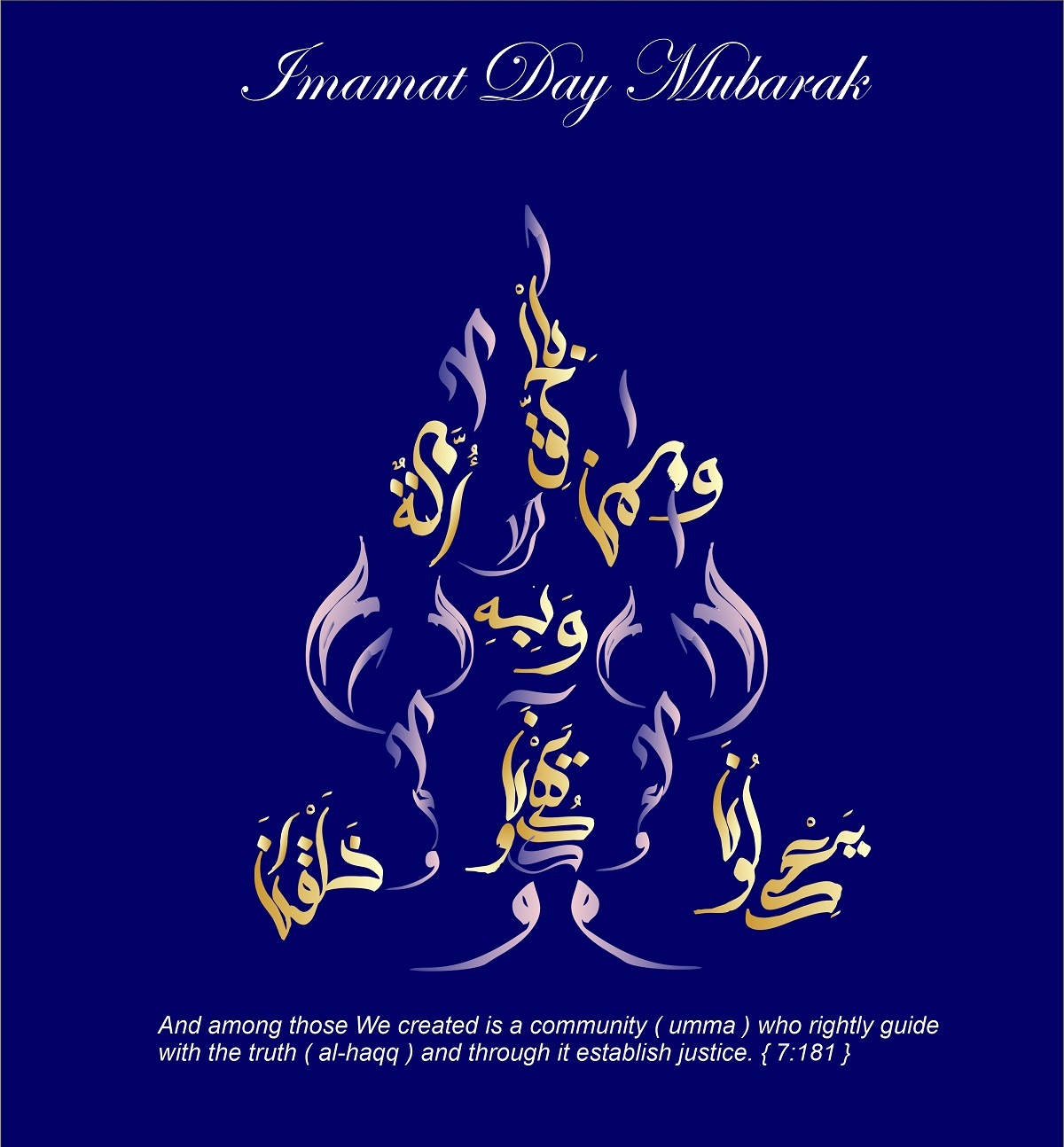

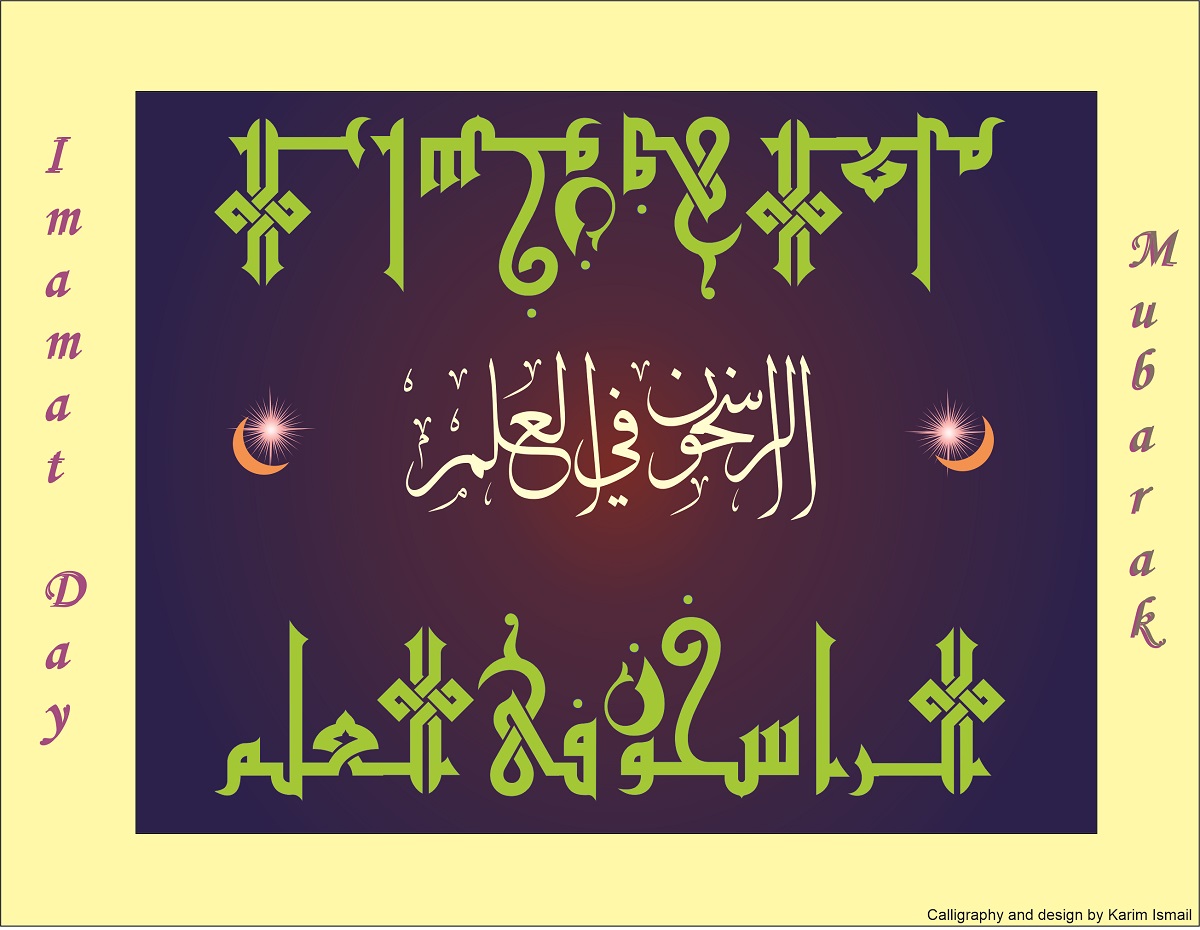
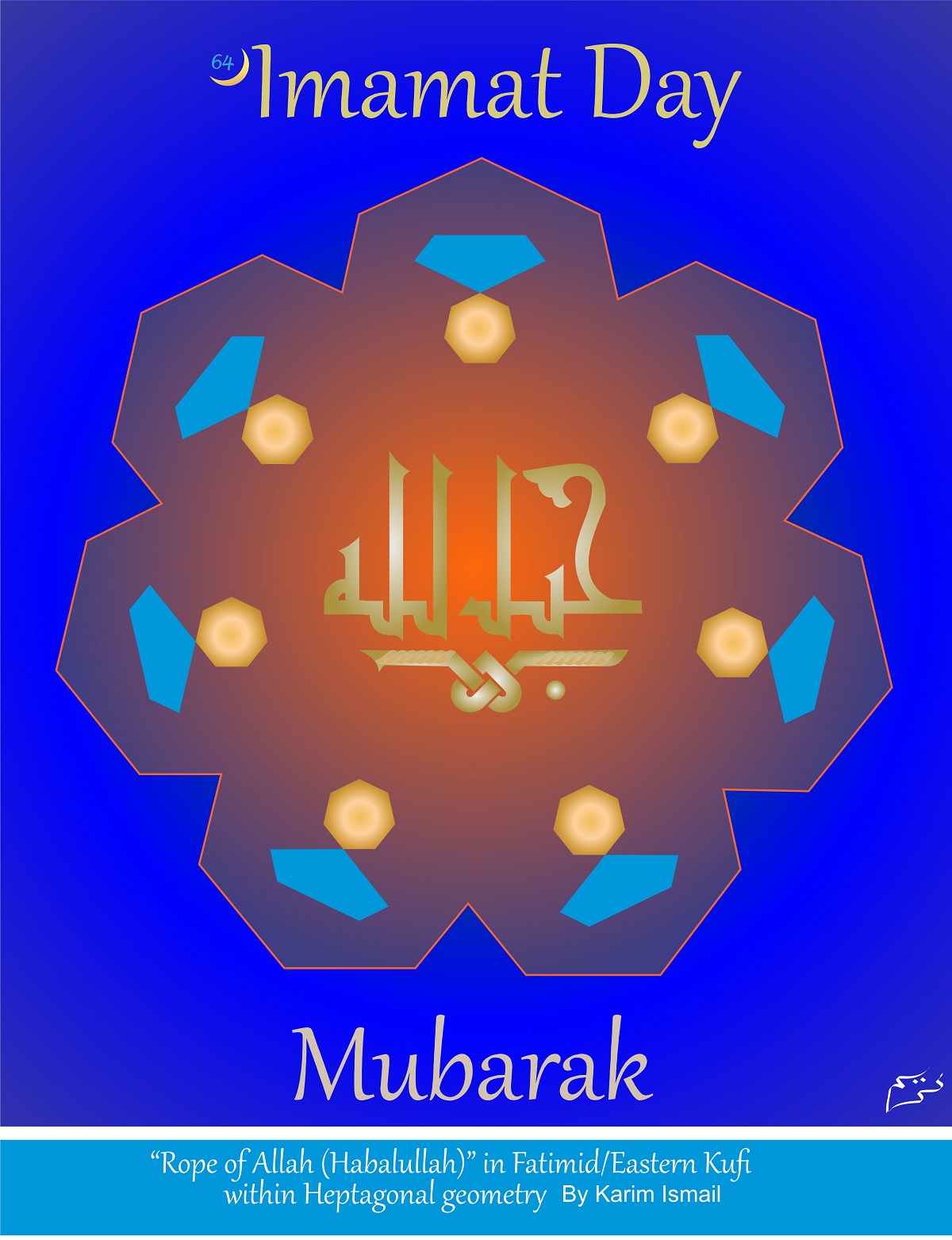
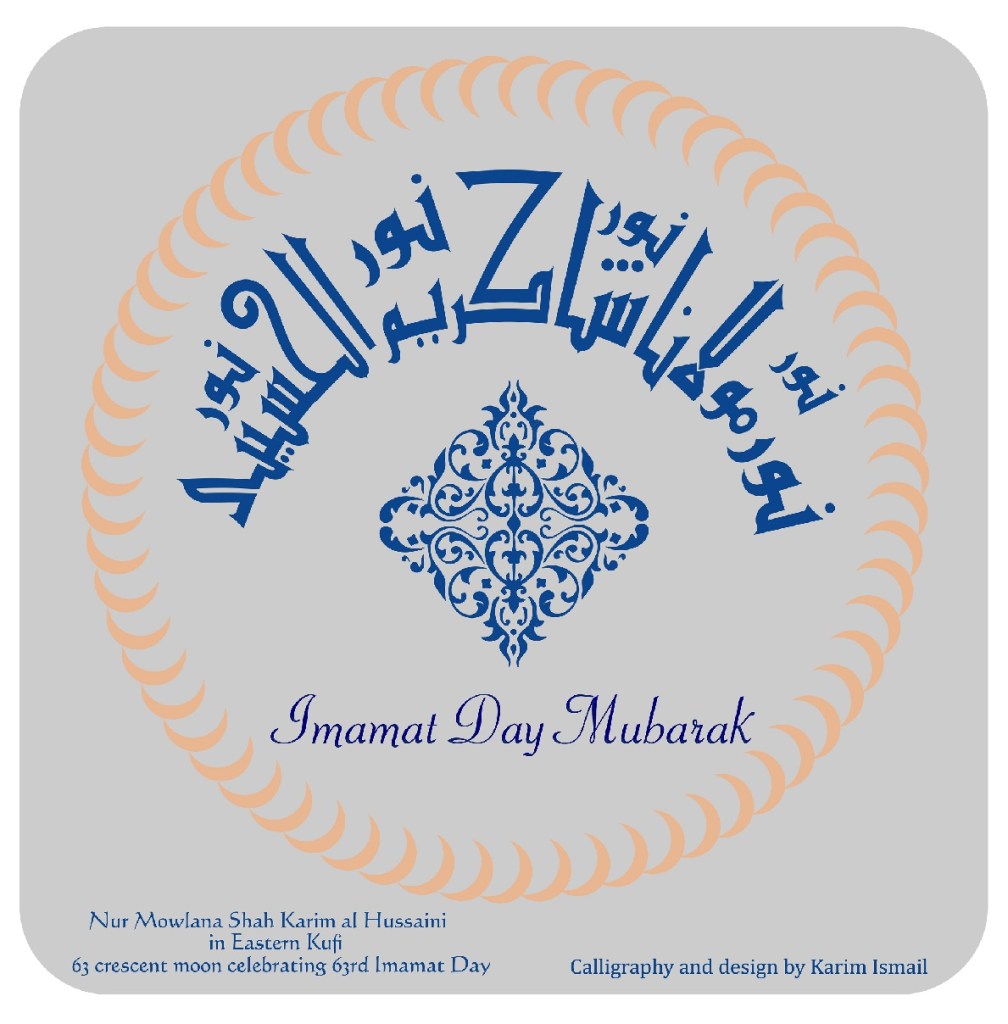
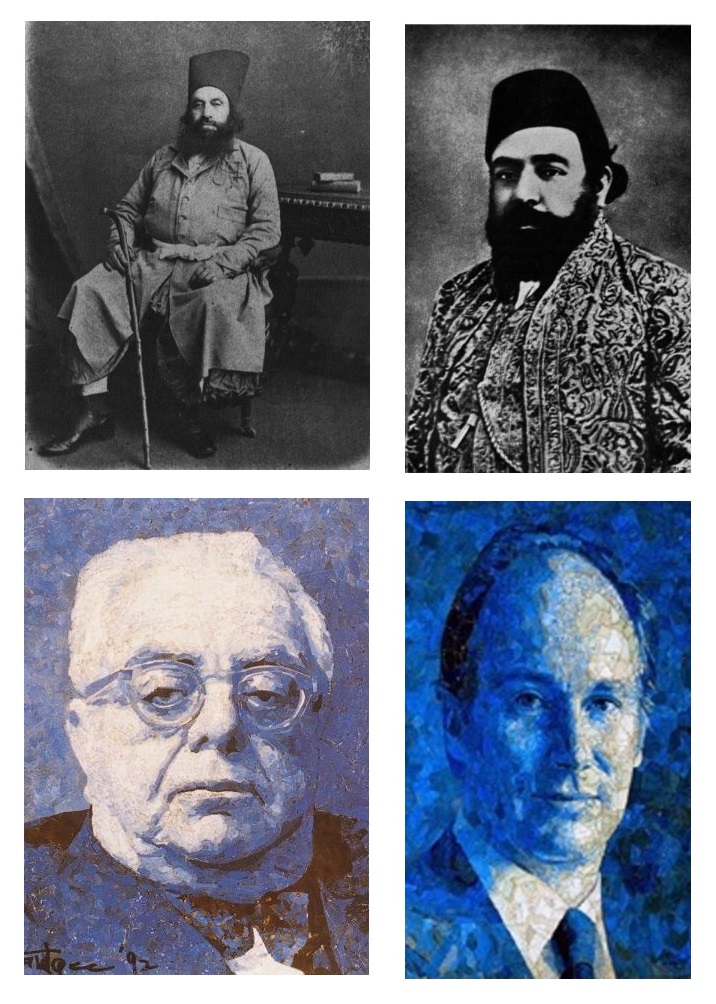



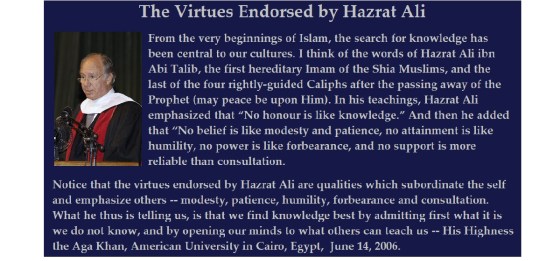
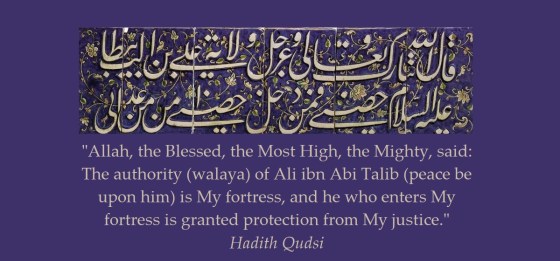
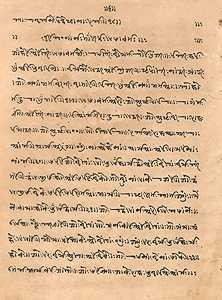
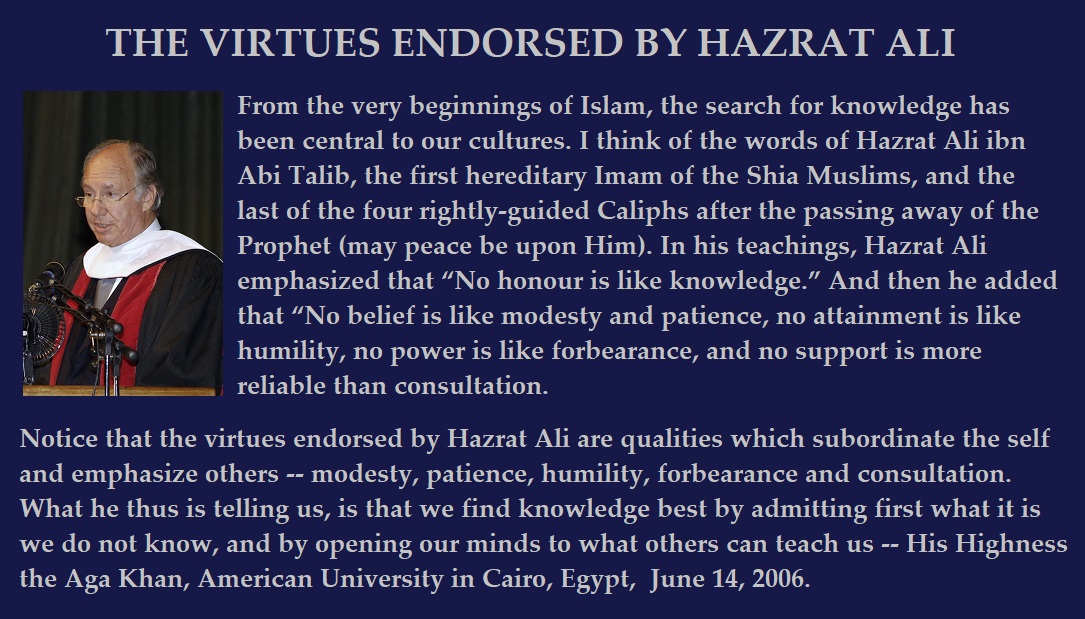
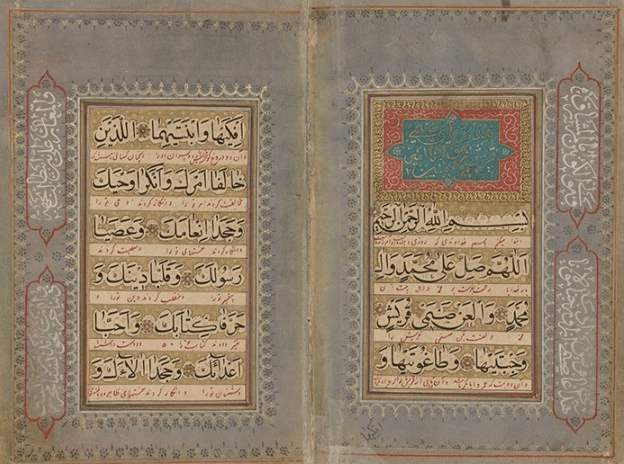

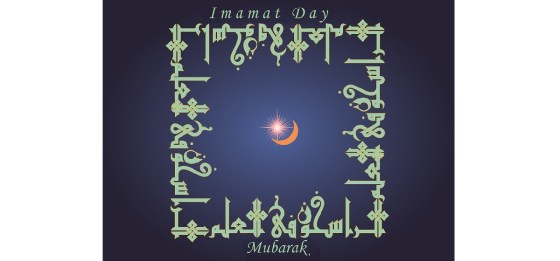







 Simerg - Insights from Around the World