Simerg is an independent initiative dedicated to Ismaili Muslims, the Aga Khan — their Hereditary Imam — and the Ismaili Imamat, and Islam in general through literary readings, photo essays and artistic expressions
“The love of the Imam knows no physical boundaries. No mountain, no river, no desert, can stop the love of the Imam for his Jamat [community] worldwide” — Mawlana Hazar Imam, His Highness the Aga Khan, 49th Hereditary Imam of Ismaili Muslims (please watch video, below)
From Prophet Muhammad’s declaration at Ghadir-e-Khumm, after his farewell pilgrimage to Mecca, appointing his son-in-law Ali as his successor to the present 49th Hereditary Imam of the Ismailis, we invite our readers to watch the following video to learn about the Ismaili Imamat. Each Imam, from the past to the present, has been a Guiding Light to his followers, a source of inspiration and guidance through their changing times and circumstances. We present this video as two Aga Khan projects in Canada, the Aga Khan Museum and the Ismaili Centre in Toronto, are about to celebrate their tenth anniversary in mid-September. The most recent project, the beautiful Aga Khan Garden near Edmonton, is part of the University of Alberta Botanic Garden and will soon mark its 6th anniversary in mid-October.
The Institute of Ismaili Studies (IIS) in London, England, was established by Mawlana Hazar Imam, His Highness the Aga Khan, the 49th Hereditary Imam of the Ismaili Muslims, on December 13, 1977. For more than 45 years, the IIS has sought to promote scholarship and learning on Islam in historical and contemporary contexts and contributed to a better understanding of Islam’s relationship with other societies and faiths.
The Institute has also dedicated a significant amount of time and resources to studying the history of the Ismaili branch of Islam in all its aspects, including its intellectual, scientific, artistic and commercial activities. The Ismaili Imams ruled over vast territories such as the Fatimid Empire in North Africa and Egypt and the Nizari Ismaili state of Iran and Syria during the Alamut period. Under the Fatimid rule, the Ismailis created one of the world’s oldest learning seats, the Al-Azhar University in Cairo; today, the university is a major Sunni institution.
The IIS’s research and publications, led by both Ismaili and non-Ismaili scholars, have had a profound impact over the past 30 years. They have fundamentally reshaped the perception of Ismailis, who, for centuries, were primarily understood through the lens of works by medieval heresiographers and polemicists, who were generally hostile towards Shias and particularly the Ismailis.
Story continues below
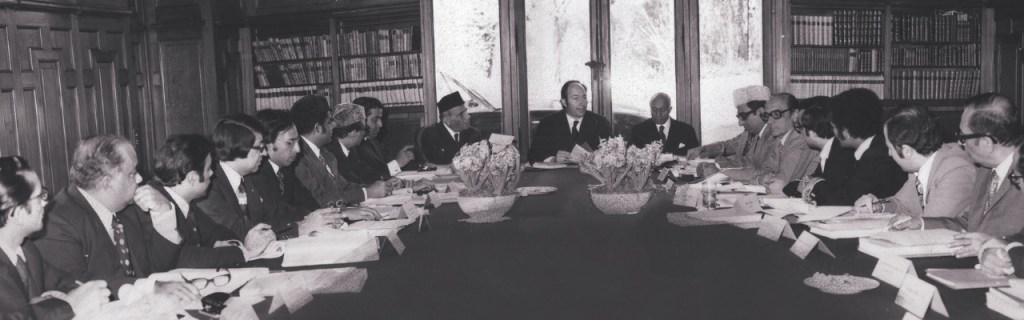
Mawlana Hazar Imam, His Highness the Aga Khan, met with leaders of the Ismailia Association and Ismaili scholars in April 1975 in Paris. A decision was taken at the world conference to establish the Institute of Ismaili Studies. Photo: Ilm magazine, October 1975.
Aside from research papers, scholarly publications and participation in essential conferences worldwide, the IIS has conducted significant programmes such as the Waezeen and Teacher Education Programme (WTEP), the advanced curriculum-planning programme with the University of London’s Institute of Education, the joint IIS-McGill University programme, the Graduate Programme in Islamic Studies and Islamic Humanities (GPISH), and the Secondary Teacher Education Programme (STEP). Some eight hundred individuals have graduated from IIS’s educational programmes since the Institute began receiving postgraduate students in 1980.
Story continues below
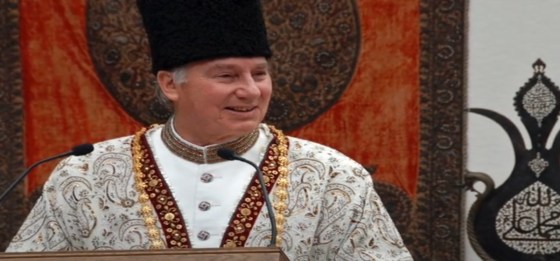
Professor Zayn Kassam, the current director of the Institute of Ismaili Studies, presents the inaugural IIS Alumni Recognition Award to Professor Karim H. Karim during the IIS’s 2024 graduation ceremony, March 23, 2024, at the Ismaili Centre in London. Photograph: Farid Daya.
Several IIS alumni have made remarkable achievements in different parts of the world. On March 23, 2024, the IIS had its first ever Alumni Recognition Award at the Ismaili Centre in London, UK, during its 2024 graduation ceremony.
The Award celebrates those who have demonstrated a career of exceptional service and leadership. A panel of senior management and academics from the AKDN and IIS reviewed the nominations for the Award and selected Professsor Karim H. Karim as the recipient of the First Award based on the following primary criteria:
Professional or Academic Accomplishment: Achieved a high degree of prominence and leadership in their respective field, which may or may not be directly relevant to the work of the IIS.
Contributions to Community Service: Distinguished service to their professional or faith community.
Professor Zayn Kassam, the Institute’s current director, presented the inaugural Award to Professor Karim.
~~~~~~~~
Citation Honouring Karim H. Karim on Being the First Recipient of the IIS’s Alumni Recognition Award
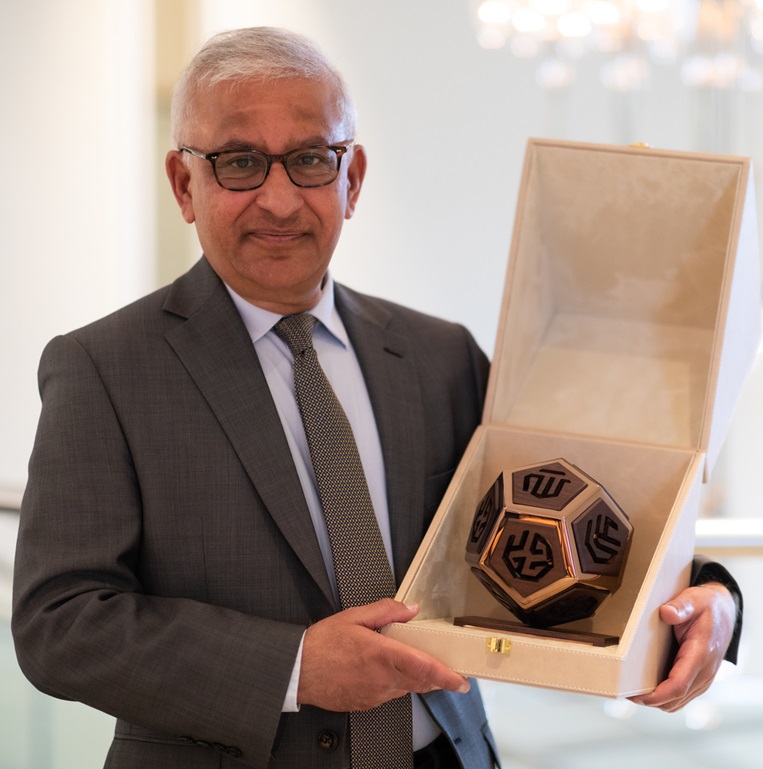
Professor Karim H. Karim holding the first Alumni Recognition Award that was presented to him by the Institute of Ismaili Studies on March 23, 2024, at the Ismaili Centre London. The sculpture was designed by Mohammed Adra (AKDN Geneva) and is inspired by (Late) Karl Schlamminger’s Hepta Globe sculpture, which is placed at the entrance of the Aga Khan Centre in London. Photograph: The Institute of Ismaili Studies via Karim H. Karim.
The citation for the award read as follows:
“Professor Karim has an extensive record of over three decades of scholarship, service, and leadership. His designation as Chancellor’s Professor is the highest honour given by Carleton University for scholarship of outstanding merit with substantial international impact, research leadership and continued active participation in the development of research excellence. Professor Karim has a worldwide reputation as a leading scholar of media representations of Muslims and diasporic communications. He has had visiting appointments at Harvard, Aga Khan, and Simon Fraser universities. Professor Karim has delivered keynote addresses in several countries and his critically acclaimed publications are cited widely. He was the inaugural winner of the Robinson Book Prize and has received media coverage in six continents.
“Dr. Karim has served as Director of Carleton’s renowned School of Journalism and Communication and its Centre for the Study of Islam, respectively. He was also the Institute of Ismaili Studies’ first alumnus to lead it in a directorial capacity. He spearheaded founding initiatives on Accessibility to Digitized Collections and the Canadian Race Relations Foundation as a Senior Policy Officer in the Canadian Government, which endowed him with awards for exceptional public service and for fostering collaboration between ethno-religious communities.
“Karim has an extensive record of international service to academic, community, government, and civil society institutions, including Aga Khan University (Kenya) and Central Asian University; AKDN Higher Education Forum; Canadian Parliamentary Committees and government boards; and Ismaili community organizations (Kenya, USA, and Canada). He has also held an International Ismaili Studies Conference at Carleton University; founded a prize for research in Ismaili Studies’ understudied aspects; and has been a mentor and external Ph.D. examiner for IIS alumni.”
We take this opportunity to congratulate Professor Karim on his accomplishments over the past several decades and on receiving the First Alumni Recognition Award from the Institute of Ismaili Studies. We are proud to have published several of his pieces on our websites (follow the links below).
Below are excerpts from his acceptance speech upon receiving the IIS’s inaugural Alumni Recognition Award.
“Let the Truth Infuse Your Words”
Professor Karim H Karim delivering his remarks on March 23, 2024, at the Ismaili Centre in London upon being presented Inaugural Alumni Recognition from the Institute of Ismaili Studies. Photograph: Institute of Ismaili Studies via Karim H. Karim.
By KARIM H. HARIM March 23, 2024, Ismaili Centre, London
Bismillahir-Rahmanir-Rahim.
I would like to thank the Institute of Ismaili Studies for selecting me as the recipient of its inaugural Alumni Recognition Award. This is a profound honour, which takes me back 40 years when I was a student at the IIS. This beautiful building, the Ismaili Centre London, was under construction at that time.
Congratulations to all the GPISH and STEP students who have graduated today. You carry enormous potential and promise. Allow me to speak about an event in my life that underlined the long-term impact that an individual can have. I attended the funeral of Professor Amin Amershi, a mathematician, two weeks ago in Vancouver. He taught me one class as a guest lecturer in a religious class in Nairobi, when I was 12 years old. It was a singular experience that opened my mind and sparked my imagination because his explanations had the ring of truth. I have found it remarkable that I continue to think about his ideas some 55 years later. You, too, have the potential of a long-lasting impact that will span decades and range as far into the future as the 22nd century. Let the truth infuse your words.
As you may know, our tradition adopted the name “Ismaili” in the early 20th century. Prior to that it was called Da’wat al-Haqq — which means Invitation to Truth, Summons to Truth, or Mission of Truth. In India, the Pirs named it Satpanth — Path of Truth or the True Path. Our aspiration is to have truth manifest our worldview and actions. It underpins our ethical outlook.
We are thrown many challenges throughout our lives. We face success, failure, joy, and frustration. The organizations that we work for pressure us to get the job done and we are often tempted to take shortcuts in order to fulfill expectations. But this is where critical thinking, which you have discussed extensively in your studies, becomes pertinent. How does one balance the imperative to get the job done, on the one hand, and remain ethical, on the other? His Highness the Aga Khan, Mowlana Hazar Imam, instructed the community’s leaders at a gathering in the United States in 1986, that “we will ask the hard questions.” Fulfilling your tasks ethically is one of the hard issues that you will face constantly in your careers.
Let the truth infuse your words, your music, your art, and your actions as you go ahead to fulfill your potential and promise.
Date posted: April 17, 2024.
______________
Featured image at top of post: Professor Zayn Kassam, the current director of the Institute of Ismaili Studies, presents the inauguralIISAlumni Recognition Award to Professor Karim H. Karim during the IIS’s 2024 graduation ceremony, March 23, 2024, at the Ismaili Centre in London. Photograph: Farid Daya.
The following are links to articles by Karim H. Karim published in Simerg and its sister websites:
The author has adapted this article from the March 1982 issue of Al-Misbah Magazine, published by the Ismailia Association for the UK. The original article, which was under the title Navroz, has been edited and improved for clarity and includes additional material.
Navroz, meaning New Day or New Year, marks the start of the Persian spring festival. It occurs on or around March 21 of the March equinox. The United Nations has designated March 21 as the International Day of Nowruz annually (the Secretary General’s 2024 message can be read HERE.)
It is an occasion of great rejoicing among people in Iran, many parts of the Middle East, Central and South Asia, and the Shi’a communities worldwide. Besides being New Year’s Day, it is also celebrated as the Festival of Spring because it is at this period that winter makes its exit for the colourful spring season.
Navroz holds a significant place in history, dating back some 2,500 years to the reign of King Jamshed. Despite a temporary halt after the rise of Islam in Iran, it was reintroduced by the Abbasid Caliph Mansoor in 770 AC (153 AH, or Hijri). Since then, Navroz has been a cherished national occasion and custom, celebrated with zeal by more than 300 million people worldwide.
In Fatimid Egypt, the state ruled by Ismaili Imams, the Spring Festival was a national celebration during the reign of the first eight Fatimid Imams/Caliphs from 969 to 1094 AC (358 to 487 AH). Although the Fatimid Imams ruled over Egypt, this festival was not exclusively Ismaili because the Ismailis, even at that time, were a minority group in the Caliphate.
The actual celebration of Navroz among the Ismailis could be said to have started in Iran during the Alamut Period of Ismaili history. Ismailis living in Alamut were farmers; hence, in the spring season, they would look forward to preparing their farms for a good harvest.
The glorious transformation of nature at the time of Navroz, the start of the spring season, reminds us of Allah’s creative power and the bounties He continually showers on us. The arrival of spring, with its sprouting seedlings, blossoming buds, vibrant colours, and rushing waters, is a vivid reminder of our true inner essence.
Like these elements of nature, we, too, have the potential to bloom and grow under the nurturing care and warmth of Imam-of-the-Time. The Preamble of the Ismaili Constitution proclaims that the Imam’s ta‘lim (guidance/teaching) lights the each follower’s path to spiritual enlightenment and vision.
Born as Ismailis, with the recognition of the Imam, this life is the spring season of our souls. The Divine Noor shines brightly over our souls. We must cleanse ourselves of unrighteousness and cultivate an original, spontaneous, and permanent relationship with the Noor (Light) of Imamat so that every breath and activity of our life becomes the worship of the Merciful. The festival of Navroz should result in a spiritual rebirth for each of us and inspire greater love for our Imam.
Article continues below
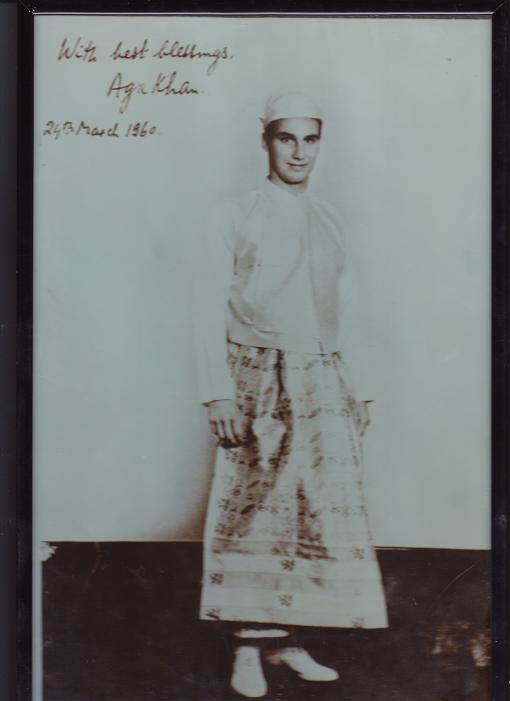
This is a signed photograph, dated March 24, 1960, of Mawlana Hazar Imam, His Highness the Aga Khan, 49th Imam of the Shia Imami Ismailis, pictured in a Burmese traditional dress during his visit to Burma in March 1960 when he celebrated the Persian New Year, Navroz, which falls on March 21st, with his Ismaili followers. The signed photograph contains his blessings. Photo: Anwar Virani Archives, Ottawa.
Navroz is an auspicious time to initiate self-improvement because nature, so to speak, is turning a new page in the book of life. It is a time to review our lives and determine necessary improvements. In a detached, objective way, we should analyze our positive and negative traits and then resolve to change bad habits into good ones.
Our covenant with Mawlana Hazar Imam is a promise we have given him to endeavour to achieve a proper balance between our material and spiritual lives. When choosing our resolution, one idea should always loom before the rest: ask ourselves, “What do we want from life, and what will earn Mawlana Hazar Imam’s divine pleasure?” A straightforward answer to this question should be: “To govern our lives by his deep desire for us to live within the Islamic concepts of unity, justice, tolerance, goodwill, generosity and the regularity by which we practice our faith.”
Mowlana Hazar Imam’s message spells out the meaning and significance of this auspicious day for us. He says: “I say to you all on Navroz, ‘Navroz Mubarak,’ and I want you, at the beginning of this New Year, to try to think a bit ahead in your future. Each Navroz, say to yourselves, ‘Have we done our work?’ If you have, then I will be very happy indeed. I say Idd Mubarak to all of you and give you most affectionate blessings.” — Rangoon, Burma, March 21, 1960.
By steeping our consciousness in love for the Imam-of-the-Time and wisely directing our activities, we shall make our lives one unending act of worship. Therefore, let this Navroz be a New Day on the path of spiritual glory, material well-being, and progress. Let each New Day be a Navroz to strengthen our spiritual bonds with Imam-e-Zaman, reminding us that his blessings are always with us.
We conclude with our beloved Imam’s final words spoken in Rangoon: “On this day of Navroz, I say to each and every one of you, Idd Mubarak, and I pray that in this New Year, your worldly and spiritual happiness should progress tenfold and that this will be the case every year.” — Rangoon, Burma, March 21, 1960.
Date posted: March 18, 2024. Last updated: March 20, 2024 (inserted link to UN Secretary General’s 2024 Nowruz message in 1st paragraph).
Conceived and created by Dr. Nurin Merchant, this Navroz greeting incorporates the rose and jasmine flowers which are extremely popular in Iran during the celebration of Navroz. The base of the picture shows shoots of wheat grass signifying robust evergreen health throughout the year.
Abstract: The auspicious occasion of Navroz generates immense happiness and makes our hearts jump with joy as we receive blessings from Mawlana Hazar Imam together with roji and Ab-e-Shifa and recite the traditionally Ginan Navroz na din Sohamna. This post includes two beautiful recitations of the Ginan by Shamshudin Bandali Haji (full Ginan) and Mumtaz Bhulji (selected verses) followed by an explanation by Sadruddin Hassam. In the Ginan, Sayyid Fatehali Shah relates the combined experience of the zahiri deedar (exoteric or physical glimpse or meeting) that he was granted by the 45th Ismaili Imam, Shah Khalilullah (peace be on him), and the inner joy of contentment and ecstasy that he experienced with the bestowal of Noorani (spiritual or esoteric) grace.
Navroz Ginan recitation by Shamshu Bandali Haji
Recitation of Navroz Ginan by Late Shamshudin Bandali Haji. In his opening remark, the reciter mistakenly attributes the Ginan to Pir Shamsh. The clarification about the composer is provided in the article below.
_______________________
Navroz Ginan recitation of selected verses by Mumtaz Bhulji
Recitation of selected verses of Navroz Ginan by Mumtaz Bhulji
An attempt is made in this article to give an interpretation of the devotional Ginan Navroz na din Sohamna, which is recited by Ismaili Jamats in many parts of the world on the occasion of the celebration of the Persian New Year which falls on March 21st. In this ginan the composer, Sayyid Fatehali Shah, relates the combined experience of the zahiri deedar (exoteric or physical glimpse or meeting) that he was granted by the 45th Ismaili Imam, Shah Khalilullah (peace be on him), and the inner joy of contentment and ecstasy that he experienced with the bestowal of Noorani (spiritual or esoteric) grace. At the same time, he gently persuades the mu’min (a believer) to always strive for esoteric understanding as well as to develop a lasting spiritual relationship with the Imam of the Time. It may be noted that in Shia Imami Ismaili theology each Imam is the bearer of the same Divine Light (Noor). The Divine Institution of Imamat has its origins in the first Shia Imam, Hazrat Ali (peace be on him), who was declared as the successor to Prophet Muhammad (may peace be upon him) at the famous historical event at Ghadir-e-Khumm.
As the composer has to narrate the exoteric experience as well as the ineffable esoteric relationship, the ginanic diction that he uses has to resort to the traditional and familiar imagery and symbolic expressions in order to convey his message. The words, the imagery and the symbolic expressions, however, blend beautifully in this ginan. This beauty, unfortunately, cannot be recreated in this prosaic interpretation. Nor can we go into the prosody of the ginan.
In this reading we shall first address a common held misunderstanding about the identity of the composer. We shall then make an attempt to describe the exoteric experience of the composer’s meeting with the Imam, as so wonderfully narrated in the ginan, and finally we shall examine and interpret some of the key words and expressions to convey the ineffable spiritual experience as well as the composer’s gentle persuasion to the mu’mins. One hopes that this brief reading will heighten the reader’s appreciation and understanding of this ginan.
~~~~~~~
A clarification about the composer and the period of composition
The composition of this ginan is sometimes wrongly attributed to Pir Shams al-Din who lived more than four centuries before the actual composer of this ginan, Sayyid Fatehali Shah. This mistake may have arisen because of the pen-name he has used in the second line of the last verse which reads:
Bhane Shamsi tamme sambhro rookhi.
It was a normal practice for the composer to mention his own name in the concluding verses of the ginan. But Shamsi here does not refer to Pir Shams al-Din – rather it was the pen-name of Sayyid Fatehali Shah.
He, like a number of other Sayyids, who did the work of da’wa (propagation and teaching) in India, may have been a descendant of Pir Hassan Kabirdin. Sayyid Fatehali Shah himself preached among the communities in Sind. He eventually died there and was buried near Jerruk which is south of Hyderabad in Pakistan.
The first two lines in verse seven give us the clues as to the period when this ginan was composed as well as validate the real name of the composer. These lines read:
Eji gaddh Chakwa ne kille Shah Khalilullah ramme Tiyaan Fatehali ne mayya karine bolaawiyya
Shah Khalilullah here refers to the forty-fifth Ismaili Imam, whose Imamat was from 1780 to 1817 A.C. He lived in Iran in the town of Mahallat, which is located approximately 362 kilometers from Tehran. The town is situated on the slope of a mountain. Mahallat is also amongst the most ancient residential areas in Iran and was an important base of the Ismailis; hence the many references to the 46th and 47th Imams (Aga Khan I and II) as Aga Khan Mahallati. Sayyids and murids of the Imam from various parts used to come to Mahallat to pay their respects. This ginan is therefore fairly recent, having been composed either towards the end of eighteenth century or early in the nineteenth century.
It appears that like many other murids, Sayyid Fatehali Shah travelled from Sind to Iran to meet Hazrat Imam Shah Khalilullah.
On arriving in Mahallat on the day of Navroz, he learns that the Imam has gone to the woods on a hunting expedition. The Sayyid naturally feels disappointed that having come all the way, he did not have the opportunity for the deedar. This feeling of sadness is lamented in the first stanza of the ginan. Despite this, there is an undercurrent of inner hope at the prospect of having the deedar by the mercy of the Imam.
The pangs of separation from the beloved and the yearning for reunion are a recurrent theme in Ismaili ginans and also in Sufi mystical poetry. In this ginan, there is the lament of this separation, but in keeping with the traditional ginanic function, there is also gentle persuasion and hope of spiritual union.
We shall now examine how Sayyid Fatehali Shah relates his zaheri deedar of the Imam and how this blends with his esoteric experience.
~~~~~~~
The meeting with the Imam of the Time in the woods and at the fort
In the following four verses (1, 2, 3 and 7), Sayyid Shamsi relates his quest for the Master which leads to his meeting with Imam Shah Khalilullah. The meetings (deedar) fulfilled his intense yearning.
Transliteration:
Eji Navroz na din sohamna, Shah Ali Qayam shikaar ramwa vann gaya, Sevak na mann thaya oodassi, Praan Ali charne rahiya…..1
Interpretive Translation and Explanation
On a beautiful day of Navroz, Imam-e-Zaman had gone to the woods to hunt. (I) His murid (disciple) became sad at heart (for missing my Master), as my soul was yearning to be at the feet of the Imam. (An expression of respect and – obedience to the Imam)….1
Navruz (Navroz – Gujrati variation) is a Persian word meaning ‘New Year’s Day’ (twenty-first March). This is the first day of spring, hence the day is beautiful (sohamna). Shah Ali Qayam refers to Imam-e-Zaman (Imam of the Time) because Noor-e-Imama is everpresent (qayam). Shikaar ramwa gaya means ‘went hunting’ and vann means ‘woods.’ Sevak is ‘one who is ready to serve or obey,’ in this case a ‘disciple’ or a ‘murid.’ Praan means ‘inner life’ or ‘soul.’
VERSE 2
Transliteration
Eji Shah Qayam preete jo chint baandhi Nar ne preete amme vann gaya Eva vann sohamna Nar Qayam ditha, Dela dai devanta rahiya …..2
Interpretive Translation and Explanation
Impatient because of my ardent and deep loving desire to meet the Imam, I also went into the woods, which in the presence of the Imam unfolded like heavenly gates looking angelically beautiful….2
The expression preete jo chint baandhi literally means ‘with love when (one) focuses on the remembrance (dhikr).’ Dela dai devanta rahiya is an idiomatic expression implying ‘the unveiling of angelic (devanta) beauty with the opening of gates (dela).’ When the murid (devotee) searches inwards for the murshid (master), spiritual insight keeps on unveiling the gates with ever-increasing beauty.
VERSE 3
Transliteration
Eji bhalu thayu Saahebe soomat aali, Shah Ali Qayam saathe ramwa amme vann gaya. Anant aasha poori amaari Shah dil bhaave gamya….3
Interpretive Translation and Explanation
It was a blessing that the Master inspired in me the wisdom so that I went into the woods. My intense yearning was fulfilled because true bliss had blossomed in my heart…..3
Saahebe soomat aali means ‘the Master inspired in me the wisdom.’ Anant asha poori amaari means ‘my intense yearning (for deedar, both zahiri and batini) was fulfilled.’
VERSE 7
Transliteration
Eji gaddh Chakwa ne kille Shah Khalilullah ramme, Tiyaan Fatehaline mayya kari ne bolaawiya, Anant aasha poori amaari Neet Ali Noore oothiya….7
Interpretive Translation and Explanation
Shah Khalilullah, pleasantly relaxing at the fortress in Chakwa, graciously summoned me (Fatehali) in his presence; then with the constant overflowing of His Noor, fulfilled my many ardent wishes (for spiritual growth)….7
The expression Neet Ali Noore oothiya implies ‘the mystical experience of the overflowing of the Noorani Deedar of Ali (The Imam Eternal) which was granted (to him).’
~~~~~~~
The inner search and experience
In the remaining four verses (4, 5, 6 and 8 ) of the ginan, Sayyid Shamsi, touches upon his own inner yearnings and gently persuades the listener to seek out the spiritual vision through the love and grace of the spiritual lord.
VERSE 4
Transliteration
Eji hette Alisu hirakh baandho, Avichal ranga Sahebse girahiya, Evi chint baandhi Nar Qayam saathe, Sat bhandaar motiye bhariya….4
Interpretive Translation and Explanation
Be joyfully bound in the love of Ali And attain the unfading spiritual color (the state of bliss) from the Master; When my mind was bound to the Ever-Living Lord in contemplation Reality adorned (the Soul) with priceless treasure of (Noorani) pearls….4
Avichal ranga Sahebse girahiya means ‘the permanent state of bliss from the Lord’ and refers to the nafs-i-mutmainna or ‘the contented self’ (Holy Qur’an, 89:27). It is a state of mind which is serene because the self has understood the Reality. The verse of the Holy Qur’an reads: But ah! thou soul at peace! (translated M. Pickthall).
VERSE 5
Transliteration
Eji amme Saheb saathe sahel kidha, Riddh siddhaj paamiya, Ek mann ginan je saambhre Aa jeev tena odhariya….5
Interpretive Translation and Explanation
I (Fatehali) relished the spiritual journey with the Master (the Imam), and (as a result) I was blessed with spiritual elevation and gnosis (spiritual insight). He who listens to the Ginans attentively (and strives for the contemplative knowledge), his soul finds the path to salvation….5
Here the Sayyid implies that a mu’min should strive for the batini deedar (spiritual reality of the Imam). One may achieve this with the blessing of the Imam.
VERSE 6
Transliteration
Eji jeev jiyaare joogat paame, Praan popey ramm rahiya, Agar chandan prem rasiya, Hette hans sarowar zeeliya…..6
Interpretive Translation and Explanation
When the self understands reality, the soul blends beautifully like a flower and experiences musk and sandalwood-like fragrance. The self floats in ecstasy of love as a swan swims in a lake….6
This verse contains symbolic expressions and imagery to convey the ineffable serenity and the inner joy of the fortunate one who has been graced with the the batini (esoteric) experience. The life of such a person becomes beautiful like a flower.
The fragrance of musk (agar) and sandalwood (chandan) symbolizes good behavior of the gifted one through speech and good deeds.
The swan (hans) represents the soul that is pure. Through esoteric and ecstatic experiences it remains liberated and is in abiding love for the beloved.
VERSE 8
Transliteration
Eji bhai re moman tamey bhaave araadho, Bhane Shamsi tamey saambhro rookhi, Saaheb na goon nahi wisaare, Tena praan nahi thashe dookhi….8
Interpretive Translation and Explanation
O momin brothers! With deep affection remember the Lord. Take heed and listen to what Shamsi says: “They who do not forget the batin of the Imam (realizable through Imam’s grace), their souls will never ever be miserable or unhappy”…..8
Sayyid Shamsi gently reminds his momin brothers (rookhi) always to remember the Lord with affection. Here, rookhi is probably the intimate form of the word rikhisar which is used in the ginans to refer to mu’min brothers. The word has been used thus to rhyme with the last word of the stanza dookhi (miserable).
The last two lines are to remind us not to forget the batin of the Imam but to strive towards it through regular prayers. Those who carry out these responsibilities with dedication and devotion can never be unhappy whatever the worldly life might impose upon them. Thus the souls of the true mu’mins will always be at peace within themselves, knowing that they are under the protection and guidance of a living manifest Imam.
“Remember the Day when we will summon all human beings with their Imam. …” – The Holy Qur’an 17:71
From the above discourse, we can see why the ginan is appropriate for the occasion of Navroz, which marks the commencement of a new year. The glorious transformation of nature in spring reminds us of the creative power of Allah, who continually showers His bounties for us. Thus, the festival of Navroz should effect a spiritual renewal in each one of us. It should inspire greater love for Imam-e-Zaman as is enjoined upon us by Allah and our beloved Prophet Muhammad (may peace be upon him).
This Navroz ginan by Sayyid Fatehali Shah reminds us of our spiritual obligations for continuous search for enlightenment through the Ta’alim (teachings and guidance) of the Imam of the time.
Date posted: March 19, 2020. Last updated: March 20, 2024 (reformatting.)
_____________________
Before departing this website please take a moment to review Simerg’s Table of Contents for links to hundreds of thought provoking pieces on a vast array of subjects including faith and culture, history and philosophy, and arts and letters to name a few.
The piece on Navroz included this post has been adapted by Simerg from the original article, “Eji Navroz Na Din Sohamna – An Interpretation,” by Sadrudin K. Hassam, which appeared in Ilm, Volume 9, Number 2, (March 1985).
At long last, literature counters in Jamatkhanas across Canada have received Dr. Farhad Daftary’s “The Ismaili Imams: A Biographical History” in larger quantities than what was available in 2021-2022 at the height of COVID-19. That inventory sold out quickly, and the new inventory has reached several Jamatkhanas around the country. We request families to visit the literature counters at their respective Jamatkhanas before the book is sold out. Simerg has collaborated with the Ismaili Tariqah and Religious Education Board (ITREB) for Canada to facilitate the sale and distribution of the The Ismaili Imams by mail to Ismailis in Canada who live remotely or who do not have easy access to Jamatkhana literature counters. The book will be sold at the same price as at literature counters, but postage, packing and shipping costs will be added.
How to Purchase The Ismaili Imams: A Biographical History from Simerg
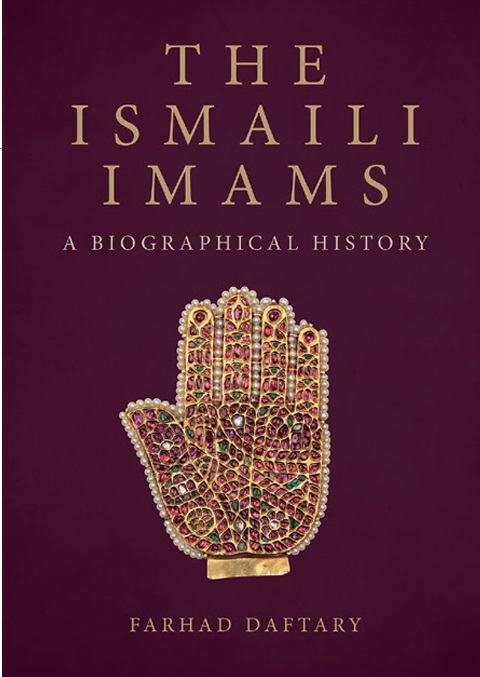
Cover page of The Ismaili Imams: A Biographical History by Farhad Daftary, Hardback, 260 pp., published October 2020, I.B.Tauris in association with the Institute of Ismaili Studies.
Ismaili individuals and families who live remotely or who do not have access to the book at their own Jamatkhana literature counters are advised to order Ismaili Imams through Simerg’s offer before the book is completely sold out.
The book will be sold at the same price as at Ismaili Jamatkhana literature counters across Canada. However, postage, package and handling charges of C$25.00 will be added to the book’s COST PRICE of C$23.00, for a total price of C$48.00. Note that each shipment will be sent via Canada Post’s expedited parcel post. A tracking number will be provided to track the shipment.
To inquire if the book is still available, and to order/reserve the book, please write to Malik Merchant of Simerg, Barakah and Simergphotos at mmerchant@simerg.com. Please provide your full name, phone number and address where you can be reached. Simerg will contact you within 24 hours to verify your address and provide you with payment information. Please note that payments will only be accepted via Interac E-transfer or by cheque. The book will be shipped out within 24 hours upon receipt of the payment.
Each individual/family will be able to order a maximum of 2 copies, as Simerg’s stock is limited.
What arguably should have been among the first publications to be published by the Institute of Ismaili Studies (IIS) in London was ultimately published in October 2020, 43 years after its founding on December 13, 1977. The book, The Ismaili Imams: A Biographical History, has now reached literature counters in Ismaili Jamatkhanas across Canada in larger quantities than the first stock that arrived in the midst of Covid-19, when the book quickly sold out. The long awaited book, in my humble opinion, should find a place in every Ismaili home and should be read by the youth and professionals in the Jamat.
Simerg is pleased to collaborate with the Ismaili Tariqah and Religious Education Board (ITREB) for Canada to facilitate the sale and distribution of the The Ismaili Imams by mail to Ismailis in Canada who live remotely or who do not have easy access to Jamatkhana literature counters. The book will be sold at the same price as at literature counters, but postage, packing and shipping costs will be added. See details below.
Article continues below
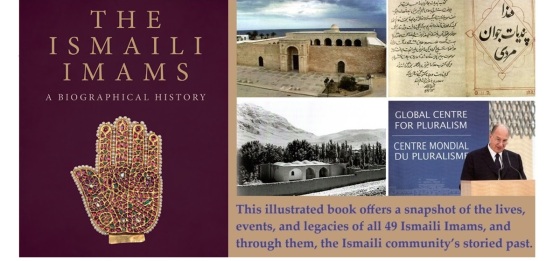
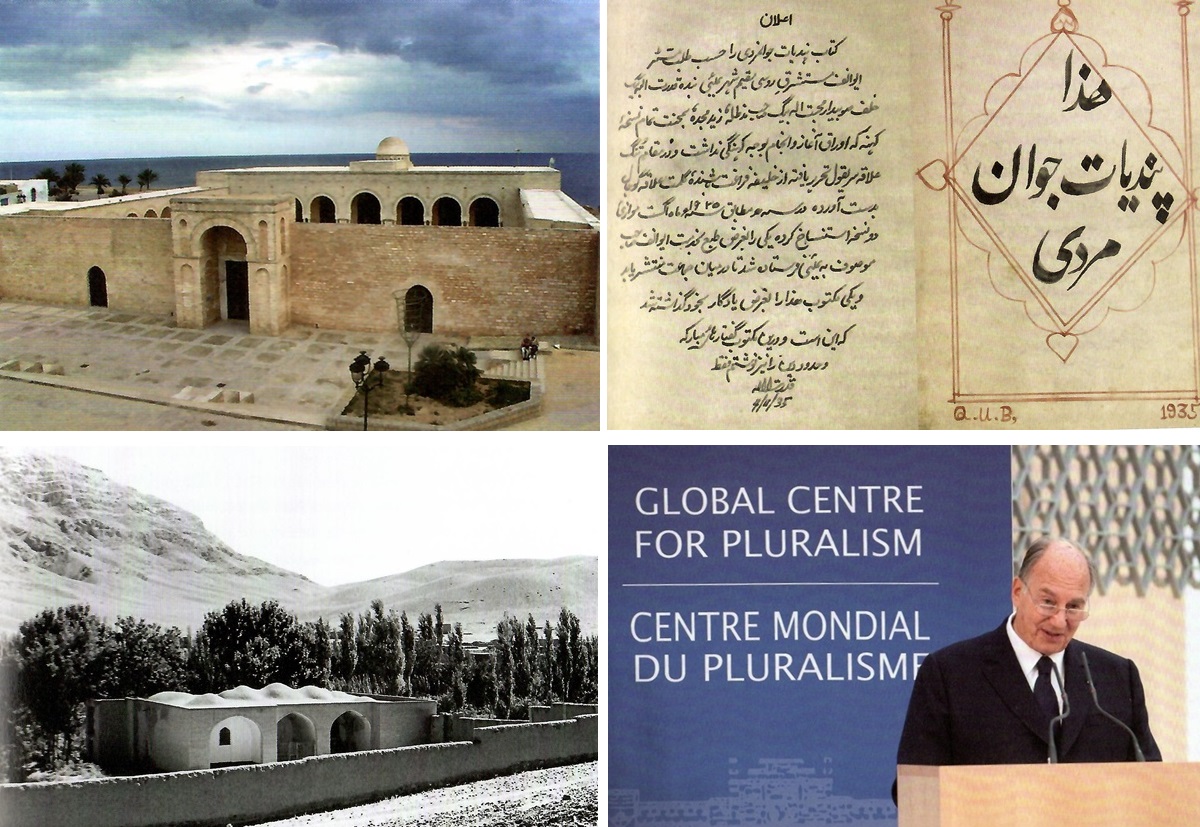
Top left: Great Mosque of Mahdiyya; top right: Title page and opening page of a manuscript of the Pandiyat-i javanmardi, a collection of the sermons of Imam Mustansir bi’llah; bottom left: Restored mausoleum of Imam Shah Nizar in Kahak; and Mawlana Hazar Imam, His Highness the Aga Khan, delivering a speech at the Global Centre for Pluralism, Ottawa. All Illustrations: The Ismaili Imams: A Biographical History.
The Ismaili Imams: A Biographical History has been authored by Farhad Daftary, a pre-eminent authority on Ismaili Studies, and author and editor of dozens of books and articles on Ismaili history and literature. Dr Daftary, who joined the IIS in 1988, became the head of its Department of Academic Research and Publications, and went on to become its co-director upon the departure of Dr Azim Nanji. Daftary finally stepped down from his management roles in 2022, and was succeeded as IIS director by Professor Zayn Kassam in January 2023.
On January 18, 2023, Dr Daftary was honoured in the presence of Prince Rahim at a special reception held in London. During the event, Prince Rahim announced that Mawlana Hazar Imam, His Highness the Aga Khan, had decided to acknowledge Dr Daftary’s contributions to the Institute by attaching his name to PhD Scholarships awarded by IIS. Prince Rahim also recognized Dr Daftary’s central role not only as a leader, but as the IIS’s most respected and productive scholar and author.
___________________
Cover page of The Ismaili Imams: A Biographical History by Farhad Daftary, Hardback, 260 pp., published October 2020, I.B.Tauris in association with the Institute of Ismaili Studies.
The Ismaili Imams is the first collection of biographies of all the Ismaili Imams, from the seminal Imams of early Shi’i Islam, through to those of the first ‘period of concealment’ when their public identities remained hidden, to the Imam-caliphs of the illustrious Fatimid dynasty, and those of the Alamut period, up to the Aga Khans of the modern period. The Ismaili Imams draws from the rich scholarship of the developing field of Ismaili Studies, providing a simple and clear resource for both the Ismailis themselves and for general readers, ensuring accessibility for all. This extensively illustrated book offers a snapshot of the lives, events, and legacies of all 49 Ismaili Imams, and through them, the Ismaili community’s storied past.
___________________
The 260 page richly illustrated hardback volume features the 49 Ismaili Imams through the following nine sections: 1.The Ismaili Imamat in History; 2.The Early Imams (from Hazrat ‘Ali to Imam Muhammad b. Isma’il); 3.The Concealed Imams (Imam Wafi Ahmad to Imam Radi al-Din ‘Abd Allah); 4.The Early Fatimid Imam-Caliphs (from Imam al-Mahdi to Imam Nizar); 5.The Imams at Alamut (from Imam al-Hadi to Imam Rukn al-Din Khurshah); 6.The Early Imams after Alamut (Imam Shams al-Din Muhammad to Imam Muhammad b. Islam Shah); 7.The Imam of the Anjudan Period (Imam Mustansir bi’llah to Imam Khalil Allah ‘Ali); 8.The Imams in the Eighteenth Century (Imam Shah Nizar to Imam Shah Khalil Allah); and 9.The Imams in the Modern Age (Imam Shah Hasan ‘Ali Shah, Aga Khan I, to Mawlana Shah Karim al-Husayni, Aga Khan IV). The book ends with a four page glossary, select bibliography, and an index. The full contents page is available on the IIS website HERE.
How to Purchase The Ismaili Imams: A Biographical History from Simerg
SOLD OUT: We do not have any more copies of the book in stock. Please check the availability of Ismaili Imams at the Jamatkhana literature counters in your respective countries, or buy it from Amazon.ca or Amazon.com.
Simerg is pleased to facilitate the distribution of The Ismaili Imams: A Biographical History in conjunction with ITREB Canada, to Ismaili addresses in Canada. Ismaili individuals and families who live remotely or who do not have access to the book at their own Jamatkhana literature counters, should take advantage of this offer before the book is completely sold out.
The book will be sold at the same cost price as at Ismaili Jamatkhana literature counters across Canada. However, postage, package and handling charges amounting to a total of C$25.00 will be added to the book’s COST PRICE of C$23.00, for a total payment price of C$48.00. Note that each shipment will be nicely packaged and sent via Canada Post’s expedited parcel post. A tracking number will be provided to track the shipment.
To order/reserve the book, please write to Malik Merchant of Simerg, Barakah and Simergphotos at mmerchant@simerg.com. Please provide your full name, phone number and address where you can be reached. Simerg will contact you within 48 hours to verify your address and provide you with payment details. Please note that payments will only be accepted via Interac E-transfer or by cheque. The book will be shipped out immediately upon receipt of the payment.
Each individual/family will be able to order a maximum of 2 copies.
Over the past 14 years, Simerg has had the privilege and honour to support Prince Hussain Aga Khan’s books such as Animal Voyage, Diving Into Wildlife and The Living Sea. We are happy to collaborate with ITREB Canada in this new endeavour and look forward to serving members of the Ismaili community in this joint initiative. Ismaili readers should note that the book is available for purchase through online booksellers like Amazon, albeit at a higher price.
Date posted: February 17, 2024. Last updated: August 16, 2025.
____________________
Have you read The Ismaili Imams? We want to hear from you. Please submit your feedback on the book by clicking on LEAVE A COMMENT.
Featured photo at top of post: A general view of the Imam Husayn (Hussein) Mosque in Karbala, Iraq. The photo was taken between September 26 and October 12, 1932. Photograph: G. Eric and Edith Matson Photograph Collection, Library of Congress, Washingon D.C.
INTRODUCTION: Mawlana Hazar Imam Shah Karim al Hussaini, His Highness the Aga Khan, is the 49th Hereditary Imam of the Shia Imami Ismaili Muslims, and directly descended from Hazrat Ali and his son Imam Husayn.
Imam Husayn B. ‘Aly began his reign as the 2nd Ismaili Imam* on the death of his father, Hazrat Ali on January 27, 661 CE who, 29 years earlier in 632 CE, had been publicly proclaimed by the Prophet Muhammad (May peace be upon him and his progeny) to be his successor at Ghadir Khumm.
The succession ended the cycle of the Divine Institution of Nubuwwah and ushered the world into a new era of the Divine Institution of Imamat. Thus, the Imams directly descended from the Prophet Muhammad, from Hazrat Ali to Mawlana Shah Karim, have continued to guide their murids (followers) in the ta’wil (interpretation) and talim (teaching) of the Holy Qur’an for the last 1391 years.
Article continues below
A 1932 photograph showing the entrance to the great mosque at Karbala, the holy city of e Shia Muslims. Photograph: G. Eric and Edith Matson Photograph Collection, Library of Congress, Washingon D.C.
Imam Husayn was martyred in the Battle of Karbala on the 10th day of the Muslim month of Muharram, or October 10, 680, at the age of 54, and was succeeded to the Hereditary throne of Imamat by Imam Zainul Abideen.
The Islamic calendar is based on the lunar cycle, and thus shorter than the 365 day solar calendar by roughly 11 days. This year (2023), the 10th day of Muharram falls on or around July 28/29, almost 1343 years since the Imam’s tragic death at the hands of Yazid’s army.
Please download the PDF version of Wilfred Madelung’s excellent piece on Imam Husayn B. ‘Ali published on the IIS website. Note: The eminent German scholar Professor Madelung passed away in May 2023 and the IIS has published an In Memoriam in his honour HERE
Date posted: July 28, 2023 (This post is an update to earlier versions of the article that has appeared periodically on this website over the past few years.)
______________________
*Note: In the Shia Imami Nizari Ismaili tradition Imam Husayn’s brother, Hazrat Hassan, is not counted as an Imam. However, he is regarded as their second Imam by other Shia Muslims, thus making Imam Husayn as their 3rd Imam.
The family of Ajmal Andani (1949 – 2021) originally of Tanzania (known as Tanganyika until 1964) has shared Ajmal’s collection of the Tanganyika Standard newspapers that carried reports of the celebration of the Diamond Jubilee of the late Aga Khan in 1946, his death in 1957 after a reign of 71 years, and the succession of his grandson, the current Aga Khan, as the 49th Ismaili Imam. Our sister website, Barakah, brings you a selection of Jpeg images from the newspaper along with a PDF file. Please click HERE or on the image below for the memorable post.
God chose Adam and Noah and the House of Abraham and the House of Imran above all beings, the seed of one another; God hears, and knows — Qur’an, 3:33-34, translation by A. J. Arberry, see Corpus Quran for multiple translations.
Today the Ismailis are the only Shia community who, throughout history, have been led by a living, hereditary Imam in direct descent from the Prophet — His Highness the Aga Khan, Parliament of Canada, Ottawa, February 27, 2014.
On Wednesday June 28, 2023, corresponding to the 10th day of the Islamic month of ‘DhuI-Hijjah, Muslims around the world celebrated the Festival of Sacrifice or Eid al-Adha at the completion of the annual pilgrimage to Mecca.
Little is it known in the broader context and understanding of Islamic history, that on the 18th day of ‘DhuI-Hijjah, a week following his final pilgrimage, the Prophet Muhammad (may peace be upon him and his family) — based on a divine command from Allah — designated Hazrat Ali as his successor and the first in the continuing line of Hereditary Imams. This event took place in 632 CE and is observed by all Shia Muslims, including the Ismailis, as Eid-e Ghadir, because the event itself took place at a place called Ghadir Khumm, a valley between Mecca and Medina.
The majority of the Muslims, the Sunnis, do not accept the Shia version of this historic event and do not associate it with Ali’s succession to Muhammad. Thus, the world’s lack of knowledge about a pivotal historic moment in Islam.
For the Shia Ismaili Muslims, who will be commemorating this historic day on or around July 5, 2023, this event is of added significance as they are led by a living Hereditary Imam, His Highness the Aga Khan, whom they lovingly and respectfully address as Mawlana Hazar Imam (Our Lord the Present/Living Imam).
The Aga Khan in a rare interview with France’s journal, Politique International, has comprehensively described the general Shia understanding of Imamat, the Sunni belief as well as his own status as follows:
“The religious leadership of the Ismaili Imam goes back to the origins of Shia Islam when the Prophet Muhammad appointed his son-in-law, Ali, to continue his teachings within the Muslim community. The leadership is hereditary, handed down by Ali’s descendants, and the Ismailis are the only Shia Muslims to have a living Imam, namely myself. The other Shia — the Twelvers — revere a “hidden” Imam who will return on the Day of Judgment to take part in the final judgment.
“It is the presence of the living Imam that makes our Imamat unique.
“The Sunni are completely different in that they do not accept the idea of continuity of religious leadership by members of the Prophet’s family.”
“The Ismaili Imamat is a supra-national entity, representing the succession of Imams since the time of the Prophet. But let me clarify something more about the history of that role, in both the Sunni and Shia interpretations of the Muslim faith. The Sunni position is that the Prophet nominated no successor, and that spiritual-moral authority belongs to those who are learned in matters of religious law. As a result, there are many Sunni imams in a given time and place. But others believed that the Prophet had designated his cousin and son-in-law, Ali, as his successor. From that early division, a host of further distinctions grew up — but the question of rightful leadership remains central. In time, the Shia were also sub-divided over this question, so that today the Ismailis are the only Shia community who, throughout history, have been led by a living, hereditary Imam in direct descent from the Prophet.”
In historical sources, it is recorded that on the way back to Medina after performing a pilgrimage to Mecca, the Prophet received a revelation that Ismaili Muslims recite in their daily prayers:
“O Messenger, deliver that which has been sent down to thee from thy Lord; for if thou dost not, thou wilt not have delivered His Message. God will protect thee from men. God guides not the people of the unbelievers” — Qur’an, 5:67, translation by A.J. Arberry, see Corpus Quran.
Article continues after quote
“We search for a union with the family of the Chosen (Prophet Muhammad). We search for the truth of son after son. We are totally obedient to his offspring, one of the other. There is no other thing we can add to this but itself. We endeavour in our faith so that we do not turn out to be faithless.” — Ismaili poet Nizar Quhistani in reference to the Qura’nic verses mentioned at top of post
Upon receiving this revelation, the Holy Prophet stopped at an oasis known as Ghadir Khumm, and addressed a large gathering of Muslims who had accompanied him.
In History in Quotations M. J. Cohen and John Major write:
“Muhammad said: ‘He of whom I am the Mawla, Ali is his Mawla. O God, be the friend of him who is his friend and be the enemy of his enemy.’
“This became the proof text for the Shia claim that Ali, the Prophet’s cousin and son-in-law, was the Prophet’s rightful successor after the Prophet’s death in 632. The meaning of Mawla here probably implies the role of patron, lord or protector.”
In an entry for the Encyclopaedia of Islam, 2nd edition, (EI2), under the title Ghadir Khumm, L. Veccia Vaglieri writes:
“Ghadir Khumm is famous in the history of Islam because of a sentence (or some sentences) in favour of ‘Ali which the Prophet uttered there during a discourse….Taking ‘Ali by the hand. he asked of his faithful followers whether he, Muhammad, was not closer to the Believers than they were to themselves; the crowd cried out: “It is so, O Apostle of God!”, he then declared. “He of whom I am the mawla, of him ‘Ali is also the mawla (man kuntu nawlahu fa-‘Ali mawlahu)
Article continues below
Images of some stamps and coins issued by the Islamic Republic of Iran between 1990 and 2010 commemorating the Idd-e-Ghadir. The inscriptions inlude the Shahada, Qur’anic ayats and the declaration made by Prophet Muhammad at Ghadir Khumm, “Mun Koontu Mawla, Fa Hada, Aliyun Mawla” meaning “He of whom I am the Mawla Ali is also the Mawla.”
“Most of those sources which form the basis of our knowledge of the life of the Prophet pass in silence over Muhammad’s stop at Ghadir Khumm….Consequently, the western biographers of Muhammad, whose work is based on these [Sunni] sources, make no reference to what happened at Ghadir Khumm. It is however certain that Muhammad did speak in this place and utter the famous sentence…the hadiths are so numerous and so well attested by the different isnads that it does not seem possible to reject them.” (Note: special access is required to read articles in EI2. Vaglieri’s piece was reproduced in full in the UK Ismaili Association’s publication Ilm, December 1976, pages 28-30, with the permission of E.J. Brill, publishers of EI2.)
The Prophet, about 90 days before his death, was transferring his own spiritual authority bestowed upon him by Allah to Hazrat Ali, making him — and all the Imams that follow — the Amirul Mu’minin, or Master of the Believers.
On instruction from Prophet Muhammad, Hazrat Ali received baiyat (the oath of allegiance), from the Muslims assembled there, including Umar b. al-Khattab, Islam’s second Caliph, as stated in Vaglieri’s piece in EI2.
According to Shia traditions and sources, following the proclamation, the final verse of the Qur’an was revealed to the Prophet:
“Today I have perfected your religion for you, and I have completed My blessing upon you, and I have approved Islam for your religion” — Qur’an 5:5/3, translation by A. J. Arberry, see Corpus Qur’an.
This marked the end of the period of Nabuwwa, or Prophethood, and the historical beginning of the Institution of Imamat.
Eid-e Ghadir is an anniversary of special significance to all Shia Muslims, as it is also associated with the well-attested tradition in which the Prophet is said to have proclaimed:
“I am leaving among you two matters of great weight (al-thaqalayn), the Book of Allah and my kindred (itrati), the People of my House (Ahl al-Bayt), and these two shall never be separated until they return to me at the Pool [of Kawthar in Paradise on the Day of Judgement]…”
The Shia Ismaili tradition bears witness to the continuity of the authority vested at Ghadir Khumm. Today, this leadership and authority is vested in Mawlana Hazar Imam, His Highness the Aga Khan. The rope of Imamat has continued over 1,400 years, from Hazrat Ali, to the present 49th hereditary Imam and direct descendant of Prophet Muhammad through Hazrat Ali and Hazrat Bibi Fatima al-Zahra, Khatun-i Jannat.
In commemorating Eid-e Ghadir, the Ismaili Muslims celebrates the seminal event of Ghadir Khumm, reaffirming their allegiance to the Imam-of-the-Time as the direct lineal successor and inheritor of the authority of Hazrat Ali.
Date posted: July 4, 2023.
__________________
A selection of further readings on Ghadir Khumm and related topics in Simerg and its sister websites:
Featured image at top of post: An Arabic-script ambigram, where ‘Muhammad’ upside down is read as ‘Ali’ and vice versa.
A special note about the Encyclopaedia of Islam, Second Edition (EI2): Finished in 2005, the EI2 is a massive resource spanning five decades of scholarship. It sets out the present state of our knowledge of the Islamic World. It is a unique and invaluable reference tool, an essential key to understanding the world of Islam, and the authoritative source not only for the religion, but also for the believers and the countries in which they live.
PRELUDE:Thirty years ago, Mbeya Town, situated in the Southern Highland region of Tanzania lost Raibanu Sikina Kanji Lalji. She and her husband Rai Kanji Lalji were one of the pioneers of Mbeya. She was a dedicated person not only to her Lalji Bharmal family by marriage but to all communities of the town. Being her grand nephew, I am humbled to write about her so that she is not forgotten and thus will belong to the pages of history of the Indian contribution in the development of East African countries.
It is a misconception that the people of Indian origin in East Africa are descendants of the labourers who built Kenya-Uganda railway. Almost 32,000 workers from Kutch and Punjab were involved in laying a railway line from Mombasa to Kampala. Between 1896 and 1901, 2,493 workers died and 6,454 became invalid while laying the tracks. After the completions, only about 7,000 workers chose to stay back; the rest of them returned to India.
History indicates that there were trade links between Kutch, Gujarat and African coast for centuries. Modern day migration of Indians (or Asians as they were called in East Africa) to East Africa started in early and middle part 19th century. It was estimated that the number of Indians living in Zanzibar in 1859 was around 2,000.
Before, during and after the completion of laying of railway tracks in East African countries, Indian traders, mostly in the beginning from Kutch and then Kathiawar, had migrated to establish trading posts, called “dukas” along the railway routes. There were however others who were brave enough to venture out and establish trading posts in unexplored and dangerous regions of these countries. This was to provide the needs of indigenous populations and also of German and British administrators, living in the towns where they had established administration centers called “Bomas”. One such part was Southern Highland region of German East Africa (Tanganyika) and one such family was of my great grandfather Lalji Bharmal Rana’s children and grandchildren.
Initially, the Indian settlers in East African countries were male Indians. These men came alone without their spouses, as either they felt that the move to East Africa would be temporary and short lived or would send for their wives later on, when financial means permitted. The other group was young single men.
Women, following their migration to East Africa, either to join their husbands or after becoming brides of young single men who had gone back to get married, have played a very major and important role in the success of Indian settlement in Africa in general and East Africa in particular. They not only minded their homes and looked after the children but they were pillars of support for Indian men. They helped their husbands in the “dukas”, looked after the extended family and also helped other women in the community they were living in.
Mbeya and Tukuyu regions of the Southern Highland Province of Tanganyika was blessed with arrival in the early part of 1923 — after her marriage to Wadabapa Kanji Lalji Bharmal — of a lady, who would play a major role not only in the settlement of Lalji Bharmal family and Indian community of various backgrounds and religion but also the betterment of the general population of Mbeya.
Her name was Sikinabai Kanji Lalji — our Wadima, The Grandma of Mbeya.
Wadima Raibanu Sikina Kanji Lalji. Photograph: Dr. Mohamed Manji collection.
Wadima Sikina was the daughter of Hirji Rajpar Kalyan from Nagalpur, Kutch. She was a sister of five brothers who all migrated to Tanganyika. The oldest brother, Jaffer, settled in Zanzibar and the rest, Mollo, Merali, Bandali and Suleman settled in Tukuyu. Wadabapa Kanji Lalji was the second son of Lalji Bharmal and being single, immigrated first in early second decade of 20th century. His older brother, Manji, was a family man and a breadwinner for the Lalji Bharmal family, farming on their small piece of land called “Kundhi Wadi”. Thus he was not able to go first to Tanganyika. Wadabapa Kanji Lalji after succeeding in his business, returned to Kutch in 1922 to get married.
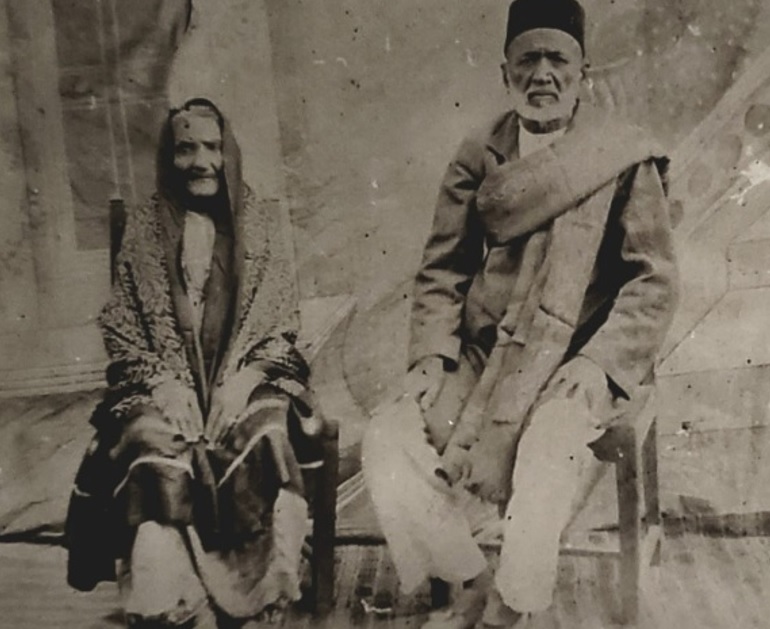
Wadima’s parents, Mr & Mrs Hirji Rajpar Kalyan. Photograph: Dr. Mohamed Manji collection.
The 48th Ismaili Imam, Mawlana Sir Sultan Mahomed Shah, His Highness the Aga Khan lll, had instructed the Kutch Kathiawar Ismaili Jamats to go to East Africa for economical betterment. So this newly married couple was given a big task to take some of Wadabapa’s brothers and nephews with them on their trip back to East Africa to settle them and help them to earn their living there. At a young age of seventeen and as a newly married bride, she took this responsibility with her husband and became the “mother” of the family.
The new home of Wadima, as Mrs Sikinabai Kanji Lalji, will be addressed from now on, was in New-Langenburg (presently known as Tukuyu), a small hillside town in the Southern Highland region of Tanganyika (now known as Tanzania).This was the place the German administration, before 1st World War, had established a center called “Boma”. Mr Kanji Lalji had moved to this place from a close by village of Masoko where he had initially settled in 1911.
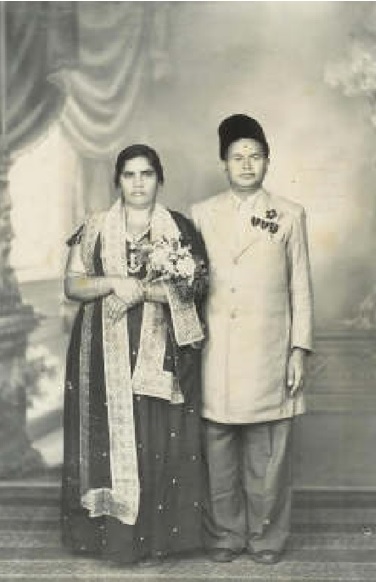
Mr & Mrs Kanji Lalji. Photograph: Dr. Mohamed Manji collection.
In those days, these small villages in East Africa did not have any hotels or restaurants. There were only few Indian families of different backgrounds, i.e. Hindus, Sunni Muslims and Khoja Muslims (mostly Ismailis).They thus had no choice but to look after each other in all ways of life. Any new arrival or visitor would just have to go to any “duka” of an Indian person and he and his family would be taken care of. They would be fed, housed and also would get help so to open their own “dukas” or find them employment, regardless of religious background. This was an old Sindhi, Kutchi and Khatiawadi tradition for generations, practised in India and outside India.
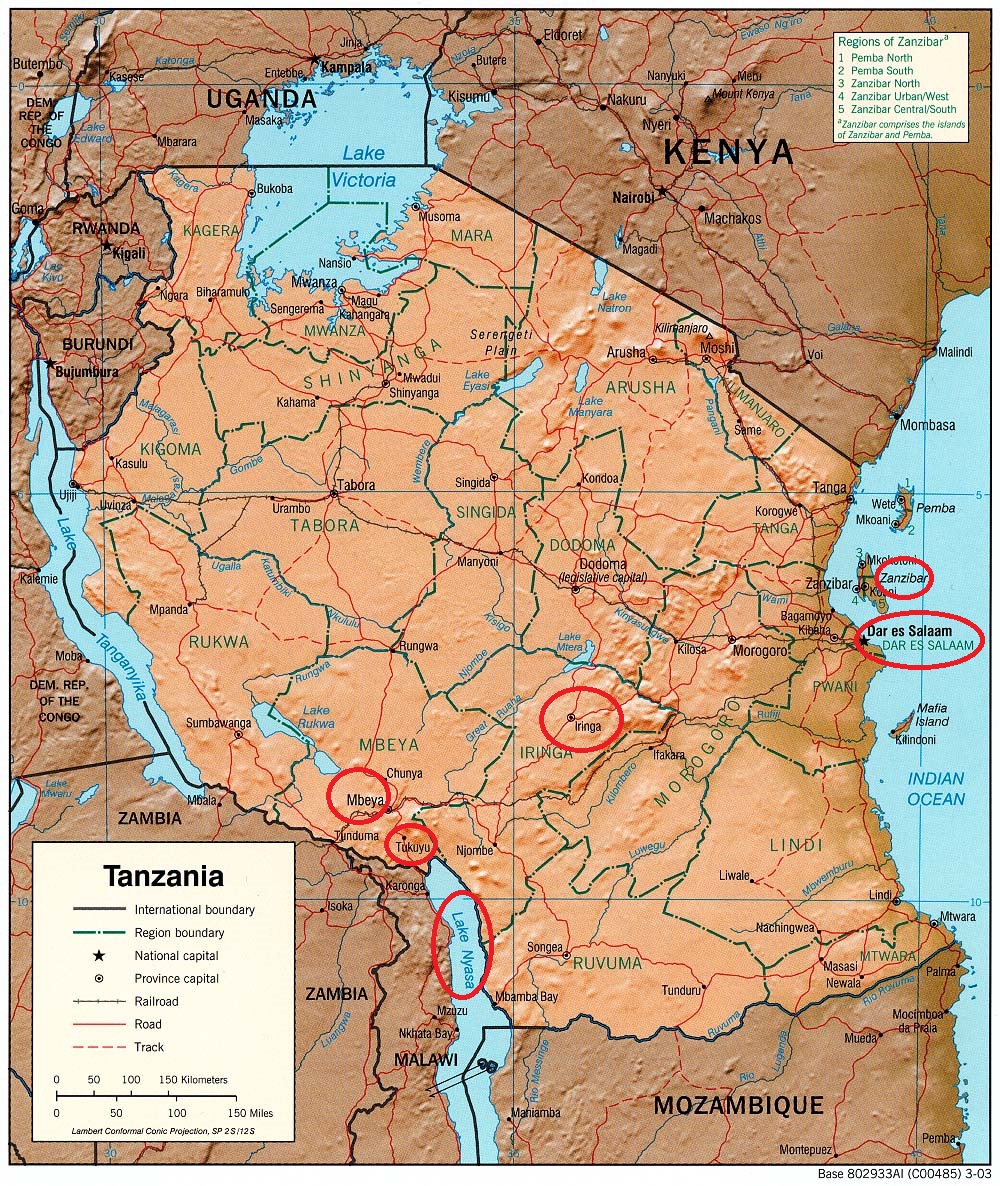
Click on map for enlargement
Shaded relief map of Tanzania. Perry-Castañeda Library Map Collection, University of Texas. This is an annotated version prepared by Simerg and locations mentioned in the article have been circled in red.
As very few of the Indian man-folk had wives, Wadimaa played major role in this aspect in Tukuyu, during that time. One such example was an arrival of a Sunni Muslim family of Haji Yusufmia in Tukuyu in late 1920’s or early 1930’s; they had arrived in Tukuyu after crossing Lake Nyassa (Malawi) in a small canoe from Nyasaland. They were on their way to Mbeya region to settle. They stayed with them and Haji Yusufmia made Wadimaa his blood sister. From then on that relationship between these two families continues to exist until the present day and has remained strong among their children and grandchildren. Haji Yusufmia became a prosperous businessman in Mbeya and a respected Muslim community leader in the Southern Highland region. He and his family were officially invited to attend the Diamond Jubilee celebration of Mawlana Sultan Mahomed Shah Aga Khan in 1946 in Dar es Salaam.
Wadima Sikinabai and Wadabapa Kanji Lalji were matriarch of the Lalji Bharmal family in the settlement of Wadabapa’s older brother Manji’s sons and daughters, his younger brothers Hussein and Karim Lalji. They helped them settle, marry and establish themselves in Tanganyika and some of them became quite successful economically.
In spite of being young, Wadima had an inborn mature quality and accepted a major role in the social aspect of the communities. She learned Swahili language and also local tribal language of Nyakyusa. As there were no doctors or official midwives, women helped each other during deliveries. She was one of the main women involved as a “midwife”. She was self-taught by observing and also from a midwifery medical book for women; she told me that she bought this book in Mumbai for 3 rupees during her first return visit to Kutch after her marriage. She also told me (being an MD myself) during our fireplace talks in her later years, while visiting Vancouver, that she still wanted to learn more. She wanted to know about new procedures involved during deliveries in the present modern day.
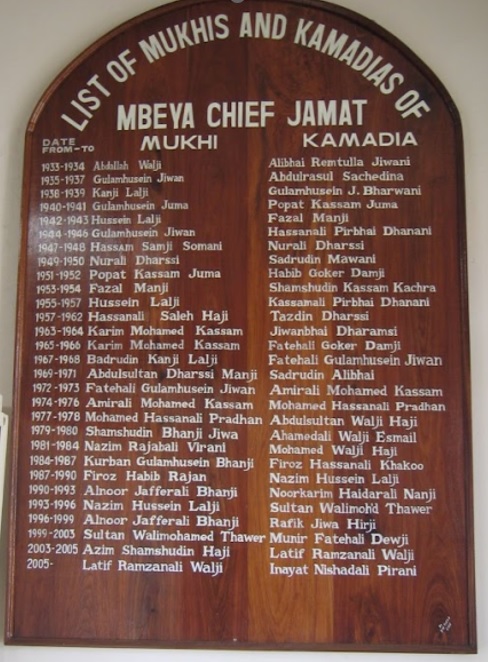
In 1935, Wadima and her family relocated to Mbeya. They became one of the pioneers of Mbeya. She continued her involvement in Mbeya community in the same way, and in some respect in more involved way. She was the main lady player in establishment of the Ismaili community of Mbeya. She, with her husband served as Mukhiani and Mukhi of Mbeya Ismaili Jamat in 1938. Their names are embedded on the plaque shown below. She also was instrumental in the establishment of other Ismaili majalis gatherings in Mbeya. In early 1950’s, as per Mawlana Sultan Mahomed Shah’s instructions, she was one of the first ladies in Mbeya, to adopt the simple western dress and gave up her Indian attire of “pacheri” and saris. She also was instrumental in getting other reluctant Ismaili ladies to do the same.
List of Mukhis and Kamadias of Mbeya Jamat Photograph: Dr. Mohamed Manji collection.
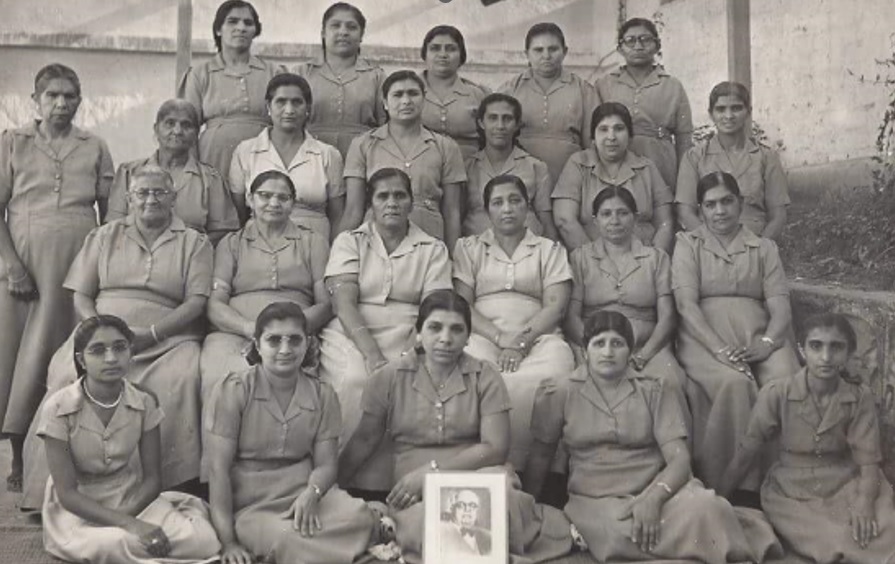
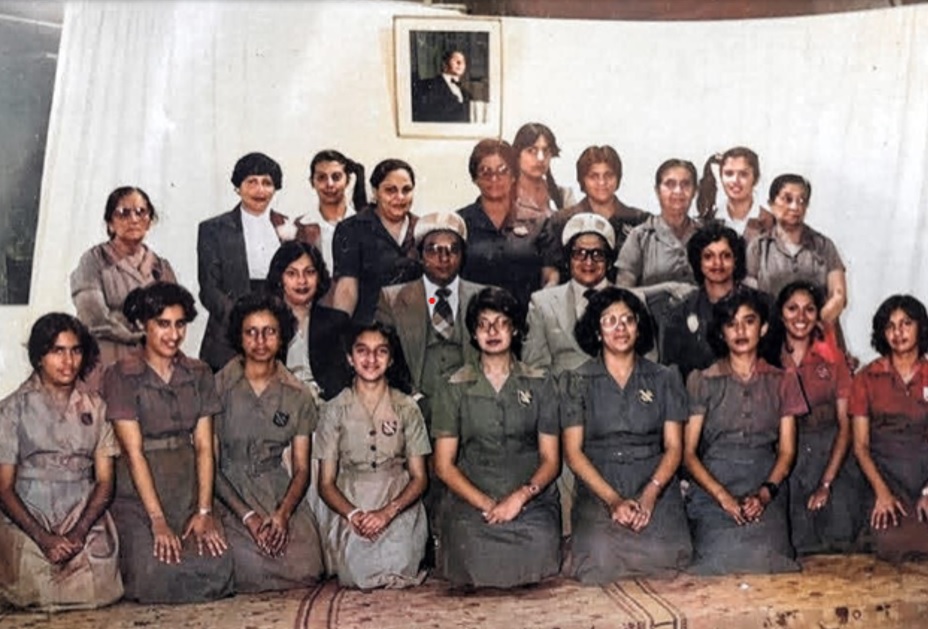
Wadima established the Ismaili Ladies Voluntary corps in Mbeya. The following pictures show her involvement over the decades. She also participated in preparing food during Ismaili functions as part of “Jaman” committee. In spite of her age, she also participated in one of the early Vancouver Partnership Walk during her visit to Vancouver, BC.
Mbeya Aga Khan Women’s Voluntary Corp early 1950s. Photograph: Dr Mohamed Manji collection.
Mbeya Aga Khan Women’s Voluntary Corp late 1950s. Photograph: Dr Mohamed Manji collection.
Mbeya Aga Khan Women’s Voluntary Corp late 1980s. Photograph: Dr Mohamed Manji collection.
Over the years, she earned the respect of all communities of Mbeya, whether they were of native African population or of Indian and European background and came to be known as WADIMA (Grandma). She had a persona of being confidant and in expressing authority. Families would get her involved in settlement of family, marital and financial issues of the community. After Tanganyika’s independence on December 9, 1961, local native political leader would come and greet her as she had known them since they were young. At any Indian wedding, she would be consulted and invited. I remember that my father did consult and inform her about weddings in our family.
In the late 1940’s and early 1950’s, members of the Lalji family in Mbeya would visit Wadima’s place once or twice a week after Jamatkhana, for chit-chat. I was very young and my young cousins and young uncles would gather around a “sigree” (charcoal heating utensil), as Mbeya at an altitude of 1,758 metres (5,500 ft) was quite a cold place. The rooms were lit by lanterns; in that period there was no electricity in Mbeya. We would listen to the elders talking about local news, news from Kutch and other family news. Wadima was a very good storyteller. The young ones would sit with her and she would tell to us about our ancestry, about Kutch and their early hard days they went through when she came to Tanganyika and other interesting stories. This was kind of passing on to all of us, our history and informing us, who we were and where we came from.
Her legacy is being remembered and talked about, up to now, by all Lalji Bharmal youngsters, who were sitting around the “sigree” in those early days and also the new Lalji Bharmal generations in the latter days. When we get together here in Canada and talk about Mbeya, we remember her by saying to each other that “Wadima was saying so”.
Wadima during one of her visit to Vancouver in early 1990’s fell sick. Her wish always was to be buried in the African soil. She returned to Mbeya, Tanzania, her “home”. She passed away in Mbeya, surrounded by family, at the age of 88 years, on February 8th, 1994, and she is buried in Mbeya, Tanzania — the place she was a part of in building.
As I reflect on her magnificent life, I pray for the peace of her soul as well as the souls of all the departed members of my family.
Acknowledgements: I would like to first acknowledge my late Wadima Raibanu Sikina Kanji Lalji herself. She over the years provided me her history, which enabled me to pen down the above write up. I would also like to acknowledge my father’s first cousin and Wadimaa’s son Mr Badrudin Kanji Lalji, his daughter Al-Shamsh (Shamshi) Ladha and Wadimaa’s blood bother’s son Haji Satarmia Haji Yusufmia for providing information for this write up.
Date posted: March 16, 2023. Last updated: March 18, 2023 (names, typo corrections.)
_______________
Dr. Mohamed Fazal Manji
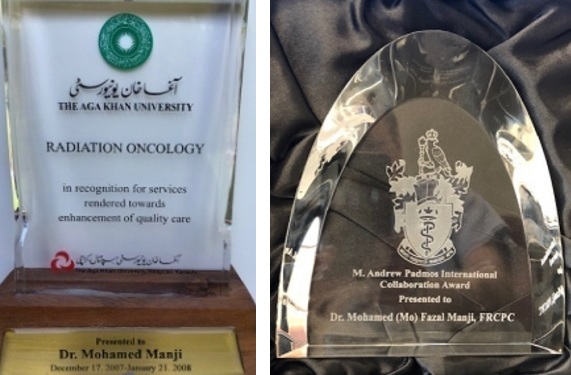
Dr Mohamed Fazal Manji, a cancer special and recipient of the 2022 Royal College of Canada M. Andrew Padmos International Collaboration Award, is originally from Mbeya, Tanzania. He is a Consultant Radiation Oncologist at BC Cancer Agency of British Columbia, Canada, and Clinical Associate Professor, University of British Columbia.He graduated in medicine from Makerere University, Kampala, Uganda and immigrated to Canada in 1972. Dr. Manji specialised in radiation cancer treatments at Princess Margaret Hospital (Cancer Center as it is called now) in Toronto. He obtained the Canadian Fellowship (FRCPC) and American Board Specialist Certification (DABRT) in Radiation Oncology. He also undertook special courses in Nuclear Medicine and Endocrinology at Harvard Medical School, Boston USA. He became the first Canadian trained Ismaili Radiation Oncologist in Canada and probably in North America.
A plaque from Aga Khan University in appreciation of Dr. Manji’s services and at right Dr. Manji received the 2022 Royal College of Canada M. Andrew Padmos International Collaboration Award
He has been working at BC Cancer agency since 1977. He spent time abroad, working in Riyadh, Saudi Arabia, to help modernize the Radiation Department at King Faisal Specialist Hospital & Research Center. He spent 12 years at this tertiary hospital for cancer and other diseases. He was also involved in the planning and development of Radiation Oncology Departments at the Aga Khan University Hospitals in Karachi and Nairobi and spent some time working at both places. He has contributed to many peer review publications, abstracts, book chapters and also lecture presentations nationally and internationally. He is the son of Rai Fazal Manji of Mbeya Tanzania, who served as a member of Aga Khan Supreme Council of Tanganyika in 1950’s and Raibanu Rehmat Fazal Manji, daughter of Alijah Mohamed Hamir who, in early 1930’s, built an iconic Jamatkhana in Iringa, Tanzania, and donated it to Imam Sultan Mahomed Shah unconditionally. Dr Manji served as first Member for Health on the first Aga Khan Ismaili Regional Council of Ontario and Quebec in 1973. He has previously contributed an informative piece on Prince Amyn Aga Khan’s visit to Toronto in 1973 on Simerg’s sister website Barakah.
_____________
Before departing this website, please take a moment to review Simerg’s Table of Contents for links to hundreds of thought-provoking pieces on a vast array of subjects including faith and culture, history and philosophy, and arts and letters to name a few. Also visit Simerg’s sister websites Barakah, dedicated to His Highness the Aga Khan, and Simergphotos. The editor may be reached via email at mmerchant@simerg.com.














 Simerg - Insights from Around the World