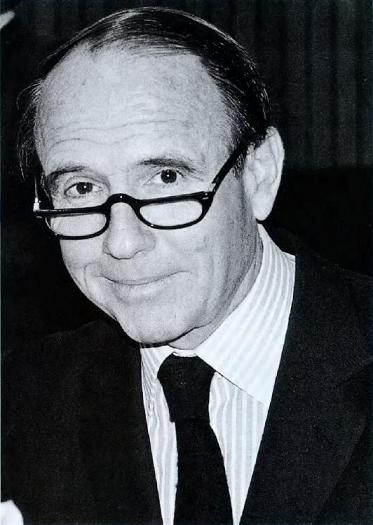
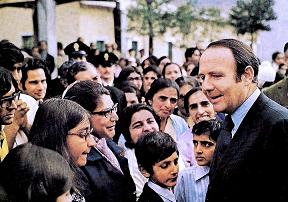
Uganda: Exclusive Photos of Mawlana Hazar Imam, His Highness the Aga Khan, by Abdul M. Ismaily (“Papa Jaan”)

PLEASE CLICK: Exclusive: Photos of Mawlana Hazar Imam’s Visit to Uganda by the Late Abdul M. Ismaily (“Papa Jaan”) 

Please click on image for more photos by "Papa Jaan" of His Highness the Aga Khan's visit to Uganda. Photo: Abdul M. Ismaily. Copyright.

Please click on image for more photos by “Papa Jaan” of His Highness the Aga Khan’s visit to Uganda. Photo: Abdul M. Ismaily. Copyright.

Editor’s Note: Following our recent posting of the late Abdul Mohamed Ismaily’s photographs of His Highness the Aga Khan’s historical first visit to Hunza in 1960, we now present you a collection of his photographs taken in Uganda. Please share this website with your family and friends via email and the social media. We thank our readers for their excellent response to the Hunza photos, and welcome your feedback by completing the applicable comments box or by sending an email to simerg@aol.com.

PLEASE CLICK: Exclusive: Photos of Mawlana Hazar Imam’s Visit to Uganda by the Late Abdul M. Ismaily (“Papa Jaan”) 

Date posted: February 14, 2016.

____________

For Hunza photos, please click Exclusive: Photos of Mawlana Hazar Imam’s 1960 Visit to Hunza by the Late Abdul M. Ismaily (“Papa Jaan”)

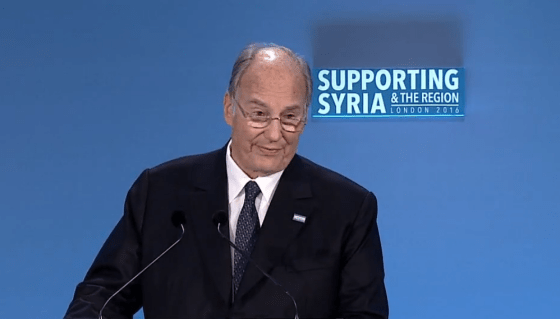
In London Conference, His Highness the Aga Khan, 49th Ismaili Imam, Calls for ‘Islands of Stability’ in War-Torn Syria

In remarks made at an International Conference under the theme “Supporting Syria and the Region Conference”, in London, England, Mawlana Hazar Imam, His Highness the Aga Khan, today called for the establishment of ‘islands of stability’ in war-ravaged Syria that could provide areas of relative safety in the midst of conflict. The conference, co-hosted by Germany, Kuwait, Norway, the United Kingdom and the United Nations. was attended by representatives from sixty countries, including 30 world leaders.

“The situation in Syria is a close to hell as we are likely to find on this earth,” said UN Secretary General Ban Ki-moon. Referring to the Geneva meeting between the Syrian Government and the opposition parties that had broken down just a day earlier, he said the talks were “undermined by the continuous lack of sufficient humanitarian access, and by a sudden increase of aerial bombings and military activities within Syria”. He urged the warring sides to “get back to the table, not to secure more gains on the battlefields”.

Aga Khan 2016 Support Syria Conference London

Deploring the devastation in war-ravaged Syria, Mawlana Hazar Imam, His Highness the Aga Khan, called for the establishment of “islands of stability” to provide areas of relative safety in the midst of conflict. The 49th Shia Ismaili Imam, pledged $200 million towards achieving peace, stability, and reconstruction in the country.

The British Prime Minister, David Cameron, said that “if ever there was a moment to take a new approach to the humanitarian crisis in Syria surely it is now,” mentioning the huge number of Syrians who “fear they have no alternative than to put their lives in the hands of evil-people smugglers in search of a future”.

The following are the transcript and video of the remarks made by His Highness the Aga Khan at the Supporting Syria and the Region Conference.

Bismillah-ir-Rahman-ir-Rahim

Co-hosts of the Conference on Supporting Syria and the Region,

Excellencies,

Ladies and gentlemen,

I thank the co-hosts for organising this much-needed initiative to deepen the understanding of, and garner international support for the peoples of Syria, Alongside all those present here today, I am deeply distressed over the indiscriminate and widespread devastation of life and property, including that of irreplaceable cultural assets which are the manifestation of Syria’s stunningly rich pluralistic history.

The Aga Khan Development Network (AKDN), which is the Ismaili Imamat’s global agency for supporting development, is fully engaged with the peace process under UN leadership, and is firmly committed to helping build a Syria that continues to respect pluralism, remains secular, and embarks on a political process led by Syrians.

AKDN’s development and humanitarian work in Syria began many years before the war. In the present situation, we have committed resources and efforts to ensure that Internally Displaced People receive humanitarian assistance, and are supported to sustain their livelihoods. We are taking two approaches:

First, we are supporting local community leaders, teachers, doctors, engineers and others to foster stability, protecting their families and their communities. We are thus building and strengthening civil society to take as much responsibility as possible for their own future.

Second, we are investing in communities, by supporting agriculture, income generation, early childhood education, schools, and hospitals. We also provide vocational training to create skills. Our goal is to sustain hope.

We aim to meet the urgent needs of the present, but where also possible to protect and strengthen the foundations for the future. We seek to create “islands of stability”, where there is public consensus, in the face of war. It is my conviction that “islands of stability” can be replicated wherever security permits. Investing in them will help prevent displacement of people and anchor communities that would otherwise flee as refugees.

Since the onset of conflict in 2011, AKDN has dedicated $50 million towards these endeavours in Syria and is now committing to increasing this investment to $200 million over the next four years. Our efforts will expand to wider areas of the country. Our goal is peace, stability, and reconstruction.

Thank you.

_________________

Date posted: February 4, 2016.

His Highness the Aga Khan and Pope Benedict XVI: A Very Special Photo of Two Faith Leaders Meeting Each Other at the Institut De France in Paris

PREPARED AND COMPILED BY ABDULMALIK MERCHANT
(Publisher-Editor http://www.simerg.com and http://www.simergphotos.com)

As part of his famous Apostolic Journey to France in 2008, Pope Benedict XVI, on September 13, paid a visit to the “Institut De France” in Paris. The Pope, who had been elected as the 265th Pope of the Roman Catholic Church in 2005, was presented with a gold medal by the Institut, and also unveiled a plaque commemorating his visit. During his very brief remarks to the audience, the Pope expressed his gratitude to the Institut “both personally and as the successor of [Simon] Peter.”

His Highness the Aga Khan, Mawlana Hazar Imam, was also in attendance at the Institut de France as the Associate Foreign Member of the Académie des Beaux-Arts (Academy of Fine Arts), one of five learned societies within the Institut which was founded in 1795.

Everyone’s attention in the hall was drawn to Mawlana Hazar Imam and the Pope, with an extraordinary sense of interest and keenness, as the two faith leaders greeted each other with a handshake. Simerg is pleased to present this licensed copyright photo with permission from Getty Images.

Pope Benedict XVI is seen greeting His Highness the Aga Khan on September 13 at the Institut de France in Paris during an official visit to France in 2008. Photo: Copyright. Getty Images. Published on Simerg/Simergphotos with a Licencing arrangement with Getty Images. Fench caption: Vue plongeante du pape BENOIT XVI serrant la main de l'AGA KHAN à son arrivée sous la coupole de l'Institut de France à PARIS entouré de nombreux académiciens et autres personnalités dont Gabriel DE BROGLIE, Hélène CARRERE D'ENCAUSSE, Jean-François JARRIGE, Jean-François BACH, Arnaud D'HAUTERIVES, Michel ALBERT, Christian PONCELET président du Sénat, Jean TULARD, Alain DECAUX, Pierre-Jean REMY, Michel MOHRT, Max GALLO, le cardinal André VINGT-TROIS archevêque de Paris et le cardinal Paul POUPARD. (Photo by Philippe Petit/Paris Match via Getty Images)

Everyone’s attention is drawn to Pope Benedict XVI and His Highness the Aga Khan as they greet each other on September 13, at the Institut de France in Paris during an official visit by the Pope to France in 2008. Photo: Copyright. Getty Images. Published on Simerg/Simergphotos with a Licensing arrangement with Getty Images. Fench caption: Vue plongeante du pape BENOIT XVI serrant la main de l’AGA KHAN à son arrive sous la coupole de l’Institut de France à PARIS entouré de nombreux académiciens et autres personnalités dont Gabriel DE BROGLIE, Hélène CARRERE D’ENCAUSSE, Jean-François JARRIGE, Jean-François BACH, Arnaud D’HAUTERIVES, Michel ALBERT, Christian PONCELET président du Sénat, Jean TULARD, Alain DECAUX, Pierre-Jean REMY, Michel MOHRT, Max GALLO, le cardinal André VINGT-TROIS archevêque de Paris et le cardinal Paul POUPARD. (Photo by Philippe Petit/Paris Match via Getty Images).

In 2013, Pope Benedict dramatically resigned his position as the Head of the Catholic Church due to his deteriorating strength, advanced age and the heavy demands of being Pope, and retired at the Mater Ecclesiae, a small monastery located inside the Vatican State City. His present successor is Pope Francis I, born Jorge Mario Bergoglio.

SOME BRIEF NOTES ON THE PAPACY AND THE IMAMAT, AND SIMON PETER IN THE ROMAN CATHOLIC AND ISMAILI TRADITIONS

The Catholics adhere to the belief that the Pope is a successor of St. Peter. The succession of the pope is determined by a college of cardinals who elect the pope, while the office of the Imam of the Ismailis is a hereditary position. The Ismailis regard their 49th hereditary Imam as the direct descendant of the Prophet Muhammad (s.a.s) through Hazrat Ali (a.s.) and Hazrat Bibi Fatima (a.s.). In a speech made at the Canadian Parliament in 2014, the Aga Khan declared that “the Ismaili Imamat is a supra-national entity, representing the succession of Imams since the time of the Prophet.” And, in an interview with Politique International he said, “The religious leadership of the Ismaili Imam goes back to the origins of Shia Islam when the Prophet Muhammad appointed his son-in-law, Ali, to continue his teachings within the Muslim community. The leadership is hereditary, handed down by Ali’s descendants, and the Ismailis are the only Shia Muslims to have a living Imam, namely myself.”

In the Catholic tradition, the foundation for the office of the Pope is found primarily in Matthew, where Jesus is quoted as telling Simon Peter:

“You are ‘Rock,’ and on this rock I will build My Church and the gates of hell shall not prevail against it. And I will give unto thee the keys of the kingdom of heaven: and whatsoever thou shalt bind on earth shall be bound in heaven: and whatsoever thou shalt loose on earth shall be loosed in heaven.”

This series of successions of the Pope is known as “Apostolic Succession,” with the line of Bishops stretching back to the apostles, who lived during the time of Jesus. Simon Peter is recognized as having been the first Pope. Early Christians reserved the title of “Pope” for St. Peter’s successors.

However, in branches of Shia theology as well as Ismailism, Simon Peter’s role is seen as the direct parallel to that of Hazrat Ali as the first Imam. Ismailis along with some other Shia groups maintain that every major Prophet had a spiritual legatee (Waṣi) or successor called the Asas (foundation) who taught the inner meaning to those who had the capacity to understand it. In this regard, Adam had Seth; Noah had Shem; Moses had Aaron, and Jesus had Simon Peter. A well known sacred tradition of the Prophet Muhammad says that “Ali is to me as Aaron was to Moses,” confirming that Ali held the same level of authority as Aaron did.

Date posted: December 31, 2015.
Last updated: January 1, 2015.

_______________

We welcome your feedback, please click Leave a comment or send it to simerg@aol.com, subject: Aga Khan and Pope.  Your feedback may be edited for length and brevity, and is subject to moderation. We are unable to acknowledge unpublished letters.

The following were used as references for the compilation of this piece:

  1. Apostolic Journey to France: Greeting by the Holy Father during the visit at the Institut de France (September 13, 2008)
  2. The Popes: From St. Peter to Pope Frances by Rupert Matthews,  2014 Edition published by arrangement with Moseley Road Inc.
  3. http://www.catholic-pages.com/pope/peter.asp
  4. Peter in Islam, at Wikipedia.
  5. Comparing the Imamat and the Papacy: Some Short Notes (at Ismailignosis.com).
  6. The Delegation Decoded – An Esoteric Exegesis of the Delegation of the Isma‘ili Imamat, by Khalil Andani.
  7. Concise Encyclopedia of Islam, C. Glasse.
  8. Voices: “The Power of Wisdom” – His Highness the Aga Khan’s Interview with Politique Internationale (English translation)
  9. In a Dynamic and Stirring Address to Members of the Canadian Parliament, His Highness the Aga Khan Shares His Faith Perspectives on the Imamat, Collaboration with Canada, the Muslim World Community (the Ummah), the Nurturing of Civil Society, Early Childhood Education, Voluntary Work, and the Unity of the Human Race

Also see the following important features to learn more about the Aga Khan and the Ismaili Imamat:

in which His Highness the Aga Khan responded to Pope Benedict’s controversial remarks concerning Islam that he had made in 2006; and Special Series: Ismaili Expressions on the Imamat and Imam of the Time — (I) The Preamble of the Constitution of the Shia Imami Ismaili Muslims

A Marvellous Collection of Photos of His Highness the Aga Khan’s Visits to Canada, India and Greece

Editor’s note: In Part II of a special series on the 49th Ismaili Imam’s visits to numerous countries that he undertook during 2015, we cover India (April), Canada (May) and Greece (September). Please click A Marvellous Collection of Photos of His Highness the Aga Khan’s Visits to Canada, India and Greece.

Please click on photo for complete story and more pictures. Photo: Ontario Liberal Part. Copyright. Published with permission.

Please click on photo for complete story and more pictures. Photo: Ontario Liberal Part. Copyright. Published with permission.

A Reflection on the Land Grant Ceremony of the New World Class Aga Khan University Hospital to be Built in Uganda

Partnership for Change

Aga Khan and Musoveni at the Land Grant CeremonyBY SHARIFFA KESHAVJEE

The sacred space is set
The energy is invoked
The earth’s ochre red
Makes a path through the green.
Reflected in the Ismaili and Uganda flag
The logo of the university
Radiating, rippling outwards

Our world of rapid change
Meets in Uganda to break the ground
Nakawa is chosen to propel
the University Hospital

To reach beyond its borders
The frontiers of Science
Radiation ever outwards

Decades of decay at Mulago
A new seed of hope is planted
Pioneering pluralism
In Uganda’s rich soil
Revitalizing the land
For life long learning
Radiating ever outwards

Coat of Arms Uganda, AKU Logo, Flags Uganada and Ismaili ImamatThe President and Imam’s vision
Bringing to the region
Appropriate advanced Health Care
The people can access
Here at home the very best
The youth empowered to remain
Here at home to give their best practices
Expanding ever outwards

The people rejoice with lush voices
Their partners join hands to celebrate
This great milestone laid by the red bricks
That fulfills the words of the anthem
That ever propel outwards

Aga Khan Musoveni Kampala

Salute to the President and Imam for
Their vision, their respect
For national progress
Global standards of excellence
To be in the frontier of scientific
and humanistic knowledge

The best in the world
Propelling expanding ever outward
An emblematic crown over Uganda

Date posted: December 18, 2015.

Copyright: Shariffa Keshavjee/Simerg

______________

Nakawa – an area in the city of Kampala.
Mulago – The hospital located on Mulago Hill in Kampala.

Links to stories and videos of the Land Grant Ceremony of the new Aga Khan University Teaching Hospital to be built in Uganada:

Please also visit:
http://www.theismaili.org
http://www.akdn.org
http://www.ismailimail.wordpress.com.

Also, http://www.nanowisdoms.org is an excellent resource for speeches of Mawlana Hazar Imam.

We welcome your feedback. Please click Leave a comment.

“ISIL does not speak for Islam” — President Barack Obama asks Americans not to define acts of terror as a war between America and Islam

Excerpts from a rare White House Oval Office address delivered by President Barack Obama on Sunday, December 6, 2015.

President Obama

“the vast majority of terrorist victims around the world are Muslim. If we’re to succeed in defeating terrorism we must enlist Muslim communities as some of our strongest allies, rather than push them away through suspicion and hate…just as it is the responsibility of Muslims around the world to root out misguided ideas that lead to radicalization, it is the responsibility of all Americans  — of every faith —  to reject discrimination”

Good evening. On Wednesday [December 2, 2015 – ed.], 14 Americans were killed as they came together to celebrate the holidays. They were taken from family and friends who loved them deeply. They were white and black; Latino and Asian; immigrants and American-born; moms and dads; daughters and sons. Each of them served their fellow citizens and all of them were part of our American family.

“I know that after so much war, many Americans are asking whether we are confronted by a cancer that has no immediate cure….we are cooperating with Muslim-majority countries —  and with our Muslim communities here at home  — to counter the vicious ideology that ISIL promotes online.”

…The victims were brutally murdered and injured by one of their coworkers and his wife…it is clear that the two of them had gone down the dark path of radicalization, embracing a perverted interpretation of Islam that calls for war against America and the West…this was an act of terrorism, designed to kill innocent people.

President Obama

As Commander-in-Chief, I have no greater responsibility than the security of the American people. As a father to two young daughters who are the most precious part of my life, I know that we see ourselves with friends and coworkers at a holiday party like the one in San Bernardino. I know we see our kids in the faces of the young people killed in Paris. And I know that after so much war, many Americans are asking whether we are confronted by a cancer that has no immediate cure.

…Since the attacks in Paris, we’ve surged intelligence-sharing with our European allies. We’re working with Turkey to seal its border with Syria. And we are cooperating with Muslim-majority countries — and with our Muslim communities here at home — to counter the vicious ideology that ISIL promotes online.

“Muslim leaders here and around the globe have…to speak out against not just acts of violence, but also those interpretations of Islam that are incompatible with the values of religious tolerance, mutual respect, and human dignity.”

….My fellow Americans….Let me now say a word about what we should not do.

…. We cannot turn against one another by letting this fight be defined as a war between America and Islam….ISIL does not speak for Islam. They are thugs and killers, part of a cult of death, and they account for a tiny fraction of more than a billion Muslims around the world — including millions of patriotic Muslim Americans who reject their hateful ideology. Moreover, the vast majority of terrorist victims around the world are Muslim. If we’re to succeed in defeating terrorism we must enlist Muslim communities as some of our strongest allies, rather than push them away through suspicion and hate.

President Obama

That does not mean denying the fact that an extremist ideology has spread within some Muslim communities. This is a real problem that Muslims must confront, without excuse. Muslim leaders here and around the globe have to continue working with us to decisively and unequivocally reject the hateful ideology that groups like ISIL and al Qaeda promote; to speak out against not just acts of violence, but also those interpretations of Islam that are incompatible with the values of religious tolerance, mutual respect, and human dignity.

“It is our responsibility to reject religious tests on who we admit into this country. It’s our responsibility to reject proposals that Muslim Americans should somehow be treated differently. Because when we travel down that road, we lose.”

But just as it is the responsibility of Muslims around the world to root out misguided ideas that lead to radicalization, it is the responsibility of all Americans — of every faith — to reject discrimination. It is our responsibility to reject religious tests on who we admit into this country. It’s our responsibility to reject proposals that Muslim Americans should somehow be treated differently. Because when we travel down that road, we lose. That kind of divisiveness, that betrayal of our values plays into the hands of groups like ISIL. Muslim Americans are our friends and our neighbors, our co-workers, our sports heroes — and, yes, they are our men and women in uniform who are willing to die in defense of our country. We have to remember that.

“…no matter who you are, or where you come from, or what you look like, or what religion you practice, you are equal in the eyes of God and equal in the eyes of the law.”

My fellow Americans, I am confident we will succeed in this mission because we are on the right side of history. We were founded upon a belief in human dignity — that no matter who you are, or where you come from, or what you look like, or what religion you practice, you are equal in the eyes of God and equal in the eyes of the law.

President Obama

Let’s not forget that freedom is more powerful than fear; that we have always met challenges — whether war or depression, natural disasters or terrorist attacks — by coming together around our common ideals as one nation, as one people. So long as we stay true to that tradition, I have no doubt America will prevail.

Thank you. God bless you, and may God bless the United States of America.

Date posted: December 7, 2015.

____________________

To watch and read the full transcript of President Obama’s speech please visit The White House.

Aldous Huxley’s Expression “Man’s Inhumanity to Man” and its Relevance to Prince Sadruddin Aga Khan’s Messages on the Refugee Crisis

Prince Sadruddin Aga Khan (1933 - 2003). Photo: Wikipedia Commons.

Prince Sadruddin Aga Khan (1933 – 2003). Photo: Wikipedia Commons.

Excerpts from a selection of statements, interviews and speeches that the late Prince Sadruddin Aga Khan gave when he was the United Nations High Commissioner for Refugees (UNHCR). Links to a fuller version of this article as well as all his UNHCR speeches and statements are provided below. Please also read our earlier post (1) His Highness the Aga Khan visits UNHCR and (2) UN material related to his uncle, Prince Sadruddin, whose name became synonymous with UNHCR,

~~~~~

“What is wealth without wisdom, or development without freedom? Every day selfishness, intolerance, lack of understanding and discrimination continue to add tragic pages to the history of our time.”

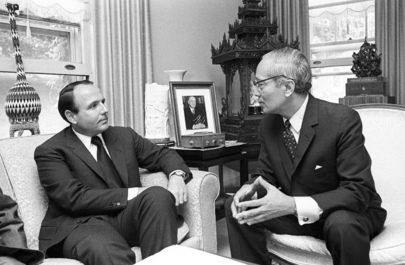
The late Prince Sadruddin Aga Khan with Secretary-General U Thant at his home on 23 June 1971. Photo: Teddy Chan, United Nations.

The late Prince Sadruddin Aga Khan with Secretary-General U Thant at his home on 23 June 1971. Photo: Teddy Chan, United Nations.

 “When I was watching television during the tremendous Apollo experience recently and saw the world as a tiny sphere, it seemed incredible that, after so many years, it had not learned to live in peace, that men were still fighting, perpetrating injustice, committing crimes against humanity and persecuting individuals. It is, as I say, incredible that despite all the tremendous progress which has been achieved, men still resort to violence instead of to mediation and dialogue, within or outside the United Nations, and that this violence should produce refugees.”

“This century has been greatly guilty in its disrespect for the inalienable rights of man. None know this better than the millions of refugees, the unfortunate human beings who have been forced to seek safety outside their own country because of persecution and intolerance.”

“It is just as important to translate the articles inscribed in the Universal Declaration of Human Rights into everyday practice as it is to spread science and knowledge or to build dams and create new sources of power. For what is wealth without wisdom, or development without freedom?

“All nations desire peace, progress and justice – yet every day selfishness, intolerance, lack of understanding and discrimination continue to add tragic pages to the history of our time. Indeed, this century has been greatly guilty in its disrespect for the inalienable rights of man. None know this better than the millions of refugees, the unfortunate human beings who have been forced to seek safety outside their own country because of persecution and intolerance. How were they received? The nations were not always generous towards refugees, and in the past untold tragedies sometimes followed the arrival in countries of asylum.

“If there were to be more tolerance and more justice and more respect for the basic rights of human beings everywhere, there would be fewer problems of refugees in the world.”

The Canadian Tribute to Human Rights Monument in the Nelson Mandela Square on Elgin Street in Ottawa. It bears an inscription from the 1st article of the Universal Declaration of Human Riights which states that All human beings are born free and equal in dignity and rights.

The Canadian Human Rights Monument at Nelson Mandela Square on Elgin Street in Ottawa which bears the inscription “All human beings are born free and equal in dignity and rights.” This is part of Article 1 of the Declaration of Human Rights which goes on to state that we are all endowed with reason and conscience and should act towards one another in the spirit of brotherhood. Photo: Malik Merchant/Simerg.

“And what about the causes of refugee movements? Have they disappeared today? When asking myself this question I have in mind that persecution does not always take the extreme form of threatening life and liberty: it is also persecution when a person is hindered in the exercise of his economic activity because he belongs to a particular social groups or confesses to a particular religion or because of his ethnic origins; or when for the same reasons a group of individuals is segregated in crowded and unhealthy areas; or when parents are prevented from bringing up their children in accordance with their wishes.

“The resulting picture is a dark and wide canvas of human suffering that covers nearly all continents of our planet.”

Refugee children from Syria at a clinic in Ramtha, northern Jordan. Photo: Wikipedia.

Refugee children from Syria at a clinic in Ramtha, northern Jordan. Photo: Wikipedia.

~~~~~~

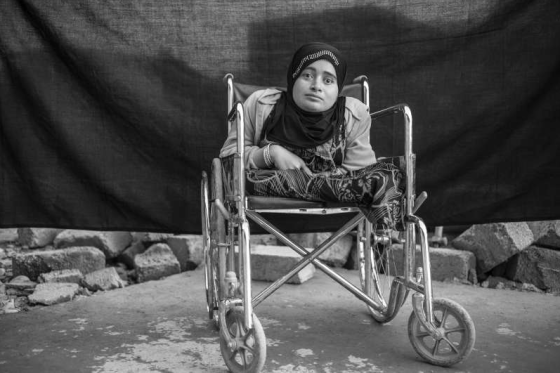
Confined to the wheelchair and blind in both eyes, the only important thing that Alia, below, brought with her ‘is my soul, nothing more – nothing material.’

Alia sits in her wheelchair in Domiz refugee camp in the Kurdistan Region of Iraq. The 24-year-old was living with her family in Daraa, Syria, when fighting forced them to flee their home. Confined to the wheelchair and blind in both eyes, Alia says she was terrified by what was happening around her. 'Men in uniforms came and killed our cow. They fought outside our house and there were many dead soldiers. I cried and cried,' she says. Alia says the only important thing that she brought with her 'is my soul, nothing more – nothing material.' When asked about her wheelchair, she seems surprised, saying she considers it an extension of her body, not an object. Photo UNHCR/B.Sokol. Copyright.

Alia sits in her wheelchair in Domiz refugee camp in the Kurdistan Region of Iraq. The 24-year-old was living with her family in Daraa, Syria, when fighting forced them to flee their home. Confined to the wheelchair and blind in both eyes, Alia says she was terrified by what was happening around her. ‘Men in uniforms came and killed our cow. They fought outside our house and there were many dead soldiers. I cried and cried,’ she says. Alia says the only important thing that she brought with her ‘is my soul, nothing more – nothing material.’ When asked about her wheelchair, she seems surprised, saying she considers it an extension of her body, not an object. Photo UNHCR/B.Sokol. Copyright.

~~~~~~

Ten-day-old Hawler is held by her mother, a Syrian Kurd who named her after a region in Kurdistan. The family's makeshift campsite in the park is situated next to a mosquite ridden pool of water. Photo: UNHCR/S. Baldwin. Copyright.

Ten-day-old Hawler is held by her mother, a Syrian Kurd who named her after a region in Kurdistan. The family’s makeshift campsite in the park is situated next to a mosquite ridden pool of water. Photo: UNHCR/S. Baldwin. Copyright.

“Here one is forced to admit that the causes of refugee problems are not diminishing, particularly when we remember that people also become refugees because of enmity between groups of different ethnic origin, or different religions, living in the same land; intolerance and hatred which create such tensions and personal conflicts that normal life for members of one of the groups becomes almost impossible and causes them to seek safety elsewhere. We must also remember the refugees who flee the repression and disturbances which accompany struggles for civic rights or national independence in several parts of the world. The resulting picture is a dark and wide canvas of human suffering that covers nearly all continents of our planet.

“We can only hope that gatherings such as this will bring the time nearer when Man will no longer have to fear what Aldous Huxley so well expressed as ‘Man’s inhumanity to Man’.”

UN High Commissioner for Refugees, Sadruddin Aga Khan, and Abel Alier, President of the Provisional High Executive council of the South Sudan visit the village of Kajo Kaji, South Sudan. Photo Credit: UN Photo/1972

UN High Commissioner for Refugees, Sadruddin Aga Khan, and Abel Alier, President of the Provisional High Executive council of the South Sudan visit the village of Kajo Kaji, South Sudan. Photo Credit: UN Photo/1972

“There is no doubt that, if there were to be more tolerance and more justice and more respect for the basic rights of human beings everywhere, there would be fewer problems of refugees in the world. But the day when we shall not have to think of refugees, unfortunately, would still appear to be far off; we can only hope that gatherings such as this will bring the time nearer when Man will no longer have to fear what Aldous Huxley so well expressed as ‘Man’s inhumanity to Man’.”

Date posted: November 7, 2015.

Please also see our post published earlier today, (1) His Highness the Aga Khan visits UNHCR and (2) UN material related to his uncle, Prince Sadruddin, whose name became synonymous with UNHCR

_________________

We welcome your feedback; please click Leave a comment

For a full version of this article, please click Prince Sadruddin Aga Khan: Some of the Causes for the Refugee Crisis – Injustice, Intolerance and Lack of Respect for Human Rights.

Speech excerpts compiled from UNHCR. Please click Speeches by Prince Sadruddin.

(1) His Highness the Aga Khan visits UNHCR and (2) UN material related to his uncle, Prince Sadruddin, whose name became synonymous with UNHCR

“We must do everything possible to prevent human suffering”

His Highness the Aga Khan with UNHCR chief Antonio Guterres at UNHCR Headquarters. Photo: The Ismaili.

His Highness the Aga Khan with UNHCR chief Antonio Guterres at UNHCR Headquarters. Photo: The Ismaili.

His Highness the Aga Khan visited the UNHCR headquarters on November 6, 2015 to meet UN High Commissioner for Refugees, António Guterres, and discuss past and future cooperation in emergency operations around the world. His Highness is the 49th hereditary Imam of the Shia Imami Ismaili Muslims and nephew of the late Prince Sadruddin Aga Khan, who was high commissioner for refugees from 1965-77, a pivotal period in the organization’s history.

His Highness was greeted by UNHCR staff before he held private talks with the High Commissioner  followed by a meeting with senior UNHCR officials on the long-standing partnership between the Aga Khan Development Network (AKDN) and the UN refugee agency.

The two sides looked at ways of further strengthening their partnership in the Middle East, Asia and East Africa. They discussed possible new joint initiatives in areas such as contingency planning; pluralism and diverse societies; and country specific cooperation in areas where AKDN is active as well as global advocacy to bridge the humanitarian-development divide.

They also discussed the global political situation and the effects of extremism and sectarianism on previously tolerant and diverse societies.

“We must do everything possible to prevent human suffering,” said the Aga Khan. “But preempting humanitarian emergencies requires investments, equipment and the necessary resources to ensure the response system is already in place when the crisis hits.”

The High Commissioner agreed, noting that “UNHCR and the Aga Khan Development Network have a lot in common. It is partnerships like ours that can help broaden the way the international community responds to crises today through a stronger humanitarian-development link, and by promoting closer cooperation with actors from different cultural and geographical backgrounds.”

~~~~~

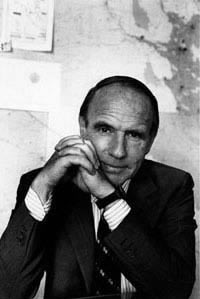
Prince Sadruddin Aga Khan
“AN EXCEPTIONAL MAN”

Prince Sadruddin Aga Khan (1933 - 2003). Photo: UNesco Courier. Copyright

Prince Sadruddin Aga Khan (1933 – 2003). Photo: Unesco Courier. Copyright

Prince Sadruddin Aga Khan, uncle of Mawlana Hazar Imam, His Highness the Aga Khan, led the UN refugee agency during 12 years in the 1960s and 1970s, leaving an indelible print on UNHCR’s history. He led the agency through some of the most challenging moments, and his name became synonymous with UNHCR.

Prince Sadruddin became High Commissioner in January of 1966 at the age of 33 the youngest person ever to lead UNHCR. Prior to becoming High Commissioner, he served for three years as Deputy High Commissioner. He was at the helm of the UN refugee agency during one of its most difficult periods. This included the 1971 the Bangladesh crisis, which uprooted 10 million people, the 1972 exodus of hundreds of thousands of Hutus from Burundi to Tanzania and the Indochinese boat people tragedy of the mid-1970s. In 1972, Prince Sadruddin played a key role in finding new homes for tens of thousands of South Asians expelled from Uganda by Idi Amin.

Prince Sadruddin’s entire adult life was devoted to humanitarian work. After leaving UNHCR at the end of 1977 at his own request, he served in various capacities, dealing with humanitarian situations in many parts of the world on behalf of the United Nations. These included Afghanistan and Iraq during the first Gulf war. He was also a trustee of a number of charity organisations. He published several books and received numerous national and international decorations, including the French Légion d’honneur and the United Nations Human Rights Award.

Simerg has come across many pieces of letters and documents on Prince Sadruddin in the UN archives, and we reproduce two below that serve as reminders of his priceless services to the United Nations.

~~~~~

[I] EXTENSION OF APPOINTMENT LETTER

“This extension…constitutes a new fixed term appointment on a $1 a year basis…” 

Please click on image for enlargement

~~~~~~~~~~

Prince Sadruddin Aga Khan Extension of Appointment

~~~~~~~~~

[2]  “AN EXCEPTIONAL MAN”

“Prince Sadruddin was a statesman in the truest sense of the word. By focusing on the protection of refugees, he represented the moral and compassionate side of the international community…He worked on behalf of the poor and dispossessed, while celebrating humanity through culture and art…”

Please click on image for enlargement

Kofi Annan Message for Prince Sadruddin Aga KhanDate posted: Saturday, November 7, 2015.

_______________

We welcome your feedback, please click Leave a comment.

Credits:

  1. Report of His Highness Aga Khan’s visit to UNHCR and Prince Sadruddin Aga Khan’s profile compiled and adapted from the website of http://www.unhcr.org.
  2. United Nations Archives at https://archives.un.org/

Please also see the following articles on Prince Sadruddin posted on this website:

Congratulations to the Rt. Honourable Justin Trudeau, the new Prime Minister of Canada: For Ugandan Ismaili refugees, he reminds them of the glory days when his father and the Aga Khan facilitated their settlement in Canada

BY VALI JAMAL
Kampala, Uganda
(Special to Simerg)

Justin Trudeau has a special moment with his mother, Mrs. Margaret Trudeau, before the searing in ceremony. Photo: Sgt. Ronald Duchesne, Rideau Hall.

Mr. Justin Trudeau has a special moment with his mother, Mrs. Margaret Trudeau, before the swearing in ceremony. Photo: Sgt. Ronald Duchesne, Rideau Hall.

The remarkable victory by Justin Trudeau in the Canadian Federal Election held last month, and his momentous swearing in ceremony at Rideau Hall on November 4, 2015, as Prime Minister of Canada, has resonated with Uganda-origin Ismailis everywhere for the role played by his father, Prime Minister Pierre Elliott Trudeau (1919 – 2000), in the settlement of 7,000 of them after the expulsion of 1972.

Please click on photo for enlargement

The swearing-in ceremony of the new Prime Minister, Justin Trudeau, seated 5th from left, and his cabinet took place at Rideau Hall. The Governor General of Canada, the Rt. Honourable David Johnston, is seated next to the Prime Minister. Photo: The website of the Governor General of Canada.

The swearing-in ceremony of the new Prime Minister, the Right Honourable Justin Trudeau, seated 5th from left, and his cabinet took place at Rideau Hall on Wednesday November 4, 2015. The ceremony was presided by the Governor General of Canada, the Right Honourable David Johnston, who is is shown in the photo on the right of  the Prime Minister. Photo: Sgt. Ronald Duchesne, Rideau Hall

This is the first time in Canadian history that a child of a former Prime Minister has followed in the footsteps of his father, and taken the top job in the country. The Liberals got a majority of 180 seats, but more, their victory signals a 180 degree turn from the divisive politics of the Conservative government.

Prime Minister Justin Trudeau in the presence of his Cabinet delivers a statement in front of the Rideau Hall facade. Photographer: MCpl Vincent Carbonneau, Rideau Hall.

Prime Minister Justin Trudeau in the presence of his Cabinet delivers a statement in front of the Rideau Hall facade. Photographer: MCpl Vincent Carbonneau, Rideau Hall.

In his address the newly sworn Prime Minister stated: “Canada is strong not in spite of its diversity, but because of it, and we are committed to bringing new leadership and a new tone to Ottawa. We also made a commitment to pursue our goals with a renewed sense of collaboration. Most importantly, we will be a government that governs for all Canadians and brings Canadians together.” These are significant words.

Prime Minister Justin Trudeau was plunged into a selfie ocean as he and his wife, Sophie Grégoire-Trudeau, mingled with the crowd outside Rideau Hall after the swearing ceremony. Photo: MCpl Vincent Carbonneau, Rideau Hall.

Prime Minister Justin Trudeau was plunged into a selfie ocean as he and his wife, Sophie Grégoire-Trudeau, mingled with the crowd outside Rideau Hall after the swearing ceremony. Photo: MCpl Vincent Carbonneau, Rideau Hall.

To me, today’s grand event of Justin Trudeau taking the oath as Prime Minister was also “back to the past”, 1972, when Canada admitted so many of us Uganda Asians under the leadership of his father, Pierre Elliot Trudeau. For me, too, as an Ismaili, the 1972 expulsion is special because of the role my spiritual leader, His Highness the Aga Khan, played in the resettlement of the expellees in Canada, with Pierre Elliot Trudeau, no less, and because of the role played by his uncle Prince Sadruddin as head of UNHCR in taking the last of the Uganda expellees to refugee centres in Europe.

Our success in settling down in Canada led to Canada enshrining Multiculturalism in Canada’s laws in 1987, and to His Highness the Aga Khan siting the Global Centre for Pluralism in Canada.

There were around 65,000 Asians in Uganda at the time of the 1972 expulsion. The British papers racheted it up to 80,000 based on the census of 1969, not realizing that over ten thousand had crept away to UK to beat immigration quotas, and thirty thousand or so had non-British nationalities, including 15-20,000 Ugandans.

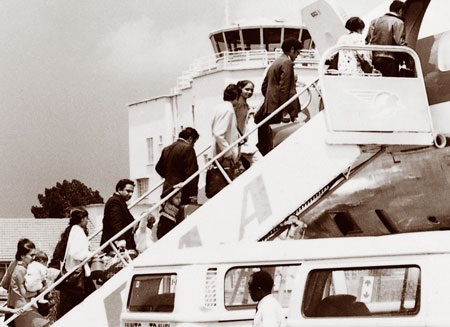
Asian refugees boarding a plane at Kampala's Entebbe airport after Idi Amin's edict in 1972 cleansing Uganda of its Asian citizens and residents. Photo: Government of Canada archives.

Asian refugees boarding a plane at Kampala’s Entebbe airport after Idi Amin’s edict in 1972 cleansing Uganda of its Asian citizens and residents. Photo: Government of Canada Archives.

The UK Prime Minister, Edward Heath, started calling up all Commonwealth Premiers to help with the crisis. Australia said they would not budge from their “White Australia” policy. India and Pakistan said, sure, they’d take their 10,000 nationals but not UK passport-holders. USA said they would accept 1,500 Asians “on parole” – i.e. without going through their immigration processes. The British passport-holders in fact didn’t want to go anywhere except Britain, viewing the expulsion as a blessing in disguise for short-circuiting the never-ending voucher system of the British. Britain eventually accepted responsibility for their 30,000 subjects.

Edward Heath’s pleas fell on receptive ears in Canada. Within a week of the expulsion notice, departmental meetings were held in Ottawa to respond to the Uganda Asian crisis and within a fortnight the Prime Minister, Pierre Trudeau, announced at the parliament that Canada was ready to accept “without numerical limitation those Asians who meet the immigration selection criteria.” His Highness the Aga Khan contacted Mr. Trudeau to negotiate with him how many refugees Canada would accept. In the end Canada admitted around 7,000, one-third non-Ismailis.

Prince Sadrudin Aga Khan pictured with Ugandan Asian refugees at the Naples refugee centre. Photo: Vali Jamal Collection. Copyright.

Prince Sadrudin Aga Khan pictured with Ugandan Asian refugees at the Naples refugee centre. Photo: Vali Jamal Collection. Copyright.

The Aga Khan family played another significant role in the expulsion story in the form of Prince Sadruddin Aga Khan (uncle of His Highness) as head of the UN refugee agency, UNHCR. At the last week of the expulsion deadline there were still around 6,000 Asians in Uganda who wanted to make a go of their verified citizenship or who were handicapped and had failed getting into any country. UNHCR quietly let it be known that they’d take away any Asian wanting to leave. Prince Sadruddin personally visited several UNHCR centres and managed to resettle all the 6,000 or so Uganda Asian refugees in a score of countries within a year.

I have recorded the expulsion drama of the Ugandan Asians in a major well-researched and exhaustive work of around 1700 pages which is expected to be published next spring. I am just so pleased my book will come out under a compassionate administration in Canada, one that holds fast to the tenets of multiculturalism.

FLASHBACKS 25 YEARS APART

[I] THE SILVER JUBILEE OF HIS HIGHNESS THE AGA KHAN (1982-1983)

Please click on photo for enlargement

A unique and historical photo signed by the late Canadian Prime Minister, Pierre Trudeau, which was taken in the Prime Minister's Office during Mawlana Hazar Imam's Silver Jubilee visit to Canada in April 1983. (l to r) - Hon. Sec Farouk Verjee (National Council), Mr. Gerry Wilkinson (His Highness the Aga Khan's Secretariat, Aiglemont, France), Hon. Sec Mohamed Manji (Ontario Council), President Amirali Rhemtulla (Grants Council), Mawlana Hazar Imam, Prime Minister Pierre Trudeau, Prince Amyn Muhammad Aga Khan, President Mehboob Dhanani (Ontario Council) and President Zulficar Lalji(National Council). Canada. The full signature line note from the Prime Minister read: To Farouk with the best of Memories . Trudeau. 1983. Photo: Photo: Farouk Verjee Collection, Vancouver,

A unique and historical photo signed by the late Canadian Prime Minister, Pierre Trudeau, which was taken in the Prime Minister’s Office during Mawlana Hazar Imam, His Highness the Aga Khan’s Silver Jubilee visit to Canada in April 1983. (l to r) – Hon. Sec Farouk Verjee (National Council), Mr. Gerry Wilkinson (His Highness the Aga Khan’s Secretariat, Aiglemont, France), Hon. Sec Mohamed Manji (Ontario Council), President Amirali Rhemtulla (Grants Council), Mawlana Hazar Imam, Prime Minister Pierre Trudeau, Prince Amyn Muhammad Aga Khan, President Mehboob Dhanani (Ontario Council) and President Zulficar Lalji(National Council). Canada. The full signature line note from the Prime Minister read: To Farouk with the best of Memories . Trudeau. 1983. Photo: Photo: Farouk Verjee Collection, Vancouver.

[II] AND TWENTY-FIVE YEARS LATER…THE GOLDEN JUBILEE (2007-2008)

Justin Trudeau greets His Highness the Aga Khan as he arrives in Ottawa, Canada, to celebrate his Golden Jubilee in 2008. Looking on are Senator Mubina Jaffer, left, and MP Yasmin Ratansi. Mr. Trudeau was then an MP for his Papineau riding in the Quebec. Photo: The Ismaili.

Justin Trudeau greets His Highness the Aga Khan as he arrives in Ottawa, Canada, to celebrate his Golden Jubilee in 2008. Looking on are Senator Mubina Jaffer, left, and MP Yasmin Ratansi. Mr. Trudeau was then an MP for his Papineau riding in the Quebec. Photo: The Ismaili.

Date posted: November 4/5, 2015.
Date last updated: November 8, 2015 (new photo at top)

For more photos and reports please visit the websites of the Governor General of Canada at http://www.gg.ca and the Prime Minister of Canada at http://www.pm.gc.ca.
_________________

Dr. Vali Jamal

Dr. Vali Jamal

About the writer: Vali Jamal has a BA from Cambridge (Trinity College) and a PhD from Stanford. He was a Senior Economist with UN-International Labour Organization from 1976 to 2001. He lives in Kampala, Uganda. As noted above in his piece, his mammoth illustrated work on the Ugandan Asians will be released next spring.

We welcome your feedback on Vali Jamal’s piece. Please click Leave a comment.

His Highness the Aga Khan on Lake Sarez: Mitigating a Catastrophic Risk if the Lake’s Natural Dam Would Break

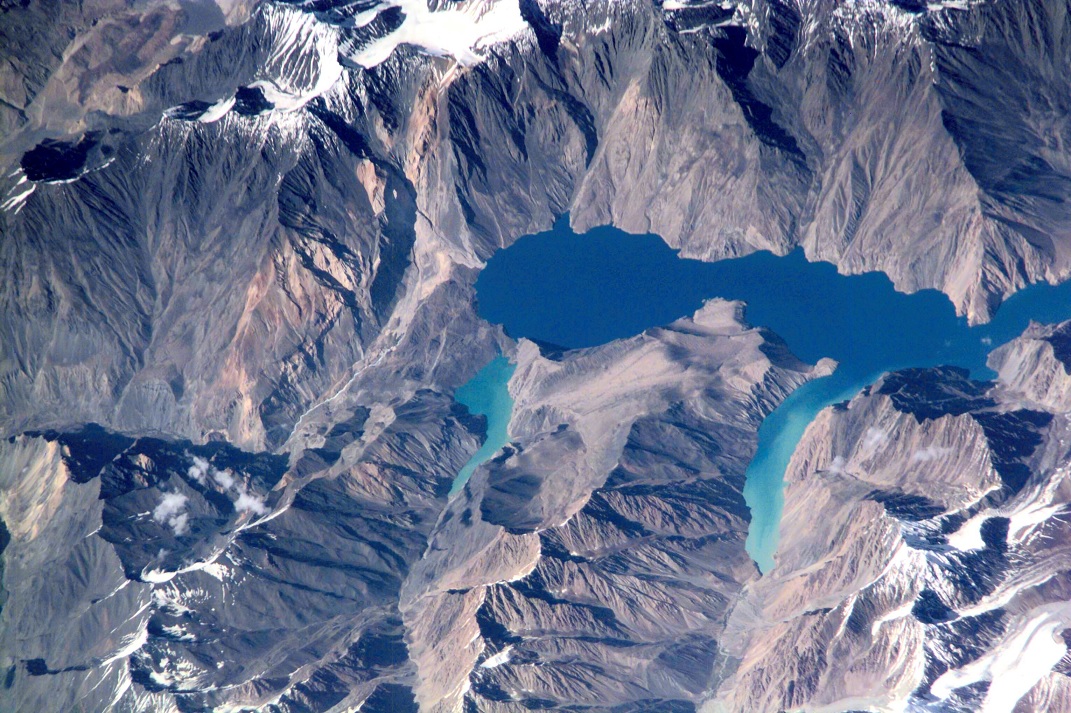
LAKE SAREZ NASA IMAGE

Please click on image for enlargement
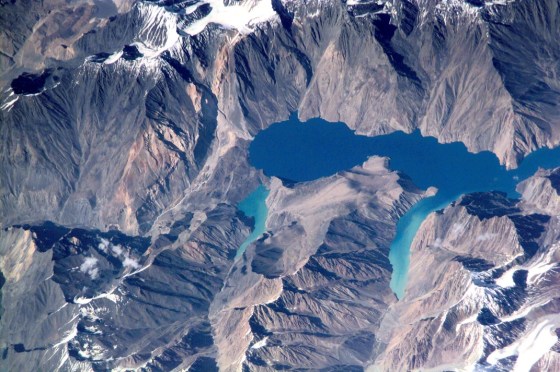
Lake Sarez in the Pamirs of TajikistanLake Sarez, deep in the Pamir mountains of Tajikistan, was created 90 years ago when a strong earthquake triggered a massive landslide that, in turn, became a huge dam along the Murghob River, now called the Usoi Dam. The resulting lake is perched above surrounding drainages at an elevation greater than 3000m, and is part of the watershed that drains the towering Akademi Nauk Range (see the regional image, below). The lake is 61 km long and as deep as 500 m, and holds an estimated 17 cubic km of water. The area experiences considerable seismic activity, and scientists fear that part of the right bank may slump into the lake, creating a huge wave that will top over and possibly breach the natural dam. Such a wave would create a catastrophic flood downstream along the Bartang, Panj and Amu Darya Rivers, perhaps reaching all the way to the Aral Sea. Currently, central Asian governments, as well as the World Bank and the UN are monitoring the dam closely, and have proposed gradually lowering the lake level as a preventive measure. Image: NASA Earth Observatory; digital photograph  was taken in the spring of 2001 from Space Station Alpha and is provided by the Earth Sciences and Image Analysis Laboratory at Johnson Space Center.

REMARKS BY HIS HIGHNESS THE AGA KHAN

“…From a global perspective, it is here, in Central Asia, that one of the most unusual water situations exists. I am referring to Lake Sarez. It is some 60 kilometres in length, containing some 17 cubic kilometres of water, is at 3200 meters altitude and has a natural dam of 550 meters, the highest of any dam in the world. For years it has been seen as a major hazard to millions of lives in this country [Tajkistan] and in Afghanistan, Uzbekistan, Turkmenistan and Kazakhstan. It is clear that if the rock dam, caused by an enormous landslide following an earthquake in 1911, were to break as a result of another such event; or if another earthquake were to cause landslides to fall into the lake, raising the level of the water and causing a massive spill across the top of the dam, the consequence would be a major catastrophe. It is estimated that 5 million lives could be at risk. Fear of this happening has dominated the thinking of government officials and the population living in the area around and below Lake Sarez for years.
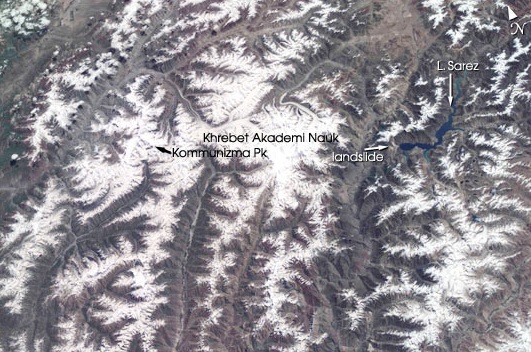
Lake Sarez

“More recently the World Bank, the Aga Khan Development Network (AKDN), USAID and the Swiss Government have expended time, thought and resources to develop a credible protective response that can alert downstream populations as quickly as possible. In simple terms, this is risk management. The question I wish to raise today is whether we are not perhaps also facing a question of opportunity management. Thousands of cubic meters of consumable water are trapped at high altitude. Is this not a situation which could be turned into a force for development, rather than a threat of tragedy? Studies are presently underway to test this idea, in particular in regard to the use of the Sarez Lake waters for hydro energy and irrigation for the area they now threaten, and probably much more. Any wisdom that this conference could bring to bear on these issues would be an extremely valuable outcome…” — Excerpts from a speech made by His Highness the Aga Khan, 49th hereditary Ismaili Imam, at the Dushanbe Fresh Water Forum (Dushanbe, Tajikistan), August 30, 2003.

~~~~~~

ACTION TAKEN

In 2004, a special satellite equipment and early warning system for monitoring the situation around Lake Sarez was installed by a World Bank project working on risk mitigation in the area, a step to ensure early warning for the vulnerable population in the region.

According to an interview with IRIN (Humanitarian News and Analysis), Rustam Bobojonov, a coordinator of the project said that “the equipment is for monitoring the situation around Lake Sarez, the dam and the Bartang valley, including seismic activity, landslides, water, wind speed and so on. It is aimed at ensuring early warning for the Tajik government, including the emergency ministry, international community and the residents of all the villages in the Bartang Valley about the possible risk.”

The total cost of the project was at US$4.5 million out of which the Aga Khan Foundation contributed US$1, with the Swiss Government providing another US$2.9 million.

~~~~~~

Background Article

“…Below the Usoi dam there are more than 30 small villages in the Bartang Valley, with a total population of about 7,000 mountain Ismaili people. Most villages (kishlaks) are sited on alluvial cones near to the river and use all available gently sloping land. Many of the villages are subject to floods, landslides, mudflows, and avalanches annually…”

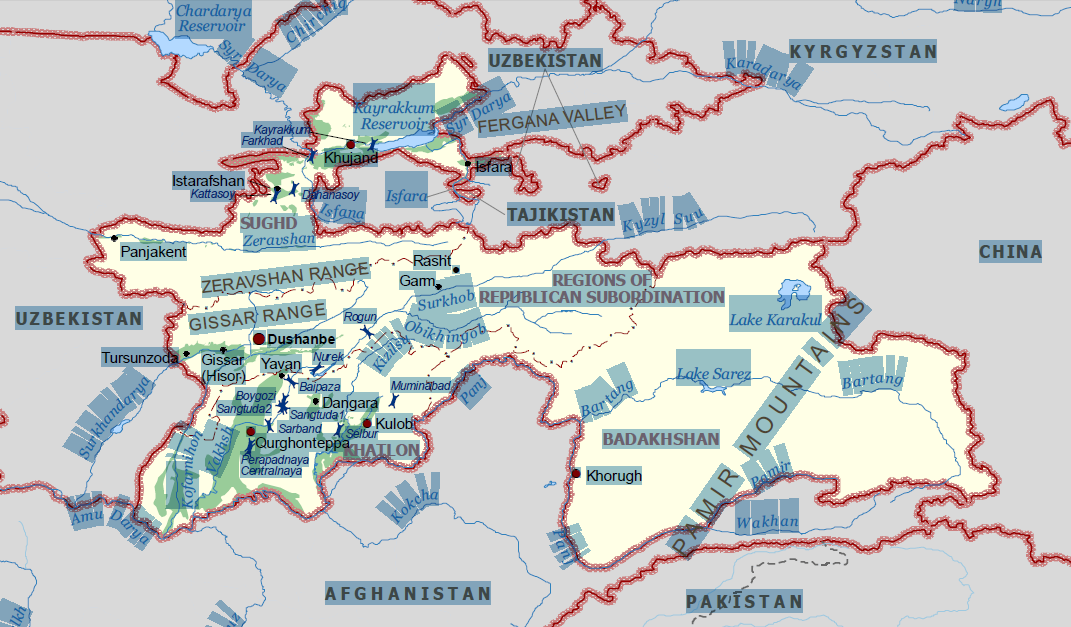
TAJIKISTAN: LAKE SAREZ AND THE PAMIR MOUNTAINS

Please click on map for enlargement.

FAO Map Tajikistan and Lake SarezPlease click on map for enlargement. This map has been adapted from the original map produced on the website of FAO.

(Map shown above and the following article have been adapted from the website of the United Nations Food and Agriculture Organization, FAO, see link below)

Lake Sarez, high in the Pamir Mountains is close to 3,000 m above sea level and its location is one of the most remote in the world. It formed following a very large landslide, set off by an earthquake in the winter of 1911. The landslide, with a volume of some 2-3 km3 , plunged down a mountain side to form a dam between 500 and 600 metres in height and two kilometres wide to block the Murgab River. This river is a tributary of the Bartang River which, below the confluence with the Murgab, flows for 120 km through a gigantic mountain gorge to join the Pianj River, itself a tributary of the Amu Darya. The Amu Darya is one of the two major rivers that drains into the Aral Sea 2,000 km below the dam site. The Pianj and Amu Darya rivers form part of the frontier between Tajikistan and Afghanistan and further downstream their combined waters flow through Uzbekistan and Turkmenistan. The fallen mass of rock and earth was named the Usoi Dam after the village that it completely annihilated. The dammed waters of the Murgab River produced Lake Sarez, named for a village that was submerged by the rising waters. Initially, the level of the lake rose at a rate of about 75 metres a year.

Today it is more than 60 km in length and has a maximum depth in excess of 500 metres. Its total volume is about 17 km3. The lake surface is close to 3,200 m above sea level and surrounded by peaks rising to more than 6,000 m. The Usoi dam is the highest dam, natural or man-made, in the world. Set in the heart of the Pamir Mountains, the lake itself and its surroundings form a magnificent mountain landscape.

It is also located in a region that has been central to major political and military tensions for more than 200 years. During the 19th and early 20th centuries the three rival empires, Czarist Russia, Great Britain, and China competed on a gigantic and heroic scale that became known, following the writing of Rudyard Kipling, as the ‘Great Game’. Much earlier a main branch of the Silk Road passed through the Pamir and carried Marco Polo and his uncles to the court of Kublai Khan. The present republics of Central Asia were moulded by Soviet Russia from a series of Khanates, together with territories of no clear political allegiance. Currently, with a massively disturbed Afghanistan, Pakistan, Kashmir, and India, all virtually within walking distance, and with Iran, Iraq, and Turkey as neighbours with more than a passing interest, political instability may seem the order of the day. The Pamir Mountains, in general, represent one of the most active seismic regions on the world’s geophysical map.

Lake Sarez, therefore, is a focal point for a great amount of concern. A disaster of significant proportions could be triggered in several ways. A major earthquake could shatter the Usoi dam and send an enormous flood wave down the Bartang Valley and into the Pianj and Amu Darya rivers; the dam could collapse under the pressure of the water as the lake continues to rise; the piping of water through the dam, which is occurring today, could enlarge and cause the dam to collapse; or collapse could be induced by the continued rise of the lake level and eventually over-topping it. Finally, another large landslide, caused either by an earthquake, or the spontaneous failure of the mountain wall above the lake, could fall into the lake and generate a giant wave to over-top the dam. Even if the dam was not broken by such a wave, the wall of water rushing down the Bartang Valley could set off fast moving mudflows and trigger secondary landslides by under-cutting the talus slopes along the valley sides. This could be sufficient to eliminate all the thirty villages in the valley, and even more as the disturbance entered the Pianj Valley.

It has been estimated that, in the worst case, the lives of five million people could be affected. Furthermore, the torrential flood waters could extend as far downstream as the Aral Sea itself, with the additional danger of disturbing the toxic sediments that have been exposed as the sea has dried up.

The problem is rendered the more complex by a number of other factors. The vicinity of Lake Sarez is extremely remote and physical access along the Bartang Valley is a challenge. The final approach to the dam involves a difficult ascent on foot along steep mountain slopes, with a gain in altitude of more than 1,000 metres. This would render road construction, if heavy equipment would be needed, extremely expensive and technically difficult to maintain. The regional approach also constitutes a challenge; there are two main roads into the upper Pianj Valley and Khorog, the regional capital. One of these is very long and involves transit through a small part of the territories of Uzbekistan and Kyrgyzstan and a high altitude section (above 4,000 m) across the Pamir Plateau. The other, more direct, requires passage of the Pianj gorge, with very unstable slopes and a narrow road bed subject to rockfall, mudflow, landslide, and avalanche. Both roads are closed by heavy snow for several months of the year. The difficulty of access alone would appear to eliminate large-scale engineering solutions, such as reinforcing the dam artificially, or attempting a controlled partial drainage and lowering of the lake level.
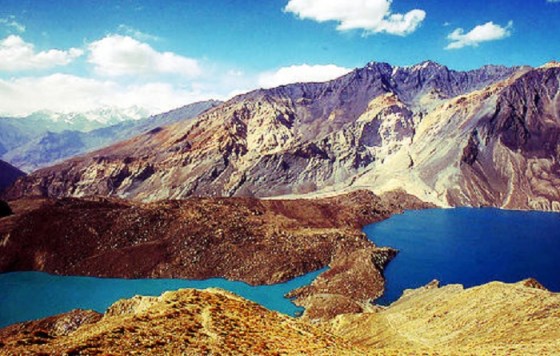
Lake Sarea and the Usoi Dam

The naturally formed Usoi dam separates the Sarez (right) and Shadau (left) lakes. Photo: Wikipedia.

Below the Usoi dam there are more than 30 small villages in the Bartang Valley, with a total population of about 7,000 mountain Ismaili people. Most villages (kishlaks) are sited on alluvial cones near to the river and use all available gently sloping land. Many of the villages are subject to floods, landslides, mudflows, and avalanches annually; while these natural hazards are individually of small magnitude, compared to that posed by a potential failure of the Usoi dam, they are frequent in occurrence and constantly restrict access to the valley and would constrain any needed evacuation. Any landslide-induced flood wave capable of over-topping the dam would place all or most of the villages at risk. Soviet and Tajik scientists became aware of the threat posed by Lake Sarez some decades ago. Early warning and lake-level monitoring systems were established. The warning signals, however, were only directed to Moscow and Dushanbe. Thus, in the event of a medium- or large-scale flood, any secondary warning to reach the Bartang villages from either Moscow or Dushanbe would likely arrive after the event, if at all. With the collapse of the USSR even this approach to early warning and lake-level monitoring ended.

Then followed the civil war of 1992-1997 when the problem of Lake Sarez was put aside. Over the last three years, the dangers posed by Lake Sarez have begun to be taken seriously. Various reconnaissance visits have been made to the lake and dam and to the Bartang Valley. Several high-level planning meetings have been held: in Dushanbe, Geneva, and Washington, DC. The involved Asian republics, and especially Tajikistan, appear to favour a development approach based on the assumption that the worst case scenario (total collapse of the Usoi dam) was credible. A major investigation was mounted during June 1999. This was financed primarily by the World Bank, with additional support from the UN disaster relief organization, Focus Humanitarian Assistance (one of the Aga Khan family of organizations), and the government of Tajikistan. An international group of engineers, geophysicists, geologists, and geographers visited Lake Sarez and examined all the approach routes. There was unanimous agreement that the prospect of a worst case scenario was sufficiently remote that it should be accorded a low level of priority. However, there was strong support for installation of monitoring and early warning systems. Unlike the earlier Soviet approach, the new approach would relate to all the villages in the Bartang Valley and ensure the direct input of the local people. Concurrently, it was recommended that computer mapping and simulation of the potential impacts of various levels of natural disaster be undertaken. It was also pointed out that further, and much more detailed, studies should be undertaken of the cultural and socioeconomic situation of the local people. Sites for safe havens should be located and equipped, and a full accounting made of the attitudes of the local people toward the various levels of possible danger. One additional, and very important point, is that steps should be taken to ensure that the likelihood of actual large-scale disaster (worst case scenario) not be over-stated, so that the risk of any government-ordered forced evacuation of the Bartang Valley could be avoided. By February 2000 it appeared that, under the leadership of the World Bank and with contributions from several major donors, the recommendations of the June 1999 reconnaissance team were to be acted upon (United Nations, 2000). A year later, at time of this writing, significant planning progress has been made. Thus, the case of Lake Sarez, while representing one of the largest ever potential disasters based upon a natural situation in a high mountain region, embraces many complex inter-relations between highlands and lowlands. Ultimately, the challenging task of seeking collaboration amongst several independent countries on the use and management of a large international river, the Amu Darya and its headstreams, will have to be faced. Given the international rivalries prevailing in the region, this might well be the single most difficult task. Nevertheless, while the magnitude of the problems emanating from the potential instability of Lake Sarez may be an order of magnitude, or more, higher than other mountain hazards in the same region, their identification, evaluation, and treatment should provide a formula for ways in which other hazardous situations could be approached.

Date posted: October 31, 2015.

_________________

Credits:

  1. For complete speech of His Highness the Aga Khan, please visit http://www.akdn.org.
  2. Please visit http://www.nasa.gov for images of Lake Sarez
  3. For complete background article, please visit http://www.fao.org and enter Lake Sarez in the search box.