Congratulations to the Rt. Honourable Justin Trudeau, the new Prime Minister of Canada: For Ugandan Ismaili refugees, he reminds them of the glory days when his father and the Aga Khan facilitated their settlement in Canada

BY VALI JAMAL
Kampala, Uganda
(Special to Simerg)

Justin Trudeau has a special moment with his mother, Mrs. Margaret Trudeau, before the searing in ceremony. Photo: Sgt. Ronald Duchesne, Rideau Hall.

Mr. Justin Trudeau has a special moment with his mother, Mrs. Margaret Trudeau, before the swearing in ceremony. Photo: Sgt. Ronald Duchesne, Rideau Hall.

The remarkable victory by Justin Trudeau in the Canadian Federal Election held last month, and his momentous swearing in ceremony at Rideau Hall on November 4, 2015, as Prime Minister of Canada, has resonated with Uganda-origin Ismailis everywhere for the role played by his father, Prime Minister Pierre Elliott Trudeau (1919 – 2000), in the settlement of 7,000 of them after the expulsion of 1972.

Please click on photo for enlargement

The swearing-in ceremony of the new Prime Minister, Justin Trudeau, seated 5th from left, and his cabinet took place at Rideau Hall. The Governor General of Canada, the Rt. Honourable David Johnston, is seated next to the Prime Minister. Photo: The website of the Governor General of Canada.

The swearing-in ceremony of the new Prime Minister, the Right Honourable Justin Trudeau, seated 5th from left, and his cabinet took place at Rideau Hall on Wednesday November 4, 2015. The ceremony was presided by the Governor General of Canada, the Right Honourable David Johnston, who is is shown in the photo on the right of  the Prime Minister. Photo: Sgt. Ronald Duchesne, Rideau Hall

This is the first time in Canadian history that a child of a former Prime Minister has followed in the footsteps of his father, and taken the top job in the country. The Liberals got a majority of 180 seats, but more, their victory signals a 180 degree turn from the divisive politics of the Conservative government.

Prime Minister Justin Trudeau in the presence of his Cabinet delivers a statement in front of the Rideau Hall facade. Photographer: MCpl Vincent Carbonneau, Rideau Hall.

Prime Minister Justin Trudeau in the presence of his Cabinet delivers a statement in front of the Rideau Hall facade. Photographer: MCpl Vincent Carbonneau, Rideau Hall.

In his address the newly sworn Prime Minister stated: “Canada is strong not in spite of its diversity, but because of it, and we are committed to bringing new leadership and a new tone to Ottawa. We also made a commitment to pursue our goals with a renewed sense of collaboration. Most importantly, we will be a government that governs for all Canadians and brings Canadians together.” These are significant words.

Prime Minister Justin Trudeau was plunged into a selfie ocean as he and his wife, Sophie Grégoire-Trudeau, mingled with the crowd outside Rideau Hall after the swearing ceremony. Photo: MCpl Vincent Carbonneau, Rideau Hall.

Prime Minister Justin Trudeau was plunged into a selfie ocean as he and his wife, Sophie Grégoire-Trudeau, mingled with the crowd outside Rideau Hall after the swearing ceremony. Photo: MCpl Vincent Carbonneau, Rideau Hall.

To me, today’s grand event of Justin Trudeau taking the oath as Prime Minister was also “back to the past”, 1972, when Canada admitted so many of us Uganda Asians under the leadership of his father, Pierre Elliot Trudeau. For me, too, as an Ismaili, the 1972 expulsion is special because of the role my spiritual leader, His Highness the Aga Khan, played in the resettlement of the expellees in Canada, with Pierre Elliot Trudeau, no less, and because of the role played by his uncle Prince Sadruddin as head of UNHCR in taking the last of the Uganda expellees to refugee centres in Europe.

Our success in settling down in Canada led to Canada enshrining Multiculturalism in Canada’s laws in 1987, and to His Highness the Aga Khan siting the Global Centre for Pluralism in Canada.

There were around 65,000 Asians in Uganda at the time of the 1972 expulsion. The British papers racheted it up to 80,000 based on the census of 1969, not realizing that over ten thousand had crept away to UK to beat immigration quotas, and thirty thousand or so had non-British nationalities, including 15-20,000 Ugandans.
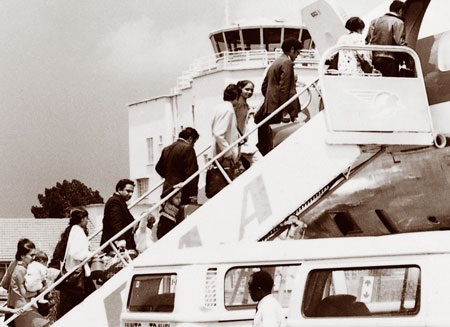
Asian refugees boarding a plane at Kampala's Entebbe airport after Idi Amin's edict in 1972 cleansing Uganda of its Asian citizens and residents. Photo: Government of Canada archives.

Asian refugees boarding a plane at Kampala’s Entebbe airport after Idi Amin’s edict in 1972 cleansing Uganda of its Asian citizens and residents. Photo: Government of Canada Archives.

The UK Prime Minister, Edward Heath, started calling up all Commonwealth Premiers to help with the crisis. Australia said they would not budge from their “White Australia” policy. India and Pakistan said, sure, they’d take their 10,000 nationals but not UK passport-holders. USA said they would accept 1,500 Asians “on parole” – i.e. without going through their immigration processes. The British passport-holders in fact didn’t want to go anywhere except Britain, viewing the expulsion as a blessing in disguise for short-circuiting the never-ending voucher system of the British. Britain eventually accepted responsibility for their 30,000 subjects.

Edward Heath’s pleas fell on receptive ears in Canada. Within a week of the expulsion notice, departmental meetings were held in Ottawa to respond to the Uganda Asian crisis and within a fortnight the Prime Minister, Pierre Trudeau, announced at the parliament that Canada was ready to accept “without numerical limitation those Asians who meet the immigration selection criteria.” His Highness the Aga Khan contacted Mr. Trudeau to negotiate with him how many refugees Canada would accept. In the end Canada admitted around 7,000, one-third non-Ismailis.
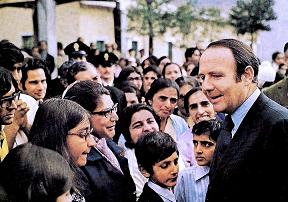
Prince Sadrudin Aga Khan pictured with Ugandan Asian refugees at the Naples refugee centre. Photo: Vali Jamal Collection. Copyright.

Prince Sadrudin Aga Khan pictured with Ugandan Asian refugees at the Naples refugee centre. Photo: Vali Jamal Collection. Copyright.

The Aga Khan family played another significant role in the expulsion story in the form of Prince Sadruddin Aga Khan (uncle of His Highness) as head of the UN refugee agency, UNHCR. At the last week of the expulsion deadline there were still around 6,000 Asians in Uganda who wanted to make a go of their verified citizenship or who were handicapped and had failed getting into any country. UNHCR quietly let it be known that they’d take away any Asian wanting to leave. Prince Sadruddin personally visited several UNHCR centres and managed to resettle all the 6,000 or so Uganda Asian refugees in a score of countries within a year.

I have recorded the expulsion drama of the Ugandan Asians in a major well-researched and exhaustive work of around 1700 pages which is expected to be published next spring. I am just so pleased my book will come out under a compassionate administration in Canada, one that holds fast to the tenets of multiculturalism.

FLASHBACKS 25 YEARS APART

[I] THE SILVER JUBILEE OF HIS HIGHNESS THE AGA KHAN (1982-1983)

Please click on photo for enlargement

A unique and historical photo signed by the late Canadian Prime Minister, Pierre Trudeau, which was taken in the Prime Minister's Office during Mawlana Hazar Imam's Silver Jubilee visit to Canada in April 1983. (l to r) - Hon. Sec Farouk Verjee (National Council), Mr. Gerry Wilkinson (His Highness the Aga Khan's Secretariat, Aiglemont, France), Hon. Sec Mohamed Manji (Ontario Council), President Amirali Rhemtulla (Grants Council), Mawlana Hazar Imam, Prime Minister Pierre Trudeau, Prince Amyn Muhammad Aga Khan, President Mehboob Dhanani (Ontario Council) and President Zulficar Lalji(National Council). Canada. The full signature line note from the Prime Minister read: To Farouk with the best of Memories . Trudeau. 1983. Photo: Photo: Farouk Verjee Collection, Vancouver,

A unique and historical photo signed by the late Canadian Prime Minister, Pierre Trudeau, which was taken in the Prime Minister’s Office during Mawlana Hazar Imam, His Highness the Aga Khan’s Silver Jubilee visit to Canada in April 1983. (l to r) – Hon. Sec Farouk Verjee (National Council), Mr. Gerry Wilkinson (His Highness the Aga Khan’s Secretariat, Aiglemont, France), Hon. Sec Mohamed Manji (Ontario Council), President Amirali Rhemtulla (Grants Council), Mawlana Hazar Imam, Prime Minister Pierre Trudeau, Prince Amyn Muhammad Aga Khan, President Mehboob Dhanani (Ontario Council) and President Zulficar Lalji(National Council). Canada. The full signature line note from the Prime Minister read: To Farouk with the best of Memories . Trudeau. 1983. Photo: Photo: Farouk Verjee Collection, Vancouver.

[II] AND TWENTY-FIVE YEARS LATER…THE GOLDEN JUBILEE (2007-2008)
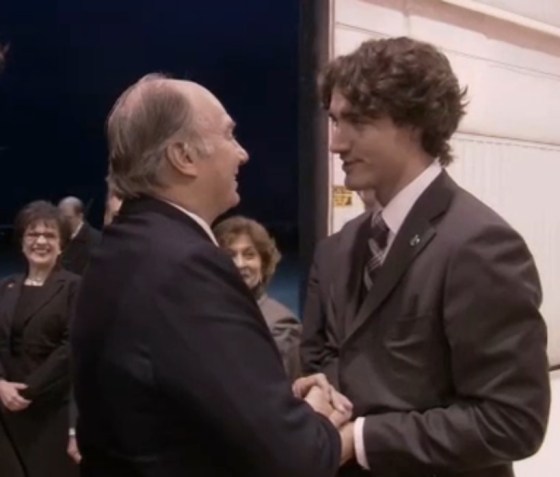
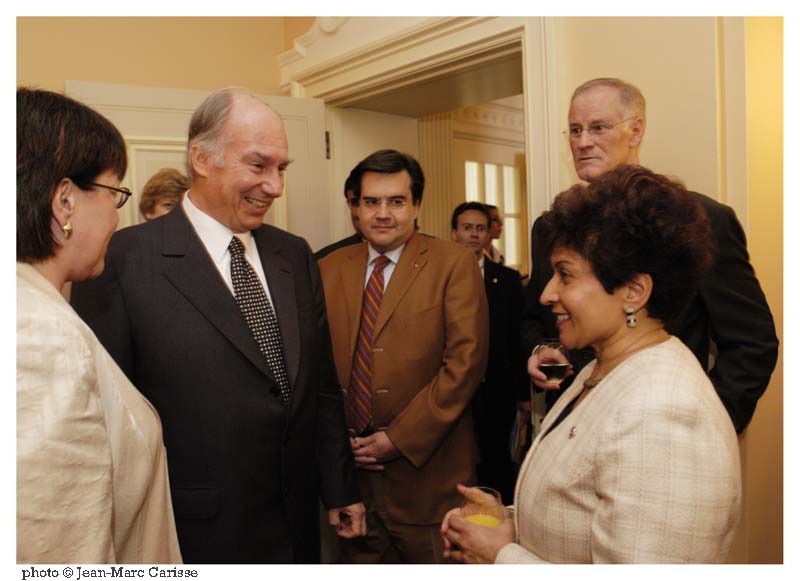
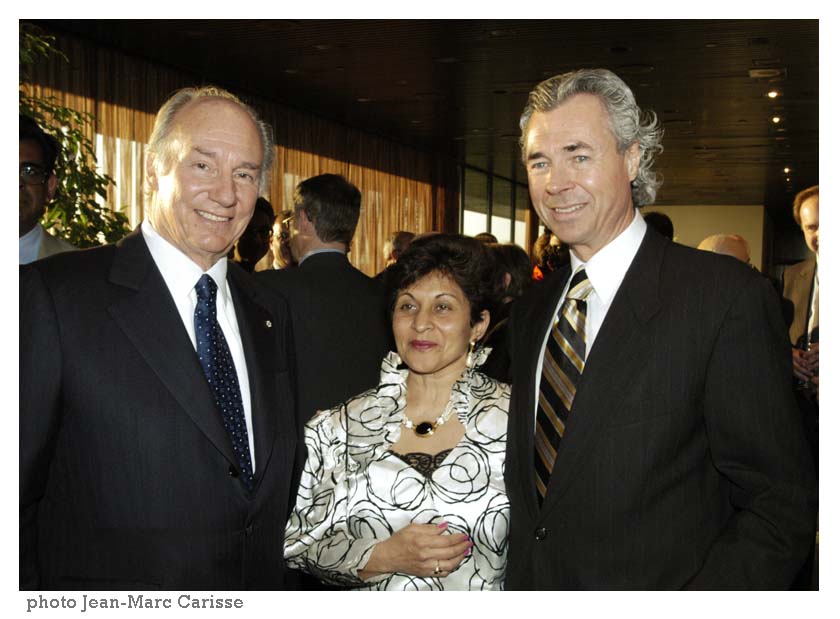
Justin Trudeau greets His Highness the Aga Khan as he arrives in Ottawa, Canada, to celebrate his Golden Jubilee in 2008. Looking on are Senator Mubina Jaffer, left, and MP Yasmin Ratansi. Mr. Trudeau was then an MP for his Papineau riding in the Quebec. Photo: The Ismaili.

Justin Trudeau greets His Highness the Aga Khan as he arrives in Ottawa, Canada, to celebrate his Golden Jubilee in 2008. Looking on are Senator Mubina Jaffer, left, and MP Yasmin Ratansi. Mr. Trudeau was then an MP for his Papineau riding in the Quebec. Photo: The Ismaili.

Date posted: November 4/5, 2015.
Date last updated: November 8, 2015 (new photo at top)

For more photos and reports please visit the websites of the Governor General of Canada at http://www.gg.ca and the Prime Minister of Canada at http://www.pm.gc.ca.
_________________

Dr. Vali Jamal

Dr. Vali Jamal

About the writer: Vali Jamal has a BA from Cambridge (Trinity College) and a PhD from Stanford. He was a Senior Economist with UN-International Labour Organization from 1976 to 2001. He lives in Kampala, Uganda. As noted above in his piece, his mammoth illustrated work on the Ugandan Asians will be released next spring.

We welcome your feedback on Vali Jamal’s piece. Please click Leave a comment.
His Highness the Aga Khan on Lake Sarez: Mitigating a Catastrophic Risk if the Lake’s Natural Dam Would Break

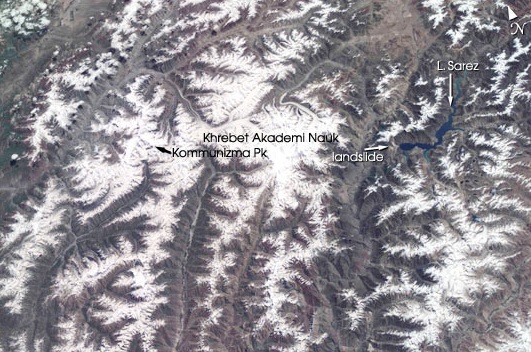
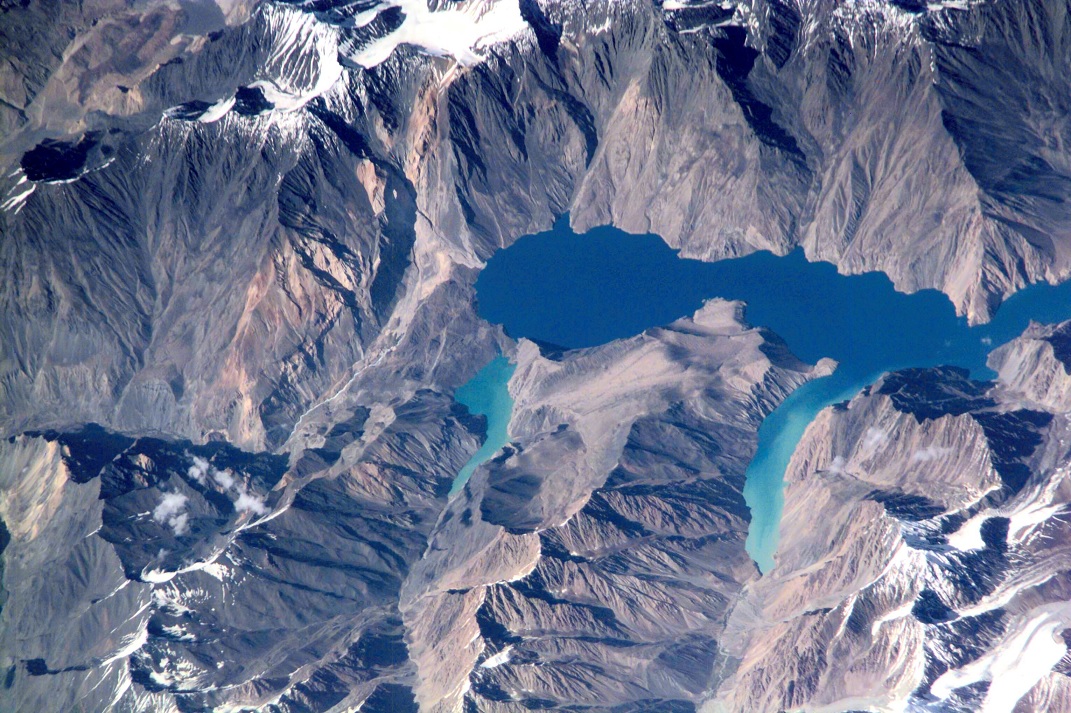
LAKE SAREZ NASA IMAGE

Please click on image for enlargement

Lake Sarez in the Pamirs of TajikistanLake Sarez, deep in the Pamir mountains of Tajikistan, was created 90 years ago when a strong earthquake triggered a massive landslide that, in turn, became a huge dam along the Murghob River, now called the Usoi Dam. The resulting lake is perched above surrounding drainages at an elevation greater than 3000m, and is part of the watershed that drains the towering Akademi Nauk Range (see the regional image, below). The lake is 61 km long and as deep as 500 m, and holds an estimated 17 cubic km of water. The area experiences considerable seismic activity, and scientists fear that part of the right bank may slump into the lake, creating a huge wave that will top over and possibly breach the natural dam. Such a wave would create a catastrophic flood downstream along the Bartang, Panj and Amu Darya Rivers, perhaps reaching all the way to the Aral Sea. Currently, central Asian governments, as well as the World Bank and the UN are monitoring the dam closely, and have proposed gradually lowering the lake level as a preventive measure. Image: NASA Earth Observatory; digital photograph  was taken in the spring of 2001 from Space Station Alpha and is provided by the Earth Sciences and Image Analysis Laboratory at Johnson Space Center.

REMARKS BY HIS HIGHNESS THE AGA KHAN

“…From a global perspective, it is here, in Central Asia, that one of the most unusual water situations exists. I am referring to Lake Sarez. It is some 60 kilometres in length, containing some 17 cubic kilometres of water, is at 3200 meters altitude and has a natural dam of 550 meters, the highest of any dam in the world. For years it has been seen as a major hazard to millions of lives in this country [Tajkistan] and in Afghanistan, Uzbekistan, Turkmenistan and Kazakhstan. It is clear that if the rock dam, caused by an enormous landslide following an earthquake in 1911, were to break as a result of another such event; or if another earthquake were to cause landslides to fall into the lake, raising the level of the water and causing a massive spill across the top of the dam, the consequence would be a major catastrophe. It is estimated that 5 million lives could be at risk. Fear of this happening has dominated the thinking of government officials and the population living in the area around and below Lake Sarez for years.

Lake Sarez

“More recently the World Bank, the Aga Khan Development Network (AKDN), USAID and the Swiss Government have expended time, thought and resources to develop a credible protective response that can alert downstream populations as quickly as possible. In simple terms, this is risk management. The question I wish to raise today is whether we are not perhaps also facing a question of opportunity management. Thousands of cubic meters of consumable water are trapped at high altitude. Is this not a situation which could be turned into a force for development, rather than a threat of tragedy? Studies are presently underway to test this idea, in particular in regard to the use of the Sarez Lake waters for hydro energy and irrigation for the area they now threaten, and probably much more. Any wisdom that this conference could bring to bear on these issues would be an extremely valuable outcome…” — Excerpts from a speech made by His Highness the Aga Khan, 49th hereditary Ismaili Imam, at the Dushanbe Fresh Water Forum (Dushanbe, Tajikistan), August 30, 2003.

~~~~~~

ACTION TAKEN

In 2004, a special satellite equipment and early warning system for monitoring the situation around Lake Sarez was installed by a World Bank project working on risk mitigation in the area, a step to ensure early warning for the vulnerable population in the region.

According to an interview with IRIN (Humanitarian News and Analysis), Rustam Bobojonov, a coordinator of the project said that “the equipment is for monitoring the situation around Lake Sarez, the dam and the Bartang valley, including seismic activity, landslides, water, wind speed and so on. It is aimed at ensuring early warning for the Tajik government, including the emergency ministry, international community and the residents of all the villages in the Bartang Valley about the possible risk.”

The total cost of the project was at US$4.5 million out of which the Aga Khan Foundation contributed US$1, with the Swiss Government providing another US$2.9 million.

~~~~~~

Background Article

“…Below the Usoi dam there are more than 30 small villages in the Bartang Valley, with a total population of about 7,000 mountain Ismaili people. Most villages (kishlaks) are sited on alluvial cones near to the river and use all available gently sloping land. Many of the villages are subject to floods, landslides, mudflows, and avalanches annually…”

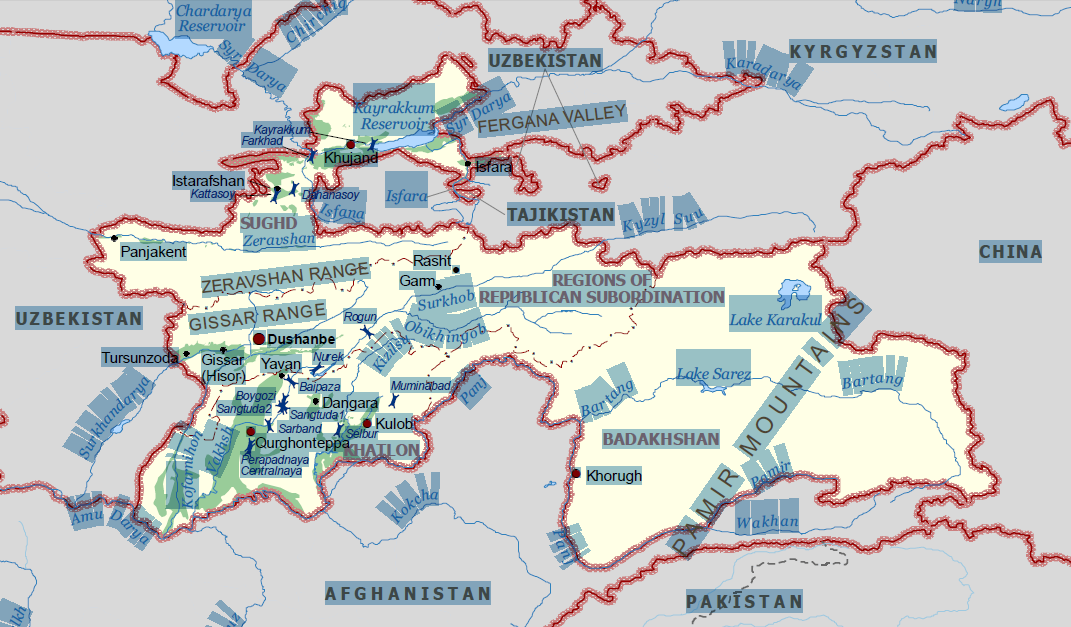
TAJIKISTAN: LAKE SAREZ AND THE PAMIR MOUNTAINS

Please click on map for enlargement.

FAO Map Tajikistan and Lake SarezPlease click on map for enlargement. This map has been adapted from the original map produced on the website of FAO.

(Map shown above and the following article have been adapted from the website of the United Nations Food and Agriculture Organization, FAO, see link below)

Lake Sarez, high in the Pamir Mountains is close to 3,000 m above sea level and its location is one of the most remote in the world. It formed following a very large landslide, set off by an earthquake in the winter of 1911. The landslide, with a volume of some 2-3 km3 , plunged down a mountain side to form a dam between 500 and 600 metres in height and two kilometres wide to block the Murgab River. This river is a tributary of the Bartang River which, below the confluence with the Murgab, flows for 120 km through a gigantic mountain gorge to join the Pianj River, itself a tributary of the Amu Darya. The Amu Darya is one of the two major rivers that drains into the Aral Sea 2,000 km below the dam site. The Pianj and Amu Darya rivers form part of the frontier between Tajikistan and Afghanistan and further downstream their combined waters flow through Uzbekistan and Turkmenistan. The fallen mass of rock and earth was named the Usoi Dam after the village that it completely annihilated. The dammed waters of the Murgab River produced Lake Sarez, named for a village that was submerged by the rising waters. Initially, the level of the lake rose at a rate of about 75 metres a year.

Today it is more than 60 km in length and has a maximum depth in excess of 500 metres. Its total volume is about 17 km3. The lake surface is close to 3,200 m above sea level and surrounded by peaks rising to more than 6,000 m. The Usoi dam is the highest dam, natural or man-made, in the world. Set in the heart of the Pamir Mountains, the lake itself and its surroundings form a magnificent mountain landscape.

It is also located in a region that has been central to major political and military tensions for more than 200 years. During the 19th and early 20th centuries the three rival empires, Czarist Russia, Great Britain, and China competed on a gigantic and heroic scale that became known, following the writing of Rudyard Kipling, as the ‘Great Game’. Much earlier a main branch of the Silk Road passed through the Pamir and carried Marco Polo and his uncles to the court of Kublai Khan. The present republics of Central Asia were moulded by Soviet Russia from a series of Khanates, together with territories of no clear political allegiance. Currently, with a massively disturbed Afghanistan, Pakistan, Kashmir, and India, all virtually within walking distance, and with Iran, Iraq, and Turkey as neighbours with more than a passing interest, political instability may seem the order of the day. The Pamir Mountains, in general, represent one of the most active seismic regions on the world’s geophysical map.

Lake Sarez, therefore, is a focal point for a great amount of concern. A disaster of significant proportions could be triggered in several ways. A major earthquake could shatter the Usoi dam and send an enormous flood wave down the Bartang Valley and into the Pianj and Amu Darya rivers; the dam could collapse under the pressure of the water as the lake continues to rise; the piping of water through the dam, which is occurring today, could enlarge and cause the dam to collapse; or collapse could be induced by the continued rise of the lake level and eventually over-topping it. Finally, another large landslide, caused either by an earthquake, or the spontaneous failure of the mountain wall above the lake, could fall into the lake and generate a giant wave to over-top the dam. Even if the dam was not broken by such a wave, the wall of water rushing down the Bartang Valley could set off fast moving mudflows and trigger secondary landslides by under-cutting the talus slopes along the valley sides. This could be sufficient to eliminate all the thirty villages in the valley, and even more as the disturbance entered the Pianj Valley.

It has been estimated that, in the worst case, the lives of five million people could be affected. Furthermore, the torrential flood waters could extend as far downstream as the Aral Sea itself, with the additional danger of disturbing the toxic sediments that have been exposed as the sea has dried up.

The problem is rendered the more complex by a number of other factors. The vicinity of Lake Sarez is extremely remote and physical access along the Bartang Valley is a challenge. The final approach to the dam involves a difficult ascent on foot along steep mountain slopes, with a gain in altitude of more than 1,000 metres. This would render road construction, if heavy equipment would be needed, extremely expensive and technically difficult to maintain. The regional approach also constitutes a challenge; there are two main roads into the upper Pianj Valley and Khorog, the regional capital. One of these is very long and involves transit through a small part of the territories of Uzbekistan and Kyrgyzstan and a high altitude section (above 4,000 m) across the Pamir Plateau. The other, more direct, requires passage of the Pianj gorge, with very unstable slopes and a narrow road bed subject to rockfall, mudflow, landslide, and avalanche. Both roads are closed by heavy snow for several months of the year. The difficulty of access alone would appear to eliminate large-scale engineering solutions, such as reinforcing the dam artificially, or attempting a controlled partial drainage and lowering of the lake level.

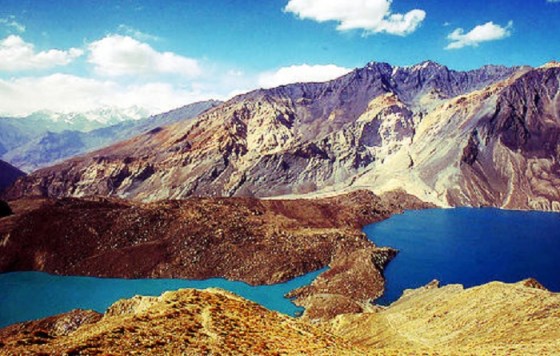
Lake Sarea and the Usoi Dam

The naturally formed Usoi dam separates the Sarez (right) and Shadau (left) lakes. Photo: Wikipedia.

Below the Usoi dam there are more than 30 small villages in the Bartang Valley, with a total population of about 7,000 mountain Ismaili people. Most villages (kishlaks) are sited on alluvial cones near to the river and use all available gently sloping land. Many of the villages are subject to floods, landslides, mudflows, and avalanches annually; while these natural hazards are individually of small magnitude, compared to that posed by a potential failure of the Usoi dam, they are frequent in occurrence and constantly restrict access to the valley and would constrain any needed evacuation. Any landslide-induced flood wave capable of over-topping the dam would place all or most of the villages at risk. Soviet and Tajik scientists became aware of the threat posed by Lake Sarez some decades ago. Early warning and lake-level monitoring systems were established. The warning signals, however, were only directed to Moscow and Dushanbe. Thus, in the event of a medium- or large-scale flood, any secondary warning to reach the Bartang villages from either Moscow or Dushanbe would likely arrive after the event, if at all. With the collapse of the USSR even this approach to early warning and lake-level monitoring ended.

Then followed the civil war of 1992-1997 when the problem of Lake Sarez was put aside. Over the last three years, the dangers posed by Lake Sarez have begun to be taken seriously. Various reconnaissance visits have been made to the lake and dam and to the Bartang Valley. Several high-level planning meetings have been held: in Dushanbe, Geneva, and Washington, DC. The involved Asian republics, and especially Tajikistan, appear to favour a development approach based on the assumption that the worst case scenario (total collapse of the Usoi dam) was credible. A major investigation was mounted during June 1999. This was financed primarily by the World Bank, with additional support from the UN disaster relief organization, Focus Humanitarian Assistance (one of the Aga Khan family of organizations), and the government of Tajikistan. An international group of engineers, geophysicists, geologists, and geographers visited Lake Sarez and examined all the approach routes. There was unanimous agreement that the prospect of a worst case scenario was sufficiently remote that it should be accorded a low level of priority. However, there was strong support for installation of monitoring and early warning systems. Unlike the earlier Soviet approach, the new approach would relate to all the villages in the Bartang Valley and ensure the direct input of the local people. Concurrently, it was recommended that computer mapping and simulation of the potential impacts of various levels of natural disaster be undertaken. It was also pointed out that further, and much more detailed, studies should be undertaken of the cultural and socioeconomic situation of the local people. Sites for safe havens should be located and equipped, and a full accounting made of the attitudes of the local people toward the various levels of possible danger. One additional, and very important point, is that steps should be taken to ensure that the likelihood of actual large-scale disaster (worst case scenario) not be over-stated, so that the risk of any government-ordered forced evacuation of the Bartang Valley could be avoided. By February 2000 it appeared that, under the leadership of the World Bank and with contributions from several major donors, the recommendations of the June 1999 reconnaissance team were to be acted upon (United Nations, 2000). A year later, at time of this writing, significant planning progress has been made. Thus, the case of Lake Sarez, while representing one of the largest ever potential disasters based upon a natural situation in a high mountain region, embraces many complex inter-relations between highlands and lowlands. Ultimately, the challenging task of seeking collaboration amongst several independent countries on the use and management of a large international river, the Amu Darya and its headstreams, will have to be faced. Given the international rivalries prevailing in the region, this might well be the single most difficult task. Nevertheless, while the magnitude of the problems emanating from the potential instability of Lake Sarez may be an order of magnitude, or more, higher than other mountain hazards in the same region, their identification, evaluation, and treatment should provide a formula for ways in which other hazardous situations could be approached.

Date posted: October 31, 2015.

_________________

Credits:

  1. For complete speech of His Highness the Aga Khan, please visit http://www.akdn.org.
  2. Please visit http://www.nasa.gov for images of Lake Sarez
  3. For complete background article, please visit http://www.fao.org and enter Lake Sarez in the search box.

Exclusive Photos by Jean-Marc Carisse: “Victorious Trudeau”, His Highness the Aga Khan and Liberal MP Yasmin Ratansi

LETTER FROM PUBLISHER

2015 1019 _0657 low-res

“Victorious Trudeau”
Justin Trudeau with wife Sophie Grégoire-Trudeau just as results from polling stations across the country confirmed a Liberal majority government. Photo: Jean-Marc Carisse. Copyright.

By Abdulmalik Merchant

“Victorious Trudeau” is the caption of this large, beautiful and poignantly touching photograph on the front window of Jean-Marc Carisse’s Studio Café located on Elgin Street in Ottawa. It’s a remarkable record of history in the making, as it was taken by Mr. Carisse in Montreal just as Mr. Justin Trudeau’s Liberal Party won the 2015 Federal Elections in Canada held on Monday, October 19th.

Countless other photos adorn the walls of the studio café Jean-Marc and his wife have lovingly and meticulously built on Elgin Street. Mr. Carisse, an award winning photographer (see profile below), has seen action around the world for more than forty years. From activists to artists, and singers to prominent world leaders, past and present, Carisse has the iconic figures as well as the common man well represented in his European inspired space that I call The Jean-Marc Carisse Museum of Photography.

SudioCafe&Gallery-MCarisse

Carisse Studio Cafe Photography Gallery on Elgin Street in Ottawa.

Ask Jean-Marc Carisse – the humble, lively and ever-joyous and smiling man – about the background and context of the photos, and he will oblige with details so rich, interesting and, sometimes, amusing that you will want to go back and look at the photos on the walls again and again.

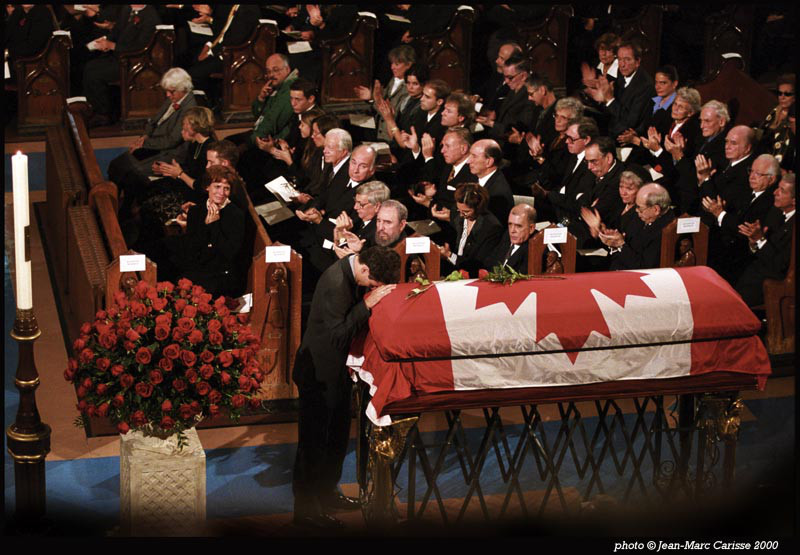
Jean-Marc’s enormous collection include hundreds of photos of the 49th Ismaili Imam, His Highness the Aga Khan, in group settings. One that Carisse is particularly attached to, in which His Highness appears alongside former USA President Jimmy Carter and Cuban leader Fidel Castro, was taken at the funeral of Justin’s father, Prime Minister Pierre Trudeau. In this photo Justin, the loving son, and now Canada’s Prime Minister designate – he officially becomes the Prime Minister on November 4 – is seen resting his head on his late father’s casket. This is a truly remarkable and poignant photo taken in sadder circumstances.

Pierre Trudeau FuneralThe photograph shows former Prime Minister Pierre Elliott Trudeau’s family, friends, colleagues, and official guests in attendance to observe his passing. His son, Justin, rests his head on the casket of his father. Margaret Trudeau is in the front pew with son, Alexandre. In attendance next to Cuban President Fidel Castro are former Governor-General Romeo Leblanc, His Highness Prince Karim Aga Khan and former U.S. President Jimmy Carter. Other notables present at the ceremony not shown in this photograph include past Canadian Prime Ministers John Turner, Joseph Clark, Brian Mulroney, and Jean Chrétien. Photo: Copyright Jean-Marc Carisse.

When I asked Mr. Carisse to create a special dropbox for me of the photos of His Highness, he gladly obliged for the photos that were electronically available which he had shot over the past 12 years or so. These photos were from the Ismaili Imam’s visits or meetings with Ministers who during the 2002-06 time frame headed the Department of External Affairs. The Liberals were in power at that time, and Ms. Yasmin Ratansi, an Ismaili Muslim, was the Liberal MP representing the Don Mills East constituency. She lost her seat in the 2011 Federal Elections to the Conservative member by less than 1,000 votes in what turned out to be a watershed election for the Liberals, who could only keep 34 seats out of 308. But last week in a major turn around, Ms Ratansi won the same riding by almost 10,000 votes, with Liberals increasing their count by a substantial margin to 184!

I wondered whether I might find Yasmin somewhere in the dropbox of thumbnails that Jean-Marc had set up for me. Indeed! I found her, and there were quite a few. I met with Jean-Marc Carisse late yesterday, Monday, October 26, to view the actual enlarged versions, out of which we selected a couple with two Ministers. Also Carisse shared a portrait of His Highness the Aga Khan (see below)

This is our little tribute to Ms. Ratansi who has worked hard for Canadians. Undaunted, this remarkable lady was not prepared to go into oblivion just because she and her party were defeated four years ago. She has come out strong, and we wish her well in the years to come in her service to the people of this great country.

re, Bill Graham & Yasmin RatansiHis Highness the Aga Khan and Yasmin Ratansi (right) in a happy exchange with Canadian External Affairs Minister Bill Graham (2002-2004), looking on. Photo: Jean-Marc Carisse. Copyright.

Marc Carisse 2005 0607 203His Highness the Aga Khan, MP Yasmin Ratansi and External Affairs Minister Pierre Pettigrew (July 2004 – February 2006). Photo: Jean-Marc Carisse. Copyright.

With regard to Mr. Justin Trudeau, who will officially become the Prime Minister on November 4, I might note that the relationship of the Ismaili Imamat with his family goes back more than 40 years, when the Liberal Government under Justin’s father, Mr. Pierre Trudeau, accepted thousands of Asian refugees including  Ismailis from Uganda.

Judging by the respect and warmth that Mr. Justin Trudeau has shown towards the Ismaili Imam and the Ismaili community, we expect that the fraternal bonds between the Ismaili Imamat and Canada will continue to remain strong, as they have been under the leadership of Prime Minister Stephen Harper and other Prime Ministers  before him.

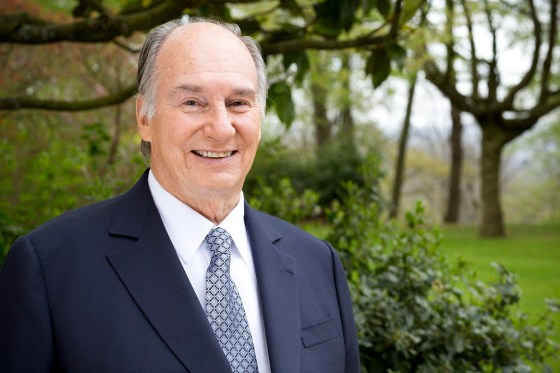
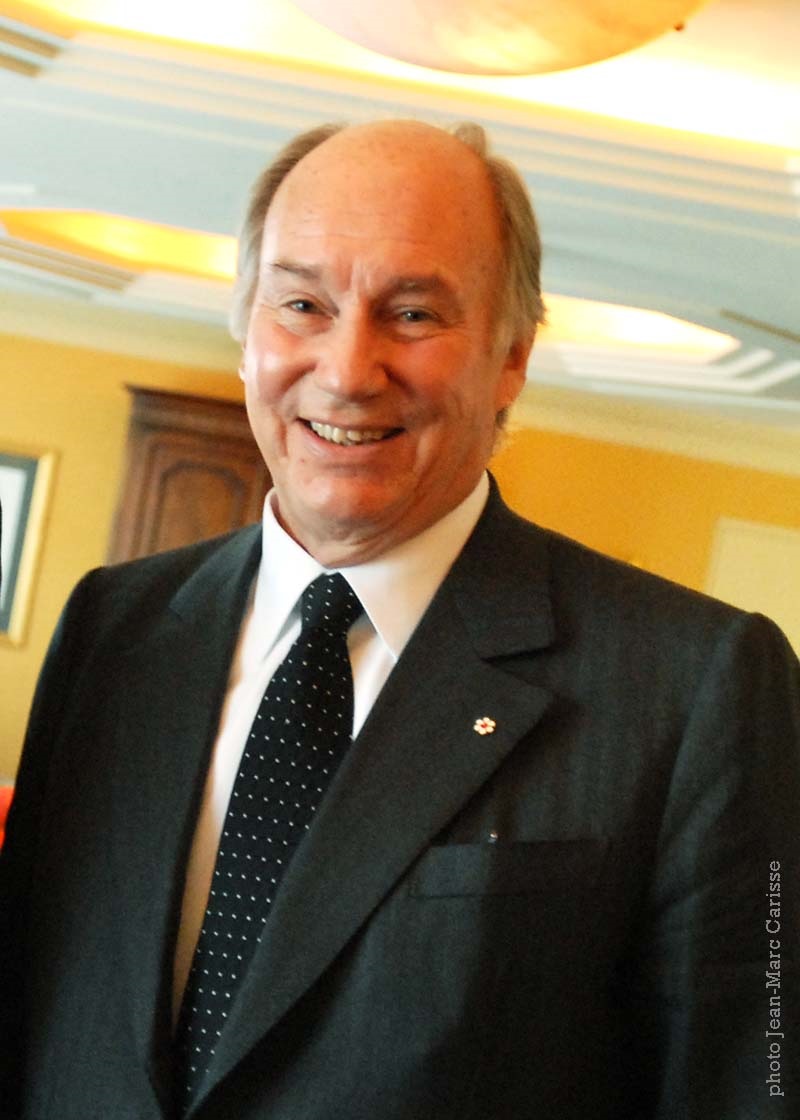
Aga Khan by Jean-Marc CarisseHis Highness the Aga Khan. Photo by Jean-Marc Carisse. Copyright

We wish Mr. Justin Trudeau and his  Liberal Government the very best to serve this country well, and to lead the country to loftier heights. The Ismaili community, as ever, will continue to excel in its commitment to this magnificent country in all spheres of human endeavour, under the guidance of their beloved Imam, His Highness the Aga Khan, who asked his Ismaili followers in 1978 to make Canada their permanent homes.

We conclude by mentioning that the Diamond Jubilee (60th Imamat Day Celebrations) of His Highness the Aga Khan will be celebrated in July 2017, at the same time that Canada celebrates its 150th anniversary. We look forward to celebrating these two great milestones in Canadian and Ismaili history under the leadership of Prime Minister Justin Trudeau.

Date posted: Tuesday, October 27, 2015.
Last updated: October 28, 2015.

Please also visit Simerg’s photoblog at http://www.simergphotos.com for an enhanced version of this piece containing additional photos of His Highness the Aga Khan. _______________

We invite your feedback – please click Leave a comment.

Jean-Marc CarisseAward winning photographer, Jena Marc Carisse has photographed the political, cultural and social scenes in Ottawa and around the world for over 40 years.  He was official photographer for the Prime Minister’s Office for many years serving Prime Ministers Trudeau, Turner and Chrétien, as well as serving Official Opposition Leaders Bill Graham, Stéphane Dion and Michael Ignatieff. He’s also photographed consecutive Prime Ministers from Diefenbaker to Harper, US Presidents from Ford to Obama and hundreds of world leaders. Many of his photographs have appeared on the covers and pages of history and political books (including his own coffee table book “Privileged Access w/ Trudeau, Turner & Chrétien” by Warwick Publ. 2000),  magazines including Time, Paris Match and Maclean’s, as well as TV documentaries and biographies.

Aleppo and Its Majestic Citadel: Chilling Reports from the Current Civil War, and 14th Century Narratives by Ibn Batutta

I. THE HARSH REALITIES OF ALEPPO TODAY

(A). Syria’s Most War-Torn City by Newsweek Magazine

(Note: Newsweek’s story, accessible by clicking on the first image shown below, contain graphic images and may disturb some readers. Discretion is advised).

“Longer even than the journey from Damascus to Aleppo is the time it takes to get from one end of Aleppo to the other. Moving from the east to the western side of the city once took only a short bus ride. Now it involves navigating a labyrinth of side roads and as many as 20 checkpoints; an endurance test that can last between 10 and 16 hours” — James Harkin for Newsweek, August 19, 2015. Please click on Newsweek – Syria’s War Torn City or click on image below for Harkin’s full report.

A sergeant in Lewa Salaheddin, a Kurdish battalion of the Free Syrian Army, sits in front of a block of destroyed buildings in Aleppo, Syria on December 6, 2012. It’s more than three years since the fight for Aleppo began. By late 2012, parts of the city were already in ruins. Patrick Tombola/laif/Redux

A sergeant in Lewa Salaheddin, a Kurdish battalion of the Free Syrian Army, sits in front of a block of destroyed buildings in Aleppo, Syria on December 6, 2012. It’s more than three years since the fight for Aleppo began. By late 2012, parts of the city were already in ruins. Patrick Tombola/laif/Redux

_______________

(B). A Resident’s Account of Aleppo’s Humanitarian Crisis and the Fear for its Historic Citadel

Editor’s note: The following excerpts are from the website of the Centre for Research and Globalization based in Montreal. For a full account published on July 25, 2015, please click on Global Research – Aleppo’s Humanitarian Crisis.

“Aleppo city has shrunk to a fifth of its original site. I walk everyday in the city. I see children and girls without limbs because of a mortar over here or shrapnel over there that hit them randomly and caused them a terrible wounds and horrific memories that will never leave them. The girl who lost one leg is standing on her good leg and selling bread, while the little boy who lost one arm is selling chewing gum. Those are the “injured” people who come in the news, just numbers in one line of a report, after each attack from the terrorists. “Injured” doesn’t mean scratched or having a bleeding finger; it means someone lost his eyes or her limbs.”

continued…

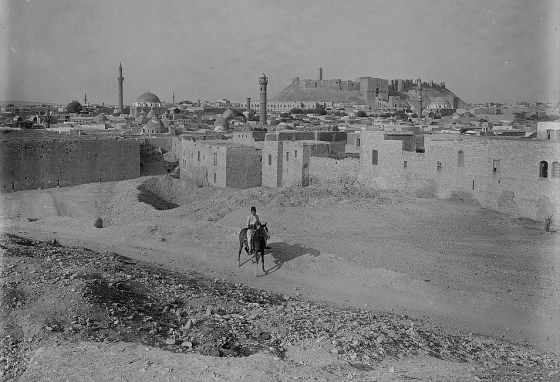
Aleppo and its castle from South West. Created/Published between 1898 and 1946. Photo: USA Library of Congress Collection, Gift Episcopal Home; 1978.

Aleppo and its castle from South West. Photo taken in 1898, and created/published
between 1898 and 1946. Photo: USA Library of Congress Collection, Washington, D.C.

“The last symbol left of Aleppo, is the most famous one: the Citadel. I can see part of it from our balcony, but I can see it more clearly from the roof of the building….It has been badly injured, but it’s still there, dominating the city skyline. It’s where they found the Storm God’s Temple a few years ago. It withstood many invaders, including the Mongols and Crusaders. It has been damaged severely several times through history, but it has been rebuilt over and over again, as an immortal symbol to the inhabitants of one of the oldest living cities in history. I just pray I don’t live to witness its total destruction as I have seen happen to many of the surrounding buildings.”

________________

II. IBN BATUTTA’S 14TH CENTURY DESCRIPTION OF ALEPPO AND ITS CITADEL

The Citadel of Aleppo is a large medieval fortified palace in the centre of the old city of Aleppo, northern Syria. It is considered to be one of the oldest and largest castles in the world. Usage of the Citadel hill dates back at least to the middle of the 3rd millennium BC. Subsequently occupied by many civilizations including the Greeks, Byzantines, Ayyubids and Mamluks, the majority of the construction as it stands today is thought to originate from the Ayyubid period. An extensive conservation work has taken place in the 2000s by the Aga Khan Trust for Culture in collaboration with Aleppo Archeological Society. Dominating the city, the Citadel is part of the Ancient City of Aleppo, a UNESCO World Heritage Site since 1986. The Citadel has received significant damage in the ongoing Syrian Civil War. Photo and caption: Wikipedia.

The Citadel of Aleppo is a large medieval fortified palace in the centre of the old city of Aleppo, northern Syria. It is considered to be one of the oldest and largest castles in the world. Usage of the Citadel hill dates back at least to the middle of the 3rd millennium BC. Subsequently occupied by many civilizations including the Greeks, Byzantines, Ayyubids and Mamluks, the majority of the construction as it stands today is thought to originate from the Ayyubid period. An extensive conservation work has taken place in the 2000s by the Aga Khan Trust for Culture in collaboration with Aleppo Archeological Society. Dominating the city, the Citadel is part of the Ancient City of Aleppo, a UNESCO World Heritage Site since 1986. The Citadel has received significant damage in the ongoing Syrian Civil War. Photo and caption: Wikipedia.

An Introduction to Ibn Batutta

“No intelligent man,” wrote Ibn Djuzayy, the scribe to whom Ibn Batutta (also Batutah etc) dictated his memoirs, “can fail to see that this sheikh is the traveller of the age.” But Ibn Batutah (1304-1368 or 1377) was not only the greatest Arab traveller of the Middle Ages, he was one of the greatest travellers of all time. At the age of twenty-one, he set out from his birthplace, Tangiers (Morocco), and started his travels by undertaking the pilgrimage to Mecca. This was the start of thirty years of wandering during which he would travel almost 120,000 kilometres that would take him halfway round the world as far as China. His account of his travels (the Rihla), in addition to its literary value, gives a panoramic picture of the 14th-century world.

If there are historical inaccuracies in Ibn Battuta’s writings, they are largely attributable to the pronounced taste for the bizarre which was characteristic of the age, and to the loss of his notebooks during a pirate attack in the Indian Ocean.

But errors or exaggerations do not detract from the value of Ibn Battuta’s narrative which is written in a direct, straightforward style punctuated by observations which are not without humour. His entertaining story has been translated, wholly or in part, into some 15 languages and ranks among the masterpieces of Arabic literature.

Ibn Batutta on Aleppo and Its Citadel

From Sermin we proceeded to Haleb (Aleppo), a large city and splendid metropolis. This is how Abulhossein the son of Jobeir described it:

“This city is of enormous worth and its fame will last forever. Kings have often sought to possess it and men have been impressed by its importance. What a number of battles it has provoked, and what a quantity of shining words have been unsheathed for it! Its fortress is renowned for its power and its height is clearly to be seen. No one dared attack it because of its strength, or if they did they did not conquer it.

“The sides are of freestone and its proportions are full of symmetry. It has outlasted the days and the years and has seen nobles and beggars carried to their last resting-places. Where are the Hamdanite princes and their poets now? They are no more, and only the buildings remain. Oh wonderful city! It endures, but its owners have passed on. They have perished but its hour has not come. It was sought for after them and taken without great difficulty. It was coveted and won at the smallest cost.

Such is this city of Aleppo. How many of its kings has it not changed into a past tense (expression borrowed from grammar) and how many vicissitudes has it not defied because of its position! Its name was made in the feminine gender, it was adorned with the finery of a chaste virgin, it succumbed to the victor as others have done. It shone like a young bride after the sword (seif) of its dynasty, Ibn Hamdan (a reference to Prince Seif eddaoulah).

Alas! its youth will pass, it will be no longer desired, only a short while and it will be destroyed.”

continued….

Aleppo from castle. Photo taken in 1898, created/published between 1898 and 1946. Credit: Library of Congress Prints and Photographs Division, Washington, D.C.

Aleppo from castle. Photo taken in 1898, created/published between 1898 and 1946. Credit: Library of Congress Prints and Photographs Division, Washington, D.C.

The fortress of Aleppo is called Ash shahba (the grey one). Within it there are two wells from which water gushes, and there is no fear of thirst there. The castle is surrounded by two walls, there is a great moat from which water rises, and its wall has many towers standing close together. This fortress encloses marvellous chambers pierced with windows. All the towers are occupied and in this fortified castle food is not impaired by the passage of time.

There is a sanctuary which is visited by many people, and it is said that Abraham prayed there to God. This fortress resembles the one called Rahbet (square of) Malik Ibn Thaouk, near the Euphrates, between Syria and Iraq. When the Tartar tyrant Kazan marched against the city of Aleppo, he besieged this fortress for many days. Then, frustrated in his desire to take it, he withdrew. Ibn Jozay says: Alkhalidy, the poet of Seif eddaoulah, writes as follows about this fortress:

“With its high belfry and invincible flanks, it is a vast, grim place which rises up against him who would take it.

“The atmosphere spreads a layer of cloud over this place and adorns the castle with a necklace of brilliant stars.

“When lightning flashes in the night this fortress appears through its interstices, shining like the constellation of the Virgo through the openings in the clouds.

“How many armies has this castle not destroyed and how many conquerors has it not put to flight!”

The same poet also speaks of the castle in the following admirable verses:

“It is a citadel whose base embraces the springs of water, and its summit is higher  than Orion’s Belt.

“It knows no rain, because for it the clouds are a ground,  whose sides are trodden by its cattle.

“When the cloud has given water in abundance, he who lives in the fortress uses all the water in his tanks before its summits are moistened.

“Its belvedere would be counted amongst the stars of the heavens if it passed through their orbits.

“The cunning of this fortress has repulsed the tricks of its enemies and the evils it caused were greater than theirs.”

Here is what Jemal eddin Ali, the son of Abulmansur, has to say about this castle:

“Because of its enormous height and the point which its summit attains, this castle nearly stops the celestial sphere that turns around the earth.

“Its inhabitants have gone to the Milky Way as to a watering place and their horses have nibbled the stars as though grazing on flowering plants.

“The vicissitudes of time turn from it in fear, and for this castle there is no change.”

Date posted: August 22, 2015.

____________________

Editor’s note: The above introduction to Ibn Batutta and his narratives on Aleppo and its Citadel have been adapted from the January 1986 issue of The Unesco Courier which was dedicated to Treasures of World Literature. Please visit http://www.unesco.org/new/en/unesco-courier/.

We welcome your feedback. Please click on Leave a comment.

___________________

FORTHCOMING PHOTO AND LITERARY PIECES ON SIMERGPHOTOS AND SIMERG

  • “Prayer Halls of Badakhshan Through the Lens of Muslim Harji,” to be published week of August 24th, 2015 on Simerg’s photo blog, http://www.simergphotos.com
  • “Naklanki Geeta – Quantum Mechanics in Ginans” by Shiraz Pradhan, to be published week of September 7th, 2015 on this website, http://www.simerg.com.

@Simergphotos: The Silk Road Through the Lens of Muslim Harji and the Smithsonian Folklife Festival

Simergphotos presents An Anthology of the Silk Road Through the Lens of Muslim Harji and Smithsonian’s Folklife Festival with magnificent photos taken by Harji during his recent visits to the iconic Silk Road cities of Samarkand and Bokhara in Uzbekistan. Then the post steps back in time and brings you wonderful memories from the Smithsonian Institution’s Annual Folklife Festival held in Washington D.C. in 2002, which was entirely dedicated to one single subject: The Silk Road. The post contains photos from the opening day, which was attended by His Highness the Aga Khan, as well as an excellent thematic anthology covering many aspects of the exciting Silk Road!…More at Simergphotos.

Please click on image for Silk Roads Photo Essay.

Please click on image for Silk Roads Photo Essay.

PLEASE CLICK: An Anthology of the Silk Road Through the Lens of Muslim Harji and Smithsonian’s Folklife Festival

Mawlana Hazar Imam at the Silk Roads Festival in Washington D.C. IN 2002. Please click for more photos.

Mawlana Hazar Imam at the Silk Roads Festival in Washington D.C. IN 2002. Please click for more photos.

Iran Nuclear Deal Sealed: Prayers Answered in Holy Month of Ramadan, Says President Hassan Rouhani

1. MAWLANA HAZAR IMAM HAD ADVOCATED THE PRINCIPLE OF “YES TO ENERGY, NO TO ARMS” SEVERAL YEARS AGO

Mawlana Hazar Imam, His Highness the Aga Khan, 49th hereditary Imam of Shia Ismaili Muslims  directly descended from the Holy Prophet Muhammad (s.a.s.). Photo: AKDN/Anya Campbell. Copyright.

Mawlana Hazar Imam, His Highness the Aga Khan, 49th hereditary Imam of Shia Ismaili Muslims  Photo: AKDN/Anya Campbell. Copyright.

“We are a long way from the democratization of nuclear energy. Maybe I’m naïve but I advocate another approach, which I call “positive proliferation.” The positive proliferation that I would dearly love to see happen is based on a simple principle: yes to energy, no to arms….Iran could even contribute to the worldwide removal of nuclear energy for military use. That is what I told the Iranians several years ago: “Your history is that of an intellectual nation several thousand years old which has brought to Islam all the richness of its culture and its philosophical thought. Keep following the path that is truly your own and the world will thank you for it.” — His Highness the Aga Khan. Please read complete interview by clicking on The Power of Wisdom.

________

2. TRIUMPH IN DIPLOMACY

President Hassan Rouhani

 I. President Hassan Rouhani

“Today is a new chapter to work towards growth and development of our dear Iran; a day for our youth to dream again for a brighter future. Many people prayed for the negotiating team during the holy month of Ramadan; I’m privileged to announce their prayers have been answered…This agreement goes both ways. The successful implements of IranDeal can dismantle the wall of mistrust brick by brick.” — Tweets by the President of the Islamic Republic of Iran

“I am happy that with the 23-month nuclear talks of Iran with the world six major powers, we have today been able to reach a new point; of course the month of Ramadan has always been source of blessing and destiny making for the 11th Government…The 25th of the month of Ramadhan in the year 1392 [A.H.] was the year of taking presidential oath; the 26th of the month of Ramadhan that year was the swearing-in ceremony and today, it is the day of Iran’s success to bring the six world powers to the Comprehensive Joint Plan of Action.” — Speech Excerpt, President Rouhani, http://www.president.ir/en/

II. The Guardian, UK

“This accord, so long in the making, offers the hope that one of the world’s great civilisations might be drawn back into the international community, with untold benefits not only for Iranians but for its conflict-ravaged neighbours. The opportunity should be seized.” —  Editorial excerpt, http://www.theguardian.com, UK Edition

3. THE NEGOTIATIONS

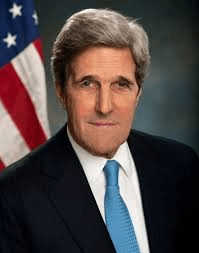
Secretary of State John Kerry

US Secretary of State

“And I finally want to express my deep respect for the serious and constructive approach that Iran’s representatives brought to our deliberations. The president of Iran, President Rouhani, had to make a difficult decision. We all know the tensions that exist. Foreign Minister Javad Zarif, a tough, capable negotiator, and patriot, a man who fought every inch of the way for the things he believed, and sometimes these were heated and passionate exchanges. But he and his team, while tough, always professional, always dedicated to finding solutions to difficult problems. And we were, both of us, able to approach these negotiations with mutual respect, even when there were times of a heated discussion, I think he would agree with me at the end of every meeting we left with a smile and with a conviction that we were going to come back and continue the process. We never lost sight of the goal that an agreement could bring and the best long-term interests of all concerned” — US Secretary of State, John Kerry

4. IRANIANS CELEBRATE HISTORIC DEAL

Horns honked and flags waved here as darkness fell Tuesday and the Ramadan fast was broken as Iranians marked the nuclear deal reached between Iran and the six world powers led by the US. For the first time in years, they relished the prospect of an improved economy and reengagement with the West.

Narjes Sedaghatfar, a math teacher who voted for Rouhani but has kept expectations in check until now said, “The button has been pressed, we are beginning anew. I will be at home, and just be happy and plan for a happy future. When hope rises, that is celebration in itself.” — From reports in the Christian Science Monitor, http://www.csmonitor.com.

Date posted: July 15, 2015

____________________

We welcome your feedback. Please click Leave a comment.
History in the Making: Establishment of the Seat of the Ismaili Imamat in Portugal

COMPILED BY SIMERG

Please click on photo for enlargement

Mawlana Hazar Imam, His Highness the Aga Khan, 49th hereditary Imam of Shia Ismaili Muslims  directly descended from the Holy Prophet Muhammad (s.a.s.). Photo: AKDN/Anya Campbell. Copyright.

A portrait of Mawlana Hazar Imam, His Highness the Aga Khan, 49th hereditary Imam of Shia Ismaili Muslims. Photo: AKDN/Anya Campbell. Copyright.

In an unprecedented historical event, His Highness Prince Karim Aga Khan, the 49th hereditary Imam of the Shia Imami Ismaili Muslims, and Portugal’s Minister of State and Foreign Affairs, Rui Machete, came together at the historic Necessidades Palace in Lisbon on Wednesday June 3, 2015, to sign a landmark agreement to establish the Seat of the Imamat in Portugal. The Ismaili Imamat is a supra-national entity, representing the succession of Imams since the time of the Prophet Muhammad (s.a.s).

The Agreement marks the first such accord in the Ismaili Imamat’s modern history. It will come into effect once it has been approved by Portugal’s Parliament and ratified by the President of the Portuguese Republic. Present at the signing ceremony was Portugal’s Prime Minister Pedro Passos Coelho and other senior government officials.

Thanking the government for inviting the Ismaili Imamat to establish its permanent seat in Portugal, His Highness the Aga Khan (known to his 15 millions Ismaili followers as Mawlana Hazar Imam), hailed the agreement as a historic milestone in the Imamat’s history and said:

“Today is a unique and important occasion, where for the first time in our history we will have the opportunity to work with a partner with whom we share so many values, so many hopes and so many desires.”

He expressed the hope that the agreement would be approved by the Portuguese Parliament  through the democratic process, and that once it was ratified both the Imamat and Portugal could work together to achieve results that could not be achieved by working alone. His Highness also mentioned his community’s great respect and admiration for Portugal, a country where faith is integrated with civil society, a country where all people are happy, or at least the majority are happy, in a world where happiness is unusual.

The agreement establishing Portugal as the seat of Imamat took place at the Palace of Necessidades. It  is a historical building in the Largo do Rilvas, a public square in Lisbon, Portugal. It serves as headquarters of the Portuguese Foreign Ministry. Palace Photo Photo: Wikipedia.

The agreement establishing Portugal as the seat of Imamat took place at the Palace of Necessidades. It is a historical building in the Largo do Rilvas, a public square in Lisbon, Portugal. It serves as headquarters of the Portuguese Foreign Ministry. Palace Photo: Wikipedia.

The Institution of the Ismaili Imamat goes back 1400 years when, according to Shia Muslim tradition, the Prophet Muhammad (s.a.s.) designated and appointed his cousin and son-in-law Ali Ibn Talib (a.s.) to be the first Imam, and proclaimed that the Imamat should continue by heredity through Imam Ali and his daughter Bibi Fatimat-az-Zahra (a.s).

The Ismailis are the only Shia Muslim community led by a living Imam who is vested with global religious authority and has the responsibility for the community’s spiritual and material well-being.

The succession of Imamat is by way of Nass [designation], it being the absolute prerogative of the current Imam to appoint his successor from amongst any of his male descendants whether they be sons or remoter issue.

The present 49th Imam, Prince Karim, succeeded to the throne of Imamat at the age of twenty on July 11, 1957 upon the demise of his late grandfather, Sir Sultan Mahomed Shah, His Highness the Aga Khan III, who  served the community for 72 years, beginning in 1885 when he was only seven years old.

The historical accord will result in intensified cooperation between Portugal and the Ismaili Imamat in supporting research and the knowledge society and in improving the quality of life of Portugal’s inhabitants.

Responding to the historic signing, the Portuguese Prime Minister Pedro Passos Coelho said at Wednesday’s ceremony:

“The decisive step taken today will enable the deepening of cooperation, until today essential focused on the social area, with the Imamat Ismaili community beginning to support Portuguese institutions dedicated to excellent research on a wide variety of fields of knowledge.

“I am present here today due to it being a historic moment which brings a long and intense relation existing between Portugal and the Ismaili community to a new level, reflecting particularly the importance of the Ismaili community that resides in our country and Portuguese speaking African countries.”

The Prime Minister also pointed out Mawlana Hazar Imam’s role in “promoting a more tolerant world,” and also said that the choice of Portugal as the seat of the Ismaili Imamat was an acknowledgment of the Portuguese community’s ability to promote dialogue and tolerance between peoples, cultures and beliefs.

@Simergphotos: The Aga Khan Park and Its Inauguration – Exclusive Photos

Please click: The Beautiful Aga Khan Park with Exclusive Photos of the Inauguration Ceremony 

Please click for exclusive photos of the opening of the Aga Khan Park. Photo: Simerg/Malik Merchant.

Please click for exclusive photos of the opening of the Aga Khan Park. Photo: Simerg/Malik Merchant.

Exclusive Simerg Photo Essay: His Highness the Aga Khan and Premier Kathleen Wynne Inaugurate the Beautiful Aga Khan Park in Toronto

PATRON AND BUILDER

Please click on photo(s) for enlargement

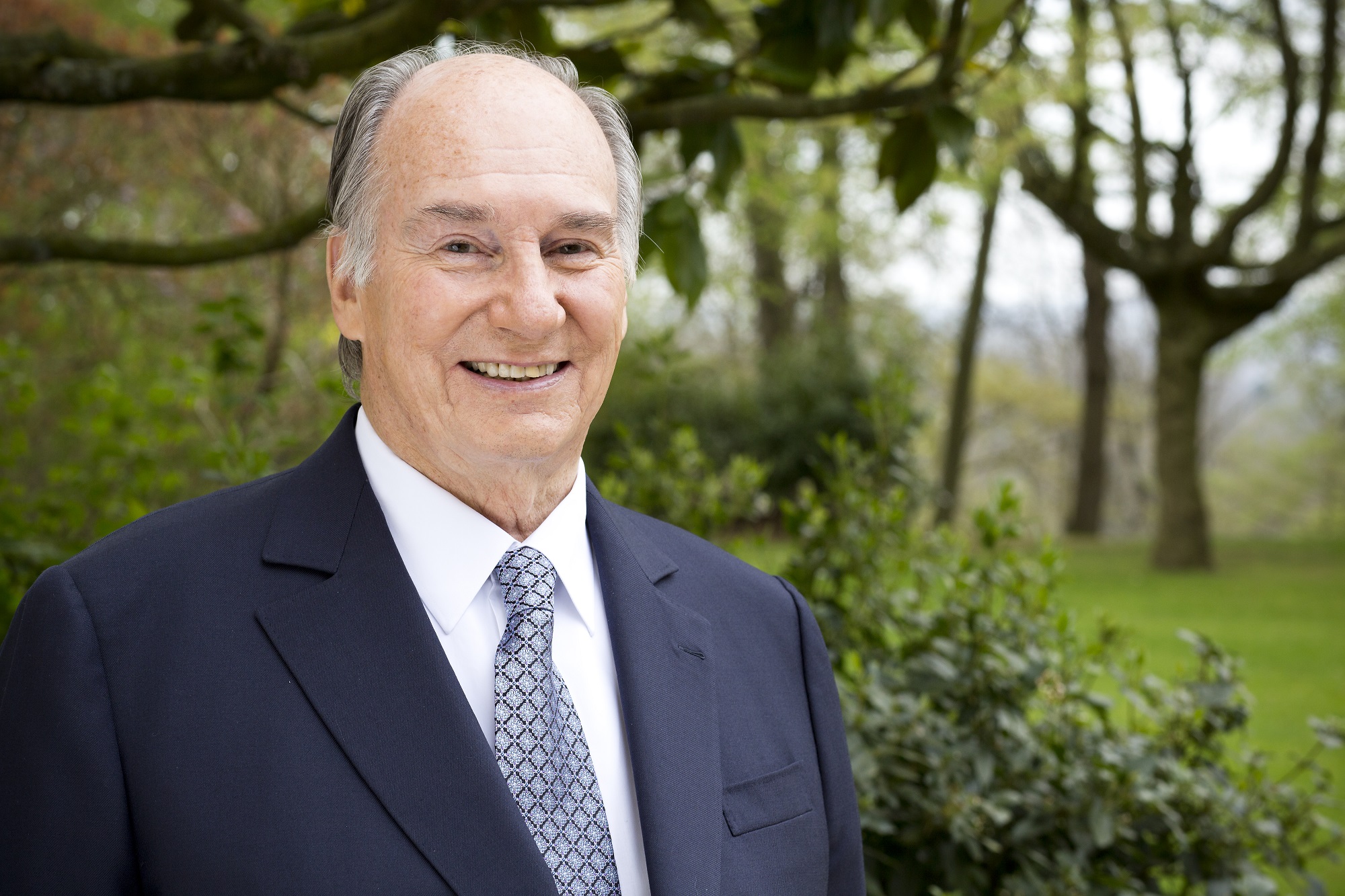
Mawlana Hazar Imam, His Highness the Aga Khan, 49th hereditary Imam of Shia Ismaili Muslims  directly descended from the Holy Prophet Muhammad (s.a.s.). Photo: AKDN/Anya Campbell. Copyright.

Mawlana Hazar Imam, His Highness the Aga Khan, 49th hereditary Imam of Shia Ismaili Muslims directly descended from the Holy Prophet Muhammad (s.a.s.), is the builder of the Aga Khan Museum, the Ismaili Centre and the newly opened Aga Khan Park that connects the two buildings. Photo: AKDN/Anya Campbell. Copyright.

______________

THE INAUGURATION CEREMONY

The recitation of the Canadian National Anthem at the opening of the Aga Khan Park on May 25, 2015. Photo: Simerg/Malik Merchant/Simerg. Copyright.

The recitation of the Canadian National Anthem at the opening of the Aga Khan Park on May 25, 2015. Photo: Simerg/Malik Merchant. Copyright.

______________

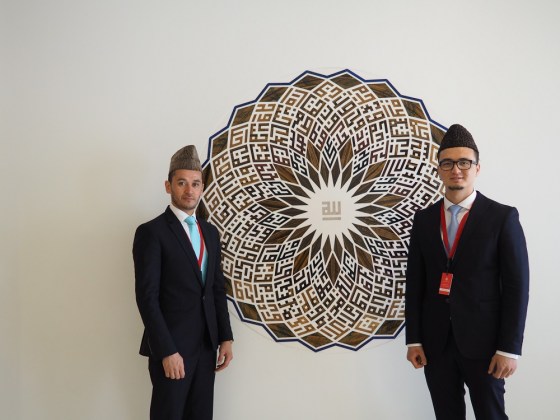
Qur'an reciter Ahsan Afzaly, left, with his back-up colleague, Edrees Amiri, pictured at the Ismaili Centre prior to the opening ceremony. Photo: Simerg/Malik Merchant.

Qur’an reciter Ahsan Afzaly, left, with his back-up colleague, Edrees Amiri, pictured at the Ismaili Centre prior to the opening ceremony of the Aga Khan Park on May 25, 2015. Photo: Simerg/Malik Merchant.

______________

The audience listen to the Ismaili Muslim Choir prior to the arrival of Premier Kathleen Wynne and Mawlana Hazar Imam for the opening ceremony of the Aga Khan Park on May 25, 2015. Photo: Simerg/Malik Merchant

The audience listens to the Ismaili Muslim Choir performing at the far left corner prior to the arrival of Premier Kathleen Wynne and Mawlana Hazar Imam for the opening ceremony of the Aga Khan Park on May 25, 2015. Photo: Simerg/Malik Merchant

______________

Mawlana Hazar Imam, Premier Kathleen Wynne and the reciter of the Holy Qur'an, Ahsan Afzally, look on as a translation of the Qur'anic verses in English and French is underway. Photo: Simerg/Malik Merchant. Copyright.

Mawlana Hazar Imam, Premier Kathleen Wynne and the reciter of the Holy Qur’an, Ahsan Afzally, look on as a translation of the Qur’anic verses in English and French is underway during the opening ceremony of the Aga Khan Park on May 25, 2015. Photo: Simerg/Malik Merchant. Copyright.

______________

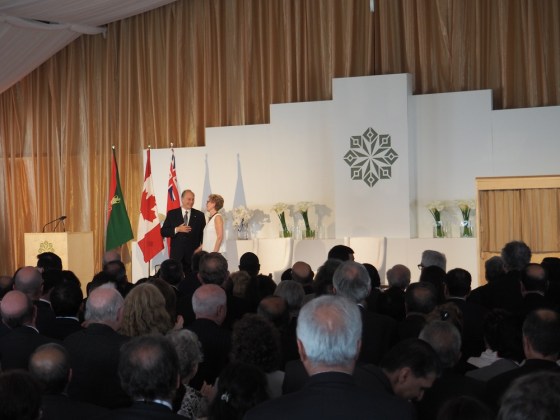
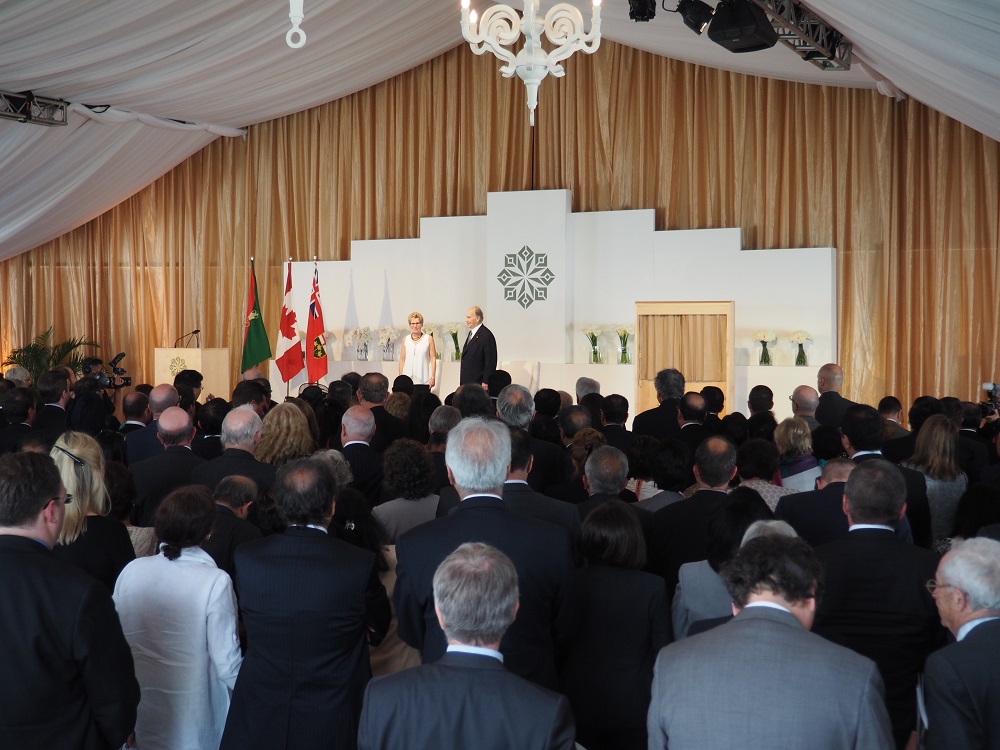
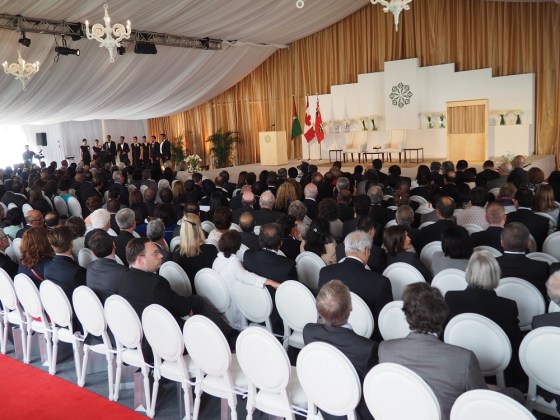
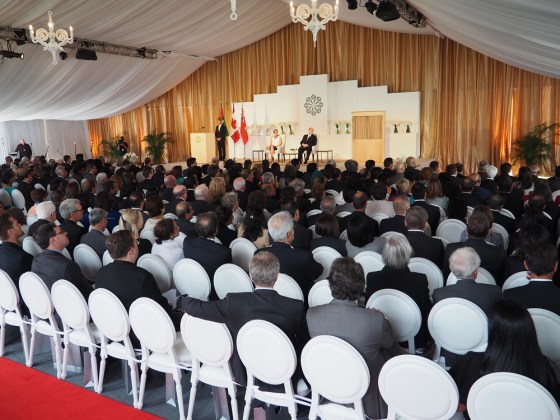
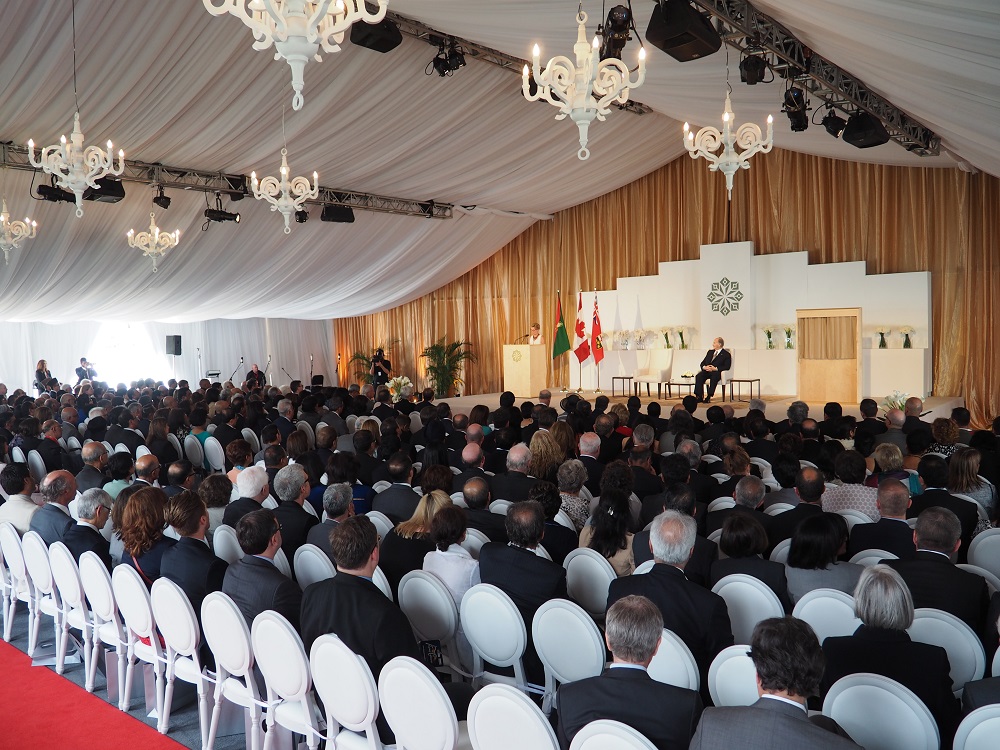
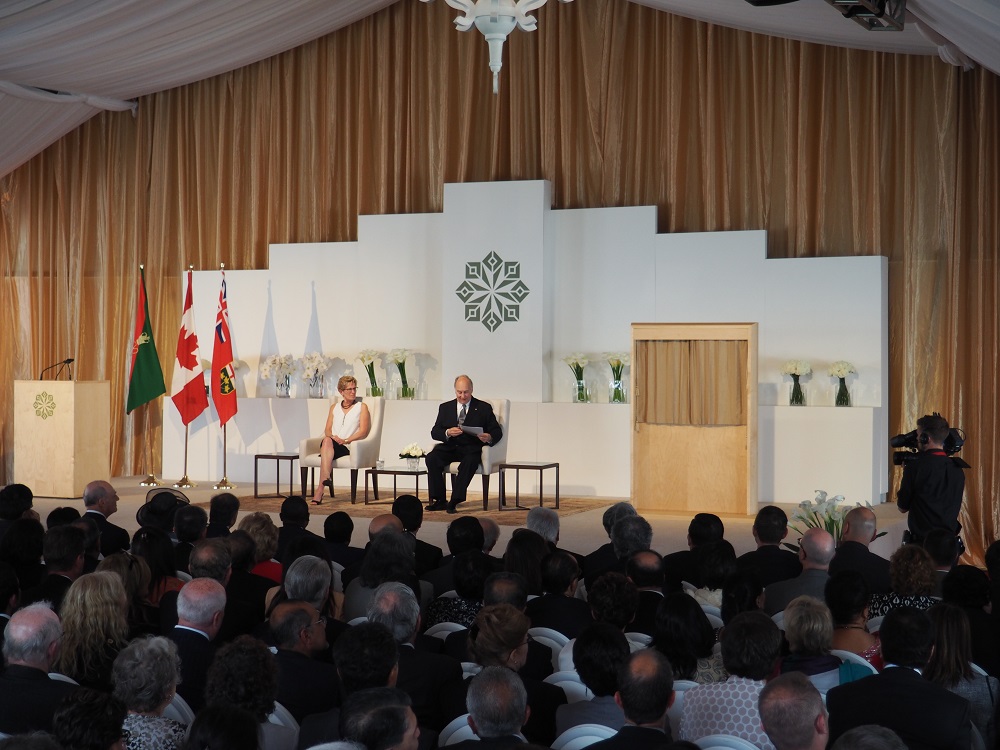
Premier Kathleen Wynne delivering her speech at the opening ceremony of the Aga Khan Park on May 25, 2015. This panoramic view shows the elegance of the event which was held inside a beautifully decorated tent built for the occasion. Photo: Simerg/Malik Merchant. Copyright.

Premier Kathleen Wynne delivering her speech at the opening ceremony of the Aga Khan Park on May 25, 2015. This panoramic view shows the elegance of the event which was held inside a beautiful tent built for the occasion. Photo: Simerg/Malik Merchant. Copyright.

______________

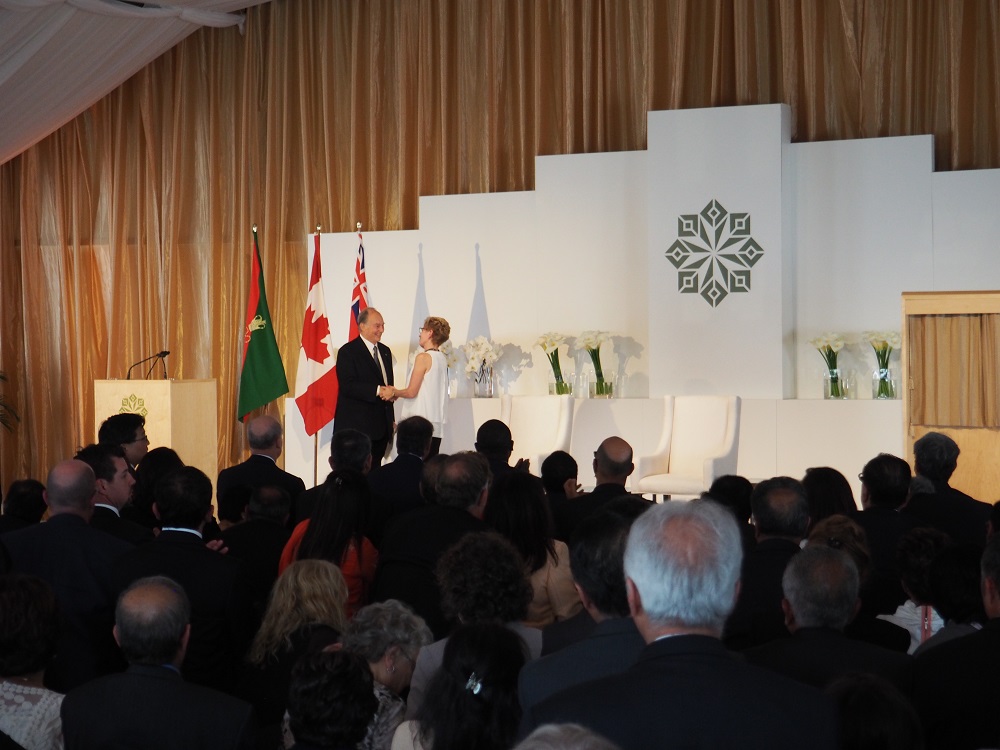
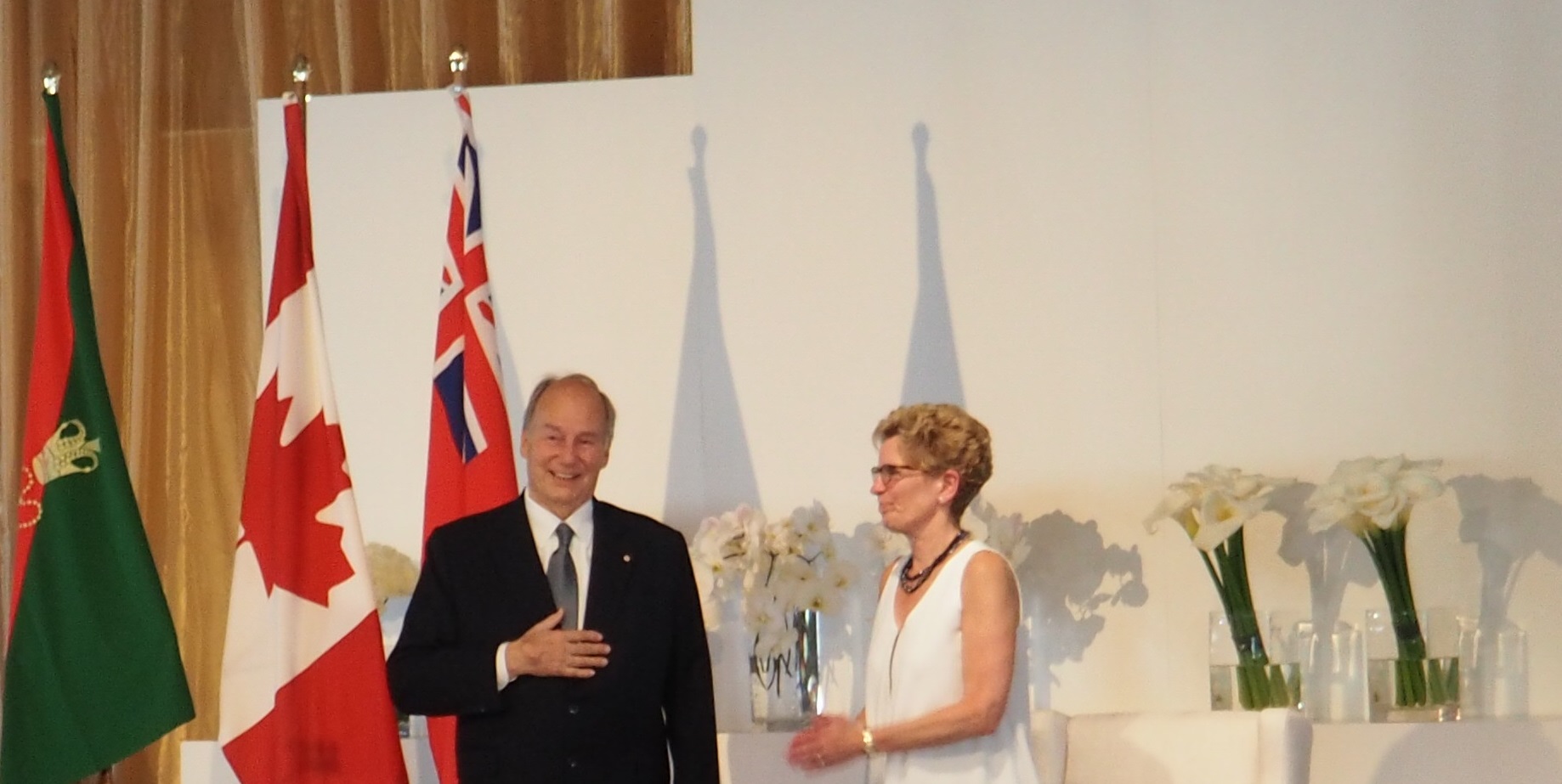
Mawlana Hazar Imam congratulates Premier Kathleen Wynne after the completion of her speech at the opening of the Aga Khan Park on May 25, 2015. Photo: Simerg/Malik Merchant. Copyright.

Mawlana Hazar Imam congratulates Premier Kathleen Wynne after the completion of her speech at the opening of the Aga Khan Park on May 25, 2015. Photo: Simerg/Malik Merchant. Copyright.

______________

Mawlana Hazar Imam gathers his speech before rising to speak to the audience at the opening of the Aga Khan Park on May 25, 2015. Photo: Simerg/Malik Merchant. Copyright.

Mawlana Hazar Imam gathers his speech before rising to speak to the audience at the opening of the Aga Khan Park on May 25, 2015. Photo: Simerg/Malik Merchant. Copyright.

______________

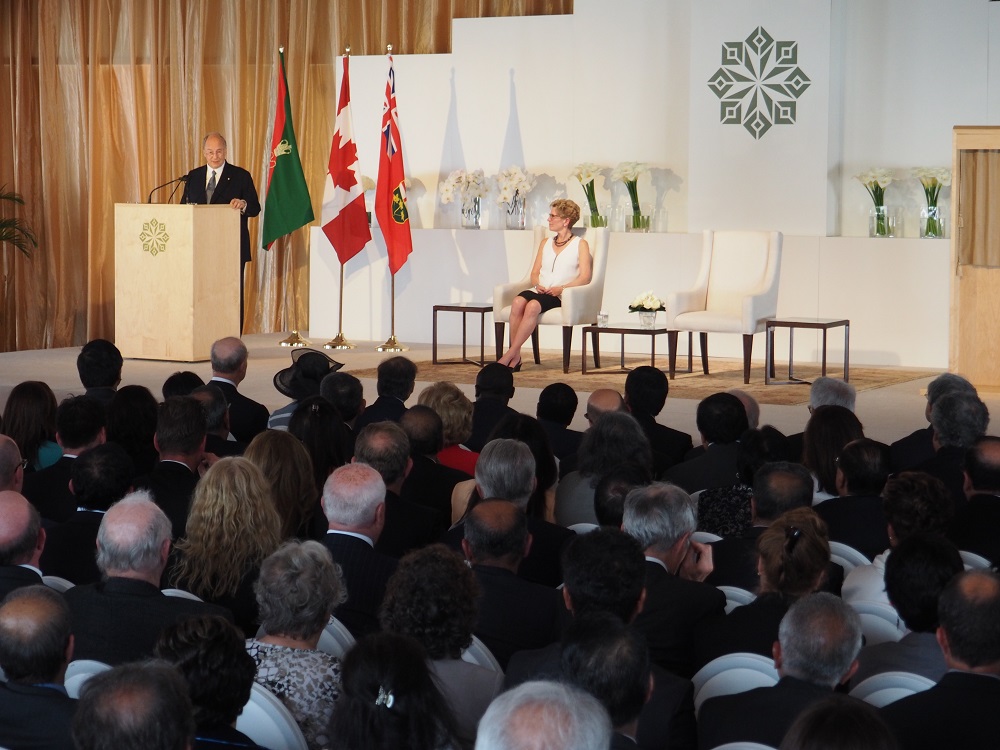
Mawlana Hazar Imam addressing the audience at the opening of the Aga Khan Park on May 25, 2015. Photo: Simerg/Malik Merchant. Copyright.

Mawlana Hazar Imam addressing the audience at the opening of the Aga Khan Park on May 25, 2015. Photo: Simerg/Malik Merchant. Copyright.

______________

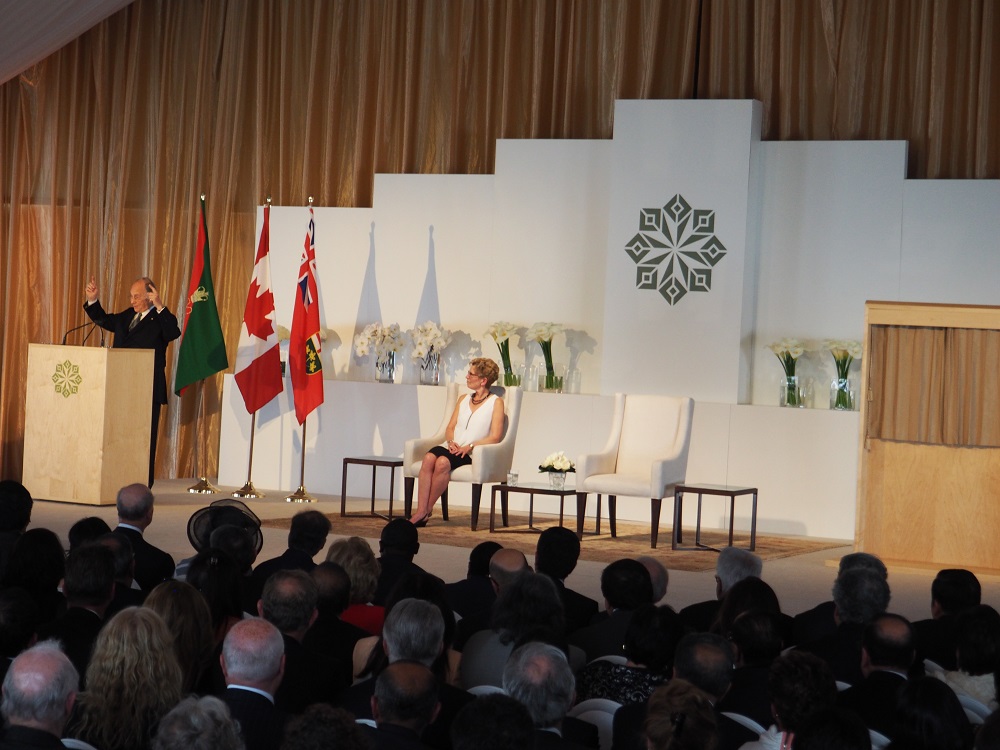
Mawlana Hazar Imam in an animated mood as he shares a joke related to the expulsion of his community from Uganda during the reign of Idi Amin. Photo: Simerg/Malik Merchant. Copyright.

Mawlana Hazar Imam in an animated mood as he shares a joke related to the expulsion of his community from Uganda during the reign of Idi Amin. Photo: Simerg/Malik Merchant. Copyright.

______________

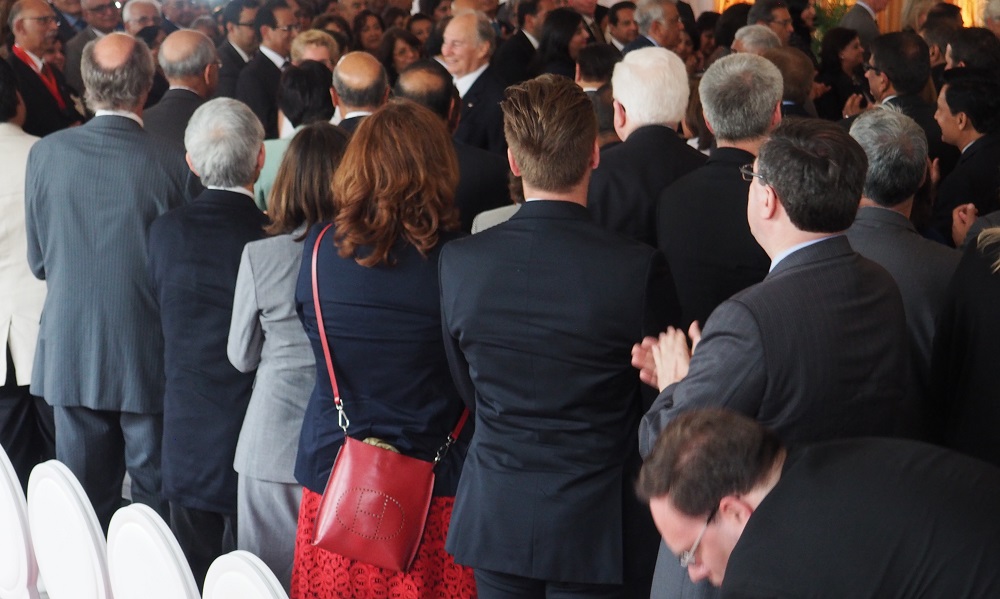
Mwlana Hazar Imam receives a standing ovation as he is congratulated by Premier Kathleen Wynne after the completion of his speech at the opening of the Aga Khan Park on May 25, 2015. Photo: Simerg/Malik Merchant. Copyright.

Mwlana Hazar Imam receives a standing ovation as he is congratulated by Premier Kathleen Wynne after the completion of his speech at the opening of the Aga Khan Park on May 25, 2015. Photo: Simerg/Malik Merchant. Copyright.

______________

Mawlana Hazar Imam graciously accepts the standing ovation he receives after completing his speech at the opening of the Aga Khan Park on May 25, 2015. Photo: Simerg/Malik Merchant. Copyright.

Mawlana Hazar Imam graciously accepts the standing ovation he receives after completing his speech at the opening of the Aga Khan Park on May 25, 2015. Photo: Simerg/Malik Merchant. Copyright.

______________

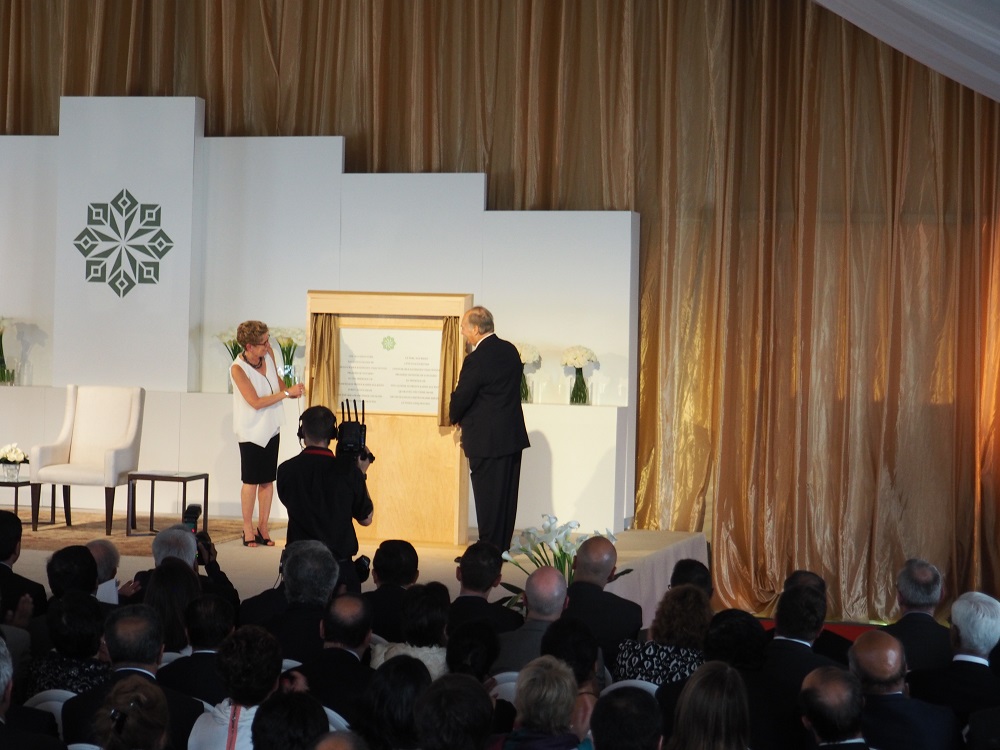
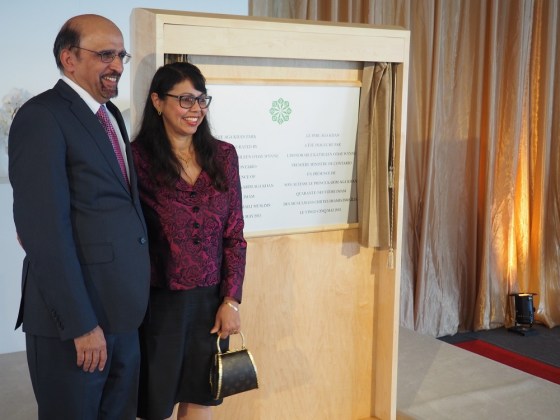
Premier Kathleen Wynne and Mawlana Hazar Imam unveil the plaque to officially open the Aga Khan Park on May 25, 2015. Photo: Simerg/Malik Merchant. Copyright.

Premier Kathleen Wynne and Mawlana Hazar Imam unveil the plaque to officially open the Aga Khan Park on May 25, 2015. Photo: Simerg/Malik Merchant. Copyright.

______________

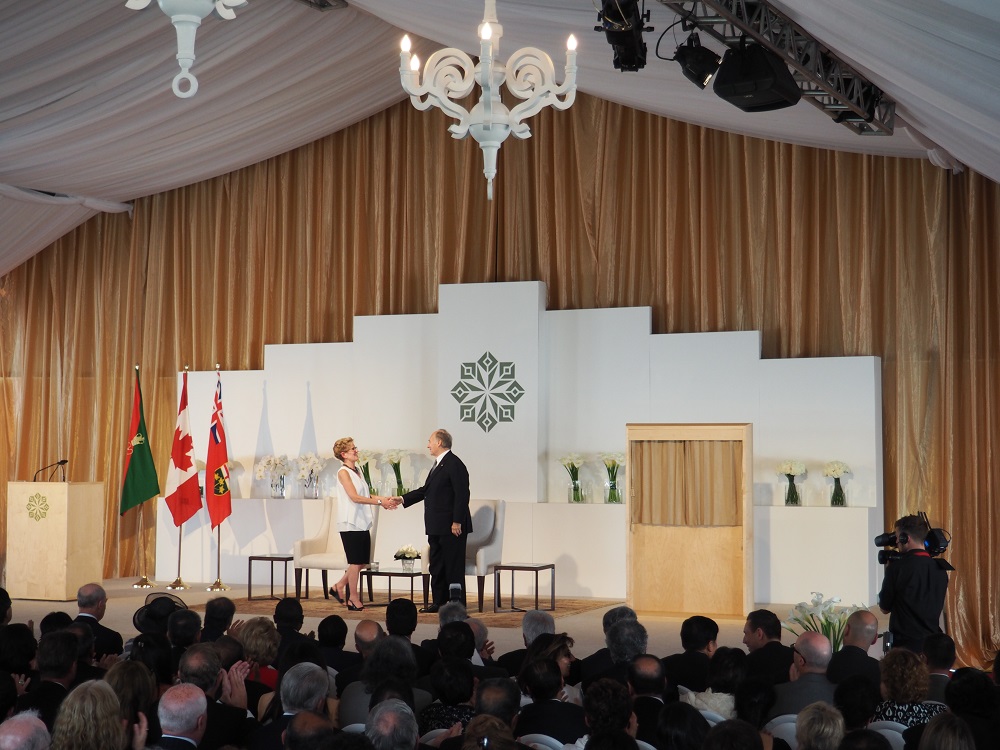
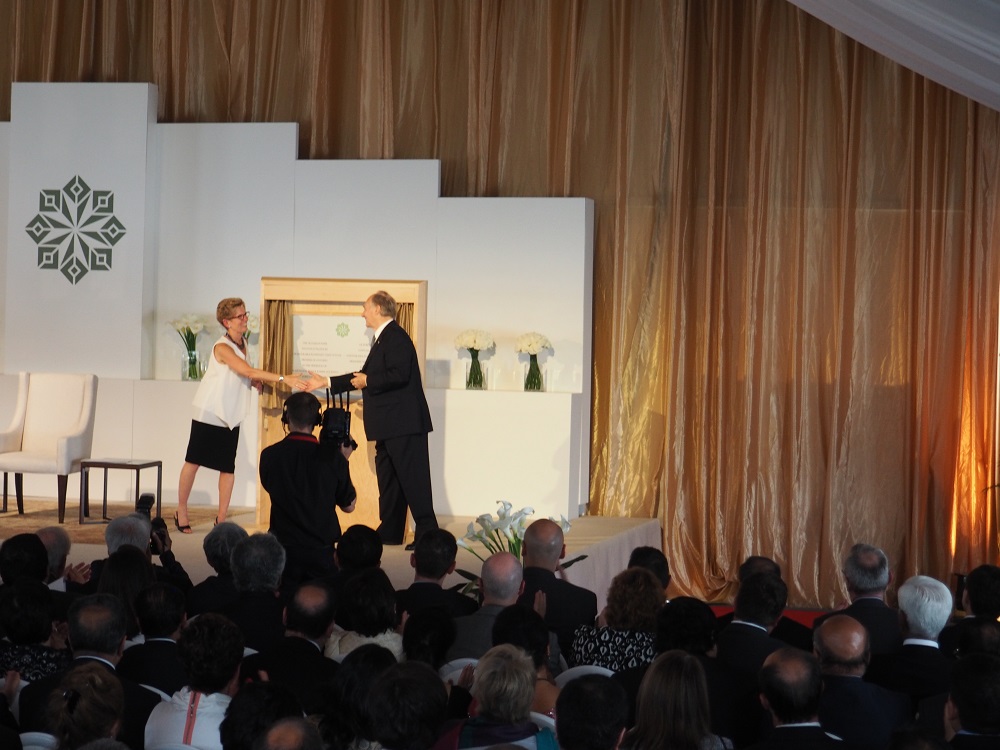
Premier Kathleen Wynne and Mawlana Hazar Imam shake hands after unveiling the plaque to open the Aga Khan Park on May 25, 2015. Photo: Simerg/Malik Merchant.

Premier Kathleen Wynne and Mawlana Hazar Imam shake hands after unveiling the plaque to open the Aga Khan Park on May 25, 2015. Photo: Simerg/Malik Merchant.

______________

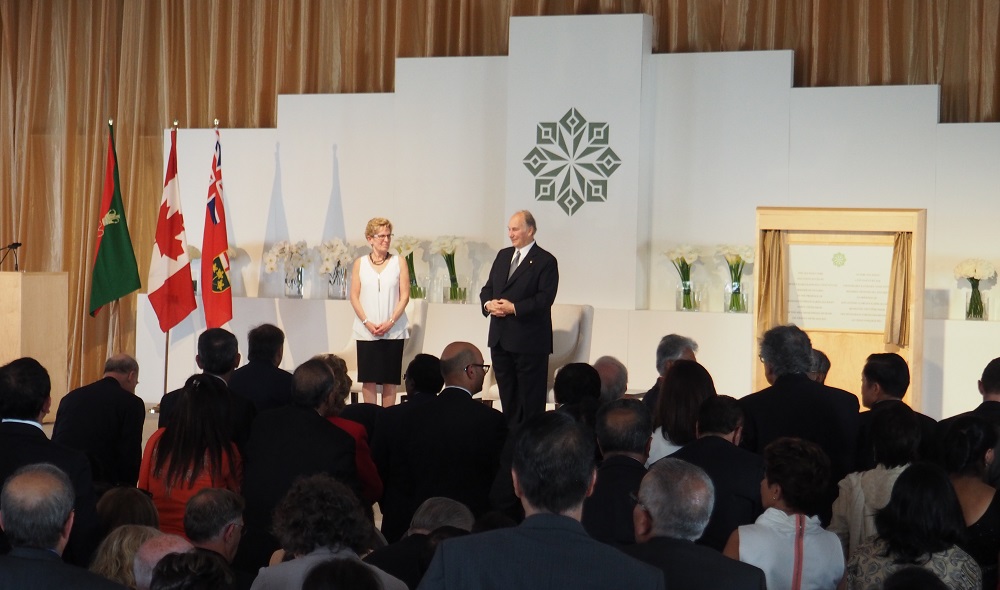
Mawlana Hazar Imam and Premier Kathleen Wynne prepare to depart after unveiling the plaque to open the Aga Khan Park on May 25, 2015. Photo: Simerg/Malik Merchant. Copyright.

Mawlana Hazar Imam and Premier Kathleen Wynne prepare to depart after unveiling the plaque to open the Aga Khan Park on May 25, 2015. Photo: Simerg/Malik Merchant. Copyright.

______________

Mawlana Hazar Imam seen departing the exquisitely prepared tent structure that hosted the inauguration ceremony of the Aga Khan Park on May 25, 2015. Photo: Simerg/Malik Merchant. Copyright.

Mawlana Hazar Imam seen departing the exquisitely prepared tent structure that hosted the inauguration ceremony of the Aga Khan Park on May 25, 2015. Photo: Simerg/Malik Merchant. Copyright.

______________

The President of the Aga Khan Council for Australia, Azim Remtulla, was among those who attended the opening ceremony of the Aga Khan Park on May 25, 2015. Photo: Simerg/Malik Merchant. Copyright.

The President of the Aga Khan Council for Australia, Azim Remtulla, was among those who attended the opening ceremony of the Aga Khan Park on May 25, 2015. Photo: Simerg/Malik Merchant. Copyright.

______________

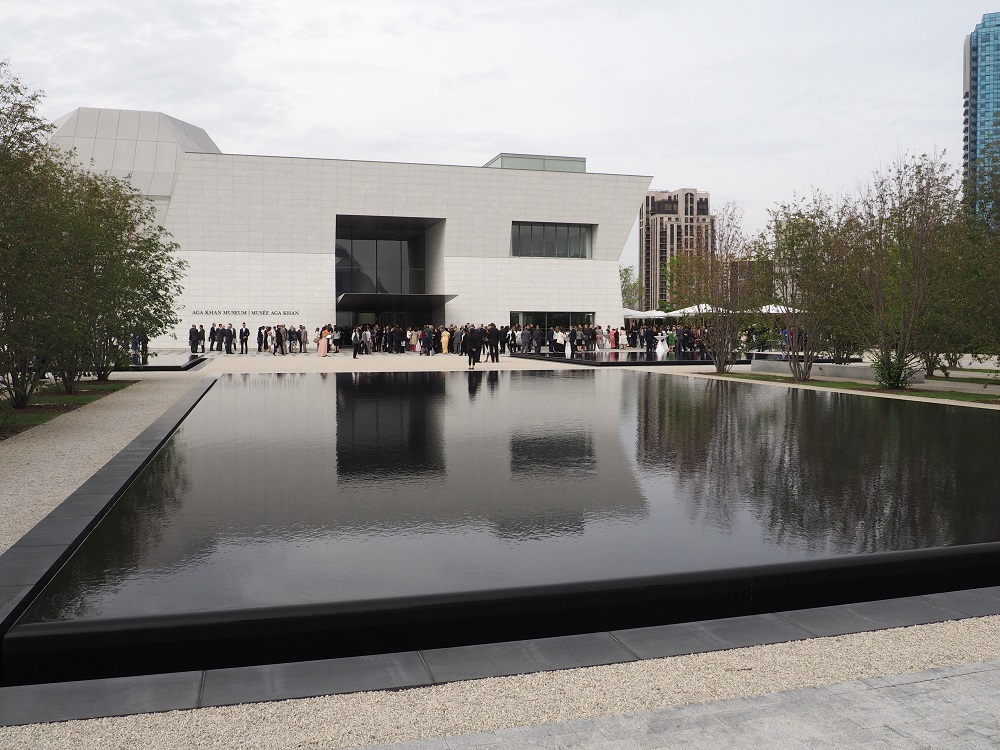
The Aga Khan Museum became the venue for a special reception for guests who attended the opening of the Aga Khan Museum on May 25, 2015. Photo: Simerg/Malik Merchant. Copyright.

The Aga Khan Museum became the venue for a special reception for guests who attended the opening of the Aga Khan Museum on May 25, 2015. Photo: Simerg/Malik Merchant. Copyright.

Date posted: May 27, 2015.

________________

We welcome your feedback. Please click Leave a comment. Subscribe to this website at top right, and receive automatic notifications of great new posts. Subscription is free!
Reflections on the Opening of the New Aga Khan Park: “Where Nature Gifts the Outdoors” by Navyn Naran and “Trinity” by Ikhwan Allani

WHERE NATURE GIFTS THE OUTDOORS

The Aga Khan Park. Photo: AKDN/Moez Visram. Copyright.

The Aga Khan Park. Photo: AKDN/Moez Visram. Copyright.

BY NAVYN NARAN

Its a place for contemplation,
for enjoyment,
for reflection,
In quiet pools with glimmering surfaces,
and bubbling of laughter.
In the presence of oneself or a group of others,
Welcome to the garden.

For nightime quiet,
For morning awakening,
And daytime walks
For enjoying the green earth,
the fresh smell of shrubs,
A place to sit
Where God is.
Where Nature gifts the outdoors.
Where my mind is at ease
and the murmur of the water,
the ripples from the raindrops
remind me how connected everything is.
How a central rhythm reverberates
twanging like a musical chord
in our individual auras…
Where does that send us?
I like the feeling that silhouettes these buildings
and transmits an energy reflected inside.
We are divine,
We are respectful,
We are compassionate,
We are all beautiful,
if we are only aware of who we are.

If sadness comes over you,
Come to the park.
And to the one side rises a spiritual space,
And to the other, a creative one.
Even in a busy place.
there is space.

Lines and curves, patios and earth.
It is,
My Park.
My museum.
A gift .
I too can enjoy the beauty and awakening.

~~~~~~~~~~~

TRINITY

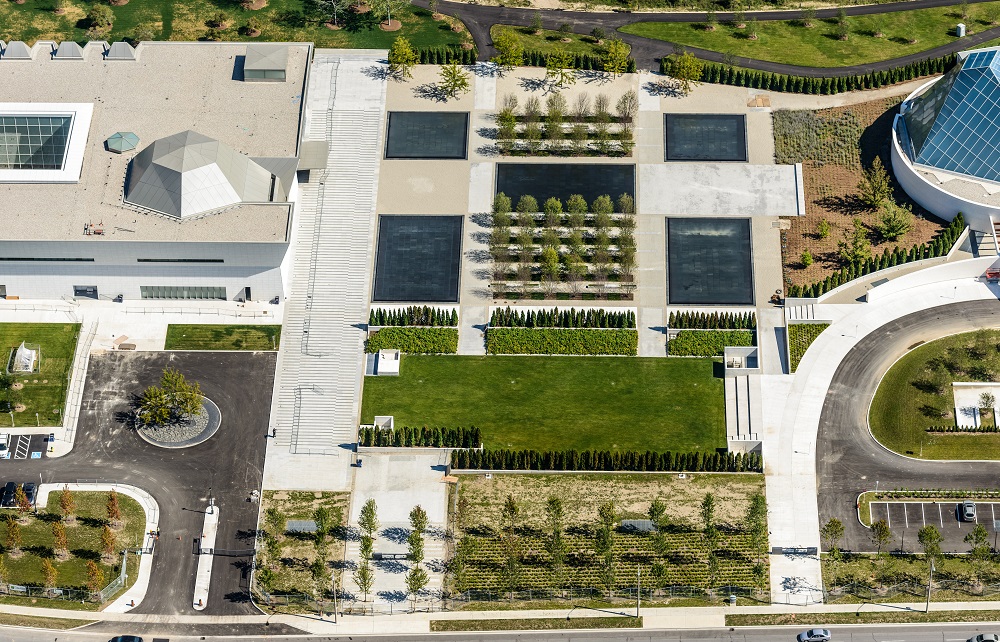
An aerial view of the Aga Khan Museum (left), the Aga Khan Park and the Ismaili Centre. Photo: AKDN/Geoff Grenville. Copyright.

An aerial view of the Aga Khan Museum (left), the Aga Khan Park and the Ismaili Centre. Photo: AKDN/Geoff Grenville. Copyright.

BY IKHWAN ALLANI

Bismillah-ir Rahman-ir Rahim

Alas,
Three spaces that lift the spirit,
Have come to life.
Ah, how my soul has been eager,
For this blessed day to arrive.

Masha’Allah

The Museum stands as a symbol
Of culture and knowledge,

A beautiful expression of the Islamic heritage.
Every art piece reflects our wonderful tradition,
Cherishing poets, scientists and mathematicians.
1400 years of Islamic history,
coming together as one,

Step by step, piece by piece,
what a collection this has become.

Blessed I am, to witness the past in the present,
O soul, breathe, Be one with this moment!

Subhan’Allah

The Park is majestic, a sight of pure aesthetic beauty,
Humbly sowing the seeds of brotherhood and unity.
Every blade of grass promises a new conversation,
As fresh gusts of wind whisper new information.
Flowing water pledges
a cleansing of the mind and spirit,

Every thought, every action, one with the universe,
no limits.

Blessed I am, to experience this natural ornament,
O soul, breathe, Be one with this moment!

Al-hamdulillah

The Ismaili Centre is the abode of the soul, paradise,
Where the Lord and His believer
become one, synchronize.

The flawless rock crystal
is the epitome of perfection above,

Where light and shadow blissfully coexist,
intoxicated in love.

Ya Allah, Ya Ali, Ya Muhammad,
resonate with every heartbeat,

Humbled, I prostrate before The One,
I am now complete!

Blessed I am, to free my mind
From worldly involvement,

O soul, breathe, Be one with this moment!

Shukran’Allah

May the Museum inspire the mind,
May the Park energize the body,
And may the Prayer hall purify the soul.

Ameen!

Date posted: May 26, 2015.
Last updated: May 31, 2015 (formatting)

Copyright.

__________

About the writers: A regular contributor to this website, Dr. Navyn Naran was born in Dar-es-Salaam, Tanzania, to Anaar and Badrudin Naran. After beginning her high school in the UK, her family immigrated to the USA where she has lived since. Dr. Naran went to medical school at Tufts University School of Medicine in Boston, MA. She currently works in the Paediatric field.

Ikhwan Allani graduated from the University of Toronto, with a Bachelors of Science Degree in Mental Health Studies. He currently works as a Medical Assistant at Appletree Medical Group, and has previously worked as a Research Consultant for The Centre for Mindfulness Studies, and as a Research Assistant at the University of Toronto.