PLEASE CLICK: Exclusive: Photos of Mawlana Hazar Imam’s Visit to Pakistan by the Late Abdul M. Ismaily (“Papa Jaan”)

Please click on image for exclusive photos by Abdul M. Ismaily
Date posted: February 20, 2016.
____________

PLEASE CLICK: Exclusive: Photos of Mawlana Hazar Imam’s Visit to Pakistan by the Late Abdul M. Ismaily (“Papa Jaan”)
Please click on image for exclusive photos by Abdul M. Ismaily
Date posted: February 20, 2016.
____________
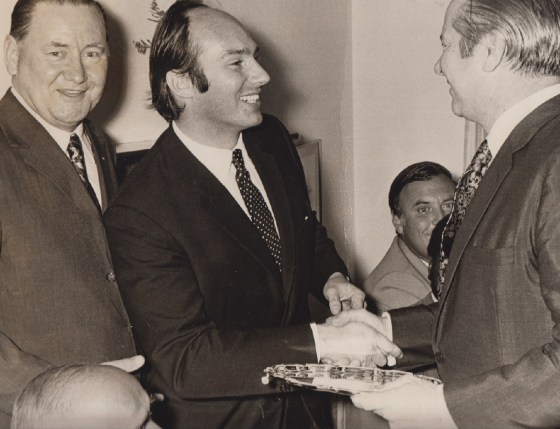
His Highness the Aga Khan being greeted by Mr. Michael Curtis of the Nation Group. Photo: Azhar Chaudhry. Sultan Jessa Collection.
Mr. Michael Curtis, a British Fleet Street editor and executive, was introduced to Mawlana Hazar Imam, His Highness the Aga Khan, just as he had been proclaimed the 49th Ismaili Imam by his grandfather, Imam Sultan Mahomed Shah, His Highness the Aga Khan III. His recruitment as a staff of His Highness was intended as a short term assignment as a speech writer and publicity organizer during a series of public appearances in Asia and Africa related to the Aga Khan’s installation as Imam. This brief assignment, however, grew into an engagement with His Highness that spanned several decades. The visionary Michael Curtis — who was noted by UK’s Guardian Newspaper as being 50 years ahead of his time in the paper’s obituary to the journalist — was asked to establish the Nation Media Group, which started publishing the Sunday Nation and subsequently the Daily Nation in Kenya, competing successfully with the existing colonial newspapers, the Tanganyika Standard and the East African Standard. At the culmination of the process of Africanising the Nation Group, Michael Curtis stepped down in 1977, after pioneering the introduction of the first web-offset presses installed outside the United States as well as increasing the Nation’s circulation to 165,000 and a readership reputed to touch three million.
Mr. Curtis moved to His Highness the Aga Khan’s Headquarters in Aiglemont, France, where he oversaw the Ismaili Imamat’s rapidly expanding non-denominational health and educational activities throughout South Asia and East Africa, until his retirement in 1994.
Michael Howard Curtis, who was born in Cambridge in 1920, died from cancer in 2004 at the age 84.
The following is an excerpt from a piece written by Mr. Michael Curtis for the Daily Nation’s special souvenir published on the occasion of His Highness the Aga Khan’s wedding in 1969 to Princess Salimah.
BY MICHAEL CURTIS (1920 – 2004)
It was 12 years ago in Dar-es-Salaam in October 1957. Prince Karim, His Highness the Aga Khan, was to be installed as successor to his grandfather in the first of a series of elaborate ceremonies to be held that year throughout Africa and Asia.
As personal aide to His Highness, I had gone ahead as part of an advance party and was greeted by the local leaders who told me that a serious problem had arisen. The only other such ceremony in living memory had taken place 72 years before in Bombay, when Aga Khan III had succeeded to the Imamate.
Not surprisingly, there was some doubt about the form the service would take and it seemed that an acute difference of opinion had arisen as to which verses of the Koran should be included. There was clearly nothing to be done but to await a ruling from the Aga Khan himself.
It was an unforgettable scene and took place in one of the state rooms of Government House where the Aga Khan was guest of the Colonial Governor at that time, the late Lord Twining. The Ismaili leaders were seated, as is their custom, cross-legged in a semi-circle around their young Imam and the two factions elaborated their different points of view.
To a non-Muslim the arguments were difficult to follow, but it was clear to me that a strong difference of opinion existed and that the Aga Khan would be called upon to resolve a ticklish point of theological doctrine.
This was the first occasion on which he had been called to exercise the responsibilities bequeathed to him by his grandfather. Still an undergraduate at Harvard, he looked very young, a trifle pale and tense as he listened to the rival claimants. There was a pause as they finished. Then the Aga Khan asked a question which obviously puzzled his followers. “Who,” he asked, “will recite the verses you wish me to decide upon?”
A chorus of voices assured him that a young man from Zanzibar had been procured for the recitation and that his fame as a psalmodist of the Koran was acclaimed far and wide.
“If that is so,” said His Highness, “let this young man suggest those verses in which his ability is most outstanding and thereafter I shall decide which particular chapters and verses will be selected.”
It was a solution that delighted everyone. The opposing factions accepted it gladly, for neither had lost face. The choirboy for certain would sing as he had never sung before — which in truth he did the following afternoon. It was a decision which reflected the instinctive simplicity of true wisdom and first revealed to me that I was serving no ordinary man.
I have related this tale before, and if I repeat it today it is because I know of no other anecdote which more aptly illustrates his wisdom and judgement.
Date posted: February 15, 2016.
____________
Profile of Mr. Michael Curtis compiled from Wikipedia, The Guardian and the Daily Telegraph. Please click on https://en.wikipedia.org/wiki/Michael_Curtis_(journalist), and the references cited in the article.
PLEASE CLICK: Exclusive: Photos of Mawlana Hazar Imam’s Visit to Uganda by the Late Abdul M. Ismaily (“Papa Jaan”)

Please click on image for more photos by “Papa Jaan” of His Highness the Aga Khan’s visit to Uganda. Photo: Abdul M. Ismaily. Copyright.
Editor’s Note: Following our recent posting of the late Abdul Mohamed Ismaily’s photographs of His Highness the Aga Khan’s historical first visit to Hunza in 1960, we now present you a collection of his photographs taken in Uganda. Please share this website with your family and friends via email and the social media. We thank our readers for their excellent response to the Hunza photos, and welcome your feedback by completing the applicable comments box or by sending an email to simerg@aol.com.
PLEASE CLICK: Exclusive: Photos of Mawlana Hazar Imam’s Visit to Uganda by the Late Abdul M. Ismaily (“Papa Jaan”)
Date posted: February 14, 2016.
____________
For Hunza photos, please click Exclusive: Photos of Mawlana Hazar Imam’s 1960 Visit to Hunza by the Late Abdul M. Ismaily (“Papa Jaan”)
In remarks made at an International Conference under the theme “Supporting Syria and the Region Conference”, in London, England, Mawlana Hazar Imam, His Highness the Aga Khan, today called for the establishment of ‘islands of stability’ in war-ravaged Syria that could provide areas of relative safety in the midst of conflict. The conference, co-hosted by Germany, Kuwait, Norway, the United Kingdom and the United Nations. was attended by representatives from sixty countries, including 30 world leaders.
“The situation in Syria is a close to hell as we are likely to find on this earth,” said UN Secretary General Ban Ki-moon. Referring to the Geneva meeting between the Syrian Government and the opposition parties that had broken down just a day earlier, he said the talks were “undermined by the continuous lack of sufficient humanitarian access, and by a sudden increase of aerial bombings and military activities within Syria”. He urged the warring sides to “get back to the table, not to secure more gains on the battlefields”.
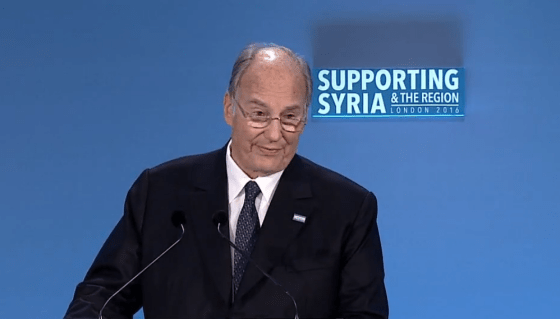
Deploring the devastation in war-ravaged Syria, Mawlana Hazar Imam, His Highness the Aga Khan, called for the establishment of “islands of stability” to provide areas of relative safety in the midst of conflict. The 49th Shia Ismaili Imam, pledged $200 million towards achieving peace, stability, and reconstruction in the country.
The British Prime Minister, David Cameron, said that “if ever there was a moment to take a new approach to the humanitarian crisis in Syria surely it is now,” mentioning the huge number of Syrians who “fear they have no alternative than to put their lives in the hands of evil-people smugglers in search of a future”.
The following are the transcript and video of the remarks made by His Highness the Aga Khan at the Supporting Syria and the Region Conference.
Bismillah-ir-Rahman-ir-Rahim
Co-hosts of the Conference on Supporting Syria and the Region,
Excellencies,
Ladies and gentlemen,
I thank the co-hosts for organising this much-needed initiative to deepen the understanding of, and garner international support for the peoples of Syria, Alongside all those present here today, I am deeply distressed over the indiscriminate and widespread devastation of life and property, including that of irreplaceable cultural assets which are the manifestation of Syria’s stunningly rich pluralistic history.
The Aga Khan Development Network (AKDN), which is the Ismaili Imamat’s global agency for supporting development, is fully engaged with the peace process under UN leadership, and is firmly committed to helping build a Syria that continues to respect pluralism, remains secular, and embarks on a political process led by Syrians.
AKDN’s development and humanitarian work in Syria began many years before the war. In the present situation, we have committed resources and efforts to ensure that Internally Displaced People receive humanitarian assistance, and are supported to sustain their livelihoods. We are taking two approaches:
First, we are supporting local community leaders, teachers, doctors, engineers and others to foster stability, protecting their families and their communities. We are thus building and strengthening civil society to take as much responsibility as possible for their own future.
Second, we are investing in communities, by supporting agriculture, income generation, early childhood education, schools, and hospitals. We also provide vocational training to create skills. Our goal is to sustain hope.
We aim to meet the urgent needs of the present, but where also possible to protect and strengthen the foundations for the future. We seek to create “islands of stability”, where there is public consensus, in the face of war. It is my conviction that “islands of stability” can be replicated wherever security permits. Investing in them will help prevent displacement of people and anchor communities that would otherwise flee as refugees.
Since the onset of conflict in 2011, AKDN has dedicated $50 million towards these endeavours in Syria and is now committing to increasing this investment to $200 million over the next four years. Our efforts will expand to wider areas of the country. Our goal is peace, stability, and reconstruction.
Thank you.
_________________
Date posted: February 4, 2016.
PREPARED AND COMPILED BY ABDULMALIK MERCHANT
(Publisher-Editor http://www.simerg.com and http://www.simergphotos.com)
As part of his famous Apostolic Journey to France in 2008, Pope Benedict XVI, on September 13, paid a visit to the “Institut De France” in Paris. The Pope, who had been elected as the 265th Pope of the Roman Catholic Church in 2005, was presented with a gold medal by the Institut, and also unveiled a plaque commemorating his visit. During his very brief remarks to the audience, the Pope expressed his gratitude to the Institut “both personally and as the successor of [Simon] Peter.”
His Highness the Aga Khan, Mawlana Hazar Imam, was also in attendance at the Institut de France as the Associate Foreign Member of the Académie des Beaux-Arts (Academy of Fine Arts), one of five learned societies within the Institut which was founded in 1795.
Everyone’s attention in the hall was drawn to Mawlana Hazar Imam and the Pope, with an extraordinary sense of interest and keenness, as the two faith leaders greeted each other with a handshake. Simerg is pleased to present this licensed copyright photo with permission from Getty Images.

Everyone’s attention is drawn to Pope Benedict XVI and His Highness the Aga Khan as they greet each other on September 13, at the Institut de France in Paris during an official visit by the Pope to France in 2008. Photo: Copyright. Getty Images. Published on Simerg/Simergphotos with a Licensing arrangement with Getty Images. Fench caption: Vue plongeante du pape BENOIT XVI serrant la main de l’AGA KHAN à son arrive sous la coupole de l’Institut de France à PARIS entouré de nombreux académiciens et autres personnalités dont Gabriel DE BROGLIE, Hélène CARRERE D’ENCAUSSE, Jean-François JARRIGE, Jean-François BACH, Arnaud D’HAUTERIVES, Michel ALBERT, Christian PONCELET président du Sénat, Jean TULARD, Alain DECAUX, Pierre-Jean REMY, Michel MOHRT, Max GALLO, le cardinal André VINGT-TROIS archevêque de Paris et le cardinal Paul POUPARD. (Photo by Philippe Petit/Paris Match via Getty Images).
In 2013, Pope Benedict dramatically resigned his position as the Head of the Catholic Church due to his deteriorating strength, advanced age and the heavy demands of being Pope, and retired at the Mater Ecclesiae, a small monastery located inside the Vatican State City. His present successor is Pope Francis I, born Jorge Mario Bergoglio.
SOME BRIEF NOTES ON THE PAPACY AND THE IMAMAT, AND SIMON PETER IN THE ROMAN CATHOLIC AND ISMAILI TRADITIONS
The Catholics adhere to the belief that the Pope is a successor of St. Peter. The succession of the pope is determined by a college of cardinals who elect the pope, while the office of the Imam of the Ismailis is a hereditary position. The Ismailis regard their 49th hereditary Imam as the direct descendant of the Prophet Muhammad (s.a.s) through Hazrat Ali (a.s.) and Hazrat Bibi Fatima (a.s.). In a speech made at the Canadian Parliament in 2014, the Aga Khan declared that “the Ismaili Imamat is a supra-national entity, representing the succession of Imams since the time of the Prophet.” And, in an interview with Politique International he said, “The religious leadership of the Ismaili Imam goes back to the origins of Shia Islam when the Prophet Muhammad appointed his son-in-law, Ali, to continue his teachings within the Muslim community. The leadership is hereditary, handed down by Ali’s descendants, and the Ismailis are the only Shia Muslims to have a living Imam, namely myself.”
In the Catholic tradition, the foundation for the office of the Pope is found primarily in Matthew, where Jesus is quoted as telling Simon Peter:
“You are ‘Rock,’ and on this rock I will build My Church and the gates of hell shall not prevail against it. And I will give unto thee the keys of the kingdom of heaven: and whatsoever thou shalt bind on earth shall be bound in heaven: and whatsoever thou shalt loose on earth shall be loosed in heaven.”
This series of successions of the Pope is known as “Apostolic Succession,” with the line of Bishops stretching back to the apostles, who lived during the time of Jesus. Simon Peter is recognized as having been the first Pope. Early Christians reserved the title of “Pope” for St. Peter’s successors.
However, in branches of Shia theology as well as Ismailism, Simon Peter’s role is seen as the direct parallel to that of Hazrat Ali as the first Imam. Ismailis along with some other Shia groups maintain that every major Prophet had a spiritual legatee (Waṣi) or successor called the Asas (foundation) who taught the inner meaning to those who had the capacity to understand it. In this regard, Adam had Seth; Noah had Shem; Moses had Aaron, and Jesus had Simon Peter. A well known sacred tradition of the Prophet Muhammad says that “Ali is to me as Aaron was to Moses,” confirming that Ali held the same level of authority as Aaron did.
Date posted: December 31, 2015.
Last updated: January 1, 2015.
_______________
We welcome your feedback, please click Leave a comment or send it to simerg@aol.com, subject: Aga Khan and Pope. Your feedback may be edited for length and brevity, and is subject to moderation. We are unable to acknowledge unpublished letters.
The following were used as references for the compilation of this piece:
Also see the following important features to learn more about the Aga Khan and the Ismaili Imamat:
“Islam Is a Faith of Reason” – SPIEGEL Interview with Aga Khan in which His Highness the Aga Khan responded to Pope Benedict’s controversial remarks concerning Islam that he had made in 2006; and Special Series: Ismaili Expressions on the Imamat and Imam of the Time — (I) The Preamble of the Constitution of the Shia Imami Ismaili Muslims
Editor’s note: In Part II of a special series on the 49th Ismaili Imam’s visits to numerous countries that he undertook during 2015, we cover India (April), Canada (May) and Greece (September). Please click A Marvellous Collection of Photos of His Highness the Aga Khan’s Visits to Canada, India and Greece.

Please click on photo for complete story and more pictures. Photo: Ontario Liberal Part. Copyright. Published with permission.
 BY SHARIFFA KESHAVJEE
The sacred space is set
The energy is invoked
The earth’s ochre red
Makes a path through the green.
Reflected in the Ismaili and Uganda flag
The logo of the university
Radiating, rippling outwardsOur world of rapid change
Meets in Uganda to break the ground
Nakawa is chosen to propel
the University Hospital
To reach beyond its borders
The frontiers of Science
Radiation ever outwardsDecades of decay at Mulago
A new seed of hope is planted
Pioneering pluralism
In Uganda’s rich soil
Revitalizing the land
For life long learning
Radiating ever outwards
The President and Imam’s vision
Bringing to the region
Appropriate advanced Health Care
The people can access
Here at home the very best
The youth empowered to remain
Here at home to give their best practices
Expanding ever outwardsThe people rejoice with lush voices
Their partners join hands to celebrate
This great milestone laid by the red bricks
That fulfills the words of the anthem
That ever propel outwards
Salute to the President and Imam for
Their vision, their respect
For national progress
Global standards of excellence
To be in the frontier of scientific
and humanistic knowledge
The best in the world
Propelling expanding ever outward
An emblematic crown over Uganda
Date posted: December 18, 2015.
Copyright: Shariffa Keshavjee/Simerg
______________
Nakawa – an area in the city of Kampala.
Mulago – The hospital located on Mulago Hill in Kampala.
Links to stories and videos of the Land Grant Ceremony of the new Aga Khan University Teaching Hospital to be built in Uganada:
Please also visit:
http://www.theismaili.org
http://www.akdn.org
http://www.ismailimail.wordpress.com.
Also, http://www.nanowisdoms.org is an excellent resource for speeches of Mawlana Hazar Imam.
We welcome your feedback. Please click Leave a comment.
Excerpts from a rare White House Oval Office address delivered by President Barack Obama on Sunday, December 6, 2015.

“the vast majority of terrorist victims around the world are Muslim. If we’re to succeed in defeating terrorism we must enlist Muslim communities as some of our strongest allies, rather than push them away through suspicion and hate…just as it is the responsibility of Muslims around the world to root out misguided ideas that lead to radicalization, it is the responsibility of all Americans — of every faith — to reject discrimination”
Good evening. On Wednesday [December 2, 2015 – ed.], 14 Americans were killed as they came together to celebrate the holidays. They were taken from family and friends who loved them deeply. They were white and black; Latino and Asian; immigrants and American-born; moms and dads; daughters and sons. Each of them served their fellow citizens and all of them were part of our American family.
“I know that after so much war, many Americans are asking whether we are confronted by a cancer that has no immediate cure….we are cooperating with Muslim-majority countries — and with our Muslim communities here at home — to counter the vicious ideology that ISIL promotes online.”
…The victims were brutally murdered and injured by one of their coworkers and his wife…it is clear that the two of them had gone down the dark path of radicalization, embracing a perverted interpretation of Islam that calls for war against America and the West…this was an act of terrorism, designed to kill innocent people.
As Commander-in-Chief, I have no greater responsibility than the security of the American people. As a father to two young daughters who are the most precious part of my life, I know that we see ourselves with friends and coworkers at a holiday party like the one in San Bernardino. I know we see our kids in the faces of the young people killed in Paris. And I know that after so much war, many Americans are asking whether we are confronted by a cancer that has no immediate cure.
…Since the attacks in Paris, we’ve surged intelligence-sharing with our European allies. We’re working with Turkey to seal its border with Syria. And we are cooperating with Muslim-majority countries — and with our Muslim communities here at home — to counter the vicious ideology that ISIL promotes online.
“Muslim leaders here and around the globe have…to speak out against not just acts of violence, but also those interpretations of Islam that are incompatible with the values of religious tolerance, mutual respect, and human dignity.”
….My fellow Americans….Let me now say a word about what we should not do.
…. We cannot turn against one another by letting this fight be defined as a war between America and Islam….ISIL does not speak for Islam. They are thugs and killers, part of a cult of death, and they account for a tiny fraction of more than a billion Muslims around the world — including millions of patriotic Muslim Americans who reject their hateful ideology. Moreover, the vast majority of terrorist victims around the world are Muslim. If we’re to succeed in defeating terrorism we must enlist Muslim communities as some of our strongest allies, rather than push them away through suspicion and hate.
That does not mean denying the fact that an extremist ideology has spread within some Muslim communities. This is a real problem that Muslims must confront, without excuse. Muslim leaders here and around the globe have to continue working with us to decisively and unequivocally reject the hateful ideology that groups like ISIL and al Qaeda promote; to speak out against not just acts of violence, but also those interpretations of Islam that are incompatible with the values of religious tolerance, mutual respect, and human dignity.
“It is our responsibility to reject religious tests on who we admit into this country. It’s our responsibility to reject proposals that Muslim Americans should somehow be treated differently. Because when we travel down that road, we lose.”
But just as it is the responsibility of Muslims around the world to root out misguided ideas that lead to radicalization, it is the responsibility of all Americans — of every faith — to reject discrimination. It is our responsibility to reject religious tests on who we admit into this country. It’s our responsibility to reject proposals that Muslim Americans should somehow be treated differently. Because when we travel down that road, we lose. That kind of divisiveness, that betrayal of our values plays into the hands of groups like ISIL. Muslim Americans are our friends and our neighbors, our co-workers, our sports heroes — and, yes, they are our men and women in uniform who are willing to die in defense of our country. We have to remember that.
“…no matter who you are, or where you come from, or what you look like, or what religion you practice, you are equal in the eyes of God and equal in the eyes of the law.”
My fellow Americans, I am confident we will succeed in this mission because we are on the right side of history. We were founded upon a belief in human dignity — that no matter who you are, or where you come from, or what you look like, or what religion you practice, you are equal in the eyes of God and equal in the eyes of the law.
Let’s not forget that freedom is more powerful than fear; that we have always met challenges — whether war or depression, natural disasters or terrorist attacks — by coming together around our common ideals as one nation, as one people. So long as we stay true to that tradition, I have no doubt America will prevail.
Thank you. God bless you, and may God bless the United States of America.
Date posted: December 7, 2015.
____________________
To watch and read the full transcript of President Obama’s speech please visit The White House.
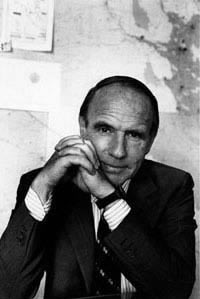
Prince Sadruddin Aga Khan (1933 – 2003). Photo: Wikipedia Commons.
Excerpts from a selection of statements, interviews and speeches that the late Prince Sadruddin Aga Khan gave when he was the United Nations High Commissioner for Refugees (UNHCR). Links to a fuller version of this article as well as all his UNHCR speeches and statements are provided below. Please also read our earlier post (1) His Highness the Aga Khan visits UNHCR and (2) UN material related to his uncle, Prince Sadruddin, whose name became synonymous with UNHCR,
~~~~~
“What is wealth without wisdom, or development without freedom? Every day selfishness, intolerance, lack of understanding and discrimination continue to add tragic pages to the history of our time.”
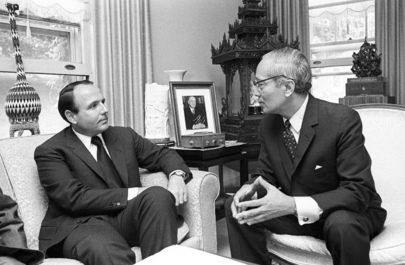
The late Prince Sadruddin Aga Khan with Secretary-General U Thant at his home on 23 June 1971. Photo: Teddy Chan, United Nations.
“When I was watching television during the tremendous Apollo experience recently and saw the world as a tiny sphere, it seemed incredible that, after so many years, it had not learned to live in peace, that men were still fighting, perpetrating injustice, committing crimes against humanity and persecuting individuals. It is, as I say, incredible that despite all the tremendous progress which has been achieved, men still resort to violence instead of to mediation and dialogue, within or outside the United Nations, and that this violence should produce refugees.”
“This century has been greatly guilty in its disrespect for the inalienable rights of man. None know this better than the millions of refugees, the unfortunate human beings who have been forced to seek safety outside their own country because of persecution and intolerance.”
“It is just as important to translate the articles inscribed in the Universal Declaration of Human Rights into everyday practice as it is to spread science and knowledge or to build dams and create new sources of power. For what is wealth without wisdom, or development without freedom?
“All nations desire peace, progress and justice – yet every day selfishness, intolerance, lack of understanding and discrimination continue to add tragic pages to the history of our time. Indeed, this century has been greatly guilty in its disrespect for the inalienable rights of man. None know this better than the millions of refugees, the unfortunate human beings who have been forced to seek safety outside their own country because of persecution and intolerance. How were they received? The nations were not always generous towards refugees, and in the past untold tragedies sometimes followed the arrival in countries of asylum.
“If there were to be more tolerance and more justice and more respect for the basic rights of human beings everywhere, there would be fewer problems of refugees in the world.”

The Canadian Human Rights Monument at Nelson Mandela Square on Elgin Street in Ottawa which bears the inscription “All human beings are born free and equal in dignity and rights.” This is part of Article 1 of the Declaration of Human Rights which goes on to state that we are all endowed with reason and conscience and should act towards one another in the spirit of brotherhood. Photo: Malik Merchant/Simerg.
“And what about the causes of refugee movements? Have they disappeared today? When asking myself this question I have in mind that persecution does not always take the extreme form of threatening life and liberty: it is also persecution when a person is hindered in the exercise of his economic activity because he belongs to a particular social groups or confesses to a particular religion or because of his ethnic origins; or when for the same reasons a group of individuals is segregated in crowded and unhealthy areas; or when parents are prevented from bringing up their children in accordance with their wishes.
“The resulting picture is a dark and wide canvas of human suffering that covers nearly all continents of our planet.”

Refugee children from Syria at a clinic in Ramtha, northern Jordan. Photo: Wikipedia.
~~~~~~
Confined to the wheelchair and blind in both eyes, the only important thing that Alia, below, brought with her ‘is my soul, nothing more – nothing material.’
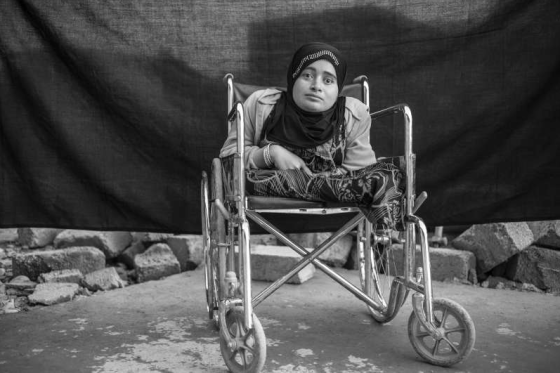
Alia sits in her wheelchair in Domiz refugee camp in the Kurdistan Region of Iraq. The 24-year-old was living with her family in Daraa, Syria, when fighting forced them to flee their home. Confined to the wheelchair and blind in both eyes, Alia says she was terrified by what was happening around her. ‘Men in uniforms came and killed our cow. They fought outside our house and there were many dead soldiers. I cried and cried,’ she says. Alia says the only important thing that she brought with her ‘is my soul, nothing more – nothing material.’ When asked about her wheelchair, she seems surprised, saying she considers it an extension of her body, not an object. Photo UNHCR/B.Sokol. Copyright.
~~~~~~

Ten-day-old Hawler is held by her mother, a Syrian Kurd who named her after a region in Kurdistan. The family’s makeshift campsite in the park is situated next to a mosquite ridden pool of water. Photo: UNHCR/S. Baldwin. Copyright.
“Here one is forced to admit that the causes of refugee problems are not diminishing, particularly when we remember that people also become refugees because of enmity between groups of different ethnic origin, or different religions, living in the same land; intolerance and hatred which create such tensions and personal conflicts that normal life for members of one of the groups becomes almost impossible and causes them to seek safety elsewhere. We must also remember the refugees who flee the repression and disturbances which accompany struggles for civic rights or national independence in several parts of the world. The resulting picture is a dark and wide canvas of human suffering that covers nearly all continents of our planet.
“We can only hope that gatherings such as this will bring the time nearer when Man will no longer have to fear what Aldous Huxley so well expressed as ‘Man’s inhumanity to Man’.”

UN High Commissioner for Refugees, Sadruddin Aga Khan, and Abel Alier, President of the Provisional High Executive council of the South Sudan visit the village of Kajo Kaji, South Sudan. Photo Credit: UN Photo/1972
“There is no doubt that, if there were to be more tolerance and more justice and more respect for the basic rights of human beings everywhere, there would be fewer problems of refugees in the world. But the day when we shall not have to think of refugees, unfortunately, would still appear to be far off; we can only hope that gatherings such as this will bring the time nearer when Man will no longer have to fear what Aldous Huxley so well expressed as ‘Man’s inhumanity to Man’.”
Date posted: November 7, 2015.
Please also see our post published earlier today, (1) His Highness the Aga Khan visits UNHCR and (2) UN material related to his uncle, Prince Sadruddin, whose name became synonymous with UNHCR
_________________
We welcome your feedback; please click Leave a comment
For a full version of this article, please click Prince Sadruddin Aga Khan: Some of the Causes for the Refugee Crisis – Injustice, Intolerance and Lack of Respect for Human Rights.
Speech excerpts compiled from UNHCR. Please click Speeches by Prince Sadruddin.
“We must do everything possible to prevent human suffering”

His Highness the Aga Khan with UNHCR chief Antonio Guterres at UNHCR Headquarters. Photo: The Ismaili.
His Highness the Aga Khan visited the UNHCR headquarters on November 6, 2015 to meet UN High Commissioner for Refugees, António Guterres, and discuss past and future cooperation in emergency operations around the world. His Highness is the 49th hereditary Imam of the Shia Imami Ismaili Muslims and nephew of the late Prince Sadruddin Aga Khan, who was high commissioner for refugees from 1965-77, a pivotal period in the organization’s history.
His Highness was greeted by UNHCR staff before he held private talks with the High Commissioner followed by a meeting with senior UNHCR officials on the long-standing partnership between the Aga Khan Development Network (AKDN) and the UN refugee agency.
The two sides looked at ways of further strengthening their partnership in the Middle East, Asia and East Africa. They discussed possible new joint initiatives in areas such as contingency planning; pluralism and diverse societies; and country specific cooperation in areas where AKDN is active as well as global advocacy to bridge the humanitarian-development divide.
They also discussed the global political situation and the effects of extremism and sectarianism on previously tolerant and diverse societies.
“We must do everything possible to prevent human suffering,” said the Aga Khan. “But preempting humanitarian emergencies requires investments, equipment and the necessary resources to ensure the response system is already in place when the crisis hits.”
The High Commissioner agreed, noting that “UNHCR and the Aga Khan Development Network have a lot in common. It is partnerships like ours that can help broaden the way the international community responds to crises today – through a stronger humanitarian-development link, and by promoting closer cooperation with actors from different cultural and geographical backgrounds.”
~~~~~
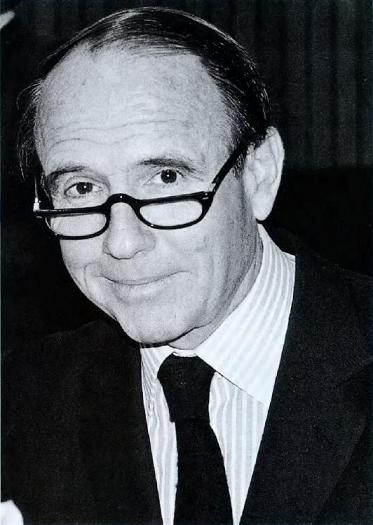
Prince Sadruddin Aga Khan (1933 – 2003). Photo: Unesco Courier. Copyright
Prince Sadruddin Aga Khan, uncle of Mawlana Hazar Imam, His Highness the Aga Khan, led the UN refugee agency during 12 years in the 1960s and 1970s, leaving an indelible print on UNHCR’s history. He led the agency through some of the most challenging moments, and his name became synonymous with UNHCR.
Prince Sadruddin became High Commissioner in January of 1966 at the age of 33 – the youngest person ever to lead UNHCR. Prior to becoming High Commissioner, he served for three years as Deputy High Commissioner. He was at the helm of the UN refugee agency during one of its most difficult periods. This included the 1971 the Bangladesh crisis, which uprooted 10 million people, the 1972 exodus of hundreds of thousands of Hutus from Burundi to Tanzania and the Indochinese boat people tragedy of the mid-1970s. In 1972, Prince Sadruddin played a key role in finding new homes for tens of thousands of South Asians expelled from Uganda by Idi Amin.
Prince Sadruddin’s entire adult life was devoted to humanitarian work. After leaving UNHCR at the end of 1977 at his own request, he served in various capacities, dealing with humanitarian situations in many parts of the world on behalf of the United Nations. These included Afghanistan and Iraq during the first Gulf war. He was also a trustee of a number of charity organisations. He published several books and received numerous national and international decorations, including the French Légion d’honneur and the United Nations Human Rights Award.
Simerg has come across many pieces of letters and documents on Prince Sadruddin in the UN archives, and we reproduce two below that serve as reminders of his priceless services to the United Nations.
~~~~~
[I] EXTENSION OF APPOINTMENT LETTER
“This extension…constitutes a new fixed term appointment on a $1 a year basis…”
Please click on image for enlargement
~~~~~~~~~~

~~~~~~~~~
[2] “AN EXCEPTIONAL MAN”
“Prince Sadruddin was a statesman in the truest sense of the word. By focusing on the protection of refugees, he represented the moral and compassionate side of the international community…He worked on behalf of the poor and dispossessed, while celebrating humanity through culture and art…”
Please click on image for enlargement
 Date posted: Saturday, November 7, 2015.
_______________
We welcome your feedback, please click Leave a comment.
Credits:
Please also see the following articles on Prince Sadruddin posted on this website:


