Simerg is an independent initiative dedicated to Ismaili Muslims, the Aga Khan — their Hereditary Imam — and the Ismaili Imamat, and Islam in general through literary readings, photo essays and artistic expressions
The following message from Mawlana Hazar Imam is reproduced from the The Ismaili, the official website of the community. Following the message, please read our supplication to Mawlana Hazar Imam as well as listen to the Ginan Sahebe Farman Lakhi Mokalea, beautifully recited by the late Shamshu Bandali Haji.
2 November 2020
My beloved spiritual children,
My Jamat is aware that the unprecedented Covid-19 pandemic continues to pose challenges to the health and quality of life of societies around the world, including the Jamat. This situation remains of deep concern and, as Imam-of-the-Time, I receive regular updates from the Jamati and AKDN institutions and agencies about the impact on my Jamat, and also the mitigation measures being undertaken.
I am pleased that, in many countries, we have been able to re-open our Jamatkhanas in compliance with government and public health guidelines, but my Jamat should remain aware that there is no room for complacency over the risks posed by the highly contagious coronavirus. The need for wearing masks, observing physical distancing and adhering to all the required hygiene protocols remains paramount, and should be treated as part of normal life for some time to come. Many countries are now seeing a resurgence of Covid-19 cases, which demands that my murids should take personal responsibility to protect themselves, their families, and their communities by carefully following the guidelines of the government and public health authorities.
The work on producing vaccines and other forms of therapies is advancing at a rapid pace and, Insha’Allah, over the coming months, we will see positive results which, in due course, will be beneficial to the Jamat and the population at large.
I send my most affectionate paternal, maternal loving blessings for the good health, happiness, safety and well-being of all my murids, with best loving blessings for mushkil-asan.
Yours affectionately,
Aga Khan
_____________
Supplication to Mawlana Hazar Imam, with recitation of Ginan
We submit our humble gratitude to our beloved Mawlana Hazar Imam for his blessings to the world wide Jamat on November 2, 2020.
We submit the following supplications from verse 1 of Pir Hasan Kabirdin’s Ginan Sahebe Farman Lakhi Mokalea:
“O brother! Listen, My Lord Ali has written and sent a Farman. The beloved Lord has remembered this servant today with kindness in his heart”
For a complete version of this post with translations in Arabic, French, Farsi, Gujarati, Portuguese, Russian, Tajiki and Urdu please click Barakah.
Date posted: November 3, 2020.
_____________________
Before departing this website please take a moment to review Simerg’s Table of Contents for links to hundreds of thought provoking pieces on a vast array of subjects including faith and culture, history and philosophy, and arts and letters to name a few.
We welcome feedback from our readers. Please complete the LEAVE A REPLY form below or, if you don’t see the box, please click Leave a comment. Your letter may be edited for length and brevity, and is subject to moderation.
“I am suggesting that freedom of expression is an incomplete value unless it is used honorably, and that the obligations of citizenship in any society should include a commitment to informed and responsible expression.” — His Highness the Aga Khan, February 2006
We owe it to ourselves to act with respect for others and to seek not to arbitrarily or unnecessarily injure those with whom we are sharing a society and a planet…..In a pluralist, diverse and respectful society like ours, we owe it to ourselves to be aware of the impact of our words, of our actions on others, particularly these communities and populations who still experience a great deal of discrimination” — Prime Minister Justin Trudeau, October 30, 2020 in response to a question from a journalist
Two weeks ago, French teacher Samuel Paty was beheaded after showing his class caricatures of the Prophet Muhammad in a civics class about freedom of expression. The cartoons had first appeared in the Danish newspaper Jyllands-Posten in 2005, and were reproduced in the French magazine Charlie Hebdo, which then led to killing of several of its journalists some years ago. The newspaper’s many critics worldwide said that the editorial staff was attacking Islam itself.
In response to the killing of the teacher recently, French President Emmanuel Macron defended the cartoons depicting Prophet Muhammad in the name of free speech, and said France would not “give up cartoons”, pledging that Islamists “will never have” his country’s future. This sparked protests and boycotts in a number of Muslim countries. Pakistani Prime Minister Imran Khan accused French President Emmanuel Macron of “attacking Islam” by defending the publication of the caricatures.
“Sadly, President Macron has chosen to deliberately provoke Muslims, including his own citizens, through encouraging the display of blasphemous cartoons targeting Islam & our Prophet PBUH (peace be upon him),” Khan said in a series of tweets. “It is unfortunate that he has chosen to encourage Islamophobia by attacking Islam rather than the terrorists who carry out violence, be it Muslims, White Supremacists or Nazi ideologists,” Khan wrote.
This week, three more people were in killed near a a church in Nice, in southern France, by a young Tunisian man. President Macron’s defiant statements may have triggered the brutal stabbings.
Canada’s parliament observed a moment of silence on Thursday, October 29. As he had done the day before with the leaders of the European Union, Prime Minister Trudeau condemned the “awful and appalling” extremist attacks in France.
However, in response to a newspaper’s question a day later, while defending free speech, Prime Minister Trudeau distanced himself from the position of French President Macron and pleaded for a careful use of free speech, He stated that freedom of speech was “not without limits” and it should not “arbitrarily and needlessly hurt” certain communities.
“We owe it to ourselves to act with respect for others and to seek not to arbitrarily or unnecessarily injure those with whom we are sharing a society and a planet. We do not have the right for example to shout fire in a movie theatre crowded with people, there are always limits,” the Prime Minister argued.
“In a pluralist, diverse and respectful society like ours, we owe it to ourselves to be aware of the impact of our words, of our actions on others, particularly these communities and populations who still experience a great deal of discrimination,” he said.
The Aga Khan on “The Great Conversation” of Our Times — Being Unafraid of Controversy but Also Being Sensitive to Others
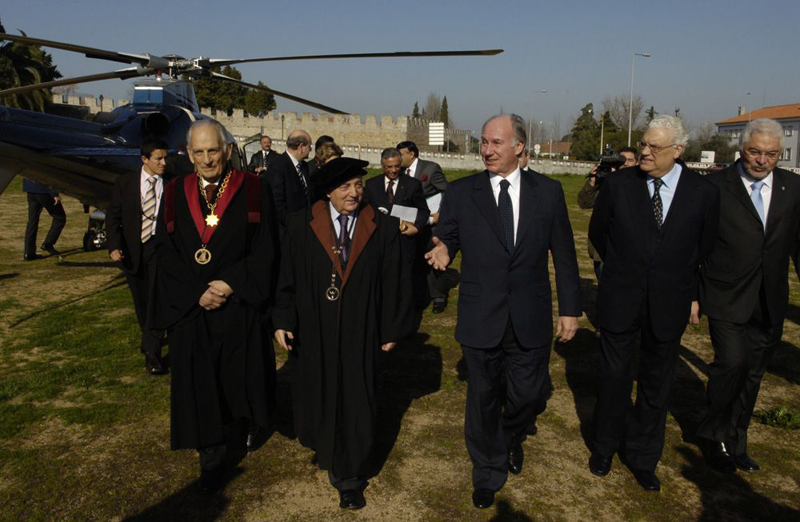
His Highness the Aga Khan arrives at the University of Évora , Portugal and is greeted by Professor Adriano Moreira, Manuel Ferreira Patricio, Rector of the University, Portuguese Foreign Minister, Freitas do Amaral and José Ernesto Oliveira, Mayor of the city of Évora. Photo: AKDN/Gary Otte.
Mawlana Hazar Imam, His Highness the Aga Khan, touched on the controversy soon after the cartoons first appeared in the Danish journal during a speech that he delivered at the University of Evora in Portugal. His remarks are as follows:
“An important goal of quality education is to equip each generation to participate effectively in what has been called “the great conversation” of our times. This means, on one hand, being unafraid of controversy. But it also means being sensitive to the values and outlooks of others.
“This brings me back to the current headlines. For I must believe that it is ignorance which explains the publishing of those caricatures which have brought such pain to Islamic peoples. I note that the Danish journal where the controversy originated acknowledged, in a recent letter of apology, that it had never realized the sensitivities involved.
“In this light, perhaps, the controversy can be described less as a clash of civilizations and more as a clash of ignorance. The alternative explanation would be that the offense was intended — in which case we would be confronted with evil of a different sort. But even to attribute the problem to ignorance is in no way to minimize its importance. In a pluralistic world, the consequences of ignorance can be profoundly damaging.
“Perhaps, too, it is ignorance which has allowed so many participants in this discussion to confuse liberty with license — implying that the sheer absence of restraint on human impulse can constitute a sufficient moral framework. This is not to say that governments should censor offensive speech. Nor does the answer lie in violent words or violent actions. But I am suggesting that freedom of expression is an incomplete value unless it is used honorably, and that the obligations of citizenship in any society should include a commitment to informed and responsible expression.
“If we can commit ourselves, on all sides, to that objective, then the current crisis could become an educational opportunity—an occasion for enhanced awareness and broadened perspectives.
Before departing this website please take a moment to review Simerg’s Table of Contents for links to hundreds of thought provoking pieces on a vast array of subjects including faith and culture, history and philosophy, and arts and letters to name a few.
We welcome feedback from our readers. Please complete the LEAVE A REPLY form below or, if you don’t see the box, please click Leave a comment. Your letter may be edited for length and brevity, and is subject to moderation.
Karim H. Karim’s beautiful poem is followed by a brief note from the editor as well as some pictures that he set off to take at Toronto’s Aga Khan Park, shortly after he had been inspired by the poem.
By KARIM H. KARIM
(Dedicated to all who are sad)
Sweetest are the songs That we sing in sorrows; Tears swell in our eyes Even when joy overflows.
Naïve folk fear the thorns Where flowers do flourish, Fresh with hues of hope.
Dawn’s light is nearest When sadness is darkest, Sings the black night In stars’ silent twinkle.
Embrace the aching pain, Learn to laugh a little And to comfort others.
Let storms beware That we are lighting The lamps of love.
Date posted: October 20, 2020. Last updated: October 22, 2020.
__________________
(Based on Shankardas Shailendra’s (1923-1966) “Hain Sabse Madhur Wo Geet,” which evokes Percy Shelley’s (1792-1822) line “Our sweetest songs are those that tell of the saddest thought.”)
Karim H. Karim
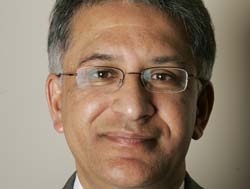
About the author: Karim H. Karim is the Director of the Carleton Centre for the Study of Islam and a Professor at Carleton University’s School of Journalism and Communication.
__________________________
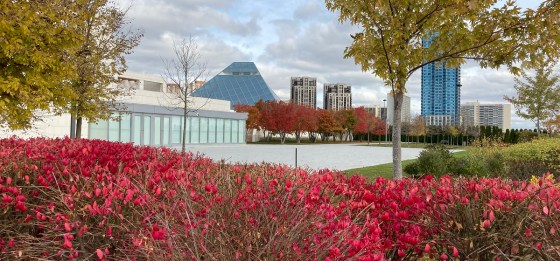
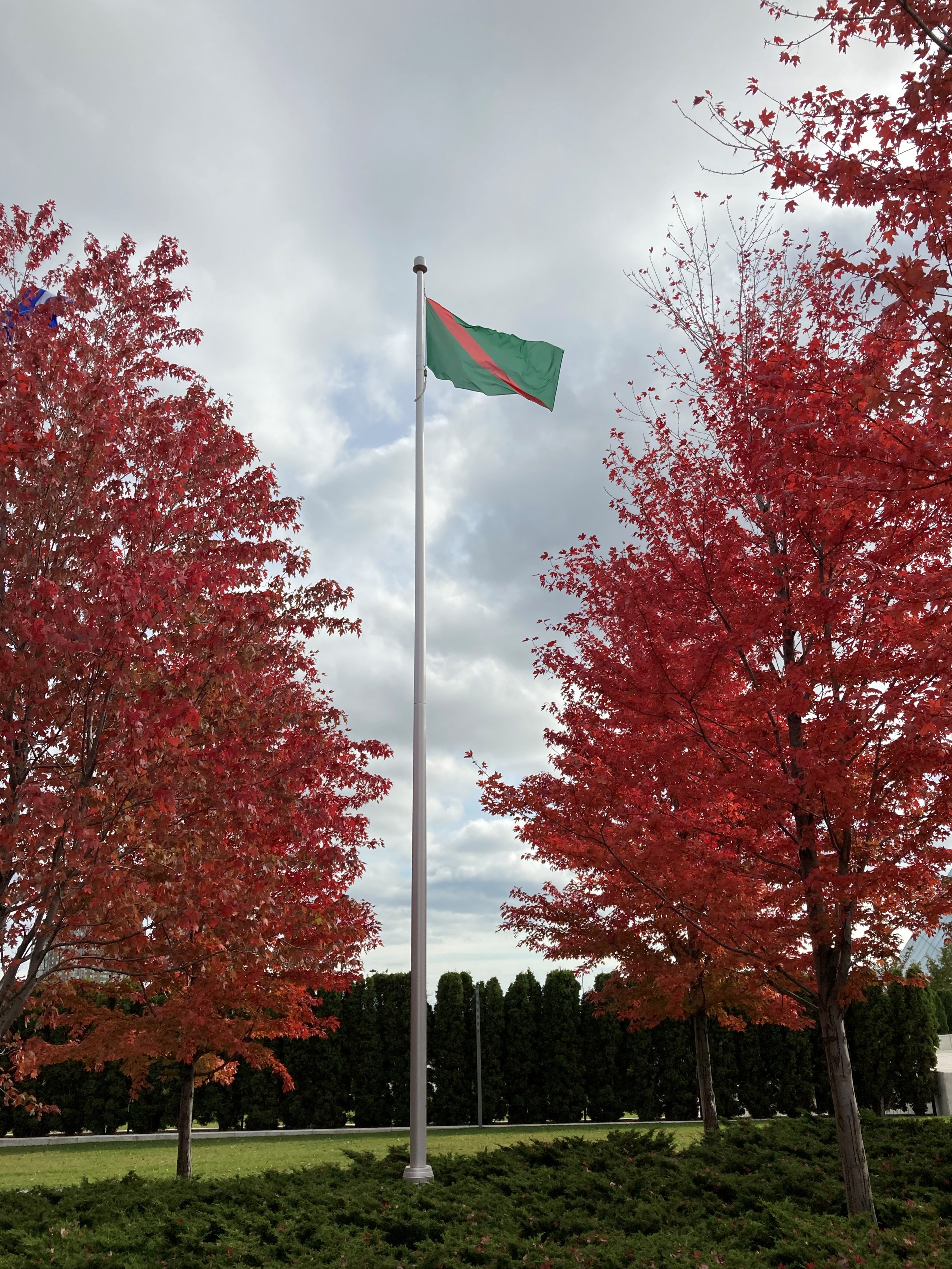
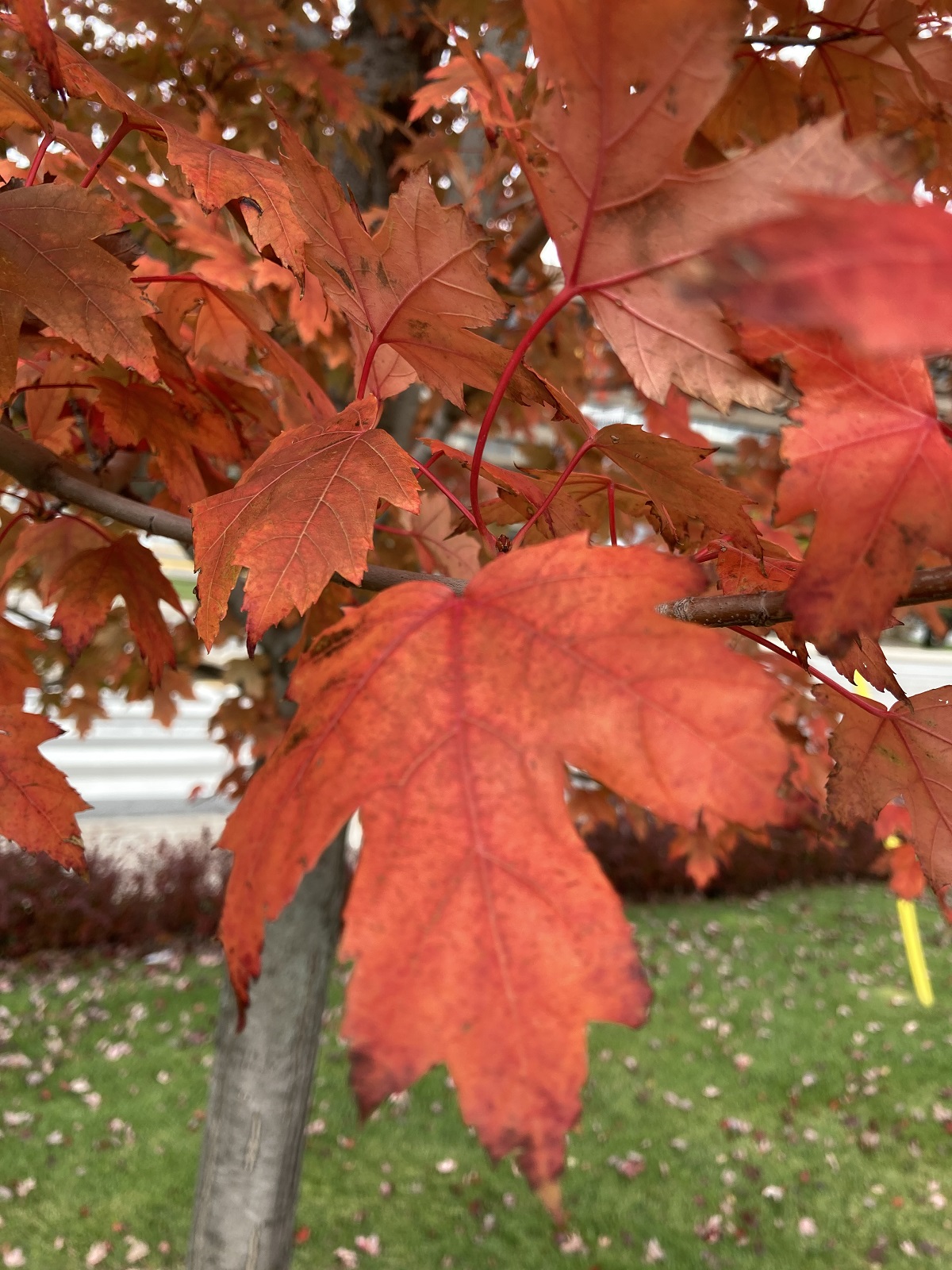
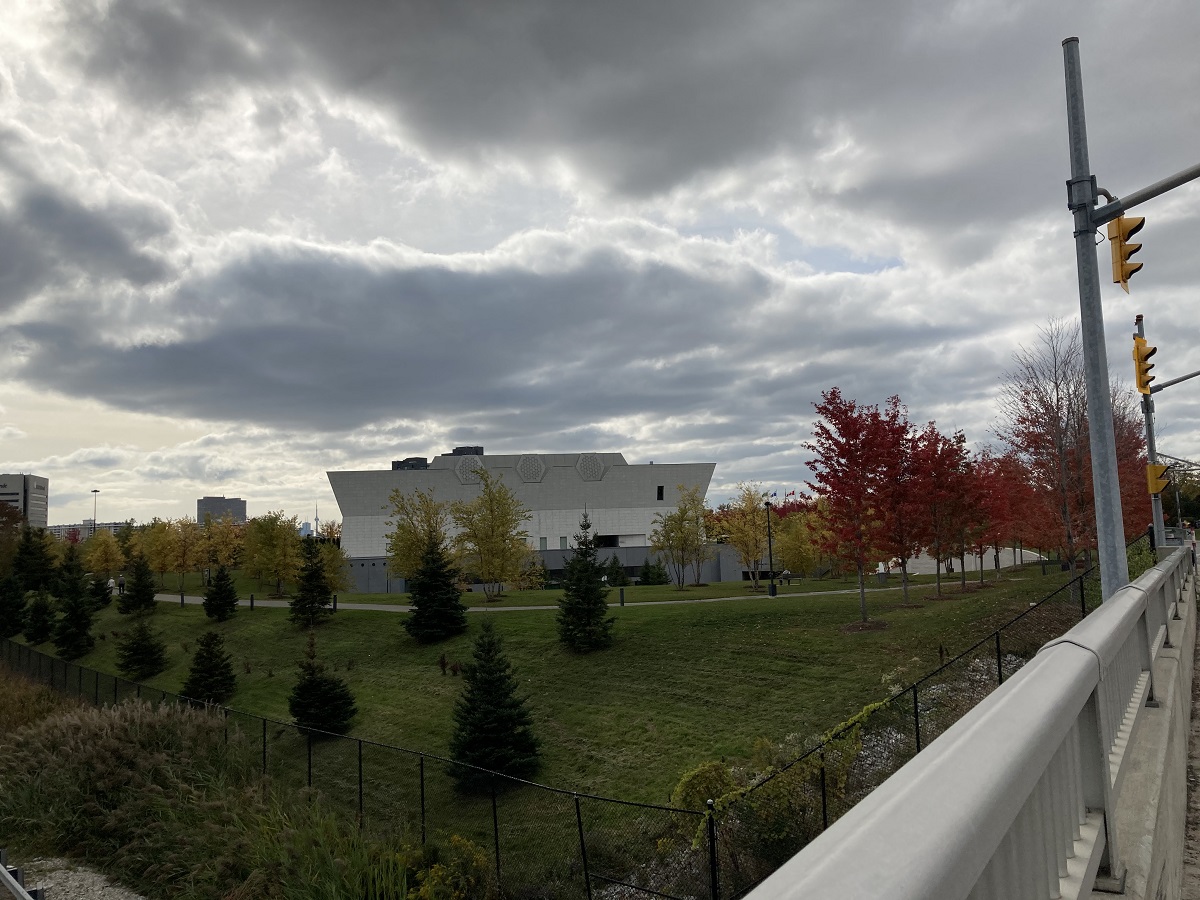
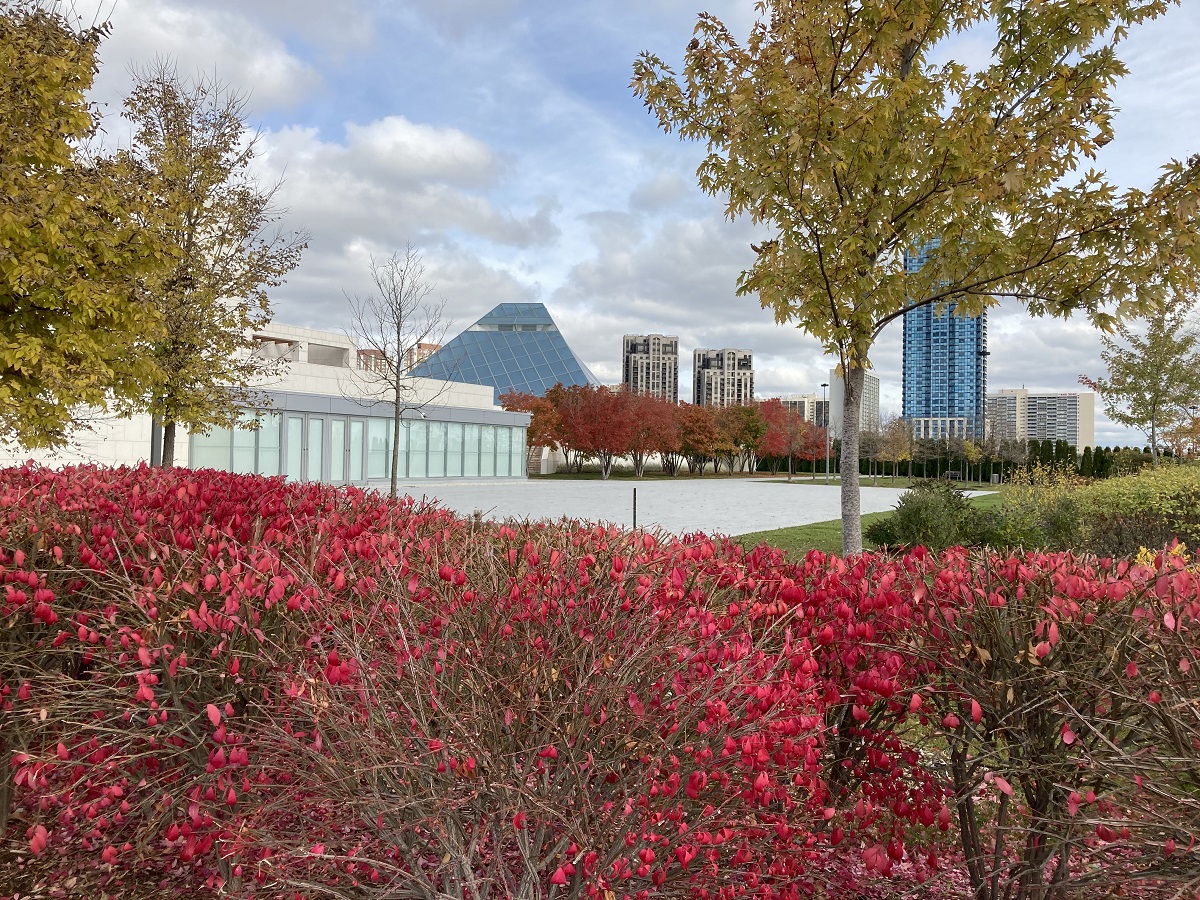
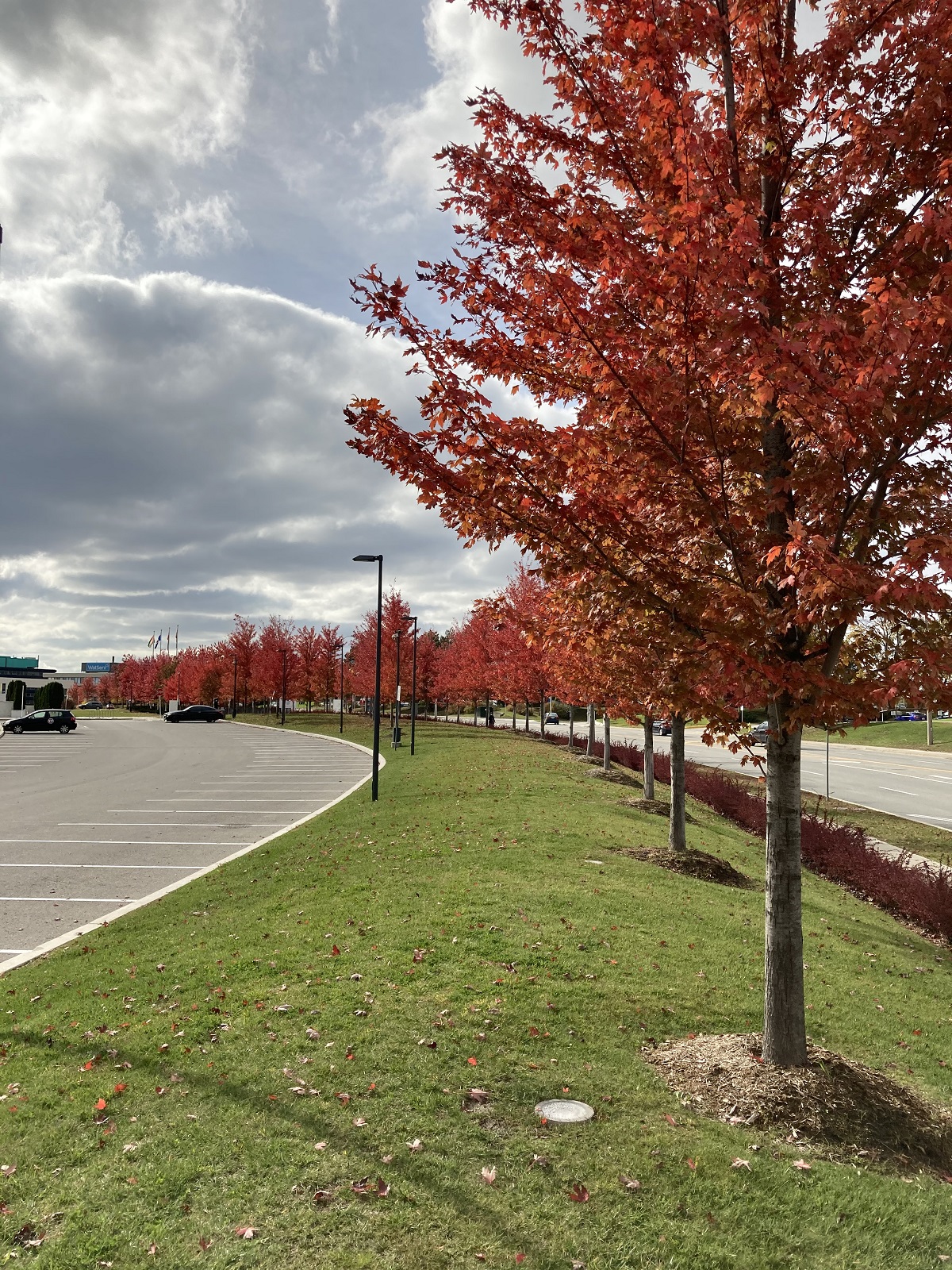
Editor’s note: I was truly feeling sad earlier today (October 20), thinking about my daughter and my mother whom I haven’t visited for several months due to Covid-19. I was lonely, and also worried about my health in these uncertain times! My friend Karim H. Karim who is nearly 450 kms from me must have sensed that. I was waiting for another article from him altogether, not a piece dedicated for those who are sad. In my reply to his humble submission, I told him I would review it in a few days time! However, I decided to read it straight away, and his piece truly cheered me up. And in that moment of becoming a lot less sad, I gained some energy and headed to my favourite place! Yes, the Aga Khan Park, with two incredible buildings, the Ismaili Centre and the Aga Khan Museum around it — gracious gifts from Mawlana Hazar Imam, His Highness the Aga Khan.
Admittedly, I haven’t been to the Park for a number of weeks, passing by it only in my car. The photographs that I took during my visit to the Park, represent my joyous moments, that I owe to Karim’s beautiful rendition. As I walked to the park, I was reminded of Mawlana Hazar Imam’s quote where he says that if one has faith, one may be worried, one may at times feel sad but one will never be unhappy. How true! Enjoy the photos, which were inspired by the poem.
Date posted: October 20, 2020. Last updated: October 21, 2020 (new link).
______________________
We welcome feedback from our readers. Please complete the LEAVE A REPLY form below or, if you don’t see the box, please click Leave a comment. Your letter may be edited for length and brevity, and is subject to moderation.
Before departing this website please take a moment to review Simerg’s Table of Contents for links to hundreds of thought provoking pieces on a vast array of subjects including faith and culture, history and philosophy, and arts and letters to name a few.
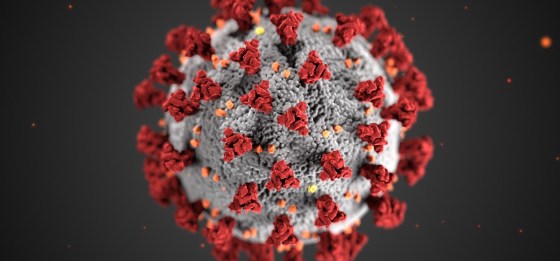
This article was updated on October 5, 2020 with the new details of President Trump’s COVID-19 treatments. It is republished from The Conversation under a Creative Commons license. You may read the original article by clicking HERE.Note: The featured image shown at top of this post and the first image shown below are reproduced from the website of USA’s Centre for Disease Control — they are not part of the original article in The Conversation.
We are both physician–scientists at the University of Virginia. We care for COVID-19 patients and conduct research to find better ways to diagnose and treat COVID-19.
Transmission electron microscopic image of an isolate from the first U.S. case of COVID-19, formerly known as 2019-nCoV. The spherical viral particles, colorized blue, contain cross-section through the viral genome, seen as black dots. Image Credit: Centre for Disease Control and Prevention, USA (cdc.gov.).
Here we are sharing what physicians have learned over the past eight months treating various stages of this disease. Early in the year, there were few known treatments for people who showed severe COVID-19 symptoms apart from sustaining them on ventilators. Now, several months later, there are a handful of treatments, including drugs, that give doctors far better tools to heal patients, particularly very ill ones.
Is treatment different depending upon how sick one is?
The approach to therapy differs depending on the stage of the illness.
It is therefore important to not only diagnose COVID-19 but to define whether the infection is asymptomatic or pre-symptomatic. Also, how sick a person is – whether it’s a mild, moderate, severe or critical case – changes how a patient is treated.
What treatment is there for asymptomatic or pre-symptomatic infection?
Asymptomatic or pre-symptomatic infection is defined as having a positive diagnostic test for COVID-19 (a PCR or antigen detection test) without symptoms of infection.
Someone with mild COVID-19 does not have shortness of breath, chest pain or evidence of pneumonia during a chest X-ray. The exception to this is children with mild disease who may still have an abnormal X-ray.
There are no treatments that have been demonstrated to benefit those with mild disease. However, such patients should be well versed on the symptoms of moderate illness, so that they and others recognize if they progress to moderate illness. This is important because progression to more severe disease can be rapid – typically five to 10 days after initial symptoms.
Moderate illness
Moderate illness is defined as shortness of breath, chest pain, or on a chest X-ray, evidence of pneumonia but without hypoxia (low blood oxygen levels).
Severe illness is identified by a rapid breathing rate (greater than 30 breaths per minute) or low oxygen levels in the blood, which is called hypoxia. Also, evidence of pneumonia affecting more than half of the lungs, as diagnosed on a chest X-ray, is a sign of a severe case.
Critical illness occurs when the patient becomes so sick that vital organs begin to fail and they require medicines or other therapies to support these vital functions.
If failure of the lungs is severe enough, physicians may put the patient on a mechanical ventilator or high quantities of oxygen. There is no evidence that remdesivir treatment is beneficial during this critical phase. Dexamethasone is still recommended for treatment because it has been shown to decrease mortality.
What therapies don’t work or are still being tested?
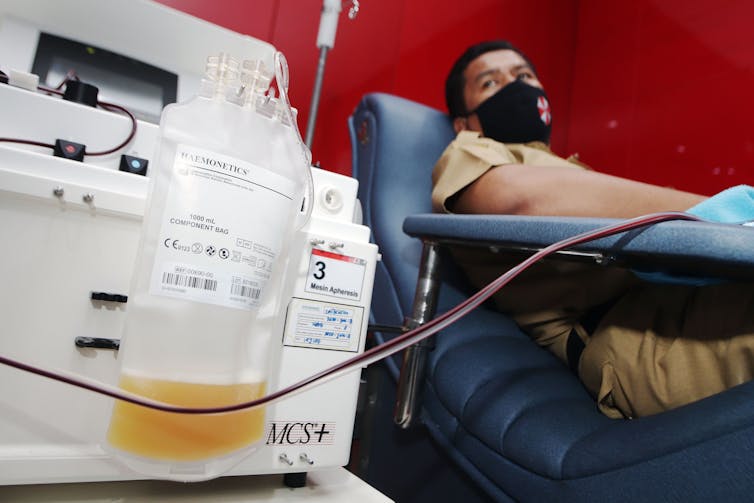
Other potential treatments are still in the middle of clinical trials to test whether they are effective. These include human convalescent plasma, which contains antibodies that should bind to the virus and prevent it from entering cells.
There are also drugs to modulate the immune response, such as interferons and inhibitors of IL-6, which in some cases may prevent a harmful overreaction of the immune system, commonly referred to as cytokine storm.
Newer treatments, including one President Trump has been given
Right now there is no approved treatment for outpatients with asymptomatic or mild to moderate COVID-19. But this appears to be changing, with Eli Lilly’s and Regeneron’s release of clinical trial data on the use of laboratory-manufactured antibodies against the spike glycoprotein of the new coronavirus.
In this approach, as with convalescent plasma, the antibodies work by binding to the virus and blocking it from entering cells and multiplying. This could be particularly effective early on in infection before illness becomes severe.
In an early preview of data from an ongoing phase three clinical trial, subjects with COVID-19 who received an injection of a cocktail of monoclonal antibodies against the SARS-CoV-2 spike glycoprotein had symptoms that lasted only seven days rather than 13. The amount of virus remaining in the nasopharynx – the upper part of the throat behind the nose – was also reduced.
An update from the president’s physician on the afternoon of Oct. 2 indicated that, as a precautionary measure, the president received an infusion of Regeneron’s antibody cocktail. This treatment is not widely available, and can be given only under what is called compassionate use.
Date posted: October 6, 2020. Last updated: October 7, 2020 (new external links).
____________________
Before departing this website please take a moment to review Simerg’s Table of Contents for links to hundreds of thought provoking pieces on a vast array of subjects including faith and culture, history and philosophy, and arts and letters to name a few.
_____________________
We welcome feedback from our readers. Please complete the LEAVE A REPLY form below. Your letter may be edited for length and brevity, and is subject to moderation.
Approaching the doors of the Jamatkhana Heads bowed in all humility Lower your gaze Pause a moment Softly say a heartfelt prayer Shukhrana, Al Hamdu’lillah The blessed day has arrived Quieten your thoughts Touch your heart Hand on your heart Smile with your eyes Greet gently Gracious to one and all Carry your mehmani in your heart Let Allah’s light guide you To His threshold Let divine grace Touch your praying hands Embrace the silence Be at peace The sacred space Awaits your soulful zikr
Date posted: August 16, 2020.
_______________________
About the author: Parin’s love of books, music, theatre, and travel sometimes leads her to writing about her experiences, and the reopening of Jamatkhanas inspired her to pen a few lines here. Originally from Kenya, she studied at Makerere University, Kampala, and at the University of Dijon, France, and lived in Oxford, England, before moving to Canada. She has been in Doha, Qatar, for the last 12 years and living in the Middle East has enhanced her appreciation of Islamic art and culture. She is presently back in Calgary.
We welcome feedback from our readers. Please complete the LEAVE A REPLY form below or click on Leave a comment. Your letter may be edited for length and brevity, and is subject to moderation.
____________________
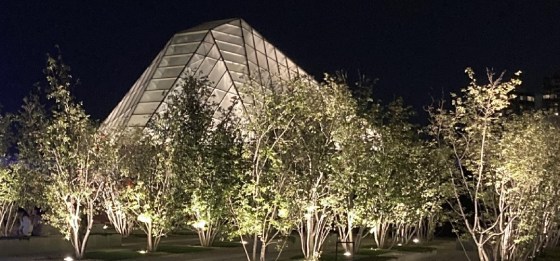
The featured photo shown at the top of this post was taken on the night of Friday August 14, 2020, when the Headquarters Jamatkhana dome at the Ismaili Centre Toronto was lit up for the first time since mid-March when Jamatkhanas across Canada closed down due to the Covid-19 pandemic. The spectacular lit up dome is visible from the busy Don Valley Parkway, and is much admired by pedestrians and drivers alike as they drive through the Parkway or walk along Eglinton Avenue and Wynford Drive. The photo and the beautiful poem penned by Parin Verjee celebrate the opening of the Headquarters Jamatkahana on Monday August 17, as well as other Jamatkhanas that have opened in recent days or will be opening in the coming days.
___________________
Before departing this website please take a moment to review Simerg’s Table of Contents for links to hundreds of thought provoking pieces on a vast array of subjects including faith and culture, history and philosophy, and arts and letters to name a few.
The Ismaili Canada’s iicanada.org portal proudly announces, “Jamatkhana Reopening Welcome Back,” and goes on to state, “As Jamatkhana capacity is limited due to COVID-19 regulations, and to enable contact tracing in the event of a potential infection event, all individuals will need to register online to gain access to Jamatkhana. Pre-registration allows Jamati members to indicate their preferred dates and times of Jamatkhana attendance (including Jamatkhanas not yet open), and be allocated a confirmed spot ahead of time.”
The Ismaili Centre Jamatkhana, known as Toronto’s Headquarters Jamatkhana, shown above as a featured photo, opens on August 17.
Speaking to a close friend in Ottawa, I am told that yesterday’s (Tuesday, August 12, 2020) opening of the Jamatkhana filled it up to the maximum persons permitted in the prayer hall. It felt like a commemorative occasion with the announcement of appointments of new Majlis Mukhi and Kamadia Sahebs as well as Mukhiani and Kamadiani Sahebas. From Vancouver, I get a video from a friend who attends his local Jamatkhana after more than 150 days, since the Jamatkhana closures in mid-March, and he watches the sky with the moon illuminated at 42%. His face glows, and as he reaches his Jamatkhana his heart is filled with joy.
Narratives circulate on the social media and Whatsapp about 1st day experiences in the Jamatkhana after a long long lay-over, especially from Portugal, where Jamatkhanas first opened a few weeks ago.
A comprehensive list of Jamatkhana opening days, registration details etc. for Canada is available at iicanada.org.
The.Ismaili image on Jamatkhana reopenings in Canada
For openings and latest announcements of Jamatkhana openings in some other parts of the world please click FRANCEand PORTUGAL. A few USA Jamatkhanas in small centres were scheduled to open several days ago but the openings have been delayed due to a surge of coronavirus infections in numerous states.
Regrettably, the country portals available through the.ismaili community website are not updated with the status of Jamatkhana openings — except for Canada and France, and local Jamati members in various countries are often informed through their respective Jamati institutions newsletters or Apps. For example in Canada the link iicanada provides a list of Jamati newsletters that you may subscribe to. Of particular importance on the list would be the weekly Al-Akhbar for different regions, BC, Alberta, Ontario etc.
It is advisable that readers download their respective country wide institutional Jamati Apps available in their regions or subscribe to the weekly newsletters for the latest information. However, not everyone is familiar about downloading and using apps, and users accessing the internet via notebooks and desktops are put at a disadvantage.
It is important that there is some consistency about how information for different countries is available through the different portal Ismaili websites for non App users. I was personally confused, and would be happy to stand corrected if others don’t find that to be the case.
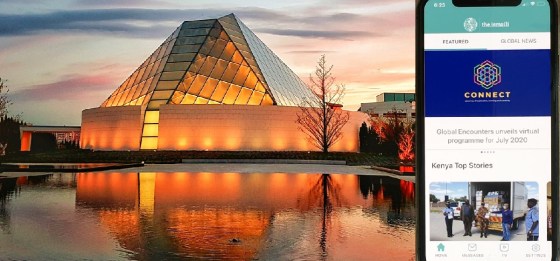
For everyone totally comfortable about downloading and using Apps, as we live in an App driven world, I would request readers to visit the official Ismaili community page where instructions are provided for downloading the.Ismaili app onto your hand held device. The Ismaili states that “with the app, which is available to download for free from the Apple App Store and Google Play Store, users can stay up-to-date on global and national news, receive official messages from Jamati institutions, and watch The Ismaili TV live.”
Among other things, the App will “allow you to receive notifications, including breaking news and official messages from Jamati Institutions.” It will also allow you to see news from other countries around the world by toggling to as many countries as the readers wishes to. Again, please visit the page the.Ismaili app.
Date posted: August 13, 2020.
Before departing this website please take a moment to reviewSimerg’s Table of Contents for links to hundreds of thought provoking pieces on a vast array of subjects including faith and culture, history and philosophy, and arts and letters to name a few.
____________________________________
If you wish to leave a comment, please complete the LEAVE A REPLY form below or click on Leave a comment. Your letter may be edited for length and brevity, and is subject to moderation.
Share memories of members of your family who you have lost during the Coronavirus pandemic, either due to Covid-19 or any other cause. Please write to Malik Merchant at Simerg@aol.com; you must include your full name and contact information.Please read earlier tributes in Issue # 1.
___________
Inna lillahi wa inna ilayhi raji’un “Surely we belong to God and to Him we return” — Holy Qur’an, 2:156
Huzurmukhi Madatali Merali Jamal (Canada)
Madatali Jamal, age 89 (d. .April 2020)
Submitted by Shahida Mamdani-Sunderji, daughter of Madatali Jamal
Huzurmukhi Madatali Merali Jamal (April 30, 1930 – April 13, 2020), husband of Dilshad Jamal for 66 years, father of Shahida Mamdani-Sunderji and Amin Jamal, father-in-law of Begum Jamal, and grandfather of Shelina, Shairoz, Rahim and Aminmohamed, passed away in Ottawa during the spring of 2020, just over two weeks short of his 90th birthday. He was surrounded by his family in volunteers uniform at his funeral.
For the past several years, Mr. Jamal had dedicated his service to the Ottawa Jamat, at both the old and new Jamatkhana locations on Carling Avenue and Conroy Road, respectively. For years he lovingly tendered the Jamatkhana garden on 991 Carling Avenue. In the evenings, Mr. Jamal would present himself regularly as a volunteer at both the Jamatkhanas. His record of Jamatkhana attendance and services as volunteer was impeccable. He was accompanied and supported in his service and Jamatkhana attendance by his loving wife of 66 years, Dislshad. He served the Ottawa Jamat enthusiastically until the very last months of his life, when dementia took over.
Born and raised in Kakumiro, Uganda, he and his family settled in Scotland in October 1972 following the expulsion of Asians from Uganda, decreed by dictator Idi Amin. Huzurmukhi Jamal held positions of Mukhisaheb and Kamdiasaheb during his years in Uganda and Scotland. In 1985, he migrated with his family to Ottawa.
His dedication to the house of Imamat inspired his children to serve in numerous positions in the Jamat. His son Amin and wife Begum served as the Kamadia and Kamadiani of Ottawa Jamat for 4 years, which included the Golden Jubilee period of Mawlana Hazar Imam’s Imamat from July 11, 2007 until December 13, 2008. This service of his children filled Mr. Jamal with immense joy and happiness.
He was very fond of Ginanic literature, and instilled the wonderful tradition in his children. His daughter Shahida recites Ginans in Ottawa Jamatkhana regularly. Ambitious for his family, Mr. Jamal always asked them to take on life’s challenges and meet them with courage, hard work and wisdom.
He is deeply missed by all his family members in Canada and around the world, as well as his friends and the entire Ottawa Jamat.
We pray that his soul may rest in eternal peace. Ameen.
_____________________________
Huzur Mukhiani Razia Jamal (United Kingdom)
Razia Jamal, age 73 (d. May 3, 2020)
Submitted by Navrose Chappell, daughter of Razia Jamal
Razia Jamal, born in Kampala, Uganda, in 1947, passed away peacefully in hospital on Sunday, May 3, 2020 with her three children by her side, her family including her much loved grandchildren, brothers and sisters holding her hand virtually, whilst her favourite Zikr tasbih played in the room.
Before she passed away, she spoke with all of her family, received Chanta (sprinkling of water on face), and the Stoke-on-Trent Mukhisaheb bestowed Dua upon her and the family via a conference call.
Razia served Stoke-on-Trent Jamati Institutions for over 40 years. She held the position of Jamati Kamadia Saheba for six years and supported her late husband Huzur Mukhisaheb Shiraz Jamal as he undertook the role of Jamati Mukhisaheb.
She was a dedicated volunteer who also undertook the role of Vice Captain and Captain at Stoke-on-Trent Jamatkhana during her service. Razia was an integral part of the Team in securing a permanent building for Stoke-on-Trent Jamatkhana which was founded in 2000.
As the Central Property Management (CPM) Lead for Stoke-on-Trent Jamatkhana for 14 years, Razia was also the first female CPM Lead in Europe.
Since her passing, the family have received many touching tributes conveying how much of an inspiration she was regarding her voluntary work, remarking on her wonderful services, writing how she was a real example of how voluntary service (seva) should be conducted, describing her as a legend, and commenting on her immense dedication to Stoke-on-Trent Jamatkhana.
Razia was a strong, classy, beautiful, thoughtful and humble lady, who loved her children, grandchildren and family immensely.
She will be fondly remembered by all of her family, friends, Stoke-on-Trent Jamati members, and all the other Ismaili brothers and sisters who she has worked with during her lifetime of seva.
Razia will be deeply missed every day, and we pray for her soul to rest in eternal peace. Ameen.
_____________________________
Alijah Saheba Zubeda Ebrahim Jamal (Canada)
Zubeda Ebrahim Jamal, d. age 83.
Submitted by Shariffa Keshavjee, friend and colleague of Zubeda Jamal
Alijah Saheba Zubeda Ebrahim Jamal’s funeral took place at Burnaby Lake Jamatkhana, in Burnaby, British Columbia, on August 6, 2020. Originally from Kisumu Kenya, she settled in Vancouver, and attended the Darkhana Jamatkhana.
Zubeda and I became friends as she encouraged me to take an active role in the Guiding Movement. In 1959, when I was in Kisumu, Zubeda was a Commissioner of the Girl Guides. I led the Brownies from the Siriguru Singh Saba School. We took the Brownies and Girl Guides camping.
I am grateful to Zubeda for her encouragement because it led me to serve as a girl guide to date. I remain a Trustee with the Kenya Girl Guides Association and an Honorary Associate with the World Association.
Rest in peace dear Zubeda. Ameen.
Date posted: August 12, 2020.
We welcome tributes from our readers to individuals portrayed in this piece. Please use the feedback box which appears below. If you don’t see the box please click Leave a comment. Please also see our earlier tributes by clicking Issue # 1.
_____________________
To submit a tribute to your family member who has passed away due to Covid-19 or any other cause, please read TRIBUTES and write to Malik Merchant at Simerg@aol.com; please include your full name and contact information.
Before departing this website please take a moment to review Simerg’s Table of Contents for links to hundreds of thought provoking pieces on a vast array of subjects including faith and culture, history and philosophy, and arts and letters to name a few.
None of Iraq’s existing graveyards wanted the bodies of COVID-19 patients. So Shiite leaders created a burial ground outside Najaf for them that is also open to Sunnis and Christians. The Iraqis call it the “Corona cemetery.” It already has more than 3200 graves since the cemetery ground was broken 4 months ago. This is a must read piece! Please click New York Times: ‘Our Role Is to Reduce Their Grief’ – A Cemetery for All Faiths.
One day, in Mecca, the Prophet Muhammad dropped a bombshell on his followers: He told them that all people are created equal.
“All humans are descended from Adam and Eve,” said Muhammad in his last known public speech. “There is no superiority of an Arab over a non-Arab, or of a non-Arab over an Arab, and no superiority of a white person over a black person or of a black person over a white person, except on the basis of personal piety and righteousness.”
In this sermon, known as the Farewell Address, Muhammad outlined the basic religious and ethical ideals of Islam, the religion he began preaching in the early seventh century. Racial equality was one of them. Muhammad’s words jolted a society divided by notions of tribal and ethnic superiority.
Today, with racial tension and violence roiling contemporary America, his message is seen to create a special moral and ethical mandate for American Muslims to support the country’s anti-racism protest movement.
Apart from monotheism – worshipping just one God – belief in the equality of all human beings in the eyes of God set early Muslims apart from many of their fellow Arabs in Mecca.
Chapter 49, verse 13 of Islam’s sacred scripture, the Quran, declares: “O humankind! We have made you…into nations and tribes, so that you may get to know one another. The noblest of you in God’s sight is the one who is most righteous.”
Muslims of all backgrounds praying around the Kaʻbah during Hajj, the annual pilgrimage to Mecca, in a photo taken between 1885-1889. Photo: Al Sayyid Abd al-Ghaffār, Physician of Mecca / US Library of Congress
This verse challenged many of the values of pre-Islamic Arab society, where inequalities based on tribal membership, kinship and wealth were a fact of life. Kinship or lineal descent – “nasab” in Arabic – was the primary determinant of an individual’s social status. Members of larger, more prominent tribes like the aristocratic Quraysh were powerful. Those from less wealthy tribes like the Khazraj had lower standing.
The Quran said personal piety and deeds were the basis for merit, not tribal affiliation – an alien and potentially destabilizing message in a society built on nasab.
As is often the case with revolutionary movements, early Islam encountered fierce opposition from many elites.
The Quraysh, for example, who controlled trade in Mecca – a business from which they profited greatly – had no intention of giving up the comfortable lifestyles they’d built on the backs of others, especially their slaves brought over from Africa.
The Prophet’s message of egalitarianism tended to attract the “undesirables” – people from the margins of society. Early Muslims included young men from less influential tribes escaping that stigma and slaves who were promised emancipation by embracing Islam.
Women, declared to be the equal of men by the Quran, also found Muhammad’s message appealing. However, the potential of gender equality in Islam would become compromised by the rise of patriarchal societies.
By Muhammad’s death, in 632, Islam had brought about a fundamental transformation of Arab society, though it never fully erased the region’s old reverence for kinship.
Early Islam also attracted non-Arabs, outsiders with little standing in traditional Arab society. These included Salman the Persian, who traveled to the Arabian peninsula seeking religious truth, Suhayb the Greek, a trader, and an enslaved Ethiopian named Bilal.
All three would rise to prominence in Islam during Muhammad’s lifetime. Bilal’s much-improved fortunes, in particular, illustrate how the egalitarianism preached by Islam changed Arab society.
An enslaved servant of a Meccan aristocrat named Umayya, Bilal was persecuted by his owner for embracing the new faith. Umayya would place a rock on Bilal’s chest, trying to choke the air out of his body so that he would abandon Islam.
Moved by Bilal’s suffering, Muhammad’s friend and confidant Abu Bakr, who would go on to rule the Muslim community after the Prophet’s death, set him free.
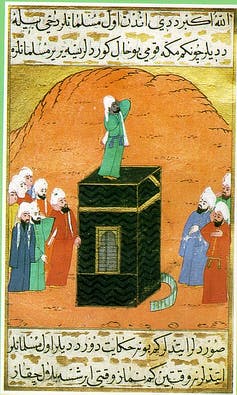
Bilal, center, found freedom in Islam. Wikimedia Commons
Bilal was exceptionally close to Muhammad, too. In 622, the Prophet appointed him the first person to give the public call to prayer in recognition of his powerful, pleasing voice and personal piety. Bilal would later marry an Arab woman from a respectable tribe – unthinkable for an enslaved African in the pre-Islamic period.
For many modern Muslims, Bilal is the symbol of Islam’s egalitarian message, which in its ideal application recognizes no difference among humans on the basis of ethnicity or race but rather is more concerned with personal integrity. One of the United States’ leading Black Muslim newspaper, published between 1975 and 1981, was called The Bilalian News.
More recently Yasir Qadhi, dean of the Islamic Seminary of America, in Texas, invoked Islam’s egalitarian roots. In a June 5 public address, he said American Muslims, a population familiar with discrimination, “must fight racism, whether it is by education or by other means.”
Many Muslims in the U.S. are taking action, supporting the Black Lives Matter movement and protesting police brutality and systemic racism. Their actions reflect the revolutionary – and still unrealized – egalitarian message that Prophet Muhammad set down over 1,400 years ago as a cornerstone of the Muslim faith.
Date posted: July 16, 2020.
[Editor’s Note: I first read the above piece in the religion section of the Salt Lake Tribune, which republished it from The Conversation under a Creative Commons Licence. We do likewise, and invite our readers to read the original piece by clicking HERE; it includes several more hyperlinks within the body of the article that some readers may find useful for further study. Image(s) in Simerg’s piece may vary from those posted in The Conversation and the Tribune .]
Before departing this website please take a moment to review Simerg’s Table of Contents for links to hundreds of thought provoking pieces on a vast array of subjects including faith and culture, history and philosophy, and arts and letters to name a few.
_______________________-
Asma Afsaruddin is Professor of Islamic Studies and former Chairperson, Department of Middle Eastern Languages and Cultures, Indiana University.
This article is republished from The Conversation under a Creative Commons license. To read original article in The Conversation, please click HERE.
_________________
The editor highly recommends the following recent pieces published in Simerg:
They entered the Jamatkhana prayer hall, Sat on the patterned carpet or the seniors on chairs Closed their eyes. So some chatted to acquaintances Ya Ali Madad “ki ayon?” “Did you hear? Did you go…? Shukr Mawla…” Mukhi-Kamadiasaheban enter, we start. Every day, 365.
A pandemic, unprecedented. A change. The place of prayer remained. And was attended, at set time and others, “All day, all night, every day, every night” Outdoors and in, on screen and off, They looked toward the esoteric qibla, breathed the esoteric Qur’an.
The Jamatkhana holds a special place and cannot be replaced The place of prayer remains within The soul is not erased. “There are those I see with my eyes”…. Yes, there is that we see with our eyes, And then, there is that we may feel in the heart.
Will the space of gathering open? A sanctuary for so many, A familiar space of belonging, Connection, hope and light. When will it open? No one can speculate. For it is, when the Imam decides.
“Remember, remember, remember, And never forget “Take your tasbirh, take your tasbirh” Like your breath, in and out. Only you can decide. The exoteric and the esoteric
The Jamatkhana is a physical space A sanctuary, a place of peace.
Date posted: June 22, 2020.
Before departing this website please take a moment to review Simerg’s Table of Contents for links to hundreds of thought provoking pieces on a vast array of subjects including faith and culture, history and philosophy, and arts and letters to name a few.
___________________
About the author: A regular contributor to this website, Dr. Navyn Naran was born in Dar es Salaam, Tanzania, to Anaar (1936-2017) and Badrudin Naran (1930-1979). She is currently in Toronto working in pediatrics and volunteering at the Aga Khan Museum.
____________________
We welcome feedback/letters from our readers. Please use the feedback box which appears below. If you don’t see the box please click Leave a comment . Your comment may be edited for length and brevity, and is subject to moderation. We are unable to acknowledge unpublished letters.