Simerg is an independent initiative dedicated to Ismaili Muslims, the Aga Khan — their Hereditary Imam — and the Ismaili Imamat, and Islam in general through literary readings, photo essays and artistic expressions
Naad E Ali, Original Song at Youtube, Munir Gillani Official
[Note: The lyrics in the song in both Arabic and English are slightly different from the transliteration and translation published below – Ed.]
Nade Ali, Nade Ali, Nade Ali Nade Aliyyan mazhar al-ajaib Tajidahu awnan lakafin-nawaib Kullu hammin wa ghammin sayanj-i Ali Bi wilayatika, Ya Ali! Ya Ali! Ya Ali!
Translation
Call Ali call Ali call Ali, the manifestation of marvels He will be your helper in difficulty Every anxiety and sorrow will end Through your friendship. O Ali, O Ali, O Ali.
Before departing this website please take a moment to review Simerg’s Table of Contents for links to hundreds of thought provoking pieces on a vast array of subjects including faith and culture, history and philosophy, and arts and letters to name a few.
Date posted: April 6, 2020.
_____________________
We welcome your feedback. Please complete the form below or click on LEAVE A COMMENT if the form is not displayed. Comments are published at the discretion of the editor, and may be subject to moderation.
[NOTE FROM WRITER: I wish to clarify at the outset that I am not suggesting that we should be establishing Satadas in our own homes while the Jamatkhanas are closed. COVID-19 has impacted the religious and spiritual lives of hundreds of millions of people around the world, who cannot attend their beautiful and inspiring houses of worship and prayers. Ismailis are also affected due to Jamatkhana closures. However, we can perform our obligatory prayers in our homes individually and with family members who are not in isolation.In this post, we suggest (1) extra prayers we may offer for our comfort, courage and happiness, (2) References to Farmans and Mawlana Hazar Imam’s Talikas that we can read, and (3) Ginans we can listen to from outstanding resources that we have at our disposal such as Ginan Central at the University of Saskatchewan. NOTE: According to the Ismaili calendar the Satada would have begun in Jamatkhanas on April 3. However what is suggested in the post is applicable for all times, and not limited to the prayers performed only during Satadas.Hopefully the Satada that we must all unfortunately miss due to Covid-19 will be established when Jamatkhanas are re-opened after the pandemic is over.]
Thousands of Ismaili families across Canada are receiving phone calls from their respective Jamatkhana leadership including Mukhi/Mukhiani and Kamadia/Kamadiani inquiring about our well-being at this time of the Covid-19 pandemic. Their concern has deeply touched our hearts, and we sincerely thank them for the time they are taking to speak to us, and to patiently listen to our experiences, needs and challenges. They are playing their leadership roles, as representatives of Mawlana Hazar Imam, with an immense amount of affection and love, which we can feel in their voices.
In an inspiring prayer filled phone call yesterday from the Ottawa Jamatkhana Kamadiani, I was informed that according to the 2020 religious festivals calendar, the weeklong Jamati Satada (communal congregational special prayers for 7 continuous days) in Canada would have commenced from Friday, April 3.
Jamati Satada are held twice a year across many parts of the Ismaili world (there are also individual Satadas which, in serious personal cases, can be held at any time of the year at the request of individuals seeking special prayers for members of their families).
During the seven days of Jamati Satada, tens of thousands of Ismailis, young and old alike, gather in Jamatkhanas around the world for special prayers and heartful supplications for protection from difficulties (or Mushkil Asan). The special prayers are not exclusively for Ismailis. They include supplications for the world at large. In addition to 2 Jamati Satadas in a year, special Jamati Satadas can be instituted in exceptional or extraordinary circumstances, such as major natural or man-made calamities.
With the Satada in Canada earmarked to start on Friday, April 3, we have provided for our readers an outline of prayers that may be offered in our homes or individual spaces. The summary reflects the Satada practice that would be normally conducted in the Jamatkhanas, with minor differences. One point to note is that different countries may have their own starting dates for the Satada. The important thing to remember, however, is that it is a continuous 7-day observation.
SUGGESTED PRAYERS FOR “PROTECTION FROM DIFFICULTIES”
The Toronto Ismaili Centre with its magnificent Jamatkhana prayer hall dome. Ismailis await its opening once the city of Toronto has declared victory over Covid-19, and allows large gatherings to take place. Photo: Malik Merchant/Simerg.
1. Recite the two evening Du’a. Remember that in the Du’a, we recite Surah Al-Fatihah (opening of 1st part of Du’a) and Surah Al-Ikhlas (opening of 6th part), both of which are considered to be among the greatest Surahs in the Holy Qur’an. In our beautiful Du’a, we also utter phrases that call for Allah’s mercy and support as well as help and strength from the Imam of the Time, Mawlana Shah Karim al Hussaini Aga Khan.
2. Recite the Satada Tasbih of Ya Ali to Rahem Kar, Ya Ali to Fazal Kar, meaning “O Ali be Merciful, O Lord [Ali] be gracious.”
3. Recite or play recordings of pertinent Ginans and Qasidas of supplication; one such Ginan sung by the Late Shamshudin Bandali Haji, with a link to its English transliteration and translation, is provided below.
5. Also, read Farmans from the recently printed Farman Mubarak books authorized by Mawlana Hazar Imam.
6. After 2nd Du’a, partake in Ab-e-Shifa (water of healing) if you have it with you.
Also, during the Coronavirus crisis, and also at other times when times are good:
7. Ask and motivate children and youth to learn and memorize the meaning of the Du’a. Seriously, consider this as one of the most important building block of our faith, and treat it as one of the most important missions that you have. When Mawlana Hazar Imam blessed my late dad Jehangir Merchant with a few precious minutes of his time in Lourenço Marques (now Maputo), one of the first questions he put to him was whether children were being taught the meaning of the Du’a.
8. Make faith part of our daily life. Even if it be for a moment or a few seconds, say Ya Allah, Ya Muhammad or Ya Ali, or call on the names of our Imams, keeping in mind that all hereditary Imams from Hazrat Ali are bearers of the same Noor.
9. Recite the Salwat Allahumm-a Sall-i ‘Ala Muhammad-in Wa Al-i Muhammad, meaning “O, Allah shower thy choicest blessings upon Muhammad and the progeny of Muhammad.” This tasbih is recited on Chandraat.
10. Recite the tasbih of Bibi Fatimah. They are Allahu Akhbar meaning God is Great, Subhanallah meaning Glory be to God, and Alhamdulillah meaning All praise is due to Allah. According to Islamic tradition, the Prophet Muhammad (S.A.S.) had recommended the tasbih to his beloved daughter Bibi Fatimah (A.S.), and hence its name. It is recited on Chandraat, along with the Salwaat.
11. Seek forgiveness by reciting Astaghafirullahi Rabbi Wa Atubu Ilayhi meaning “Verily, I seek the forgiveness of Allah, who is my Lord and Sustainer, and I turn to Him in repentance.” It is recited when prayers are offered for deceased souls.
12. If you are really fearful of what is going on around you, say the Nade Ali a few times for hope, courage and strength.
Nade Ali, Nade Ali, Nade Ali Nade Aliyyan mazhar al-ajaib Tajidahu awnan lakafin-nawaib Kullu hammin wa ghammin sayanj-i Ali Bi wilayatika, Ya Ali! Ya Ali! Ya Ali!
MEANING
Call Ali call Ali call Ali, the manifestation of marvels He will be your helper in difficulty Every anxiety and sorrow will end Through your friendship. O Ali, O Ali, O Ali.
Recitation of Ginan by (Late) Alwaez Shamshu Bandali Haji
Please click Ismaili Heritage for an English transliteration with translation.
Date posted: April 2, 2020. Last updated: April 4, 2020 (editorial note, at top).
______________________
Simerg’s Malik Merchant
Malik Merchant is the founding publisher/editor of Simerg (2009), Barakah (2017) and Simergphotos (2012). A former IT consultant, he now dedicates his time to small family projects and other passionate endeavours such as the publication of this website. He is the eldest son of the Late Alwaez Jehangir Merchant and Alwaeza Maleksultan Merchant, who served Jamati institutions for several decades.
We welcome your feedback. Please complete the form below or click on Leave a comment if the form is not displayed. Comments are published at the discretion of the editor. and may be subject to moderation.
(Note: The following recitation by Late Shamshu Bandali Haji includes a few verses at the end, which may not be part of the same Ginan. We will try and identify the source of the verses. When you start playing the recording, please scroll down to follow the transliteration and meaning of the Ginan. The recitation is from the superb and must visit Ginan Portal website at the University of Saskatchewan containing hundreds of recitations by Shamshu Bandali Haji and other members of the Ismaili community.
Ginan Sahebe Farman Lakhi Mokalea by Pir Hasan Kabirdin; recitation by Late Alwaez Shamshudin Bandali Haji
Transliteration and Translation of Ginan Eji Sahebe Farman Lakhi Mokalea
Transliteration source: PYARALI JIWA; English translation by ZARINA KAMALUDDIN and KAMALUDDIN ALI MUHAMMAD
Editor’s note: Ismaili Pirs, Dai’s and poets in their Ginans and Qasidas referred to the Imam of their era as Ali (a.s.), the first Imam who succeeded the Prophet Muhammad (S.A.S.), thus emphaszing the principle of the Unity of Imamat. For Shia Ismailis, each Imam is the same irrespective of his own age or the time he lives in, as he is the bearer of the same Noor (Light).
VERSE 1
Eji Saahebe faramaan lakhi mokaleaa suno maaraa nar hari yaa Ali; sevak sa(m)bhaa aa vaale aajman maa(n)he mayaa dhari ya Ali
O brother! Listen, My Lord Ali has written and sent a Farman. The beloved Lord has remembered this servant today with kindness in his heart
VERSE 2
Eji Mananaa manorath purajo suno maaraa nar hari yaa Ali deshe vaalo ati sukh raaj siri-a saara(n)g dhani yaa Ali
O my Lord Ali! Listen! Fulfill the hopes of my heart. The beloved Lord will grant much happiness and kingdom
VERSE 3
Eji Ame umaayo tere darage suno maaraa nar hari yaa Ali mayaaa karo maahaaraaj vaiku(n)th naath dhani yaa Ali
O my Lord Ali! Listen! We beseech hopefully at your door. O Lord of paradise! O Ali the great king! Have mercy
VERSE 4
Eji Charan te aapanaa bhetaadajo suno maaraa nar hari yaa Ali najar karo moraa shaam akhiyu(n) amia bhari yaa Ali
O my Lord Ali! Listen! Grant (me) the favor of expressing obeisance to you. O my Lord Ali! Look at me with eyes full of love
VERSE 5
Eji Dukh doyaalaa sarave taalajo suno maaraa nar hari yaa Ali puri karo maahaaraaj aparam paar dhani yaa Ali
O my Lord Ali! Listen! Remove all my sorrows and troubles. O Lord Ali, the great king! O Lord of infinity! Fulfill all my wishes.
VERSE 6
Eji Bahu aparaadh kari jivaddo aavyo tere darage suno maaraa nar hari yaa Ali mayaa karo mahaaraaj vaiku(n)th naath dhani yaa Ali
O my Lord Ali! Listen! After committing many sins this servant has come to your door. O Lord of paradise! O Ali the great king! Have mercy
VERSE 7
Eji Pir Hasan Kabirdin boleaa venati suno maaraa nar hari yaa Ali chade tu(n) tribhovar shaam parane visav ku(n) vaari yaa Ali.
O my Lord Ali! Listen! Pir Hasan Kabirdin (r.a.) has made this entreaty. O Ali! O king of the three worlds! Manifest yourself and marry the virgin earth
Date posted: April 1, 2020.
Before departing this website please take a moment to review Simerg’s Table of Contents for links to hundreds of thought provoking pieces on a vast array of subjects including faith and culture, history and philosophy, and arts and letters to name a few.
________________________
We welcome your feedback. Please complete the form below or click on Leave a comment if the form is not displayed. Comments are published at the discretion of the editor. and may be subject to moderation.
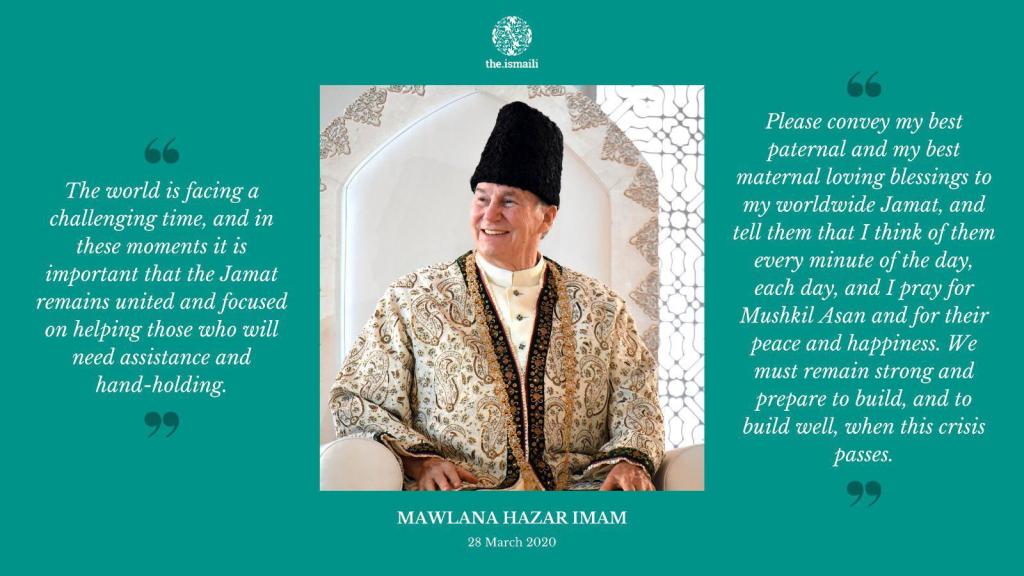
A portrait of His Highness the Aga Khan taken during his Diamond Jubilee, with the 2 columns containing his recent message to worldwide Ismailis. Image: The Ismaili. Please see text below.
[Mawlana Hazar Imam, His Highness the Aga Khan, has sent a message with blessings for his global Ismaili followers, which is shared here by Malik Talib, Chairman of the Ismaili Leaders’ International Forum. The message is reproduced from the official website of the Ismaili community. – Ed.]
By MALIK TALIB (Chairman of the Ismaili Leaders’ International Forum)
On the occasion of Navroz [March 21, 2020, New Year], our beloved Mawlana Hazar Imam blessed us with a Talika Mubarak conveying special blessings for Mushkil Asan, and prayers for our health and well-being. Today, I am pleased to share with you that, recently, in a communication to the International Steering Group coordinating the efforts to ensure the Jamat’s safety and wellbeing, Mawlana Hazar Imam was pleased to bestow blessings for the Jamat as follows:
“Please convey my best paternal and my best maternal loving blessings to my worldwide Jamat, and tell them that I think of them every minute of the day, each day, and I pray for Mushkil Asan [Protection from difficulty – Ed] and for their peace and happiness. We must remain strong and prepare to build, and to build well, when this crisis passes.”
It is in our Tariqah’s long-standing tradition that Mawlana Hazar Imam provides guidance to the Jamat at all times, including during crises, and the Jamat relies on the Imam of the Time’s blessings and direction. Hazar Imam’s message also stated the following:
“The world is facing a challenging time, and in these moments it is important that the Jamat remains united and focused on helping those who will need assistance and hand-holding.”
Hazar Imam expressed his happiness that all the institutions are working collectively to address the challenges that the Jamat is facing under the current circumstances, and reiterated that the Jamat’s safety, security and wellbeing is paramount.
As the COVID-19 virus continues to spread at an alarming rate, it is clear that the single most important action that we can take is to meticulously follow the advice of global health authorities by prioritising the requirements of “physical distancing” to protect ourselves, our families, and our Jamats. This means staying home as much as possible, and following the guidelines for washing hands regularly and thoroughly, avoiding contact with others, covering the mouth when coughing or sneezing, and self-isolating if symptoms arise.
This is a difficult time. We all miss attending Jamatkhana and meeting our family and friends. But for their safety and your own, we must stay strong. Through this period, let us stay connected with our family, friends and neighbours over the phone or through technology. Physical distancing does not mean social distancing – we must stay united as One Jamat and support each other. And let us remember to draw at all times on our faith for comfort and solace by calling on the tasbih as guided by Mawlana Hazar Imam.
Looking forward, Mawlana Hazar Imam has encouraged us to turn our focus to rebuilding, and perhaps in some cases repositioning, when this crisis passes, and focus our efforts to build a stronger future for the global Jamat.
Let us submit our humble Shukrana to Mawlana Hazar Imam for his blessings, encouragement and hope, and pray for the global Jamat’s safety, well-being and Mushkil Asan.
Ameen.
Date posted: March 30, 2020.
______________________
We welcome your feedback. Please complete the form below or click on Leave a comment if the form is not displayed.
The Aga Khan Foundation logo is based on the right hand, a universal symbol of skill, achievement and caring. It symbolizes the humanitarian and positive philosophy underlying the Foundation and its activities.
By KHALIL SHARIFF (Chief Executive Officer, Aga Khan Foundation Canada)
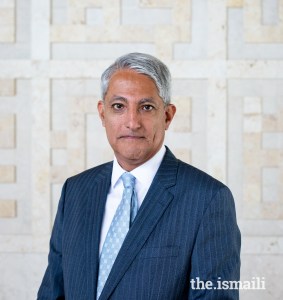
Khalil Shariff. Photo: AKFC
March 25, 2020.
Dear friends,
As conditions around the world change rapidly during these unprecedented times, we wanted to share a brief update to keep you informed of how we are responding to COVID-19.
COVID-19 has now grown from an outbreak in one city to a pandemic of global proportions. It is unlikely any country will be untouched by its ripple effects. More than ever, it is clear how Canada’s future is intertwined with the rest of the world.
The health and safety of our supporters, volunteers, and staff are paramount to us. In Canada, we are following all recommendations of the Government of Canada and the Public Health Agency of Canada, as well as the local public health authorities in the Canadian cities where we operate.
That means, effective last week:
1. All our Canadian colleagues are working from home.
2. We have come to the difficult decision to suspend this year’s World Partnership Walk and World Partnership Golf campaigns. We will have more information on alternate plans to share on these soon.
3. We have cancelled all tours of the Delegation of the Ismaili Imamat building in Ottawa until further notice.
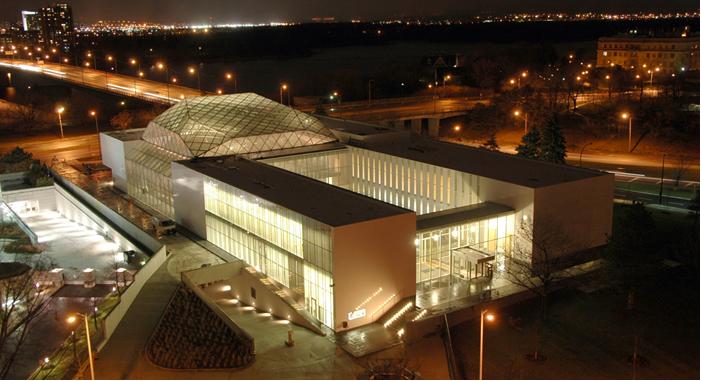
The offices of the Aga Khan Foundation Canada are located inside the Delegation of the Ismaili Imamat on Sussex Drive in Ottawa, pictured above. The building was inaugurated by Mawlana HazarImam, His Highness the Aga Khan, and the Right Honourable Stephen Harper, Prime Minister of Canada, on December 6, 2008.Photo: Maki and Associates/Moriyama and Teshima Architects.
4. Our travelling exhibit, In a Heartbeat, is suspended until further notice.
5. We have postponed our International Youth Fellowship pre-departure training in Ottawa to begin at the end of July, with overseas placements beginning at the end of August. We will continue to monitor the situation in the coming weeks and months, and will adjust the program as required to ensure our fellows’ well-being.
6. All other in-person events have either been cancelled, rescheduled online, or postponed.
We have taken these steps to do our part to slow the spread of COVID-19. We are immensely fortunate in Canada to have such competent health leadership, and we encourage everyone to heed the advice of health authorities as best they can.
Healthcare facilities and workers around the world are at the frontlines of events like these. Canadian support over the past 40 years has strengthened health systems across Africa and Asia, and we remain hopeful these investments will mitigate the impact of COVID-19 in the geographies where we work.
We also want to assure you that we remain committed to our countries and communities of operation during this crisis. The Aga Khan Development Network, of which we are a part, is mounting a robust response to address the many aspects of this pandemic. Now more than ever, it is important that our work of strengthening systems, institutions, and communities for times of fragility pushes forward.
We may all be working remotely for now, but we are still here for you. If you are already connected to a staff member, you can reach them by email. Otherwise, you send an email to info@akfc.ca, and we will direct your inquiry to the right person. If you have questions about your 2019 tax receipts, you can reach our Donor Services team directly at donorservices@akfc.ca or leave a voicemail at 613-237-2532 ext. 191.
In global crises like these, it is easy to dwell on what worries us. But I invite us all to step forward in support of our friends, relatives, and neighbours for whom this time may be especially trying. We can weather this better together.
We will reach out again as the situation and our plans to respond develop. Until then, we wish you and yours continued good health and spirits.
Sincerely,
Khalil Z. Shariff Chief Executive Officer Aga Khan Foundation Canada.
The COVID-19 pandemic is having an enormous impact on individuals and families in our communities and around the world.
AKU [Aga Khan University] is on the front lines of the response to this unprecedented health challenge. Our dedicated physicians, nurses and other medical staff are working tirelessly to save lives.
You can support our efforts to secure specialised medical equipment, provide testing and life-saving care to the vulnerable through our Patient Welfare Programme, and address the needs of our physicians and healthcare personnel during this extraordinary time [Note: readers outside Pakistan have encountered problems in completing the form – please select the COVID-19 Fund over the Zakat Donation COVID-19 Fund option, and see if that works for you – Ed.].
The COVID-19 Fund would support the following:
1. Providing world-class medical care, including for disadvantaged patients through our Patient Welfare Programme;
2. Securing specialised equipment including ventilators and personal protective gear for our staff;
3. Changes to our hospital and University facilities to expand our capacity to respond effectively to this emergency;
4. Research by our infectious disease specialists, and others, that contributes to the global effort to deliver better diagnostics for COVID-19 and care for those infected;
5. Support for our staff who are working exceedingly long hours, and need accommodation and other essential support.
If you would like to make a donation, additional information may be found HERE.
Before departing this website please take a moment to review Simerg’s Table of Contents for links to hundreds of thought provoking pieces on a vast array of subjects including faith and culture, history and philosophy, and arts and letters to name a few. In the past few days, we have published some excellent pieces on Navroz.
Mawlana Hazar Imam, His Highness the Aga Khan, 49th Imam of the Shia Imami Ismaili Muslims, pictured at the Diamond Jubilee Darbar in Kenya. Photo: The Ismaili,
By MALIK TALIB (Chairman of the Ismaili Leaders’ International Forum)
On the occasion of Navroz, our beloved Mawlana Hazar Imam has most graciously sent a Talika Mubarak to be shared with our global Jamat, which reads as follows:
My dear Malik,
On the occasion of Navroz, I send to my worldwide Jamat my best blessings for peace and happiness in their lives.
I am also sending my special blessings for Mushkil Asan for my Jamats wherever they may be, and I pray for their health and their well-being.
Yours affectionately,
Aga Khan
I convey warm Mubarak to the global Jamat on the occasion of Navroz and, on behalf of all the murids world-wide, I express humble shukrana to our beloved Mawlana Hazar Imam for the gracious Talika.
Mawlana Hazar Imam’s Guidance Central to Ismaili Institutions’ decision making during the COVID-19 crisis
….Malik Talib’s message continues below
The festival of Navroz is a time for hope, optimism, renewal, and faith – even in times of uncertainty and difficulty.
I would like to assure the Jamat that all Jamati institutions and leaders around the world are doing everything possible to ensure the Jamat’s safety and security.
For so many of us, the temporary suspension placed on Jamatkhana gatherings is perhaps the most difficult among the wide array of disruptions to our everyday lives. The decision to temporarily suspend our Jamatkhana gatherings was not taken lightly, and was implemented in accordance with Hazar Imam’s guidance to comply with government and public health guidelines around the world.
While we appreciate that this indeed is a very difficult disruption, and that we are no longer able to gather physically at the present time, we remain unified in our faith, in devotion and compassion.
These bonds of community have sustained throughout the vagaries of time and history, and will continue in the difficult weeks and months ahead. As we prepare ourselves, we will work together as a united Jamat.
It is of great importance that we follow the directions given by the Jamati institutions who are working with the AKDN [Aga Khan Development Network] to ensure compliance with government measures to mitigate the effects of COVID-19.
Ours is an esoteric faith. Our Imam has time and time again reminded us of the importance of spiritual contemplation, reflection, personal search and prayer. In these moments we will find peace and solace to overcome our current challenges. We would be well advised to recall Mawlana Hazar Imam’s Farmans regarding engaging in personal prayer, when we are unable to attend Jamatkhana. It is my conviction that adhering to this guidance will bring us comfort in these challenging times.
Virtual Jamatkhanas Inappropriate
Malik Talib, Chairman Ismaili Leaders’ International Forum
….Malik Talib’s message continues below
The temporary closure of our Jamatkhanas has resulted in the appearance of electronic and digital channels offering a “virtual Jamatkhana”. This is clearly inappropriate, as a Jamatkhana may only be established and function under the Imam’s authority, through his institutions and appointed Mukhi-Kamadias.
At this time in particular, it is critical that we understand the risks of misinformation and miscommunication, and rely only on credible government and Jamati institutional sources – including The Ismaili – the official website and social media channels for the Jamat.
At a time of increased economic anxiety, it is also imperative that we act rationally, with prudence and sound judgement.
COVID-19 pandemic at the forefront of Mawlana Hazar Imam’s thoughts
….Malik Talib’s message continues below
The current developments regarding the COVID-19 pandemic have been at the forefront of Mawlana Hazar Imam’s thoughts, and I would like to inform the Jamat that, following Mawlana Hazar Imam’s guidance, an international Steering Group has been established to coordinate the efforts to ensure the Jamat’s safety and well-being, and to support the responses being undertaken in each national Jamati jurisdiction.
These are difficult times. However, as one Jamat, our faith unites us, and gives us the strength, courage and hope to face this adversity, and emerge from it, a stronger community, bound by our values, and our allegiance to the Imam-of-the-Time.
Let us offer shukrana for Mawlana Hazar Imam’s continued love, grace, protection and guidance, and pray for the Jamat’s safety, good health and Mushkil Asan.
Ameen.
_______________________
A Note from the Publisher/Editor of Simerg
By MALIK MERCHANT
Nothing can be more gratifying for a murid of Mawlana Hazar Imam than receiving his blessings on the occasion of Navroz, as well as special blessings for Mushkil Asan at this particular time of a world wide novel coronavirus pandemic. Instead of celebrating Navroz in Jamatkhanas, we will be observing it in our unique ways in our homes. This is unprecedented in recent history! However we have received the Imam’s Blessings as we would in Jamatkhanas. That should bring contentment and happiness in our hearts and give us immense strength and hope for the future.
The message from Malik Talib, the Chairman of the Ismaili Leaders’ International Forum, has outlined our responsibilities as members of a universal brotherhood. It is important that we follow the instructions of the leaders at this time of crisis, and act according to the wishes of Mawlana Hazar Imam.
Date posted: March 21, 2019.
We invite our readers to share their feelings, Navroz greetings, and unique experiences during the extraordinary events that are taking place in light of COVID-19. Please complete the feedback below, and if you don’t see the form please click LEAVE A COMMENT
______________________
Before departing this website please take a moment to review Simerg’s Table of Contents for links to hundreds of thought provoking pieces on a vast array of subjects including faith and culture, history and philosophy, and arts and letters to name a few. In the past few days, we have published some excellent pieces on Navroz.
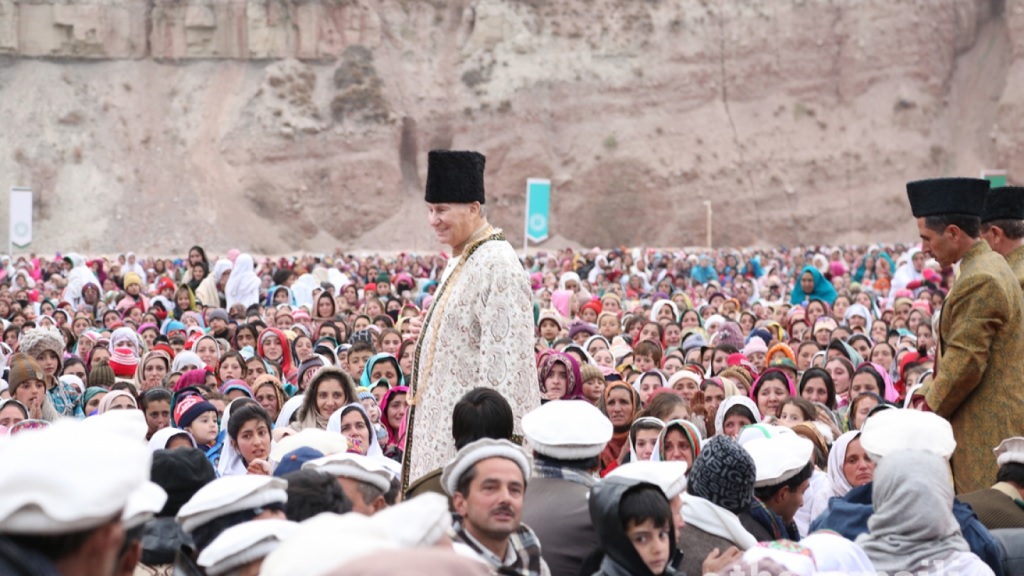
Mawlana Hazar Imam in Booni Chitral during his Diamond Jubilee visit to Pakistan in December 2017. Photo: The Ismaili/ Karim Sadruddin.
By SHIRAZ PRADHAN
As the world struggles to cope with the novel coronavirus pandemic, it is natural to become anxious. We live in extraordinary times. The closure of Jamatkhanas in almost all countries accentuates our anxiety. I do not intend this article to be doom and gloom. To the contrary, I want to portray hope from our faith.
The emergence of this new virus and its global impact has demonstrated the intricate ways in which humanity is interconnected and how it has brought entire humanity to its knees and shown us the vulnerability of the ‘House of Cards’ that is our civilization. There is no ‘foreign virus’ as some have chosen to describe it. This virus is brutally merciless and does not recognize race, colour, gender, religion or national boundaries.
There is already a disruption of social care and communal services as the pandemic progresses in Europe, North America and elsewhere. This will transfer the burden of care of the aged, less able and vulnerable to younger, and healthier family members who may ride through the illness with minor discomfort. The projected time periods are likely to be several months.
Bearing in mind all these factors, how should we react to the pandemic? Ours is an intellectual tradition. Allah possesses the power of miracles, but we do not relay on Allah’s miracle alone.
At this very moment, there are laboratories around the world racing against time to come up with a vaccine against the virus. Indeed, one was tested on a few patients a few days ago. May be the virus is temperature sensitive and as we, in temperate zones transition to spring and rising temperatures, it may abate the virus. May be the ‘herd immunization’ strategy that is talked about will work and lessen the impact of the new virus. As ordinary citizens, we sometimes feel helpless. Under such circumstances, after following all the advice we are given to protect ourselves and our beloved ones, the next tendency in people in troubled times is prayers.
Psychologists have long known this fact. It gives people tremendous hope and alleviates stress in face of adversity. Prayers work, and in this I am reminded of a Farman Mawlana Hazar Imam had made in the 1960’s when he said that those who prayed in difficult times knew how prayers had helped them during their difficulties. At the same time, he reminded us that we should not only pray when times are bad but also when times are good.
Our Ginans can also give us help during these difficult times. Several Ginans have powerful verses of supplication and pleading for Allah’s mercy and compassion and help. These verses are not parochial but are pleadings for Allah’s compassion and mercy for the entire humanity. In the context of the pandemic, this fact comes out clear. It is our hope that this ‘One Humanity’ idea endures beyond the pandemic.
Some of the verses I present are well-known, but I include them for completeness. First is a verse that extols the virtue of congregational prayers. It is from Pir Hasan Kabir’s Anant Akhado, verse 115.
Aashaaji til dharam ne hasti paap sohi gat utaare ji Gat naa vachan te Nar ji maane te maahaadan maanhe nahi puchhaaye.
Translation:
O Lord, our good deeds are minuscule, our sins monumental. These are forgiven in congregational prayers The Lord listens to congregational prayers and spares the questioning on the Day of Judgement.
The physical separateness due to the closure of our Jamatkhanas does not preclude us from offering prayers for humanity in our hearts and/or with our families.
In Pir Hasan Kabir’s Ananta Akhado, verse 32, Pir says that in Lord’s Assembly, He grants you whatever you wish.
Aashaji jiya jem mango, tiya tem verse, Satgur gher anand ji
Translation:
Whatever you ask for in His assembly, He grants. There is joy and no one returns disappointed from His assembly.
In verse 127, the scope of the pleading and supplication expands and encompass the entire humanity.
Aashaji, Sansar serve Shrusti tamari, ane serve mankha jiv ji Daya kari teme amne taaro, Sami serve jiv tamara ji
Translation:
O Lord, the entire creation is Yours, as are the souls, With compassion, save us, O Lord, we all are Your souls.
In Pir Hasan Kabir’s Venti Eji Aash Tamari Shree Ho, which is full of supplications and pleadings, the opening verse portrays the congregation, standing with hands folded, asking for Lord’s compassion:
Eji, Aash tamari Shree Ho Kayam Sami, Saheb Chinta kee je, Ya Shah Sab Gatie Shah ke khde re umayo Shah Raj Rikhisar Ghar Dejo
Translation:
O Lord, we are hopeful of and dependent on your compassion; O Lord, we beseech you, spare your thought for us; the entire congregation is standing in submission; O Lord, bestow prosperity and happiness upon us…
Next is a beautiful venti of sincere submission and heart rendering plea for help by Pir Hasan Kabir in Hum Dil Khalak ya Ali tu(n)hij:
Hum dil Khalak ya Ali tu(n)hij vase, Ya Mawla tu(n)hij vase, avar na dhuja koi, jive pi(n)dhe jo tun(n)hij dhani; Ya Mawla tu(n)hij dhani. Jia(n) kari(n) tiya hoi Maher karo mora saai ya Ali hum tere aadhar Tere aadhar ya Mawla tu(n)hij daatar Maher karo mora saai ya Ali hum tere aadhan
Translation:
Only you reside in my heart O Ali, O Mawla only you, Non-other I think of You, who are master of my soul and body O Mawla, truly you are the Master Your wish and command prevail Show mercy O Lord Ali you are my support, I am dependent in You; O Mawla you are the provider (of all my needs) Show mercy O Lord, Ali you are my only support
The next powerful verse that we often recite to seek divine help is from Seyyad Imam Shah’s Ame Saaheb Saathe, Verse 6
Eji Tuj vinaa koi avar na dise, Saami amne chhe tamaaro aadhaar-ji; Tuj vinaa ame eklaa Saami, Saami tame thaajo rakhvaarr-ji
Translation:
O Lord, You alone we see, O Lord, we rely upon You Without You we are all alone Please be our protector (In these troubled times)
In addition to the Ginans, our daily Arabic Du’a has powerful pleas for help. In part two we recite:
“O Allah, O our Lord from You is my help, upon You is my reliance. You alone we worship and You alone we seek for help. O Aly help me with your kindness.”
In part three of our Du’a, we recite:
“Seek at times of difficulty, the help of your Lord, the present living Imam, Shah Karim al Hussaini.”
In part 4 of our Du’a, we recite:
“O Allah: Forgive us our sins, give us our daily bread and have mercy upon us….”
In part five of our Du’a, we recite:
“Ya Shah Karim, O Mawla, from you is my strength…”
As we go through this difficult time we should take comfort from these Ginanic verses and our Holy Du’a as well the Farmans of Mawlana Hazar Imam that have been published recently. Repeatedly, he assures his murids of his constant presence with them. For example, in his Diamond Jubilee Farman made in Booni, Chitral, Pakistan, he lovingly tells us that he is always with his Jamat, every day, every minute, every second (Diamond Jubilee Farman book, page 57, also pages 51, 62). As such, we should seek to keep his enduring blessings for mushkil-asan (protection from difficulties) alive in our hearts all the time.
I pray that these trying times pass and that Allah in His compassion listens to our plea for help for humanity. His compassion and mercy know no bound.
Date posted: March 18, 2020.
Before departing this website please take a moment to review Simerg’s Table of Contents for links to hundreds of thought provoking pieces on a vast array of subjects including faith and culture, history and philosophy, and arts and letters to name a few.
_____________________
Shiraz Pradhan
Shiraz Pradhan, in parallel with his work as an international engineering consultant, has contributed for several years to furthering religious education among the Ismaili community in the UK, Canada, USA and Japan. He is the author of several articles published on this website and was a regular contributor to UK’s flagship Ismaili magazine, Ilm. Currently he is concluding the script of a full-length play of the 10th Century trial of the Sufi Saint Mansur al-Hallaj in Baghdad based on historical facts.
The author wishes to thank Platinum Rahemtulla for references to Ginanic verses and their translations that are quoted in the article.
____________________
We welcome your feedback. If you don’t see the feedback form below please click on Leave a comment.
We are everyday encountering special words or expressions such as corona / coronavirus / novel coronavirus / COVID-19 / outbreak / epidemic / pandemic / quarantine / self-quarantine / isolation / cordon sanitaire / symptom / symptomatic / asymptomatic / incubation / morbidity / mortality / social distancing. We turn to TIME magazine for an easy to understand glossary of the coronavirus jargon. It is worth your time to read the weekly magazine’s excellent piece, and familiarize yourself with the terms so you can understand what you are reading and explain them to your children and family members!
Date posted: March 17, 2020.
Before departing this website please take a moment to review Simerg’s Table of Contents for links to hundreds of thought provoking pieces on a vast array of subjects including faith and culture, history and philosophy, and arts and letters to name a few.
When you have not missed a day in Jamatkhana attendance over the past several years, how do you cope with sudden and unforeseen closures of your favourite Jamatkhana? We live in difficult circumstances. Covid-19 — the disease caused by the novel coronavirus — has infected tens of thousands around the world and has been declared a pandemic, causing anxiety and worry. I left a pharmacy on Friday March 13 with a customer expressing, “it feels like death can approach anyone of us, and I just feel at the moment that I might die.” When I next visited a supermarket at around noon time, people were filling their shopping carts to the brim with supplies for their families. Ismaili institutions in Canada on the same day announced the closure of Jamatkhanas in several provinces around the country to protect the elderly and everyone who is vulnerable due to compromised immune systems. A similar decision was made by the USA Aga Khan Council for cities across many states on Saturday, March 14. Of course, these are also containment measures to prevent the spread of Covid-19. These measures have also been necessary as a result of bans that have been imposed by state or provincial or even Federal authorities on large gatherings.
In 1979, I was left with a difficult situation of being the only Ismaili in Salt Lake City, Utah, for several months, until a family arrived just before I left the following summer. The nearest Jamatkhanas were in Denver, Las Vegas and Phoenix, hundreds of miles away. I disciplined myself to pray regularly and the happiness and strength I achieved was comparable to my earlier praying days at 5 Palace Gate in London, England. In London, I had become a regular only in 1976, and before that attended Jamatkhanas only on Fridays at Central Hall when I was a student at the Polytechnic of North London. In Salt Lake City, I set aside a corner in my room for the purpose of praying. It was a tiny 12-15 sq ft space beside my bed. The night table contained my rosary (tasbih), with the drawers containing Farman and Ginan books along with a copy of the Holy Qur’an as well as some literary magazines and books. I performed my prayers in an identical fashion to what takes place in Jamatkhana — reciting the Du’a, Farmans and Ginans loudly as well as standing up for the tasbih. My heart and soul enjoyed the spiritual nourishment that I experienced even from praying alone. Chandraat (New Moon day or first day of the Islamic month) was a joyful day for me as I saw the new moon above the Wasatch Mountains that surround the Mormon capital. On my drive home in my roommate’s car, I looked forward to the special Chandraat prayers that I would recite.
A few years ago in Ottawa, I met and interviewed the eldest member of the Ismaily family, who was probably the first Ismaili to settle in Canada in the early 1950’s. He had met our beloved 48th Imam Mawlana Sultan Mahomed Shah, His Highness the Aga Khan III (1877-1957), just before his lone settlement in a new country. He told me the late Imam asked him to set aside a small portion of his room and conduct his prayers in that space just as he would in a Jamatkhana. The Imam also asked him to keep away from bad and evil social habits, and to work hard. Mr. Ismaily abided, and said that the practice that he adopted of praying regularly in a designated space gave him immense strength, comfort and spiritual happiness.
So here are my recommendations to families where Jamatkhanas have been temporarily closed — and we don’t yet know for how long! Try as a family to pray together. Visit your parents or grandparents at their home, if you are not staying with them, and say to them that you would like to join them for prayers. When visiting them, if you are healthy, take precautions such as hand washing and other important recommended hygienic steps like the ones posted by the Government of Singapore.
Remember they have all of a sudden been deprived of the most valuable moments in their lives — being in Jamatkhanas. Tell them you will recite the Du’a out loud. Keep in mind that many elderly people rely on listening to the prayers recited by another person. Many do not have the capacity to recite the Du’a. Play or recite a ginan or qasida, and join together in tasbihs to help ease our difficulties that we are facing at the present time. Say Ya Allah, Ya Muhammad or Ya Ali. Recite Salwats. Recite the tasbihs of Allahu Akhbar (God is Great), Subhanallah (Glory be to God) and Alhamdulillah (All praise is due to Allah) suggested by the Prophet Muhammad (S.A.S) to his beloved daughter Bibi Fatimah (A.S.). Say the tasbih of Ya Ali Tu Rahem Kar (O Ali be Merciful) Ya Mawla Tu Fazal Kar (O Lord [Ali] be gracious) that we recite during Jamati Satada (7 consecutive days of special prayers for the easing of difficulties). Remember, Mawlana Hazar Imam is our strength, so say Ya Shah Karim Ya Mawlana anta Quwati from the 5th part (O Shah Karim, You are my strength/support).
This is a perfect time to come together at home as families, with no live sporting distractions to take occupy our times! It is an opportunity to be together, to help each other out, to motivate each other, to connect more with our parents and children and to build family unity. It is also an opportunity to develop a balanced life, for those who are immersed with worldly issues, and engage more with our faith. Mawlana Hazar Imam’s blessings are with us constantly, and it is an opportune time to read his Farmans from the two-set Farman books that has just been published under his directive. Read them aloud to your children, siblings, parents and grandparents when you are around them.
These are my humble suggestions to ease through the anxious times that we face which is unprecedented in recent history.
May we continue to fulfill our spiritual responsibilities well during this difficult and anxious time in our lives to avail ourselves of Mawlana Hazar Imam’s constant blessings for our well-being, strength and mushkil asan (protection from difficulty).
Date posted: March 13, 2020. Last updated: March 21, 2020.
Before departing this website please take a moment to review Simerg’s Table of Contents for links to hundreds of thought provoking pieces on a vast array of subjects including faith and culture, history and philosophy, and arts and letters to name a few.
_________________
We welcome your feedback. If you don’t see the feedback form below please click on Leave a comment









 Simerg - Insights from Around the World