Photo Essay: Celebrating Sussex Drive, His Highness the Aga Khan and the Delegation of the Ismaili Imamat Building

Sussex Drive with some other connecting streets in Canada’s National Capital Region, makes up what is known as the Confederation Boulevard or the “ceremonial and discovery route”.  Some of Canada’s most important institutions and landmarks including the residences of the Governor General and the Prime Minister are on Sussex Drive.

Please click: A Celebration of Sussex Drive, His Highness the Aga Khan and, Five Years on, the Crystalline Delegation of the Ismaili Imamat Building

Please click on image to read photo essay

Please click on image to read photo essay

The newest addition is the Delegation of the Ismaili Imamat Building which was opened by Prime Minister Stephen Harper on December 6, 2008 in the presence of the 49th Ismaili Imam, His Highness the Aga Khan. The photo essay provides a comprehensive overview of Sussex Drive. You will find out exactly where the Delegation Building is located and how it impacts the architectural landscape of Ottawa with its magnificent glass dome.

Photo Essay: John F. Kennedy – the 35th President of the United States of America

A TRIBUTE TO PRESIDENT JOHN F. KENNEDY

On November 22, 1963, when he was hardly past his first thousand days in office, John Fitzgerald Kennedy was killed by an assassin’s bullets as his motorcade wound through Dallas, Texas.

35jk_header

Kennedy was the youngest man elected President; he was the youngest to die. On the 50th anniversary of the death of the beloved President, Simergphotos presents a unique collection of photos from his Presidential Library.

Please click: Photo Essay: Remembering President John F. Kennedy
(May 29, 1917 – November 22, 1963)

22 November, 1963: President Kennedy reaches out to the crowd gathered at the Hotel Texas Parking Lot Rally in Fort Worth, TX. Photo credit: Cecil Stoughton/John F. Kennedy Presidential Library and Museum, Boston. Please click on image for article and more photos.

22 November, 1963: President Kennedy reaches out to the crowd gathered at the Hotel Texas Parking Lot Rally in Fort Worth, TX. Photo credit: Cecil Stoughton/John F. Kennedy Presidential Library and Museum, Boston. Please click on image for article and more photos.


Ismaili Propagation in the Indo-Pak Subcontinent Before the Advent of the Ginanic Da’wah by Bashir Fazal Ladha

ISMAILI HISTORY

“The earliest contact of Isma’ili da’wah with the Indo-Pakistan subcontinent was well before the Fatimid empire was established. It began with the establishment of the Isma’ili principality in Yaman (Yemen) in the year 268 AH/881 CE by da’is Ibn Hawshab and Ali bin Fadl. From Yaman, da’i Ibn Hawshab sent his nephew da’i al-Haytham to Sind in the year 270 AH/883 CE….”

PLEASE CLICK: Ismaili Propagation Before the Advent of the Ginanic Da’wah

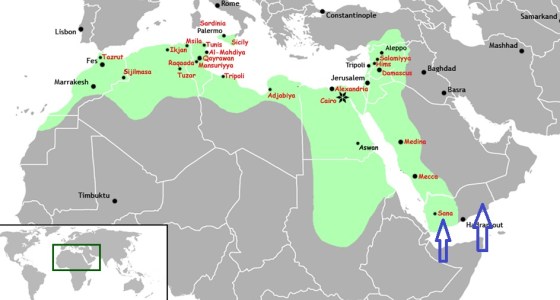
Shaded in green, the Fatimid Caliphate at its height. Yaman (Yemen) is shown by blue arrows. The Ismaili dawa'h in India originated in Yaman, when the Fatimid Empire was not yet established. Click on map article.

Shaded in green, the Fatimid Caliphate at its height. Yaman (Yemen) is shown by blue arrows. The Ismaili da’wah into India originated in Yaman, when the Fatimid Empire was not yet established. Click on map for article.

Photo Essay: Chitral By Badrudin Kurwa

“The people everywhere were humble, friendly and welcoming. If you greeted them “Ya Ali Madad” they broke out in a big smile and hugged you. At the Jamatkhana in Shogore (and Booni) people could tell I was not a local, and they came one by one and met me without hesitation…”

Please click: Photo Essay: Chitral Through the Lens of an Eye Surgeon

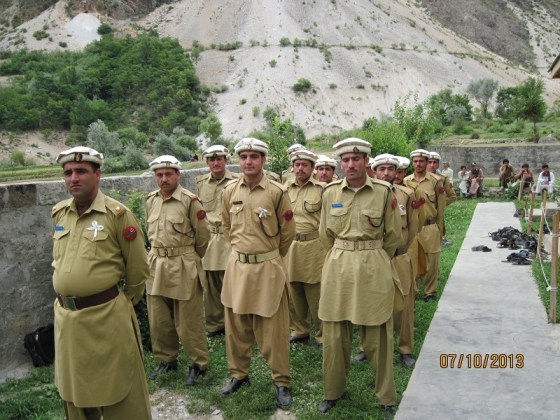
Imamat Day Flag Raising Ceremony in Chitral. Please click on image for photo essay.

Imamat Day Flag Raising Ceremony in Chitral. Please click on image for photo essay.

The Muslim Calendar, Muharram and Muslim and Non-Muslim Expressions on Imam Hussein (a.s.) and the Karbala Tragedy

Please click: Muslim and non-Muslim Expressions on Imam Hussein (a.s.)

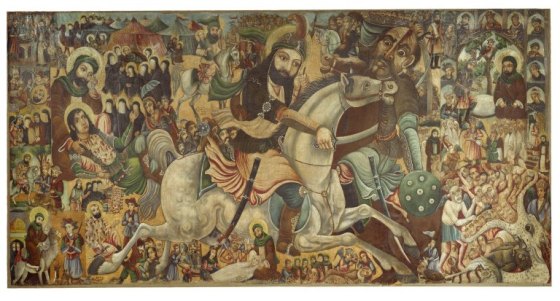
This oil on canvas painting by Abbas Al-Musavi commemorates the martyrdom of Imam Husayn at the Battle of Karbala. Its focus is his half brother Abbas ibn Ali on a white horse. This image was uploaded into Wikipedia Commons as a donation by the Brooklyn Museum. The image is a faithful photographic reproduction of a two-dimensional, public domain work of art. Please click on image for article on Imam Hussein.

This image of an oil on canvas painting by Abbas Al-Musavi commemorates the martyrdom of Imam Hussein at the Battle of Karbala. Its focus is his half-brother Abbas ibn Ali on a white horse. This image was uploaded into Wikipedia Commons as a donation by the Brooklyn Museum and is a faithful photographic reproduction of a two-dimensional, public domain work of art. The painting is a gift of K. Thomas Elghanayan in honor of Nourollah Elghanayan. Please click on image for article on Imam Hussain.

The emigration (Hijrah) of Prophet Muhammad (s.a.s) from Mecca to Medina in the year 622 AC was a significant event and later adopted to mark the beginning of the Muslim Era. The Muslim New Year begins with the month of Muharram. The coming of the New Year is observed by offering of special prayers at night and reflection on the life and times of the Holy Prophet Muhammad.

The twelve months of the Muslim calendar and major Muslim festivals. Image by Simerg.

The twelve months of the Muslim calendar and major Muslim festivals. Image by Simerg.

Amongst the Shi’a Muslims, the first part of the month of Muharram is also an occasion which is marked with a sense of sorrow and solemnity. The 10th of Muharram was the day when Hazrat Imam Hussein (a.s.) together with most of the members of his family and close companions were martyred on the fields of Karbala….Please click Muslim and non-Muslim Expressions on Imam Hussein

Ya Hussain Wallpaper, designed by Mohammad Sajjad. Please click for article. Wallpaper credit: Sajjadsgraphics.blogspot.com

Ya Hussain Wallpaper, designed by Mohammad Sajjad.
Please click for article. Wallpaper credit: Sajjadsgraphics.blogspot.com

The Story of an Ismaili Farmer Who Has Served the Mahuva Jamat All His Life by Salman Bheriyani

“The jamatbhai…was blind and for ‘wudu’ he used to draw water from a nearby well.  Gulamhusen made sure that he was there to help the jamatbhai in the daily ritual. Through acts such as this, Gulamhusen began to serve the jamat of the town”….Read More

Long serving Ismaili, 77 year old farmer Gulamhusen Alibhai Jamani of Mahuva, India, with a  medal that was presented him during Volunteer Day. Please click on image for story.

Long serving Ismaili, 77-year-old farmer Gulamhusen Alibhai Jamani of Mahuva, India, with a medal that was presented to him to recognise volunteers. Please click on image for story.

Simerg’s Volunteer Series (previous stories):

We invite contributions for the series. Please click STORIES OF ISMAILI VOLUNTEERS.

His Highness the Aga Khan III: Historic First Landings in East Africa in 1899 and the USA in 1906

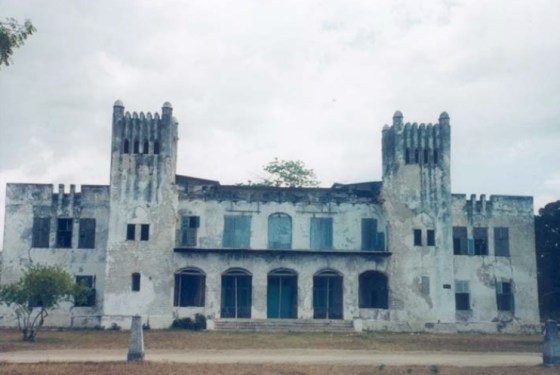
The Old Boma where His Highness the Aga Khan was received with great honours by the Chief of the District, Surgeon-Major Gaertner, and all the Europeans, among them the author of the article. Please click on image to read both the East Africa and USA accounts.

The Old Boma where His Highness the Aga Khan was received with great honours by the Chief of the District, Surgeon-Major Gaertner, and all the Europeans, among them the author of the article. Please click on image to read accounts of both the East Africa and USA visits.

“….The enthusiasm and veneration for His Highness at his arrival [in Bagamoyo] as well as during his whole stay was tremendous and will linger in the memories of all who, like me, had the honour to be present” — Otto Mahnke…Read More

~~~~~

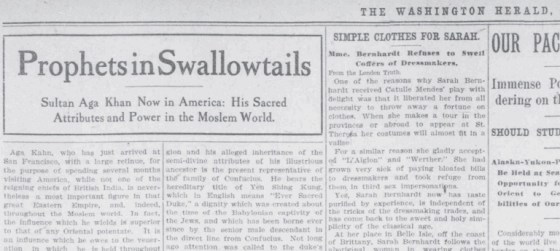
Clip of page from the Washington Herald dated January 27, 1907 containing article on His Highness the Aga Khan. Please click on image to read accounts of both USA and East Africa visits.

Clip of page from the Washington Herald dated January 27, 1907 containing article on His Highness the Aga Khan. Please click on image to read accounts of both USA and East Africa visits.

“The Pope and the Dalai Lama of Tibet are great spiritual chiefs, but in them the principle of inheritance is absent” — The Washington Herald, 1907…Read More

Unique Moments from the Extraordinary Life of His Highness the Aga Khan III – the Beloved 48th Imam of the Shia Imami Ismaili Muslims

“On 2nd November, 1877 my beloved grandfather was born here in Karachi. Through 72 years of Imamat, he guided his spiritual children to happiness and prosperity….Many many memories come to our minds as we think of him. He achieved in his life, for our community that which could only have been accomplished normally in a period of many generations. The tributes that the world has paid him bear honest testimony to his great life and work” — His Highness Prince Karim Aga Khan, 49th Ismaili Imam
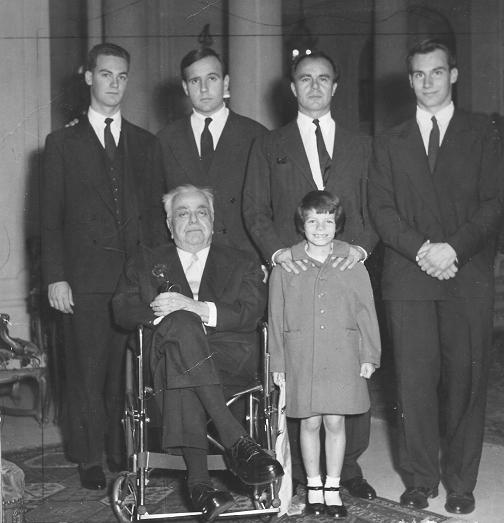
The late 48th Ismaili Imam, His Highness the Aga Khan, seated on a wheelchair with members of his family with his successor, the present Imam, Prince Karim Aga Khan, standing at extreme right. Others in the photo (l to r), grandson Prince Amyn Muhammad ,and the late Imams two sons, the late Prince Sadruddin and Prince Aly Khan, who is seen holding his daughter Princes Yasmin Aga Khan Photo: Zul Khoja Collection, Ottawa.

The 48th Ismaili Imam, His Highness the Aga Khan (1877 – 1957), seated on a wheelchair with members of his family with his successor, the present Imam, Prince Karim Aga Khan, standing at extreme right. Others in the photo (l to r), grandson Prince Amyn Muhammad , and the 48th Imam’s  two sons, the late Prince Sadruddin and Prince Aly Khan who is seen holding his daughter Princes Yasmin Aga Khan. Photo: Zul Khoja Collection, Ottawa.

November 2, 2014 marks the 137th birth anniversary of the 48th Ismaili Imam, Sir Sultan Mahomed Shah, His Highness the Aga Khan III. Born in Karachi in 1877, he assumed the reign of Imamat at the age of seven, and ruled the Ismailis  for 72 years, becoming the community’s longest-serving Imam. He passed away on July 11, 1957, and willed that the mantle of Imamat should pass to his grandson, the present 49th Imam, His Highness Prince Karim Aga Khan IV.

We are pleased to provide our readers with links to diverse articles, stories and photo essays related to the beloved 48th Imam, who has been described in one of the pieces as the Imam of the Socio-Economic Revolution. Please click on the following selections:

BIOGRAPHY, DECORATIONS, IMAM’S WRITINGS AND TRIBUTES

His Highness the Aga Khan III,  48th Imam of Shia Imami Ismailis, in full regalia. Photo: Jehangir Merchant Collection.

His Highness the Aga Khan III, 48th Imam of Shia Imami Ismailis, in full regalia. Photo: Jehangir Merchant Collection.

1. Imam Sultan Muhammad Shah – An Astonishing and Extraordinary Personality

2. Literary Reading: Sir Sultan Muhammad Shah, Aga Khan III – Successor and a Son Reflect on Accomplishments of the 48th Ismaili Imam

3. Titles, Decorations and Honours Conferred on 48th Ismaili Imam; 72 Year Reign Spanned Six British Monarchs and Seventeen PM’s

4. Literary Reading: Sir Sultan Muhammad Shah, Aga Khan III – The Road to Happiness and The Concept of Life

5. “Work No Words” by His Highness the Aga Khan, and Other Rare Ismaili Historical Quotes on Service

6. His Highness the Aga Khan’s “Never-To-Be-Forgotten” Message to Ismaili Youth – “Keep Clean Soul in a Clean Body”

7. Literary Reading: Sir Sultan Muhammad Shah, Aga Khan III – Long Reign Ends

8. Literary Reading: Sir Sultan Muhammad Shah, Aga Khan III: The Face of Imamat 

9. The Memoirs of Aga Khan – World Enough and Time: A Translator’s Voice

ANECDOTES
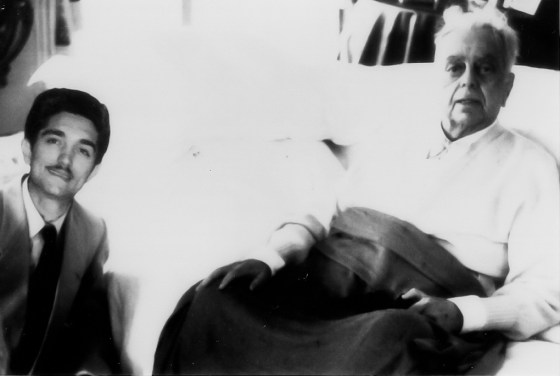
The late Sir Sultan Mahomed Shah Aga Khan III pictured with Badrudin Adatia. Recalls Adatia: "I wanted to take picture of him with us and I asked his permission. The room was dim, however, and I didn’t have a flash on my camera. Although he was very sick and could not even walk, he told me he would head toward the window where there would be better light. Imagine! I clasped my hands with respect and said, “No Khudavind. I will take the picture just as we are.” Photo: Badrudin Adatia collection.

The late Sir Sultan Mahomed Shah Aga Khan III pictured with Badrudin Adatia. Recalls Adatia: “I wanted to take picture of him with us and I asked his permission. The room was dim, however, and I didn’t have a flash on my camera. Although he was very sick and could not even walk, he told me he would head toward the window where there would be better light. Imagine! I clasped my hands with respect and said, “No Khudavind. I will take the picture just as we are.” Photo: Badrudin Adatia collection.

10. I Wish I’d Been There: A Unique Moment in the Life of the Punjab Jamat

11. Yakimour 1954: A Golden Moment for an Aspiring Student – An Audience with the 48th Ismaili Imam, Aga Khan

12. “Mawla Fulfilled My Wish”

13. On Meeting the Noorani Family – My Voyage to Europe

14. An Ismaili Youth’s Rare Moment With Imam Sultan Mahomed Shah

EXTRA ORDINARY VISITS AND THE JUBILEES
His Highness the Aga Khan at a reception by the Ismaili community in South Africa.

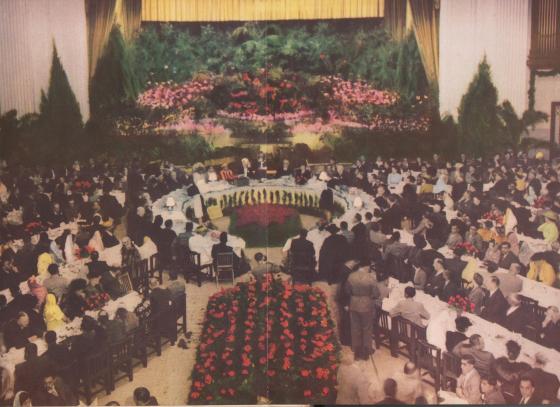
His Highness the Aga Khan at a reception by the Ismaili community in South Africa.

15. Lakhpaty’s Intriguing Poster for 48th Ismaili Imam’s Diamond Jubilee Shows Artistic Ingenuity

16. Imam’s Message in South Africa Addressed Artificial Barriers, Unity, Education for All, and Damaging Social Habits

17. Photo Essay: The Historical Jubilees of His Highness the Aga Khan (1877-1957), the Imam of the Socio-Economic Revolution

18. World Renowned Photographer Sarite Sanders Portrays Mysterious Radiance of a Fatimid Tomb and the Elegance of the Aga Khan Mausoleum

19. When His Highness the Aga Khan III First Visited East Africa and the USA

DEDICATION TO ISLAM AND THE MUSLIM WORLD
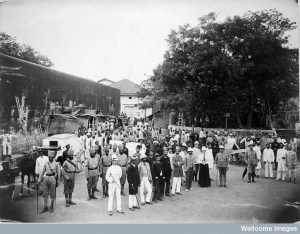
A group comprising doctors, health and public officials gathered on a street in Bombay about to begin the day's work, during an outbreak of plague. Photo Credit: Wellcome Library, London. Wellcome Images. Copyright.

A group comprising doctors, health and public officials gathered on a street in Bombay about to begin the day’s work, during an outbreak of plague. Photo Credit: Wellcome Library, London. Copyright.

20. His Highness the Aga Khan and the Bubonic Plague of 1897: How the Ismaili Imam’s Courage and Leadership Saved Countless Lives

21. Hazrat Imam Sultan Muhammad Shah, Aga Khan III – A “Mendicant” Who Transformed a Dream into Reality and Stirred the Soul of a Bitter Critic

22. Sir Sultan Muhammad Shah, Aga Khan III – A Muslim’s Analysis of Lessons that Can be Learnt from the 48th Ismaili Imam

Date post updated: Saturday, November 1, 2014.

An Account of His Highness the Aga Khan’s Recent Visit to India: For Ismaili Followers and Volunteers, “An Experience of Being Lifted Away to Another World” by Toral Pradhan

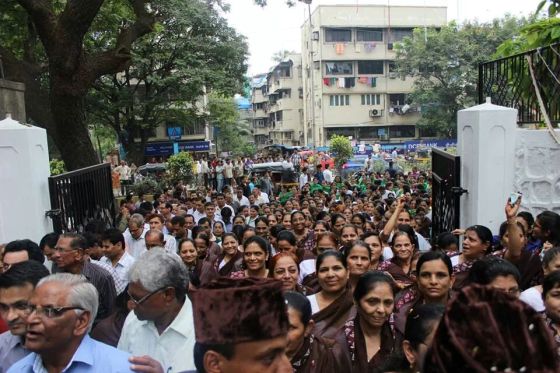
“The car door was left open waiting for him to sit in, but Hazar Imam was instead moving around the compound as if unwilling to leave the premises…..This is a sight that is difficult to erase from the mind” — Toral Pradhan

PLEASE CLICK: His Highness the Aga Khan’s Visit to India: For His Ismaili Followers and Volunteers, “A Dream Come True” and “An Experience of Being Lifted Away to Another World”

Please click on image for article by Toral Pradhan.

Please click on image for article by Toral Pradhan.

Id-e-Ghadir – The Designation of Hazrat Ali (a.s.) as Commander of the Faithful

Excerpt adapted from Ilm magazine, December, 1989*

The twelve months of the Muslim calendar and major Muslim festivals. Image by Simerg.

The twelve months of the Muslim calendar and major Muslim festivals. Image by Simerg.

‘Id-e-Ghadir is celebrated by the Shi ‘ite communities to mark the event that took place at Ghadir Khumm (Valley of the Pond) on the 18th Dhul-Hijjah. This event commemorates the designation (appointment by way of nass) of Hazrat All as the ‘Amir-ul-Mu’minin (commander of the faithful) and Imamul-Muslimin’ (the Imam of the community of believers) at Ghadir-i Khumm when the Prophet (s.a.s.) was returning from his Last Pilgrimage (hajjatul-wida) in the year 632 AC. On this occasion, the Prophet publicly proclaimed Ali to be his successor [1] in guiding the community after the end of the institution of Nubuwwah. According to the Shi’a doctrine, tradition and interpretation of history, the designation of Hazrat Ali marked the beginning of the institution of Imamah. The designated Imam was to continue the ta’wil (interpretation) and talim (teaching) of Allah’s Final Message, i.e. the Holy Qur’an.

This stamp, issued by Iran in 1990, includes the Shahada, Qur'anic ayats and the declaration made by Prophet Muhammad at Ghadir-e Khumm "Mun Koontu Mawla, Fa Hada, Aliyun Mawla" (He of whom I am the Mawla, Ali is also the Mawla). Image not exact stamp size.

This stamp, issued by Iran in 1990, includes the Shahada, Qur’anic ayats and the declaration made by Prophet Muhammad at Ghadir-e Khumm “Mun Koontu Mawla, Fa Hada, Aliyun Mawla” (He of whom I am the Mawla, Ali is also the Mawla). Image not exact stamp size.

Accordingly, throughout the course of the history, the Shi’a have commemorated this occasion as a mark of recognition and acceptance of Allah’s mercy to mankind by bestowing continued guidance. Each Imam, since the time of Hazrat Ali has designated his successor. The Imam in his time has continued to guide his followers according to the prevailing conditions. His function has always been to look after the welfare of the community both in spiritual and worldly (material) matters. His guidance to his followers is that they should lead their lives in such a way so as to practice their Faith with a sense of balance and harmony, ensuring that there is no conflict between the two aspects of an individual’s life. The practice of the Faith thus becomes the way of life.

Presently, the Shi’a Imami Ismaili Muslims celebrate the day of accession of their present Imam to the office of Imamah as Yaum-e Imamat or Imamat Day. This occasion is celebrated as a mark of gratitude to Allah in having bestowed His mercy and bounty in guiding them through the office of the Imam on Sirat al-Mustaqim (the Straight Path).

Date posted: October 22, 2013

Please also click: Ghadir-Khumm – “I Wish I’d Been There” and Other Writings

_____________________

Notes

[1] Vagglieri, Ghadir Khumm, The Encyclopedia of Islam, Vol II, E.J. Brill, 1965, pp. 993-994

* For link to complete article, please click Muslim Festivals and Religious Observances.