Simerg is an independent initiative dedicated to Ismaili Muslims, the Aga Khan — their Hereditary Imam — and the Ismaili Imamat, and Islam in general through literary readings, photo essays and artistic expressions
Along with photos captured on Navroz, March 21, 2021, the founding editor and publisher of this website and two sister websites simergphotos and barakah, shares his feelings about the second consecutive Navroz celebrated in isolation, and provides his perspective and feelings on why he felt the 2021 Navroz became the most joyous Navroz in his life. Please click MOREor on photo below for his reflective piece and beautiful photos published in Simergphotos.
Birds fly past the Ismaili Jamatkhana on Navroz, March 21, 2021. Please click on photo for reflective article and more photos.
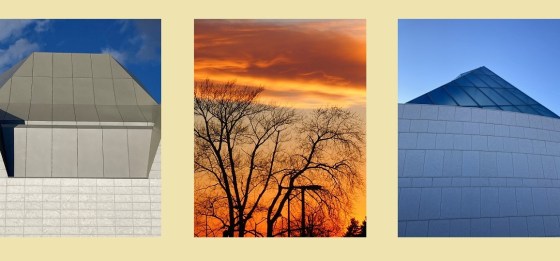
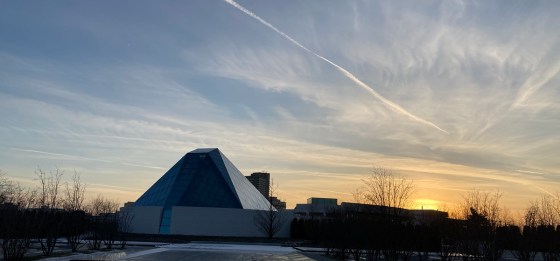
Please click HERE or on image below for spectacular photos of the sky and the Aga Khan Park grounds as captured by Malik Merchant during his recent walk through his favourite space in Toronto
All ablaze as the sinking sun lights up the horizon and the sky west of Aga Khan Park and Ismaili Centre. Click on image for more photos. Photo: Malik Merchant/Simerg. Camera: Olympus E-M10, 14-42mm.
Malik Merchant sights the daytime moon as he drives along the Don Valley Parkway, and immediately heads to the Aga Khan Park, the Ismaili Centre and the Aga Khan Museum to enjoy nature at its best. Please read article in Simergphotos.
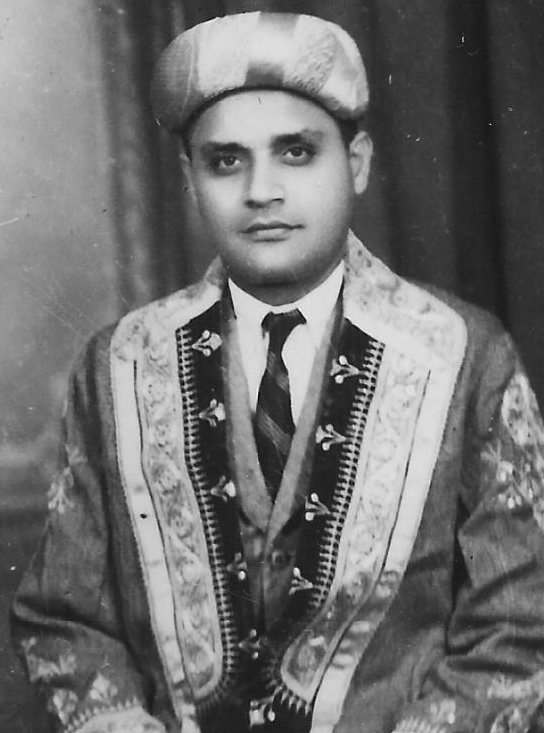
Photographs and story of a historical gold medal that was presented to a British Colonial Officer at the Aga Khan’s Diamond Jubilee in 1946 (READ ARTICLE).
Toronto based Ismaili artist and author introduces “Little One, You are the Universe,” the latest of her three books, by answering a series of short question (READ ARTICLE).
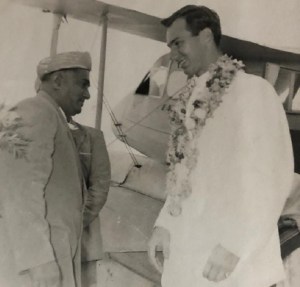
Kamruddin Rashid and Shah Abdulla, both originally from Pemba, share their rare photo collection of His Highness the Aga Khan’s 1957 historical visit to the towns of Chake Chake and Wete in the Island of Pemba (READ ARTICLE).
The unforgettable (Late) Alwaez Shamshu Bandali Haji inspires us with selected Ginanic verses as we commemorate the birth anniversary of Hazrat Ali (a.s.), the 1st Shia Imam (READ ARTICLE).
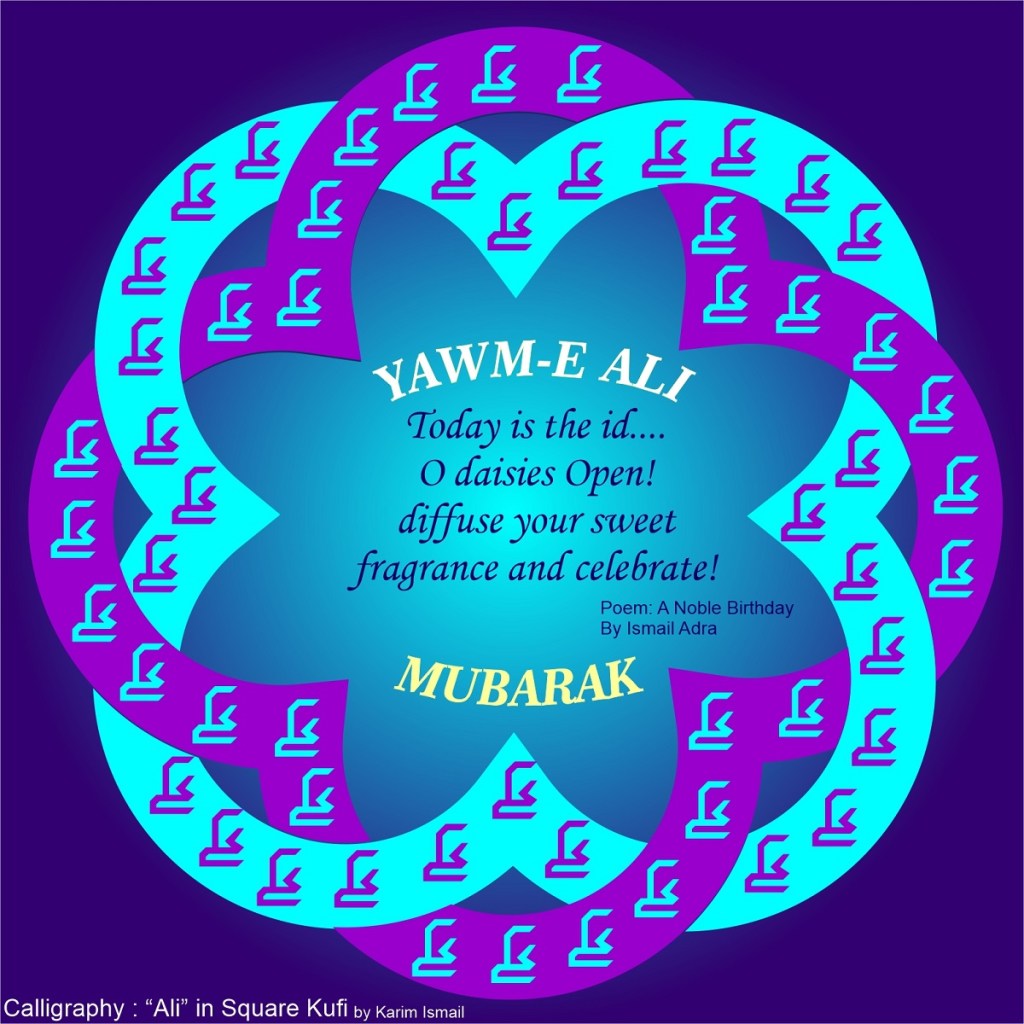
Karim Ismail of Toronto creates a beautiful calligraphy in commemoration of Hazrat Ali’s birth anniversary. The post includes inspiring quotes by Hazrat Ali and his direct descendant His Highness the Aga Khan, the 49th Hereditary Imam of Shia Imami Ismaili Muslims. There is also a calligraphy of the prayer of Nadi Ali (READ ARTICLE).
Edmonton based Ismaili author and philosopher answers a series of question about his book Justice Bertha Wilson Pushes the Boundaries of Humanity through which readers will learn about the Canadian past from outside the boxes of patriarchy and whiteness (READ ARTICLE).
Creative writer Farah Tejani pens a poetic tribute to the iconic Ismaili religious education teacher and missionary Alwaeza Maleksultan Merchant who passed away recently at the age of 89 (READ ARTICLE).
Date posted: February 27, 2021.
______________________
Before departing this website please take a moment to review Simerg’s Table of Contents for links to hundreds of thought provoking pieces on a vast array of subjects including faith and culture, history and philosophy, and arts and letters to name a few. Also visit Simerg’s sister websites Barakah, dedicated to His Highness the Aga Khan, and Simergphotos.
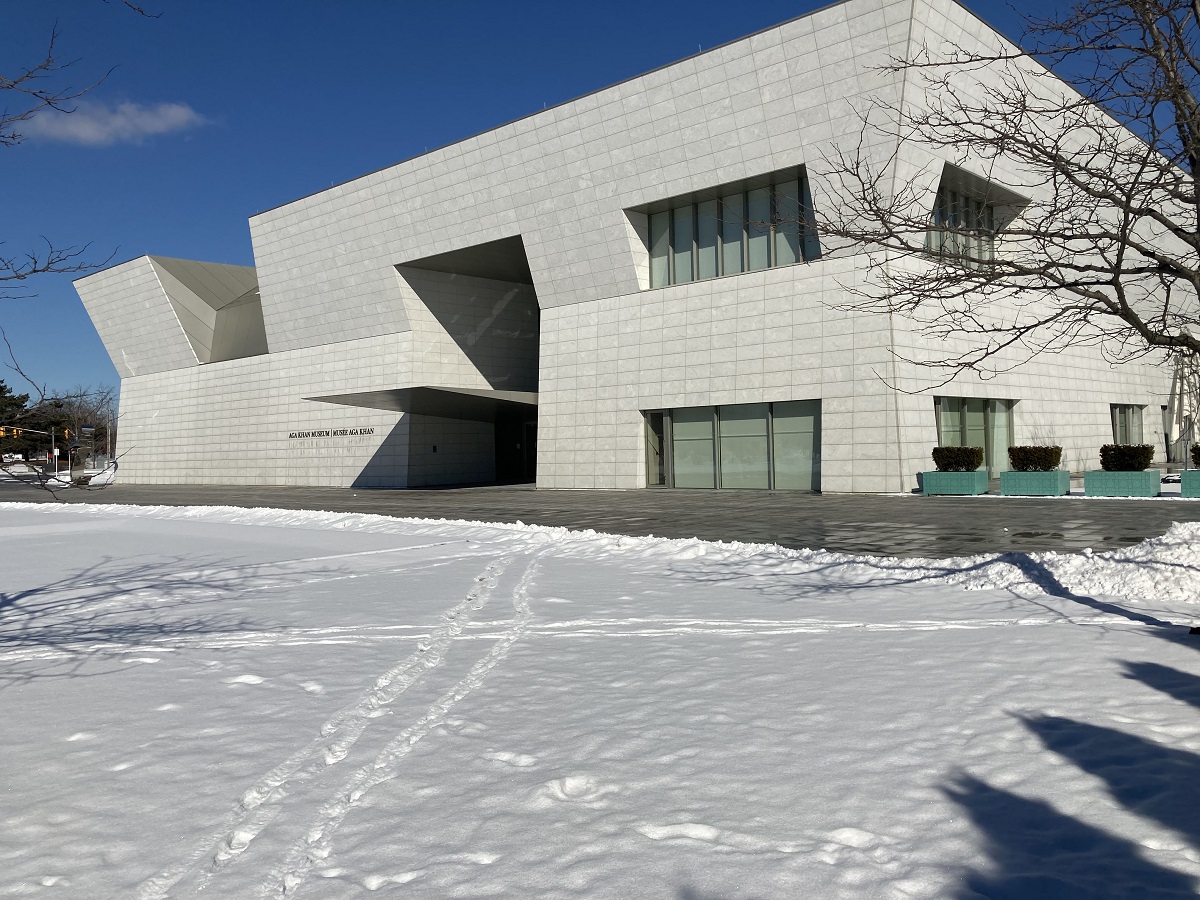
A view of the Aga Khan Museum’s main entrance bloc on February 14, 2021. Photo: Malik Merchant / Simerg.
I couldn’t have asked for a better and happier February 14, 2021. I woke up very early to complete an exclusive photo piece of Mawlana Hazar Imam His Highness the Aga Khan’s visit to Pemba on November 18, 1957. Looking out of the atrium windows across my living room facing North-West, I knew the sun was rising on the South-East side. It was -9°C and there was absolutely no wind. I had been cooped up inside for the past few days and wanted some fresh air. I brewed Colombian Supremo Coffee that I had purchased earlier during the week at St. Lawrence Market, filled a huge steel mug that keeps beverages boiling hot for about an hour, and headed to “What a Bagel” bakery on York Mills and Leslie, which was spewing out fresh hot bagels the minute I arrived there. “Give me a really hot one,” I said, and asked the ever-smiling server to make me a vegetarian sandwich. “Not toasted,” I reminded her, as many who come to the shop insist on having their order toasted, even if they are fresh from the oven.
I jumped into my car, turned it on with a low heat setting and enjoyed the bagel and coffee. What next? A visit to my Valentine, and I am sure that makes my readers curious. A meeting, maybe, at the Aga Khan Park?
So still was the wind at Aga Khan Park on February 14, 2021, that the flags of the Ismaili Imamat, the city of Toronto, the province of Ontario and Canada were unmoved! It was a beautiful day to savour at the Park in -5°C Celsius. Photo: Malik Merchant/Simerg.
Ismaili Centre main entrance with the Jamatkhana dome at left under blue skies on February 14, 2021. Photo: Malik Merchant/Simerg.
Who might that “lucky” Valentine be? In the absence of my lovely daughter who is several hundred kilometres away and my beloved mother who passed away only three weeks ago, I turned to my constant companions for several months — the Ismaili Jamatkhana dome, the Aga Khan Museum and the Aga Khan Park where I have experienced so much happiness and inspiration. I adore being there. Can one make non-human object(s) around you as your Valentine for February 14th? Not by the definition of Valentine’s, but I contrived one just for myself!
I cannot thank anyone but Mawlana Hazar Imam for his vision in conceiving and building three extraordinary spaces for the enjoyment of people in Toronto and everyone around the world. I am one of the lucky ones, who gets to visit the grounds as and when I like. February 14, 2021 was a very special day. There was beautiful light snow on the ground, the sky was blue and sunny, it wasn’t cold and the flags stood still in the absence of any windshield factor!
I FaceTimed my daughter Nurin to show her the beautiful environment that surrounded me. My face, she could see, had lit up.
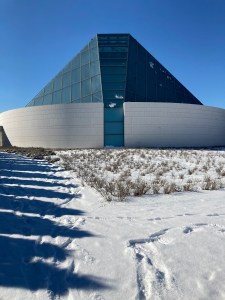
The dome of the Toronto Ismaili Headquarters Jamatkhana captured under sunny blue skies on Valentine’s Day, February 14, 2021. The glass niche in the centre of the circular wall faces the direction of Kaba where all Muslims face for prayers. Photo: Malik Merchant/Simerg.
A man walks by one of the snow covered ponds at the Aga Khan Park, with the Aga Khan museum in full view under sunny blue skies. Photo: Malik Merchant/Simerg.
A family with children walk on the Aga Khan Park trail under sunny blue skies on February 14, 2021. The dome of the Ismaili Jamatkhana at left reflects a rare white cloud in the sky, and the Aga Khan Museum building can be seen further away. Photo: Malik Merchant/Simerg,
A close up view of the CN Tower from the south east end of the Aga Khan Park on February 14, 2021. Photo: Malik Merchant/Simerg.
The Big Heech Sculpture located in front of the Aga Khan Museum’s main entrance bloc. Photo: Malik Merchant/Simerg.
A view of the Aga Khan Museum and the Ismaili Headquarters Jamatkhana dome from the grounds of Aga Khan Park. Photo: Malik Merchant/Simerg.
An amazing reflection of a rare cloud on the dome of the Ismaili Jamatkhana on an otherwise clear blue sky on February 14, 2021. Photo: Malik Merchant/Simerg.
After spending a good measure of my morning at the Aga Khan Park, I returned home to continue working on the Pemba photo essay for the remainder of the day, while many others would be enjoying their Valentine’s day with their partners in creative settings necessitated by Covid-19.
We welcome feedback from our readers. Please complete the LEAVE A REPLY form below or click Leave a comment. Your letter may be edited for length and brevity, and is subject to moderation.
Before departing this website please take a moment to review Simerg’s Table of Contents for links to hundreds of thought provoking pieces on a vast array of subjects including faith and culture, history and philosophy, and arts and letters to name a few. Also visit Simerg’s sister websites Barakah, dedicated to His Highness the Aga Khan, and Simergphotos.
Ottawa downtown, December 31, 2020, lit during the festive holiday season. Greetings at top and bottom are mine and not part of original photo. Photo: Nurin Merchant / Simerg.
By NURIN MERCHANT
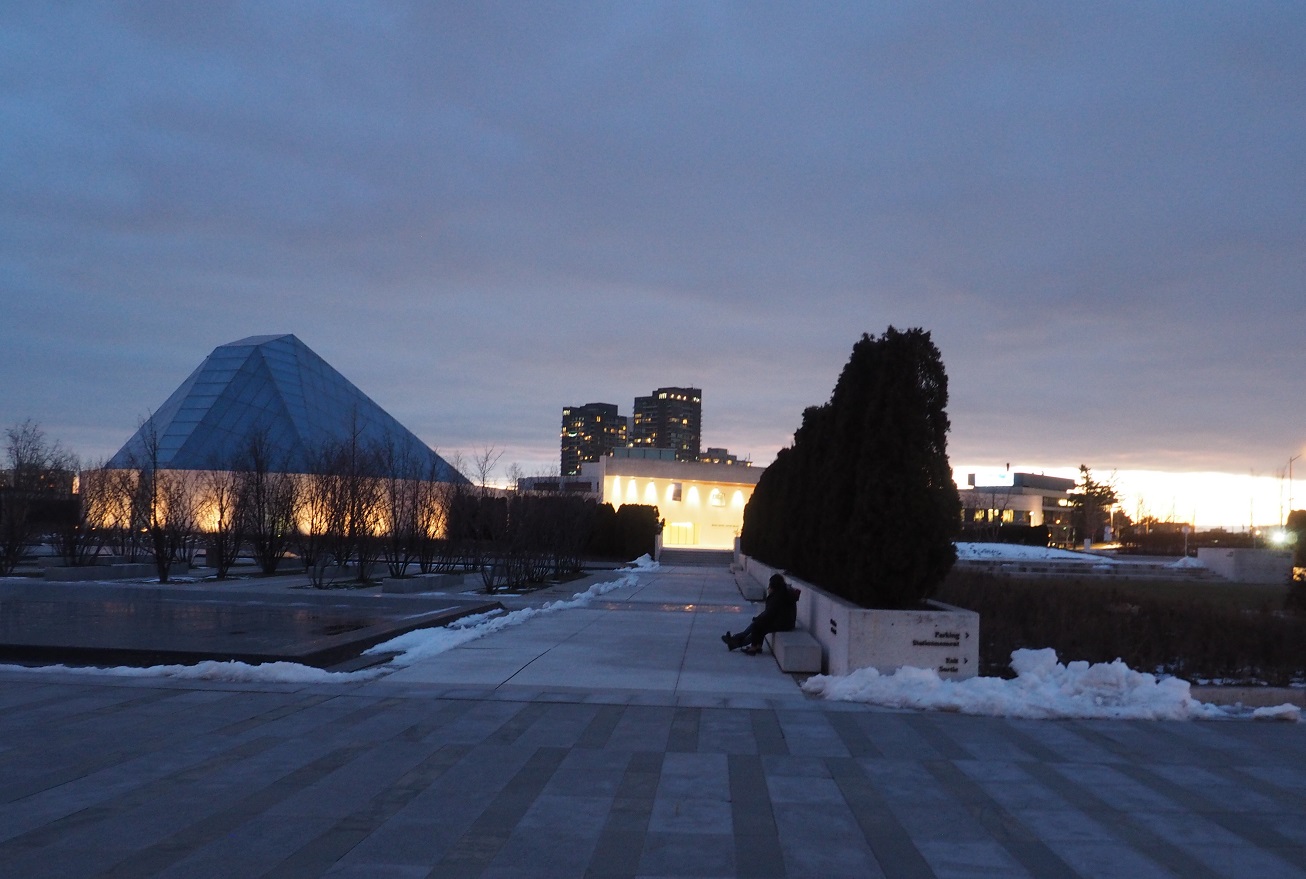
My dad arrived at the grounds of the Aga Khan Park on the evening of December 31, hoping to take photos of the setting sun for the last time in 2020. Unfortunately, he was a little bit late to see the setting sun as it had gone under cloud cover. Pointing his camera to the west towards and beyond the unique dome of the Toronto Headquarters Ismaili Jamatkhana situated on 49 Wynford Drive, he was able to capture photos of the clouds that were glowing white from the sunlight. The Jamatkhana lights at the base of the dome were already on, and the scene was quite beautiful. Snow that had covered the grounds on December 25, Christmas day, had melted with warmer temperatures and rain on days that followed. Small patches of snow were scattered throughout the Park.
A couple chat on a bench across one of the 5 ponds at the Aga Khan Park on a cool December 31, 2020 evening, as the setting sun in the horizon, at right of picture, casts its lights on clouds covering it. The majestic dome of the Ismaili Jamatkhana is seen at left of picture, with its circular base lights turned on. Photo: Malik Merchant / Simerg.
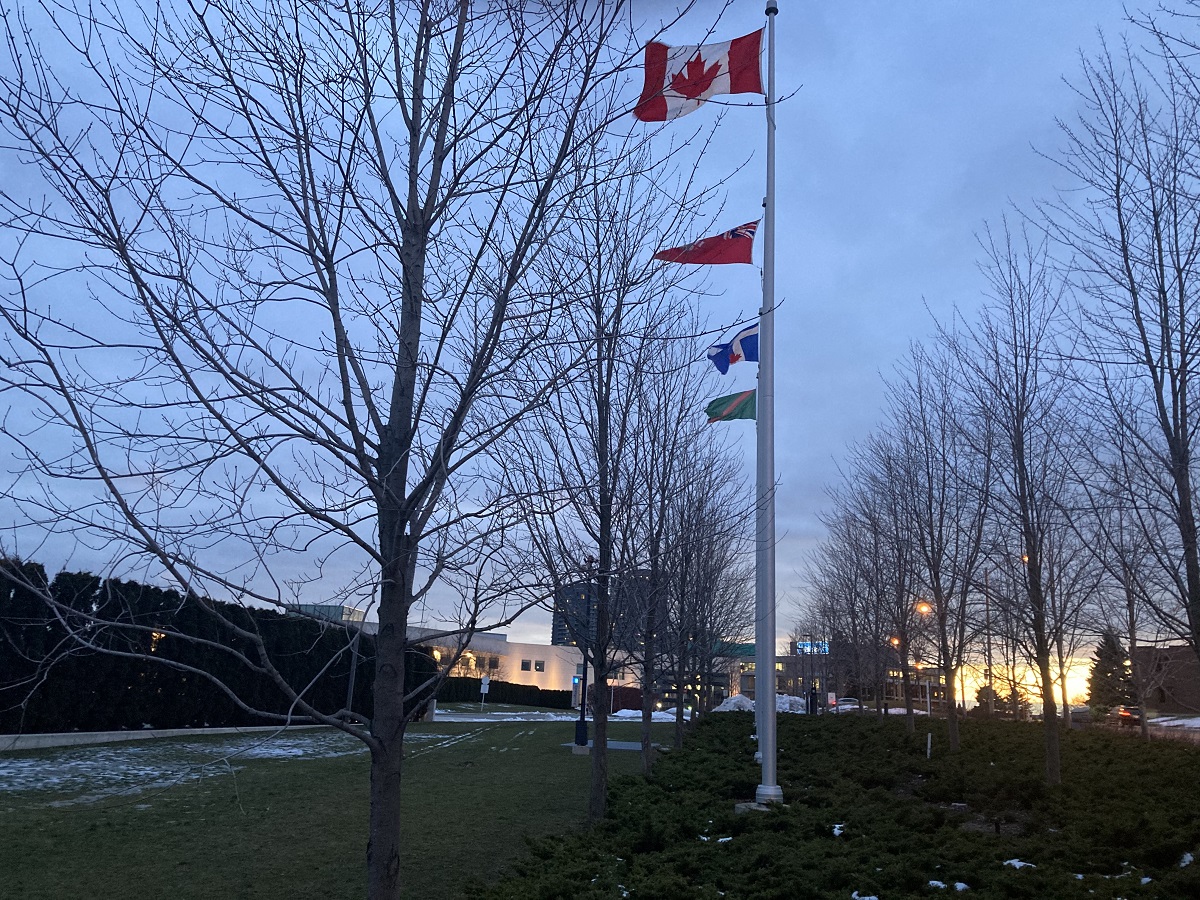
The flags of Canada (nearest), the province of Ontario, the city of Toronto and the Ismaili Imamat flutter on a cool and windy December 31, 2020 evening at Aga Khan Park, while the setting sun in the horizon casts its light across clouds covering it. The Ismaili Centre building is seen at left of the flags. The dome of the Ismaili Jamatkhana is not in view in this photo, but see preceding photo. Photo: Malik Merchant / Simerg.
I was 440 kms away in Ottawa watching Ismaili TV. Then a few hours later, before midnight, I headed to downtown Ottawa to seek out that extra bit of new year feeling in the year of the Covid-19 pandemic. Auckland, Sydney, Bangkok had already celebrated the start of 2021 with incredible fireworks. Ottawa stopped the new year fireworks many years ago but there have been exceptions with shows at Parliament Hill on rare occasions. Ottawa is one of the world’s coldest capital cities, but it doesn’t feel that way this year, and there has also been very little snow. Toronto, I think, has seen more of it.
Some marvellous decorations on Wellington Street made me feel that 2021 was finally here. I am glad I went to downtown. So with these photos, some embellished with new year greetings, my dad and I along with members of our family convey our best wishes for the new year to all our readers and friends, with many happy returns.
December 31, 2020: Holiday season lights decorate Ottawa, corner of Elgin and Wellington Streets. Festive artwork at top of photo are mine. Photo: Nurin Merchant / Simerg
We remain humble and grateful to Mawlana Hazar Imam, His Highness the Aga Khan, for his constant care and guidance, and for showering all his spiritual children around the world with his most affectionate loving blessings for good health and happiness, spiritual progress, worldly success, strength of faith and unity, as well as best loving blessings for mushkil-asan. He has also said to us that we are all in his heart, in his thought and in his prayers.
Sunrise Aga Khan Museum January 1, 2021, camera facing SE. Photo: Malik Merchant / Simerg.
Date posted: January 1, 2021.
_______________________
We welcome feedback from our readers. Please complete the LEAVE A REPLY form below or click Leave a comment. Your letter may be edited for length and brevity, and is subject to moderation.
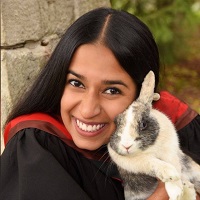
Nurin Merchant with her bunny, Pistachio.
Dr. Nurin Merchant received her veterinary medicine degree with distinction from the Ontario Veterinary College (University of Guelph) in 2019, and now works as a veterinarian in the Ottawa region. Born and raised in Ottawa, Nurin completed her international baccalaureate (IB) program at Colonel By Secondary School before proceeding to the University of Guelph for an undergraduate degree in Biological Sciences which she passed with Honours. She then pursued veterinary medicine in the same school. Nurin enjoys hiking, loves nature and, of course, animals. She is also an artist. She paints, sculpts as well as designs and makes greeting cards during her spare time. She has two lovely bunnies named Pistachio and Canela, which she acquired from animal care and rescue facilities a few years after the death of her first rabbit, Wobbles. She assists her dad Malik with the publication of this website and two other blogs Simergphotos and Barakah.
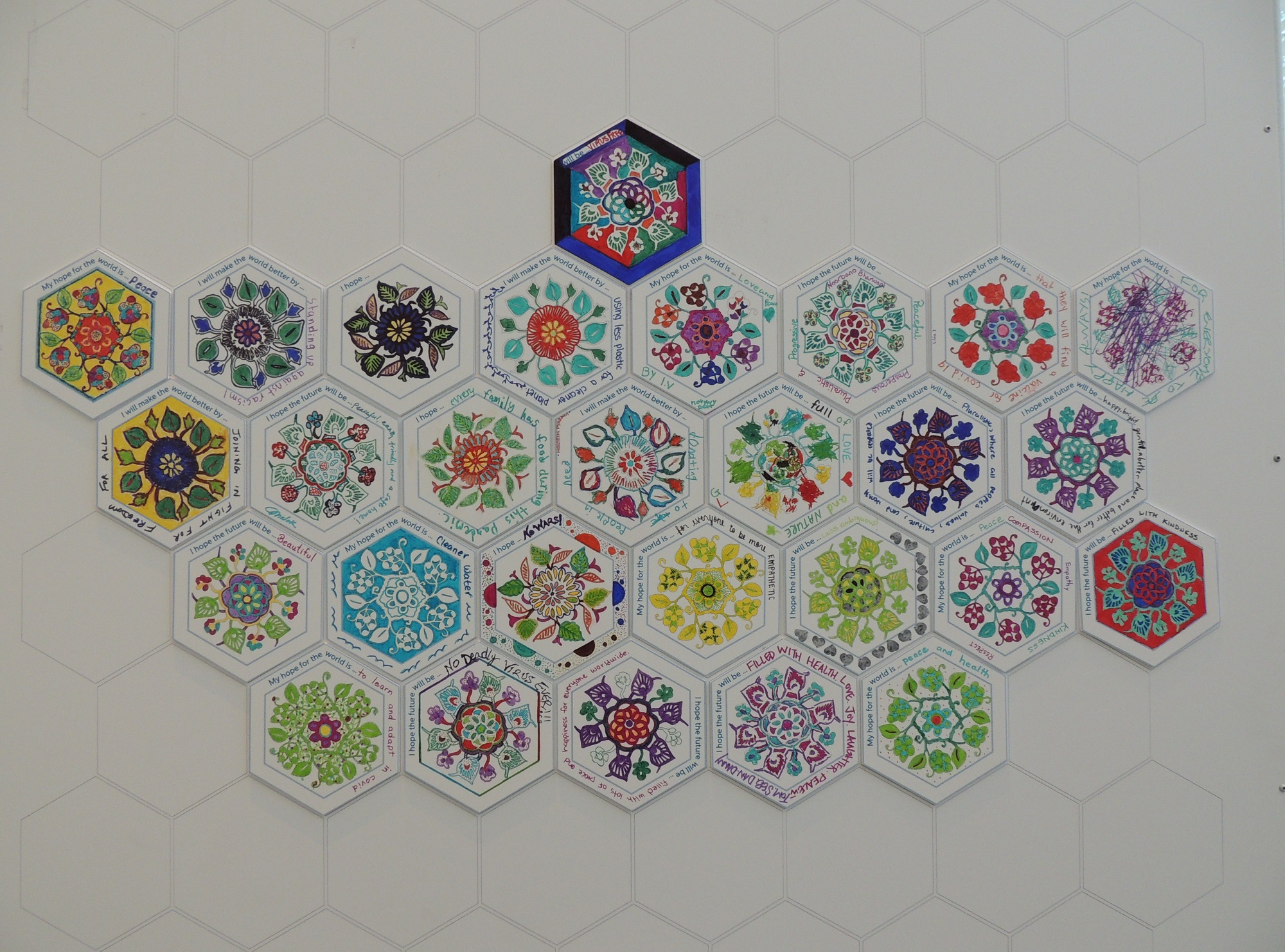
Aga Khan Museum portraits of resilience, togetherness and hope: Photo: Malik Merchant /Simergphotos. Please click on image for enlargement.
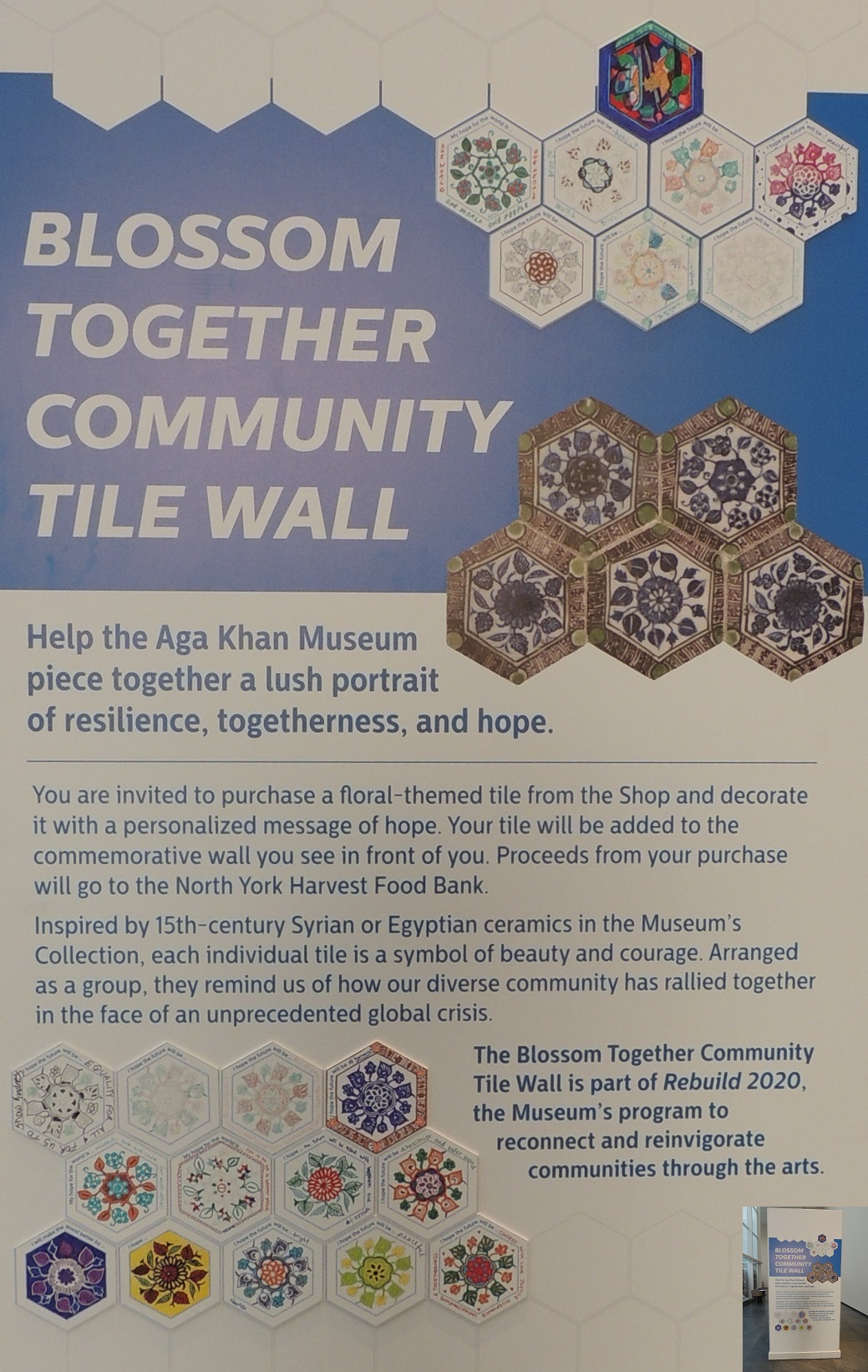
Before its latest shutdown due to provincial regulations, Toronto’s Aga Khan Museum gave visitors an interesting opportunity to pen their heartfelt wishes on one of several beautiful pre-designed tiles available at the museum bookstore, and post them onto a large panel prominently placed by the beautiful courtyard. The theme of the project was “Blossom Together Community Tile Wall.”
Section of panel (see inset, bottom right) highlighting purpose of the community wall. Photo: Malik Merchant / Simergphotos.
The cards contained the following themes that visitors could write about: “I hope the future will be …”; “I will make the world better by …”; “I hope ….“; and “My hope for the world is …” Here is a selection of images that I was able to capture. As I glanced at the tiles, I was encouraged by the wishes of hope that I read, several of which related to the current pandemic. It is with these feelings of the young and old alike who expressed themselves on the museum wall that we enter 2021, with the hope that new Covid-19 vaccines which have been developed will become game changers in bringing the pandemic under control.
Aga Khan Museum portraits of resilience, togetherness and hope: Photo: Malik Merchant /Simergphotos.Please click on image for enlargement.
We wish all our readers a happy new year.
Date posted: January 1, 2021. Last updated: January 2. 2021 (minor centre image change, thumbnail inset added)
_____________________
This post has been adapted from the original version first published on December 31, 2020 at Simergphotos.
We welcome feedback from our readers. Please complete the LEAVE A REPLY form below or click Leave a comment. Your letter may be edited for length and brevity, and is subject to moderation.
Mawlana Hazar Imam, His Highness the Aga Khan, 49th Imam of the Shia Imami Ismaili Muslims, pictured at the Diamond Jubilee Darbar in Kenya. Photo: The Ismaili
Please also click: Benjamin Mkapa (d. July 2020. As Tanzania’s President from 1995-2005, the late Benjamin Mkapa strongly supported the work of the Ismaili Imamat in his country as well as abroad. The support that he gave is clearly illustrated in a special piece about him in Barakah, a blog dedicated to Mawlana Hazar Imam, His Highness the Aga Khan)
___________________
HISTORICAL PHOTOS OF MAWLANA HAZAR IMAM AND HIS FAMILY, IMAMAT PROJECTS AND OTHER EVENTS
Please click on image for 2020 stories and accompanying photos
Date posted: December 27, 2020. Last updated: December 28, 2020.
__________________
We welcome feedback from our readers. Please complete the LEAVE A REPLY form below or, if you don’t see the box, please click Leave a comment. Your letter may be edited for length and brevity, and is subject to moderation.
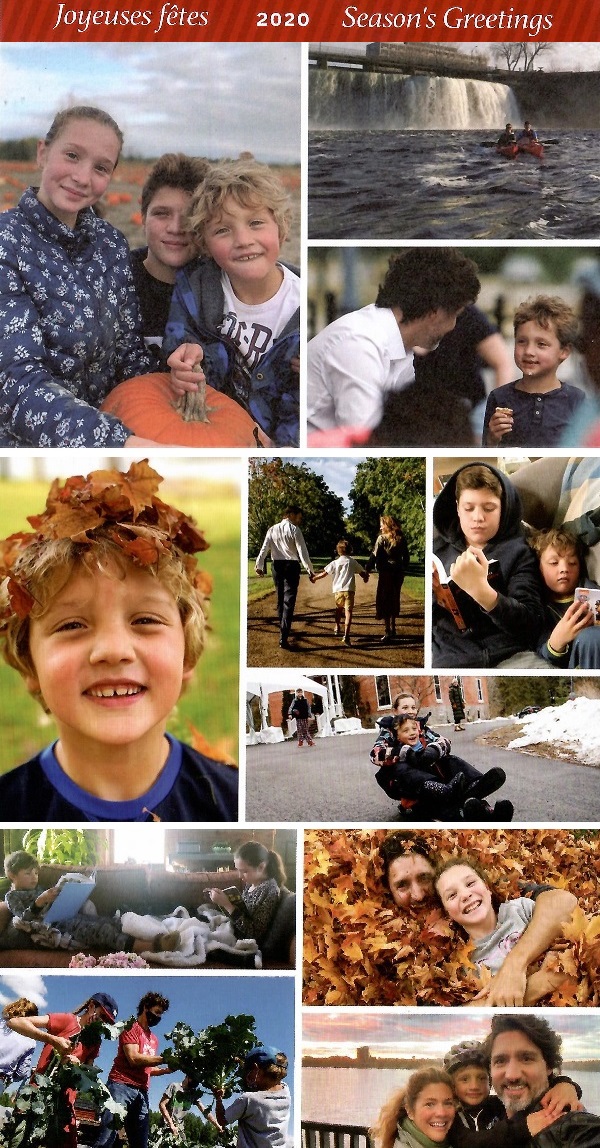
I am among the millions of Canadian who have received “Season’s Greetings” from the Prime Minister of Canada, Justin Trudeau, and his wife Sophie Grégoire Trudeau. Their message in a card filled with family photos reads: “Let’s cherish the bonds of love, family and friendship, near or far. We are one big Canadian family. We will have each other’s backs and hearts in the moments when it’s needed the most. We will pull through together!”
Click on photos for enlargements
Prime Minister Justin Trudeau with members of his family. Credit: Greeting card issued by Justin Trudeau; collage prepared by Simerg / Malik Merchant.
I thank the Prime Minster for the greetings as well as for seeking to ease the burden for millions of Canadians who are living through one of the most challenging periods in the nation’s history. He has tried to work across party lines both federally and provincially as well as with mayors around the country to bring relief and hope during the Covid-19 pandemic. Through his spontaneous briefings, he has kept the country united. He has recognized the work of the front-end workers, whose spirit and dedication for our well-being during the pandemic will remain in our hearts forever.
The Aga Khan’s Messages
In addition to the Prime Minister’s message, within my own Ismaili community, His Highness the Aga Khan, or Mawlana Hazar Imam as we affectionately and respectfully address him, has sent us messages also known as Talikas, throughout the pandemic year. He has given is guidance, blessed us with his prayers and singled out volunteers for their extraordinary work, offering them his “best affectionate blessings.” In the latest message on the occasion of his 84th birthday which was celebrated on December 13, 2020 by millions of Ismailis, either remotely or in person in Jamatkhanas that were open, His Highness referred to the encouraging development of vaccines and asked his community members to “be guided by the advice and directives of their health authorities to benefit from the protection these vaccines will provide.” I am confident that the Ismaili community will seriously participate in the vaccination program. It was gratifying to watch the Pfizer-BioNTech vaccine, created by the husband-and-wife team of Dr. Ugur Sahin and Dr. Özlem Türeci, being administered to long-term care workers at the Ottawa Hospital’s civic campus on the morning of Tuesday, December 15, an occasion which prompted a visit from the Prime Minister.
Mawlana Hazar Imam Online?
In addition to the Talika’s that are now being read by Ismailis and non-Ismailis alike, my hope is that we will soon be able to hear and see the Imam speaking and addressing about the challenges that we have gone through, and on “building for the future from a position of strength and wisdom.” With Jamati visits now possibly a thing of the past for sometime to come, the digital media offers us the opportunity to see and hear the Imam at opportune times to make that connection even stronger. My own daughter, when she was a student some years ago, and other youth recognizing that Mawlana Hazar Imam cannot be travelling to every Jamat in the world on a regular basis, raised the possibility of the youth of the Jamat being particularly singled out and being spoken to by the Imam for his guidance on numerous aspects of their lives on an annual basis via an online platform. This interaction with their beloved Imam would help increase their awareness about their future responsibilities and paths to success, as well as their greater and more meaningful involvement with the Jamat and its institutions.
Story continues below
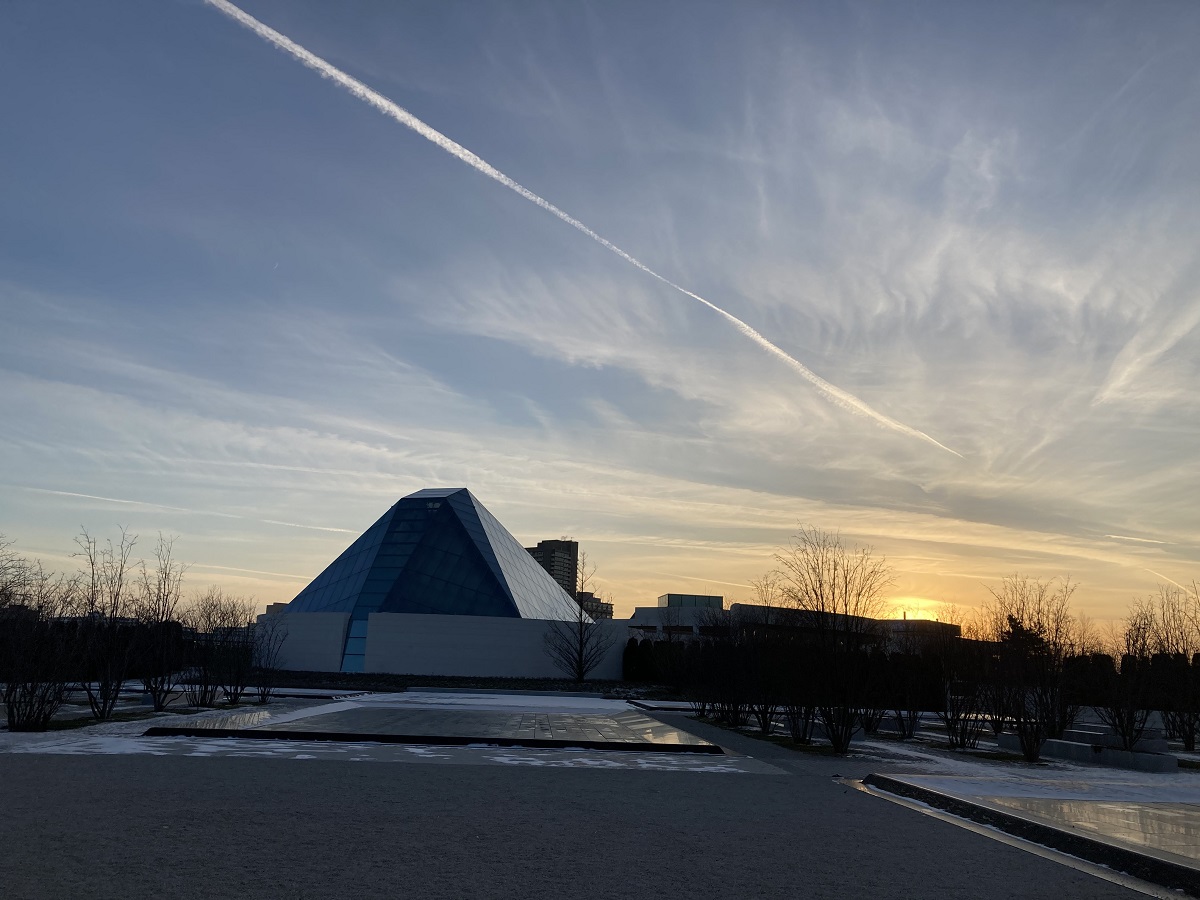
A view of the Ismaili Jamatkhana dome across the ponds of the Aga Khan Park, with the sun setting in the west end of Toronto. A jet plane leaves a white trail in the sky and, in this photo, cloud cover does not provide a clear view of the crescent moon. See next photo.Photo: Simerg / Malik Merchant.
A Walk for Inspiration and Hope
Buoyed by the message of hope in Mawlana Hazar Imam’s most recent Talika and the Prime Minister’s greeting, I decided to walk over to my favourite place in the world — none other than the site of the Aga Khan Museum, the Ismaili Centre and the Aga Khan Park that has added value to my life over the past several months of the pandemic. The grounds were empty of people. There was a dusting of snow on the ground, while some parts of the USA had already seen several inches of snow. Armed with a compass, I knew the 3 day old new moon, still in its beautiful crescent state, was exactly above me but cloud cover prevented me from seeing it clearly. Patience is a good virtue to have, and we have all built that over the pandemic months.
Story continues below
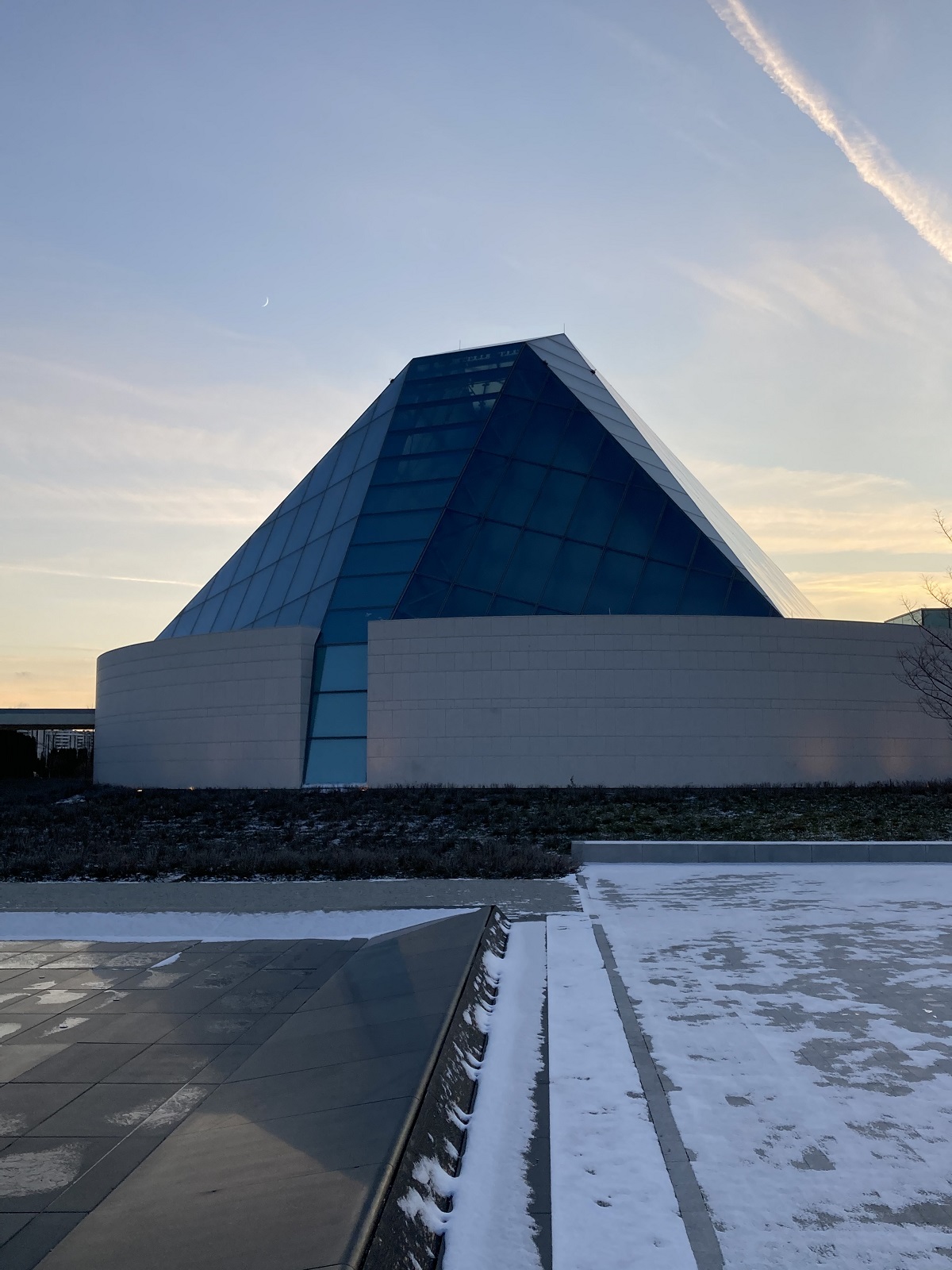
The crescent moon emerges from the clouds over the dome of the Toronto Headquarters Ismaili Jamatkhana located at 49 Wynford Drive. Photo: Malik Merchant / Simerg.
The Crescent Moon and Covid-19 Impacts
After about 30 minutes, as the clouds drifted away, the crescent moon came to my full view. Being in the earlier stages of development, the crescent moon reminded me of the blessed night of Chandraat (new moon night) that fell on Monday, December 14th, and which Mawlana Sultan Mahomed Shah, the 48th Imam, had told us would bring us spiritual peace and happiness. Some prayers on the blessed night of Chandraat are also dedicated to the souls of the deceased. That reminded me of Mawlana Hazar Imam’s Talika of December 11 for the occasion of his birthday in which he gave his best loving blessings for the souls of all his ruhani (deceased) spiritual children, and his prayers for the eternal peace and rest of their souls. My thoughts turned to the thousands of souls who have departed this world during the pandemic, most often without the presence of their families around them or not having ceremonies that they would normally have had.
Story continues below
Scotia Bank building, at left of Aga Khan Museum, with Aga Khan Park ponds at foreground. Photo: Simerg / Malik Merchant.
Then, as I walked away from the Ismaili Centre towards the Aga Khan Museum, the Scotia Bank building with its red logo at the top came to my view. It raised my consciousness of the financial impact Covid-19 has had on the livelihood of millions of individuals and their families, as well as businesses.
Story continues below
The Aga Khan Museum (left), the Ismaili Centre Jamatkhana dome, the crescent moon over highrises, and the flags of Canada, Ontario, Toronto and the Ismaili Imamat. Photo: Simerg / Malik Merchant.
As I began my homeward walk, I turned around and in a single shot captured the glory of nature, the iconic spaces that the Aga Khan has built in a country that values and respects diversity and pluralism, and the flags of Canada, the Province of Ontario, and the City of Toronto flying in unison, alongside the flag of the Ismaili Imamat.
And Greetings from Simerg
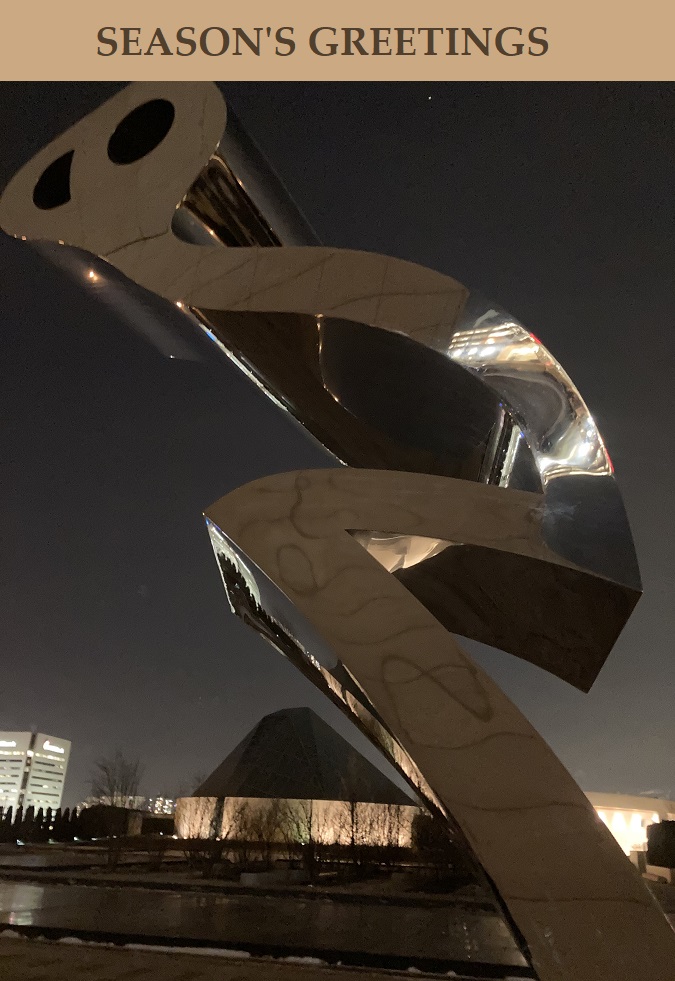
The Big Heech sculpture outside the Aga Khan Museum and the Toronto Headquarters Jamatkhana dome on the night of December 18, 2020. Photo: Simerg / Malik Merchant.
Thus with this small collection of photographs and messages of hope from the Aga Khan and the Prime Minister, the ingenuity of the human mind in developing a vaccine in record time, the dedication of front-line workers in alleviating the sufferings of millions upon millions of people, I send my SEASONS GREETINGS filled with hope to all Canadians as well as friends subscribers and supporters of Simerg and its sister websites Barakah and Simergphotos. My family joins me in wishing everyone happiness.
Date posted: December 18, 2020. Last updated: December 19, 2020 (new photo added).
______________________
Before departing this website please take a moment to review Simerg’s Table of Contents for links to hundreds of thought provoking pieces on a vast array of subjects including faith and culture, history and philosophy, and arts and letters to name a few.
We welcome feedback from our readers. Please complete the LEAVE A REPLY form below or, if you don’t see the box, please click Leave a comment. Your letter may be edited for length and brevity, and is subject to moderation.
Simerg’s Malik at Aga Khan Museum courtyard.
Malik Merchant is the founding publisher/editor of this website, Simerg (2009), as well as two other blogs Simergphotos (2012) and Barakah (2017). Formerly an IT consultant, he now dedicates his time to family projects and his 3 websites. He is the eldest son of Alwaez Jehangir Merchant (1928-2018) and Alwaeza Maleksultan Merchant who both served Ismaili Jamati institutions for several decades in Mozambique, Tanzania, Pakistan, the UK and Canada in both professional and honorary capacities as teachers and missionaries. Malik’s daughter, Dr. Nurin Merchant, assists him as an honorary editor of the three websites. She received her veterinary medicine degree with distinction from the Ontario Veterinary College (2019, University of Guelph) and now works as a veterinarian.
“I would take my students on a field trip to Toronto to see this miracle of miniature painting, one that continues to fascinate when greatly magnified. It features extraordinary details of flora and fauna, as well as a rainbow coalition of human beings from every continent and culture, much as one sees on the streets of Toronto.” — Gary Tinterow, Museum of Fine Arts, Houston, on the Shahnameh Folio ‘Court of Gayumars’ at the Aga Khan Museum
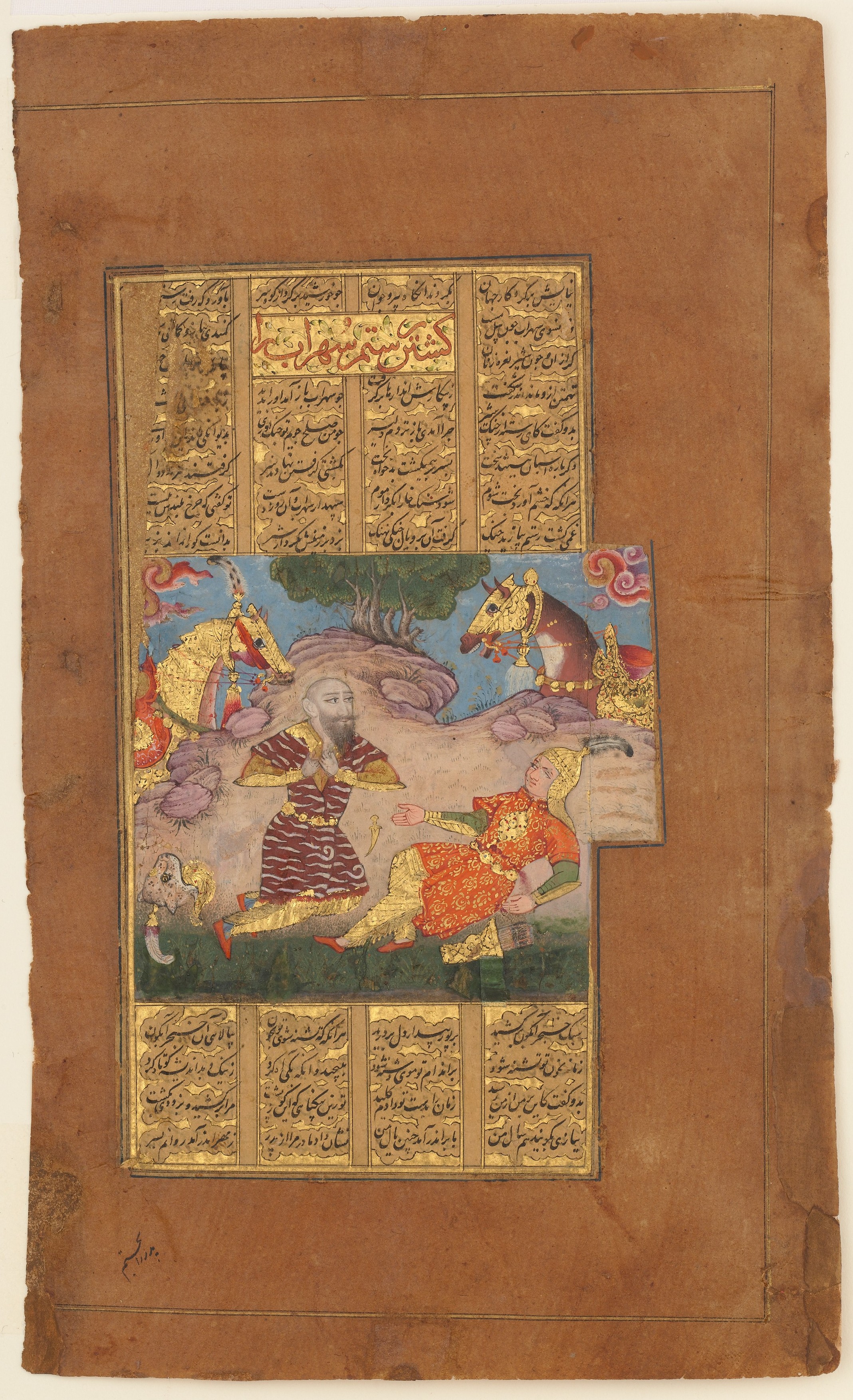
When I first started learning English upon my arrival in the early 1960’s in Dar es Salaam from Lourenco Marques (now Maputo), Mozambique, where I had received instructions in Portuguese at my primary school, in Gujarati at today’s equivalent of Baitul Ilm classes, and spoke Hindi at home, my dad presented me with a hardback version of the story of Rustum (or Rustam) and Sohrab (Suhrab). It was a large print book with beautiful illustrations. However, it was also story of tragedy. Rustum had been separated from his princess (Tahmina) for a long time, and did not know that he had a son named Sohrab from her. Several years later, the father and his son met on one to one combat on opposing sides, where Rustum wrestled Sohrab to the ground and fatally injured him. Rustum, to his horror, realised the truth when he saw his own arm bracelet on Sohrab, which he had given to Tahmina many years before and which she had in turn given to Sohrab before the battle, in the hope that it might protect him.
Little did I know then, that this was a story from Shahnameh, The Book of Kings, written by Ferdowsi, now some 1030 years ago.
The hero Rustam was unaware that he had a son, Suhrab, by Princess Tahmina. It came to pass that the two met in battle, fighting on opposing sides. They struggled in single combat until Rustum stabbed Suhrab fatally. Rustum realized that he had slain his own son when he saw Suhrab’s arm bracelet, which he himself had given to Tahmina many years before. Tahmina had given it to Suhrab before the battle, hoping it would protect him. Photo: Wikipedia, CCO 1.0 Public Domain.
The illustration from the book, which my beloved late father Jehangir Merchant had given me, of a father standing above his son, whom he has just mistakenly killed in a combat, is one of the most powerful and saddest images I have seen in storytelling. The folio of the father and son in tragic combat that is shown above is from the collection of New York’s Metropolitan Museum of Art.
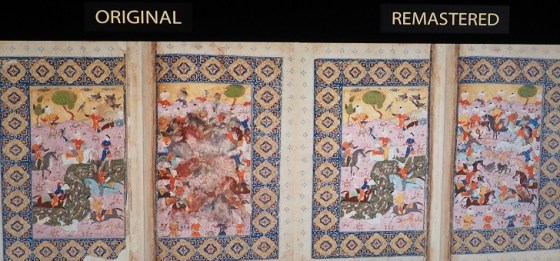
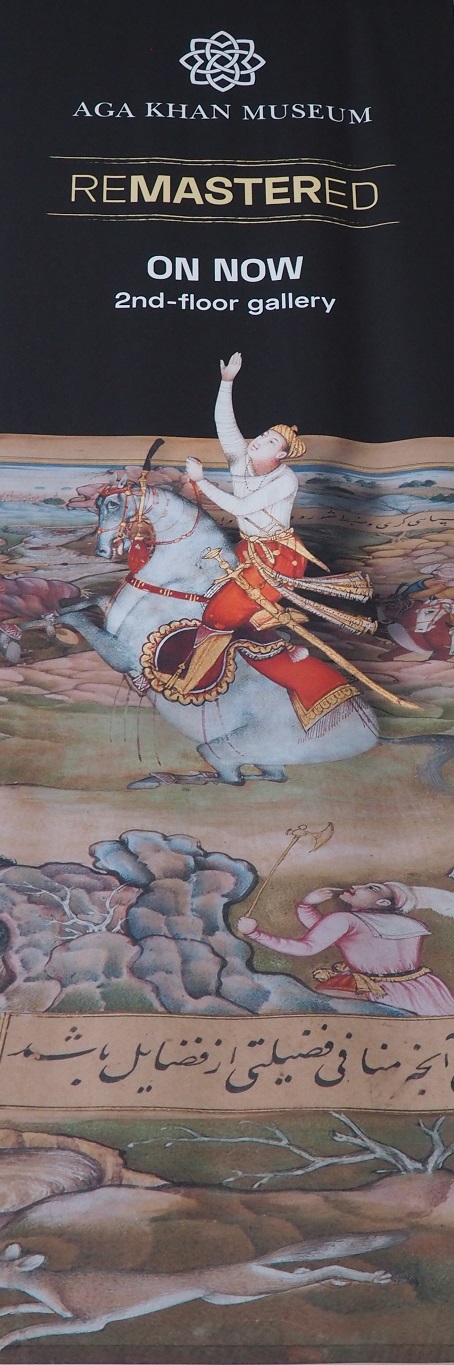
Remastered at Aga Khan Museum until March 21, 2021. Photo: Malik Merchant /Simerg
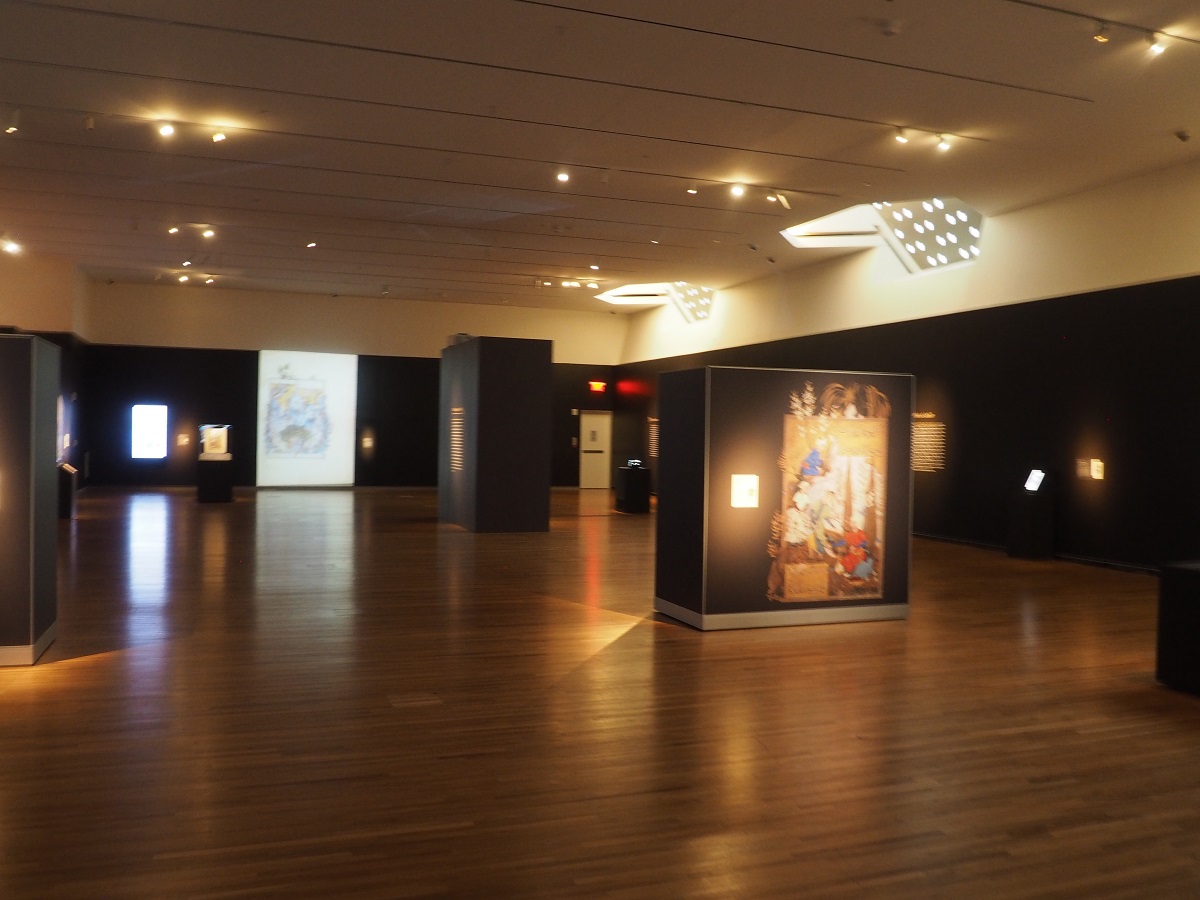
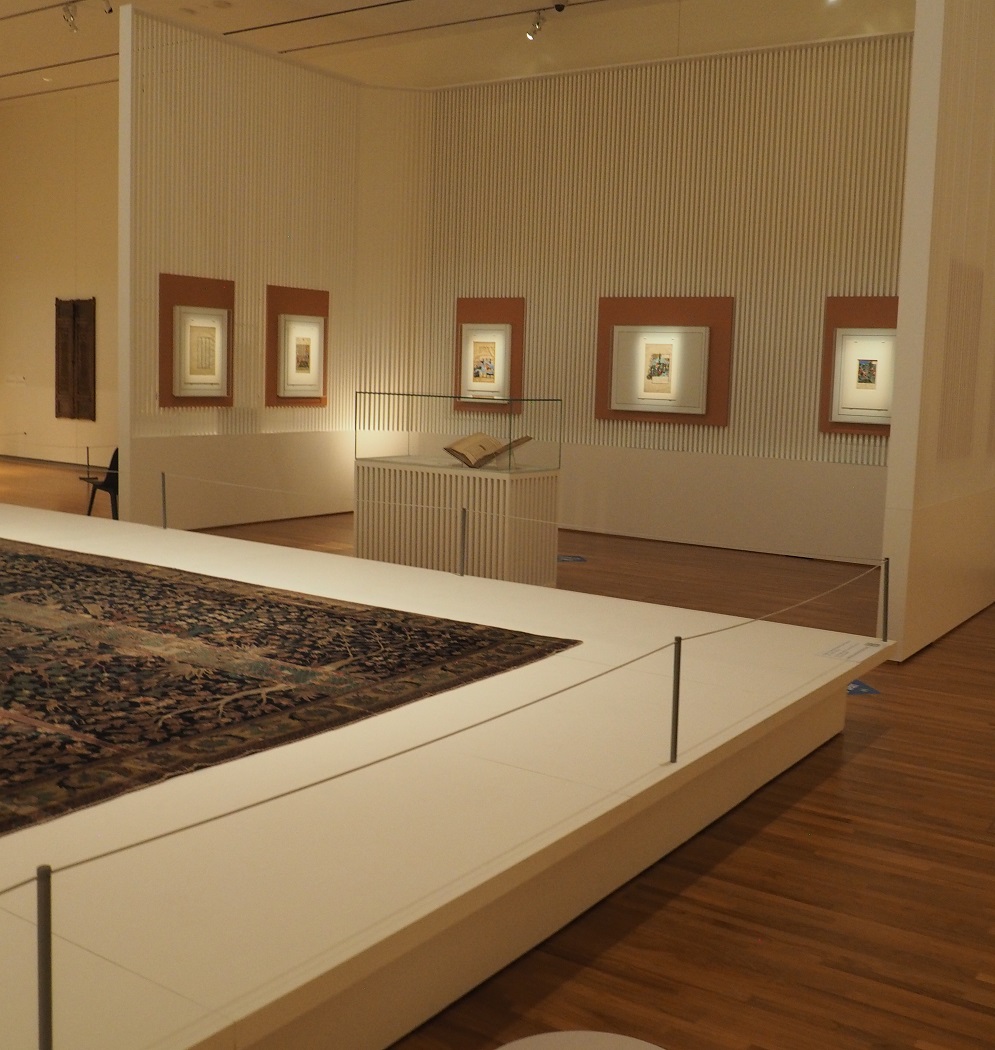
The Aga Khan Museum does not have any folios from the Shahnameh depicting this specific battle scene, but some other outstanding loose folios from the Shahnameh form part of a new exhibition under the theme REMASTERED in the museum’s upper gallery (running until March 21, 2021). In addition, the permanent collection on the main floor of the museum contains other magnificent folios from a number of illustrated manuscripts of the Shahnameh that were produced during the 13th-16th centuries. These folios are located just at the right of the Wagner carpet exhibit.
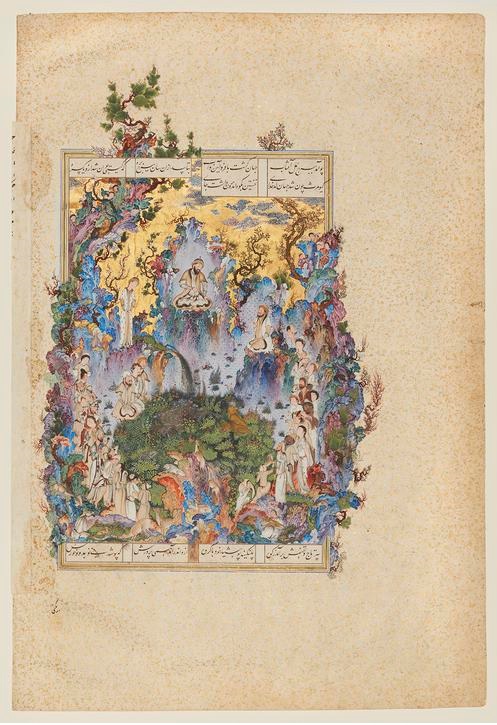
Missing from display, at the moment, is what is considered to be one of the finest folios from the Shahnameh, called The Court of Gayumars. Apollo Magazine, in its issue dated August 29, 2018 recommended the Gayumars as “one of the pieces that every school kid in the USA needs to see.” Writing for the issue, Gary Tinterow, Director of the Museum of Fine Arts, Houston, stated:
“I would take my students on a field trip to Toronto to see this miracle of miniature painting, one that continues to fascinate when greatly magnified. It features extraordinary details of flora and fauna, as well as a rainbow coalition of human beings from every continent and culture, much as one sees on the streets of Toronto.” He has also recommended that when the folio is exhibited, it should contain a little bit of commentary.
And speaking of the new REMASTERED exhibition itself, Ulrike al-Khamis, the acting Director and CEO of the Aga Khan Museum, in a recent press release stated: “We have created one of the most innovative showcases of Islamic manuscript paintings ever to have been assembled. Remastered invites viewers to immerse themselves in the beauty of some of the most impressive masterpieces in the Islamic tradition and find new meaning in centuries-old stories of heroism, love and principled living.”
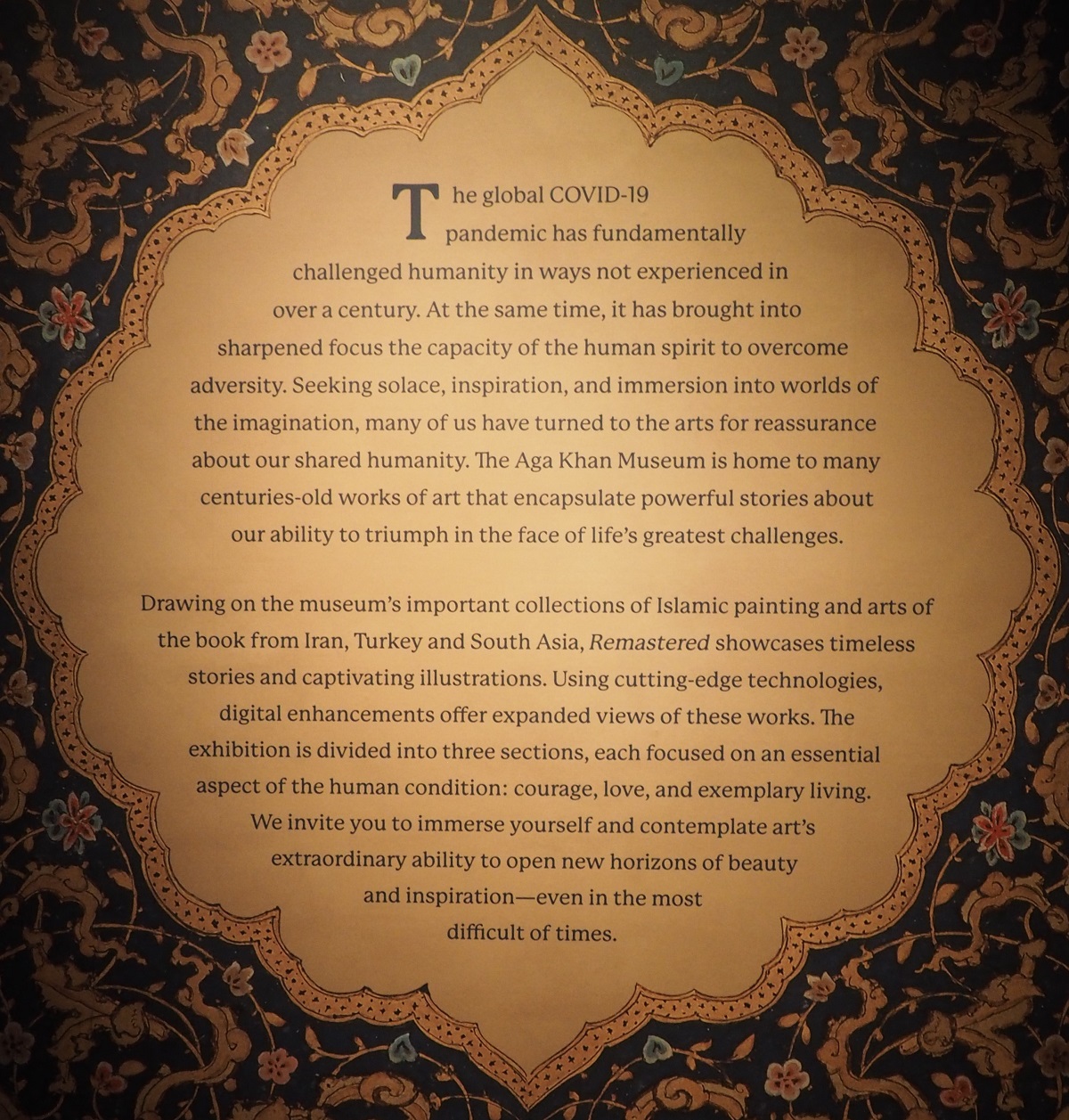
Aga Khan Museum’s introduction to the new Remastered Exhibition, on until March 21, 2021. Photo: Malik Merchant / Simerg.
A view of the Remastered Exhibition that runs on the second floor of the Aga Khan Museum in Toronto until March 21, 2021. Photo: Malik Merchant / Simerg.
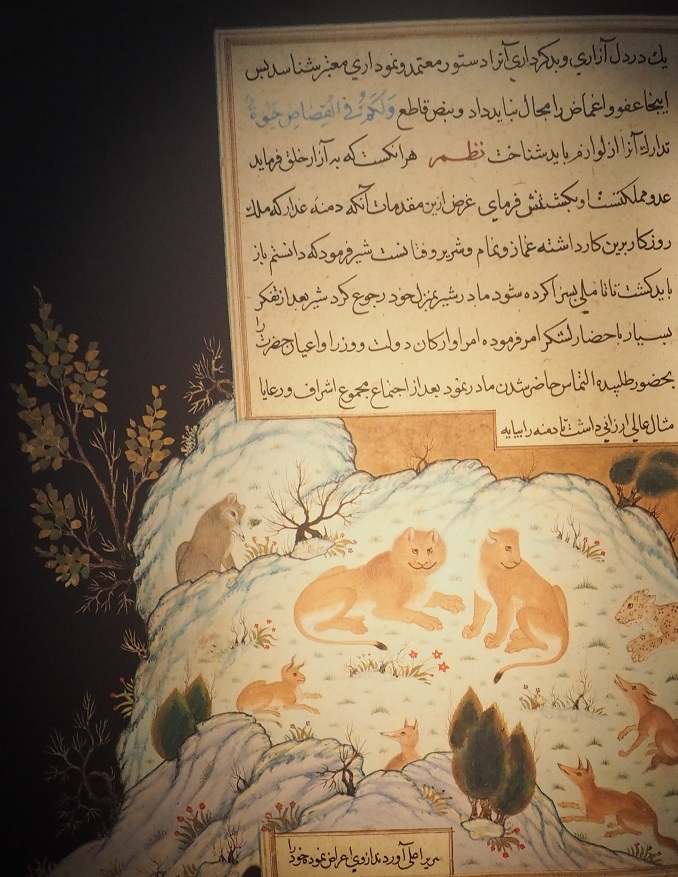
A display at the Remastered exhibition which was launched recently at the Aga Khan Museum, and continues to March 21, 2021. Here the jackal Dimneh is brought before the Lion-King and his mother. Illustration from a manuscript of Anvar-i Suhaili, Iran 1593. Photo: Malik Merchant / Simerg.
Over the coming weeks, we plan to publish special features on the folios in the Remastered exhibition that powerfully present tales of courage, stories of the heart, and exemplary living or model life, along with their corresponding digitally engaging panels prepared by Ryerson University library that offer new ways of understanding the manuscripts.
“Ferdowsi is everything we expect of a great poet…, for he teaches us both what people are and what they should become” — Federico Mayor
The focus of this post is on the Shahnameh, which forms an integral and important component of Remastered. What is the Shahnameh and who was Ferdowsi? Of course, readers will find many resources on the internet but I have come across a fantastic address delivered by UNESCOS’s former Director General,Federico Mayor in 1990 on the 1000th anniversary of the completion of the Book of Kings. His piece, below, is a must read.
Ferdowsi’s Shahnameh: The Book of Kings
An image of folio Court of Gayumarfrom Firdawsi’s Book of Kings. This page is considered as one of the most exquisite pieces in the Aga Khan Museum collection, and has been recommended as one that every student must be taken to see. Photo: The Aga Khan Museum.
“The ‘intellect’, which Ferdowsi calls Kherad, demands more than ‘intelligence’ in the common meaning of the term: it includes the ability to perceive good, a deep-seated and generous wisdom and a serenity that comes from balance and self-control. The concept of Kherad runs through the entire book, being at one and the same time its dominant theme, the spirit that animates it and the good it extols” — Federico Mayor
By FEDERICO MAYOR
The following article has been adapted from an address delivered in Tehran on December 22, 1990 by Mr Federico Mayor, to mark the celebration of the 1000th anniversary of the completion of the manuscript of the Book of Kings (the Shanameh by Firdausi). At the time, Mr. Mayor was the Director-General of the United Nations Educational, Scientific and Cultural Organization (UNESCO). Mr. Mayor’s complete address can be read at the organization’s website HERE.
‘Be Name Khodavande Jano Kherad’ (‘In the name of the Lord of the soul and of wisdom’). These majestic words open the Shahnameh, The Book of Kings, that monument of universal literature. And as I read on I discover, immediately after the glorification of the Creator, a passage on this second page that forces me to stop, taken aback with amazement, wonder and near disbelief: the words before me sing the praises of intelligence!
Can it really be that a thousand years ago, an Iranian poet was exalting above all else the process of thought based on knowledge? And he did it with such conviction and felicitous expression that he cannot fail to convince:
‘The intellect is the greatest of all the gifts of God…It is the source of your joys and your sorrows, of ‘your profits and your losses…It is the guardian of the soul, and to it is thanksgiving due’. “
At that instant, I knew I had come across a work and a man of exceptional qualities. This ‘intellect’, which Ferdowsi calls Kherad, demands more than ‘intelligence’ in the common meaning of the term: it includes the ability to perceive good, a deep-seated and generous wisdom and a serenity that comes from balance and self-control. The concept of Kherad runs through the entire book, being at one and the same time its dominant theme, the spirit that animates it and the good it extols.
“Can it really be that a thousand years ago, an Iranian poet was exalting above all else the process of thought based on knowledge? And he did it with such conviction and felicitous expression that he cannot fail to convince” — Federico Mayor
There are few books in the world and in history that have become, like The Book of Kings, an expression of national identity. Ferdowsi’s poem is both the reflection and the leaven of a culture that is in many respects reconciled with itself.
In terms of language, it forms a reservoir, an encyclopaedia of inexhaustible wealth. In terms of historical perspective, it reconciles past and present. In terms of historical perspective, reconciles past and present, integrating in a unified culture the pre-Islamic tradition and the contributions of Islam; that is an achievement whose importance is not perhaps sufficiently appreciated, for the resulting fusion, with its creative repercussions, was to prove most prolific.
Lastly, in terms of literary genre, it is an epic that blends in a single creation the true and the legendary, the observable and the imaginary. Ferdowsi reconciles history and myth, resembling at one moment Herodotus and at the next Homer. As a historian, he relates an episode with the same fervour and magical inspiration as if it were a tale; as a mythologist, he describes an adventure with the same precision and concern for details as if it were drawn from real life.
Ferdowsi thus bequeathed to his country a heritage that has been transmitted from one generation to the next in all its vitality. There are few civilizations in which a poetic work has become so ‘popular’, that is to say both widely known and deeply loved.
Let me say how much I regret that my ignorance of your language prevents me from savouring in full the subtlety of these lines, their majesty and their secret music.
“The 1000th anniversary of the completion of the manuscript continues a long-standing tradition whereby, ever since the death of the poet, scholars have attempted to make amends for the ingratitude of the Sultan to whom Ferdowsi offered this treasure and who failed to appreciate its true value” — Federico Mayor
But even when translated Ferdowsi’s poetry preserves an inimitable charm. The Book of Kings, which was translated into Arabic in the 12th century of the Christian Era, has been avidly read, studied and commented on. Historians, linguists, poets, writers, painters and miniaturists have used it as the source material for the work of several lifetimes. Jules Mohl translated it in its entirety into French in the 19th century, and thanks should be rendered to him for devoting 30 years of his life to the translation of the 60,000 verses that Ferdowsi had spent 30 years perfecting 800 years before.
The task was so tremendous that not all the volumes were published until two years after the translator’s death. Mohl has been the benefactor of countless scholars in Western Europe — he has enabled them to discover one of the summits of world literature.
0n 11 February 1850 the French writer, Sainte-Beuve, in one of his Causeries du lundi (Monday conversations), urged the resumption of publication by the Imprimerie rationale (national publishing house) of what he called ‘the magnificent book’. Stressing the popularity of the work in Iran, he enthusiastically presented the author, his themes and a few episodes, based on his reading of Jules Mohl. His enthusiasm proved to be contagious: the English poet, critic and essayist, Matthew Arnold, became immersed in all the available historical and geographical works on Persia, reread the Iliad, and in 1853 published a splendid poem entitled Sohrab and Rustum, relating the tragic episode of the hero’s killing of his son on the field of battle. A complete translation into English of The Book of Kings was published in 1925; the translation was an enormous task that had been carried out by two brothers, Arthur and Edmund Warner.
A view of the Aga Khan Museum’s folios from manuscripts of Shahnameh, The Books of Kings, that were produced between 13th-16h centuries. At the near end is the famous Wagner Carpet depicting “Islamic Garden of Eternal Bliss.” Photo: Malik Merchant / Simerg.
In Germany, the great lyrical poet and orientalist Friedrich Rückert translated the tragedy of Rustum and Sohrab, at the beginning of the 19th century. Another German poet, Schack, translated the entire epic part of the work, the translation being published in 1853. Complete translations of The Book of Kings exist today in all the widely spoken languages, and numerous translations of extracts exist in some 40 languages.
The 1000th anniversary of the completion of the manuscript continues a long-standing tradition whereby, ever since the death of the poet, scholars have attempted to make amends for the ingratitude of the Sultan to whom Ferdowsi offered this treasure and who failed to appreciate its true value.
And today here, in this hall that bears the poet’s name, we ourselves have now come together from the four corners of the world, to carry on and give new impetus to that tradition. But what is it in The Book of Kings that draws us together, captivates our hearts and enables its author to triumph over both time and place?
0f many outstanding passages in the work, one might mention the meeting of the hero Rustum and his son Sohrab, a beautiful and poignant story of two beings related by blood and brought by destiny to a fatal confrontation. Following in the footsteps of Sophocles, who gave voice to the sufferings experienced by Oedipus when he had murdered his father and then married his mother, Ferdowsi paints the picture of Rustum discovering that he has just killed his own son. This is a perfect example of what Aristotle meant by ‘tragedy’: it is a story that arouses in us feelings of both pity and horror, for Rustum, during the three days of the duel between them, has come to admire the qualities of his adversary — agility, intelligence in combat, nobility and chivalry.
On several occasions, father and son are on the point of recognizing one another; their speeches are tinged with admiration and tenderness, but Fate will not be cheated. When Sohrab dies under Rustum’s blows and Rustum discovers the identity of his victim all Ferdowsi’s readers shudder; all are fathers who have just killed their sons. We can see why this great tragic theme has attracted the attention of poets of all periods and civilizations: the feelings to which it gives rise are common to all times and all countries.
In celebration of the millennium of Ferdowsi’s birth a solemn tribute was paid to him at the Sorbonne, where French poets emphasized the lesson of wisdom he dispensed:
‘This poet is not only an enchanter: he is a scholar; he is not only a scholar: he is a sage. While our heads are still humming with all the wonders he has filled them with our spirits retain the lessons he has given us. Even when the enchantment of his tale fades and we fall back into the normal world from the fairyland into which he had carried us we are not disoriented: on the contrary, the poet deposits us on a well-marked road with a sturdy staff in our hand. Ferdowsi is everything we expect of a great poet…, for he teaches us both what people are and what they should become’.
The Book of Kings is indeed studded with precepts, and it is not uncommon for an episode to be accompanied, in the same enchanting style, by a moral for the reader’s edification.
“the characteristic of Ferdowsi by which he appears eminently modern to us is without doubt, first of all, his faith in the ability of people to rise above hostility, contempt, suspicion and hatred by an impulse of fellow feeling and compassion” — Federico Mayor
Statue of Ferdowsi in Tus, Iran. Photo: Wikipidea / CC by 4.0.
Princes, for example, are exhorted to be humble, in a concept of power in which the notion of ‘service’ predominates. ‘When you become a sovereign,’ says Ferdowsi, ‘behave as a humble servant’. Addressing the mighty, the poet reminds them of the ephemeral nature of all things, like the slave who, in ancient Rome, had to accompany the victor on his triumphal chariot and whisper to him from time to time: Memento quia pulvis es(‘Remember that thou art but dust’). Nevertheless, the characteristic of Ferdowsi by which he appears eminently modern to us is without doubt, first of all, his faith in the ability of people to rise above hostility, contempt, suspicion and hatred by an impulse of fellow feeling and compassion. The French poet Lamartine, moved by the moral qualities with which Ferdowsi endows his heroes, wrote of them: ‘They are more than kings, for kings reign only for a time — and these heroes reign over the future’.
In The Book of Kings there are many colourful battle scenes, but they never glorify vanity nor the thirst for violence. On the contrary, Ferdowsi depicts in them the absurdity of conflict and struggle. We have seen the pain in which the duel between Rustum and Sohrab ends. Elsewhere, Alexander the Great goes to the bedside of his mortally wounded enemy, Darius III. Moved by compassion, he swears to the dying man that he will re-establish peace between the Persians and the Greeks, and when Darius is dead, he organizes his funeral with great ceremonial. In another scene Isfendyar, mortally wounded by Rustum, sees in a flash that his killer is only the instrument of fate and is not truly responsible for his death. Before dying therefore, he entrusts to him the education of his son, Bahman.
Ferdowsi shows his respect for and appreciation of others, with their different religious, ethnic and social backgrounds. Would it not be worth while to relay and amplify this message Asia has passed on to the world down the centuries?
Another view of the Shahnameh folios on the main floor of the Aga Khan Museum. Photo: Malik Merchant / Simerg.
I personally think that The Book of Kings should be distributed as widely as possible. This work is not only part of the human heritage but can also help men and women of the 20th century — what am I saying, the 21st century — to improve and to live in greater peace with themselves and with others. I would in particular want to see it brought to the knowledge of young people throughout the world. By exposing young people to the humanism of Ferdowsi we sow the seeds of wisdom in the minds of those who will forge the future.
‘It is through peace that men achieve happiness’, said Ferdowsi, ‘may those who preach war vanish from our midst’.
Peace, not violence. Temperance, not excess. Mercy, not cruelty. Remember the passage in which the young Iredj sets out in a spirit of peace and wisdom to find his brothers, whose evil designs are known to him. When one of them hits him in anger and is about to kill him Iredj says to him gently ‘Have you no fear of God or pity for our father?…What? You are alive and you want to take the life of another? How can you reconcile these two things? Harm not an ant that is dragging a grain of wheat, for it is alive, and life is sweet and good’ .
This love of life is love of one’s fellow, of all others. Ferdawsi, the Persian national poet, is not a chauvinistic poet. This is why the Arabs, the Turks and the Indians have adopted Ferdawsi, translating him into their languages. He is becoming universal, he belongs to everyone. That is what makes Ferdowsi an inspired forerunner of today’s world, in which the spirit of war may be vanquished only by the spirit of tolerance and in which it is UNESCO’s task to ensure that peoples achieve a better understanding of each other through an ever-deeper knowledge of their respective cultures, which represent their most precious heritage.
Indeed, it was with lines by Ferdowsi that Mr Golan Ali Raadi, the then Chairman of the Executive Board, welcomed the ceremonial inauguration of UNESCO Headquarters on 3 November, 1958:
‘The best-constructed buildings crumble under the action of the rain and burning sun, But neither wind nor rain shall have any hold on the monument my verse has built.’
Just as Ferdowsi’s words are in striking accord with the intention of UNESCO’s founders, so I hope that the Organization will pursue its action in accordance with the ideals that inspired the poet: a sense of honour and human dignity, a demand for justice in the exercise of power, tolerance, compassion for the weak and the vanquished, serenity and wisdom — in a word, Kherad.
Date posted: November 15, 2020.
______________________________
Federico Mayor. Wikipedia CC BY 2.0
Federico Mayor Zaragoza (born 27 January 1934 in Barcelona) is a Spanish scientist, scholar, politician, diplomat, and poet. He served as director-general of UNESCO from 1987 to 1999. He is currently the chairman of the Foundation for a Culture of Peace and member of the Honorary Board of the International Decade for the Promotion of a Culture of Peace and Non-Violence for the Children of the World as well as the honorary chairman of the Académie de la Paix. According to 1995 issue of the Ismaili magazine, during his tenure as UNESCO’s Director General, Mawlana Hazar Imam, His Highness the Aga Khan, was invited to address a full session of its Executive Board, which met at UNESCO headquarters in Paris. Mr. Mayor paid tribute to the Aga Khan Development Network’s success in building capacity and empowering people — especially women — to manage their own development according to local models that respect the diversity of needs and resources. (Profile excerpted from Wikipedia and the Ismaili, 1995).
Please click on Toronto.com and Toronto Star to read reviews of Aga Khan Museum’s new exhibition Remastered (on until March 21, 2021).Please also visit the Aga Khan Museum website for the latest information and details about visiting the museum — it is open Thursday-Sunday, with a pay as you wish entrance.
Before departing this website please take a moment to review Simerg’s Table of Contents for links to hundreds of thought provoking pieces on a vast array of subjects including faith and culture, history and philosophy, and arts and letters to name a few.
We welcome feedback from our readers. Please complete the LEAVE A REPLY form below or, if you don’t see the box, please click Leave a comment. Your letter may be edited for length and brevity, and is subject to moderation.























 Simerg - Insights from Around the World