Prayers for Syria – An Aid in Righteous Resistance Against Enemies

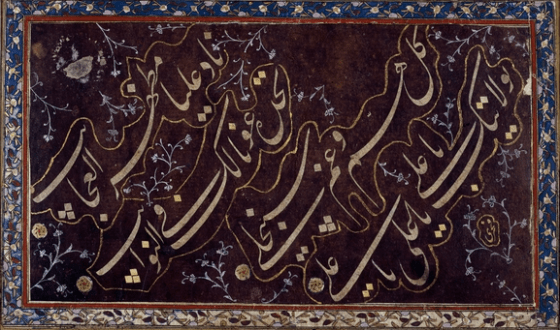
This calligraphy by an Ottoman artists  Fakhri ibn Vali el-Brusevi has the following inscription on it:  "Call upon Ali who causes wonders to appear, you will find him a help to you in adversity, all anguish and sorrow will disappear through your friendship oh Ali, oh Ali, oh Ali." Photo Credit: The Trustees of the British Museum. Copyright.

This calligraphy by an Ottoman artist Fakhri ibn Vali el-Brusevi has the following inscription on it: “Call upon Ali who causes wonders to appear, you will find him a help to you in adversity, all anguish and sorrow will disappear through your friendship oh Ali, oh Ali, oh Ali.” Photo Credit: The Trustees of the British Museum. Copyright.

LETTER FROM PUBLISHER

Simerg’s most recent piece A Message to Our Beloved Ismaili Brothers and Sisters in Syria: Our Hearts and Prayers are With You, You are Never Alone! resulted in more than 30 touching responses from  readers from around the world. We also heard from various members of the Syrian jamat, who have appreciated the readers’ good wishes and prayers for their jamat. Indeed, one teacher went on to state that prayers was all that they needed.

Over the centuries, wars against enemies who are definitely at fault, has not been won by prayers alone. But there are examples which illustrate that a righteous show of resistance against any intruding enemy, such as the one that we may witness in Salamiyah, can be aided by prayers.

When the Sino-Japanese war broke out in August 1894, Tanaka Giichi, an officer in the Imperial Japanese Army  — who then became Japan’s Prime Minister in 1927 — and several of his followers went to a small deserted island called Sakurajima located near Osaka. They built a two-stories platform and enshrined a sword in front of a statue of Nichiren (a Japanese monk in the 13th century) on an altar set to face Peking. The cutting edge of the sword was also made to face the Chinese capital.

Three times a day for over a month, they prayed for the defeat of the enemy, and on the day they concluded the services, word was received that Pyongyang had fallen to the victorious Japanese army. This was powerful vindication of the invocation prayer which called for  the wisdom of the Buddha to be brought to bear upon the evil sphere of China.[1]

Centuries earlier, according to a story in the Islamic tradition narrated by Hussain Rashid in a piece for this website, [2] the Prophet Muhammad laid siege to the fort of Khaybar, but the walls were so well-fortified that the army could not break through. The Angel Gabriel came to the Prophet Muhammad and told him to recite the Naad-e Ali:

“Nade Ali, Nade Ali, Nade Ali
Nade Aliyyan mazhar al-ajaib
Tajidahu awnan lakafin-nawaib
Kullu hammin wa ghammin
sayanj-i Ali Bi wilayatika,
Ya Ali! Ya Ali! Ya Ali!”

“Call Ali call Ali call Ali,
the manifestation of marvels
He will be your helper in difficulty
Every anxiety and sorrow will end
Through your friendship.
O Ali, O Ali, O Ali.”

Hazrat Ali came to the Prophet’s aid, and in an act of heroism he tore down the gate of the fort, and the army of the Prophet crossed over and successfully ended the siege. Ali, of course, was a valiant fighter within the fort and when victory was achieved, the Angel Gabriel appeared to Prophet Muhammad again and said to him:

“There is no hero but Ali; there is no sword but Dhu’lfiqar.”

The prayer of Naad-e-Ali is a very strong Shia tradition, and can be recited today under different circumstances, such as the one we have today in Syria and other parts of the Muslim world. It can be recited when one is surrounded by enemies, as well as when one is facing personal troubles and tribulations. Like the power of prayer witnessed during the Sino-Japanese war, Naad-e-Ali’s recitation even 3 to 5 times daily, will empower those engaged in resisting the enemy, and Inshallah avert the grave crisis from children, women and men who remain close to the frontline.

The constant and regular recitation of Naad-e-Ali, particularly at this difficult time, will infuse within us a deeper commitment to prayer, and a selfless awareness of the needs and struggles of thousands of our brothers and sisters in Syria and other parts of the world.

Date posted: Thursday, April 9, 2015.

________________

[1] Episode quoted from “The Lotus Sutra in Japanese Culture”, page 206, originally mentioned in Tanaka Chicagu Jide.
[2] See Rashid’s Historical Images: The Naad-e-Ali, “Call Upon Ali….oh Ali, oh Ali, oh Ali,” in Ottoman Calligraphy, and Other Shia Inscriptions in the British Museum’s Islamic Collection

YOUR FEEDBACK: We invite our readers to offer their solidarity with the Ismaili jamat in Syria and the people of Syria by conveying their heartfelt prayers by clicking on LEAVE A COMMENT or in the comment box below. If you encounter any difficulty in submitting your comment, please email your comment for publication to Simerg@aol.com, subject “Syria.”

“Muhammad: Legacy of a Prophet” – A Film Created and Produced by Alex Kronemer and Michael Wolfe

Originally aired on PBS to a word-wide audience exceeding 150 million people

“CANDID, THOUGHTFUL AND VISUALLY STUNNING” – Los Angeles Times

Prophet Muhammad (s.a.s) changed world history in 23 years and continues to shape and inspire the lives of more than 1.4 billion Muslims around the world.

Simerg is pleased to make available for its readers around the world a link to the film, Muhammad: Legacy of a Prophet, that was originally aired on PBS to a world-wide audience exceeding 150 million people.  The internet age is a blessing of our time that, through outstanding movies such as this, we are able to learn more about the wonderful and noble qualities of  Prophet Muhammad. In his Presidential Address to the Seerat Conference in 1976, His Highness the Aga Khan had asked:

“In the face of this changing world, which was once a universe to us and is now no more than an overcrowded island, confronted with a fundamental challenge to our understanding of time, surrounded by a foreign fleet of cultural and ideological ships which have broken loose, I ask, ‘Do we have a clear, firm and precise understanding of what Muslim Society is to be in times to come?’ And if as I believe, the answer is uncertain, where else can we search then in the Holy Qur’an, and in the example of Allah’s last and final Prophet?”

 His Highness continued:

“The Holy Prophet’s life gives us every fundamental guideline that we require to resolve the problem as successfully as our human minds and intellects can visualise. His example of integrity, loyalty, honesty, generosity both of means and of time, his solicitude for the poor, the weak and the sick, his steadfastness in friendship, his humility in success, his magnanimity in victory, his simplicity, his wisdom in conceiving new solutions for problems which could not be solved by traditional methods, without affecting the fundamental concepts of Islam, surely all these are foundations which, correctly understood and sincerely interpreted, must enable us to conceive what should be a truly modern and dynamic Islamic Society in the years ahead.”

Some of these examples from the Prophet’s life come alive through this ground-breaking PBS film, which takes the viewers from the ancient Arabian sites where Prophet Muhammad’s story unfolded to the homes, mosques, and workplaces of some of America’s estimated seven million Muslims. The Los Angeles Times called the film “a candid, thoughtful, flowing, visually stunning film,” while The Catholic News Service commented that the Prophet’s biography offers viewers fresh insights into the spiritual foundations of Islam.

Readers can watch a preview of the film as well as the the full-length movie by clicking  on the following image:

Please click for links to full length movie and excerpts

Orations of Imam Ja’far al-Sadiq: Outstanding Merits of the Prophet and Imams

“Allah chose him, was pleased with him, and selected him. Allah gave him keys of knowledge and sent him as mercy for people and as spring for the country…..Allah, the Exalted, crowned him with solemnity, covered him with the Light of His might. He made a rope to stretch up to heaven. Nothing can be obtained from what is with Allah but through the Imam.”

PLEASE CLICK: Orations of Imam Ja’far al-Sadiq (a.s.)

Please click for Imam Ja'far al-Sadiq's Orations.

Please click for Imam Ja’far al-Sadiq’s Orations.

A Story from ‘Pyara Imam ni Pyari Wato’: Historical Memories by Sairab Abuturabi and Jaferali Bhalwani

Loving Tales of our Beloved Imams: (I) Farazdaq’s Praise and Support of Imam Zainul Abideen (a.s.)

“…This tale belongs to ages past. It goes back to the era of Hazrat Imam Zainul Abideen (a.s.), our third Imam, from whose veins was to ensue the Divine Line of the Imams. He was the Imam who, on the battlefield of Karbala, received the nass of Imamat from his father, Hazrat Imam Hussain (a.s.) with the blessing: “Through you the line of Imamat will continue till the Day of Judgment…”

Please click for story

“What is Faith?” by Pir Shihabu’d-Din Shah and “Love for the Imam” by Imam Ja’far as-Sadiq

1. FAITH

by Pir Shihabu’d-Din Shah

Faith (Iman) is like a tree, the roots of which go into the heart: its trunk is in reason, and its branches are in the instincts, while imagination is its new shoots and leaves – (senses of) the body. The foundation (asl) of faith is love for the Imam-e-Zaman (the Imam of the Time). And if this foundation, that is, this love, and the roots of faith are strong and in good condition, all other parts of the tree, such as its trunk, its branches and leaves, can be expected to continue to flourish even if they are (accidentally) damaged. If, on the contrary, the roots are not well grounded, or even rotten, the whole tree will soon dry, and then will become good for nothing except to be used as fuel.

Thus love for Mawlana Hazar Imam is everything, being the root of faith. If it is not strong, all the acts of outward piety (a’mal-i zahiri) which are like leaves of the tree, will fade. If you have thousands of leaves, fresh and of good colour, they will dry in a short time, and then a very small fire will be sufficient to burn them completely.

~~~~

2. LOVE FOR HAZAR IMAM

by Imam Ja’far as-Sadiq

It is related from Imam Ja’far as-Sadiq (a.s.) that a group of Shias visited him one day. One in the group addressed the Imam and spoke of a man who was with them.

O Son of the Messenger of God: this man has love for you.”

On hearing these words, the Imam looked at the person and said:

“The best kind of love is the love for the sake of God and His Messenger. There is no gain in any other kind of love.”

The Imam then continued.

“Once the ansars [helpers] came to Hazrat Muhammad Mustafa (s.a.s.) and said, ‘O Messenger of God! We were on the wrong path and Allah guided us through you. We were destitute and we prospered by your blessings. For this reason, you may ask of anything you desire from our belongings and we shall give it to you.’

“At this, the following verse was revealed by Allah, ‘Say (O Muhammad): No reward do I ask (for my favours) except your love for my kith and kin’.”

Moved to tears, Imam Ja’far as-Sadiq then raised his hands and exclaimed:

“Praise be to God, Who has exalted us above all.”

___________

“Faith” adapted from Risala dar haqiqat-i din by Pir Shihabu’d-Din Shah Al-Husayni, translated as True Meaning of Religion by Wladimir Ivanow.  Pir Shihabu’d-Din Shah was the eldest son of the  47th Ismaili Imam, Aga Ali Shah, also known as Aga Khan II. The Pir was only 33 when he died due to a chest related illness, a few months before the demise of his own father, Imam Aga Ali Shah. Mawlana Shah Sultan Mahomed Shah, His Highness the Aga Khan III, then only 8 years old, succeeded to the throne of Imamat as the 48th Imam.

“Love for Imam” excerpted from article by Jehangir Merchant and Alnoor Bhatia published in Ilm, Volume 5, Number 1 (July 1979). The article was based on the Gujarati edition of Qadi al-Numan’s work, Da’aim al-Islam.

The Hijra: Movement of God’s People by Omid Safi

Standing outside the city, Muhammad looked back lovingly on Mecca and said: “Of all God’s earth, you are the dearest place unto me, and the dearest unto God. Had not my people driven me out from you, I would not have left you.”…Read more….The Quintessential Marking Point of Islamic History

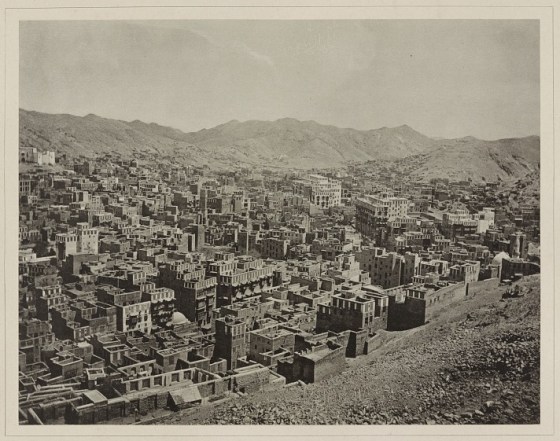
An 1889 photo showing a view of the city of Mecca. Photograph attributed to al-Sayyid ʻAbd al-Ghaffār by scholar Claude Sui. (Source: "Travel to the Holy Land and photography in the nineteenth century" by Claude Sui. Chapter in: To the Holy Lands: Pilgrimage centres from Mecca and Medina to Jerusalem. Mannheim: Reiss-Engelhorn Museum, 2008, pages 56-63). Credit: USA Library of Congress. Please click on image for article by Omid Safi

A photo taken in 1889 showing a view of the city of Mecca. Photograph attributed to al-Sayyid ʻAbd al-Ghaffār by scholar Claude Sui. (Source: “Travel to the Holy Land and photography in the nineteenth century” by Claude Sui. Chapter in: To the Holy Lands: Pilgrimage centres from Mecca and Medina to Jerusalem. Mannheim: Reiss-Engelhorn Museum, 2008, pages 56-63). Credit: USA Library of Congress. Please click on image for article by Omid Safi

The Intellectual Tradition of Shia Ismaili Islam by Nadim Pabani

FATIMID APPROACHES TO KNOWLEDGE

Within the Islamic tradition, the pursuit of knowledge, the patronage of learning, the promotion of education, and the desire to seek out the truth in all its multifaceted forms was prevalent from the very earliest times. Within this milieu, the Shia Ismaili community of the Fatimid times excelled and achieved a level of literary output far beyond their relatively small size and minority status. According to Heinz Halm, the Fatimid period was “one of the most brilliant periods of Islamic history, both politically and in terms of its literary, economic, artistic, and scientific achievements.”

Please click on image to read article

Please click on image to read article

For the Ismailis, knowledge was not merely ancillary to their tradition but at the very heart of it — to the extent that their entire religio-political mission (the da’wa) revolved around the idea of knowledge as the single most important factor in their journey towards the knowledge of God in his absolute oneness (Tawhid). This paper explores the Fatimid approach to knowledge and demonstrates the courageous approach which the Ismaili thinkers like Abu Yaʿqub al-Sijistani took towards the new knowledge which was being encountered from Greek and Hellenistic traditions….Read more

Imamat Day Mubarak: The House of Imran and the Progeny of Prophet Muhammad (s.a.s)

Chapter 3 Surat al ʿIm'ran - The Family of Imran - 33 and 34

~~~~~~~~~Art work Nurin Merchant, Credit: Infinity design povray.org

~~~~~~~~~

“We search for a union with the family of the Chosen (Prophet Muhammad). We search for the truth of son after son. We are totally obedient to his offspring, one of the other. There is no other thing we can add to this but itself. We endeavour in our faith so that we do not turn out to be faithless.”
Ismaili poet NIZAR QUHISTANI

~~~~~~~~~

Aga Khan III

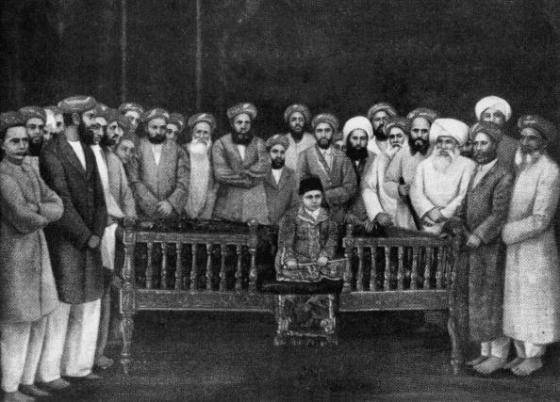
Mawlana Sultan Mahomed Shah, His Highness the Aga Khan III, is pictured above at his enthronement as 48th Imam of the Shia Ismaili Ismaili Muslims in Bombay at the age of seven. His reign lasted for 72 years. In his will, he proclaimed Prince Karim Aga Khan as the 49th Imam with the following words:

“Ever since the time of my first ancestor Ali, the first Imam, that is to say over a period of thirteen hundred years it has always been the tradition of our family that each Imam chooses his successor at his absolute and unfettered discretion from amongst any of his descendants whether they be sons or remoter male issue.

“In view of the fundamentally altered conditions in the world in very recent years due to the great changes which have taken place including the discoveries of atomic science I am convinced that it is in the best interests of the Shia Moslem Ismailian Community that I should be succeeded by a young man who has been brought up and developed during recent years and in the midst of the new age and who brings a new outlook on life to his office as Imam.

“I appoint my grandson Karim, the son of my son Aly Salomone Khan to succeed to the title of Aga Khan and to be the Imam and Pir of all my Shia Ismailian followers.”

~~~~~~~~~

Aga Khan IV enthronement at Villa Barakat in Geneva

Through the special designation (or the Nass) of the late Imam, Shah Karim al-Hussaini became the 49th hereditary Imam of the Nizari Ismailis at the age of twenty.

Shortly after, the newly enthroned Imam met Ismaili leaders and representatives from around the world, and also made the following statement:

“My grandfather dedicated his life to the Imamat and Islam, both of which came first, and above all other considerations. While I was prepared that one day I might be designated the Aga Khan I did not expect it so soon. I follow a great man in a great responsibility and he could have given me no more appreciated honour than to bequeath me this spiritual leadership. My life, as his, will be dedicated to the service of my followers.”

Date posted: July 10, 2014, 23:26 EDT.

Insight: The Roots of Western Esoteric Movements in Islam’s Esoteric Tradition

“….throughout history we find people convinced the great religions are a necessary ‘outer shell’ veiling a Primordial Wisdom that alone can reveal humanity’s real origin, purpose and destiny….Some of Europe’s leading seekers after ancient secret wisdom were convinced that in the Muslim lands of the Orient could be found a Primordial Tradition transmitted from generation to generation within closed communities of initiates.”

An extraordinary insight into how Western esoteric movements may have roots in the esoteric tradition in Islam, including Sufism and Ismailism. Read More….

Please click on image for article.

Please click on image for article.

 PLEASE CLICK ON: Islam’s Esoteric Tradition and its Influence on European Esoteric Writers and Organizations

The Cave of Hira – the Place of the First Revelation of the Holy Qur’an

Mountain of Light

Prophet Muhammad (s.a.s) received his first revelation from Allah through Angel Jibreel (Gabriel) in the Hira cave which is on Jabl al Nur (Mount of Light) shown in this photo. The peak is visible from a great distance. The Prophet used to climb this mountain often even before receiving his fist revelation from Allah.

Cave of Hira

A photo of Cave of Hira in the Mount of Light, near Mecca, where the Prophet would come for his devotions and meditations, and the sacred spot where the Holy Quran began to be revealed. Prophet Muhammad (s.a.s.) had just stepped into the forty-first year of his life, when during the 23rd night in the month of Ramadan the first 5 verses of the Surah Al-Alaq (96) were revealed to him.

Cave of Hira

A close-up of the Cave of Hira. The small cave is about 3.5 meters long and 2 meters wide. It was Prophet Muhammad’s most adorable place for meditation.

The first revelation

Part of Al-Alaq (The Clot) – 96th sura of the Holy Qur’an – the first revelation received by Prophet Muhammad

When Prophet Muhammad was 40 years old, he received his first divine revelation from Allah through Angel Jibreel. When Angel Jibreel appeared to him, he said:

Recite: In the Name of thy Lord who created,
created, Man of a blood-clot.

Recite: And thy Lord is the Most Generous,
who taught by the Pen,
taught Man that he knew not…..Holy Qur’an, Al-Alaq, 96:1-5

The night of this first revelation is celebrated as Laylat al-Qadr (the Night of Power).

Date posted: Tuesday, July 30, 2013.

______________

Article and photos prepared from the following sources:

1. Wikipedia.org
2. Mecca.net
3. English Translation of the Qur’anic verses by Arthur John Arberry.

Please see related post: Laylat al-Qadr – A Night Better than a Thousand Months