Poems for Salgirah: The Noor of Imamat Breathing with the Trillion Stars….and OOops (the Optimistically Out of Poverty Society) by Navyn Naran

ThE NOOR OF IMAMAT….OOops

By Navyn Naran

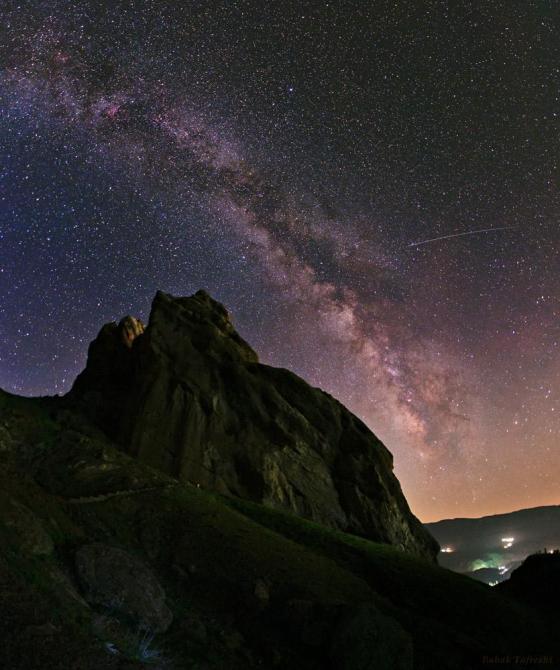
The arc of the Milky Way hangs over the imposing mountain fortress of Alamut in this starry scene. Photo: Babak Tafreshi. Copyright.

The arc of the Milky Way with over 100 thousand million stars hangs over the imposing mountain fortress of Alamut in this starry scene. Photo: Babak Tafreshi. Copyright.

Find your space, under a trillion stars
In the crystal quiet of the night,
no thoughts, no bars,
Breathe softly, abreast of a beating heart,
Under the open night sky, atop a mountain’s peak,
Where all is still, the breath and the heart’s beat.

A hum of air, quiet, warm,
Dark blue, black and milky way’s starry storm
a smattering of stars, incandescent light
hura and oil before any concern of dawn.
Breathing with the pulse of oceans and earths,
Under heaven of stars, as if asleep, but alert,
feel the ebb and flow in the breath of the world

din and duniya, Ya Ali
In desert sand under a diamond sky, Ya Ali
Peace it is, Ya Ali,
The Noor of Imamat born, Ya Ali
Breathing with the trillion stars, Ya Ali
Under dome of the hearth, You as me.

Hazar Imam, your firmans are pearls
the essence of the word, an individual learns
on your Birthday we reflect on Peace and Truth
on that which is not seen, that which will soothe.

OOops!

i will bow before you, and begin my poem.
let’s twirl under the sunshine,
optimistically
see all the wealth around us;
out of poverty comes sunlight
and “where hope takes root” paths emerge.

lift up your eyes and walk out of poverty.
in your very mind, exit poverty.
and if there is poverty of health and you can’t walk,
then move passionately, breathe deeply, sing from your heart

poverty in wealth?
a greater wealth than the wallet, is in our connection
recognizing one another is an unspoken place
look not always above you; look also below
gratefulness is greater than wealth

and if wallets are full,
is there an emptiness of heart? of mind? the poverty of love?
bridge our smiles, consult, listen to each other….

but walk, yes do walk.
walk out of poverty of respect. Leave.
“even the ants greet one another before they begin”
respect is greater wealth.

walk also out of the poverty of knowledge.
moving out of poverty, i may apply the information
no matter how minute or detailed.
stand solidly, grounded
walk out of lack of stability
one brick after another, consistently, as putty between the bricks

and in poverty of truth
speak heart and mind to self, if no other.
rich in your truth, there, is wealth.

you whistle and sing, and here
there is no poverty. rise, rise, further

poverty of ethics?
command over self a discipline and grace,
barakah will visit you, at its patient pace

poverty of generosity? i see it not,
naught to offer, sit with me here and drink water…refresh
smile and the world will smile at you, abundant generosity
simple living with high thinking.

walk.
let’s always walk.
out of poverty, i trust?
yes, yes…optimistically out of poverty,
a must.

in this quiet of night , in the softness and peace of morning snow,
Full of the magic of creation
there is physical, the obvious and the unknown
You hold the rope of being.

And this is a manifest world,
of the eye and the seeing
as in the surface of the ocean.
surface, recognised well, by surface.
and beyond? entire worlds and realities, hidden

there lie truths
and through the physical Imam
lies Truth
tis a journey
a truer reality, hidden batin

A birthday, the celebration of a physical reality
of a spiritual Being in a physical world.
Date posted: Friday, December 13, 2013

____________________

About the author: Dr. Navyn Naran was born in Dar-es-Salaam, Tanzania, to Anaar and Badrudin Naran. After beginning her high school in the UK, her family immigrated to the USA where she went to medical school at Tufts University School of Medicine in Boston, MA. She currently works in Paediatric Critical Care.
Poems for Salgirah: ALI by Sherali Kara

(English translation follows this transliteration from Hindi)

ALI

By Sherali Kara

Hum jiyenge aur jiyenge sirf ALI tere liye. 
Ruhani bache tere hai, Haath thaam ke rakhna ALI. 

Tub bhi ALI he thaa, Ab hai tu Hazar Imam ALI.
Taa qayamat tak rahenga Hayul Qayum ALI ALI.

Kya tariqat shaan hai teri.
Khub haqiqi jalwa hai tera.
Kya noorani tevar tere hai.
Shaan e Khuda tu hi ALI hai.

Teri Hidayat se ALI hum jaamat ne taraqi ke.
Lakho Abjo sukhran karo ‘Sukran ALI Sukhran ALI

Is salegrah ke jasn me kya dena hai tujhe ALI.
Khub ibaadat aur khidmat jum kar karna hume ALI.

English Translation

We will again and again serve ALI, you and you only.
We are your spiritual children, hold our hands tight. 

You were ALI of the past, now you are Hazar Imam ALI.
You will be physically forever, Always Present and Everliving ALI ALI

What a tariqat greatness you have.
What a haqiqi brightness you posses.
With the Noorani enlightenment in you O ALI.
You are the greatness of GOD, only you ALI.

With your guidance, we jamat have prospered.
Millions and billions of thank you ALI, thank you ALI

On this Occasion of your Salgirah (Birthday),
what do we need to give you? O ALI.

Lots and Lot of Ibaadat and Khidmat by us is our gift to you. O ALI

Date posted: Friday, December 13, 2013.

___________

Author’s note: When I mention the word ALI, I am referring to the ALI who has been with us from the beginning of time and will remain with us till the end of time. Also, ALI here refers to all the Imams and not simply the first Imam, Hazrat Ali.

About the author: Since his teenage years, Sherali Kara, now fifty-three, has taken a keen interest in furthering his spiritual knowledge, and over the years has developed a deep spiritual and esoteric insight into several ayats from the Holy Qur’an, Ismaili ginans and qasidas. He hails from a family that has a long tradition of Khidmat (service) in the Ismaili Jamat. His mother, Malekbibi Kara, was called the “ginan queen” of her time. Mr. Kara composes poems and couplets specifically on the theme of ALI.  He lives in Andheri, a suburb of Mumbai, and provides Realty Advisory services.

Ismaili Propagation in the Indo-Pak Subcontinent Before the Advent of the Ginanic Da’wah by Bashir Fazal Ladha

ISMAILI HISTORY

“The earliest contact of Isma’ili da’wah with the Indo-Pakistan subcontinent was well before the Fatimid empire was established. It began with the establishment of the Isma’ili principality in Yaman (Yemen) in the year 268 AH/881 CE by da’is Ibn Hawshab and Ali bin Fadl. From Yaman, da’i Ibn Hawshab sent his nephew da’i al-Haytham to Sind in the year 270 AH/883 CE….”

PLEASE CLICK: Ismaili Propagation Before the Advent of the Ginanic Da’wah

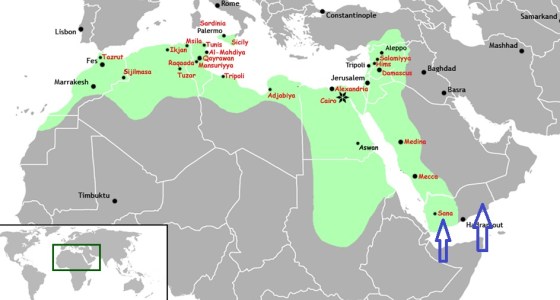
Shaded in green, the Fatimid Caliphate at its height. Yaman (Yemen) is shown by blue arrows. The Ismaili dawa'h in India originated in Yaman, when the Fatimid Empire was not yet established. Click on map article.

Shaded in green, the Fatimid Caliphate at its height. Yaman (Yemen) is shown by blue arrows. The Ismaili da’wah into India originated in Yaman, when the Fatimid Empire was not yet established. Click on map for article.

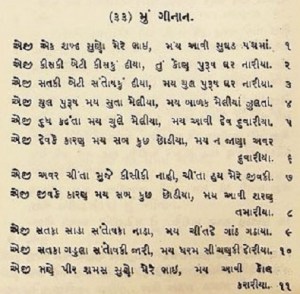
Ismaili Ginan “Ek Shabada Suno Mere Bhai”, an explanation by Shiraz Pradhan, with recitation

The Ginan Ek Shabda Suno Mere Bhai by Pir Shams is a summary of the initial step of Ismaili Spirituality. An MP3 of the Ginan rendered by Mohammad (Mac) Virjee of Vancouver accompanies a short commentary and translation by Shiraz Pradhan.

Please click: Ismaili Spirituality in Pir Shams Shabzwari’s Ginan “Ek Shabada Suno Mere Bhai”, accompanied with recitation

Gujarati transliteration of the Ginan "Ek Shabada Suno Mere Bhai" attributed to Pir Shams.  Please click on image for article.

Gujarati transliteration of the Ginan “Ek Shabada Suno Mere Bhai” attributed to Pir Shams. Please click on image for article.

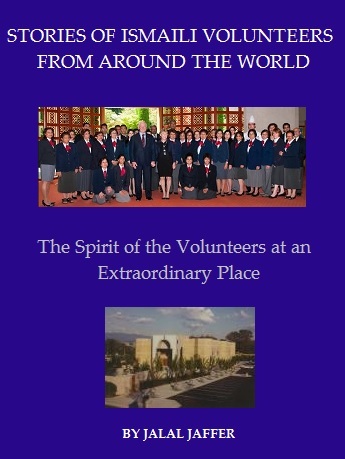
Stories of Ismaili Volunteers from Around the World: Spirit at Darkhana by Jalal Jaffer

A spontaneously written piece in recognition of the enormous amount of work the Ismaili volunteers do, day in day out.  Please click The Spirit of the Ismaili Volunteers at an Extraordinary Place

Simerg Special Series - Stories of Ismaili Volunteers. Piece by Jalal Jaffer

Previous in the series:

A Reflection on the Tragedy in Karachi

Editor’s note: For the first time in recent memory, an act of violence and terror was directed against the Ismaili community on Wednesday, August 13, 2013 at two of their Jamatkhanas located in Karachi. Two deaths as well as several dozen injuries were reported by the media in Pakistan. It was indeed a sad day for Ismailis and non-Ismailis alike. Statements of condemnation were issued by numerous sources, and were particularly reported on Pakistan TV networks. A peaceful and generous community had been targeted senselessly by individuals who do not value life, the most precious gift from Allah.

Navyn Naran reflects on the tragedy that has brought profound sadness to countless people. We pray that peace prevails in the entire nation of Pakistan which has seen so much sectarian violence over the past two decades. We also pray for the peace and rest of the departed souls from this tragedy, and wish everyone who was injured from this act of terror quick and complete recovery.

(Following Navyn Naran’s reflection we have provided a few external  links to stories and comments about the tragedy) 

Of Karimabad, A Place of Generosity

By Navyn Naran

it was a place of comfort, a quiet haven in the wood
a cove where a mother fish and her young made home,
by the bank of a trickling brook,
he found solace there in this nook.
hot it became day by day, how shallow the water and nightly he prayed,
would there be rain droplets, just some?
it rained everywhere on earth it seemed, but here in this city,
the brook was drying

the fish drew closer to the bottom.
“Rain! please rain!” his heart implored
taking a few bottles of water, near the fish he poured.
And then the beginning of the end, it came!
Bhoommm!!! Crashh! lightning cracked
the heavens opened and buckets of rain fell
he danced in his shorts, his hair flying wet around his face,
his feet drenched in his sneakers,
soaked from the lovely rain
.

A mother and a child, many people.
A man finds it not easy to cry
But today men cried as bodies bled
and lives were hurt
What was the sense of the two scenes?
The boy, his heart generous, is a seesaw with yours

His action against yours.
What is the message you were sending?
 A message of good? Of right? Of admiration? Of envy? Of strength?
few on this earth will agree.

People were praying!
Prayers for peace where there is conflict

For health where there is illness
For abundance where there is poverty
in those prayer halls women and men seek to better their world
in Karimabad

The Karachi Bomb Attackes

Cowards!! you are cowards, envisioning bloodshed,
tormenting your fellow-man, with nothing gained,
Just Loss.
Our Loss.
For the mothers and children, the men and women you kill
are still alive within our hearts. That,
you can never take.
‘Do not take a life’ it is said, ‘for it is like taking all mankind’.
and who will you face then, but the Face of God?

Is it fear of peace, of the goodness of humanity which sickens you?
That there could be unity amid the plurality
does that threaten your space?
Is the Aga Khan and his teaching abominable to you?
Is the education and growth despicable to you?
How will you erase the entire goodness in humanity?
How will you bow to Nature’s Hand?

For we are one…have you read ?
From one woman and one man we came, do you know?
The family you cared for is the same one you killed.
What did it benefit you?
It is in ripples, you fearful man.
It is in ripples we send an energy;
and behind us is the force of the world.
Beside us is the force of the Universe.
cast a stone into a quiet pool and see ripples form…
Fight for an ethic
befitting your home

Date posted: Thursday, August 15, 2013.
Date updated: Friday, August 16, 2013 (links to stories on the tragedy, see below)

Copyright: Navyn Naran/Simerg.

____________

The tragedy on external websites:

1. Victims Laid to Rest
2. So then to this now
3. Three killed in bomb blasts on I-Day Eve
4. Consecutive blasts in Karachi Jamaat Khana leaves 2 dead, 28 injured
5. Altaf Hussain condemns attacks on Ismaili Jamaat Khanas
6. Two Ismaili Shias Killed in hand grenade attack
7. Violent evening

Dr. Navyn Naran was born in Dar-es-Salaam, Tanzania, to Anaar and Badrudin Naran. After beginning her high school in the UK, her family immigrated to the USA where she has lived since. Dr. Naran went to medical school at Tufts University School of Medicine in Boston, MA. She currently works in Paediatric Critical Care.
Volunteers – the Unsung Heroes of the 2008 Golden Jubilee Games for Mawlana Hazar Imam’s 50th Imamat Anniversary by Mohib Ebrahim

The 2008 Golden Jubilee Games held in Kenya to commemorate His Highness the Aga Khan’s 50th Imamat anniversary ranks among the most ambitious events staged by the Ismaili community in recent years, and its success is due to the tireless efforts and sacrifices of some 1,200 volunteers from around the world. Mohib Ebrahim takes a look behind the scenes and uncovers the story of the volunteers that made the Games in Kenya such a resounding success….Click Volunteers, the Unsung Heroes

Please click for article

Please click for article

Previous post in Simerg’s special series on Ismaili volunteers: Rajabali Mecklai, 85, Serves the Vancouver Ismailis and Community at Large with Dedication and Distinction

To contribute, see Ismaili Volunteers and their Stories of Service – A Special New Series for Simerg’s 4th Anniversary

Laylat al-Qadr – A Night Better than a Thousand Months

Compiled by Simerg
with contributions from Karima Maghraby

In his Khamsa, Shab-i Qadr (the Night of Power), the renowned Persian poet Amir Khusraw Dihlavi (d. 1325 CE) tells the story of a saint who made a failed attempt to stay awake until the Laylat al-Qadr. This image is taken from a folio in the Aga Khan Museum collection; the Toronto museum is due to open in 2014. Photo: Courtesy of the Aga Khan Museum

In his Khamsa, Shab-i Qadr (the Night of Power), the renowned Persian poet Amir Khusraw Dihlavi (d. 1325 CE) tells the story of a saint who made a failed attempt to stay awake until the Laylat al-Qadr. This image is taken from a folio in the Aga Khan Museum collection; the Toronto museum is due to open in 2014. Photo: Courtesy of the Aga Khan Museum

Laylat al-Qadr is the auspicious night when the Prophet Muhammad (s.a.s.) first received the revelation of the Holy Qur’an, thereby conferring upon him the mantle of prophet hood at the age of forty.

The Shia Ismaili Muslims observe Laylat al-Qadr on the 23rd night of Ramadan, in keeping with traditions received through Hazrat Ali (a.s.) and his wife Hazrat Bibi Fatimah (a.s.), and the Imams of the Fatimid dynasty. It is a night of special prayer, reflection and remembrance of Allah.

The following verses from the Holy Qur’an describe the loftiness of this night and articulate the importance of the final revealed scripture to mankind:

“Lo! We revealed it on the Night of Power. What will convey unto you what the Night of Power is! The Night of Power is better than a thousand months. The angels and the spirit descend therein, by the permission of their Lord, with all decrees. Peace it is until the rising of the dawn.” — 94:5

“(This is) a Scripture which We have revealed unto you (Muhammad) that thereby you may bring forth mankind from darkness unto light, by the permission of their Lord, unto the path of the Mighty, the Owner of Praise” — 14:01 

“And celebrate the name of thy Lord morning and evening. And part of the night, prostrate thyself to Him; and glorify Him a long night through. As to these, they love the fleeting life, and put away behind them a Day (that will be) hard.” — 76:25-27 

“We sent it down during a Blessed Night”  — 44:3 

“Ramadhan is the (month) in which was sent down the Qur’an, as a guide to mankind, also clear (Signs) for guidance and judgment (Between right and wrong)” — 2:185

Hazrat Mawlana Murtaza Ali (a.s.) the successor of Prophet Muhammad (s.a.s) to the throne of Imamat is quoted as having said:

“Do not remember God absent-mindedly, nor forget Him in distraction; rather, remember Him with perfect remembrance (dhikran kamilan), a remembrance in which your heart and tongue are in harmony, and what you conceal conforms with what you reveal.” — quoted in  Justice and Remembrance, Introducing the Spirituality of Imam Ali, by Reza Shah Kazemi, p. 162.

Date posted: Sunday, July 28, 2013

____________

Readers will be interested in a recently published piece on this blog, Assessing English Translations of the Qur’an, and Links to Translations on the Internet by Khaleel Mohammed (USA)

A collection of additional literary readings and essays inspired by the Holy Qur’an:

The Noble Qur’an –  An Inexhaustible Well-Spring of Inspiration and Knowledge by His Highness the Aga Khan

Literary Reading: Fatimid Scientist, Al Hazen, Inspired by the Spirit of the Qur’an

The Story of Noah’s Ark in the Holy Qur’an

The Parable of Moses and Khidr in the Holy Qur’an: An Esoteric Interpretation

In the Beginning….The Qur’an and Muslim Thinkers on Creation

“The Blue Manuscript” by Sabiha Al Khemir – An Intriguing Fiction About the Hunt for a Priceless Fatimid Qur’an

Literary Reading: Some Considerations of the Term ‘Imam’ in the Holy Qur’an

Historical Images: The Blue Qur’an from the Fatimid Period, “A Very Spiritual Piece”

A “Thank You” Letter to the Makers of the Blue Qur’an

The Verses of the ‘Immaculate Conception’ of Jesus Christ in the Holy Qur’an and their Lasting Impact on a Christian Emperor

The Birth of Jesus and the Status of Mary in the Qur’an

Historical Images: President Thomas Jefferson’s Copy of the Qur’an

_______________

We welcome feedback/letters from our readers. Your feedback may be edited for length and brevity, and is subject to moderation. We are unable to acknowledge unpublished letters. Please visit the Simerg Home page  for links to articles posted most recently. For links to articles posted on this Web site since its launch in March 2009, please click What’s New.

Historical Photo Essay: The Ismaili Connection with the Town of Amir Pir in Sindh, Pakistan, by Gulshan Chunara

A very small town by the name of Amir Pir is the setting for a photo essay about the town’s Ismaili connection going back 170 years to the 46th Ismaili, Shah Hasan Ali Shah, Aga Khan I (a.s.).  Gulshan Chunara and Salina Hasan respectively provide the text and photos for this intriguing historical piece…Click for Photos

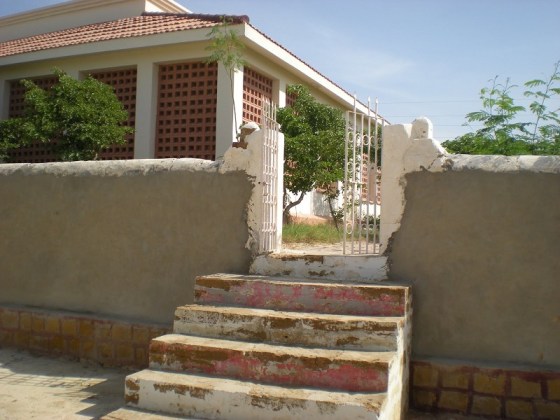
Imam Ali Shah (a.s.), Aga Khan II, residence. Photo: Salina Hasan. Copyright. Please click on image for photo essay.

Imam Ali Shah (a.s.), Aga Khan II, residence. Photo: Salina Hasan. Copyright. Please click on image for photo essay.

My Beloved Mother by His Highness the Aga Khan III

THOUGHTS FOR MOTHER’S DAY

“We have enjoined on man and woman (to be good) to his/her parents; show gratitude to Me and thy parents.”
Holy Qur’an – 31:14

“Your heaven lies at the feet of your mother.”
A tradition of the Prophet Muhammad (s.a.s.)

“We have enjoined on man kindness to his parents; in pain did his mother bear him, and in pain did she give him birth.”
Holy Qur’an – 46:15

~~~~~~

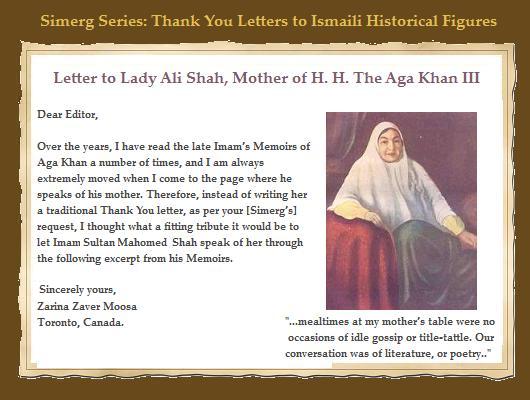
Thank You Letter to Lady Ali Shah Through the Voice of Her Son, Sir Sultan Mahomed Shah Aga Khan III

Please click for “Thank You” Letter

Please also visit THANKING ISMAILI HISTORICAL FIGURES.