Simerg is an independent initiative dedicated to Ismaili Muslims, the Aga Khan — their Hereditary Imam — and the Ismaili Imamat, and Islam in general through literary readings, photo essays and artistic expressions
(Note: The following recitation by Late Shamshu Bandali Haji includes a few verses at the end, which may not be part of the same Ginan. We will try and identify the source of the verses. When you start playing the recording, please scroll down to follow the transliteration and meaning of the Ginan. The recitation is from the superb and must visit Ginan Portal website at the University of Saskatchewan containing hundreds of recitations by Shamshu Bandali Haji and other members of the Ismaili community.
Ginan Sahebe Farman Lakhi Mokalea by Pir Hasan Kabirdin; recitation by Late Alwaez Shamshudin Bandali Haji
Transliteration and Translation of Ginan Eji Sahebe Farman Lakhi Mokalea
Transliteration source: PYARALI JIWA; English translation by ZARINA KAMALUDDIN and KAMALUDDIN ALI MUHAMMAD
Editor’s note: Ismaili Pirs, Dai’s and poets in their Ginans and Qasidas referred to the Imam of their era as Ali (a.s.), the first Imam who succeeded the Prophet Muhammad (S.A.S.), thus emphaszing the principle of the Unity of Imamat. For Shia Ismailis, each Imam is the same irrespective of his own age or the time he lives in, as he is the bearer of the same Noor (Light).
VERSE 1
Eji Saahebe faramaan lakhi mokaleaa suno maaraa nar hari yaa Ali; sevak sa(m)bhaa aa vaale aajman maa(n)he mayaa dhari ya Ali
O brother! Listen, My Lord Ali has written and sent a Farman. The beloved Lord has remembered this servant today with kindness in his heart
VERSE 2
Eji Mananaa manorath purajo suno maaraa nar hari yaa Ali deshe vaalo ati sukh raaj siri-a saara(n)g dhani yaa Ali
O my Lord Ali! Listen! Fulfill the hopes of my heart. The beloved Lord will grant much happiness and kingdom
VERSE 3
Eji Ame umaayo tere darage suno maaraa nar hari yaa Ali mayaaa karo maahaaraaj vaiku(n)th naath dhani yaa Ali
O my Lord Ali! Listen! We beseech hopefully at your door. O Lord of paradise! O Ali the great king! Have mercy
VERSE 4
Eji Charan te aapanaa bhetaadajo suno maaraa nar hari yaa Ali najar karo moraa shaam akhiyu(n) amia bhari yaa Ali
O my Lord Ali! Listen! Grant (me) the favor of expressing obeisance to you. O my Lord Ali! Look at me with eyes full of love
VERSE 5
Eji Dukh doyaalaa sarave taalajo suno maaraa nar hari yaa Ali puri karo maahaaraaj aparam paar dhani yaa Ali
O my Lord Ali! Listen! Remove all my sorrows and troubles. O Lord Ali, the great king! O Lord of infinity! Fulfill all my wishes.
VERSE 6
Eji Bahu aparaadh kari jivaddo aavyo tere darage suno maaraa nar hari yaa Ali mayaa karo mahaaraaj vaiku(n)th naath dhani yaa Ali
O my Lord Ali! Listen! After committing many sins this servant has come to your door. O Lord of paradise! O Ali the great king! Have mercy
VERSE 7
Eji Pir Hasan Kabirdin boleaa venati suno maaraa nar hari yaa Ali chade tu(n) tribhovar shaam parane visav ku(n) vaari yaa Ali.
O my Lord Ali! Listen! Pir Hasan Kabirdin (r.a.) has made this entreaty. O Ali! O king of the three worlds! Manifest yourself and marry the virgin earth
Date posted: April 1, 2020.
Before departing this website please take a moment to review Simerg’s Table of Contents for links to hundreds of thought provoking pieces on a vast array of subjects including faith and culture, history and philosophy, and arts and letters to name a few.
________________________
We welcome your feedback. Please complete the form below or click on Leave a comment if the form is not displayed. Comments are published at the discretion of the editor. and may be subject to moderation.
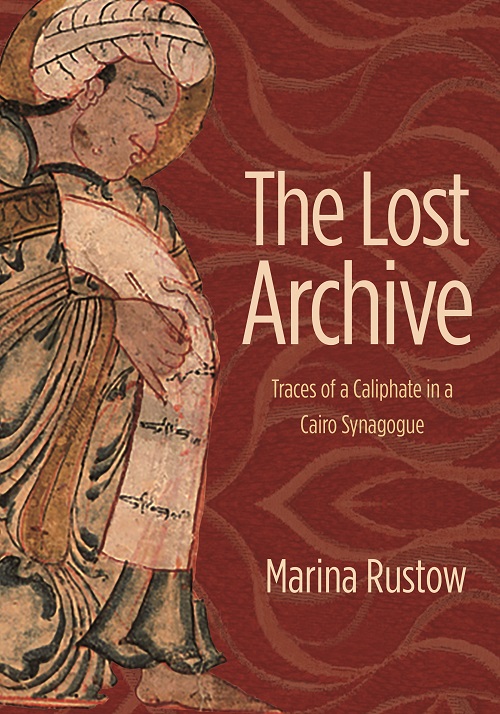
The Lost Archive by Marina Rustow, published on January 14, 2020 by the Princeton University Press; Pages: 624; Size: 7 x 10 in. Illus: 83 color + 17 b/w illus. 4 maps. 4c throughout. To purchase hardcover, Kindle or Kobo versions see links at bottom of this page.
Grabbing our attention now is a splendid new book on the Fatimids that looks at the caliphate’s robust culture of documentation. In an editorial review of the book, Konrad Hirschler of the Freie Universität Berlin describes Marina Rustow’s work “as a veritable magnum opus that will remain a point of reference for decades to come.” He also notes that “there are few books like this one that take the reader on such a long-distance journey across centuries and writing systems.”
The Lost Archive: Traces of a Caliphate in a Cairo Synagogue is Marina Rustow’s second work on the Fatimids. Her first one was entitled Heresy and the Politics of Community: The Jews of the Fatimid Caliphate. Sheis the Khedouri A. Zilkha Professor of Jewish Civilization in the Near East and professor of Near Eastern studies and history at Princeton University. She is director of the Princeton Geniza Lab and a MacArthur fellow. Her latest work is also praised by Geoffrey Khan, University of Cambridge, who states that “with great historiographical skill, Rustow brings new insights into the history of the medieval Middle East through a holistic analysis of the surviving state documents of the Fatimid dynasty. This is a splendid book.”
Marina Rustow has made very interesting and informative presentations of her research and work at the American Philosophical Society and the University of New Mexico. Links to both the videos are provided at the end of this piece.
The lost archive of the Fatimid caliphate survived in an unexpected place: the storage room, or geniza, of a synagogue in Cairo, recycled as scrap paper and deposited there by medieval Jews. In the book Marina Rustow tells the story of this extraordinary find, inviting readers to reconsider the longstanding but mistaken consensus that before 1500 the dynasties of the Islamic Middle East produced few documents, and preserved even fewer.
Beginning with government documents before the Fatimids and paper’s westward spread across Asia, Rustow reveals a millennial tradition of state record keeping whose very continuities suggest the strength of Middle Eastern institutions, not their weakness. Tracing the complex routes by which Arabic documents made their way from Fatimid palace officials to Jewish scribes, the book provides a rare window onto a robust culture of documentation and archiving not only comparable to that of medieval Europe, but, in many cases, surpassing it. Above all, Rustow argues that the problem of archives in the medieval Middle East lies not with the region’s administrative culture, but with our failure to understand preindustrial documentary ecology.
Illustrated with stunning examples from the Cairo Geniza, this compelling book advances our understanding of documents as physical artifacts, showing how the records of the Fatimid caliphate, once recovered, deciphered, and studied, can help change our thinking about the medieval Islamicate world and about premodern polities more broadly.
The hard copy or electronic Kindle version of “The Lost Archive” may be purchased at the following websites: Princeton Amazon & Amazon Canada Indigo
Date posted: March 8, 2020.
__________________
American Philosophical Society presentation by Marina Rustow (34 minutes)
~~~~~~~~~~~~
University of New Mexico presentation by Marina Rustow (1 hour 35 minutes)
I was in Ottawa when a set of two Farman books first went on sale recently. I was glad when the literature counter officer told me 300 sets had been received for sale in Ottawa. There was no reason to panic — everyone who was in the queue that began forming immediately upon the completion of Jamati announcements was able to obtain copies for themselves and their families. My daughter and I had a deep sense of joy as we acquired our copies, and we also saw everyone’s faces lighted up with joy — it was the fulfillment ofa wish of many many years. For the first time in more than 40 years, the guidance given by Mawlana Hazar Imam, His Highness the Aga Khan, to his spiritual children had been authorized by him for publication in printed form.
The last such volume was published in 1976-77 when the Ismailia Association for the UK (now known as the Ismaili Tariqah and Religious Education Board or simply ITREB) and other Associations published Farmans that Mawlana Hazar Imam had made in Mumbai, India, and Kenya in 1973 and 1976 respectively. The writer of this piece was very much involved with his late father, Alwaez Jehangir Merchant, in that exquisite publication in London.
The new set of two books ($10.00 per set) contains Farmans made by Mawlana Hazar Imam from 2011 to 2018. The first book (116 pages) contains a total of 24 Farmans made by Mawlana Hazar Imam during his mulaqats with the Jamats in Tanzania, Uganda, Kenya, Singapore, Bangladesh and India between July 5, 2011 and September 27, 2013. The second book (236 pages) consists of 45 Farmans starting with the Farman made on the inauguration of Mawlana Hazar Imam’s Diamond Jubilee in Aiglemont France on July 11, 2017 — the 60th anniversary of his Imamat — and concludes with the Farman Mubarak made on July 11, 2018 at the Darbar in Lisbon, Portugal, which was attended by more than 40,000 murids from around the world (seated in 3 separate halls). During his Diamond Jubilee year, Mawlana Hazar Imam visited Uganda, Tanzania, Eastern Canada, Pakistan, United Arab Emirates, India, USA, Kenya, Western Canada, France, the UK and Portugal.
The Farmans in both the books are published in chronological sequence and there is a table of contents at the beginning of the book. However, there is no index in the two books and we hope that it will be incorporated in future volumes that are expected to be published in the foreseeable future. We are here referring to Farmans made before 2011 that have been authorized and are read out in Jamatkhanas. Among those are Farmans made (1) during the Golden Jubilee in 2007-2008; (2) Farmans made in Pakistan in 2000; (3) Farmans made during Mawlana Hazar Imam’s first visits to Moscow and the Central Asian Jamats in 1995 and later; and (4) Farmans made during his Silver Jubilee in 1982-83 as well as other selected Farmans during the course of the Imamat from 1957 onwards.
The latest Farman books have been published by Islamic Publications Limited which is based at the new Aga Khan Centre in London. A note has been made that the Farmans are published under exclusive licence from Mawlana Hazar Imam.
Many of us will recall our childhood years during the 1960’s, when our parents would advise us to read a Farman every night before going to bed. At that time we had the benefit of short excerpted Farmans by subject category in tiny books such as Precious Pearls and Precious Gems. In the absence of such books, parents can utilize the newly released Farman books by reading out short excerpts to their babies and young children on a regular basis. The Australian website raising children mentions that reading to babies and children help them to get to know sounds, words and language, and they develop early literacy skills. The website reading rockets states that when the rhythm and melody of language become a part of a child’s life, learning to read will be as natural as learning to walk and talk. It has been recommended that reading should take place at least once everyday at a scheduled time and if this cannot be done, then read to your child as often as you possibly can.
In our particular case of reading out Farmans to children, we are also building the young murids’ attachment, affection and love for Mawlana Hazar Imam. The typeset in the Farman books is large enough for grown up children to comfortably read the Farmans by themselves. Parents and older siblings must encourage and motivate them to do so.
In addition, we urge every member of the Jamat and especially the youth and professionals to devote a few moments on a regular basis to the reading of Farmans, reflecting on them, applying Mawlana Hazar Imam’s guidance in our lives as well as seeking out the blessings that the Imam is conveying. Encouraging friends and family members to do likewise is a very important step in fulfilling our role as a dai, that is, a communicator of matters of faith.
The obedience to the Imam-of-the-Time is a time honoured Ismaili tradition, and Imam Sultan Mahomed Shah had once observed that heaps of pearls are scattered when Imams give Farmans. When a murid of the Imam consciously listens to Farmans in Jamatkhana or reads them in the books such as the ones that have just been published, the listener or reader should treat the blessings conveyed by Mawlana Hazar Imam for all times, and not treat the blessings as if they were for the occasion when the Farman was delivered. Indeed, as we read through the two Farman books, we will come across references to the enduring nature of the Imam’s blessings in his own words.
In her wonderful piece published in Ilm in 1979 and reproduced on this website, Nadya Kassam contextualized the importance of Farmans through a verse of the following ginan by Pir Shams:
Satagur kahere amara vachan je manshe, Te chhe amare galeka har. Tene galeka har kari rakhasu, Tis momanke sukhaka anta na par-re.
The Pir in the verse says that a murid who obeys the Imam’s Farmans is like a garland (around the neck of the Imam). Hazar Imam keeps such a person very near to him, and that the mu’min will be very happy in this world and the next.
Mawlana Hazar Imam has always spoken to his spiritual children in plain language, always maintaining a joyful and warm demeanor. As we read through Mawlana Hazar Imam’s Farmans, his inspiring and perfect guidance as well as munificent blessings will touch our hearts, and raise and renew our hopes and spirits every single day.
It is thus with immense joy and unbounded happiness that we welcome the publication of the Farman set, and express our profound and humble shukhrana to Mawlana Hazar Imam for his constant guidance and blessings for our spiritual and material well-being and advancement.
Finally, in the context of the relationship of the Imam with his murids and the guidance that the Imam gives to his spiritual children, it is appropriate to quote a clause from the preamble of the Ismaili constitution which was ordained on December 13, 1986 by Mawlana Hazar Imam on the occasion of his 50th Salgirah (birthday). It states: “Historically and in accordance with Ismaili tradition, the Imam-of-the-Time is concerned with spiritual advancement as well as improvement of the quality of life of his murids. The Imam’s ta‘lim lights the murid’s path to spiritual enlightenment and vision. In temporal matters, the Imam guides the murids, and motivates them to develop their potential.”
Date posted: February 6, 2020.
Before departing this website please take a moment to review Simerg’s Table of Contents for links to hundreds of thought provoking pieces on a vast array of subjects including faith and culture, history and philosophy, and arts and letters to name a few.
__________________
We welcome your feedback. Please complete the feedback form below or, if you don’t see it, click Leave a comment and scroll to the bottom.
“Today my Farman is ‘Work and Many Words’. Communicate, enjoy life, be happy…” — Mawlana Hazar Imam, His Highness the Aga Khan, Calgary, May 10, 2018.
Mawlana Hazar Imam, His Highness the Aga Khan, meets representatives of the Jamat on his arrival in Calgary, Alberta, for his Diamond Jubilee visit in May 2018.
The Ismaili community is a dynamic community with the Imam-of-the-Time guiding his followers according to the time. The essence of the faith remains the same but the form may change over time in cognizance of differences in traditions, cultural, social or other factors. Similarly, there could be changes over time in the manner in which voluntary services may be rendered. Paraphrasing the 48th Imam’s Farman, Mawlana Sultan Mahomed Shah had once said that we should follow the Farmans of the Imam-of-the-Time, noting that as the world changes, even his Farmans would change as time progressed.
The volunteer’s badge with the motto “Work No Words” is based on Imam Sultan Mahomed Shah’s message, “Today I will give you a small motto and that is ‘Work No Words’.” The motto needs to be revised to reflect Mawlana Shah Karim’s Diamond Jubilee Farman in Calgary “Work and Many Words.”
One of the best known motto given by the late Imam in the 20th century to the volunteers of the Ismaili community was “Work No Words.” It is inscribed on every badge that an Ismaili volunteer wears today. It is also something that many honorary workers serving in institutions in various capacities constantly bear in mind.
What do these words actually mean for any volunteer, badged or otherwise?
I think the motto carries several meanings. Perhaps it is an expression of humility — that one does the work without seeking recognition.
It can be perceived to mean that you serve without question and not react to any attitude that may be shown to you while you are doing your work.
Other volunteers may have their own personal interpretations of the motto during the performance of their duties, and apply it during their service.
Remarkably, that motto was mentioned in the Farman Mawlana Hazar Imam made in Canada during the Diamond Jubilee. At the second Calgary mulaqat, on May 10th, 2018, while mentioning and praising the work of the volunteers, he made a reference to his grandfather’s motto “Work No Words” and declared that “Today my Farman is, ‘Work and Many Words’. Communicate, enjoy life, be happy….”
Eighteen months have since passed but still there seems to be no discussion on this matter. The old motto “Work No Words” appears everywhere in the celebration of the 100th anniversary of the volunteers including a new video “All Work, No Words” that has just been released at The Ismaili website. There is absolutely no reference to the most recent Farman and the new motto. For example, I was quite surprised that the President of the National Council for Tanzania, Amin Lakhani, speaking as recently as July 19, 2019, used the motto that Mawlana Sultan Mohamed Shah gave in one of his speeches, but did not make any reference to the new motto given by Mawlana Hazar Imam. When I raised the issue with a long serving Jamati member, the volunteer became very defensive saying that he would like to see the old motto remain on his badge.
I beg to differ, I believe that we now have to adopt to a new paradigm based on the most recent Farman, “Work, and Many Words.”
How then is this to be interpreted?
Firstly, the volunteers badged and non-badged should not feel fearful to speak up and express their views on matters that concern them on services that they are performing and how they can become more effective, rather than simply taking orders as subordinates. The superiors in the volunteer leadership and heads of various institutions should make their teams more engaged in decision making and seek out creative thoughts, ideas as well as best practices. Quite so often when suggestions are made to institutional heads about new approaches, one is often made to feel that they already knew about the idea that has been brought up. A case in point was when a suggestion was made to make Jamati members more engaged in meetings that the Aga Khan Council and national institutional boards hold on a quarterly basis. The reply was, “We are thinking about it.” For how long?
Many serving in institutions who speak out are left marginalized for speaking out boldly, even when they have done so sincerely and from the heart. This should no longer be the norm. I have personally experienced such treatment.
The old motto “Work No Words” on the badge that volunteers have been wearing for some 70 years is in need of a change. Mawlana Hazar Imam’s Diamond Jubilee “Work and Many Words. Communicate…” should resonate with everyone. We should communicate openly and sincerely and the office bearers should listen respectfully. One area that should require particular attention is legitimate concerns of volunteers in doing their work.
There is one other aspect where the motto “Work, and Many Words” may be applied very effectively. Volunteers of the Jamat participate in many outreach programs outside the community. We have each been considered by the Imam to be his Da’is — a very important term in Ismaili history where only a select few were known as Da’is. Now, remarkably, Mawlana Hazar Imam has told everyone that he or she is a Da’i! The Diamond Jubilee Farmans made at various locations attest to this role we have been asked to play. I think another way of looking at the Farman “Work and Many Words. Communicate…” is in the context of the volunteer who as a Da’i would be a great communicator to others about the ideals, principles and ethos of the Ismaili community. The following Farman made by Mawlana Hazar Imam in 2002 in Dar es Salaam, Tanzania, gives us a clear direction on the role the volunteers as well as the youth and professionals in the Jamat can play:
“…It is important, I think, today, that my Jamat worldwide, not just here in Tanzania, my Jamat worldwide, should reaffirm the traditions that we have, the rectitude and correctitude of our interpretation of Islam, of the role, within Shia Islam, of the intellect, of the human intellect, so that the young, the less young, the old, all of you, wherever you are, are ambassadors of Islam — the Islam that we believe in, that we practice, and that guides us in our lives. So I say to you today, whether you are in Tanzania or whether you are in any other part of the world, stand up, do not run away. Speak openly and frankly about what is our interpretation of Islam.”
Interestingly, in his Diamond Jubilee Farman in Atlanta, USA, Mawlana Hazar Imam asked the Jamat if they knew the meaning of the word Qul (from Sura Ikhlas, which is recited by Ismailis in their Du’a multiple times everyday). One person out of thousands raised a hand! Was that a hint from the Imam to us to seek to understand our faith better? To be effective communicators, requires that we have good knowledge of the faith, its ideals and the work of the Imamat, including for example the AKDN agencies.
So my notion of the work of the volunteers — and indeed each one of us — is to work, and with “many words” express kindness to others, convey good ideas and best practices and pass on the ethos of Islamic and Ismaili principles to everyone we come across.
What should the new badge say? Totally opposite of “Work No Words.” Indeed, the badge should now say “Work and Many Words.” However those “many words” should be spoken with humility, sincerity and thoughtfulness.
I welcome your feedback. Please click LEAVE A COMMENT or send your comment in an email to Simerg@aol.com. You may remain anonymous. Your email address will never be shared.
Before departing this website please take a moment to review Simerg’s Table of Contents for links to hundreds of thought provoking pieces on a vast array of subjects including faith and culture, history and philosophy, and arts and letters to name a few.
Malik Merchant is founding publisher/editor of 3 websites, Barakah (2017), Simerg (2009), and Simergphotos (2012). They are works of passion influenced by his parents involvement with literary pursuits and community publications, as well as his childhood dream of becoming a journalist. However, he spent almost 4 decades working as an IT consultant in both the public and private sectors in the UK, USA and Canada. He has volunteered in the Ismaili community as a teacher and librarian and was co-editor with his late father, Jehangir Merchant, of the flagship UK Ismaili publication Ilm. He has also held numerous institutional and Jamati portfolios, including being the Member for Religious Education and Chairman of the Ottawa Tariqah Committee. He is currently based in Ottawa and Toronto. He welcomes your feedback on this piece by completing LEAVE A REPLY or by sending him an email at Simerg@aol.com.
“The ethics of a Da’i are unimpeachable and he practices what he preaches. The Da’i constantly pursues a better comprehension of universal truth by engaging with knowledgeable people, sharing knowledge with them and also learning from them. In our time, this would mean engaging with contemporary scientific, cultural, and religious understandings produced around the world.”
By KARIM H. KARIM
Many people have heard the position of Da‘i but are unfamiliar with its unique character. Historically, a Da‘i was a member of the Da‘wa, which was a pivotal institution of the Imamat. The word Da‘wa has sometimes been translated as a preaching mission and Da‘i as missionary. However, the precise meaning of Da‘wa is a call or an invitation, and therefore a Da‘i is someone who issues a call or invitation.
What was the nature of the Da‘i’sinvitation? The answer is to be found in the full name of the institution to which he belonged: Da‘wat al-Haqq (Invitation to the Truth). The Holy Qur’an says that “His [God’s] is the Da‘wa of the Truth” (13:14). Da‘is referred to their disciples as People of the Truth (Ahl al-Haqq or Al-Muhiqqin). (It was only in the early 20th century, after the Aga Khan Case of 1866, that the name Ismaili came to be formally adopted in reference to the Imam’s followers.) Da‘is (Pirs and Sayyids) in India, used Indian terminology to call the community Satpanth (Path of Truth).
The Concept of Truth
Truth is the core of the faith and appears repeatedly in its discourses. Imam Mustansir bi’llah II’s book Pandiyat-i Javanmardi declares that “The (real) believer is one who always, permanently, thinks of the Truth, and always intends to act righteously.” One of God’s names is Al-Haqq (the Truth). The third part of the Ismaili Du‘a affirms:
La illaha illallahul malikul haqqul mubin (There is no deity except God, the Sovereign, the Truth, the Manifest)
La illaha illallahul malikul haqqul yaqin (There is no deity except God, the Sovereign, the Truth, the Certainty)
Tasbihs in Gujarati ask for “haqiqat-i samaj” (understanding of truth). When delivering sermons, Khoja preachers in the 20th century called their congregations “haqiqat-i momino” (believers of truth) and “haqiqati-dindaro” (followers of the religion of truth). Imam Mustansir bi’llah II and Imam Sultan Mahomed Shah referred to the progression of the believer from shari‘a (“law”) to tariqa (path) to haqiqa (truth) and to ma‘rifa (wisdom; gnosis), as does Bhamar Ghufaa Upar Dekhantaa, a ginan attributed to Sayyid Nur Muhammad Shah.
The truth to which a Da‘i issues his invitation is embedded in the knowledge that the Imam imparts to his followers through a particular mode of instruction (ta‘lim). A hadith (saying) of the Prophet declared: “I am the city of knowledge and Ali is its gateway; so let whoever wants knowledge enter through its gate.”
Hazrat Ali and his designated successors in the lineage of Imamat provide unique access to knowledge about truth. Imams conduct interpretations (ta’wil) of the inner meaning of the Qur’an which they impart to their adherents through ta‘lim. Only the rightfully appointed Imams have this unique ability: “None knoweth its [the Qur’an’s] esoteric interpretationsave Allah and those who are of sound instruction” (Holy Qur’an, 3:7); Shia Muslims believe that the phrase “those who are of sound instruction” refers to the lineage of Imamat.
The concept of truth here is not limited to the practice of truth-telling and being honest, which are important in themselves, but to the deeper truth that is the inner reality of existence. This reality lies behind the illusion that constantly misleads the mind. Imam Sultan Mahomed Shah wrote in his Memoirs that Islam’s “basic principle can only be defined as mono-realism.” The enlightened soul experiences the reality of fundamental truth on which rest all other aspects of faith (such as prayer, devotion, values, and ethics). It is to such ultimate and unique spiritual enlightenment (ma‘rifa, gnosis) that the Da ‘wa offers its invitation. The identity of a Da‘i is integrally related to the essence of eternal truth. He seeks to live the truth. Nasir-i Khusraw, Hujja of Khurasan, referred to the members of the Da‘wa as “Scholars of the Religion of Truth” (ulama-yi din-i haqq). This is a position of profound depth and significance that requires understanding of the process of spiritual advancement as well as knowledge of the material world.
The Da‘wa in History
The pre-Fatimid Da‘wa emerged in the first Period of Concealment (Dawr al-Satr) that began during Imam Ismail’s time. This was a period of great danger because the Abbasid Caliphate was determined to destroy the Imamat and its followers. Therefore, the Imams in this time were in hiding and their identities and locations were known only to their closest followers. Imam Muhammad al-Mahdi brought the Dawr al-Satr to a close when he established the Fatimid state in North Africa.
It was the Da‘wa that had laid the groundwork for the Imam’s rule. Da‘is functioned largely in secret due to widespread persecution. Their institution, which operated transregionally, had a hierarchical structural model. At the head was the Chief Da‘i (Da‘i al-Du‘at), who was in close touch with the Imam. Under him operated a number of Hujjas (Proofs), the leaders of the Da‘wa in specific regions. Each Hujja supervised several Da‘is, who in turn had assistants called Ma’dhuns. Ordinary members of the community whom Da‘is taught were Mustajibs. Whereas this was an ideal model of the organization, the actual operations were more fluid especially in places where Da‘is worked in relative isolation.
The da‘wa produced a unique body of writings, some of which are described below. Da‘i Ja‘far bin Mansur al-Yaman’s Book of the Master and the Disciple (Kitab al-‘Alim wa’l-Ghulam) addresses the search for truth and the meaning of life in a series of religious dialogues between a Da‘i and his disciple. This sophisticated composition creatively uses form and language to express a complex narrative. It is a rare and valuable artifact that provides insight into the Da‘wa’s erudition and refined pedagogy.
Hamid al-Din al-Kirmani, the Hujja in Iraq, was a noted philosopher. His major work, Rahat al-‘Aql (Repose of the Intellect), presents contemporary science, philosophy, and theology in an integral manner. Its objective was to enable the believer to attain a paradisiacal state through reason. Kirmani’s book imaginatively maps out a journey in which the soul escapes the troubling state of the physical world and attains freedom in the City of God by gaining a comprehensive sense of God, angelic beings, and the realm of minerals, plants and animals.
Nasir-i Khusraw, who was Hujja of Khurasan, is acknowledged as the founder of Ismaili communities in the mountainous regions of the Pamirs in Tajikistan and Afghanistan and the Hindu Kush in Pakistan as well as Xinjiang in China. He was a foremost exponent of philosophical poetry and his poems are an essential part of Persian-speaking countries’ educational curriculum today. Khusraw’s poetry is also sung at religious gatherings in the Badakshan Jamat and its diasporic locations. Among his philosophical treatises is The Book of Two Wisdoms Reconciled (Kitab-i Jami’ al-Hikmatayn), which endeavours to bridge Aristotelian and haqa’iq philosophies.
The Satpanth branch of the Da‘wa in India produced a unique literary tradition of around one thousand ginans, many of which hold profound insight and wisdom. Like the Sufis in the subcontinent who used the region’s cultural heritage to preach their beliefs, Ismaili Pirs, notably Shams, Sadruddin, and Hasan Kabirdin, also drew from Indic mythology and symbolism to teach the message of universal truth. Major compositions like Brahm Prakash and Bhuj Nirinjan guide adherents in their spiritual journeys. The ginan tradition, which is attributed to a number of Pirs and Sayyids, speaks of sat (truth) in various South Asian languages including Gujarati, Khari Boli (proto Hindi-Urdu), Punjabi, Sindhi and Siraiki/Multani. South Asian Khoja Jamats and their diaspora find inspiration in the hymns, which are sung every day at religious gatherings.
The Da‘wa’s Pluralist Search for Truth
The quest for truth is a consistent theme that runs through the centuries-long history of Da‘wat al-Haqq and Satpanth. Da‘is drew on knowledge from a variety of Muslim and non-Muslim sources in a pluralist pursuit of universal truth. According to Imam Sultan Mahomed Shah, studying other religions is integral to spiritual search because God’s revelation has appeared among different peoples through history.
“All Islamic schools of thought accept it as a fundamental principle that, for centuries, for thousands of years before the advent of Mohammed, there arose from time to time messengers, illumined by Divine grace, for and amongst those races of the earth which had sufficiently advanced intellectually to comprehend such a message. Thus Abraham, Moses, Jesus, and all the Prophets of Israel are universally accepted by Islam. Muslims indeed know no limitation merely to the Prophets of Israel; they are ready to admit that there were similar Divinely-inspired messengers in other countries – Gautama Buddha, Shri Krishna, and Shri Ram in India, Socrates in Greece, the wise men of China, and many other sages and saints among peoples and civilizations of which we have now lost trace.“
This pluralist attitude was present in the earliest Ismaili writings such as the encyclopedia of Ikhwan al-Safa (Brethren of Purity), whose sources included Islamic, Greek, Babylonian, Hindu, Buddhist, Zoroastrian, Manichean, Jewish, and Christian knowledge. Da‘is Al-Nasafi and Al-Sijistani adapted Neoplatonist thought to indicate the cosmological place of the Imam. As the Da‘wa moved into South Asia, Pirs and Sayyids drew from Indic mythology and cosmology for a similar purpose.
Such pluralist approaches to knowledge were not uncommon in the history of Islam. Prophet Muhammad is said to have told his followers in Arabia to seek knowledge even as far as China. The receptivity of Muslims to other cultures in the Hellenic intellectual environment of Egypt, Syria, Iraq and Iran provided for their own religion’s intellectual flowering. They came upon renowned academies like those of Jondishapur, where Persian, Greek, Indian, and Roman scholars trained in medicine, philosophy, theology, and science. A major translation movement rendered numerous manuscripts written in various languages into Arabic. Muslims scholars drew on the knowledge, philosophical reasoning and analytical tools produced by other civilizations for developing Islamic philosophy (falsafa), theology (kalam), and law (fiqh). Even the modes of Islamic preaching borrowed from indigenous practices; for example, Sufi teachers adopted the bhakti mode of devotion in India.
Whereas it was commonplace for Muslim intellectuals to learn from neighbouring civilizations, Ismaili thinkers embraced the most openly pluralist Islamic approach to other cultural and religious sources. They had a cosmopolitan outlook in studying others’ material and spiritual sciences in a sustained search for universal truth. Da‘is examined the ancient world’s wisdom including that of Greeks, Babylonians, and Sabaeans as well as writings of contemporaries such as Jews, Christians, Zoroastrians, Hindus, and Buddhists.
The Da‘wat al-Haqq’s cosmopolitan outlook in studying others’ material and spiritual sciences in a sustained search for universal truth enabled them to see spiritual value in their symbols and practices. Al-Sijistani interpreted the Christian cross’s four points as representing the roots of truth. Badakshan Jamats observe Chirag-i Rawshan (Luminous Lamp), a funerary rite that has Islamic features along with characteristics of pre-Zoroastrian Iranian religions. Oral tradition attributes the establishment of this ritual to Nasir-i Khusraw. The Zoroastrian spring festival of Navroz, which is commemorated by Shia and Sunni Muslims in Persianate regions, has been embraced by all Ismailis as a major celebration of spiritual renewal. Farsi-speaking Jamats have been drawn to some of the poems of the great Sunni mystics Attar and Rumi, which are recited in religious gatherings. The Garbi category of ginan compositions bear a Hindu communal dance’s rhythm. Da ‘is were generally less concerned about exoteric differences between religious perspectives than in pursuing the greater spiritual truth.
Conclusion
Whereas Da‘is have consistently been engaged in a search for truth, this endeavor has been fraught with physical, intellectual, as well as personal spiritual dangers. These hazards led some members of the Da‘wa to turn away from the Imamat’s guidance. For example, Da‘i Abu Abdullah al-Shii, who prepared the ground for Imam Al-Mahdi to establish the Fatimid state, later conspired against him. In the time of Imam Al-Hakim, a number of Da‘is broke from the Fatimid Da‘wa to establish what came to be known as the Druze movement. Another major division took place in the Da‘wa upon the death of Imam Al-Mustansir I, when most of the Da‘is in Cairo followed Al-Musta‘li and those in the east, like Hassan-i Sabbah and Rashid al-Din Sinan, adhered to Imam Nizar. Later in India, a grandson of Pir Hasan Kabirdin, Nar Muhammad, founded a break-way religious group called the Imamshahis.
The Da‘i Ahmad bin Ibrahim al-Naysaburi wrote a treatise on the comportment expected of the members of the Da‘wa. It laid out in some detail the qualifications and behavior that a Da‘i should have. Al-Naysaburi stated that the Da‘wa is built on knowledge, piety, and good governance. A Da’i maintains a noble character and upholds the truth to which he invites believers. His ethics are unimpeachable and he practices what he preaches. He constantly pursues a better comprehension of universal truth by engaging with knowledgeable people, sharing knowledge with them and also learning from them. In our time, this would mean engaging with contemporary scientific, cultural, and religious understandings produced around the world.
Life may appear more complex than in previous periods but the struggle to remain faithful to eternal truth, which has been a constant religious quest since the dawn of time, remains relevant to this day. This endeavour was represented in previous centuries by the institution of Da‘wat al-Haqq, Invitation to the Truth. As in the past, a Da‘i’s life today would be difficult as it would involve dealing with intricate material, intellectual and spiritual challenges. The person who responds to the Call to the Truth accepts the undertaking of a demanding but ultimately rewarding enterprise. He/she can be seriously misled in this journey by others and even by the illusions of his/her own mind.
Adherence to Din al-Haqq demands a keen dedication to the Imamat and to the Truth. Followers of the Imam believe that he is the unique source of the knowledge that leads to comprehension of the Truth. However, history has shown that even the Imamat’s highly placed officials like the intelligent and heroic Da‘i Abu Abdullah al-Shii have wavered from such a conviction. Living the faith of Al-Haqq clearly requires an absolutely unrelenting commitment to and love for the Truth. Those who sincerely seek to maintain such personal steadfastness humbly ask in daily prayers for “haqiqat-i samaj” (understanding of truth) and “iman-ji salamati” (security of faith).
Date posted: July 7, 2019.
_____________________
Karim H. Karim
About the author: Professor Karim H. Karim is the Director of the Carleton Study for the Study of Islam. He has previously been Co-Director of the Institute of Ismaili Studies and Director of Carleton University’s School of Journalism and Communication. Dr. Karim has also been a Visiting Scholar at Harvard University. He is an award-winning author who has published extensively. Professor Karim has also delivered distinguished lectures at venues in North America, Europe and Asia. In 2017, he organized the international conference on Mapping a Pluralist Space in Ismaili Studies, which was the largest ever gathering of scholars working in this field. A forthcoming publication of his is titled “Ismailis: A Pluralist Search for Universal Truth.”
___________________
We welcome feedback from our readers. Please click LEAVE A COMMENT
He is always present a witness with his followers; but who has seen his beauty except the blessed?
He who is the cupbearer of the fount of paradise is aware altogether of the hearts of his followers
He is the Imam of the Time the guide and comforter the protector of his followers whether young or old
Like the sun in the sky he is manifest in the world but the blind bat cannot see his luminous face
Source: Shimmering Light: An Anthology of Ismaili Poems, ed. Faquir M. Hunzai and Kutub Kassam, pub. I. B. Tauris in association with The Institute of Ismaili Studies, 1997.
__________________
Making Our Faith Complete
By IMAM MUSTANSIR BI’LLAH
Pandiyat-i- Jawanmardi or Counsels of Chivalry is a compilation of the guidance of the 32nd Ismaili Imam, Mustansir bi’llah, who lived in the 15th century. The book contains exhortations to the faithful on the necessity of recognising and obeying the Imam of the Time and on how to live a truly ethical life. The circumstances that led to the compilation of the work are intriguing, and are alluded to in many of the manuscripts copies as follows:
When Pir Taj al-Din passed away, a number of people from the Sindhi Ismaili Community went to the Imam. Upon arrival they pleaded: “Our Pir Taj al-Din has passed away. Now we are in need of a Pir.” The Imam then had the Counsels of Chivalry compiled and gave it to them saying: “This is your Pir. Act according to its dictates.”
In the following piece from one of the chapters, the Imam enumerates on how murids (those who have pledged their allegiance to the Imam) can make their faith complete. Says the Imam:
“O, believers, O, pious ones!
“Now is the time when you should strengthen religion (din), by helping each other, by trying to gain knowledge, by advancing the religious cause, and striving to make your faith complete.
“Gain safety by obeying the Imam of the time, and become completely obedient to his orders.
“Do unhesitatingly what you are told by the blessed word of the Imam, –- then you will attain (real) salvation.
“Follow the Imam of your time strictly, so that he may take you under his protection, helping you, granting you victory and relief.
“And obedience to the Imam, attention to his word, will bring about the healing of spiritual ailments and lead to soundness and clarity of the heart.”
Reading adapted from The Ismailis in the Middle Ages: A History of Survival, a Search for Salvation by Shafique N. Virani, Hardcover – May 3, 2007
The recent CNN photo piece On the trail of Iran’s ‘Assassins’ in the Alborz Mountains has stirred an immense amount of interest on the subject of Alamut and the Ismaili community that for more than 150 years protected itself from its enemies by securing fortresses like Alamut in Iran and Syria.
In a high powered and moving poem penned originally for Simerg’s highly acclaimed series I Wish I’d Been There, Shariffa Keshavjee reminds all our readers about the tragedy that took place in Alamut nearly 800 years ago when the Mongol warlord Genghis Khan had declared his intention to destroy the Ismailis with the following chilling words, “None of that people should be spared, not even the babe in its cradle.”
The context of Shariffa’s poem can further be appreciated through the following 2 excerpts taken from recent non-Ismaili sources.
1. In his extraordinary historical fictional book Samarkand relating to the turbulent history of Iran from the 11th to the 20th century, which was partially inspired by Omar Khayyam’s Rubayat, the award winning French-Lebanese writer Amin Maalouf writes:
“He [the Mongol officer] was carrying a torch in his hand and to show [the historian – Juvayni] just how much in a hurry he was, he placed it next to a pile of dusty scrolls. The historian gave in and gathered into his hands and upto his armpits as many [manuscripts] as he could grab and when a manuscript entitled Eternal Secrets of Stars and Numbers fell to the ground, he did not bend over to pick it up again.
“Thus it was that the Assassins’ library burnt for seven days and seven nights causing the loss of innumerable works, of which there was no copy remaining, and which are supposed to contain the best guarded secrets of the universe.”
2. The online website Iran.com offers the following description:
“The Mongol leader [Hulagu, grandson of Genghis Khan] journeyed himself to the citadel in 1256 and ordered everything to be destroyed, including the famous library. Among the precious writings that disappeared were the works of Hasan himself and the complete history of the Assassins and their doctrines. But just before the burning he allowed his historian Juvainy (who was writing a biography of the Mongol prince) to enter the library and bring out a few of the books, enough as would fit into a small wheelbarrow. No time was allowed to consider the matter.
“Juvainy hurriedly saved a few Qurans, a chronicle of Alamut and a biography of Hasan Sabbah. Everything else perished in the flames. The vast library filled with….hundreds of thousands of manuscripts burned for seven days and seven nights bringing to an end the history of the Ismailis of Alamut. Over the years, knowledge of the Ismailis degenerated into misunderstandings, romances and other fanciful nonsenses such as those popularised by the explorer Marco Polo.”
~~~~~~~~~~~~
Inferno of Alamut
By SHARIFFA KESHAVJEE
I often go back in my mind To a time when giant forts dwarfed Our human form But great minds soared Soared about the forts of Alamut Where great minds thought The scribes told wonders Of the worlds of new continent New passages in the oceans Of search for truth.
I often go back in my mind To the pain of persecution The fear of the self Above all the anguish The anguish of lost knowledge Beautifully bound skillfully crafted Books of great knowledge Of mathematics and cartography Of mystical passion for the divine The deep yearning
I often go back in my mind to the Night the books were burnt The pages curled in fires of doom The ink evaporates Loving thoughts of seers up in smoke Parchments and tomes flung into Feeding the bonfire of lost knowledge What the mind perceived What the pen had scribed Was gone for ever
The smoke rises over Over the fort The charred air rises The effort to stop in vain The scream of anguish Stuck in the throat As the gaze falls upon The lost knowledge of Alamut The human form dwarfed Dwarfed
Gagged In its inability to act.
This however is renaissance Where time and knowledge Laid at the feet of the Master Not sepulchered in the fort But given birth by the vision No longer subjugated Free to search into cyberspace Following vision without boundaries Reaching over mountains across seas Reaching heights
Unthought of in the sojourn in Alamut.
Date posted: February 8, 2019.
_______________
Shariffa Keshavjee is a philanthropist and an entrepreneur with an objective to help women empower themselves. Raised in Kisumu, she considers herself a “pakaa” Kenyan. She is now based in the nation’s capital, Nairobi. She is the founding member and director of the Hawkers Market School and the Kigera Girl Guides Centre which provide educational opportunities for destitute girls in the country’s slums. Her Hawkers Market Girls Centre has been the recipient of the World Bank Development Marketplace Award in 2004 in which the centre was given $85,000. In addition, she is also the founding member of FONA (Friends of the Nairobi Arboretum) which is dedicated to preserving Kenya’s forest and preserved arboreta. Her other interest is in visual arts where she delights in painting on wood, silk and porcelain using water colours, oils and acrylics. She also likes writing, especially for children, and bird watching.
[Numerous reports in the Iranian media in November 2014 announced that Iran was planning to offer the castle of Alamut to UNESCO as a World Heritage Site. The historical significance of the fortress dates back to 1090 A.C. when the Ismaili dai Hassan Sabbah chose the Alamut region as the headquarters of Ismailis following the Nizari-Musteali split in Fatimid Egypt. But four years after the announcement, Iran Daily reports that numerous factors have prevented the registration of Alamut as a World Heritage Site site.]
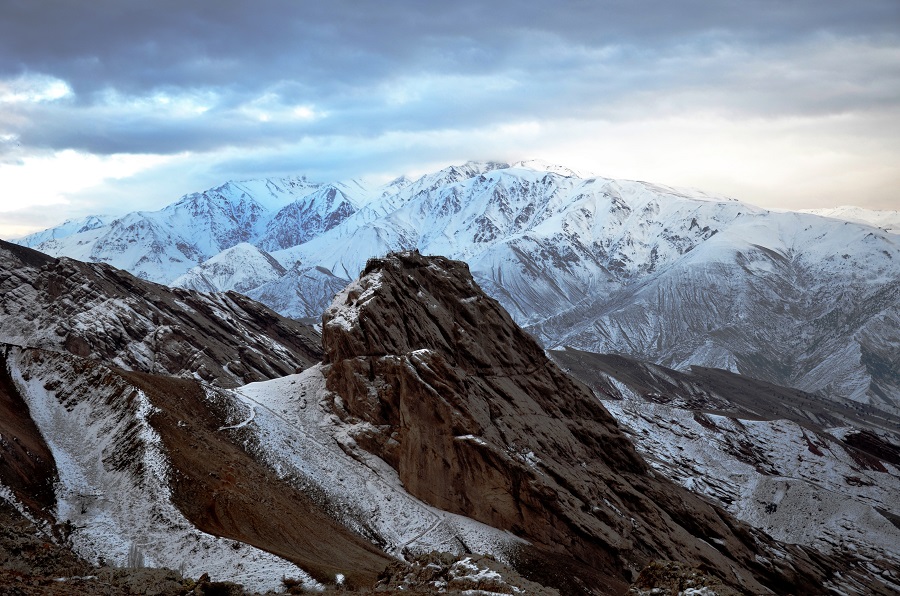
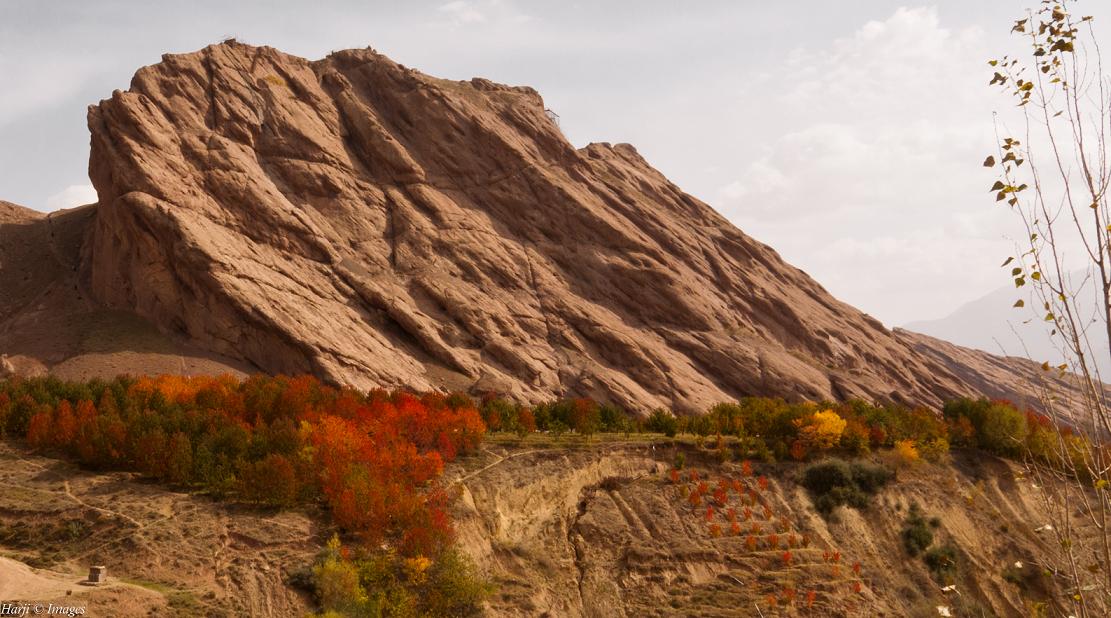
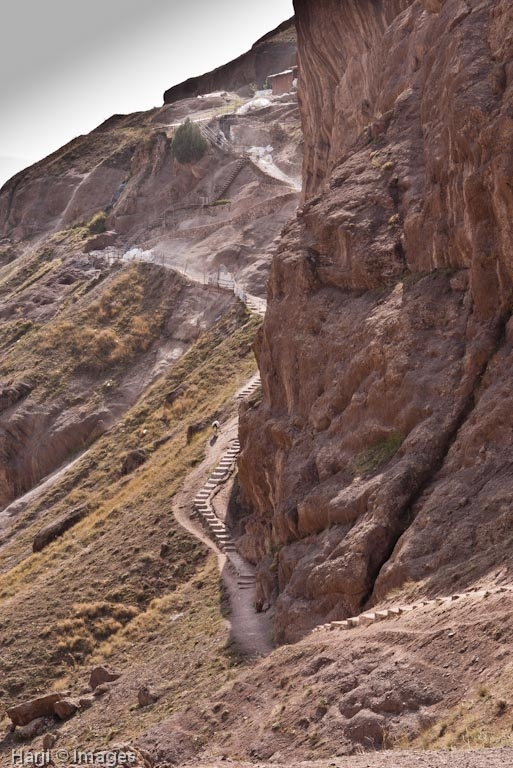
A winter view of the unassailable rock of Alamut and the famous castle of Alamut nesting on top of this huge mountain of granite stone. This was the Capital of a Confederation of the Ismaili State founded in 1090 AC, by a great genius of all times, Hasan-i Sabbah which lasted for 171 years against formidable enemies and ultimately surrendered before the Mongols in 1256 AC. The Ismaili State was defended by a string of castles, over one hundred in number and Alamut being the capital of the State. This photo of was taken on December 31, 2011 by Alireza Javaheri. Photo credit: Wikipedia. This file is licensed under the Creative Commons Attribution 3.0 Unported.
By CULTURAL HERITAGE DESK, IRAN DAILY
Alamut located in the northwestern province of Qazvin as an untapped and historical region deserves to be registered on UNESCO’s World Heritage List but various factors have prevented the goal from being reached.
Director General of Qazvin Cultural Heritage, Handicrafts and Tourism Department Mohammad Ali Hazrati said that a limited number of foreigners travel to Qazvin Province because it doesn’t have any registered site on UNESCO’s World Heritage List.
He added efforts are underway to send the dossier of Alamut natural and historical site to UNESCO for world registration.
Hazrati said Alamut with beautiful natural landscape has several ancient structures including Hassan Sabbah Castle and Pich Bon Caravanserai.
A number of regulations should be observed for registration of any site on UNESCO’s List.
“Illegal construction of buildings within the boundary of the historical structures, including Hassan Sabbah Castle, is among the problems faced by Alamut in this respect”, he said.
He added that a decree was issued for destruction of structures located in Alamut historical texture, but the resistance of local officials as well as some social considerations prevented it from being enforced.
Hazrati said the registration of Alamut on UNESCO’s World Heritage List would help the ancient site to be recognized more internationally, draw a large number of the visitors to the province and boost tourism and employment in the region.
The Former head of Iranian Center for Archeological Research, Hamideh Choobak, said all ancient sites located worldwide are of high value but international recognition would help increase the governments’ responsibility to protect and maintain them.
“Specific funds will also be made available to the sites by the government and international organizations”, she added.
Choobak, who is the head of Alamut Cultural Heritage Site, noted that Alamut deserves to be registered on UNESCO’s List but it is not enough.
She stressed that a number of conditions should be provided to help realize the target.
The Milky Way extends across the sky above the mountain fortress of Alamut in this all-sky view from Iran. The light dome at the lower right is from the capital Tehran, over 100 kilometers away to the southwest. The light on the upper right is from Qazvin, the closest major city to Alamut. Photo: Copyright. Babak Tafreshi/Dreamview.net.
The official said Hassan Sabbah Castle has been registered on the National Heritage List in the year to March 2002, adding some organizations failed to perform their responsibility toward the structure.
She reiterated that related organizations should raise the local people’s awareness about the benefits of the site’s registration on UNESCO’s List and encourage them to cooperate with officials in this respect.
“Sabbah’s rule from Alamut is shrouded in mystery and enigma…partly because most Ismaili records of the era were destroyed by the Mongols while the writings of their detractors survived. Fused with the half-truths and fanciful tales of European travelers including Marco Polo along with the sensationalist confections of pseudo-scholars, the Ismailis were long cast in lurid light”…MORE ON CNN: A PHOTO TOUR OF ALBORZ MOUNTAINS
Click on image for CNN article and photo gallery
~~~~~~~~~~~~~~
PIECES ON SIMERG: SPECTACULAR NIGHT TIME PHOTO OF ALAMUT AND ESSAYS ON THE MYTH OF THE ASSASSINS
In this spectacular starry night scene of Alamut published on NASA’s Astronomy Picture of the Day and the National Geographic News, a meteor’s streak and the arc of the Milky Way hang over the imposing mountain fortress of Alamut. Photo: Babak Tafreshi/Dreamview.net . Copyright.
“For hundreds of years my spiritual children have been guided by the Rope of Imamat; you have looked to the Imam of the Age for advice and help in all matters and through your Imam’s immense love and affection for his spiritual children, his Noor has indicated to you where and in which direction you must turn so as to obtain spiritual and worldly satisfaction…” (Mawlana Hazar Imam, His Highness the Aga Khan, Salgirah Darbar, Karachi, 13th December, 1964, held on the occasion of his 28th birthday).
“The closer you come, the more you will see him.” A digital portrait of His Highness the Aga Khan by Akber Kanji. The portrait is composed of several hundred thumbnails representing a cross-section of events during the Aga Khan Imamat. Image: Akber Kanji. Copyright.
Spread in various countries around the world, the Shia Imami Ismailis have their own innumerable ways for celebrating important religious occasions according to their various cultural, social and religious traditions and backgrounds. One very important occasion in the annual calendar of the Ismailis is the Salgirah, or the birthday of their spiritual leader (Imam). His Highness the Aga Khan is their present Imam, and Ismailis around the world will be marking his 82nd Salgirah on December 13, 2018. The following readings will enhance the readers’ understanding about the occasion as well as the special relationship that binds the Imam with his Ismaili followers, whom he addresses as his spiritual children.
The Ginan has attained a very special status because it is primarily recited during the festivities marking the Salgirah of the Imam. The appropriateness of reciting Eji Dhan Dhan Aajano during the Salgirah will become apparent as we try to understand the ginan and its underlying spiritual teachings.
The term Salgirah is of Persian origin. Sal means anniversary and girah means knot and hence Salgirah literally means ‘an anniversary knot added on to a string kept for the purpose’. This article approaches the subject of Mawlana Hazar Imam’s birthday in terms of the Imam’s love for his murids and the love and devotion of the murids for their Imam.
The new Ismaili Constitution was ordained, signed and sealed by His Highness the Aga Khan on December 13th, 1986, his 50th birthday. His Highness did this with the belief that the Constitution would provide a strong institutional and organizational framework for his Ismaili community to contribute meaningfully to the societies among whom they live.
Date posted: December 10, 2018.
___________________
A Note to Readers: Please clickTable of Contents for links to all articles published on this blog since March 2009. Subscribe to this Website via the box near the top right of this page.

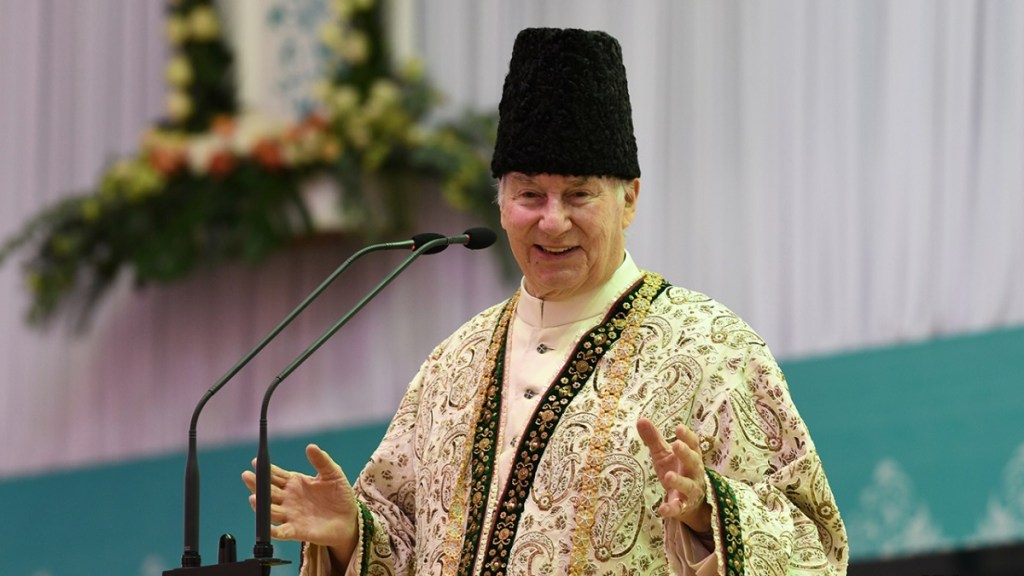





 Shariffa Keshavjee is a philanthropist and an entrepreneur with an objective to help women empower themselves. Raised in Kisumu, she considers herself a “pakaa” Kenyan. She is now based in the nation’s capital, Nairobi. She is the founding member and director of the Hawkers Market School and the Kigera Girl Guides Centre which provide educational opportunities for destitute girls in the country’s slums. Her Hawkers Market Girls Centre has been the recipient of the World Bank Development Marketplace Award in 2004 in which the centre was given $85,000. In addition, she is also the founding member of FONA (Friends of the Nairobi Arboretum) which is dedicated to preserving Kenya’s forest and preserved arboreta. Her other interest is in visual arts where she delights in painting on wood, silk and porcelain using water colours, oils and acrylics. She also likes writing, especially for children, and bird watching.