Exclusive Photos by Jean-Marc Carisse: “Victorious Trudeau”, His Highness the Aga Khan and Liberal MP Yasmin Ratansi

LETTER FROM PUBLISHER

2015 1019 _0657 low-res

“Victorious Trudeau”
Justin Trudeau with wife Sophie Grégoire-Trudeau just as results from polling stations across the country confirmed a Liberal majority government. Photo: Jean-Marc Carisse. Copyright.

By Abdulmalik Merchant

“Victorious Trudeau” is the caption of this large, beautiful and poignantly touching photograph on the front window of Jean-Marc Carisse’s Studio Café located on Elgin Street in Ottawa. It’s a remarkable record of history in the making, as it was taken by Mr. Carisse in Montreal just as Mr. Justin Trudeau’s Liberal Party won the 2015 Federal Elections in Canada held on Monday, October 19th.

Countless other photos adorn the walls of the studio café Jean-Marc and his wife have lovingly and meticulously built on Elgin Street. Mr. Carisse, an award winning photographer (see profile below), has seen action around the world for more than forty years. From activists to artists, and singers to prominent world leaders, past and present, Carisse has the iconic figures as well as the common man well represented in his European inspired space that I call The Jean-Marc Carisse Museum of Photography.

SudioCafe&Gallery-MCarisse

Carisse Studio Cafe Photography Gallery on Elgin Street in Ottawa.

Ask Jean-Marc Carisse – the humble, lively and ever-joyous and smiling man – about the background and context of the photos, and he will oblige with details so rich, interesting and, sometimes, amusing that you will want to go back and look at the photos on the walls again and again.

Jean-Marc’s enormous collection include hundreds of photos of the 49th Ismaili Imam, His Highness the Aga Khan, in group settings. One that Carisse is particularly attached to, in which His Highness appears alongside former USA President Jimmy Carter and Cuban leader Fidel Castro, was taken at the funeral of Justin’s father, Prime Minister Pierre Trudeau. In this photo Justin, the loving son, and now Canada’s Prime Minister designate – he officially becomes the Prime Minister on November 4 – is seen resting his head on his late father’s casket. This is a truly remarkable and poignant photo taken in sadder circumstances.
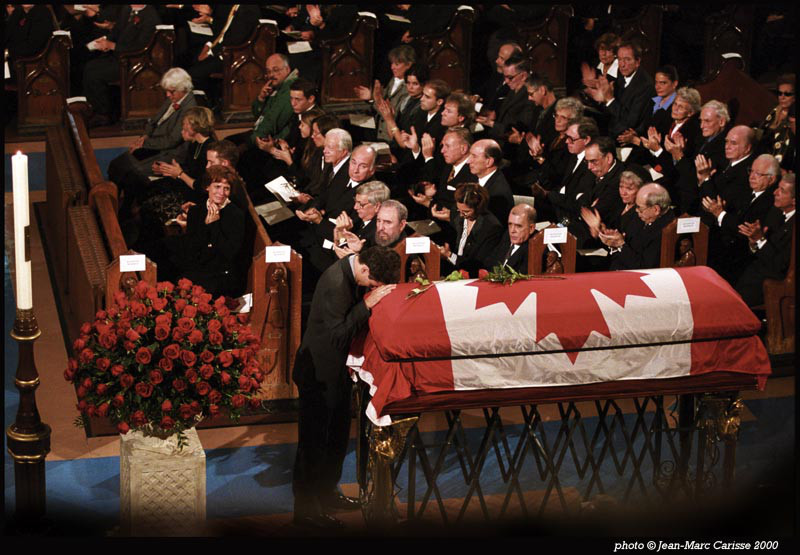
Pierre Trudeau FuneralThe photograph shows former Prime Minister Pierre Elliott Trudeau’s family, friends, colleagues, and official guests in attendance to observe his passing. His son, Justin, rests his head on the casket of his father. Margaret Trudeau is in the front pew with son, Alexandre. In attendance next to Cuban President Fidel Castro are former Governor-General Romeo Leblanc, His Highness Prince Karim Aga Khan and former U.S. President Jimmy Carter. Other notables present at the ceremony not shown in this photograph include past Canadian Prime Ministers John Turner, Joseph Clark, Brian Mulroney, and Jean Chrétien. Photo: Copyright Jean-Marc Carisse.

When I asked Mr. Carisse to create a special dropbox for me of the photos of His Highness, he gladly obliged for the photos that were electronically available which he had shot over the past 12 years or so. These photos were from the Ismaili Imam’s visits or meetings with Ministers who during the 2002-06 time frame headed the Department of External Affairs. The Liberals were in power at that time, and Ms. Yasmin Ratansi, an Ismaili Muslim, was the Liberal MP representing the Don Mills East constituency. She lost her seat in the 2011 Federal Elections to the Conservative member by less than 1,000 votes in what turned out to be a watershed election for the Liberals, who could only keep 34 seats out of 308. But last week in a major turn around, Ms Ratansi won the same riding by almost 10,000 votes, with Liberals increasing their count by a substantial margin to 184!

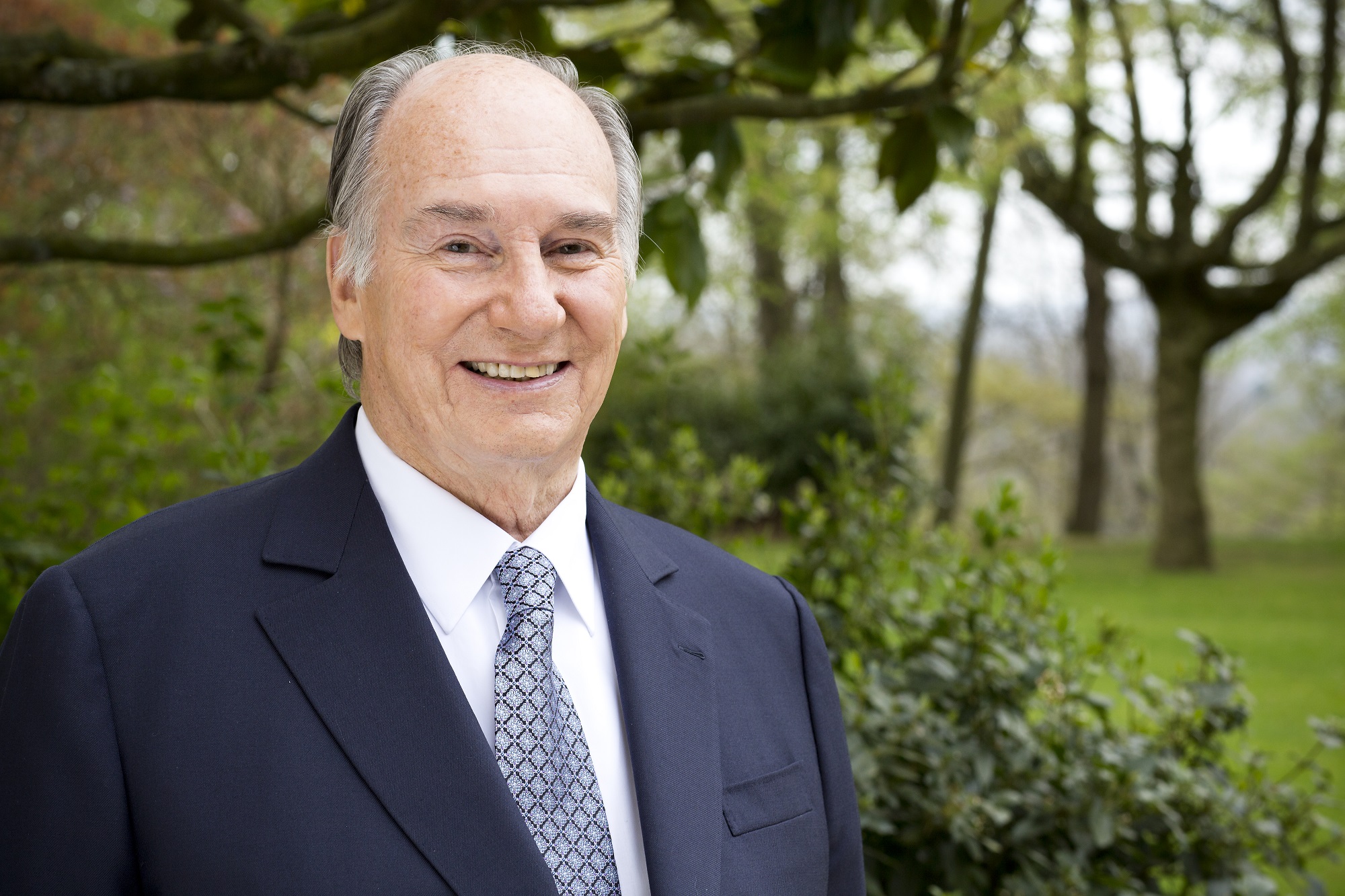
I wondered whether I might find Yasmin somewhere in the dropbox of thumbnails that Jean-Marc had set up for me. Indeed! I found her, and there were quite a few. I met with Jean-Marc Carisse late yesterday, Monday, October 26, to view the actual enlarged versions, out of which we selected a couple with two Ministers. Also Carisse shared a portrait of His Highness the Aga Khan (see below)

This is our little tribute to Ms. Ratansi who has worked hard for Canadians. Undaunted, this remarkable lady was not prepared to go into oblivion just because she and her party were defeated four years ago. She has come out strong, and we wish her well in the years to come in her service to the people of this great country.
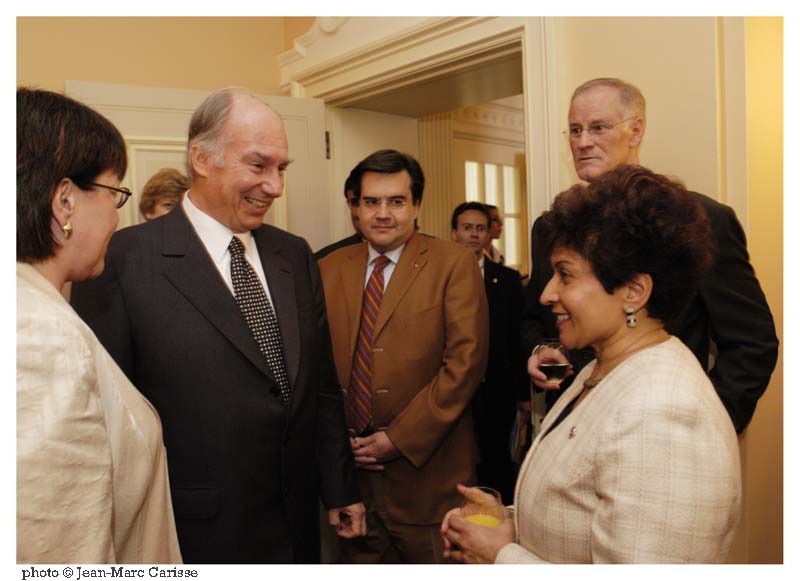
re, Bill Graham & Yasmin RatansiHis Highness the Aga Khan and Yasmin Ratansi (right) in a happy exchange with Canadian External Affairs Minister Bill Graham (2002-2004), looking on. Photo: Jean-Marc Carisse. Copyright.
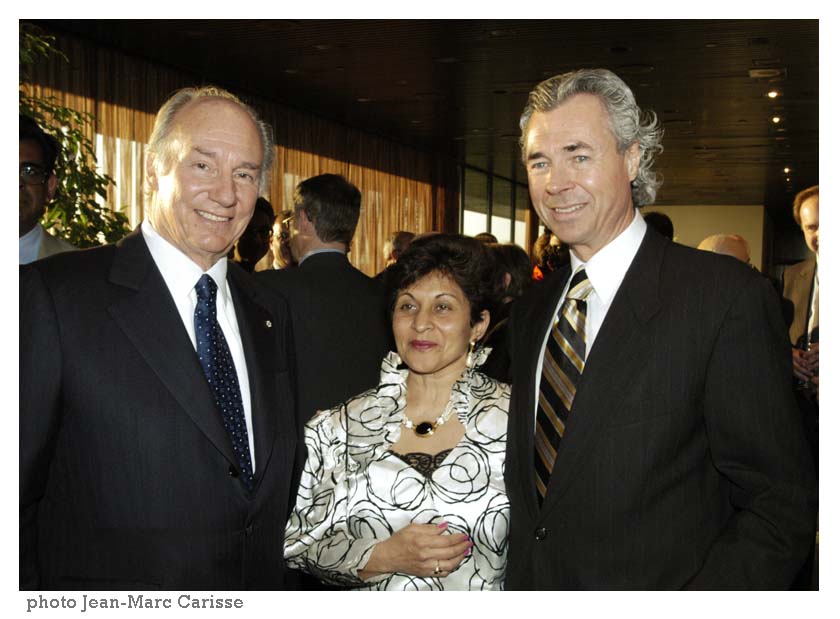
Marc Carisse 2005 0607 203His Highness the Aga Khan, MP Yasmin Ratansi and External Affairs Minister Pierre Pettigrew (July 2004 – February 2006). Photo: Jean-Marc Carisse. Copyright.

With regard to Mr. Justin Trudeau, who will officially become the Prime Minister on November 4, I might note that the relationship of the Ismaili Imamat with his family goes back more than 40 years, when the Liberal Government under Justin’s father, Mr. Pierre Trudeau, accepted thousands of Asian refugees including  Ismailis from Uganda.

Judging by the respect and warmth that Mr. Justin Trudeau has shown towards the Ismaili Imam and the Ismaili community, we expect that the fraternal bonds between the Ismaili Imamat and Canada will continue to remain strong, as they have been under the leadership of Prime Minister Stephen Harper and other Prime Ministers  before him.
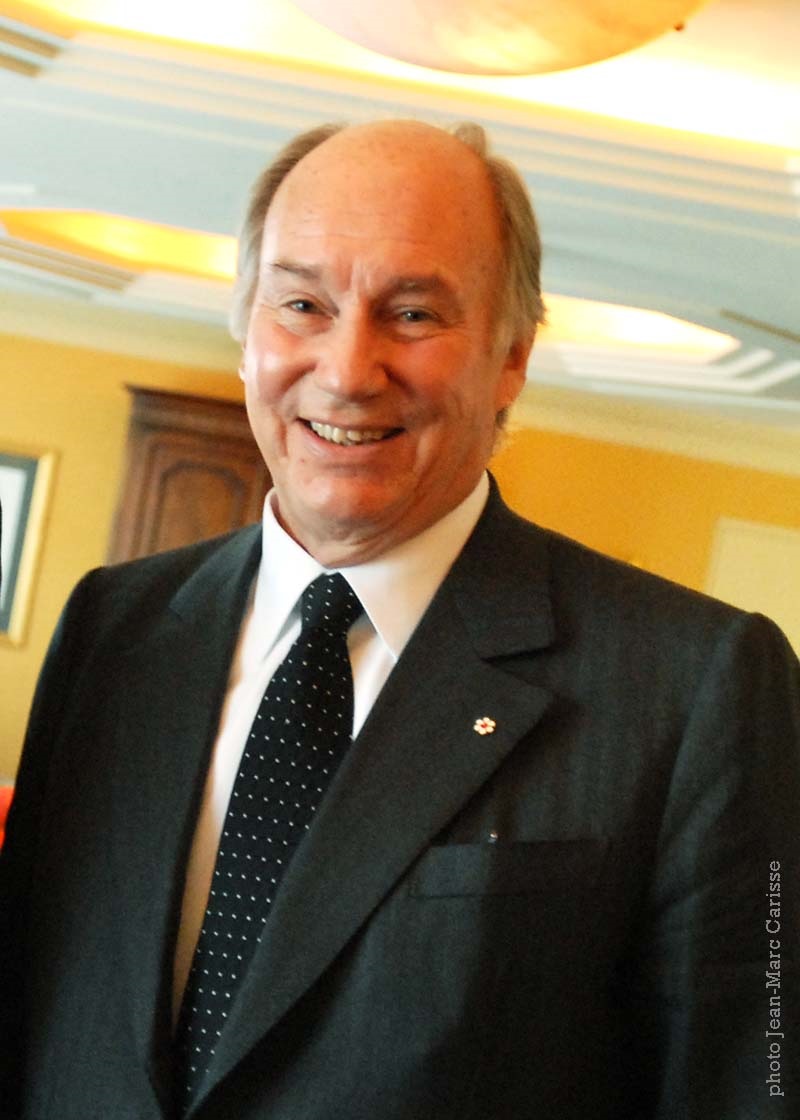
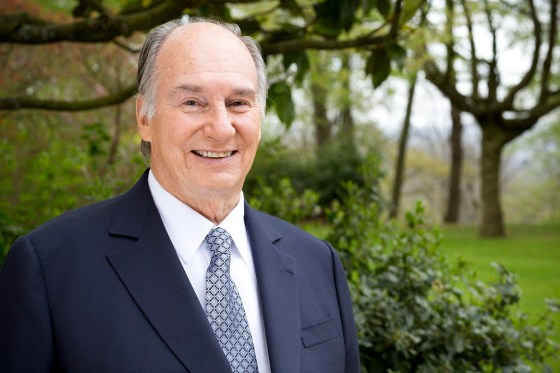
Aga Khan by Jean-Marc CarisseHis Highness the Aga Khan. Photo by Jean-Marc Carisse. Copyright

We wish Mr. Justin Trudeau and his  Liberal Government the very best to serve this country well, and to lead the country to loftier heights. The Ismaili community, as ever, will continue to excel in its commitment to this magnificent country in all spheres of human endeavour, under the guidance of their beloved Imam, His Highness the Aga Khan, who asked his Ismaili followers in 1978 to make Canada their permanent homes.

We conclude by mentioning that the Diamond Jubilee (60th Imamat Day Celebrations) of His Highness the Aga Khan will be celebrated in July 2017, at the same time that Canada celebrates its 150th anniversary. We look forward to celebrating these two great milestones in Canadian and Ismaili history under the leadership of Prime Minister Justin Trudeau.

Date posted: Tuesday, October 27, 2015.
Last updated: October 28, 2015.

Please also visit Simerg’s photoblog at http://www.simergphotos.com for an enhanced version of this piece containing additional photos of His Highness the Aga Khan. _______________

We invite your feedback – please click Leave a comment.

Jean-Marc CarisseAward winning photographer, Jena Marc Carisse has photographed the political, cultural and social scenes in Ottawa and around the world for over 40 years.  He was official photographer for the Prime Minister’s Office for many years serving Prime Ministers Trudeau, Turner and Chrétien, as well as serving Official Opposition Leaders Bill Graham, Stéphane Dion and Michael Ignatieff. He’s also photographed consecutive Prime Ministers from Diefenbaker to Harper, US Presidents from Ford to Obama and hundreds of world leaders. Many of his photographs have appeared on the covers and pages of history and political books (including his own coffee table book “Privileged Access w/ Trudeau, Turner & Chrétien” by Warwick Publ. 2000),  magazines including Time, Paris Match and Maclean’s, as well as TV documentaries and biographies.

Aleppo and Its Majestic Citadel: Chilling Reports from the Current Civil War, and 14th Century Narratives by Ibn Batutta

I. THE HARSH REALITIES OF ALEPPO TODAY

(A). Syria’s Most War-Torn City by Newsweek Magazine

(Note: Newsweek’s story, accessible by clicking on the first image shown below, contain graphic images and may disturb some readers. Discretion is advised).

“Longer even than the journey from Damascus to Aleppo is the time it takes to get from one end of Aleppo to the other. Moving from the east to the western side of the city once took only a short bus ride. Now it involves navigating a labyrinth of side roads and as many as 20 checkpoints; an endurance test that can last between 10 and 16 hours” — James Harkin for Newsweek, August 19, 2015. Please click on Newsweek – Syria’s War Torn City or click on image below for Harkin’s full report.

A sergeant in Lewa Salaheddin, a Kurdish battalion of the Free Syrian Army, sits in front of a block of destroyed buildings in Aleppo, Syria on December 6, 2012. It’s more than three years since the fight for Aleppo began. By late 2012, parts of the city were already in ruins. Patrick Tombola/laif/Redux

A sergeant in Lewa Salaheddin, a Kurdish battalion of the Free Syrian Army, sits in front of a block of destroyed buildings in Aleppo, Syria on December 6, 2012. It’s more than three years since the fight for Aleppo began. By late 2012, parts of the city were already in ruins. Patrick Tombola/laif/Redux

_______________

(B). A Resident’s Account of Aleppo’s Humanitarian Crisis and the Fear for its Historic Citadel

Editor’s note: The following excerpts are from the website of the Centre for Research and Globalization based in Montreal. For a full account published on July 25, 2015, please click on Global Research – Aleppo’s Humanitarian Crisis.

“Aleppo city has shrunk to a fifth of its original site. I walk everyday in the city. I see children and girls without limbs because of a mortar over here or shrapnel over there that hit them randomly and caused them a terrible wounds and horrific memories that will never leave them. The girl who lost one leg is standing on her good leg and selling bread, while the little boy who lost one arm is selling chewing gum. Those are the “injured” people who come in the news, just numbers in one line of a report, after each attack from the terrorists. “Injured” doesn’t mean scratched or having a bleeding finger; it means someone lost his eyes or her limbs.”

continued…

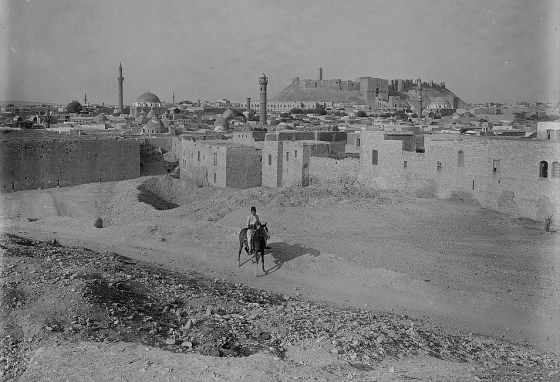
Aleppo and its castle from South West. Created/Published between 1898 and 1946. Photo: USA Library of Congress Collection, Gift Episcopal Home; 1978.

Aleppo and its castle from South West. Photo taken in 1898, and created/published
between 1898 and 1946. Photo: USA Library of Congress Collection, Washington, D.C.

“The last symbol left of Aleppo, is the most famous one: the Citadel. I can see part of it from our balcony, but I can see it more clearly from the roof of the building….It has been badly injured, but it’s still there, dominating the city skyline. It’s where they found the Storm God’s Temple a few years ago. It withstood many invaders, including the Mongols and Crusaders. It has been damaged severely several times through history, but it has been rebuilt over and over again, as an immortal symbol to the inhabitants of one of the oldest living cities in history. I just pray I don’t live to witness its total destruction as I have seen happen to many of the surrounding buildings.”

________________

II. IBN BATUTTA’S 14TH CENTURY DESCRIPTION OF ALEPPO AND ITS CITADEL

The Citadel of Aleppo is a large medieval fortified palace in the centre of the old city of Aleppo, northern Syria. It is considered to be one of the oldest and largest castles in the world. Usage of the Citadel hill dates back at least to the middle of the 3rd millennium BC. Subsequently occupied by many civilizations including the Greeks, Byzantines, Ayyubids and Mamluks, the majority of the construction as it stands today is thought to originate from the Ayyubid period. An extensive conservation work has taken place in the 2000s by the Aga Khan Trust for Culture in collaboration with Aleppo Archeological Society. Dominating the city, the Citadel is part of the Ancient City of Aleppo, a UNESCO World Heritage Site since 1986. The Citadel has received significant damage in the ongoing Syrian Civil War. Photo and caption: Wikipedia.

The Citadel of Aleppo is a large medieval fortified palace in the centre of the old city of Aleppo, northern Syria. It is considered to be one of the oldest and largest castles in the world. Usage of the Citadel hill dates back at least to the middle of the 3rd millennium BC. Subsequently occupied by many civilizations including the Greeks, Byzantines, Ayyubids and Mamluks, the majority of the construction as it stands today is thought to originate from the Ayyubid period. An extensive conservation work has taken place in the 2000s by the Aga Khan Trust for Culture in collaboration with Aleppo Archeological Society. Dominating the city, the Citadel is part of the Ancient City of Aleppo, a UNESCO World Heritage Site since 1986. The Citadel has received significant damage in the ongoing Syrian Civil War. Photo and caption: Wikipedia.

An Introduction to Ibn Batutta

“No intelligent man,” wrote Ibn Djuzayy, the scribe to whom Ibn Batutta (also Batutah etc) dictated his memoirs, “can fail to see that this sheikh is the traveller of the age.” But Ibn Batutah (1304-1368 or 1377) was not only the greatest Arab traveller of the Middle Ages, he was one of the greatest travellers of all time. At the age of twenty-one, he set out from his birthplace, Tangiers (Morocco), and started his travels by undertaking the pilgrimage to Mecca. This was the start of thirty years of wandering during which he would travel almost 120,000 kilometres that would take him halfway round the world as far as China. His account of his travels (the Rihla), in addition to its literary value, gives a panoramic picture of the 14th-century world.

If there are historical inaccuracies in Ibn Battuta’s writings, they are largely attributable to the pronounced taste for the bizarre which was characteristic of the age, and to the loss of his notebooks during a pirate attack in the Indian Ocean.

But errors or exaggerations do not detract from the value of Ibn Battuta’s narrative which is written in a direct, straightforward style punctuated by observations which are not without humour. His entertaining story has been translated, wholly or in part, into some 15 languages and ranks among the masterpieces of Arabic literature.

Ibn Batutta on Aleppo and Its Citadel

From Sermin we proceeded to Haleb (Aleppo), a large city and splendid metropolis. This is how Abulhossein the son of Jobeir described it:

“This city is of enormous worth and its fame will last forever. Kings have often sought to possess it and men have been impressed by its importance. What a number of battles it has provoked, and what a quantity of shining words have been unsheathed for it! Its fortress is renowned for its power and its height is clearly to be seen. No one dared attack it because of its strength, or if they did they did not conquer it.

“The sides are of freestone and its proportions are full of symmetry. It has outlasted the days and the years and has seen nobles and beggars carried to their last resting-places. Where are the Hamdanite princes and their poets now? They are no more, and only the buildings remain. Oh wonderful city! It endures, but its owners have passed on. They have perished but its hour has not come. It was sought for after them and taken without great difficulty. It was coveted and won at the smallest cost.

Such is this city of Aleppo. How many of its kings has it not changed into a past tense (expression borrowed from grammar) and how many vicissitudes has it not defied because of its position! Its name was made in the feminine gender, it was adorned with the finery of a chaste virgin, it succumbed to the victor as others have done. It shone like a young bride after the sword (seif) of its dynasty, Ibn Hamdan (a reference to Prince Seif eddaoulah).

Alas! its youth will pass, it will be no longer desired, only a short while and it will be destroyed.”

continued….

Aleppo from castle. Photo taken in 1898, created/published between 1898 and 1946. Credit: Library of Congress Prints and Photographs Division, Washington, D.C.

Aleppo from castle. Photo taken in 1898, created/published between 1898 and 1946. Credit: Library of Congress Prints and Photographs Division, Washington, D.C.

The fortress of Aleppo is called Ash shahba (the grey one). Within it there are two wells from which water gushes, and there is no fear of thirst there. The castle is surrounded by two walls, there is a great moat from which water rises, and its wall has many towers standing close together. This fortress encloses marvellous chambers pierced with windows. All the towers are occupied and in this fortified castle food is not impaired by the passage of time.

There is a sanctuary which is visited by many people, and it is said that Abraham prayed there to God. This fortress resembles the one called Rahbet (square of) Malik Ibn Thaouk, near the Euphrates, between Syria and Iraq. When the Tartar tyrant Kazan marched against the city of Aleppo, he besieged this fortress for many days. Then, frustrated in his desire to take it, he withdrew. Ibn Jozay says: Alkhalidy, the poet of Seif eddaoulah, writes as follows about this fortress:

“With its high belfry and invincible flanks, it is a vast, grim place which rises up against him who would take it.

“The atmosphere spreads a layer of cloud over this place and adorns the castle with a necklace of brilliant stars.

“When lightning flashes in the night this fortress appears through its interstices, shining like the constellation of the Virgo through the openings in the clouds.

“How many armies has this castle not destroyed and how many conquerors has it not put to flight!”

The same poet also speaks of the castle in the following admirable verses:

“It is a citadel whose base embraces the springs of water, and its summit is higher  than Orion’s Belt.

“It knows no rain, because for it the clouds are a ground,  whose sides are trodden by its cattle.

“When the cloud has given water in abundance, he who lives in the fortress uses all the water in his tanks before its summits are moistened.

“Its belvedere would be counted amongst the stars of the heavens if it passed through their orbits.

“The cunning of this fortress has repulsed the tricks of its enemies and the evils it caused were greater than theirs.”

Here is what Jemal eddin Ali, the son of Abulmansur, has to say about this castle:

“Because of its enormous height and the point which its summit attains, this castle nearly stops the celestial sphere that turns around the earth.

“Its inhabitants have gone to the Milky Way as to a watering place and their horses have nibbled the stars as though grazing on flowering plants.

“The vicissitudes of time turn from it in fear, and for this castle there is no change.”

Date posted: August 22, 2015.

____________________

Editor’s note: The above introduction to Ibn Batutta and his narratives on Aleppo and its Citadel have been adapted from the January 1986 issue of The Unesco Courier which was dedicated to Treasures of World Literature. Please visit http://www.unesco.org/new/en/unesco-courier/.

We welcome your feedback. Please click on Leave a comment.

___________________

FORTHCOMING PHOTO AND LITERARY PIECES ON SIMERGPHOTOS AND SIMERG

  • “Prayer Halls of Badakhshan Through the Lens of Muslim Harji,” to be published week of August 24th, 2015 on Simerg’s photo blog, http://www.simergphotos.com
  • “Naklanki Geeta – Quantum Mechanics in Ginans” by Shiraz Pradhan, to be published week of September 7th, 2015 on this website, http://www.simerg.com.

@Simergphotos: The Silk Road Through the Lens of Muslim Harji and the Smithsonian Folklife Festival

Simergphotos presents An Anthology of the Silk Road Through the Lens of Muslim Harji and Smithsonian’s Folklife Festival with magnificent photos taken by Harji during his recent visits to the iconic Silk Road cities of Samarkand and Bokhara in Uzbekistan. Then the post steps back in time and brings you wonderful memories from the Smithsonian Institution’s Annual Folklife Festival held in Washington D.C. in 2002, which was entirely dedicated to one single subject: The Silk Road. The post contains photos from the opening day, which was attended by His Highness the Aga Khan, as well as an excellent thematic anthology covering many aspects of the exciting Silk Road!…More at Simergphotos.

Please click on image for Silk Roads Photo Essay.

Please click on image for Silk Roads Photo Essay.

PLEASE CLICK: An Anthology of the Silk Road Through the Lens of Muslim Harji and Smithsonian’s Folklife Festival

Mawlana Hazar Imam at the Silk Roads Festival in Washington D.C. IN 2002. Please click for more photos.

Mawlana Hazar Imam at the Silk Roads Festival in Washington D.C. IN 2002. Please click for more photos.

Iran Nuclear Deal Sealed: Prayers Answered in Holy Month of Ramadan, Says President Hassan Rouhani

1. MAWLANA HAZAR IMAM HAD ADVOCATED THE PRINCIPLE OF “YES TO ENERGY, NO TO ARMS” SEVERAL YEARS AGO

Mawlana Hazar Imam, His Highness the Aga Khan, 49th hereditary Imam of Shia Ismaili Muslims  directly descended from the Holy Prophet Muhammad (s.a.s.). Photo: AKDN/Anya Campbell. Copyright.

Mawlana Hazar Imam, His Highness the Aga Khan, 49th hereditary Imam of Shia Ismaili Muslims  Photo: AKDN/Anya Campbell. Copyright.

“We are a long way from the democratization of nuclear energy. Maybe I’m naïve but I advocate another approach, which I call “positive proliferation.” The positive proliferation that I would dearly love to see happen is based on a simple principle: yes to energy, no to arms….Iran could even contribute to the worldwide removal of nuclear energy for military use. That is what I told the Iranians several years ago: “Your history is that of an intellectual nation several thousand years old which has brought to Islam all the richness of its culture and its philosophical thought. Keep following the path that is truly your own and the world will thank you for it.” — His Highness the Aga Khan. Please read complete interview by clicking on The Power of Wisdom.

________

2. TRIUMPH IN DIPLOMACY

President Hassan Rouhani

 I. President Hassan Rouhani

“Today is a new chapter to work towards growth and development of our dear Iran; a day for our youth to dream again for a brighter future. Many people prayed for the negotiating team during the holy month of Ramadan; I’m privileged to announce their prayers have been answered…This agreement goes both ways. The successful implements of IranDeal can dismantle the wall of mistrust brick by brick.” — Tweets by the President of the Islamic Republic of Iran

I am happy that with the 23-month nuclear talks of Iran with the world six major powers, we have today been able to reach a new point; of course the month of Ramadan has always been source of blessing and destiny making for the 11th Government…The 25th of the month of Ramadhan in the year 1392 [A.H.] was the year of taking presidential oath; the 26th of the month of Ramadhan that year was the swearing-in ceremony and today, it is the day of Iran’s success to bring the six world powers to the Comprehensive Joint Plan of Action.” — Speech Excerpt, President Rouhani, http://www.president.ir/en/

II. The Guardian, UK

“This accord, so long in the making, offers the hope that one of the world’s great civilisations might be drawn back into the international community, with untold benefits not only for Iranians but for its conflict-ravaged neighbours. The opportunity should be seized.” —  Editorial excerpt, http://www.theguardian.com, UK Edition

3. THE NEGOTIATIONS

Secretary of State John Kerry

US Secretary of State

“And I finally want to express my deep respect for the serious and constructive approach that Iran’s representatives brought to our deliberations. The president of Iran, President Rouhani, had to make a difficult decision. We all know the tensions that exist. Foreign Minister Javad Zarif, a tough, capable negotiator, and patriot, a man who fought every inch of the way for the things he believed, and sometimes these were heated and passionate exchanges. But he and his team, while tough, always professional, always dedicated to finding solutions to difficult problems. And we were, both of us, able to approach these negotiations with mutual respect, even when there were times of a heated discussion, I think he would agree with me at the end of every meeting we left with a smile and with a conviction that we were going to come back and continue the process. We never lost sight of the goal that an agreement could bring and the best long-term interests of all concerned” — US Secretary of State, John Kerry

4. IRANIANS CELEBRATE HISTORIC DEAL

Horns honked and flags waved here as darkness fell Tuesday and the Ramadan fast was broken as Iranians marked the nuclear deal reached between Iran and the six world powers led by the US. For the first time in years, they relished the prospect of an improved economy and reengagement with the West.

Narjes Sedaghatfar, a math teacher who voted for Rouhani but has kept expectations in check until now said, “The button has been pressed, we are beginning anew. I will be at home, and just be happy and plan for a happy future. When hope rises, that is celebration in itself.” — From reports in the Christian Science Monitor, http://www.csmonitor.com.

Date posted: July 15, 2015

____________________

We welcome your feedback. Please click Leave a comment.

History in the Making: Establishment of the Seat of the Ismaili Imamat in Portugal

COMPILED BY SIMERG

Please click on photo for enlargement

Mawlana Hazar Imam, His Highness the Aga Khan, 49th hereditary Imam of Shia Ismaili Muslims  directly descended from the Holy Prophet Muhammad (s.a.s.). Photo: AKDN/Anya Campbell. Copyright.

A portrait of Mawlana Hazar Imam, His Highness the Aga Khan, 49th hereditary Imam of Shia Ismaili Muslims. Photo: AKDN/Anya Campbell. Copyright.

In an unprecedented historical event, His Highness Prince Karim Aga Khan, the 49th hereditary Imam of the Shia Imami Ismaili Muslims, and Portugal’s Minister of State and Foreign Affairs, Rui Machete, came together at the historic Necessidades Palace in Lisbon on Wednesday June 3, 2015, to sign a landmark agreement to establish the Seat of the Imamat in Portugal. The Ismaili Imamat is a supra-national entity, representing the succession of Imams since the time of the Prophet Muhammad (s.a.s).

The Agreement marks the first such accord in the Ismaili Imamat’s modern history. It will come into effect once it has been approved by Portugal’s Parliament and ratified by the President of the Portuguese Republic. Present at the signing ceremony was Portugal’s Prime Minister Pedro Passos Coelho and other senior government officials.

Thanking the government for inviting the Ismaili Imamat to establish its permanent seat in Portugal, His Highness the Aga Khan (known to his 15 millions Ismaili followers as Mawlana Hazar Imam), hailed the agreement as a historic milestone in the Imamat’s history and said:

“Today is a unique and important occasion, where for the first time in our history we will have the opportunity to work with a partner with whom we share so many values, so many hopes and so many desires.”

He expressed the hope that the agreement would be approved by the Portuguese Parliament  through the democratic process, and that once it was ratified both the Imamat and Portugal could work together to achieve results that could not be achieved by working alone. His Highness also mentioned his community’s great respect and admiration for Portugal, a country where faith is integrated with civil society, a country where all people are happy, or at least the majority are happy, in a world where happiness is unusual.

The agreement establishing Portugal as the seat of Imamat took place at the Palace of Necessidades. It  is a historical building in the Largo do Rilvas, a public square in Lisbon, Portugal. It serves as headquarters of the Portuguese Foreign Ministry. Palace Photo Photo: Wikipedia.

The agreement establishing Portugal as the seat of Imamat took place at the Palace of Necessidades. It is a historical building in the Largo do Rilvas, a public square in Lisbon, Portugal. It serves as headquarters of the Portuguese Foreign Ministry. Palace Photo: Wikipedia.

The Institution of the Ismaili Imamat goes back 1400 years when, according to Shia Muslim tradition, the Prophet Muhammad (s.a.s.) designated and appointed his cousin and son-in-law Ali Ibn Talib (a.s.) to be the first Imam, and proclaimed that the Imamat should continue by heredity through Imam Ali and his daughter Bibi Fatimat-az-Zahra (a.s).

The Ismailis are the only Shia Muslim community led by a living Imam who is vested with global religious authority and has the responsibility for the community’s spiritual and material well-being.

The succession of Imamat is by way of Nass [designation], it being the absolute prerogative of the current Imam to appoint his successor from amongst any of his male descendants whether they be sons or remoter issue.

The present 49th Imam, Prince Karim, succeeded to the throne of Imamat at the age of twenty on July 11, 1957 upon the demise of his late grandfather, Sir Sultan Mahomed Shah, His Highness the Aga Khan III, who  served the community for 72 years, beginning in 1885 when he was only seven years old.

The historical accord will result in intensified cooperation between Portugal and the Ismaili Imamat in supporting research and the knowledge society and in improving the quality of life of Portugal’s inhabitants.

Responding to the historic signing, the Portuguese Prime Minister Pedro Passos Coelho said at Wednesday’s ceremony:

“The decisive step taken today will enable the deepening of cooperation, until today essential focused on the social area, with the Imamat Ismaili community beginning to support Portuguese institutions dedicated to excellent research on a wide variety of fields of knowledge.

“I am present here today due to it being a historic moment which brings a long and intense relation existing between Portugal and the Ismaili community to a new level, reflecting particularly the importance of the Ismaili community that resides in our country and Portuguese speaking African countries.”

The Prime Minister also pointed out Mawlana Hazar Imam’s role in “promoting a more tolerant world,” and also said that the choice of Portugal as the seat of the Ismaili Imamat was an acknowledgment of the Portuguese community’s ability to promote dialogue and tolerance between peoples, cultures and beliefs.

@Simergphotos: The Aga Khan Park and Its Inauguration – Exclusive Photos

Please click: The Beautiful Aga Khan Park with Exclusive Photos of the Inauguration Ceremony 

Please click for exclusive photos of the opening of the Aga Khan Park. Photo: Simerg/Malik Merchant.

Please click for exclusive photos of the opening of the Aga Khan Park. Photo: Simerg/Malik Merchant.

Exclusive Simerg Photo Essay: His Highness the Aga Khan and Premier Kathleen Wynne Inaugurate the Beautiful Aga Khan Park in Toronto

PATRON AND BUILDER

Please click on photo(s) for enlargement

Mawlana Hazar Imam, His Highness the Aga Khan, 49th hereditary Imam of Shia Ismaili Muslims  directly descended from the Holy Prophet Muhammad (s.a.s.). Photo: AKDN/Anya Campbell. Copyright.

Mawlana Hazar Imam, His Highness the Aga Khan, 49th hereditary Imam of Shia Ismaili Muslims directly descended from the Holy Prophet Muhammad (s.a.s.), is the builder of the Aga Khan Museum, the Ismaili Centre and the newly opened Aga Khan Park that connects the two buildings. Photo: AKDN/Anya Campbell. Copyright.

______________

THE INAUGURATION CEREMONY

The recitation of the Canadian National Anthem at the opening of the Aga Khan Park on May 25, 2015. Photo: Simerg/Malik Merchant/Simerg. Copyright.

The recitation of the Canadian National Anthem at the opening of the Aga Khan Park on May 25, 2015. Photo: Simerg/Malik Merchant. Copyright.

______________

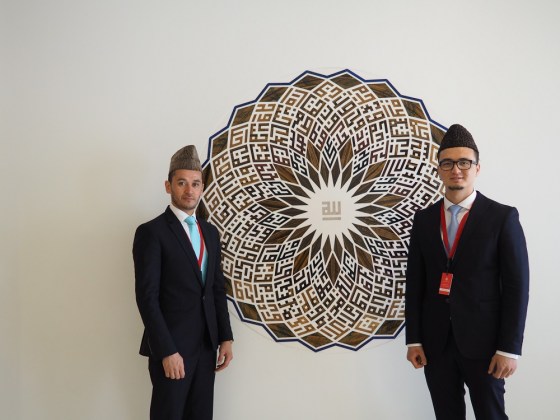
Qur'an reciter Ahsan Afzaly, left, with his back-up colleague, Edrees Amiri, pictured at the Ismaili Centre prior to the opening ceremony. Photo: Simerg/Malik Merchant.

Qur’an reciter Ahsan Afzaly, left, with his back-up colleague, Edrees Amiri, pictured at the Ismaili Centre prior to the opening ceremony of the Aga Khan Park on May 25, 2015. Photo: Simerg/Malik Merchant.

______________

The audience listen to the Ismaili Muslim Choir prior to the arrival of Premier Kathleen Wynne and Mawlana Hazar Imam for the opening ceremony of the Aga Khan Park on May 25, 2015. Photo: Simerg/Malik Merchant

The audience listens to the Ismaili Muslim Choir performing at the far left corner prior to the arrival of Premier Kathleen Wynne and Mawlana Hazar Imam for the opening ceremony of the Aga Khan Park on May 25, 2015. Photo: Simerg/Malik Merchant

______________

Mawlana Hazar Imam, Premier Kathleen Wynne and the reciter of the Holy Qur'an, Ahsan Afzally, look on as a translation of the Qur'anic verses in English and French is underway. Photo: Simerg/Malik Merchant. Copyright.

Mawlana Hazar Imam, Premier Kathleen Wynne and the reciter of the Holy Qur’an, Ahsan Afzally, look on as a translation of the Qur’anic verses in English and French is underway during the opening ceremony of the Aga Khan Park on May 25, 2015. Photo: Simerg/Malik Merchant. Copyright.

______________

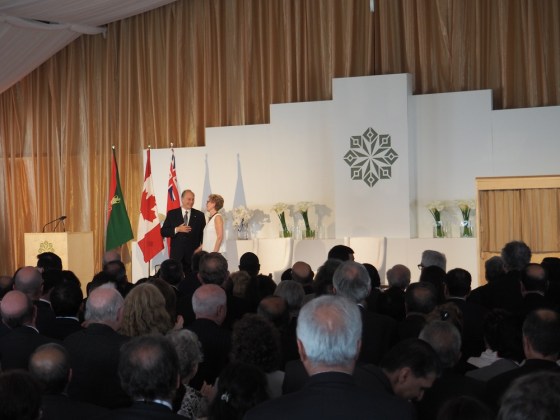
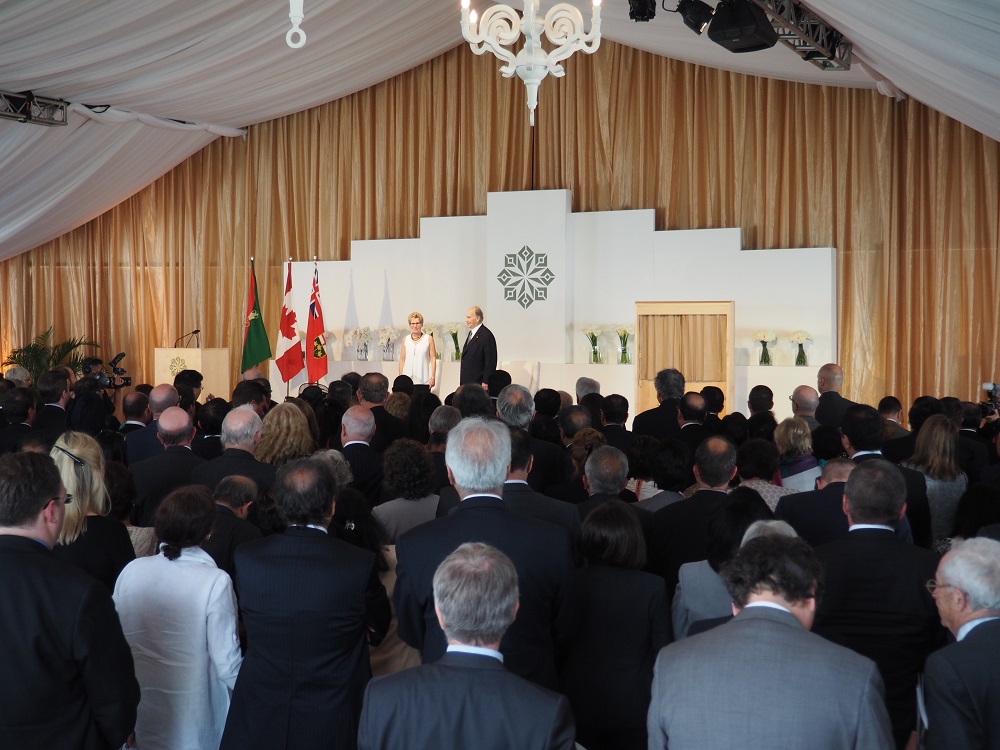
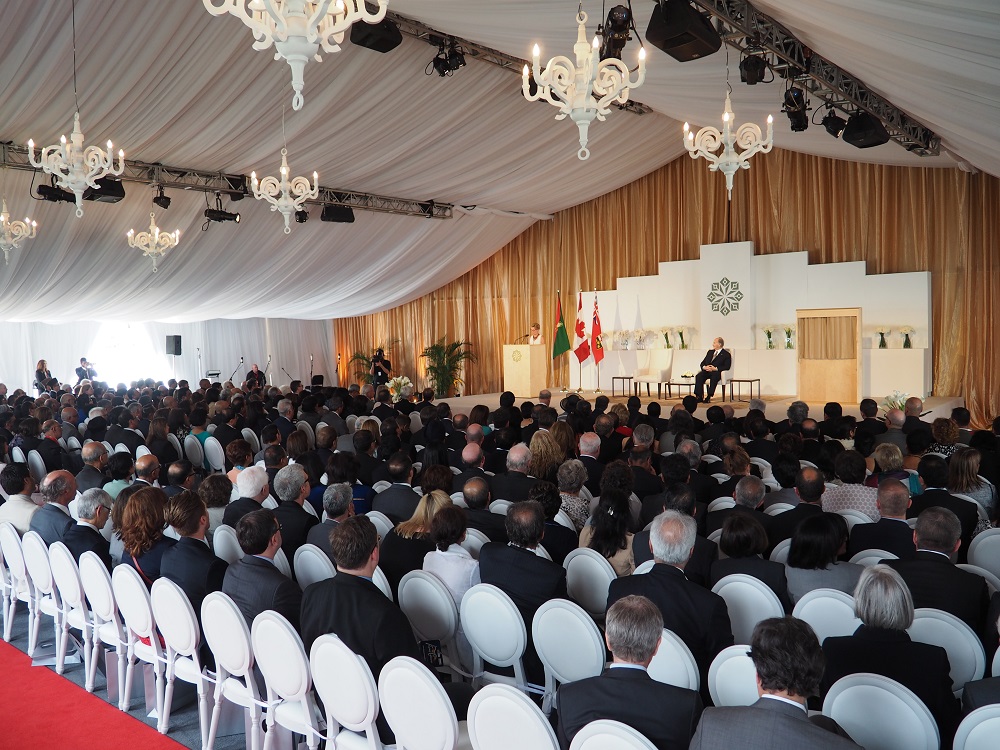
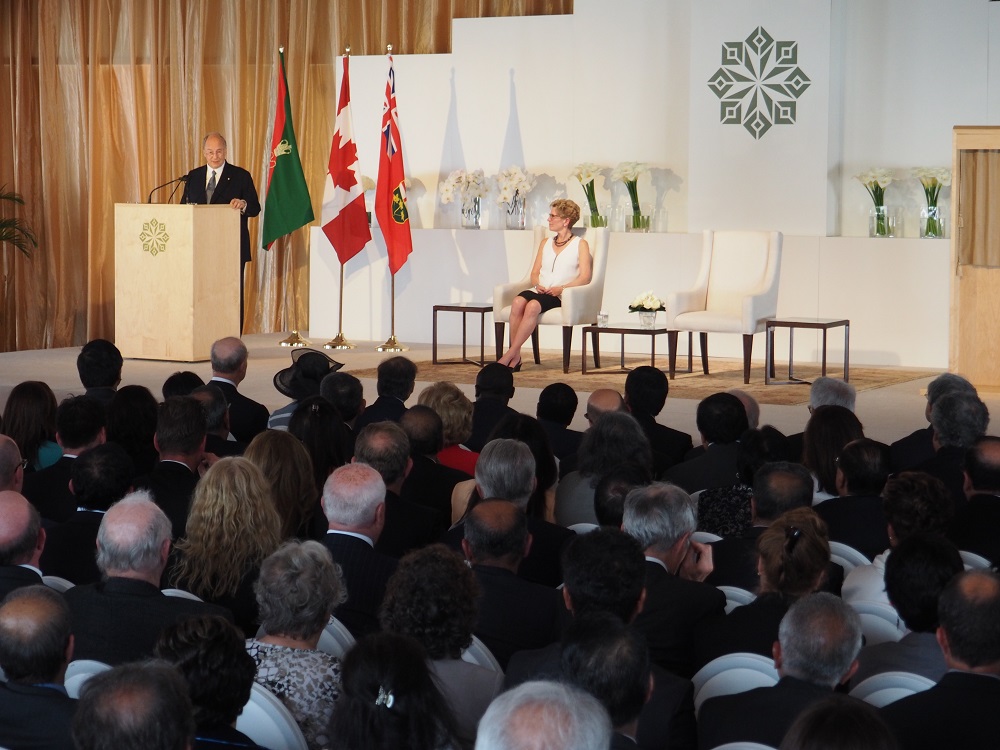
Premier Kathleen Wynne delivering her speech at the opening ceremony of the Aga Khan Park on May 25, 2015. This panoramic view shows the elegance of the event which was held inside a beautifully decorated tent built for the occasion. Photo: Simerg/Malik Merchant. Copyright.

Premier Kathleen Wynne delivering her speech at the opening ceremony of the Aga Khan Park on May 25, 2015. This panoramic view shows the elegance of the event which was held inside a beautiful tent built for the occasion. Photo: Simerg/Malik Merchant. Copyright.

______________

Mawlana Hazar Imam congratulates Premier Kathleen Wynne after the completion of her speech at the opening of the Aga Khan Park on May 25, 2015. Photo: Simerg/Malik Merchant. Copyright.

Mawlana Hazar Imam congratulates Premier Kathleen Wynne after the completion of her speech at the opening of the Aga Khan Park on May 25, 2015. Photo: Simerg/Malik Merchant. Copyright.

______________

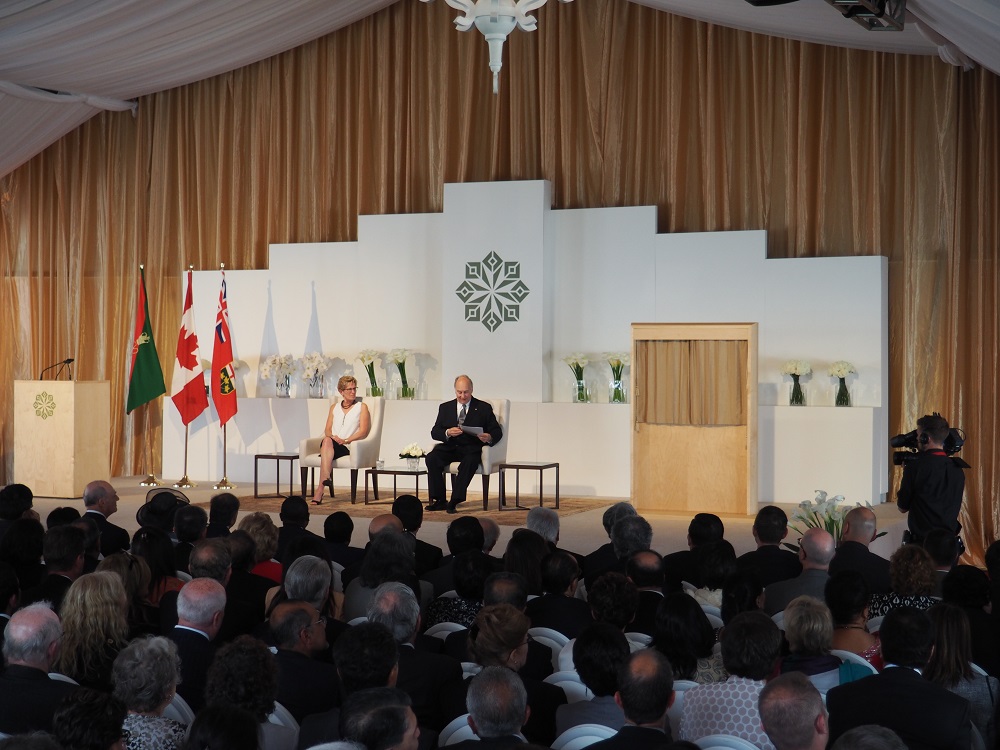
Mawlana Hazar Imam gathers his speech before rising to speak to the audience at the opening of the Aga Khan Park on May 25, 2015. Photo: Simerg/Malik Merchant. Copyright.

Mawlana Hazar Imam gathers his speech before rising to speak to the audience at the opening of the Aga Khan Park on May 25, 2015. Photo: Simerg/Malik Merchant. Copyright.

______________

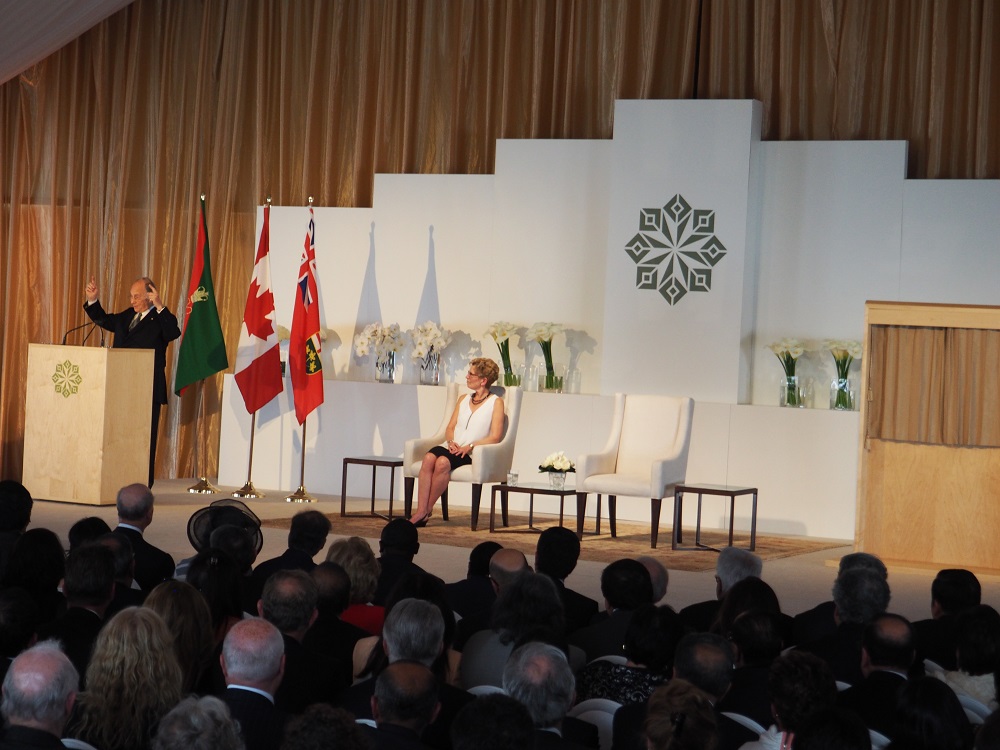
Mawlana Hazar Imam addressing the audience at the opening of the Aga Khan Park on May 25, 2015. Photo: Simerg/Malik Merchant. Copyright.

Mawlana Hazar Imam addressing the audience at the opening of the Aga Khan Park on May 25, 2015. Photo: Simerg/Malik Merchant. Copyright.

______________

Mawlana Hazar Imam in an animated mood as he shares a joke related to the expulsion of his community from Uganda during the reign of Idi Amin. Photo: Simerg/Malik Merchant. Copyright.

Mawlana Hazar Imam in an animated mood as he shares a joke related to the expulsion of his community from Uganda during the reign of Idi Amin. Photo: Simerg/Malik Merchant. Copyright.

______________

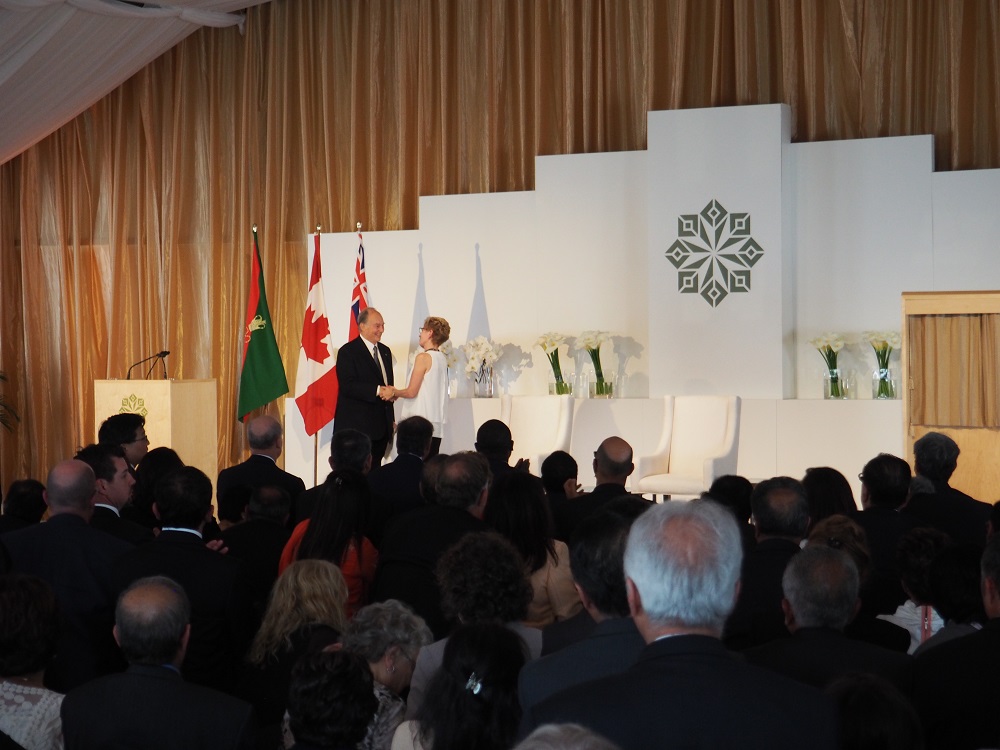
Mwlana Hazar Imam receives a standing ovation as he is congratulated by Premier Kathleen Wynne after the completion of his speech at the opening of the Aga Khan Park on May 25, 2015. Photo: Simerg/Malik Merchant. Copyright.

Mwlana Hazar Imam receives a standing ovation as he is congratulated by Premier Kathleen Wynne after the completion of his speech at the opening of the Aga Khan Park on May 25, 2015. Photo: Simerg/Malik Merchant. Copyright.

______________

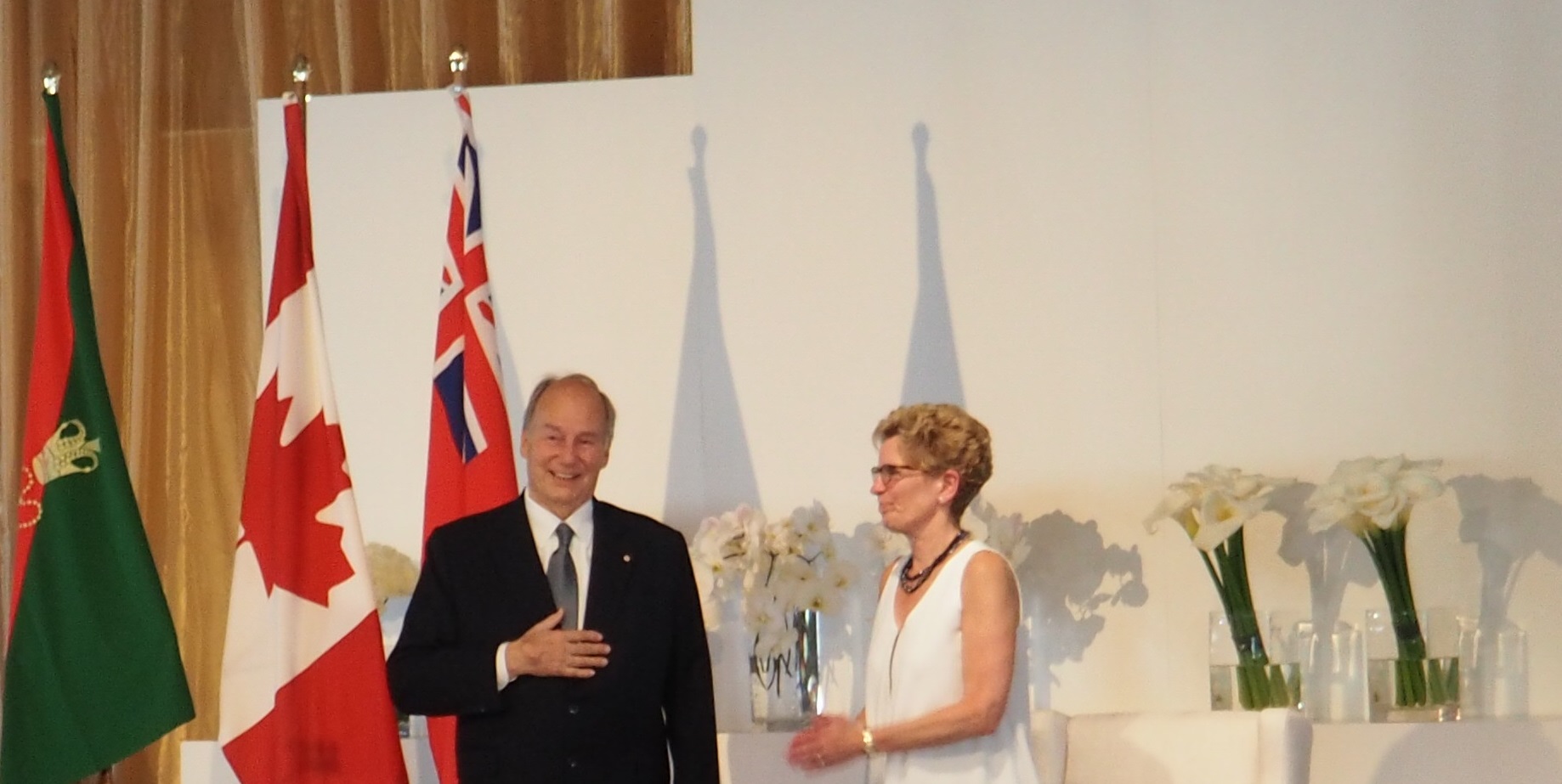
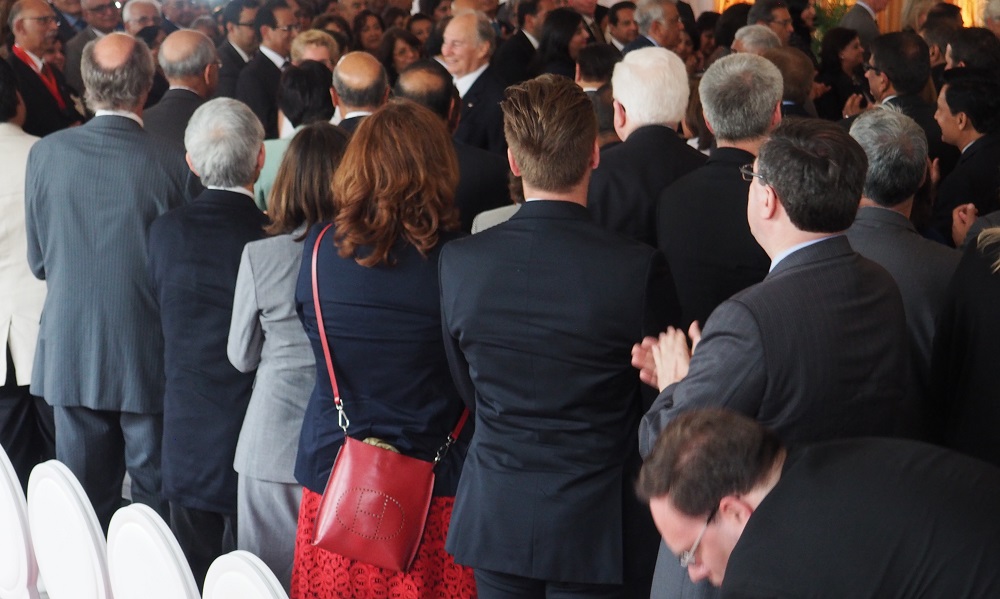
Mawlana Hazar Imam graciously accepts the standing ovation he receives after completing his speech at the opening of the Aga Khan Park on May 25, 2015. Photo: Simerg/Malik Merchant. Copyright.

Mawlana Hazar Imam graciously accepts the standing ovation he receives after completing his speech at the opening of the Aga Khan Park on May 25, 2015. Photo: Simerg/Malik Merchant. Copyright.

______________

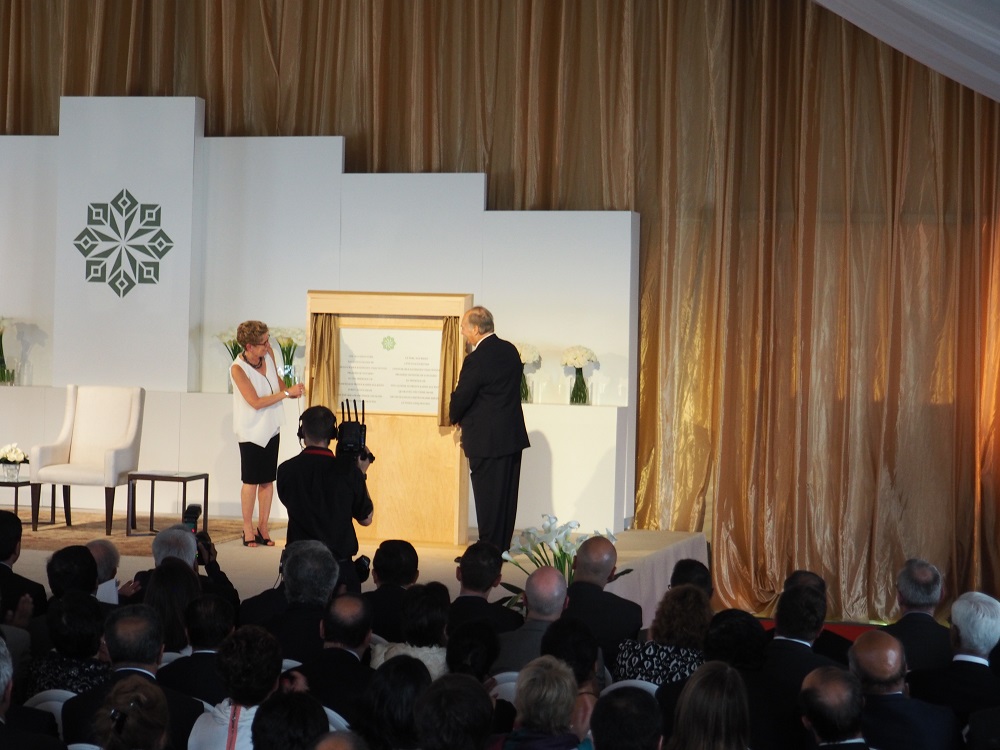
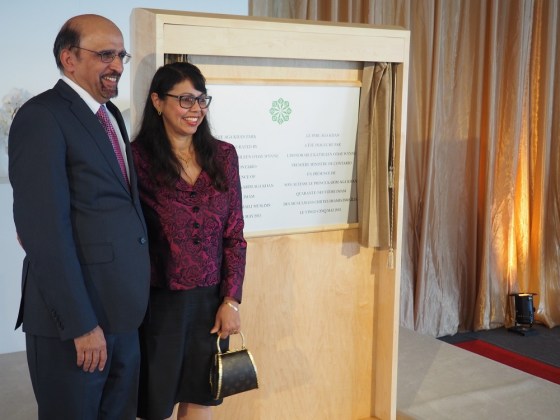
Premier Kathleen Wynne and Mawlana Hazar Imam unveil the plaque to officially open the Aga Khan Park on May 25, 2015. Photo: Simerg/Malik Merchant. Copyright.

Premier Kathleen Wynne and Mawlana Hazar Imam unveil the plaque to officially open the Aga Khan Park on May 25, 2015. Photo: Simerg/Malik Merchant. Copyright.

______________

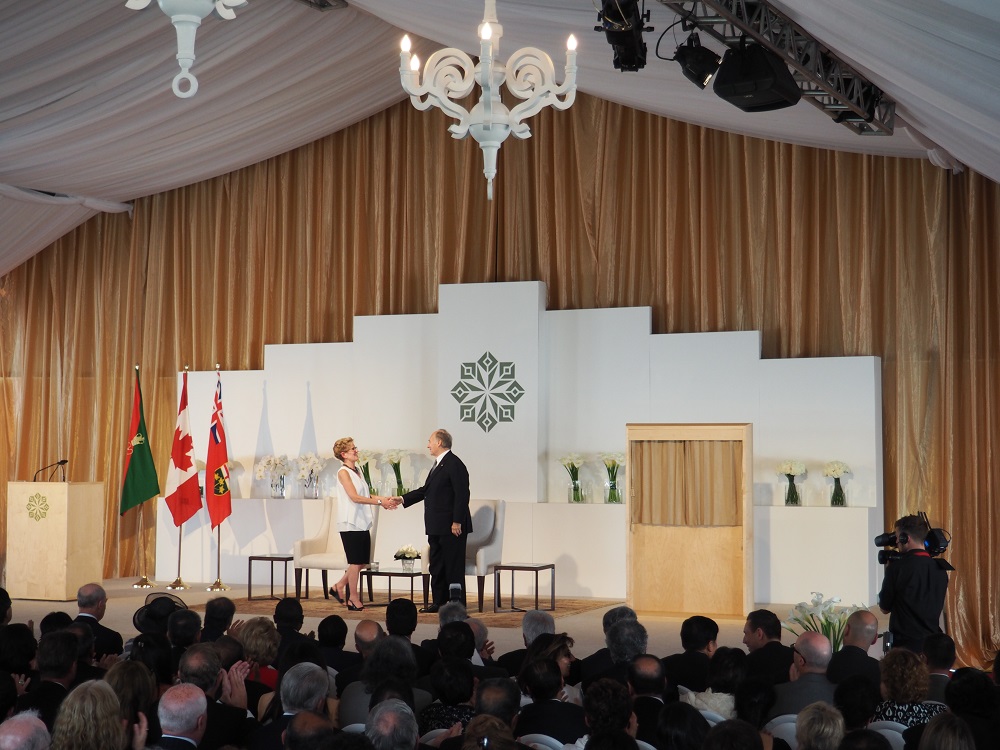
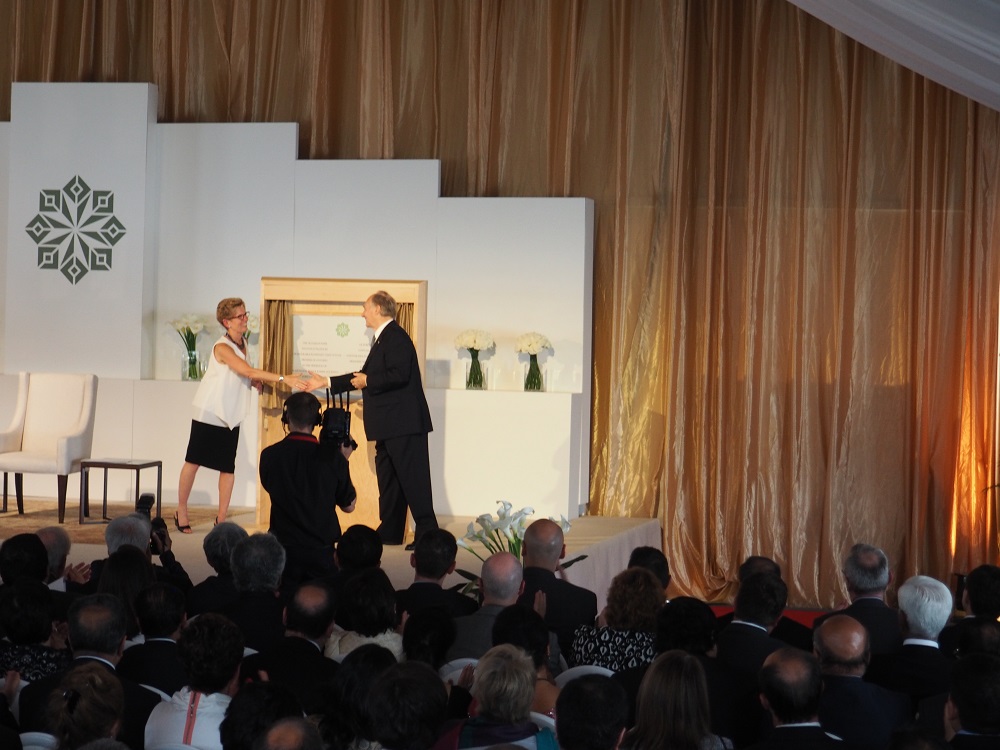
Premier Kathleen Wynne and Mawlana Hazar Imam shake hands after unveiling the plaque to open the Aga Khan Park on May 25, 2015. Photo: Simerg/Malik Merchant.

Premier Kathleen Wynne and Mawlana Hazar Imam shake hands after unveiling the plaque to open the Aga Khan Park on May 25, 2015. Photo: Simerg/Malik Merchant.

______________

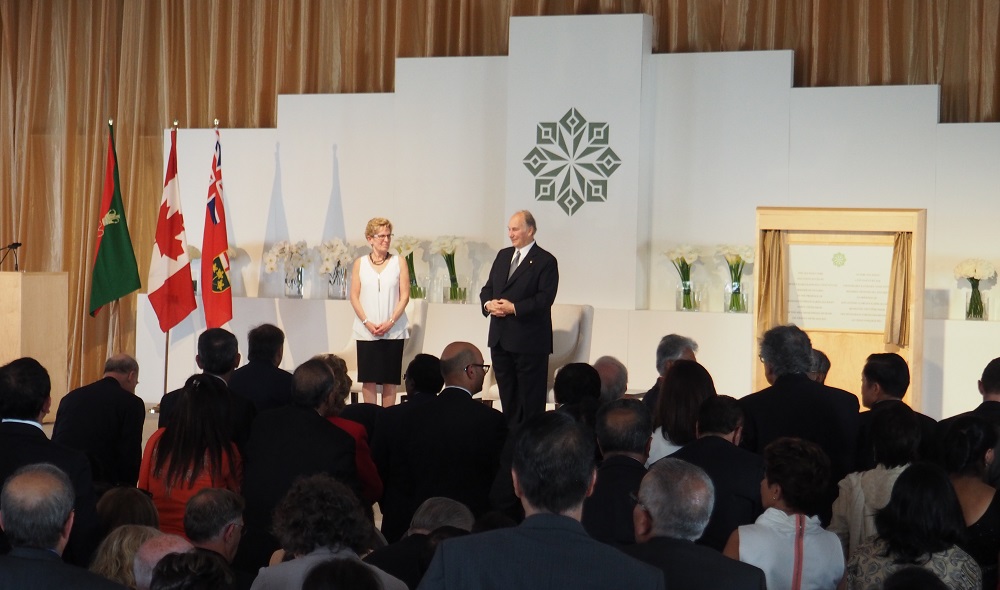
Mawlana Hazar Imam and Premier Kathleen Wynne prepare to depart after unveiling the plaque to open the Aga Khan Park on May 25, 2015. Photo: Simerg/Malik Merchant. Copyright.

Mawlana Hazar Imam and Premier Kathleen Wynne prepare to depart after unveiling the plaque to open the Aga Khan Park on May 25, 2015. Photo: Simerg/Malik Merchant. Copyright.

______________

Mawlana Hazar Imam seen departing the exquisitely prepared tent structure that hosted the inauguration ceremony of the Aga Khan Park on May 25, 2015. Photo: Simerg/Malik Merchant. Copyright.

Mawlana Hazar Imam seen departing the exquisitely prepared tent structure that hosted the inauguration ceremony of the Aga Khan Park on May 25, 2015. Photo: Simerg/Malik Merchant. Copyright.

______________

The President of the Aga Khan Council for Australia, Azim Remtulla, was among those who attended the opening ceremony of the Aga Khan Park on May 25, 2015. Photo: Simerg/Malik Merchant. Copyright.

The President of the Aga Khan Council for Australia, Azim Remtulla, was among those who attended the opening ceremony of the Aga Khan Park on May 25, 2015. Photo: Simerg/Malik Merchant. Copyright.

______________

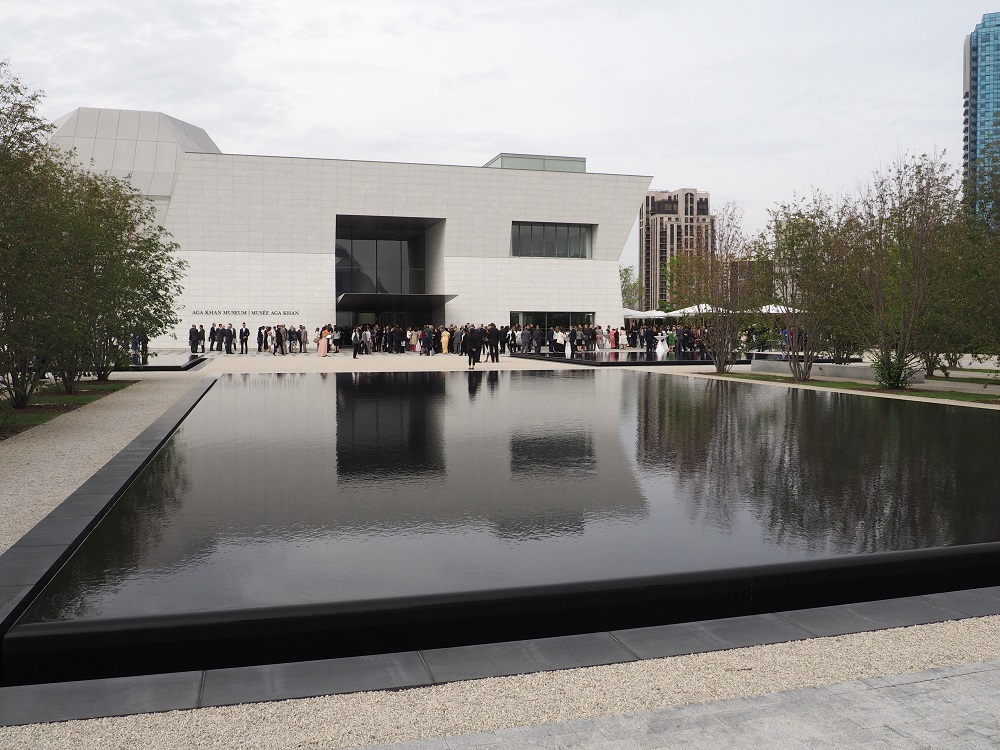
The Aga Khan Museum became the venue for a special reception for guests who attended the opening of the Aga Khan Museum on May 25, 2015. Photo: Simerg/Malik Merchant. Copyright.

The Aga Khan Museum became the venue for a special reception for guests who attended the opening of the Aga Khan Museum on May 25, 2015. Photo: Simerg/Malik Merchant. Copyright.

Date posted: May 27, 2015.

________________

We welcome your feedback. Please click Leave a comment. Subscribe to this website at top right, and receive automatic notifications of great new posts. Subscription is free!

Reflections on the Opening of the New Aga Khan Park: “Where Nature Gifts the Outdoors” by Navyn Naran and “Trinity” by Ikhwan Allani

WHERE NATURE GIFTS THE OUTDOORS

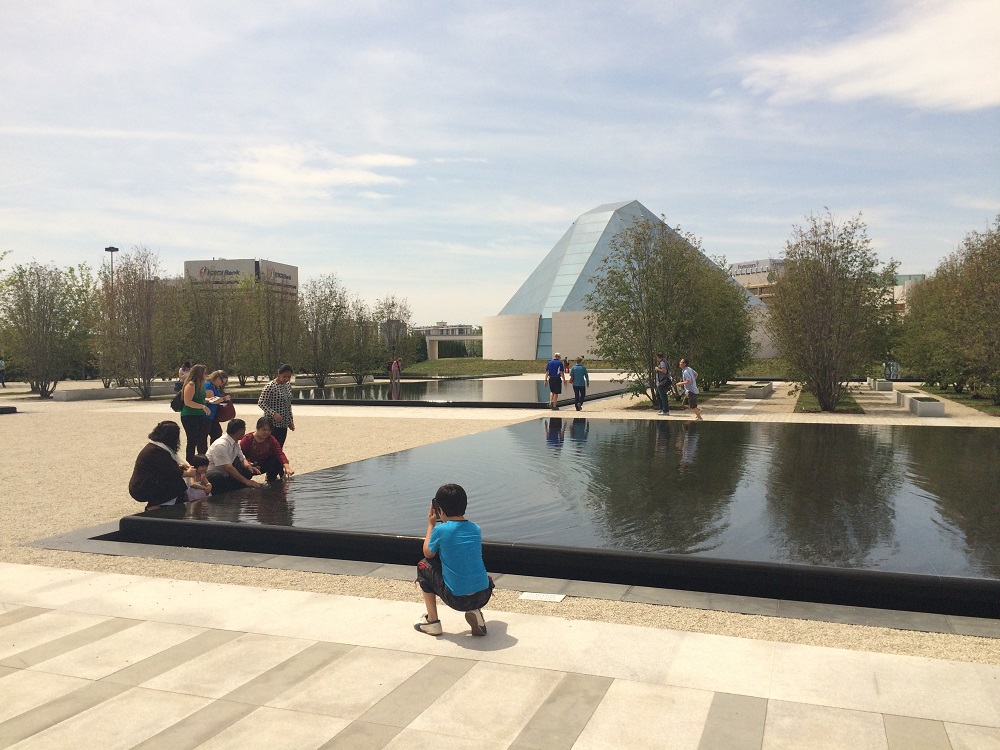
The Aga Khan Park. Photo: AKDN/Moez Visram. Copyright.

The Aga Khan Park. Photo: AKDN/Moez Visram. Copyright.

BY NAVYN NARAN

Its a place for contemplation,
for enjoyment,
for reflection,
In quiet pools with glimmering surfaces,
and bubbling of laughter.
In the presence of oneself or a group of others,
Welcome to the garden.

For nightime quiet,
For morning awakening,
And daytime walks
For enjoying the green earth,
the fresh smell of shrubs,
A place to sit
Where God is.
Where Nature gifts the outdoors.
Where my mind is at ease
and the murmur of the water,
the ripples from the raindrops
remind me how connected everything is.
How a central rhythm reverberates
twanging like a musical chord
in our individual auras…
Where does that send us?
I like the feeling that silhouettes these buildings
and transmits an energy reflected inside.
We are divine,
We are respectful,
We are compassionate,
We are all beautiful,
if we are only aware of who we are.

If sadness comes over you,
Come to the park.
And to the one side rises a spiritual space,
And to the other, a creative one.
Even in a busy place.
there is space.

Lines and curves, patios and earth.
It is,
My Park.
My museum.
A gift .
I too can enjoy the beauty and awakening.

~~~~~~~~~~~

TRINITY

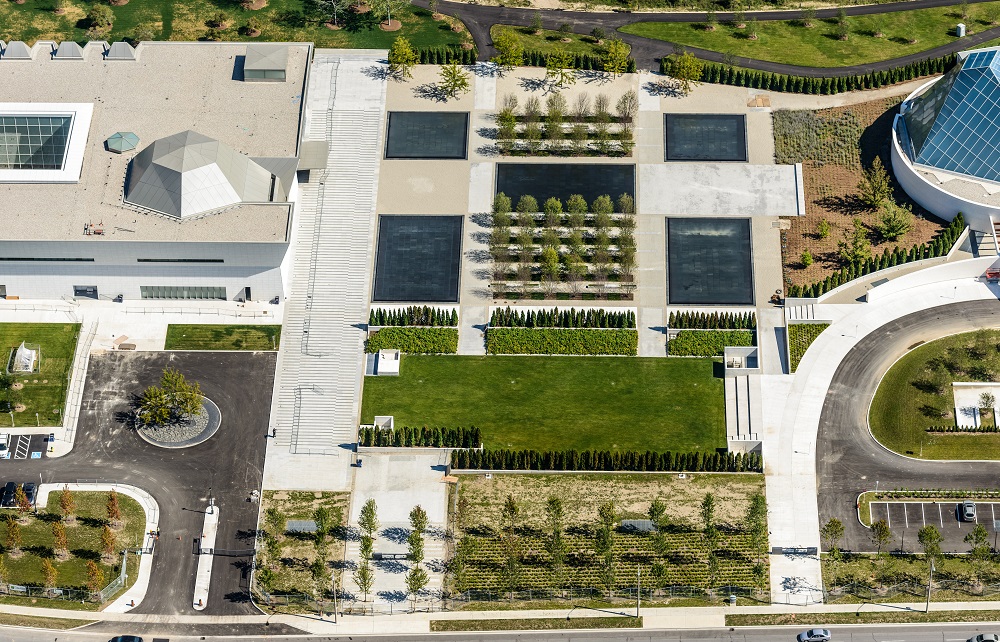
An aerial view of the Aga Khan Museum (left), the Aga Khan Park and the Ismaili Centre. Photo: AKDN/Geoff Grenville. Copyright.

An aerial view of the Aga Khan Museum (left), the Aga Khan Park and the Ismaili Centre. Photo: AKDN/Geoff Grenville. Copyright.

BY IKHWAN ALLANI

Bismillah-ir Rahman-ir Rahim

Alas,
Three spaces that lift the spirit,
Have come to life.
Ah, how my soul has been eager,
For this blessed day to arrive.

Masha’Allah

The Museum stands as a symbol
Of culture and knowledge,

A beautiful expression of the Islamic heritage.
Every art piece reflects our wonderful tradition,
Cherishing poets, scientists and mathematicians.
1400 years of Islamic history,
coming together as one,

Step by step, piece by piece,
what a collection this has become.

Blessed I am, to witness the past in the present,
O soul, breathe, Be one with this moment!

Subhan’Allah

The Park is majestic, a sight of pure aesthetic beauty,
Humbly sowing the seeds of brotherhood and unity.
Every blade of grass promises a new conversation,
As fresh gusts of wind whisper new information.
Flowing water pledges
a cleansing of the mind and spirit,

Every thought, every action, one with the universe,
no limits.

Blessed I am, to experience this natural ornament,
O soul, breathe, Be one with this moment!

Al-hamdulillah

The Ismaili Centre is the abode of the soul, paradise,
Where the Lord and His believer
become one, synchronize.

The flawless rock crystal
is the epitome of perfection above,

Where light and shadow blissfully coexist,
intoxicated in love.

Ya Allah, Ya Ali, Ya Muhammad,
resonate with every heartbeat,

Humbled, I prostrate before The One,
I am now complete!

Blessed I am, to free my mind
From worldly involvement,

O soul, breathe, Be one with this moment!

Shukran’Allah

May the Museum inspire the mind,
May the Park energize the body,
And may the Prayer hall purify the soul.

Ameen!

Date posted: May 26, 2015.
Last updated: May 31, 2015 (formatting)

Copyright.

__________

About the writers: A regular contributor to this website, Dr. Navyn Naran was born in Dar-es-Salaam, Tanzania, to Anaar and Badrudin Naran. After beginning her high school in the UK, her family immigrated to the USA where she has lived since. Dr. Naran went to medical school at Tufts University School of Medicine in Boston, MA. She currently works in the Paediatric field.

Ikhwan Allani graduated from the University of Toronto, with a Bachelors of Science Degree in Mental Health Studies. He currently works as a Medical Assistant at Appletree Medical Group, and has previously worked as a Research Consultant for The Centre for Mindfulness Studies, and as a Research Assistant at the University of Toronto.

A Welcome Poem for Mawlana Hazar Imam for the Opening of the Aga Khan Park

REFLECTIVE POOLS IN THE GARDEN,
WELCOME TO THE PARK

IMG_1815 Aga Khan Museum ParkBy Navyn Naran

The park has been busy with many preparations,
t’was a sunny bright day and the place was a-buzz,
No honey bees in sight, trees, crisp in their posture
Readying for the performance, the opening of the park.

Excitement and interest, can be seen and be heard
At the museum and center, delightful and clean
The beauty and grace and calculated thought
In art, materials sustainable, masterpieces sought.
Today clouds flirt in our skies, but hearts are filled,
the sun is watching, the ground freshly tilled.
Welcome my Mawla, welcome to your park!

Welcome, my Mawla
Welcome to this garden.
The outdoors “where God IS”,
as you, hidden in my heart.
The green is yet young,
as is my soul’s quiet space,
the roots stretching free,
a new baby unfurling in perfect place.

Water pools, invite clarity and clear thought,
peace, contemplation facing east, west, south and north,
in this space, feeling happy, your Love’s blessing, you are near,
there is pleasure, here is Grace,
we come to play, pray, see and hear.
in ice cold, and thunderstorm, we are healed in this space,
i come here seeking freshness, spaciousness from the “rat-race”,
i have danced, skipped and run across the green grass, and the paths,
we are awed at the care and beauty shared,
marble, light, skill and art.

a haven of peace, in the contours of this garden
now thawed in the sunlight, now moist earth, not hardened.
These young shrubs, balanced sensually
‘twixt museum and spiritual center,
like twine intermingling, as we exit and enter.
As the double-stranded DNA bonded by electronic attraction,
magnetic forces of creation spiral energies, radiant interaction

Welcome your Highness, Prince Amyn, Prince Hussain
Welcome to your park, again and again,
Your gait and your mission, your arms lifted as your greet
your smile brings barakah,
and our hearts feel complete.
What have you not given, not improved which lives?
all cultures, all peoples, one earth, many tribes
in such  gardens we seek time, a place to unwind
a reflection, and rest enjoying the child in our mind.

As santoor plucks a melody, expressive, a lilt,
And rabab strums a movement, brown-orange bridging rifts,
An edge igniting spirit, mysteries of the mind
so the garden offers expansion and life of a necessary kind.

It is in this I the garden gives to life,
Welcome to your Park,
It is in this eye, the garden lifts my heart
Welcome to my Park
Every eye wishes to meet your eye.
Welcome to Our Park
Welcome your Highness, welcome to our hearts.

Date posted: May 25, 2015.

Copyright: Navyn Naran/Simerg. 2015.

______________________

Navyn Naran

Navyn Naran

About the writer: Dr. Navyn Naran was born in Dar-es-Salaam, Tanzania, to Anaar and Badrudin Naran. After beginning her high school in the UK, her family immigrated to the USA where she has lived since. Dr. Naran went to medical school at Tufts University School of Medicine in Boston, MA. She currently works in the Paediatric field.

Hope, and not Despondency, in the Wake of Misfortune and Tragedy

LETTER FROM PUBLISHER
Yellow Tulips - Hope amidst Tragedy
“Despair not of the Spirit of Allah. Lo! None despaireth of the Spirit of Allah save disbelieving folk.” (Holy Qur’an, Chapter 12, Verse 87).

The recent tragedy in Karachi, where dozens of innocent Ismailis were the subject of wanton violence is extremely disquieting. Besides questioning the humanity of our fellow citizens, it may serve to bring to the fore the insecurities of a people who have been subject to religious persecution in the past and are today, without exception, minorities in every single land they live in. As the Ismailis of Karachi (and of Pakistan in general) reflect on the aftermath of this terrible tragedy, perhaps it would natural for them to give in to despondency. This, however, should be cautioned against, for the following reasons.

Today, Ismaili Jamats globally unite in prayers and solidarity with their brethren of Karachi sending a strong message that their brethren are not just a forgotten minority in a big state, but an indivisible part of a strong global brotherhood. Equally, and no less significant, is the Imam’s global work and name, which has resulted in condemnation across the globe by world leaders, and which will ensure that this tragedy will not end up as just another footnote in an unending series of attacks on religious minorities in Pakistan. As K. N. Pandita says in a recent article:

 “But given the international influence and reach of Prince Aga Khan and the great humanitarian works that his Foundation is doing in many parts of the world including Karachi, the massacre is bound to cause ripples in Pakistan politics. This is the reason why the Prime Minister of Pakistan and the Army chief both lost no time in flying into Karachi to take stock of things”. [1]

There is reason to hope that from this tragedy, and from the blood of innocents, a reaffirmation of the rights of religious minorities in Pakistan will result, Inshallah.

Date posted: May 18, 2015.

_______________

[1]  http://www.dailyexcelsior.com/tragedy-descends-on-ismailis/