Simerg is an independent initiative dedicated to Ismaili Muslims, the Aga Khan — their Hereditary Imam — and the Ismaili Imamat, and Islam in general through literary readings, photo essays and artistic expressions
Author Archives: Malik Merchant, Editor
Founding publisher and editor of www.barakah.com, www.simerg.com and www.simergphotos.com.
Like a candle, In a dark room, Her light would erase,
Any frown, Or any pain, You had on your face.
A gifted teacher, Full of knowledge, She’d leave you wanting more.
Her loving arms, Were always open, She would never shut her door.
All her students, Were her children, Whom she loved with her whole heart.
Not one student, Could forget her, Right from the very start.
Her knowledge Was a mountain, Everyone wanted to climb.
She imparted With her wisdom, Never concerned about the time.
Her bright smile Filled the hearts, Of all who came near,
When in her Holy Presence, There was never need to fear,
Her faith Never wavered, Not once would she question.
The words Of the Imam Or his Noble Direction.
Years and years Of service, She has given to our Mawla.
Precious, priceless Memories, For all of us to store.
With much sadness Her time to go, Has left us all with pain,
But if she had words She’d tell us,
“I am an Ever Burning Flame.
Forget me not, For I am near, Closer than you know.
For even though We leave this earth We never truly go.
We are with God Though we may be gone, And though it is a shame.
You keep me alive Alive in your heart An Ever Burning Flame.”
Date posted: February 9, 2021.
___________________________
We welcome feedback from our readers. Please complete the LEAVE A REPLY form below or click Leave a comment. Your letter may be edited for length and brevity, and is subject to moderation.
Farah Tejani graduated with her Bachelor of Arts in English Literature and her Master of Fine Arts in Creative Writing from the University of British Columbia in May of 1997 and earned top Honors for her Thesis on Short Fiction. She has published a collection of short stories “Make Your Own Chai, Mama’s Boy!” dealing with different dilemmas South Asians face. Farah also wrote and co-directed her stage play, “Safeway Samosas,” which won “The Best of Brave New Playwrights Award” in July 1995. Her short story , “Too Hot” won third place in the “Canada-Wide Best Short Fiction Award” and was read at The Vancouver Writers Festival. Currently, Farah is working on Childrens’ stories and a collection of poetry called, “Elastic Embrace” to be published in 2021.
Before departing this website please take a moment to review Simerg’s Table of Contents for links to hundreds of thought provoking pieces on a vast array of subjects including faith and culture, history and philosophy, and arts and letters to name a few. Also visit Simerg’s sister websites Barakah, dedicated to His Highness the Aga Khan, and Simergphotos.
Between 1963, soon after my parents settled in Dar es Salaam — having previously served for over 8 years as teachers in Lourenço Marques (now Maputo), Mozambique — and around 1967 at which time my dad purchased a car, it became a regular weekend routine for our family of 5 to walk either from Tanganyika Flats and, later Islamabad Flats (on Cameroon Road renamed as United Nations Road), to the complex of flats near Upanga Jamatkhana where 3 Ismaili families lived in close proximity.
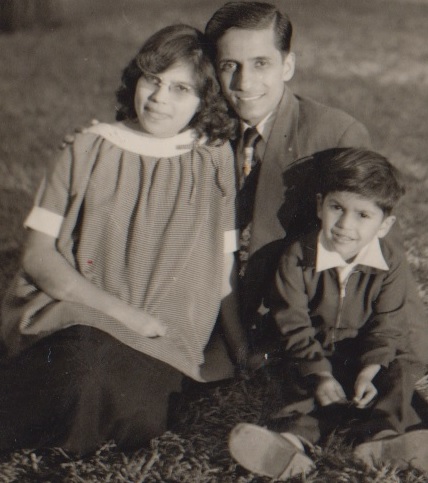
Abdulmalik (aka Malik), founding publisher and editor of this website, with his parents Mr. and Mrs. Merchant, at a park in Lourenço Marques, Mozambique, when he was 3 years old. Photo: Jehangir Merchant Collection.
It was a visit that I, as a young boy, deeply cherished. The families of Alwaez Rajwani, Mr. Dharsee and the Ismail’s — Shiraz, Firoz, Razia and primary school teacher Late Gulzar Ismail Walji (d. 1978) — may not remember our visits to their homes, but I do.
With Mr. Dharsee, who wrote special feature articles on the Ismaili Imamat and Ismaili history for the Tanganyika Standard, the talks centred on Ismaili philosophy and other religious subjects. My dad extracted as much knowledge from this brilliant mind, who would keep his signature cheroot cigar aside during our visits. His inquiring and intelligent mind would respond to all questions my dad asked him. His daughter, Alwaeza Gulshan and son in law, Alwaez Shamshu Allidina, are the Ismaili couple famously known as the “Missionaries from Madagascar.”
At the Ismail family’s home, it was fun time. Razia [Pullen], one of my dad’s Aga Khan Girls Secondary School students in the early 1960’s, and her siblings would lay out a beautiful table of fruits and biscuits with plenty of juices, soft drinks, as well as chai, of course.
Alwaez Abdulrahim Rajwani visiting Alwaeza Mrs. Maleksultan Merchant at her home in 2019. Photo: Zarina Rajwani / Abdulrahim Rajwani Collection.
At Alwaez Rajwani’s residence located at the Jamati flat complex, the conversations centred around their waezin colleagues, past and current, as well as on-going waezin activities in Dar es Salaam and other parts of Tanzania. Years later after our families had migrated to the Western world, Alwaez Rajwani would place a regular call to my parents to find out how they were doing. Following my mum’s recent death on January 21, 2021, Alwaez submitted the following letter along with two photographs that he and his daughter took with my mum during one of their visits to Vancouver.
I take deep happiness in publishing the letter and thank Alwaez Abdulrahim and his daughter, Zarina, for the care, concern as well as affection that they showed to both my parents for many, many years. May all their prayers and wishes be fulfilled. Alwaeza’s wife Zenab passed away in 2006 at the age of 81 but Abdulrahim now continues to live a full and complete life in Toronto. He is 90, and I wish him a long and healthy life.
Fond Memories of Alwaez Jehangir and Alwaeza Maleksultan Merchant
Alwaeza Mrs. Merchant, centre, is visited by Alwaez Abdulrahim Rajwani and his daughter Zarina. Photo: Abdulrahim Rajwani Collection.
By ALWAEZ ABDULRAHIM RAJWANI
Ya Ali Madad, dear Malik.
Although we have spoken on the phone, I also wanted to express my condolences to you, Fahar, Alnoor and your families, as well as pay my respects, honour your parents and share a few memories in writing. It has taken me a while, as I was filled with sadness and nostalgia, remembering the closeness of my loving relationship and friendship with both your parents over the many decades. Also, I had just spoken to mum a few days before she passed away. Zarina, Aziz and I offer prayers for the eternal rest of their souls.
Your parents, Alwaeza Maleksultan (1931-2021) and Alwaez Jehangir Merchant (1928-2018), were both close friends from Bombay (now Mumbai). I remember meeting mum in the early forties, when we used to have waez competitions between the Religious Night Schools of Greater Bombay. Either she or one of her sisters (Shahsultan or Sakuma) would represent Hasnabaad, and I would represent Kandimohalla (now Karimabad). I remember your dad and Late Alwaez Sultanali Mohamed (1927-2020) attending mission classes in the early fifties, run by Ismailia Association in Kandimohalla, where dad’s eldest brother Mahomedbhai was Mukhi for several years. I was already an Honorary Missionary at that time.
Article continues below
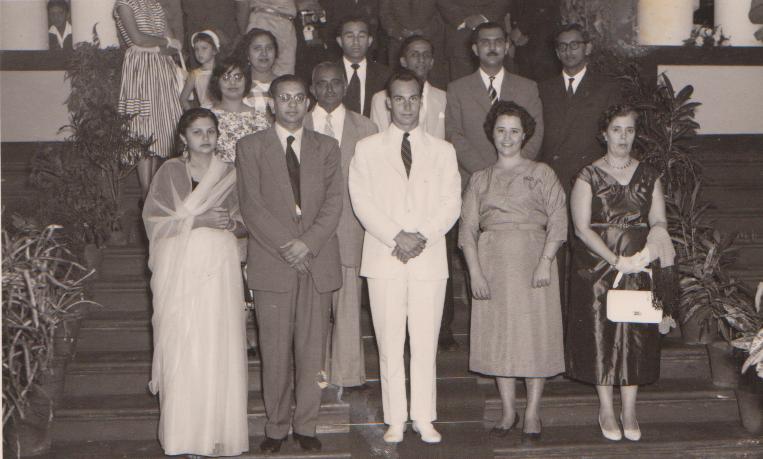
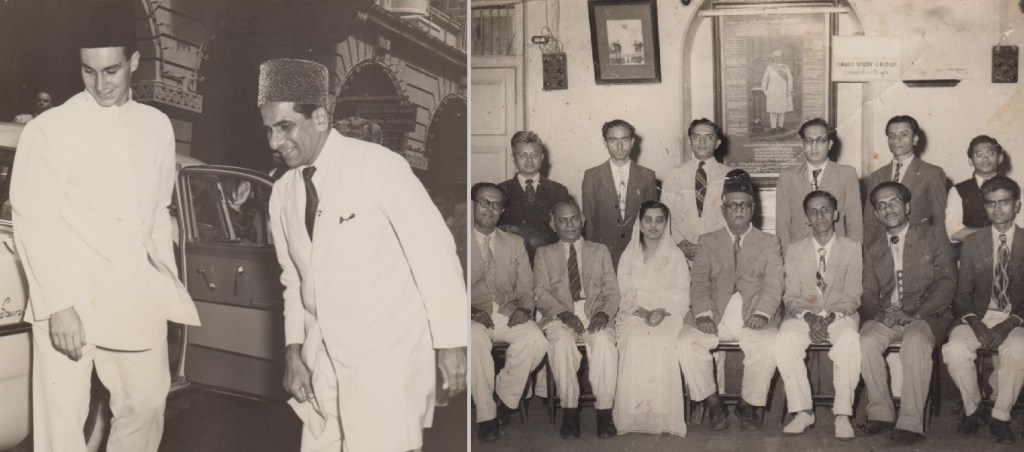
Mawlana Hazar Imam, His Highness the Aga Khan, is welcomed by Mukhisaheb of Karimabad Jamatkhana Mahomed Alibhoy, Alwaez Merchant’s oldest brother; and Mrs and Mr Merchant (seated, 3rd and 5th from left) with Waezin team and lecturers before their departure for Lourenço Marques in 1954. Alwaez Sultanali is standing 4th from left. Photo: Jehangir Merchant Collection.
I have many fond and happy memories of our friendship over the decades, and in particular, I remember coming to the ship to disembark your parents, with you as a 5 month baby, when their ship made a stop at Dar es Salaam on its way to Lourenço Marques. That was in very early 1954, and I myself settled in Dar es Salaam two years earlier in 1952.
While we all served as waezin together, I will always regard both mum and dad with the highest respect, honour and love. Their service was outstanding and exemplary. They always kept up with their knowledge and learning. Their way of communicating and conveying this knowledge individually, in small groups and to large Jamati audiences was remarkable. They were able to make this knowledge relevant and personal to individuals, and inspire and uplift them in a highly impactful and significant way. And they selflessly served the Jamat and the Imam-of-the-Time with care and kindness, with devotion and utmost dedication.
I have been speaking to your parents over the years, and to mum regularly, particularly around Navroz, Imamat Day, Salgirah and Eids. I will miss talking to her now, but will always remember her and pray for her soul. Over the years, whenever I was in Vancouver, we would always visit them and more recently mum. It was always a delight to chat and catch up with her. Zarina and I last visited her in September 2019. I am attaching a couple of pictures with her from that visit. I will dearly miss our decades-long incredible friendship and affection.
With fond and loving memories of them both and prayers for their souls,
(Alwaez) Abdulrahim Rajwani.
Date posted: February 7, 2021.
_____________________
We welcome feedback from our readers. Please complete the LEAVE A REPLY form below or click Leave a comment. Your letter may be edited for length and brevity, and is subject to moderation.
Before departing this website please take a moment to review Simerg’s Table of Contents for links to hundreds of thought provoking pieces on a vast array of subjects including faith and culture, history and philosophy, and arts and letters to name a few. Also visit Simerg’s sister websites Barakah, dedicated to His Highness the Aga Khan, and Simergphotos.
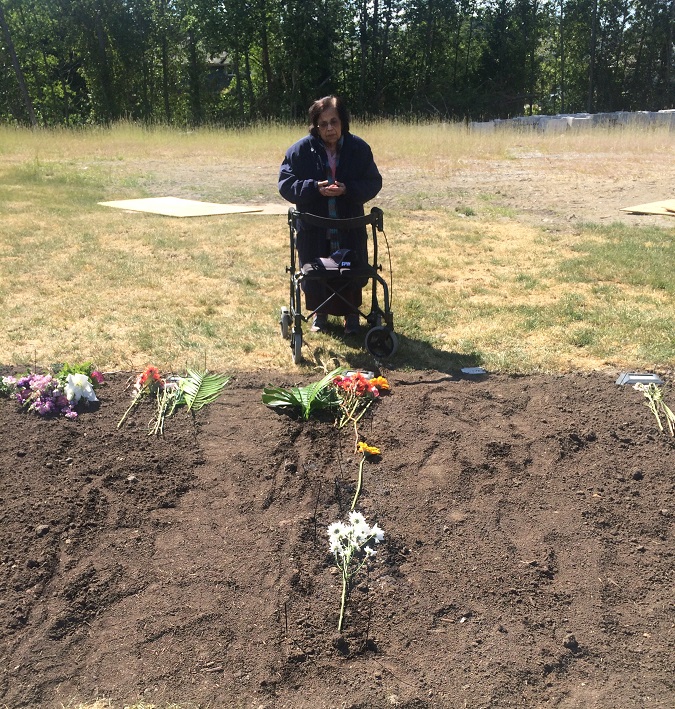
Alwaeza Raisaheba Maleksultan Jehangir Merchant, or Mrs. Merchant as she was known among her students in Africa and the UK, was buried Thursday February 4, 2021, at the same cemetery as her husband Jehangir. Here she is seen visiting his grave shortly after he passed away May 27, 2018. Photo: Malik Merchant / Simerg.
By SHIRAZ PRADHAN
Many thoughts come to mind as I attend Mrs. Merchant’s funeral online from the UK. She passed away on January 21, 2021, at the age of 89, on the same day she was admitted to the hospital.
I have fond memories of the time I had spent working with her at 3-5 Palace Gate in London. While teaching Bait-ul-Ilm classes, I benefited immensely from her knowledge and wisdom.
The Covid-19 pandemic, which also took Mrs. Merchant’s life, is unprecedented and is having a profound impact on our lives. One such impact is that we cannot attend or participate in funerals in the customary way at this time. However, technology has allowed us to participate in the funeral ceremonies from anywhere in the world, albeit in a different manner.
Mrs. Merchant’s face was visible to all of us who were watching throughout the 30-minute ceremony that included Salwats, the recitation of the prayer Astaghfirullahi Rabbi Wa Atubu Ilaiyhi (Verily, I seek the forgiveness of Allah, who is my Lord and Sustainer, and I turn to Him in repentance) as well as verses from Ginans and profound quotes of Mawlana Sultan Mahomed Shah, His Highness the Aga Khan III (d. July 11, 1957).
There are guidelines, which vary from one province to another, about the number of people who can be present for the funeral (in Vancouver, the limit is 6 family members) and burial ceremonies at the cemetery (4 family members), masks are mandatory as is social distancing, and if a person had died of Covid-19 the casket must remain closed unless the body has been embalmed.
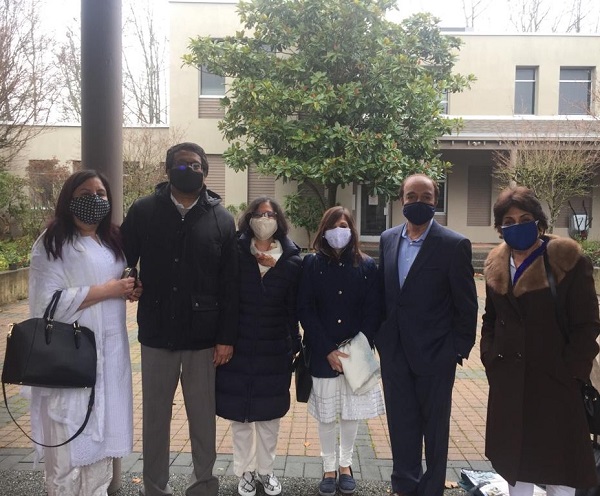
The six individuals from the family who were present at the Burnaby Lake Jamatkhana were Mrs. Merchant’s son Fahar and his wife Nina, Shellina (fiancé of youngest son Alnoor, who could not attend from the UK), nieces Habiba and Sherezad, and Nasreen, daughter of the family’s extremely close friend Mrs. Sakerkhanu Velji whose husband, Mr. Sadru Velji, was buried just 48 hours earlier on February 2. Due to extraordinary circumstances as well as Mawlana Hazar Imam’s guidance expressing his desire for his Murids to follow public health guidelines, Mrs. Merchant’s eldest son Abdulmalik (Malik) and his daughter Nurin were not able to travel for the funeral.
Story continues below
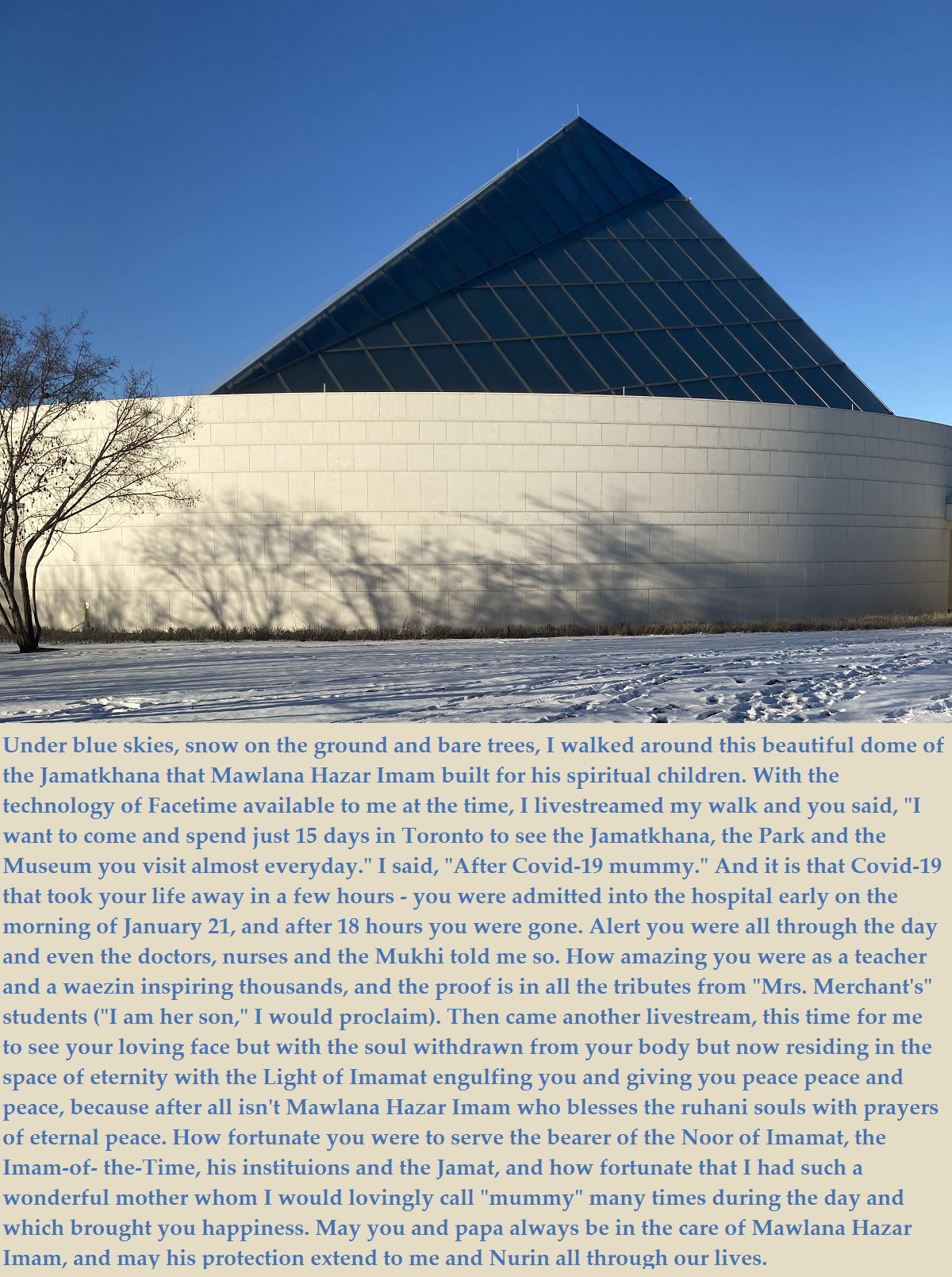
A reflection by Malik and Nurin Merchant on their mum/grandmother . Please click on image for enlargement.
Following the completion of the funeral ceremonies, which has been dubbed as Rites of Passage, volunteers wheeled the casket across the Jamatkhana Hall into the waiting hearse to the calling of the Muslim Shahadah Lailaha illallah Muhammad ur Rasulullah (I bear witness that there is no deity but God, and I bear witness that Muhammad is the Messenger of God) recited by one person, and repeated by the same person as there was no one lined up to carry or touch the coffin (Janazah) due to Covid-19. The live streaming stopped once the coffin left the building into the waiting car. This was truly an emotional send-off for us watching from other parts of the world.
After the four male members returned from the cemetery, Zyarat and Samar ceremonies were performed. Normally, these would be held during the evening Jamatkhana ceremonies where hundreds of people would be able to participate and recite special prayers for the soul of the deceased. Jamatkhanas have been closed across Canada for the last several weeks, as is the case in many parts of the world.
Jamatkhanas in Canada have never before been closed for such an extended period of time. This past year has been particularly difficult for all of us everywhere, and one can imagine its impact on those who attended Jamatkhana regularly.
However, there are some collateral benefits of the pandemic. With the blessings of Mawlana Hazar Imam, our faith has been strengthened. Jamats have come together across the world, helping one another. The magnificent work done by the volunteers has impacted every institution within the Jamat — from arts and culture to economic to health to religious education to social welfare boards and the youth. The undertaking has been enormous. The organization of funerals and the work of the funeral, or the mayat/ghusal committee is simply incredible. Keeping everyone safe under our current circumstance where a virus can spread rapidly is demanding and requires additional hours of care, diligence, organization and work to meet strict protocols and provincial guidelines.
At the onset of Covid-19 pandemic 2020, things looked bleak and hopeless. But, human ingenuity was at work. Scientists all across the world set to work to come-up with vaccines in record time in the fight against the Covid-19. We saw as we entered 2021 that highly effective vaccines have been formulated, and with proper and fair distribution will give hope to humanity in the coming months.
I am grateful that I have been able to participate in Malekbai’s funeral from the UK and I pray that Hazar Imam bless her with Noorani Deedar and grant the family the strength to bear this loss. Ameen and Ya Ali Madad.
A Dignified and Safe Rites of Passage for Mrs. Merchant
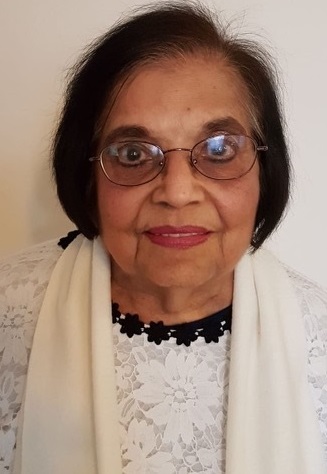
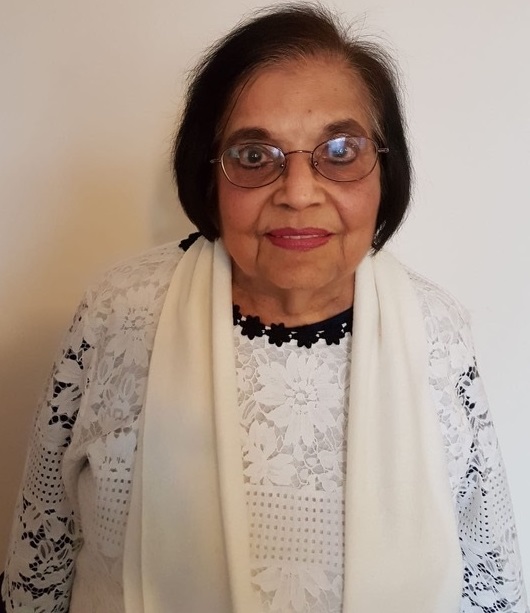
Alwaeza Raisaheba Maleksultan Jehangir Merchant (June 9, 1931 – January 21, 2021), age 89. Photo: Shellina Karmali.
MOSTLY UNEDITED – ED.
Feriyal Merchant (USA): Ya Ali Madad, Dear family. My sister Kulsum Laiwalla and myself from Silicon Valley CA watched the blessed last rites and ceremonies of our beloved Malek Sultan Aunty who was lying so peacefully in the prayer hall as the heartfelt spiritual paragraph from our Beloved Imam Sultan Mahomed Shah’s memoirs was read by her son Fahar, souful ginans and powerful Salwats recited. Though the hall had a few family physical presence but it was filled with spiritual connections and prayers from all over the world.
Dear Malek Aunty today your earthly body said goodbye, your soul on speedy wings have taken flight to Heavenly abode. You will be missed by many but always fondly remember. As I saw you lie you left me with thoughts of wisdom as you always do. This is a journey all must take alone so be prepared so there is after glow of smile and peace on your face as I saw on yours. Shukar Mowla Alhamdullilah.
Salim and Nevyn Kanji (Toronto):Today, we participated in a beautiful and simple funeral service for our teacher. Thank you for giving us this opportunity. May your mom’s soul rest in eternal peace. May Hazar Imam give you lots of strength and courage to face this great loss. Remember, we are always here for you and your family.
Amin Hooda (Ottawa): Thanks for your efforts at the time when there is a huge personal and family`s loss. Humbled to have attended the live video stream, that was completed in less than half hour, through the recitation of tasbihs and ginans; it was an opportunity for me to benefit from this spiritual connection that you mum, alongside your dad, as a lifelong teacher selflessly nurtured for so many individuals and jamat at large, through their friendship and students. Shukar.
(Nahid) Begum Nurmohamed Shariff and family: Thank you from the bottom of my heart for sending me the invite as I was very fond of both mum and dad. They were wonderful people and will live on through you all but also their wider family — those that they taught selflessly over the years with love and compassion. Your mum and I had a bond and I loved and respected her dearly. She is in a wonderful place. Mawla grant her his noorani didar and rest her soul in eternal peace. Ameen. Sending your whole family lots of love and prayers.
Julián Arturo Zapata (Colombia, South America): Querido Hermano Abdulmalik, muy linda la ceremonia del funeral de tu noble Madre Maliksultan. Abrazos Fraternales desde Colombia el Alamut latinoamericano
Translation: Dear Brother Abdulmalik, the funeral ceremony of your noble Mother Maleksultan is very nice. Fraternal hugs from Colombia, the Latin American Alamut.
Shiraz Nasser: Thank you for inviting us to participate in funeral ceremony. Her soul has merged with the Noor. It is time for spiritual happiness. May Mawla accept all your wonderful sewa. Stay safe, healthy, happy, united and continue your wonderful family tradition of spiritually intellect sewa in humility. Love to all.
Mrs. Merchant’s family members pictured on February 4, 2021 in the courtyard of the Burnaby Lake Jamatkhana during the funeral ceremonies held for her at the Jamatkhana. Left to right: Nina and Fahar Merchant, Shellina Karmali, Habiba and Alnashir Rashid, and Sherezad Zinna.
Shariffa Keshavjee (Kenya): Inna lillahi wa inna ilayhi raji’un “Surely we belong to Allah and to Him shall we return.” Thank you for inviting me to join in on your mum’s farewell. May her soul go with the light into Asal Makan. May you get peace and sabar, patience. I once read that sabar is illumination from within, where experiencing patience gives birth to a space. In that space Rab is present.
Alnoor Abdulla (Vancouver): I appreciate and feel privileged to participate. It was a spiritual ceremony. She will always remain special and everlasting in my mind.
Rozmin Fazal (UK): Thank you for sharing the live link to mum’s Mayyat ceremony. It was such a dignified ceremony. May Mowla rest her soul in eternal peace and grant you and the family strength to be able to cope with the loss. Amen.
Anonymous (England): May Mawlana Hazar Imam bless your mum’s soul and may she rest in eternal peace. Ameen. She looked good and at peace. Lovely that everyone there participated individually. I am praying for your mum’s soul and dad. I’m praying for you and the family to have peace in your heart and in your lives.
Abdul Remtulla (Edmonton): Thank you for your invitation to attend on line ceremony. We did and bid her goodbyes. May her soul rest in eternal Peace, Ameen, Warm wishes and Ya Ali Madad.
Azy or Yasmin (Toronto): Thank you for inviting me to participate in the ceremony. I feel honoured indeed. She looked very very peaceful. We lost a great person from the earth but Mowla welcomed her home. Mowla bless her soul with Noorani Didar and bless you and the entire family with strength to face this tremendous loss. Amen.
Muslim Harji (Montreal): Thank you for considering us as a part of your family. Both Nevin and myself attended Maa’s Mayat ceremony and were very impressed with the way it was conducted. We pray for her soul to rest in eternal peace. Ameen Love, Light & Cheers
Nizar Motani (USA):I was able to join the livestream from the beginning. From all the tributes to mourn and celebrate your mother’s amazing service, her endearing personality, and her kind nature — she was clearly an ANGELIC SOUL and is resting in the ABODE of PEACE next to her beloved husband.
Zarina Moosa (Toronto): Thank you for letting me participate in the funeral ceremony of your beloved mother. It was such a dignified and beautiful ceremony fit for an equally dignified and beautiful lady. Shukhar. Inna lillahi wa inna ilayhi raji’un. With prayers in my heart for all of you.
Karima, Nasim, Shamshad and Nuryn (Vancouver): Thank you letting us watch, Malekabai’s funeral today. She is at peace, and may Mowla rests her soul in eternal peace, Amen.
Date posted: February 5, 2021. Last updated: February 6, 2021 (Jamatkhana photo added with a reflection by Malik and Nurin).
We welcome feedback from our readers. Please complete the LEAVE A REPLY form below or click Leave a comment. Your letter may be edited for length and brevity, and is subject to moderation.
Shiraz Pradhan
About the author: Shiraz Pradhan is a professional engineer, writer and philosopher. A regular contributor to this website, Shiraz has a keen interest in Judaeo-Christian History, Islamic Studies, Sufism and philosophies of the Vedas and Upanishads. He is currently completing a book titles Amarapuri, the Abode of Eternity. He is the Chairman of the Association of the Study of Ginans which specializes in the preservation, study and research of the ancient Ismaili Ginans (hymns). Shiraz currently lives in the UK with his family.
Before departing this website please take a moment to review Simerg’s Table of Contents for links to hundreds of thought provoking pieces on a vast array of subjects including faith and culture, history and philosophy, and arts and letters to name a few. Also visit Simerg’s sister websites Barakah, dedicated to His Highness the Aga Khan, and Simergphotos.
Alwaeza Raisaheba Maleksultan Jehangir Merchant (June 9, 1931 – January 21, 2021), age 89. Photo: Shellina Karmali.
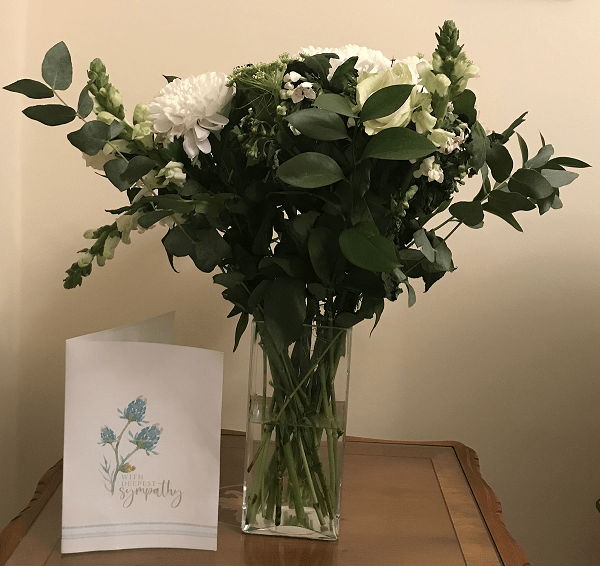
The family of Alwaeza Raisaheba Maleksultan Merchant has been immensely touched by so many messages of condolences it has received following her passing away at the age of 89, on January 21, 2021.
Social media pages are filled with several hundred messages and Simerg has received more than 200 messages following the publication of a tribute celebrating her life. In addition, members of the family have received numerous telephone calls as well as text messages from all over the world.
We are deeply grateful to you all. Your love, prayers and encouragement have been a source of strength and comfort to us at this difficult time.
Thursday, February 4th has been confirmed as the date of her funeral and burial (click iiCanada Funeral announcement). Unfortunately, Covid-19 has created challenges for attending funerals with strict restrictions on travelling and gatherings.
The following are a selection of excerpts from numerous tributes to our beloved mother/grandmother who passed away on Thursday January 21, 2021.
Tributes and Fond Memories of Alwaeza Mrs. Maleksultan J. Merchant (1931-2021)
We are among the generation of the Jamat who recall with gratitude the immense contribution that Maleksultanbai and your late father made to our development during our formative years in Dar-es-Salaam. They laid in our minds a strong foundation of Ismaili history and principles, as well ethics and values, which sustains to this day. From those early days, both your parents went on to serve with distinction the cause of the Imamat and Jamat in many countries around the world…..Vazir Shafik Sachedina and Vazirbanoo Nadia Sachedina
I was saddened to hear of the passing of your mum. We pray for eternal peace, rest and batuni noorani deedar for the soul of your mum. At the same time, we offer prayers for mushkil asan for all your family members. The life-long devoted services rendered to Mawlana Hazar Imam and the Jamath by both your mum and dad were an exceptional example for the Jamath…..Ameerally Kassim Lakha
Alwaeza was an extraordinary and effective teacher of religious knowledge. To myself as well as others, she was an example, a beloved role model and a beacon that shone brightly, guiding our values during the formative period of our lives. Since those days of primary and secondary school, there has forever stayed in my memory a debt of gratitude for her outstanding and exemplary dedication to her vocation. Her gift and excellence lay not in compulsion and harsh discipline but in noble character and conduct, leading by example. That, more than strict reward or punishment, imprinted in us the ethics of the faith that shaped our values in life. May our humble prayers and remembrances reach her companionship On High…..Shiraz Hameer
I have fondly thought of Mr and Mrs Merchant and the incredible sacrifices they made over so many years for the jamat in the UK. They struggled and suffered a lot of hardships in their work when travelling on public transport over long distances and late at night often in the cold and not having had dinner. And yet both your parents hardly complained. They both truly served the Imam. We will rejoice their achievements and dedication and lovingly remember them…..Fida Moledina
As an early teen in Dar-es-Salaam, your Mother was my coach for the first wa’ez contest that I ventured into, reckoning it would be an extension of the school talks & debates that relished. Visits to your home were encounters with a teacher who exuded a unique coupling of passion and discipline; no, a wa’ez was no ordinary talk, certainly not a debate. Patiently, she teased out and fostered the keys: pace, clarity, command of material, sincerity, lightness … The lessons remained long after the contest (yes, I won) — not just for wa’ez but for wider communication…..Amyn Sajoo
“Life is a great and noble calling, not a mean and grovelling thing to be shuffled through as best as we can but a lofty and exalted destiny.” — Mawlana Sultan Mahomed Shah. [This] beautiful quote was instilled in me by my religion teacher in the 60s known to me as Mrs. Merchant. I will forever be indebted to her as the first religion teacher who impacted my life in such an enlightening way. May her soul rest in eternal peace and may you all have the strength to bear this irreplaceable loss…..Naznin Hajee
She was one teacher that always came to mind when we remembered Dar, a beautiful person inside out. The ginans we learnt from her, we can still sing without requiring a ginan book…..Aziza Kotadia (nee Damji)
She was my Religion Teacher at Aga Khan Girls School in Dar es Salaam. I will always treasure the fond memories of ‘Mrs. Merchant’ – as she was known- in my heart. A beautiful soul, always smiling. Bless her! She will be dearly missed. It’s a great loss to bear but alas! she had to go ‘home’ where she will be in Khudavind’s tender care, engulfed in and by His Noor, Aameen…..Layla Moledina
She was a very special person and had significant impact on the lives of many many people. For me — as she called me her son – she played many roles. She nurtured me and supported my health and nutrition in my teenage years. She and Mr Merchant built the foundational knowledge of our faith. I consider myself very fortunate to have had her in my life and for the opportunity I got to talk with her on Dec 24th 2020 – just recently for more almost 2 hours on the phone. Could not visit because of COVID. She will always remain as one of the most loving persons in my life and and one that played a critical role at a particular time in my life…..Alnoor Abdulla
Your Family and also the Global Jamat will dearly miss the enormous knowledge and deep understanding of our Tariqah so eloquently shared by both your Parents with the Jamat. Indeed it is a rare gift they have left with you, your Family to continue which your are doing as well. May you succeed in your most noble endeavours. A deep loss nonetheless, be brave and have courage…..Amir Rashid
She was a person that lived in and for faith and was such a blessing with whoever she interacted with. A caring wife ,a loving mom, a sweet aunt ,a dedicated waezin, a wise teacher but above all a humble murid of our Beloved Imam. When ever I spoke to Aunty, it was such a pleasure as she was so knowledgeable in different topics and time just flew. She bought smiles on my face and faith in my heart and showered so much Duas that filled my being with peace….Feriyal Merchant
Alwaeza was my religion teacher in Dar es Salaam. I remember her teaching the Ginan Ya Ali Khub Mijalas. Every time I sing that Ginan during Imamat Day I always think of her and her teaching the Ginan….Azmina Bandali
As a teenager both these remarkable people helped me to see life in the bigger picture. They taught me that being spiritual was bigger than anything else….Mina Crisp née Pradhan
Best teacher, best al waezine who could inspire the new generation with practical examples combining science and the spiritual world together….Mariam Ladha
Both Late Raisaheba and Late Raisaheb devoted their lives to the Imam and the Jamat. Alhamdulillah. They both were personally known to me for over 50 years. They will be dearly missed by hundreds of family members and friends around the globe. Once again, our heartfelt condolences to the entire family…..Kamrudin A. Rashid and family
I am very disheartened to hear the sad news about your mom. She was my best teacher and tutor for ginans and other religious general knowledge. She delivered great waez’s during Lailtul Qadr nights and other occasions. Always smiling, sincere and humble lady. She is in a great place and will be missed by our community…..Maheboob Merali
Both your Mom & Dad were my teachers in Aga Khan Girls Secondary School in Dar es Salaam. Most of my religious education was imparted by them which has stayed with me to-date & have passed it on to my children & grandchildren. This will continue for generations to come. Shukhar. What an impact your parents have made in our lives. Very grateful indeed. May Mowla accept their seva and grant them eternal peace. Ameen……Fatma Premji
We, the “Class of 1967” of Agakhan Girls’ School, Dar es Salaam, say a mournful goodbye to our dear teacher Mrs. Merchant. Mournful, because with her passing, we say goodbye to someone who represented a life of unconditional and generous giving, sacrifice, integrity, humility. She imparted with such patience and understanding of her teenaged students, her wealth of knowledge and wisdom, as she tried to instill in us the values and ethics of our faith. But our hearts simultaneously smile and are filled with gratitude, that we can claim to have been touched and influenced by one so profoundly wise and good, so loving and kind. We are richer for it, our world is warmer for it, and we pray that we can pass on a little bit of that richness and warmth. We express our gratitude once again, for our other teacher and mentor, dear Mr. Merchant. Together, the two gave immeasurably to the entire community, in many different parts of the globe. Inna lillahi wa inna ilayhi raji’un. And so we humbly accept the will of Allah as He takes our beloved teacher home for eternal rest…..Naseem (Esmail) Jetha
Mrs Merchant was my religion teacher at Aga Khan Girls school in Dar es Salaam in my high school years. The foundation of my faith that I have personally to this day was all due to her teachings. She was also a beautiful, gentle but a strong soul and helped us get through whatever issues we would be having….Almas Allibhai
I have fond memories of our Beloved Religion Teacher, Mrs. Merchant in Dar es Salaam at the Aga Khan Girls school. Always smiling, kind and hardworking. She was instrumental to instill faith and religion to all her Students….Shamin Rahim
When I learnt of your beloved Mum’s passing, I experienced mixed emotions. On the one hand, I could relate very much to the void left in your lives and yet also had the satisfaction of knowing that her soul is very much with your beloved Dad and in the Noor of Allah. Ameen and Shukhar. As neighbours growing up in beautiful 1960’s Dar, I have very fond memories of our time playing together and of your Dad and Mum. They were such wonderful people and showed kindness and affection towards everyone they met and interacted with, especially the kids. I remember them always patting mine and my brother’s head and saying “Acha Bacha”…..Karim Akber Hassam Ladha
My mum, Mrs. Merchant, poses for a photograph in the middle of drinking a hot cup of Tim Hortons Earl Grey tea at the new food court in Burnaby’s Lougheed Mall during my stay with her from November 2019 – January 2020. Photo: Malik Merchant / Simerg.
Mrs. Merchant was my religion teacher in Dar es Salaam late 60s. She was instrumental in instilling love of faith in me. Forever indebted to her memory. May her soul rest in eternal peace….Naznin Hajee
Though some of us gave her a tough time in mission class, she persisted. I can still remember her teaching, as if she were right there in front of us in one classroom at 5 Palace Gate, sharing Prophet Muhammad’s life and history, history of our imams, of different majalis, teaching us ginans and a clearly, recited dua with its meanings. Her voice and laugh remains….Sara
I remember both of your parents from my visits to Putney Jamatkhana where they would give classes after Jamatkhana. We were all in awe of your mum especially – the last thing you wanted as a child was to be told off by ‘Mrs Merchant.’ May her soul rest in eternal peace…..Amira Tharani
In the name of all the Ahamad Keshavjee family – a family that was so fortunate to have them not only as mentors but as family, too – we want to present you, and to your brothers Fahar and Alnoor, our most heartfelt condolences and say that our prayers are for the soul’s eternal peace and rest, under our Mawla’s infinite rahma! We also pray that you, your siblings and family find the courage and the strength to face these painful times. Maleka Bhen will always be remembered with love and affection by this family…..Faranaz Jaherali Ahamad Keshavjee
Alwaeza My Mum…..Your death took away joy from my life but will Hold on to the Beautiful Memories of times Spent with you. I will forever Love and Adore You Mom for everything you taught me in Life. In our Hearts you hold a place no one else will ever fill. I cried endlessly but I promise I won’t let that tears mar the smiles you have given. I know you will always listen from above. Remembering You is Easy I will do Everyday but there will be an ache within my heart ♥️ that will never go away. Mother my Angel God has given you your Assignment “Always my Mother Forever my Angel”…..Farial Manji
A teacher par excellence and an Al-Waeza, she served with utmost diligence and distinction initially in Mozambique and Tanzania and later in the U.K. The glowing tributes that are being paid to her today is an attestation of her many years of dedicated services to the Imam and the house of Imam-e-Zaman. She will indeed be dearly missed…..Sultan Somani
Both mum and dad’s untiring and relentless sewa to Mowlana Hazer Imam will be etched in our hearts forever. The commitment and dedication to the teachers and students in the UK was exemplary. Both your mum and dad had been my mentors in London and I have learnt so much from them. We feel very privileged to have them as part of our lives. I have vivid memories of our dinner with mum when she was visiting London in 2018 and I feel so blessed to have met her then after many years….Rozmin & Mehboob Fazal
Your parents were responsible for building the foundation of our religious education. We cherish their memories. All the girls at The Aga Khan Girls school were very fond of them. They were our role models. They will be missed by many whose lives they have touched!….Razia Pullen
Hearing about Alwaeza passing away brought a flood of memories with emotions of the wonderful souls that both your parents were and what a privilege it was to have them so much as part of our lives. They were not only instrumental in working day to day with them as we launched the Bait-ul-ilms in the UK, a global name now but they taught us so much about faith, resilience, forgiveness and how to navigate through tests with sense of faith. Their unquestioning dedication to serve generations of children, and teachers and the Jamat with love through their knowledge and wisdom were a source of comfort to so many of us. They always listened and never judged and I can remember so many times when I thought one thing and they gave us different perspectives to think of that made far more sense…..Azim and Tasneem Virani
It with great sadness I have learned of the passing away of your dear Mum and our precious Alwaeza and teacher without whom we and our children would not be where we are now. Shukhar. Please accept our family’s condolences and we all pray her soul rests in eternal peace under Mawlabapa’s care where Dad is. Inshallah…..Asif, Elhaque, Yasmin and Nizar Dhanani
The accolades, tributes and acknowledgement of your parent’s contributions to our community can never be overstated. My family and I just recently felt your mother’s humanity and consciousness show in the trouble she took to comment on her positive experience on our family history, and that of the Ismaili community of Iringa, Tanzania. Her thoughtful encouragement will, forever, be etched in our memory…..Mohamed Hamir
A truly great teacher who was not only inspirational in her imparting her religious knowledge to the Jamat from Africa to Canada but she was a truly motivating individual who had a very positive attitude and a cheerful personality. Mum was instrumental in my foundational knowledge of our faith since Dar es Salaam, she used to be the main judge at our Dua and Ginan competitions and in London, visited the various mobile Mission classes, using the public transport, whatever the weather, to motivate the administrators and teachers. I recall as a child in Upanga where whenever mum used to give her waez, our Jamatkhana used to be packed and people who listened to her waez used to have tears in their eyes as she brought alive the historical events in our faith. Mum’s memories will always be alive in our hearts……Shenie and Roshanbai Dhanji
How can we forget your mom? She was the beacon of all Ismailis around the world. I have no words to describe her love for the Jamats and dedication in the service to our Imam-e-Zaman. We knew your mom very well as she worked (honorary seva) with my late father, Master Abdul Jaffer Devani in the Social Welfare Board in late 1960’s in Dar es Salaam. I don’t remember ever missing any of Mrs. Merchant’s Waezes in Dar! She was one of a kind and will always be remembered fondly as the best Waezin of our time! The contribution made by both your parents as religious educators for all Ismailis, young and old is immeasurable and unforgettable…..Shah and Shiraz Abdulla and the Devani Sisters
May Mowla grant you the courage to face your loss with inner strength and fortitude, and take comfort in the in the following words :
God looked around his Garden And found some empty space God then looked down upon the earth And saw your tired face He put his arms around you And lifted you to rest God’s garden must be beautiful For He only takes the best
We fondly remember your mother……….ever so gracious, gregarious, warm and loving. Her commitment and love for the Imam were extraordinary, and her desire to share her knowledge and wisdom, one-on-one or during her waezes was unconditional. We will all miss her…..Shamshad and Jalal Jaffer
I was greatly saddened to learn of passing away of your beloved mother Al-waeza Maleksultanbai. May Mawla grant her soul eternal peace. May Mawla grant you and your family, courage and fortitude to bear this great loss. I had a great honour to work with both your parents both in Dar es Salaam as well in Europe on many occasions. Their continuous support made my work easy in my new challenge when I came to Paris in 1970s. The late Al-Waez Rai Jehangir and Al-Waeza Rai Saheba Malekbai’s selfless seva will be remembered by many. Students, religion teachers, colleagues as well as members of the Jamat all over the world…..Al-Waez Rai Muhammad Jivraj.
The Prophet declared that the path to Paradise begins from a mother’s lap. I can see her wonderful influence in the people she has touched, and am truly grateful for the kindness of her example….Andrew Kosorok
In 1962, one day after morning prayers, the then President of Ismailia Association Rai Shamshudin Tejpar told me and two other boys to accompany him. We went to Dar es Salam harbour and boarded a ship from Mozambique sailing to India. On this ship were Mr and Mrs Jehangir Merchant with their three sons, Malik, Alnoor and Fahar. After some discussion, President Saheb told us to take all their luggage off board the ship and the Dar Jamat thus was lucky to have two new religious education teachers who were also waezins….Amin Kassam
A selfless, determined, committed, hard working, teacher, who was so focused in her pursuit of the education of the young in particular. I recall on some weekends, she would start off in Ilford BUI and then travel by the underground to teach us at Harrow BUI as it was known then, before heading home in the evening. I learnt so much, and was humbled by her dedication, knowledge, courage, and love for Mawlana Hazar Imam. Quite incredible…..Al-Karim Govindji
I have such fond memories of her in my upper primary at Aga Khan Girls School in Dar es Salaam. Her trademark warm and affectionate smile coupled with the sparkle in her eyes endeared her to every student who had the good fortune to be in her class. She taught in an unconventional but a very effective way. She told enthralling stories. The dates and facts were picked up from a vast plethora of books and Quran and her favourite ginans. It was like a beautiful tapestry being woven with reds and greens and golds and silvers! It was done with such joy and passion that we remembered them like children’s stories. She became a pivot in our young lives because she took RI teaching and learning to a whole new level. It was a class you really looked forward to.
Bravo and merci beaucoup, Madame Merchant! You have left warm and fond memories behind. With your passionate and selfless seva, I daresay, you will soar like a falcon and rest on Mowla’s glove!…..Izat Velji
Date posted: January 28, 2021. Last updated: February 1, 2021 (new photo).
__________________
You may pen your tribute or message of condolence to Mrs. Merchant in the feedback form below (or click Leave a comment) or by visiting the page where we have posted an article about her.
Before departing this website please take a moment to review Simerg’s Table of Contents for links to hundreds of thought provoking pieces on a vast array of subjects including faith and culture, history and philosophy, and arts and letters to name a few. Also visit Simerg’s sister websites Barakah, dedicated to His Highness the Aga Khan, and Simergphotos.
Inna lillahi wa inna ilayhi raji’un “Surely we belong to God and to Him we return” — Holy Qur’an, 2:156
“Life is a great and noble calling, not a mean and grovelling thing to be shuffled through as best as we can but a lofty and exalted destiny.” — Mawlana Sultan Mahomed Shah, His Highness the Aga Khan III (1877-1957), 48th Ismaili Imam
It is with deep sadness that I am informing readers that Alwaeza Raisaheba Maleksultan Jehangir Merchant passed away peacefully at around 11:30 pm on Thursday, January 21, 2021, at the age of 89 from COVID-19 and pneumonia. She was predeceased by her late husband Alwaez Rai Jehangir Merchant on May 27, 2018. Alwaeza is survived by her sons Malik (publisher and editor of this website), Fahar and his wife Nina, Alnoor and his fiance Shellina; grandchildren Naim and Nurin, and sisters Shahsultan Bana and Shakerkhanu (Sakuma) Vazir Ghulam Hussain Alinani.
Mawlana Hazar Imam, His Highness the Aga Khan, with leaders and teachers of the Lourenço Marques Jamat during his visit in 1958. Maleksultan is at left on second row, and Jehangir behind Mawlana Hazar Imam. Photo: Jehangir Merchant Family Collection.
With her husband of 66 years, Alwaeza Merchant devoted her life to the service of the Imam of the Time and the Jamat as a religious education teacher to the youth of the Jamats in Mozambique, Tanzania and the UK. She was a truly an exceptional teacher and she treated each student as her own child. Her co-teachers in London would recall that during a single weekend she would take the underground to visit seven Ismaili religious education centres across London. In both her hands, she would be carrying bags of religious education notes and material for distribution to students. At home, she would spend hours on the phone listening to the students’ rehearsing of Dua, Quranic verses, Ginans and Waezes before their recitations in Jamatkhana.
Gulzar (centre) introduces Maleksultan Merchant to Begum Salimah Aga Khan at a function held in London during Mawlana Hazar Imam’s week long visit to the Jamat of the United Kingdom in September 1979.Photo: Jehangir Merchant Family Collection.
Her oratory as a missionary (waezin) inspired Jamats around the world, enhancing their understanding of the ethics and principles of Islam and the Ismaili Tariqah. A particularly memorable period in her lifetime was when she and her husband undertook a year long Waez tour of the newly settled Jamats in the UK, Europe and North America at the behest of the Supreme Council under Diwan Sir Eboo’s leadership.
Outside her religious duties, her honorary work with the social welfare board in Dar es Salaam, Tanzania, uplifted and transformed the lives of many in the Ismaili community who were facing poverty, unemployment and other challenging family circumstances.
Alwaeza Maleksultan Merchant (1931-2021) with Alwaez Jehangir Merchant (1928-2018). They served the Imam of the Time and Ismaili institutions for more than 60 years.
Alwaeza and Alwaez were remarkable partners who worked hand in hand and supported each other throughout their years of service. The president of the then Ismaili Association for the UK (now ITREB) Dr. Aziz Kurwa remarked “…..with you Malekbai, I had a formidable team. Both of you supported my work and guided me all the time. The knowledge that Alwaez and Malekbai spread amongst young students in UK and abroad lives in the heart of thousands. There was not a situation where Malekbai and Jehangirbhai did not have the right guidance to offer. Diwan Sir Eboo always admired their devotion and knowledge.”
Alwaeza Maleksultan had remarkable strength of faith and always sought inspiration and strength from her beloved Imam throughout her life, and especially during the 30 month period since the passing of Alwaez in May 2018. Not a moment passed by in her life without acknowledging that Mawlana Hazar Imam was always by her side.
Mrs. Merchant and Jehangir Merchant pictured at BC Place, Vancouver, prior to the Diamond Jubilee Mulaqat with Mawlana Hazar Imam, His Highness the Aga Khan. Photo: Raiya Suleman/Simerg.
Like her husband, whose mentor was the great Fatimid da’i Al-Mu’ayyad al-Shirazi, Alwaeza’s mentor was Varas Ismail Gangji. As a teacher of Ginanic literature, she would often recount his life and works. In a piece dedicated to Ismaili Gangji she noted: “I have had the immense happiness of teaching and explaining Ginans to my students and members of the Jamat alike. With zeal, enthusiasm and conviction we acknowledged the profound ethical and spiritual truths contained in Ginans, which provide guidance and inspiration in our daily lives. I would like to share one incident that I have narrated frequently during the course of my career. It was an evening that became a turning point in the life of Varas Ismailbhai Gangji.” (Read article)
The passing away of Alwaeza Maleksultan Jehangir Merchant is a difficult moment for the family. Today, the family would like to celebrate an outstanding murid of the Imam who most nobly and sincerely dedicated her life to the Imamat and the Ismaili Jamats worldwide, and we express our shukrana to Mawlana Hazar Imam for the special opportunity given to her to serve the House of the Imam in a special and unique way.
Date posted: January 22, 2021. Last updated: July 17, 2023 (typos and reformatting.)
Condolences: We invite you to submit your condolences, memories and tributes to Mrs. Merchant by completing the feedback form below or by clicking on Leave a comment. Your comment may also be submitted to simerg@aol.com. Here is a tribute from several we have so far received.
‘Mrs. Merchant’ has passed? I am ever so sad!
1966: Dar es Salaam Aga Khan Girls Secondary School visit by Mawlana Hazar Imam, with Mr. and Mrs. Merchant seen in the photo.
By IZAT VELJI
No matter which way you cut the pie, whenever parents pass on, they leave such a huge void in our hearts that all you can possibly do is pray for their souls’ freedom in Mowla’s Light. May Mowla shower His Noor ke barish (showers of Light) on her and give her soul eternal peace and rest – Ameen.
I have such fond memories of her in my upper primary at Aga Khan Girls School in Dar es Salaam. Her trademark warm and affectionate smile coupled with the sparkle in her eyes endeared her to every student who had the good fortune to be in her class. She taught in an unconventional but a very effective way. She told enthralling stories. The dates and facts were picked up from a vast plethora of books and Quran and her favourite ginans. It was like a beautiful tapestry being woven with reds and greens and golds and silvers! It was done with such joy and passion that we remembered them like children’s stories. It was Mrs. Merchant who introduced us to figures in our history like Gazi Jawhar, Hasan bin Sabah, the development and spread of the Fatimid Empire, the establishment of Alamut – o boy, did the Ismaili history ever come to life when she handled it – hats off to her!
Her own affection and love for her Mowla became very evident in one class when she started her lesson on Hazrat Aly and by the time she came to Mowla Aly’s assassination, she could not control her tears. The pain and hurt were so real for both her and ‘her kids’ that when the bell rang, not one kid twitched. There was pindrop silence in class. Not a single other teacher could command that kind of control over a class like ours – rambunctious and high achievers. But she loved each and every one of us.
She became a pivot in our young lives because she took RI teaching and learning to a whole new level. It was a class you really looked forward to. Bravo and merci beaucoup, Madame Merchant! You have left warm and fond memories behind. With your passionate and selfless seva, I daresay, you will soar like a falcon and rest on Mowla’s glove!
Shukhar! Thanks.
____________________
You may leave a tribute to Maleksultan Jehangir Merchant by completing the feedback form below or by clicking on Leave a comment. Your comment may also be submitted to simerg@aol.com.
We shall be commencing our special series on books by Ismaili authors at the beginning of February 2021, followed by the publication of a revised version of our beautiful artists compendium at the end of March.
First edition of Simerg’s artists compendium
These are major initiatives by Simerg and we want as many authors and artists to be represented on our website series on Ismaili authors as well as our artists compendium that was published a few years ago — it is in need of a major update, and we need artists not recorded in the publication to submit their profiles as shown in the compendium. Please see our earlier announcement on this initiative by clicking HERE and submit the information that we require by February 15, 2021.
Date posted: January 20, 2021.
________________________
Before departing this website please take a moment to review Simerg’s Table of Contents for links to hundreds of thought provoking pieces on a vast array of subjects including faith and culture, history and philosophy, and arts and letters to name a few.
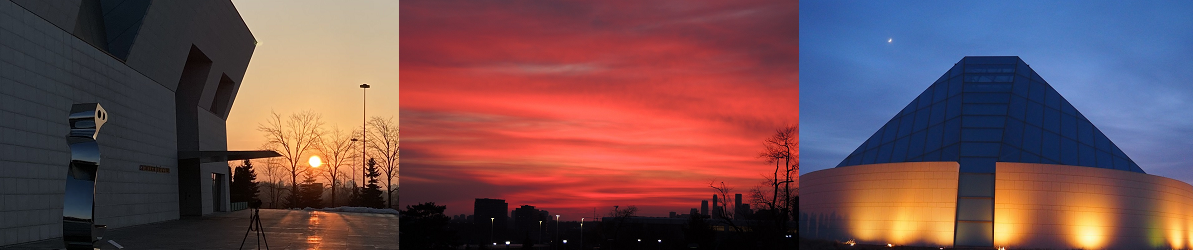
Mawlana Hazar Imam His Highness the Aga Khan’s vision, creativity and thought followed by action makes him a talisman for the Ismaili community and for millions around the entire world. For Simerg’s Malik Merchant, Mawlana Hazar Imam’s three projects in Toronto, among hundreds of others around the world that benefit humanity at large, attest to his brilliant leadership. Malik spent a few hours from dawn to dusk at the grounds of the Aga Khan Museum, the Aga Khan Park and the Ismaili Centre to bring you a collection of marvellous photos. View the complete collection by clicking SIMERGPHOTOS or the image below.
Please click on image for photos.
Date posted: January 19, 2021.
___________________________
Before departing this website please take a moment to review Simerg’s Table of Contents for links to hundreds of thought provoking pieces on a vast array of subjects including faith and culture, history and philosophy, and arts and letters to name a few. Also visit Simerg’s sister websites Barakah, dedicated to His Highness the Aga Khan, and Simergphotos.
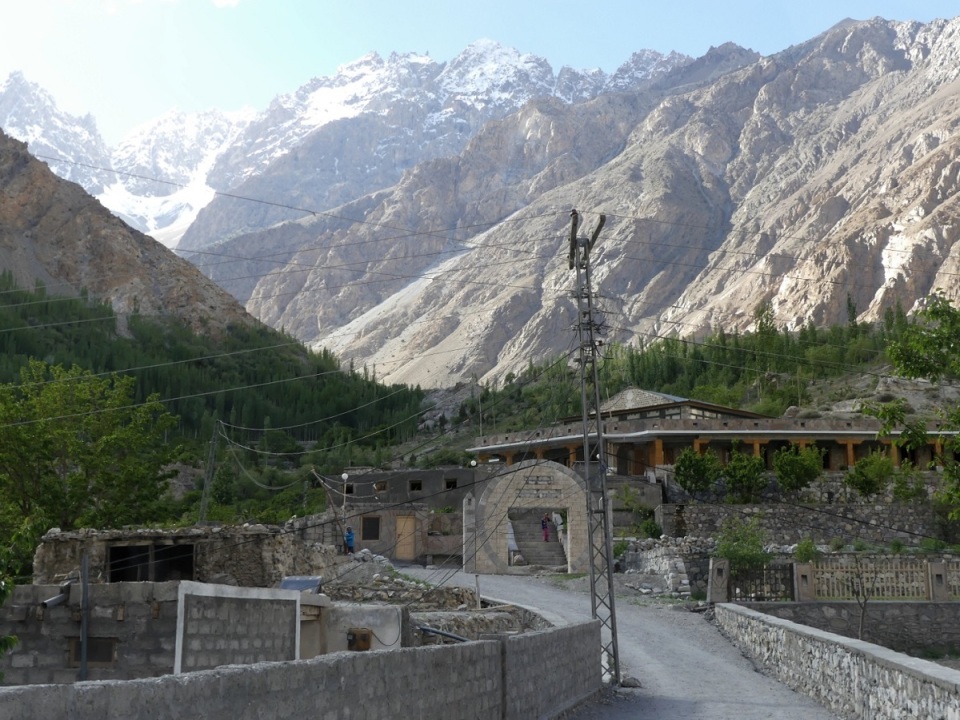
In a fascinating 5 part travelogue of his trip to China and Pakistan, Ali Karim dedicated an entire post to the Ismailis of Northern Hunza. His visits to the villages of Passu and Khyber left Ali and his wife Dilshad speechless. They noted, “The experience was overwhelming, as were the sights! The Ismailis of Khyber village and Passu showed us that you can symbolically scale and even climb above the highest of peaks through goodness, warmth and generosity.” Please read Ali’s piece Ismailis of Remote Northern Hunza Rise High Above the Tallest Peaks.
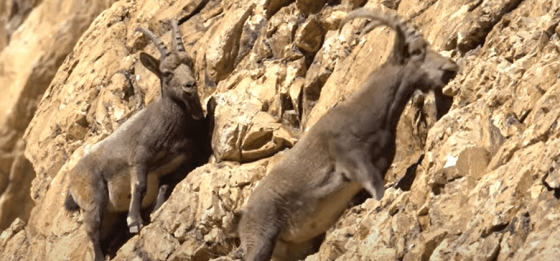
Interestingly, just this past week, the media in Pakistan reported a story about Nyal Mueenuddin, wildlife filmmaker for World Wildlife Fund (WWF) Pakistan and Imtiaz Ahmed, a local photographer, spotting a herd of about 50 Himalayan ibex including females along with their yearlings near Khyber village. We located the beautiful short film on Youtube, which every member of your family, young and old alike, will love watching. The short film follows photos of Khyber Village and Passu from Ali Karim’s must read article.
A version of this post also appears at Simergphotos.
We welcome feedback from our readers. Please complete the LEAVE A REPLY form below or click Leave a comment. Your letter may be edited for length and brevity, and is subject to moderation. Before departing this website please take a moment to review Simerg’s Table of Contents for links to hundreds of thought provoking pieces on a vast array of subjects including faith and culture, history and philosophy, and arts and letters to name a few.
The naysayers said the user-written encyclopedia would never work. Now it boasts 55m articles and 1.7bn visitors a month…..READ MORE AT THE GUARDIAN
Wikipedia logo. Attribution-ShareAlike 3.0 Unported (CC BY-SA 3.0). Please click on image to read article at The Guardian
Date posted: January 15, 2021.
___________________
We welcome feedback from our readers. Please complete the LEAVE A REPLY form below or click Leave a comment. Your letter may be edited for length and brevity, and is subject to moderation.
Before departing this website please take a moment to review Simerg’s Table of Contents for links to hundreds of thought provoking pieces on a vast array of subjects including faith and culture, history and philosophy, and arts and letters to name a few.
By KARIM H. KARIM (The author is Director of Carleton University’s Centre for the Study of Islam and former Co-Director of the Institute of Ismaili Studies)
“… we find ourselves in the moment of transit, where space and time cross to produce complex figures of difference and identity, past and present, inside and outside, inclusion and exclusion.” Professor Homi K. Bhabha, former Master Jurist, Aga Khan Award for Architecture
Abstract: A former Co-Director of the IIS considers this key Ismaili institution’s way forward, following its Board of Governors’ recent reconstitution. Although substantial changes have been made, certain features regarding the diversity of office holders remain. The IIS’s past performance is briefly examined in the article, with respect to academic metrics as well as Ismaili history and values. There have been several achievements in the last four decades, but also some unexpected outcomes. The author discusses the importance of ethics and clarity in chains of authority. IIS’s reconstituted governance structure has the opportunity to put it on a path to globally-recognized excellence and long-lasting impact.
A New Phase
Recent appointments to the governance structures of the Institute of Ismaili Studies (IIS) present an opportunity to consider its way forwards. The substantial reconstitution of the Board of Governors appears to initiate a new phase for this key Imamat institution, which occupies a unique place in-between Jamati and Aga Khan Development Network (AKDN) organizations. This is a time of particular significance as the Governors are tasked with guiding the IIS towards its 50th anniversary in 2027.
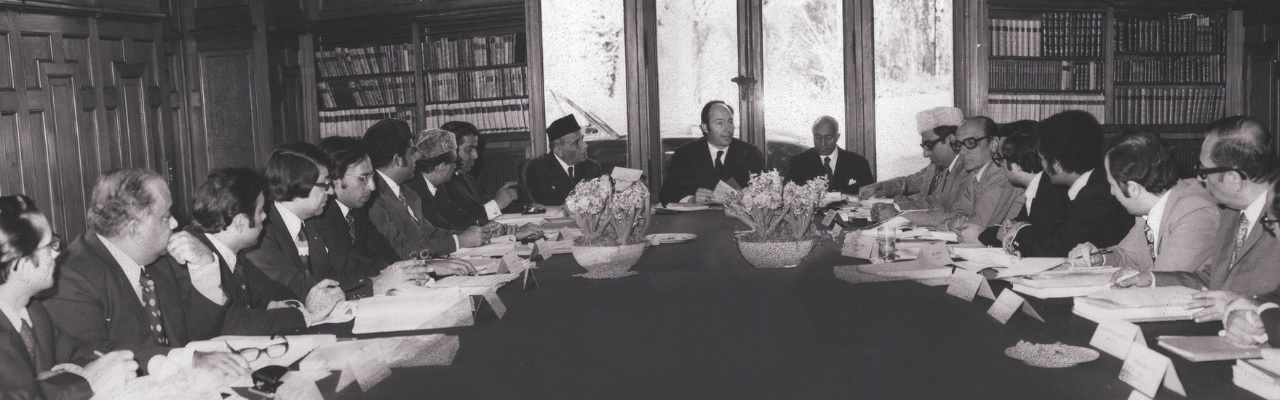
Mawlana Hazar Imam met with leaders of the Ismailia Association and Ismaili scholars in April 1975 in Paris. A decision was taken at the world conference to establish the Institute of Ismaili Studies. Photo: Ilm magazine, October 1975.
The concept of the Institute was formally discussed in 1975 in the historic Paris Conference of the Ismaili Associations, at which Mawlana Hazar Imam presided. He announced the IIS’s establishment in a Talika to the international Jamat on December 13, 1977. The institution began with a very small staff occupying one floor of a London building. Growing and traversing the city for four decades, the IIS settled into its purpose-built home at the Aga Khan Centre in 2018. It currently has research, teaching and support staff of over a hundred and has seen some 650 graduate students pass through its doors. Scores of publications and several sets of curricular materials have been produced. Alumni work around the world in a variety of professions and have particularly enriched the knowledge base of the worldwide Ismaili Tariqah and Religious Education Boards (ITREBs).
Unintended Consequences
The Institute, which has a very distinct institutional character, operates in an organizationally and intellectually liminal space. Governors have played an unusual hands-on role in the operation of this academic organization. Although the IIS’s educational endeavours are limited to the community, it positions itself in the public sphere. Unlike similar scholarly bodies, it does not identify as a theological seminary or a divinity school. It is a post-graduate institution whose students receive degrees from various universities, including the University of London’s School of Oriental and African Studies.
IIS publishes materials on Ismaili, Shia, Quranic and Central Asian studies authored by its own researchers and external scholars. Islamic Publications Limited (IPL), an affiliate, produces them with the imprimaturs of presses such as I.B. Tauris and Oxford University Press. Whereas substantial work has been carried out in examining Arabic and Persian documents, the study of Indic manuscripts (bearing content such as Ginans) has been miniscule in the last four decades. Research is also conducted on the transnational Ismaili community’s living traditions, but it is not published for the most part. The Institute prioritizes a rationalistic and civilization-centred approach over faith perspectives in its course instruction and religious education curricula for the global Jamat.
These characteristics, viewed as appropriate for the IIS’s particular mandate, have, however, raised an air of ambivalence that has apparently produced unintended consequences. A number of students in the Graduate Programme in Islamic Studies and Humanities (GPISH), who arrive at the Institute of Ismaili Studies expecting a faith-friendly academic approach undergo cognitive dissonance (Magout, 2020, chapter 6). Most alumni do not list the Institute on their CVs or LinkedIn profiles; faculty members have been leaving for university positions as soon as they secure them; and one of the two Co-Directors’ posts has remained unfilled for almost a decade. Furthermore, donors who have contributed substantially to the endowment are perplexed by the asymmetry in Ismaili areas of research.
Aspirations for Excellence
At its founding, the IIS was compared to learned institutions like the Dar al-Ilm and Al-Azhar University, which were established a thousand years ago under the aegis of Fatimid Imam-Caliphs. Al-Azhar survived the fall of the Fatimids and flourishes today as a prominent centre of Muslim learning. Can one expect that the IIS will also function for hundreds of years? Perhaps the more pertinent question is whether it will make a lasting impact. What will the role of the governance structure be in helping it achieve this?
Although the Institute is a globally-recognized hub of Ismaili Studies, it has some ways to travel before being acknowledged as a centre of scholarly excellence. It recently made a selection of books available electronically, but many important IIS contributions remain absent in cyberspace and from most bookstores as well as university and public libraries. It is also unfortunate that only a handful of its more than 120 books have done well in academic citation indices.
One could argue that standard scholarly metrics are inappropriate for an institution whose aspirations are drawn from millennial-long history. Is it more apt then to measure the Institute’s performance in terms of the Ismaili past? Of the many luminaries in previous eras, the most well-known outside the community are the Ikhwan al-Safa (circa 10th century), Nasir-i Khusraw (d. 1088) and Nasir al-Din Tusi (d. 1274). Satpanthi Pirs conducted ingenious syntheses of Indic and Islamic traditions that stand as major human achievements of pluralist engagement. These intellectuals are exemplars of excellence whose contributions have been of universal significance. They maintained a rigorous independence of thought within parameters of the Ismaili movement and its intellectual universe. Given the aspirations for the IIS, should we expect it to provide the conditions for nurturing scholars of similar calibre in our time?
Contemporary Values as Metrics
Contrarily, one can contend that it is not right to apply historical standards to 21st century contexts. Perhaps the benchmarks for success are to be drawn from the community’s current emphases on ethics, meritocracy, and pluralism. This topic is addressed here only with reference to IIS’s Boards.
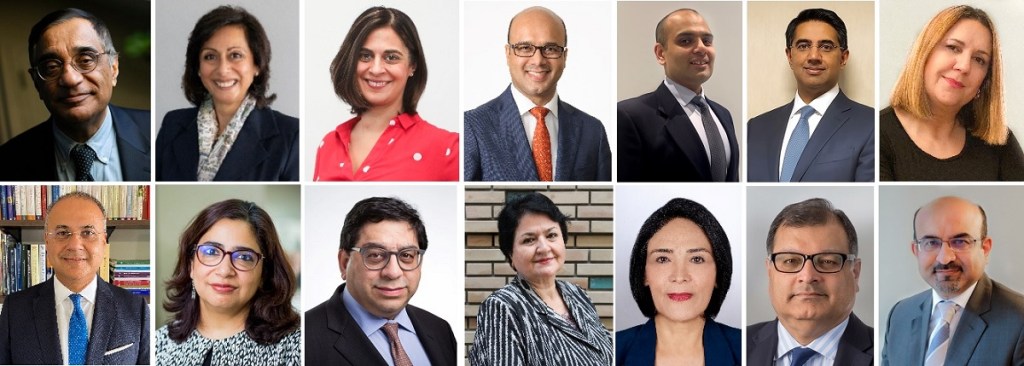
New Board of Governors of the Institute of Ismaili Studies, appointed by Mawlana Hazar Imam effective December 13, 2020. Top row (from left): Professor Ali Asani, Dr Nadia Eboo Jamal, Mrs Karina Govindji, Dr Arif Jamal, Mr Rahim Karim, Mr Alykhan Kassam, and Professor Nacim Pak-Shiraz. Bottom row (from left): Mr Amyn Kassim-Lakha, Professor Tashmin Khamis, Mr Naguib Kheraj, Dr Sharofat Mamadambarova, Dr Shogufa Mir Maleky, Mr Habib Motani, and Professor Farid F. Panjwani. Collage by Barakah from IIS profile photos
The new Governors are drawn from commercial and academic sectors, and they include some IIS alumni. Mawlana Hazar Imam continues as Chairman. Membership of the current Board of Governors (BoG), which began its term on December 13, 2020, is remarkably different from earlier ones in size, gender, age, ethnicity, geographic scope, and outlook. Although the IIS has been an international institution since inception, preceding Boards consisted almost entirely of middle aged men of British residence, with the balance tilting towards commercial worldviews. The incoming BoG’s average age has dropped considerably in comparison to the preceding one. There are now six women and eight men, and half of the Governors are currently located outside the UK. Eight newcomers are academics, most of whom have taught at universities. Several individuals have had experience in Jamati institutions, including ITREB, which is a major partner of the IIS. It is also noteworthy one Governor has professional expertise in diversity and inclusion.
There has been some non-Ismaili presence previously; however, this BoG’s members are all Ismaili. When Professor Mohammed Arkoun passed away in 2010, the remaining six Governors were all South Asian men of East African provenance. Whereas the new BoG is enriched by the presence of other ethnicities, all three members of the Board of Trustees (BoT), the IIS’s primary governing body and of which the BoG is a sub-committee, are UK residents of South Asian background, as are all four Board members of Islamic Publications Limited. Full time academics are absent from the BoT and IPL. The former does, however, have a female Trustee. There is much more pluralist inclusion than in earlier manifestations of the institution’s governance structures, but they have considerable room for improvement.
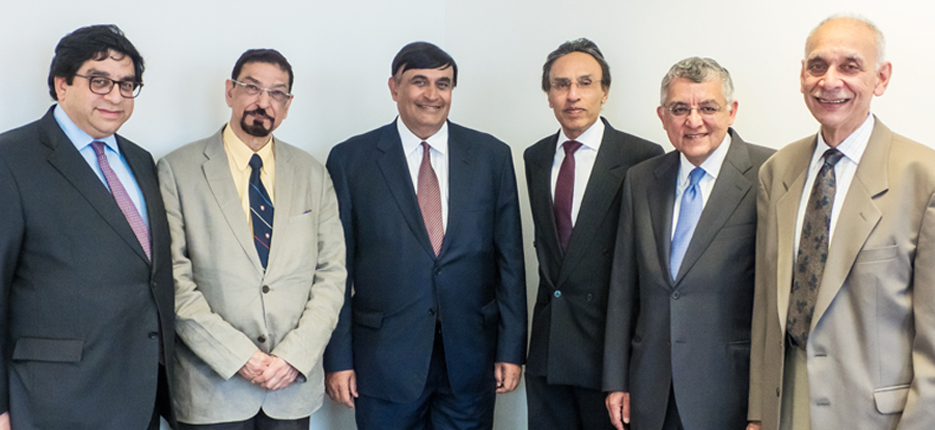
The IIS Board of Governors (1995-2020). From left to right: Mr Naguib Kheraj (who remains on the new board appointed on December 13, 2020), Dr Mohamed Keshavjee, Dr Shafik Sachedina, Dr Aziz Esmail, Mr Zauhar Meghji and Professor Afzal Ahmed. Missing in the photo is the Late Professor Mohammed Arkoun who was also a member on the Board. He passed away on September 14, 2010 at the age of 82. Photo: The IIS
A truly unique characteristic of the previous BoG was not identity but longevity. Its more than 25-year term was one of the lengthiest in the world. Whereas this provided continuity and familiarity with the work at hand, shorter tenures usually mitigate detrimental tendencies in such organizations. Stretches that are longer than seven years seem inadvisable.
The presence of new university-linked Governors should help to assert academic norms in matters such as standardized merit-based pay scales rather than particular arrangements for some employees; remuneration for performance adjudicated according to published benchmarks instead of bonuses based on ambiguous criteria; and discontinuation of consulting contracts with Governors. Notably, the current separation of Board members from IIS’s remunerated staff makes the organizational chart look less like the M.C. Escher lithograph “Relativity”.
Ethics, Ambiguity, and Credibility
Ismaili history has seen the development of ethical codes in the works of Qadi Nu’man (d. 974), dai Ahmad al-Naysaburi (d. circa 11th century), Pir Sadardin (d. circa 14th century), and Imam Mustansirbillah II (d. 1475). Writing at a time of deep corruption in the Fatimid state, al-Naysaburi warned that “chaos will reign” with the failure of integrity among the Imam’s leaders (Klemm and Walker, 2011, p. 75). The IIS developed an AKDN “ethical framework” two decades ago; however, this theoretical document does not provide guidance for actual deontological practice. There remains ambiguity about the pragmatics of ethics in contemporary Ismaili institutions. Narratives on this subject have sometimes drifted towards trivialization; for example, one Jamati periodical’s feature on an “Ethic of the Month” seemed to reduce long-term values to fleeting tastes (The Ismaili Bulletin, Issue 54, March 2018). Given the importance that the community gives to the subject of ethics, serious issues like conflicts of interest, cronyism, nepotism, harassment, and bullying, which unfortunately appear over time in most human organizations, will need to be dealt with effectively and coherently. These issues must be an integral part of a 21st century code of conduct that provides clear guidance for everyone involved with the work of Jamati as well as AKDN institutions.
Systemic deficiencies in institutional procedures have unpredictable outcomes and can be factors for reputational loss. Incoming academic Governors will know that ambiguous chains of authority in scholarly institutions lead to the unchecked promotion of pet projects with dubious merit. A book published in 2018 by the Institute (but not initiated by its Department of Academic Research and Publications) was reviewed in a recent issue of the journal Arabica. The reviewer, who is the Director of the University of Lausanne’s Institute of the History and Anthropology of Religions, assessed it to be “a book of propaganda … without method and completely devoid of critical analysis” (Halawi, 2020, 315). Such unfortunate situations can be avoided by instituting an academic editorial board that oversees IIS’s scholarly publications to replace largely ambiguous practices of vetting manuscripts for “sensitivities.” (Such an editorial board already exists for the Quranic Studies Series.) The new Governors will also be aware of the importance of ensuring that the institution’s faculty, students and academic visitors have ready access to library materials that reflect a plurality of views, including those that are considered to be “sensitive.” Such efforts will assist in enhancing the IIS’s scholarly credibility in academic circles.
Transparency and Demarcations of Authority
Despite the noblest of intentions, the tendency in human organizations is for power to accumulate in a few persons. Whereas the doubling of the number of Governors to 14 offers advantages, it may also produce the conditions for the emergence of a hierarchy and the marginalization of some individuals. A horizontal relationship and equitable sharing of information in the globally-constituted BoG is important. Fair and optimal participation by Governors can be ensured by upholding transparency. Transparency and disclosure will not only strengthen the corporate governance framework but also provide Mawlana Hazar Imam with all the pertinent information.
It is expected that Hazar Imam will meet with the Governors and Directors once a year, with respective Board committees working on specific policy issues in the interim. The transnational BoG has the challenge of working efficiently across continents. Given these circumstances, safeguarding the greatest possible diversity in every committee will help ensure the pluralist expression of views. This should help to mitigate the influence of cliques and undue bias for or against specific issues and employees.
A key consideration facing the new Governors is the extent of the BoG’s involvement in operational matters. Healthy, well-functioning institutions are characterized by clear demarcations of authority and function, with Boards having confidence in duly-appointed Directors to take charge of administration. Clear protocols regarding Governors’ communications with employees, which rarely occur in universities, ensure that administrative authority is not undermined. Scholarly conventions should also determine the leadership of various organizational committees (academic, curricular, and community relations as well as finance and human resources).
A Potential Turning Point
The strong presence of university-based academics in the Institute’s new BoG signals that scholarly priorities will be paramount in the years to come. This Board’s tenure has the potential for being a turning point. It has the opportunity to put the IIS on the path to globally-recognized excellence by moving closer to academic norms of organization and outlook. Professor Mohammed Arkoun used to speak of “intellectual modernity” in contemporary Muslim contexts. Such a disposition requires not only scholarly rigour but the confidence to conduct critical introspection. There are important discussions to be had about the adoption of greater academic freedom, critical inquiry, and the broaching of “sensitive” topics as well as about effective ways to engage with the transnational Jamat, with which the Institute has an integral relationship. Governors will constantly have to account for the dual contexts of community and public scholarship. This calls for skillful and conscientious navigation between the shores of the parochial and the universal. The likes of the Ikhwan al-Safa, Nasir-i Khusraw, Nasir al-Din Tusi and Pir Sadardin have shown us that this is eminently possible.
Date posted: January 10, 2021. Last updated: May 31, 2025 (reformatting, typos).
____________________
Reproduction of material posted on this website without the expressed written permission of the publisher is prohibited. For permission to reproduce in whole or part, please write to mmerchant@simerg.com.
We welcome feedback from our readers. Please complete the LEAVE A REPLY form below or click Leave a Comment. Your letter may be edited for length and brevity, and is subject to moderation.
Karim H. Karim
About the author: Professor Karim H. Karim is the Director of Carleton University’s Centre for the Study of Islam, where he has held the International Ismaili Studies Conference. He previously served as Co-Director of the Institute of Ismaili Studies (IIS) and Director of Carleton’s School of Journalism & Communication. Dr. Karim has had visiting scholarly appointments at Harvard University, Aga Khan University/Simon Fraser University, and the IIS. He has also been an advisor for AKU and the Central Asian University and has been a member of the AKDN’s Higher Education Forum. Additionally, he has served in Kenyan, American, and Canadian Jamati institutions (Education, Ismaili Association, and Ismaili Tariqah and Religious Education Board, ITREB). Professor Karim is an award-winning author whose globally-cited writings include publications on Ismaili communities, institutions, and leadership. He has delivered distinguished lectures at venues around the world and has been honoured by the Government of Canada for promoting co-operation among faith communities. He studied at Aga Khan schools in East Africa and at the IIS, and holds degrees from Columbia and McGill universities in Islamic and Communication Studies.


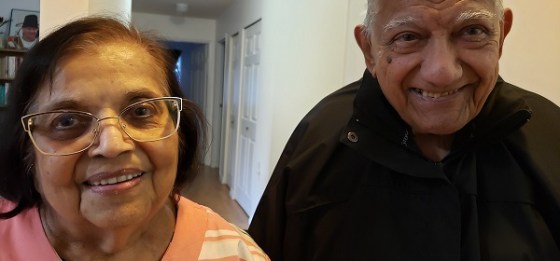
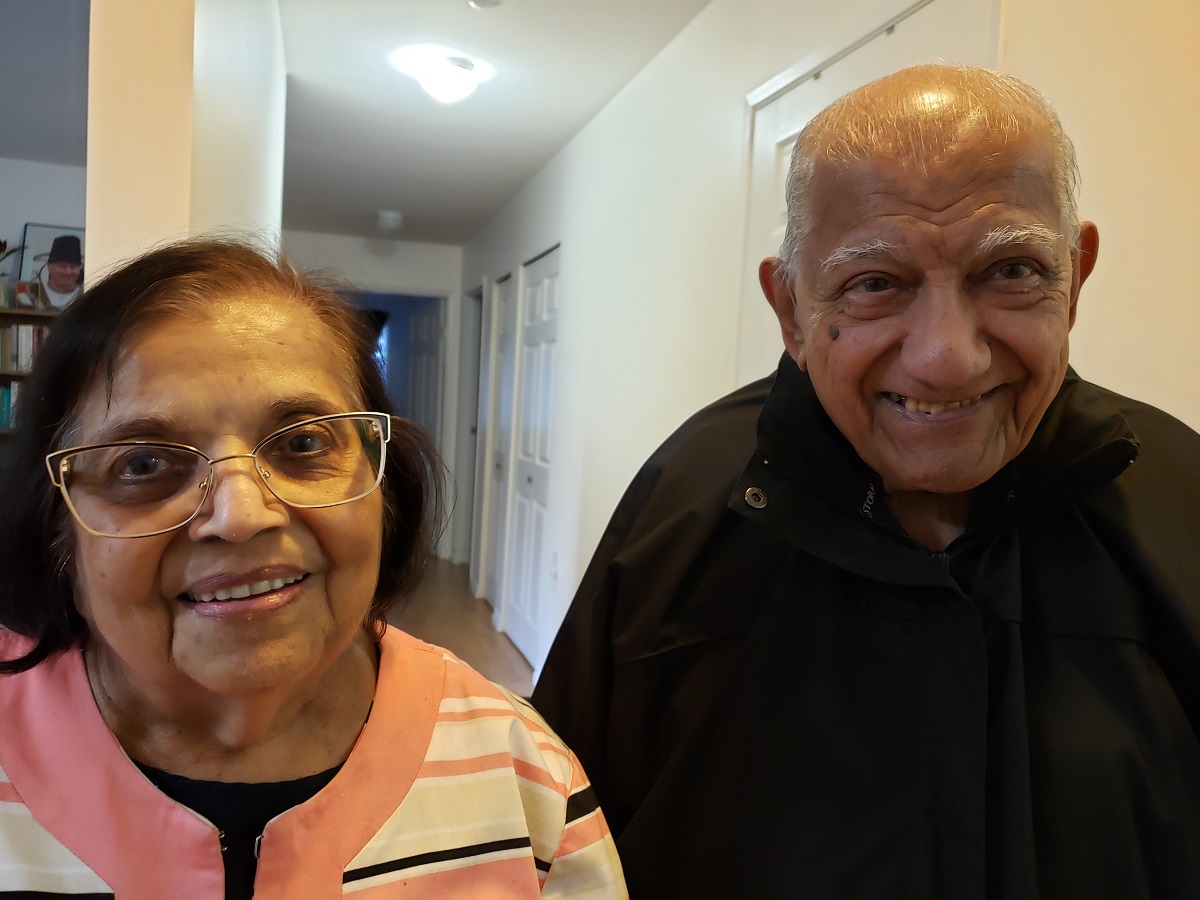
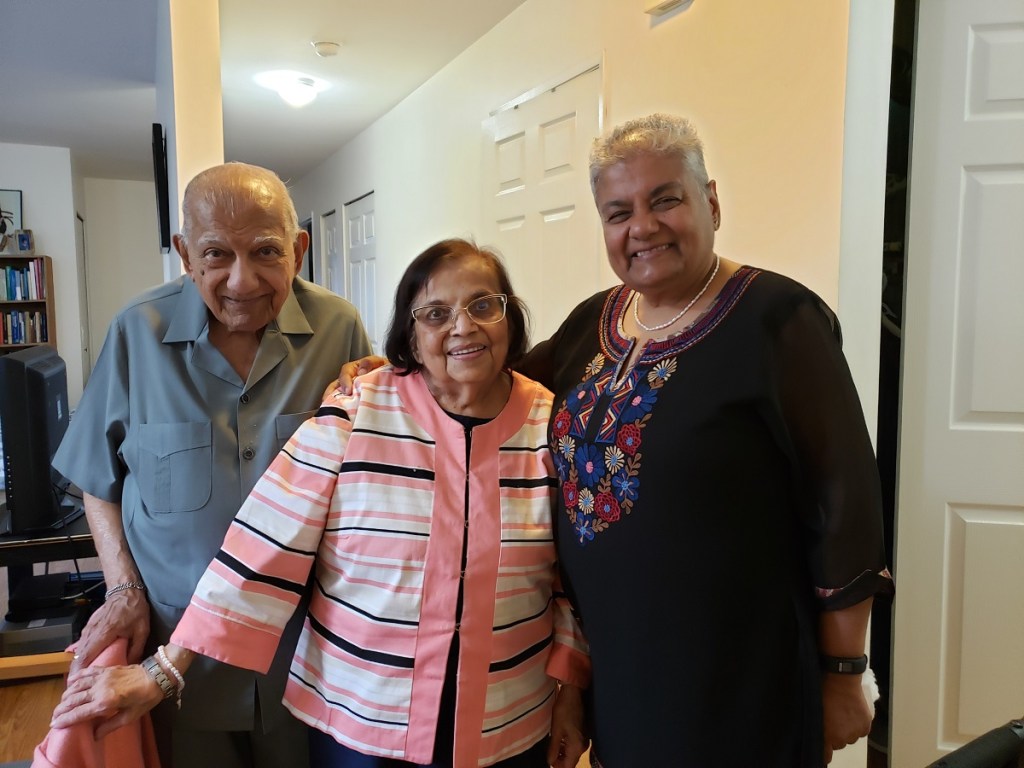
 for inviting us to participate in funeral ceremony. Her soul has merged with the Noor. It is time for spiritual happiness. May Mawla accept all your wonderful sewa. Stay safe, healthy, happy, united and continue your wonderful family tradition of spiritually intellect sewa in humility. Love to all.