The Work of the Ismaili Imamat at a Glance, and the Most Famous Logos of the Aga Khan Development Network

University of Ottawa confers an Honorary Degree on His Highness the Aga Khan

“His Highness has used his own faith background to speak directly to the goodness of all people.” — President Alan Rock, University of Ottawa, January 13, 2012. Photo: University of Ottawa. Copyright.

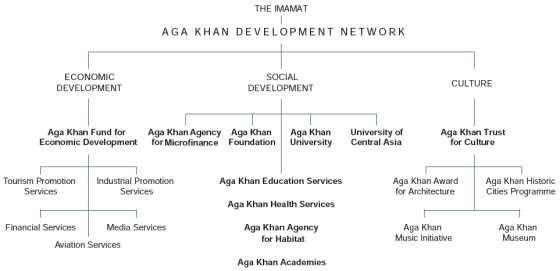
For over 60 years the Aga Khan Development Network (AKDN), under the leadership of His Highness the Aga Khan, the 49th hereditary Imam of the Ismailis in direct lineal descent of the Prophet Muhammad (may peace be upon him), has been building institutions and delivering essential services by creating schools and hospitals, newspapers and electricity generation plants, and social programmes of all kinds. These services have helped improve the lives of hundreds of millions of people of all races and faiths in places as varied as Cairo, Kabul, Delhi and Bamako.

We provide an organizational chart highlighting the breadth of the work of the Ismaili Imamat, and compile a piece about the most identifiable emblems, logos and seals of the AKDN.

Please click on image to enlarge

Work of Ismaili Imamat and AKDN

Credit AKDN*

~~~~~~

FAMOUS LOGOS, SEALS AND EMBLEMS OF AKDN AGENCIES AND INSTITUTIONS

1. Aga Khan University (AKU)

aku-seal

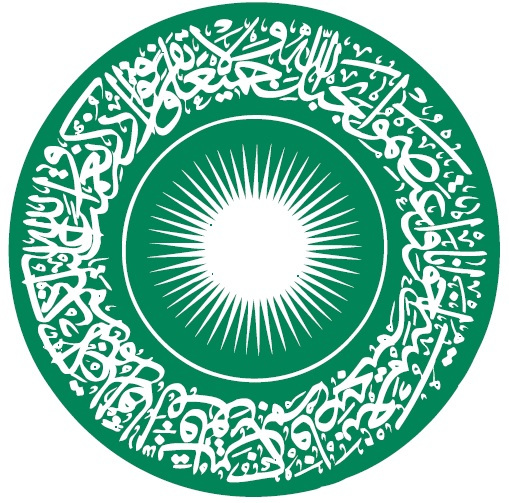
The Seal of Aga Khan University is a visual representation of the principles which underlie the founding of the University. The circular form of the Seal, with its different levels of imagery contained in concentric circles, has its visual roots in the rosettes of early Islamic periods. The circle also symbolises the world and reflects the international presence of the University.

At the centre of the Seal is a star, or sun. Light is a universal symbol for the enlightenment that education provides.The light emanating from the star is also symbolic of Nur (Divine light).

The star incorporates 49 points to commemorate the University’s founding by His Highness Prince Karim Aga Khan. The outer ring circumscribes a Qur’anic ayat rendered in classic thuluth script and reads as follows:

“And hold fast, All together, by the rope
Which God (stretches out for you),
And be not divided among yourselves,
And remember with gratitude
God’s favour on you:
For ye were enemies
And He joined your hearts
In love, so that by His grace
Ye became brethren” — Sura 3, Ayat 103.

2. Aga Khan Foundation (AKF)

akf-logos

In every language there are idioms and proverbs illustrating the importance of the right hand as an instrument of human skill, achievement and caring.

The Aga Khan Foundation logo is based on the right hand, and represents the humanitarian and positive philosophy underlying the Foundation and its activities.

In Islam, the hand has a number of meanings: its shape reflects its comprehensive and positive character, while its constituents represent the five principles of Islam and the five senses of the human body. The stylized fingers represent “Allah” in the Kufic script, and the interlacing beneath the fingers correspond to the anatomy of the hand and also delineates the sign, which in Chinese stands for Wisdom.

The logo of the Aga Khan Foundation was designed by Mr. Zahoor-ul-Akhlaq of Pakistan.

3. Aga Khan Health Services (AKHS)

Aga Khan Health Services

Photo: Isabelle Prondzynski. Copyright.

The emblem of the Aga Khan Health Services shown on the cup and saucer represents health care and compassion. The crescent is an ancient icon which, when used in red, has become the equivalent of the International Red Cross. The three-crescent design in its simple, poetic form creates an internal space symbolising how institutions and programmes using the symbol surround, attend and care for those in need.

4. Aga Khan Award for Architecture (AKAA)

AKAA Logo

The logo of the Aga Khan Award for Architecture was designed by Karl Schlamminger, a German Muslim of the Shia tradition.

The Name of Allah in Kufic script, reflecting Itself and repeating Itself, forms the basis of the logo design.

Date posted: April 7, 2016.

___________________

*For original chart and related material please visit the Aga Khan Development Network link at http://www.akdn.org/publications/2015_akdn_overview.pdf.

Sea of Gold: An Exhibit of Newfound Fatimid Treasures in Caesarea

In February 2015, divers off the coast of Caesarea spotted by chance a group of gold coins lying on the seabed. They immediately alerted marine archaeologists of the Israel Antiquities Authority (IAA), who conducted a salvage excavation at the site and recovered more than 2,580 Fatimid coins of pure (24 karat) gold weighing a total of 7.5 kg.

Please click on the image to view an on-line exhibit of the discovery.

Please click on the image to view an on-line exhibit of the discovery.

The coins date from the mid-9th to the early 11th century CE. They were minted by the Fatimid caliphs of Egypt, and include dinars minted in al-Qayrawan, on the Tunisian coast, by Imam al-Mahdi (AH 297–322 = 910–934 CE), the founder of the Fatimid caliphate as well as a much larger collection belonging to the Fatimid caliphs Imam Al-Hakim (AH 386–411 = 996–1021 CE) and his successor Imam Al-Zahir (AH 411–427 = 1021–1036 CE).

Following the discovery, an exhibition was held from June to December 2015 at the Samuel and Saidye Bronfman Archaeology Wing of The Israel Museum in Jerusalem. Some very interesting data and information about the Fatimid coins was also posted on the Museum’s website, which includes topics such as the inscription on the coins, the coin’s purchasing power, the script, and the purity of the coins. We invite our readers to visit the website by clicking on http://www.imj.org.il/exhibitions/2015/caesarea/ or on the image shown above.

Date posted: March 4, 2016.

________________

Imam is “A Cosmic Necessity,” and Hazar Imam, His Highness the Aga Khan, is the “Living, Hereditary Imam in Direct Descent from the Prophet”

QUOTES

1. IMAM – A COSMIC NECESSITY

Imam is the Threshold through which God and the creatures communicate; Imam is a Cosmic Necessity and the earth cannot be devoid of an Imam – without an Imam the earth and the universe would crumble; The Imam is the Proof, the Manifestation and the Organ of God and he is the Means by which human beings can attain the knowledge of God — Excerpt from The Divine Guide in Early Shi’ism by Mohamad Ali Amir-Moezzi, pp 125-131, SUNY, 1994.

2. THE ROLE OF MAWLANA HAZAR IMAM

Historically and in accordance with Ismaili tradition, the Imam of the time is concerned with spiritual advancement as well as improvement of the quality of life of his murids. The imam’s ta‘lim lights the murid’s path to spiritual enlightenment and vision. In temporal matters, the Imam guides the murids, and motivates them to develop their potential…..Mawlana Hazar Imam Shah Karim al Hussaini, His Highness Prince Aga Khan, in direct lineal descent from the Holy Prophet (s.a.s.) through Hazrat Mawlana Ali (a.s.) and Hazrat Bibi Fatima (a.s), is the Forty-Ninth Imam of the Ismaili Muslims….Clauses (F) and (G) of the Preamble of the Ismaili Constitution ordained in 1986 [1].

3. HIS HIGHNESS THE AGA KHAN: THE LIVING IMAM

The religious leadership of the Ismaili Imam goes back to the origins of Shia Islam when the Prophet Muhammad appointed his son-in-law, Ali, to continue his teachings within the Muslim community. The leadership is hereditary, handed down by Ali’s descendants, and the Ismailis are the only Shia Muslims to have a living Imam, namely myself. [2] The Ismaili Imamat is a supra-national entity, representing the succession of Imams since the time of the Prophet…today the Ismailis are the only Shia community who, throughout history, have been led by a living, hereditary Imam in direct descent from the Prophet. [3]

~~~~~

READINGS

1. THE NUR (LIGHT) OF IMAMAT

What is this special light that Allah refers to [in Holy Qur’an 4:174], which guides and makes things clear? For Shia Muslims, this light is the Light of Imamat. The Shias refer to it as the Nur of Imamat. Nur means light. The Nur of Imamat is a spiritual light….Click to read more

2. LOVE FOR THE IMAM

“Say (O Muhammad): No reward do I ask (for my favours) except your love for my kith and kin” – Holy Qur’an, 42:23

“He who loves us will be with us on the Day of Judgement” – Imam Ja’far as-Sadiq….Click to read more

3. THE FORMULATION OF THE DOCTRINE OF IMAMAT

Like his father and grandfather before him, Imam Ja’far remained politically quiescent and inactive…..it was in this period of political inactivity – to an extent – that the main religious ideas and doctrinal formation of Imamate concepts really crystallised….Click to read more

4. THE TERM IMAM IN THE HOLY QUR’AN

The term Imam is used seven times in the singular and five times in the plural form in the Holy Qur’an. It is not, however, used in the same sense every time. The different shades of meaning which it indicates therefore needs to be analysed….Click to read more

5. THE DOCTRINE OF IMAMAT DURING THE FATIMID PERIOD

The central doctrine of the Ismaili community has always been the doctrine of Imamat because around it are built all the goals of the community and the roles of the dais, but this doctrine is also not rigid, it has been evolving, particularly in the writings and preachings of the dais….Click to read more

6. IMAMAT IN ISMAILI GINANIC LITERATURE

According to the Ginans the Imam is the source of Guidance for mankind. He shows them the right path, saves the people from ignorance and acts as a Divine Light in the darkness….Click to read more

Date posted: Saturday, January 23, 2013 (this is a slightly updated version of a previous post).

________________

Reference:

[1] The Preamble of “The Constitution of the Shia Imami Ismaili Muslims”

[2] Voices: “The Power of Wisdom” – His Highness the Aga Khan’s Interview with Politique Internationale (English translation)

[3] In a Dynamic and Stirring Address to Members of the Canadian Parliament, His Highness the Aga Khan Shares His Faith Perspectives on the Imamat, Collaboration with Canada, the Muslim World Community (the Ummah), the Nurturing of Civil Society, Early Childhood Education, Voluntary Work, and the Unity of the Human Race

His Highness the Aga Khan and Pope Benedict XVI: A Very Special Photo of Two Faith Leaders Meeting Each Other at the Institut De France in Paris

PREPARED AND COMPILED BY ABDULMALIK MERCHANT
(Publisher-Editor http://www.simerg.com and http://www.simergphotos.com)

As part of his famous Apostolic Journey to France in 2008, Pope Benedict XVI, on September 13, paid a visit to the “Institut De France” in Paris. The Pope, who had been elected as the 265th Pope of the Roman Catholic Church in 2005, was presented with a gold medal by the Institut, and also unveiled a plaque commemorating his visit. During his very brief remarks to the audience, the Pope expressed his gratitude to the Institut “both personally and as the successor of [Simon] Peter.”

His Highness the Aga Khan, Mawlana Hazar Imam, was also in attendance at the Institut de France as the Associate Foreign Member of the Académie des Beaux-Arts (Academy of Fine Arts), one of five learned societies within the Institut which was founded in 1795.

Everyone’s attention in the hall was drawn to Mawlana Hazar Imam and the Pope, with an extraordinary sense of interest and keenness, as the two faith leaders greeted each other with a handshake. Simerg is pleased to present this licensed copyright photo with permission from Getty Images.

Pope Benedict XVI is seen greeting His Highness the Aga Khan on September 13 at the Institut de France in Paris during an official visit to France in 2008. Photo: Copyright. Getty Images. Published on Simerg/Simergphotos with a Licencing arrangement with Getty Images. Fench caption: Vue plongeante du pape BENOIT XVI serrant la main de l'AGA KHAN à son arrivée sous la coupole de l'Institut de France à PARIS entouré de nombreux académiciens et autres personnalités dont Gabriel DE BROGLIE, Hélène CARRERE D'ENCAUSSE, Jean-François JARRIGE, Jean-François BACH, Arnaud D'HAUTERIVES, Michel ALBERT, Christian PONCELET président du Sénat, Jean TULARD, Alain DECAUX, Pierre-Jean REMY, Michel MOHRT, Max GALLO, le cardinal André VINGT-TROIS archevêque de Paris et le cardinal Paul POUPARD. (Photo by Philippe Petit/Paris Match via Getty Images)

Everyone’s attention is drawn to Pope Benedict XVI and His Highness the Aga Khan as they greet each other on September 13, at the Institut de France in Paris during an official visit by the Pope to France in 2008. Photo: Copyright. Getty Images. Published on Simerg/Simergphotos with a Licensing arrangement with Getty Images. Fench caption: Vue plongeante du pape BENOIT XVI serrant la main de l’AGA KHAN à son arrive sous la coupole de l’Institut de France à PARIS entouré de nombreux académiciens et autres personnalités dont Gabriel DE BROGLIE, Hélène CARRERE D’ENCAUSSE, Jean-François JARRIGE, Jean-François BACH, Arnaud D’HAUTERIVES, Michel ALBERT, Christian PONCELET président du Sénat, Jean TULARD, Alain DECAUX, Pierre-Jean REMY, Michel MOHRT, Max GALLO, le cardinal André VINGT-TROIS archevêque de Paris et le cardinal Paul POUPARD. (Photo by Philippe Petit/Paris Match via Getty Images).

In 2013, Pope Benedict dramatically resigned his position as the Head of the Catholic Church due to his deteriorating strength, advanced age and the heavy demands of being Pope, and retired at the Mater Ecclesiae, a small monastery located inside the Vatican State City. His present successor is Pope Francis I, born Jorge Mario Bergoglio.

SOME BRIEF NOTES ON THE PAPACY AND THE IMAMAT, AND SIMON PETER IN THE ROMAN CATHOLIC AND ISMAILI TRADITIONS

The Catholics adhere to the belief that the Pope is a successor of St. Peter. The succession of the pope is determined by a college of cardinals who elect the pope, while the office of the Imam of the Ismailis is a hereditary position. The Ismailis regard their 49th hereditary Imam as the direct descendant of the Prophet Muhammad (s.a.s) through Hazrat Ali (a.s.) and Hazrat Bibi Fatima (a.s.). In a speech made at the Canadian Parliament in 2014, the Aga Khan declared that “the Ismaili Imamat is a supra-national entity, representing the succession of Imams since the time of the Prophet.” And, in an interview with Politique International he said, “The religious leadership of the Ismaili Imam goes back to the origins of Shia Islam when the Prophet Muhammad appointed his son-in-law, Ali, to continue his teachings within the Muslim community. The leadership is hereditary, handed down by Ali’s descendants, and the Ismailis are the only Shia Muslims to have a living Imam, namely myself.”

In the Catholic tradition, the foundation for the office of the Pope is found primarily in Matthew, where Jesus is quoted as telling Simon Peter:

“You are ‘Rock,’ and on this rock I will build My Church and the gates of hell shall not prevail against it. And I will give unto thee the keys of the kingdom of heaven: and whatsoever thou shalt bind on earth shall be bound in heaven: and whatsoever thou shalt loose on earth shall be loosed in heaven.”

This series of successions of the Pope is known as “Apostolic Succession,” with the line of Bishops stretching back to the apostles, who lived during the time of Jesus. Simon Peter is recognized as having been the first Pope. Early Christians reserved the title of “Pope” for St. Peter’s successors.

However, in branches of Shia theology as well as Ismailism, Simon Peter’s role is seen as the direct parallel to that of Hazrat Ali as the first Imam. Ismailis along with some other Shia groups maintain that every major Prophet had a spiritual legatee (Waṣi) or successor called the Asas (foundation) who taught the inner meaning to those who had the capacity to understand it. In this regard, Adam had Seth; Noah had Shem; Moses had Aaron, and Jesus had Simon Peter. A well known sacred tradition of the Prophet Muhammad says that “Ali is to me as Aaron was to Moses,” confirming that Ali held the same level of authority as Aaron did.

Date posted: December 31, 2015.
Last updated: January 1, 2015.

_______________

We welcome your feedback, please click Leave a comment or send it to simerg@aol.com, subject: Aga Khan and Pope.  Your feedback may be edited for length and brevity, and is subject to moderation. We are unable to acknowledge unpublished letters.

The following were used as references for the compilation of this piece:

  1. Apostolic Journey to France: Greeting by the Holy Father during the visit at the Institut de France (September 13, 2008)
  2. The Popes: From St. Peter to Pope Frances by Rupert Matthews,  2014 Edition published by arrangement with Moseley Road Inc.
  3. http://www.catholic-pages.com/pope/peter.asp
  4. Peter in Islam, at Wikipedia.
  5. Comparing the Imamat and the Papacy: Some Short Notes (at Ismailignosis.com).
  6. The Delegation Decoded – An Esoteric Exegesis of the Delegation of the Isma‘ili Imamat, by Khalil Andani.
  7. Concise Encyclopedia of Islam, C. Glasse.
  8. Voices: “The Power of Wisdom” – His Highness the Aga Khan’s Interview with Politique Internationale (English translation)
  9. In a Dynamic and Stirring Address to Members of the Canadian Parliament, His Highness the Aga Khan Shares His Faith Perspectives on the Imamat, Collaboration with Canada, the Muslim World Community (the Ummah), the Nurturing of Civil Society, Early Childhood Education, Voluntary Work, and the Unity of the Human Race

Also see the following important features to learn more about the Aga Khan and the Ismaili Imamat:

in which His Highness the Aga Khan responded to Pope Benedict’s controversial remarks concerning Islam that he had made in 2006; and Special Series: Ismaili Expressions on the Imamat and Imam of the Time — (I) The Preamble of the Constitution of the Shia Imami Ismaili Muslims

Aga Khan’s Speeches in the UK and USA Tell Marvellous Stories About Cairo’s Al-Azhar Park and Convey Profound Messages of Our Common Humanity

PLEASE CLICK: His Highness the Aga Khan’s 2015 Speeches in the UK and USA Tell Stories About the Al-Azhar Park and Convey a Profound Message of Our Common Humanity

Aga Khan Mawlana Hazar Imam 2015 VisitsPlease click on image for His Highness the Aga Khan 2015 Visits to UK and the USA

Poems “Anand” and “Intezaar” in Joyous Anticipation of the Diamond Jubilee of Mawlana Hazar Imam, His Highness the Aga Khan, on July 11, 2017

Anand

The Imam Blessing with Hand on Shoulder

BY SHARIFFA KESHAVJEE

Oft I sing Anand Anand
Lip service alone stirs
Not the heart to joy
Enshrined in us all
Is the primordial joy
Who will awaken it ?

Come ye Gardner of
The soul awaken in me
Open the door of joy
Lift the veil so I may see
The joy of perfection
In each cell the miracle

I am not so worthy
I need not strive
I live in the perfection
Of your creation
For you have laid
Your hand upon
My shoulder bowed

This Jubilee I await
To feel at depth
That resonance
That symphony
Come together in
Perfect harmony
Sat chit Anand

~~~~~~

Jubilee Intezaar

A prayer left my lip

Being asked
Is your heart jumping with joy?
My heart in reflective pause
Shed a tear of inquiry
Nay! where is joy I asked
It is in your visage?
A prayer left my lip

I asked
Is joy a heart searching seed
Is it locked in the bud of the rose
In the first ray of sunlight
In the rising companion star
Counting hues of green in nature
A prayer left my lip

I asked
Will it grow for me?
Experience a petal of the rose
The hint of morning light
A naked sight the first star
In ever surrounding verdure
A prayer left my lip

The answer came
There it ever is
In the heart of man
In every sinew and pore
In every breath
In every smiling blink

The prayer left my lip
Travelling heavenward
Ricocheting resounding
Hymnal songs of yore
It came back
To settle in my heart
Poured forth in song

In joy is enshrined
A dance of creation
A harmonious rhythm
A fine tuned fork
A Resonating universe
Is my Gods love
Is in my prayer

Life no Ponderous task
For in its joy of being
The incredible lightness
Leads moment to moment
To the Sirat of sat chit anand
The prayer left my lip
The answer is yout Jubilee

Date posted: December 15, 2015.

Copyright: Farida Keshavjee/Simerg.

__________

Sat – Truth; pure and eternal that never changes.
Chit –
Vision, knowledge.
Anand – Ecstasy, bliss, happiness.

Shariffa KeshavjeeEditor’s note:  Shariffa Keshavjee of Kenya, a regular contributor to Simerg, recently heard a tape of Mawlana Hazar Imam’s Golden Jubilee Farman that was made in Kenya in which he asked “Are your hearts jumping with joy?” Tears flowed and the intezaar of the coming Diamond Jubilee came to her mind, inspiring Shariffa to pen the two poems. The Diamond Jubilee of His Highness the Aga Khan, inshallah, will be celebrated on July 11, 2017, when he will complete 60 years as the 49th hereditary Imam of the Shia Imami Ismaili Muslims, in direct lineal descent of the Prophet Muhammad (s.a.s.) and Mawlana Ali (a.s.), the first Imam. Co-incidentally, on July 1, 2017, Canadians will begin celebrating the 150th anniversary of their country with major events, festivities and programs around the country.

Simerg welcome’s your feedback. Please click Leave a comment.

Ismaili History: The Marco Polo Myth of the Assassins

alamut14

Major excavation activities have been underway for the past few years resulting in interesting archaeological discoveries. Here we see the legendary water basin which filled itself up by collecting rainwater and melting snow from channels and canals on the mountains. Photo: Muslim Harji, Montreal, PQ, Canada. © Copyright.

PULLING BACK THE SILK CURTAIN

“The Nizari [Ismailis] excelled in the fields of theology, philosophy, architecture and science, but their opponents demonized them as bloodthirsty extremist religious murderers…The returning Crusaders brought back the legend of the pothead assassins, partly because they loved to believe imaginative romantic tales of the East…In 1256, Genghis Khan’s grandson, Hulagu, destroyed the Nizali mountain castles, one at a time. Their political and military power was permanently broken (although today, some several million Nizalis still survive in some 25 countries across Asia, Africa, Europe and North America).

Timeline

Timeline by Dr. Ali M. Rajput, Birmingham, England.

“In 1273, Marco Polo visited Alamut, and brought back the story of how hashish was used to attract potential killers…After, Dante was the first to use the word “assassin” in the 19th Canto of The Inferno in his Divine Comedy. The word “assassin” remained in various European languages, right through to Dan Brown, author of the Da Vinci Code, who mentions the Assassins in his book, Angels and Demons. But there are a few reasons why the hashish-assassin myth is almost certainly wrong….If hashish is given in a large enough dose to cause unconsciousness, it will first cause nausea and hallucinations – which are usually very scary and unpleasant to the unsuspecting user.” — Excerpts from  Dr. Karl  S. Kruszelnicki’s “Hashish Assassin – Pulling Back the Silk Curtain”, broadcast on ABC Science Australia. Dr. Karl is Julius Sumner Miller Fellow, School of Physics, University of Sydney. 

alamut13

Photo: Muslim Harji, Montreal, PQ, Canada. © Copyright.

~~~~~~~~~

ETYMOLOGY

Nevertheless, the most acceptable etymology of the word assassin is the simple one: it comes from Hassan (Hassan ibn al-Sabbah) and his followers, and so had it been for centuries. The noise around the hashish version was invented in 1809, in Paris, by the French orientalist Sylvestre de Sacy, whom on July the 7th of that year, presented a lecture at the Academy of Inscriptions and Fine Letters (Académie des inscriptions et belles lettres) – part of the Institute of France – in which he retook the Marco Polo chronicle concerning drugs and this sect of murderers, and associated it with the word. Curiously his theory had great success and apparently still has…Jacques Boudet, in Les mots de l’histoire, Ed. Larousse-Bordas, Paris, 1998

~~~~~~~~~

THE TRUTH IS DIFFERENT

[…] their contemporaries in the Muslim world would call them hash-ishiyun, “hashish-smokers”; some Orientalists thought that this was the origin of the word “assassin,” which in many European languages was more terrifying yet….the truth is different. According to texts Hassan-i Sabbah liked to call his disciples Asasiyun, meaning people who are faithful to the Asās, meaning “foundation” of the faith. This is the word, misunderstood by foreign travelers, that seemed similar to “hashish” — Amin Maalouf, in Samarkand, Interlink Publishing Group, New York, 1998

~~~~~~~~~

Editor’s note: The following piece by Valerie Gonzalez has been adapted from her review of the book Eagle’s Nest – Ismaili Castles in Iran and Syria by the late Professor Peter Peter Wiley, who had spent nearly a lifetime discovering and investigating the Ismaili castles of Iran and Syria. Professor Wiley passed away on April 23, 2009, at the age 86. Valerie’s copyright piece originally appeared in REMMM (Issue 123|July 2008)  and was reproduced on this blog in full (see link below) with the kind permission of Revue des mondes musulmans et de la Méditerranée.

DECONSTRUCTION OF THE MYTH
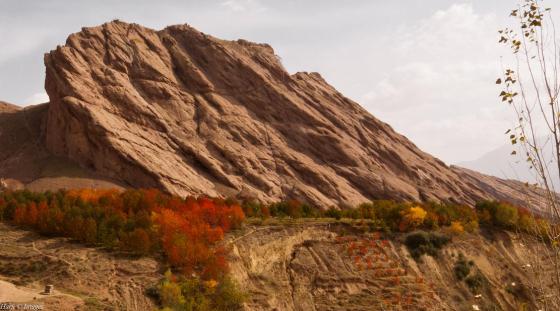
The Rock of Alamut.

The Castle of Alamut, nested on the top of the colossal mass of granite rock, became the centre of Nizari Ismaili activity after the fall of the Fatimid Empire. It is not until you come to the foot of this colossal mass of stone that you realize the immensity and impregnability of the fortress at its summit. Photo: Muslim Harji, Montreal, PQ, Canada. © Copyright. Muslim Harji, Montreal, PQ, Canada. © Copyright.

By Valerie Gonzalez

Old myths are very difficult to deconstruct, even when historical evidence reveals the absurdity of their foundations. The infamous “assassin” legend that from the Middle Ages soils the memory of the Nizari Ismaili community is an example of this incorrigible defect of the collective consciousnesses. The image presented by both Christian and Muslim chroniclers of the Ismailis as unscrupulous terrorists is unfortunate if their sole fault lay in surviving as a distinct political and religious community within a hostile and troubled environment. The Crusaders, Sunnis and Seldjuk Turks naturally saw in this Shi’ite minority a threat to their establishment and expended great efforts in eliminating the Ismaili State from Iran and Syria. In addition to the pressures exerted by the great powers holding sway over the Middle East, in the 13th century, the Ismailis had to confront the Mongol threat which finally overwhelmed them. It is not wonder that in such a context they deployed the most efficient means of defense available to maintain not only the network of their strongholds and basis of their State, but also their faith and culture, the very sense of existence. In practice however, they were no more immoral or cruel than their contemporaries. They simply proved tremendously clever and obstinate in facing adversity and in struggling against forces vastly more powerful than their own. And it is probably for this reason that the Nizari Ismaili community were subject to demonization.
alamut09

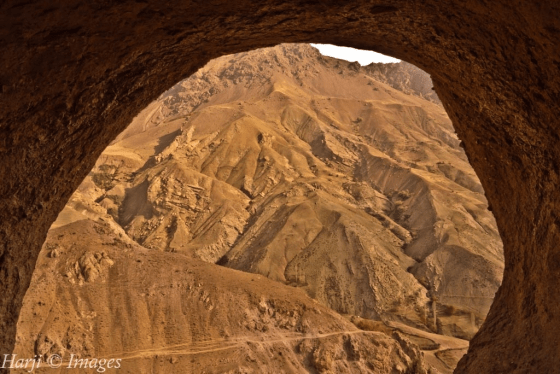
Attaining the summit at Alamut is a breath-taking and exhilarating experience. The fortress complex, one soon discovers, sits astride a dangerously narrow ledge of rock resembling the handle and blade of a knife. The above is an open passage through the mountain. Photo: Muslim Harji, Montreal, PQ, Canada. © Copyright

Much scholarship was required to unravel the dark mystery of the medieval Ismaili community. Numerous historical essays and archeological reports, among them Fahrad Daftari’s extensive works, have provided an accurate view of the Ismailis within the Islamic tradition. But assuredly the latest release on the subject, Peter Willey’s book Eagle’s Nest: Ismaili Castles in Iran and Syria, brings invaluable new insights by accurately portraying the environment in which the life and struggles of the Ismaili faithful took place. There is no question but that this book offers a convincing tool for the deconstruction of the false myths which surround the cult of the Assassins.

Far from being the addicts of hashish (the word assassin is believed widely, but incorrectly, to derive from the word hashishin) and a band of murderous brigands, the Ismailis were highly intelligent and devout Muslims serving their own Imam or spiritual leader (the present Imam is the Aga Khan) and attempting to build a new and vigorous Islamic state independent of the Seljuqs who had conquered Iran in 1038 – Peter Willey, Geographical Magazine, UK, February 1998

More than a mere treatise on the archaeology of the Ismaili castles in Iran and Syria, Willey’s book shows multiple qualities. As an academic work, it fulfills its main objective which is to present the results of a meticulous description and observation of these fortified sites. The considerable amount of information contained in the volume reflects a near life-time of research devoted to the subject. Not a single pile of stones or rubble has escaped Willey’s acute attention, or skillful restoration in clear prose of the forbidding grandeur of the Ismaili military architecture. Each remaining element of structure is analyzed and appropriately re-situated in the initial order both of the architectural organization of the building itself and of its broader setting within the coherent chain of fortresses spread over Ismaili territories. The material and documentation at the author’s disposal, including building scale, purpose, population levels and strategic importance have been patiently collected in order to present a reliable picture of the complex network of Ismaili strongholds. Maps, ground plans, photographs and even artists’ impressions and drawings complete the written work together with four appendices which include the castles’ inventory, a list of Willey’s expeditions and two catalogues of the ceramic and coin artifacts dating from the Alamut Period found at the site.
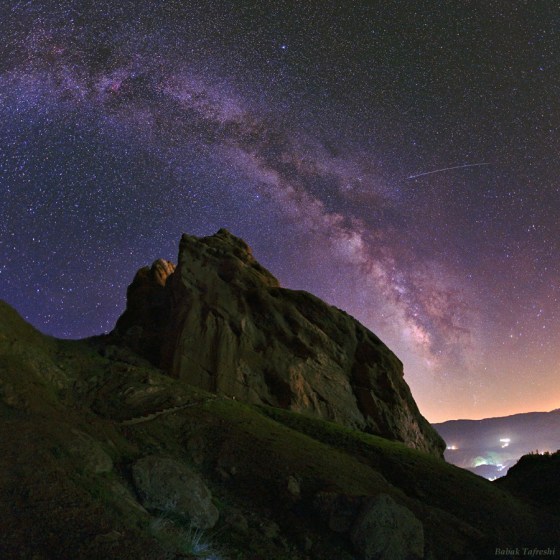
As seen on NASA's Astronomy Picture of the Day and the National Geographic News a meteor's streak and the arc of the Milky Way hang over the imposing mountain fortress of Alamut in this starry scene. Photo: Babak Tafreshi/Dreamview.net . Copyright.

As seen on NASA’s Astronomy Picture of the Day and the National Geographic News, a meteor’s streak and the arc of the Milky Way hang over the imposing mountain fortress of Alamut in this starry scene. Photo: Babak Tafreshi/Dreamview.net . Copyright.

Beyond the high quality scientific report based on the archaeological record, Eagle’s Nest offers a brilliant reconstitution of Ismaili material culture from an historical, intellectual and sociological point of view, from the 11th century through the Mongol destructions of the mid 13th century. Willey restitutes the very meaning of the architecture he studies through the history of its builders and inhabitants, pointing out the most significant events of their lifetimes and portraying the great spiritual and political leaders of the Ismaili community. Methodically and surely, Willey describes the intricate historical background of the Ismaili State in which multiple powers confronted or fought each other, including Seljuk Turks, ambitious Sunni and Shii’a rulers, Crusaders on the Mediterranean coast, to propose his own interpretation of the historical evidence. Where evidence lacks or where persistent misconceptions require redress, the author proposes and defends critical hypotheses. The historical and cultural dimension of Willey’ archaeological investigation is particularly enhanced by the presentation of certain situations and events as literary narratives, as he does in the beginning of chapter 2, “Hasan Sabbah and the Ismailis of Iran”. The passage in question relates the capture without bloodshed of the Alamut fortress under Seljuk authority and begins thus: “It was nearly noon on a hot day in the early summer of 1090. Mahdi, the lord of the castle of Alamut, was beginning to sweat a little” (p. 21). In this way, the author makes us relive the extraordinary event in a human atmosphere that is quite uncommon in scholarly works.

alamut04

A tribute to the great Ismaili dai, Hasan bin Sabbah who was responsible for establishing the Alamut state after the divisions in the Fatimid Empire led to its eventual demise. Hasan maintained that Imam Nizar and not Musteali was the rightful heir to Imam Mustansir billah, the 8th Fatimid Caliph. Photo: Muslim Harji, Montreal, PQ, Canada. © Copyright.

Willey’s sensitivity to humanistic values is perceptible throughout the book, not only through the telling of the past but also in the lively narration of the research trips themselves. First, he pays considerable attention to the actual environment of the castles he visits, their awesome natural frame and the rural or urban settings of the surroundings that are presented with delight and consideration. Although most of the time the Ismaili vestiges are ghost constructions in remote, isolated regions, they are not at all presented by Willey as still life portraits. Rather, each fortress is an element in a busy, human landscape. As an example, where appropriate Willey writes about agriculture and local conditions in the surrounding villages for fortresses located in rural areas. Also, the local population and individuals involved in Willey’s expeditions frequently are mentioned as actors in the archaeological narrative. In this way, Willey underscores the support of both his team and the local community in contributing to the success of his research. Particularly moving is his attitude toward the people who help him visit inaccessible locations under difficult conditions and various orders, especially his work partner Adrianne Woodfine. More broadly, the practical aspects of each journey, the general organization and unexpected situations and encounters are meticulously recounted so that the book offers the live texture of a human adventure together with its purely scholarly content.

It is often difficult to describe to friends the problems which the investigation of Ismaili castles present. They are built on the top of high mountains, covering the entire summit, and are normally surrounded by three defensive walls with numerous outworks. Most of the castles were destroyed by the Mongols and the ruins are dangerous and infested with snakes and scorpions on or under the stones or in the cracks of walls. The steep scree and sharp rocks are formidable, especially in the intense heat and altitude of over 2000 metres – Peter Willey, Geographical Magazine, UK, February 1998

Chapters 7 through 12 cover the various areas of the Iranian Ismaili strongholds. Willey naturally begins with the fortresses in the famous Alamut Valley of the Alborz Mountains, the fortress in which the infamous legend of the “Assassins” took place. Alamut fortress constituted the very heart of the Nizari State in Iran and was the seat of Hasan Sabbah. Alamut and its sister fortresses represented the epitome of Ismaili military science. Willey presents it with a rigorous method of sketching, measuring and enumeration of the construction’s features and structures, topography, architectural configuration, water equipment, cisterns, underground storage, garrison quarters and so on.
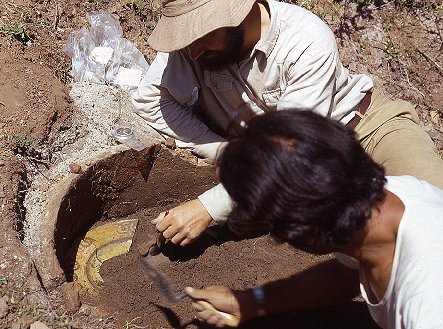
Alamut Potter Kilns

The pottery kilns in the valley of Andij in the Alamut valley. Some 15 kilns were discovered including good examples of contemporary ceramics. Photo: http://www.iis.ac.uk

The Alamut castle like many of the Ismaili strongholds contained facilities for religious activities and higher learning such as libraries. To support his observations, Willey quotes several times the Mongol historian, Juwayni, who witnessed the surrender of the Alamut fortress among other similar events. Although this chronicler was hostile to the Ismailis, his detailed reports offer an invaluable source of information. In particular he inspected the Alamut fortress’ interior prior to destruction and mentions, not without admiration, its remarkable facilities (p.100). Indeed, the sophistication of their architecture allowed the Ismailis to resist the fiercest attacks while ultimately succumbing to the formidable Mongol war machinery. Willey relates with great empathy for the desperate inhabitants the dramatic capture and systematic destruction of Alamut and other Ismaili strongholds. After Alamut, Willey investigates the other Iranian Ismaili castles of the regions of Qumes, Khorassan, Qohistan and in the surroundings of the Seldjuk capital Isfahan.

Willey terminates his book with a moving epilogue in which he shares a few of the thoughts, feelings and questions raised in his heart and mind by the exceptional fate of the Ismailis. He naturally mentions the remarkable endeavor of the Aga Khan’s organization for the development of both Ismaili and Islamic culture in continuation with the educational tradition of the community since the Middle Ages.
alamut03

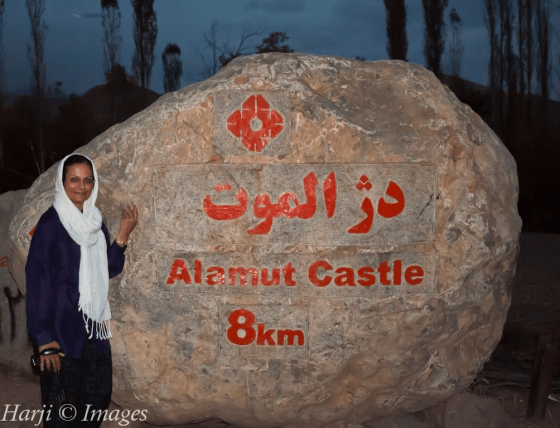
Nevin Harji stands by an official road sign when she visited Alamut with husband Muslim. Photo: Muslim Harji, Montreal, PQ, Canada. © Copyright

If, through such personal treatment, Willey hoped to clarify the historical issues surrounding Ismaili culture through the ages, he most assuredly succeeded. Eagle’s Nest unveils the extraordinary reality and humanity of the medieval Ismaili civilization, often hidden behind romantic images of remote ruins and the dark secrets contained behind crumbling walls. Finally, that Willey should communicate his deep affection for the countries he explored, particularly Iran, and the Ismaili themselves, is not the least quality of this book.

Date posted: December 14, 2015.

___________

Credits and notes:

1. The book review originally appeared in REMMM (Issue 123|July 2008) and was reproduced on this web site with the kind permission of Revue des mondes musulmans et de la Méditerranée under the title Voices: Unravelling the Dark History of the Medieval Ismaili Community

2. Eagle’s Nest: Ismaili Castles in Iran and Syria, by Peter Willey, published by I.B. Tauris, 2005, London – New York, 321 pages, hard back. Approximate prices in Canada, USA and the UK (at Chapters.ca $45.00 – $61.00; at Amazon.com $37.00 – $58.00; new at Borders.com $58.00, at Amazon.co.uk Pounds 9.95 – 21.25, note price range based on used – new book)

We welcome your feedback. Please click Leave a comment.


His Highness the Aga Khan, 49th Ismaili Imam, is a Champion of Diversity and Compassion and Inspires Millions, Says Prime Minister Justin Trudeau

His Highness the Aga Khan is greeted by Justin Trudeau as he arrives in Ottawa, Canada, to celebrate his Golden Jubilee in 2008. At that time, Mr. Trudeau was a Member of Parliament in his riding in the Province of Quebec. He won the Liberal leadership in 2011, and after winning the recent Federal Elections held in October, he was sworn in as the Prime Minister of Canada on November 4th 2015. A day earlier he visited the Delegation of the Ismaili Imamat Building on Sussex Drive in Ottawa - see photo below. Photo: The Ismaili.

His Highness the Aga Khan is greeted by Justin Trudeau as he arrives in Ottawa, Canada, to celebrate his Golden Jubilee in 2008. At that time, Mr. Trudeau was a Member of Parliament in his riding in the Province of Quebec. He won the Liberal leadership in 2011, and after winning the recent Federal Elections held in October, he was sworn in as the Prime Minister of Canada on November 4th 2015. A day earlier he visited the Delegation of the Ismaili Imamat Building on Sussex Drive in Ottawa – see photo below. Photo: The Ismaili.

The Prime Minister of Canada, the Right Honourable Justin Trudeau, issued the following statement on December 13, 2015, on the 79th birthday of His Highness Prince Karim Aga Khan:

“Today, we celebrate the birthday of His Highness the Aga Khan, the spiritual leader of the Shia Ismaili Muslims, who has dedicated his life to the promotion of peace, pluralism, and compassion around the world.

“For over fifty years, the Aga Khan has been an inspiration to millions, working tirelessly to improve the health and education of those living in some of the world’s most vulnerable countries. As a global humanitarian leader, he has worked with many partners – including Canada – to implement vital programs that advance long-term solutions to poverty, illiteracy, and disease.

Prime Minister Justin Trudeau with AKDN Representative Dr. Mahmoud Eboo (left) and the President of the Aga Khan Ismaili Council for Canada, Malik Talib, at the Delegation of the Ismaili Imamat in Ottawa on November 3, 2015, the day before he was sworn in as the Prime Minister. Photo: The Ismaili.

Prime Minister Justin Trudeau with Aga Khan Development Netork (AKDN) Representative Dr. Mahmoud Eboo (left) and the President of the Aga Khan Ismaili Council for Canada, Malik Talib, at the Delegation of the Ismaili Imamat in Ottawa on November 3, 2015, a day before he was sworn in as Prime Minister. Photo: The Ismaili.

“I have seen first-hand the Aga Khan’s commitment to the ideals of diversity and inclusion. As a nation, we are proud His Highness was granted honourary Canadian citizenship for the leadership he has shown to advance development, pluralism, and tolerance – values that are at the core of our national identity.

“The world needs champions of diversity and compassion. Today, we are delighted to thank our good friend, the Aga Khan, for all that he has done to help those in need, and wish him good health, happiness, and peace on this special day.”

__________

“Happy Birthday to the Hazar Imam” – Yasmin Rattansi, MP Don Valley E.

Marc Carisse 2005 0607 203

His Highness the Aga Khan, MP Yasmin Ratansi and External Affairs Minister Pierre Pettigrew (July 2004 – February 2006). Photo: Jean-Marc Carisse. Copyright.

“Mr. Speaker, I take this opportunity to thank the constituents of Don Valley East for re- electing me to Parliament.

“My riding is proud to house three architectural jewels of Toronto: the Aga Khan Museum, the lsmaili Centre, and the Aga Khan Park built in Canada by His Highness the Aga Khan with his own funds.

“On December 13, His Highness will be celebrating his 79th birthday. I rise today in the House to pay a special tribute to a remarkable human being. His tireless efforts in building bridges across the globe, his commitment to eradicating poverty and ignorance for millions of people, irrespective of race or religion, through the AKDN network are unparalleled.

“I was fortunate to have worked with His Highness in establishing the Global Centre for Pluralism here in Ottawa.

“Happy birthday to the Hazar Imam. May all who come in touch with him benefit from his integrity, humility, honesty, and courage to do good.”

~~~~~~~~~

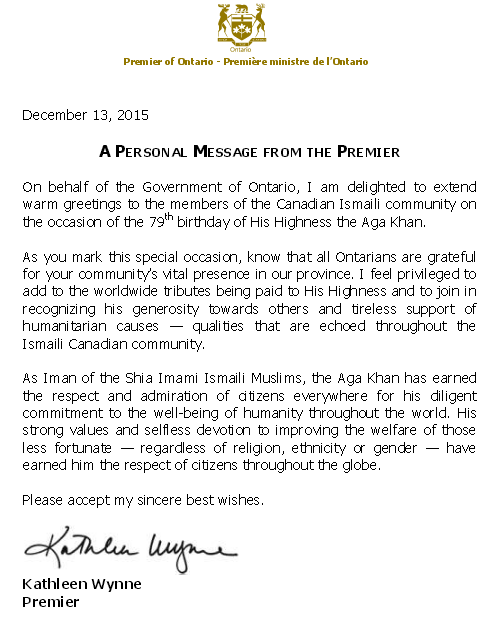
A Message and Tweets from the Premier of Ontario, Kathleen Wynne, and Arif Virani, MP Parkdale–High Park.

OLYMPUS DIGITAL CAMERA

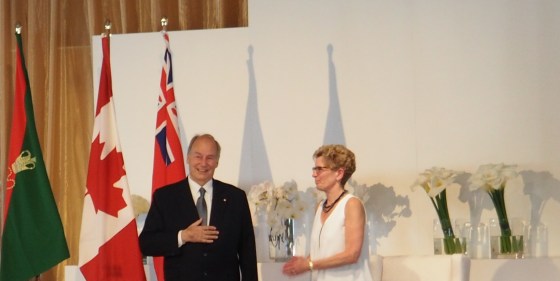
Mawlana Hazar Imam graciously accepts the standing ovation he receives after completing his speech at the opening of the Aga Khan Park in Toronto on May 25, 2015. With him is the Premier of Ontario, Kathleen Wynne. Photo: Simerg/Malik Merchant. Copyright.

Premier of Ontario Kathleen Wynne Aga Khan Message

~~~~~~~~

~~~~~~~~

….and a Tweet from the 2 Ismaili Mountaineers, Mirza Ali and Samina Baig, who conquered the “Seven Summits”, i.e. the highest mountain in each of the 7 continents

Date posted: December 13, 2015.
Last updated: December 14, 2015 (Message from Ontario Premier)

____________________

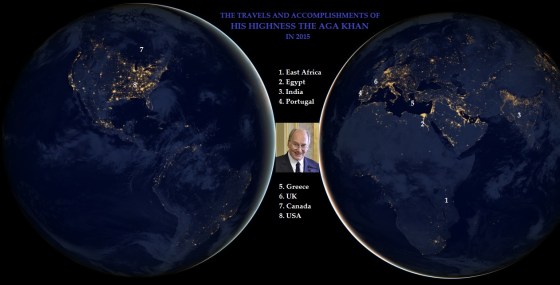
Glimpses of His Highness the Aga Khan’s Global Travels and Work in 2015

PLEASE CLICK: The 2015 Travels and Accomplishments of the Global Humanitarian and Spiritual Leader, His Highness the Aga Khan

Please click on image for the first part of a special 3-part series on His Highness the Aga Khan's Work and Travels in 2015.

Please click on image for the first part of a special 3-part series on His Highness the Aga Khan’s Work and Travels in 2015.

A Spiritual Father’s Love for His Community: The 79th Salgirah (Birthday) of Mawlana Hazar Imam, His Highness the Aga Khan

“When I leave this evening I would like that you should remember two things. One, that I will take with me in my heart the remembrance of each and everyone of you, the face of each and everyone of you. Secondly, that my love for my Jamat is a lot stronger than yours can ever be for me and I would like you to remember this…you must remember that Imam loves you more, much more than you can ever love him and you must be strong in this knowledge.” — Mawlana Hazar Imam, Karachi, December 26, 1964.

Photo_AKDN_Anya Campbell

Mawlana Hazar Imam, His Highness the Aga Khan, 49th hereditary Imam of Shia Ismaili Muslims directly descended from the Holy Prophet Muhammad (s.a.s.). Photo: AKDN/Anya Campbell. Copyright.

Spread in various countries around the world, the Shia Imami Ismailis have their own innumerable ways for celebrating important religious occasions according to their various cultural, social and religious traditions and backgrounds. One very important occasion in the annual calendar of the Ismailis is the Salgirah, or the birthday of their spiritual leader (Imam). His Highness the Aga Khan is their present Imam, and Ismailis around the world will be marking his 79th Salgirah on December 13, 2015. The following readings will enhance the readers’ understanding about the occasion as well as the special relationship that binds the Imam of the Time with his spiritual children.

Mawlana Hazar Imam’s Salgirah and the Depth of His Love for the Jamat

The term Salgirah is of Persian origin. Sal means anniversary and girah means knot and hence Salgirah literally means ‘an anniversary knot added on to a string kept for the purpose’. This article approaches the subject of Mawlana Hazar Imam’s birthday in terms of the Imam’s love for his murids and the love and devotion of the murids for their Imam.

In Salgirah Ginan Pir Sadr al-Din Asks Mu’mins to Act Righteously and Gain Spiritual Recognition of Imam-e-Zaman

+ Listen to ginan at Ginan Central

Eji Dhan Dhan Aajano has attained a very special status because it is primarily recited during the festivities marking the birthday of Mawlana Hazar Imam. The appropriateness of reciting the ginan during Salgirah will become apparent as we try to understand the ginan and its underlying spiritual teachings. To listen to various renditions of Eji Dhan Dhan (#160),  as well as over 760 other ginans please click http://ginans.usask.ca/recitals/ginans.php?id=0.

The Preamble Of “The Constitution of the Shia Imami Ismaili Muslims”

The new Ismaili Constitution was ordained, signed and sealed by His Highness the Aga Khan on December 13th, 1986, his 50th birthday. His Highness did this with the belief that the Constitution would provide a strong institutional and organizational framework for his Ismaili community to contribute meaningfully to the societies among whom they live.

His Highness the Aga Khan and the Ismailis

.

.

On the occasion of His Highness the Aga Khan’s 75th birthday on December 13, 2011, Simerg published a three-part photo essay tribute to the 49th Ismaili Imam. For those who may have missed, the series has been consolidated into a captivating one piece photo essay, which can be read by clicking on the above link.

Date posted: November 28, 2015.

___________________

Feedback? Please click Leave a comment.

Archives: Please click Table of Contents for links to all articles published on this blog since March 2009. Subscribe to this Website via the box near the top right of this page.